Results by title
862 books match the query 'Social History' and 182 start with t
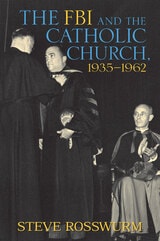
The FBI and the Catholic Church, 1935-1962
Steve Rosswurm
University of Massachusetts Press, 2009
Steve Rosswurm explores the history of that relationship from the turbulent 1930s to the 1960s, when growing Catholic opposition to the Vietnam War led Hoover to distance himself from the Church. Drawing on a vast range of sources, including thousands of pages of previously classified FBI files, Rosswurm pursues his investigation along two parallel tracks. First, he looks at the joint war waged by Hoover and the Catholic hierarchy against forces considered threats to their organizations, values, and nation. Second, he examines how each pursued its own institutional interests with the help of the other.
While opposition to communism was a preoccupation of both institutions, it was not the only passion they shared, according to Rosswurm. Even more important, perhaps, was their fervent commitment to upholding traditional gender roles, particularly the prerogatives of patriarchal authority. When women and men carried out their assigned obligations, they believed, society ran smoothly; when they did not, chaos ensued.
Organized topically, The FBI and the Catholic Church, 1935–1962 looks not only at the shared values and interests of the two institutions, but also at the personal relationships between Hoover and his agents and some of the most influential Catholic prelates of the time. Rosswurm discusses the role played by Edward A. Tamm, the FBI's highest-ranking Catholic, in forging the alliance; the story behind Father John Cronin's 1945 report on the dangers of communism; the spying conducted by Father Edward Conway S.J. on behalf of the FBI while treasurer of the National Committee for Atomic Information; and Monsignor Charles Owen Rice's FBI-aided battle against communists within the CIO.
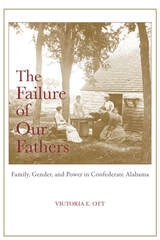
The Failure of Our Fathers
Family, Gender, and Power in Confederate AlabamaVictoria E. Ott
University of Alabama Press, 2023
An in-depth study of non-elite white families in Alabama—from the state’s creation through the end of the Civil War
The Failure of Our Fathers: Family, Gender, and Power in Confederate Alabama examines the evolving position of non-elite white families in Alabama during one of the most pivotal epochs in the state’s history. Drawing on a wide range of personal and public documents reflecting the state’s varied regions and economies, Victoria E. Ott uses gender and family as a lens to examine the yeomanry and poor whites, a constituency that she collectively defines as “common whites,” who identified with the Confederate cause.
Ott provides a nuanced examination of how these Alabamians fit within the antebellum era’s paternalistic social order, eventually identifying with and supporting the Confederate mission to leave the Union and create an independent, slaveholding state. But as the reality of the war slowly set in and the Confederacy began to fray, the increasing dangers families faced led Alabama’s common white men and women to find new avenues to power as a distinct socioeconomic class.
Ott argues that family provided the conceptual framework necessary to understand why common whites supported a war to protect slavery despite having little or no investment in the institution. Going to war meant protecting their families from outsiders who threatened to turn their worlds upside down. Despite class differences, common whites envisioned the Confederacy as a larger family and the state as paternal figures who promised to protect its loyal dependents throughout the conflict. Yet, as the war ravaged many Alabama communities, devotion to the Confederacy seemed less a priority as families faced continued separations, threats of death, and the potential for starvation. The construct of a familial structure that once created a sense of loyalty to the Confederacy now gave them cause to question its leadership. Ott shows how these domestic values rooted in highly gendered concepts ultimately redefined Alabama’s social structure and increased class distinctions after the war.

The Fairer Death
Executing Women in OhioVictor L. Streib
Ohio University Press, 2006
Women on death row are such a rarity that, once condemned, they may be ignored and forgotten. Ohio, a typical, middle-of-the-road death penalty state, provides a telling example of this phenomenon. The Fairer Death: Executing Women in Ohio explores Ohio’s experience with the death penalty for women and reflects on what this experience reveals about the death penalty for women throughout the nation.
Victor Streib’s analysis of two centuries of Ohio death penalty legislation and adjudication reveals no obvious exclusion of women or even any recognition of an issue of sex bias. In this respect, Ohio’s justice system exemplifies the subtle and insidious nature of this cultural disparity.
Professor Streib provides detailed descriptions of the cases of the four women actually executed by Ohio since its founding and of the cases of the eleven women sentenced to death in Ohio in the current death penalty era (1973–2005). Some of these cases had a profound impact on death penalty law, but most were routine and drew little attention. A generation later, reversals and commutations have left only one woman on Ohio’s death row.
Although Streib focuses specifically on Ohio, the underlying premise is that Ohio is, in many ways, a typical death penalty state. The Fairer Death provides insight into our national experience, provoking questions about the rationale for the death penalty and the many disparities in its administration.
The Fall of Empires
A Brief History of Imperial CollapseChad Denton
Westholme Publishing, 2020
There are no self-proclaimed empires today. After the twentieth century, with its worldwide wave of decolonizing and liberation movements, the very word “empire” conjures images of slavery, war, repression, and colonialism. None of this is to say that empires are confined to the past, however. By at least some reasonable definitions, empires do exist today. Many articles and books speak about the decline of the “American Empire,” for example, or compare the history of the United States to that of Rome or the British Empire. Yet no public official would speak candidly of American “imperial” interests in the Middle East or use the word “empire” in discussions of the nation’s future the same way British politicians did in the twentieth century. In addition, empires don’t have to fit the classical Roman mold; there are many kinds of empire and varieties of international authority, such as cultural imperialism and economic imperialism. But it is clear empires do not last, even those that once harnessed great wealth, strong armies, and sophisticated legal systems.
InThe Fall of Empires: A Brief History of Imperial Collapse, historian Chad Denton describes the end of seventeen empires throughout world history, from Athens to Qin China, from the Byzantium to the Mughals. He reveals—through stories of conquest, corruption, incompetence, assassination, bigotry, and environmental crisis—how even the most seemingly eternal of empires declined. For Athens and Britain it was military hubris; for Qin China and Russia it was alienating their subjects through oppression; Persia succumbed with the loss of its capital; the Khmer faced ecological catastrophe; while the Aztecs were destroyed by colonial exploitation. None of these events alone explains why the empires fell, but they do provide a glimpse into the often-unpredictable currents of history, which have so far spared no empire. A fascinating and instructive survey, The Fall of Empiresprovides compelling evidence about the fate of centralized regional or global power.
The Fight for Scottish Democracy
Rebellion and Reform in 1820Murray Armstrong
Pluto Press, 2020
This 'Radical War' was the culmination of five years of unsuccessful mass petitioning of Westminster by working people in Scotland and England. The contempt and intransigence of the Tory government forced an escalation in tactics, and on Easter Monday of 1820, the call for a general strike was answered throughout the western counties of Scotland. Their demands were threefold: the vote for all men, annual parliaments and equal constituencies. Coupled with an armed rebellion, the strike was met by the full military might of the British state; hundreds were arrested and imprisoned without trial, while hundreds more fled the country.
This Scottish general strike and insurrection is a little-known chapter of British history and yet remains an immensely important one in the long fight for democracy. In The Fight for Scottish Democracy, Murray Armstrong brings these events dramatically to life.
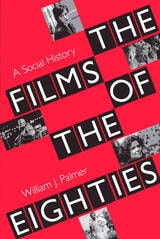
The Films of the Eighties
A Social HistoryWilliam J. Palmer
Southern Illinois University Press, 1995
In this remarkable sequel to his Films of the Seventies: A Social History, William J. Palmer examines more than three hundred films as texts that represent, revise, parody, comment upon, and generate discussion about major events, issues, and social trends of the eighties.
Palmer defines the dialectic between film art and social history, taking as his theoretical model the "holograph of history" that originated from the New Historicist theories of Hayden White and Dominick LaCapra. Combining the interests and methodologies of social history and film criticism, Palmer contends that film is a socially conscious interpreter and commentator upon the issues of contemporary social history. In the eighties, such issues included the war in Vietnam, the preservation of the American farm, terrorism, nuclear holocaust, changes in Soviet-American relations, neoconservative feminism, and yuppies.
Among the films Palmer examines are Platoon, The Killing Fields, The River, Out of Africa, Little Drummer Girl, Kiss of the Spiderwoman, Silkwood, The Day After, Red Dawn, Moscow on the Hudson, Troop Beverly Hills, and Fatal Attraction. Utilizing the principles of New Historicism, Palmer demonstrates that film can analyze and critique history as well as present it.
The Future of Class in History
What's Left of the Social?Geoff Eley and Keith Nield
University of Michigan Press, 2007
Unifying concepts are essential when studying history. They provide students and scholars with ways to organize their thoughts, research, and writings. However, these concepts are also the focus of myriad conflicts within the field. Social history has experienced more than its share of such conflicts since its inception some forty years ago. In recent times the fields of “the social” and of “culture” have sometimes been presented as mutually exclusive and even hostile. Once again, conceptual innovation in history has been cast as a closure by which the new drives out the old: in this case, cultural history radically displacing social history. The Future of Class in History analyzes the effect of the conflict that followed the “turn to culture” in historical work by examining the use of class and demonstrates how practitioners in multiple fields can collaborate to produce the highest quality scholarship.
“Offers new ways of thinking about ‘class’ and ‘society’ in a world in which such categories have been radically called into question.”
—Sherry Ortner, University of California, Los Angeles
“Brilliantly charts social history’s past achievement, present dilemma, and future promise in a work distinguished by intellectual openness and generosity.”
—James A. Epstein, Vanderbilt University
“Eley and Nield seek to rescue the deluded follower of social history from the enormous condescension of the cultural turn. They succeed admirably, making the case for a new hybrid socio-cultural history.”
—Donald Reid, University of North Carolina at Chapel Hill
“This terrific double act has once again produced a text that demands to be read by all those tired of the juxtaposition of social and cultural histories and still interested in the problematic of class and the politics of its past and present.”
—James Vernon, University of California, Berkeley
“Eley and Nield tackle a contentious debate with a gracious plea for collaboration. Their strong desire to get past the ‘culture wars’ and to engage social and cultural historians in fruitful dialogue is a welcome move, stylishly executed.”
—Philippa Levine, University of Southern California
Geoff Eley is Professor of History at the University of Michigan.
Keith Nield is Professor Emeritus of History at the University of Hull.
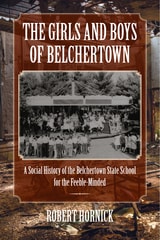
The Girls and Boys of Belchertown
A Social History of the Belchertown State School for the Feeble-MindedRobert Hornick
University of Massachusetts Press, 2012
During much of the twentieth century, people labeled “feeble-minded,” “mentally deficient,” and “mentally retarded” were often confined in large, publicly funded, residential institutions located on the edges of small towns and villages some distance from major population centers. At the peak of their development in the late 1960s, these institutions—frequently called “schools” or “homes”—housed 190,000 men, women, and children in the United States.
The Girls and Boys of Belchertown offers the first detailed history of an American public institution for intellectually disabled persons. Robert Hornick recounts the story of the Belchertown State School in Belchertown, Massachusetts, from its beginnings in the 1920s to its closure in the 1990s following a scandalous exposé and unprecedented court case that put the institution under direct supervision of a federal judge. He draws on personal interviews, private letters, and other unpublished sources as well as local newspapers, long out-of-print materials, and government reports to re-create what it was like to live and work at the school. More broadly, he gauges the impact of changing social attitudes toward intellectual disability and examines the relationship that developed over time between the school and the town where it was located.
What emerges is a candid and complex portrait of the Belchertown State School that neither vilifies those in charge nor excuses the injustices perpetrated on its residents, but makes clear that despite the court-ordered reforms of its final decades, the institution needed to be closed.

The Golden Age of Deaf Education in Oregon
Through the Lives of Preston Murphy and Sarah BondAmy Lemco
Oregon State University Press, 2027
Preston Murphy and Sarah Bond traveled west to Oregon on separate wagon trains in the 1850s. Both were children of Protestant minister fathers who followed the Oregon Trail to claim land and establish towns and institutions. Preston and Sarah married in 1874 and went on to build their lives in Oregon’s Willamette Valley, running a boot shop and raising six children. They were also both deaf.
The Golden Age of Deaf Education in Oregon is one of the first books to explore Deaf history in the Pacific Northwest. Drawing from primary sources, Amy Lemco explores the history of Deaf culture in early Oregon through the lives of Preston Murphy and Sarah Bond. Their stories offer a glimpse into the growth of Deaf education in the developing American West and provide a unique lens to explore the intertwining of global, national, and regional histories and their effect on Deaf culture at the turn of the century.
While Preston became deaf after a childhood illness in Illinois, Sarah, along with two of her brothers, was born deaf in Iowa. In Oregon their varied deaf experiences would pave the way for the Oregon School for the Deaf but also illuminate how deaf Oregonians navigated daily life and remained closely connected to their hearing communities. It is the hidden experiences of Preston and Sarah’s ordinary lives that make their stories extraordinary.
The Great Depression in Eastern Europe
Klaus Richter
Central European University Press, 2025
The Great Disappearing Act
Germans in New York City, 1880-1930Christina A. Ziegler-McPherson
Rutgers University Press, 2022
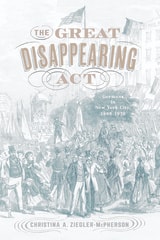
This study examines these questions in relation to the German immigrant community in New York City between 1880-1930, and seeks to understand how German-American New Yorkers assimilated into the larger American society in the early twentieth century.
By the turn of the twentieth century, New York City was one of the largest German-speaking cities in the world and was home to the largest German community in the United States. This community was socio-economically diverse and increasingly geographically dispersed, as upwardly mobile second and third generation German Americans began moving out of the Lower East Side, the location of America’s first Kleindeutschland (Little Germany), uptown to Yorkville and other neighborhoods. New York’s German American community was already in transition, geographically, socio-economically, and culturally, when the anti-German/One Hundred Percent Americanism of World War I erupted in 1917.
This book examines the structure of New York City’s German community in terms of its maturity, geographic dispersal from the Lower East Side to other neighborhoods, and its ultimate assimilation to the point of invisibility in the 1920s. It argues that when confronted with the anti-German feelings of World War I, German immigrants and German Americans hid their culture – especially their language and their institutions – behind closed doors and sought to make themselves invisible while still existing as a German community.
But becoming invisible did not mean being absorbed into an Anglo-American English-speaking culture and society. Instead, German Americans adopted visible behaviors of a new, more pluralistic American culture that they themselves had helped to create, although by no means dominated. Just as the meaning of “German” changed in this period, so did the meaning of “American” change as well, due to nearly 100 years of German immigration.

The Great Enrichment
A New History of American Growth and Inequality, 1865–1945Vincent Geloso
University of Chicago Press, 2027
A revelatory economic history of America's Gilded Age—and how it wasn't just the Robber Barons who benefited.
The Gilded Age, spanning the late nineteenth and early twentieth centuries, was when Americans got rich. Or, rather, some Americans got rich. Because as much as the era is synonymous with staggering economic growth, it also doubles as America’s cautionary tale for the perils of leaving rich people and institutions unregulated. It was the time of extractive industrialists, worker exploitation, stifled economic mobility, and racial exclusion—lessons that the United States learned the hard way.
Vincent Geloso contests this traditional narrative by revisiting the math in this new empirical account of the Gilded Age. The Great Enrichment is an economic history of America’s rise to affluence, a period that doubled as a remarkable rise of the country’s economic floor. The conventional contrast of Robber Barons against huddled masses is, in Geloso’s analysis, unsubstantiated by economic data. The Gilded Age was the first egalitarian enrichment that humanity witnessed—a time when both rich and poor benefited in ways that were seismic, albeit unequal. Yet the net result was a great leap forward, not the lamentable birth of modern inequality.
Geloso marshals an expanded set of economic measures to account for factors not typically included in the Gilded Age economic story. The Great Enrichment sets a new standard for empirical history in one of America’s most consequential—and perhaps misunderstood—periods.

The Great Lakes Forest
An Environmental and Social HistorySusan Flader
University of Minnesota Press, 1983
The Green Ages
Medieval Innovations in SustainabilityAnnette Kehnel
Brandeis University Press, 2024
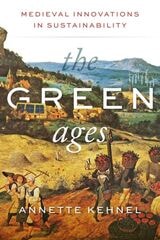
In The Green Ages, historian Annette Kehnel explores sustainability initiatives from the Middle Ages, highlighting communities that operated a barter trade system on the Monte Subiaco in Italy, sustainable fishing at Lake Constance, common lands in the United Kingdom, transient grazing among Alpine shepherds in the south of France, and bridges built by crowdfunding in Avignon. Kehnel takes these medieval examples and applies their practical lessons to the modern world to prove that we can live sustainably—we’ve done it before!
From the garden economy in the mythical-sounding City of Ladies to early microcredit banks, Kehnel uncovers a world at odds with our understanding of the typical medieval existence. Premodern history is full of inspiring examples and concepts ripe for rediscovery, and we urgently need them as today’s challenges—finite resources, the twilight of consumerism, and growing inequality—threaten what we have come to think of as a modern way of living sustainably. This is a stimulating and revelatory look at a past that has the power to change our future.
The Gun in Central Africa
A History of Technology and PoliticsGiacomo Macola
Ohio University Press, 2016
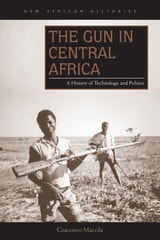
Why did some central African peoples embrace gun technology in the nineteenth century, and others turn their backs on it? In answering this question, The Gun in Central Africa offers a thorough reassessment of the history of firearms in central Africa. Marrying the insights of Africanist historiography with those of consumption and science and technology studies, Giacomo Macola approaches the subject from a culturally sensitive perspective that encompasses both the practical and the symbolic attributes of firearms.
Informed by the view that the power of objects extends beyond their immediate service functions, The Gun in Central Africa presents Africans as agents of technological re-innovation who understood guns in terms of their changing social structures and political interests. By placing firearms at the heart of the analysis, this volume casts new light on processes of state formation and military revolution in the era of the long-distance trade, the workings of central African gender identities and honor cultures, and the politics of the colonial encounter.
The Historic Turn in the Human Sciences
Terrence J. McDonald, Editor
University of Michigan Press, 1996
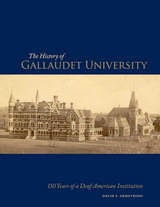
The History of Gallaudet University
150 Years of a Deaf American InstitutionDavid F. Armstrong
Gallaudet University Press, 2014
At first a tiny college of fewer than 200 students, Gallaudet’s growth paralleled the emergence of the American Deaf Community and the history of the nation in general. In the same way that the country’s land-grant universities brought higher education to more American students than ever before, Gallaudet offered the same opportunities to deaf students for the first time. Gallaudet mirrored other institutions in addressing major issues of the time, from legislated segregation to the Civil Rights movement that inspired the struggle by deaf people to gain control of the governance of their university. Most critically, this volume details poignantly the evolution of American Sign Language as a language of scholarship at Gallaudet during a time when its use in educational institutions was largely discouraged or prohibited. Through story and image, it traces the historic path that Gallaudet traveled to be recognized as the finest institution of higher education for deaf people in the world.
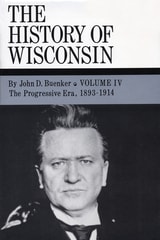
The History of Wisconsin, Volume IV
The Progressive Era, 1893-1914John D. Buenker
Wisconsin Historical Society Press, 1998
Published in Wisconsin's Sesquicentennial year, this fourth volume in The History of Wisconsin series covers the twenty tumultuous years between the World's Columbian Exposition and the First World War when Wisconsin essentially reinvented itself, becoming the nation's "laboratory of democracy."
The period known as the Progressive Era began to emerge in the mid-1890s. A sense of crisis and a widespread clamor for reform arose in reaction to rapid changes in population, technology, work, and society. Wisconsinites responded with action: their advocacy of women's suffrage, labor rights and protections, educational reform, increased social services, and more responsive government led to a veritable flood of reform legislation that established Wisconsin as the most progressive state in the union.
As governor and U.S. Senator from Wisconsin, Robert M. La Follette, Sr., was the most celebrated of the Progressives, but he was surrounded by a host of pragmatic idealists from politics, government, and the state university. Although the Progressives frequently disagreed over priorities and tactics, their values and core beliefs coalesced around broad-based participatory democracy, the application of scientific expertise to governance, and an active concern for the welfare of all members of society-what came to be known as "the Wisconsin Idea."
The Human Rights Paradox
Universality and Its DiscontentsEdited by Steve J. Stern and Scott Straus
University of Wisconsin Press, 2014
The Human Rights Paradox is the first book to fully embrace this contradiction and reframe human rights as history, contemporary social advocacy, and future prospect. In case studies that span Africa, Latin America, South and Southeast Asia, and the United States, contributors carefully illuminate how social actors create the imperative of human rights through relationships whose entanglements of the global and the local are so profound that one cannot exist apart from the other. These chapters provocatively analyze emerging twenty-first-century horizons of human rights—on one hand, the simultaneous promise and peril of global rights activism through social media, and on the other, the force of intergenerational rights linked to environmental concerns that are both local and global. Taken together, they demonstrate how local struggles and realities transform classic human rights concepts, including “victim,” “truth,” and “justice.”
Edited by Steve J. Stern and Scott Straus, The Human Rights Paradox enables us to consider the consequences—for history, social analysis, politics, and advocacy—of understanding that human rights belong both to “humanity” as abstraction as well as to specific people rooted in particular locales.
The Humane Metropolis
People and Nature in the 21st-Century CityRutherford H. Platt
University of Massachusetts Press, 2006
Four-fifths of Americans now live in the nation's sprawling metropolitan areas, and half of the world's population is now classified as “urban.” As cities become the dominant living environment for humans, there is growing concern about how to make such places more habitable, more healthy and safe, more ecological, and more equitable—in short, more “humane.”
This book explores the prospects for a more humane metropolis through a series of essays and case studies that consider why and how urban places can be made greener and more amenable. Its point of departure is the legacy of William H. Whyte (1917-1999), one of America's most admired urban thinkers. From his eyrie high above Manhattan in the offices of the Rockefeller Brothers Fund, Whyte laid the foundation for today's “smart growth” and “new urbanist” movements with books such as The Last Landscape (1968). His passion for improving the habitability of cities and suburbs is reflected in the diverse grassroots urban design and regreening strategies discussed in this volume.
Topics examined in this book include urban and regional greenspaces, urban ecological restoration, social equity, and green design. Some of the contributors are recognized academic experts, while others offer direct practical knowledge of particular problems and initiatives. The editor's introduction and epilogue set the individual chapters in a broader context and suggest how the strategies described, if widely replicated, may help create more humane urban environments.
In addition to Rutherford H. Platt, contributors to the volume include Carl Anthony, Thomas Balsley, Timothy Beatley, Eugenie L. Birch, Edward J. Blakely, Colin M. Cathcart, Steven E. Clemants, Christopher A. De Sousa, Steven N. Handel, Peter Harnik, Michael C. Houck, Jerold S. Kayden, Albert LaFarge, Andrew Light, Charles E. Little, Anne C. Lusk, Thalya Parilla, Deborah E. Popper, Frank J. Popper, Mary V. Rickel, Cynthia Rosenzweig, Robert L. Ryan, Laurin N. Sievert, Andrew G. Wiley-Schwartz, and Ann Louise Strong.
Included in the back of the book is a DVD of a 22-minute film created by Ted White, which serves as a companion to the text.
The Insistent Call
Rhetorical Moments in Black Anticolonialism, 1929-1937Aric Putnam
University of Massachusetts Press, 2012
Throughout the nineteenth century, African heritage played an important role in black America, as personal memories and cultural practices continued to shape the everyday experience of people of African descent living under the shadow of slavery. Resisting efforts to de-Africanize their values, customs, and beliefs, Black Americans invoked their African roots in public arguments about their identity and place in the “new” world. At the outset of the twentieth century many still saw Africa primarily as the source of a common cultural and spiritual past. But after the 1920s, the meaning of African heritage changed as people of African descent expressed new relationships between themselves, the United States, and the African Diaspora.
In The Insistent Call, Aric Putnam studies the rhetoric of newspapers, literature, and political pamphlets that expressed this shift. He demonstrates that as people of African descent debated the United States' occupation of Haiti, the Liberian labor crisis, and the Italian invasion of Ethiopia, they formed a new collective identity, one that understood the African Diaspora in primarily political rather than cultural terms. In addition to uncovering a neglected period in the history of Black rhetoric, Putnam shows how rhetoric that articulates the interests of a population not defined by the boundaries of a state can still motivate collective action and influence policies.
The Internet Myth
From the Internet Imaginary to Network IdeologiesPaolo Bory
University of Westminster Press, 2020
‘The Internet is broken and Paolo Bory knows how we got here. In a powerful book based on original research, Bory carefully documents the myths, imaginaries, and ideologies that shaped the material and cultural history of the Internet. As important as this book is to understand our shattered digital world, it is essential for those who would fix it.’ — Vincent Mosco, author of The Smart City in a Digital World
The Internet Myth retraces and challenges the myth laying at the foundations of the network ideologies – the idea that networks, by themselves, are the main agents of social, economic, political and cultural change. By comparing and integrating different sources related to network histories, this book emphasizes how a dominant narrative has extensively contributed to the construction of the Internet myth while other visions of the networked society have been erased from the collective imaginary. The book decodes, analyzes and challenges the foundations of the network ideologies looking at how networks have been imagined, designed and promoted during the crucial phase of the 1990s.
Three case studies are scrutinized so as to reveal the complexity of network imaginaries in this decade: the birth of the Web and the mythopoesis of its inventor; and the histories of two Italian networking projects, the infrastructural plan Socrate and the civic network Iperbole, the first to give free Internet access to citizens.
The Internet Myth thereby provides a compelling and hidden sociohistorical narrative in order to challenge one of the most powerful myths of our time.
This title has been published with the financial assistance of the Fondazione Hilda e Felice Vitali, Lugano, Switzerland.

The Intimate Frontier
Friendship and Civil Society in Northern New SpainIgnacio Martínez
University of Arizona Press, 2019
Spaniards living in the isolated borderlands region of colonial Sonora were keen to develop an ideologically relevant and socially acceptable form of friendship with Indigenous people that could act as a functional substitute for civil law and governance, thereby regulating Native behavior. But as frontier society grew in complexity and sophistication, Indigenous and mixed-raced people also used the language of friendship and the performance of emotion for their respective purposes, in the process becoming skilled negotiators to meet their own best interests.
In northern New Spain, friendships were sincere and authentic when they had to be and cunningly malleable when the circumstances demanded it. The tenuous origins of civil society thus developed within this highly contentious social laboratory in which friendships (authentic and feigned) set the social and ideological parameters for conflict and cooperation. Far from the coffee houses of Restoration London or the lecture halls of the Republic of Letters, the civil society illuminated by Martínez stumbled forward amid the ambiguities and contradictions of colonialism and the obstacles posed by the isolation and violence of the Sonoran Desert.
The Killing Age
How Violence Made the Modern WorldClifton Crais
University of Chicago Press, 2025
We are used to speaking of the Anthropocene and the outsized impact humans have had on the planet. But we sometimes lose sight of a fundamental truth at the heart of modern world history: the legacy of human predation, slavery, and imperialism that has devastated the natural world and led us to our present moment. As historian Clifton Crais shows in this magisterial work, the period that we most associate with human progress—which gave us the Enlightenment, the rise of democracies, the Industrial Revolution, and more—was at the same time catastrophically destructive.
In this bracing, landmark book, Crais urges us to view the growth of global capitalism between 1750 and the early 1900s not as the Anthropocene, but as the Mortecene: the Killing Age. Killing brought the world together and tore it apart, as profiteering warlords committed mass-scale slaughter of humans and animals across Africa, Asia, and the Americas. The newfound ease and profitability of killing created a disturbing network of global connections and economies, eliminating tens of millions of people and sparking an environmental crisis that remains the most urgent catastrophe facing the world today.
Drawing on years of scholarship and marshaling myriad sources across world history, The Killing Age turns our vision of past and present on its head, illuminating the Mortecene in all its horror—how it shaped who we are, what we value and fear, and the precarious present we inhabit today.
The Killing Age
How Violence Made the Modern WorldClifton Crais
University of Chicago Press, 2025
A bracing account of how our current planetary crisis emerged from the worst cataclysmic destruction in human history, which Clifton Crais terms the Mortecene—the killing age.
We are used to speaking of the Anthropocene and the outsized impact humans have had on the planet. But we sometimes lose sight of a fundamental truth at the heart of modern world history: the legacy of human predation, slavery, and imperialism that has devastated the natural world and led us to our present moment. As historian Clifton Crais shows in this magisterial work, the period that we most associate with human progress—which gave us the Enlightenment, the rise of democracies, the Industrial Revolution, and more—was at the same time catastrophically destructive.
In this bracing, landmark book, Crais urges us to view the growth of global capitalism between 1750 and the early 1900s not as the Anthropocene, but as the Mortecene: the Killing Age. Killing brought the world together and tore it apart, as profiteering warlords committed mass-scale slaughter of humans and animals across Africa, Asia, and the Americas. The newfound ease and profitability of killing created a disturbing network of global connections and economies, eliminating tens of millions of people and sparking an environmental crisis that remains the most urgent catastrophe facing the world today.
Drawing on years of scholarship and marshaling myriad sources across world history, The Killing Age turns our vision of past and present on its head, illuminating the Mortecene in all its horror—how it shaped who we are, what we value and fear, and the precarious present we inhabit today.

The King of Skid Row
John Bacich and the Twilight Years of Old MinneapolisJames Eli Shiffer
University of Minnesota Press, 2023
The story of a much different Minneapolis, through the words and photographs of one of its most colorful characters—now in paperback
City blue laws drove the liquor trade and its customers—hard-drinking lumberjacks, pensioners, farmhands, and railroad workers—into the oldest quarter of Minneapolis. In the fifty-cent-a-night flophouses of the city’s Gateway District, they slept in cubicles with ceilings of chicken wire. In rescue missions, preachers and nuns tried to save their souls. Sociology researchers posing as vagrants studied them. And in their midst John Bacich, aka Johnny Rex, who owned a bar, a liquor store, and a cage hotel, documented the gritty neighborhood’s last days through photographs and film of his clientele.
The King of Skid Row follows Johnny Rex into this vanished world that once thrived in the heart of Minneapolis. Drawing on hours of interviews conducted in the three years before Bacich’s death in 2012, James Eli Shiffer brings to life the eccentric characters and strange events of an American skid row. Supplemented with archival and newspaper research and his own photographs, Bacich’s stories recreate the violent, alcohol-soaked history of a city best known for its clean, progressive self-image. His life captures the seamy, richly colorful side of the city swept away by a massive urban renewal project in the early 1960s and gives us, in a glimpse of those bygone days, one of Minneapolis’s most intriguing figures—spinning some of its most enduring and enthralling tales.

The King’s Dinner
Family, Nation, and Identity on the British table, 1760–1820Adam Crymble, Sarah Fox, Rachel Rich, and Lisa Smith
University College London, 2026
Expanding previous notions of the monarchy and Britishness, this volume examines British identity in the late eighteenth century through the lens of the kitchen.
Drawing on a large dataset of two royal household kitchen ledgers, this book studies the role and influence of food in understanding British identity in the late eighteenth century. Analyzing trade routes, migration, agricultural changes, recipes, and flavors, it argues that Britishness was more complex and multicultural than previously recognized. By situating national identity at the dinner table, the authors show how Britishness was an embodied identity that combined regional, national, and global elements. Combining digital humanities and data science approaches with social and cultural history, The King's Dinner also proposes a new way of understanding the monarchy's position within rather than above the cultural habitus of their subjects.

The Krobo People of Ghana to 1892
A Political and Social HistoryLouis E. Wilson
Ohio University Press, 1991
The Labor Movement in Wisconsin
A HistoryRobert W. Ozanne
Wisconsin Historical Society Press, 1984
The Labor of Literature
Democracy and Literary Culture in Modern ChileJane D. Griffin
University of Massachusetts Press, 2016
By examining alternative literary publications, Griffin recasts the seventeen-year Pinochet dictatorship as a time of editorial experimentation despite widespread cultural oppression and shows how grassroots cultural activism has challenged government-approved corporate publishing models throughout the postdictatorship period. Griffin's work also points to the growing importance of autogestión, or do-it-yourself cultural production, where individuals combine artisanal forms with new technologies to make and share creative work on a global scale.
The Lost Forms of Economic Knowledge
On the Balance of Living BeingsArnaud Orain
University of Chicago Press, 2026
Traces the early history of economic knowledge developed by thinkers between the sixteenth and eighteenth centuries.
Starting with the sixteenth century, The Lost Forms of Economic Knowledge investigates the origins and prehistory of economic thought before the emergence of political economy as an autonomous discipline in the late eighteenth century. In this book, the celebrated French historian Arnaud Orain argues that these “lost forms” of economic knowledge represent an important alternative to our modern system of numerical abstraction and market manipulation.
As Orain shows, older approaches to the economy defined it as a relationship between humans and their specific environment. These earlier mindsets sought to advance vernacular knowledge by turning to a variety of figures—naturalists, artisans, farmers, and merchants—to learn how to take advantage of the environment without depleting it. The goal of these inquiries was not to maximize profit but to determine how to allow humans to satisfy basic needs and live in harmony with nature. Now, at a time in which natural resources are fast depleting, Orain argues that we could do worse than consider the alternative approaches to “economics” that lie in our past, and that might still be available in the future.
The Lowell Experiment
Public History in a Postindustrial CityCathy Stanton
University of Massachusetts Press, 2006
In the early nineteenth century, Lowell, Massachusetts, was widely studied and emulated as a model for capitalist industrial development. One of the first cities in the United States to experience the ravages of deindustrialization, it was also among the first places in the world to turn to its own industrial and ethnic history as a tool for reinventing itself in the emerging postindustrial economy. The Lowell Experiment explores how history and culture have been used to remake Lowell and how historians have played a crucial yet ambiguous role in that process.
The book focuses on Lowell National Historical Park, the flagship project of Lowell's new cultural economy. When it was created in 1978, the park broke new ground with its sweeping reinterpretations of labor, immigrant, and women's history. It served as a test site for the ideas of practitioners in the new field of public history—a field that links the work of professionally trained historians with many different kinds of projects in the public realm.
The Lowell Experiment takes an anthropological approach to public history in Lowell, showing it as a complex cultural performance shaped by local memory, the imperatives of economic redevelopment, and tourist rituals—all serving to locate the park's audiences and workers more securely within a changing and uncertain new economy characterized by growing inequalities and new exclusions.
The paradoxical dual role of Lowell's public historians as both interpreters of and contributors to that new economy raises important questions about the challenges and limitations facing academically trained scholars in contemporary American culture. As a long-standing and well-known example of “culture-led re-development,” Lowell offers an outstanding site for exploring questions of concern to those in the fields of public and urban history, urban planning, and tourism studies.
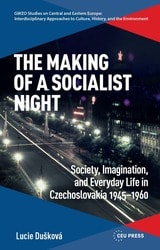
The Making of a Socialist Night
Society, Imagination and Everyday Life in Czechoslovakia 1945-1960Lucie Dusková
Central European University Press, 2026

The Marital Knot
Agunot in the Ashkenazi Realm, 1648–1850Noa Shashar
Brandeis University Press, 2024
Noa Shashar sheds light on Jewish family life in the early modern era and on the activity of rabbis whose Jewish legal rulings determined the fate of agunot, literally “chained women,” who were often considered a marginal group. Who were these men and women? How did Jewish society deal with the danger of a woman’s becoming an agunah? What kind of reality was imposed on women who found themselves agunot, and what could they do to extricate themselves from their plight? How did rabbinic decisors discharge their task during this period, and what were the outcomes given the fact that the agunot were dependent on the male rabbinic establishment?
This study describes the lives of agunot, and by reexamining the halakhic activity concerning agunot in this period, proposes a new assessment of the attitude that decisors displayed toward the freeing of agunot.
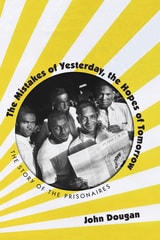
The Mistakes of Yesterday, the Hopes of Tomorrow
The Story of the PrisonairesJohn Dougan
University of Massachusetts Press, 2012
Early in the morning on June 1, 1953, five African American men boarded a van to make the 200-mile trip from Nashville to Memphis for a daylong recording session at the legendary Sun Studios, to be overseen by Sun founder Sam Phillips. One of the two tracks cut that day, “Just Walkin' in the Rain,” would go on to become a regional R&B hit, Sun Records' biggest record of the pre-Elvis era. It would, however, be the group's only hit. They were the Prisonaires, a vocal quintet who had honed their skills while inmates at the Tennessee State Penitentiary in Nashville.
In this book, John Dougan tells the story of the Prisonaires, their hit single, and the afterlife of this one remarkable song. The group and the song itself represent a compelling concept: imprisoned men using music as a means of cultural and personal survival. The song was re-recorded by white singer Johnnie Ray, who made it a huge hit in 1956. Over the years, other singers and groups would move the song further away from its origins, recasting the deep emotions that came from creating music in a hostile, controlled environment.
The story of the Prisonaires, for all of its triumphs, reflects the disappointment of men caught in a paradoxical search for personal independence while fully cognizant of a future consigned to prison. Their brief career and the unusual circumstances under which it flourished sheds light on the harsh realities of race relations in the pre–Civil Rights South. The book also provides a portrait of Nashville just as it was gaining traction as a nationally recognized music center.
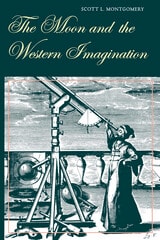
The Moon and the Western Imagination
Scott L. Montgomery
University of Arizona Press, 1999
Scott Montgomery has produced a richly detailed analysis of how the Moon has been visualized in Western culture through the ages, revealing the faces it has presented to philosophers, writers, artists, and scientists for nearly three millennia. To do this, he has drawn on a wide array of sources that illustrate mankind's changing concept of the nature and significance of heavenly bodies from classical antiquity to the dawn of modern science.
Montgomery especially focuses on the seventeenth century, when the Moon was first mapped and its features named. From literary explorations such as Francis Godwin's Man in the Moone and Cyrano de Bergerac's L'autre monde to Michael Van Langren's textual lunar map and Giambattista Riccioli's Almagestum novum, he shows how Renaissance man was moved by the lunar orb, how he battled to claim its surface, and how he in turn elevated the Moon to a new level in human awareness. The effect on human imagination has been cumulative: our idea of the Moon, and therefore the planets, is multilayered and complex, having been enriched by associations played out in increasingly complicated harmonies over time. We have shifted the way we think about the lunar face from a "perfect" body to an earthlike one, with corresponding changes in verbal and visual expression.
Ultimately, Montgomery suggests, our concept of the Moon has never wandered too far from the world we know best—the Earth itself. And when we finally establish lunar bases and take up some form of residence on the Moon's surface, we will not be conquering a New World, fresh and mostly unknown, but a much older one, ripe with history.
The Motions Beneath
Indigenous Migrants on the Urban Frontier of New SpainLaurent Corbeil
University of Arizona Press, 2018
The Motions Beneath is a social history of the encounter of these thousands of indigenous peoples representing ten linguistic groups. Using baptism and marriage records, Laurent Corbeil creates a demographic image of the town’s population. He studies two generations of highly mobile individuals, revealing their agency and subjectivity when facing colonial structures of exploitation on a daily basis.
Corbeil’s study depicts the variety of paths on which indigenous peoples migrated north to build this diverse urban society. Breaking new ground by bridging stories of migration, labor relations, sexuality, legal culture, and identity construction, Corbeil challenges the assumption that urban indigenous communities were organized along ethnic lines. He posits instead that indigenous peoples developed extensive networks and organized themselves according to labor, trade, and social connections.
The Movement of World Revolution
Christopher Dawson
Catholic University of America Press, 2013

The Names of John Gergen
Immigrant Identities in Early Twentieth-Century St. LouisBenjamin Moore
University of Missouri Press, 2020
Winner of the 2022 Missouri History Book Award
Rescued from the dumpster of a boarded-up house, the yellowing scraps of a young migrant’s schoolwork provided Benjamin Moore with the jumping-off point for this study of migration, memory, and identity. Centering on the compelling story of its eponymous subject, The Names of John Gergen examines the converging governmental and institutional forces that affected the lives of migrants in the industrial neighborhoods of South St. Louis in the early twentieth century. These migrants were Banat Swabians from Torontál County in southern Hungary—they were Catholic, agrarian, and ethnically German.
Between 1900 and 1920, the St. Louis neighborhoods occupied by migrants were sites of efforts by civic authorities and social reformers to counter the perceived threat of foreignness by attempting to Americanize foreign-born residents. At the same time, these neighborhoods saw the strengthening of Banat Swabians’ ethnic identities. Historically, scholars and laypeople have understood migrants in terms of their aspirations and transformations, especially their transformations into Americans. The experiences of John Gergen and his kin, however, suggest that identity at the level of the individual was both more fragmented and more fluid than twentieth-century historians have recognized, subject to a variety of forces that often pulled migrants in multiple directions.
The Necessity for Ruins and Other Topics
J. B. Jackson
University of Massachusetts Press, 1980

The New American Sport History
Recent Approaches and PerspectivesEdited by S. W. Pope
University of Illinois Press, 1996
In this collection, sixteen scholars explore topics as diverse as the historical debate over black athletic superiority, the selling of sport in society, the eroticism of athletic activity, sexual fears of women athletes, and the marketing of the marathon.
In line with the changing nature of sport history as a field of study, the essays focus less on traditional topics and more on themes of class, gender, race, ethnicity, and national identity, which also define the larger parameters of social and cultural history. It is the first anthology to situation sport history within the broader fields of social history and cultural studies.
Contributors are Melvin L. Adelman, William J. Baker, Pamela L. Cooper, Mark Dyreson, Gerald R. Gems, Elliott J. Gorn, Allen Guttmann, Stephen H. Hardy, Peter Levine, Donald J. Mrozek, Michael Oriard, S. W. Pope, Benjamin G. Rader, Steven A. Riess, Nancy L. Struna, and David K. Wiggins.
The New Berlin
Memory, Politics, PlaceKaren E. Till
University of Minnesota Press, 2005
“The New Berlin is a notable contribution to human geography and to the interdisciplinary literature on social memory and place making. Till’s methods and scholarship have provided the conceptual groundwork for the exploration and development of place making, social memory, and spatial haunting through the particular practices and politics of the new Berlin. Her readable style is marked by a narrative economy in which every word and sentence serves the larger purposes of the book. I recommend this book to anyone—student, scholar, or practitioner—who is interested in the social dynamics of memory formation and place making.” —The Professional Geographer
“This book is a well-written ‘first-hand’ account, though it also thoroughly covers academic literature, contemporary news accounts, and archival records.” —German Studies Review
“Karen E. Till's The New Berlin describes the modern metropolis and the ghosts of the past that it has to deal with.” —German World
“Well illustrated and copiously footnoted, this is a cutting-edge study of the power of identity-construction/analysis. Highly recommended.” —CHOICE
The New Civil Rights Movement Reader
Resistance, Resilience, and JusticeEdited by Traci Parker and Marcia Walker-McWilliams
University of Massachusetts Press, 2023
In the United States, the fight to secure full civil rights for African American people has endured for centuries. The movement has included many voices, among them, working people, charismatic activists, musicians and artists, the LGBTQIA community, veterans, suburbanites, and elected officials. Moving from the labor struggles of the 1930s to the sit-ins and boycotts of midcentury, and the Black Lives Matter protests of today, this expansive volume brings together first-person accounts, political documents and speeches, and historical photographs from each region of the country.
Designed for use in courses and engaging for general readers, this new compilation is the most diverse, most inclusive, and most comprehensive resource available for teaching and learning about the civil rights movement. With chronological and geographical depth, The New Civil Rights Movement Reader addresses a range of key topics, including youth activism, regional and local freedom struggles, voting rights, economic inequality, gender, sexuality, and culture, and the movement’s global reach.
The Notorious Edward Low
Pursuing the Last Great Villain of Piracy's Golden AgeLen Travers
Westholme Publishing, 2025
In The Notorious Edward Low: Pursuing the Last Great Villain of Piracy’s Golden Age, historian Len Travers reexamines this critical period through the career of Low, a complicated pirate leader, and his nemesis, Peter Solgard, captain of the Royal Navy warship HMS Greyhound. By the time Solgard, aboard Greyhound, was tracking Low in 1723, the era’s other notable pirates were gone—dead, captured, or disappeared. Drawing on previously unpublished Admiralty records and consulting both contemporary and modern chroniclers, Travers directs readers to much powerful testimony minimized in or excluded from histories of piracy’s “Golden Age,” leveling a critical eye at familiar sources too long accepted at face value. Travers demonstrates that, feared as they certainly were, pirates were largely ordinary seamen trapped in desperate circumstances who, in the end, had little to show for their efforts. Contrary to popular portrayals, for pirates the second decade of the eighteenth century was a time of radically diminishing returns, scant treasure, buried or otherwise, and increasingly successful suppression by state authorities. One by one, safe havens shut out the sea-rovers, who with their depredations in America quickly squandered the sympathy and support they had once enjoyed among common folk. The Notorious Edward Low puts individual actors, from colonial governors to captains to common seamen, at center stage, and reveals how British authorities used new anti-piracy laws to reclaim a measure of authority over their fractious North American colonies—a compelling and meaningful story with its own brand of true-life swashbuckling on the high seas.
The Nutmeg's Curse
Parables for a Planet in CrisisAmitav Ghosh
University of Chicago Press, 2021
A powerful work of history, essay, testimony, and polemic, Amitav Ghosh’s new book traces our contemporary planetary crisis back to the discovery of the New World and the sea route to the Indian Ocean. The Nutmeg’s Curse argues that the dynamics of climate change today are rooted in a centuries-old geopolitical order constructed by Western colonialism. At the center of Ghosh’s narrative is the now-ubiquitous spice nutmeg. The history of the nutmeg is one of conquest and exploitation—of both human life and the natural environment. In Ghosh’s hands, the story of the nutmeg becomes a parable for our environmental crisis, revealing the ways human history has always been entangled with earthly materials such as spices, tea, sugarcane, opium, and fossil fuels. Our crisis, he shows, is ultimately the result of a mechanistic view of the earth, where nature exists only as a resource for humans to use for our own ends, rather than a force of its own, full of agency and meaning.
Writing against the backdrop of the global pandemic and the Black Lives Matter protests, Ghosh frames these historical stories in a way that connects our shared colonial histories with the deep inequality we see around us today. By interweaving discussions on everything from the global history of the oil trade to the migrant crisis and the animist spirituality of Indigenous communities around the world, The Nutmeg’s Curse offers a sharp critique of Western society and speaks to the profoundly remarkable ways in which human history is shaped by non-human forces.

The Orchard in the Ruins
Cloning Oranges and Cultivating Whiteness in America and the Global SouthTiago Saraiva
University of Chicago Press, 2026
Ingeniously connects the history of citrus cultivation to the production and maintenance of whiteness in sites around the world.
In The Orchard in the Ruins, acclaimed historian Tiago Saraiva illuminates the global impact of cloning Californian oranges, a practice that emerged in the aftermath of the great depression of the 1890s. Cloning promised control, uniformity, and resistance to an array of environmental and economic threats. But Californian orchards—white-owned but tended by workers of Chinese, Japanese, Mexican, or Indigenous origin—were also places where plantations and race intertwined. Agricultural anxieties about strains of oranges and their value, Saraiva shows, formed a continuum with anxieties about vanishing whiteness.
The Orchard in the Ruins connects Californian history to other sites of citrus cultivation: South Africa, where concerns about white poverty grew during the early twentieth century; Mandatory Palestine, where orchards were key to Zionist undertakings; colonial Algeria, where French settlers transformed the landscape with European farming techniques; and Brazil, where orchards were cultivated post-abolition. Drawing on local histories as well as the works of John Dewey, J. M. Coetzee, Edward Said, Frantz Fanon, and artist Tarsila do Amaral, Saraiva shows that in each place, orchards grew in the wake of specific historical crises. Orange cultivation was a transnational project in cultivating whiteness, one in which studies of fruits, buds, rootstocks, fungi, and viruses became race-making experiments.
A must-read for anyone interested in the history of science, technology, agriculture, and race, The Orchard in the Ruins reveals a troubled account of science-led attempts to remedy crumbling worlds.
The Ordeal of the Jungle
Race and the Chicago Federation of Labor, 1903–1922David Bates
Southern Illinois University Press, 2019
By organizing workers into neighborhood locals, which connected workplace struggles to ethnic and religious identities, the CFL facilitated a surge in the organization’s membership, particularly among African American workers, and afforded the federation the opportunity to aggressively confront employers. The CFL’s innovative structure, however, was ultimately its demise. Linking union locals to neighborhoods proved to be a form of de facto segregation. Over time union structures, rank-and-file conflicts, and employer resistance combined to turn the union’s hopeful calls for solidarity into animosity and estrangement. Tensions were exacerbated by violent shop floor confrontations and exploded in the bloody 1919 Chicago Race Riot. By the early 1920s, the CFL had collapsed.
The Ordeal of the Jungle explores the choices of a variety of people while showing a complex, overarching interplay of black and white workers and their employers. In addition to analyzing union structures and on-the-ground relations between workers, Bates synthesizes and challenges previous scholarship on interracial organizing to explain the failure of progressive unionism in Chicago.

The Oyster and the Eagle
Selected Aphorisms and Parables of MultatuliE. M. Multatuli
University of Massachusetts Press, 1974
The Paris Commune
A Brief HistoryCarolyn J. Eichner
Rutgers University Press, 2022
At dawn on March 18, 1871, Parisian women stepped between cannons and French soldiers, using their bodies to block the army from taking the artillery from their working-class neighborhood. When ordered to fire, the troops refused and instead turned and arrested their leaders. Thus began the Paris Commune, France’s revolutionary civil war that rocked the nineteenth century and shaped the twentieth.
Considered a golden moment of hope and potential by the left, and a black hour of terrifying power inversions by the right, the Commune occupies a critical position in understanding modern history and politics. A 72-day conflict that ended with the ferocious slaughter of Parisians, the Commune represents for some the final insurgent burst of the French Revolution’s long wake, for others the first “successful” socialist uprising, and for yet others an archetype for egalitarian socio-economic, feminist, and political change. Militants have referenced and incorporated its ideas into insurrections across the globe, throughout the twentieth and into the twenty-first centuries, keeping alive the revolution’s now-iconic goals and images. Innumerable scholars in countless languages have examined aspects of the 1871 uprising, taking perspectives ranging from glorifying to damning this world-shaking event.
The Commune stands as a critical and pivotal moment in nineteenth-century history, as the linchpin between revolutionary pasts and futures, and as the crucible allowing glimpses of alternate possibilities. Upending hierarchies of class, religion, and gender, the Commune emerged as a touchstone for the subsequent century-and-a-half of revolutionary and radical social movements.

The Passport as Home
Comfort in RootlessnessAndrei S. Markovits
Central European University Press, 2021
A Scholar's Quest for Home and Identity
Experience the remarkable story of a Romanian-born, Hungarian-speaking Jewish professor. From Vienna to Columbia and Harvard, he navigates a life marked by rootlessness, seeking comfort and purpose. His journey unfolds against the backdrop of five decades, two continents, and significant political and cultural changes.
As we follow his pursuit of a home, we gain insight into the critical developments of post-1945 Europe and America. Markovits's emigration experiences, first from Romania to Vienna and later from Vienna to New York, shed light on the challenges he faced.
His journey offers a panoramic view of the forces shaping the latter half of the 20th century. Despite America's flaws, he finds it a beacon of academic excellence, intellectual openness, cultural diversity, and religious tolerance—qualities that Europe lacked.
Explore the complexities of identity, culture, and the universal search for belonging in this captivating narrative.