Results by title
322 books match the query 'Social change' and 72 start with t
The Revolution Will Not Be Funded
Beyond the Non-Profit Industrial ComplexINCITE! Women of Color Against Violence
Duke University Press, 2017
Contributors. Christine E. Ahn, Robert L. Allen, Alisa Bierria, Nicole Burrowes, Communities Against Rape and Abuse (CARA), William Cordery, Morgan Cousins, Ruth Wilson Gilmore, Stephanie Guilloud, Adjoa Florência Jones de Almeida, Tiffany Lethabo King, Paul Kivel, Soniya Munshi, Ewuare Osayande, Amara H. Pérez, Project South: Institute for the Elimination of Poverty and Genocide, Dylan Rodríguez, Paula X. Rojas, Ana Clarissa Rojas Durazo, Sisters in Action for Power, Andrea Smith, Eric Tang, Madonna Thunder Hawk, Ije Ude, Craig Willse
The Roots of Radicalism
Tradition, the Public Sphere, and Early Nineteenth-Century Social MovementsCraig Calhoun
University of Chicago Press, 2012

The Senses of Democracy
Perception, Politics, and Culture in Latin AmericaBy Francine R. Masiello
University of Texas Press, 2018
In The Senses of Democracy, Francine R. Masiello traces a history of perceptions expressed in literature, the visual arts, politics, and history from the start of the nineteenth century to the present day. A wide transnational landscape frames the book along with an original and provocative thesis: when the discourse on democracy is altered—when nations fall into crisis or the increased weight of modernity tests minds and nerves—the representation of our sensing bodies plays a crucial role in explaining order and rebellion, cultural innovation, and social change.
Taking a wide arc of materials—periodicals, memoirs, political proclamations, and travel logs, along with art installations and fiction—and focusing on the technologies that supplement and enhance human perception, Masiello looks at the evolution of what she calls “sense work” in cultural texts, mainly from Latin America, that wend from the heights of romantic thought to the startling innovations of modernism in the early twentieth century and then to times of posthuman experience when cyber bodies hurtle through globalized space and human senses are reproduced by machines. Tracing the shifting debates on perceptions, The Senses of Democracy offers a new paradigm with which to speak of Latin American cultural history and launches a field for the comparative study of bodies, experience, pleasure, and pain over the continental divide. In the end, sense work helps us to understand how culture finds its location.

The Socialist Way of Life in Siberia
Transformation in BuryatiaMelissa Chakars
Central European University Press, 2014
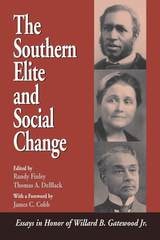
The Southern Elite and Social Change
Essays in Honor of Willard B. Gatewood, Jr.Randy Finley
University of Arkansas Press, 2002

The Town of Whispering Dolls
StoriesSusan Neville, Foreword by Shelley Jackson
University of Alabama Press, 2020
WINNER OF FC2’S CATHERINE DOCTOROW INNOVATIVE FICTION PRIZE
Stories haunted by the remains of the industrial Midwest, the opioid epidemic, and the technology of war
Located somewhere in the rust belt in the early twenty-first century, residents of the town of Whispering Dolls dream of a fabled and illusory past, even as new technologies reshape their world into something different and deeply strange. Dolls walk down the streets, cradling their empty heads and letting the wind turn them into flutes. A politician heads to Washington, DC, and leaves a toxic underground plume in his wake. A woman eats car parts instead of confronting the children who have forgotten her. A young woman falls in love with the robot who took her job at the candy factory.
In The Town of Whispering Dolls, it is usually the grandmothers and the children who grieve. Feeling invisible, in the story “Here,” a woman who has buried her children looks up at the sky where commercial and military jets fly overhead and tries to express her rage to the rich and powerful: “Keep flying above us in your planes. From one coast to the other, keep right on flying over us! We test your bombs and your beloved warriors. Here. Right here. Look down.”
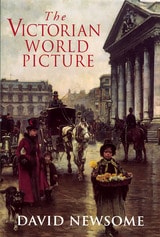
The Victorian World Picture
Newsome, David
Rutgers University Press, 1997
When did the Victorians come to regard themselves as "Victorians" and to use that term to describe the period in which they were living? David Newsome's monumental history takes a good, long look at the Victorian age and what distinguishes it so prominently in the history of both England and the world. The Victorian World Picture presents a vivid canvas of the Victorians as they saw themselves and as the rest of the world saw them.
The Victorian era was a time of unprecedented population growth and massive industrialization. Darwinian theory shook people's religious beliefs and foreign competition threatened industry and agriculture. The transformation of this nineteenth-century world was overhwelming, pervading the social, cultural, intellectual, economic, and political spheres. By the time of the Great Exhibition in 1851, the British were calling themselves Victorians and Prince Albert was able to proclaim, "We are living at a period of most wonderful transition." David Newsome weaves all these strands of Victorian life into a compelling evocation of the spirit of a fascinating time that laid the foundation for the modern age.
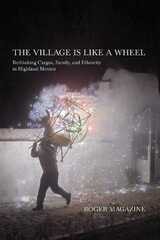
The Village Is Like a Wheel
Rethinking Cargos, Family, and Ethnicity in Highland MexicoRoger Magazine
University of Arizona Press, 2012
According to Magazine, where Western anthropologists often assume that persons are individuals capable of acting on their own to produce things, rural highland Mexicans see persons as inherently interdependent and in need of others even to act. He utilizes the term “active subjectivity” to denote the fact that what they produce in others is not simply action but also a subjective state or attitude of willingness to perform the action.
The author’s goals are to improve understandings of rural highland Mexicans’ lives and to contribute to a broader disciplinary effort aimed at revealing the cultural specificity or ethnocentricity of our supposedly universally applicable concepts and theories.
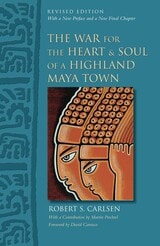
The War for the Heart and Soul of a Highland Maya Town
Revised EditionBy Robert S. Carlsen, with a contribution by Martín Prechtel
University of Texas Press, 2011
This compelling ethnography explores the issue of cultural continuity and change as it has unfolded in the representative Guatemala Mayan town Santiago Atitlán. Drawing on multiple sources, Robert S. Carlsen argues that local Mayan culture survived the Spanish Conquest remarkably intact and continued to play a defining role for much of the following five centuries. He also shows how the twentieth-century consolidation of the Guatemalan state steadily eroded the capacity of the local Mayas to adapt to change and ultimately caused some factions to reject—even demonize—their own history and culture. At the same time, he explains how, after a decade of military occupation known as la violencia, Santiago Atitlán stood up in unity to the Guatemalan Army in 1990 and forced it to leave town.
This new edition looks at how Santiago Atitlán has fared since the expulsion of the army. Carlsen explains that, initially, there was hope that the renewed unity that had served the town so well would continue. He argues that such hopes have been undermined by multiple sources, often with bizarre outcomes. Among the factors he examines are the impact of transnational crime, particularly gangs with ties to Los Angeles; the rise of vigilantism and its relation to renewed religious factionalism; the related brutal murders of followers of the traditional Mayan religion; and the apocalyptic fervor underlying these events.
The Well-Being of the Elderly in Asia
A Four-Country Comparative StudyAlbert I. Hermalin, Editor
University of Michigan Press, 2010
The World Sixties Made
Politics And Culture In Recent Americaedited by Van Gosse and Richard Moser
Temple University Press, 2003
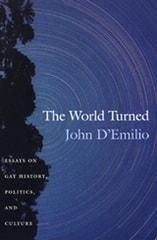
The World Turned
Essays on Gay History, Politics, and CultureJohn D Emilio
Duke University Press, 2002
In this collection of essays, D’Emilio brings his historian’s eye to bear on these profound changes in American society, culture, and politics. He explores the career of Bayard Rustin, a civil rights leader and pacifist who was openly gay a generation before almost everyone else; the legacy of radical gay and lesbian liberation; the influence of AIDS activist and writer Larry Kramer; the scapegoating of gays and lesbians by the Christian Right; the gay-gene controversy and the debate over whether people are "born gay"; and the explosion of attention focused on queer families. He illuminates the historical roots of contemporary debates over identity politics and explains why the gay community has become, over the last decade, such a visible part of American life.

Theater and Social Change, Volume 31
Alisa Solomon, ed.
Duke University Press, 0
Theater and Social Change not only tracks the historical evolution of political theater but also explores the current state and future prospects of different modes, including agit-prop, demonstrations, solo performance, Augusto Boal’s Theater of the Oppressed, and community-based production. With such notable contributors as Anna Deavere Smith, Jonathan Kalb, Holly Hughes, and Tony Kushner, the issue offers a diverse assemblage of personal statements, conversations, photographs, interviews, and performance text.
Contributors include: Reverend Billy, Jan Cohen-Cruz, Arlene Goldbard, Sharon Green, Lani Guinier, Holly Hughes, Jonathan Kalb, Tony Kushner, Judith Malina, Robbie McCauley, John O'Neal, Claudia Orenstein, Bill Rauch, Julie Salverson, Anna Deavere Smith, Alisa Solomon, Roberta Uno

Therapeutic Revolutions
Pharmaceuticals and Social Change in the Twentieth CenturyEdited by Jeremy A. Greene, Flurin Condrau, and Elizabeth Siegel Watkins
University of Chicago Press, 2016
This collection challenges the historical accuracy of this revolutionary narrative and offers instead a more nuanced account of the process of therapeutic innovation and the relationships between the development of medicines and social change. These assembled histories and ethnographies span three continents and use the lived experiences of physicians and patients, consumers and providers, and marketers and regulators to reveal the tensions between universal claims of therapeutic knowledge and the actual ways these claims have been used and understood in specific sites, from postwar West Germany pharmacies to twenty-first century Nigerian street markets. By asking us to rethink a story we thought we knew, Therapeutic Revolutions offers invaluable insights to historians, anthropologists, and social scientists of medicine.
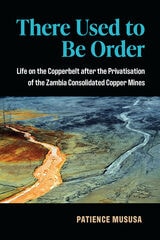
There Used to Be Order
Life on the Copperbelt after the Privatisation of the Zambia Consolidated Copper MinesPatience Mususa
University of Michigan Press, 2021
They Dragged Them through the Streets
A NovelHilary Plum
University of Alabama Press, 2013
They Dragged Them Through the Streets is a bold meditation on idealism, anger, and the American home front’s experience of today’s wars. This is an innovative work in the great tradition of war literature and a singular chronicle of one generation’s conflicts.
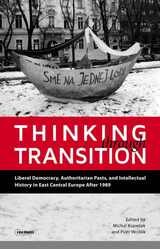
Thinking through Transition
Liberal Democracy, Authoritarian Pasts, and Intellectual History in East Central Europe After 1989Michal Kopecek
Central European University Press, 2015
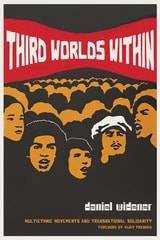
Third Worlds Within
Multiethnic Movements and Transnational SolidarityDaniel Widener
Duke University Press, 2024
Tradition
Edward Shils
University of Chicago Press, 1981
"Shils is a man of fabled learning, whose mind purrs powerfully like the moth at dusk. I hesitate to use the word conservative of him because it misses the central concern of his work, which is not conservatism, but the conservation of those human resources and achievements which are richest, and matter most."—David A. Martin, Times Literary Supplement
"Tradition is the first comprehensive treatment of the subject that encompasses the totality of tradition in all its multifaceted variables and functions. . . . It is a landmark analytical and theoretical sociological study that not only fills a need but also provides a basic model and impetus for further research."—H. Leon Abrams Jr., Sociology
Troubled Pasts
News and the Collective Memory of Social UnrestJill A. Edy
Temple University Press, 2006
Twenty-First Century Color Lines
Multiracial Change in Contemporary Americaedited by Andrew Grant-Thomas and Gary Orfield, foreword by Christopher Edley, Jr.
Temple University Press, 2008
The result of work initiated by the Harvard Civil Rights Project, this collection provides an excellent overview of the contemporary racial and ethnic terrain in the United States. The well-respected contributors to Twenty-First Century Color Lines combine theoretical and empirical perspectives, answering fundamental questions about the present and future of multiracialism in the United States: How are racial and ethnic identities promoted and defended across a spectrum of social, geopolitical and cultural contexts? What do two generations of demographic and social shifts around issues of race look like “on the ground?” What are the socio-cultural implications of changing demographics in the U.S.? And what do the answers to these questions portend for our multiracial future?
This illuminating book addresses issues of work, education, family life and nationality for different ethnic groups, including Asians and Latinos as well as African Americans and whites. Such diversity, gathered here in one volume, provides new perspectives on ethnicity in a society marked by profound racial transformations.
Contributors: Luis A. Avilés, Juan Carlos Martínez-Cruzado, Nilanjana Dasgupta, Christina Gómez, Gerald Gurin, Patricia Gurin, Anthony Kwame Harrison, Maria-Rosario Jackson, John Matlock, Nancy McArdle, John Mollenkopf, john a. powell, Doris Ramírez, David Roediger, Anayra Santory-Jorge, Jiannbin Lee Shiao, Mia H. Tuan, Katrina Wade-Golden and the editors.

Two Vermonts
Geography and Identity, 1865-1910Paul Searls
University of New Hampshire Press, 2006
Two Vermonts establishes a little-known fact about Vermont: that the state's fascination with tourism as a savior for a suffering economy is more than a century old, and that this interest in tourism has always been dogged by controversy. Through this lens, the book is poised to take its place as the standard work on Vermont in the Gilded Age and the Progressive Era. Searls examines the origins of Vermont's contemporary identity and some reasons why that identity ("Who is a Vermonter?") is to this day so hotly contested.
Searls divides nineteenth-century Vermonters into conceptually “uphill,” or rural/parochial, and “downhill,” or urban/cosmopolitan, elements. These two groups, he says, negotiated modernity in distinct and contrary ways. The dissonance between their opposing tactical approaches to progress and change belied the pastoral ideal that contemporary urban Americans had come to associate with the romantic notion of “Vermont.” Downhill Vermonters, espousing a vision of a mutually reinforcing relationship between tradition and progress, unilaterally endeavored to foster the pastoral ideal as a means of stimulating economic development. The hostile uphill resistance to this strategy engendered intense social conflict over issues including education, religion, and prohibition in the late nineteenth and early twentieth centuries. The story of Vermont's vigorous nineteenth-century quest for a unified identity bears witness to the stirring and convoluted forging of today's “Vermont.”
Searls's engaging exploration of this period of Vermont's history advances our understanding of the political, economic, and cultural transformation of all of rural America as industrial capitalism and modernity revolutionized the United States between 1865 and 1910. By the late Progressive Era, Vermont's reputation was rooted in the national yearning to keep society civil, personal, and meaningful in a world growing more informal, bureaucratic, and difficult to navigate. The fundamental ideological differences among Vermont communities are indicative of how elusive and frustrating efforts to balance progress and tradition were in the context of effectively negotiating capitalist transformation in contemporary America.