Results by title
1927 books match the query 'Technology & Engineering' and 270 start with t
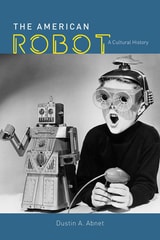
The American Robot
A Cultural HistoryDustin A. Abnet
University of Chicago Press, 2020
In tracing the history of the idea of robots in US culture, Abnet draws on intellectual history, religion, literature, film, and television. He explores how robots and their many kin have not only conceptually connected but literally embodied some of the most critical questions in modern culture. He also investigates how the discourse around robots has reinforced social and economic inequalities, as well as fantasies of mass domination—chilling thoughts that the recent increase in job automation has done little to quell. The American Robot argues that the deep history of robots has abetted both the literal replacement of humans by machines and the figurative transformation of humans into machines, connecting advances in technology and capitalism to individual and societal change. Look beneath the fears that fracture our society, Abnet tells us, and you’re likely to find a robot lurking there.
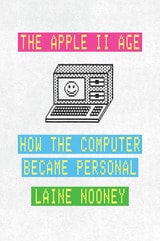
The Apple II Age
How the Computer Became PersonalLaine Nooney
University of Chicago Press, 2023
An engrossing origin story for the personal computer—showing how the Apple II’s software helped a machine transcend from hobbyists’ plaything to essential home appliance.
Skip the iPhone, the iPod, and the Macintosh. If you want to understand how Apple Inc. became an industry behemoth, look no further than the 1977 Apple II. Designed by the brilliant engineer Steve Wozniak and hustled into the marketplace by his Apple cofounder Steve Jobs, the Apple II became one of the most prominent personal computers of this dawning industry.
The Apple II was a versatile piece of hardware, but its most compelling story isn’t found in the feat of its engineering, the personalities of Apple’s founders, or the way it set the stage for the company’s multibillion-dollar future. Instead, historian Laine Nooney shows, what made the Apple II iconic was its software. In software, we discover the material reasons people bought computers. Not to hack, but to play. Not to code, but to calculate. Not to program, but to print. The story of personal computing in the United States is not about the evolution of hackers—it’s about the rise of everyday users.
Recounting a constellation of software creation stories, Nooney offers a new understanding of how the hobbyists’ microcomputers of the 1970s became the personal computer we know today. From iconic software products like VisiCalc and The Print Shop to historic games like Mystery House and Snooper Troops to long-forgotten disk-cracking utilities, The Apple II Age offers an unprecedented look at the people, the industry, and the money that built the microcomputing milieu—and why so much of it converged around the pioneering Apple II.

The Archaeology of Class War
The Colorado Coalfield Strike of 1913-1914Karin Larkin
University Press of Colorado, 2009
The Art of Military Coercion
Why the West's Military Superiority Scarcely MattersRob de Wijk
Amsterdam University Press, 2014
The Art of Successful Business Communication
Patrick Forsyth
The Institution of Engineering and Technology, 2008

The Art of Terrestrial Diagrams in Early China
Michelle H. Wang
University of Chicago Press, 2023
This is the first English-language monograph on the early history of maps in China, centering on those found in three tombs that date from the fourth to the second century BCE and constitute the entire known corpus of early Chinese maps (ditu). More than a millennium separates them from the next available map in the early twelfth century CE. Unlike extant studies that draw heavily from the history of cartography, this book offers an alternative perspective by mobilizing methods from art history, archaeology, material culture, religion, and philosophy. It examines the diversity of forms and functions in early Chinese ditu to argue that these pictures did not simply represent natural topography and built environments, but rather made and remade worlds for the living and the dead. Wang explores the multifaceted and multifunctional diagrammatic tradition of rendering space in early China.

The Artificial Ear
Cochlear Implants and the Culture of DeafnessBlume, Stuart
Rutgers University Press, 2009
Part ethnography and part historical study, The Artificial Ear is based on interviews with researchers who were pivotal in the early development and implementation of the new technology. Through an analysis of the scientific and clinical literature, Stuart Blume reconstructs the history of artificial hearing from its conceptual origins in the 1930s, to the first attempt at cochlear implantation in Paris in the 1950s, and to the widespread clinical application of the "bionic ear" since the 1980s.

The Arts of the Microbial World
Fermentation Science in Twentieth-Century JapanVictoria Lee
University of Chicago Press, 2021
The Arts of the Microbial World explores the significance of fermentation phenomena, both as life processes and as technologies, in Japanese scientific culture. Victoria Lee’s careful study documents how Japanese scientists and skilled workers sought to use the microbe’s natural processes to create new products, from soy-sauce mold starters to MSG, vitamins to statins. In traditional brewing houses as well as in the food, fine chemical, and pharmaceutical industries across Japan, they showcased their ability to deal with the enormous sensitivity and variety of the microbial world.
Charting developments in fermentation science from the turn of the twentieth century, when Japan was an industrializing country on the periphery of the world economy, to 1980 when it had emerged as a global technological and economic power, Lee highlights the role of indigenous techniques in modern science as it took shape in Japan. In doing so, she reveals how knowledge of microbes lay at the heart of some of Japan’s most prominent technological breakthroughs in the global economy.
At a moment when twenty-first-century developments in the fields of antibiotic resistance, the microbiome, and green chemistry suggest that the traditional eradication-based approach to the microbial world is unsustainable, twentieth-century Japanese microbiology provides a new, broader vantage for understanding and managing microbial interactions with society.

The Atlas of Boston History
Edited by Nancy S. Seasholes
University of Chicago Press, 2019
Edited by historian Nancy S. Seasholes, this landmark volume captures all aspects of Boston’s past in a series of fifty-seven stunning full-color spreads. Each section features newly created thematic maps that focus on moments and topics in that history. These maps are accompanied by hundreds of historical and contemporary illustrations and explanatory text from historians and other expert contributors. They illuminate a wide range of topics including Boston’s physical and economic development, changing demography, and social and cultural life. In lavishly produced detail, The Atlas of Boston History offers a vivid, refreshing perspective on the development of this iconic American city.
Contributors
Robert J. Allison, Robert Charles Anderson, John Avault, Joseph Bagley, Charles Bahne, Laurie Baise, J. L. Bell, Rebekah Bryer, Aubrey Butts, Benjamin L. Carp, Amy D. Finstein, Gerald Gamm, Richard Garver, Katherine Grandjean, Michelle Granshaw, James Green, Dean Grodzins, Karl Haglund, Ruth-Ann M. Harris, Arthur Krim, Stephanie Kruel, Kerima M. Lewis, Noam Maggor, Dane A. Morrison, James C. O’Connell, Mark Peterson, Marshall Pontrelli, Gayle Sawtelle, Nancy S. Seasholes, Reed Ueda, Lawrence J. Vale, Jim Vrabel, Sam Bass Warner, Jay Wickersham, and Susan Wilson

The Atlas of Coasts and Oceans
Ecosystems, Threatened Resources, Marine ConservationDon Hinrichsen
University of Chicago Press, 2011
Oceans drive the world’s climate, nurture marine ecosystems full of aquatic life, and provide shipping lanes that have defined the global economy for centuries. And few realize that half of the world’s population lives in a coastal region within easy reach of one. Yet human activities such as commercial fishing, coastal real estate development, and industrial pollution have taken their toll on the seas. The first book of its kind, The Atlas of Coasts and Oceans documents the fraught relationship between humans and the earth’s largest bodies of water—and outlines the conservation steps needed to protect the marine environment for generations to come.
The Atlas offers a fascinating and often sobering account of how urbanization, climate change, offshore oil drilling, shipping routes, global tourism, and maritime conflict have had a profound impact on the world’s oceans and coasts. Combining text and images in visually engaging, thematically organized map spreads, this volume addresses the ecological, environmental, and economic importance of marine phenomena such as coral reefs, eroding shorelines, hurricanes, and fish populations—and how development threatens to destroy the ultimate source of all life on the “blue planet.” Lavishly illustrated with global and regional maps, from the Arabian Gulf to the Great Barrier Reef, from the Black Sea to the Mediterranean, and all the other major global waterways, The Atlas of Coasts and Oceans will be the definitive companion to any study of its subject for years to come.

The Atlas of World Hunger
Thomas J. Bassett and Alex Winter-Nelson
University of Chicago Press, 2010
Earlier this year, President Obama declared one of his top priorities to be “making sure that people are able to get enough to eat.” The United States spends about five billion dollars on food aid and related programs each year, but still, both domestically and internationally, millions of people are hungry. In 2006, the Food and Agricultural Organization of the United Nations counted 850 million hungry people worldwide, but as food prices soared, an additional 100 million or more who were vulnerable succumbed to food insecurity.
If hunger were simply a matter of food production, no one would go without. There is more than enough food produced annually to provide every living person with a healthy diet, yet so many suffer from food shortages, unsafe water, and malnutrition every year. That’s because hunger is a complex political, economic, and ecological phenomenon. The interplay of these forces produces a geography of hunger that Thomas J. Bassett and Alex Winter-Nelson illuminate in this empowering book. The Atlas of World Hunger uses a conceptual framework informed by geography and agricultural economics to present a hunger index that combines food availability, household access, and nutritional outcomes into a single tool—one that delivers a fuller understanding of the scope of global hunger, its underlying mechanisms, and the ways in which the goals for ending hunger can be achieved. The first depiction of the geography of hunger worldwide, the Atlas will be an important resource for teachers, students, and anyone else interested in understanding the geography and causes of hunger. This knowledge, the authors argue, is a critical first step toward eliminating unnecessary suffering in a world of plenty.
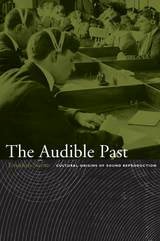
The Audible Past
Cultural Origins of Sound ReproductionJonathan Sterne
Duke University Press, 2003
Blending cultural studies and the history of communication technology, Sterne follows modern sound technologies back through a historical labyrinth. Along the way, he encounters capitalists and inventors, musicians and philosophers, embalmers and grave robbers, doctors and patients, deaf children and their teachers, professionals and hobbyists, folklorists and tribal singers. The Audible Past tracks the connections between the history of sound and the defining features of modernity: from developments in medicine, physics, and philosophy to the tumultuous shifts of industrial capitalism, colonialism, urbanization, modern technology, and the rise of a new middle class.
A provocative history of sound, The Audible Past challenges theoretical commonplaces such as the philosophical privilege of the speaking subject, the visual bias in theories of modernity, and static descriptions of nature. It will interest those in cultural studies, media and communication studies, the new musicology, and the history of technology.

The Bakers of Paris and the Bread Question, 1700-1775
Steven Laurence Kaplan
Duke University Press, 1996
Despite the overpowering salience of bread in public and private life, Kaplan’s is the first inquiry into the ways bread exercised its vast and significant empire. Bread framed dreams as well as nightmares. It was the staff of life, the medium of communion, a topic of common discourse, and a mark of tradition as well as transcendence. In his exploration of bread’s materiality and cultural meaning, Kaplan looks at bread’s fashioning of identity and examines the conditions of supply and demand in the marketplace. He also sets forth a complete history of the bakers and their guild, and unmasks the methods used by the authorities in their efforts to regulate trade.
Because the bakers and their bread were central to Parisian daily life, Kaplan’s study is also a comprehensive meditation on an entire society, its government, and its capacity to endure. Long-awaited by French history scholars, The Bakers of Paris and the Bread Question, 1700–1775 is a landmark in eighteenth-century historiography, a book that deeply contextualizes, and thus enriches our understanding of one of the most important eras in European history.

The Bewitchment of Silver
The Social Economy of Mining in Nineteenth-Century PeruJose R. Deustua
Ohio University Press, 1999
José Deustua argues that developing countries must be understood in terms of achieving domestic development as well as in their role in generating foreign exchange and in linking themselves to the world economy. Focusing on various sectors of Peru’s mining production, the mines, owners and mine workers, the transportation networks and the use of muleteers, this study is also concerned with market-building and domestic development in nineteenth-century Latin America.

The Broken Hoe
Cultural Reconfiguration in Biase Southeast NigeriaDavid Uru Iyam
University of Chicago Press, 1995
The Biase today face social and economic pressures that seriously strain their ability to cope with the realities of modern Nigeria. Iyam, an anthropologist and a Biase, examines the relationship between culture and development as played out in projects in local communities.
Western technologies and beliefs alone cannot ensure economic growth and modernization, Iyam shows, and should not necessarily be imposed on poor rural groups who may not be prepared to incorporate them; neither, however, is it possible to recover indigenous coping strategies given the complexities of the postcolonial world. A successful development strategy, Iyam argues, needs to strengthen local managerial capacity, and he offers suggestions as to how this can be done in a range of cultural and social settings.

The Buffalo Book
The Full Saga Of The American AnimalDavid A. Dary
Ohio University Press, 1989

The Burden of Choice
Recommendations, Subversion, and Algorithmic CultureJonathan Cohn
Rutgers University Press, 2019

The Cadastral Map in the Service of the State
A History of Property MappingRoger J. P. Kain and Elizabeth Baigent
University of Chicago Press, 1992
The Cadastral Map in the Service of the State, illustrated with 126 maps, traces the development and application of rural property mapping in Europe from the Renaissance through the nineteenth century. Beginning with a review of the roots of cadastral mapping in the Roman Empire, the authors concentrate on the use of cadastral maps in the Netherlands, France, England, the Nordic countries, the German lands, the territories of the Austrian Habsburgs, and the European colonies. During the sixteenth century government institutions began to use maps to secure economic and political bases; by the nineteenth century these maps had become tools for aggressive governmental control of land as tax bases, natural resources, and national territories. This work demonstrates how the seemingly neutral science of cartography became a political instrument for national
interests.
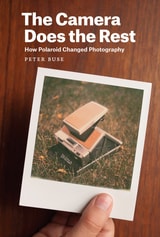
The Camera Does the Rest
How Polaroid Changed PhotographyPeter Buse
University of Chicago Press, 2016
Polaroid was often dismissed as a toy, but Buse takes it seriously, showing how it encouraged photographic play as well as new forms of artistic practice. Drawing on unprecedented access to the archives of the Polaroid Corporation, Buse reveals Polaroid as photography at its most intimate, where the photographer, photograph, and subject sit in close proximity in both time and space—making Polaroid not only the perfect party camera but also the tool for frankly salacious pictures taking.
Along the way, Buse tells the story of the Polaroid Corporation and its ultimately doomed hard-copy wager against the rising tide of digital imaging technology. He explores the continuities and the differences between Polaroid and digital, reflecting on what Polaroid can tell us about how we snap photos today. Richly illustrated, The Camera Does the Rest will delight historians, art critics, analog fanatics, photographers, and all those who miss the thrill of waiting to see what develops.

The Carceral Surround
R. Joshua Scannell
University of Minnesota Press, 2026
How digital technologies entrench state power—and a new vision for resistance
As law enforcement agencies deploy increasingly advanced technologies to suppress dissent, hunt migrants, and target marginalized communities, The Carceral Surround offers a powerful new theory of police and prison power in the digital age. Making sense of the rapid expansion of digital carceral infrastructure in a nation that claims to value freedom and individual rights, R. Joshua Scannell moves beyond familiar debates over privacy to show that understanding digital policing requires confronting the political and racial logics that sustain police power.
Drawing on digital media theory, science and technology studies, critical race and ethnic studies, and carceral theory, The Carceral Surround reveals how twenty-first-century policing is less about managing crime than about governing possibility. Carceral power now operates across every register of daily life through predictive analytics, risk modeling, and algorithmic systems that track, sort, and preempt. From social media archives and facial recognition software to satellite mapping and radiation sensors, Scannell charts how seemingly disparate media converge into an environment of control that links technocratic governance to the maintenance of racial hierarchy and capitalist order.
Tracing today’s technoauthoritarian regime from the NYPD’s assault on Black Lives Matter protesters in 2020 to the Stop LAPD Spying Coalition’s campaign to end predictive policing contracts, The Carceral Surround is a rare hybrid of critique and refusal, illuminating the digital logic of US authoritarianism while imagining pathways for collective resistance beyond its grasp.
Retail e-book files for this title are screen-reader friendly.
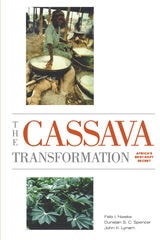
The Cassava Transformation
Africa's Best-Kept SecretFelix I. Nweke
Michigan State University Press, 2002
Cassava is Africa's "poverty fighter" and second most important food crop. This book discusses Cassava's real role and traces research over the past 65 years. The "Cassava transformation" that is now underway in Africa has changed this traditional, reserve crop to a high-yield cash crop. However, Cassava is being neglected by governments and donor agencies because of myths and half-truths about its nutritional value and role in farm systems.
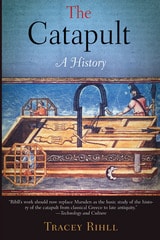
The Catapult
A HistoryTracey Rihll
Westholme Publishing, 2007
The most recognized military device of ancient times and the source of continued fascination and popular appeal, the catapult represented a major shift in the conduct of warfare. The catapult which literally means a device to “hurl [an object] across” was originally a sort of crossbow invented at the beginning of the fourth century B.C. in Syrakuse. Bows soon grew to the length of a modern bus, and in due course a completely new and better power source was invented. Instead of compound bows made of stretched sinew and compressed horn, the energy used to launch an object was stored in twisted ropes made of animal sinews: the torsion catapult had arrived. The torsion catapult quickly became the chief weapon of ancient arsenals and gave armies for the first time a weapon that could strike enemies at a distance with devastating effect, including shooting to and from ships, battering fortifications, and sending projectiles over walls. Catapults of all sizes became part of the regular equipment of the Roman army, and were used for centuries across the length and breadth of the empire to seize territory, and to defend it.
In The Catapult: A History, an authority on this device, historian Tracey Rihll, uses ancient literary sources and the latest archaeological findings to tell the story of this first machine of war. Dispelling any notion that the catapult was precision engineered in the modern sense, the author explains how a robust formulaic design allowed a variety of machines and missiles to be used for particular battlefield conditions or military tasks. Also included are details of the author’s intriguing discovery that there were little personal catapults that were used like rifles. Although the catapult was displaced by the introduction of gunpowder and cannon, this device marks the beginning of mechanized warfare, the hallmark of modern fighting. Complete with line drawings and photographs, The Catapult is a major contribution to the history of technology and conflict.
The Challenger Launch Decision
Risky Technology, Culture, and Deviance at NASADiane Vaughan
University of Chicago Press, 1995
Journalists and investigators have historically cited production problems and managerial wrong-doing as the reasons behind the disaster. The Presidential Commission uncovered a flawed decision-making process at the space agency as well, citing a well-documented history of problems with the O-ring and a dramatic last-minute protest by engineers over the Solid Rocket Boosters as evidence of managerial neglect.
Why did NASA managers, who not only had all the information prior to the launch but also were warned against it, decide to proceed? In retelling how the decision unfolded through the eyes of the managers and the engineers, Vaughan uncovers an incremental descent into poor judgment, supported by a culture of high-risk technology. She reveals how and why NASA insiders, when repeatedly faced with evidence that something was wrong, normalized the deviance so that it became acceptable to them.
No safety rules were broken. No single individual was at fault. Instead, the cause of the disaster is a story not of evil but of the banality of organizational life. This powerful work explains why the Challenger tragedy must be reexamined and offers an unexpected warning about the hidden hazards of living in this technological age.
The Challenger Launch Decision
Risky Technology, Culture, and Deviance at NASA, Enlarged EditionDiane Vaughan
University of Chicago Press, 2015
When the Space Shuttle Challenger exploded on January 28, 1986, millions of Americans became bound together in a single, historic moment. Many still vividly remember exactly where they were and what they were doing when they heard about the tragedy. Diane Vaughan recreates the steps leading up to that fateful decision, contradicting conventional interpretations to prove that what occurred at NASA was not skullduggery or misconduct but a disastrous mistake.
Why did NASA managers, who not only had all the information prior to the launch but also were warned against it, decide to proceed? In retelling how the decision unfolded through the eyes of the managers and the engineers, Vaughan uncovers an incremental descent into poor judgment, supported by a culture of high-risk technology. She reveals how and why NASA insiders, when repeatedly faced with evidence that something was wrong, normalized the deviance so that it became acceptable to them. In a new preface, Vaughan reveals the ramifications for this book and for her when a similar decision-making process brought down NASA's Space Shuttle Columbia in 2003.
The Chronopolitics of Life
Rethinking Temporalities in Health and Biomedicine Beyond the Life CourseEdited by Nolwenn Bühler, Nils Graber, Victoria Boydell, and Cinzia Greco
University College London, 2025
This interdisciplinary collection examines the role of time in inequalities within biomedicine, technology, and healthcare. How is time wielded as a tool of power through its valuation, standardization, and allocation? How has time become an unequally distributed resource in health and biomedicine, and how has it contributed to medical discrimination for patients at different stages of life? To answer these questions, The Chronopolitics of Life draws on real-world examples from across the globe, spanning from reproductive health to chronic disease, and sensitive to both local variations in medicine and the wider forces shaping temporalities in health.
The City That Ate Itself
Butte, Montana and Its Expanding Berkeley PitBrian James Leech
University of Nevada Press, 2018
Brian James Leech provides a social and environmental history of Butte, Montana’s Berkeley Pit, an open-pit mine which operated from 1955 to 1982. Using oral history interviews and archival finds, The City That Ate Itself explores the lived experience of open-pit copper mining at Butte’s infamous Berkeley Pit. Because an open-pit mine has to expand outward in order for workers to extract ore, its effects dramatically changed the lives of workers and residents. Although the Berkeley Pit gave consumers easier access to copper, its impact on workers and community members was more mixed, if not detrimental.
The pit’s creeping boundaries became even more of a problem. As open-pit mining nibbled away at ethnic communities, neighbors faced new industrial hazards, widespread relocation, and disrupted social ties. Residents variously responded to the pit with celebration, protest, negotiation, and resignation. Even after its closure, the pit still looms over Butte. Now a large toxic lake at the center of a federal environmental cleanup, the Berkeley Pit continues to affect Butte’s search for a postindustrial future.

The Command of the Air
Giulio Douhet, translated by Dino Ferrari
University of Alabama Press, 2009
The theory that put victory in the skies.
The Command of the Air presents Giulio Douhet’s groundbreaking argument that air power is the decisive force in modern war. In this classic work of military theory, Douhet defines the revolutionary concept of the “command of the air”—the idea that victory belongs to the nation able to prevent its enemy from flying while striking vital centers deep behind the lines. Through bold logic and vivid examples, the book shows how aviation transformed warfare by bypassing armies and navies entirely, projecting power directly against a nation’s industrial, communications, and civilian infrastructure.
This edition brings together Douhet’s original 1921 text, his expanded 1927 revision, and subsequent essays, all framed by a rich editors’ introduction. Readers gain insight into his vision of the Independent Air Force, the strategic use of mass bombing, and the technological evolution of modern aircraft. Douhet’s credentials—an Italian general, early aviation commander, and one of history’s most influential air‑power theorists—underscore the authority and ambition behind his ideas.
Scholars and students of military history, air‑power strategy, national security, and the evolution of modern warfare will find this volume indispensable. It is equally valuable for contemporary defense professionals seeking to understand how concepts such as strategic bombing, total war, and air superiority first took shape.
The Commerce of Cartography
Making and Marketing Maps in Eighteenth-Century France and EnglandMary Sponberg Pedley
University of Chicago Press, 2005
Conceptualizing the relationship between economics and cartography, Pedley traces the process of mapmaking from compilation, production, and marketing to consumption, reception, and criticism. In detailing the rise of commercial cartography, Pedley explores qualitative issues of mapmaking as well. Why, for instance, did eighteenth-century ideals of aesthetics override the modern values of accuracy and detail? And what, to an eighteenth-century mind and eye, qualified as a good map?
A thorough and engaging study of the business of cartography during the Enlightenment, The Commerce of Cartography charts a new cartographic landscape and will prove invaluable to scholars of economic history, historical geography, and the history of publishing.
The Commonwealth of Empire
A History of the Burma Corporation and the Bawdwin Mining Complex in British Colonial BurmaDavid Baillargeon
University of Nevada Press, 2026
The Commonwealth of Empire explores the overlooked history of the Bawdwin mining complex in Burma's Northern Shan States, focusing on its development during the British colonial period. Drawing on global and imperial history, author David Baillargeon showcases how industrial-scale mining transformed Bawdwin into a hub of commerce and migration, especially under the Burma Corporation in the early twentieth century. By the 1920s, Bawdwin had become one of the largest industrial sites in the world, staffed by a multinational workforce from South, Southeast, and East Asia, and managed by foreign engineers from the United States and Australia. Known as the “Commonwealth of Namtu” for its diverse workforce, the site exemplifies how colonial and corporate interests overlapped, and how such commercial spaces were shaped, contested, and reimagined locally. In telling the stories of the diverse agents and workers who developed the site and made it their home, The Commonwealth of Empire uncovers how and why a space like Bawdwin has been forgotten over time, interrogating its marginalization in national and regional histories and linking such forgetting to the nature of Britain's colonial project.
Baillargeon argues that recovering such forgotten histories requires moving beyond nation-based frameworks and embracing methods that illuminate the global forces behind colonial enterprises. In doing so, the book offers opportunities to decolonize histories and spaces of occupation that fit uneasily into existing frameworks of empire and nation.

The Connector
Living with Experimental NeuroprostheticsAlexandra Middleton
Duke University Press, 2026

The Control Techniques Drives and Controls Handbook
Bill Drury
The Institution of Engineering and Technology, 2009

The Convergence of AI, IoT, Smart Sensors and Remote Sensing for Sustainable Smart Environment Applications
Chaker Abdelaziz Kerrache
The Institution of Engineering and Technology, 2026

The Correspondence of Michael Faraday
1811-1831, Volume 1Frank A.J.L. James
The Institution of Engineering and Technology, 1991

The Correspondence of Michael Faraday
1832-1840, Volume 2Frank A.J.L. James
The Institution of Engineering and Technology, 1993

The Correspondence of Michael Faraday
1841-1848, Volume 3Frank A.J.L. James
The Institution of Engineering and Technology, 1996

The Correspondence of Michael Faraday
1849-1855, Volume 4Frank A.J.L. James
The Institution of Engineering and Technology, 1999

The Correspondence of Michael Faraday
1855-1860, Volume 5Frank A.J.L. James
The Institution of Engineering and Technology, 2008

The Correspondence of Michael Faraday
1860-1867, Volume 6Frank A.J.L. James
The Institution of Engineering and Technology, 2011
The Creativity Complex
Art, Tech, and the Seduction of an IdeaShannon Steen
University of Michigan Press, 2023
“Creativity” is a word that excites and dazzles us. It promises brilliance and achievement, a shield against conformity, a channel for innovation across the arts, sciences, technology, and education, and a mechanism for economic revival and personal success. But it has not always evoked these ideas. The Creativity Complex traces the history of how creativity has come to mean the things it now does, and explores the ethical implications of how we use this term today for both the arts and for the social world more broadly. Richly researched, the book explores how creativity has been invoked in arenas as varied as Enlightenment debates over the nature of cognition, Victorian-era intelligence research, the Cold War technology race, contemporary K-12 education, and even modern electoral politics. Ultimately, The Creativity Complex asks how our ideas about creativity are bound up with those of self-fulfillment, responsibility, and the individual, and how these might seduce us into joining a worldview and even a set of social imperatives that we might otherwise find troubling.
The Curious Map Book
Ashley Baynton-Williams
University of Chicago Press, 2015
Over the centuries, maps have served many varied purposes; far from mere guides for reaching a destination, they are unique artistic forms, aides in planning commercial routes, literary devices for illuminating a story. Accuracy—or inaccuracy—of maps has been the make-or-break factor in countless military battles throughout history. They have graced the walls of homes, bringing prestige and elegance to their owners. They track the mountains, oceans, and stars of our existence. Maps help us make sense of our worlds both real and imaginary—they bring order to the seeming chaos of our surroundings.
With The Curious Map Book, Ashley Baynton-Williams gathers an amazing, chronologically ordered variety of cartographic gems, mainly from the vast collection of the British Library. He has unearthed a wide array of the whimsical and fantastic, from maps of board games to political ones, maps of the Holy Land to maps of the human soul. In his illuminating introduction, Baynton-Williams also identifies and expounds upon key themes of map production, peculiar styles, and the commerce and collection of unique maps. This incredible volume offers a wealth of gorgeous illustrations for anyone who is cartographically curious.

The Current Comparator
W.J.M. Moore
The Institution of Engineering and Technology, 1988
The Cybernetic Border
Drones, Technology, and IntrusionIván Chaar López
Duke University Press, 2024
The Development of a Strategy for Integrated Manufacturing Systems
Norman A. Schofield
The Institution of Engineering and Technology, 1990

The Devil's Fruit
Farmworkers, Health, and Environmental JusticeDvera I. Saxton
Rutgers University Press, 2021
The Digital Factory
The Human Labor of AutomationMoritz Altenried
University of Chicago Press, 2022
The workers of today’s digital factory include those in Amazon warehouses, delivery drivers, Chinese gaming workers, Filipino content moderators, and rural American search engine optimizers. Repetitive yet stressful, boring yet often emotionally demanding, these jobs require little formal qualification, but can demand a large degree of skills and knowledge. This work is often hidden behind the supposed magic of algorithms and thought to be automated, but it is in fact highly dependent on human labor.
The workers of today’s digital factory are not as far removed from a typical auto assembly line as we might think. Moritz Altenried takes us inside today’s digital factories, showing that they take very different forms, including gig economy platforms, video games, and Amazon warehouses. As Altenried shows, these digital factories often share surprising similarities with factories from the industrial age. As globalized capitalism and digital technology continue to transform labor around the world, Altenried offers a timely and poignant exploration of how these changes are restructuring the social division of labor and its geographies as well as the stratifications and lines of struggle.

The Digital Factory
The Human Labor of AutomationMoritz Altenried
University of Chicago Press, 2022
This is an auto-narrated audiobook edition of this book.
The Digital Factory reveals the hidden human labor that supports today’s digital capitalism.
The workers of today’s digital factory include those in Amazon warehouses, delivery drivers, Chinese gaming workers, Filipino content moderators, and rural American search engine optimizers. Repetitive yet stressful, boring yet often emotionally demanding, these jobs require little formal qualification, but can demand a large degree of skills and knowledge. This work is often hidden behind the supposed magic of algorithms and thought to be automated, but it is in fact highly dependent on human labor.
The workers of today’s digital factory are not as far removed from a typical auto assembly line as we might think. Moritz Altenried takes us inside today’s digital factories, showing that they take very different forms, including gig economy platforms, video games, and Amazon warehouses. As Altenried shows, these digital factories often share surprising similarities with factories from the industrial age. As globalized capitalism and digital technology continue to transform labor around the world, Altenried offers a timely and poignant exploration of how these changes are restructuring the social division of labor and its geographies as well as the stratifications and lines of struggle.

The Digital and Its Discontents
Aden Evens
University of Minnesota Press, 2024
A groundbreaking critique of the digital world that analyzes its universal technological foundations
Whence that nagging sense that something in the digital is amiss—that, as wonderful as our devices are, time spent on smartphones and computers leaves us sour, enervated, alienated? The Digital and Its Discontents uniquely explains that worry and points us toward a more satisfying relationship between our digital lives and our nondigital selves, one that requires a radical change in the way we incorporate technology into our lives.
Aden Evens analyzes universal technological principles—in particular, the binary logic—to show that they encourage certain ways of thinking while making others more challenging or impossible. What is out of reach for any digital machine is contingency, the ontological principle that refuses every rule. As humans engage ourselves and our world ever more through digital machines, we are losing touch with contingency and so banishing from our lives the accidental and unexpected that fuel our most creative and novel possibilities for living.
Taking cues from philosophy rather than cultural or media theory, Evens argues that the consequences of this erosion of contingency are significant yet often overlooked because the same values that make the digital seem so desirable also make contingency seem unimportant—without contingency the digital is confined to what has already been thought, and yet the digital’s ubiquity has allowed it to disguise this inherent sterility. Responsive only to desires that meet the demands of its narrow logic, the digital requires its users to practice those same ideological dictates, instituting a hegemony of thought and value sustained by the pervasive presence of digital mechanisms. Interweaving technical and philosophical concepts, The Digital and Its Discontents advances a powerful and urgent argument about the digital and its impact on our lives.
Retail e-book files for this title are screen-reader friendly.
The Divided Skies
Establishing Segregated Flight Training at Tuskegee, Alabama, 1934-1942Robert J. Jakeman
University of Alabama Press, 1996
In the Persian Gulf War, Americans of all races fought in integrated units under the leadership of the first African-American to serve as chairman of the Joint Chiefs of Staff. Indeed, the United States armed forces of the 1990s are arguably the most integrated institution in American society. But it was not always so.
The Double Bind of Disability
How Medical Technology Shapes Bodily AuthorityRebecca Monteleone
University of Minnesota Press, 2025
Exposing the ableism underlying medical innovation
As medical advancements continue to shape the detection, diagnosis, and treatment of disability and illness, technology is often presented as a pathway to autonomy. Challenging this assumption, Rebecca Monteleone shows how medical technologies contribute to a cruel double bind, forcing disabled people to be accountable for adapting to a world built by and for nondisabled people while dismissing their lived experiences in favor of medical expertise. Far more complex than simple progress, these technologies are more oppressive than liberating when they place the burden of care on individuals and perpetuate societal ableism that demands that bodies look, move, and function in certain ways.
The Double Bind of Disability examines the complex relationship between medical technologies and their users, highlighting tensions between personal responsibility and medical authority. Sharing the perspectives and experiences of users of three medical technologies (prenatal genetic screening, deep brain stimulation, and do-it-yourself artificial pancreas systems), Monteleone analyzes how users navigate the constraints of these systems and also imagine a new, more liberatory approach to healthcare.
Asserting a bold vision, Monteleone describes a future where medical interventions take seriously the lived expertise of disabled people to address ableist infrastructures rather than require the modification of nonnormative bodyminds. She calls for a radical reimagining of medical technology that moves beyond individualistic frameworks to embrace collective experience and embodied knowing.
Retail e-book files for this title are screen-reader friendly.

The Dynamics of Nuclear Proliferation
Stephen M. Meyer
University of Chicago Press, 1984