Results by title
453 books match the query 'Wisconsin' and 80 start with t
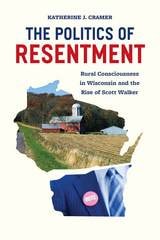
The Politics of Resentment
Rural Consciousness in Wisconsin and the Rise of Scott WalkerKatherine J. Cramer
University of Chicago Press, 2016
With The Politics of Resentment, Katherine J. Cramer uncovers an oft-overlooked piece of the puzzle: rural political consciousness and the resentment of the “liberal elite.” Rural voters are distrustful that politicians will respect the distinct values of their communities and allocate a fair share of resources. What can look like disagreements about basic political principles are therefore actually rooted in something even more fundamental: who we are as people and how closely a candidate’s social identity matches our own. Using Scott Walker and Wisconsin’s prominent and protracted debate about the appropriate role of government, Cramer illuminates the contours of rural consciousness, showing how place-based identities profoundly influence how people understand politics, regardless of whether urban politicians and their supporters really do shortchange or look down on those living in the country.
The Politics of Resentment shows that rural resentment—no less than partisanship, race, or class—plays a major role in dividing America against itself.
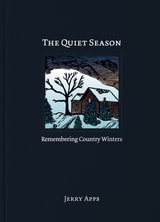
The Quiet Season
Remembering Country WintersJerry Apps
Wisconsin Historical Society Press, 2025
“As I think back to the days of my childhood, the frost-covered windows in my bedroom, the frigid walks to the country school, the excitement of a blizzard, and a hundred other memories, I realize that these experiences left an indelible mark on me and made me who I am today.”—From the Introduction
Jerry Apps recalls winters growing up on a farm in central Wisconsin during the latter years of the Depression and through World War II. Before electricity came to this part of Waushara County, farmers milked cows by hand with the light of a kerosene lantern, woodstoves heated the drafty farm homes, and “making wood” was a major part of every winter’s work. The children in Jerry’s rural community walked to a country school that was heated with a woodstove and had no indoor plumbing. Wisconsin winters then were a time of reflection, of planning for next year, and of families drawing together. Jerry describes how winter influenced farm families and suggests that those of us who grow up with harsh northern winters are profoundly affected in ways we often are not aware.
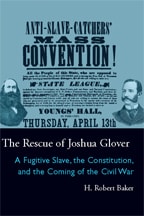
The Rescue of Joshua Glover
A Fugitive Slave, the Constitution, and the Coming of the Civil WarH. Robert Baker
Ohio University Press, 2006
On March 11, 1854, the people of Wisconsin prevented agents of the federal government from carrying away the fugitive slave, Joshua Glover. Assembling in mass outside the Milwaukee courthouse, they demanded that the federal officers respect his civil liberties as they would those of any other citizen of the state. When the officers refused, the crowd took matters into its own hands and rescued Joshua Glover. The federal government brought his rescuers to trial, but the Wisconsin Supreme Court intervened and took the bold step of ruling the Fugitive Slave Act unconstitutional.
The Rescue of Joshua Glover delves into the courtroom trials, political battles, and cultural equivocation precipitated by Joshua Glover’s brief, but enormously important, appearance in Wisconsin on the eve of the Civil War.
H. Robert Baker articulates the many ways in which this case evoked powerful emotions in antebellum America, just as the stage adaptation of Uncle Tom’s Cabin was touring the country and stirring antislavery sentiments. Terribly conflicted about race, Americans struggled mightily with a revolutionary heritage that sanctified liberty but also brooked compromise with slavery. Nevertheless, as The Rescue of Joshua Glover demonstrates, they maintained the principle that the people themselves were the last defenders of constitutional liberty, even as Glover’s rescue raised troubling questions about citizenship and the place of free blacks in America.

The Romance of Wisconsin Place Names
Robert E. Gard
Wisconsin Historical Society Press, 2015
Fifty years ago, educator and writer Robert E. Gard traveled across Wisconsin, learning the trivial, controversial, and landmark stories behind how cities, counties, and local places got their names. This volume records the fruits of Gard’s labors in an alphabetical listing of places from every corner of Wisconsin, and the stories behind their often-unusual names. Gard’s work provides an important snapshot of how Wisconsin residents of a bygone era came to understand the names of their towns and home places, many of which can no
longer be found on any map.
Celebrated rural historian Jerry Apps introduces this reprint of Gard’s work,
saying that in “some ways The Romance of Wisconsin Place Names is a reference book, a place where you can go to learn a little more about your home town. But in many ways it is much more than that, for it includes the stories of places throughout the state, submitted by the people who knew them. It is a book where story, people, and place all come together.”

The Silver Man
The Life and Times of Indian Agent John KinziePeter Shrake
Wisconsin Historical Society Press, 2016
In The Silver Man: The Life and Times of John Kinzie, readers witness the dramatic changes that swept the Wisconsin frontier in the early and mid-1800s, through the life of Indian agent John Harris Kinzie. From the War of 1812 and the monopoly of the American Fur Company, to the Black Hawk War and the forced removal of thousands of Ho-Chunk people from their native lands—John Kinzie’s experience gives us a front-row seat to a pivotal time in the history of the American Midwest.
As an Indian agent at Fort Winnebago—in what is now Portage, Wisconsin—John Kinzie served the Ho-Chunk people during a time of turbulent change, as the tribe faced increasing attacks on its cultural existence and very sovereignty, and struggled to come to terms with American advancement into the upper Midwest. The story of the Ho-Chunk Nation continues today, as the tribe continues to rebuild its cultural presence in its native homeland.
Through John Kinzie’s story, we gain a broader view of the world in which he lived—a world that, in no small part, forms a foundation for the world in which we live today.

The Story of Act 31
How Native History Came to Wisconsin ClassroomsJ P Leary
Wisconsin Historical Society Press, 2018
Since its passage in 1989, a state law known as Act 31 requires that all students in Wisconsin learn about the history, culture, and tribal sovereignty of Wisconsin’s federally recognized tribes.
The Story of Act 31 tells the story of the law’s inception—tracing its origins to a court decision in 1983 that affirmed American Indian hunting and fishing treaty rights in Wisconsin, and to the violent public outcry that followed the court’s decision. Author J P Leary paints a picture of controversy stemming from past policy decisions that denied generations of Wisconsin students the opportunity to learn about tribal history.
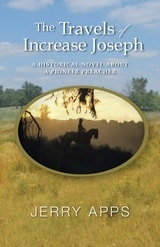
The Travels of Increase Joseph
A Historical Novel about a Pioneer PreacherJerry Apps
University of Wisconsin Press, 2010
Link Lake, Wisconsin, 1852: Preacher Increase Link and the Standalone Fellowship settle near a lake that they name in his honor. Increase’s gifted tongue calls people to his mission to protect the land: “Unless we take care of the land we shall all perish.” To finance the fellowship activities, Increase sells his special cure-all tonic—fifty cents per bottle!
Inspired by actual events that took place in upstate New York and Wisconsin in the mid-nineteenth century, The Travels of Increase Joseph is the first in Jerry Apps’s series set in fictional Ames County, Wisconsin. The four novels in the series—which also includes In a Pickle, Blue Shadows Farm, and the forthcoming Cranberry Red—all take place around Link Lake at different points in history. They convey Apps’s deep knowledge of rural life and his own concern for land stewardship.

The Typewriter Satyr
A NovelDwight Allen
University of Wisconsin Press, 2009
Finalist, General Fiction, Midwest Book Awards
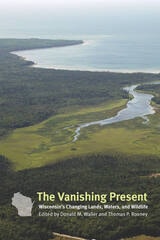
The Vanishing Present
Wisconsin's Changing Lands, Waters, and WildlifeEdited by Donald M. Waller and Thomas P. Rooney
University of Chicago Press, 2008
The Vanishing Present brings together a distinguished set of contributors—including scientists, naturalists, and policy experts—to examine how human pressures on Wisconsin’s changing lands, waters, and wildlife have redefined the state’s ecology. Though they focus on just one state, the authors draw conclusions about changes in temperate habitats that can be applied elsewhere, and offer useful insights into future of the ecology, conservation, and sustainability of Wisconsin and beyond.
A fitting tribute to the home state of Aldo Leopold and John Muir, The Vanishing Present is an accessible and timely case study of a significant ecosystem and its response to environmental change.

The Vegetation of Wisconsin
An Ordination of Plant CommunitiesJohn T. Curtis
University of Wisconsin Press, 1959

The War of 1812 in Wisconsin
The Battle for Prairie du ChienMary Elise Antoine
Wisconsin Historical Society Press, 2016
In The War of 1812 in Wisconsin, author Mary Elise Antoine brings a little-known corner of Wisconsin’s history to life. Prairie du Chien, located just above mouth of the Wisconsin River, was the key to trade on the upper Mississippi. Whoever controlled the prairie commanded the immense territory inhabited by thousands of American Indians—and the fur they traded. When war broke out between the United States and Great Britain in 1812, British and Americans fought to maintain the ever-shifting alliance of the tribes.
This is the story of the battle for the control of Prairie du Chien and the western country, which began many years before the three-day siege in July of 1814 for which the Battle of Prairie du Chien is named. It is also the tale of the people, Euro-American and Native, who lived in pre-territorial Wisconsin and how the contest for control of the region affected their lives and livelihoods. The outcome of the War of 1812 would determine what "manifest destiny" would mean to all who called these lands home.

The Waters of Star Lake
A NovelSara Rath
University of Wisconsin Press, 2012
Newly widowed Natalie Waters expects only nostalgia and solitude at her quiet, rustic cabin. But the wilderness conceals more than one perilous mystery. Where in Wisconsin’s Northwoods did the notorious gangster John Dillinger hide $210,000 following a violent FBI shootout? And why do the local timberwolves incite so much rage among Natalie’s neighbors?
As predators circle and howl in the dark, Ginger, the bartender at the nearby Star Lake Saloon, draws Natalie deep into the secrets not only of Dillinger but of the ecologies of family, forest, and heart. With the reluctant support of her granddaughter and advice from a handsome wolf biologist, Natalie is forced to choose between adversity and adventure.
Sara Rath continues her popular Northwoods saga in this affirming and often humorous tale of romance, betrayal, and danger.
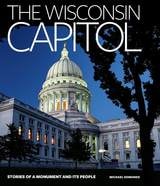
The Wisconsin Capitol
Stories of a Monument and Its PeopleMichael Edmonds
Wisconsin Historical Society Press, 2017
On the occasion of the Capitol’s centennial in 2017, this book tells the remarkable story of the building—in all its incarnations—and the people who made history beneath its dome. The book covers the creation of the territorial capitol in 1837, the construction of the second capitol in the 1860s (and the fire that almost completely destroyed it in 1904), the eleven-year construction project that completed the third capitol in 1917, and the extensive conservation project of the 1990s that restored the building to its grandeur. Supporting the framework of this architectural history are colorful stories about the people who shaped Wisconsin from within the Capitol—attorneys, senators, and governors (from Henry Dodge to Scott Walker), as well as protesters, reformers, secretaries, tour guides, custodians, and even Old Abe, the Capitol’s resident eagle. Combining historical photographs with modern, full-color architectural photos, The Wisconsin Capitol provides fascinating details about the building, while also emphasizing the importance of the Capitol in Wisconsin’s storied history.
The Wisconsin Historical Society
Collecting, Preserving, and Sharing Stories Since 1846John Zimm
Wisconsin Historical Society Press, 2014
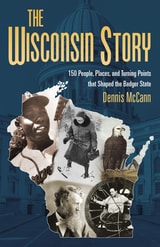
The Wisconsin Story
150 People, Places, and Turning Points that Shaped the Badger StateDennis McCann
Wisconsin Historical Society Press, 2019
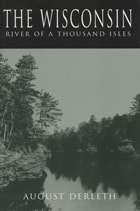
The Wisconsin
River of a Thousand IslesAugust Derleth
University of Wisconsin Press, 1985

The Wongs of Beloit, Wisconsin
Beatrice McKenzie
University of Wisconsin Press, 2022
The Wongs thrived in Beloit despite facing racism and classism, embracing wartime opportunities, education, love, and careers within the U. S. McKenzie's collaboration with descendent Mary Wong Palmer reveals a poignant story of Chinese immigrant life in the Upper Midwest that adds a much-needed Wisconsin perspective to existing literature by and about Asian Americans.
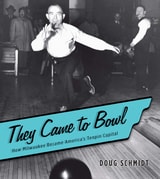
They Came to Bowl
How Milwaukee Became America’s Tenpin CapitalDoug Schmidt
Wisconsin Historical Society Press, 2007
A frozen rope. A urethane split on the drives. Chicken tracks on the telescore.* Do you know your bowling lingo? You will along with much more when you read They Came to Bowl: How Milwaukee Became America's Tenpin Capital. From the thrill of the perfect strike to the agony of a ball gone astray, anyone who has rolled a ball down the lanes will find themselves or someone they know in the people, places and stories covered in this book.
In this authoritative and lively book, Doug Schmidt traces bowling's roots from a German religious rite centuries ago to the sport that made Milwaukee famous. From the taverns and saloons that housed recreational games to the sell-out crowds and million-dollar beer sponsorships of televised tournaments, this well-illustrated book covers both sport and city, charting the changing face of bowling over the century. Packed with memorable showdowns and improbable heroes, They Came to Bowl will take you back to the changing lanes of bowling in Milwaukee — and the sport as a whole.
* frozen rope=a ball rolled with excessive speed almost straight to the pocket; urethane split=2-8-10 or 3-7-9 split caused by sharp breaking point of reactive resin balls; drives=alleys; chicken tracks=string of strikes
They Came to Wisconsin
Julia Pferdehirt
Wisconsin Historical Society Press, 2002
They Came to Wisconsin presents three themes of the state’s immigrant history: leaving the homeland, making the journey, and enduring the first year of settlement. Journal and diary entries and letters from European groups and oral histories from African American, Latino, Hmong, and Amish sources make this book dynamic and wholly inclusive. They Came to Wisconsin breaks fresh ground in presenting document-centered Wisconsin history to a young audience. More important, these firsthand stories add a real human dimension to history, helping students to compare the experiences of the varied groups who came to Wisconsin in the last two hundred years.
Distributed for the Wisconsin Historical Society Press.
They Came to Wisconsin
Teacher's Guide and Student MaterialsHarriet Brown
Wisconsin Historical Society Press, 2002
Distributed for the Wisconsin Historical Society Press.
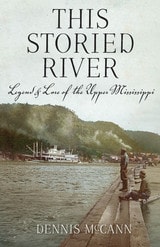
This Storied River
Legend & Lore of the Upper MississippiDennis McCann
Wisconsin Historical Society Press, 2017
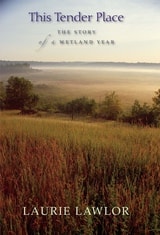
This Tender Place
The Story of a Wetland YearLaurie Lawlor
University of Wisconsin Press, 2007
After the deaths of her father and father-in-law, Laurie Lawlor discovers an unlikely place for healing and transformation in a wetland in southeastern Wisconsin—a landscape of abundant and sometimes inaccessible beauty that has often been ignored, misunderstood, and threatened by human destruction. In her decade-long personal wetland journey, she examines the sky, delves underwater, and peers between sedges in all seasons and all times of day.
This Tender Place is a celebration of nature, the elements, and humanity. From the wetland’s genesis during the ice age to its survival in the twenty-first century, Lawlor chronicles the universal ties among people, wild places, and healthy wetlands.
An engaging and deeply intimate record, This Tender Place is at its heart a story of refuge and renewal refracted through the lens of life within the wetlands—one of the most productive, yet most endangered, ecosystems in the world.
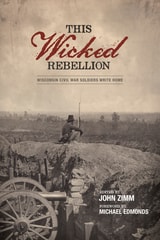
This Wicked Rebellion
Wisconsin Civil War Soldiers Write HomeJohn Zimm
Wisconsin Historical Society Press, 2012
Over one hundred and fifty years after it began, the Civil War still fascinates us—the vast armies marching to war, iconic leaders like Abraham Lincoln and Robert E. Lee, the drama of a nation divided. But the Civil War was also about individuals, the hundreds of thousands of ordinary men and boys who fought and died on either side and the families and friends left at home.
This Wicked Rebellion: Wisconsin Civil War Soldiers Write Home tells this other side of the story. Drawing from over 11,000 letters in the Wisconsin Historical Society’s Civil War collection, it gives a unique and intimate glimpse of the men and women who took part in the War for the Union. Follow Wisconsin soldiers as they sign up or get drafted, endure drill and picket duty, and get their first experiences of battle. Join them as they fight desperation and fear, encounter the brutality of slavery, and struggle with the reasons for war.
From impressions of army life and the South to the hardships of disease and battle, these letters tell the story of the war through the eyes and pens of those who fought in it. This Wicked Rebellion brings to life the heroism and heartache, mayhem and misery of the Civil War, and the powerful role Wisconsin played in it.

Thousand-Miler
Adventures Hiking the Ice Age TrailMelanie Radzicki McManus
Wisconsin Historical Society Press, 2017
In thirty-six thrilling days, Melanie Radzicki McManus hiked 1,100 miles around Wisconsin, landing her in the elite group of Ice Age Trail thru-hikers known as the Thousand-Milers. In prose that’s alternately harrowing and humorous, Thousand-Miler takes you with her through Wisconsin’s forests, prairies, wetlands, and farms, past the geologic wonders carved by long-ago glaciers, and into the neighborhood bars and gathering places of far-flung small towns. Follow along as she worries about wildlife encounters, wonders if her injured feet will ever recover, and searches for an elusive fellow hiker known as Papa Bear. Woven throughout her account are details of the history of the still-developing Ice Age Trail—one of just eleven National Scenic Trails—and helpful insight and strategies for undertaking a successful thru-hike.
In addition to chronicling McManus’s hike, Thousand-Miler also includes the little-told story of the Ice Age Trail’s first-ever thru-hiker Jim Staudacher, an account of the record-breaking thru-run of ultrarunner Jason Dorgan, the experiences of a young combat veteran who embarked on her thru-hike as a way to ease back into civilian life, and other fascinating tales from the trail. Their collective experiences shed light on the motivations of thru-hikers and the different ways hikers accomplish this impressive feat, providing an entertaining and informative read for outdoors enthusiasts of all levels.
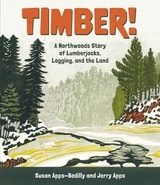
Timber!
A Northwoods Story of Lumberjacks, Logging, and the LandSusan Apps-Bodilly
Wisconsin Historical Society Press, 2024
How did the logging boom begin? What was it like to work in the woods? What happened to the land after the trees were cut down? The latest book for young readers from father-daughter duo Jerry Apps and Susan Apps-Bodilly explores the origin story of Wisconsin’s logging boom, the devastation it caused to the land, and the extraordinary efforts to restore the cutover land and log sustainably.
Timber! helps young readers examine a complex and pivotal chapter in our state and nation’s history, covering a wide range of topics, including:
• how Native people used, shared, and relied on natural resources for thousands of years
• the forced removal of Native people from forested lands
• how the lumber industry made possible the westward expansion of the United States
• what it was like to work in a logging camp, on a log drive, and inside a sawmill
• the roles on a logging team, from sawyer to cook
• the destructive legacy of early logging practices and early efforts to restore the land
• the emergence of sustainable forestry practices
This comprehensive yet easy-to-read history includes letters, postcards, and other primary sources paired with discussion questions designed to engage young readers’ creativity and critical-thinking skills. Timber! also features more than 100 images, a glossary, suggested activities, and an extensive list of related resources, including books, websites, teaching materials, museums, and outdoor places to visit. Timber! will inspire readers of all ages to explore, protect, and learn about trees and forests in their own communities.

Tommy
My Journey of a LifetimeTommy G. Thompson and Doug Moe
University of Wisconsin Press, 2018
Personal and revealing stories punctuate the biographical details and policy discussions. Here is Tommy as a young man, just happening to be on the National Mall in 1964 when Dr. Martin Luther King told the nation "I have a dream." Here is Tommy as Wisconsin governor, struggling to start a Harley-Davidson motorcycle before leading "a pack of Hell's Republicans" on a ride through the state. Here is Tommy in Washington after the 9/11 attacks, slipping out of a secure bunker (in defiance of orders) to aid the emergency medical response.
Thompson speaks candidly of his achievements and regrets, including his involvement with welfare reform, school choice, land conservancy, prisons, the financing of Miller Park, stem cell research, and health insurance.
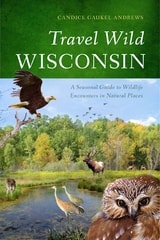
Travel Wild Wisconsin
A Seasonal Guide to Wildlife Encounters in Natural PlacesCandice Gaukel Andrews
University of Wisconsin Press, 2013
Troutsmith
An Angler's Tales and TravelsKevin Searock
University of Wisconsin Press, 2013

Twelve Ways to Save Democracy in Wisconsin
Matthew Rothschild
University of Wisconsin Press, 2021
From tightening campaign finance laws and banning gerrymandering to rooting out structural racism and moving toward economic equality, each chapter focuses on one of the dozen reforms that are required to heal democracy within the state. Rothschild provides an in-depth rationale for each, dismantling the counterarguments against them and exploring the complexities involved in implementing them. He offers concrete proposals and action items for grassroots organizers and concerned community advocates to restore constituent control of state politics. This pocket-sized handbook is essential for politically aware citizens as well as journalists and watchdogs who see Wisconsin as a crucial battleground state and political bellwether for the nation.
Two Stratified Sites on the Door Peninsula of Wisconsin
Ronald J. Mason
University of Michigan Press, 1966