Results by title
1441 books match the query 'World' and 310 start with t
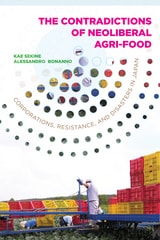
The Contradictions of Neoliberal Agri-Food
Corporations, Resistance, and Disasters in JapanKae Sekine
West Virginia University Press, 2016
Sekine and Bonanno stress the incompatibility of the requirements of neoliberalism with the structural and cultural conditions of Japanese agri-food. Local farmers’ and fishermen’s emphasis on community collective management of natural resources, they argue, clashes with neoliberalism’s focus on individualism and competitiveness. The authors conclude by pointing out the resulting fundamental contradiction: The lack of recognition of this incompatibility allows the continuous implementation of market solutions to problems that originate in these very market mechanisms.

The Conundrum of Russian Capitalism
The Post-Soviet Economy in the World SystemRuslan Dzarasov
Pluto Press, 2013
The Conundrum of Russian Capitalism looks at the nature of Russian capitalism following the fall of the Soviet Union, showing how the system originated in the degenerated Soviet bureaucracy and the pressures of global capital. Ruslan Dzarasov provides a detailed analysis of Russian corporate governance, labour practices and investment strategies.
By comparing the practices of Russian companies to the typical models of corporate governance and investment behaviour of big firms in the West, Dzarasov sheds light on the relationship between the core and periphery of the capitalist world-system.
This groundbreaking study shows that Russia's new capitalism is not a break with the country's Stalinist past, but in fact the continuation of that tradition.
The Convolutions of Historical Politics
Alexei Miller
Central European University Press, 2012
The Corporation That Changed the World
How the East India Company Shaped the Modern MultinationalNick Robins
Pluto Press, 2012
"Elegantly written and sharply argued, Nick Robins' gripping account of the rise and fall of the English East India Company brings to life a crucial episode in the history of globalization."—Sankar Muthu, University of Chicago
The English East India Company was the mother of the modern multinational. Its trading empire encircled the globe, importing Asian luxuries such as spices, textiles, and teas. But it also conquered much of India with its private army and broke open China's markets with opium. The Company's practices shocked its contemporaries and still reverberate today, offering lessons about unfettered capitalism, corporate responsibility, and the legacy of colonialism.
The Corporation That Changed the World is the first book to reveal the Company's enduring legacy as a corporation. This expanded edition explores how the four forces of scale, technology, finance, and regulation drove its spectacular rise and fall. For decades, the Company was simply too big to fail, and stock market bubbles, famines, drug-running, and even duels between rival executives are to be found in this new account.
Table of Contents:
Introduction
Chronology
1 The Hidden Wound
2 The Imperious Company
3 Out of the Shadows
4 The Bengal Revolution
5 The Great East Indian Crash
6 Regulating the Company
7 Justice Will Be Done
8 The Toxic Exchange
10 The Unfettered Business
Epilogue
For Robins, the Company's story provides vital lessons on both the role of corporations in world history and the steps required to make global business accountable today.
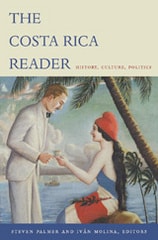
The Costa Rica Reader
History, Culture, PoliticsSteven Palmer and Iván Molina, editors
Duke University Press, 2004
This essential introduction to Costa Rica includes more than fifty texts related to the country’s history, culture, politics, and natural environment. Most of these newspaper accounts, histories, petitions, memoirs, poems, and essays are written by Costa Ricans. Many appear here in English for the first time. The authors are men and women, young and old, scholars, farmers, workers, and activists. The Costa Rica Reader presents a panoply of voices: eloquent working-class raconteurs from San José’s poorest barrios, English-speaking Afro-Antilleans of the Limón province, Nicaraguan immigrants, factory workers, dissident members of the intelligentsia, and indigenous people struggling to preserve their culture. With more than forty images, the collection showcases sculptures, photographs, maps, cartoons, and fliers. From the time before the arrival of the Spanish, through the rise of the coffee plantations and the Civil War of 1948, up to participation in today’s globalized world, Costa Rica’s remarkable history comes alive. The Costa Rica Reader is a necessary resource for scholars, students, and travelers alike.
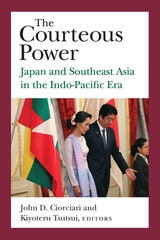
The Courteous Power
Japan and Southeast Asia in the Indo-Pacific EraJohn D. Ciorciari and Kiyoteru Tsutsui, editors
University of Michigan Press, 2021
The Courteous Power seeks to provide a nuanced view of the current relationship between Japan and Southeast Asia. Much of the current scholarship on East–Southeast Asian engagement has focused on the multidimensional chess game playing out between China and Japan, as the dominant post-imperialist powers. Alternatively, there has been renewed attention on ASEAN and other Southeast Asian–centered initiatives, explicitly minimizing the influence of East Asia in the region. Given the urgency of understanding the careful balance in the Indo-Pacific region, this volume brings together scholars to examine the history and current engagement from a variety of perspectives, ranging from economic and political, to the cultural and technological, while also focusing more clearly on the specific relationship between the region and Japan.
The Crisis of Secularism in India
Anuradha Dingwaney Needham and Rajeswari Sunder Rajan, eds.
Duke University Press, 2007
Scholars of history, anthropology, religion, politics, law, philosophy, and media studies take on a broad range of concerns. Some consider the history of secularism in India; others explore theoretical issues such as the relationship between secularism and democracy or the shortcomings of the categories “majority” and “minority.” Contributors examine how the debates about secularism play out in schools, the media, and the popular cinema. And they address two of the most politically charged sites of crisis: personal law and the right to practice and encourage religious conversion. Together the essays inject insightful analysis into the fraught controversy about the shortcomings and uncertain future of secularism in the world today.
Contributors. Flavia Agnes, Upendra Baxi, Shyam Benegal, Akeel Bilgrami, Partha Chatterjee, V. Geetha, Sunil Khilnani, Nivedita Menon, Ashis Nandy, Anuradha Dingwaney Needham, Gyanendra Pandey, Gyan Prakash, Arvind Rajagopal, Paula Richman, Sumit Sarkar, Dwaipayan Sen, Rajeswari Sunder Rajan, Shabnum Tejani, Romila Thapar, Ravi S. Vasudevan, Gauri Viswanathan
The Critic in the World
Essays in Honor of Fernando F. SegoviaAmy Lindeman Allen
SBL Press, 2024
A Pact of Love with Criticism, A Pact of Blood with the World
Building on the legacy of Fernando F. Segovia, the pioneering essays in this volume redefine the intersection of biblical studies and geopolitics. Through a thorough exploration of how ancient texts and modern readers influence and reflect geopolitical dynamics, each contributor reveals how biblical narratives have shaped and been shaped by historical power structures, territorial conflicts and climate changes, and cultural exchanges. Essays employ contemporary geopolitical concepts that move beyond traditional readings to offer fresh insights into the strategic and ideological forces behind scriptural texts. An annotated interview with Fernando F. Segovia traces his immigration journey as an adolescent and its indelible imprint on his scholarship as a postcolonial critic. Contributors include Efraín Agosto, Amy Lindeman Allen, Reimund Bieringer, Mark G. Brett, Ahida Calderón Pilarski, Greg Carey, Jorge E. Castillo Guerra, Jin Young Choi, Stephanie Buckhanon Crowder, Gregory L. Cuéllar, Musa W. Dube, Neil Elliott, Eleazar S. Fernandez, Bridgett A. Green, Leticia A. Guardiola-Sáenz, Jacqueline M. Hidalgo, Knut Holter, Ma. Maricel S. Ibita, Ma. Marilou S. Ibita, John F. Kutsko, Sung Uk Lim, Francisco Lozada Jr., Luis Menéndez-Antuña, Rubén Muñoz-Larrondo, Robert Myles, Wongi Park, Mitri Raheb, Elisabeth Schüssler Fiorenza, Fernando F. Segovia, Yak-hwee Tan, Ekaputra Tupamahu, Gerald O. West, Hans (J. H.) de Wit, and H. Daniel Zacharias.
The Crucible
An Autobiography by Colonel Yay, Filipina American GuerrillaCruz, Denise
Rutgers University Press, 2010
On December 8, 1941, as the Pacific War reached the Philippines, Yay Panlilio, a Filipina-Irish American, faced a question with no easy answer: How could she contribute to the war?
In this 1950 memoir, The Crucible: An Autobiography by Colonel Yay, Filipina American Guerrilla, Panlilio narrates her experience as a journalist, triple agent, leader in the Philippine resistance against the Japanese, and lover of the guerrilla general Marcos V. Augustin. From the war-torn streets of Japanese-occupied Manila, to battlegrounds in the countryside, and the rural farmlands of central California, Panlilio blends wry commentary, rigorous journalistic detail, and popular romance.
Weaving together appearances by Douglas MacArthur and Carlos Romulo with dangerous espionage networks, this work provides an insightful perspective on the war. The Crucible invites readers to see new intersections in Filipina/o, Asian American, and American literature studies, and Denise Cruz's introduction imparts key biographical, historical, and cultural contexts to that purpose.
The Currency of Truth
Newsmaking and the Late-Socialist Imaginaries of China's Digital EraEmily H. C. Chua
University of Michigan Press, 2023
In The Currency of Truth, Emily H. C. Chua argues that news in China works less as a medium of mass communication than as a kind of currency as industry players make and use news articles to create agreements, build connections, and protect and advance their positions against one another. Looking at the ethical and professional principles that well-intentioned and civically minded journalists strive to uphold, and the challenges and doubts that they grapple with in the process, Chua brings her findings into conversation around “post-truth” news and the “crisis” of professional journalism in the West. The book encourages readers to rethink contemporary news, arguing that rather than setting out from the assumption that news works either to inform or deceive its publics, we should explore the “post-public” social and political imaginaries emerging among today’s newsmakers and remaking the terms of their practice.
The Czech and Slovak Republics
Twenty years of Independence, 1993–2013M. Mark Stolarik
Central European University Press, 2017
The Danish Voter
Democratic Ideals and ChallengesRune Stubager, Kasper M. Hansen, Michael S. Lewis-Beck, and Richard Nadeau
University of Michigan Press, 2021
The authors of The Danish Voter investigate a series of interesting questions concerning voters’ reactions to these macrosocial challenges and how their reactions affect the foundations for the ideal. Indeed, due to an electoral system open to new influences, the Danish case is an important test case for theories about political development of contemporary Western societies.
The Deadlock of Democracy in Brazil
Barry Ames
University of Michigan Press, 2002
The Death and Life of Chinese Civil Society
Mujun Zhou
University of Michigan Press, 2026
Mujun Zhou employs the concept of interstitial space, or the space where the exercise of power has not been fully institutionalized, to examine the history of the civil society project over the past three decades and its changing relationship with other social movements. Zhou suggests that by advocating for civil society the liberals gained allies and thematized many social problems rising during China’s economic reform; however, liberals’ activism also produced new forms of power inequalities.
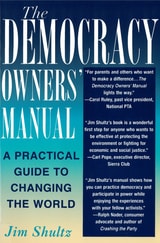
The Democracy Owners' Manual
A Practical Guide to Changing the WorldShultz, Jim
Rutgers University Press, 2002
For citizens seeking to take an active role in the affairs of their community—whether improving local schools, forcing clean-up of a polluted river, or weighing in on the debate over economic globalization — the challenge of activism can be daunting. Civic activists need to understand both the issues involved and how to take effective public action, often against enormous odds. The Democracy Owners’ Manual is a unique, hands-on guide for people who want to change public policy at the local, state, or national level. A combination of policy and advocacy basics, the book offers a clear presentation of the issues and debates activists are likely to encounter as well as a lucid, example-rich guide to effective strategies and actions.
Newcomers to advocacy work will find Jim Shultz’s book an invaluable treasure chest of ideas and stimulating stories to help them tackle the issues they care about. Veterans of public advocacy and activism will find the book to be a valuable source for fresh ideas and an indispensable tool for teaching and training others in the art of social activism. The book also uniquely lends itself for university courses in political science, public administration, social work, public health, environmental studies, and other disciplines that touch on public policy and political change.
The Diasporic Condition
Ethnographic Explorations of the Lebanese in the WorldGhassan Hage
University of Chicago Press, 2021
In The Diasporic Condition, Ghassan Hage engages with the diasporic Lebanese community as a shared lifeworld, defining a common cultural milieu that transcends spatial and temporal distance—a collective mode of being here termed the “diasporic condition.” Encompassing a complicated transnational terrain, Hage’s long-term ethnography takes us from Mehj and Jalleh in Lebanon to Europe, Australia, South America, and North America, analyzing how Lebanese migrants and their families have established themselves in their new homes while remaining socially, economically, and politically related to Lebanon and to each other.
At the heart of The Diasporic Condition lies a critical anthropological question: How does the study of a particular sociocultural phenomenon expand our knowledge of modes of existing in the world? As Hage establishes what he terms the “lenticular condition,” he breaks down the boundaries between “us” and “them,” “here” and “there,” showing that this convergent mode of existence increasingly defines everyone’s everyday life.
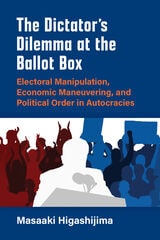
The Dictator's Dilemma at the Ballot Box
Electoral Manipulation, Economic Maneuvering, and Political Order in AutocraciesMasaaki Higashijima
University of Michigan Press, 2022
Contrary to our stereotypical views, dictators often introduce elections in which they refrain from employing blatant electoral fraud. Why do electoral reforms happen in autocracies? Do these elections destabilize autocratic rule? The Dictator’s Dilemma at the Ballot Box argues that strong autocrats who can garner popular support become less dependent on coercive electioneering strategies. When autocrats fail to design elections properly, elections backfire in the form of coups, protests, and the opposition’s stunning election victories. The book’s theoretical implications are tested on a battery of cross-national analyses with newly collected data on autocratic elections and in-depth comparative case studies of the two Central Asian republics of Kazakhstan and Kyrgyzstan.
The Dionysian Vision of the World
Friedrich Nietzsche
University of Minnesota Press, 2012
Before the world knew of the thinker who “philosophizes with a hammer,” there was a young, passionate thinker who was captivated by the two forces found within Greek art: Dionysus and Apollo. In this essay, which was the forerunner to his groundbreaking book The Birth of Tragedy, The Dionysian Vision of the World provides an unparalleled look into the philosophical mind of one of Europe’s greatest and provocative intellects at the beginning of his philosophical interrogation on the subject of art. “While dreaming is the game man plays with reality as an individual, the visual artist (in the larger sense) plays a game with dreaming.” This is the Dionysian vision of the world.

The Discovery of the World
Maps of the Earth and the CosmosElizabeth Hale
University of Chicago Press, 1985
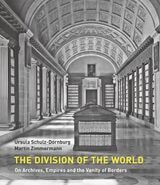
The Division of the World
On Archives, Empires and the Vanity of BordersMartin Zimmerman
Haus Publishing, 2021
At a time when Western nations are being urged to confront their colonial past, this book examines a major archive, revealing the scale of the Spanish colonial enterprise in South and Central America.
Established in 1785, the Archivo General de Indias in Seville holds roughly three hundred years of Spanish colonial history in the Americas. It houses 8,000 charts and around ninety million documents—among them Christopher Columbus’s logbook and the famous Treaty of Tordesillas which, mediated by the Pope and signed in 1494, entitled the Spanish and Portuguese kings to divide the world between them. With this treaty as a starting point, the historian Martin Zimmermann journeys into the age of discovery and recounts stories of dangerous passages, encounters with the unknown, colonial brutality, and the power of cartographers, illustrating the insatiable lust of colonialists to conquer, exploit, and own the world. Ursula Schulz-Dornburg’s photographs show the archive before its redevelopment in 2002, offering a unique view into one of Europe’s most significant archives.
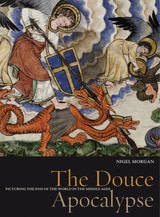
The Douce Apocalypse
Picturing the End of the World in the Middle AgesNigel Morgan
Bodleian Library Publishing, 2006
Now the manuscript—created sometime between 1250 and 1275—reaches an entirely new audience at the hands of noted scholar Nigel Morgan. The Douce Apocalypse explores the manuscript’s royal patronage, looks at its fascinating imagery, and examines its significance in light of contemporary prophecy. The commentary is accompanied by lush, full-color illustrations.
As Morgan relates, the Douce Apocalypse is especially enlightening because of its unfinished nature. A few of its images remain incomplete—and such absences give insight into the artist’s painstaking techniques of drawing, gilding, and painting. The second volume in the Treasures from the Bodleian Library series, The Douce Apocalypse will convey both the beauty of the original and the enduring fascination of its contents.

The Dybbuk Century
The Jewish Play That Possessed the WorldDebra Caplan and Rachel Merrill Moss, Editors
University of Michigan Press, 2023
A little over 100 years ago, the first production of An-sky’s The Dybbuk, a play about the possession of a young woman by a dislocated spirit, opened in Warsaw. In the century that followed, The Dybbuk became a theatrical conduit for a wide range of discourses about Jews, belonging, and modernity. This timeless Yiddish play about spiritual possession beyond the grave would go on to exert a remarkable and unforgettable impact on modern theater, film, literature, music, and culture.
The Dybbuk Century collects essays from an interdisciplinary group of scholars who explore the play’s original Yiddish and Hebrew productions and offer critical reflections on the play’s enduring influence. The collection will appeal to scholars, students, and theater practitioners, as well as general readers.
The Dying Sahara
US Imperialism and Terror in AfricaJeremy Keenan
Pluto Press, 2013
In The Dark Sahara (Pluto, 2009), Jeremy Keenan exposed the collusion between the US and Algeria in fabricating terrorism to justify a new ‘Saharan front’ in Washington’s War on Terror. Now, in The Dying Sahara, he reveals how the designation of the region as a ‘Terror Zone’ has destroyed the lives and livelihoods of thousands of innocent people.
Beginning in 2004, with what local people called the US ‘invasion’ of the Sahel, The Dying Sahara shows how repressive, authoritarian regimes - cashing in on US terrorism ‘rents’ - provoked Tuareg rebellions in both Niger and Mali. Further, he argues that US activity has unleashed a new, narco-trafficking branch of Al-Qaeda.
Keenan's chillingly detailed research shows that the US and its new combatant African command (AFRICOM) have created instability in a region the size of western Europe.
The Eighth
Mahler and the World in 1910Stephen Johnson
University of Chicago Press, 2020
September 12, 1910: The world premiere of Gustav Mahler’s Eighth Symphony and the artistic breakthrough for which the composer had yearned all his life. Munich’s new Musik Festhalle was filled to capacity on two successive evenings for the performances, which were received with rapturous applause. Representatives of many European royal houses were in attendance, along with an array of stars from the musical and literary world, including Thomas Mann and the young Arnold Schoenberg. Also present were Alma Mahler, the composer’s wife, and Alma’s longtime lover, the architect Walter Gropius. Knowledge of their relationship would precipitate an emotional crisis in Mahler that, compounded with his heart condition and the loss of his young daughter Maria, would lead to his premature death the next year.
In The Eighth, Stephen Johnson provides a masterful account of the symphony’s far-reaching consequences and its effect on composers, conductors, and writers of the time. The Eighth looks behind the scenes at the demanding one-week rehearsal period leading up to the premiere—something unheard of at the time—and provides fascinating insight into Mahler’s compositional habits, his busy life as a conductor, his philosophical and literary interests, and his personal and professional relationships. Johnson expertly contextualizes Mahler’s work among the prevailing attitudes and political climate of his age, considering the art, science, technology, and mass entertainment that informed the world in 1910. The Eighth is an absorbing history of a musical masterpiece and the troubled man who created it.
The Emperor's Clothes
A Personal Viewpoint of Politics and Administration in the Imperial Ethiopian Government, 1941-1974Gaitachew Bekele
Michigan State University Press, 1993
. . . An engaging personal account of a public service career n the period leading to the 1974 revolution. It ...persuades and provides real insight into the genuine noblesse oblige of the first generation of technocrats drawn from the social elite of the post- war period.
-James McCann, Boston University
The Empire of Civilization
The Evolution of an Imperial IdeaBrett Bowden
University of Chicago Press, 2009
The term “civilization” comes with considerable baggage, dichotomizing people, cultures, and histories as “civilized”—or not. While the idea of civilization has been deployed throughout history to justify all manner of interventions and sociopolitical engineering, few scholars have stopped to consider what the concept actually means. Here, Brett Bowden examines how the idea of civilization has informed our thinking about international relations over the course of ten centuries.
From the Crusades to the colonial era to the global war on terror, this sweeping volume exposes “civilization” as a stage-managed account of history that legitimizes imperialism, uniformity, and conformity to Western standards, culminating in a liberal-democratic global order. Along the way, Bowden explores the variety of confrontations and conquests—as well as those peoples and places excluded or swept aside—undertaken in the name of civilization. Concluding that the “West and the rest” have more commonalities than differences,this provocative and engaging bookultimately points the way toward an authentic intercivilizational dialogue that emphasizes cooperation over clashes.
The End of the Village
Planning the Urbanization of Rural ChinaNick R. Smith
University of Minnesota Press, 2021
How China’s expansive new era of urbanization threatens to undermine the foundations of rural life
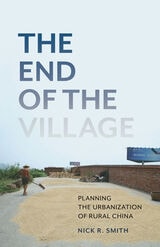
Since the beginning of the twenty-first century, China has vastly expanded its urbanization processes in an effort to reduce the inequalities between urban and rural areas. Centered on the mountainous region of Chongqing, which serves as an experimental site for the country’s new urban development policies, The End of the Village analyzes the radical expansion of urbanization and its consequences for China’s villagers. It reveals a fundamental rewriting of the nation’s social contract, as villages that once organized rural life and guaranteed rural livelihoods are replaced by an increasingly urbanized landscape dominated by state institutions.
Throughout this comprehensive study of China’s “urban–rural coordination” policy, Nick R. Smith traces the diminishing autonomy of the country’s rural populations and their subordination to larger urban networks and shared administrative structures. Outside Chongqing’s urban centers, competing forces are at work in reshaping the social, political, and spatial organization of its villages. While municipal planners and policy makers seek to extend state power structures beyond the boundaries of the city, village leaders and inhabitants try to maintain control over their communities’ uncertain futures through strategies such as collectivization, shareholding, real estate development, and migration.
As China seeks to rectify the development crises of previous decades through rapid urban growth, such drastic transformations threaten to displace existing ways of life for more than 600 million residents. Offering an unprecedented look at the country’s contentious shift in urban planning and policy, The End of the Village exposes the precarious future of rural life in China and suggests a critical reappraisal of how we think about urbanization.

The End of the World
Eric S Rabkin
Southern Illinois University Press, 1983
The essays selected by the editors to explore these apocalyptic visions are: “The Remaking of Zero: Beginning at the End,” by Gary K. Wolfe; “The Lone Survivor,” by Robert Plank; “Ambiguous Apocalypse: Transcendental Versions of the End,” by Robert Galbreath; “World’s End: The Imagination of Catastrophe,” by W. Warren Wagar; “Man-Made Catastrophes,” by Brian Stableford; and “The Rebellion of Nature,” by W. Warren Wagar.
Wolfe sees in these postholocaust narratives a central attraction—“the mythic power inherent in the very conception of a remade world.” This power derives from three sources: the emergence of a new order from the ashes of the old system, and thus a kind of denial of death; the reinforcement of one set of values as opposed to another; and as something always replaces whatever was destroyed, a promise that nothing can annihilate humanity.
The End of the World
Cultural Apocalypse and TranscendenceErnesto de Martino
University of Chicago Press, 2023
A philosopher, historian of religions, and anthropologist, Ernesto de Martino (1908–1965) produced a body of work that prefigured many ideas and concerns that would later come to animate anthropology. In his writing, we can see the roots of ethnopsychiatry and medical anthropology, discussions of reflexivity and the role of the ethnographer, considerations of social inequality and hegemony from a Gramscian perspective, and an anticipation of the discipline’s “existential turn.” We also find an attentiveness to hope and possibility, despite the gloomy title of his posthumously published book La fine del mondo, or The End of the World. Examining apocalypse as an individual as well as a cultural phenomenon, treating subjects both classic and contemporary and both European and non-Western, ranging across ethnography, history, literature, psychiatry, and philosophy, de Martino probes how we relate to our world and how we might be better subjects and thinkers within it. This new translation offers English-language readers their first chance to engage with de Martino’s masterwork, which continues to appear prescient in the face of the frictions of globalization and environmental devastation.
The European Union and the Rise of Regionalist Parties
Seth K. Jolly
University of Michigan Press, 2015
The Eyes of the World
Mining the Digital Age in the Eastern DR CongoJames H. Smith
University of Chicago Press, 2022
The digital devices that, many would argue, define this era exist not only because of Silicon Valley innovations but also because of a burgeoning trade in dense, artisanally mined substances like tantalum, tin, and tungsten. In the tentatively postwar Eastern DR Congo, where many lives have been reoriented around artisanal mining, these minerals are socially dense, fueling movement and innovative collaborations that encompass diverse actors, geographies, temporalities, and dimensions. Focusing on the miners and traders of some of these “digital minerals,” The Eyes of the World examines how Eastern Congolese understand the work in which they are engaged, the forces pitted against them, and the complicated process through which substances in the earth and forest are converted into commodified resources. Smith shows how violent dispossession has fueled a bottom-up social theory that valorizes movement and collaboration—one that directly confronts both private mining companies and the tracking initiatives implemented by international companies aspiring to ensure that the minerals in digital devices are purified of blood.
The Fabulous Future?
America and the World in 2040Morton Schapiro and Gary Saul Morson
Northwestern University Press, 2015
Will the future be one of economic expansion, greater tolerance, liberating inventions, and longer, happier lives? Or do we face economic stagnation, declining quality of life, and a technologically enhanced totalitarianism worse than any yet seen? The Fabulous Future? America and the World in 2040 draws its inspiration from a more optimistic time, and tome, The Fabulous Future: America in 1980, in which Fortune magazine celebrated its twenty-fifth anniversary by publishing the predictions of thought leaders of its time.
In the present volume, the world’s leading specialists from diverse fields project developments in their areas of expertise, from religion and the media to the environment and nanotechnology. Will we be happier, and what exactly does happiness have to do with our economic future? Where is higher education heading and how should it develop? And what is the future of prediction itself? These exciting essays provoke sharper questions, reflect unexpectedly on one another, and testify to our present anxieties about the surprising world to come.
The Fall of Empires
A Brief History of Imperial CollapseChad Denton
Westholme Publishing, 2020
There are no self-proclaimed empires today. After the twentieth century, with its worldwide wave of decolonizing and liberation movements, the very word “empire” conjures images of slavery, war, repression, and colonialism. None of this is to say that empires are confined to the past, however. By at least some reasonable definitions, empires do exist today. Many articles and books speak about the decline of the “American Empire,” for example, or compare the history of the United States to that of Rome or the British Empire. Yet no public official would speak candidly of American “imperial” interests in the Middle East or use the word “empire” in discussions of the nation’s future the same way British politicians did in the twentieth century. In addition, empires don’t have to fit the classical Roman mold; there are many kinds of empire and varieties of international authority, such as cultural imperialism and economic imperialism. But it is clear empires do not last, even those that once harnessed great wealth, strong armies, and sophisticated legal systems.
InThe Fall of Empires: A Brief History of Imperial Collapse, historian Chad Denton describes the end of seventeen empires throughout world history, from Athens to Qin China, from the Byzantium to the Mughals. He reveals—through stories of conquest, corruption, incompetence, assassination, bigotry, and environmental crisis—how even the most seemingly eternal of empires declined. For Athens and Britain it was military hubris; for Qin China and Russia it was alienating their subjects through oppression; Persia succumbed with the loss of its capital; the Khmer faced ecological catastrophe; while the Aztecs were destroyed by colonial exploitation. None of these events alone explains why the empires fell, but they do provide a glimpse into the often-unpredictable currents of history, which have so far spared no empire. A fascinating and instructive survey, The Fall of Empiresprovides compelling evidence about the fate of centralized regional or global power.
The Fearful Steelpen
Russian Translations of "Ulysses," 1920–1930sNatalia Kamovnikova
University of Massachusetts Press, 2026
Examining how a single book inspired devotion, dread, and lasting superstition in Russian letters
When James Joyce first published Ulysses in 1922, the book enjoyed a hearty welcome in the Soviet Union. In fact, Russian was the second language into which excerpts were translated. However, the early enthusiasm soon gave way to apprehension, and then to public condemnation. The Russian literary community found itself at the epicenter of the political repression of the 1930s, suffering enormous losses among writers and translators, who died en masse through executions and exile. In the context of Ulysses, the numerous violent deaths of its Soviet translators and editors gave rise to rumors, which then developed into superstitious beliefs that managed to outlive their own time. Russian translation scholar Natalia Kamovnikova examines the struggles faced by those who attempted early translations, including death and imprisonment, and how both this translation work and the text itself became sources of fear.
Alongside important background on these early translation attempts, including information on the translators themselves, The Fearful Steelpen unpacks the literary approaches to rendering Joyce’s aesthetics in Russian and traces the socio-political beliefs behind translation and publishing decisions. Kamovnikova goes further, to examine why Ulysses in particular aroused fears in both in its contemporaries and in subsequent generations of Russian writers, as if the text held a dangerous power that could harm those working on it. This fascinating publishing case study reveals the complicated cultural and political dynamics at work behind a seemingly simple translation from one language to another that still resonates in the contemporary moment.
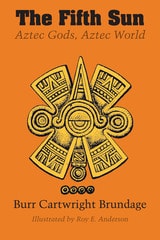
The Fifth Sun
Aztec Gods, Aztec WorldBy Burr Cartwright Brundage
University of Texas Press, 1979
The ancient Aztecs dwelt at the center of a dazzling and complex cosmos. From this position they were acutely receptive to the demands of their gods. The Fifth Sun represents a dramatic overview of the Aztec conception of the universe and the gods who populated it—Quetzalcoatl, the Plumed Serpent; Tezcatlipoca, the Smoking Mirror; and Huitzilopochtli, the Southern Hummingbird. Burr Cartwright Brundage explores the myths behind these and others in the Aztec pantheon in a way that illuminates both the human and the divine in Aztec life.
The cult of human sacrifice is a pervasive theme in this study. It is a concept that permeated Aztec mythology and was the central preoccupation of the aggressive Aztec state. Another particularly interesting belief explored here is the “mask pool,” whereby gods could exchange regalia and, thus, identities.
This vivid and eminently readable study also covers the use of hallucinogens; cannibalism; the calendars of ancient Mexico; tlachtli, the life-and-death ball game; the flower wars; divine transfiguration; and the evolution of the war god of the Mexica. A splendid introduction to Aztec religion, The Fifth Sun also contains insights for specialists in ethnohistory, mythology, and religion.
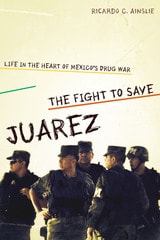
The Fight to Save Juárez
Life in the Heart of Mexico's Drug WarBy Ricardo C. Ainslie
University of Texas Press, 2013
The city of Juárez is ground zero for the drug war that is raging across Mexico and has claimed close to 60,000 lives since 2007. Almost a quarter of the federal forces that former President Felipe Calderón deployed in the war were sent to Juárez, and nearly 20 percent of the country’s drug-related executions have taken place in the city, a city that can be as unforgiving as the hardest places on earth. It is here that the Mexican government came to turn the tide. Whatever happens in Juárez will have lasting repercussions for both Mexico and the United States.
Ricardo Ainslie went to Juárez to try to understand what was taking place behind the headlines of cartel executions and other acts of horrific brutality. In The Fight to Save Juárez, he takes us into the heart of Mexico’s bloodiest city through the lives of four people who experienced the drug war from very different perspectives—Mayor José Reyes Ferriz, a mid-level cartel player’s mistress, a human rights activist, and a photojournalist. Ainslie also interviewed top Mexican government strategists, including members of Calderón’s security cabinet, as well as individuals within U.S. law enforcement. The dual perspective of life on the ground in the drug war and the “big picture” views of officials who are responsible for the war’s strategy, creates a powerful, intimate portrait of an embattled city, its people, and the efforts to rescue Juárez from the abyss.
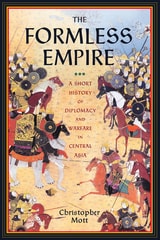
The Formless Empire
A Short History of Diplomacy and Warfare in Central AsiaChristopher Mott
Westholme Publishing, 2015
Central Asia, a vast region extending from eastern Russia and across Kazakhstan, Uzbekistan, Turkmenistan, Afghanistan, Tajikistan, Kyrgystan, Mongolia, and western China, has its own tradition of foreign policy rooted in the ancient nomadic culture of many of its peoples as well as the region’s distinctive geography. From the thundering hooves of Mongol or Cossack cavalry across the steppes to the clanking of tanks on parade in Moscow or Beijing, elements of this system still cast a shadow on the region at the heart of Earth’s largest continent. By tracing the evolution of Central Asian warfare and diplomacy through a series of historical examples, ranging from the ancient Xiongnu people and medieval Mongol Empire to the fall of the Soviet Union, historian Christopher Mott argues that the original system of informal relationships, indirect rule, and rapid military movement did not entirely fade from the region with the eclipse of the nomadic powers during the Middle Ages. In fact, many states like China, Iran, and Russia had already been influenced by nomadic people, and in so doing adapted their own diplomatic and military policies accordingly. The Formless Empire: A Short History of Diplomacy and Warfare in Central Asia is an engaging study of the nature of non-Western imperialism and great-power strategy. In addition, the book demonstrates that regional histories can show us the variety of political possibilities in the past and how they were adapted to changing circumstances—a point made even more important by the rapid changes facing global security and new forms of empire building.
“Christopher Mott’s extremely erudite and wide-ranging examination of the history of Central Asia shows us that we have been far too narrow-minded and Eurocentric in thinking about power and how the global system changes historically. Given the current interest in ‘caliphates’ we need to reflect on the history of the areas of the world that dance to a different historical drum than we do in the West.” —Andrew John Williams, author of France, Britain, and the United States in the Twentieth Century
The Future of the South China Sea
Disputes and NegotiationsJiye Kim
University of Michigan Press, 2026
By incorporating negotiation records, such as the 1958 Declaration on China’s Territorial Sea, the 1992 ASEAN Declaration, and the 2005 Tripartite Agreement, Jiye Kim traces how China reshapes its interests into negotiation agendas, providing critical insights into the nation’s diplomacy and making a significant contribution to an existing literature on the South China Sea that has been largely dominated by analyses of great power rivalry. This book sheds light on China’s underlying interests as living and adaptable entities, providing scholars with a detailed, evidence-based understanding of the complexities that define one of the world’s most contested maritime regions.
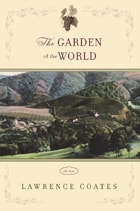
The Garden of the World
Lawrence Coates
University of Nevada Press, 2012
California’s Santa Clara Valley was once home to a vigorous wine industry. The Garden of the World is the tale of a pioneer winemaking family headed by Paul Tourneau, a fiercely ambitious vintner determined to make the finest wines in California. His plans are disrupted by a phylloxera epidemic at the beginning of the twentieth century, the trials of national Prohibition, and the bitter alienation of his older son. Played out against the vividly depicted seasonal rhythms of vineyard life, this is a moving saga of betrayal, loss, and the harsh consequences of unbreakable ambition.
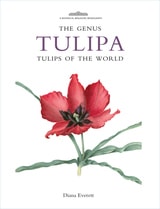
The Genus Tulipa
Tulips of the WorldDiana Everett
Royal Botanic Gardens, Kew, 2013
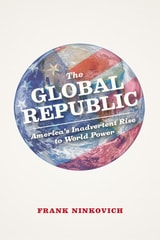
The Global Republic
America's Inadvertent Rise to World PowerFrank Ninkovich
University of Chicago Press, 2014
One of the preeminent intellectual historians of our time, Ninkovich delivers here his most ambitious and sweeping book to date. He argues that historically the United States has been driven not by a belief in its destiny or its special character but rather by a need to survive the forces of globalization. He builds the powerful case that American foreign policy has long been based on and entangled in questions of global engagement, while also showing that globalization itself has always been distinct from—and sometimes in direct conflict with—what we call international society.
In the second half of the twentieth century, the United States unexpectedly stumbled into the role of global policeman and was forced to find ways to resolve international conflicts that did not entail nuclear warfare. The United States's decisions were based less in notions of exceptionalism and more in a need to preserve and expand a flourishing global society that had become essential to the American way of life.
Sure to be controversial, The Global Republic compellingly and provocatively counters some of the deepest and most common misconceptions about America’s history and its place in the world.

The Global Road Movie
Alternative Journeys around the WorldEdited by José Duarte and Timothy Corrigan
Intellect Books, 2018

The Global South
Histories, Politics, MapsPamela Gupta, Christopher Lee, Marissa Moorman, and Sandhya Shukla, special issue editors
Duke University Press, 2018
Contributors: Afro-Asian Networks Research Collective, Phineas Bbaala, Emily Callaci, Aharon de Grassi, Pamila Gupta, Mingwei Huang, Sean Jacobs, Maurice Jr. M. LaBelle, Christopher J. Lee, Roseann Liu, Marissa J. Moorman, Michelle Moyd, Ronald C. Po, Savannah Shange, Sandhya Shukla, Pahole Sookkasikon, Quito Swan, Sarah Van Beurden, Sarah E. Vaughn, Jelmer Vos, Keith B. Wagner
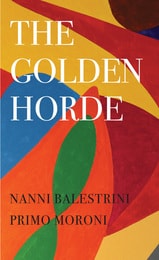
The Golden Horde
Revolutionary Italy, 1960–1977Edited by Nanni Balestrini and Primo Moroni
Seagull Books, 2021
An anthology of texts and fragments woven together with an original commentary, The Golden Horde widens our understanding of the full complexity and richness of radical thought and practice in Italy during the 1960s and ’70s. The book covers the generational turbulence of Italy’s postwar period, the transformations of Italian capitalism, the new analyses by worker-focused intellectuals, the student movement of 1968, the Hot Autumn of 1969, the extra-parliamentary groups of the early 1970s, the Red Brigades, the formation of a radical women’s movement, the development of Autonomia, and the build-up to the watershed moment of the spontaneous political movement of 1977. Far from being merely a handbook of political history, The Golden Horde also sheds light on two decades of Italian culture, including the newspapers, songs, journals, festivals, comics, and philosophy that these movements produced. The book features writings by Sergio Bologna, Umberto Eco, Elvio Fachinelli, Lea Melandri, Danilo Montaldi, Toni Negri, Raniero Panzieri, Franco Piperno, Rossana Rossanda, Paolo Virno, and others, as well as an in-depth introduction by translator Richard Braude outlining the work’s composition and development.
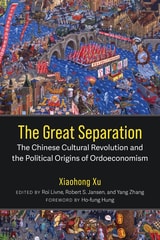
The Great Separation
The Chinese Cultural Revolution and the Political Origins of OrdoeconomismXiaohong Xu Edited by Roi Livne, Robert Jansen and Yang Zhang
University of Michigan Press, 2026
With a keen attention to how culture and elite conflict shape politics, The Great Separation upends deterministic understandings of the Chinese Cultural Revolution and the market reforms that followed. This ambitious posthumous volume by sociologist Xiaohong Xu turns the existing scholarship on China’s “neoliberalism” on its head by demonstrating that the effort to separate mass politics from economic policy had its origins well before the Reform and Opening-up era.
Over the course of the Cultural Revolution, unfolding factional dynamics and interpretive struggles enabled Chairman Mao and his radical colleagues to mobilize workers to advance their own political goals while neutralizing the masses’ economic demands, symbolically separating the political from the economic. This set the stage for a more thoroughgoing depoliticization of the economy after 1989, when China faced challenges from students and workers whose economic grievances had rapidly morphed into political demands for democracy. The result was what Xu calls ordoeconomism: an ideology that valorizes economic development, rejects mass politics, and views the state as the apolitical guardian of the economy. As Xu demonstrates, while ordoeconomism may share some affinities with neoliberalism, it is a distinctively Chinese approach that must be understood on its own terms.
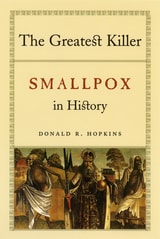
The Greatest Killer
Smallpox in HistoryDonald R. Hopkins
University of Chicago Press, 2002
In The Greatest Killer, Donald R. Hopkins provides a fascinating account of smallpox and its role in human history. Starting with its origins 10,000 years ago in Africa or Asia, Hopkins follows the disease through the ancient and modern worlds, showing how smallpox removed or temporarily incapacitated heads of state, halted or exacerbated wars, and devastated populations that had never been exposed to the disease. In Hopkins's history, smallpox was one of the most dangerous-and influential-factors that shaped the course of world events.
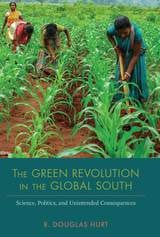
The Green Revolution in the Global South
Science, Politics, and Unintended ConsequencesR. Douglas Hurt
University of Alabama Press, 2020
The Green Revolution was devised to increase agricultural production worldwide, particularly in the developing world. Agriculturalists employed anhydrous ammonia and other fertilizing agents, mechanical tilling, hybridized seeds, pesticides, herbicides, and a multitude of other techniques to increase yields and feed a mushrooming human population that would otherwise suffer starvation as the world’s food supply dwindled.
In The Green Revolution in the Global South: Science, Politics, and Unintended Consequences, R. Douglas Hurt demonstrates that the Green Revolution did not turn out as neatly as scientists predicted. When its methods and products were imported to places like Indonesia and Nigeria, or even replicated indigenously, the result was a tumultuous impact on a society’s functioning. A range of factors—including cultural practices, ethnic and religious barriers, cost and availability of new technologies, climate, rainfall and aridity, soil quality, the scale of landholdings, political policies and opportunism, the rise of industrial farms, civil unrest, indigenous diseases, and corruption—entered into the Green Revolution calculus, producing a series of unintended consequences that varied from place to place. As the Green Revolution played out over time, these consequences rippled throughout societies, affecting environments, economies, political structures, and countless human lives.
Analyzing change over time, almost decade by decade, Hurt shows that the Green Revolution was driven by the state as well as science. Rather than acknowledge the vast problems with the Green Revolution or explore other models, Hurt argues, scientists and political leaders doubled down and repeated the same missteps in the name of humanity and food security. In tracing the permutations of modern science’s impact on international agricultural systems, Hurt documents how, beyond increasing yields, the Green Revolution affected social orders, politics, and lifestyles in every place its methods were applied—usually far more than once.
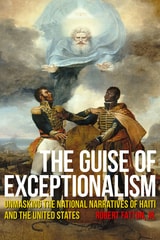
The Guise of Exceptionalism
Unmasking the National Narratives of Haiti and the United StatesRobert Fatton
Rutgers University Press, 2021
The Hollywood War Film
Critical Observations from World War I to IraqDaniel Binns
Intellect Books, 2017
Looking closely at films such as All Quiet on the Western Front, Full Metal Jacket, and The Hurt Locker, Binns reveals the commonalities in Hollywood films despite the distinct conflicts and eras they represent, and he shows how contemporary war films closely echo earlier films in their nationalistic and idealistic depictions. Offering a trenchant analysis of some of the most important war films from the past century, this book will be of interest to anyone who has been captivated by how film has dealt with one of humanity’s most difficult, but far too common, realities.
The Hungarian Patient
Social Opposition to an Illiberal DemocracyJon Van Til
Central European University Press, 2015