Results by title
5550 books match the query 'Biography & Autobiography' and 1006 start with t
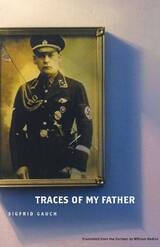
Traces of My Father
William Radice
Northwestern University Press, 2002
In 1979 Sigfrid Gauch published the groundbreaking Vaterspuren, (Traces of My Father), the first of the so-called father books about the relationships of postwar Germans with their parents. It inspired a new genre in German literature. Ever since, such writings have contributed greatly to Germany's ongoing struggle to overcome its own past.
This autobiographical novel is Gauch's attempt to come to terms with his father, Hermann Gauch, a physician who had joined the National Socialists in the 1920s, wrote six books of "race research" as a member of the SS, and to his dying day remained an unrepentant Nazi. The story alternates between the images of the elder Gauch's death and burial and the author's memories of childhood and adolescence.
Unlike many of the father books, however, Traces of My Father is less a political attack than a personal journey. Gauch, though honest about his father's monstrous actions and ideas, does not shirk their shared emotional bond. The result is a poignant attempt by a son to relive his father's notorious life and in doing so free himself from the man's influence.
Tracing Paradise
Two Years in Harmony with John MiltonDawn Potter
University of Massachusetts Press, 2009
One winter morning, poet Dawn Potter sat down at her desk in Harmony, Maine, and began copying out the opening lines of John Milton's Paradise Lost. Her intent was to spend half an hour with a poem she had never liked, her goal to transcribe a page or two. Maybe she would begin to appreciate the poet's art, though she had no real expectations that the exercise would change her mind about the poem. Yet what began as a whim turned rapidly into an obsession, and soon Potter was immersed in a strange and unexpected project: she found herself copying out every single word of Milton's immense, convoluted epic.
Tracing Paradise: Two Years in Harmony with John Milton is her memoir of that long task. Over the course of twelve chapters, Potter explores her very personal response to Milton and Paradise Lost, tracing the surprising intersections between a seventeenth-century biblical epic and the routine joys and tragedies of domestic life in contemporary rural Maine. Curious, opinionated, and eager, she engages with the canon on mutable, individual terms. Though she writes perceptively about the details and techniques of Milton's art, always her reactions are linked to her present-tense experiences as a poet, small-time farmer, family member, and citizen of a poor and beleaguered north-country town.
A skilled and entertaining writer, Potter is also a wide-ranging and sophisticated reader. Yet her memoir is not a scholarly treatise: her enthusiasms and misgivings about both Milton and Paradise Lost ebb and flow with the days. Tracing Paradise reminds us that close engagement with another artist's task may itself be a form of creation. Above all, Potter's memoir celebrates one reader's difficult yet transformative love affair with Milton's glorious, irritating, inscrutable masterpiece.
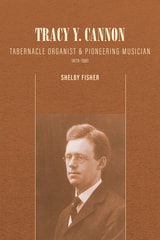
Tracy Y. Cannon
Tabernacle Organist and Pioneering Musician, 1879-1961Fisher, Shelby
Signature Books, 2026
Tracy Y. Cannon guided the musical voice of Mormonism from its provincial roots at the turn of the twentieth century into a state of maturity by the end of his career in 1960. Cannon served as Salt Lake Tabernacle organist from 1905 until 1930, accompanying some of the first radio broadcasts of Music and the Spoken Word. Under his leadership, the McCune School of Music and Art became a cultural hub, offering accredited music degrees as well as community enrichment activities, influencing Utah’s next generation of music educators, composers, leaders, and policymakers. But perhaps his most lasting legacy was his work with the General Music Committee of the Church of Jesus Christ of Latter-day Saints, through which he oversaw the creation of two hymnals, many anthem books, organ anthologies, method books, and an expansive organist and chorister education program.
Cannon’s musical tastes—dignified, refined, reverent, and heavily influenced by Northern European tradition—became the norm for Latter-day Saint congregations for generations. Through his multifaceted career, this brief biography explores the evolution of Latter-day Saint hymnody, “art music,” cultural taste, and music education during the first half of the twentieth century.
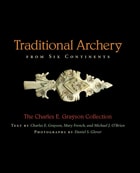
Traditional Archery from Six Continents
The Charles E. Grayson CollectionText by Charles E. Grayson, Mary French, Michael J. O'Brien, & Photos by Daniel
University of Missouri Press, 2007
As a major hunting tool and weapon, the bow changed human history around the world, and its diverse forms reflect the cultures that adopted it. Those variations can be seen in the Charles E. Grayson Archery Collection housed at the University of Missouri–Columbia Museum of Anthropology, one of the largest and most comprehensive assemblages of archery-related materials in the world. This handsome book offers a unique look at archery as it has been practiced through the ages.
Drawing on a collection of more than five thousand bows, arrows, and associated paraphernalia, Traditional Archery from Six Continents presents color photographs and descriptions of some three hundred items—including quivers, thumb rings, and more—that represent traditional archery practices and customs from around the world. From the Chinese “monkey bow” to the English longbow, the artifacts are organized by region, taking in equipment from Asia, the Middle East, Africa, the Americas, and Europe used over the past five hundred years.
The book’s introduction provides an overview of traditional archery and its nomenclature, and chapter essays situate the items in their historical, cultural, and technological contexts. Plate descriptions note materials, construction methods, dimensions, and temporal and cultural affiliations. The sharp, detailed photographs will enable users to identify the geographic or cultural origins of other pieces by visual comparison. Additional illustrations show how archery equipment has been used in various settings such as hunting, warfare, and sport.
These superb representations from a masterful collection constitute a complete introduction to worldwide archery and mark the first wide-ranging survey of European and non-European archery equipment. Traditional Archery from Six Continents will be the standard reference work in the study of archery, indispensable for students of material culture or general readers interested in the history of this timeless art.

Tragic Muse
Rachel of the Comédie-FrançaiseRachel M. Brownstein
Duke University Press, 1995
Born to itinerant Jewish peddlers in 1821, Rachel arrived on the Paris stage at the age of fifteen. She became both a symbol of her culture’s highest art and a clue to its values and obsessions. Fascinated with all things Napoleonic, she was the mother of Napoleon’s grandson and the lover of many men connected to the emperor. Her story—the rise from humble beginnings to queen of the French state theater—echoes and parodies Napoleon’s own. She decisively controlled her career, her time, and finances despite the actions and claims of managers, suitors, and lovers. A woman of exceptional charisma, Rachel embodied contradiction and paradox. She captured the attention of her time and was memorialized in the works of Matthew Arnold, Charlotte Brontë, George Eliot, and Henry James.
Richly illustrated with portraits, photographs, and caricatures, Tragic Muse combines brilliant literary analysis and exceptional historical research. With great skill and acuity, Rachel M. Brownstein presents Rachel—her brief intense life and the image that was both self-fashioned and, outliving her, fashioned by others. First published by Knopf (1993), this book will attract a broad audience interested in matters as wide ranging as the construction of character, the cult of celebrity, women’s lives, and Jewish history. It will also be of enduring interest to readers concerned with nineteenth-century French culture, history, literature, theater, and Romanticism. Tragic Muse won the 1993 George Freedley Award presented by the Theater Library Association.
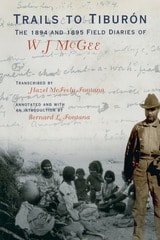
Trails to Tiburón
The 1894 and 1895 Field Diaries of W J McGeeW. J. McGee; Transcribed by Hazel McFeely Fontana; Annotated and with an Introduction by Bernard L. Fontana
University of Arizona Press, 2000
A self-taught scientist in the newly forming field of anthropology, McGee led two expeditions through southern Arizona and northern Sonora for the Bureau of American Ethnology. There he conducted ethnographic research among the Papagos (Tohono O'odham) and the Seris, and his subsequent publication The Seri Indians helped secure his place in the anthropological community.
McGee's complete journals of the expeditions, kept in small field notebooks and preserved in the Library of Congress, are published here for the first time. These journals contain detailed descriptions of the country and people McGee encountered and convey the adventure of traveling through wild and unfamiliar places—including a voyage to Isla Tiburón, or Shark Island, in the Gulf of California—and being plagued by foul weather, a shortage of supplies, and fear of attack from hostile Indians.
Trails to Tiburón features 57 historical photographs taken on the expedition, capturing the places McGee saw and the people he encountered. Fontana's notes to the diary provide useful botanical, geological, and ethnographic information, while his introduction places McGee and his field work in the context of late-nineteenth-century anthropology and science.
Trails to Tiburón reveals McGee's versatility as a field worker and shows his methods, often questioned today, to be the reasonable response of a man caught up in the intellectual fervor of his time. For anyone wanting to share in the spirit of adventure, these journals are a landmark in the annals of exploration.
Trans/Portraits
Voices from Transgender CommunitiesJackson Wright Shultz
Dartmouth College Press, 2015
Transanything
EssaysEver Jones
Northwestern University Press, 2025
Transanything reveals a world in metamorphosis. A hermit crab retires its shell, lovers drift apart, and seasons churn, all amid Ever Jones’s own narrative of midlife gender transition.
Jones takes up a tradition of writing—about the American landscape, solitude, wilderness, and the West—long intertwined with colonialism and heteropatriarchy, and makes it wholly their own. A self-proclaimed “nature essay” misbehaves, wandering away from the hummingbird outside Jones’s window. In their chronicle of a week in Yellowstone, Jones navigates trails frequented by grizzlies and a campground where their identity is regarded as equally dangerous. Elk, bison, and bark spiders roam this book’s pages, but it is the gray wolf—the embattled apex predator of the American West, narrow survivor of settler colonial violence, and vessel for American myths of independence—who emerges as Jones’s shapeshifting coprotagonist.
Taking on a global web of colonial systems that seek to divide us, Jones disrupts loneliness and forges space for queerness and transness to be aliveness—to be transanything.
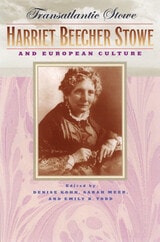
Transatlantic Stowe
Harriet Beecher Stowe and European CultureDenise Kohn
University of Iowa Press, 2006
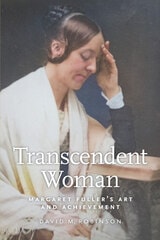
Transcendent Woman
Margaret Fuller’s Art and AchievementDavid M. Robinson
University of Massachusetts Press, 2025
Journalist, editor, critic, translator, and women’s rights advocate, Margaret Fuller was America’s first major female intellectual. Throughout much of the late-19th and 20th centuries, however, critics and scholars largely saw her as a minor figure in the transcendentalist movement with which she is associated, and her work was considered secondary to that of male figures like Emerson and Hawthorne. While her biography—including her marriage to an Italian noble and her dramatic death in a shipwreck—was often the focus, her skill as a writer was generally overlooked, and her intellectual development largely ignored.
In the early 1980s, David M. Robinson was one of the first scholars to publish an article that focused on Fuller’s mind and art. Now Transcendent Woman completes and extends this early work. Outlining the development of her philosophy, which Robinson defines as a “purpose-oriented form of thinking, tailored to the commitment and assets of each individual,” he traces Fuller’s intellectual journey, first in relation to her family and the people around her in New England and later in her travels in the midwestern United States and, more importantly, through Europe and her residency in Italy. He focuses first and foremost on what Fuller was reading (Goethe was key), what she was thinking as revealed in her letters and journals, and what she was writing, including seminal works such as Summer on the Lakes and Woman in the Nineteenth Century as well as lesser-known essays, translations, and short stories. Drawing extensively on primary sources, Robinson charts Fuller’s development and achievement as an original thinker and fearless advocate of democracy.
Translating from the Portuguese
A Life TranslatedElizabeth Lowe
Tagus Press, 2025
Elizabeth Lowe charts her journey to becoming a translator through a series of vignettes relating her life as a “third-culture kid” and living and working abroad in a kaleidoscope of cultures and languages. She lived in Germany as a young child immediately after the Second World War while her father worked in the Nuremberg trials and as a newly married military spouse during the Vietnam War; she lived in Haiti just prior to Papa Doc's consolidation of power, in Brazil when the military dictatorship seized the country in its two-decade vise, at the University of Coimbra, Portugal during Salazar, and Colombia at the height of the guerrilla conflicts, and in Miami during the heyday of the cartels. The book is a reflection on translation as an art, on five decades teaching languages, literatures, and translation, and on her close relationship with writers from the Lusophone world. It explores theoretical aspects of translation as well as practical challenges faced by translators, especially those working in Portuguese literature. Lowe offers intimate insights into the creative process of the writers she translates and her own philosophy of literary translation.

Trap with a Green Fence
Survival in TreblinkaRichard Glazar
Northwestern University Press, 1995
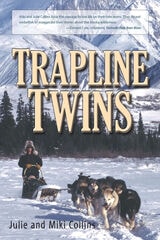
Trapline Twins
Julie and Miki Collins
University of Alaska Press, 2005

Trauma Sponges
Dispatches from the Scarred Heart of Emergency ResponseJeremy Norton
University of Minnesota Press, 2027
Beyond an adrenaline ride or a chronicle of bravura heroics, this unflinching view of a Minneapolis firefighter reveals the significant toll of emergency response
In this remarkable memoir, Jeremy Norton marshals twenty-two years of professional experience to offer, with compassion and critique, an extraordinary portrayal of emergency responders. Trauma Sponges captures in arresting detail the personal and social toll the job exacts, as well as the unique perspective afforded by sustained direct encounters with the sick, the dying, and the dead.
From his first days as a rookie firefighter and emergency medical technician to his command of a company as a twenty-year veteran, Norton documents the life of an emergency responder in Minneapolis: the harrowing, heartbreaking calls, from helping the sick and hurt, to reassuring the scared and nervous, to attempting desperate measures and providing final words. In the midst of the uncertainty, fear, and loss caused by the Covid pandemic, Norton and his crew responded to the scene of George Floyd’s murder. The social unrest and racial injustice Norton had observed for years exploded on the streets of Minneapolis, and he and his fellow firefighters faced the fires, the injured, and the anguish in the days and months that followed.
Norton brings brutally honest insight and grave social conscience to his account, presenting a rare insider’s perspective on the insidious role of sexism and machismo in his profession, as well as an intimate observer’s view of individuals trapped in dire circumstances and a society ill equipped to confront trauma and death. His thought-provoking, behind-the-scenes depiction of the work of first response and last resort starkly reveals the realities of humanity at its finest and its worst.
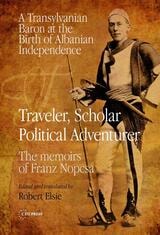
Traveler, Scholar, Political Adventurer
A Transylvanian Baron at the Birth of Albanian Independence: The memoirs of Franz NopcsaFranz Nopcsa
Central European University Press, 2014
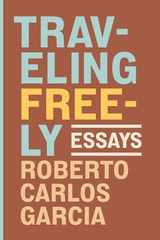
Traveling Freely
EssaysRoberto Carlos Garcia
Northwestern University Press, 2025
A poet’s debut essay collection exploring American faults through the eyes of a Dominican American
In Traveling Freely: Essays, Roberto Carlos Garcia explores intersecting topics such as race, identity, American socioeconomic inequality, police violence, our inability to partake in our culture as innocents, and our complicity as Americans in all that’s wrong with the United States from the author’s specific vantage point as a Black Dominican American man. The voice in these essays is both clear and nuanced, and as readers move through the collection, the various themes cohere into a multilayered investigation of institutional racism and the inherent exploitations of capitalism.
In essays that are uniquely straightforward and accessible, Garcia insists that in order to resist state-sanctioned violence against marginalized bodies and populations, we must understand our shared history of oppression—so that we can rise against it effectively and find new paths forward.
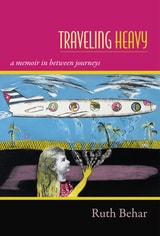
Traveling Heavy
A Memoir in between JourneysRuth Behar
Duke University Press, 2013
Behar calls herself an anthropologist who specializes in homesickness. Repeatedly returning to her homeland of Cuba, unwilling to utter her last goodbye, she is obsessed by the question of why we leave home to find home. For those of us who travel heavy with our own baggage, Behar is an indispensable guide, full of grace and hope, in the perpetual search for connection that defines our humanity.
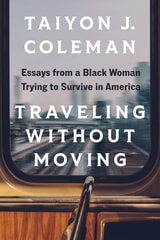
Traveling without Moving
Essays from a Black Woman Trying to Survive in AmericaTaiyon J. Coleman
University of Minnesota Press, 2024
A stunning lyrical commentary on the constructions of race, gender, and class in the fraught nexus of a Black woman’s personal experience and cultural history
The Fair Housing Act passed in 1968, and more than fifty years later, yours seems to be the only Black family on your block in Minneapolis. You and your Black African husband, both college graduates, make less money than some White people with a felony record and no high school diploma. You’re the only Black student in your graduate program. You just aren’t working hard enough. You’re too sensitive. Sandra Bland? George Floyd? Don't take everything so personally. Amid the White smiles of Minnesota Nice and the Minnesota Paradox—the insidious racism of an ostensibly inclusive place to live—what do you do? If you’re Taiyon J. Coleman, you write.
In Traveling without Moving, Coleman shares intimate essays from her life: her childhood in Chicago—growing up in poverty with four siblings and a single mother—and the empowering decision to leave her first marriage. She writes about being the only Black student in a prestigious and predominantly White creative writing program, about institutional racism and implicit bias in writing instruction, about the violent legacies of racism in the U.S. housing market, about the maternal health disparities seen across the country and their implication in her own miscarriage. She explores what it means to write her story and that of her family—an act at once a responsibility and a privilege—bringing forth the inherent contradictions between American ideals and Black reality.
Using a powerful blend of perspectives that move between a first-person lens of lived experience and a wider-ranging critique of U.S. culture, policy, and academia, Coleman’s writing evinces how a Black woman in America is always on the run, always Harriet Tubman, traveling with her babies in tow, seeking safety, desperate to survive, thrive, and finally find freedom.
Retail e-book files for this title are screen-reader friendly.

Travelling Passions
The Hidden Life of Vilhjalmur StefanssonGisli Palsson
University of Manitoba Press, 2005
New evidence of this other life has recently been discovered: a collection of love letters between Stefansson and his fiance Orpha Cecil Smith were found in a New Hampshire flea market; Stefansson's field diaries have revealed elegant essays and insightful commentary on Inupiat society; baptismal records have revealed that Stefansson had a son, Alex, with his informant and guide, Fanny Pannigabluk; and through Web searches and a private detective, Palsson found and conducted interviews with the descendents of both Cecil Smith and Alex Stefansson.
Travelling Passions sheds new light on Stefanssonís life and work, focussing on the tension between his private life and the theories that brought his name to the halls of fame. Palsson draws a clear, vivid, and in many ways unexpected picture of the mythical figure of Stefansson.
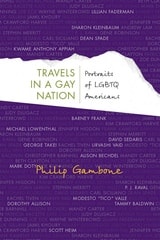
Travels in a Gay Nation
Portraits of LGBTQ AmericansPhilip Gambone
University of Wisconsin Press, 2010
In this age when contemporary gay America is still coming under attack, Gambone captures the humanity of each individual. For some, their identity as a sexual minority is crucial to their life’s work; for others, it has been less so, perhaps even irrelevant. But, whether splashy or quiet, center-stage or behind the scenes, Gambone’s subjects have managed—despite facing ignorance, fear, hatred, intolerance, injustice, violence, ridicule, or just plain indifference—to construct passionate, inspiring lives.
Outstanding Book in the High School Category, selected by the American Association of School Libraries
Best Book in Special Interest Category, selected by the Public Library Association
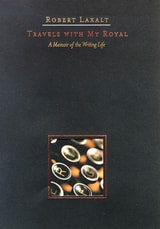
Travels with My Royal
A Memoir of the Writing LifeRobert Laxalt
University of Nevada Press, 2001
The book opens with a series of vignettes about his youth in Carson City as the second son of an immigrant Basque family and his later experiences as a student at the University of Nevada in Reno.
The second part of the book tells of Laxalt's career as a writer—his early days as a reporter when his assignments included interviews with gangsters and obligatory attendance at executions; his later adventures as a contract writer for National Geographic, and his two stays in the Basque Country. He also recounts his days as director of the University of Nevada's news service and his role in the founding of the University of Nevada Press.
The third section discusses the writing of several of his major books—where the ideas came from, what he tried to accomplish in each book, the challenges he faced, and the ways he chose to resolve them. Foreword by Cheryll Glotfelty.

Treehab
Tales from My Natural, Wild LifeBob Smith
University of Wisconsin Press, 2016
In Treehab—named after a retreat cabin in rural Ontario—Smith muses how he has “always sought the path less traveled.” He rebuffs his diagnosis of ALS as only an unflappable stand-up comic could (“Lou Gehrig’s Disease? But I don’t even like baseball!”) and explores his complex, fulfilling experience of fatherhood, both before and after the onset of the disease.
Stories of his writing and performing life—punctuated by hilariously cutting jokes that comedians tell only to each other—are interspersed with tales of Smith’s enduring relationship with nature: boyhood sojourns in the woods of upstate New York and adult explorations of the remote Alaskan wilderness; snakes and turtles, rocks and minerals; open sky and forest canopy; God and friendship—all recurring touchstones that inspire him to fight for his survival and for the future of his two children.
Aiming his potent, unflinching wit at global warming, equal rights, sex, dogs, Thoreau, and more, Smith demonstrates here the inimitable insight that has made him a beloved voice of a generation. He reminds us that life is perplexing, beautiful, strange, and entirely worth celebrating.
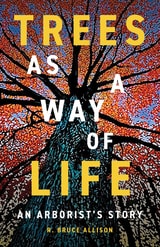
Trees as a Way of Life
An Arborist’s StoryR. Bruce Allison
Wisconsin Historical Society Press, 2027
An arborist’s lifelong journey reveals the deep connections between people and trees.
Bruce Allison has spent decades listening to trees and making sense of what they tell us. In this intimate and absorbing memoir, he deftly weaves personal stories, botanical insights, and moments of wonder and revelation into a captivating ode to trees.
Trees as a Way of Life follows Allison on his journey from seedling to sapling to maturity, as he explores a eucalyptus grove as a boy in Bonita, California; learns the tree ethic as an apprentice arborist in Baltimore, Maryland; and establishes his own tree care company in Madison, Wisconsin. After more than fifty years as a professional arborist, he tells stories of stewarding the trees at the Wisconsin State Capitol and Frank Lloyd Wright’s Taliesin, among other sites, and describes formative encounters with notable tree-loving clients, including American Girl creator Pleasant Rowland and Epic Systems founder Judith Faulkner. As he tells his own story, Allison incorporates the voices and stories of renowned naturalists like Henry David Thoreau, John Muir, Aldo Leopold, and Rachel Carson.
Allison also uses his own tree encounters as jumping-off points for deep dives into individual species, memorable moments in tree history, and tips and tricks for tree care and maintenance. As only an accomplished arborist and educator could, he provides a detailed-yet-accessible tutorial on trees, from the upper canopy of stem and crown, through the veil of bark, to the hidden underground landscape of tree roots and fungi.
In the tradition of the international bestseller The Hidden Life of Trees, this book carries readers root by root and limb by limb to a deeper understanding of the trees that feed us, protect us, shade us, and inspire us. In an engaging narrative style that blends the personal, the scientific, and the poetic, Allison’s story is an intimate love letter to trees, a master class in understanding and appreciating them, and an invitation to readers who also long to make trees a way of life.
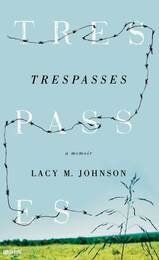
Trespasses
A MemoirLacy M. Johnson
University of Iowa Press, 2012
Examining region through the lenses of memory (experience), history (memory made public), and theory (experience abstracted), Trespasses is a deeply intelligent work, at the center of which is the author, always feeling as if she doesn’t belong but not sure where she else she should be. In this profound work, Johnson drifts gracefully back and forth between timelines and voices in a way that illustrates how her present is connected to the many pasts she chronicles.

Trials of Intimacy
Love and Loss in the Beecher-Tilton ScandalRichard Wightman Fox
University of Chicago Press, 1999
Henry Ward Beecher was pastor of Brooklyn's Plymouth Church and for many the "representative man" of mid-nineteenth century America. Elizabeth Tilton was the wife of Beecher's longtime intimate friend Theodore. His accusation of "criminal conversation" between Henry and Elizabeth confronted the American public with entirely new dilemmas about religion and intimacy, privacy and publicity, reputation and celebrity. The scandal spotlighted a series of comic and tragic loves and betrayals among these three figures, with a supporting cast that included Victoria Woodhull, Susan B. Anthony, and Elizabeth Cady Stanton.
To readers at the time, the Beecher-Tilton Scandal was an irresistible mystery. Richard Fox puts his readers into that same reverberating story, while offering it as a timeless tale of love, deception, faith, and the confounding indeterminacy of truth. Trials of Intimacy revises our conception of nineteenth-century morals and passions. And it is an American history richly resonant with present-day dramas.
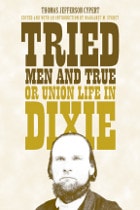
Tried Men and True, or Union Life in Dixie
Thomas J. Cypert, edited and with an introduction by Margaret M. Storey
University of Alabama Press, 2011
A gripping firsthand account of loyalty, resistance, and survival in Confederate Tennessee, this memoir reveals the untold story of Unionist courage behind enemy lines.
Tried Men and True, or Union Life in Dixie is the memoir of a Union supporter in south-central Tennessee. In it, he chronicles in vivid and emotional detail the local tensions between Unionists and Confederates during the Civil War South and offers a rare first-person account of the guerrilla war that devastated Western Tennessee.
Thomas Jefferson Cypert (1827-1918) was a staunch Union man of Wayne County, Tennessee. In 1863, he helped organize the Second Tennessee Mounted Infantry, a regiment of loyalist Southerners enlisted to combat Confederate cavalry in West Tennessee and Northern Alabama. Tried Men and True is Cypert’s memoir of his time as Captain of Company A, including his capture by Confederate cavalry and subsequent daring escape, in which he was aided by local Union sympathizers and slaves.
After the Civil War, Cypert served two terms in the Tennessee State Senate, one of them during the heated first years of Reconstruction, when Tennessee disenfranchised former rebels and attempted to establish Unionist Republican rule in the state. Cypert clearly wrote his memoir to defend Unionism, condemn secession and rebellion, and support loyalists’ claims for post-war power through an account of their wartime sacrifices. Never before published, the manuscript has been preserved in nearly perfect condition by Cypert’s descendants over the generations. This book is a remarkable and engagingly written account of resistance to the Confederacy by a group of southwestern Tennessee loyalists.
Trollope in the Post Office
R. H. Super
University of Michigan Press, 1981
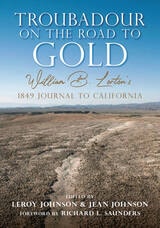
Troubadour on the Road to Gold
William B. Lorton's 1849 Journal to CaliforniaEdited by LeRoy Johnson and Jean Johnson, Foreword by Richard Saunders
University of Utah Press, 2020
Lorton’s work is revealing and entertaining. It captures glimpses of a growing Salt Lake City, the hardships of Death Valley, and the extraordinary and mundane aspects of daily life on the road to gold. With resilience and a droll sense of humor, Lorton shares accounts of life-threatening stampedes, dangerous hailstorms, mysteriously moving rocks, and slithering sidewinders. The inclusion of images, maps, and the editors’ detailed notes make this a volume that will entertain and inform.
Trouble the Water
Melvin Dixon
University of Alabama Press, 1989
A haunting and poetic journey of memory, identity, and reconciliation in the heart of the Black South.
Winner of the Excellence in Minority Fiction Award
Trouble the Water moves among finely woven layers of time and place as it takes on a new and controversial theme in contemporary black writing, the search for family reconciliation. Twenty years after running away from home in Pee Dee, North Carolina, Jordan Henry believed he had found success, as a young college professor of history, a married man, and a resident of New England, whose colonial past he knew so well. When Jordan finds his career stymied by local prejudices, his world crumbles. Word of his grandmother's death reaches him, and he returns home to claim the ambiguous legacy of her farmland and face the consequences of his long absence.
Jordan's estranged father also returns to Pee Dee on a quest of his own restoring his good name in a community which blames him for Chloe Henry's death in childbirth. Chloe was Jordan's mother and his grandmother's only child. Unresolved hostility in the family and in the community breaks out, making Jordan the unsuspecting pawn in a plot of revenge against his father. Jordan may be the only one who can free his family from the past and the equally troubled present.
Trouble the Water gains resonance from its unflinching confrontation with dualities common in the Afro-American experience: reality and myth, folklore and sophistication, North and South, rural and cosmopolitan. While sacrificing none of its complexities for the sake of simplicity, it has the relentless movement of a fairy tale that reaches deep into the unconscious roots of behavior. It is intensely lyrical and dense in realism. Trouble the Water is magical in the way it reveals the Afro-American psyche and symbolizes fundamental truths about American life.
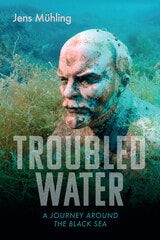
Troubled Water
A Journey Around the Black SeaJens Mühling
Haus Publishing, 2022
Fringing the Black Sea is a diverse array of countries, some centuries old and others emerging only after the collapse of the Soviet Union. Jens Mühling travels through this region, telling the stories of the people he meets along the way in order to paint a picture of the mix of cultures found here and to understand the present against a history stretching back to the arrival of Ancient Greek settlers and beyond.
A fluent Russian speaker with a knack for gaining the trust of those he meets, Mühling brings together a cast of characters as diverse as the stories he hears, all of whom are willing to tell him their complex, contradictory, and often fantastical tales full of grief and legend. He meets descendants of the so-called Pontic Greeks, whom Stalin deported to Central Asia and who have now returned; Circassians who fled to Syria a century ago and whose great-great-grandchildren have returned to Abkhazia; and members of ethnic minorities like the Georgian Mingrelians or Bulgarian Muslims, expelled to Turkey in the summer of 1989. Mühling captures the region’s uneasy alliance of tradition and modernity and the diverse humanity of those who live there.
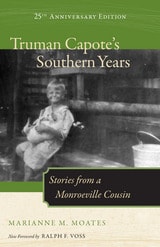
Truman Capote's Southern Years, 25th Anniversary Edition
Stories from a Monroeville CousinMarianne M. Moates, Foreword by Ralph F. Voss
University of Alabama Press, 2014
Readers are well acquainted with Truman Capote’s meteoric rise to fame and his metamorphosis from literary enfant terrible to literary genius, celebrity author, and dispenser of venomously comic witticisms. It is also well-known that he spent his formative years in the south Alabama hamlet of Monroeville, and that he was abandoned there by his mother to be cared for and then to care for elderly relatives. Yet details of those years have remained sketchy and vague.
In Monroeville young Capote formed significant bonds and played childhood games with his cousin, Jennings Faulk Carter, and next door neighbor, Nelle Harper Lee, author of "To Kill a Mockingbird" and "Go Set a Watchman." Through the tales told by Carter and spun into a fascinating and revealing narrative by Marianne M. Moates readers discover in Truman Capote's Southern Years the lively imagination and the early tragedies of a brilliant child.
A new foreword by Ralph F. Voss underscores the enduring relevance of Truman Capote’s work and the influence his Alabama childhood had on his work.
Truman Capote's Southern Years
Stories from a Monroeville CousinMarianne M. Moates
University of Alabama Press, 2008
Although much is known about the mature Truman Capote--his literary genius and flamboyant life-style--details of his childhood years spent in Monroeville, Alabama, have remained a mystery. Truman Capote's Southern Years explores Capote's formative years, the abandonment by his mother, and his early life in the care of elderly relatives. In Monroeville young Capote formed significant bonds and played childhood games with his cousin, Jennings Faulk Carter, and next door neighbor, Nelle Harper Lee. Through the tales told here by Carter, readers discover the lively imagination and the early tragedies of a brilliant child.
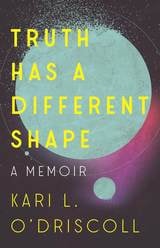
Truth Has a Different Shape
Kari O'Driscoll
CavanKerry Press, 2020
Growing up in the 1970s and 1980s, Kari O’Driscoll was taught that strength and stoicism were one and the same. She was also taught that a girl’s job was to take care of everyone else. For decades, she believed these ideas, doing everything she could to try and keep the remaining parts of her family together, systematically anticipating disaster and fixing catastrophes one by one.
Truth Has a Different Shape is one woman’s meditation on how societal and familial expectations of mothering influenced her sense of self and purpose, as well as her ideas about caretaking. As an adult, finding herself a caretaker both to her own children and to her aging parents, O’Driscoll finally reckons with the childhood trauma that shaped her world. Adoption, loss, and divorce defined her approach to motherhood, but in Truth Has a Different Shape, O’Driscoll finally pushes back. This memoir tracks her progress as she discovers how to truly care for those she loves without putting herself at risk, using mindfulness and compassion as tools for healing both herself and her difficult relationships.
Truth Has a Different Shape
Kari O’Driscoll
CavanKerry Press, 2024
Growing up in the 1970s and 1980s, Kari O’Driscoll was taught that strength and stoicism were one and the same. She was also taught that a girl’s job was to take care of everyone else. For decades, she believed these ideas, doing everything she could to try and keep the remaining parts of her family together, systematically anticipating disaster and fixing catastrophes one by one.
Truth Has a Different Shape is one woman’s meditation on how societal and familial expectations of mothering influenced her sense of self and purpose, as well as her ideas about caretaking. As an adult, finding herself a caretaker both to her own children and to her aging parents, O’Driscoll finally reckons with the childhood trauma that shaped her world. Adoption, loss, and divorce defined her approach to motherhood, but in Truth Has a Different Shape, O’Driscoll finally pushes back. This memoir tracks her progress as she discovers how to truly care for those she loves without putting herself at risk, using mindfulness and compassion as tools for healing both herself and her difficult relationships.
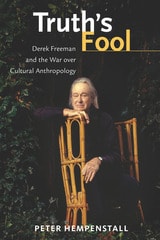
Truth's Fool
Derek Freeman and the War over Cultural AnthropologyPeter Hempenstall
University of Wisconsin Press, 2017
Truth's Fool documents an intellectual journey that was much larger and more encompassing than Freeman's attack on Mead's work. It peels back the prickly layers to reveal the man in all his complexity. Framing this story within anthropology's development in Britain and America, Peter Hempenstall recounts Freeman's mission to turn the discipline from its cultural-determinist leanings toward a view of human culture underpinned by biological and behavioral drivers. Truth's Fool engages the intellectual questions at the center of the Mead–Freeman debate and illuminates the dark spaces of personal, professional, and even national rivalries.
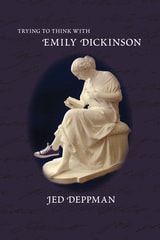
Trying to Think with Emily Dickinson
Jed Deppman
University of Massachusetts Press, 2008
This book presents Emily Dickinson as one of America's great thinkers and argues that she has even more to say to the twenty-first century than she did to the nineteenth. Jed Deppman weaves together many strands in Dickinson's intellectual culture—philosophy, lexicography, religion, experimental science, the female Bildungsroman—and shows how she developed a lyricized, conversational hermeneutics uniquely suited to rethinking the authoritative discourses of her time.
Through Deppman's original analysis, readers come to see how Dickinson's mind and poetry were informed by two strong but opposing philosophical vocabularies: on the one hand, the Lockean materialism and Scottish Common Sense that dominated her schoolbooks in logic and mental philosophy—Reid, Hedge, Watts, Stewart, Brown, and Upham—and on the other, the neo-Kantian modes of apprehending the supersensible that circulated throughout German idealism and Transcendentalism.
Blending close readings with philosophical and historical approaches, Deppman affirms Dickinson's place in the history of ideas and brings her to the center of postmodern conversations initiated by Jean-François Lyotard, Jean-Luc Nancy, Jacques Derrida, Richard Rorty, and Gianni Vattimo. Trying her out in various postmodern roles—the Nietzschean accomplished nihilist, the Nancian finite thinker, the Vattimian weak thinker, and the Rortian liberal ironist—Deppman adds to the traditional expressive functions of her poetry a valuable, timely, and interpretable layer of philosophical inquiry. Dickinson, it turns out, is an ideal companion for anybody trying to think in the contemporary conditions that Vattimo characterizes as the “weakened experience of truth.”
Tudor Autobiography
Listening for InwardnessMeredith Anne Skura
University of Chicago Press, 2008
In the past such texts have not been called autobiographies because they do not reveal much of the inwardness of their subject, a requisite of most modern autobiographies. But, according to Meredith Anne Skura, writers reveal themselves not only by what they say but by how they say it. Borrowing methods from affective linguistics, narratology, and psychoanalysis, Skura shows that a writer’s thoughts and feelings can be traced in his or her language. Rejecting the search for “the early modern self” in life writing, Tudor Autobiography instead asks what authors said about themselves, who wrote about themselves, how, and why. The result is a fascinating glimpse into a range of lived and imagined experience that challenges assumptions about life and autobiography in the early modern period.

Turn Here Sweet Corn
Organic Farming WorksAtina Diffley
University of Minnesota Press, 2013
When the hail starts to fall, Atina Diffley doesn’t compare it to golf balls. She’s a farmer. It’s “as big as a B-size potato.” As her bombarded land turns white, she and her husband Martin huddle under a blanket and reminisce: the one-hundred-mile-per-hour winds; the eleven-inch rainfall (“that broccoli turned out gorgeous”); the hail disaster of 1977. The romance of farming washed away a long time ago, but the love? Never. In telling her story of working the land, coaxing good food from the fertile soil, Atina Diffley reminds us of an ultimate truth: we live in relationships—with the earth, plants and animals, families and communities.
A memoir of making these essential relationships work in the face of challenges as natural as weather and as unnatural as corporate politics, her book is a firsthand history of getting in at the “ground level” of organic farming. One of the first certified organic produce farms in the Midwest, the Diffleys’ Gardens of Eagan helped to usher in a new kind of green revolution in the heart of America’s farmland, supplying their roadside stand and a growing number of local food co-ops. This is a story of a world transformed—and reclaimed—one square acre at a time.
And yet, after surviving punishing storms and the devastating loss of fifth-generation Diffley family land to suburban development, the Diffleys faced the ultimate challenge: the threat of eminent domain for a crude oil pipeline proposed by one of the largest privately owned companies in the world, notorious polluters Koch Industries. As Atina Diffley tells her David-versus-Goliath tale, she gives readers everything from expert instruction in organic farming to an entrepreneur’s manual on how to grow a business to a legal thriller about battling corporate arrogance to a love story about a single mother falling for a good, big-hearted man.
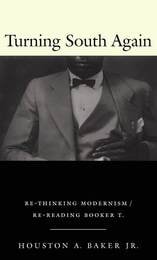
Turning South Again
Re-Thinking Modernism/Re-Reading Booker T.Houston A. Baker Jr.
Duke University Press, 2001
From the holds of slave ships to the peonage of Reconstruction to the contemporary prison system, incarceration has largely defined black life in the United States. Even Washington’s school at Tuskegee, Baker explains, housed and regulated black bodies no longer directly controlled by slave owners. He further implicates Washington by claiming that in enacting his ideas about racial “uplift,” Washington engaged in “mulatto modernism,” a compromised attempt at full citizenship. Combining autobiographical prose, literary criticism, psychoanalytic writing, and, occasionally, blues lyrics and poetry, Baker meditates on the consequences of mulatto modernism for the project of black modernism, which he defines as the achievement of mobile, life-enhancing participation in the public sphere and economic solvency for the majority of African Americans. By including a section about growing up in the South, as well as his recent return to assume a professorship at Duke, Baker contributes further to one of the book’s central concerns: a call to centralize the South in American cultural studies.

Twelve Views from the Distance
Mutsuo Takahashi
University of Minnesota Press, 2012
From one of the foremost poets in contemporary Japan comes this entrancing memoir that traces a boy’s childhood and its intersection with the rise of the Japanese empire and World War II. Originally published in 1970, this translation is the first available in English.
In twelve chapters that visit and revisit critical points in his boyhood, Twelve Views from the Distance presents a vanished time and place through the eyes of an accomplished poet. Recounting memories from his youth, Mutsuo Takahashi captures the full range of his internal life as a boy, shifting between his experiences and descriptions of childhood friendships, games, songs, and school. With great candor, he also discusses the budding awareness of his sexual preference for men, providing a rich exploration of one man’s early queer life in a place where modern, Western-influenced models of gay identity were still unknown.
Growing up poor in rural southwestern Japan, far from the urban life that many of his contemporaries have written about, Takahashi experienced a reality rarely portrayed in literature. In addition to his personal remembrances, the book paints a vivid portrait of rural Japan, full of oral tradition, superstition, and remnants of customs that have quickly disappeared in postwar Japan. With profuse local color and detail, he re-creates the lost world that was the setting for his beginnings as a gay man and poet.
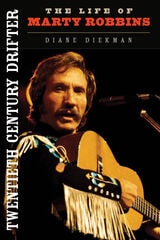
Twentieth Century Drifter
The Life of Marty RobbinsDiane Diekman
University of Illinois Press, 2012
Twentieth Century Drifter: The Life of Marty Robbins is the first biography of this legendary country music artist and NASCAR driver who scored sixteen number-one hits and two Grammy awards. Yet even with fame and fortune, Marty Robbins always yearned for more.
Drawing from personal interviews and in-depth research, biographer Diane Diekman explains how Robbins saw himself as a drifter, a man always searching for self-fulfillment and inner peace. Born Martin David Robinson to a hardworking mother and an abusive alcoholic father, he never fully escaped the insecurities burned into him by a poverty-stricken nomadic childhood in the Arizona desert. In 1947 he got his first gig as a singer and guitar player. Too nervous to talk, the shy young man walked onstage singing. Soon he changed his name to Marty Robbins, cultivated his magnetic stage presence, and established himself as an entertainer, songwriter, and successful NASCAR driver.
For fans of Robbins, NASCAR, and classic country music, Twentieth Century Drifter: The Life of Marty Robbins is a revealing portrait of this well-loved, restless entertainer, a private man who kept those who loved him at a distance.
Twenty Acres
A Seventies Childhood in the WoodsSarah Neidhardt
University of Arkansas Press, 2023
"A memoir infused with both empathy and inquiry."
—Wendy J. Fox, Electric Literature
“Twenty Acres is an engaging, thoughtful memoir of growing up in an off-the-grid cabin as part of the 1970s back-to-the-land movement. Sarah Neidhardt captures her subject beautifully and offers a compelling portrait of a highly specific, historically significant time and place.”
—Kate Daloz, author of We Are As Gods: Back to the Land in the 1970s on the Quest for a New America
Sarah Neidhardt grew up in the woods. When she was an infant, her parents left behind comfortable, urbane lives to take part in the back-to-the-land movement. They moved their young family to an isolated piece of land deep in the Arkansas Ozarks where they built a cabin, grew crops, and strove for eight years to live self-sufficiently.
In this vivid memoir Neidhardt explores her childhood in wider familial and social contexts. Drawing upon a trove of family letters and other archival material, she follows her parents’ journey from privilege to food stamps—from their formative youths, to their embrace of pioneer homemaking and rural poverty, to their sudden and wrenching return to conventional society—and explores the back-to-the-land movement of the 1970s as it was, and as she lived it.
A story of strangers in a strange land, of class, marriage, and family in a changing world, Twenty Acres: A Seventies Childhood in the Woods is part childhood idyll, part cautionary tale. Sarah Neidhardt reveals the treasures and tolls of unconventional, pastoral lives, and her insightful reflections offer a fresh perspective on what it means to aspire to pre-industrial lifestyles in a modern world.
Twenty Miles From A Match
Homesteading In Western NevadaSarah E. Olds
University of Nevada Press, 1978

Twenty Square Feet of Skin
Megan Baxter
The Ohio State University Press, 2023
Twenty Years at Hull-House
Jane Addams, with Autobiographical Notes. Introduction and Notes by James Hurt.
University of Illinois Press, 1990

Twenty-Five Years in the Black Belt
William J. Edwards
University of Alabama Press, 1993
A pioneering educator's firsthand account of building opportunity and hope in Alabama's Black Belt.
Twenty-Five Years in the Black Belt is one of the most important firsthand accounts of African American educational leadership and community development in the post-Reconstruction South. Originally published in 1918, this memoir by educator and institution-builder William J. Edwards documents his extraordinary efforts to create educational opportunities for Black citizens in Alabama's Black Belt during a period marked by segregation, economic hardship, and limited access to public resources.
Born in Snow Hill, Alabama, in 1869, Edwards rose from humble beginnings to attend the Tuskegee Institute under the leadership of Booker T. Washington. Inspired by Tuskegee's philosophy of education, self-reliance, and community advancement, he returned to rural Alabama determined to establish an institution that could provide both academic and practical instruction to African American students. His efforts led to the founding of the Snow Hill Institute in 1893, a school that became a vital center of learning and leadership for generations of Black Alabamians.
The memoir also offers valuable insight into the educational philosophies that shaped African American advancement in the late nineteenth and early twentieth centuries. Edwards reflects on the influence of Booker T. Washington, the role of industrial and vocational education, fundraising efforts in the North, the Jeanes Fund, public-school reform, and the broader movement for racial uplift through education. His account illuminates the networks of educators, supporters, and community leaders who worked to expand opportunities for African Americans throughout the South.
At once inspirational and historically significant, Twenty-Five Years in the Black Belt remains an essential source for understanding African American education, Southern race relations, and the determination of Black communities to create institutions that fostered dignity, opportunity, and progress. It stands as both a personal testament and a crucial historical document chronicling a transformative era in American history.
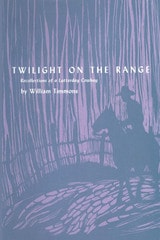
Twilight on the Range
Recollections of a Latterday CowboyBy William Timmons
University of Texas Press, 1962
Billie Timmons was fourteen when he met Charles Goodnight—over a wagonload of manure that had been jammed on a gatepost—and he went to work on the Goodnight Cross J Ranch shortly thereafter. The spirit of helpfulness that led Mr. Goodnight to strip off his coat and lift the wagon free for a lad in need sets the tone of this book, in which the author unwinds a spool of recollections of range-riding in Texas and North Dakota over an eighteen-year period.
When Billie Timmons went to work for Mr. Goodnight in 1892, Texas was undergoing a rapid transition from open range to fences. But around Texas campfires he heard tales about the northern range, told by cowboys who had ridden there and who had seen the northern lights, the tall free grass, swollen streams, and stampeding cattle. A longing to see that exciting country took hold of young Timmons.
His chance came when four buffaloes from the Goodnight ranch needed a nursemaid for their freight car trip to Yellowstone Park. Once in the northern country, Timmons stayed, casting his lot with the cowmen of North Dakota. He became the protégé of an extraordinary man, William Ray; he was foreman, friend, and confidant of banker-rancher Wilse Richards, a member of the Cowboy Hall of Fame. But even during his days in North Dakota he never lost touch with Charles Goodnight, a lifelong friend, and his portrayal of Goodnight provides much insight into the character of the man whose name belongs to the West.
In this book you experience the terror of being lost in the dead-white expanse of a North Dakota snowstorm; the gaiety of cowboy dances, for which there were never enough women available; the excitement of a near-riot in a Hebron, North Dakota, saloon, where cowboys from the 75 Ranch drank up or poured out all the liquor, then smashed all the glasses and bottles—one day before the state became bone-dry; and the loneliness of work on the range, where a flickering lantern on the side of a chuck wagon on a stormy night meant home for many a cowboy. Running like a bright thread through the narrative is Billie Timmons’s love of horses, from whom he learned the wisdom that some horses and some men are to be handled with great care and others are not to be handled at all. His chapter on Buck, his best-loved horse, is memorable.
In North Dakota, as in Texas, fences brought the end of the big herds and the end of cowboying for a man who enjoyed it to the hilt.
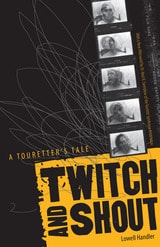
Twitch And Shout
A Touretter’s TaleLowell Handler
University of Minnesota Press, 2004
The remarkable memoir of a Touretter’s journey of self-discovery—now back in print!
Lowell Handler has Tourette’s syndrome, a disorder characterized by exaggerated facial tics, sudden jerking movements of the body and limbs, and explosive public outbursts, usually in the form of expletives and racial epithets. Although he is a successful and acclaimed photojournalist, Handler has often seen himself as an outsider—a social outcast. With courage and candor, he recalls the difficulties he suffered growing up, the confusion he experienced when doctors misdiagnosed his bizarre behavior as a psychological aberration, and finally how, restless and despairing, he embarked on a quest for answers.In Twitch and Shout, Handler sets out, camera in hand, on a journey through less than savory parts of America. From a transvestite bar in Tampa to a flophouse in New Orleans to a community health center in New York, he meets a variety of people who, like himself, don’t conform to the standards of conventional society. With a keen eye for detail and an acute sense of humor, this memoir perfectly captures the unique and unforgettable life of a Touretter.
Two Lucky People
MemoirsMilton Friedman and Rose D. Friedman
University of Chicago Press, 1998
"The Friedmans come across as the last Enlightenment thinkers in a post-modern world. . . . This is a book that restores your faith in reasoned discourse. . . . There really are people who believe in scholarly exchange as a way to discover truth."—David Brooks, New York Times Book Review
"The Friedmans are a feisty couple, who clearly delight in their lives and each other. And shining through their reticence, and their conservatism, is a decency that even liberals will recognize."—Milton and Judith Viorst, Washington Post Book World
"This engaging book recounts the life and contributions of one of America's most influential writers and economists in the second half of the twentieth century. And her husband's no slouch either. . . . An indispensable guide through the evolution of economic thought."—Stephen Moore, National Review
"A thought-provoking book and one rich in history, the personal history of the Friedmans . . . and the cultural and political history of our country."—Steve Huntley, Chicago Sun-Times Books
"[Two Lucky People] is almost like a letter from a couple of old friends—a couple of old friends who had a long, compelling intellectual journey, came to know some of the great world leaders of this century, and had 60 years of happy, supportive marriage."—N. Gregory Mankiw, Fortune
"A rich autobiographical and historical panorama."—William P. Kucewicz, Wall Street Journal
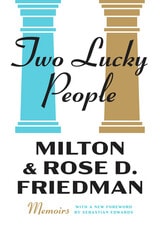
Two Lucky People
MemoirsMilton Friedman and Rose D. Friedman
University of Chicago Press, 2026
The story of Rose and Milton Friedman’s incredible lives and influential work told in their own words, now with a new foreword by Sebastian Edwards.
In Two Lucky People, Rose and Milton Friedman provide a memorable and lively account of their lives, the people they knew, and the work they shared. Their involvement with world leaders and many of this century's most important public policy issues moves their memoir beyond the merely personal and makes fascinating reading for anyone interested in the history of twentieth-century ideas.
This new edition of the Friedmans’ jointly authored memoir includes a foreword by economist Sebastian Edwards, the Henry Ford II Professor of International Economics at the University of California, Los Angeles.