Results by title
4743 books match the query 'Religion' and 1168 start with t
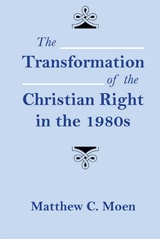
The Transformation of the Christian Right in the 1980s
Matthew C. Moen
University of Alabama Press, 2008
The Transformation of the Christian Right chronicles and analyzes the remarkable changes that have occurred in the Christian Right from its emergence in the late 1970s to the present. It documents the rapid turnover of Christian-Right organizations and explains the forces driving that kaleidoscopic change. Moen also traces the strategic shift of the movement’s leaders, away from lobbying the Congress and toward mobilizing conservative activists in the grass roots; he demonstrates the substitution of liberal language (with its emphasis on “equality, rights, and freedom”) for moralistic language (with its focus on “right and wrong”). Much has been written about the Christian Right’s impact on politics but little about how years of political activism have shaped and influenced the Christian Right. Moen addresses that neglected side of the issue.
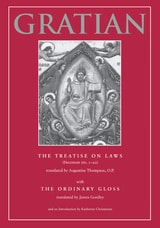
The Treatise on Laws (Decretum DD. 1-20) with the Ordinary Gloss (Studies in Medieval and Early Modern Canon Law, Volume 2)
Catholic University of America Press, 1993
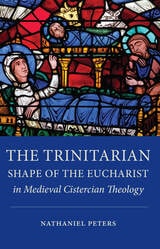
The Trinitarian Shape of the Eucharist in Medieval Cistercian Theology
Nathaniel Peters
Catholic University of America Press, 2026
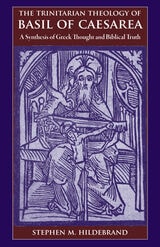
The Trinitarian Theology of Basil of Caesarea
A Synthesis of Greek Thought and Biblical TruthStephen M. Hildebrand
Catholic University of America Press, 2007
The Trinity
Saint Hilary of Poitiers
Catholic University of America Press, 1954
The Trinity
Saint Augustine
Catholic University of America Press, 1963
The Trinity
An Introduction to Catholic Doctrine on the Triune GodGilles Emery
Catholic University of America Press, 2011
The Trinity
Eternity and TimeThomas G. Weinandy
Sapientia Press of Ave Maria University, 2022
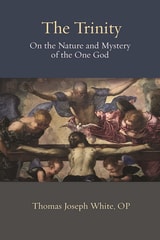
The Trinity
On the Nature and Mystery of the One GodThomas Joseph White, OP
Catholic University of America Press, 2021
The Trinity; The Spectacle; Jewish Foods; In Praise of Purity; Letters
Catholic University of America Press, 1974
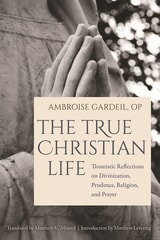
The True Christian Life
Thomistic Reflections on Divinization, Prudence, Religion, and PrayerAmbroise Gardeil, OP
Catholic University of America Press, 2022
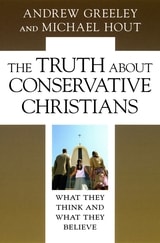
The Truth about Conservative Christians
What They Think and What They BelieveAndrew M. Greeley and Michael Hout
University of Chicago Press, 2006
Ever since the reelection of President Bush, conservative Christians have been stereotyped in the popular media: Bible-thumping militants and anti-intellectual zealots determined to impose their convictions on such matters as evolution, school prayer, pornography, abortion, and homosexuality on the rest of us. But conservative Christians are not as fanatical or intractable as many people think, nor are they necessarily the monolithic voting block or political base that kept Bush in power.
Andrew M. Greeley and Michael Hout's eye-opening book expertly conveys the complexity, variety, and sensibilities of conservative Christians, dispelling the myths that have long shrouded them in prejudice and political bias. For starters, Greeley and Hout reveal that class and income have trumped moral issues for these Americans more often than we realize: a dramatic majority of working-class and lower-class conservative Christians backed liberals such as Jimmy Carter and Bill Clinton during their runs for president. And when it comes to abortion, most conservative Christians are not consistently pro-life in the absolute fashion usually assumed: they are still more likely to oppose the practice than other Americans, but 86 percent of them are willing to tolerate it to protect the health of the mother or when the woman has been raped, and 22 percent of them are even pro-choice.
What do conservative Christians really think about evolution, homosexuality, or even the meaning of the word of God? Answering these questions and more, The Truth about Conservative Christians will interest—and surprise—a broad range of readers, especially in this heated election year.
The Turn to Transcendence
The Role of Religion in the Twenty-First CenturyGlenn Olsen
Catholic University of America Press, 2010

The Two Churches
Catholicism and Capitalism in the World SystemMichael L. Budde
Duke University Press, 1992
Budde's argument here is twofold. He contends that world Catholicism, led by its Third World majority (most notably in Latin America), will continue to develop in an increasingly anticapitalist direction; and he suggests that once-dominant First World Catholic churches (exemplified by the U.S. Catholic church), are poorly placed to respond in solidarity with their coreligionists from the Third World.
Covering a wide range of theoretical and substantive matters, The Two Churches examines religion as a source of both social legitimation and social rebellion. It demonstrates the importance of ecclesiology, a branch of theology dealing with "theories of the church," and it highlights the effect of capitalism on world Catholicism, as well as the latter's influence on the development of the capitalist order.
In his original, far-reaching analysis of the Catholic church's role in world affairs, Budde revises current views of religious institutions as subordinate social phenomena. By relating developments in the world political economy to material conditions in the Third World and in turn to the practice of Catholicism, he reveals how the Catholic church functions as a worldwide institution. He also shows how core-periphery conflicts within the church affect transnational capitalism.
As the Third World becomes more and more volatile, and as its relations with the First World further complicate the politics of the Catholic church, the questions addressed in The Two Churches demand attention with increasing urgency. Timely, thoughtful, and lucid, this book will inform and enhance our understanding of this complex, pressing issue.
The Two Houses of Israel
State Formation and the Origins of Pan-Israelite IdentityOmer Sergi
SBL Press, 2023
The Two Houses of Israel: State Formation and the Origins of Pan-Israelite Identity bridges the gap between the biblical narrative of the great united monarchy ruled by David and Solomon and archaeological and historical reconstructions of a gradual, independent formation of Israel and Judah. Based on a thorough examination of the material remains and settlement patterns in the southern Levant during the Late Bronze Age and the Iron Age and on a review of the relevant historical sources, this book provides a detailed reconstruction of the ways in which Israel and Judah were formed as territorial polities and specifically how the house of David rose to power in Jerusalem and Judah. Omer Sergi further situates the stories of Saul and David in their accurate social and historical context in order to illuminate the historical conception of the united monarchy and the pan-Israelite ideology out of which it grew. Sergi provides a new history of the early Israelite monarchies, their formation, and the ways in which these social and political developments were commemorated in the cultural memory of generations to come.
The Two Wings of Catholic Thought
Essays on Fides et RatioDavid Ruel Foster
Catholic University of America Press, 2003
The Unchanging God of Love
Thomas Aquinas and Contemporary Theology on Divine Immutability (Second Edition)Michael J. Dodds, O.P.
Catholic University of America Press, 2008
The Unchanging Truth of God? Crucial Philosophical Issues for Theology
Thomas G. Guarino
Catholic University of America Press, 2021
The Unconverted Self
Jews, Indians, and the Identity of Christian EuropeJonathan Boyarin
University of Chicago Press, 2009
Europe’s formative encounter with its “others” is still widely assumed to have come with its discovery of the peoples of the New World. But, as Jonathan Boyarin argues, long before 1492 Christian Europe imagined itself in distinction to the Jewish difference within. The presence and image of Jews in Europe afforded the Christian majority a foil against which it could refine and maintain its own identity. In fundamental ways this experience, along with the ongoing contest between Christianity and Islam, shaped the rhetoric, attitudes, and policies of Christian colonizers in the New World.
The Unconverted Self proposes that questions of difference inside Christian Europe not only are inseparable from the painful legacy of colonialism but also reveal Christian domination to be a fragile construct. Boyarin compares the Christian efforts aimed toward European Jews and toward indigenous peoples of the New World, bringing into focus the intersection of colonial expansion with the Inquisition and adding significant nuance to the entire question of the colonial encounter.
Revealing the crucial tension between the Jews as “others within” and the Indians as “others without,” The Unconverted Self is a major reassessment of early modern European identity.
The Unification Church
Studies in Contemporary ReligionMassimo Introvigne
Signature Books, 2000
Where they depart from traditional Christianity is in their acceptance of the Divine Principle as a companion to the Bible and in their assertion that founder Rev. Sun Myung Moon is Lord of the Second Advent, that with his wife (together the “True Parents”), Original Sin is conquered through special blessings.
Since 1954 Unificationism has evolved toward a more normative approach to worship and lifestyle, if not belief—a point that Italian scholar Massimo Introvigne emphasizes in his balanced overview of the church’s history, doctrine, spirituality, missionary activities, and controversies. He notes that in doctrine Unificationism has moved away from mainstream churches toward increased emphasis on contact with the spirit world, numerology, and construction of a modern “Garden of Eden” in Brazil.

The Union Haggadah
Home Service for the PassoverCentral Conference of American Rabbis
Central Conference of American Rabbis, 1923
A reprint of the historic Reform Haggadah originally published in 1923. In addition to the complete Passover home service, this edition includes an extensive section of essays on Passover in history, literature, and art. An important document of American Reform Jewish history. Illustrated.
The Unity Movement
Its Evolution and Spiritual TeachingsNeal Vahle
Templeton Press, 2002
Prayer meetings held in 1889 in the Kansas City living room of Charles and Myrtle Fillmore were the beginning of what grew to be an international religious and educational movement. This book is an in-depth study of the people and beliefs that shaped it into one of the fastest growing movements of our time.
Neal Vahle documents the lives of the spiritual visionaries who created, organized, and led the Unity movement: Myrtle Fillmore, the 40-year-old wife and mother who was inspired by a Christian Science practitioner to cure herself of tuberculosis; Charles Fillmore, who had planned a business career but found, through study, prayer, meditation, and dream analysis, that he had another calling; H. Emily Cady, a New York City homeopathic physician whose book on Unity teachings, Lessons in Truth, was published in 1901, and has sold more than 1.6 million copies; Lowell Fillmore, eldest son of Charles and Myrtle, who clarified and popularized Unity teaching; and the other descendants of Myrtle and Charles, each of whom made immeasurable contributions.
He explores the key factors that led to the steady growth of the movement: the creation of the Unity School of Christianity; the development of Unity Village in Missouri; the evolution of "Silent Unity"; the publication program; the training of students; the development of centers and churches; and he presents and analyzes the controversies and debates within the organization. Vahle concludes the book with a look at the challenges facing the movement in the twenty-first century.
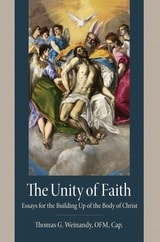
The Unity of Faith
Essays for the Building Up of the Body of ChristThomas G. Weinandy
Catholic University of America Press, 2024
The Unity of the Nations
Joseph Ratzinger
Catholic University of America Press, 2015
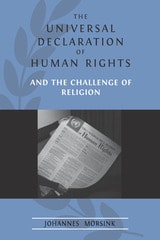
The Universal Declaration of Human Rights and the Challenge of Religion
Johannes Morsink
University of Missouri Press, 2017
Repulsed by evil Nazi practices and desiring to create a better world after the devastation of World War II, in 1948 the UN General Assembly adopted the Universal Declaration of Human Rights (UDHR). Because of the secular imprint of this text, it has faced a series of challenges from the world’s religions, both when it was crafted and in subsequent political and legal struggles.
The book mixes philosophical, legal, and archival arguments to make the point that the language of human rights is a valid one to address the world’s disputes. It updates the rationale used by the early UN visionaries and makes it available to twenty-first-century believers and unbelievers alike. The book shows how the debates that informed the adoption of this pivotal normative international text can be used by scholars to make broad and important policy points.
The Unspeakable Vice
The Catholic Church and Homosexuality in the Twentieth CenturyFrancesco Torchiani, Translated by Johanna Bishop
University of Wisconsin Press, 2026
As gay men and lesbian women increasingly gained recognition and acceptance in twentieth-century literature and film, and subsequently in social and political movements, the Catholic Church reacted by subtly moving away from its overt condemnation of homosexuality as an urgent moral problem and toward tacitly shunning homosexuality as an “unspeakable vice.” In this revealing history, Francesco Torchiani reconstructs the Catholic Church’s shifting attitudes toward homosexuality during this period by drawing on a vast array of internal documents and external accounts. This monograph expands the scholarship on the relationship between Catholicism and homosexuality in terms of both method and content, ultimately concluding that the Catholic Church continues to wholeheartedly condemn homosexuality despite making genuine efforts to reflect on and understand its social and cultural impact. The Unspeakable Vice therefore sheds new light on and places into historical perspective the questions the Catholic Church continues to reckon with regarding its role in contemporary society.
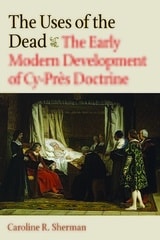
The Uses of the Dead
Caroline R. Sherman
Catholic University of America Press, 2017
Posthumous gifts, which required no sacrifice during life, were in fact broadly understood by canon lawyers and medieval donors themselves to have at best a very limited relationship to salvation. As a consequence, for much of the Middle Ages the preferred method for resolving impossible or impractical gifts was to try to reach a consensus among all of the interested parties to the gift, including the donor's heirs and the recipients, with the mediation of the local bishop.
When cy-près emerged in the seventeenth century, it cut a charitable gift o from return to the donor's estate in the event of failure. It also gave the interested parties to the gift (heirs, beneficiaries, or trustees) little authority over resolutions to problematic gifts, which were now considered primarily in relationship to the donor's intent—even as the intent was ultimately honored only in its breach. The Uses of the Dead shows how cy-près developed out of controversies over church property, particularly monastic property, and whether it might be legally turned over to fund education, poor relief, or national defense.
Renaissance humanists hoped to make better, more prudent uses of property; the Reformation sought to correct superstitious abuses of property and ultimately tended to prevent donors' heirs from recovering secularized ecclesiastical gifts; and the early modern state attempted to centralize poor relief and charitable efforts under a more rational, centralized supervision. These three factors combined to replace an older equitable ideal with a new equitable rule—one whose use has rapidly expanded in the modern era to allow assorted approximations and judicial redistributions of property.
The Varieties of Atheism
Connecting Religion and Its CriticsEdited by David Newheiser
University of Chicago Press, 2022
The Varieties of Atheism reveals the diverse nonreligious experiences obscured by the combative intellectualism of Sam Harris, Richard Dawkins, and Christopher Hitchens. In fact, contributors contend that narrowly defining atheism as the belief that there is no god misunderstands religious and nonreligious persons altogether. The essays show that, just as religion exceeds doctrine, atheism also encompasses every dimension of human life: from imagination and feeling to community and ethics. Contributors offer new, expansive perspectives on atheism’s diverse history and possible futures. By recovering lines of affinity and tension between particular atheists and particular religious traditions, this book paves the way for fruitful conversation between religious and non-religious people in our secular age.

The Vatican and the Emergence of the Modern Middle East
Agnes de Dreuzy
Catholic University of America Press, 2016
The Venice Ghetto
A Memory Space that TravelsEdited by Chiara Camarda, Amanda K. Sharick, and Katharine G. Trostel
University of Massachusetts Press, 2022
This interdisciplinary collection engages with questions about the history, conditions, and lived experience of the Venice Ghetto, including its legacy as a compulsory, segregated, and enclosed space. Contributors also consider the ghetto's influence on the figure of the Renaissance moneylender, the material culture of the ghetto archive, the urban form of North Africa's mellah and hara, and the ghetto's impact on the writings of Primo Levi and Marjorie Agosín.
In addition to the volume editors, The Venice Ghetto features a foreword from James E. Young and contributions from Shaul Bassi, Murray Baumgarten, Margaux Fitoussi, Dario Miccoli, Andrea Yaakov Lattes, Federica Ruspio, Michael Shapiro, Clive Sinclair, and Emanuela Trevisan Semi.
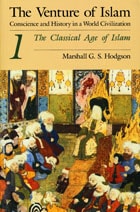
The Venture of Islam, Volume 1
The Classical Age of IslamMarshall G. S. Hodgson
University of Chicago Press, 1974
"This is a nonpareil work, not only because of its command of its subject but also because it demonstrates how, ideally, history should be written."—The New Yorker
Volume 1, The Classical Age of Islam, analyzes the world before Islam, Muhammad's challenge, and the early Muslim state between 625 and 692. Hodgson then discusses the classical civilization of the High Caliphate. The volume also contains a general introduction to the complete work and a foreword by Reuben Smith, who, as Hodgson's colleague and friend, finished the Venture of Islam after the author's death and saw it through to publication.
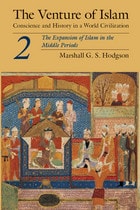
The Venture of Islam, Volume 2
The Expansion of Islam in the Middle PeriodsMarshall G. S. Hodgson
University of Chicago Press, 1977
The Venture of Islam has been honored as a magisterial work of the mind since its publication in early 1975. In this three-volume study, illustrated with charts and maps, Hodgson traces and interprets the historical development of Islamic civilization from before the birth of Muhammad to the middle of the twentieth century. This work grew out of the famous course on Islamic civilization that Hodgson created and taught for many years at the University of Chicago.
In the second work of this three-volume set, Hodgson investigates the establishment of an international Islamic civilization through about 1500. This includes a theoretical discussion of cultural patterning in the Islamic world and the Occident.
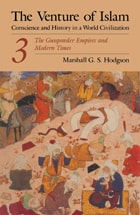
The Venture of Islam, Volume 3
The Gunpowder Empires and Modern TimesMarshall G. S. Hodgson
University of Chicago Press, 1977
In this concluding volume of The Venture of Islam, Hodgson describes the second flowering of Islam: the Safavi, Timuri, and Ottoman empires. The final part of the volume analyzes the widespread Islamic heritage in today's world.
"This is a nonpareil work, not only because of its command of its subject but also because it demonstrates how, ideally, history should be written."—The New Yorker
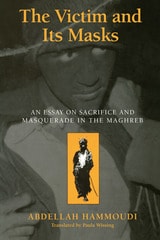
The Victim and its Masks
An Essay on Sacrifice and Masquerade in the MaghrebAbdellah Hammoudi
University of Chicago Press, 1993

The Village Enlightenment in America
Popular Religion and Science in the Nineteenth CenturyCraig James Hazen
University of Illinois Press, 2000
A theologian, writer, and apologist for the nascent Mormon movement, as well as an amateur scientist, Orson Pratt wrote Key to the Universe, or a New Theory of Its Mechanism, to establish a scientific base for the Church of Jesus Christ of Latter-day Saints. Robert Hare, an inventor and ardent convert to spiritualism, used his scientific expertise to lend credence to the spiritualist movement. Phineas Parkhurst Quimby, generally considered the initiator of the American mind-cure movement, developed an overtly religious concept of science and used it to justify his system of theology.
Pratt, Hare, and Quimby all employed a potent combination of popular science and Baconianism to legitimate their new religious ideas. Using the same terms--matter, ether, magnetic force--to account for the behavior of particles, planetary rotation, and the influence of the Holy Ghost, these agents of the Enlightenment constructed complex systems intended to demonstrate a fundamental harmony between the physical and the metaphysical.
Through the lives and work of these three influential men, The Village Enlightenment in America opens a window to a time when science and religion, instead of seeming fundamentally at odds with each other, appeared entirely reconcilable.
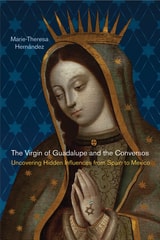
The Virgin of Guadalupe and the Conversos
Uncovering Hidden Influences from Spain to MexicoHernández, Marie-Theresa
Rutgers University Press, 2014
The terms converso and judaizante are often used for descendants of Spanish Jews (the Sephardi, or Sefarditas as they are sometimes called), who converted under duress to Christianity in the fourteenth and fifteenth centuries. There are few, if any, archival documents that prove the existence of judaizantes after the Spanish expulsion of the Jews in 1492 and the Portuguese expulsion in 1497, as it is unlikely that a secret Jew in sixteenth-century Spain would have documented his allegiance to the Law of Moses, thereby providing evidence for the Inquisition.
On a Da Vinci Code – style quest, Hernández persisted in hunting for a trove of forgotten manuscripts at the New York Public Library. These documents, once unearthed, describe the Jewish/Christian religious beliefs of an early nineteenth-century Catholic priest in Mexico City, focusing on the relationship between the Virgin of Guadalupe and Judaism. With this discovery in hand, the author traces the cult of Guadalupe backwards to its fourteenth-century Spanish origins. The trail from that point forward can then be followed to its interface with early modern conversos and their descendants at the highest levels of the Church and the monarchy in Spain and Colonial Mexico. She describes key players who were somehow immune to the dangers of the Inquisition and who were allowed the freedom to display, albeit in a camouflaged manner, vestiges of their family's Jewish identity.
By exploring the narratives produced by these individuals, Hernández reveals the existence of those conversos and judaizantes who did not return to the “covenantal bond of rabbinic law,” who did not publicly identify themselves as Jews, and who continued to exhibit in their influential writings a covert allegiance and longing for a Jewish past. This is a spellbinding and controversial story that offers a fresh perspective on the origins and history of conversos.
The Virtual Point of Freedom
Essays on Politics, Aesthetics, and ReligionLorenzo Chiesa
Northwestern University Press, 2016
The Virtues
John H. Garvey
Catholic University of America Press, 2022
The Vision of the Priestly Narrative
Its Genre and Hermeneutics of TimeSuzanne Boorer
SBL Press, 2016
A fresh look at the Priestly narrative that places less weight on linguistic criteria alone in favor of narrative coherence
Boorer explores the theology of an originally independent Priestly narrative (Pg), extending through Genesis–Numbers, as a whole. In this book she describes the structure of the Priestly narrative, in particular its coherent sequential and parallel patterns. Boorer argues that at every point in the narrative’s sequential and parallel structure, it reshapes past traditions, synthesizing these with contemporary and unique elements into future visions, in a way that is akin to the timelessness of liturgical texts. The book sheds new light on what this material might have sought to accomplish as a whole, and how it might have functioned for, its original audience.
- Solid arguments based on genre and themes, with regard to a once separate Priestly narrative (Pg) that concludes in Numbers 27*
- Thorough discussion of the overall interpretation of the Priestly narrative (Pg), by bringing together consideration of its structure and genre
- Clear illustration of how understanding the genre of the material and its hermeneutics of time is vital for interpreting Pg as a whole
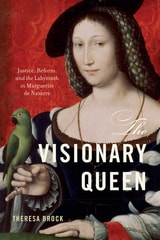
The Visionary Queen
Justice, Reform, and the Labyrinth in Marguerite de NavarreTheresa Brock
University of Delaware Press, 2024
The Visual World of the Hungarian Angevin Legendary
Béla Zsolt Szakács
Central European University Press, 2016
The Voices of Gemma Galgani
The Life and Afterlife of a Modern SaintRudolph M. Bell and Cristina Mazzoni
University of Chicago Press, 2002
Gemma Galgani was the first person who lived in the twentieth century to become a saint. Born in Lucca to a pharmacist and his wife, Gemma died of tuberculosis at the young age of twenty-five after a life of intense personal spirituality. Jesus caressed her as lovers do; the Virgin Mary was her affectionate Mom; Brother Gabriel playfully teased her about whether she preferred his visits to those of Jesus; and she even received all of Christ's wounds in her hands, feet, and side. At the same time, she was mocked by her family and labeled a hysteric by doctors and the local bishop. Her trials and the intimate details of her supernatural encounters—the voices of Gemma Galgani—are revealed here in this marvelous book by Rudolph M. Bell and Cristina Mazzoni.
Bell and Mazzoni have chosen and translated the most important of Gemma's words: her autobiographical account of her childhood, her diary, and key selections from her "ecstasies" and letters. Gemma emerges as a very modern saint indeed: confident, grandiose, manipulative, childish, admired, and with this book, no longer forgotten. Following Gemma's own voice, Bell carefully contextualizes her life and passion and explores her afterlife, specifically the complicated process of her canonization. Mazzoni closes the book with a "Saint's Alphabet" that finds, through Gemma's voice, spiritual meaning for women in the twenty-first century.
Far more than the reinvigoration of a neglected historical figure, The Voices of Gemma Galgani is a portrait of a complex girl-woman caught between the medieval and the modern and a potent reminder of spirituality in a supposedly secular age.
The War for the Heart and Soul of a Highland Maya Town
Revised EditionBy Robert S. Carlsen, with a contribution by Martín Prechtel
University of Texas Press, 2011
This compelling ethnography explores the issue of cultural continuity and change as it has unfolded in the representative Guatemala Mayan town Santiago Atitlán. Drawing on multiple sources, Robert S. Carlsen argues that local Mayan culture survived the Spanish Conquest remarkably intact and continued to play a defining role for much of the following five centuries. He also shows how the twentieth-century consolidation of the Guatemalan state steadily eroded the capacity of the local Mayas to adapt to change and ultimately caused some factions to reject—even demonize—their own history and culture. At the same time, he explains how, after a decade of military occupation known as la violencia, Santiago Atitlán stood up in unity to the Guatemalan Army in 1990 and forced it to leave town.
This new edition looks at how Santiago Atitlán has fared since the expulsion of the army. Carlsen explains that, initially, there was hope that the renewed unity that had served the town so well would continue. He argues that such hopes have been undermined by multiple sources, often with bizarre outcomes. Among the factors he examines are the impact of transnational crime, particularly gangs with ties to Los Angeles; the rise of vigilantism and its relation to renewed religious factionalism; the related brutal murders of followers of the traditional Mayan religion; and the apocalyptic fervor underlying these events.
The Way of Humanity
According to Chasidic TeachingMartin Buber, translated by Rabbi Bernard H. Mehlman, DHL and GabrielE. Padawer, ScD
Central Conference of American Rabbis, 2023
Martin Buber (1878–1965) was one of the most influential Jewish thinkers of the twentieth century. A philosopher, seeker, and nurturer of dialogue, he responded to the complexities of his times by affirming the fullness of interpersonal encounter and the spiritual everyday. In 1947, Buber delivered lectures interpreting six traditional Chasidic stories to a German-speaking audience, published as The Way of Humanity. In the first new English translation in over half a century, Rabbi Bernard H. Mehlman, DHL, and Gabriel E. Padawer, ScD, z"l, bring the work to contemporary readers in a clear, accessible voice. The teachings within highlight the subversion and innovation of the early Chasidic masters of the eighteenth and nineteenth centuries, while providing meaningful spiritual guidance and insight for any seeker today. Scholarly forewords by Paul Mendes-Flohr, PhD, and Rabbi Joseph A. Skloot, PhD, as well as an introduction, epilogue, and notes from the translators, place Buber’s work in historical context. Timeless and enlightening, The Way of Humanity guides us to inner meaning and highlights our human wholeness.
The Way of Humility
St. Augustine's Theology of PreachingCharles J. Kim
Catholic University of America Press, 2023
The Wayfarer's End
Bonaventure and Aquinas on Divine Rewards in Scripture and Sacred DoctrineShawn M. Colberg
Catholic University of America Press, 2020
The Ways That Often Parted
Essays in Honor of Joel MarcusLori Baron
SBL Press, 2018
Focused studies on the historical interactions and formations of Judaism and Christianity
This volume of essays, from an internationally renowned group of scholars, challenges popular ways of understanding how Judaism and Christianity came to be separate religions in antiquity. Essays in the volume reject the belief that there was one parting at an early point in time and contest the argument that there was no parting until a very late date. The resulting volume presents a complex account of the numerous ways partings occurred across the ancient Mediterranean spanning the first four centuries CE.
Features:
- Case studies that explore how Jews and Christians engaged in interaction, conflict, and collaboration
- Examinations of the gospels, Paul’s letters, the book of James, as well as rabbinic and noncanonical Christian texts
- New evidence for historical reconstructions of how Christianity came on the world scene
The Wilderness Within
American Women Writers and Spiritual QuestKristina K. Groover
University of Arkansas Press, 1999
Kristina K. Groover, in examining this question, finds that books by American women writers offer alternative patterns for seeking revelation—patterns which emphasize not solitary journeys, but the sacredness of everyday life. Drawing on the work of feminist theorists and theologians, including Carol Gilligan, Naomi Goldenberg, and Rosemary Ruether, Groover explores the spiritual nature and force of domesticity, community, storytelling, and the garden in the works of such writers as Toni Morrison, Katherine Anne Porter, Kaye Gibbons, and Alice Walker. Ordinary, personal experience in these works becomes a source for spiritual revelation. Wisdom is gained, lessons are learned, and lives are healed not in spite of home and communal ties, but because of them.
Thus, American women writers, Groover argues, make alternative literary and spiritual paradigms possible. Similarly, Kristina K. Groover, in this lucid and groundbreaking work, opens up new fields of exploration for any reader interested in women’s spirituality or in the rich, diverse field of American literature.
The Winning Side
Why the Culture of Death Is DyingCharles E. Rice
St. Augustine's Press, 0
The Witch Studies Reader
Soma Chaudhuri and Jane Ward, editors
Duke University Press, 2025
Contributors. Maria Amir, Ruth Asiimwe, Bernadette Barton, Ethel Brooks, Shelina Brown, Ruth Charnock, Soma Chaudhuri, Carolyn Chernoff, Saira Chhibber, Simon Clay, Krystal Cleary, Adrianna L. Ernstberger, Tina Escaja, Laurie Essig, Marcelitte Failla, D Ferrett, Marion Goldman, Jaime Hartless, Margaretha Haughwout, Patricia Humura, Apoorvaa Joshi, Govind Kelkar, Oliver Kellhammer, Ayça Kurtoğlu, Helen Macdonald, Isabel Machado, Brandy Renee McCann, Dev Nathan, Mary Jo Neitz, Amy Nichols-Belo, Allison (or AP) Pierce, Emma Quilty, Anna Rogel, Karen Schaller, Jacquelyn Marie Shannon, Shashank Shekhar Sinha, Gabriella V. Smith, Nathan Snaza, Shannon Hughes Spence, Eric Steinhart, Morena Tartari, Nicole Trigg, Katie Von Wald, Tushabe wa Tushabe, Jane Ward