Results by title
5448 books match the query 'History and criticism' and 1116 start with t
Transculturality and German Discourse in the Age of European Colonialism
Chunjie Zhang
Northwestern University Press, 2017
Transfigurations Of The Maghreb
Feminism, Decolonization, and LiteraturesWinfred Woodhull
University of Minnesota Press, 1993
Through readings of some of the best-known texts in Algerian literature in French, Woodhull both challenges the separation between French and Francophone literatures and cultures in the academy and explores the ways in which "femininity" has been represented in the texts of North African and French writers since the mid-1950s.
Transformations of Circe
THE HISTORY OF AN ENCHANTRESSJudith Yarnall
University of Illinois Press, 1994
Transformations of Sensibility
The Phenomenology of Meiji LiteratureKamei Hideo; Translated, edited, and with an introduction by Michael Bourdaghs
University of Michigan Press, 2002

Transforming Tradition
Folk Music Revivals ExaminedEdited by Neil V. Rosenberg: Foreword by Alan Jabbour
University of Illinois Press, 1993
Transforming Tradition examines the phenomenon of the folk song revival, those vibrant meldings of popular and folk culture that captured public awareness in the 1950s and 1960s. We remember the folk revival as forums for performers like Joan Baez and the Kingston Trio, and as incubators for unlikely radio hits like "Tom Dooley" and "Blowin' in the Wind." But it also gave rise to a bustling and influential subculture of hootenanies, coffeehouses, and blues and bluegrass appreciation, sowing a legacy that remains a vital part of American culture.
Many of the contributors to this collection performed during the revival era. Today, their expertise in folklore, ethnomusicology, and cultural history allow them to blend insider knowledge and trained analysis to offer unique perspectives.
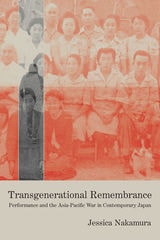
Transgenerational Remembrance
Performance and the Asia-Pacific War in Contemporary JapanJessica Nakamura
Northwestern University Press, 2020
In Transgenerational Remembrance, Jessica Nakamura investigates the role of artistic production in the commemoration and memorialization of the Asia-Pacific War (1931–1945) in Japan since 1989. During this time, survivors of Japanese aggression and imperialism, previously silent about their experiences, have sparked contentious public debates about the form and content of war memories.
The book opens with an analysis of the performance of space at Yasukuni Shinto Shrine, which continues to promote an anachronistic veneration of the war. After identifying the centrality of performance in long-standing dominant narratives, Transgenerational Remembrance offers close readings of artistic performances that tackle subject matter largely obscured before 1989: the kamikaze pilot, Japanese imperialism, comfort women, the Battle of Okinawa, and Japanese American internment. These case studies range from Hirata Oriza’s play series about Japanese colonial settlers in Korea and Shimada Yoshiko’s durational performance about comfort women to Kondo Aisuke’s videos and gallery installations about Japanese American internment.
Working from theoretical frameworks of haunting and ethics, Nakamura develops an analytical lens based on the Noh theater ghost. Noh emphasizes the agency of the ghost and the dialogue between the dead and the living. Integrating her Noh-inflected analysis into ethical and transnational feminist queries, Nakamura shows that performances move remembrance beyond current evidentiary and historiographical debates.
Transgressing Time
The Device at the Heart of Time TravelEdward Royston
The Ohio State University Press, 2026
Royston bolsters this concept through readings of classics such as Back to the Future and Octavia E. Butler’s Kindred, contemporary works such as the video game Outer Wilds and Scott Alexander Howard’s The Other Valley, and lesser-known works such as the nineteenth-century Spanish novel El Anacronópete. These readings demonstrate how time travel functions across different mediums and genres and spotlights the ways authors and creators have used anachronic metalepsis to contend with themes of exile, freedom and consequences, the powers and pitfalls of nostalgia, the nature of history and our relationship to it, and the nature of time itself.
Transgressions of Reading
Narrative Engagement as Exile and ReturnRobert D. Newman
Duke University Press, 1992
Newman describes this psychodrama of narrative engagement as that of exile and return, an experience in which narrative becomes a type of homeland, beckoning and elusive, endlessly defining and disrupting the borders of a reader's identity. Within this paradigm, he considers a fascinating variety of narrative texts: from the Jim Jones episode in Guyana to Freud's repression of personal history in his story of Moses; from a surrealistic collage novel by Max Ernst to the horror films of Alfred Hitchcock; from the works of James Joyce, Ariel Dorfman, Milan Kundera, and D. M. Thomas to the tales of abjection in pornography.
Transgressions of Reading is itself an engaging work, as interesting for its provocative readings of particular works as for its theoretical insights. It will appeal to readers from all fields in which narrative plays a crucial role, in the study of film and art, modern and contemporary literature, popular culture, and feminist, psychoanalytic, and reader response theory.
Transit Lit
Fictions of Migration in Twenty-First-Century African Immigrant LiteratureCameron Leader-Picone
Northwestern University Press, 2026
The expanding number of migrants to the United States from continental Africa since the 1960s has led to a flourishing twenty-first-century literary corpus by immigrants and the children of immigrants. Transit Lit: Fictions of Migration in Twenty-First-Century African Immigrant Literature analyzes key works by African immigrant authors such as Chimamanda Ngozi Adichie, Teju Cole, and Yaa Gyasi to argue that such texts reveal the tensions between the authors’ own cosmopolitan ideals and a necessary critique of how such ideals become co-opted and commodified within contemporary geopolitics. Cameron Leader-Picone offers a new conceptual framework for reading contemporary diasporic texts that do not fit easily into national or continental traditions or previous literary models. Instead, he argues for the need to embrace the overlapping instabilities—of meaning, identity, and citizenship—that characterize twenty-first-century diasporic movement in an interconnected world. These texts, and the constructions of identity that they trace, map the terrain of contemporary migration.
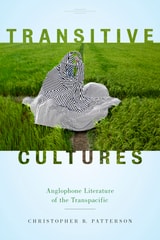
Transitive Cultures
Anglophone Literature of the TranspacificPatterson, Christopher B
Rutgers University Press, 2018
Texts written by Southeast Asian migrants have often been read, taught, and studied under the label of multicultural literature. But what if the ideology of multiculturalism—with its emphasis on authenticity and identifiable cultural difference—is precisely what this literature resists?
Transitive Cultures offers a new perspective on transpacific Anglophone literature, revealing how these chameleonic writers enact a variety of hybrid, transnational identities and intimacies. Examining literature from Malaysia, Singapore, and the Philippines, as well as from Southeast Asian migrants in Canada, Hawaii, and the U.S. mainland, this book considers how these authors use English strategically, as a means for building interethnic alliances and critiquing ruling power structures in both Southeast Asia and North America. Uncovering a wealth of texts from queer migrants, those who resist ethnic stereotypes, and those who feel few ties to their ostensible homelands, Transitive Cultures challenges conventional expectations regarding diaspora and minority writers.
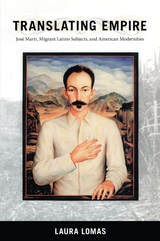
Translating Empire
Jose Marti, Migrant Latino Subjects, and American ModernitiesLaura Lomas
Duke University Press, 2008
Lomas challenges longstanding conceptions about Martí through readings of neglected texts and reinterpretations of his major essays. Against the customary view that emphasizes his strong identification with Ralph Waldo Emerson and Walt Whitman, the author demonstrates that over several years, Martí actually distanced himself from Emerson’s ideas and conveyed alarm at Whitman’s expansionist politics. She questions the association of Martí with pan-Americanism, pointing out that in the 1880s, the Cuban journalist warned against foreign geopolitical influence imposed through ostensibly friendly meetings and the promotion of hemispheric peace and “free” trade. Lomas finds Martí undermining racialized and sexualized representations of America in his interpretations of Buffalo Bill and other rituals of westward expansion, in his self-published translation of Helen Hunt Jackson’s popular romance novel Ramona, and in his comments on writing that stereotyped Latino/a Americans as inherently unfit for self-government. With Translating Empire, Lomas recasts the contemporary practice of American studies in light of Martí’s late-nineteenth-century radical decolonizing project.
Translating Modernism
Fitzgerald and HemingwayRonald Berman
University of Alabama Press, 2009
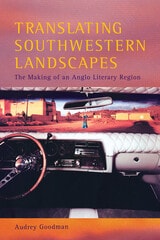
Translating Southwestern Landscapes
The Making of an Anglo Literary RegionAudrey Goodman
University of Arizona Press, 2002
Whether as tourist's paradise, countercultural destination, or site of native resistance, the American Southwest has functioned as an Anglo cultural fantasy for more than a century. In Translating Southwestern Landscapes, Audrey Goodman excavates this fantasy to show how the Southwest emerged as a symbolic space from 1880 through the early decades of the twentieth century.
Drawing on sources as diverse as regional magazines and modernist novels, Pueblo portraits and New York exhibits, Goodman has crafted a wide-ranging history that explores the invention, translation, and representation of the Southwest. Its principal players include amateur ethnographer Charles Lummis, who conflated the critical work of cultural translation; pulp novelist Zane Grey, whose bestselling novels defined the social meanings of the modern West; fashionable translator Mary Austin, whose "re-expressions" of Indian song are contrasted with recent examples of ethnopoetics; and modernist author Willa Cather, who demonstrated an immaterial feeling for landscape from the Nebraska Plains to Acoma Pueblo.
Goodman shows how these writers—as well as photographers such as Paul Strand, Ansel Adams, and Alex Harris—exhibit different phases of the struggle between an Anglo calling to document Native and Hispanic difference and America's larger drive toward imperial mastery. In critiquing photographic representations of the Southwest, she argues that commercial interests and eastern prejudices boiled down the experimental images of the late nineteenth century to a few visual myths: the persistence of wilderness, the innocence of early portraiture, and the purity of empty space.
An ambitious synthesis of criticism and anthropology, art history and geopolitical theory, Translating Southwestern Landscapes names the defining contradictions of America's most recently invented cultural space. It shows us that the Southwest of these early visitors is the only Southwest most of us have ever known.
Translating Time
Cinema, the Fantastic, and Temporal CritiqueBliss Cua Lim
Duke University Press, 2009
In Translating Time, Bliss Cua Lim argues that fantastic cinema depicts the coexistence of other modes of being alongside and within the modern present, disclosing multiple “immiscible temporalities” that strain against the modern concept of homogeneous time. In this wide-ranging study—encompassing Asian American video (On Cannibalism), ghost films from the New Cinema movements of Hong Kong and the Philippines (Rouge, Itim, Haplos), Hollywood remakes of Asian horror films (Ju-on, The Grudge, A Tale of Two Sisters) and a Filipino horror film cycle on monstrous viscera suckers (Aswang)—Lim conceptualizes the fantastic as a form of temporal translation. The fantastic translates supernatural agency in secular terms while also exposing an untranslatable remainder, thereby undermining the fantasy of a singular national time and emphasizing shifting temporalities of transnational reception.
Lim interweaves scholarship on visuality with postcolonial historiography. She draws on Henri Bergson’s understanding of cinema as both implicated in homogeneous time and central to its critique, as well as on postcolonial thought linking the ideology of progress to imperialist expansion. At stake in this project are more ethical forms of understanding time that refuse to domesticate difference as anachronism. While supernaturalism is often disparaged as a vestige of primitive or superstitious thought, Lim suggests an alternative interpretation of the fantastic as a mode of resistance to the ascendancy of homogeneous time and a starting-point for more ethical temporal imaginings.
Translating the Counterculture
The Reception of the Beats in TurkeyErik Mortenson
Southern Illinois University Press, 2018
Mortenson examines how in Turkey the Beats have been framed by the label “underground literature”; explores the ways they are repurposed in the counterculture-inspired journal Underground Poetix; looks at the reception of Jack Kerouac’s On the Road and how that reaction provides a better understanding of the construction of “American-ness”; delves into the recent obscenity trial of William S. Burroughs’s novel The Soft Machine and the attention the book’s supporters brought to government repression and Turkish homophobia; and analyzes the various translations of Allen Ginsberg’s Howl to demonstrate the relevance Ginsberg still holds for social rebellion today.
Translating the Counterculture takes a revolutionary look at how contemporary readers in other parts of the world respond to the Beats. Challenging and unsettling an American-centric understanding of the Beats, Mortenson pushes the discipline toward a fuller consideration of their cultural legacy in a globalized twenty-first century.
Translating the Unspeakable
Poetry and the Innovative NecessityKathleen Fraser
University of Alabama Press, 1999
A prominent avant-garde poet charts both her personal artistic development and the difficulties faced by women writers pursuing innovative paths.
An accomplished and influential poet, Kathleen Fraser has been instrumental in drawing attention to other women poets working outside the mainstream. Translating the Unspeakable gathers eighteen of her essays written over nearly twenty years, combining autobiography and criticism to examine what it means for any artist to innovate instead of following an already traveled path.
In autobiographical passages Fraser tells how her generation was influenced by revolutions in art and philosophy during the early 1960s and how she spent years pursuing idiosyncratic means of rediscovering the poem's terms. By the 1970s her evolving poetics were challenged by questions of gender, until immersion in feminist/modernist scholarship led her to initiate greater dialogue among experimentalist poets.
Other essays examine modernist women writers, their contemporary successors, and the visual poetics they have practiced. By exploring the work of such poets as H. D., Mina Loy, Lorine Niedecker, and Barbara Guest, Fraser conveys their struggle to establish a presence within accepted poetic conventions and describes the role experimentation plays in helping women overcome self-imposed silence.
All of Fraser's writings explore how the search to find one's own way of speaking into a very private yet historic space—of translating the unspeakable—drives poetic experimentation for women and men alike. This provocative book provides a glimpse into the thought processes of
the poetic mind, enhancing our understanding of innovative writing.
Translation Effects
Language, Time, and Community in Medieval EnglandMary Kate Hurley
The Ohio State University Press, 2021
Translation as Muse
Poetic Translation in Catullus's RomeElizabeth Marie Young
University of Chicago Press, 2015
Catullus has long been admired as a poet, but his efforts as a translator have been largely ignored. Young reveals how essential translation is to his work: many poems by Catullus that we tend to label as lyric originals were in fact shaped by Roman translation practices entirely different from our own. By rereading Catullus through the lens of translation, Young exposes new layers of ingenuity in Latin poetry even as she illuminates the idiosyncrasies of Roman translation practice, reconfigures our understanding of translation history, and questions basic assumptions about lyric poetry itself.
Transmedia Adaptation in the Nineteenth Century
Lissette Lopez Szwydky
The Ohio State University Press, 2020
In Transmedia Adaptation in the Nineteenth Century, Lissette Lopez Szwydky convincingly historicizes the practice of adaptation, drawing on multiple disciplines to illustrate narrative mobility across time, culture, and geography. Case studies from stage plays, literature, painting, illustration, chapbooks, and toy theaters position adaptation as a central force in literary history that ensures continued cultural relevance, accessibility, and survival. The history of these forms helps to inform and put into context our contemporary obsessions with popular media. Finally, in upending a traditional understanding of canon by arguing that adaptation creates canon and not the other way around, Szwydky provides crucial bridges between nineteenth-century literary scholarship, adaptation studies, and media studies, thus identifying new stakes for all.
Transnational Asian American Literature
Sites and Transitsedited by Shirley Geok-lin Lim, John Blair Gamber, Stephen Hong Sohn and Gina Valentino
Temple University Press, 2005
Transnational Philippines
Cultural Encounters in Philippine Literature in SpanishAxel Gasquet and Rocío Ortuño Casanova, Editors
University of Michigan Press, 2024
Yet Transnational Philippines also questions the constraints of traditional literary genres in order to make room for Philippine texts and other colonial and postcolonial texts, so that those texts can be taken into consideration in literary studies. Its chapters elaborate on the problems surrounding the cultural and identity relations of the Philippines with other regions and the literary nature of Philippine texts. By addressing the need for a postnational approach to Spanish-language Philippine literature, the book challenges the Spain/Latin America dichotomy existing in Spanish language literary studies and leans toward a global conception of the Hispanophone.
Transpacific Cartographies
Narrating the Contemporary Chinese Diaspora in the United StatesMelody Yunzi Li
Rutgers University Press, 2024
Transpacific Experiments
Intermedia Art and Music in 1960s JapanMiki Kaneda
University of Michigan Press, 2026
Intermedia art—an avant-garde multimedia practice that combines sound and moving images—took root in Japan alongside other places in the 1960s. In Transpacific Experiments, Miki Kaneda analyzes intermedia as a practice that gives form to errant possibilities, unfolding in spaces of the everyday, to offer nuanced insights into the global flow of ideas, influence, and discourses of appropriation. The stories of intermedia art throughout the study offer feminist and transnational perspectives on experimental music and art that disorient existing narratives about the experimental and political in unexpected ways.
Transpacific Experiments contends that social, cultural, and political arrangements local to Japan had a greater influence on the transnational experimental music scene than previously acknowledged. Kaneda’s perspective extends, exceeds, and at times unsettles frameworks for experimental practices, revealing the limitations of any single political or aesthetic lens.
Transpacific Femininities
The Making of the Modern FilipinaDenise Cruz
Duke University Press, 2012
Through a careful study of multiple texts produced by Filipina and Filipino writers in the Philippines and the United States—including novels and short stories, newspaper and magazine articles, conduct manuals, and editorial cartoons—Cruz provides a new archive and fresh perspectives for understanding Philippine literature and culture. She demonstrates that the modern Filipina did not emerge as a simple byproduct of American and Spanish colonial regimes, but rather was the result of political, economic, and cultural interactions among the Philippines, Spain, the United States, and Japan. Cruz shows how the complex interplay of feminism, nationalism, empire, and modernity helped to shape, and were shaped by, conceptions of the transpacific Filipina.
Transpacific Nonencounters
Racial Disconnects Across Twentieth-Century Japan and MexicoAndrea Mendoza
Duke University Press, 2026
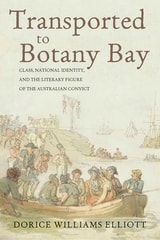
Transported to Botany Bay
Class, National Identity, and the Literary Figure of the Australian ConvictDorice Williams Elliott
Ohio University Press, 2019
Literary representations of British convicts exiled to Australia were the most likely way that the typical English reader would learn about the new colonies there. In Transported to Botany Bay, Dorice Williams Elliott examines how writers—from canonical ones such as Dickens and Trollope to others who were themselves convicts—used the figure of the felon exiled to Australia to construct class, race, and national identity as intertwined.
Even as England’s supposedly ancient social structure was preserved and venerated as the “true” England, the transportation of some 168,000 convicts facilitated the birth of a new nation with more fluid class relations for those who didn’t fit into the prevailing national image. In analyzing novels, broadsides, and first-person accounts, Elliott demonstrates how Britain linked class, race, and national identity at a key historical moment when it was still negotiating its relationship with its empire. The events and incidents depicted as taking place literally on the other side of the world, she argues, deeply affected people’s sense of their place in their own society, with transnational implications that are still relevant today.
Trauma Culture
The Politics of Terror and Loss in Media and LiteratureKaplan, E. Ann
Rutgers University Press, 2005
In Trauma Culture, E. Ann Kaplan explores the relationship between the impact of trauma on individuals and on entire cultures and nations. Arguing that humans possess a compelling need to draw meaning from personal experience and to communicate what happens to others, she examines the artistic, literary, and cinematic forms that are often used to bridge the individual and collective experience. A number of case studies, including Sigmund Freud's Moses and Monotheism, Marguerite Duras' La Douleur, Sarah Kofman's Rue Ordener, Rue Labat, Alfred Hitchcock's Spellbound, and Tracey Moffatt's Night Cries, reveal how empathy can be fostered without the sensationalistic element that typifies the media.
From World War II to 9/11, this passionate study eloquently navigates the contentious debates surrounding trauma theory and persuasively advocates the responsible sharing and translating of catastrophe.
Travel & See
Black Diaspora Art Practices since the 1980sKobena Mercer
Duke University Press, 2016
Travel
A Literary HistoryPeter Whitfield
Bodleian Library Publishing, 2011
Taking the form of fact-filled travelogues, stunt-writing spectaculars, or genre-blurring imaginative works, travel writing has never been more popular than it is today. But beyond the self-conscious literary artistry of today’s narratives lies a rich and well-documented history of travel writing, stretching back over several thousand years and incorporating the work of mariners and missionaries, diplomats and dilettantes alike.
Traveling Economies
American Women's Travel WritingJennifer Bernhardt Steadman
The Ohio State University Press, 2007
Traveling Home
Sacred Harp Singing and American PluralismKiri Miller
University of Illinois Press, 2010
Traveling Women
Narrative Visions of Early AmericaSusan Clair Imbarrato
Ohio University Press, 2006
Susan Clair Imbarrato closely examines women’s accounts of their journeys from 1700 to 1830, including Sarah Kemble Knight’s well-known journal of her trip from Boston to New York in 1704 and many lesser-known accounts, such as Sarah Beavis’s 1779 journal of her travel to Ohio via Kentucky and Susan Edwards Johnson’s account or her 1801–2 journey from Connecticut to North Carolina.
In the women’s keen observations and entertaining wit, readers will find bravado mixed with hesitation, as women set forth on business, to relocate, and for pleasure. These travelers wrote compellingly of crossing rivers and mountains, facing hunger, encountering native Americans, sleeping in taverns, and confronting slavery, expressing themselves in voices that differed in sensibility from male explorers and travelers.
These accounts, as Imbarrato shows, challenge assumptions that such travel was predominately a male enterprise. In addition, Traveling Women provides a more balanced portrait of westward settlement by affirming women’s importance in the settling of early America.
Traveling in Place
A History of Armchair TravelBernd Stiegler
University of Chicago Press, 2013
Organized into twenty-one “legs”—or short chapters—Traveling in Place begins with a consideration of Xavier de Maistre’s 1794 Voyage autour de ma chambre, an account of the forty-two-day “journey around his room” Maistre undertook as a way to entertain himself while under house arrest. Stiegler is fascinated by the notion of exploring the familiar as though it were completely new and strange. He engages writers as diverse as Roussel, Beckett, Perec, Robbe-Grillet, Cortázar, Kierkegaard, and Borges, all of whom show how the everyday can be brilliantly transformed. Like the best guidebooks, Traveling in Place is more interested in the idea of travel as a state of mind than as a physical activity, and Stiegler reflects on the different ways that traveling at home have manifested themselves in the modern era, from literature and film to the virtual possibilities of the Internet, blogs, and contemporary art.
Reminiscent of the pictorial meditations of Sebald, but possessed of the intellectual playfulness of Calvino, Traveling in Place offers an entertaining and creative Baedeker to journeying at home.
Traveling the High Way Home
Ralph Stanley and the World of Traditional Bluegrass MusicJohn Wright
University of Illinois Press, 1993
John Wright's collection of interviews and stories about Ralph Stanley puts readers around a campfire at a bluegrass festival while old-timers weave yarns far into the night. Told by those who create, produce, stage, love, and virtually live for old-time mountain music, these tales come from the longtime coworkers, sidemen, promoters, friends, and others in the orbit of the music legend. The storytellers include a scholar who knew Stanley from the early days, the housewife who ran the Stanley Brothers Fan Club, and a souvenir seller for whom the discovery of Stanley's music was almost a religious experience.
Wright also uses these invaluable oral histories as a foundation to describe and evaluate Stanley's long career with the Clinch Mountain Boys and the development of his music after the death of his brother Carter. An appendix covers Ralph's prolific recording activity through the mid-1990s, including a breathtaking forty-five albums compromising more than 550 songs and tunes.
Travesty Actors
Self and Theater in Stalinist CultureBoris Wolfson, edited by Simon Morrison
Northwestern University Press, 2026
Talk of Joseph Stalin’s “show trials,” the public prosecutions in Moscow’s Hall of Columns in the late 1930s, is so familiar as to obscure the relationship between actual shows—in the Soviet Union’s major theaters—and politics. Travesty Actors: Self and Theater in Stalinist Culture examines theatrical performance within the context of the Soviet cultural establishment’s fashioning of a “genuine Soviet person.” Boris Wolfson focuses on prominent and controversial plays by artists including Aleksandr Afinogenov, Mikhail Bulgakov, Yuri Olesha, and Natalia Sats and the efforts of theater companies, like the Moscow Arts Theater, the Meyerhold Theater, and the Central Children’s Theater, to adhere to this cultural mandate while grappling with repression, censorship, and conflicting interpretations of its aims. Drawing on archival materials, diaries and memoirs and eyewitness accounts, Wolfson greatly illuminates the achievements of Soviet theater during this harsh period and the cultural significance of artistic theories and practices for articulating and enacting ideological programs.
Treacherous Subjects
Gender, Culture, and Trans-Vietnamese FeminismLan P Duong
Temple University Press, 2012
Treacherous Subjects is a provocative and thoughtful examination of Vietnamese films and literature viewed through a feminist lens. Lan Duong investigates the postwar cultural productions of writers and filmmakers, including Tony Bui, Trinh T. Minh-ha, and Tran Anh Hung.
Taking her cue from the double meaning of "collaborator," Duong shows how history has shaped the loyalties and shifting alliances of the Vietnamese, many of whom are caught between opposing/constricting forces of nationalism, patriarchy, and communism. Working at home and in France and the United States, the artists profiled in Treacherous Subjects have grappled with the political and historic meanings of collaboration. These themes, which probe into controversial issues of family and betrayal, figure heavily in fictions such as the films The Scent of Green Papaya and Surname Viet Given Name Nam.
As writers and filmmakers collaborate, Duong suggests that they lay the groundwork for both transnational feminist politics and queer critiques of patriarchy.
Treatments
Language, Politics, and the Culture of IllnessLisa Diedrich
University of Minnesota Press, 2007
Creative expression inspired by disease has been criticized as a celebration of victimhood, unmediated personal experience, or just simply bad art. Despite debate, however, memoirs written about illness—particularly AIDS or cancer—have proliferated since the late twentieth century and occupy a highly influential place on the cultural landscape today.
In Treatments, Lisa Diedrich considers illness narratives, demonstrating that these texts not only recount and interpret symptoms but also describe illness as an event that reflects wider cultural contexts, including race, gender, class, and sexuality. Diedrich begins this theoretically rigorous analysis by offering examples of midcentury memoirs of tuberculosis. She then looks at Susan Sontag’s Illness As Metaphor, Audre Lorde’s The Cancer Journals, and Eve Kosofsky Sedgwick’s “White Glasses,” showing how these breast cancer survivors draw on feminist health practices of the 1970s and also anticipate the figure that would appear in the wake of the AIDS crisis in the 1980s—the “politicized patient.” She further reveals how narratives written by doctors Abraham Verghese and Rafael Campo about treating people with AIDS can disrupt the doctor–patient hierarchy, and she explores practices of witnessing that emerge in writing by Paul Monette and John Bayley.
Through these records of intensely personal yet universal experience, Diedrich demonstrates how language both captures and fails to capture these “scenes of loss” and how illness narratives affect the literary, medical, and cultural contexts from which they arise. Finally, by examining the ways in which the sick speak and are spoken for, she argues for an ethics of failure—the revaluation of loss as creating new possibilities for how we live and die.
Lisa Diedrich is assistant professor of women’s studies at Stony Brook University.

Triangulations
Narrative Strategies for Navigating Latino IdentityDavid J. Vázquez
University of Minnesota Press, 2011
Just as mariners use triangulation, mapping an imaginary triangle between two known positions and an unknown location, so, David J. Vázquez contends, Latino authors in late twentieth-century America employ the coordinates of familiar ideas of self to find their way to new, complex identities. Through this metaphor, Vázquez reveals how Latino autobiographical texts, written after the rise of cultural nationalism in the 1960s, challenge mainstream notions of individual identity and national belonging in the United States.
In a traditional autobiographical work, the protagonist frequently opts out of his or her community. In the works that Vázquez analyzes in Triangulations, protagonists instead opt in to collective groups—often for the express political purpose of redefining that collective. Reading texts by authors such as Ernesto Galarza, Jesús Colón, Piri Thomas, Oscar “Zeta” Acosta, Judith Ortiz Cofer, John Rechy, Julia Alvarez, and Sandra Cisneros, Vázquez engages debates about the relationship between literature and social movements, the role of cultural nationalism in projects for social justice, the gender and sexual problematics of 1960s cultural nationalist groups, the possibilities for interethnic coalitions, and the interpretation of autobiography. In the process, Triangulations considers the potential for cultural nationalism as a productive force for aggrieved communities of color in their struggles for equality.

Tribal Secrets
Recovering American Indian Intellectual TraditionsRobert Allen Warrior
University of Minnesota Press, 1994
Triple Entendre
Furniture Music, Muzak, Muzak-PlusHerve Vanel
University of Illinois Press, 2013
Vanel's discussion culminates in the creative response of the composer John Cage to the pervasiveness and power of background music in contemporary society. Cage neither opposed nor rejected Muzak, but literally answered its challenge by formulating a parallel concept that he called "Muzak-Plus." Forty years after Satie presented his work to general critical puzzlement, Cage saw how background music could be combined with mid-century technology and theories of art and performance to create a participatory soundscape on a scale that Satie could not have envisioned, again reconfiguring the listener's stance to music. By examining the subterranean connections existing between these three formulations of a singular idea, Triple Entendre analyzes and challenges the crucial boundary that separates an artistic concept from its actual implementation in life.

Tropes, Parables, and Performatives
J. Hillis Miller
Duke University Press, 1991
Throughout these essays Miller is fascinated with the tropological dimension of literary language, with the way figures of speech turn aside the telling of a story or the presentation of a literary theme. The exploration of this turning leads to the recognition that all works of literature are parabolic, “thrown beside” their real meaning. They tell one story but call forth something else.
Miller further agrees that all parables are fundamentally performative. They do not merely name something or give knowledge, but rather use words to make something happen, to get the reader from here to there. Each essay here attempts to formulate what, in a given case, the reader perfomatively enters by way of parabolic trope.
Tropical Riffs
Latin America and the Politics of JazzJason Borge
Duke University Press, 2018
Tropicopolitans
Colonialism and Agency, 1688–1804Srinivas Aravamudan
Duke University Press, 1999
“Tropicalization” is the central metaphor of this analysis, a term that incorporates both the construction of various dynamic tropes by which the colonized are viewed and the site of the study, primarily the tropics. Tropicopolitans, then, are those people who bear and resist the representations of colonialist discourse. In readings that expose new relationships between literary representation and colonialism in the eighteenth century, Aravamudan considers such texts as Behn’s Oroonoko, Defoe’s Robinson Crusoe and Captain Singleton, Addison’s Cato, and Swift’s Gulliver’s Travels and The Drapier’s Letters. He extends his argument to include analyses of Johnson’s Rasselas, Beckford’s Vathek, Montagu’s travel letters, Equiano’s autobiography, Burke’s political and aesthetic writings, and Abbé de Raynal’s Histoire des deux Indes. Offering a radical approach to literary history, this study provides new mechanisms for understanding the development of anticolonial agency.
Introducing eighteenth-century studies to a postcolonial hermeneutics, Tropicopolitans will interest scholars engaged in postcolonial studies, eighteenth-century literature, and literary theory.

Troubadours, Trumpeters, Troubled Makers
Lyricism, Nationalism, and Hybridity in China and Its OthersGregory B. Lee
Duke University Press, 1996
Lee’s broad definition of lyric includes the work of poets, amateur versifiers, and all manner of popular songwriters, and his inclusive sense of nation refers to all Chinese communities regardless of geographic location. Whether examining the globalized consumption of satellite-broadcast pop music or the heroic efforts of little-known poets on the margins of the Chinese diaspora, he finds a questioning and contesting of both the Orientalist construction of a mythic monolithic China invented by the West and the Chinese obsession with ideas of authenticity and purity of nationhood. Lee explores the lyrical transgression of these ideological boundaries in China, in the Chinese communities of America and Britain, and in other marginalized communities, before using the examples of Hong Kong and other non-nationalistic sites to discuss the creative possibilities of hybrid cultures and societies.
Troublemakers
Power, Representation, and the Fiction of the Mass WorkerScott, William
Rutgers University Press, 2012
William Scott’s Troublemakers explores how a major change in the nature and forms of working-class power affected novels about U.S. industrial workers in the first half of the twentieth century. With the rise of mechanization and assembly-line labor from the 1890s to the 1930s, these laborers found that they had been transformed into a class of “mass” workers who, since that time, have been seen alternately as powerless, degraded victims or heroic, empowered icons who could rise above their oppression only through the help of representative organizations located outside the workplace.
Analyzing portrayals of workers in such novels as Upton Sinclair’s The Jungle, Ruth McKenney's Industrial Valley, and Jack London’s The Iron Heel, William Scott moves beyond narrow depictions of these laborers to show their ability to resist exploitation through their direct actions—sit-down strikes, sabotage, and other spontaneous acts of rank-and-file “troublemaking” on the job—often carried out independently of union leadership. The novel of the mass industrial worker invites us to rethink our understanding of modern forms of representation through its attempts to imagine and depict workers’ agency in an environment where it appears to be completely suppressed.
Troubling Gender
Youth and Cumbia in Argentina's Music SceneAuthored by Pablo Vila and Pablo Semán, contributions by Eloísa Martín and María Julia Carozzi
Temple University Press, 2011
Cumbia villera—literally, cumbia from the shantytowns— is a musical genre quite popular with Argentine youth who frequent urban dance halls. Its songs are known for having highly sexualized lyrics— about girls dancing provocatively or experiencing erotic pleasure. The songs exhibit the tensions at play in the different ways people relate to this musical genre.
In Troubling Gender, noted sociologists Pablo Vila and Pablo Semán scrutinize the music's lyrics and the singers' and dancers' performances. At the same time, the authors conduct in-depth interviews to examine the ways males construct and appropriate cumbia's lyrics, and how females identify, appropriate, and playfully and critically manipulate the same misogynistic songs.
Addressing the relationship between this form of music and the wider social, political, and economic changes that influence the lives of urban youth, Troubling Gender argues that the music both reflects and influences the ways in which women's and men's roles are changing in Argentine society.
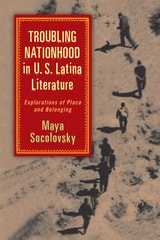
Troubling Nationhood in U.S. Latina Literature
Explorations of Place and BelongingSocolovsky, Maya
Rutgers University Press, 2013
Looking at such concerns as nation, place, trauma, and storytelling, writers Denise Chavez, Sandra Cisneros, Esmeralda Santiago, Ana Castillo, Himilce Novas, and Judith Ortiz Cofer challenge popular views of Latino cultural “unbelonging” and make strong cases for the legitimate presence of Latinas/os within the United States. In this way, they also counter much of today’s anti-immigration rhetoric.
Imagining the U.S. as part of a broader "Americas," these writings trouble imperialist notions of nationhood, in which political borders and a long history of intervention and colonization beyond those borders have come to shape and determine the dominant culture's writing and the defining of all Latinos as "other" to the nation.
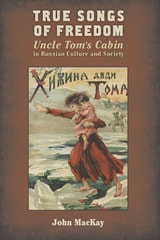
True Songs of Freedom
Uncle Tom’s Cabin in Russian Culture and SocietyJohn MacKay
University of Wisconsin Press, 2013
True Stories
A Century of Literary JournalismNorman Sims
Northwestern University Press, 2007
True-Love
Essays on Poetry and ValuingAllen Grossman
University of Chicago Press, 2009
True-Love is the fulfillment of revered poet-critic Allen Grossman’s long service to poetry in the interests of humanity. Poetry’s singular mission is to bind love and truth together—love that desires the beloved’s continued life, knotted with the truth of life’s contingency—to help make us more present to each other.
In the spirit of Blake’s vow of “mental fight,” Grossman contends with challenges to the validity of the poetic imagination, from Adorno’s maxim “No poetry after Auschwitz,” to the claims of religious authority upon truth, and the ultimate challenge posed by the fact of death itself. To these challenges he responds with eloquent and rigorous arguments, drawing on wide resources of learning and his experience as master-poet and teacher. Grossman’s readings of Wordsworth, Hart Crane, Paul Celan, and others focus on poems that interrogate the real or enact the hard bargains that literary representation demands. True-Love is destined to become an essential book wherever poetry and criticism sustain one another.