Results by title
8818 books match the query 'Political Science' and 1914 start with t

The Paradox of Protection
The Making of Indirect Rule in Southern Sierra Leone, 1850–1915Trina Leah Hogg
Michigan State University Press, 2025
The Paradoxes of Integration
Race, Neighborhood, and Civic Life in Multiethnic AmericaJ. Eric Oliver
University of Chicago Press, 2010
The United States is rapidly changing from a country monochromatically divided between black and white into a multiethnic society. The Paradoxes of Integration helps us to understand America’s racial future by revealing the complex relationships among integration, racial attitudes, and neighborhood life.
J. Eric Oliver demonstrates that the effects of integration differ tremendously, depending on which geographical level one is examining. Living among people of other races in a larger metropolitan area corresponds with greater racial intolerance, particularly for America’s white majority. But when whites, blacks, Latinos, and Asian Americans actually live in integrated neighborhoods, they feel less racial resentment. Paradoxically, this racial tolerance is usually also accompanied by feeling less connected to their community; it is no longer "theirs." Basing its findings on our most advanced means of gauging the impact of social environments on racial attitudes, The Paradoxes of Integration sensitively explores the benefits and at times, heavily borne, costs of integration.

The Paradoxes of Unintended Consequences
István Rév
Central European University Press, 2000

The Parent as Citizen
A Democratic DilemmaBrian Duff
University of Minnesota Press, 2010
Duff explains how influential theories of democratic citizenship rely on the metaphor of parenthood to help individuals rise to the challenges of politics, and demonstrates that this reliance has unintended consequences. When parenthood is imagined to instill confidence in political virtue, it uncovers insecurity. When parenthood is believed to inculcate openness to change, it produces fundamentalism. Duff develops this argument through original readings of four theorists of citizenship: Jean-Jacques Rousseau, Friedrich Nietzsche, Richard Rorty, and Cornel West-readings that engage the ways in which these theorists incorporated their personal history into their political thought. In showing how problems that plagued canonical theorists of citizenship still trouble contemporary thinkers and citizens alike, Duff's insights are deeply relevant to present-day politics.
The Participatory Condition in the Digital Age
Darin Barney
University of Minnesota Press, 2016
Just what is the “participatory condition”? It is the situation in which taking part in something with others has become both environmental and normative. The fact that we have always participated does not mean we have always lived under the participatory condition. What is distinctive about the present is the extent to which the everyday social, economic, cultural, and political activities that comprise simply being in the world have been thematized and organized around the priority of participation.
Structured along four axes investigating the relations between participation and politics, surveillance, openness, and aesthetics, The Participatory Condition in the Digital Age comprises fifteen essays that explore the promises, possibilities, and failures of contemporary participatory media practices as related to power, Occupy Wall Street, the Arab Spring uprisings, worker-owned cooperatives for the post-Internet age; paradoxes of participation, media activism, open source projects; participatory civic life; commercial surveillance; contemporary art and design; and education.
This book represents the most comprehensive and transdisciplinary endeavor to date to examine the nature, place, and value of participation in the digital age. Just as in 1979, when Jean-François Lyotard proposed that “the postmodern condition” was characterized by the questioning of historical grand narratives, The Participatory Condition in the Digital Age investigates how participation has become a central preoccupation of our time.
Contributors: Mark Andrejevic, Pomona College; Bart Cammaerts, London School of Economics and Political Science (LSE); Nico Carpentier, Vrije Universiteit Brussel (VUB – Free University of Brussels) and Charles University in Prague; Julie E. Cohen, Georgetown University; Kate Crawford, MIT; Alessandro Delfanti, University of Toronto; Christina Dunbar-Hester, University of Southern California; Rudolf Frieling, California College of Arts and the San Francisco Art Institute; Salvatore Iaconesi, La Sapienza University of Rome and ISIA Design Florence; Jason Edward Lewis, Concordia University; Rafael Lozano-Hemmer; Graham Pullin, University of Dundee; Trebor Scholz, The New School in New York City; Cayley Sorochan, McGill University; Bernard Stiegler, Institute for Research and Innovation in Paris; Krzysztof Wodiczko, Harvard Graduate School of Design; Jillian C. York.
The Partisan Sort
How Liberals Became Democrats and Conservatives Became RepublicansMatthew Levendusky
University of Chicago Press, 2009
As Washington elites drifted toward ideological poles over the past few decades, did ordinary Americans follow their lead? In The Partisan Sort, Matthew Levendusky reveals that we have responded to this trend—but not, for the most part, by becoming more extreme ourselves. While polarization has filtered down to a small minority of voters, it also has had the more significant effect of reconfiguring the way we sort ourselves into political parties.
In a marked realignment since the 1970s—when partisan affiliation did not depend on ideology and both major parties had strong liberal and conservative factions—liberals today overwhelmingly identify with Democrats, as conservatives do with Republicans. This “sorting,” Levendusky contends, results directly from the increasingly polarized terms in which political leaders define their parties. Exploring its far-reaching implications for the American political landscape, he demonstrates that sorting makes voters more loyally partisan, allowing campaigns to focus more attention on mobilizing committed supporters. Ultimately, Levendusky concludes, this new link between party and ideology represents a sea change in American politics.
The Party Decides
Presidential Nominations Before and After ReformMarty Cohen, David Karol, Hans Noel, and John Zaller
University of Chicago Press, 2008
Tracing the evolution of presidential nominations since the 1790s, this volume demonstrates how party insiders have sought since America’s founding to control nominations as a means of getting what they want from government. Contrary to the common view that the party reforms of the 1970s gave voters more power, the authors contend that the most consequential contests remain the candidates’ fights for prominent endorsements and the support of various interest groups and state party leaders. These invisible primaries produce frontrunners long before most voters start paying attention, profoundly influencing final election outcomes and investing parties with far more nominating power than is generally recognized.
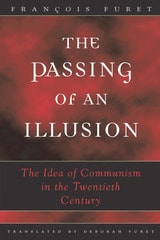
The Passing of an Illusion
The Idea of Communism in the Twentieth CenturyFrançois Furet
University of Chicago Press, 1999
"This may well be the most illuminating study ever devoted to the question of appeal exerted not only by Communism but also by the Nazi and other fascist varieties of totalitarianism in this century."—Hilton Kramer, New Criterion
"A subtle, nuanced but gripping study of the most pervasive and destructive illusion in the 20th century." —Kirkus Reviews, starred review
"The Passing of an Illusion . . . is both a profound work of intellectual history that takes its place alongside other great studies of the leftist heresy . . . and a relentless diagnosis of the self-subversive risks that are inherent in democratic regimes. "—Roger Kaplan, Washington Times
" A remarkable book. . . . Stimulating and challenging. . . . A man widely read in several languages, Furet clearly knew his way around 20th-century Europe, even unto the dark alleys that figure on no existing map. "—Mark Falcoff, Commentary
"A history of ideas, this work is not for the faint of heart, yet those who challenge it will discover a signal contribution to the literature of Communism."—Booklist
"Imperious and stunningly confident, grand in conception and expansive in manner, packed with fascinating detail and often incisive judgements."—John Dunn, Times Higher Education Supplement
"The Passing of an Illusion is brilliant, and one would be hard pressed to find better writing of history than the first chapter, which traces the roots of modern political thinking back to the nineteenth century."—J. Arch Getty, Atlantic Monthly
"A brilliant and important book. . . . The publication of the American edition makes accessible to the general reader the most thought-provoking historical assessment of communism in Europe to appear since its collapse."—Jeffrey Herf, Wall Street Journal
François Furet (1927-1997), educator and author, was a Chevalier of the Legion of Honor and was elected, in 1997, to become one of the "Forty Immortals" of the Académie Française, the highest intellectual honor in France. His many books include Interpreting the French Revolution, Marx and the French Revolution, and Revolutionary France. Deborah Furet, his widow, collaborated with him on many projects.
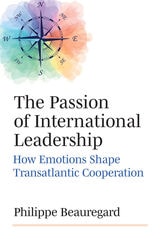
The Passion of International Leadership
How Emotions Shape Transatlantic CooperationPhilippe Beauregard
University of Michigan Press, 2022
How do international leaders emerge and why are they successful in bringing followers to converge on their positions? The Passion of International Leadership draws on recent advances in political psychology and state-of-the-art research in International Relations to go beyond current knowledge and simplistic accounts of international leadership. It tells surprising and intense stories of policymakers at the head of great powers attempting to cooperate during crisis moments, and uses these stories to challenge commonly held beliefs and intuitions about international leadership.
Beauregard explores international leadership in four cases of transatlantic cooperation when Western policymakers were confronted with foreign conflicts, like civil or secessionist wars. He provides a fascinating study of the recognition of Slovenia, Croatia, and Bosnia during the wars in Yugoslavia; the peace mediation during the Russia-Georgia war in 2008; the adoption of economic sanctions against Russia over the conflict in Ukraine; and finally, cooperation on striking against the Islamic State in Iraq and Syria. The book argues that leaders are driven by their convictions, and that they must strike a balance between the intense emotions associated with their beliefs and their need to represent a broader community. At the same time as they seek to bring followers on board by persuading them, they need to pay attention to emotionally contagious and resonant events that can alter the course of international cooperation.
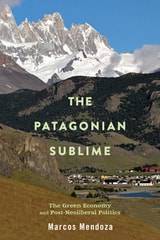
The Patagonian Sublime
The Green Economy and Post-Neoliberal PoliticsMendoza, Marcos
Rutgers University Press, 2019
Mendoza explores the fraught intersection of the green economy with the New Left politics of the Néstor Kirchner and Cristina Fernández de Kirchner governments. Mendoza documents the strategies of capitalist development, national representation, and political rule embedded in the “green productivist” agenda pursued by Kirchner and Fernández. Mendoza shows how Andean Patagonian communities have responded to the challenges of community-based conservation, the fashioning of wilderness zones, and the drive to create place-based monopolies that allow ecotourism destinations to compete in the global consumer economy.

The Patent Crisis and How the Courts Can Solve It
Dan L. Burk and Mark A. Lemley
University of Chicago Press, 2009
Patent law is crucial to encourage technological innovation. But as the patent system currently stands, diverse industries from pharmaceuticals to software to semiconductors are all governed by the same rules even though they innovate very differently. The result is a crisis in the patent system, where patents calibrated to the needs of prescription drugs wreak havoc on information technologies and vice versa. According to Dan L. Burk and Mark A. Lemley in The Patent Crisis and How the Courts Can Solve It, courts should use the tools the patent system already gives them to treat patents in different industries differently. Industry tailoring is the only way to provide an appropriate level of incentive for each industry.
Burk and Lemley illustrate the barriers to innovation created by the catch-all standards in the current system. Legal tools already present in the patent statute, they contend, offer a solution—courts can tailor patent law, through interpretations and applications, to suit the needs of various types of businesses. The Patent Crisis and How the Courts Can Solve It will be essential reading for those seeking to understand the nexus of economics, business, and law in the twenty-first century.

The Peace Script
Framing Violence in US Anti-War DissentDominic J. Manthey
University of Alabama Press, 2025
Exposes how appeals to civility, harmony, and nonaggression can unwittingly underpin exclusionary assumptions about race, gender, and class
Offering an innovative critique of peace rhetoric throughout US history, The Peace Script: Framing Violence in US Anti-War Dissent reexamines the language of dissent with lessons for our era defined by digital activism and fierce political debates. Dominic J. Manthey explores the peace arguments of various movements, including the Copperhead Movement during the Civil War, the Anti-Imperialist League’s stance against US colonialism, Henry Ford's Peace Ship expedition during World War I, the Mothers’ Movement during World War II, and the Vietnam Veterans against the War. Each chapter reveals how these movements, while advocating for peace, often upheld or encouraged racial, gender, and class inequalities.
Manthey navigates the complex terrain of grassroots activism by blending rhetorical criticism and historical insight to tell readers about the “peace script” that has echoed across America’s many wars. Through archival materials and case studies, The Peace Script reveals how anti-war movements craft compelling narratives that dramatize society through heroes, antagonists, and transformative ideals.
Redefining the struggle for peace as not only a fight against warfare but also a battle over space, identity, and the right to live with dignity, The Peace Script is essential for scholars of history, rhetoric, and social justice. Manthey provides a crucial perspective on the intersection of race, memory and power, offering urgent insights into how these legacies continue to shape society today.
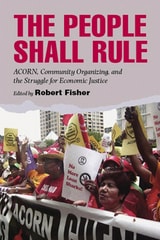
The People Shall Rule
ACORN, Community Organizing, and the Struggle for Economic JusticeRobert Fisher
Vanderbilt University Press, 2009
The twelve chapters in this volume present the perspectives of insiders like founder Wade Rathke and leading outside practitioners and academics. The result is a thorough detailing of ACORN's founding and its changing strategies, including vivid accounts and analyses of its campaigns on the living wage, voter turnout, predatory lending, redlining, school reform, and community redevelopment, as well as a critical perspective on ACORN's place in the community organizing landscape.
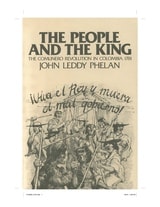
The People and the King
The Comunero Revolution in Colombia, 1781John Leddy Phelan
University of Wisconsin Press, 1978
In The People and the King, John Leddy Phelan reexamines a well-known but long misunderstood event in eighteenth-century Colombia. When the Spanish colonial bureaucratic system of conciliation broke down, indigenous groups resorted to armed revolt to achieve their political ends.
As Phelan demonstrates in these pages, the crisis of 1781 represented a constitutional clash between imperial centralization and colonial decentralization. Phelan argues that the Comunero revolution was not, as it has often been portrayed, a precursor of political independence, nor was it a frustrated social upheaval. The Comunero leaders and their followers did not advocate any basic reordering of society, Phelan concludes, but rather made an appeal for revolutionary reform within a traditionalist framework.
The People of Sonora and Yankee Capitalists
Ramón Eduardo Ruiz
University of Arizona Press, 1988
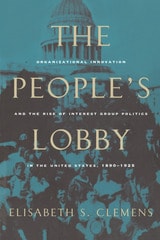
The People's Lobby
Organizational Innovation and the Rise of Interest Group Politics in the United States, 1890-1925Elisabeth S. Clemens
University of Chicago Press, 1997
Clemens sheds new light on how farmers, workers, and women invented strategies to circumvent the parties. Voters learned to monitor legislative processes, to hold their representatives accountable at the polls, and to institutionalize their ongoing participation in shaping policy. Closely analyzing the organizational politics in three states—California, Washington, and Wisconsin—she demonstrates how the political opportunity structure of federalism allowed regional innovations to exert leverage on national political institutions.
An authoritative statement on the changes in American politics during the Progressive Era, this book will interest political scientists, sociologists, and American historians.
The People's Money
Pensions, Debt, and Government ServicesEdited by Michael A. Pagano
University of Illinois Press, 2019
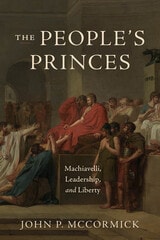
The People's Princes
Machiavelli, Leadership, and LibertyJohn P. McCormick
University of Chicago Press, 2025
A new window into Machiavelli’s idea of virtuous leadership and the appropriate relationship among leaders, common citizens, and elites.
For more than a decade, John P. McCormick has been at the forefront of a new wave of scholarship that reveals the anti-elitist and democratic commitments at the center of Niccolo Machiavelli’s political thought. In The People’s Princes, McCormick turns his attention to Machiavelli’s conception of virtuous leadership and Machiavelli’s views on the appropriate relationships among individual leaders, common citizens, and elites.
While most people think of Machiavelli as a cynical advisor of tyrants—a man who counseled leaders to aggrandize themselves, by any means necessary, at the expense of their subjects and citizens—The People’s Princes fundamentally challenges this understanding. Drawing from Machiavelli’s major political works a normative standard for leadership that emphasizes the mutually reinforcing relationship of civic leadership and popular government, McCormick delineates Machiavelli’s method of “political exemplarity” by analyzing in detail the Florentine’s case studies of leaders and their interactions with populaces throughout ancient and modern history.
McCormick argues that Machiavelli suggests that civic leaders should enhance their reputations by providing for their own eventual obsolescence; specifically, they should establish institutional means through which common citizens rule themselves more directly and substantively. The People’s Princes invites readers to consider Machiavelli anew, and also reflect on insights that remain relevant in the twenty-first century amidst growing concerns that political leaders are not accountable or responsive to popular majorities.
The People’s Party in Texas
A Study in Third Party PoliticsBy Roscoe Martin
University of Texas Press, 1970
Roscoe Martin's study of the People's Party in Texas was a pioneering analysis of the state populist movements and long considered one of the best. The People's Party was an influential force in United States politics in the last decade of the nineteenth century, especially in the western and southern states. Martin's study of third-party politics in Texas, as well as being an important work in Texas history, provides much insight into the national radical movement of the 1890s.

The People’s Plaza
Sixty-Two Days of Nonviolent ResistanceJustin Jones
Vanderbilt University Press, 2022
Central to the occupation was Justin Jones, a student of Fisk University and Vanderbilt Divinity School whose place at the forefront of the protests brought him and the occupation to the attention of the Tennessee state troopers, state and US senators, and Governor Bill Lee. The result was two months of solidarity in the face of rampant abuse, community in the face of state-sponsored terror, and standoff after standoff at the doorsteps of the people's house with those who claimed to represent them. In this, his first book, Jones describes those two revolutionary months of nonviolent resistance against a police state that sought to dehumanize its citizens.
The People's Plaza is a rumination on the abuse of power, and a vision of a more just, equitable, anti-racist Nashville—a vision that kept Jones and those with him posted on the plaza through intense heat, unprovoked arrests, vandalism, theft, and violent suppression. It is a first-person account of hope, a statement of intent, and a blueprint for nonviolent resistance in the American South and elsewhere.

The People’s Plaza
Sixty-Two Days of Nonviolent ResistanceJustin Jones
Vanderbilt University Press, 2022
Central to the occupation was Justin Jones, a student of Fisk University and Vanderbilt Divinity School whose place at the forefront of the protests brought him and the occupation to the attention of the Tennessee state troopers, state and US senators, and Governor Bill Lee. The result was two months of solidarity in the face of rampant abuse, community in the face of state-sponsored terror, and standoff after standoff at the doorsteps of the people's house with those who claimed to represent them. In this, his first book, Jones describes those two revolutionary months of nonviolent resistance against a police state that sought to dehumanize its citizens.
The People's Plaza is a rumination on the abuse of power, and a vision of a more just, equitable, anti-racist Nashville—a vision that kept Jones and those with him posted on the plaza through intense heat, unprovoked arrests, vandalism, theft, and violent suppression. It is a first-person account of hope, a statement of intent, and a blueprint for nonviolent resistance in the American South and elsewhere.

The Perfect Fit
Creative Work in the Global Shoe IndustryClaudio E. Benzecry
University of Chicago Press, 2022
We know a lot about how clothing and shoes are made cheaply, but very little about the process when they are made beautifully. In The Perfect Fit, Claudio E. Benzecry looks at the craft that goes into designing shoes for women in the US market, revealing that this creative process takes place on a global scale. Based on unprecedented behind-the-scenes access, The Perfect Fit offers an ethnographic window into the day-to-day life of designers, fit models, and technicians as they put together samples and prototypes, showing how expert work is a complement to and a necessary condition for factory exploitation.
Benzecry looks at the decisions and constraints behind how shoes are designed and developed, from initial inspiration to the mundane work of making sure a size seven stays constant. In doing so, he also fosters an original understanding of how globalization works from the ground up. Drawing on five years of research in New York, China, and Brazil, The Perfect Fit reveals how creative decisions are made, the kinds of expertise involved, and the almost impossible task of keeping the global supply chain humming.

The Perils of Global Legalism
Eric A. Posner
University of Chicago Press, 2009
The first months of the Obama administration have led to expectations, both in the United States and abroad, that in the coming years America will increasingly promote the international rule of law—a position that many believe is both ethically necessary and in the nation’s best interests.
With The Perils of Global Legalism, Eric A. Posner explains that such views demonstrate a dangerously naive tendency toward legalism—an idealistic belief that law can be effective even in the absence of legitimate institutions of governance. After tracing the historical roots of the concept, Posner carefully lays out the many illusions—such as universalism, sovereign equality, and the possibility of disinterested judgment by politically unaccountable officials—on which the legalistic view is founded. Drawing on such examples as NATO’s invasion of Serbia, attempts to ban the use of land mines, and the free-trade provisions of the WTO, Posner demonstrates throughout that the weaknesses of international law confound legalist ambitions—and that whatever their professed commitments, all nations stand ready to dispense with international agreements when it suits their short- or long-term interests.
Provocative and sure to be controversial, The Perils of Global Legalism will serve as a wake-up call for those who view global legalism as a panacea—and a reminder that international relations in a brutal world allow no room for illusions.
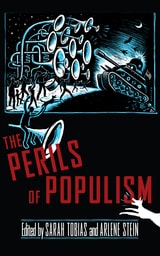
The Perils of Populism
Sarah Tobias
Rutgers University Press, 2022
The Perils of Populism shows how a feminist lens can help diagnose the factors behind the global rise of right-wing populism and teach us how to resist the threat it presents to democracy. Featuring interdisciplinary essays about politics in the United States, the Middle East, Europe, and India from a variety of acclaimed theorists and activists, the volume contributes to a rapidly expanding literature on gender and the far right. Together, these chapters offer a truly intersectional analysis of the problem, addressing everything from how populism has thrived in a “post-truth” era to the ways it appeals to working-class voters looking for an alternative to neoliberalism. Yet the authors also find reasons to be hopeful, as they showcase forms of grassroots feminist activism that challenge right-wing populism by advocating for racial and economic justice.
The Persistence of Violence
Colombian Popular CultureToby Miller
Rutgers University Press, 2020
The Personality of Power
A Theory of Fascism for Anti-fascist LifeBrian Massumi
Duke University Press, 2025
The Persuasive Power of Campaign Advertising
Authored by Travis N. Ridout and Michael M. Franz
Temple University Press, 2011
The Persuasive Power of Campaign Advertising offers a comprehensive overview of political advertisements and their changing role in the Internet age. Travis Ridout and Michael Franz examine how these ads function in various kinds of campaigns and how voters are influenced by them.
The authors particularly study where ads are placed, asserting that television advertising will still be relevant despite the growth of advertising on the Internet. The authors also explore the recent phenomenon of outrageous ads that "go viral" on the web-which often leads to their replaying as television news stories, generating additional attention.
It also features the first analysis of the impact on voters of media coverage of political advertising and shows that televised political advertising continues to have widespread influence on the choices that voters make at the ballot box.
The Pew and the Picket Line
Christianity and the American Working ClassEdited by Christopher D. Cantwell, Heath W. Carter, and Janine Giordano Drake
University of Illinois Press, 2016
The Phantom Respondents
Opinion Surveys and Political RepresentationJohn Brehm
University of Michigan Press, 1993

The Phantom World of Digul
Policing as Politics in Colonial Indonesia, 1926–1941Takashi Shiraishi
National University of Singapore Press, 2020
How did the government deploy political policing to achieve its policy objectives? What were the consequences and challenges for Indonesian activists? How was the government able to fashion its policing apparatus as the most potent instrument to achieve peace and order when the Great Depression hit the Indies, nationalist and communist forces were gaining strength in other places of the world, and war was coming both in Europe and Asia? This book answers those questions and more, breaking new ground for our understanding of the history of the Dutch Indies state in the early part of the twentieth century.
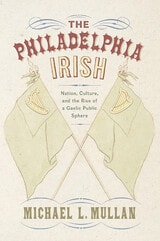
The Philadelphia Irish
Nation, Culture, and the Rise of a Gaelic Public SphereMichael L. Mullan
Rutgers University Press, 2021
Using Jurgen Habermas’s concept of a public sphere, the author reveals how the Irish constructed a plebian “counter” public of Gaelic meaning through various mechanisms of communication, the ethnic press, the meeting rooms of Irish societies, the consumption of circulating pamphlets, oratory, songs, ballads, poems, and conversation.
Settled in working class neighborhoods of vast spatial separation in an industrial city, the Irish resisted a parochialism identified with neighborhood and instead extended themselves to construct a vibrant, culturally engaged network of Irish rebirth in Philadelphia, a public of Gaelic meaning.
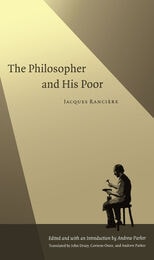
The Philosopher and His Poor
Jacques Rancière
Duke University Press, 2004
Jacques Rancière’s The Philosopher and His Poor meditates on these questions in close readings of major texts of Western thought in which the poor have played a leading role—sometimes as the objects of philosophical analysis, sometimes as illustrations of philosophical argument. Published in France in 1983 and made available here for the first time in English, this consummate study assesses the consequences for Marx, Sartre, and Bourdieu of Plato’s admonition that workers should do “nothing else” than their own work. It offers innovative readings of these thinkers’ struggles to elaborate a philosophy of the poor. Presenting a left critique of Bourdieu, the terms of which are largely unknown to an English-language readership, The Philosopher and His Poor remains remarkably timely twenty years after its initial publication.
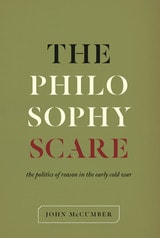
The Philosophy Scare
The Politics of Reason in the Early Cold WarJohn McCumber
University of Chicago Press, 2016
McCumber begins with the story of Max Otto, whose appointment to the UCLA Philosophy Department in 1947 was met with widespread protest charging him as an atheist. Drawing on Otto’s case, McCumber details the hugely successful conservative efforts that, by 1960, had all but banished the existentialist and pragmatist paradigms—not to mention Marxism—from philosophy departments all across the country, replacing them with an approach that valorized scientific objectivity and free markets and which downplayed the anti-theistic implications of modern thought. As he shows, while there have since been many instances of definitive and even explosive rejection of this conservative trend, its effects can still be seen at American universities today.

The Philosophy of Antonio Negri, Volume Two
Revolution in TheoryEdited by Timothy S. Murphy and Abdul-Karim Mustapha
Pluto Press, 2007
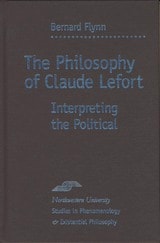
The Philosophy of Claude Lefort
Interpreting the PoliticalBernard Flynn
Northwestern University Press, 2005
Much of what passes for political philosophy in our day is merely politicized philosophical concepts, a distinction author Bernard Flynn underscores as he describes the development of Lefort's truly political philosophy—its ideas formed in response to his own political experience and to the work of certain major figures within the tradition of political thought. Beginning with Lefort's most important single work, his book on Machiavelli, Flynn presents the philosopher's conceptions of politics, modernity, and interpretation in the context within which they took shape. He then draws on a wide variety of Lefort's works to explicate his notions of premodern and modern democracy in which totalitarianism, in Lefort's singular and highly influential theory, is identified as a permanent problem of modernity.
A valuable exposition of one of the most important Continental philosophers of the post-World War II period, Flynn's book is itself a noteworthy work of interpretive philosophy, pursuing the ideas and issues addressed by Lefort to a point of unparalleled clarity and depth.

The Philosophy of Edmund Burke
A Selection from His Speeches and WritingsEdmund Burke
University of Michigan Press, 1960
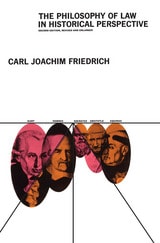
The Philosophy of Law in Historical Perspective
Carl Joachim Friedrich
University of Chicago Press, 1963

The Philosophy of Parochialism
Radomir Konstantinovic, Edited and with an Introduction by Branislav Jakovljevic, Translation by Ljiljana Nikolic and Branislav Jakovljevic
University of Michigan Press, 2021
The Philosophy of Parochialism is Radomir Konstantinović’s (1928–2011) most celebrated and reviled book. First published in Belgrade as Filosofija palanke in 1969, it attracted keen attention and controversy through its unsparing critique of Serbian and any other nationalism in Yugoslavia and beyond. The book was prophetic, seeming to anticipate not only the bloody disintegration of Yugoslavia in the 1990s, but also the totalitarian turn in politics across the globe in the first decades of the new century. With this translation, English-speaking audiences can at last discover one of the most original writers of eastern European late modernism, and gain an important and original perspective into contemporary politics and culture in the West and beyond. This is a book that seems to age in reverse, as its meanings become deeper and more universal with the passage of time.
Konstantinović’sbookresists easy classification, mixing classical, Montaigne-like essay, prose poetry, novel, and literary history. The word “philosophy” in the book’s title refers to the solitary activity of reflection and critical thinking, and is also paradoxical: according to the author, a defining characteristic of parochialism is precisely its intolerance toward this kind of self-reflexivity. In Konstantinović’s analysis, parochialism is not a simply a characteristic of a geographical region or a cultural, political, and historical formation—these are all just manifestations of the parochial spirit as the spirit of insularity. His book illuminates the current moment, in which insularity undergirds not only ethnic and national divisions, but also dictates the very structure of everyday life, and where individuals can easily find themselves locked in an echo chamber of social media. The Philosophy of Parochialism can help us understand better not only the dead ends of ethnic nationalism and other atavistic ideologies, but also of those cultural forces such as digital technologies that have been built on the promise of overcoming those ideologies.
The Philosophy of Punishment and the History of Political Thought
Edited by Peter Karl Koritansky
University of Missouri Press, 2011
For the last half century, the philosophical debates over punishment have been deadlocked at two schools of thought: Utilitarianism and Retributivism. In his introduction, Koritansky provides an overview of the stymied debate by analyzing H. L. A. Hart’s argument for a philosophy unifying the theories of Utilitarianism and Retributivism. While Koritansky allows that both theories have contributed substantially to the contemporary understanding of punishment, he points out that Hart’s lack of success in combining these theories proves that both are less than ideal. From this starting point, Koritansky urges transcendence from these two theories in order to respond to new developments and circumstances surrounding the enactment of punishment today.
Conveniently divided into three sections, the book explores pagan and Christian premodern thought; early modern thought, culminating in chapters on Kant and classic Utilitarianism; and postmodern thought as exemplified in the theories of Nietzsche and Foucault. In all, the essays probe the work of Plato, Saint Augustine, Saint Thomas Aquinas, Thomas Hobbes, Immanuel Kant, Cesere Beccaria, Jeremy Bentham, John Stuart Mill, Friedrich Nietzsche, and Michel Foucault.
These essays devoted to the philosophy of punishment from the perspective of political thought delve deep into key contributions from thinkers of all eras to help further debates on punishment, provide the history of political thought in order to trace changes and effects on future theories, as well as expose the roots of the two prevailing schools of thought. This collection will engage all social scientists interested in the issue of punishment and energize the ongoing debate surrounding this complex issue.

The Philosophy of Vegetarianism
Daniel A. Dombrowski
University of Massachusetts Press, 1984
Daniel A. Dombrowski uses the tools and insights of these contemporary debates in order to better understand the strengths and weaknesses of ancient philosophical vegetarianism. He also uses the wisdom of the Greek vegetarians as an Archimedean point from which to critique both the opponents and the defenders of contemporary philosophical vegetarianism. The book includes an annotated bibliography of the current debates in this burgeoning field of scholarship.
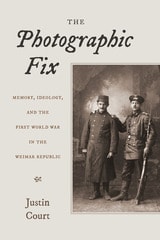
The Photographic Fix
Memory, Ideology, and the First World War in the Weimar RepublicJustin Court
University of Michigan Press, 2026

The Pinochet Case
Madeleine Davis
University of London Press, 2000
The Pinochet Case
Origins, Progress and ImplicationsEdited by Madeleine Davis
University of London Press, 2003
Garces (1999 recipient of the Right Livelihood Award for his work in preparing the Pinochet case), Carlos Huneeus (CERC, Chile and Pontificia Universidad Catolica de Chile), Brian Loveman (San Diego State University, USA), Carlos Malamud (Real Instituto Elcano de Estudios Internacionales y Estrategicos, Madrid, Spain), Antonio Remiro Brotons (Universidad Autonoma de Madrid, Spain), Naomi Roht-Arriaza (University of California, Hastings College of Law, USA), and Diana Woodhouse (Oxford Brookes University, UK).
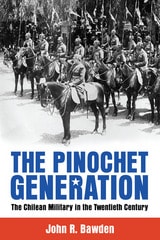
The Pinochet Generation
The Chilean Military in the Twentieth CenturyJohn R. Bawden
University of Alabama Press, 2016
Understanding the military generation that transformed modern Chile.
Chilean soldiers in the twentieth century appear in most historical accounts, if they appear at all, as decontextualized figures or simply as a single man: Augusto Pinochet. In his incisive study The Pinochet Generation: The Chilean Military in the Twentieth Century, John R. Bawden provides compelling new insights into the era and posits that Pinochet and his men were responsible for two major transformations in Chile’s constitution as well as the political and economic effects that followed.
Determined to refocus what he sees as a “decontextualized paucity” of historical information on Chile’s armed forces, Bawden offers a new perspective to explain why the military overthrew the government in 1973 as well as why and how Chile slowly transitioned back to a democracy at the end of the 1980s. Standing apart from other views, Bawden insists that the Chilean military’s indigenous traditions and customs did more than foreign influences to mold their beliefs and behavior leading up to the 1973 coup of Salvador Allende.
Drawing from defense publications, testimonial literature, and archival materials in both the United States and Chile, The Pinochet Generation characterizes the lens through which Chilean officers saw the world, their own actions, and their place in national history. This thorough analysis of the Chilean services’ history, education, values, and worldview shows how this military culture shaped Chilean thinking and behavior, shedding light on the distinctive qualities of Chile’s armed forces, the military’s decision to depose Allende, and the Pinochet dictatorship’s resilience, repressiveness, and durability.
Bawden’s account of Chile’s vast and complex military history of the twentieth century will appeal to political scientists, historians, faculty and graduate students interested in Latin America and its armed forces, students of US–Latin American diplomacy, and those interested in issues of human rights.
The Pioneers of Judicial Behavior
Nancy Maveety, Editor
University of Michigan Press, 2002

The Place of Law
Austin Sarat, Lawrence Douglas, and Martha Merrill Umphrey, Editors
University of Michigan Press, 2003
The Plan for Perpetual Peace, On the Government of Poland, and Other Writings on History and Politics
Jean-Jacques Rousseau
Dartmouth College Press, 2011
The Playing Fields of Eton
Equality and Excellence in Modern MeritocracyMika LaVaque-Manty
University of Michigan Press, 2009
"Beautifully written and brilliantly argued, The Playing Fields of Eton takes us on a three-century tour of modern mental and physical life. We visit gymnasiums and dueling fields, murderball courts and Olympic venues, and while immersed in thought-provoking stories of people wrestling with the twin pursuit of equality and excellence, we find ourselves learning what it might mean to be modern. With equal measures of erudition and gentle humor, Mika LaVaque-Manty convincingly refutes the view that egalitarian progress forecloses possibilities for human excellence."
---Elisabeth Ellis, Texas A&M University
"A very insightful and clearly written philosophical inquiry into the nature of sport."
---Marion Smiley, Brandeis University
"A marvelously original analysis of the tensions---and interdependence---between equality and excellence in modern political life. From eighteenth-century dueling to contemporary doping in sports, LaVaque-Manty illuminates the bodily life of democracy at play, and challenges us to think in new ways about the connections between achievement and autonomy. The Playing Fields of Eton is an important book that pushes liberal and democratic theory in fruitful new directions."
---Sharon Krause, Brown University
Can equality and excellence coexist? If we assert that no person stands above the rest, can we encourage and acknowledge athletic, artistic, and intellectual achievements? Perhaps equality should merely mean equality of opportunity. But then how can society reconcile inherent differences between men and women, the strong and the weak, the able-bodied and the disabled?
In The Playing Fields of Eton, Mika LaVaque-Manty addresses questions that have troubled philosophers, reformers, and thoughtful citizens for more than two centuries. Drawing upon examples from the eighteenth-century debate over dueling as a gentleman's prerogative to recent controversies over athletes' use of performance-enhancing drugs, LaVaque-Manty shows that societies have repeatedly redefined equality and excellence. One constant remains, however: sports provide an arena for working out tensions between these two ideals.
Just as in sports where athletes are sorted by age, sex, and professional status, in modern democratic society excellence has meaning only in the context of comparisons among individuals who are, theoretically, equals. LaVaque-Manty's argument will engage philosophers, and his inviting prose and use of familiar illustrations will welcome nonphilosophers to join the conversation.
Mika LaVaque-Manty is Associate Professor of Political Science at the University of Michigan.

The Pliant Public
Ideology and Public Opinion in ChinaJason Y. Wu
University of Michigan Press, 2027
The Chinese Communist Party has long depended on ideology to set the agenda, communicate its priorities, and legitimize its rule. The Pliant Public argues that for Chinese citizens, however, ideology is in short supply. Surveys show that public opinion is depolarized. Ordinary people have little sense of what ideological labels like “left” and “right” mean, and most of the people who put themselves on the right have the scale backwards. Since a depolarized public is ill-equipped to check the state, China’s leaders can make massive changes to government policy without triggering much backlash.
But depolarization does not always strengthen the state. When citizens lack clear ideological commitments, it is easier for them to set aside their differences. If China’s leaders lost their performance legitimacy, then depolarization could facilitate a broader challenge to party rule.

The Poetics of Impudence and Intimacy in the Age of Pushkin
Joe Peschio
University of Wisconsin Press, 2012
Joe Peschio offers the first comprehensive history of a set of associated behaviors known in Russian as “shalosti,” a word which at the time could refer to provocative behaviors like practical joking, insubordination, ritual humiliation, or vandalism, among other things, but also to literary manifestations of these behaviors such as the use of obscenities in poems, impenetrably obscure allusions, and all manner of literary inside jokes. One of the period’s most fashionable literary and social poses became this complex of behaviors taken together. Peschio explains the importance of literary shalosti as a form of challenge to the legitimacy of existing literary institutions and sometimes the Russian regime itself. Working with a wide variety of primary texts—from verse epistles to denunciations, etiquette manuals, and previously unknown archival materials—Peschio argues that the formal innovations fueled by such “prankish” types of literary behavior posed a greater threat to the watchful Russian government and the literary institutions it fostered than did ordinary civic verse or overtly polemical prose.