Results by title
8113 books match the query 'Literary Criticism' and 1818 start with t
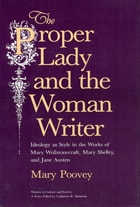
The Proper Lady and the Woman Writer
Ideology as Style in the Works of Mary Wollstonecraft, Mary Shelley, and Jane AustenMary Poovey
University of Chicago Press, 1984
"The proper lady was a handy concept for a developing bourgeois patriarchy, since it deprived women of worldly power, relegating them to a sanctified domestic sphere that, in complex ways, nourished and sustained the harsh 'real' world of men. With care and subtle intelligence, Poovey examines this 'guardian and nemesis of the female self' through the ways it is implicated in the style and strategies of three very different writers."—Rachel M. Brownstein, The Nation
"The Proper Lady and the Woman Writer is a model of . . . creative discovery, providing a well-researched, illuminating history of women writers at the turn of the nineteenth century. [Poovey] creates sociologically and psychologically persuasive accounts of the writers: Wollstonecraft, who could never fully transcend the ideology of propriety she attacked; Shelley, who gradually assumed a mask of feminine propriety in her social and literary styles; and Austen, who was neither as critical of propriety as Wollstonecraft nor as accepting as Shelley ultimately became."—Deborah Kaplan, Novel
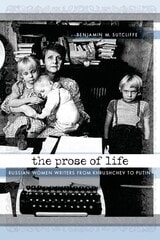
The Prose of Life
Russian Women Writers from Khrushchev to PutinBenjamin M. Sutcliffe
University of Wisconsin Press, 2009
A focus on the representation of everyday life in women’s prose reveals that a first generation of female writers (Natal’ia Baranskaia, Irina Grekova) both legitimated and limited their successors (Liudmila Petrushevskaia, Tat’iana Tolstaia, Liudmila Ulitskaia, and Svetlana Vasilenko) in their choice of literary topics. The Prose of Life traces the development, and intriguing ruptures, of recent Russian women’s prose, becoming a must-read for readers interested in Russian literature and gender studies.
2009 Outstanding Academic Title, Choice Magazine
The Prose of Things
Transformations of Description in the Eighteenth CenturyCynthia Sundberg Wall
University of Chicago Press, 2006
In The Prose of Things, Wall analyzes literary works in the contexts of natural science, consumer culture, and philosophical change to show how and why the perception and representation of space in the eighteenth-century novel and other prose narratives became so textually visible. Wall examines maps, scientific publications, country house guides, and auction catalogs to highlight the thickening descriptions of domestic interiors. Considering the prose works of John Bunyan, Samuel Pepys, Aphra Behn, Daniel Defoe, Samuel Richardson, David Hume, Ann Radcliffe, and Sir Walter Scott, The Prose of Things is the first full account of the historic shift in the art of describing.
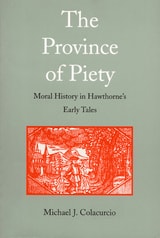
The Province of Piety
Moral History in Hawthorne's Early TalesMichael J. Colacurcio
Duke University Press, 1995
Informed by comprehensive historical research, the author shows that Hawthorne was steeped in New England historiography, particularly the sermon literature of the seventeenth century. But, as Colacurcio shows, Hawthorne did not merely borrow from the historical texts he deliberately studied; rather, he is best understood as having written history. In The Province of Piety, originally published in 1984 (Harvard University Press), Hawthorne is seen as a moral historian working with fictional narratives—a writer brilliantly involved in examining the moral and political effects of Puritanism in America and recreating the emotional and cultural contexts in which earlier Americans had lived.
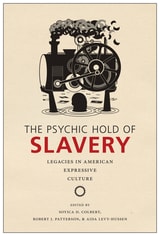
The Psychic Hold of Slavery
Legacies in American Expressive CultureSoyica Diggs Colbert, Robert J. Patterson, and Aida Levy-Hussen
Rutgers University Press, 2016
The Psychoanalytic Movement
The Cunning of UnreasonErnest Gellner
Northwestern University Press, 1996
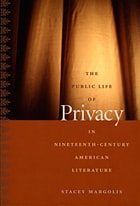
The Public Life of Privacy in Nineteenth-Century American Literature
Stacey Margolis
Duke University Press, 2005
Margolis provides readings of fiction by Hawthorne and James as well as Susan Warner, Mark Twain, Charles Chesnutt, and Pauline Hopkins. In these writers’ works, she traces a distinctive novelistic tradition that viewed social developments—such as changes in political partisanship and childhood education and the rise of new politico-legal forms like negligence law—as means for understanding how individuals were shaped by their interactions with society. The Public Life of Privacy in Nineteenth-Century American Literature adds a new level of complexity to understandings of nineteenth-century American culture by illuminating a literary tradition full of accidents, mistakes, and unintended consequences—one in which feelings and desires were often overshadowed by all that was external to the self.
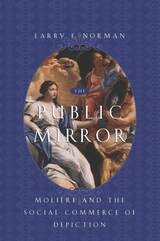
The Public Mirror
Moliere and the Social Commerce of DepictionLarry F. Norman
University of Chicago Press, 1999
Pairing close readings of Molière's comedies with insightful accounts of French social history and aesthetics, Norman shows how Molière conceived of satire as a "public mirror" provoking dynamic exchange and conflict with audience members obsessed with their own images. Drawing on these tensions, Molière portrays characters satirizing one another on stage, with their reactions providing dramatic conflict and propelling comic dialogue. By laying bare his society's system of imagining itself, Molière's satires both enthralled and enraged his original audience and provide us with a crucial key to the classical culture of representation.
The Pull of Politics
Steinbeck, Wright, Hemingway, and the Left in the Late 1930sMilton A. Cohen
University of Missouri Press, 2018
The Purpose of Playing
Shakespeare and the Cultural Politics of the Elizabethan TheatreLouis Montrose
University of Chicago Press, 1996
Montrose first locates the public and professional theater within the ideological and material framework of Elizabethan culture. He considers the role of the professional theater and theatricality in the cultural transformation that was concurrent with religious and socio-political change, and then concentrates upon the formal means by which Shakespeare's Elizabethan plays called into question the absolutist assertions of the Elizabethan state. Drawing dramatic examples from the genres of tragedy and history, Montrose finally focuses his cultural-historical perspective on A Midsummer Night's Dream.
The Purpose of Playing elegantly demonstrates how language and literary imagination shape cultural value, belief, and understanding; social distinction and interaction; and political control and contestation.
The Pushkin Handbook
Edited by David M. Bethea
University of Wisconsin Press, 2004
The Queer Child, or Growing Sideways in the Twentieth Century
Kathryn Bond Stockton
Duke University Press, 2009
Engaging and challenging the work of sociologists, legal theorists, and historians, Stockton coins the term “growing sideways” to describe ways of growing that defy the usual sense of growing “up” in a linear trajectory toward full stature, marriage, reproduction, and the relinquishing of childish ways. Growing sideways is a mode of irregular growth involving odd lingerings, wayward paths, and fertile delays. Contending that children’s queerness is rendered and explored best in fictional forms, including literature, film, and television, Stockton offers dazzling readings of works ranging from novels by Henry James, Radclyffe Hall, Virginia Woolf, Djuna Barnes, and Vladimir Nabokov to the movies Guess Who’s Coming to Dinner, The Hanging Garden, Heavenly Creatures, Hoop Dreams, and the 2005 remake of Willy Wonka and the Chocolate Factory. The result is a fascinating look at children’s masochism, their interactions with pedophiles and animals, their unfathomable, hazy motives (leading them at times into sex, seduction, delinquency, and murder), their interracial appetites, and their love of consumption and destruction through the alluring economy of candy.
The Queer Limit of Black Memory
Black Lesbian Literature and IrresolutionMatt Richardson
The Ohio State University Press, 2013
The Quest for Jewish Belief and Identity in the Graphic Novel
Stephen E. Tabachnick
University of Alabama Press, 2014
The creators of Superman (Jerry Siegel and Joe Shuster), Batman (Bob Kane and Bill Finger), and the Marvel superheroes (Stan Lee and Jack Kirby), were Jewish, as was the founding editor of Mad magazine (Harvey Kurtzman). They often adapted Jewish folktales (like the Golem) or religious stories (such as the origin of Moses) for their comics, depicting characters wrestling with supernatural people and events. Likewise, some of the most significant graphic novels by Jews or about Jewish subject matter deal with questions of religious belief and Jewish identity. Their characters wrestle with belief—or nonbelief—in God, as well as with their own relationship to the Jews, the historical role of the Jewish people, the politics of Israel, and other issues related to Jewish identity.
In The Quest for Jewish Belief and Identity in the Graphic Novel, Stephen E. Tabachnick delves into the vivid kaleidoscope of Jewish beliefs and identities, ranging from Orthodox belief to complete atheism, and a spectrum of feelings about identification with other Jews. He explores graphic novels at the highest echelon of the genre by more than thirty artists and writers, among them Harvey Pekar (American Splendor), Will Eisner (A Contract with God), Joann Sfar (The Rabbi’s Cat), Miriam Katin (We Are On Our Own), Art Spiegelman (Maus), J. T. Waldman (Megillat Esther), Aline Kominsky Crumb (Need More Love), James Sturm (The Golem’s Mighty Swing), Leela Corman (Unterzakhn), Ari Folman and David Polonsky (Waltz with Bashir), David Mairowitz and Robert Crumb’s biography of Kafka, and many more. He also examines the work of a select few non-Jewish artists, such as Robert Crumb and Basil Wolverton, both of whom have created graphic adaptations of parts of the Hebrew Bible.
Among the topics he discusses are graphic novel adaptations of the Bible; the Holocaust graphic novel; graphic novels about the Jews in Eastern and Western Europe and Africa, and the American Jewish immigrant experience; graphic novels about the lives of Jewish women; the Israel-centered graphic novel; and the Orthodox graphic novel. The book concludes with an extensive bibliography.
No study of Jewish literature and art today can be complete without a survey of the graphic novel, and scholars, students, and graphic novel fans alike will delight in Tabachnick’s guide to this world of thought, sensibility, and artfulness.
The Question of Women in Chinese Feminism
Tani E. Barlow
Duke University Press, 2004

The Quiet Zone
Caribbean Expressive Cultures and the Feminist Aesthetics of DisturbancePetal Kimberly Samuel
Rutgers University Press, 2026
The Quill and the Scalpel
Nabokov's Art and the Worlds of ScienceStephen H. Blackwell
The Ohio State University Press, 2009
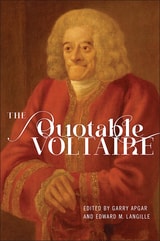
The Quotable Voltaire
Garry Apgar
Bucknell University Press, 2021
Drawing from a wide range of his publications, private letters, and remarks recorded by his contemporaries, The Quotable Voltaire includes material never before gathered in a single volume. English translations appear alongside the original French, and each quote is thoroughly indexed and referenced, with page numbers for both the first known publication edition of each entry and the most recent edition of Voltaire’s works. The book also features over 400 quotes about Voltaire, including commentary by eighteenth-century luminaries like Samuel Johnson, Catherine the Great, Casanova, and John Adams, as well as an eclectic assortment of modern-day personages ranging from Winston Churchill and Jorge Luis Borges to Mae West and Mike Tyson.
Lavishly illustrated with nearly three dozen images of Voltaire-related art, this collection opens with a scholarly essay that recounts the great man’s life and reflects on his outsized influence on Western culture. Whether you are a Voltaire scholar or a neophyte, The Quotable Voltaire is the perfect introduction to a brilliant mind.
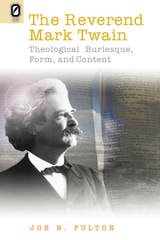
The REVEREND MARK TWAIN
THEOLOGICAL BURLESQUE, FORM, AND CONTENTJoe B. Fulton
The Ohio State University Press, 2006
Twain adopted such religious personae to burlesque the religious literary genres associated with those vocations. He wrote catechisms, prophecies, psalms, and creeds, all in the theological tradition, but with a comic twist. Twain even wrote a burlesque life of Christ that has the son of God sporting blue jeans and cowboy boots. With his distinctive comic genius, Twain entered the religious dialogue of his time, employing the genres of belief as his vehicle for criticizing church and society.
Twain’s burlesques of religious form and content reveal a writer fully engaged with the religious ferment of his day. Works like The Innocents Abroad, Adventures of Huckleberry Finn, Personal Recollections of Joan of Arc, Roughing It, and What Is Man? are the productions of a writer skilled at adopting and adapting established literary and religious forms for his own purposes. Twain is sometimes viewed as a haphazard writer, but in The Reverend Mark Twain, Fulton demonstrates how carefully Twain studied established literary and theological genres to entertain—and criticize—his society.
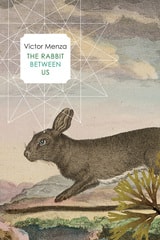
The Rabbit Between Us
Victor Menza
Seagull Books, 2021
Through philosophy, history, education, art, and personal musing on everyday uncanny experiences, Menza reveals why people have long found rabbits our special kin and emblems of love. Menza considers human nature and how we are undone by separation—both from each other and from our childhood selves. Surprising allies in these non-traditional philosophical wanderings include Ludwig Wittgenstein, Elizabeth Bowen, Albert Murray, Beatrix Potter, Donald Winnicott, Sterling Stuckey, and Lev Vygotsky.
Menza examines what symbols are and how they work, the value of dialect, and the subversive lesson of animal fables, alongside his thoughts on language learning, memory, and slavery. Only now did he see that he’d taken to Brer Rabbit early on. Just as the Uncle Remus tales displayed the small hero’s virtues in warm dialogues, The Rabbit Between Us shows we abound in talents and moves when we “lean like Socrates did to the Aesop in us.” Gentle and political at once, this unique book will appeal to any intellectually curious reader.
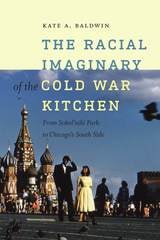
The Racial Imaginary of the Cold War Kitchen
From Sokol’niki Park to Chicago’s South SideKate A. Baldwin
Dartmouth College Press, 2016
The Rag-Picker's Guide to Poetry
Poems, Poets, ProcessEleanor Wilner and Maurice Manning, editors
University of Michigan Press, 2013
The venture of this inviting collection is to look, from the many vantages that the 35 poets in this eclectic anthology chose to look, at what it was—knowing that a poem can’t be conceived in advance of its creation—that helped their poems to emerge or connected them over time. The Rag-Picker's Guide to Poetry permits an inside view of how poets outwit internal censors and habits of thought, showing how the meticulous and the spontaneous come together in the process of discovery. Within are contained the work and thoughts of:
- Betty Adcock
- Joan Aleshire
- Debra Allbery
- Elizabeth Arnold
- David Baker
- Rick Barot
- Marianne Boruch
- Karen Brennan
- Gabrielle Calvocoressi
- Michael Collier
- Carl Dennis
- Stuart Dischell
- Roger Fanning
- Chris Forhan
- Reginald Gibbons
- Linda Gregerson
- Jennifer Grotz
- Brooks Haxton
- Tony Hoagland
- Mark Jarman
- A. Van Jordan
- Laura Kasischke
- Mary Leader
- Dana Levin
- James Longenbach
- Thomas Lux
- Maurice Manning
- Heather McHugh
- Martha Rhodes
- Alan Shapiro
- Daniel Tobin
- Ellen Bryant Voigt
- Alan Williamson
- Eleanor Wilner
- C. Dale Young
The Rage of John Dos Passos
Christopher Tomlins
University of Chicago Press, 2027
A close look at the emotional and intellectual world of writer John Dos Passos, who was at one time America’s leading modernist, that reveals the political and cultural rhythms of the twentieth century.
John Dos Passos (1896–1970) was a prolific writer—at once compulsive and enigmatic—who became famous in the 1930s as America’s leading literary modernist, only to be eclipsed in the second half of his life because of his own political and aesthetic choices. The Rage of John Dos Passos adopts a psychoanalytic perspective to comprehend the curious career of a man whom Jean-Paul Sartre described in 1938 as “the greatest writer of our time.”
As a young man after World War I, Dos Passos wrote books that won him notoriety as an intemperate critic of American society. His Three Soldiers (1921) was called an insult to the army in which he had been enlisted. His impressionistic novel of New York City, Manhattan Transfer (1925), was dismissed as “spattered filth.” Then in the 1930s, three wildly creative and politically engaged novels written under the collective title U.S.A. truly made his name. Yet Dos Passos then abandoned his youthful radicalism to embrace strident anticommunism and the second Red Scare.
The Rage of John Dos Passos examines the central strands of the author’s life, from infancy until death, and the full range of his writing, including his often-scorned late novels. Christopher Tomlins aims to fuse history, biography, and literary analysis in understanding Dos Passos and his times—and our own.

The Re-creation of Landscape
A Study of Wordsworth, Coleridge, Constable, and TurnerJames A. W. Heffernan
Dartmouth College Press, 2002
The Reader as Peeping Tom
Nonreciprocal Gazing in Narrative Fiction and FilmJeremy Hawthorn
The Ohio State University Press, 2014
Hawthorn suggests that while some literary and film narratives use the reader’s or viewer’s sense of all-seeing invulnerability to underwrite the various systems of control and surveillance that are depicted in the work, others associate such forms of nonreciprocal observation with impotence and impoverishment and thus critique political systems that legitimize surveillance. Hawthorn concludes that critics have underestimated the extent to which reader’s or viewer’s sense of disempowerment adds meaning to the experience of fiction and film and may encourage acceptance or criticism of spying and surveillance in the real world. The book questions benign views of the reader’s or spectator’s role as passive observer, and offers original and exciting readings of some key narrative texts.
The Reader, the Text, the Poem
The Transactional Theory of the Literary WorkLouise M. Rosenblatt
Southern Illinois University Press, 1994
Louise M. Rosenblatt’s award-winning work continues increasingly to be read in a wide range of academic fields—literary criticism, reading theory, aesthetics, composition, rhetoric, speech communication, and education. Her view of the reading transaction as a unique event involving reader and text at a particular time under particular circumstances rules out the dualistic emphasis of other theories on either the reader or the text as separate and static entities. The transactional concept accounts for the importance of factors such as gender, ethnicity, culture, and socioeconomic context. Essential reading for the specialist, this book is also well suited for courses in criticism, critical theory, rhetoric, and aesthetics.
Starting from the same nonfoundationalist premises, Rosenblatt avoids the extreme relativism of postmodern theories derived mainly from Continental sources. A deep understanding of the pragmatism of Dewey, James, and Peirce and of key issues in the social sciences is the basis for a view of language and the reading process that recognizes the potentialities for alternative interpretations and at the same time provides a rationale for the responsible reading of texts.
The book has been praised for its lucid explanation of the multidimensional character of the reading process—evoking, interpreting, and evaluating the work. The nonliterary (efferent) and the literary (aesthetic) are shown not to be opposites but to represent a continuum of reading behaviors. The author amply illustrates her theoretical points with interpretations of varied texts. The epilogue carries further her critique of rival contemporary theories.
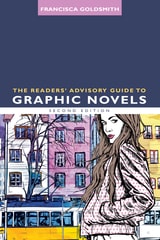
The Readers' Advisory Guide to Graphic Novels
Francisca Goldsmith
American Library Association, 2017
The first edition of this readers' advisory represented a pioneering effort to provide help and encouragement to librarians diving into this exciting format, and since then the popularity of graphic novels has continued apace. Goldsmith has updated her guide to encompass a bounty of new titles, authors, and styles, ensuring its continued usefulness as a tool for both RA and collection development. Suitable for newbies and hardcore fans alike, this book
- sketches in the history of graphic novels, tracing their evolution and showing what makes them unique;
- explores traditional and cutting edge titles most friendly to children, teens, and adults, reflecting the burgeoning and maturing publishing efforts made for each of these audiences;
- discusses common themes, topics, and the place of diversity in graphic novels;
- gives in-depth guidance on ways to connect readers to titles they'll be sure to love;
- offers ideas for media tie-ins, displays, programming, book clubs, and more;
- includes annotated bibliographies, with appeal characteristics noted, and multiple indexes to ensure that locating the right graphic novel is a snap; and
- provides detailed tips for keeping current and aware of new titles and trends.
Spotlighting this expanding body of intellectual, aesthetic, and engaging literature, Goldsmith's guide will entertain as well as inform.
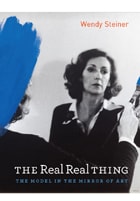
The Real Real Thing
The Model in the Mirror of ArtWendy Steiner
University of Chicago Press, 2010
Our era is defined by the model. From Victoria’s Secret and America’s Next Top Model to the snapshots we post on Facebook and Twitter, our culture is fixated on the pose, the state of existing simultaneously as artifice and the real thing.
In this bold view of contemporary culture, Wendy Steiner shows us the very meaning of the arts in the process of transformation. Her story begins at the turn of the last century, as the arts abandoned the representation of the world for a heady embrace of the abstract, the surreal, and the self-referential. Today though, this “separate sphere of the aesthetic” is indistinguishable from normal life. Media and images overwhelm us: we gingerly negotiate a real-virtual divide that we suspect no longer exists, craving contact with what J. M. Coetzee has called “the real real thing.” As the World Wide Web renders the lower-case world in ever-higher definition, the reality-based genres of memoir and documentary are displacing fiction, and novels and films are depicting the contemporary condition through model-protagonists who are half-human, half-image. Steiner shows the arts searching out a new ethical potential through this figure: by stressing the independent existence of the model, they welcome in the audience in all its unpredictability, redefining aesthetic experience as a real-world interaction with the promise of empathy, reciprocity, and egalitarian connection.
A masterly performance by a penetrating, inquisitive mind, The Real Real Thing is that rarest of books, one whose provocations and inspirations will inspire readers to take a new—and nuanced—look at the world around them.
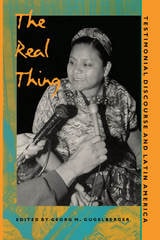
The Real Thing
Testimonial Discourse and Latin AmericaGeorg M. Gugelberger, ed.
Duke University Press, 1996
Although the literature of testimony arose on the margins of institutional power and its ends were in large part political change, the canonization of testimonio by the academic Left has moved it from margin to center, ironically bringing about the institutionalization of its transgressive and counter-hegemonic qualities. Discussing Latin American works ranging from Salvadorian writer Roque Dalton’s Miguel Marmol to I . . . Rigoberta Menchu, a work that earned its author a Nobel Prize, this collection explores how critical writing about testimonio has turned into discourse about the institution of academia, the canon, postmodernism and postcolonialism, and the status of Latin American studies generally.
Contributors. John Beverley, Santiago Colás, Georg M. Gugelberger, Barbara Harlow, Fredric Jameson, Alberto Moreiras, Margaret Randall, Javier Sanjines, Elzbieta Sklodowska, Doris Sommer, Gareth Williams, George Yúdice, Marc Zimmerman
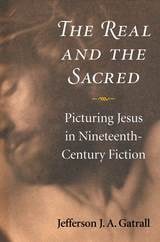
The Real and the Sacred
Picturing Jesus in Nineteenth-Century FictionJefferson J. A. Gatrall
University of Michigan Press, 2014
The Real, the True, and the Told
Postmodern Historical Narrative and the Ethics of RepresentationEric L. Berlatsky
The Ohio State University Press, 2011
The Realistic Imagination
English Fiction from Frankenstein to Lady ChatterlyGeorge Levine
University of Chicago Press, 1983
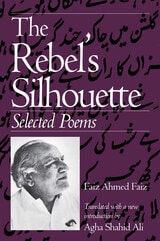
The Rebel's Silhouette
Selected PoemsFaiz Ahmed Faiz, translated and edited by Agha Shalid Ali
University of Massachusetts Press, 1995
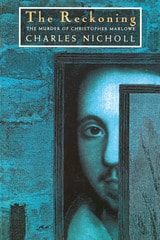
The Reckoning
The Murder of Christopher MarloweCharles Nicholl
University of Chicago Press, 1995
Here, in a tour de force of scholarship and ingenuity, Charles Nicholl penetrates four centuries of obscurity to reveal not only a complex and unsettling story of entrapment and betrayal, chimerical plot and sordid felonies, but also a fascinating vision of the underside of the Elizabethan world.
"Provides the sheer enjoyment of fiction, and might just be true."—Michael Kenney, Boston Globe
"Mr. Nicholl's glittering reconstruction of Marlowe's murder is only one of the many fascinating aspects of this book. Indeed, The Reckoning is equally compelling for its masterly evocation of a vanished world, a world of Elizabethan scholars, poets, con men, alchemists and spies, a world of Machiavellian malice, intrigue and dissent."—Michiko Kakutani, New York Times
"The rich substance of the book is his detail, the thick texture of betrayal and evasion which was Marlowe's life."—Thomas Flanagan, Washington Post Book World
Winner of the Crime Writer's Gold Dagger Award for Nonfiction Thriller
The Red Land to the South
American Indian Writers and Indigenous MexicoJames H. Cox
University of Minnesota Press, 2012
The forty years of American Indian literature taken up by James H. Cox—the decades between 1920 and 1960—have been called politically and intellectually moribund. On the contrary, Cox identifies a group of American Indian writers who share an interest in the revolutionary potential of the indigenous peoples of Mexico—and whose work demonstrates a surprisingly assertive literary politics in the era.
By contextualizing this group of American Indian authors in the work of their contemporaries, Cox reveals how the literary history of this period is far more rich and nuanced than is generally acknowledged. The writers he focuses on—Todd Downing (Choctaw), Lynn Riggs (Cherokee), and D’Arcy McNickle (Confederated Salish and Kootenai)—are shown to be on par with writers of the preceding Progressive and the succeeding Red Power and Native American literary renaissance eras.
Arguing that American Indian literary history of this period actually coheres in exciting ways with the literature of the Native American literary renaissance, Cox repudiates the intellectual and political border that has emerged between the two eras.
The Red Scarf
Followed by "Two Stages" and Additional NotesYves Bonnefoy
Seagull Books, 2021
In December 2015, six months before his death at the age of 93, Yves Bonnefoy concluded what was to be his last major text in prose, L’écharpe rouge, translated here as The Red Scarf. In this unique book, described by the poet as "an anamnesis"—a formal act of commemoration—Bonnefoy undertakes, at the end of his life, a profoundly moving exegesis of some fragments written in 1964. These fragments lead him back to an unspoken, lifelong anxiety: “My most troubling memory, when I was between ten and twelve years old, concerns my father, and my anxiety about his silence.” Bonnefoy offers an anatomy of his father’s silence, and of the melancholy that seemed to take hold some years into his marriage to the poet’s mother.
At the heart of this book is the ballad of Elie and Hélène, the poet’s parents. It is the story of their lives together in the Auvergne, and later in Tours, seen through the eyes of their son—the solitary boy’s intense but inchoate experience, reviewed through memories of the now elderly man. What makes The Red Scarf indispensable is the intensely personal nature of the material, casting its slant light, a setting sun, on all that has gone before.
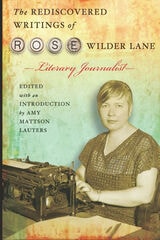
The Rediscovered Writings of Rose Wilder Lane, Literary Journalist
Edited by Amy Mattson Lauters
University of Missouri Press, 2007
This book recovers journalistic work by an American icon for whom scholarly recognition is long overdue. Amy Mattson Lauters introduces readers to Lane’s life through examples of her journalism and argues that her work and career help establish her not only as an author and political rhetorician but also as a literary journalist. Lauters has assembled a collection of rarely seen nonfiction articles that illustrate Lane’s talent as a writer of literary nonfiction, provide on-the-spot views of key moments in American cultural history, and offer sharp commentary on historical events.
Through this collection of Lane’s journalism, dating from early work for Sunset magazine in 1918 to her final piece for Woman’s Day set in 1965 Saigon, Lauters shows how Lane infused her writing with her particular ideology of Americanism and individualism, self-reliance, and freedom from government interference, thereby offering stark commentary on her times. Lane shares her experiences as an extra in a Douglas Fairbanks movie and interviews D.W. Griffith. She reports on average American women struggling to raise a family in wartime and hikes over the Albanian mountains between the world wars. Her own maturing conservative political views provide a lens through which readers can view debates over the draft, war, and women’s citizenship during World War II, and her capstone piece brings us again into a culture torn by war, this time in Southeast Asia.
These writings have not been available to the reading public since they first appeared. They encapsulate important moments for Lane and her times, revealing the woman behind the text, the development of her signature literary style, and her progression as a writer. Lauters’s introduction reveals the flow of Lane’s life and career, offering key insights into women’s history, the literary journalism genre, and American culture in the first half of the twentieth century.
Through these works, readers will discover a writer whose cultural identity was quintessentially American, middle class, midwestern, and simplistic—and who assumed the mantle of custodian to Americanism through women’s arts. The Rediscovered Writings of Rose Wilder Lane traces the extraordinary relationship between one woman and American society over fifty pivotal years and offers readers a treasury of writings to enjoy and discuss.
The Reformation of Emotions in the Age of Shakespeare
Steven Mullaney
University of Chicago Press, 2015
As Steven Mullaney shows in The Reformation of Emotions in the Age of Shakespeare, Elizabethan popular drama played a significant role in confronting the uncertainties and unresolved traumas of Elizabethan Protestant England. Shakespeare and his contemporaries—audiences as well as playwrights—reshaped popular drama into a new form of embodied social, critical, and affective thought. Examining a variety of works, from revenge plays to Shakespeare’s first history tetralogy and beyond, Mullaney explores how post-Reformation drama not only exposed these faultlines of society on stage but also provoked playgoers in the audience to acknowledge their shared differences. He demonstrates that our most lasting works of culture remain powerful largely because of their deep roots in the emotional landscape of their times.
The Refracted Muse
Literature and Optics in Early Modern SpainEnrique Garcia Santo-Tomas
University of Chicago Press, 2017
While Spain is often thought to have taken little notice of the Scientific Revolution, García Santo-Tomás tells a different story, one that reveals Golden Age Spanish literature to be in close dialogue with the New Science. Drawing on the work of writers such as Cervantes, Lope de Vega, Calderón de la Barca, and Quevedo, he helps us trace the influence of science and discovery on the rapidly developing and highly playful genre of the novel. Indeed, García Santo-Tomás makes a strong case that the rise of the novel cannot be fully understood without taking into account its relationship to the scientific discoveries of the period.

The Reframing of Realism
Galdós & the Discourses of the 19th-Century Spanish NovelHazel Gold
Duke University Press, 1993
A close look at Galdós's novels reveals the artist at pains to contain and interpret what he perceived to be the distinctive and often disheartening experience of bourgeois liberalism of his day. At the same time, he can be seen here undermining or negating the accepted conventions of realist fiction. Looking beyond text to context, Gold examines the ways in which Galdós's work itself has been framed by readers and critics in accordance with changing allegiances to contemporary literary theory and the canon.
The highly ambiguous status of the frame in Galdós's fictions confirms the author's own signal position as a writer poised at the limits between realism and modernity. Gold's work will command the interest of students of Spanish and comparative literature, narrative theory, and the novel, as well as all those for whom realism and representation are at issue.

The Refugee Aesthetic
Reimagining Southeast Asian AmericaTimothy August
Temple University Press, 2021
The refugee is conventionally considered a powerless figure, eagerly cast aside by both migrant and host communities. In his book, The Refugee Aesthetic, Timothy August investigates how and why a number of Southeast Asian American artists and writers have recently embraced the figure of the refugee as a particularly transformative position. He explains how these artists, theorists, critics, and culture-makers reconstruct their place in the American imagination by identifying and critiquing the underlying structures of power that create refugees in the contemporary world.
August looks at the outside forces that shape refugee representation and how these expressions are received. He considers the visual legacy of the Southeast Asian refugee experience by analyzing music videos, graphic novels, and refugee artwork. August also examines the power of refugee literature, showing how and why Southeast Asian American writers look to the refugee position to disentangle their complicated aesthetic legacy.
Arguing that “aesthetics” should be central to the conceptualization of critical refugee studies, August shows how representational structures can galvanize or marginalize refugees, depending on how refugee aesthetics are used and circulated.
The Reification of Desire
Toward a Queer MarxismKevin Floyd
University of Minnesota Press, 2009
Kevin Floyd brings queer critique to bear on the Marxian categories of reification and totality and considers the dialectic that frames the work of Georg Lukács, Herbert Marcuse, and Fredric Jameson. Reading the work of these theorists together with influential queer work by such figures as Michel Foucault and Judith Butler, and alongside reconsiderations of such texts as The Sun Also Rises and Midnight Cowboy, Floyd reformulates these two central categories that have been inseparable from a key strand of Marxist thought and have marked both its explanatory power and its limitations. Floyd theorizes a dissociation of sexuality from gender at the beginning of the twentieth century in terms of reification to claim that this dissociation is one aspect of a larger dynamic of social reification enforced by capitalism.
Developing a queer examination of reification and totality, Kevin Floyd ultimately argues that the insights of queer theory require a fundamental rethinking of both.
The Reinvention of Obscenity
Sex, Lies, and Tabloids in Early Modern FranceJoan DeJean
University of Chicago Press, 2002
The Reinvention of Obscenity casts a fresh light on the mythical link between sexual impropriety and things French. Exploring the complicity between censorship, print culture, and obscenity, DeJean argues that mass market printing and the first modern censorial machinery came into being at the very moment that obscenity was being reinvented—that is, transformed from a minor literary phenomenon into a threat to society. DeJean's principal case in this study is the career of Moliére, who cannily exploited the new link between indecency and female genitalia to found his career as a print author; the enormous scandal which followed his play L'école des femmes made him the first modern writer to have his sex life dissected in the press.
Keenly alert to parallels with the currency of obscenity in contemporary America, The Reinvention of Obscenity will concern not only scholars of French history, but anyone interested in the intertwined histories of sex, publishing, and censorship.
The Religion of Empire
Political Theology in Blake's Prophetic SymbolismG. A. Rosso
The Ohio State University Press, 2016
The Religion of Empire also reevaluates Blake’s relationship with Milton, whose influence Blake both affirms and contests in a unique appropriation of Milton’s prophetic legacy. In this context, Rosso challenges recent views of Blake as complicit with the nationalism and sexism of his time, expanding the religion-empire nexus to include Blake’s esoteric understanding of gender. Foregrounding the role of female characters in the longer prophecies, Rosso discloses the variegated and progressive nature of Blake’s apocalyptic humanism.
The Renaissance Rediscovery of Intimacy
Kathy Eden
University of Chicago Press, 2012
In 1345, when Petrarch recovered a lost collection of letters from Cicero to his best friend Atticus, he discovered an intimate Cicero, a man very different from either the well-known orator of the Roman forum or the measured spokesman for the ancient schools of philosophy. It was Petrarch’s encounter with this previously unknown Cicero and his letters that Kathy Eden argues fundamentally changed the way Europeans from the fourteenth through the sixteenth centuries were expected to read and write.
The Renaissance Rediscovery of Intimacy explores the way ancient epistolary theory and practice were understood and imitated in the European Renaissance.Eden draws chiefly upon Aristotle, Cicero, and Seneca—but also upon Plato, Demetrius, Quintilian, and many others—to show how the classical genre of the “familiar” letter emerged centuries later in the intimate styles of Petrarch, Erasmus, and Montaigne. Along the way, she reveals how the complex concept of intimacy in the Renaissance—leveraging the legal, affective, and stylistic dimensions of its prehistory in antiquity—pervades the literary production and reception of the period and sets the course for much that is modern in the literature of subsequent centuries. Eden’s important study will interest students and scholars in a number of areas, including classical, Renaissance, and early modern studies; comparative literature; and the history of reading, rhetoric, and writing.
The Repeating Body
Slavery's Visual Resonance in the ContemporaryKimberly Juanita Brown
Duke University Press, 2015
The Repeating Island
The Caribbean and the Postmodern PerspectiveAntonio Benitez-Rojo
Duke University Press, 1996
The Reputation of the Roman Merchant
Jane Sancinito
University of Michigan Press, 2024
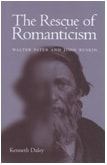
The Rescue of Romanticism
Walter Pater and John RuskinKenneth Daley
Ohio University Press, 2001
Valuable and timely in its long historical and critical perspective on the legacy of romanticism to Victorian art and thought, The Rescue of Romanticism is the first book-length study of the close intellectual relationship between Walter Pater and John Ruskin, the two most important Victorian critics of art. Kenneth Daley explores the work and thought of both writers in context with other Victorian writers, and enlarges the issues at stake between them, connecting these issues to ongoing artistic, cultural, and political concerns of the modern world.
Professor Daley gives a more finely honed picture than ever before of romanticism’s emergence as a literary concept in Victorian England, detailing the political differences that characterize the opposition between John Ruskin and his younger contemporary, Walter Pater, over the nature of romanticism. Individual chapters reassess the Victorian reception of such romantic figures as Wordsworth, Dante Gabriel Rossetti, Leonardo, and Michelangelo.
Daley demonstrates how Pater’s “modern” reading of romanticism emerged from Ruskin’s distrust of romanticism and from Ruskin’s arguments and examples defining pathetic fallacy. His discussion of Ruskin’s Oxford lectures and their timing in Pater’s developing career refresh the intersections of the two bodies of work and the portrait of the Victorian period in general.
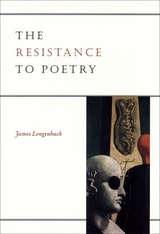
The Resistance to Poetry
James Longenbach
University of Chicago Press, 2005
But the resistance to poetry is quite specifically the wonder of poetry. Considering a wide array of poets, from Virgil and Milton to Dickinson and Glück, Longenbach suggests that poems convey knowledge only inasmuch as they refuse to be vehicles for the efficient transmission of knowledge. In fact, this self-resistance is the source of the reader's pleasure: we read poetry not to escape difficulty but to embrace it.
An astute writer and critic of poems, Longenbach makes his case through a sustained engagement with the language of poetry. Each chapter brings a fresh perspective to a crucial aspect of poetry (line, syntax, figurative language, voice, disjunction) and shows that the power of poetry depends less on meaning than on the way in which it means—on the temporal process we negotiate in the act of reading or writing a poem. Readers and writers who embrace that process, Longenbach asserts, inevitably recoil from the exaggeration of the cultural power of poetry in full awareness that to inflate a poem's claim on our attention is to weaken it.
A graceful and skilled study, The Resistance to Poetry honors poetry by allowing it to be what it is. This book arrives at a critical moment—at a time when many people are trying to mold and market poetry into something it is not.