Results by title
18284 books match the query 'United States' and 3764 start with t
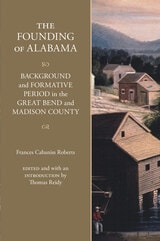
The Founding of Alabama
Background and Formative Period in the Great Bend and Madison CountyFrances Cabaniss Roberts, edited and introduced by Thomas Reidy
University of Alabama Press, 2020
The most thorough history of Alabama’s Madison County region, widely available for the first time
The 1956 dissertation by Frances Cabaniss Roberts is a classic text on Alabama history that continues to be cited by southern historians. Roberts was the first woman to earn a PhD from the University of Alabama’s history department. In the 1950s, she was the only full-time faculty member at what is now the University of Alabama in Huntsville, where she was appointed chair of the history department in 1966.
Roberts’s dissertation, “Background and Formative Period in the Great Bend and Madison County,” remains the most thorough history of the region yet produced. While certainly a product of its era, Roberts work is visionary in its own way and offers a useful look at Alabama’s rise to statehood. Thomas Reidy, editor of this edition, has kept Roberts’s words intact except for correction of minor typographical errors and helpful additions to the notes and citations. His introduction describes both the value of Roberts’s decades of service to UAH and the importance of her dissertation over time. While highlighting the great intrinsic value of Roberts’s research and writing, Reidy also notes its significance in demonstrating how the practice of history—its methods, priorities, and values—has evolved over the intervening decades.
In her examination of Madison County, Roberts spotlights exemplars of civic performance and good community behavior, giving readers one of the earliest accountings of the antebellum southern middle class. Unlike many historians of her time, Roberts displays an interest in both the “common folks” and leaders who built the region—rural and urban—and created the institutions that shaped Madison County. She examines the contributions of merchants, shopkeepers, lawyers, doctors, architects, craftsmen, planters, farmers, elected and appointed officials, board members, and entrepreneurs.

The Fourth Amendment
Original Understandings and Modern PolicingMichael J.Z. Mannheimer
University of Michigan Press, 2023
Police are required to obey the law. While that seems obvious, courts have lost track of that requirement due to misinterpreting the two constitutional provisions governing police conduct: the Fourth and Fourteenth Amendments. The Fourth Amendment forbids "unreasonable searches and seizures" and is the source of most constitutional constraints on policing. Although that provision technically applies only to the federal government, the Fourteenth Amendment, ratified in the wake of the Civil War, has been deemed to apply the Fourth Amendment to the States.
This book contends that the courts’ misinterpretation of these provisions has led them to hold federal and state law enforcement mistakenly to the same constitutional standards. The Fourth Amendment was originally understood as a federalism, or “states’ rights,” provision that, in effect, required federal agents to adhere to state law when searching or seizing. Thus, applying the same constraint to the States is impossible. Instead, the Fourteenth Amendment was originally understood in part as requiring that state officials (1) adhere to state law, (2) not discriminate, and (3) not be granted excessive discretion by legislators. These principles should guide judicial review of modern policing. Instead, constitutional constraints on policing are too strict and too forgiving at the same time. In this book, Michael J.Z. Mannheimer calls for a reimagination of what modern policing could look like based on the original understandings of the Fourth and Fourteenth Amendments.
The Fourth Great Awakening and the Future of Egalitarianism
Robert William Fogel
University of Chicago Press, 2000
"To take a trip around the mind of Robert Fogel, one of the grand old men of American economic history, is a rare treat. At every turning, you come upon some shiny pearl of information."—The Economist
In this broad-thinking and profound piece of history, Robert William Fogel synthesizes an amazing range of data into a bold and intriguing view of America's past and future—one in which the periodic Great Awakenings of religion bring about waves of social reform, the material lives of even the poorest Americans improve steadily, and the nation now stands poised for a renewed burst of egalitarian progress.
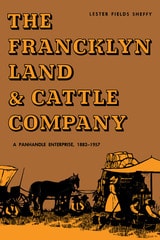
The Francklyn Land & Cattle Company
A Panhandle Enterprise, 1882-1957By Lester Fields Sheffy
University of Texas Press, 1963
An intensive study of a large Texas ranch, particularly of its business and financial aspects, in which the author has utilized many company records and firsthand accounts by the men who were engaged in the difficult task of establishing and maintaining a major cattle and land operation in wild, relatively isolated, semidesert country.
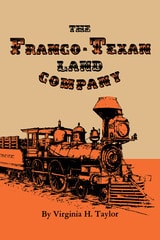
The Franco-Texan Land Company
By Virginia H. Taylor
University of Texas Press, 1969
The Franco-Texan Land Company was formed, ostensibly, by the French bondholders of the Memphis, El Paso, and Pacific Railroad in an attempt to salvage their investments through sale of lands in the railroad's Texas land grant. Most of the land company's wealth, however, went into the pockets of unscrupulous local managers and directors, and another railroad eventually built a road across Texas along the Memphis, El Paso, and Pacific right of way.
Despite their unsavory histories, the land company and its railroad parent played an important part in the development of Northwest Texas. Virginia Taylor's account of their activities furthers the study of the role of land companies in the settlement of the United States and adds interesting sidelights on one of the immigrant groups that left the imprint of Europe on frontier Texas.

The Freak-garde
Extraordinary Bodies and Revolutionary Art in AmericaRobin Blyn
University of Minnesota Press, 2013
Since the 1890s, American artists have employed the arts of the freak show to envision radically different ways of being. The result is a rich avant-garde tradition that critiques and challenges capitalism from within.
The Freak-garde traces the arts of the freak show from P. T. Barnum to Matthew Barney and demonstrates how a form of mass culture entertainment became the basis for a distinctly American avant-garde tradition. Exploring a wide range of writers, filmmakers, photographers, and artists who have appropriated the arts of the freak show, Robin Blyn exposes the disturbing power of human curiosities and the desires they unleash. Through a series of incisive and often startling readings, Blyn reveals how such figures as Mark Twain, Djuna Barnes, Tod Browning, Lon Chaney, Nathanael West, and Diane Arbus use these desires to propose alternatives to the autonomous and repressed subject of liberal capitalism. Blyn explains how, rather than grounding revolutionary subjectivities in imaginary realms innocent of capitalism, freak-garde works manufacture new subjectivities by exploiting potentials inherent to capitalism.
Defying conventional wisdom, The Freak-garde ultimately argues that postmodernism is not the death of the avant-garde but the inheritor of a vital and generative legacy. In doing so, the book establishes innovative approaches to American avant-garde practices and embodiment and lays the foundation for a more nuanced understanding of the disruptive potential of art under capitalism.

The Free List
Property Without TaxesAlfred Balk
Russell Sage Foundation, 1971
The Freedmen's Bureau and Black Texans
By Barry A. Crouch
University of Texas Press, 1992
The Freedom Quilting Bee
Folk Art and the Civil Rights MovementNancy Callahan
University of Alabama Press, 2005
The original book on the renowned Freedom quilters of Gee's Bend - stitching justice, one quilt at a time.
In December of 1965, the year of the Selma-to-Montgomery march, a white Episcopal priest driving through a desperately poor, primarily black section of Wilcox County found himself at a great bend of the Alabama River. He noticed a cabin clothesline from which were hanging three magnificent quilts unlike any he had ever seen. They were of strong, bold colors in original, op-art patterns—the same art style then fashionable in New York City and other cultural centers. An idea was born and within weeks took on life, in the form of the Freedom Quilting Bee, a handcraft cooperative of black women artisans who would become acclaimed throughout the nation.
The Freedom to Remember
Narrative, Slavery, and Gender in Contemporary Black Women's FictionMitchell, Angelyn
Rutgers University Press, 2002
The Freedom to Remember examines contemporary literary revisions of slavery in the United States by black women writers. The narratives at the center of this book include: Octavia E. Butler’s Kindred, Sherley Anne Williams’s Dessa Rose, Toni Morrison’s Beloved, J. California Cooper’s Family, and Lorene Cary’s The Price of a Child.
Recent studies have investigated these works only from the standpoint of victimization. Angelyn Mitchell changes the conceptualization of these narratives, focusing on the theme of freedom, not slavery, defining these works as “liberatory narratives.” These works create a space to problematize the slavery/freedom dichotomy from which contemporary black women writers have the “safe” vantage point to reveal aspects of enslavement that their ancestors could not examine. The nineteenth-century female emancipatory narrative, by contrast, was written to aid the cause of abolition by revealing the unspeakable realitiesof slavery. Mitchell shows how the liberatory narrative functions to emancipate its readers from the legacies of slavery in American society: by facilitating a deeper discussion of the issues and by making them new through illumination and interrogation.

The Freethinker’s Daughter
A NovelJenny O'Neill
Ohio University Press, 2022
This historical and inspiring coming-of-age novel for young readers explores topics of both historical and contemporary relevance as it follows a harrowing year in the life of its intrepid teenaged narrator.
Lexington, Kentucky, 1833: Calendula “Cal” Farmer, a thirteen-year-old white girl, has been raised by her abolitionist, freethinking mother to reason for herself, consult her inner wisdom, and come to her own conclusions. But when a flash flood devastates her family’s home, Cal is unexpectedly thrust into domestic service in a wealthy family’s mansion. There, she encounters firsthand the physical, intellectual, and emotional brutalities of slavery. Later, a cholera outbreak kills a quarter of the population, including Cal’s mother, and Cal enters an orphanage, where she bravely begins another chapter in her young life.
Cal’s story is sure to captivate readers as she confronts the injustices and uncertainties of racism, class consciousness, epidemic disease, and personal loss with independent thinking, perseverance, and love.
The French in Texas
History, Migration, CultureEdited by François Lagarde
University of Texas Press, 2003
2005 — San Antonio Conservation Society Citation
Original articles that explore the French presence and influence on Texas history, arts, education, religion, and business.
The flag of France is one of the six flags that have flown over Texas, but all that many people know about the French presence in Texas is the ill-fated explorer Cavelier de La Salle, fabled pirate Jean Laffite, or Cajun music and food. Yet the French have made lasting contributions to Texas history and culture that deserve to be widely known and appreciated. In this book, François Lagarde and thirteen other experts present original articles that explore the French presence and influence on Texas history, arts, education, religion, and business from the arrival of La Salle in 1685 to 2002.
Each article covers an important figure or event in the France-Texas story. The historical articles thoroughly investigate early French colonists and explorers, the French pirates and privateers, the Bonapartists of Champ-d'Asile, the French at the Alamo, Dubois de Saligny and French recognition of the Republic of Texas, the nineteenth-century utopists of Icaria and Reunion, and the French Catholic missions. Other articles deal with French immigration in Texas, including the founding of Castroville, Cajuns in Texas, and the French economic presence in Texas today (the first such study ever published). The remaining articles look at painters Théodore and Marie Gentilz, sculptor Raoul Josset, French architecture in Texas, French travelers from Théodore Pavie to Simone de Beauvoir who have written on Texas, and the French heritage in Texas education. More than seventy color and black-and-white illustrations complement the text.
The French-Canadian Heritage in New England
Gerard J. Brault
University Press of New England, 1986
The Frontier in American History
Frederick Jackson Turner
University of Arizona Press, 1986
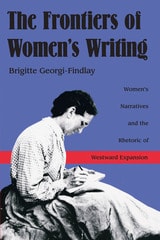
The Frontiers of Women's Writing
Women's Narratives and the Rhetoric of Westward ExpansionBrigitte Georgi-Findlay
University of Arizona Press, 1996
Brigitte Georgi-Findlay presents a range of writings that reflects the diversity of the western experience. Beginning with the narratives of Caroline Kirkland and other women of the early frontier, she reviews the diaries of the overland trails; letters and journals of the wives of army officers during the Indian wars; professional writings, focusing largely on travel, by women such as Caroline Leighton from the regional publishing cultures that emerged in the Far West during the last quarter of the century; and late-nineteenth- and early-twentieth-century accounts of missionaries and teachers on Indian reservations. Most of the writers were white, literate women who asserted their own kind of cultural authority over the lands and people they encountered. Their accounts are not only set in relation to a masculine frontier myth but also investigated for clues about their own involvement with territorial expansion. By exploring the various ways in which women writers actively contributed to and at times rejected the development of a national narrative of territorial expansion based on empire building and colonization, the author shows how their accounts are implicated in expansionist processes at the same time that they formulate positions of innocence and detachment.
Georgi-Findlay has drawn on American studies scholarship, feminist criticism, and studies of colonial discourse to examine the strategies of women's representation in writing about the West in ways that most theorists have not. She critiques generally accepted stereotypes and assumptions--both about women's writing and its difference of view in particular, and about frontier discourse and the rhetoric of westward expansion in general--as she offers a significant contribution to literary studies of the West that will challenge scholars across a wide range of disciplines.

The Frugal Librarian
Carol American Library Association
American Library Association, 2011
The Fugitive's Properties
Law and the Poetics of PossessionStephen M. Best
University of Chicago Press, 2004
Best also argues that legal principles dealing with fugitives and indebted persons provided a sophisticated precursor to intellectual property law as it dealt with rights in appearance, expression, and other abstract aspects of personhood. In this conception of property as fleeting, indeed fugitive, American law preserved for much of the rest of the century slavery's most pressing legal imperative: the production of personhood as a market commodity. By revealing the paradoxes of this relationship between fugitive slave law and intellectual property law, Best helps us to understand how race achieved much of its force in the American cultural imagination. A work of ambitious scope and compelling cross-connections, The Fugitive's Properties sets new agendas for scholars of American literature and legal culture.
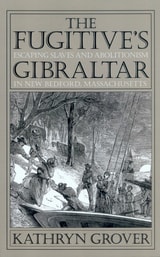
The Fugitive’s Gibraltar
Escaping Slaves and Abolitionism in New Bedford, MassachusettsKathryn Grover
University of Massachusetts Press, 2001
The Fugitive's Gibraltar is a richly researched work of social and cultural history that examines the city of New Bedford, Massachusetts as one of the most important and welcoming refuges for freedom-seeking enslaved people in antebellum America. The book's title derives from the phrase used by Frederick Douglass—himself among the most famous of New Bedford's many fugitive residents—to describe the city's reputation as a place of relative safety and freedom for Black Americans fleeing enslavement in the South.
Grover draws on an extraordinary breadth of primary sources to reconstruct the lives of fugitive slaves who came to New Bedford before the Civil War, as well as the city's larger African American community and the white and Black abolitionists who worked alongside them. The book explores how New Bedford's booming whaling economy—which depended heavily on Black labor and offered Black sailors wages equal to those of white sailors—created economic and social conditions unusually hospitable to free and freedom-seeking Black people. New Bedford's maritime character is thus deeply intertwined with its abolitionist identity.
The work examines the networks of people and organizations that sheltered, employed, and advocated for fugitives; traces individual stories of escape and resettlement; and situates New Bedford's experience within the broader national struggle over slavery, the Fugitive Slave Acts, and the abolitionist movement. Notable figures discussed include Frederick Douglass and Henry "Box" Brown. The book also sheds light on the daily lives, livelihoods, and community institutions of New Bedford's African American population—their churches, mutual aid societies, and social networks—providing a nuanced portrait of Black life in a northern city during this turbulent era.
The Full Gospel in Zion
A History of Pentecostalism in UtahAlan J. Clark
University of Utah Press, 2022
In The Full Gospel in Zion, Alan J. Clark explores the dynamic history of Pentecostalism in Utah. Although the story of Pentecostalism now spans the globe, there is no previous study of its growth and development among the mountains and valleys of the Beehive State. This book recovers and reveals the identities of the earliest Pentecostal pioneers across the state and places the founding churches within the historical narrative of Utah religion in the twentieth and early twenty-first centuries.
Utah Pentecostals faced difficulties establishing churches and congregations in a region dominated by a Latter-day Saint majority. Pentecostals found that they shared surprising similarities in belief but faced unexpected obstacles in evangelism, as Latter-day Saints did not respond as other Christians did to the Pentecostal message. Clark draws from interviews conducted with church leaders and congregants and from the rich documentary record to show Utah Pentecostals’ perseverance in creating a strong foothold in Utah. His work offers a new look at the diversity and richness of Utah’s religious history.

The Fundamental Institution
Poverty, Social Welfare, and Agriculture in American Poor FarmsMegan Birk
University of Illinois Press, 2022
In-depth and innovative, The Fundamental Institution offers an overdue portrait of rural social welfare in the United States.
The Fundamentals of Campaign Finance in the U.S.
Why We Have the System We HaveDiana Dwyre and Robin Kolodny
University of Michigan Press, 2024
The Fundamentals of Campaign Finance in the U.S. takes care to situate the campaign finance system in the context of the broader U.S. political and economic system. Dwyre and Kolodny offer readers a brief tour through the development of the campaign finance regulatory structure, highlighting the Supreme Court’s commitment to free speech over political equality from Buckley v. Valeo (1976) through the passage of the Bipartisan Campaign Reform Act (BCRA, 2002). They also examine the driving force behind campaign finance reform—corruption—through historical, transactional, and institutional perspectives. While diving into the insufficiency of the disclosure and enforcement of campaign finance laws and calling attention to multiple federal agencies, including the Securities and Exchange Commission, the Federal Communications Commission, the Internal Revenue Service, and (principally) the Federal Election Commission, the authors show how a narrow view on campaign finance makes change difficult and why reforms often have limited success. By examining the fundamentals, Dwyre and Kolodny show the difficulties of changing a political system whose candidates have always relied on private funding of campaigns to one that guarantees free speech rights while minimizing concerns of corruption.

The Funding of Scientific Racism
Wickliffe Draper and the Pioneer FundWilliam H. Tucker
University of Illinois Press, 2001

The Fur Trade Revisited
Selected Papers of the Sixth North American Fur Trade Conference, Mackinac Island, Michigan, 1991Jo-Anne Fisk
Michigan State University Press, 1994

The Future Academic Librarians Toolkit
FindingMegan Hodge
Assoc of College & Research Libraries, 2019
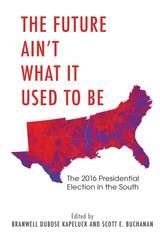
The Future Ain't What It Used to Be
The 2016 Presidential Election in the SouthBranwell DuBose Kapeluck
University of Arkansas Press, 2018
The Future Ain’t What It Used to Be details how the 2016 presidential election developed in the eleven states that make up the South. Preeminent scholars of Southern politics analyze this momentous election, including the issues that drove southern voters, the nomination process in early 2016, and where the region may be headed politically in the Trump era. In addition, each state chapter includes analysis on notable congressional races and important patterns within the states.
This new edited volume will be an important tool for scholars, and also journalists and political enthusiasts seeking a deeper understanding of contemporary southern electoral politics.
The Future City on the Inland Sea
A History of Imaginative Geographies of Lake SuperiorEric D. Olmanson
Ohio University Press, 2007
Winner of the AAG’s John Brinckerhoff Jackson Prize
Winner of the Great Lakes American Studies Association/Ohio University Press Book Award
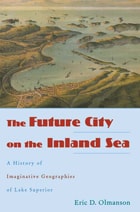
Throughout the nineteenth century, the southern shores of Lake Superior held great promise for developers imagining the next great metropolis. These new territories were seen as expanses to be filled, first with romantic visions, then with scientific images, and later with vistas designed to entice settlement and economic development. The Future City on the Inland Sea describes the attempts of explorers under government, commercial, or scientific sponsorship to project their imaginative visions on a region where the future did not happen as planned.
Author Eric D. Olmanson takes a fresh look at the settlements in the vicinity of Chequamegon Bay and the Apostle Islands by analyzing the texts and images left by the missionaries, geologists, ordinance surveyors, newspaper editors, and boosters. The Future City on the Inland Sea shows how new visions of the place absorbed and replaced the old ones, eventually producing what might be called for the first time “a region.”
More than a regional geography, The Future City on the Inland Sea is an appraisal of these early efforts to meld geographies of physical nature with those of human ideals, a demonstration of how thoroughly and paradoxically those two realms are entangled.
The Future of Academic Freedom
Edited by Louis Menand
University of Chicago Press, 1996
"Louis Menand has assembled The Future of Academic Freedom to better define and delineate what should and should not happen within our colleges and universities. . . . The whole extremely learned yet accessible debate exploits the freedoms it extols, tackling sensitive subjects such as ethnicity and ethics head-on."—Publishers Weekly
"The essays are not only sharp, elegant and lucid, but extremely well-informed about the history of American battles over academic freedom."—Alan Ryan, Times Higher Education Supplement
"[A] superb inquiry into some of the most vexing and significant issues in higher education today."—Zachary Karabell, Boston Book Review
The Future of American Democratic Politics
Principles and PracticesPomper, Gerald M
Rutgers University Press, 2003
In this book, fifteen major scholars assess the current state of American democracy, offering a spirited dialogue on the future of democratic politics. Contributors focus on three principles fundamental to democracyequality, liberty, and participation. They examine these principles within the context of the basic institutions of American democracy: Congress and the state legislatures, the president, political parties, interest groups, and the Supreme Court. They raise questions regarding the checks and balances among formal governmental institutions as well as the role of political parties and interest groups.
Topics discussed include the incomplete mobilization of the electorate, the debates over campaign finance reform and term limits, the Supreme Courts activist role in the Florida recount, the dangers of teledemocracy and state initiatives, the separation of political participation from residential location, "identity politics," the clash of "negative" and "positive" liberty, and the prospects for personal freedom in an era of terrorist threats.
This timely collection covers the issues relevant to the future of American democracy today not only for lawmakers, students, and historians, but for any concerned citizen.
The Future of Conservation in America
A Chart for Rough WaterGary E. Machlis and Jonathan B. Jarvis
University of Chicago Press, 2018
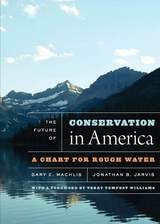
Written by the first scientist appointed as science advisor to the director of the National Park Service and the eighteenth director of the National Park Service, this is a candid, passionate, and ultimately hopeful book. The authors describe a unified vision of conservation that binds nature protection, historical preservation, sustainability, public health, civil rights and social justice, and science into common cause—and offer real-world strategies for progress. To be read, pondered, debated, and often revisited, The Future of Conservation in America is destined to be a touchstone for the conservation movement in the decades ahead.
The Future of Democracy
Developing the Next Generation of American CitizensPeter Levine
University Press of New England, 2015

The Future of Germanistik in the USA
Changing Our ProspectsJohn A. McCarthy
Vanderbilt University Press, 1996

The Future of Healthcare Reform in the United States
Edited by Anup Malani and Michael H. Schill
University of Chicago Press, 2015
In the years since the passage of the Patient Protection and Affordable Care Act (PPACA, or, colloquially, Obamacare), most of the discussion about it has been political. But as the politics fade and the law's many complex provisions take effect, a much more interesting question begins to emerge: How will the law affect the American health care regime in the coming years and decades?
This book brings together fourteen leading scholars from the fields of law, economics, medicine, and public health to answer that question. Taking discipline-specific views, they offer their analyses and predictions for the future of health care reform. By turns thought-provoking, counterintuitive, and even contradictory, the essays together cover the landscape of positions on the PPACA's prospects. Some see efficiency growth and moderating prices; others fear a strangling bureaucracy and spiraling costs. The result is a deeply informed, richly substantive discussion that will trouble settled positions and lay the groundwork for analysis and assessment as the law's effects begin to become clear.

The Future of Meta-Analysis
Kenneth W. Wachter
Russell Sage Foundation, 1990
The Future of National Urban Policy
Marshall Kaplan, ed.
Duke University Press, 1989
The Future of the Family
Daniel Patrick Moynihan
Russell Sage Foundation, 2004
The Future of the Voting Rights Act
David Epstein
Russell Sage Foundation, 2006
The Futures of American Studies
Donald E. Pease and Robyn Wiegman, eds.
Duke University Press, 2002
Contributors. Lindon Barrett, Nancy Bentley, Gillian Brown, Russ Castronovo, Eric Cheyfitz, Michael Denning, Winfried Fluck, Carl Gutierrez-Jones, Dana Heller, Amy Kaplan, Paul Lauter, Günter H. Lenz, George Lipsitz, Lisa Lowe, Walter Benn Michaels, José Estaban Muñoz, Dana D. Nelson, Ricardo L. Ortiz, Janice Radway, John Carlos Rowe, William V. Spanos
The GREAT DEBATE ON BANKING REFORM
Nelson Aldrich and the Origins of the FedElmus Wicker
The Ohio State University Press, 2005

The Gaither Committee, Eisenhower, and the Cold War
EISENHOWER & COLD WARDavid L. Snead
The Ohio State University Press, 1998
The Galveston Era
The Texas Crescent on the Eve of SecessionBy Earl Wesley Fornell
University of Texas Press, 1961
The "Queen City" of Texas they called her—or the "Octopus of the Gulf." Galveston from 1845 to 1860 was the center of culture in Texas—or the monster with an economic strangle hold on all Texas trade. It was a gracious city with wide paved streets, impressive buildings, and neat gardens; yet it was also a pestilence-ridden place where no sanitary code was ever enforced and where one in every two children died before reaching maturity. Its citizens, avid for culture and knowledge, attended concerts and plays in great numbers and exhibited an eager interest in science and history; yet they could not be brought to support the school system. Galveston was a city where no person in need was ever left uncared for, where the sick and needy—strangers or friends—were succoured; yet no free Negro was safe from legalized abduction and forced enslavement, and the city served as a center for the revived African slave trade.
Earl Fornell makes the charming, colorful, cosmopolitan, contradictory city of Galveston the focal point of his study of the Texas Gulf Coast on the eve of the Civil War. The years 1845-1860 were crucial for this area; during that period the economy became more and more dependent upon slave labor, and thus the stage was set for secession.
Dr. Fornell describes with clarity the interrelated events, the decisions, and the conflicts that went into the development of Galveston and the Texas Gulf Coast during these years. He portrays the people and their way of life. He introduces us to some of the notables who helped to shape the destiny of Texas: Sam Houston, the old general; Lorenzo Sherwood, the golden-tongued propounder of radical economic doctrines; Willard Richardson, Hamilton Stuart, Ferdinand Flake, and Edward Cushing, the newspapermen whose writing both reflected and guided the thought of their fellow citizens; Arthur Lynn, the British consul whose observing and compassionate nature brought him onto the stage of Galveston history with striking frequency and whose voluminous letters provide a rich source for historical details; and William Ballinger, a minor player on the stage but one whose conscience and interests mirrored those of many other thoughtful Galvestonians.
Always present, affecting and affected by virtually every aspect of life on the Coast, the slave-labor problem grew ever more acute as the expanding railroad system laid more and more of the land open for development. Dr. Fornell shows with keen insight how it eventually forced Texans into a position where conflict with the federal government was unavoidable and the decision to secede from the Union inevitable.
The late Earl W. Fornell, a native of Wisconsin, held B.A. and M.A. degrees in political science from the New School for Social Research, the M.A. degree in political history from Columbia University, and the Ph.D. degree in political history from Rice University. He taught at Columbia, Amarillo College, Rice, and Lamar State College of Technology.
The Gambler King of Clark Street
Michael C. McDonald and the Rise of Chicago's Democratic MachineRichard C. Lindberg with a Foreword by John Miya.
Southern Illinois University Press, 2009
The Gambler King of Clark Street tells the story of a larger-than-life figure who fused Chicago’s criminal underworld with the city’s political and commercial spheres to create an urban machine built on graft, bribery, and intimidation. Lindberg vividly paints the life of the Democratic kingmaker against the wider backdrop of nineteenth-century Chicago crime and politics.
McDonald has long been cited in the published work of city historians, members of academia, and the press as the principal architect of a unified criminal enterprise that reached into the corridors of power in Chicago, Cook County, the state of Illinois, and ultimately the Oval Office. The Gambler King of Clark Street is both a major addition to Chicago’s historical literature and a revealing biography of a powerful and troubled man.
Illinois State Historical Society Scholarly Award, Certificate of Excellence, 2009
Society of Midland Authors Biography Award, 2009

The Gang
A Study of 1,313 Gangs in ChicagoFrederic Milton Thrasher
University of Chicago Press, 1963
While gangs and gang culture have been around for countless centuries, The Gang is one of the first academic studies of the phenomenon. Originally published in 1927, Frederic Milton Thrasher’s magnum opus offers a profound and careful analysis of hundreds of gangs in Chicago in the early part of the twentieth century. With rich prose and an eye for detail, Thrasher looked specifically at the way in which urban geography shaped gangs, and posited the thesis that neighborhoods in flux were more likely to produce gangs. Moreover, he traced gang culture back to feudal and medieval power systems and linked tribal ethos in other societies to codes of honor and glory found in American gangs. Thrasher approaches his subject with empathy and insightfulness, and creates a multifaceted and textured portrait that still has much to offer to readers today. With handsome images that evoke the era, this unabridged edition of The Gang not only explores an important moment in the history of Chicago, but also is itself a landmark in the history of sociology and subcultural theory.

The Gap Years
Climbing, Skiing, and the Journey BackTom French
Brandeis University Press, 2026
At the end of 2019, Tom French retired from a four-decade career in business, determined to return to interests that had defined his youth and see what meaning they still held. One of these interests was mountaineering. Another was adventure travel, with a particular focus on Nepal. A third was cross-country ski racing. Having taken “gap years” between school and university, and again before he started work, he decided to take a gap year before settling into the expectations of retirement. One year turned into three as he rebuilt his athletic strength, competed in cross-country ski marathons, and climbed some of the world’s highest mountains, including two expeditions to Mount Everest. On the first Everest climb, a cyclone forced him to turn around high on the mountain and descend the treacherous Lhotse Face in a blizzard. On the second, he approached the mountain through the remote Makalu Barun region, the first climber ever to do so, and climbed to the summit on a moonlit night.
But this is a book about much more than Everest. It is about beauty and joy found in wild places, about cross-country ski racing and mountaineering more broadly, and—most of all—about a journey to find meaning in life and reconnect with the passions of youth.
The Garden in Which I Walk
Karen Brennan
University of Alabama Press, 2004
The Garnsey Spring Campsite
Late Prehistoric Occupation in Southeastern New MexicoWilliam J. Parry and John D. Speth
University of Michigan Press, 1984
The Gateway to the Pacific
Japanese Americans and the Remaking of San FranciscoMeredith Oda
University of Chicago Press, 2018
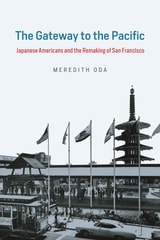
Focusing on the development of the Center, Meredith Oda shows how this multilayered story was embedded within a larger story of the changing institutions and ideas that were shaping the city. During these formative decades, Oda argues, San Francisco’s relations with and ideas about Japan were being forged within the intimate, local sites of civic and community life. This shift took many forms, including changes in city leadership, new municipal institutions, and especially transformations in the built environment. Newly friendly relations between Japan and the United States also meant that Japanese Americans found fresh, if highly constrained, job and community prospects just as the city’s African Americans struggled against rising barriers. San Francisco’s story is an inherently local one, but it also a broader story of a city collectively, if not cooperatively, reimagining its place in a global economy.
The Gay Rights Question in Contemporary American Law
Andrew Koppelman
University of Chicago Press, 2002
The Gay Rights Question in Contemporary American Law offers an unusually nuanced analysis of the most pressing gay rights issues. Does antigay discrimination violate the Constitution? Is there any sound moral objection to homosexual conduct? Are such objections the moral and constitutional equivalent of racism? Must state laws recognizing same-sex unions be given effect in other states? Should courts take account of popular resistance to gay equality? Koppelman sheds new light on all these questions. Sure to upset purists on either side of the debate, Koppelman's book criticizes the legal arguments advanced both for and against gay rights. Just as important, it places these arguments in broader moral and social contexts, offering original, pragmatic, and workable legal solutions.
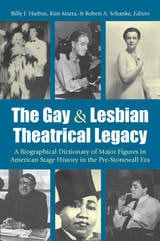
The Gay and Lesbian Theatrical Legacy
A Biographical Dictionary of Major Figures in American Stage History in the Pre-Stonewall EraBilly J. Harbin, Kim Marra, and Robert A. Schanke, Editors
University of Michigan Press, 2005
“A superb tribute to theatrical pioneers—The Gay and Lesbian Theatrical Legacy is required reading for both theatre scholars and gay/lesbian/bisexual history aficionados. A fascinating journey awaits them all in this highly recommended volume.”
—Broadside: Newsletter of the Theatre Library Association
The Gay and Lesbian Theatrical Legacy collects in a single volume biographies of more than one hundred notable figures whose careers flourished in the years before the 1969 Stonewall Riots marked the beginning of the gay and lesbian civil rights movement in the United States. The leading lights in American theater have included innumerable individuals whose sexualities have deviated from prevailing norms, but this history has until recently been largely unwritten and unknown. This book contributessignificantly to the recovery of this history, fashioning a much fuller, more nuanced portrait of American theater as it evolved and shedding light on the influence that sexual desire may have had on professional choices, relationships, and artistic achievements.
The Gay and Lesbian Theatrical Legacy collects biographies and portraits of influential actors, playwrights, composers, directors, designers, dancers, producers, managers, critics, choreographers, and technicians who made their mark on the American theater. Its broad coverage provides an extended glimpse into lives and careers that intersected and into networks of affiliation that made theatrical history and, by extension, social and cultural history.
The late Billy J. Harbin was Professor of Theater, Louisiana State University. Kim Marra is Associate Professor of Theater, University of Iowa. Robert A. Schanke is Professor of Theater Emeritus, Central College, Pella, Iowa.

The Gee Years, 2007–2013
Herbert B. Asher
The Ohio State University Press, 2022
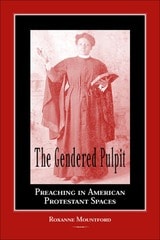
The Gendered Pulpit
Preaching in American Protestant SpacesRoxanne Mountford
Southern Illinois University Press, 2005
In this feminist investigation into the art of preaching—one of the oldest and least studied rhetorical traditions—Roxanne Mountford explores the relationship between bodies, space, race, and gender in rhetorical performance and American Protestant culture. Refiguring delivery and physicality as significant components of the rhetorical situation, The Gendered Pulpit: Preaching in American Protestant Spaces examines the strategies of three contemporary women preachers who have transgressed traditions, rearranged rhetorical space, and conquered gender bias to establish greater intimacy with their congregations.
Mountford’s examinations of the rhetoric inherent in preaching manuals from 1850 to the present provide insight into how “manliness” has remained a central concept in American preaching since the mid-nineteenth century. The manuals illustrate that the character, style, method of delivery, and theological purpose of preachers focused on white men and their cultural standing, leaving contemporary women preachers searching for ways to accommodate themselves to the physicality of preaching.
Three case studies of women preachers who have succeeded or failed in rearranging rhetorical space provide the foundation for the volume. These contemporary examples have important implications for feminist theology and also reveal the importance of gender, space, and bodies to studies of rhetoric in general. Mountford explores the geographies of St. John’s Lutheran Church and the preaching of Rev. Patricia O’Connor who reformed rhetorical space through the delivery of her sermons. At Eastside United Church of Christ, Mountford shows, Rev. Barbara Hill employed narrative style and prophetic utterance in the tradition of black preaching to address gender bias and institute change in her congregation. The final case study details the experiences of Pastor Janet Moore and her struggles at Victory Hills United Methodist Church, where the fractured congregation could not be united even with Pastor Moore’s focus on theological purpose and invention strategies.