Results by title
733 books match the query 'Environmental Conservation & Protection' and 151 start with t
The Pathless Way
Michael Cohen
University of Wisconsin Press, 1986
"A tour de force, a remarkable narrative of spiritual and political development. . . . [Cohen's] oft unanswered, and unanswerable, questions, his views of Muir's spiritual, intellectual, and political growth are insightful, challenging, and new. They deserve an audience with scholars and Muir devotees."—Shirley Sargent, Pacific Historian
In this powerful study, Michael Cohen captures as never before the powerful consciousness, vision, and legacy of the pioneering environmentalist John Muir. Ultimately, Cohen stresses, this ecological consciousness would generate an ecological conscience.
It was no longer enough for Muir to individually test and celebrate his enlightenment in the wild. His vision, he now felt, must lead to concrete action, and the result was a protracted campaign that stressed the ecological education of the American public, governmental protection of natural resources, the establishment of the National Parks, and the encouragement of tourism.
Anyone interested in environmental studies, in American history and literature, or in the future of our natural heritage will be drawn by the very bracing flavor of his wilderness odyssey, evoked here by one of his own—a twentieth-century mountaineer and literary craftsman.
The People's Own Landscape
Nature, Tourism, and Dictatorship in East GermanyScott Moranda
University of Michigan Press, 2014
East Germany’s Socialist Unity Party aimed to placate a public well aware of the higher standards of living enjoyed elsewhere by encouraging them to participate in outdoor activities and take vacations in the countryside. Scott Moranda considers East Germany’s rural landscapes from the perspective of both technical experts (landscape architects, biologists, and physicians) who hoped to dictate how vacationers interacted with nature, and the vacationers themselves, whose outdoor experience shaped their understanding of environmental change. As authorities eliminated traditional tourist and nature conservation organizations, dissident conservationists demanded better protection of natural spaces. At the same time, many East Germans shared their government’s expectations for economic development that had real consequences for the land. By the 1980s, environmentalists saw themselves as outsiders struggling against the state and a public that had embraced mainstream ideas about limitless economic growth and material pleasures.
The Pinon Pine
A Natural And Cultural HistoryRonald M. Lanner
University of Nevada Press, 1981
An engaging look at the history of the piñon pine and its ecosystem. Combining natural history and observations of the cultural importance of the tree to both native Indians and European settlers, Lanner provides information on the management of the tree and its interdependence with the birds and animals of the piñon-juniper woodland. Science, cultural history, and ecologicall issues, plus delicious recipes using the piñon pine nuts, make for a concise natural and cultural history of the piñon pine.
The Politics of Scale
A History of Rangeland ScienceNathan F. Sayre
University of Chicago Press, 2017
During the late 1880s and early 1890s, a variety of forces—from the Homestead Act of 1862 to the extermination of bison, foreign investment, and lack of government regulation—promoted free-for-all access to and development of the western range, with disastrous environmental consequences. To address the crisis, government agencies turned to scientists, but as Nathan F. Sayre shows, range science grew in a politically fraught landscape. Neither the scientists nor the public agencies could escape the influences of bureaucrats and ranchers who demanded results, and the ideas that became scientific orthodoxy—from fire suppression and predator control to fencing and carrying capacities—contained flaws and blind spots that plague public debates about rangelands to this day. Looking at the global history of rangeland science through the Cold War and beyond, The Politics of Scale identifies the sources of past conflicts and mistakes and helps us to see a more promising path forward, one in which rangeland science is guided less by capital and the state and more by communities working in collaboration with scientists.
The Porch
Meditations on the Edge of NatureCharlie Hailey
University of Chicago Press, 2021
Hailey writes from a modest porch on the Homosassa River in Florida. He sleeps there, studies the tides, listens for osprey and manatee, welcomes shipwrecked visitors, watches shadows on its screens, reckons with climate change, and reflects on his own acclimation to his environment. The profound connections he unearths anchor an armchair exploration of past porches and those of the future, moving from ancient Greece to contemporary Sweden, from the White House roof to the Anthropocene home. In his ruminations, he links up with other porch dwellers including environmentalist Rachel Carson, poet Wendell Berry, writers Eudora Welty and Zora Neale Hurston, philosopher John Dewey, architect Louis Kahn, and photographer Paul Strand.
As close as architecture can bring us to nature, the porch is where we can learn to contemplate anew our evolving place in a changing world—a space we need now more than ever. Timeless and timely, Hailey’s book is a dreamy yet deeply passionate meditation on the joy and gravity of sitting on the porch.
The Price of Nuclear Power
Uranium Communities and Environmental JusticeMalin, Stephanie A.
Rutgers University Press, 2015
The Quest for the Golden Trout
Environmental Loss and America’s Iconic FishDouglas M. Thompson
University Press of New England, 2013
The Return of the Mexican Gray Wolf
Back to the BlueBobbie Holaday
University of Arizona Press, 2003
Inspired by the plight of the Mexican gray wolf, retiree Bobbie Holaday formed the citizens advocacy group Preserve Arizona's Wolves (P.A.WS.) in 1987 and embarked on a crusade to raise public awareness. She soon found herself in the center of a firestorm of controversy, with environmentalists taking sides against ranchers and neighbors against neighbors. This book tells her story for the first time, documenting her eleven-year effort to bring the gray wolf back to the Blue.
As Holaday quickly learned, ranchers exerted considerable control over the state legislature, and politicians in turn controlled decisions made by wildlife agencies. Even though the wolf had been listed as endangered since 1976, opposition to it was so strong that the Arizona Game and Fish Department had been unable to launch a recovery program. In The Return of the Mexican Gray Wolf, Holaday describes first-hand the tactics she and other ordinary citizens on the Mexican Wolf Recovery Team adopted to confront these obstacles. Enhanced with more than 40 photographs—32 in color—her account chronicles both the triumphs of reintroduction and the heartbreaking tragedies the wolves encountered during early phases.
Thanks to Holaday's perseverance, eleven wolves were released into the wild in 1998, and the Blue Range once again echoed with their howls. Her tenacity was an inspiration to all those she enlisted in the cause, and her story is a virtual primer for conservation activists on mobilizing at the grassroots level. The Return of the Mexican Gray Wolf shows that one person can make a difference in a seemingly hopeless cause and will engage all readers concerned with the preservation of wildlife.
All royalties go to the Mexican Wolf Trust Fund administered by the Arizona Game and Fish Department.
The Rights of Nature and the Testimony of Things
Literature and Environmental Ethics from Latin AmericaMark Anderson
Vanderbilt University Press, 2024
Drawing Native Amazonian thought into productive tension with a variety of posthumanist theoretical frameworks—ranging from Derrida’s conceptualization of passive decision and hospitality to biosemiotics, Karen Barad’s theorization of intra-activity, and Isabelle Stengers’ proposal for cosmopolitical diplomacy—Anderson analyzes literary works by Julio Cortázar, Clarice Lispector, José Eustasio Rivera, and Davi Kopenawa that reframe environmental ethics in terms of collective, multispecies work and reciprocal care and politics as a cosmopolitics of friendship rooted in diplomacy across difference. Finally, Anderson examines the points of connection and divergences between Latin American relational ontologies and Euro American posthumanist theories within Indigenous Latin American remodernization projects that reappropriate and repurpose ancestral practices as well as develop new technologies with the goal of forging alternative modernities compatible with a livable future for all species.
The Rights of Nature
A History of Environmental EthicsRoderick Frazier Nash
University of Wisconsin Press, 1989
Charting the history of contemporary philosophical and religious beliefs regarding nature, Roderick Nash focuses primarily on changing attitudes toward nature in the United States. His work is the first comprehensive history of the concept that nature has rights and that American liberalism has, in effect, been extended to the nonhuman world.
“A splendid book. Roderick Nash has written another classic. This exploration of a new dimension in environmental ethics is both illuminating and overdue.”—Stewart Udall
“His account makes history ‘come alive.’”—Sierra
“So smoothly written that one almost does not notice the breadth of scholarship that went into this original and important work of environmental history.”—Philip Shabecoff, New York Times Book Review
“Clarifying and challenging, this is an essential text for deep ecologists and ecophilosophers.”—Stephanie Mills, Utne Reader
The Rise of the American Conservation Movement
Power, Privilege, and Environmental ProtectionDorceta E. Taylor
Duke University Press, 2016

The Rise of the Green Left
Inside the Worldwide Ecosocialist MovementDerek Wall
Pluto Press, 2010
Climate change and other ecological ills are driving the creation of a grassroots global movement for change. From Latin America to Europe, Australia and China a militant movement merging red and green is taking shape.
Ecosocialists argue that capitalism threatens the future of humanity and the rest of nature. From indigenous protest in the Peruvian Amazon to the green transition in Cuba to the creation of red-green parties in Europe, ecosocialism is defining the future of left and green politics globally. Latin American leaders such as Morales and Chavez are increasingly calling for an ecosocialist transition.
Drawing on the work of key thinkers such as Joel Kovel and John Bellamy Foster, Derek Wall provides an unique insider view of how ecosocialism has developed and a practical guide to focused ecosocialist action. A great handbook for activists and engaged students of politics.
The River of Life
Sustainable Practices of Native Americans and Indigenous PeoplesMichael E. Marchand
Michigan State University Press, 2014
The River of the Mother of God
and other Essays by Aldo LeopoldAldo Leopold; Edited by J. Baird Callicott and Susan L. Flader
University of Wisconsin Press, 1992
His name is inextricably linked with a single work, A Sand County Almanac, a classic of natural history literature and the conservationist's bible. This book brings together the best of Leopold's essays.
The Road to El Cielo
Mexico's Forest in the CloudsBy Fred and Marie S. Webster
University of Texas Press, 2002
Hidden high in the Sierra de Guatemala mountain range of northeastern Mexico in the state of Tamaulipas is the northernmost tropical cloud forest of the Western Hemisphere. Within its humid oak-sweetgum woodlands, tropical and temperate species of plants and animals mingle in rare diversity, creating a mecca for birders and other naturalists.
Fred and Marie Webster first visited Rancho del Cielo, cloud forest home of Canadian immigrant Frank Harrison, in 1964, drawn by the opportunity to see such exotic birds as tinamous, trogons, motmots, and woodcreepers only 500 miles from their Austin, Texas, home. In this book, they recount their many adventures as researchers and tour leaders from their base at Rancho del Cielo, interweaving their reminiscences with a history of the region and of the struggle by friends from both sides of the border to have some 360,000 acres of the mountain declared an area protected from exploitation—El Cielo Biosphere Reserve. Their firsthand reporting, enlivened with vivid tales of the people, land, and birds of El Cielo, adds an engagingly personal chapter to the story of conservation in Mexico.

The Road to Love Canal
Managing Industrial Waste before EPABy Craig E. Colten and Peter N. Skinner
University of Texas Press, 1995
The toxic legacy of Love Canal vividly brought the crisis in industrial waste disposal to public awareness across the United States and led to the passage of the Superfund legislation in 1980. To discover why disasters like Love Canal have occurred and whether they could have been averted with knowledge available to waste managers of the time, this book examines industrial waste disposal before the formation of the Environmental Protection Agency in 1970.
Colten and Skinner build their study around three key questions. First, what was known before 1970 about the hazards of certain industrial wastes and their potential for causing public health problems? Second, what were the technical capabilities for treating or containing wastes during that time? And third, what factors other than technical knowledge guided the actions of waste managers before the enactment of explicit federal laws?
The authors find that significant information about the hazards of industrial wastes existed before 1970. Their explanations of why this knowledge did not prevent the toxic legacy now facing us will be essential reading for environmental historians and lawyers, public health personnel, and concerned citizens.
The Scars of Project 459
The Environmental Story of the Lake of the OzarksTraci Angel
University of Arkansas Press, 2014
The Scramble for the Amazon and the "Lost Paradise" of Euclides da Cunha
Susanna B. Hecht
University of Chicago Press, 2013
The Seasons Of Fire
Reflections On Fire In The WestDavid J. Strohmaier
University of Nevada Press, 2001
Fire is a fearsome constant in the America West. As the author David J. Strohmaier notes, "Whether we have tended a campfire along Oregon's Deschutes River in March, engaged the advancing front of a Great Basin wildfire in the torrid heat of August, or watched fire settle into the subdued, smoldering leaf piles of October, all of our lives, to one degree or another, are bracketed by fire." In The Seasons of Fire, Strohmaier effectively blends nature writing, personal essay, and philosophical analysis as he deliberately crosses disciplinary boundaries. He discusses the "moral" dimensions of fire—not only whether fires are good, bad, or indifferent phenomena, but also how fire, more generally understood, shapes meaning for human life. The consequences of discussing the moral side of fire speak directly to the contours of the human soul, and to our sense of our place on the land. Strohmaier, a long-term firefighter himself, includes accurate and sometimes gut-wrenching descriptions of the firefighter's experience.
The Secure and the Dispossessed
How the Military and Corporations Are Shaping a Climate-Changed WorldEdited by Nick Buxton and Ben Hayes
Pluto Press, 2015
The Secure and the Dispossessed gathers together essays by high-profile journalists, academics, and activists, including Christian Parenti, Nafeez Ahmed, and policy analyst Oscar Reyes. They offer a close and critical guide to questions about climate change, showing how they converge with questions about international security and global economic power, as new natural resources become available. This book is an essential guide to the key environmental and political debates which will shape future policies and elections: how managing the world’s supply of oil and gas can be squared with the environmental impact of our continued reliance on those very same fossil fuels.
The Sespe Wild
Southern California'S Last Free RiverBradley John Monsma
University of Nevada Press, 2007
The Sloth Lemur's Song
Madagascar from the Deep Past to the Uncertain PresentAlison Richard
University of Chicago Press, 2022
Madagascar is a place of change. A biodiversity hotspot and the fourth largest island on the planet, it has been home to a spectacular parade of animals, from giant flightless birds and giant tortoises on the ground to agile lemurs leaping through the treetops. Some species live on; many have vanished in the distant or recent past. Over vast stretches of time, Madagascar’s forests have expanded and contracted in response to shifting climates, and the hand of people is clear in changes during the last thousand years or so. Today, Madagascar is a microcosm of global trends. What happens there in the decades ahead can, perhaps, suggest ways to help turn the tide on the environmental crisis now sweeping the world.
The Sloth Lemur’s Song is a far-reaching account of Madagascar’s past and present, led by an expert guide who has immersed herself in research and conservation activities with village communities on the island for nearly fifty years. Alison Richard accompanies the reader on a journey through space and time—from Madagascar’s ancient origins as a landlocked region of Gondwana and its emergence as an island to the modern-day developments that make the survival of its array of plants and animals increasingly uncertain. Weaving together scientific evidence with Richard’s own experiences and exploring the power of stories to shape our understanding of events, this book captures the magic as well as the tensions that swirl around this island nation.
The Southwest
A Fire SurveyStephen J. Pyne
University of Arizona Press, 2016
Through a mixture of journalism, history, and literary imagination, fire expert Stephen J. Pyne provides a lively survey of what makes this region distinctive, moving us beyond the usual conversations of science and policy. Pyne explores the Southwest’s sacred mountains, including the Jemez, Mogollon, Huachucas, and Kaibab; its sky islands, among them the Chiricahuas, Mount Graham, and Tanque Verde; and its famous rims and borders. Together, the essays provide a cross-section of how landscape fire looks in the early years of the 21st century, what is being done to manage it, and how fire connects with other themes of southwestern life and culture.
The Southwest is part of the multivolume series describing the nation’s fire scene region by region. The volumes in To the Last Smoke also cover California, the Northern Rockies, the Great Plains, Florida, and several other critical fire regions. The series serves as an important punctuation point to Pyne’s 50-year career with wildland fire—both as a firefighter and a fire scholar. These unique surveys of regional pyrogeography are Pyne’s way of “keeping with it to the end,” encompassing the directive from his rookie season to stay with every fire “to the last smoke.”
The State Park Movement in America
A Critical ReviewNey C. Landrum
University of Missouri Press, 2013
The Story of Big Bend National Park
By John Jameson
University of Texas Press, 1996
A breathtaking country of rugged mountain peaks, uninhabited desert, and spectacular river canyons, Big Bend is one of the United States' most remote national parks and among Texas' most popular tourist attractions. Located in the great bend of the Rio Grande that separates Texas and Mexico, the park comprises some 800,000 acres, an area larger than the state of Rhode Island, and draws over 300,000 visitors each year.
The Story of Big Bend National Park offers a comprehensive, highly readable history of the park from before its founding in 1944 up to the present. John Jameson opens with a fascinating look at the mighty efforts involved in persuading Washington officials and local landowners that such a park was needed. He details how money was raised and land acquired, as well as how the park was publicized and developed for visitors. Moving into the present, he discusses such issues as natural resource management, predator protection in the park, and challenges to land, water, and air. Along the way, he paints colorful portraits of many individuals, from area residents to park rangers to Lady Bird Johnson, whose 1966 float trip down the Rio Grande brought the park to national attention.
This history will be required reading for all visitors and prospective visitors to Big Bend National Park. For everyone concerned about our national parks, it makes a persuasive case for continued funding and wise stewardship of the parks as they face the twin pressures of skyrocketing attendance and declining budgets.
The Story of N
A Social History of the Nitrogen Cycle and the Challenge of SustainabilityGorman, Hugh S.
Rutgers University Press, 2013
In The Story of N, Hugh S. Gorman analyzes the notion of sustainability from a fresh perspective—the integration of human activities with the biogeochemical cycling of nitrogen—and provides a supportive alternative to studying sustainability through the lens of climate change and the cycling of carbon. It is the first book to examine the social processes by which industrial societies learned to bypass a fundamental ecological limit and, later, began addressing the resulting concerns by establishing limits of their own
The book is organized into three parts. Part I, “The Knowledge of Nature,” explores the emergence of the nitrogen cycle before humans arrived on the scene and the changes that occurred as stationary agricultural societies took root. Part II, “Learning to Bypass an Ecological Limit,” examines the role of science and market capitalism in accelerating the pace of innovation, eventually allowing humans to bypass the activity of nitrogen-fixing bacteria. Part III, “Learning to Establish Human-Defined Limits,” covers the twentieth-century response to the nitrogen-related concerns that emerged as more nitrogenous compounds flowed into the environment. A concluding chapter, “The Challenge of Sustainability,” places the entire story in the context of constructing an ecological economy in which innovations that contribute to sustainable practices are rewarded.
The Tillamook
A Created Forest Comes of Age: Second EditionGail Wells
Oregon State University Press, 2004
The Tragedy of the Commodity
Oceans, Fisheries, and AquacultureLongo, Stefano B
Rutgers University Press, 2015
Although humans have long depended on oceans and aquatic ecosystems for sustenance and trade, only recently has human influence on these resources dramatically increased, transforming and undermining oceanic environments throughout the world. Marine ecosystems are in a crisis that is global in scope, rapid in pace, and colossal in scale. In The Tragedy of the Commodity, sociologists Stefano B. Longo, Rebecca Clausen, and Brett Clark explore the role human influence plays in this crisis, highlighting the social and economic forces that are at the heart of this looming ecological problem.
The Vanishing Present
Wisconsin's Changing Lands, Waters, and WildlifeEdited by Donald M. Waller and Thomas P. Rooney
University of Chicago Press, 2008
The Vanishing Present brings together a distinguished set of contributors—including scientists, naturalists, and policy experts—to examine how human pressures on Wisconsin’s changing lands, waters, and wildlife have redefined the state’s ecology. Though they focus on just one state, the authors draw conclusions about changes in temperate habitats that can be applied elsewhere, and offer useful insights into future of the ecology, conservation, and sustainability of Wisconsin and beyond.
A fitting tribute to the home state of Aldo Leopold and John Muir, The Vanishing Present is an accessible and timely case study of a significant ecosystem and its response to environmental change.
The Water Defenders
How Ordinary People Saved a Country from Corporate GreedRobin Broad and John Cavanagh with Graphic Adaptation by Jon Sack
The Ohio State University Press, 2026
Initially excited by the company’s promises of jobs and prosperity, farmer Vidalina Morales, brothers Marcelo and Miguel Rivera, and others soon realized that the trade-off was catastrophic contamination of El Salvador’s main source of fresh water. Facing corporate machinations and violence, the ordinary people of San Isidro and surrounding communities built a transnational coalition that prevailed over powerful adversaries to score an environmental victory with worldwide repercussions.
Broad and Cavanagh draw on over a decade of research, interviews, and experience as allies and experts in international development to recount the harrowing saga. A blueprint for civic bravery and local-to-global activism, as well as a rich history of Central America’s political conflicts and people’s fights against environmental and economic exploitation, this story will inspire anyone who feels helpless against corporate malfeasance.
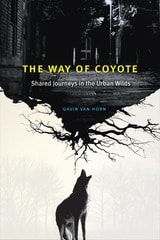
The Way of Coyote
Shared Journeys in the Urban WildsGavin Van Horn
University of Chicago Press, 2018
A hiking trail through majestic mountains. A raw, unpeopled wilderness stretching as far as the eye can see. These are the settings we associate with our most famous books about nature. But Gavin Van Horn isn’t most nature writers. He lives and works not in some perfectly remote cabin in the woods but in a city—a big city. And that city has offered him something even more valuable than solitude: a window onto the surprising attractiveness of cities to animals. What was once in his mind essentially a nature-free blank slate turns out to actually be a bustling place where millions of wild things roam. He came to realize that our own paths are crisscrossed by the tracks and flyways of endangered black-crowned night herons, Cooper’s hawks, brown bats, coyotes, opossums, white-tailed deer, and many others who thread their lives ably through our own.
With The Way of Coyote, Gavin Van Horn reveals the stupendous diversity of species that can flourish in urban landscapes like Chicago. That isn’t to say city living is without its challenges. Chicago has been altered dramatically over a relatively short timespan—its soils covered by concrete, its wetlands drained and refilled, its river diverted and made to flow in the opposite direction. The stories in The Way of Coyote occasionally lament lost abundance, but they also point toward incredible adaptability and resilience, such as that displayed by beavers plying the waters of human-constructed canals or peregrine falcons raising their young atop towering skyscrapers. Van Horn populates his stories with a remarkable range of urban wildlife and probes the philosophical and religious dimensions of what it means to coexist, drawing frequently from the wisdom of three unconventional guides—wildlife ecologist Aldo Leopold, Taoist philosopher Lao Tzu, and the North American trickster figure Coyote. Ultimately, Van Horn sees vast potential for a more vibrant collective of ecological citizens as we take our cues from landscapes past and present.
Part urban nature travelogue, part philosophical reflection on the role wildlife can play in waking us to a shared sense of place and fate, The Way of Coyote is a deeply personal journey that questions how we might best reconcile our own needs with the needs of other creatures in our shared urban habitats.
The Whites Are Enemies of Heaven
Climate Caucasianism and Asian Ecological ProtectionMark W. Driscoll
Duke University Press, 2020
The World in Which We Occur
John Dewey, Pragmatist Ecology, and American Ecological Writing in the Twentieth CenturyNeil W. Browne
University of Alabama Press, 2007
Where nature meets democracy—John Dewey’s vision for a more connected world.
American philosopher John Dewey considered all human endeavors to be one with the natural world. In his writings, particularly Art as Experience (1934), Dewey insists on the primacy of the environment in aesthetic experience. Dewey’s conception of environment includes both the natural and the man-made. The World in Which We Occur highlights this notion in order to define “pragmatist ecology,” a practice rooted in the interface of the cultural and the natural. Neil Browne finds this to be a significant feature of some of the most important ecological writing of the last century.
To fully understand human involvement in the natural world, Browne argues that disciplinary boundaries must be opened, with profound implications for the practice of democracy. The degradation of the physical environment and democratic decay, for Browne, are rooted in the same problem: our persistent belief that humans are somehow separate from their physical environment.
Browne probes the work of a number of major American writers through the lens of Dewey’s philosophy. Among other texts examined are John Muir’s My First Summer in the Sierra (1911); Sea of Cortez (1941) by John Steinbeck and Edward Ricketts; Rachel Carson’s three books about the sea, Under the Sea-Wind (1941), The Sea Around Us (1951), and The Edge of the Sea (1955); John Haines’s The Stars, the Snow, the Fire (1989); Barry Lopez’s Arctic Dreams (1986); and Terry Tempest Williams’s Refuge (1991). Together, these texts—with their combinations of scientific observation and personal meditation—challenge the dichotomies that we have become accustomed and affirm the principles of a pragmatist ecology, one in which ecological and democratic values go hand in hand.
The Yuma Reclamation Project
Irrigation, Indian Allotment, and Settlement Along the Lower Colorado RiverRobert Sauder
University of Nevada Press, 2009
In the arid American West, settlement was generally contingent on the availability of water to irrigate crops and maintain livestock and human residents. Early irrigation projects were usually the cooperative efforts of pioneer farmers, but by the early twentieth century they largely reflected federal intentions to create new farms out of the western public domain. The Yuma Reclamation Project, authorized in 1904, was one of the earliest federal irrigation projects initiated in the western United States and the first authorized on the Colorado River. Its story exemplifies the range of difficulties associated with settling the nation’s final frontier—the remaining irrigable lands in the arid West, including Indian lands—and illuminates some of the current issues and conflicts concerning the Colorado River. Author Robert Sauder’s detailed, meticulously researched examination of the Yuma Project illustrates the complex multiplicity of problems and challenges associated with the federal government’s attempt to facilitate homesteading in the arid West. He examines the history of settlement along the lower Colorado River from earliest times, including the farming of the local Quechan people and the impact of Spanish colonization, and he reviews the engineering problems that had to be resolved before an industrial irrigation scheme could be accomplished. The study also sheds light on myriad unanticipated environmental, economic, and social challenges that the government had to confront in bringing arid lands under irrigation, including the impact on the Native American population of the region.The Yuma Reclamation Project is an original and significant contribution to our understanding of federal reclamation endeavors in the West. It provides new and fascinating information about the history of the Yuma Valley and, as a case study of irrigation policy, it offers compelling insights into the history and consequences of water manipulation in the arid West.
Thinking Like a Mountain
Aldo Leopold and the Evolution of an Ecological Attitude toward Deer, Wolves, and ForestsSusan L. Flader
University of Wisconsin Press, 1994
When initially published more than twenty years ago, Thinking Like a Mountain was the first of a handful of efforts to capture the work and thought of America's most significant environmental thinker, Aldo Leopold. This new edition of Susan Flader's masterful account of Leopold's philosophical journey, including a new preface reviewing recent Leopold scholarship, makes this classic case study available again and brings much-deserved attention to the continuing influence and importance of Leopold today.
Thinking Like a Mountain unfolds with Flader's close analysis of Leopold's essay of the same title, which explores issues of predation by studying the interrelationships between deer, wolves, and forests. Flader shows how his approach to wildlife management and species preservation evolved from his experiences restoring the deer population in the Southwestern United States, his study of the German system of forest and wildlife management, and his efforts to combat the overpopulation of deer in Wisconsin. His own intellectual development parallels the formation of the conservation movement, reflecting his struggle to understand the relationship between the land and its human and animal inhabitants.
Drawing from the entire corpus of Leopold's works, including published and unpublished writing, correspondence, field notes, and journals, Flader places Leopold in his historical context. In addition, a biographical sketch draws on personal interviews with family, friends, and colleagues to illuminate his many roles as scientist, philosopher, citizen, policy maker, and teacher. Flader's insight and profound appreciation of the issues make Thinking Like a Mountain a standard source for readers interested in Leopold scholarship and the development of ecology and conservation in the twentieth century.
This Contested Land
The Storied Past and Uncertain Future of America's National MonumentsMcKenzie Long
University of Minnesota Press, 2022
One woman’s enlightening trek through the natural histories, cultural stories, and present perils of thirteen national monuments, from Maine to Hawaii—now available in paperback
This land is your land. When it comes to national monuments, the sentiment could hardly be more fraught. Gold Butte in Nevada, Organ Mountains–Desert Peaks in New Mexico, Katahdin Woods and Waters in Maine, Cascade–Siskiyou in Oregon and California: these are among the thirteen natural sites McKenzie Long visits in This Contested Land, an eye-opening exploration of the stories these national monuments tell, the passions they stir, and the controversies surrounding them today.
Starting amid the fragrant sagebrush and red dirt of Bears Ears National Monument on the eve of the Trump Administration’s decision to reduce the site by 85 percent, Long climbs sandstone cliffs, is awed by Ancestral Pueblo cliff dwellings and is intrigued by 4,000-year-old petroglyphs. She hikes through remote pink canyons recently removed from the boundary of Grand Staircase–Escalante, skis to a backcountry hut in Maine to view a truly dark night sky, snorkels in warm Hawaiian waters to plumb the meaning of marine preserves, volunteers near the most contaminated nuclear site in the United States, and witnesses firsthand the diverse forms of devotion evoked by the Rio Grande. In essays both contemplative and resonant, This Contested Land confronts an unjust past and imagines a collaborative future that bears witness to these regions’ enduring Indigenous connections.
From hazardous climate change realities to volatile tensions between economic development and environmental conservation, practical and philosophical issues arise as Long seeks the complicated and often overlooked—or suppressed—stories of these incomparable places. Her journey, mindfully undertaken and movingly described, emphasizes in clear and urgent terms the unique significance of, and grave threats to, these contested lands.
This Is Our Land
Grassroots Environmentalism in the Late Twentieth CenturyFerguson, Cody
Rutgers University Press, 2015
To the Last Smoke
An AnthologyStephen J. Pyne
University of Arizona Press, 2020
From boreal Alaska to subtropical Florida, from the chaparral of California to the pitch pine of New Jersey, America boasts nearly a billion burnable acres. In nine previous volumes, Stephen J. Pyne has explored the fascinating variety of flame region by region. In To the Last Smoke: An Anthology, he selects a sampling of the best from each.
To the Last Smoke offers a unique and sweeping view of the nation’s fire scene by distilling observations on Florida, California, the Northern Rockies, the Great Plains, the Southwest, the Interior West, the Northeast, Alaska, the oak woodlands, and the Pacific Northwest into a single, readable volume. The anthology functions as a color-commentary companion to the play-by-play narrative offered in Pyne’s Between Two Fires: A Fire History of Contemporary America. The series is Pyne’s way of “keeping with it to the end,” encompassing the directive from his rookie season to stay with every fire “to the last smoke.”
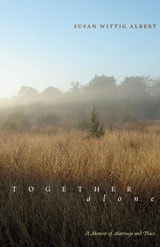
Together, Alone
A Memoir of Marriage and PlaceBy Susan Wittig Albert
University of Texas Press, 2009
What does it mean to belong to a place, to be truly rooted and grounded in the place you call home? How do you commit to a marriage, to a full partnership with another person, and still maintain your own separate identity? These questions have been central to Susan Wittig Albert's life, and in this beautifully written memoir, she movingly describes how she has experienced place, marriage, and aloneness while creating a home in the Texas Hill Country with her husband and writing partner, Bill Albert.
Together, Alone opens in 1985, as Albert leaves a successful, if rootless, career as a university administrator and begins a new life as a freelance writer, wife, and homesteader on a patch of rural land northwest of Austin. She vividly describes the work of creating a home at Meadow Knoll, a place in which she and Bill raised their own food and animals, while working together and separately on writing projects. Once her sense of home and partnership was firmly established, Albert recalls how she had to find its counterbalance—a place where she could be alone and explore those parts of the self that only emerge in solitude. For her, this place was Lebh Shomea, a silent monastic retreat. In writing about her time at Lebh Shomea, Albert reveals the deep satisfaction she finds in belonging to a community of people who have chosen to be apart and experience silence and solitude.
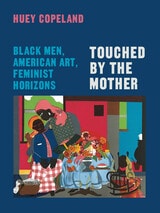
Touched by the Mother
Black Men, American Art, Feminist HorizonsHuey Copeland
University of Chicago Press, 2026
Collecting twenty years of incisive essays, articles, and interviews—including four published here for the first time—by art historian Huey Copeland, this book affirms the extraordinary depth of black men’s cultural production and the diversity of artistic practices that explore visual black masculinity in the United States. Part history, part memoir, part critical manifesto, Touched by the Mother offers a multi-faceted look at American art and discourse of the past fifty years, a personal meditation on navigating the world as a black gay man, and a feminist perspective on the ways transatlantic slavery continues to mark African and African diasporic men. Focusing on how the black maternal shapes black masculinity, Copeland confronts the dynamics that position African-American men—after their mothers—as sites of violence, creativity, and contestation in the cultural imagination.
Richly illustrated throughout, Touched by the Mother considers an exciting range of assemblage, painting, performance, photography, sculpture, and video works by more than twenty renowned practitioners, along with interviews featuring Hilton Als, Thelma Golden, Frank B. Wilderson, III, and other influential figures in contemporary art, culture, and criticism. Works by artists including Mark Bradford, Theaster Gates, David Hammons, Barkley L. Hendricks, Arthur Jafa, Glenn Ligon, Kerry James Marshall, Howardena Pindell, Sun Ra, and Lorna Simpson represent modes of making and thinking that are uniquely “touched by the mother,” Copeland argues, moving us toward the promise of black feminist futures.
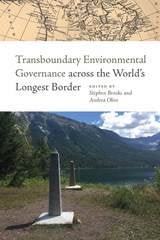
Transboundary Environmental Governance across the World's Longest Border
Stephen Brooks
Michigan State University Press, 2018
Transforming Places
Lessons from AppalachiaEdited by Stephen L. Fisher and Barbara Ellen Smith
University of Illinois Press, 2012
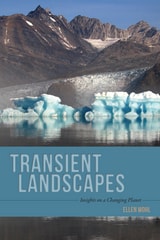
Transient Landscapes
Insights on a Changing PlanetEllen E. Wohl
University Press of Colorado, 2015
Landscape—the unique combination of landforms, plants, animals, and weather that compose any natural place—is inherently transient. Each essay in Transient Landscapes introduces this idea of a constantly metamorphosing global landscape, revealing how to see the ubiquity of landscape transience, both that which results through Earth’s natural environmental and climatological processes and that which comes from human intervention.
The essays are grouped by type of environmental change: long-term, large-scale transformation driven by geologic forces such as tectonic uplift and volcanism; natural variability at shorter time scales, such as seasonal flooding; and modifications resulting from human activities, such as timber harvest, land drainage, and pollution. Each essay is set in a unique geographic location—including such diverse places as New Zealand, Northern California, Costa Rica, and the Scottish Highlands—and is largely drawn from Wohl’s personal experience researching in the field.
A combination of travel writing, nature writing, and science writing, Transient Landscapes is a beautiful and thoughtful journey through the natural world.
Transportation and the Culture of Climate Change
Accelerating Ride to Global CrisisTatiana Prorokova-Konrad
West Virginia University Press, 2020
The essays in Transportation and the Culture of Climate Change cover an eclectic range of subject matter, from the association of bicycles with childhood to the songs of Bruce Springsteen, but are united in a central conviction: “Transport is a considerable part of our culture that is as hard to transform as it is for us to stop using fossil fuels—but we do not have an alternative.”
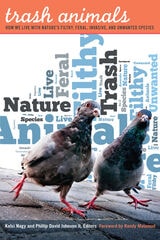
Trash Animals
How We Live with Nature’s Filthy, Feral, Invasive, and Unwanted SpeciesKelsi Nagy
University of Minnesota Press, 2013
Why are some species admired or beloved while others are despised? An eagle or hawk circling overhead inspires awe while urban pigeons shuffling underfoot are kicked away in revulsion. Fly fishermen consider carp an unwelcome trash fish, even though the trout they hope to catch are often equally non-native. Wolves and coyotes are feared and hunted in numbers wildly disproportionate to the dangers they pose to humans and livestock.
In Trash Animals, a diverse group of environmental writers explores the natural history of wildlife species deemed filthy, unwanted, invasive, or worthless, highlighting the vexed relationship humans have with such creatures. Each essay focuses on a so-called trash species—gulls, coyotes, carp, cockroaches, magpies, prairie dogs, and lubber grasshoppers, among others—examining the biology and behavior of each in contrast to the assumptions widely held about them. Identifying such animals as trash tells us nothing about problematic wildlife but rather reveals more about human expectations of, and frustrations with, the natural world.
By establishing the unique place that maligned species occupy in the contemporary landscape and in our imagination, the contributors challenge us to look closely at these animals, to reimagine our ethics of engagement with such wildlife, and to question the violence with which we treat them. Perhaps our attitudes reveal more about humans than they do about the animals.
Contributors: Bruce Barcott; Charles Bergman, Pacific Lutheran U; James E. Bishop, Young Harris College; Andrew D. Blechman; Michael P. Branch, U of Nevada, Reno; Lisa Couturier; Carolyn Kraus, U of Michigan–Dearborn; Jeffrey A. Lockwood, U of Wyoming; Kyhl Lyndgaard, Marlboro College; Charles Mitchell, Elmira College; Kathleen D. Moore, Oregon State U; Catherine Puckett; Bernard Quetchenbach, Montana State U, Billings; Christina Robertson, U of Nevada, Reno; Gavan P. L. Watson, U of Guelph, Ontario, Canada.
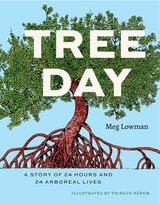
Tree Day
A Story of 24 Hours and 24 Arboreal LivesMeg Lowman
University of Chicago Press, 2025
In this short book, treetop explorer Meg Lowman guides us through a global forest. Each chapter of Tree Day introduces a single tree during a single hour, highlighting twenty-four species from around the world.
In the dark of Yemen’s night, it is too early to see the red sap from which the dragon’s blood tree gets its name. But if we watch closely, we will see nocturnal geckos carry the trees’ pollen in their snouts. Later, in the Pacific Northwest, we climb the world’s tallest species, the coastal redwood. The morning fog is a reminder that redwoods absorb water through their roots and canopies, helping them survive such heights. The sun is already low in the sky on an autumn afternoon. Given the darkness of this New England forest, the sugar maple’s leaves have stopped producing chlorophyll that converts light into energy—and green gives way to vivid crimson foliage. After many hours of boiling, the maple sap makes delicious maple syrup. As the sun sets in Mexico, we observe the origin of another treat, chocolate. The cocoa tree’s flowers sprout along its trunk and branches, allowing easy access for tiny insects like midges that pollinate the tree and start the process of making delicious food for humans, monkeys, bats, and squirrels. By the end of our tree day, we will understand that trees are the silent caretakers of our planet, providing us with medicines, foods, machinery for making fresh water and oxygen, and more.
For each hour, celebrated artist Thibaud Hérem has depicted these trees with gorgeous pen and ink illustrations. Working together to narrate and illustrate these unique moments in time, Lowman and Hérem have created an engaging read that is a perfect way to spend an hour or two—and a true gift for anyone who has ever looked up at a tree in wonder.
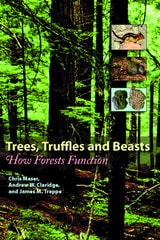
Trees, Truffles, and Beasts
How Forests FunctionMaser, Chris
Rutgers University Press, 2008
Because today's decisions are tomorrow's consequences, every small effort makes a difference, but a broader understanding of our environmental problems is necessary to the development of sustainable ecosystem policies. In Trees, Truffles, and Beasts, Chris Maser, Andrew W. Claridge, and James M. Trappe make a compelling case that we must first understand the complexity and interdependency of species and habitats from the microscopic level to the gigantic. Comparing forests in the Pacific Northwestern United States and Southeastern mainland of Australia, the authors show how easily observable speciesùtrees and mammalsùare part of a complicated infrastructure that includes fungi, lichens, and organisms invisible to the naked eye, such as microbes.
Eminently readable, this important book shows that forests are far more complicated than most of us might think, which means simplistic policies will not save them. Understanding the biophysical intricacies of our life-support systems just might.
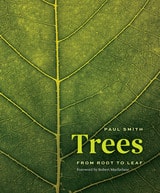
Trees
From Root to LeafPaul Smith
University of Chicago Press, 2022
Trees seen like never before—a world expert presents a stunning compendium, illuminating science, conservation, and art.
Trees provoke deep affection, spirituality, and creativity. They cover about a third of the world’s land and play a crucial role in our environmental systems—influencing the water, carbon, and nutrient cycles and the global climate. This puts trees at the forefront of research into mitigating our climate emergency; we cannot understate their importance in shaping our daily lives and our planet’s future.
In these lavish pages, ecologist Paul Smith celebrates all that trees have inspired across nearly every human culture throughout history. Generously illustrated with over 450 images and organized according to tree life cycle—from seeds and leaves to wood, flowers, and fruit—this book celebrates the great diversity and beauty of the 60,000 tree species that inhabit our planet. Surprising photography and infographics will inspire readers, illustrating intricate bark and leaf patterns, intertwined ecosystems, colorful flower displays, archaic wooden wheels, and timber houses. In this lavishly illustrated book, Smith presents the science, art, and culture of trees. As we discover the fundamental and fragile nature of trees and their interdependence, we more deeply understand the forest without losing sight of the magnificent trees.
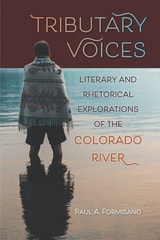
Tributary Voices
Literary and Rhetorical Exploration of the Colorado RiverPaul A. Formisano
University of Nevada Press, 2022
Through literary, rhetorical, and historical analysis of some of the Colorado River’s lesser-known stakeholders, Tributary Voices considers a more comprehensive approach to river management on the eve of the one-hundredth anniversary of the signing of the Colorado River Compact, which governs the allocation of water rights to the seven states in the region. Ranging from the early twentieth century to the present, Tributary Voices examines nature writing, women’s narratives, critiques of dam development, the Latina/o communities’ appeals for river restoration, American Indian authors’ and tribal nations’ claims of water sovereignty, and teachings about environmental stewardship and provident living. This innovative study models an interdisciplinary approach to water governance and reinvigorates our imagination in achieving a more sustainable water ethic.

Trouble in the Forest
California’s Redwood Timber WarsRichard Widick
University of Minnesota Press, 2009
Wars over natural resources have been fiercely fought in the Humboldt Bay redwood region of Northern California, a situation made devastatingly urgent in recent decades of timber war that raised questions of economic sustainability and ecological preservation. In Trouble in the Forest, Richard Widick narrates the long and bloody history of this hostility and demonstrates how it exemplifies the key contemporary challenge facing the modern societies-the collision of capitalism, ecology, and social justice.
An innovative blend of social history, cultural theory, and ethnography, Trouble in the Forest traces the origins of the redwood conflict to the same engines of modernity that drove the region's colonial violence against American Indians and its labor struggles during the industrial revolution. Widick describes in vivid detail the infamous fight that ensued when Maxxam Inc. started clearing ancient forests in Humboldt after acquiring the Pacific Lumber Company in 1985, but he also reaches further back and investigates the local Indian clashes and labor troubles that set the conditions of the timber wars. Seizing on public flash points of each confrontation-including the massacre of Wiyot on Indian Island in 1860, the machine-gunning of redwood strikers by police and company thugs during the great lumber strike of 1935, and the car bombing of forest defenders in 1990-Widick maps how the landscape has registered the impact of this epochal struggle, and how the timber wars embody the forces of market capitalism, free speech, and liberal government.
Showing how events such as an Indian massacre and the death of a protester at the hands of a logger create the social memory and culture of timber production and environmental resistance now emblematic of Northern California's redwood region, Trouble in the Forest ultimately argues that the modern social imaginary produced a perpetual conflict over property that fueled the timber wars as it pushed toward the western frontier: first property in land, then in labor, and now in environment.