Results by title
421 books match the query 'Evolution' and 138 start with t
The Jay Treaty Debate, Public Opinion, and the Evolution of Early American Political Culture
Todd Estes
University of Massachusetts Press, 2006
Drawing evidence from a broad range of sources—petitions and newspaper polemics, crowd gatherings, as well as rhetorical exchanges on the floor of Congress—Estes shows how both sides in the Jay Treaty debate mounted extensive and unprecedented campaigns to marshal popular support for their positions. Although many Americans initially opposed the treaty, the Federalists proved particularly skillful at courting the public and eventually prevailed over their opponents, just as they had won earlier battles over neutrality, democratic societies, and the Whiskey Rebellion. But the Republicans, Estes points out, learned from the experience, and in the long run they would become even more adept than the Federalists at shaping public opinion.
Even at the time, amid the fierce political rhetoric and colorful street demonstrations that characterized the Jay Treaty debate, participants recognized that important changes were taking place. Not only did the dispute solidify party allegiances, it also legitimized and advanced popular involvement in the political process. While some welcomed the emergence of this new, more democratic political culture, Estes concludes, others were much more ambivalent.
The Life Beyond Molecules and Genes
In Search of Harmony between Life and ScienceStephen Rothman
Templeton Press, 2009
What makes us alive? Is it our DNA? Our genetics? Is it our atomic composition that gives us life? Somehow, all of this feels radically dissonant from our everyday experience. In Life Beyond Molecules and Genes, experimental biologist Stephen Rothman makes the bold case that it is, in fact, our adaptive abilities, hewn by evolution, that make us alive. In making this point, he reveals a hidden harmony between science and life as we live it.
The Literary Animal
Evolution and the Nature of NarrativeJonathan Gottschall and David Sloan Wilson
Northwestern University Press, 2005
The goal of this book is to overcome some of the widespread misunderstandings about the meaning of a Darwinian approach to the human mind generally, and literature specifically. The volume brings together scholars from the forefront of the new field of evolutionary literary analysis-both literary analysts who have made evolution their explanatory framework and evolutionist scientists who have taken a serious interest in literature-to show how the human propensity for literature and art can be properly framed as a true evolutionary problem. Their work is an important step toward the long-prophesied synthesis of the humanities and what Steven Pinker calls "the new sciences of human nature."
The Long and the Short of It
The Science of Life Span and AgingJonathan Silvertown
University of Chicago Press, 2013
With The Long and the Short of It, biologist and writer Jonathan Silvertown offers readers a witty and fascinating tour through the scientific study of longevity and aging. Dividing his daunting subject by theme—death, life span, aging, heredity, evolution, and more—Silvertown draws on the latest scientific developments to paint a picture of what we know about how life span, senescence, and death vary within and across species. At every turn, he addresses fascinating questions that have far-reaching implications: What causes aging, and what determines the length of an individual life? What changes have caused the average human life span to increase so dramatically—fifteen minutes per hour—in the past two centuries? If evolution favors those who leave the most descendants, why haven’t we evolved to be immortal? The answers to these puzzles and more emerge from close examination of the whole natural history of life span and aging, from fruit flies, nematodes, redwoods, and much more.
The Meaning of Evolution
The Morphological Construction and Ideological Reconstruction of Darwin's TheoryRobert J. Richards
University of Chicago Press, 1992
This provocative new reading of Darwin goes directly to the origins of evolutionary theory. Unlike most contemporary biologists or historians and philosophers of science, Richards holds that Darwin did concern himself with the idea of progress, or telos, as he constructed his theory. Richards maintains that Darwin drew on the traditional embryological meanings of the terms "evolution" and "descent with modification." In the 1600s and 1700s, "evolution" referred to the embryological theory of preformation, the idea that the embryo exists as a miniature adult of its own species that simply grows, or evolves, during gestation. By the early 1800s, however, the idea of preformation had become the concept of evolutionary recapitulation, the idea that during its development an embryo passes through a series of stages, each the adult form of an ancestor species.
Richards demonstrates that, for Darwin, embryological recapitulation provided a graphic model of how species evolve. If an embryo could be seen as successively taking the structures and forms of its ancestral species, then one could see the evolution of life itself as a succession of species, each transformed from its ancestor. Richards works with the Origin and other published and archival material to show that these embryological models were much on Darwin's mind as he considered the evidence for descent with modification.
Why do so many modern researchers find these embryological roots of Darwin's theory so problematic? Richards argues that the current tendency to see evolution as a process that is not progressive and not teleological imposes perspectives on Darwin that incorrectly deny the clearly progressive heart of his embryological models and his evolutionary theory.
The Nature of Diversity
An Evolutionary Voyage of DiscoveryDaniel R. Brooks and Deborah A. McLennan
University of Chicago Press, 2002
Daniel R. Brooks and Deborah A. McLennan argue that it is impossible to comprehend the nature of life on earth unless evolution—the history of organisms—is restored to a central position in research. They demonstrate how the phylogenetic approach can be integrated with ecological and behavioral studies to produce a richer and more complete picture of evolution. Clearly setting out the conceptual, methodological, and empirical foundations of their research program, Brooks and McLennan show how scientists can use it to unravel the evolutionary history of virtually any characteristic of any living thing, from behaviors to ecosystems. They illustrate and test their approach with examples drawn from a wide variety of species and habitats.
The Nature of Diversity provides a powerful new tool for understanding, documenting, and preserving the world's biodiversity. It is an essential book for biologists working in evolution, ecology, behavior, conservation, and systematics. The argument in The Nature of Diversity greatly expands upon and refines the arguments made in the authors' previous book Phylogeny, Ecology, and Behavior.
The Nature of Selection
Evolutionary Theory in Philosophical FocusElliott Sober
University of Chicago Press, 1993
"Sober's is the answering philosophical voice, the voice of a first-rate philosopher and a knowledgeable student of contemporary evolutionary theory. His book merits broad attention among both communities. It should also inspire others to continue the conversation."-Philip Kitcher, Nature
"Elliott Sober has made extraordinarily important contributions to our understanding of biological problems in evolutionary biology and causality. The Nature of Selection is a major contribution to understanding epistemological problems in evolutionary theory. I predict that it will have a long lasting place in the literature."-Richard C. Lewontin
The Nick of Time
Politics, Evolution, and the UntimelyElizabeth Grosz
Duke University Press, 2004
Grosz develops her argument by juxtaposing the work of three major figures in Western thought: Charles Darwin, Friedrich Nietzsche, and Henri Bergson. She reveals that in theorizing time as an active, positive phenomenon with its own characteristics and specific effects, each of these thinkers had a profound effect on contemporary understandings of the body in relation to time. She shows how their allied concepts of life, evolution, and becoming are manifest in the work of Gilles Deleuze and Luce Irigaray. Throughout The Nick of Time, Grosz emphasizes the political and cultural imperative to fundamentally rethink time: the more clearly we understand our temporal location as beings straddling the past and the future without the security of a stable and abiding present, the more transformation becomes conceivable.
The Ontogeny of Information
Developmental Systems and EvolutionSusan Oyama
Duke University Press, 2000
Information, says Oyama, is thought to reside in molecules, cells, tissues, and the environment. When something wondrous occurs in the world, we tend to question whether the information guiding the transformation was pre-encoded in the organism or installed through experience or instruction. Oyama looks beyond this either-or question to focus on the history of such developments. She shows that what developmental “information” does depends on what is already in place and what alternatives are available. She terms this process “constructive interactionism,” whereby each combination of genes and environmental influences simultaneously interacts to produce a unique result. Ontogeny, then, is the result of dynamic and complex interactions in multileveled developmental systems.
The Ontogeny of Information challenges specialists in the fields of developmental biology, philosophy of biology, psychology, and sociology, and even nonspecialists, to reexamine the existing nature-nurture dichotomy as it relates to the history and formation of organisms.
The Origin of Higher Taxa
Palaeobiological, Developmental, and Ecological PerspectivesT. S. Kemp
University of Chicago Press, 2015
Looking beyond the microevolutionary force of Darwinian natural selection, Kemp enters the realm of macroevolution, or evolution above the species level. From the origin of mammals to the radiation of flowering plants, these large-scale patterns—such as the rise of novel organismal design, adaptive radiations, and lineage extinctions—encompass the most significant trends and transformations in evolution. As macroevolution cannot be studied by direct observation and experiment, scientists have to rely on the outcome of evolution as evidence for the processes at work, in the form of patterns of species appearances and extinctions in a spotty fossil record, and through the nature of species extant today. Marshalling a wealth of new fossil and molecular evidence and increasingly sophisticated techniques for their study, Kemp here offers a timely and original reinterpretation of how higher taxa such as arthropods, mollusks, mammals, birds, and whales evolved—a bold new take on the history of life.
The Origins of Theoretical Population Genetics
With a New AfterwordWilliam B. Provine
University of Chicago Press, 2001
The Paleobiological Revolution
Essays on the Growth of Modern PaleontologyEdited by David Sepkoski and Michael Ruse
University of Chicago Press, 2009
The Politics of Evolution
Morphology, Medicine, and Reform in Radical LondonAdrian Desmond
University of Chicago Press, 1990
"The Politics of Evolution is intellectual dynamite, and certainly one of the most important books in the history of science published during the past decade."—Jim Secord, Times Literary Supplement
"One of those rare books that not only stakes out new territory but demands a radical overhaul of conventional wisdom."—John Hedley Brooke, Times Higher Education Supplement
The Quality of the Archaeological Record
Charles Perreault
University of Chicago Press, 2019
In The Quality of the Archaeological Record, Charles Perreault shows that archaeology not only faces a parallel problem, but may also find a model in the rise of paleobiology for a shift in the science and theory of the field. To get there, he proposes a more macroscale approach to making sense of the archaeological record, an approach that reveals patterns and processes not visible within the span of a human lifetime, but rather across an observation window thousands of years long and thousands of kilometers wide. Just as with the fossil record, the archaeological record has the scope necessary to detect macroscale cultural phenomena because it can provide samples that are large enough to cancel out the noise generated by micro-scale events. By recalibrating their research to the quality of the archaeological record and developing a true macroarchaeology program, Perreault argues, archaeologists can finally unleash the full contributive value of their discipline.
The Riddled Chain
Chance, Coincidence and Chaos in Human EvolutionMcKee, Jeffrey Kevin
Rutgers University Press, 2000
Did human evolution proceed in an inevitable fashion? Can we attribute our origins solely to natural selection, or were more mischievous forces at work?
These are the questions investigated by anthropologist Jeff McKee. He argues that if we were to wind back the clock to our split from ancestral apes, evolution would proceed differently. Ever since our ancestors first stood up on two feet, natural selection undoubtedly was an important factor in guiding human evolution. But McKee shakes the standard notion that natural selection steered early hominids toward particular environmental adaptations. The fossil remains of our ancestors reveal a different story one of an adaptable hominid with no particular direction. It becomes clear that the evolutionary road to Homo sapiens was not paved solely by natural selection; indeed, there was no road to follow. There was just a dim path cut out by prehistoric coincidences and contingencies. Had any link in the evolutionary chain of events been slightly different, then our species would not be as it is today . . . or our ancestors may not have survived at all.
With equal doses of humor and awe, McKee illustrates how the chain of evolution has been riddled by chance, coincidence, and chaos. He uses familiar examples, noting that many of us exist as individuals because of chance meetings of our parents. From the present back through prehistory, chance is at the heart of our creation is chaos. The classic example of chaos is the butterfly effect: a single butterfly, flapping its wings, causes a tiny change in the atmosphere, which in turn amplifies to affect the course of storms on another continent. McKee ties such examples of unpredictability to fossil evidence and computer simulations, revealing the natural coincidences that shaped our evolution. Although chaos exacted an evolutionary price by limiting the powers of natural selection, it also made us what we are. One can only conclude that human beings were neither inevitable nor probable.
The Rise of Cable Programming in the United States
Revolution or Evolution?By Megan Mullen
University of Texas Press, 2003
Winner, McGannon Communications Research Award, 2004
In 1971, the Sloan Commission on Cable Communications likened the ongoing developments in cable television to the first uses of movable type and the invention of the telephone. Cable's proponents in the late 1960s and early 1970s hoped it would eventually remedy all the perceived ills of broadcast television, including lowest-common-denominator programming, inability to serve the needs of local audiences, and failure to recognize the needs of cultural minorities. Yet a quarter century after the "blue sky" era, cable television programming closely resembled, and indeed depended upon, broadcast television programming. Whatever happened to the Sloan Commission's "revolution now in sight"?
In this book, Megan Mullen examines the first half-century of cable television to understand why cable never achieved its promise as a radically different means of communication. Using textual analysis and oral, archival, and regulatory history, she chronicles and analyzes cable programming developments in the United States during three critical stages of the medium's history: the early community antenna (CATV) years (1948-1967), the optimistic "blue sky" years (1968-1975), and the early satellite years (1976-1995). This history clearly reveals how cable's roots as a retransmitter of broadcast signals, the regulatory constraints that stymied innovation, and the economic success of cable as an outlet for broadcast or broadcast-type programs all combined to defeat most utopian visions for cable programming.
The Runes of Evolution
How the Universe became Self-AwareSimon Conway Morris
Templeton Press, 2015
A leading evolutionary biologist at the University of Cambridge, Conway Morris came into international prominence for his work on the Cambrian explosion (especially fossils of the Burgess Shale) and evolutionary convergence, which is the process whereby organisms not closely related (not monophyletic), independently evolve similar traits as a result of having to adapt to similar environments or ecological niches.
In The Runes of Evolution, he illustrates how the ubiquity of convergence hints at an underlying framework whereby many outcomes, not least brains and intelligence, are virtually guaranteed on any Earth-like planet. Conway Morris also emphasizes how much of the complexity of advanced biological systems is inherent in microbial forms.
By casting a wider net, The Runes of Evolution explores many neglected evolutionary questions. Some are remarkably general. Why, for example, are convergences such as parasitism, carnivory, and nitrogen fixation in plants concentrated in particular taxonomic hot spots? Why do certain groups have a particular propensity to evolve toward particular states?
Some questions lead to unexpected evolutionary insights: If bees sleep (as they do), do they dream? Why is that insect copulating with an orchid? Why have sponges evolved a system of fiber optics? What do mantis shrimps and submarines have in common? If dinosaurs had not gone extinct what would have happened next? Will a saber-toothed cat ever re-evolve?
Cona Morris observes: “Even amongst the mammals, let alone the entire tree of life, humans represent one minute twig of a vast (and largely fossilized) arborescence. Every living species is a linear descendant of an immense string of now-vanished ancestors, but evolution itself is the very reverse of linear. Rather it is endlessly exploratory, probing the vast spaces of biological hyperspace. Indeed this book is a celebration of how our world is (and was) populated by a riot of forms, a coruscating tapestry of life.”
The Runes of Evolution is the most definitive synthesis of evolutionary convergence to be published to date.
The Science of Sympathy
Morality, Evolution, and Victorian CivilizationRob Boddice
University of Illinois Press, 2016
The Shape of Life
Genes, Development, and the Evolution of Animal FormRudolf A. Raff
University of Chicago Press, 1996
Raff uses the evolution of animal body plans to exemplify the interplay between developmental mechanisms and evolutionary patterns. Animal body plans emerged half a billion years ago. Evolution within these body plans during this span of time has resulted in the tremendous diversity of living animal forms.
Raff argues for an integrated approach to the study of the intertwined roles of development and evolution involving phylogenetic, comparative, and functional biology. This new synthesis will interest not only scientists working in these areas, but also paleontologists, zoologists, morphologists, molecular biologists, and geneticists.
The Simian Tongue
The Long Debate about Animal LanguageGregory Radick
University of Chicago Press, 2007
The Skull, Volume 1
DevelopmentEdited by James Hanken and Brian K. Hall
University of Chicago Press, 1993
The Skull, Volume 2
Patterns of Structural and Systematic DiversityEdited by James Hanken and Brian K. Hall
University of Chicago Press, 1993
The Skull, Volume 3
Functional and Evolutionary MechanismsEdited by James Hanken and Brian K. Hall
University of Chicago Press, 1993

The State Park Movement in America
A Critical ReviewNey C. Landrum
University of Missouri Press, 2013
The Stockholm Paradigm
Climate Change and Emerging DiseaseDaniel R. Brooks, Eric P. Hoberg, and Walter A. Boeger
University of Chicago Press, 2019
As this book reveals, a new understanding of the evolution of pathogen-host systems, called the Stockholm Paradigm, explains what is happening. The planet is a minefield of pathogens with preexisting capacities to infect susceptible but unexposed hosts, needing only the opportunity for contact. Climate change has always been the major catalyst for such new opportunities, because it disrupts local ecosystem structure and allows pathogens and hosts to move. Once pathogens expand to new hosts, novel variants may emerge, each with new infection capacities. Mathematical models and real-world examples uniformly support these ideas. Emerging disease is thus one of the greatest climate change–related threats confronting humanity.
Even without deadly global catastrophes on the scale of the 1918 Spanish Influenza pandemic, emerging diseases cost humanity more than a trillion dollars per year in treatment and lost productivity. But while time is short, the danger is great, and we are largely unprepared, the Stockholm Paradigm offers hope for managing the crisis. By using the DAMA (document, assess, monitor, act) protocol, we can “anticipate to mitigate” emerging disease, buying time and saving money while we search for more effective ways to cope with this challenge.
The Structure and Evolution of Recent U.S. Trade Policy
Edited by Robert E. Baldwin and Anne O. Krueger
University of Chicago Press, 1985
The contributors chart the history of U.S. trade policy since World War II, analyze industry-specific trade barriers, and discuss the effects of tariff preferences and export-promoting policies such as export credits and domestic international sales corporations (DISCs). The final section of essays examines the worldwide impact of import policies, pointing out subtleties in industry-specific policies and providing insight into the levels of protection in developing countries. The contributors blend state-of-the-art economics with language that is accessible to the business community, economists, and policymakers. Commentaries accompany each paper.
The Theory of Evolution
Principles, Concepts, and AssumptionsEdited by Samuel M. Scheiner and David P. Mindell
University of Chicago Press, 2019
This book gives us that framework and synthesis for the twenty-first century. The Theory of Evolution presents a series of chapters by experts seeking this integration by addressing the current state of affairs across numerous fields within evolutionary biology, ranging from biogeography to multilevel selection, speciation, and macroevolutionary theory. By presenting current syntheses of evolution’s theoretical foundations and their growth in light of new datasets and analyses, this collection will enhance future research and understanding.
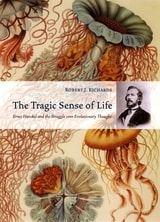
The Tragic Sense of Life
Ernst Haeckel and the Struggle over Evolutionary ThoughtRobert J. Richards
University of Chicago Press, 2008
Prior to the First World War, more people learned of evolutionary theory from the voluminous writings of Charles Darwin’s foremost champion in Germany, Ernst Haeckel (1834–1919), than from any other source, including the writings of Darwin himself. But, with detractors ranging from paleontologist Stephen Jay Gould to modern-day creationists and advocates of intelligent design, Haeckel is better known as a divisive figure than as a pioneering biologist. Robert J. Richards’s intellectual biography rehabilitates Haeckel, providing the most accurate measure of his science and art yet written, as well as a moving account of Haeckel’s eventful life.
The Truth about Language
What It Is and Where It Came FromMichael C. Corballis
University of Chicago Press, 2017
But as Michael C. Corballis shows in The Truth about Language, it’s time to reconsider those assumptions. Language, he argues, is not the product of some “big bang” 60,000 years ago, but rather the result of a typically slow process of evolution with roots in elements of grammatical language found much farther back in our evolutionary history. Language, Corballis explains, evolved as a way to share thoughts—and, crucially for human development, to connect our own “mental time travel,” our imagining of events and people that are not right in front of us, to that of other people. We share that ability with other animals, but it was the development of language that made it powerful: it led to our ability to imagine other perspectives, to imagine ourselves in the minds of others, a development that, by easing social interaction, proved to be an extraordinary evolutionary advantage.
Even as his thesis challenges such giants as Chomsky and Stephen Jay Gould, Corballis writes accessibly and wittily, filling his account with unforgettable anecdotes and fascinating historical examples. The result is a book that’s perfect both for deep engagement and as brilliant fodder for that lightest of all forms of language, cocktail party chatter.

Thinking Like a Mountain
Aldo Leopold and the Evolution of an Ecological Attitude toward Deer, Wolves, and ForestsSusan L. Flader
University of Wisconsin Press, 1994
When initially published more than twenty years ago, Thinking Like a Mountain was the first of a handful of efforts to capture the work and thought of America's most significant environmental thinker, Aldo Leopold. This new edition of Susan Flader's masterful account of Leopold's philosophical journey, including a new preface reviewing recent Leopold scholarship, makes this classic case study available again and brings much-deserved attention to the continuing influence and importance of Leopold today.
Thinking Like a Mountain unfolds with Flader's close analysis of Leopold's essay of the same title, which explores issues of predation by studying the interrelationships between deer, wolves, and forests. Flader shows how his approach to wildlife management and species preservation evolved from his experiences restoring the deer population in the Southwestern United States, his study of the German system of forest and wildlife management, and his efforts to combat the overpopulation of deer in Wisconsin. His own intellectual development parallels the formation of the conservation movement, reflecting his struggle to understand the relationship between the land and its human and animal inhabitants.
Drawing from the entire corpus of Leopold's works, including published and unpublished writing, correspondence, field notes, and journals, Flader places Leopold in his historical context. In addition, a biographical sketch draws on personal interviews with family, friends, and colleagues to illuminate his many roles as scientist, philosopher, citizen, policy maker, and teacher. Flader's insight and profound appreciation of the issues make Thinking Like a Mountain a standard source for readers interested in Leopold scholarship and the development of ecology and conservation in the twentieth century.
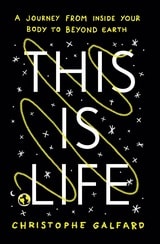
This Is Life
A Journey from Inside Your Body to Beyond EarthChristophe Galfard
University of Chicago Press, 2026
Christophe Galfard, acclaimed author of the international bestseller The Universe in Your Hand, takes readers on an extraordinary journey across time and space—from the origins of Earth’s life to the search for extraterrestrials.
What is life? In this majestic book, Christophe Galfard, celebrated author and former graduate student of Stephen Hawking, takes us on a wonder-filled voyage to answer this question. He guides us from our planet’s birth and the mysterious bacteria that lived billions of years ago, through the extreme evolutionary turns that saw dog-sized sea scorpions and trees covered in scales, to the visionary discoveries of the past two centuries that have allowed us to understand human bodies and imagine alien ones.
With Galfard as our guide, readers go back in time to Earth’s origins, swim inside our bloodstream, and sail in space beyond the safety of our terrestrial haven. We experience the birth of Earth, the demise of the dinosaurs, and the possible creation of life in outer space. This Is Life offers a glimpse of other worlds detected only in recent years, beyond the Solar System, where life could be thriving. The end of the book’s journey signals new beginnings, and we are left with the overwhelming sense that, as members of a long line of living creatures, we belong to a reality far greater and more complex than we ever imagined.
Through brilliant storytelling and delightful humor, Galfard connects the latest scientific discoveries and makes the secrets of the living world accessible to all. This Is Life will transform the way you see the world and your place in it.
This Is Life
A Journey from Inside Your Body to Beyond EarthChristophe Galfard
University of Chicago Press, 2026
Christophe Galfard, acclaimed author of the international bestseller The Universe in Your Hand, takes readers on an extraordinary journey across time and space—from the origins of Earth’s life to the search for extraterrestrials.
What is life? In this majestic book, Christophe Galfard, celebrated author and former graduate student of Stephen Hawking, takes us on a wonder-filled voyage to answer this question. He guides us from our planet’s birth and the mysterious bacteria that lived billions of years ago, through the extreme evolutionary turns that saw dog-sized sea scorpions and trees covered in scales, to the visionary discoveries of the past two centuries that have allowed us to understand human bodies and imagine alien ones.
With Galfard as our guide, readers go back in time to Earth’s origins, swim inside our bloodstream, and sail in space beyond the safety of our terrestrial haven. We experience the birth of Earth, the demise of the dinosaurs, and the possible creation of life in outer space. This Is Life offers a glimpse of other worlds detected only in recent years, beyond the Solar System, where life could be thriving. The end of the book’s journey signals new beginnings, and we are left with the overwhelming sense that, as members of a long line of living creatures, we belong to a reality far greater and more complex than we ever imagined.
Through brilliant storytelling and delightful humor, Galfard connects the latest scientific discoveries and makes the secrets of the living world accessible to all. This Is Life will transform the way you see the world and your place in it.
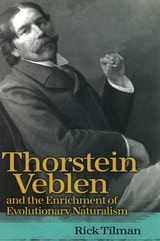
Thorstein Veblen and the Enrichment of Evolutionary Naturalism
Rick Tilman
University of Missouri Press, 2007
One of America’s most influential social critics, Thorstein Veblen authored works deeply rooted in evolutionary biology and American philosophical naturalism—both of which help explain his institutional economics and radical sociology. Now, one of today’s preeminent Veblen scholars ranges widely over the man’s writings to show how evolutionary naturalism underlies his social theory and criticism, shapes his satire, and binds his work together.
Rick Tilman’s study focuses on the intersections of social theory and social psychology, political economy and political theory, and modern philosophy and intellectual history in Veblen’s thinking. It links evolutionary naturalism for the first time to Veblen’s aesthetics, secular humanism, sociology of control, sociobiology, and sociology of knowledge, and it makes groundbreaking observations regarding the relationship of Veblen’s own life to his thinking; his place as a cultural lag theorist; and his analysis of sports, gambling, and religion.
Drawing on textual exegesis of Veblen’s work, unpublished correspondence, and selected archives, Tilman argues that only evolutionary naturalism could provide the philosophical foundations of Veblen’s thought. He also emphasizes Veblen’s role in the enhancement and embellishment of the social sciences and cultural studies, as well as his insights into the processes of change in the sociopolitical order.
Veblen’s evolutionary naturalism, with its unflattering evaluation of America’s self-selected special place in the international arena, casts doubt on today’s foreign interventions, and it also provides a much-needed antidote to the resurgence of creationist thought in American culture. Tilman shows that Veblen’s ideas are still valuable to contemporary social scientists—indeed, that his method of analysis and values are sorely needed to help us avoid wasteful consumption, predation, and the persistence of religious superstition. This work offers readers a new appreciation of Veblen and the many issues he addressed, and of Tilman’s own masterful facility in bringing them to light.
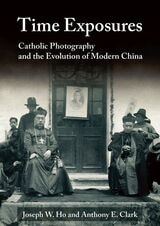
Time Exposures
Catholic Photography and the Evolution of Modern ChinaJoseph W. Ho and Anthony E. Clark
Hong Kong University Press, 2026
A history of China’s transition from empire to modern nation, told through photographs by and of Chinese Catholic communities.
Time Exposures explores how historical photographs created by and of Chinese Catholic communities illuminate the vicissitudes of China’s transition from empire to modern nation. Relying on an expansive worldwide network of Catholic photographic archives, this book examines largely unseen and unpublished images related to Catholicism in China. These images, made from the 1870s through the 1990s, were central to visual practices and afterlives that represent, recover, and reenvision diverse Chinese experiences. This volume provides insight into the lives of women and men behind and in front of the camera who were important documentarians of China’s local and national changes over time, shaping ways of seeing and belonging to the country’s many cultural evolutions.
Toward One Oregon
Rural-Urban Interdependence and the Evolution of a StateMichael Hibbard
Oregon State University Press, 2011
Transport in Transition
The Evolution of Traditional Shipping in ChinaTranslated by Andrew Watson
University of Michigan Press, 1972
Treatments
Language, Politics, and the Culture of IllnessLisa Diedrich
University of Minnesota Press, 2007
Creative expression inspired by disease has been criticized as a celebration of victimhood, unmediated personal experience, or just simply bad art. Despite debate, however, memoirs written about illness—particularly AIDS or cancer—have proliferated since the late twentieth century and occupy a highly influential place on the cultural landscape today.
In Treatments, Lisa Diedrich considers illness narratives, demonstrating that these texts not only recount and interpret symptoms but also describe illness as an event that reflects wider cultural contexts, including race, gender, class, and sexuality. Diedrich begins this theoretically rigorous analysis by offering examples of midcentury memoirs of tuberculosis. She then looks at Susan Sontag’s Illness As Metaphor, Audre Lorde’s The Cancer Journals, and Eve Kosofsky Sedgwick’s “White Glasses,” showing how these breast cancer survivors draw on feminist health practices of the 1970s and also anticipate the figure that would appear in the wake of the AIDS crisis in the 1980s—the “politicized patient.” She further reveals how narratives written by doctors Abraham Verghese and Rafael Campo about treating people with AIDS can disrupt the doctor–patient hierarchy, and she explores practices of witnessing that emerge in writing by Paul Monette and John Bayley.
Through these records of intensely personal yet universal experience, Diedrich demonstrates how language both captures and fails to capture these “scenes of loss” and how illness narratives affect the literary, medical, and cultural contexts from which they arise. Finally, by examining the ways in which the sick speak and are spoken for, she argues for an ethics of failure—the revaluation of loss as creating new possibilities for how we live and die.
Lisa Diedrich is assistant professor of women’s studies at Stony Brook University.
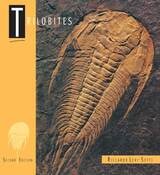
Trilobites
Riccardo Levi-Setti
University of Chicago Press, 1995
This second edition features coverage of a greater variety of trilobites, an improved photographic atlas reorganized to present their evolutionary progression, and over 200 photographs.