Results by title
3390 books match the query 'Fiction' and 1041 start with t
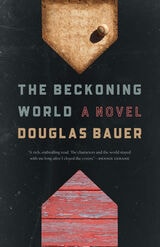
The Beckoning World
A NovelDouglas Bauer
University of Iowa Press, 2022
But dreams sometimes suffer from a lovely abundance, and in Earl’s case her name is Emily Marchand. They fall quickly and deeply in love, but with that love comes heartbreaking complications.
The Beckoning World gathers a cast of characters that include Babe Ruth and Lou Gehrig; a huge-hearted Pullman steward offering aphoristic wisdom; and countless others, not least of which is the 1918 Spanish flu taking vivid spectral form. At the center is a relentless love that Earl and Emily are defenseless against, allied as they are “in this business of their hearts.”
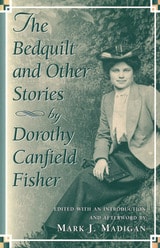
The Bedquilt and Other Stories
By Dorothy Canfield FisherEdited, Intro, & Afterword by Mark J. Madigan
University of Missouri Press, 1997
Dorothy Canfield Fisher, the prolific author of more than forty books, including translations, juveniles, and nonfiction, as well as novels and short-story collections, was one of the most popular and engaging American writers of the first half of the twentieth century. Although her work has been unduly neglected for several decades, it is currently enjoying a revival of critical attention. This colorful collection ranges in subject from New Englanders to the Basques of France to the struggles of African Americans to gain equal rights. Through her stories, many of which received literary awards, Fisher examined the complexities of modern life in the United States and abroad.
In addition to her writing, Fisher had a lifelong involvement in charitable work and social causes--so much so that Eleanor Roosevelt called her one of the most influential women of her time. As one of the earliest and most assertive members of the Book-of-the-Month Club selection committee, Fisher helped define literary taste in America for more than two decades. Mark J. Madigan discusses Fisher's extraordinary life and work in an Introduction and Afterword.
Because of Fisher's rare ability to distinguish enduring concerns from merely topical issues, her work will provide lasting pleasure for generations of readers to come.
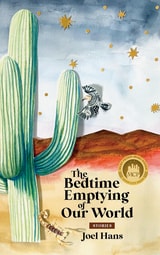
The Bedtime Emptying of Our World
Short StoriesJoel Hans
Moon City Press, 2026
The 2024 Moon City Short Fiction Award
In a future facsimile of the Sonoran Desert, a girl and grandfather rebirth weather itself. Fathers watch children transform into minerals, tend pain-wracked saguaros, offer treasures to the Gulf for lost sons. A girl escapes her apple prison; a man struggles against choices his parents coded into his being. These twenty-two speculative fairy tales ask: How do we navigate parenthood's impossible permutations? When will our helpers rescue us? Can we return from the void that swallowed all we love—and would we even try?
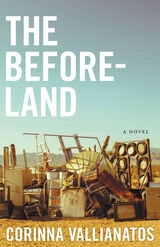
The Beforeland
A NovelCorinna Vallianatos
Acre Books, 2020
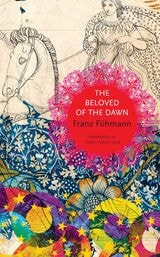
The Beloved of the Dawn
Franz Fühmann
Seagull Books, 2022
Franz Fühmann’s subversive retellings of four Greek legends were first published in East Germany in 1980. In them, Fühmann plumbs the ancient tales’ depths and makes them his own. Attuned to conflict and paradox, he sheds light on the complexities of sex and love, art and beauty, politics and power. In the title story, the love of the goddess Eos for the mortal Tithonos reveals the blessing and curse of transience, while “Hera and Zeus” probes the divine couple’s tumultuous relationship and its devastating consequences for a world embroiled in war. Fühmann’s unflinching account of Marsyas’ flaying by Apollo has been widely read as a dissident political statement that has lost none of its incisive force. At times charged with sensuality, and at others honed to a keen analytical edge, Fühmann’s shimmering prose is matched by Sunandini Banerjee’s exquisite collages.
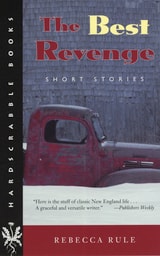
The Best Revenge
Short StoriesRebecca Rule
University of New Hampshire Press, 2004
Twice nominated for the Pushcart Prize, Rule captures the essence of small-town New England life as she paints with a sure hand the fallings-out and friendships, the trials and triumphs of the New England microcosm. In Yankee Curse, elderly Miranda knits placidly at a town meeting, pondering an amazing string of unspoken invective against an enemy but stopping short at a curse she would never levy, not even on Mort Wallace: to live too long. In Minna Runs for Selectman, a middle-aged woman's battlefield is the strange, incestuous politics of this eccentric little town but her real opponent is her own insecurity. In Jim's Boat a young couple wages a silent struggle over priorities in their marriage; in Fishing with George a small girl worries that there's a hole in our family that gets bigger every time her parents argue; and in the title story a mother copes with a hated neighbor through a sculpture that makes her laugh the kind of laugh that doesn't end in a sob. Children and grandmothers, trappers and college professors, lifetime Yankees or transplanted Flatlanders: each finds the truth in Rule's observation that revenge takes many forms -- some of which can heal.
The Best of Jackson Payne
A NovelJack Fuller
University of Chicago Press, 2001
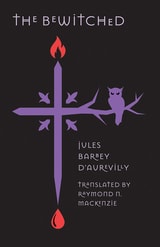
The Bewitched
Jules Barbey d’Aurevilly
University of Minnesota Press, 2026
A haunting, resonant novel of passion and betrayal—in its first English translation since 1928
“When we bring true passions into our works, we don’t fear the cries of the offended.” So declared Jules Barbey d’Aurevilly in 1853 as he prepared to publish The Bewitched in book form, restoring the sections that were unceremoniously deleted from its serialized release by an editor who deemed them too explicit, irreverent, and inflammatory. Newly translated into English for modern readers, The Bewitched is a beguiling tale of politics, obsession, and horror set against the backdrop of Normandy in postrevolutionary France.
Late at night in a foggy moor, the far clock tower rends the still air to mark the midnight hour. As the darkness settles back into silence, another bell rings out, slow and somber, calling all who hear it to the abbé de La Croix-Jugan’s Mass of the Dead. Returned to the priesthood in shame after breaking his vows by shedding blood in battle and attempting suicide in defeat, the disfigured man enthralls the inhabitants of this small village. Before long, a young married woman becomes infatuated with the enigmatic priest, and their fates are irrevocably intertwined. When she succumbs to despair over her unrequited love, her husband is consumed by jealousy and vows revenge.
Layering stories within stories and continually shifting points of view, Barbey d’Aurevilly engages a mosaic of narrators to depict the era’s tensions between the aristocracy, the peasant class, and the church. Raymond N. MacKenzie’s lively translation is accompanied by his detailed introduction and notes that ground the novel in its historical, political, and literary contexts. A classic of French Gothic literature, The Bewitched blends religious transgression, satanic possession, and political upheaval into a fatal love story that is as gripping now as it was nearly two centuries ago.
Retail e-book files for this title are screen-reader friendly.
The Bible of Dirty Jokes
Eileen Pollack
Four Way Books, 2018
The Big Bang Symphony
A Novel of AntarcticaLucy Jane Bledsoe
University of Wisconsin Press, 2010
At least that’s how thirty-year-old Rosie Moore views it as she flies in for her third season on the Ice. She plans to avoid all entanglements, romantic and otherwise, and do her work as a galley cook. But when her flight crash-lands, so do all her plans.
Mikala Wilbo, a brilliant young composer whose heart—and music—have been frozen since the death of her partner, is also on that flight. She has come to the Ice as an artist-in-residence, to write music, but also to secretly check out the astrophysicist father she has never met.
Arriving a few weeks later, Alice Neilson, a graduate student in geology who thinks in charts and equations, is thrilled to leave her dependent mother and begin her career at last. But from the start she is aware that her post-doc advisor, with whom she will work in Antarctica, expects much more from their relationship.
As the three women become increasingly involved in each other’s lives, they find themselves deeply transformed by their time on the Ice. Each falls in love. Each faces challenges she never thought she would meet. And ultimately, each finds redemption in a depth and quality of friendship that only the harsh beauty of Antarctica can engender.

The Big Boxcar
Alfred Maund
University of Illinois Press, 1957
The Big Boxcar, written from a totally black perspective by a white author, bears witness to the structural racism of a social order that sets ordinary people of different colors against each other to the disadvantage of all. Alan Wald's introduction documents Maund's life of activism and his uncompromising commitment to social emancipation.
The Big Buddha Bicycle Race
A NovelTerence A. Harkin
Ohio University Press, 2017
Silver Medalist in Literary Fiction, 2020 Military Writers Society of America Awards
Brendan Leary, assigned to an Air Force photo squadron an hour from L.A., thinks he has it made. But when the U.S. invades Cambodia and he joins his buddies who march in protest, he is shipped off to an obscure air base in upcountry Thailand. There, he finds himself flying at night over the Ho Chi Minh Trail in a secret war that turns the mountains of Laos into a napalm-scorched moonscape. As the emotional vise tightens, his moral fiber crumbles and he sinks ever deeper into a netherworld of drugs, sex, and booze.
When a visit by Nixon looms, Brendan dreams up an all-squadron bicycle race to build morale, win hearts and minds in rural Thailand, and make him and his underpaid buddies a pile of money. The Big Buddha Bicycle Race is a last gasp of hope that turns into a unifying adventure—until the stakes turn out to be far higher than anyone imagined.
The Big Buddha Bicycle Race is a new take on the Vietnam War. A caper on the surface, it is also a tribute to the complex culture and history of Southeast Asia and a sober remembrance of those groups who have been erased from American history—the brash active-duty soldiers who risked prison by taking part in the GI antiwar movement, the gutsy air commandos who risked death night after night flying over the Ho Chi Minh Trail, and the people of Laos, whose lives and land were devastated in ways that have yet to be fully acknowledged in Western accounts of the war.
The Big Sugar
A Brigid Reardon MysteryMary Logue
University of Minnesota Press, 2024
A grisly death near her new homestead draws Brigid Reardon into a complicated mystery soon after her arrival in Cheyenne, Wyoming, in 1881
After the harrowing events that entangled her in Deadwood, Brigid Reardon just wants to move west and get on with her new life in America. But shortly after traveling to Cheyenne to join her brother Seamus, she finds herself caught up in another deadly mystery—beginning with her discovery of a neighbor’s body on the plains near their homes. Was Ella murdered? Are either of the two men in Ella’s life responsible? With Seamus away on a cattle drive, her friend Padraic possibly succumbing to a local’s charms, and the sheriff seemingly satisfied with Ella’s fate, it falls to Brigid to investigate what really happened, which puts her in the crosshairs of one of Cheyenne’s cattle barons, called “big sugars” in these parts. All she really wants is something better than a crumbling, soddy homestead on the desolate plains of Wyoming—and maybe, just maybe, she wants Padraic—but life, it seems, has other plans: this young immigrant from Ireland is going to be a detective on the western frontier of 1880s America, even if it kills her.
Loosely based on the true story of Ellen Watson in Cheyenne in 1889, The Big Sugar continues the adventure begun in Mary Logue’s celebrated mystery The Streel, which introduced a “gritty, charming, clever protagonist” (Kirkus Reviews). With a faultless sense of history, a keen eye for suspense, and a poet’s way with prose, Mary Logue all but guarantees that readers, like Brigid, will find the mystery at the heart of The Big Sugar downright irresistible.
The Bingo Long Traveling All-Stars and Motor Kings
A NOVELWilliam Brashler. Introduction by Peter C. Bjarkman
University of Illinois Press, 1993
The Birch Grove and Other Stories
Jaroslaw Iwaszkiewicz
Central European University Press, 2002
The Bird Who Cleans the World and Other Mayan Fables
Victor Montejo
Northwestern University Press, 1995
The Bird is Gone
A ManifestoStephen Graham Jones
University of Alabama Press, 2003
A lost pipe holds the power to rewrite a nation.
Cleverly blending alternate history, mystery, and indigenous resurgence, Stephen Graham Jones’s The Bird Is Gone unfolds in a transformed Great Plains where a visionary conservation act has made the land truly “Indian again.” Fourteen years later, a motley crew led by LP Deal converges in a bowling alley within Indian Territories, on a quest for a forgotten treaty pipe—sealed in a locker and flushed into oblivion—that could return all of America to Indigenous hands. Surreal, suspenseful, and richly original, this manifesto of resistance challenges readers to reconsider power, history, and the stakes of reclaiming a stolen world.
The Birds of Paradise
A NovelPaul Scott
University of Chicago Press, 2013
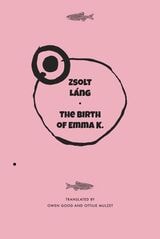
The Birth of Emma K.
Zsolt Láng
Seagull Books, 2022
The Birth of Emma K., a collection of twelve short stories rich with magic, introduces English-language readers to one of the most vibrant and original voices in contemporary Hungarian literature. Zsolt Láng’s new collection opens with God sitting on a bench looking over Budapest; later, a Hungarian man who has stumbled into a Romanian music theory class suddenly finds he is able to speak expertly about Hungarian composer Béla Bartok—and in perfect Romanian; and even later, against all odds, the embryo of Emma fights for her future life from within the womb. Drifting between melancholic and witty, in sentences that are winding, subtle, and colloquial, Láng’s stories are deeply rooted in Transylvanian culture and history. Reminiscent of the best writings of Irish modernist masters such as Samuel Beckett and Flann O’Brien, The Birth of Emma K. presents an unforgettable collage of human nature.
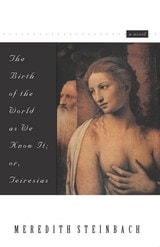
The Birth of the World as We Know It
Or TeiresiasMeredith Steinbach
Northwestern University Press, 1996
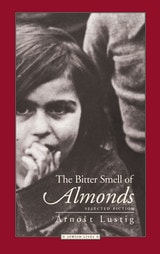
The Bitter Smell of Almonds
Arnost Lustig
Northwestern University Press, 2001
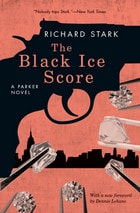
The Black Ice Score
A Parker NovelRichard Stark
University of Chicago Press, 2010
Richard Stark's Parker novels are the hardest of hard-boiled, classic crime novels where the heists are huge, the body counts are high, and the bad guys usually win.
The Parker novels have been a huge influence on countless writers and filmmakers, including Quentin Tarantino, Stephen King, George Pelecanos, Colson Whitehead, Lucy Sante, John Banville, and many more. Their stripped-down language and hard-as-nails amorality create an unforgettable world where the next score could be the big one, but your next mistake could also be your last. There's nothing else like them.
In The Black Ice Score, a corrupt African colonel has converted half his country’s wealth into diamonds and smuggled them to a Manhattan safe house. Four upstanding citizens plan to rescue their new nation by stealing the diamonds back—with the help of a “specialist”: Parker. Will Parker break his rule against working with amateurs and help them because his woman would be disappointed if he doesn’t? Or because three hired morons have threatened to kill him and his woman if he does? They thought they were buying an advantage, but what they get is a predated death certificate.
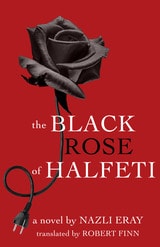
The Black Rose of Halfeti
By Nazli Eray, translated by Robert Finn
University of Texas Press, 2017
The Black Rose of Halfeti opens with a letter delivered at midnight in Ankara, Turkey. In this letter, an elderly doctor who has begun to experience the first signs of dementia professes his love and desire for a relationship with the narrator, a woman in middle age beginning to contemplate her own mortality. From there, the novel moves between Mardin, Izmir, and Ankara; the past and the present; and the real and the imagined as the narrator seeks to know the doctor both in his prime and in his struggle to hold senility at bay. In these dreamlike landscapes, the author effortlessly introduces King Darius, the Spanish director Luis Buñuel, the actress Silvia Pinal, and the archetypal dream woman as the narrator’s guides in her efforts to understand the human psyche.
Nazli Eray has established herself as a master of magical realism, the perfect tool to bring to life this poignant meditation on love, aging, and the role of memory. And, as in her earlier novels, she paints vivid images of the urban landscapes of Turkey, capturing both the present and the past.
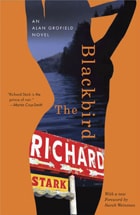
The Blackbird
An Alan Grofield NovelRichard Stark
University of Chicago Press, 2012
A classic, fast-paced crime thriller that opens with a Parker heist going sour, then turns into an international adventure starring Parker's associate Alan Grofield
Donald E. Westlake is one of the greats of crime fiction. Under the pseudonym Richard Stark, he wrote twenty-four fast-paced, hardboiled novels featuring Parker, a shrewd career criminal with a talent for heists. Using the same nom de plume, Westlake also completed a separate series in the Parker universe, starring Alan Grofield, an occasional colleague of Parker. While he shares events and characters with several Parker novels, Grofield is less calculating and more hot-blooded than Parker; think fewer guns, more dames.
Not that there isn’t violence and adventure aplenty. The third Grofield novel, The Blackbird shares its first chapter with Slayground: after a traumatic car crash, Parker eludes the police, but Grofield gets caught. Lying injured in the hospital, Grofield is visited by G-Men who offer him an alternative to jail, and he finds himself forced into a deadly situation involving international criminals and a political conspiracy.
With a new foreword by Sarah Weinman that situates the Grofield series within Westlake’s work as a whole, this novel is an exciting addition to any crime fiction fan’s library.
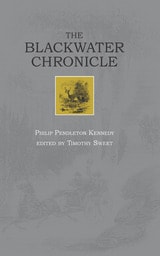
The Blackwater Chronicle
PHILIP P. KENNEDY
West Virginia University Press, 2019
This wilderness travelogue about the exploration of Canaan Valley, West Virginia was originally published in 1853. With appeal far beyond its time and region, first editions of this chronicle reached New York, London, and even Germany. This often humorous and always fascinating story reveals Kennedy's journey into an unexplored territory.
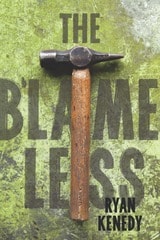
The Blameless
Ryan Kenedy
University of Wisconsin Press, 2023
Meanwhile, having spent three decades serving a life sentence for murdering the California preacher who rescued him from the streets, Travis thinks of himself as a reformed man. Traveling from Folsom Prison to his new home in the Mojave Desert, a remote location with minimal temptations, he struggles to reconcile his past and embrace his newfound freedom. But there are more challenges to staying on the straight and narrow than he ever could have imagined.
Virginia’s and Travis’s braided narratives slowly tighten as they approach their inevitable collision. Unflinching, compassionate, and gripping, this bold novel evocatively examines the ambiguities wrought by both violence and redemption.

The Blond Box
Toby Olson
University of Alabama Press, 2003
The Blondes of Wisconsin
Anthony Bukoski
University of Wisconsin Press, 2021
In Bukoski’s interconnected tales, the heart seeks its due despite familial conflict, the challenges of maritime work, and the slow yet inexorable decline of dementia. Beautiful vignettes express transformative moments: tenderness that can turn a cardboard crown into gold and the faint ghosts of memories long forgotten. A tour-de-force, The Blondes of Wisconsin knows what love is—and what it means to lose it.
The Blood of the Lamb
A NovelPeter De Vries
University of Chicago Press, 2005
One of John Green's "favorite books ever," a powerful, moving novel of family, parenthood, and loss
The most poignant of all Peter De Vries's novels, The Blood of the Lamb is also the most autobiographical. It follows the life of Don Wanderhop from his childhood in an immigrant Calvinist family living in Chicago in the 1950s through the loss of a brother, his faith, his wife, and finally his daughter-a tragedy drawn directly from De Vries's own life. Despite its foundation in misfortune, The Blood of the Lamb offers glimpses of the comic sensibility for which De Vries was famous. Engaging directly with the reader in a manner that buttresses the personal intimacy of the story, De Vries writes with a remarkableblend of grief, love, wit, and fury.
The Bloodworth Orphans
Leon Forrest
University of Chicago Press, 2001
The Blossom Festival
(A Novel)Lawrence Coates
University of Nevada Press, 1999
The Blue Guide to Indiana
Michael Martone
University of Alabama Press, 2001
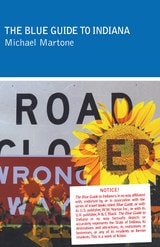
The master of the nearly true is back with The Blue Guide to Indiana, an ersatz travel book for the Hoosier State. Michael Martone, whose trademark is the blurring of the lines between fact and fiction, has created an Indiana that almost is, a landscape marked by Lover's Lane franchises and pharmaceutical drug theme parks. Visit the Trans-Indiana Mayonnaise Pipeline and the Field of Lightbulbs. Learn about Our Lady of the Big Hair and Feet or the history of the License Plate Insurrection of 1979. Let Martone guide you through every inch of the amazing state that is home to the Hoosier Infidelity Resort Area, the National Monument for Those Killed by Tornadoes in Trailer Parks and Mobile Home Courts, and the Annual Eyeless Fish Fry. All your questions will be answered, including many you never thought to ask (like: "What's a good recipe for Pork Cake?").
The Blue Light
Hussein Barghouthi
Seagull Books, 2023
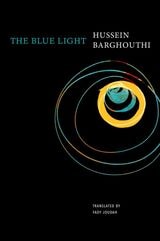
Hussein Bargouthi tells his story with Bari, a Turkish American Sufi, during Bargouthi’s years as a graduate student at the University of Washington in the late 1980s. The Blue Light has several beginnings and many returns—from Beirut’s traumatic sea to musings on color and identity, from Buddhist paths to Rajneesh disciples, from military rule to colonial insanity, from drug addiction to sacred rock. Written and lived between Arabic and English, this is a unique book whose depth is as clear as its surface. It will tempt you to dismiss it as it compels you to devour it for illumination. Merging memoir with fiction, and the hallowed with the profane, The Blue Light is a meditation on and liberation from madness—a brilliant, inimitable literary achievement.
The Blue Soda Siphon
Urs Widmer
Seagull Books, 2014
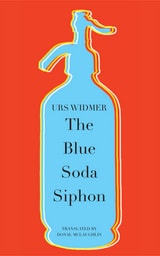
In the wildly entertaining novel The Blue Soda Siphon, the narrator unexpectedly finds himself back in the world of his childhood: Switzerland in the 1940s. He returns to his childhood home to find his parents frantic because their son is missing. Then, in another switch, the young boy that he was back then turns up in the present of the early 1990s, during the Gulf War, where he meets himself as an older man, and meets his adult self’s young daughter. These head-scratching, hilarious time shifts happen when both the adult narrator and his childhood self go to the cinema and see films, the subjects of which echo their own lives.
Translated into English for the first time by Donal McLaughlin, this novel, in which the eponymous blue soda siphon bottle is a recurring symbol, is a magnificent example of Urs Widmer’s characteristic humor, literary genius, and unparalleled imagination.
The Boarding-School Girl
Nadezhda Khvoshchinskaya
Northwestern University Press, 2000
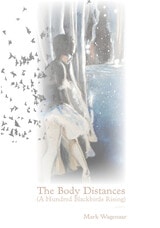
The Body Distances (A Hundred Blackbirds Rising)
Mark Wagenaar
University of Massachusetts Press, 2016
Let no lip, shoulder, hip, go untasted tonight. Let no one be unscathed.
And as you close the door & fold yourself in sleep against another
look for a moment at the empty stretch of dark between heaven
& earth: someone is missing from the world . . .
The Body Distances is filled with long, limber, nimble poems at once ecstatic and elegiac. These poems are odes to the miraculous embedded in the everyday, in which “the unlikely continues / to dovetail with the present.”
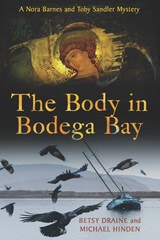
The Body in Bodega Bay
A Nora Barnes and Toby Sandler MysteryBetsy Draine and Michael Hinden
University of Wisconsin Press, 2014
Local tales about Hitchcock’s famous film, and some digging into the region’s past as a Russian outpost, provide Toby and Nora with clues to the existence of a lost masterpiece. Convinced that this forgotten work may hold the key to the murder, Nora and Toby set out to find it. When Nora’s trouble-prone sister Angie arrives, events take a surprising turn, leading to the uncanny realm of angel reading and putting Nora and her family in danger. As Nora and Toby investigate matters both criminal and otherworldly, Nora realizes that some mysteries in life may be too deep to solve.
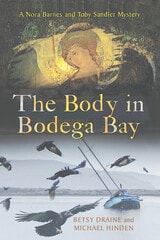
The Body in Bodega Bay
A Nora Barnes and Toby Sandler MysteryBetsy Draine and Michael Hinden
University of Wisconsin Press, 2020
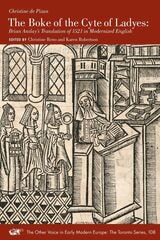
The Boke of the Cyte of Ladyes
Brian Anslay's Translation of 1521 in Modernized EnglishChristine de Pizan
Iter Press, 2025
Christine de Pizan's defense of women against centuries of misogyny, Cité des dames, was the only work of literature translated into English by Brian Anslay, an administrator in the household of King Henry VII. While numerous manuscripts were held in royal and aristocratic libraries, Anslay’s printed translation enabled a broader range of readers to appreciate the arguments for female rule crucial to the reigns of Mary I and Elizabeth I. Anslay’s translation also played a key role in the late-nineteenth-century revival of interest in Christine. This modernization of Anslay’s Tudor English makes his translation accessible to contemporary readers while preserving the rhythms of early Tudor prose. It includes an extensive introduction and notes highlighting both the history of the language and the cultural references embodied in the text.
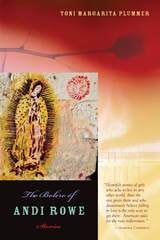
The Bolero of Andi Rowe
StoriesToni Margarita Plummer
Northwestern University Press, 2011
Set largely in Los Angeles’s San Gabriel Valley, and crossing generations and borders, these stories focus on the quiet moments between explosions, where tension simmers just beneath the surface. From a Border Patrol agent whose own mother crossed the border illegally to a lonely woman seeking companionship with her hired day-laborer, characters seek revelation in the most ordinary of experiences, their actions filled with humor, longing, and honesty.
In the tradition of Flannery O’Connor, Toni Margarita Plummer explores themes of grace and redemption as each story spirals toward a surprising but inevitable conclusion. The Bolero of Andi Rowe, an impressive work by an exciting new talent, offers a compassionate look at the struggle between meeting cultural expectations and seeking happiness, and the sacrifices and triumphs made along the way.
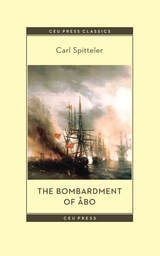
The Bombardment of Åbo
A Novella Based on a Historical Event in Modern TimesCarl Spitteler
Central European University Press, 2022
This farcical tale tells how the British bombing of a Finnish port city changes the life of the Russian governor, his wife, their cook, and the cook's Finnish fiancé. The story takes place during a Nordic offshoot of the Crimean conflict, known as the Åland War, in which a British-French naval force attacked military and civilian facilities on the coast of the Grand Duchy of Finland in 1854–1856. The location of the novella is Åbo, today’s Turku, where soldiers in the Russian garrison enjoy life, Cossacks dance and drink, and the governor’s wife is preoccupied about her cook’s marriage to a local lad, against which the governor and the English admiral devise a plot.
After studies in Swiss and German universities, Carl Spitteler worked in Russia between 1871 and 1879 as the private tutor in the family of a Finnish general. In the process he came to know Finnish and Baltic noble families in Saint Petersburg and Finland. He published this story in 1889, and went on to become, in 1919, the first Swiss winner of the Nobel Prize for literature. The Bombardment of Åbo is an ironic Western gaze on life and culture in the Tsarist Empire. Spitteler’s deeply held pacifism breaks through his otherwise sarcastic description of the characters and episodes in the novella.
The Bones of Bascom Hall
Betsy Draine and Michael Hinden
University of Wisconsin Press, 2024
Inspired by an event that traumatized Madison and shocked the nation, this absorbing novel blends fact and fiction and is sure to delight both mystery enthusiasts and UW alumni.
The Bonjour Gene
A NovelJ. A. Marzán; Introduction by David Huddle
University of Wisconsin Press, 2005
Descended from three French brothers who settled in Puerto Rico, Bonjours now belong to extended branches, some settled in New York City. Removed in varying degrees, all remain connected by the lore that only one island family possesses their surname, and that starting with the three brothers—sowers of a legacy of adultery and abandonment—every Bonjour male carries a reckless, womanizing gene.
Lineage and legend of lineage haunt but do not make these lives predictable. So Daisy, who hardly knew her father and has passed her prime without much interest in marriage, secretly falls in love with the man who paid her to marry him so he could get a green card. Ten-year-old Marco does not know what the reader does: that his visiting, divorced Bonjour father is gay. Recently married Gabriel, having flown to Puerto Rico to bury a father who intermittently entered his life, meets an African American down from Georgia, whom he learns is his embittered brother, and his beautiful stepsister, with whom he faces the same temptation that sidetracked his father.
Interconnected like his Bonjour families, these stories of unpredictable and unforgettable characters will transport the reader to a plane where ethnicity becomes universality.
The Book of Casey Adair
Ken Harvey
University of Wisconsin Press, 2021
Three years later Casey is an educator in Boston, trying to balance finding his voice as an AIDS activist, dealing with an intolerant headmaster, and rebuilding a relationship with his daughter. As dear friends fall ill to the virus, he struggles to understand how his many identities—father, teacher, caretaker, dissident, lover, husband—can coexist. In a world that asks so much of us, what is our responsibility to others and ourselves?
The Book of Commentary / Unquiet Garden of the Soul
Alexander Kluge
Seagull Books, 2023
The Book of Commentary / Unquiet Garden of the Soul confronts the reader with questions of existential meaning, questions rendered all the more potent by the backdrop of the Coronavirus pandemic: How fragile are we as human beings? How fragile are our societies? What is a “self,” an “I,” a “community”? How are we to orient ourselves? And what, if any, role does commentary play? In a fashion that will be familiar to longtime admirers of Alexander Kluge, the book stretches both back in time to the medieval glossators of Bologna and forward into interstellar space with imagined travel to the moon Europa. Kluge’s characteristic brief, vignette-like prose passages are interspersed with images from his own film work and QR codes, forming a highly engaging, thoroughly contemporary read.
The Book of Doubt
Tessa de Loo
Haus Publishing, 2011
The Book of Famous Iowans
A NovelDouglas Bauer
University of Iowa Press, 2014
But mostly what Will summons up in his intimate remembrance are those few catastrophic days in early June when he was “three months shy of twelve,” more than a decade after his parents have married and returned to the Vaughns’ home place, where Lewis farms his family’s land. For it is during those days that Leanne’s affair with a local man named Bobby Markum becomes known—first to Lewis and then, in a fiercely dramatic public confrontation, to young Will, to his beloved Grandmother Vaughn, and by nightfall to all the citizens of the town. The knowledge of such scandal, in so small a place, sets off a series of highly charged reactions, vivid consequences that surely determine the fates of every member of this unforgettable family.
A tale of memory and hero worship and the restless pulse of longing, The Book of Famous Iowans examines those forces that define not only a state made up of a physical geography, but more important, those states of the wholly human spirit.
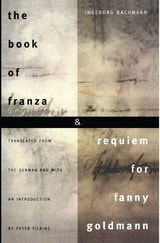
The Book of Franza and Requiem for Fanny Goldmann
Ingeborg Bachmann, translated from the German by Peter Filkins
Northwestern University Press, 2010
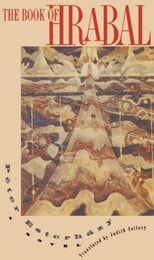
The Book of Hrabal
Peter Esterhazy, translated from the Czech by Judith Sollosy
Northwestern University Press, 1994
Named a New York Times Notable Book of 1994
Winner of 1995 The New York Times Review Notable Books
An elaborate, elegant homage to the great Czech storyteller Bohumil Hrabal (author of Closely Watched Trains), The Book of Hrabal is also a farewell to the years of communism in Eastern Europe and a glowing paean to the mixed blessings of domestic life. Anna, blues-singing housewife and mother of three, addresses her reminiscences and reflections to Hrabal. They swing from domestic matters, to accounts of the injustices suffered by her family during the Stalinist 1950s and the police harassment in subsequent years, to her husband's crazy ideas. He frets over his current project, a book celebrating Hrabal, but seems unable to write it. Meanwhile, two angels, undercover as secret policemen, shadow the household-communicating via walkie-talkie-to prevent Anna from aborting her fourth child. God himself (aka Bruno) enters the scene; he chats with Hrabal, takes saxophone lessons from an irreverent Charlie Parker (unfortunately even this doesn't cure his tone-deaf ear), and tries to play the saxophone to dissuade her from ending the pregnancy.
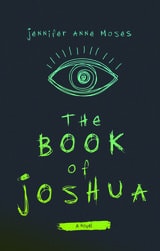
The Book of Joshua
Jennifer Anne Moses
University of Wisconsin Press, 2018
Once a popular long-distance runner, Josh is now flabby, frustrated, and furious about returning to his New Jersey high scho ol to repeat his senior year. Forced to attend meetings with other "underage weirdos," he sinks into his loneliness. But when Josh meets Elizabeth Rinaldi, things begin to change. The only other new student in his class, she has a scar on her forehead, a Southern accent, and an attitude. Sharing a status as outcasts and an aptitude for snark, Josh and Elizabeth help each other escape their pasts.
The Book of Joshua weaves an unforgettable story from family secrets, friendship, faith, love, and redemption. It brings readers deeply into the lives of those who suffer from mental illness, as well as the friends and family affected by it.