Results by title
763 books match the query 'Immigration & Emigration' and 131 start with t
The Unruly Facts of Race
The Politics of Knowledge Production in the Early Twentieth-Century Immigration DebateSunmin Kim
University of Chicago Press, 2026
Unfortunately, we’re all too familiar with the US’s legacy of maligning immigrants. Some Americans see immigrants as inherently threatening, a blank screen onto which the nation’s worst fears are projected. But this phenomenon is neither timeless nor static. Instead, it arose and transformed alongside the unprecedented arrival of immigrants in the early twentieth century—and the federal government’s response. In The Unruly Facts of Race, sociologist Sunmin Kim explains how American ideas about race and ethnicity were transformed in the early twentieth century as an unintended consequence of anti-immigrant mobilization.
Kim presents a wealth of archival evidence, including the proceedings of the 1907 Dillingham Commission, to reconstruct how competing racialized visions of nationhood evolved in the early twentieth-century immigration debate. Immigration restrictionist politicians believed that the United States should be a White, Anglo-Saxon, and Protestant nation. However, when they mobilized researchers—some of whom were women and/or immigrants—to gather data at a massive scale to rationalize their aims, they were met with unruly facts that did not support their racial project. Newer European immigrants, as the data showed, were not much different from descendants of earlier immigrants from northern Europe. When facts failed to support the vilification of immigrants, exclusionist politicians instead turned to race as a marker of ineluctable difference to justify their aims. This led to a new principle of national belonging: the United States transitioned to a country that encompassed various European groups, including Catholics and Jews, but excluded non-White immigrants, as they were deemed too different to become a part of the nation.
Kim’s analysis shows that throughout US history, the opportunity for belonging for some immigrants was predicated on the exclusion of others. His focus on the role of facts in the early twentieth century provides a refreshing take on why the so-called “nation of immigrants” has always demonized some immigrants while cherishing others, highlighting the selection and control of immigrants as the core principles of the American nation-building project. Amid a vitriolic explosion of American immigration discourse, Kim offers a needed corrective to and context for debates around who belongs in the United States.
The Unspoken as Heritage
The Armenian Genocide and Its Unaccounted LivesHarry Harootunian
Duke University Press, 2019
The Uprooted
The Refugee in World HistoryAndreas Kossert
Rutgers University Press, 2027
In his new book, Andreas Kossert—the renowned expert on emigration and expulsion in the twentieth century and author of the bestselling Cold Home—places the early twenty-first-century refugee movement in a wider historical context. Movingly told and interwoven with personal accounts, The Uprooted: The Refugee in World History reveals the existential experiences of uprootedness and hostility that go hand in hand with losing one's homeland and explains why refugees and displaced persons have always found it so difficult to settle into a new country. Whether they have come from East Prussia, Syria, or India, refugees are agents of world history—and with this book Kossert gives them a voice.
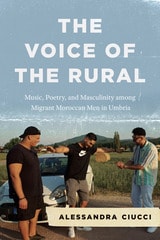
The Voice of the Rural
Music, Poetry, and Masculinity among Migrant Moroccan Men in UmbriaAlessandra Ciucci
University of Chicago Press, 2022
Umbria is known to most Americans for its picturesque rolling hills and medieval villages, but to the many migrant Moroccan men who travel there, Umbria is better known for the tobacco fields, construction sites, small industries, and the outdoor weekly markets where they work. Marginalized and far from their homes, these men turn to Moroccan traditions of music and poetry that evoke the countryside they have left— l-‘arubiya, or the rural. In this book, Alessandra Ciucci takes us inside the lives of Moroccan workers, unpacking the way they share a particular musical style of the rural to create a sense of home and belonging in a foreign and inhospitable nation. Along the way, she uncovers how this culture of belonging is not just the product of the struggles of migration, but also tied to the reclamation of a noble and virtuous masculine identity that is inaccessible to Moroccan migrants in Italy.
The Voice of the Rural allows us to understand the contemporary experiences of migrant Moroccan men by examining their imagined relationship to the rural through sound, shedding new light on the urgent issues of migration and belonging.

The Welsh in America
Letters From the ImmigrantsAlan Conway, Editor
University of Minnesota Press, 1961
The Welsh in America was first published in 1961. Minnesota Archive Editions uses digital technology to make long-unavailable books once again accessible, and are published unaltered from the original University of Minnesota Press editions.
The Welsh formed a small but significant part of the great migration from Europe to the United States during the nineteenth century. In this volume they tell their own story in letters they wrote from America to their families and friends back home. The letters are highly readable, written, for the most part, in vivid and entertaining style which reveals the Welsh as an unusually literate people.
The 197 letters are arranged chronologically and geographically, starting with letters that tell of the voyage across the Atlantic. Once in America, the immigrants described their experiences in the farming country of New York, Pennsylvania, Ohio, and some of the other midwestern states. Later, as the frontier moved west, they wrote of their efforts to establish exclusive Welsh settlements on the Great Plains. From the industrial centers there are letters from coal miners and iron and steel workers. The fortune seekers who went to California in the gold rush or to the mines in Colorado are also represented. Still others tell of their search for salvation in the Mormon Zion of Utah.
For each chapter or group of letters Mr. Conway has written an introduction giving the general background of the region or period and relating it to the Welsh settlers. Thus the events chronicled and the views expressed in the letters become significant in the history of the times. The majority of the letters were written in Welsh and they appear here in translation. Some were obtained from the files of old newspapers or denominational magazines; others came from the collections of the National Library of Wales or from individuals.
The Work of Mothering
Globalization and the Filipino DiasporaHarrod Suarez
University of Illinois Press, 2017
Harrod J. Suarez's innovative readings of this cultural production explores issues of diaspora, gender, and labor. He details the ways literature and cinema play critical roles in encountering, addressing, and problematizing what we think we know about overseas Filipina workers. Though often seen as compliant subjects, the Filipina mother can also destabilize knowledge production that serves the interests of global empire, capitalism, and Philippine nationalism. Suarez examines canonical writers like Nick Joaquín, Carlos Bulosan, and Jessica Hagedorn to explore this disruption and understand the maternal specificity of the construction of overseas Filipina workers. The result is a series of readings that develop new ways of thinking through diasporic maternal labor that engages with the sociological imaginary.

They Call You Back
A Lost History, A Search, A MemoirTim Z. Hernandez
University of Arizona Press, 2024
A haunting, an obsession, a calling: Tim Z. Hernandez has been searching for people his whole life. Now, in this highly anticipated memoir, he takes us along on an investigative odyssey through personal and collective history to uncover the surprising conjunctions that bind our stories together.
Hernandez’s mission to find the families of the twenty-eight Mexicans who were killed in the 1948 plane wreck at Los Gatos Canyon formed the basis for his acclaimed documentary novel All They Will Call You, which the San Francisco Chronicle dubbed “a stunning piece of investigative journalism,” and the New York Times hailed as “painstaking detective work by a writer who is the descendant of farmworkers.”
In this riveting new work, Hernandez continues his search for the plane crash victims while also turning the lens on himself and his ancestral past, revealing the tumultuous and deeply intimate experiences that have fueled his investigations—a lifelong journey haunted by memory, addiction, generational trauma, and the spirit world.
They Call You Back is the true chronicle of one man’s obsession to restore dignity to an undignified chapter in America’s past, while at the same time making a case for why we must heal our personal wounds if we are ever to heal our political ones.
Tight Knit
Global Families and the Social Life of Fast FashionElizabeth L. Krause
University of Chicago Press, 2018
Krause offers a revelatory look into how families involved in the fashion industry are coping with globalization based on longterm research in Prato, the historic hub of textile production in the heart of metropolitan Tuscany. She brings to the fore the tensions—over value, money, beauty, family, care, and belonging—that are reaching a boiling point as the country struggles to deal with the same migration pressures that are triggering backlash all over Europe and North America. Tight Knit tells a fascinating story about the heterogeneity of contemporary capitalism that will interest social scientists, immigration experts, and anyone curious about how globalization is changing the most basic of human conditions—making a living and making a life.
Times of Mobility
Transnational Literature and Gender in TranslationJasmina Lukic
Central European University Press, 2020
To Be an Immigrant
Kay Deaux
Russell Sage Foundation, 2006
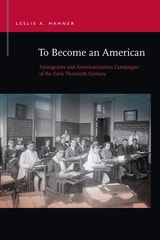
To Become an American
Immigrants and Americanization Campaigns of the Early Twentieth CenturyLeslie A. Hahner
Michigan State University Press, 2017
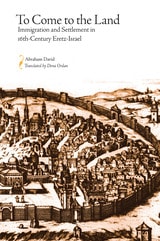
To Come to the Land
Immigration and Settlement in 16th-Century Eretz-IsraelAbraham David, translated by Dena Ordan
University of Alabama Press, 1999
To Come to the Land makes available in English a vast body of research,
previously available only in Hebrew, on the early history of the land now
known as Israel.
Abraham David here focuses on the Spanish and Portuguese Jews who fled
the Iberian Peninsula during the 16th century, tracing the beginnings of
Sephardic influence in the land of Israel.
After the Ottoman Turks conquered Syria, Palestine, and Egypt in 1516,
the Ottoman regime, unlike their Mamluk predecessors, encouraged economic
development and settlement throughout the region. This openness to immigration
offered a solution to the crisis Iberian Jews were undergoing as a result
of their expulsion from Spain and the forced conversions in Portugal. Within
a few years of the Ottoman conquest, Jews of Spanish extraction, many of
them clustered in urban areas, dominated the Jewish communities of Eretz-Israel.
In this carefully researched study, David examines the lasting impression
made by these enterprising Jewish settlers on the commercial, social, and
intellectual life of the area under early Ottoman rule. Of particular interest
is his examination of the cities of Jerusalem and Safed and David's succinct
biographies of leading Jewish personalities throughout the region.
This first English translation of a ground-breaking Hebrew work provides
a comprehensive overview of a significant chapter in the history of Israel
and explores some of the factors that brought to it the best minds of the
age. Essential for scholars of late Medieval Jewish history, To Come to
the Land will also be an important resource for scholars of intellectual
history, as it provides background crucial to an understanding of the intellectual
flourishing of the period.
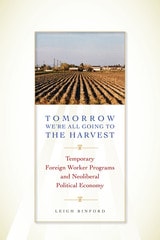
Tomorrow We're All Going to the Harvest
Temporary Foreign Worker Programs and Neoliberal Political EconomyBy Leigh Binford
University of Texas Press, 2013
From its inception in 1966, the Canadian Seasonal Agricultural Worker Program (SAWP) has grown to employ approximately 20,000 workers annually, the majority from Mexico. The program has been hailed as a model that alleviates human rights concerns because, under contract, SAWP workers travel legally, receive health benefits, contribute to pensions, are represented by Canadian consular officials, and rate the program favorably. Tomorrow We’re All Going to the Harvest takes us behind the ideology and examines the daily lives of SAWP workers from Tlaxcala, Mexico (one of the leading sending states), observing the great personal and family price paid in order to experience a temporary rise in a standard of living. The book also observes the disparities of a gutted Mexican countryside versus the flourishing agriculture in Canada, where farm labor demand remains high.
Drawn from extensive surveys and nearly two hundred interviews, ethnographic work in Ontario (destination of over 77 percent of migrants in the author’s sample), and quantitative data, this is much more than a case study; it situates the Tlaxcala-Canada exchange within the broader issues of migration, economics, and cultural currents. Bringing to light the historical genesis of “complementary” labor markets and the contradictory positioning of Mexican government representatives, Leigh Binford also explores the language barriers and nonexistent worker networks in Canada, as well as the physical realities of the work itself, making this book a complete portrait of a provocative segment of migrant labor.
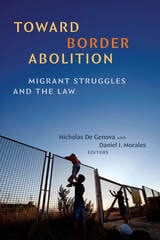
Toward Border Abolition
Migrant Struggles and the LawNicholas De Genova and Daniel I. Morales, editors
Duke University Press, 2026
Toward a Cooperative Commonwealth
The Transplanted Roots of Farmer-Labor Radicalism in TexasThomas Alter II
University of Illinois Press, 2022
A rare look at the German roots of radicalism in Texas, Toward a Cooperative Commonwealth illuminates the labor movements and populist ideas that changed the nation’s course at a pivotal time in its history.

Tracking Europe
Mobility, Diaspora, and the Politics of LocationGinette Verstraete
Duke University Press, 2009
In demystifying the old and new Europe across a multiplicity of texts, images, media, and cultural practices in various times and locations, Verstraete lays bare a territorial persistence in the European imaginary, one which has been differently tied up with the politics of inclusion and exclusion. Tracking Europe moves from policy papers, cultural tourism, and migration to philosophies of cosmopolitanism, nineteenth-century travel guides, electronic surveillance at the border, virtual pilgrimages to Spain, and artistic interventions in the Balkan region. It is a sustained attempt to situate current developments in Europe within a complex matrix of tourism, migration, and border control, as well as history, poststructuralist theory, and critical media and art projects.

Traffick
The Illicit Movement of People and ThingsGargi Bhattacharyya
Pluto Press, 2005
Transatlantic Subjects
Acts of Migration and Cultures of Transnationalism between Greece and AmericaIoanna Laliotou
University of Chicago Press, 2004
According to Ioanna Laliotou, cultural institutions and practices played an important role in the formation of migrant subjectivities. Reconstructing the cultural history of migration, her book points out the relationship between subjectivity formation and cultural practices and performances, such as publishing, reading, acting, storytelling, consuming, imitating, parading, and traveling. Transatlantic Subjects then locates the development of these practices within key sites and institutions of cultural formation, such as migrant and fraternal associations, educational institutions, state agencies and nongovernmental organizations, mental institutions, coffee shops, the church, steamship companies, banks, migration services, and chambers of commerce.
Ultimately, Laliotou explores the complex and situational entanglements of migrancy, cultural nationalism, and the politics of self. Reading against the grain of hegemonic narratives of cultural and migration histories, she reveals how migrancy produced distinctive forms of sociality during the first half of the twentieth century.

Transit Communities and Impact of Migration
Hungary, 2017-2020Beatrix Futak-Campbell
Central European University Press, 0
The impact of the passage of war refugees on the lives and minds of local residents and officials is the subject of this study. Between 2017 and 2020, Beatrix Futak-Campbell conducted interviews with over fifty people who live and work near the Hungarian-Serbian border. This area was exposed to the unprecedented stream of refugees, most of them seeking safety from the Syrian civil war. The Hungarian government’s hostility to migrants has been widely criticized, and news coverage has tended to reiterate unhelpful characterisations of Hungarian citizens as being anti-migrant, anti-Muslim and racist.
The situation is, however, more nuanced. There is a substantial difference between the border police, local communities, and organizations, on the one hand, and national politicians and the international media perception of the refugee ‘crisis’, on the other. Those living and working with migrants at the border were caught between the domestic political situation, the plight of the refugees and the international support the latter receive, and the exigencies of their own livelihoods. This book explores these communities and their own security concerns.
Transit States
Labour, Migration and Citizenship in the GulfOmar AlShehabi
Pluto Press, 2014
The cheap and transitory labour power these workers provide has created the prodigious and extraordinary development boom across the region, and neighbouring countries are almost fully dependent on the labour markets of the Gulf to employ their working populations. For these reasons, the Gulf takes a central place in contemporary debates around migration and labour in the global economy.
This book attempts to bring together and explore these issues. The relationship between ‘citizen’ and ‘non-citizen’ holds immense significance for understanding the construction of class, gender, city and state in the Gulf, however too often these questions are occluded in too scholarly or overly-popular accounts of the region. Bringing together experts on the Gulf, Transit States confronts the precarious working conditions of migrants in a accessible, yet in-depth manner.
Transnational Aging and Reconfigurations of Kin Work
Dossa, Parin
Rutgers University Press, 2017
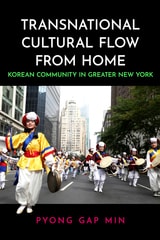
Transnational Cultural Flow from Home
Korean Community in Greater New YorkPyong Gap Min
Rutgers University Press, 2023
Transnational Cultural Flow from Home examines New York Korean immigrants’ collective efforts to preserve their cultural traditions and cultural practices and their efforts to transmit and promote them to New Yorkers by focusing on the Korean cultural elements such as language, foods, cultural festivals, and traditional and contemporary performing arts.
This publication was supported by the 2022 Korean Studies Grant Program of the Academy of Korean Studies (AKS-2022-P-009).
Transnational Desires
Brazilian Erotic Dancers in New YorkSuzana Maia
Vanderbilt University Press, 2012
Their motivation to migrate and to work as erotic dancers can also be understood in the context of a representational system, inaugurated in colonial times, that emphasizes the exoticism of Brazilian womentheir bodies, their skin tone, their sexuality. These stereotypes are the props that Brazilian women use to construct their performances in Manhattan and Queens gentlemen's bars and the language through which they negotiate their relationships to society at large.
Transnational Desires focuses on the lives of nine Brazilian dancers with whom the author, herself a middleclass Brazilian, developed close relationships over the years. Maia examines their social relations both in the bar scene and with family, friends, and lovers outside. She shows that for these women erotic dancing is part of a life trajectory that involves negotiating their social position and life prospects in a fundamentally transnational social universe.
Transnational Marriage and Partner Migration
Constellations of Security, Citizenship, and RightsAnne-Marie D'Aoust
Rutgers University Press, 2022
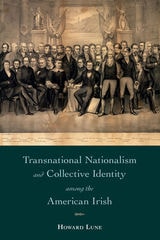
Transnational Nationalism and Collective Identity among the American Irish
Howard Lune
Temple University Press, 2020
In Transnational Nationalism and Collective Identity among the American Irish, Howard Lune considers the development and mobilization of different nationalisms over 125 years of Irish diasporic history (1791–1920) and how these campaigns defined the Irish nation and Irish citizenship.
Lune takes a collective approach to exploring identity, concentrating on social identities in which organizations are the primary creative agent to understand who we are and how we come to define ourselves. As exiled Irishmen moved to the United States, they sought to create a new Irish republic following the American model. Lune traces the construction of Irish American identity through the establishment and development of Irish nationalist organizations in the United States. He looks at how networks—such as societies, clubs, and private organizations—can influence and foster diaspora, nationalism, and nationalist movements.
By separating nationalism from the physical nation, Transnational Nationalism and Collective Identity among the American Irish uniquely captures the processes and mechanisms by which collective identities are constructed, negotiated, and disseminated. Inevitably, this work tackles the question of what it means to be Irish—to have a nationality, a community, or a shared history.

Transnational Trajectories and Diaspora Policies
The Case of Czechia in Comparison to Poland, Hungary and SlovakiaEdited by Eva Janská
Karolinum Press, 2025
The book examines diaspora policy in Central European countries in the context of changes following their accession to the EU, utilizing the Czech Republic, Slovakia, Poland, and Hungary as case studies. With a focus on the previously underexplored new Czech diaspora (i.e., the emigration of Czechs/Czechoslovaks after 1990), individual case studies provide a comprehensive description of the contemporary Czech diaspora while also elucidating key inquiries directed towards its current character and specific needs.
Tropical Renditions
Making Musical Scenes in Filipino AmericaChristine Bacareza Balance
Duke University Press, 2016
Troublesome Border, Revised Edition
Oscar J. Martínez
University of Arizona Press, 2006
Oscar Martínez’s words may come as a surprise to those who associate the U.S. southern border with banditry, racial strife, illegal migration, drug smuggling, and official corruption—all attributed to Mexico. In Troublesome Border, now revised to reflect the dramatic changes over the last two decades, a distinguished scholar and long-time resident of the border area addresses these and other problems that have caused increasing concern to federal governments on both sides of the border.
This second edition of Troublesome Border has been updated and revised to cover dramatic developments since the book’s first publication in 1988 that have once again transformed the region in fundamental ways. Martinez includes new information on migration and drugs, including the extraordinary rise of violence traced largely to the rampant illegal drug trade; the devastating effects of U.S. Border Patrol “blockades” that have resulted in thousands of deaths; and the impact of the North American Free Trade Agreement (NAFTA).
Trust beyond Borders
Immigration, the Welfare State, and Identity in Modern SocietiesMarkus M.L. Crepaz
University of Michigan Press, 2010
Will immigration undermine the welfare state? Trust beyond Borders draws on public opinion data and case studies of Germany, Sweden, and the United States to document the influence of immigration and diversity on trust, reciprocity, and public support for welfare programs. Markus M. L. Crepaz demonstrates that we are, at least in some cases, capable of trusting beyond borders: of expressing faith in our fellow humans and extending help without regard for political classifications.
In Europe, the welfare state developed under conditions of relative homogeneity that fostered high levels of trust among citizens, while in America anxiety about immigration and diversity predated the emergence of a social safety net. Looking at our new era of global migration, Crepaz traces the renewed debate about "us" versus "them" on both sides of the Atlantic and asks how it will affect the public commitment to social welfare. Drawing on the literatures on immigration, identity, social trust, and the welfare state, Trust beyond Borders presents a novel analysis of immigration's challenge to the welfare state and a persuasive exploration of the policies that may yet preserve it.
"Crepaz contributes much to our knowledge about the link between immigration and social welfare, certainly one of the central issues in current national and international politics."
---Stuart Soroka, Associate Professor of Political Science and William Dawson Scholar, McGill University
"Finally! A book that challenges the growing view that ethnic diversity is the enemy of social solidarity. It addresses an issue of intense debate in Western nations; it takes dead aim at the theoretical issues at the center of the controversy; it deploys an impressive array of empirical evidence; and its conclusions represent a powerful corrective to the current drift of opinion. Trust beyond Borders will rank among the very best books in the field."
---Keith Banting, Queen's Research Chair in Public Policy, Queen's University
"Do mass immigration and ethnic diversity threaten popular support for the welfare state? Trust beyond Borders answers no. Marshaling an impressive array of comparative opinion data, Crepaz shows that countries with high levels of social trust and universal welfare state arrangements can avoid the development of the welfare chauvinism that typically accompanies diversity."
---Gary Freeman, Professor and Department Chair, Department of Government, University of Texas at Austin
Markus M. L. Crepaz is Professor in the Department of International Affairs at the University of Georgia and Associate Director of the Center for the Study of Global Issues (GLOBIS).
Tuberculosis and the Politics of Exclusion
A History of Public Health and Migration to Los AngelesAbel, Emily K.
Rutgers University Press, 2007
Winner of the 2008 Arthur J. Viseltear Prize from the American Public Health Association and Nominated for the 2008 William H. Welch Medal, AAHM
Though notorious for its polluted air today, the city of Los Angeles once touted itself as a health resort. After the arrival of the transcontinental railroad in 1876, publicists launched a campaign to portray the city as the promised land, circulating countless stories of miraculous cures for the sick and debilitated. As more and more migrants poured in, however, a gap emerged between the city’s glittering image and its dark reality.
Emily K. Abel shows how the association of the disease with “tramps” during the 1880s and 1890s and Dust Bowl refugees during the 1930s provoked exclusionary measures against both groups. In addition, public health officials sought not only to restrict the entry of Mexicans (the majority of immigrants) during the 1920s but also to expel them during the 1930s.
Abel’s revealing account provides a critical lens through which to view both the contemporary debate about immigration and the U.S. response to the emergent global tuberculosis epidemic.

Turkish Berlin
Integration Policy and Urban SpaceAnnika Marlen Hinze
University of Minnesota Press, 2013
The integration of immigrants into a larger society begins at the local level. Turkish Berlin reveals how integration has been experienced by second-generation Turkish immigrant women in two neighborhoods in Berlin, Germany. While the neighborhoods are similar demographically, the lived experience of the residents is surprisingly different.
Informed by first-person interviews with both public officials and immigrants, Annika Marlen Hinze makes clear that local integration policies—often created by officials who have little or no contact with immigrants—have significant effects on the assimilation of outsiders into a community and a society. Focusing on the Turkish neighborhoods of Kreuzberg and Neukölln, Hinze shows how a combination of local policy making and grassroots organizing have contributed to one neighborhood earning a reputation as a hip, multicultural success story and the other as a rougher neighborhood featuring problem schools and high rates of unemployment. Aided by her interviews, she describes how policy makers draw from their imaginations of urban space, immigrants, and integration to develop policies that do not always take social realities into consideration. She offers useful examples of how official policies can actually exacerbate the problems they are trying to help solve and demonstrates that a powerful history of grassroots organizing and resistance can have an equally strong impact on political outcomes.
Employing spatial theory as a tool for understanding the complex processes of integration, Hinze asks two related questions: How do immigrants perceive themselves and their experiences in a new culture? And how are immigrants conceived of by politicians and policy makers? Although her research highlights the German–Turk experience in Berlin, her answers have implications that resonate far beyond the city’s limits.