Results by title
1993 books match the query 'Latin America' and 392 start with t
The Enduring Legacy
Oil, Culture, and Society in VenezuelaMiguel Tinker Salas
Duke University Press, 2009
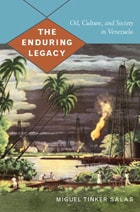
North American and British petroleum companies, seeking to maintain their stakes in Venezuela, promoted the idea that their interests were synonymous with national development. They set up oil camps—residential communities to house their workers—that brought Venezuelan employees together with workers from the United States and Britain, and eventually with Chinese, West Indian, and Mexican migrants as well. Through the camps, the companies offered not just housing but also schooling, leisure activities, and acculturation into a structured, corporate way of life. Tinker Salas contends that these practices shaped the heart and soul of generations of Venezuelans whom the industry provided with access to a middle-class lifestyle. His interest in how oil suffused the consciousness of Venezuela is personal: Tinker Salas was born and raised in one of its oil camps.
The Enormous Vogue of Things Mexican
Cultural Relations between the United States and Mexico, 1920-1935Helen Delpar
University of Alabama Press, 1995
A landmark study of cultural exchange across the U.S.-Mexico border.
The Enormous Vogue of Things Mexican: Cultural Relations between the United States and Mexico, 1920–1935 explores a remarkable period when Mexico captured the imagination of the United States and became a powerful source of artistic, intellectual, and cultural inspiration. Historian Helen Delpar examines the flourishing exchange between the two nations during the interwar years, revealing how artists, writers, educators, political activists, archaeologists, and travelers helped forge unprecedented connections across the border.
In the decades following the Mexican Revolution, Americans increasingly looked to Mexico as a place of cultural authenticity, creative innovation, and social experimentation. Mexican art, music, literature, archaeology, and revolutionary ideals attracted widespread attention in the United States, while Mexican intellectuals and artists actively engaged with audiences north of the border. Delpar traces the individuals, institutions, and cultural movements that fueled this phenomenon, demonstrating how a growing fascination with Mexico reshaped American perceptions of its southern neighbor.
The book examines the rise of the celebrated Mexican mural movement, expanding interest in Indigenous cultures, and the influence of Mexican themes on American literature, visual arts, music, and education. It also explores the political and social forces that encouraged cultural exchange, including enthusiasm among American liberals for the Mexican Revolution and broader movements toward cultural nationalism in both countries.
By focusing on cultural relationships rather than diplomatic or economic ties, Delpar offers a fresh perspective on the history of U.S.-Mexican relations. Richly researched and engagingly written, The Enormous Vogue of Things Mexican remains an essential work for readers interested in cultural history, Latin American studies, art history, borderlands studies, and the evolving relationship between two neighboring nations whose histories have long been intertwined.

The European Revolutions of 1848 and the Americas
Edited by Guy Thomson
University of London Press, 2002
The Exhaustion of Difference
The Politics of Latin American Cultural StudiesAlberto Moreiras
Duke University Press, 2001
What, asks Moreiras, is the function of critical reason in the present moment? What is regionalistic knowledge in the face of globalization? Can regionalistic knowledge be an effective tool for a critique of contemporary reason? What is the specificity of Latin Americanist reflection and how is it situated to deal with these questions? Through examinations of critical regionalism, restitutional excess, the historical genealogy of Latin American subalternism, testimonio literature, and the cultural politics of magical realism, Moreiras argues that while cultural studies is increasingly institutionalized and in danger of reproducing the dominant ideologies of late capitalism, it is also ripe for giving way to projects of theoretical reformulation. Ultimately, he claims, critical reason must abandon its allegiance to aesthetic-historicist projects and the destructive binaries upon which all cultural theories of modernity have been constructed.
The Exhaustion of Difference makes a significant contribution to the rethinking of Latin American cultural studies.
The Expediency of Culture
Uses of Culture in the Global EraGeorge Yúdice
Duke University Press, 2003
Yúdice contends that a new international division of cultural labor has emerged, combining local difference with transnational administration and investment. This does not mean that today’s increasingly transnational culture—exemplified by the entertainment industries and the so-called global civil society of nongovernmental organizations—is necessarily homogenized. He demonstrates that national and regional differences are still functional, shaping the meaning of phenomena from pop songs to antiracist activism. Yúdice considers a range of sites where identity politics and cultural agency are negotiated in the face of powerful transnational forces. He analyzes appropriations of American funk music as well as a citizen action initiative in Rio de Janeiro to show how global notions such as cultural difference are deployed within specific social fields. He provides a political and cultural economy of a vast and increasingly influential art event— insite a triennial festival extending from San Diego to Tijuana. He also reflects on the city of Miami as one of a number of transnational “cultural corridors” and on the uses of culture in an unstable world where censorship and terrorist acts interrupt the usual channels of capitalist and artistic flows.

The Extractive Zone
Social Ecologies and Decolonial PerspectivesMacarena Gómez-Barris
Duke University Press, 2017
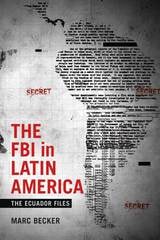
The FBI in Latin America
The Ecuador FilesMarc Becker
Duke University Press, 2017
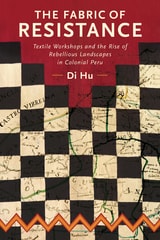
The Fabric of Resistance
Textile Workshops and the Rise of Rebellious Landscapes in Colonial PeruDi Hu
University of Alabama Press, 2022
Textiles as sites of power, production, and rebellion in the early modern Andes.
The Fabric of Resistance: Textile Workshops and the Rise of Rebellious Landscapes in Colonial Peru documents the impact of Spanish colonial institutions of labor on identity and social cohesion in Peru. Through archaeological and historical lines of evidence, Di Hu examines the long-term social conditions that enabled the large-scale rebellions in the late Spanish colonial period in Peru. Hu argues that ordinary people from different backgrounds pushed back against the top-down identity categories imposed by the Spanish colonial government and in the process created a cosmopolitan social landscape that later facilitated broader rebellion.
Hu’s case study is Pomacocha, the site of an important Spanish colonial hacienda (agricultural estate) and obraje (textile workshop). At its height, the latter had more than one hundred working families and sold textiles all over the Andes. Through analysis of this site, Hu explores three main long-term causes of rebellions against Spanish oppression. First, the Spanish colonial economy provided motivation and the social spaces for intercaste (indigenous, African, and mestizo) mixing at textile workshops. Second, new hybrid cultural practices and political solidarity arose there that facilitated the creation of new rebellious identities. Third, the maturation in the eighteenth century of popular folklore that reflected the harsh nature of Spanish labor institutions helped workers from diverse backgrounds gain a systemic understanding of exploitation.
This study provides a fresh archaeological and historical perspectives on the largest and most cosmopolitan indigenous-led rebellions of the Americas. Hu interweaves analyses of society at multiple scales including fine-grained perspectives of social networks, demography, and intimate details of material life in the textile workshop. She examines a wide range of data sources including artifacts, food remains, architectural plans, account books, censuses, court documents, contracts, maps, and land title disputes.

The Fate of the Forest
Developers, Destroyers, and Defenders of the Amazon, Updated EditionSusanna B. Hecht and Alexander Cockburn
University of Chicago Press, 2010
The Amazon rain forest covers more than five million square kilometers, amid the territories of nine different nations. It represents over half of the planet’s remaining rain forest. Is it truly in peril? What steps are necessary to save it? To understand the future of Amazonia, one must know how its history was forged: in the eras of large pre-Columbian populations, in the gold rush of conquistadors, in centuries of slavery, in the schemes of Brazil’s military dictators in the 1960s and 1970s, and in new globalized economies where Brazilian soy and beef now dominate, while the market in carbon credits raises the value of standing forest.
Susanna Hecht and Alexander Cockburn show in compelling detail the panorama of destruction as it unfolded, and also reveal the extraordinary turnaround that is now taking place, thanks to both the social movements, and the emergence of new environmental markets. Exploring the role of human hands in destroying—and saving—this vast forested region, The Fate of the Forest pivots on the murder of Chico Mendes, the legendary labor and environmental organizer assassinated after successful confrontations with big ranchers. A multifaceted portrait of Eden under siege, complete with a new preface and afterword by the authors, this book demonstrates that those who would hold a mirror up to nature must first learn the lessons offered by some of their own people.

The Fernando Coronil Reader
The Struggle for Life Is the MatterFernando Coronil
Duke University Press, 2019
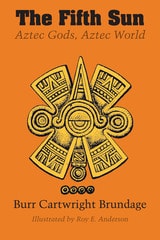
The Fifth Sun
Aztec Gods, Aztec WorldBy Burr Cartwright Brundage
University of Texas Press, 1979
The ancient Aztecs dwelt at the center of a dazzling and complex cosmos. From this position they were acutely receptive to the demands of their gods. The Fifth Sun represents a dramatic overview of the Aztec conception of the universe and the gods who populated it—Quetzalcoatl, the Plumed Serpent; Tezcatlipoca, the Smoking Mirror; and Huitzilopochtli, the Southern Hummingbird. Burr Cartwright Brundage explores the myths behind these and others in the Aztec pantheon in a way that illuminates both the human and the divine in Aztec life.
The cult of human sacrifice is a pervasive theme in this study. It is a concept that permeated Aztec mythology and was the central preoccupation of the aggressive Aztec state. Another particularly interesting belief explored here is the “mask pool,” whereby gods could exchange regalia and, thus, identities.
This vivid and eminently readable study also covers the use of hallucinogens; cannibalism; the calendars of ancient Mexico; tlachtli, the life-and-death ball game; the flower wars; divine transfiguration; and the evolution of the war god of the Mexica. A splendid introduction to Aztec religion, The Fifth Sun also contains insights for specialists in ethnohistory, mythology, and religion.
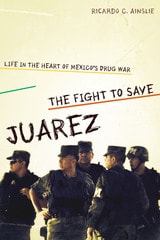
The Fight to Save Juárez
Life in the Heart of Mexico's Drug WarBy Ricardo C. Ainslie
University of Texas Press, 2013
The city of Juárez is ground zero for the drug war that is raging across Mexico and has claimed close to 60,000 lives since 2007. Almost a quarter of the federal forces that former President Felipe Calderón deployed in the war were sent to Juárez, and nearly 20 percent of the country’s drug-related executions have taken place in the city, a city that can be as unforgiving as the hardest places on earth. It is here that the Mexican government came to turn the tide. Whatever happens in Juárez will have lasting repercussions for both Mexico and the United States.
Ricardo Ainslie went to Juárez to try to understand what was taking place behind the headlines of cartel executions and other acts of horrific brutality. In The Fight to Save Juárez, he takes us into the heart of Mexico’s bloodiest city through the lives of four people who experienced the drug war from very different perspectives—Mayor José Reyes Ferriz, a mid-level cartel player’s mistress, a human rights activist, and a photojournalist. Ainslie also interviewed top Mexican government strategists, including members of Calderón’s security cabinet, as well as individuals within U.S. law enforcement. The dual perspective of life on the ground in the drug war and the “big picture” views of officials who are responsible for the war’s strategy, creates a powerful, intimate portrait of an embattled city, its people, and the efforts to rescue Juárez from the abyss.
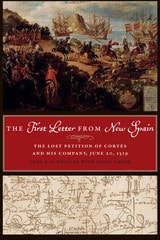
The First Letter from New Spain
The Lost Petition of Cortés and His Company, June 20, 1519By John Schwaller and Helen Nader
University of Texas Press, 2014
The founding of la Villa Rica de la Veracruz (the rich town of the True Cross) is prominently mentioned in histories of the conquest of Mexico, but scant primary documentation of the provocative act exists. During a research session at the Spanish archives, when John Schwaller discovered an early-sixteenth-century letter from Veracruz signed by the members of Cortés’s company, he knew he had found a trove of historical details. Providing an accessible, accurate translation of this pivotal correspondence, along with in-depth examinations of its context and significance, The First Letter from New Spain gives all readers access to the first document written from the mainland of North America by any European, and the only surviving original document from the first months of the conquest.
The timing of Cortés’s Good Friday landing, immediately before the initial assault on the Aztec Empire, enhances the significance of this work. Though the expedition was conducted under the authority of Diego Velázquez, governor of Cuba, the letter reflects an attempt to break ties with Velázquez and form a strategic alliance with Carlos V, the Holy Roman Emperor and King of Spain. Brimming with details about the events surrounding Veracruz’s inception and accompanied by mini-biographies of 318 signers of the document—socially competitive men who risked charges of treason by renouncing Velázquez—The First Letter from New Spain gives evidence of entrepreneurship and other overlooked traits that fueled the conquest.
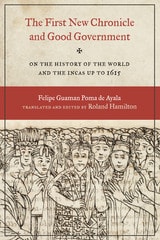
The First New Chronicle and Good Government
On the History of the World and the Incas up to 1615By Felipe Guaman Poma de Ayala
University of Texas Press, 2009
One of the most fascinating books on pre-Columbian and early colonial Peru was written by a Peruvian Indian named Felipe Guaman Poma de Ayala. This book, The First New Chronicle and Good Government, covers pre-Inca times, various aspects of Inca culture, the Spanish conquest, and colonial times up to around 1615 when the manuscript was finished. Now housed in the Royal Library, Copenhagen, Denmark, and viewable online at www.kb.dk/permalink/2006/poma/info/en/frontpage.htm, the original manuscript has 1,189 pages accompanied by 398 full-page drawings that constitute the most accurate graphic depiction of Inca and colonial Peruvian material culture ever done.
Working from the original manuscript and consulting with fellow Quechua- and Spanish-language experts, Roland Hamilton here provides the most complete and authoritative English translation of approximately the first third of The First New Chronicle and Good Government. The sections included in this volume (pages 1–369 of the manuscript) cover the history of Peru from the earliest times and the lives of each of the Inca rulers and their wives, as well as a wealth of information about ordinances, age grades, the calendar, idols, sorcerers, burials, punishments, jails, songs, palaces, roads, storage houses, and government officials. One hundred forty-six of Guaman Poma's detailed illustrations amplify the text.
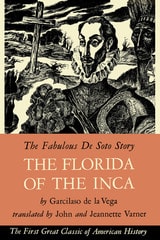
The Florida of the Inca
By Garcilaso de la Vega
University of Texas Press, 1951
Perhaps the most amazing thing of all about Garcilaso de la Vega's epic account of the De Soto expedition is the fact that, although it is easily the first great classic of American history, it had never before received a complete or otherwise adequate English translation in the 346 years which have elapsed since its publication in Spanish. Now the Inca's thrilling narrative comes into its own in the English speaking world.
Hernando de Soto's expedition for the conquest of North America was the most ambitious ever to brave the perils of the New World. Garcilaso tells in remarkably rich detail of the conquistadors' wanderings over half a continent, of the unbelievable vicissitudes which beset them, of the Indians whom they sought to win for King and Church and by whose hands most of them died, of De Soto's death, and of the final pitiful failure of the expedition.
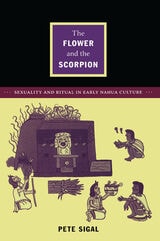
The Flower and the Scorpion
Sexuality and Ritual in Early Nahua CulturePete Sigal
Duke University Press, 2011
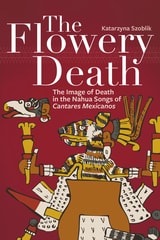
The Flowery Death
The Image of Death in the Nahua Songs of Cantares MexicanosKatarzyna Szoblik
University Press of Colorado, 2026
The Flowery Death is a groundbreaking exploration of xochimiquiztli, or “flowery death,” a central concept in the pre-Hispanic Nahua worldview. In the highly militarized societies of the Valley of Mexico, dying in honor of the gods—on the battlefield, in ritual sacrifice, or in childbirth—was not only a social expectation but also a path to spiritual glory. While this idea appears throughout colonial sources, previous studies have relied largely on the writings of Bernardino de Sahagún and other European chroniclers, whose perspectives often simplify or distort Indigenous understandings.
Drawing on the rich oral tradition preserved in the sixteenth-century manuscript Cantares Mexicanos, this book provides one of the first English translations of these songs since John Bierhorst’s 1985 translation. It combines paleographic fidelity, literal English translation, and detailed interpretation, revealing the metaphor- and symbol-rich meanings behind the songs. The book is divided into two interrelated parts: The first reconstructs the Nahua worldview, contextualizing war, death, and sacrifice through myths, chronicles, and visual sources; the second presents selected songs, offering readers the tools to understand their metaphors, historical references, and symbolic language, making the work both a scholarly reference and an accessible guide for students and enthusiasts.
By examining the cultural, religious, and social significance of xochimiquiztli, The Flowery Death provides fresh insights into Nahua ideology, gender roles, and collective memory. It is essential reading for anyone interested in Mesoamerican culture, early colonial history, and the power of Indigenous oral traditions.
The Futures of Reparations in Latin America
Imagination, Translation, and BelongingPiergiorgio Di Giminiani
Rutgers University Press, 2026
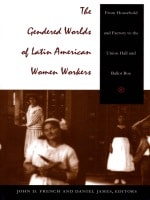
The Gendered Worlds of Latin American Women Workers
From Household and Factory to the Union Hall and Ballot BoxJohn D. French and Daniel James, eds.
Duke University Press, 1997
Widely seen as a hostile sexualized space, the modern factory was considered a threat, not only to the virtue of working women, but also to the survival of the family, and thus, the future of the nation. Yet working-class women continued to labor outside the home and remained highly visible in the expanding world of modern industry. In nine essays dealing with Argentina, Brazil, Chile, Colombia, and Guatemala, the contributors make extensive use of oral histories to describe the contradictory experiences of women whose work defied gender prescriptions but was deemed necessary by working-class families in a world of need and scarcity. The volume includes discussion of previously neglected topics such as single motherhood, women’s struggle against domestic violence, and the role of women as both desiring and desired subjects.
Contributors. Ann Farnsworth-Alvear, Mary Lynn Pedersen Cluff, John D. French, Daniel James, Thomas Miller Klubock, Deborah Levenson-Estrada, Mirta Zaida Lobato, Heidi Tinsman, Theresa R. Veccia, Barbara Weinstein
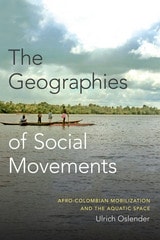
The Geographies of Social Movements
Afro-Colombian Mobilization and the Aquatic SpaceUlrich Oslender
Duke University Press, 2016
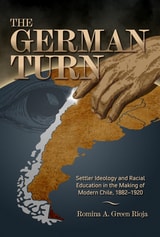
The German Turn
Settler Ideology and Racial Education in the Making of Modern Chile, 1882–1920Romina A. Green Rioja
University of Alabama Press, 2026
How a nation took shape through two classrooms, educating European immigrants in one while assimilating Indigenous peoples in the other, hardwiring race, class, and identity into modern Chile
The German Turn is the history of Chile’s settler ideological project of the 1880s exemplified in education. Romina A. Green Rioja’s big-picture interdisciplinary analysis boasts four historiographies in conversation within the Chilean context. She examines the histories of education, settler colonialism and immigration, Native mission schools, and Mapuche studies at the state and local levels. Chile’s state-building goal was to position the country in the global capitalist economy. Education was seen as a civilizing force for the Mapuche, and the overall goals were to unite the country; teach Chilean students to adhere to class, race, and gender structures; and prepare them for occupations according to these configurations.
Green Rioja finds that Chilean society and state policies demarcated the lines of ethnic, national, and racial preference and exclusion, offering inclusion for those of European ancestry and distance for those of Indigenous descent. Education’s dual role as a tool for inclusion and exclusion ultimately shaped former pupils’ class trajectories and racial belonging. The degrees of belonging depended on community connections, family wealth, and government scholarships that facilitated integration, assimilation, separatism, or the compartmentalization of group identity with the Chilean national identity. The book further considers global-transnational studies on immigration, settler colonialism, and education, showing Chilean policies that appear insular actually align with global patterns and shared policies by other forming nations. This work is a must-read for historians and Latin Americanists to understand Chile’s modernization and its impacts on social structures.
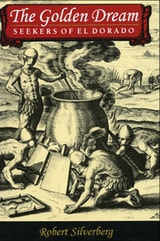
The Golden Dream
Seekers Of El DoradoRobert Silverberg
Ohio University Press, 1996
One of the most persistent legends in the annals of New World exploration is that of the Land of Gold. This mythical site was located over vast areas of South America (and later, North America); the search for it drove some men mad with greed and, as often as not, to their untimely deaths.
In this history of quest and adventure, Robert Silverberg traces the fate of Old World explorers lured westward by the myth of El Dorado. From the German conquistadores licensed by the Spanish king to operate out of Venezuela, to the journeys of Gonzalo Pizarro in the Amazon basin, and to the nearly miraculous voyage of Francisco Orellana to the mouth of the Amazon River, encountering the warlike women who gave the river its name, violence and bloodshed accompanied the determined adventurers. Sir Walter Raleigh and a host of other explorers spent small fortunes and many lives trying to locate Manoa, a city that was rumored to be El Dorado—City of Gold. Celebrated science fiction author Robert Silverberg recreates these legendary quests in The Golden Dream: Seekers of El Dorado.
The Government of Beans
Regulating Life in the Age of MonocropsKregg Hetherington
Duke University Press, 2020
The Great Depression in Latin America
Paulo Drinot and Alan Knight, eds.
Duke University Press, 2014
Contributors. Marcelo Bucheli, Carlos Contreras, Paulo Drinot, Jeffrey L. Gould, Roy Hora, Alan Knight, Gillian McGillivray, Luis Felipe Sáenz, Angela Vergara, Joel Wolfe, Doug Yarrington
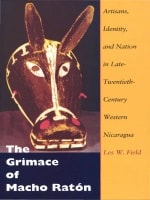
The Grimace of Macho Ratón
Artisans, Identity, and Nation in Late-Twentieth-Century Western NicaraguaLes W. Field
Duke University Press, 1999
Elite appropriations of El Güegüence construe it as an allegory of mestizo national identity in which mestizaje is defined as the production of a national majority of ethnically bounded non-Indians in active collaboration with the state. By contrast, Field interprets the play as a parable of cultural history and not a declaration of cultural identity, a scatological reflection on power and the state, and an evocation of collective loss and humor broadly associated with the national experience of disempowered social groups. By engaging with those most intimately involved in the performance of the play—and by including essays by some of these artisans—Field shows how El Güegüence tells a story about the passing of time, the absurdity of authority, and the contradictions of coping with inheritances of the past. Refusing essentialist notions of what it means to be Indian or artisan, Field explains the reemergence of politicized indigenous identity in western Nicaragua and relates this to the longer history of artisan political organization. Parting ways with many scholars who associate the notion of mestizaje with identity loss and hegemony, Field emphasizes its creative,
productive, and insightful meanings. With an emphasis on the particular struggles of women artisans, he explores the reasons why forms of collective identity have posed various kinds of predicaments for this marginalized class of western Nicaraguans.
This book will appeal to readers beyond the field of Latin American anthropology, including students and scholars of literature, intellectual history, women’s studies, and the politics of ethnicity.
The Guatemala Reader
History, Culture, PoliticsGreg Grandin, Deborah T. Levenson, and Elizabeth Oglesby, eds.
Duke University Press, 2011
The Hidden History of Capoeira
A Collision of Cultures in the Brazilian Battle DanceBy Maya Talmon-Chvaicer
University of Texas Press, 2007
Capoeira, a Brazilian battle dance and national sport, has become popular all over the world. First brought to Brazil by African slaves and first documented in the late eighteenth century, capoeira has undergone many transformations as it has diffused throughout Brazilian society and beyond, taking on a multiplicity of meanings for those who participate in it and for the societies in which it is practiced. In this book, Maya Talmon-Chvaicer combines cultural history with anthropological research to offer an in-depth study of the development and meaning of capoeira, starting with the African cultures in which it originated and continuing up to the present day.
Using a wealth of primary sources, Talmon-Chvaicer analyzes the outlooks on life, symbols, and rituals of the three major cultures that inspired capoeira—the Congolese (the historic area known today as Congo-Angola), the Yoruban, and the Catholic Portuguese cultures. As she traces the evolution of capoeira through successive historical eras, Talmon-Chvaicer maintains a dual perspective, depicting capoeira as it was experienced, observed, and understood by both Europeans and Africans, as well as by their descendants. This dual perspective uncovers many covert aspects of capoeira that have been repressed by the dominant Brazilian culture.
This rich study reclaims the African origins and meanings of capoeira, while also acknowledging the many ways in which Catholic-Christian culture has contributed to it. The book will be fascinating reading not only for scholars but also for capoeira participants who may not know the deeper spiritual meanings of the customs, amulets, and rituals of this jogo da vida, "game of life."
The History of Brazil, 1500–1627
Frei Vicente do Salvador, Translated by Timothy J. Coates, Foreword by Alida C. Metcalf
Tagus Press, 2022
Written during the early seventeenth century, Frei Vicente do Salvador’s The History of Brazil: 1500–1627 offers a unique account of this volatile and dynamic period and holds the distinction of being the first history of Brazil written by a Brazilian. With sections devoted to natural, social, and political history, this expansive volume serves as a rich primary source, detailing the successes and failures of colonial governance, interactions with a diversity of Native peoples, and disputes between the Portuguese and the French and Dutch. As an eyewitness to many of the events he describes, Frei Vincente offers unparalleled access to the incidents, social customs, and personalities at play in colonial Brazil.
The History of Capitalism in Mexico
Its Origins, 1521–1763By Enrique Semo
University of Texas Press, 1992
What lies at the center of the Mexican colonial experience? Should Mexican colonial society be construed as a theoretical monolith, capitalist from its inception, or was it essentially feudal, as traditional historiography viewed it? In this pathfinding study, Enrique Semo offers a fresh vision: that the conflicting social formations of capitalism, feudalism, and tributary despotism provided the basic dynamic of Mexico's social and economic development.
Responding to questions raised by contemporary Mexican society, Semo sees the origin of both backwardness and development not in climate, race, or a heterogeneous set of unrelated traits, but rather in the historical interaction of each social formation. In his analysis, Mexico's history is conceived as a succession of socioeconomic formations, each growing within the "womb" of its predecessor. Semo sees the task of economic history to analyze each of these formations and to construct models that will help us understand the laws of its evolution. His premise is that economic history contributes to our understanding of the present not by formulating universal laws, but by studying the laws of development and progression of concrete economic systems.
The History of Capitalism in Mexico opens with the Conquest and concludes with the onset of the profound socioeconomic transformation of the last fifty years of the colony, a period clearly representing the precapitalist phase of Mexican development. In the course of his discussion, Semo addresses the role of dependency—an important theoretical innovation—and introduces the concept of tributary despotism, relating it to the problems of Indian society and economy. He also provides a novel examination of the changing role of the church throughout Mexican colonial history. The result is a comprehensive picture, which offers a provocative alternative to the increasingly detailed and monographic approach that currently dominates the writing of history.
Originally published as Historia del capitalismo en México in 1973, this classic work is now available for the first time in English. It will be of interest to specialists in Mexican colonial history, as well as to general readers.
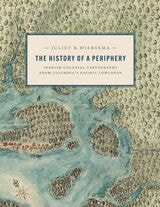
The History of a Periphery
Spanish Colonial Cartography from Colombia's Pacific LowlandsJuliet B. Wiersema
University of Texas Press, 2024
2025 ALAA Book Award, Association for Latin American Art/Arvey Foundation, College Art Association
An exploration of Colombian maps in New Granada.
During the late Spanish colonial period, the Pacific Lowlands, also called the Greater Chocó, was famed for its rich placer deposits. Gold mined here was central to New Granada’s economy yet this Pacific frontier in today’s Colombia was considered the “periphery of the periphery.” Infamous for its fierce, unconquered Indigenous inhabitants and its brutal tropical climate, it was rarely visited by Spanish administrators, engineers, or topographers and seldom appeared in detail on printed maps of the period.
In this lavishly illustrated and meticulously researched volume, Juliet Wiersema uncovers little-known manuscript cartography and makes visible an unexamined corner of the Spanish empire. In concert with thousands of archival documents from Colombia, Spain, and the United States, she reveals how a "periphery" was imagined and projected, largely for political or economic reasons. Along the way, she unearths untold narratives about ephemeral settlements, African adaptation and autonomy, Indigenous strategies of resistance, and tenuous colonialisms on the margins of a beleaguered viceroyalty.
The History of the Incas
By Pedro Sarmiento de Gamboa
University of Texas Press, 2007
The History of the Incas may be the best description of Inca life and mythology to survive Spanish colonization of Peru. Pedro Sarmiento de Gamboa, a well-educated sea captain and cosmographer of the viceroyalty, wrote the document in Cuzco, the capital of the Inca Empire, just forty years after the arrival of the first Spaniards. The royal sponsorship of the work guaranteed Sarmiento direct access to the highest Spanish officials in Cuzco. It allowed him to summon influential Incas, especially those who had witnessed the fall of the Empire. Sarmiento also traveled widely and interviewed numerous local lords (curacas), as well as surviving members of the royal Inca families. Once completed, in an unprecedented effort to establish the authenticity of the work, Sarmiento's manuscript was read, chapter by chapter, to forty-two indigenous authorities for commentary and correction.
The scholars behind this new edition (the first to be published in English since 1907) went to similarly great lengths in pursuit of accuracy. Translators Brian Bauer and Vania Smith used an early transcript and, in some instances, the original document to create the text. Bauer and Jean-Jacques Decoster's introduction lays bare the biases Sarmiento incorporated into his writing. It also theorizes what sources, in addition to his extensive interviews, Sarmiento relied upon to produce his history. Finally, more than sixty new illustrations enliven this historically invaluable document of life in the ancient Andes.
The House Cross of the Mayo Indians of Sonora, Mexico
N. Ross Crumrine
University of Arizona Press, 1965
The Huarochiri Manuscript
A Testament of Ancient and Colonial Andean ReligionTranslation from the Quechua by Frank Salomon and George L. Urioste
University of Texas Press, 1991
One of the great repositories of a people's world view and religious beliefs, the Huarochirí Manuscript may bear comparison with such civilization-defining works as Gilgamesh, the Popul Vuh, and the Sagas. This translation by Frank Salomon and George L. Urioste marks the first time the Huarochirí Manuscript has been translated into English, making it available to English-speaking students of Andean culture and world mythology and religions.
The Huarochirí Manuscript holds a summation of native Andean religious tradition and an image of the superhuman and human world as imagined around A.D. 1600. The tellers were provincial Indians dwelling on the west Andean slopes near Lima, Peru, aware of the Incas but rooted in peasant, rather than imperial, culture. The manuscript is thought to have been compiled at the behest of Father Francisco de Avila, the notorious "extirpator of idolatries." Yet it expresses Andean religious ideas largely from within Andean categories of thought, making it an unparalleled source for the prehispanic and early colonial myths, ritual practices, and historic self-image of the native Andeans.
Prepared especially for the general reader, this edition of the Huarochirí Manuscript contains an introduction, index, and notes designed to help the novice understand the culture and history of the Huarochirí-area society. For the benefit of specialist readers, the Quechua text is also supplied.
The Idea of Race in Latin America, 1870-1940
Edited and with an introduction by Richard Graham
University of Texas Press, 1990
From the mid-nineteenth century until the 1930s, many Latin American leaders faced a difficult dilemma regarding the idea of race. On the one hand, they aspired to an ever-closer connection to Europe and North America, where, during much of this period, "scientific" thought condemned nonwhite races to an inferior category. Yet, with the heterogeneous racial makeup of their societies clearly before them and a growing sense of national identity impelling consideration of national futures, Latin American leaders hesitated. What to do? Whom to believe?
Latin American political and intellectual leaders' sometimes anguished responses to these dilemmas form the subject of The Idea of Race in Latin America. Thomas Skidmore, Aline Helg, and Alan Knight have each contributed chapters that succinctly explore various aspects of the story in Brazil, Argentina, Cuba, and Mexico. While keenly alert to the social and economic differences that distinguish one Latin American society from another, each author has also addressed common issues that Richard Graham ably draws together in a brief introduction. Written in a style that will make it accessible to the undergraduate, this book will appeal as well to the sophisticated scholar.
The Ideal of the Practical
Colombia’s Struggle to Form a Technical EliteBy Frank Safford
University of Texas Press, 1976
The Ideal of the Practical is a study of efforts by a segment of the upper class in an aristocratic Latin American society to alter cultural values in the society, creating stronger orientations toward the technical and the practical. Frank Safford describes attempts by members of Colombia’s nineteenth-century political elite to use technical education as a means of nurturing energetic upper-class entrepreneurs and an industrious working class in a static agrarian economy. In the course of his analysis, Safford sketches the historical development of scientific and technical education and of the engineering profession in Colombia.
The book opens with a description of the economic and social context of early nineteenth-century Colombia. It then discusses some early experiments with manual industrial training between 1820 and 1850. Later chapters deal with the careers of upper-class youths sent abroad for scientific and technical training, the growth of indigenous engineering education, and the crystallization of a Colombian engineering profession. While the book primarily explores the nineteenth century, it also touches on eighteenth-century Spanish Bourbon antecedents and provides an epilogue on the twentieth-century evolution of technical elites in Colombia.
The author focuses on the reasons why the implantation of technical education and technical orientations proved difficult. He examines the interplay between various obstructions: on the one hand, a hierarchical social structure and aristocratic social values and, on the other, obstructions created by fundamental geographic and economic conditions. He concludes that, while Colombian leaders had hoped that technical education and the development of values oriented toward the technical would spearhead economic growth, in fact economic growth proved a prerequisite for the effective implantation of technical orientations and training.
The Impasse of the Latin American Left
Franck Gaudichaud, Massimo Modonesi, and Jeffery R. Webber
Duke University Press, 2022
The Impure Imagination
Toward A Critical Hybridity In Latin American WritingJoshua Lund
University of Minnesota Press, 2006
In this pathbreaking work, Joshua Lund offers a thoughtful critique of hybridity by reading contemporary theories of cultural mixing against their historical precursors. The Impure Imagination is the first book to systematically analyze today’s dominant theories in relation to earlier, narrative manifestations of hybridity in Latin American writing, with a particular focus on Mexico and Brazil.
Generally understood as the impurification of standard or canonized forms, hybridity has historically been embraced as a basic marker of Latin American regional identity and as a strategy of resistance to cultural imperialism. Lund contends that Latin American theories and narratives of hybridity have been, and continue to be, underwritten by a structure of colonial power. Here he provides an informed critique and cogent investigation of this connection, its cultural effects, and its political implications. Using the emergence of hybridity as an analytical frame for thinking about culture in the Americas, Lund examines the contributions of influential thinkers, including Néstor García Canclini, Homi Bhabha, Jacques Derrida, Giorgio Agamben, Jorge Luis Borges, Antonio Candido, and many others.
Distinguished by its philosophical grounding and underpinned with case studies, The Impure Imagination employs postcolonial theory and theories of race as it explores Latin American history and culture. The result is an original and interrogative study of hybridity that exposes surprising—and unsettling—similarities with nationalistic discourses.
Joshua Lund is assistant professor of Spanish at the University of Pittsburgh. His essays have appeared in A Contracorriente, Race & Class, Cultural Critique, and the Journal of Latin American Cultural Studies.
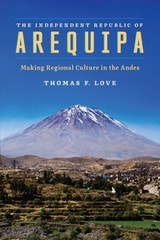
The Independent Republic of Arequipa
Making Regional Culture in the AndesBy Thomas F. Love
University of Texas Press, 2017
Arequipa, Peru’s second largest city, has the most intense regional culture in the central Andes. Arequipeños fiercely conceive of themselves as exceptional and distinctive, yet also broadly representative of the nation’s overall hybrid nature—a blending of coast (modern, “white”) and sierra (traditional, “indigenous”). The Independent Republic of Arequipa investigates why and how this regional identity developed in a boom of cultural production after the War of the Pacific (1879–1884) through the mid-twentieth century.
Drawing on decades of ethnographic fieldwork, Thomas F. Love offers the first anthropological history of southwestern Peru’s distinctive regional culture. He examines both its pre-Hispanic and colonial altiplano foundations (anchored in continuing pilgrimage to key Marian shrines) and the nature of its mid-nineteenth century “revolutionary” identity in cross-class resistance to Lima’s autocratic control of nation-building in the post-Independence state. Love then examines Arequipa’s early twentieth-century “mestizo” identity (an early and unusual case of “browning” of regional identity) in the context of raging debates about the “national question” and the “Indian problem,” as well as the post-WWII development of extravagant displays of distinctive bull-on-bull fighting that now constitute the very performance of regional identity. Love’s research reveals that Arequipa’s “traditional” local culture, symbolically marked by populist, secular, and rural elements, was in fact a project of urban-based, largely middle-class cultural entrepreneurs, invented to counter continuing Limeño autocratic power, marked by nostalgia, and anxious about the inclusion of the nation’s indigenous majority as full modern citizens.
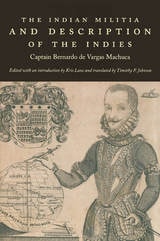
The Indian Militia and Description of the Indies
Captain Bernardo de Vargas Machuca, Edited with an introduction by Kris Lane
Duke University Press, 2008
Containing advice on curing rattlesnake bites with amethysts and making saltpeter for gunpowder from concentrated human urine, The Indian Militia is a manual in four parts, the first of which outlines the ideal qualities of the militia commander. Addressing the organization and outfitting of conquest expeditions, Book Two includes extended discussions of arms and medicine. Book Three covers the proper behavior of soldiers, providing advice on marching through peaceful and bellicose territories, crossing rivers, bivouacking in foul weather, and carrying out night raids and ambushes. Book Four deals with peacemaking, town-founding, and the proper treatment of conquered peoples. Appended to these four sections is a brief geographical description of all of Spanish America, with special emphasis on the indigenous peoples of New Granada (roughly modern-day Colombia), followed by a short guide to the southern coasts and heavens. This first English-language edition of The Indian Militia includes an extensive introduction, a posthumous report on Vargas Machuca’s military service, and a selection from his unpublished attack on the writings of Fray Bartolomé de Las Casas.

The Industrialization of São Paulo, 1800-1945
By Warren Dean
University of Texas Press, 1969
São Paulo is one of the few places in the underdeveloped world where an advanced industrial system has grown out of a tropical raw-material-exporting economy. By 1960 there were 830,000 industrial workers in the state, producing $3.3 billion worth of goods. It had become Latin America’s largest industrial center.
This is a study of the early years of manufacturing in São Paulo: how it was influenced by the growth and decline of the coffee trade; where it found its markets, its credit, and its labor force; and how it confronted the competition of imports. The principal focus, however, is on the manufacturers themselves, whose perceptions of their opportunities determined how industrialization was brought about. Warren Dean discusses their social origins, their connections with other sectors of the elite, their attitudes toward workers and consumers, and their view of the potentialities of economic development. He analyzes the political activities of the manufacturers, to discover both how they promoted their interests and how they confronted the larger challenge of social and political transformation.
Paradoxically, the industrialization of São Paulo is not a “success story” of private entrepreneurship. Until after World War II manufacturing grew quite slowly, and its hallmarks were always low productivity, technical backwardness, and consumer hostility. More than half of the state’s present large-scale factory production and nearly all of its heavy industry was built by foreign capital or state enterprise, not by privately owned firms. Dean shows that this outcome is partly a consequence of the historical experience of domestic manufacture.
Throughout the book the author points out the “peculiar articulations” of the industrial system of São Paulo—the significant social and political interests that determined what kinds of development were possible. The result is an exposition of an unusual case study in twentieth-century economic development.
The Inferno
A Story of Terror and Survival in ChileLuz Arce; Translated by Stacey Alba Skar
University of Wisconsin Press, 2004
As a member of Salvador Allende’s Personal Guards (GAP), Luz Arce worked with leaders of the Socialist Party during the Popular Unity Government from 1971 to1973. In the months following the coup, Arce served as a militant with others from the Left who opposed the military junta led by Augusto Pinochet, which controlled the country from 1973 to1990. Along with thousands of others in Chile, Arce was detained and tortured by Chile’s military intelligence service, the DINA, in their attempt to eliminate alternative voices and ideologies in the country. Arce’s testimonial offers the harrowing story of the abuse she suffered and witnessed as a survivor of detention camps, such as the infamous Villa Grimaldi.
But when faced with threats made to her family, including her young son, and with the possibility that she could be murdered as thousands of others had been, Arce began to collaborate with the Chilean military in their repression of national resistance groups and outlawed political parties. Her testimonial thus also offers a unique perspective from within the repressive structures as she tells of her work as a DINA agent whose identifications even lead to the capture of some of her former friends and compañeros.
During Chile’s return to democracy in the early 1990s, Arce experienced two fundamental changes in her life that led to the writing of her story. The first was a deep spiritual renewal through her contacts with the Catholic Church whose Vicariate of Solidarity had fought for human rights in the country during the dictatorship. The second was her decision to participate within the legal system to identify and bring to justice those members of the military who were responsible for the crimes committed from 1973 to1990. Luz Arce’s book invites readers to rethink the definition of testimonial narrative in Latin America through the unique perspective of a survivor-witness-confessor.
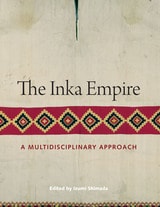
The Inka Empire
A Multidisciplinary ApproachEdited by Izumi Shimada
University of Texas Press, 2015
Massive yet elegantly executed masonry architecture and andenes (agricultural terraces) set against majestic and seemingly boundless Andean landscapes, roads built in defiance of rugged terrains, and fine textiles with orderly geometric designs—all were created within the largest political system in the ancient New World, a system headed, paradoxically, by a single, small minority group without wheeled vehicles, markets, or a writing system, the Inka. For some 130 years (ca. A.D. 1400 to 1533), the Inka ruled over at least eighty-six ethnic groups in an empire that encompassed about 2 million square kilometers, from the northernmost region of the Ecuador–Colombia border to northwest Argentina.
The Inka Empire brings together leading international scholars from many complementary disciplines, including human genetics, linguistics, textile and architectural studies, ethnohistory, and archaeology, to present a state-of-the-art, holistic, and in-depth vision of the Inkas. The contributors provide the latest data and understandings of the political, demographic, and linguistic evolution of the Inkas, from the formative era prior to their political ascendancy to their post-conquest transformation. The scholars also offer an updated vision of the unity, diversity, and essence of the material, organizational, and symbolic-ideological features of the Inka Empire. As a whole, The Inka Empire demonstrates the necessity and value of a multidisciplinary approach that incorporates the insights of fields beyond archaeology and ethnohistory. And with essays by scholars from seven countries, it reflects the cosmopolitanism that has characterized Inka studies ever since its beginnings in the nineteenth century.
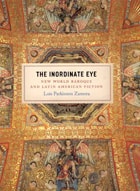
The Inordinate Eye
New World Baroque and Latin American FictionLois Parkinson Zamora
University of Chicago Press, 2006
The New World Baroque combines indigenous, African, and European forms of expression, and, in the early decades of the twentieth century, Latin American writers began to recuperate its visual structures to construct an alternative account of modernity, using its hybrid forms for the purpose of creating a discourse of “counterconquest”—a postcolonial self-definition aimed at disrupting entrenched power structures, perceptual categories, and literary forms.
Zamora engages this process, discussing a wide range of visual forms—Baroque façades and altarpieces, portraits of saints and martyrs (including the self-portraits of Frida Kahlo), murals from indigenous artisans to Diego Rivera—to elucidate works of fiction by Borges, Carpentier, Lezama Lima, Sarduy, Garro, García Márquez, and Galeano, and also to establish a critical perspective external to their work. Because visual media are “other” to the verbal economy of modern fiction, they serve these writers (and their readers) as oblique means by which to position their fiction culturally, politically, and aesthetically.
The first study of its kind in scope and ambition, The Inordinate Eye departs radically from most studies of literature by demonstrating how transcultural conceptions of the visual image have conditioned present ways of seeing and reading in Latin America.
The Inscriptions of Calakmul
Royal Marriage at a Maya City in Campeche, MexicoJoyce Marcus
University of Michigan Press, 1987
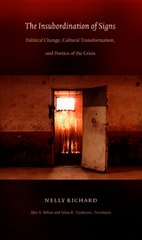
The Insubordination of Signs
Political Change, Cultural Transformation, and Poetics of the CrisisNelly Richard
Duke University Press, 2004
In The Insubordination of Signs Richard theorizes the cultural reactions—particularly within the realms of visual arts, literature, and the social sciences—to the oppression of the Chilean dictatorship. She reflects on the role of memory in the historical shadow of the military regime and on the strategies offered by marginal discourses for critiquing institutional systems of power. She considers the importance of Walter Benjamin for the theoretical self-understanding of the Latin American intellectual left, and she offers revisionary interpretations of the Chilean neo-avantgarde in terms of its relationships with the traditional left and postmodernism. Exploring the gap between Chile’s new left social sciences and its “new scene” aesthetic and critical practices, Richard discusses how, with the return of democracy, the energies that had set in motion the democratizing process seemed to exhaust themselves as cultural debate was attenuated in order to reduce any risk of a return to authoritarianism.

The Inter American Press Association
Its Fight for Freedom of the Press, 1926–1960By Mary A. Gardner
University of Texas Press, 1967
The Inter American Press Association (IAPA) has been a pioneer in the concept of an inter-American professional, independent, and self-sufficient pressure group that acts on its own initiative and subsists on its own resources. This study first traces the development of IAPA from the initial meeting in 1926 through the mid-1940’s, when a small group of dedicated Latin American and United States journalists began the fight to wrest the IAPA from the control of government lackeys and Communist agents. Previously scarce accounts of the early annual meetings, often noisy and disorganized and sometimes violent, give the reader an insight into the problems and animosities faced by the democratically oriented members.
Mary A. Gardner then describes a reorganization in 1950, after which IAPA actively fought for the freedom of newspaper workers tyrannized by Latin American dictators, such as Argentina’s Perón, Colombia’s Rojas Pinilla, Cuba’s Batista, and the Dominican Republic’s Trujillo. Even while IAPA was fighting for freedom of the press it began several services for its member newspapers: It set up a circulation auditing service, created a scholarship fund, undertook a newsprint study, and established a technical center. It also began the administration of the Mergenthaler Awards—prizes awarded yearly to outstanding Latin American journalists.
Gardner also analyzes the merits of IAPA, basing her conclusions on data obtained from her own observations, from letters written by others long associated with operations of the organization, and from interviews with Latin American and North American journalists. She concludes that IAPA apparently surmounted the barriers of nationalism, of cultural and political differences, and of personal prejudices, thus succeeding in its attempt to unite its members in the fight for freedom of the press and for the propagation of democracy in the hemisphere.
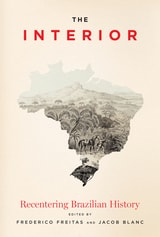
The Interior
Recentering Brazilian HistoryFrederico Freitas and Jacob Blanc
University of Texas Press, 2024
A new history of Brazil told through the lens of the often-overlooked interior regions.
In colonial Brazil, observers frequently complained that Portuguese settlers appeared content to remain “clinging to the coastline, like crabs.” From their perspective, the vast Brazilian interior seemed like an untapped expanse waiting to be explored and colonized. This divide between a thriving coastal area and a less-developed hinterland has become deeply ingrained in the nation’s collective imagination, perpetuating the notion of the interior as a homogeneous, stagnant periphery awaiting the dynamic influence of coastal Brazil.
The Interior challenges these narratives and reexamines the history of Brazil using an “interior history” perspective. This approach aims to reverse the conventional conceptual and geographical boundaries often employed to study Brazilian history, and, by extension, Latin America as a whole. Through the work of twelve leading scholars, the volume highlights how the people and spaces within the interior have played a pivotal role in shaping national identities, politics, the economy, and culture. The Interior goes beyond the traditional boundaries of borderland and frontier history, expands on the current wave of scholarship on regionalism in Brazil, and, by asking new questions about space and nation, provides a fresh perspective on Brazil’s history.
The International Monetary Fund and Latin America
The Argentine Puzzle in ContextClaudia Kedar
Temple University Press, 2013
The International Monetary Fund (IMF) has played a critical role in the global economy since the postwar era. But, claims Claudia Kedar, behind the strictly economic aspects of the IMF’s intervention, there are influential interactions between IMF technocrats and local economists—even when countries are not borrowing money.
In The International Monetary Fund and Latin America, Kedar seeks to expose the motivations and constraints of the operations of both the IMF and borrowers. With access to never-before-seen archive materials, Kedar reveals both the routine and behind-the-scenes practices that have depicted International Monetary Fund–Latin American relations in general and the asymmetrical IMF-Argentina relations in particular.
Kedar also analyzes the “routine of dependency” that characterizes IMF-borrower relations with several Latin American countries such as Chile, Peru, and Brazil. The International Monetary Fund and Latin America shows how debtor countries have adopted IMF’s policies during past decades and why Latin American leaders today largely refrain from knocking at the IMF’s doors again.
The Internationalization of Palace Wars
Lawyers, Economists, and the Contest to Transform Latin American StatesYves Dezalay and Bryant G. Garth
University of Chicago Press, 2002
Based on more than 300 extensive interviews with major players in governments, foundations, law firms, universities, and think tanks, Dezalay and Garth examine both the production of northern exports such as neoliberal economics and international human rights law and the ways they are received south of the United States. They find that the content of what is exported and how it fares are profoundly shaped by domestic struggles for power and influence—"palace wars"—in the nations involved. For instance, challenges to the eastern intellectual establishment influenced the Reagan-era export of University of Chicago-style neoliberal economics to Chile, where it enjoyed a warm reception from Pinochet and his allies because they could use it to discredit the previous regime.
Innovative and sophisticated, The Internationalization of Palace Wars offers much needed concrete information about the transnational processes that shape our world.

The Intimate Frontier
Friendship and Civil Society in Northern New SpainIgnacio Martínez
University of Arizona Press, 2019
Spaniards living in the isolated borderlands region of colonial Sonora were keen to develop an ideologically relevant and socially acceptable form of friendship with Indigenous people that could act as a functional substitute for civil law and governance, thereby regulating Native behavior. But as frontier society grew in complexity and sophistication, Indigenous and mixed-raced people also used the language of friendship and the performance of emotion for their respective purposes, in the process becoming skilled negotiators to meet their own best interests.
In northern New Spain, friendships were sincere and authentic when they had to be and cunningly malleable when the circumstances demanded it. The tenuous origins of civil society thus developed within this highly contentious social laboratory in which friendships (authentic and feigned) set the social and ideological parameters for conflict and cooperation. Far from the coffee houses of Restoration London or the lecture halls of the Republic of Letters, the civil society illuminated by Martínez stumbled forward amid the ambiguities and contradictions of colonialism and the obstacles posed by the isolation and violence of the Sonoran Desert.