Results by title
2817 books match the query 'Nature' and 595 start with t

The Charles Bowden Reader
By Charles Bowden
University of Texas Press, 2010
“I will make bold to say that Bowden is America’s most alarming writer. Just when you think you’ve heard it all you learn you haven’t in the most pungent manner possible. . . . With The Charles Bowden Reader in hand you get a taste of it all, and any literate resident or visitor should want this book. It will lead them back to a close, alarming reading of the entire oeuvre. It is to ride in a Ferrari without brakes. There’s lots of oxygen but no safe way to stop. . . . Read him at your risk. You have nothing to lose but your worthless convictions about how things are.” —Jim Harrison, from the foreword
From his first book, Killing the Hidden Waters, to his most recent, Murder City: Cuidad Juárez and the Global Economy's New Killing Fields, Charles Bowden has been sounding an alarm about the rapacious appetites of human beings and the devastation we inflict on the natural world we arrogantly claim to possess. His own corner of the world, the desert borderlands between the United States and Mexico, is Bowden's prime focus, and through books, magazine articles, and newspaper journalism he has written eloquently about key issues roiling the border—drug-related violence that is shredding civil society, illegal immigration and its toll on human lives and the environment, destruction of fragile ecosystems as cities sprawl across the desert and suck up the limited supplies of water.
This anthology gathers the best and most representative writing from Charles Bowden's entire career. It includes excerpts from his major books—Killing the Hidden Waters, Blue Desert, Desierto: Memories of the Future, Blood Orchid,Blues for Cannibals, A Shadow in the City, Inferno, Exodus, and Some of the Dead Are Still Breathing—as well as articles that appeared in Esquire, Harper's, Mother Jones, and other publications. Imbued with Bowden's distinctive rhythm and lyrical prose, these pieces also document his journey of exploration—a journey guided, in large part, by the question posed in Some of the Dead Are Still Breathing: "How do we live a moral life in a culture of death?" This is no metaphor; Bowden is referring to the people, history, animals, and ecosystems that are being extinguished in the onslaught of twenty-first-century culture.
The perfect introduction to his work, The Charles Bowden Reader is also essential for those who know him well and want to see the whole panorama of his passionate, intense writing.
The Chemical Age
How Chemists Fought Famine and Disease, Killed Millions, and Changed Our Relationship with the EarthFrank A. von Hippel
University of Chicago Press, 2020
For thousands of years, we’ve found ways to scorch, scour, and sterilize our surroundings to make them safer. Sometimes these methods are wonderfully effective. Often, however, they come with catastrophic consequences—consequences that aren’t typically understood for generations.
The Chemical Age tells the captivating story of the scientists who waged war on famine and disease with chemistry. With depth and verve, Frank A. von Hippel explores humanity’s uneasy coexistence with pests, and how their existence, and the battles to exterminate them, have shaped our modern world. Beginning with the potato blight tragedy of the 1840s, which led scientists on an urgent mission to prevent famine using pesticides, von Hippel traces the history of pesticide use to the 1960s, when Rachel Carson’s Silent Spring revealed that those same chemicals were insidiously damaging our health and driving species toward extinction. Telling the story of these pesticides in vivid detail, von Hippel showcases the thrills and complex consequences of scientific discovery. He describes the invention of substances that could protect crops, the emergence of our understanding of the way diseases spread, the creation of chemicals used to kill pests and people, and, finally, how scientists turned those wartime chemicals on the landscape at a massive scale, prompting the vital environmental movement that continues today.
The Chemical Age is a dynamic, sweeping history that exposes how humankind’s affinity for pesticides made the modern world possible—while also threatening its essential fabric.
The Chicago River
A Natural and Unnatural HistoryLibby Hill
Southern Illinois University Press, 2019
This widely acclaimed volume weaves the perspectives of science, engineering, commerce, politics, economics, and the natural world into a chronicle of the river from its earliest geologic history through its repeated adaptations to the city that grew up around it. While explaining the river’s role in massive public works, such as drainage and straightening, designed to address the infrastructure needs of a growing population, Hill focuses on the synergy between the river and the people of greater Chicago, whether they be the tribal cultures that occupied the land after glacial retreat, the first European inhabitants, or more recent residents.
In the first edition, Hill brought together years of original research and the contributions of dozens of experts to tell the Chicago River’s story up until 2000. This revised edition features discussions of disinfection, Asian carp, green strategies, the evolution of the Chicago Riverwalk, and the river’s rejuvenation. It also explores how earlier solutions to problems challenge today’s engineers, architects, environmentalists, and public policy agencies as they address contemporary issues.
Revealing the river to be a microcosm of the uneasy relationship between nature and civilization, The Chicago River offers the tools and knowledge for the city’s residents to be champions on the river’s behalf.
The Chicago River
An Illustrated History and Guide to the River and Its Waterways, Second EditionDavid M. Solzman
University of Chicago Press, 2006
The river is indeed the soul of the city—it runs through the heart of downtown, and it is a vehicle for both pleasure and the industry that keeps Chicago humming. With The Chicago River, Solzman has succeeded in writing an encyclopedic work—at once guidebook and history—that explores the river’s physical character and natural history. Examining the river’s past, contemplating its present, and forecasting its future, Solzman draws on his unparalleled knowledge to point out places of scientific and historic interest—involving everything from infamous murder cases to invasive zebra mussels. The book’s 200 photographs and maps perfectly complement Solzman’s vivid prose, leading readers on a visual journey as sinuous as the river it celebrates—a journey interspersed with plenty of river lore, facts, and literary quotations.
Solzman, a veteran Chicago River tour guide, has also compiled a diverse collection of easy and enjoyable tours for anyone who wants to experience the river by foot, boat, canoe, or car. And he provides an appendix that lists river-related organizations, museums, tours, and riverfront restaurants and clubs.
With practical tips, evocative language, and an astonishing array of anecdotes, TheChicago River is the most comprehensive guide to the river and its waterways, the perfect companion for everyone from the active river enthusiast to the armchair traveler.
The Child to Come
Life after the Human CatastropheRebekah Sheldon
University of Minnesota Press, 2016
Generation Anthropocene. Storms of My Grandchildren. Our Children’s Trust. Why do these and other attempts to imagine the planet’s uncertain future return us—again and again—to the image of the child? In The Child to Come, Rebekah Sheldon demonstrates the pervasive conjunction of the imperiled child and the threatened Earth and blisteringly critiques the logic of catastrophe that serves as its motive and its method.
Sheldon explores representations of this perilous future and the new figurations of the child that have arisen in response to it. Analyzing catastrophe discourse from the 1960s to the present—books by Joanna Russ, Margaret Atwood, and Cormac McCarthy; films and television series including Southland Tales, Battlestar Galactica, and Children of Men; and popular environmentalism—Sheldon finds the child standing in the place of the human species, coordinating its safe passage into the future through the promise of one more generation. Yet, she contends, the child figure emerges bound to the very forces of nonhuman vitality he was forged to contain.
Bringing together queer theory, ecocriticism, and science studies, The Child to Come draws on and extends arguments in childhood studies about the interweaving of the child with the life sciences. Sheldon reveals that neither life nor the child are what they used to be. Under pressure from ecological change, artificial reproductive technology, genetic engineering, and the neoliberalization of the economy, the queerly human child signals something new: the biopolitics of reproduction. By promising the pliability of the body’s vitality, the pregnant woman and the sacred child have become the paradigmatic figures for twenty-first century biopolitics.
The Chippewa
Biography of a Wisconsin WaterwayRichard D. Cornell
Wisconsin Historical Society Press, 2017
The Cinematic Footprint
Lights, Camera, Natural ResourcesBozak, Nadia
Rutgers University Press, 2011
Film is often used to represent the natural landscape and, increasingly, to communicate environmentalist messages. Yet behind even today’s “green” movies are ecologically unsustainable production, distribution, and consumption processes. Noting how seemingly immaterial moving images are supported by highly durable resource-dependent infrastructures, The Cinematic Footprint traces the history of how the “hydrocarbon imagination” has been central to the development of film as a medium.
Nadia Bozak’s innovative fusion of film studies and environmental studies makes provocative connections between the disappearance of material resources and the emergence of digital media—with examples ranging from early cinema to Dziga Vertov’s prescient eye, from Chris Marker’s analog experiments to the digital work of Agnès Varda, James Benning, and Zacharias Kunuk. Combining an analysis of cinema technology with a sensitive consideration of film aesthetics, The Cinematic Footprint offers a new perspective on moving images and the natural resources that sustain them.
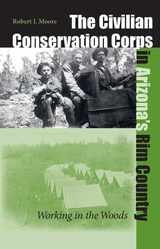
The Civilian Conservation Corps In Arizona's Rim Country
Working In The WoodsRobert J. Moore
University of Nevada Press, 2006
Part of the massive relief effort of Roosevelt’s New Deal, the CCC was created in 1933 to give young men an opportunity to work and make money to help families devastated by the Great Depression, and to participate in forest and conservation projects across the country. In Arizona, thousands of young men, many of them from the industrial Northeast, served in the state’s CCC forest camps. Arizona’s Mogollon Rim is a spectacular expanse of cliffs that slices through half the state, stretching from Sedona eastward to New Mexico. Along with the White Mountains, it includes the largest contiguous forest of ponderosa pine in America. Remote and little-visited in the 1930s, the Rim Country offered copious outlets for the CCC men’s energies: building roads, public campsites, hiking trails, fire lookout towers, and administration buildings; fighting fires; controlling erosion; eliminating vermin; and restoring damaged soils. The CCC enrollees were also given an opportunity to continue interrupted educations, learn useful skills and self-discipline, participate in sports and other leisure activities, and meet local residents. Author Robert J. Moore interviewed a number of CCC veterans who served in the Rim Country, and their stories are part of this book. So too are photographs—many of them from veterans’ personal collections—of Rim Country camps and workers, and such ephemera as camp newspapers. This is an engrossing account of several thousand young men who came to Arizona to escape the misery of the Great Depression, whose work in the woods changed the state, and who in the process were themselves changed. Here is the human face of Arizona’s CCC, the men’s experiences, their work, and their lasting impact on the forests of the Rim Country.
The Civilian Conservation Corps in Nevada
From Boys to MenRenée Corona Kolvet
University of Nevada Press, 2015
The Civilian Conservation Corps in Nevada is the first comprehensive history of the Nevada CCC, a program designed to help the nation get back on its feet, and of the “boys” who did so much to restore Nevada’s lands and resources. The book is based on extensive research in private manuscript collections, unpublished memoirs, CCC inspectors’ reports, and other records. The book also includes period photographs depicting the Nevada CCC and its activities.
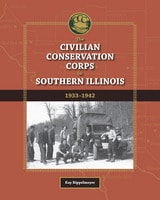
The Civilian Conservation Corps in Southern Illinois, 1933-1942
Kay Rippelmeyer
Southern Illinois University Press, 2015
Drawing on more than thirty years of meticulous research, Kay Rippelmeyer details the Depression-era history of the simultaneous creation of the Civilian Conservation Corps (CCC) and the Shawnee National Forest in southern Illinois. Through the stories of the men who worked in CCC camps devoted to soil and forest conservation projects, she offers a fascinating look into an era of utmost significance to the identity, citizens, wildlife, and natural landscape of the region.
Rippelmeyer outlines the geologic and geographic history of southern Illinois, from Native American uses of the land to the timber industry’s decimation of the forest by the 1920s. Detailing both the economic hardships and agricultural land abuse plaguing the region during the Depression, she reveals how the creation of the CCC under Franklin Delano Roosevelt coincided with the regional campaign for a national forest and how locals first became aware of and involved with the program.
Rippelmeyer mined CCC camp records from the National Archives, newspaper accounts and other correspondence and conducted dozens of oral interviews with workers and their families to re-create life in the camps. An extensive camp compendium augments the volume, featuring numerous photographs, camp locations and dates of operation, work history, and company rosters. Satisfying public curiosity and the need for factual information about the camps in southern Illinois, this is an essential contribution to regional history and a window to the national impact of the CCC.
The Civilian Conservation Corps in Wisconsin
Nature’s Army at WorkJerry Apps
Wisconsin Historical Society Press, 2019
The Climate of History in a Planetary Age
Dipesh Chakrabarty
University of Chicago Press, 2021
Chakrabarty argues that we must see ourselves from two perspectives at once: the planetary and the global. This distinction is central to Chakrabarty’s work—the globe is a human-centric construction, while a planetary perspective intentionally decenters the human. Featuring wide-ranging excursions into historical and philosophical literatures, The Climate of History in a Planetary Age boldly considers how to frame the human condition in troubled times. As we open ourselves to the implications of the Anthropocene, few writers are as likely as Chakrabarty to shape our understanding of the best way forward.
The Cockroach Papers
A Compendium of History and LoreRichard Schweid
University of Chicago Press, 2015
Traveling from New York City to Louisiana, Mexico, Nicaragua, and Morocco, Schweid blends stories of his own squirm-inducing roach encounters with meticulous research to spin a tale both humorous and harrowing. As he investigates roaches’ more nefarious interactions with our species—particularly with those of us living at the margins of society—Schweid also explores their astonishing diversity, how they mate, what they’ll eat, and what we’ve written about them (from Kafka and Nelson Algren to archy and mehitabel). Knowledge soon turns into respect, and Schweid looks beyond his own fears to arrive at an uncomfortable truth: We humans are no more peaceful, tidy, or responsible about taking care of the Earth or each other than these tiny creatures that swarm in the dark corners of our minds, homes, and cereal boxes.
The Coevolutionary Process
John N. Thompson
University of Chicago Press, 1994
Using examples of species interactions from an enormous range of taxa, Thompson examines how and when extreme specialization evolves in interdependent species and how geographic differences in specialization, adaptation, and the outcomes of interactions shape coevolution. Through the geographic mosaic theory, Thompson bridges the gap between the study of specialization and coevolution in local communities and the study of broader patterns seen in comparisons of the phylogenies of interacting species.
The Colorado
Frank Waters
Ohio University Press, 1985
The vast Colorado River collects water from the highest Rocky Mountain peaks and traverses the widest plateaus, the deepest canyons, and the lowest deserts before emptying into the delta of northern Mexico. This austere land and mighty river resist exploration, settlement, and description. But in the hands of one of the West’s great writers, Frank Waters, the history and lore of its past make irresistible reading and a resounding case for mankind’s respect for the environment.
The Colorado Plateau VI
Science and Management at the Landscape ScaleEdited by Laura Foster Huenneke, Charles van Riper, and Kelley Ann Hays-Gilpin
University of Arizona Press, 2015
The Colorado Plateau VI’s contributors show how new technologies for monitoring, spatial analysis, restoration, and collaboration improve our understanding, management, and conservation of outcomes at the appropriate landscape scale for the Colorado Plateau. The volume’s chapters fall into five major themes: monitoring as a key tool for addressing management challenges, restoration approaches to improving ecosystem condition and function, collaboration and organizational innovations to achieve conservation and management objectives, landscape-scale approaches to understanding, and managing key species and ecological communities.
Focusing on the integration of science into resource management issues over the Colorado Plateau, this volume includes contributions from dozens of leading scholars of the region. The Colorado Plateau VI proves a valuable resource to all interested in the conservation management, natural history, and cultural biological resources of the Colorado Plateau.
The Common Fossils of Missouri
A. G. Unklesbay
University of Missouri Press, 1955
The Missouri Handbooks are intended to bring the products of extensive research to the general public in nontechnical yet scholarly terms and in a convenient paperback format.
The Common Rocks and Minerals of Missouri
W. D. Keller
University of Missouri Press, 1961
The Missouri Handbooks are intended to bring the products of extensive research to the general public in nontechnical yet scholarly terms and in a convenient paperback format.
The Community Forests of Mexico
Managing for Sustainable LandscapesEdited by David Barton Bray, Leticia Merino-Pérez, and Deborah Barry
University of Texas Press, 2005
Mexico leads the world in community management of forests for the commercial production of timber. Yet this success story is not widely known, even in Mexico, despite the fact that communities around the globe are increasingly involved in managing their own forest resources. To assess the achievements and shortcomings of Mexico's community forest management programs and to offer approaches that can be applied in other parts of the world, this book collects fourteen articles that explore community forest management from historical, policy, economic, ecological, sociological, and political perspectives.
The contributors to this book are established researchers in the field, as well as many of the important actors in Mexico's nongovernmental organization sector. Some articles are case studies of community forest management programs in the states of Michoacán, Oaxaca, Durango, Quintana Roo, and Guerrero. Others provide broader historical and contemporary overviews of various aspects of community forest management. As a whole, this volume clearly establishes that the community forest sector in Mexico is large, diverse, and has achieved unusual maturity in doing what communities in the rest of the world are only beginning to explore: how to balance community income with forest conservation. In this process, Mexican communities are also managing for sustainable landscapes and livelihoods.
The Contradictions of Neoliberal Agri-Food
Corporations, Resistance, and Disasters in JapanKae Sekine
West Virginia University Press, 2016
Sekine and Bonanno stress the incompatibility of the requirements of neoliberalism with the structural and cultural conditions of Japanese agri-food. Local farmers’ and fishermen’s emphasis on community collective management of natural resources, they argue, clashes with neoliberalism’s focus on individualism and competitiveness. The authors conclude by pointing out the resulting fundamental contradiction: The lack of recognition of this incompatibility allows the continuous implementation of market solutions to problems that originate in these very market mechanisms.

The Cow with Ear Tag #1389
Kathryn Gillespie
University of Chicago Press, 2018
The Daily Henry David Thoreau
A Year of Quotes from the Man Who Lived in SeasonHenry David Thoreau
University of Chicago Press, 2020
Modernity rules our lives by clock and calendar, dividing the stream of time into units and coordinating every passing moment with the universal globe. Henry David Thoreau subverted both clock and calendar, using them not to regulate time’s passing but to open up and explore its presence. This little volume thus embodies, in small compass, Thoreau’s own ambition to “live in season”—to turn with the living sundial of the world, and, by attuning ourselves to nature, to heal our modern sense of discontinuity with our surroundings.
Ralph Waldo Emerson noted with awe that from flowers alone, Thoreau could tell the calendar date within two days; children remembered long into adulthood how Thoreau showed them white waterlilies awakening not by the face of a clock but at the first touch of the sun. As Thoreau wrote in Walden, “Time is but the stream I go a-fishing in. I drink at it; but while I drink I see the sandy bottom and detect how shallow it is.”
Drawn from the full range of Thoreau’s journals and published writings, and arranged according to season, The Daily Henry David Thoreau allows us to discover the endless variation and surprise to be found in the repetitions of mundane cycles. Thoreau saw in the kernel of each day an earth enchanted, one he honed into sentences tuned with an artist’s eye and a musician’s ear. Thoreau’s world lives on in his writing so that we, too, may discover, even in a fallen world, a beauty worth defending.
The Dawn of Green
Manchester, Thirlmere, and Modern EnvironmentalismHarriet Ritvo
University of Chicago Press, 2009
The Dawn of the Deed
The Prehistoric Origins of SexJohn A. Long
University of Chicago Press, 2012
The Deer and the Tiger
George B. Schaller
University of Chicago Press, 1984

The Defoliation of America
Agent Orange Chemicals, Citizens, and ProtestsAmy M. Hay
University of Alabama Press, 2022
Examines the domestic and international use of phenoxy herbicides by the United States in the mid-twentieth century.
In The Defoliation of America: Agent Orange Chemicals, Citizens, and Protests, Amy M. Hay profiles the attitudes, understandings, and motivations of grassroots activists who rose to fight the use of phenoxy herbicides, or Agent Orange chemicals as they are commonly known, in various aspects of American life during the post-WWII era. Hay focuses her analysis on citizen responses to illuminate how regulatory policies were understood, challenged, and negotiated, contributing to a growing body of research on chemical regulatory policies, risk society, and hazardous chemicals. This volume uncovers new understandings about the authority of the state and its obligation to society, the role of scientific authority and expertise, and the protests made by various groups of citizens.
First introduced in 1946, phenoxy herbicides mimic hormones in broadleaf plants, causing them to “grow to death” while grass, grains, and other monocots remain unaffected. By the 1950s, millions of pounds of these chemicals were produced annually for use in brush control, weed eradication, forest management, and other agricultural applications. Pockets of skepticism and resistance began to appear by the late 1950s, and the trend intensified after 1962 when Rachel Carson’s Silent Spring directed mainstream attention to the harm modern chemicals were causing in the natural world. It wasn’t until the Vietnam War, however, when nearly 19 million gallons of Agent Orange and related herbicides were sprayed to clear the canopy and destroy crops in Southeast Asia, that the long-term damage associated with this group of chemicals began to attract widespread attention and alarm.
Using a wide array of sources and an interdisciplinary approach, Hay contributes to the robust fields of chemical toxicity, regulation, environmental management, and public health. This study of the scientists, health and environmental activists, and veterans who fought US chemical regulatory policies and practices reveals the mechanisms, obligations, and constraints of state and scientific authority in mid-twentieth-century America. Hay also shows how these disparate and mostly forgotten citizen groups challenged the political consensus and contested government and industry narratives of chemical safety.
The Demise of Diversity
Loss and ExtinctionJosef Reichholf
Haus Publishing, 2009
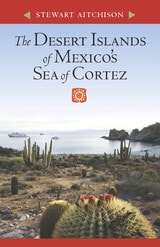
The Desert Islands of Mexico’s Sea of Cortez
Stewart Aitchison
University of Arizona Press, 2010
The Desert Islands of Mexico’s Sea of Cortez is one of the few books devoted to the biogeography of this remarkable part of the world. The book explores the geologic origin of the gulf and its islands, presents some of the basics of island biogeography, details insular life—including residents of the intertidal zone —and provides a brief outlook for preserving this area. More than a simple guidebook, Aitchison’s writing will take both actual and armchair travelers through a gripping tale of natural history.
Like the rest of our fragile planet, the Sea of Cortez and its islands are threatened by humans. Overfishing has eliminated or greatly diminished many fish stocks, and dams on rivers that once flowed into the gulf prevent certain nutrients from reaching the sea. The tenuousness of this area makes the book’s extraordinary photographs and the firsthand descriptions by a well-known teacher, writer, and photographer all the more compelling.
The Desert Smells Like Rain
A Naturalist in O'odham CountryGary Paul Nabhan
University of Arizona Press, 2002
In this work, Gary Paul Nabhan brings O’odham voices to the page at every turn. He writes elegantly of how they husband scant water supplies, grow crops, and utilize edible wild foods. Woven through his account are coyote tales, O’odham children’s impressions of the desert, and observations of the political problems that come with living on both sides of an international border. Nabhan conveys the everyday life and extraordinary perseverance of these desert people.
This edition includes a new preface written by the author, in which he reflects on his gratitude for the O’odham people who shared their knowledge with him. He writes about his own heritage and connections to the desert, climate change, and the border. He shares his awe and gratitude for O’odham writers and storytellers who have been generous enough to share stories with those of us from other cultural traditions so that we may also respect and appreciate the smell of the desert after a rain.
Longtime residents of the Sonoran Desert, the Tohono O'odham people have spent centuries living off the land—a land that most modern citizens of southern Arizona consider totally inhospitable. Ethnobotanist Gary Nabhan has lived with the Tohono O'odham, long known as the Papagos, observing the delicate balance between these people and their environment. Bringing O'odham voices to the page at every turn, he writes elegantly of how they husband scant water supplies, grow crops, and utilize wild edible foods. Woven through his account are coyote tales, O'odham children's impressions of the desert, and observations on the political problems that come with living on both sides of an international border. Whether visiting a sacred cave in the Baboquivari Mountains or attending a saguaro wine-drinking ceremony, Nabhan conveys the everyday life and extraordinary perseverance of these desert people in a book that has become a contemporary classic of environmental literature.
The Desert Smells Like Rain
A Naturalist in O'odham CountryGary Paul Nabhan
University of Arizona Press, 1982
In this work, Gary Paul Nabhan brings O’odham voices to the page at every turn. He writes elegantly of how they husband scant water supplies, grow crops, and utilize edible wild foods. Woven through his account are coyote tales, O’odham children’s impressions of the desert, and observations of the political problems that come with living on both sides of an international border. Nabhan conveys the everyday life and extraordinary perseverance of these desert people.
This edition includes a new preface written by the author, in which he reflects on his gratitude for the O’odham people who shared their knowledge with him. He writes about his own heritage and connections to the desert, climate change, and the border. He shares his awe and gratitude for O’odham writers and storytellers who have been generous enough to share stories with those of us from other cultural traditions so that we may also respect and appreciate the smell of the desert after a rain.
The Desert Year
Joseph Wood Krutch
University of Iowa Press, 1952
Now back in print, Joseph Wood Krutch’s Burroughs Award–winning The Desert Year is as beautiful as it is philosophically profound. Although Krutch—often called the Cactus Walden—came to the desert relatively late in his life, his curiosity and delight in his surroundings abound throughout The Desert Year, whether he is marveling at the majesty of the endless dry sea, at flowers carpeting the desert floor, or at the unexpected appearance of an army of frogs after a heavy rain.
Krutch’s trenchant observations about life prospering in the hostile environment of Arizona’s Sonoran Desert turn to weighty questions about humanity and the precariousness of our existence, putting lie to Western denials of mind in the “lower” forms of life: “Let us not say that this animal or even this plant has ‘become adapted’ to desert conditions. Let us say rather that they have all shown courage and ingenuity in making the best of the world as they found it. And let us remember that if to use such terms in connection with them is a fallacy then it can only be somewhat less a fallacy to use the same terms in connection with ourselves.”
This edition contains 33 exacting drawings by noted illustrator Rudolf Freund. Closely tied to Krutch’s uncluttered text, the drawings tell a story of ineffable beauty.
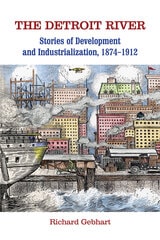
The Detroit River
Stories of Development and Industrialization, 1874–1912Richard Gebhart
Michigan State University Press, 2027
Covering the period from the first government survey of the treacherous Limekiln Crossing to the completion of the Livingstone Channel, The Detroit River tells the story of the industrial transformation of the city’s most important waterway.
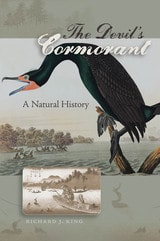
The Devil’s Cormorant
A Natural HistoryRichard J. King
University Press of New England, 2014
The Dimensions of Federalism
State Governments and Pollution Control PoliciesWilliam R. Lowry
Duke University Press, 1991
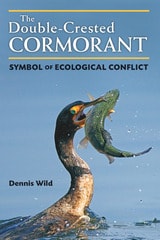
The Double-Crested Cormorant
Symbol of Ecological ConflictDennis Wild
University of Michigan Press, 2012
This is the story of the survival, recovery, astonishing success, and controversial status of the double-crested cormorant. After surviving near extinction driven by DDT and other contaminants from the 1940s through the early 1970s, the cormorant has made an unprecedented comeback from mere dozens to a population in the millions, bringing the bird again into direct conflict with humans. Hated for its colonial nesting behavior; the changes it brings to landscapes; and especially its competition with commercial and sports fishers, fisheries, and fish farmers throughout the Great Lakes and Mississippi Delta regions, the cormorant continues to be persecuted by various means, including the shotgun.
In The Double-Crested Cormorant, Dennis Wild brings together the biological, social, legal, and international aspects of the cormorant's world to give a complete and balanced view of one of the Great Lakes' and perhaps North America's most misunderstood species. In addition to taking a detailed look at the complex natural history of the cormorant, the book explores the implications of congressional acts and international treaties, the workings and philosophies of state and federal wildlife agencies, the unrelenting efforts of aquaculture and fishing interests to "cull" cormorant numbers to "acceptable" levels, and the reactions and visions of conservation groups. Wild examines both popular preconceptions about cormorants (what kinds of fish they eat and how much) and the effectiveness of ongoing efforts to control the cormorant population. Finally, the book delves into the question of climate and terrain changes, their consequences for cormorants, the new territories to which the birds must adapt, and the conflicts this species is likely to face going forward.
The Earth Remains Forever
Generations at a CrossroadsBy Rob Jackson
University of Texas Press, 2002
Writing especially for people who've tuned out the environmental debate, Rob Jackson persuasively argues that we're at a crucial turning point in environmental history, where choices we make now will determine the quality of life into the unforeseeable future. Laying out the scientific facts in plain language and with flashes of humor, he shows how the escalation of population growth and resource consumption in the twentieth century caused problems from ozone depletion to global warming, habitat destruction, and biodiversity loss. At the same time, however, he highlights ongoing solutions to these problems and ways in which we can create a sustainable future for subsequent generations and all life on earth. His urgent message is not that we've already failed, but that we can succeed.
The Earth
Natural Resources and Human InterventionFriedrich Schmidt-Bleek
Haus Publishing, 2009
The Ecolaboratory
Environmental Governance and Economic Development in Costa RicaEdited by Robert Fletcher, Brian Dowd-Uribe, and Guntra A. Aistara
University of Arizona Press, 2020
This book explores these challenges, how Costa Rica is responding to them, and the lessons this holds for current and future trends regarding environmental governance and sustainable development. It provides the first comprehensive assessment of successes and challenges as they play out in a variety of sectors, including agricultural development, biodiversity conservation, water management, resource extraction, and climate change policy.
By framing Costa Rica as an “ecolaboratory,” the contributors in this volume examine the lessons learned and offer a path for the future of sustainable development research and policy in Central America and beyond.
The Ecological City
Preserving and Restoring Urban BiodiversityRutherford H. Platt
University of Massachusetts Press, 1994
Interdisciplinary in content as well as approach, this collection of original essays takes a fresh look at the ecology of urban communities. Written by experts from a variety of professions—academic researchers, private and public program managers, and citizen activists—the book explores issues of geography, ecology, landscape architecture, urban forestry, law, and environmental education. Contributions include broad overviews of common problems a well as detailed case studies of specific programs.
Although several contributors are natural scientists, the book focuses on matters of public policy and public-private collaboration. The aim is not only to assess the impact of increasing urbanization on biodiversity, but also to propose new ways of preserving and restoring the balance between the natural and the built environment through planning and design.
The Ecological Other
Environmental Exclusion in American CultureSarah Jaquette Ray
University of Arizona Press, 2013
The Ecological Web
More on the Distribution and Abundance of AnimalsH. G. Andrewartha and L. C. Birch
University of Chicago Press, 1984
"The Ecological Web presents an entirely fresh look at ecology from the autecological perspective, and is a worthy successor to the authors' classic work, The Distribution and Abundance of Animals. The work is original—indeed unique—and the detailed coverage of case histories is unprecedented. The point of view will be controversial, but every ecologist will be impressed with the competence and completeness with which the arguments are mustered. A 'must' for every ecologist and environmental scientist."—Paul R. Ehrlich
"This book is the naturalist's vision of population ecology. The authors do not intend a formal description of the environment, but are seeking a way of functional analysis, a workable framework of theory within which to ask questions that will help us understand the distribution and abundance of animals in natural populations. The Ecological Web should be studied carefully by every population ecologist and should take a prominent place in the teaching of ecology. It marks a very significant period in our science as we change from one paradigm to another."—P. J. den Boer
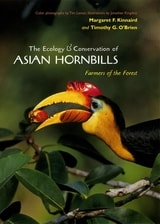
The Ecology and Conservation of Asian Hornbills
Farmers of the ForestMargaret F. Kinnaird and Timothy G. O'Brien
University of Chicago Press, 2008
Building on fourteen years of research, Margaret F. Kinnaird and Timothy G. O’Brien offer in Ecology and Conservation of Asian Hornbills the most up-to-date information on the evolution, reproduction, feeding ecology, and movement patterns of thirty-one species of Asian hornbills. The authors address questions of ecological functionality, ecosystem services, and keystone relationships, as well as the disturbing influence of forest loss and fragmentation on hornbills. Complemented by superb full-color images by renowned photographer Tim Laman that provide rare glimpses of hornbills in their native habitat and black-and-white illustrations by Jonathan Kingdon that highlight the intriguing aspects of hornbill behavior, Ecology and Conservation of Asian Hornbills will stand tall in the pantheon of natural history studies for years to come.
The Ecology and Management of Prairies in the Central United States
Chris Helzer
University of Iowa Press, 2010
Most prairies exist today as fragmented landscapes, making thoughtful and vigilant management ever more important. Intended for landowners and managers dedicated to understanding and nurturing their prairies as well as farmers, ranchers, conservationists, and all those with a strong interest in grasslands, ecologist Chris Helzer’s readable and practical manual educates prairie owners and managers about grassland ecology and gives them guidelines for keeping prairies diverse, vigorous, and viable.
Chapters in the first section, "Prairie Ecology," describe prairie plants and the communities they live in, the ways in which disturbance modifies plant communities, the animal and plant inhabitants that are key to prairie survival, and the importance of diversity within plant and animal communities. Chapters in the second section, "Prairie Management," explore the adaptive management process as well as guiding principles for designing management strategies, examples of successful management systems such as fire and grazing, guidance for dealing with birds and other species that have particular habitat requirements and with the invasive species that have become the most serious threat that prairie managers have to deal with, and general techniques for prairie restoration. Following the conclusion and a forward-thinking note on climate change, eight appendixes provide more information on grazing, prescribed fire, and invasive species as well as bibliographic notes, references, and national and state organizations with expertise in prairie management.
Grasslands can be found throughout much of North America, and the ideas and strategies in this book apply to most of them, particularly tallgrass and mixed-grass prairies in eastern North Dakota, eastern South Dakota, eastern Nebraska, eastern Kansas, eastern Oklahoma, northwestern Missouri, northern Illinois, northwestern Indiana, Iowa, southwestern Wisconsin, and southwestern Minnesota. By presenting all the factors that promote biological diversity and thus enhance prairie communities, then incorporating these factors into a set of clear-sighted management practices, The Ecology and Management of Prairies in the Central United States presents the tools necessary to ensure that grasslands are managed in the purposeful ways essential to the continued health and survival of prairie communities.
The Ecology of Ecologists
Harnessing Diverse Approaches for a Stronger ScienceJeremy Fox
University of Chicago Press, 2025
Open any ecology textbook, and you will find a heterogeneous mix of material that puzzles many newcomers. How do levels of organization from individual organisms to ecosystems, abstract concepts like food webs and biodiversity, and applied topics, like climate change and conservation, all fit together? New ecological research can be equally puzzling. Ecology journals publish studies using different methods in different study systems to ask different questions and achieve different goals. Is this all really Ecology? Yes, ecologist Jeremy Fox says in this eye-opening book. Ecology contains multitudes, and that is its power. In an essential book for all ecologists, Fox builds on insights developed in his popular blog, Dynamic Ecology, to argue that it is better for a scientific discipline to be messy than monolithic.
Analyzing and accessibly explaining a broad range of scientific literature, Fox shows that ecology grew from disparate sources with profoundly different motivations, methods, and goals. We see the differences in those origins reflected in today’s research, in the pull between those who want to establish ecological laws akin to physical ones and those who see ecology’s value as inherent in its species- or system-specific case studies. Neither group, Fox argues, is doing ecology wrong. Instead, he says, the strength of this science—as in most ecological systems—is diversity. It is good when two ecologists look at similar problems differently. We now need the community to know enough about those different approaches to improve how they work together.
The Ecology of Modernism
American Environments and Avant-Garde PoeticsJoshua Schuster
University of Alabama Press, 2015
In his opening passage, Schuster boldly invokes lines from Walt Whitman’s “Crossing Brooklyn Ferry,” which echo as a paean to pollution: “Burn high your fires, foundry chimneys! cast black shadows at nightfall!” Schuster labels this theme “regeneration through pollution” and demonstrates how this motif recurs in modernist compositions. This tolerance for, if not actual exultation of, the by-products of industrialization hindered modernist American artists, writers, and musicians from embracing environmentalist agendas.
Schuster provides specific case studies focusing on Marianne Moore and her connection of fables with animal rights; Gertrude Stein and concepts of nature in her avant-garde poetics; early blues music and poetry and the issue of how environmental disasters (floods, droughts, pestilence) affected black farmers and artists in the American South; and John Cage, who extends the modernist avant-garde project formally but critiques it at the same time for failing to engage with ecology. A fascinating afterword about the role of oil in modernist literary production rounds out this work.
Schuster masterfully shines a light on the modernist interval between the writings of bucolic and nature-extolling Romantics and the emergence of a self-conscious green movement in the 1960s. This rewarding work shows that the reticence of modernist poets in the face of resource depletion, pollution, animal rights, and other ecological traumas is highly significant.
The Ecology of Others
Philippe Descola
Prickly Paradigm Press, 2013
Since the end of the nineteenth century, the division between nature and culture has been fundamental to Western thought. In this groundbreaking work, renowned anthropologist Philippe Descola seeks to break down this divide, arguing for a departure from the anthropocentric model and its rigid dualistic conception of nature and culture as distinct phenomena. In its stead, Descola proposes a radical new worldview, in which beings and objects, human and nonhuman, are understood through the complex relationships that they possess with one another.
The Ecology of the Barí
Rainforest Horticulturalists of South AmericaBy Stephen Beckerman and Roberto Lizarralde
University of Texas Press, 2013
Inhabiting the rainforest of the southwest Maracaibo Basin, split by the border between Colombia and Venezuela, the Barí have survived centuries of incursions. Anthropologist Roberto Lizarralde began studying the Barí in 1960, when he made the first modern peaceful contact with this previously unreceptive people; he was joined by anthropologist Stephen Beckerman in 1970. The Ecology of the Barí showcases the findings of their singular long-term study.
Detailing the Barí’s relations with natural and social environments, this work presents quantitative subsistence data unmatched elsewhere in anthropological publications. The authors’ lengthy longitudinal fieldwork provided the rare opportunity to study a tribal people before, during, and after their aboriginal patterns of subsistence and reproduction were eroded by the modern world. Of particular interest is the book’s exploration of partible paternity—the widespread belief in lowland South America that a child can have more than one biological father. The study illustrates its quantitative findings with an in-depth biographical sketch of the remarkable life of an individual Barí woman and a history of Barí relations with outsiders, as well as a description of the rainforest environment that has informed all aspects of Barí history for the past five hundred years. Focusing on subsistence, defense, and reproduction, the chapters beautifully capture the Barí’s traditional culture and the loss represented by its substantial transformation over the past half-century.
The Economic Approach
Unpublished Writings of Gary S. BeckerGary S. Becker
University of Chicago Press, 2023
Now in paperback, a revealing collection from the intellectual titan whose work shaped the modern world.
As an economist and public intellectual, Gary S. Becker was a giant. The recipient of a Nobel Prize, a John Bates Clark Medal, and a Presidential Medal of Freedom, Becker is widely regarded as the greatest microeconomist in history.
After forty years at the University of Chicago, Becker left a slew of unpublished writings that used an economic approach to human behavior, analyzing such topics as preference formation, rational indoctrination, income inequality, drugs and addiction, and the economics of family.
These papers unveil the process and personality—direct, critical, curious—that made him a beloved figure in his field and beyond. The Economic Approach examines these extant works as a capstone to the Becker oeuvre—not because the works are perfect, but because they offer an illuminating, instructive glimpse into the machinations of an economist who wasn’t motivated by publications. Here, and throughout his works, an inquisitive spirit remains remarkable and forever resonant.
The Economics of Marine Resources and Conservation Policy
The Pacific Halibut Case Study with CommentaryEdited by James A. Crutchfield and Arnold Zellner
University of Chicago Press, 2002
This book presents a complete reprint of Crutchfield and Zellner's pioneering study, together with a new introduction by the authors and four new papers by other scholars. These new studies cover the history of the Pacific halibut industry as well as the general and specific contributions of the original work—such as price-oriented conservation policy—to the fields of resource economics and management. The resulting volume integrates theory and practice in a clear, well-contextualized case study that will be important not just for environmental and resource economists, but also for leaders of industries dependent on any natural resource.

The Edible and the Endangered
Animals, Empire, ExtinctionJohn Levi Barnard
Duke University Press, 2027