Results by title
3258 books match the query 'Performing Arts' and 658 start with t
The Birth of Whiteness
Race and the Emergence of United States CinemaEdited by Daniel Leonard Bernardi
Rutgers University Press, 1996
As indelible components of the history of the United States, race and racism have permeated nearly all aspects of life: cultural, economic, political, and social. In this first anthology on race in early cinema, fourteen scholars examine the origins, dynamics, and ramifications of racism and Eurocentrism and the resistance to both during the early years of American motion pictures. Any discussion of racial themes and practices in any arena inevitably begins with the definition of race. Is race an innate and biologically determined "essence" or is it a culturally constructed category? Is the question irrelevant? Perhaps race exists as an ever-changing historical and social formation that, regardless of any standard definition, involves exploitation, degradation, and struggle. In his introduction, Daniel Bernardi writes that "early cinema has been a clear partner in the hegemonic struggle over the meaning of race" and that it was steadfastly aligned with a Eurocentric world view at the expense of those who didn't count as white.
The contributors to this work tackle these problems and address such subjects as biological determinism, miscegenation, Manifest Destiny, assimilation, and nativism and their impact on early cinema. Analyses of The Birth of a Nation, Romona, Nanook of the North and Madame Butterfly and the directorial styles of D. W. Griffith, Oscar Micheaux, and Edwin Porter are included in the volume.
The Black Body in Ecstasy
Reading Race, Reading PornographyJennifer C. Nash
Duke University Press, 2014
The Black Pack
Comedy, Race, and ResistanceArtel Great
Rutgers University Press, 2025
Working together as writers, directors, producers, actors, and consultants, the Black Pack created some of the most provocative and enduring Black films and television shows of the twentieth century, including classic productions like In Living Color, Coming to America, Hollywood Shuffle, and The Arsenio Hall Show. The Black Pack collective was armed with a signature comedic style which combined politically-Black satire with edgy social humor that entertained millions, shattered box-office records, and slyly critiqued America’s racial condition. Amid escalating social tensions in the 1980s, the Black Pack’s comedic output transformed anger into art, wielding the cloak of humor as a rebellious tool to confront unjust business practices in Hollywood and challenge racial narratives embedded in American culture. Their work empowered unapologetically Black voices and expanded creative possibilities for Black artists in the entertainment industry.
In The Black Pack, Artel Great delivers the most comprehensive analysis of this groundbreaking comedy collective, uncovering how the group’s socially and politically-charged humor defied systemic barriers to achieve unprecedented commercial success and establish a cultural legacy that continues to inspire media creators today and across new generations.
The Bodies of Others
Drag Dances and Their AfterlivesSelby Wynn Schwartz
University of Michigan Press, 2019
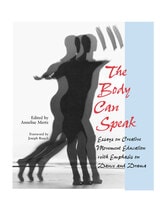
The Body Can Speak
Essays on Creative Movement Education with Emphasis on Dance and DramaEdited by Annelise Mertz. Foreword by Joseph Roach
Southern Illinois University Press, 2002
Movement is our first language, our universal language. Expression of body movement is the very basis of life as the nineteen contributors to The Body Can Speak: Essays on Creative Movement Education with Emphasis on Dance and Drama attest. Students use their bodies as an instrument of expression, and movement as medium; this means investigating space, energy, time, and motion in order to gain insight into these basic principles. At the same time they gain essential awareness of the self. Such work stimulates the senses and intellect, and develops a tangible new vision to satisfy the human need for aesthetic and artistic expression.
As editor of this collection, accomplished dancer and artistic director Annelise Mertz provides both an aesthetic appreciation for creative movement education as well as practical pedagogy for incorporating dance and drama into contemporary curriculum. Mertz has assembled here a definitive body of work from fellow artists and former students that speaks to the need to actively promote art as part of education.
The book gives voice to accomplished teachers, actors, dancers, directors, authors, and choreographers who share their experiences while they address creative movement education from preschool through college. Forty-eight photographs add an illuminating visual dimension to this wealth of stimulating ideas. The Body Can Speak provides a balanced and varied mosaic, with each essay offering evidence that creative movement education is vital for human development.
Contributors include Becky Engler-Hicks, Ruth Grauert, Anna Halprin, Joanna G. Harris, Margaret N. H’Doubler, Michael Hoeye, Murray Louis, Annelise Mertz, Jaime Nisenbaum, Carol North, Jeff Rehg, Shirley Ririe, G. Hoffman Soto, Emma D. Sheehy, Harold Taylor, Branislav Tomich, Dorothy M. Vislocky, and Joan J. Woodbury.
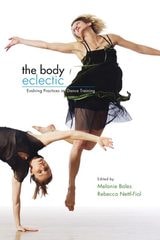
The Body Eclectic
Evolving Practices in Dance TrainingEdited by Melanie Bales and Rebecca Nettl-Fiol
University of Illinois Press, 2007
This rich collection of essays and interviews explores modern-dance technique training from the last fifty years. Focusing on the culture of dance, editors Melanie Bales and Rebecca Nettl-Fiol examine choreographic process and style, dancer agency and participation in the creative process, and changes in the role and purpose of training. Bringing recent writings on dance into dialogue with dance practice, The Body Eclectic: Evolving Practices in Dance Training asks readers to consider the relationship between training practices and choreographic style and content. The contributors explore how technique training both guides and reflects the art of dance.
Contributors include Melanie Bales, Glenna Batson, Wendell Beavers, Veronica Dittman, Natalie Gilbert, Joshua Monten, Martha Myers, and Rebecca Nettl-Fiol.
Dance professionals interviewed include David Dorfman, Ralph Lemon, Bebe Miller, Tere O’Connor, and Shelley Washington.
The Body in Crisis
New Pathways and Short Circuits in RepresentationChristine Greiner
University of Michigan Press, 2021
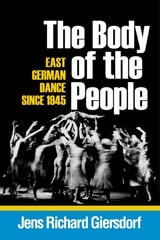
The Body of the People
East German Dance since 1945Jens Richard Giersdorf
University of Wisconsin Press, 2013
Giersdorf looks closely at uniquely East German dance forms—including mass exercise events, national folk dances, Marxist-Leninist visions staged by the dance ensemble of the armed forces, the vast amateur dance culture, East Germany’s version of Tanztheater, and socialist alternatives to rock ‘n’ roll—to demonstrate how dance was used both as a form of corporeal utopia and of embodied socialist propaganda and indoctrination. The Body of the People also explores the artists working in the shadow of official culture who used dance and movement to critique and resist state power, notably Charlotte von Mahlsdorf, Arila Siegert, and Fine Kwiatkowski. Giersdorf considers a myriad of embodied responses to the Communist state even after reunification, analyzing the embodiment of the fall of the Berlin Wall in the works of Jo Fabian and Sasha Waltz, and the diasporic traces of East German culture abroad, exemplified by the Chilean choreographer Patricio Bunster.
The Bond of the Furthest Apart
Essays on Tolstoy, Dostoevsky, Bresson, and KafkaSharon Cameron
University of Chicago Press, 2017
Whether exploring Bresson’s efforts to reassess the limits of human reason and will, Dostoevsky’s subversions of Christian conventions, Tolstoy’s incompatible beliefs about death, or Kafka’s focus on creatures neither human nor animal, Cameron illuminates how the repeated juxtaposition of disparate, even antithetical, phenomena carves out new approaches to defining the essence of being, one where the very nature of fixed categories is brought into question. An innovative look at a classic French auteur and three giants of European literature, The Bond of the Furthest Apart will interest scholars of literature, film, ethics, aesthetics, and anyone drawn to an experimental venture in critical thought.
The Book of the Play
Playwrights, Stationers, and Readers in Early Modern EnglandMarta Straznicky
University of Massachusetts Press, 2006
The Book of the Play is a collection of essays that examines early modern drama in the context of book history. Focusing on the publication, marketing, and readership of plays opens fresh perspectives on the relationship between the cultures of print and performance and more broadly between drama and the public sphere. Marta Straznicky's introduction offers a survey of approaches to the history of play reading in this period, and the collection as a whole consolidates recent work in textual, bibliographic, and cultural studies of printed drama.
Individually, the essays advance our understanding of play reading as a practice with distinct material forms, discourses, social settings, and institutional affiliation. Part One, “Real and Imagined Communities,” includes four essays on play-reading communities and the terms in which they are distinguished from the reading public at large. Cyndia Clegg surveys the construction of readers in prefaces to published plays; Lucy Munro traces three separate readings of a single play, Edward Sharpham's The Fleer; Marta Straznicky studies women as readers of printed drama; and Elizabeth Sauer describes how play reading was mobilized for political purposes in the period of the Civil War.
In Part Two, “Play Reading and the Book Trade,” five essays consider the impact of play reading on the public sphere through the lens of publishing practices. Zachary Lesser offers a revisionist account of black-letter typeface and the extent to which it may be understood as an index of popular culture; Alan Farmer examines how the emerging news trade of the 1620s and 1630s affected the marketing of printed drama; Peter Berek traces the use of generic terms on title pages of plays to reveal their intersection with the broader culture of reading; Lauren Shohet demonstrates that the Stuart masque had a parallel existence in the culture of print; and Douglas Brooks traces the impact print had on eclipsing performance as the medium in which the dramatist could legitimately lay claim to having authored his text.
The individual essays focus on selected communities of readers, publication histories, and ideologies and practices of reading; the collection as a whole demonstrates the importance of textual production and reception to understanding the place of drama in the early modern public sphere.
The Boxing Film
A Cultural and Transmedia HistoryTravis Vogan
Rutgers University Press, 2021
The Byronic Hero in Film, Fiction, and Television
Atara Stein
Southern Illinois University Press, 2004
The Byronic Hero in Film, Fiction, and Television bridges nineteenth- and twentieth-century studies in pursuit of an ambitious, antisocial, arrogant, and aggressively individualistic mode of hero from his inception in Byron’s Manfred, Childe Harold, and Cain, through his incarnations as the protagonists of Westerns, action films, space odysseys, vampire novels, neo-Gothic comics, and sci-fi television. Such a hero exhibits supernatural abilities, adherence to a personal moral code, ineptitude at human interaction (muddled even further by self-absorbed egotism), and an ingrained defiance of oppressive authority. He is typically an outlaw, most certainly an outcast or outsider, and more often than not, he is a he. Given his superhuman status, this hero offers no potential for sympathetic identification from his audience. At best, he provides an outlet for vicarious expressions of power and independence. While audiences may not seek to emulate the Byronic hero, Stein notes that he desires to emulate them; recent texts plot to “rehumanize” the hero or to voice through him approbation and admiration of ordinary human values and experiences.
Tracing the influence of Lord Byron’s Manfred as outcast hero on a pantheon of his contemporary progenies—including characters from Pale Rider, Unforgiven, The Terminator, Alien, The Crow, Sandman, Star Trek: The Next Generation,and Angel—Atara Stein tempers her academic acumen with the insights of a devoted aficionado in this first comprehensive study of the Romantic hero type and his modern kindred.
Atara Stein was a professor of English at California State University, Fullerton. Her articles on the development of the Byronic hero have appeared in Popular Culture Review, Romantic Circles Praxis Series, Genders, and Philological Quarterly.
The CIA in Hollywood
How the Agency Shapes Film and TelevisionBy Tricia Jenkins
University of Texas Press, 2016
What’s your impression of the CIA? A bumbling agency that can’t protect its own spies? A rogue organization prone to covert operations and assassinations? Or a dedicated public service that advances the interests of the United States? Astute TV and movie viewers may have noticed that the CIA’s image in popular media has spanned this entire range, with a decided shift to more positive portrayals in recent years. But what very few people know is that the Central Intelligence Agency has been actively engaged in shaping the content of film and television, especially since it established an entertainment industry liaison program in the mid-1990s.
The CIA in Hollywood offers the first full-scale investigation of the relationship between the Agency and the film and television industries. Tricia Jenkins draws on numerous interviews with the CIA’s public affairs staff, operations officers, and historians, as well as with Hollywood technical consultants, producers, and screenwriters who have worked with the Agency, to uncover the nature of the CIA’s role in Hollywood. In particular, she delves into the Agency’s and its officers’ involvement in the production of The Agency, In the Company of Spies, Alias, The Recruit, The Sum of All Fears, Enemy of the State, Syriana, The Good Shepherd, and more. Her research reveals the significant influence that the CIA now wields in Hollywood and raises important and troubling questions about the ethics and legality of a government agency using popular media to manipulate its public image.
The Captive Stage
Performance and the Proslavery Imagination of the Antebellum NorthDouglas A. Jones, Jr.
University of Michigan Press, 2014

The Castaways
How Producers Lost Their Independence and Conjured Up the Outsider SitcomLarry Durst
Rutgers University Press, 2027
In the early 1960s a new style of situation comedy took over primetime as Bewitched, Gilligan’s Island, Gomer Pyle, U.S.M.C., I Dream of Jeannie, My Favorite Martian, and other “Outsider Sitcoms” featuring alien characters disrupting their TV environments shot to the top of the ratings. Departing from a critical approach that understands these series as reflections of the decade’s many social disruptions, The Castaways reveals the programs as emotional responses by their creators to a more personal upheaval: their loss of influence in the broadcast industry. As network executives turned increasingly to audience research, independent producers felt the ability that had been most crucial to their success in broadcasting was being devalued: gut creative intuition. Drawing on memoirs, show treatments, and other original documents, The Castaways uncovers how leading characters on the programs served as emotional proxies for their creators’ fears of industry irrelevance as they were cast out from the corporate halls of power where their series’—and personal—fates were decided.
The Chinese Diaspora on American Screens
Race, Sex, and CinemaGina Marchetti
Temple University Press, 2012
The Chinese Diaspora on American Screens looks at the way in which issues of race and sexuality have become central concerns in cinema generated by and about Chinese communities in America after the mid-1990s. This companion volume to Marchetti's From Tian'anmen to Times Square looks specifically at the Chinese diaspora in relation to ethnic, racial, gender, and sexual identity as depicted in the cinema.
Examining films from the United States and Canada, as well as transnational co-productions, The Chinese Diaspora on American Screens includes analyses of films such as The Wedding Banquet and Double Happiness in addition to interviews with celebrated filmmakers such as Wayne Wang.
Marchetti also reflects on how Chinese identity is presented in a multitude of media forms, including commercial cinema, documentaries, experimental films, and hybrid digital media to offer a textured look at representations of the Chinese diasporic experience after Tian'anmen.

The Choral Turn
Performing the Chorus in the Ruins of DemocracyAmy Holzapfel
University of Michigan Press, 2027
The Choral Turn: Performing the Chorus in the Ruins of Democracy examines the recent resurgence of the chorus—a hallmark of ancient Greek tragedy—across contemporary Western theatre, performance, and activism, arguing that this “choral turn” is inseparable from anxieties about the decline of liberal democracy. Drawing on classical studies, theatre and performance studies, and political philosophy, Holzapfel coins the term “choraperformativity” to describe performances that mobilize the formal and collective conventions of the chorus to contest or reshape dominant political narratives. The Choral Turn uses case studies—plays about war and catastrophe featuring Greek-like choruses, refugee performers theatrically reenacting their own displacement, environmental protesters staging collective mourning for a dying planet—to show how groups use choral performance to demand recognition and assert the need for change. Rather than treating the chorus as inherently progressive, the study asks hard questions about who gets included in these choral communities and who gets left out, offering a nuanced, timely look at collective action on stage and in the streets.
The Cinema Dreams Its Rivals
Media Fantasy Films from Radio to the InternetPaul Young
University of Minnesota Press, 2006
Paul Young looks at the American cinema’s imaginative constructions of three electronic media—radio, television, and the Internet—at the times when these media seemed to hold limitless possibilities. In doing so, he demonstrates that Hollywood is indelibly marked by the advent of each new medium, from the inclusion of sound in motion pictures to the use of digital graphics. But conversely, Young argues, the identities of the new media are themselves changed as Hollywood turns them to its own purposes and its own dreams.
Paul Young is professor of English and director of the film studies program at Vanderbilt University.

The Cinema Makers
Public Life and the Exhibition of Difference in South-Eastern and Central Europe since the 1960sAnna Schober
Intellect Books, 2013
The Cinema Makers investigates how cinema spectators in southeastern and central European cities became cinema makers through such practices as squatting in existing cinema spaces, organizing cinema "events," writing about film, and making films themselves. Drawing on a corpus of interviews with cinema activists in Germany, Austria, and the former Yugoslavia, Anna Schober compares the activities and artistic productions they staged in cities such as Vienna, Cologne, Munich, Berlin, Hamburg, Ljubljana, Belgrade, Novi Sad, Subotica, Zagreb, and Sarajevo. The resulting study illuminates the differences and similarities in the development of political culture—and cinema’s role in that development—in European countries with pluralist-democratic, one-party socialist, and post-socialist traditions.
The Cinema of Barbara Stanwyck
Twenty-Six Short Essays on a Working StarCatherine Russell
University of Illinois Press, 2023
Original and rich, The Cinema of Barbara Stanwyck is an essential and entertaining reexamination of an enduring Hollywood star.
The Cinema of Economic Miracles
Visuality and Modernization in the Italian Art FilmAngelo Restivo
Duke University Press, 2002
Restivo studies numerous films of the period, focusing mainly on the works of Pier Paolo Pasolini and Michelangelo Antonioni. He finds that these auteurs’ films reworked the neorealist aesthetic developed in the 1940s and 1950s, explored issues brought to the fore by the subsequent consumer boom, and presaged developments central to both critical theory and the visual arts in the 1980s and 1990s. Drawing on the theories of Lacan, Zizek, Benjamin, Foucault, Jameson, and Deleuze, he shines new light on such films as Pasolini’s Accattone and Teorema, and Antonioni’s Red Desert and Blow-Up. Restivo’s model for understanding the relationship of the 1960s Italian art film to its cultural contexts also has implications that extend to the developing national cinemas of countries such as Brazil and Taiwan.
The Cinema of Economic Miracles will interest scholars and students in all areas of film studies, especially those studying theories of the image, national cinema theory, and Italian cinema, and to those engaged in poststructuralist theory, philosophy, and comparative literature.
The Cinema of Isolation
A History of Physical Disability in the MoviesNorden, Martin F
Rutgers University Press, 1994
Norden offers a dazzling array of physically disabled characters who embody or break out of the stereotypes that have both influenced and been symptomatic of societys fluctuating relationship with its physically disabled minority. He shows us "sweet innocents" like Tiny Tim, "obsessive avengers" like Quasimodo, variations on the disabled veteran, and many others. He observes the arrival of a new set of stereotypes tied to the growth of science and technology in the 1970s and 1980s, and underscores movies like My Left Foot and The Waterdance that display a newfound sensitivity. Nordens in-depth knowledge of disability history makes for a particularly intelligent and sensitive approach to this long-overlooked issue in media studies.
The Cinema of Naruse Mikio
Women and Japanese ModernityCatherine Russell
Duke University Press, 2008
Naruse was a studio-based director, a company man renowned for bringing films in on budget and on time. During his long career, he directed movies in different styles of melodrama while displaying a remarkable continuity of tone. His films were based on a variety of Japanese literary sources and original scripts; almost all of them were set in contemporary Japan. Many were “women’s films.” They had female protagonists, and they depicted women’s passions, disappointments, routines, and living conditions. While neither Naruse or his audiences identified themselves as “feminist,” his films repeatedly foreground, if not challenge, the rigid gender norms of Japanese society. Given the complex historical and critical issues surrounding Naruse’s cinema, a comprehensive study of the director demands an innovative and interdisciplinary approach. Russell draws on the critical reception of Naruse in Japan in addition to the cultural theories of Harry Harootunian, Miriam Hansen, and Walter Benjamin. She shows that Naruse’s movies were key texts of Japanese modernity, both in the ways that they portrayed the changing roles of Japanese women in the public sphere and in their depiction of an urban, industrialized, mass-media-saturated society.
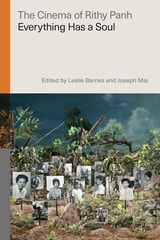
The Cinema of Rithy Panh
Everything Has a SoulLeslie Barnes
Rutgers University Press, 2022
Born in 1964, Cambodian filmmaker Rithy Panh grew up in the midst of the Khmer Rouge’s genocidal reign of terror, which claimed the lives of many of his relatives. After escaping to France, where he attended film school, he returned to his homeland in the late 1980s and began work on the documentaries and fiction films that have made him Cambodia’s most celebrated living director.
The fourteen essays in The Cinema of Rithy Panh explore the filmmaker’s unique aesthetic sensibility, examining the dynamic and sensuous images through which he suggests that “everything has a soul.” They consider how Panh represents Cambodia’s traumatic past, combining forms of individual and collective remembrance, and the implications of this past for Cambodia’s transition into a global present. Covering documentary and feature films, including his literary adaptations of Marguerite Duras and Kenzaburō Ōe, they examine how Panh’s attention to local context leads to a deep understanding of such major themes in global cinema as justice, imperialism, diaspora, gender, and labor.
Offering fresh takes on masterworks like The Missing Picture and S-21 while also shining a light on the director’s lesser-known films, The Cinema of Rithy Panh will give readers a new appreciation for the boundless creativity and ethical sensitivity of one of Southeast Asia’s cinematic visionaries.
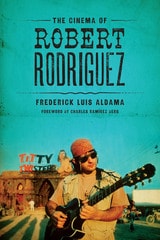
The Cinema of Robert Rodriguez
By Frederick Luis Aldama
University of Texas Press, 2014
Robert Rodriguez stands alone as the most successful U.S. Latino filmmaker today, whose work has single-handedly brought U.S. Latino filmmaking into the mainstream of twenty-first-century global cinema. Rodriguez is a prolific (eighteen films in twenty-one years) and all-encompassing filmmaker who has scripted, directed, shot, edited, and scored nearly all his films since his first breakout success, El Mariachi, in 1992. With new films constantly coming out and the launch of his El Rey Network television channel, he receives unceasing coverage in the entertainment media, but systematic scholarly study of Rodriguez’s films is only just beginning.
The Cinema of Robert Rodriguez offers the first extended investigation of this important filmmaker’s art. Accessibly written for fans as well as scholars, it addresses all of Rodriguez’s feature films through Spy Kids 4 and Machete Kills, and his filmmaking process from initial inspiration, to script, to film (with its myriad visual and auditory elements and choices), to final product, to (usually) critical and commercial success. In addition to his close analysis of Rodriguez’s work, Frederick Luis Aldama presents an original interview with the filmmaker, in which they discuss his career and his relationship to the film industry. This entertaining and much-needed scholarly overview of Rodriguez’s work shines new light on several key topics, including the filmmaker’s creative, low-cost, efficient approach to filmmaking; the acceptance of Latino films and filmmakers in mainstream cinema; and the consumption and reception of film in the twenty-first century.
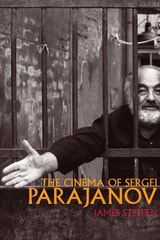
The Cinema of Sergei Parajanov
James Steffen
University of Wisconsin Press, 2013
The Cinema of Sergei Parajanov is the first English-language book on the director's films and the most comprehensive study of his work. James Steffen provides a detailed overview of Parajanov's artistic career: his identity as an Armenian in Georgia and its impact on his aesthetics; his early films in Ukraine; his international breakthrough in 1964 with Shadows of Forgotten Ancestors; his challenging 1969 masterpiece, The Color of Pomegranates, which was reedited against his wishes; his unrealized projects in the 1970s; and his eventual return to international prominence in the mid-to-late 1980s with The Legend of the Surami Fortress and Ashik-Kerib. Steffen also provides a rare, behind-the-scenes view of the Soviet film censorship process and tells the dramatic story of Parajanov's conflicts with the authorities, culminating in his 1973–77 arrest and imprisonment on charges related to homosexuality.
Ultimately, the figure of Parajanov offers a fascinating case study in the complicated dynamics of power, nationality, politics, ethnicity, sexuality, and culture in the republics of the former Soviet Union.
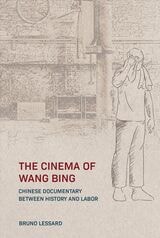
The Cinema of Wang Bing
Chinese Documentary between History and LaborBruno Lessard
Hong Kong University Press, 2023
In The Cinema of Wang Bing, Bruno Lessard examines documentarian Wang Bing’s most important films. He focuses on the two obsessions at the heart of Wang’s oeuvre—the legacy of Maoist China in the present and the transformation of labor since China’s entry into the market economy—and how the crucial figures of survivor and worker are represented on screen. Bruno Lessard argues that Wang is a minjian (grassroots) intellectual whose films document the impact of Mao’s Great Leap Forward on Chinese collective memory and register the repercussions of China’s turn to neoliberalism on workers in the post-Reform era. Bringing together Chinese documentary studies and China studies, Lessard shows how Wang’s practice reflects the minjian ethos when documenting the survivors of the Great Famine and those who have not benefitted from China’s neoliberal policies—from laid-off workers to migrant workers. The films discussed include some of Wang’s most celebrated works such as West of the Tracks and Dead Souls, as well as neglected documentaries such as Coal Money and Bitter Money.
The Cinema of Yakov Protazanov
F. Booth Wilson
Rutgers University Press, 2024
The Cinema, or The Imaginary Man
Edgar Morin
University of Minnesota Press, 2005
The Cinematic Footprint
Lights, Camera, Natural ResourcesBozak, Nadia
Rutgers University Press, 2011
Film is often used to represent the natural landscape and, increasingly, to communicate environmentalist messages. Yet behind even today’s “green” movies are ecologically unsustainable production, distribution, and consumption processes. Noting how seemingly immaterial moving images are supported by highly durable resource-dependent infrastructures, The Cinematic Footprint traces the history of how the “hydrocarbon imagination” has been central to the development of film as a medium.
Nadia Bozak’s innovative fusion of film studies and environmental studies makes provocative connections between the disappearance of material resources and the emergence of digital media—with examples ranging from early cinema to Dziga Vertov’s prescient eye, from Chris Marker’s analog experiments to the digital work of Agnès Varda, James Benning, and Zacharias Kunuk. Combining an analysis of cinema technology with a sensitive consideration of film aesthetics, The Cinematic Footprint offers a new perspective on moving images and the natural resources that sustain them.
The Cinematic Griot
The Ethnography of Jean RouchPaul Stoller
University of Chicago Press, 1992
A brief account of Rouch's background, revealing the ethnographic foundations and intellectual assumptions underlying his fieldwork among the Songhay of Niger in the 1940s and 1950s, sets the stage for his emergence as a cinematic griot, a peripatetic bard who "recites" the story of a people through provocative imagery. Against this backdrop, Stoller considers Rouch's writings on Songhay history, myth, magic and possession, migration, and social change. By analyzing in depth some of Rouch's most important films and assessing Rouch's ethnography in terms of his own expertise in Songhay culture, Stoller demonstrates the inner connection between these two modes of representation.
Stoller, who has done more fieldwork among the Songhay than anyone other than Rouch himself, here gives the first full account of Rouch the griot, whose own story scintillates with important implications for anthropology, ethnography, African studies, and film.
The Cinematic ImagiNation
Indian Popular Films as Social HistoryVirdi, Jyotika
Rutgers University Press, 2003
--Gina Marchetti, author of Romance and the "Yellow Peril": Race, Sex, and Discursive Strategies in Hollywood Fiction
India produces more films than any other country in the world, and these works are avidly consumed by non-Western cultures in Africa, Eastern Europe, the Middle East, and by the Indian communities in Australia, Britain, the Caribbean Islands, and North America. Jyotika Virdi focuses on how this dominant medium configures the "nation" in post-Independence Hindi cinema. She scrutinizes approximately thirty films that have appeared since 1950 and demonstrates how concepts of the nation form the center of this cinema's moral universe. As a kind of storytelling, Indian cinema provides a fascinating account of social history and cultural politics, with the family deployed as a symbol of the nation. Virdi demonstrates how the portrayal of the nation as a mythical community in Hindi films collapses under the weight of its own contradictions--irreconcilable differences that encompass gender, sexuality, family, class, and religious communities. Through these film narratives, the author traces transactions among the various constituencies that struggle, accommodate, coexist uneasily, or reconstitute each other over time, and, in the process, reveal the topography of postcolonial culture.
The Cinematic Life of the Gene
Jackie Stacey
Duke University Press, 2010
Stacey examines the body-horror movies Alien: Resurrection and Species in light of Jean Baudrillard’s apocalyptic proclamations about cloning and “the hell of the same,” and she considers the art-house thrillers Gattaca and Code 46 in relation to ideas about imitation, including feminist theories of masquerade, postcolonial conceptualizations of mimicry, and queer notions of impersonation. Turning to Teknolust and Genetic Admiration, independent films by feminist directors, she extends Walter Benjamin’s theory of aura to draw an analogy between the replication of biological information and the reproducibility of the art object. Stacey suggests new ways to think about those who are not what they appear to be, the problem of determining identity in a world of artificiality, and the loss of singularity amid unchecked replication.
The Cinematic Mode of Production
Attention Economy and the Society of the SpectacleJonathan Beller
Dartmouth College Press, 2006
The Cinematic Sublime
Negative Pleasures, Structuring AbsencesEdited by Nathan Carroll
Intellect Books, 2020
An anthology that applies the concept of the sublime to cinema.
This interdisciplinary volume bridges the disciplines of aesthetics and film studies through an exploration of the cinematic sublime. The works collected here, written by contemporary film scholars and philosophers, apply sublime aesthetics to various film topics and case studies, ranging from early cinema and classical Hollywood to avant-garde film and contemporary digital cinema. Original and wide-ranging, The Cinematic Sublime offers new and exciting insights into how cinema engages with traditional historical and aesthetic discourse, and it will prove a useful resource for both post-graduate students and established scholars interested in the interrelations between film and philosophy.
The Cinematic Voyage of THE PIRATE
Kelly, Garland, and Minnelli at WorkEarl J. Hess and Pratibha A. Dabholkar
University of Missouri Press, 2014
During Metro-Goldwyn-Mayer’s glory days, the studio’s famous Arthur Freed Unit made an extraordinary string of dazzling musicals. One of its very best was The Pirate. Based on a successful 1942 Broadway production, the film was directed by Vincente Minnelli and starred Gene Kelly and Judy Garland. It showcased some of the brightest work of these three gifted moviemakers and entranced many critics and viewers with exotic set décor and costumes, brilliant Technicolor application, stunning dance routines, and a clever plot about an actor who pretends to be a famous pirate to win the love of a fanciful island girl.
The Pirate has been studied by film historians, gender studies scholars, and film studies professionals since it was released in 1948. The Cinematic Voyage of The Pirate contributes to a growing literature asserting the importance of single-film production history and the significance of the film musical in the golden age of Hollywood.
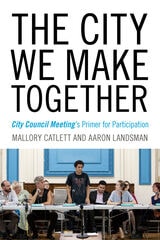
The City We Make Together
City Council Meeting's Primer for ParticipationMallory Catlett
University of Iowa Press, 2022
The City We Make Together looks at how we make art with communities, how we perform power and who gets to play which roles, and how we might use creativity and rigorous inquiry to look at our structures of democracy anew.
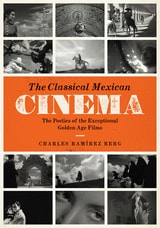
The Classical Mexican Cinema
The Poetics of the Exceptional Golden Age FilmsBy Charles Ramírez Berg
University of Texas Press, 2015
From the mid-1930s to the late 1950s, Mexican cinema became the most successful Latin American cinema and the leading Spanish-language film industry in the world. Many Cine de Oro (Golden Age cinema) films adhered to the dominant Hollywood model, but a small yet formidable filmmaking faction rejected Hollywood’s paradigm outright. Directors Fernando de Fuentes, Emilio Fernández, Luis Buñuel, Juan Bustillo Oro, Adolfo Best Maugard, and Julio Bracho sought to create a unique national cinema that, through the stories it told and the ways it told them, was wholly Mexican. The Classical Mexican Cinema traces the emergence and evolution of this Mexican cinematic aesthetic, a distinctive film form designed to express lo mexicano.
Charles Ramírez Berg begins by locating the classical style’s pre-cinematic roots in the work of popular Mexican artist José Guadalupe Posada at the turn of the twentieth century. He also looks at the dawning of Mexican classicism in the poetics of Enrique Rosas’ El Automóvil Gris, the crowning achievement of Mexico’s silent filmmaking era and the film that set the stage for the Golden Age films. Berg then analyzes mature examples of classical Mexican filmmaking by the predominant Golden Age auteurs of three successive decades. Drawing on neoformalism and neoauteurism within a cultural studies framework, he brilliantly reveals how the poetics of Classical Mexican Cinema deviated from the formal norms of the Golden Age to express a uniquely Mexican sensibility thematically, stylistically, and ideologically.

The Collected letters of Sir Arthur Pinero
Arthur Wing PineroJ.P. Wearing, Editor
University of Minnesota Press, 1974
The Collected letters of Sir Arthur Pinero was first published in 1974. Minnesota Archive Editions uses digital technology to make long-unavailable books once again accessible, and are published unaltered from the original University of Minnesota Press editions.
Sir Arthur Pinero's letters, in the collection published in this volume, present a vivid, behind-the-scenes look at the theater in England in the late nineteenth and early twentieth centuries. Sir Arthur was one of the most important and influential playwrights of the English stage during his lifetime. These letters, 337 in number, most of which have not been published before, span a period of sixty years, from 1873, when Pinero began his career as an actor at the age of eighteen, to 1933, the year before his death.
Pinero was totally absorbed with the theater, and his correspondence provides a record of his ideas about his own work and the contemporary theatrical climate. From his earlier years he gives us impressions of the famous actors and actresses of the period—Henry Irving, Ellen Terry, and the Bancrofts, who were his favorites—and he later acted with them, too.
The letters trace well the growth of Pinero's work as a dramatist, and are especially valuable because he wrote little publicly on dramatic theory in general or on his own work in particular. They reveal a dramatist who knew exactly what he wanted in the theater and how he felt it ought to be realized on the stage. He devoted much time and discussion to the careful choosing of a cast and other aspects of production. The letters tell, with as well as reporting on the critical and public reception of his plays. The correspondence also demonstrates his involvement with the development of the native English drama in its own right, and includes forthright comments on Ibsen and on continental drama generally.
Many of the letters are addressed to such notables as Henry James, Edmund Gosse, George Bernard Shaw, Henry Irving, and Sir George Alexander, all major theatrical figures at the turn of the century.
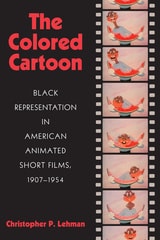
The Colored Cartoon
Black Presentation in American Animated Short Films, 1907-1954Christopher P. Lehman
University of Massachusetts Press, 2007
From the introduction of animated film in the early 1900s to the 1950s, ethnic humor was a staple of American-made cartoons. Yet as Christopher Lehman shows in this revealing study, the depiction of African Americans in particular became so inextricably linked to the cartoon medium as to influence its evolution through those five decades. He argues that what is in many ways most distinctive about American animation reflects white animators' visual interpretations of African American cultural expression.
The first American animators drew on popular black representations, many of which were caricatures rooted in the culture of southern slavery. During the 1920s, the advent of the sound-synchronized cartoon inspired animators to blend antebellum-era black stereotypes with the modern black cultural expressions of jazz musicians and Hollywood actors. When the film industry set out to desexualize movies through the imposition of the Hays Code in the early 1930s, it regulated the portrayal of African Americans largely by segregating black characters from others, especially white females. At the same time, animators found new ways to exploit the popularity of African American culture by creating animal characters like Bugs Bunny who exhibited characteristics associated with African Americans without being identifiably black.
By the 1950s, protests from civil rights activists and the growing popularity of white cartoon characters led animators away from much of the black representation on which they had built the medium. Even so, animated films today continue to portray African American characters and culture, and not necessarily in a favorable light.
Drawing on a wide range of sources, including interviews with former animators, archived scripts for cartoons, and the films themselves, Lehman illustrates the intimate and unmistakable connection between African Americans and animation.
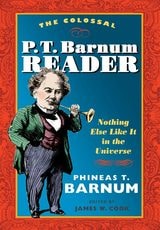
The Colossal P. T. Barnum Reader
Nothing Else Like It in the UniversePhineas T. Barnum. Edited by James W. Cook
University of Illinois Press, 2005
James W. Cook's The Colossal P. T. Barnum Reader is the largest collection of Barnum's works ever produced. Included are excerpts from his pseudo-autobiographical novel The Adventures of an Adventurer (1841), his European letters from 1844-46 informing readers of the New York Atlas of his regal reception overseas, and a large selection from his Ancient and Modern Humbugs of the World, Barnum's 1864-65 insider's look into the frauds of nineteenth-century American culture. It offers a glimpse of Tom Thumb's minstrel and singing performances in front of Queen Victoria, Barnum's many fraudulent representations of the supposedly ancient Joice Heth, and a more immediate, less filtered sense of Barnum as cultural and social critic in his serialized writings and travelogues. This volume also features reproductions of difficult to find posters from Barnum's two-decade collaboration with the prominent New York lithographers, Currier and Ives, and vintage photographs.
Finally, the reader also helps us to understand Barnum's role in building the modern culture industry. We follow his career from itinerant hawker, hardly distinguishable from his pre-industrial forebears, to manager of the world's first show business empire, with a staff of thousands and brand recognition across four continents. The Colossal P. T. Barnum Reader tracks the shifting personas of the great showman, his representational choices, and his publics across the nineteenth century.
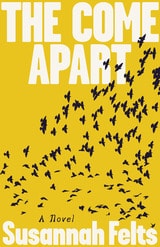
The Come Apart
A NovelSusannah Felts
Northwestern University Press, 2026
An authentic rock band story from Chicago to Nashville and, just maybe, back again
On the cusp of turning thirty, Chicago indie musician Maggie Corbin has hustled for a decade, set on making her rock and roll dreams come true. Her band, Spinning Birds, fronted by Maggie and her romantic partner Matt Turkish, releases a debut record to critical acclaim, hits the road, and begins working on a follow-up. From the outside, her path looks like success—but as streaming deconstructs the industry and Maggie’s relationships shift and slip, the question remains: Can you live for art alone?
When a sudden move back to the South forces Maggie to reframe her dreams and reckon with familial rifts and her past—while still fighting to reimagine what her future could be—a natural disaster in Nashville and a surprise encounter with a character from her childhood shift her perspective on healing, community, and the ties that bind. Drifting in and out of songwriting sessions, cozy kitchens, and moments of bearing witness to the curious power of the natural world, The Come Apart celebrates the times when we must come fully undone in order to put ourselves back together.
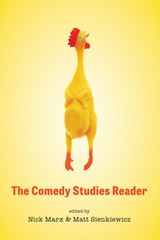
The Comedy Studies Reader
Edited by Nick Marx and Matt Sienkiewicz
University of Texas Press, 2018
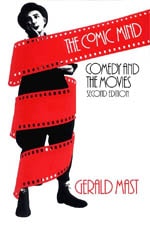
The Comic Mind
Comedy and the MoviesGerald Mast
University of Chicago Press, 1979
Blending information with interpretation, description with analysis, Mast traces the development of screen comedy from the first crude efforts of Edison and Lumière to the subtlety and psychological complexity of Annie Hall. As he guides the reader through detailed discussions of specific films, Mast reveals the structures, the values, and the cinematic techniques which have appeared and reappeared in comic cinema.
The second edition of The Comic Mind treats the comic developments of the 1970s in terms of the traditions of film comedy set forth in the first edition, including a discussion of the evolution of Jacques Tati and the emergence of Mel Brooks and Woody Allen as the two greatest American comic stylists of the seventies.
"The most comprehensive study of film comedy yet written in English. . . .The book's extensive index with references to companies from which 16mm prints of many of the cited films may be rented will be of great value to the film teacher and audiovisual librarian."—Choice
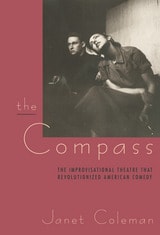
The Compass
The Improvisational Theatre that Revolutionized American ComedyJanet Coleman
University of Chicago Press, 1991
"For anyone who is interested in theatre, underground theatre, improvisational theatre, and the sheer madness of trying something new with a repertory group, The Compass will prove a welcome history with fascinating details."—Norman Mailer
"Janet Coleman has done a spectacular job of capturing the history, the almost alarmingly diverse cultural influences, and the extraordinary people who made up the Compass."—Neal Weaver, Los Angeles Village View
"Engrossing. . . . An open window on a part of the theater that should be known."—Arthur Miller
"A valuable chronicle of an important chapter in the history of comedy and theater."—William Wolf, New York Observer
"The eruptive, disruptive talents who made the theater memorable are the same ones who make The Compass a good read."—Jay Cocks, Time
"A moving, inspirational, anecdote-studded feast."—Publishers Weekly
The Computer's Voice
From Star Trek to SiriLiz W. Faber
University of Minnesota Press, 2020
A deconstruction of gender through the voices of Siri, HAL 9000, and other computers that talk
Although computer-based personal assistants like Siri are increasingly ubiquitous, few users stop to ask what it means that some assistants are gendered female, others male. Why is Star Trek’s computer coded as female, while HAL 9000 in 2001: A Space Odyssey is heard as male? By examining how gender is built into these devices, author Liz W. Faber explores contentious questions around gender: its fundamental constructedness, the rigidity of the gender binary, and culturally situated attitudes on male and female embodiment.
Faber begins by considering talking spaceships like those in Star Trek, the film Dark Star, and the TV series Quark, revealing the ideologies that underlie space-age progress. She then moves on to an intrepid decade-by-decade investigation of computer voices, tracing the evolution from the masculine voices of the ’70s and ’80s to the feminine ones of the ’90s and ’00s. Faber ends her account in the present, with incisive looks at the film Her and Siri herself.
Going beyond current scholarship on robots and AI to focus on voice-interactive computers, The Computer’s Voice breaks new ground in questions surrounding media, technology, and gender. It makes important contributions to conversations around the gender gap and the increasing acceptance of transgender people.
The Context of Ancient Drama
Eric Csapo and William J. Slater
University of Michigan Press, 1995
The Cool and the Crazy
Pop Fifties CinemaStanfield, Peter
Rutgers University Press, 2015
The Creativity Complex
Art, Tech, and the Seduction of an IdeaShannon Steen
University of Michigan Press, 2023
“Creativity” is a word that excites and dazzles us. It promises brilliance and achievement, a shield against conformity, a channel for innovation across the arts, sciences, technology, and education, and a mechanism for economic revival and personal success. But it has not always evoked these ideas. The Creativity Complex traces the history of how creativity has come to mean the things it now does, and explores the ethical implications of how we use this term today for both the arts and for the social world more broadly. Richly researched, the book explores how creativity has been invoked in arenas as varied as Enlightenment debates over the nature of cognition, Victorian-era intelligence research, the Cold War technology race, contemporary K-12 education, and even modern electoral politics. Ultimately, The Creativity Complex asks how our ideas about creativity are bound up with those of self-fulfillment, responsibility, and the individual, and how these might seduce us into joining a worldview and even a set of social imperatives that we might otherwise find troubling.
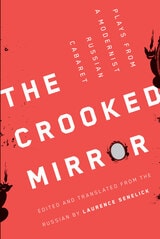
The Crooked Mirror
Plays from a Modernist Russian CabaretEdited and translated from the Russian by Laurence Senelick
Northwestern University Press, 2023
“Don’t blame the mirror if your mug is crooked!”
Parody dominated early twentieth-century Russian cabaret, but the Crooked Mirror extended its lampooning to theatrical practice itself. Eclectic in its targets, the Saint Petersburg theater mocked not only naturalism but also symbolism, futurism, and “Meyerholditis.” Its shows parodied both the stale conventions of melodrama and opera and the stylized trends in staging, wielding satire to provoke artistic and social reform. Though the theater was liquidated in 1931, many of its innovations would become standard techniques in cabaret repertoires and improv revues.
As a cultural phenomenon of the Silver Age, the Crooked Mirror deserves critical attention, yet it has received only fleeting mention in histories of Russian theater and biographies of its major figures. This anthology fills a critical gap in our understanding of that heady era by bringing together key plays—most appearing in English here for the first time—together with short biographies of their authors and robust commentary and annotations. Laurence Senelick guides readers through the artistic and ideological evolution of the Crooked Mirror and provides performers with the material to bring its innovations back to the stage.