Results by title
4917 books match the query 'Philosophy' and 1267 start with t

The Autonomous Animal
Self-Governance and the Modern SubjectClaire E. Rasmussen
University of Minnesota Press, 2011
Autonomy is a vital concept in much of modern theory, defining the Subject as capable of self-governance. Democratic theory relies on the concept of autonomy to provide justification for participatory government and the normative goal of democratic governance, which is to protect the ability of the individual to self-govern.
Offering the first examination of the concept of autonomy from a postfoundationalist perspective, The Autonomous Animal analyzes how the ideal of self-governance has shaped everyday life. Claire E. Rasmussen begins by considering the academic terrain of autonomy, then focusing on specific examples of political behavior that allow her to interrogate these theories. She demonstrates how the adolescent—a not-yet-autonomous subject—highlights how the ideal of self-governance generates practices intended to cultivate autonomy by forming the individual’s relationship to his or her body. She points up how the war on drugs rests on the perception that drug addicts are the antithesis of autonomy and thus must be regulated for their own good. Showing that the animal rights movement may challenge the distinction between human and animal, Rasmussen also examines the place of the endurance athlete in fitness culture, where self-management of the body is the exemplar of autonomous subjectivity.
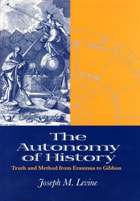
The Autonomy of History
Truth and Method from Erasmus to GibbonJoseph M. Levine
University of Chicago Press, 1999
Levine's first three essays discuss Thomas More's preoccupation with the distinction between history and fiction; Erasmus's biblical criticism and the contribution of Renaissance philology to critical method; and the way in which Renaissance rhetoric, as in Thomas Elyot's Book of the Governor, continued to inhibit the autonomy of history. He then shows how these issues persisted into the eighteenth century, even as critical method developed. He concludes with a close description of the great controversy that culminated in Edward Gibbon's day over the authenticity of a biblical text that had been used for centuries to defend the Trinity but which turned out to be a forgery. Levine shows how by then all sides were ready to concede the autonomy of history.
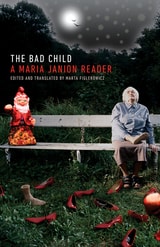
The Bad Child
A Maria Janion ReaderMaria Janion
University of Minnesota Press, 2025
Collected writings from a visionary thinker about the perilous edge between patriotism and fascism
How do nationalism and patriotism shape our understanding of identity, and when do they drift into dangerous territory? Marta Figlerowicz gathers a selection of writings from Maria Janion, one of Eastern Europe’s most profound and original intellectuals, to explore this fine line. Between her birth in Vilnius in 1926 and her death in Warsaw in 2020, Janion witnessed some of the most consequential events of the turbulent twentieth century: the rise of authoritarian nationalism in Poland, German occupation during World War II, Soviet control, and Poland’s uneasy integration into the West. As Western countries face their own nationalist resurgences, Janion’s writing holds tools to help move through this historical condition.
The Bad Child offers sharp insights into how societies develop and assert their identities and histories—often at the cost of the people. Janion’s reflections on fascism, popular culture, and national self-fashioning presciently name and critique regional dynamics that have most recently resulted in the war between Russia and Ukraine, and they broadly expose the illusions that cultures can promote and the dangerous slide from national pride to exclusionary right-wing politics. A queer woman and survivor of World War II, a leftist who resisted Soviet orthodoxy, Janion lends a uniquely disruptive voice to contemporary discussions of fascism, and her insights resonate far beyond her Eastern European roots.
Retail e-book files for this title are screen-reader friendly with images accompanied by short alt text and/or extended descriptions.
The Bad Conscience
Vladimir Jankélévitch
University of Chicago Press, 2014
To this careful and sensitive English-language translation of The Bad Conscience, translator Andrew Kelley has added a substantial introduction situating the work in historical and intellectual context. Notes throughout indicate differences between this and earlier editions. A thought-provoking critique of standard conceptions of moral philosophy, The Bad Conscience restores this work by an important philosopher who has only recently begun to receive his due from the English-speaking world.

The Bakhtin Circle
Philosophy, Culture and PoliticsCraig Brandist
Pluto Press, 2002
This is the first book to bring together this significant new research on the Circle, setting it within a historical and intellectual context and emphasising the importance of the work of the Circle as a whole. Craig Brandist offers a new look at the significance of Bakhtin's legacy, and brings into clearer focus the contribution of others in the circle--including Voloshinov, Medvedev, Pumpianskii and Kagan--whose work has so often been obscured, assessing the fundamental role they played in shaping Bakhtinian thought.
The Barbara Johnson Collective
Edited by Devin M. Garofalo and Nathan K. Hensley
Northwestern University Press, 2027
Collaboratively reassesses Barbara Johnson’s legacy as a reader and thinker with an eye to contemporary conditions
Across an archive of essays on abortion and race, Mallarmé and Melville, feminist philosophy, rhetorical device, and pedagogical method, Barbara Johnson built a legacy of thought whose energies reverberate into the present. This collected volume gathers writers and critics from a range of North American higher educational settings to engage with this essential but still often underappreciated critic in a time of renewed and deepening crisis.
In Zoom meetings and shared essays, across a virtualized map of today’s academic and para-academic worlds, the group assessed how the rolling catastrophes of late neoliberalism continue to stage the sort of analogy Johnson herself would highlight between patriarchy, capitalism, ecocide, and other forms of structural violence. Emerging from that assemblage, this experimental collection tracks Johnson’s efforts to link literary reading with concrete matters of personhood and care at a moment when the very system of higher education that enabled Johnson’s work in the 1980s and 1990s faces existential threat. The frozen record of a live experience, the book is an impure procedure, tangled in the idiom of its own unfolding: a temporary culmination of an ongoing collaborative undertaking that will always remain unfinished.
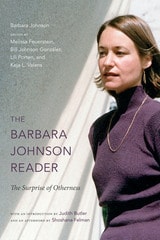
The Barbara Johnson Reader
The Surprise of OthernessBarbara Johnson
Duke University Press, 2014
Along with the classic essays that established her place in literary scholarship, this Reader makes available a selection of Johnson's later essays, brilliantly lucid and politically trenchant works exploring multilingualism and translation, materiality, ethics, subjectivity, and sexuality. The Barbara Johnson Reader offers a historical guide through the metamorphoses and tumultuous debates that have defined literary study in recent decades, as viewed by one of critical theory's most astute thinkers.
The Baroque Night
Spencer Golub
Northwestern University Press, 2018
The Baroque Night draws upon materials that have not previously been included in studies of either the baroque or film noir, while offering new perspectives on other, more familiar sources. Leibniz's concepts of the monad and compossibility provide organizing thought models, and death, fear, and mental illness cast their anamorphic images across surfaces that are deeper and closer than they at first appear. Key characters and situations in the book derive from the works of Alfred Hitchcock, Henri-Georges Clozot, Jean-Pierre Melville, Oscar Wilde, Georges Perec, Patricia Highsmith, William Shakespeare, Jean Racine, Pierre Corneille, and Arthur Conan Doyle, among many others.
This is virtuality and reality for the phobic, making it a fascinating and viable document of and episteme for the anxious age in which we (always) find ourselves living, though not yet fully alive. This performance of suspect evidence speaks to and in the ways we are organically inauthentic, the cause of our own causality and our own worst eyewitnesses to all that appears and disappears in space and time.
The Barthes Fantastic
Literature, Criticism, and the Practice of LanguageJohn Lurz
University of Chicago Press, 2025
In The Barthes Fantastic, John Lurz explores the intersection of literature and everyday life—and confronts some habits of literary study—through a reading of the work of Roland Barthes. An influential French theorist, Barthes wrote prolifically on the place of language and the play of signs in the ways we produce cultural and aesthetic meaning. Ranging across the entire sweep of Barthes’s varied career, Lurz shows how Barthes’s insights into signification and literature involve particular intellectual activities that impart significance to the world. Doing so allows him to develop an expanded understanding of the fantastic as a conceptual category—a way of thinking—in which the texts we read come to inform the texture of our real lives. Ultimately, The Barthes Fantastic enlarges our sense of what we learn as students of literature and gives us a new picture of a writer we thought we knew.
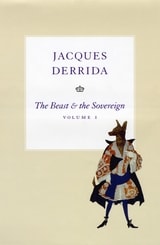
The Beast and the Sovereign, Volume I
Jacques Derrida
University of Chicago Press, 2009
When he died in 2004, Jacques Derrida left behind a vast legacy of unpublished material, much of it in the form of written lectures. With The Beast and the Sovereign, Volume 1, the University of Chicago Press inaugurates an ambitious series, edited by Geoffrey Bennington and Peggy Kamuf, translating these important works into English.
The Beast and the Sovereign, Volume 1 launches the series with Derrida’s exploration of the persistent association of bestiality or animality with sovereignty. In this seminar from 2001–2002, Derrida continues his deconstruction of the traditional determinations of the human. The beast and the sovereign are connected, he contends, because neither animals nor kings are subject to the law—the sovereign stands above it, while the beast falls outside the law from below. He then traces this association through an astonishing array of texts, including La Fontaine’s fable “The Wolf and the Lamb,” Hobbes’s biblical sea monster in Leviathan, D. H. Lawrence’s poem “Snake,” Machiavelli’s Prince with its elaborate comparison of princes and foxes, a historical account of Louis XIV attending an elephant autopsy, and Rousseau’s evocation of werewolves in The Social Contract.
Deleuze, Lacan, and Agamben also come into critical play as Derrida focuses in on questions of force, right, justice, and philosophical interpretations of the limits between man and animal.
The Beast and the Sovereign, Volume II
Jacques Derrida
University of Chicago Press, 2011

The Beautiful Agonies
Adrie Kusserow
Duke University Press, 2027
The Beautiful, The True and the Good
Robert E. Wood
Catholic University of America Press, 2015
The Becoming of Time
Integrating Physical and Religious TimeLawrence W. Fagg
Duke University Press, 2002
Integrating concepts of time derived from the physical sciences and world religions, The Becoming of Time examines various questions about time, including its origin, its relation to space and motion, its irreversible nature, the notion of timelessness, and the reality of the future. Lawrence W. Fagg contends that the use of spatial metaphors to describe time obscures its true character. He offers an alternative, non-spatial description of time by developing the concept of time as becoming.
”This lucid and wide-ranging study sets out to reconcile the objective and subjective perspectives in the investigation of the phenomenon of time. [Lawrence W. Fagg] . . . explores the wondrous subtleties of time that modern physics continues to reveal, but complements them with the rich insights of the spiritual perspectives on time that the world's major religions have to offer.”—Helga Nowotny, Former President, International Society for the Study of Time
”Lawrence W. Fagg has made a fundamental contribution to our reflection upon time. His work immediately takes its place as a basic text for students and researchers, from college to seminary and university levels.”—Philip Hefner, Director, Zygon Center for Religion and Science
The Beginning of History
Value Struggles and Global CapitalMassimo De Angelis
Pluto Press, 2007
The Being of the Beautiful
Plato's Theaetetus, Sophist, and StatesmanPlato
University of Chicago Press, 1984
“The translations are masterpieces of literalness. . . . They are honest, accurate, and give the reader a wonderful sense of the Greek.”—Drew A. Hyland, Review of Metaphysics
The Beneficiary
Bruce Robbins
Duke University Press, 2017
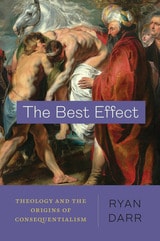
The Best Effect
Theology and the Origins of ConsequentialismRyan Darr
University of Chicago Press, 2023
Consequentialism—the notion that we can judge an action by its effects alone—has been among the most influential approaches to ethics and public policy in the Anglophone world for more than two centuries. In The Best Effect, Ryan Darr argues that consequentialist ethics is not as secular or as rational as it is often assumed to be. Instead, Darr describes the emergence of consequentialism in the seventeenth century as a theological and cosmological vision and traces its intellectual development and eventual secularization across several centuries. The Best Effect reveals how contemporary consequentialism continues to bear traces of its history and proposes in its place a more expansive vision for teleological ethics.
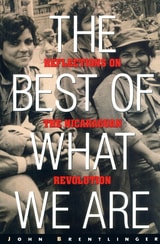
The Best of What We Are
Reflections on the Nicaraguan RevolutionJohn Brentlinger
University of Massachusetts Press, 1995
The Sandinista revolution in Nicaragua inspired many North Americans, including the author of this moving and informative book. John Brentlinger made six trips to Nicaragua, both before and after the defeat of the Sandinista Party. Combining the insights of a philosopher with the experiences of a participant-observer, he interprets the Sandinista period as a people’s struggle for self-realization in work, culture, politics, and community.
The book alternates between journal and essay chapters, weaving descriptions of personal experiences together with interviews and analysis. Whether telling the story of the last day of a young teacher’s life, describing new forms of poetry and art, examining representations of Nicaragua in the U.S. media, or discussing the government’s success and failures, Brentlinger vividly captures the spirit and enduring significance of the Sandinista revolution.
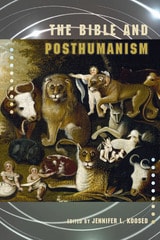
The Bible and Posthumanism
Jennifer L. Koosed
SBL Press, 2014
What does it mean, and what should it mean to be human?
In this collection of essays, scholars place the philosophies and theories of animal studies and posthumanism into conversation with biblical studies. Authors cross and disrupt boundaries and categories through close readings of stories where the human body is invaded, possessed, or driven mad. Articles explore the ethics of the human use of animals and the biblical contributions to the question. Other essays use the image of lions—animals that appear not only in the wild, but also in the Bible, ancient Near Eastern texts, and philosophy—to illustrate the potential these theories present for students of the Bible. Contributors George Aichele, Denise Kimber Buell, Benjamin H. Dunning, Heidi Epstein, Rhiannon Graybill, Jennifer L. Koosed, Eric Daryl Meyer, Stephen D. Moore, Hugh Pyper, Robert Paul Seesengood, Yvonne Sherwood, Ken Stone, and Hannah M. Strømmen present an open invitation for further work in the field of posthumanism.
Features:
- Coverage of texts that explore the boundaries between animal, human, and divinity
- Discussion of the term posthumanism and how it applies to biblical studies
- Essays engage Derrida, Foucault, Wolfe, Lacan, Žižek, Singer, Haraway, and others
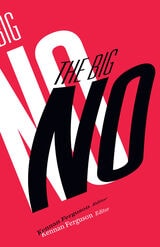
The Big No
Kennan Ferguson
University of Minnesota Press, 2021
What it means to celebrate the potential and the power of no
What does it mean to refuse? To not participate, to not build a better world, to not come up with a plan? To just say “no”? Against the ubiquitous demands for positive solutions, action-oriented policies, and optimistic compromises, The Big No refuses to play. Here leading scholars traverse the wide range of political action when “no” is in the picture, analyzing topics such as collective action, antisocialism, empirical science, the negative and the affirmative in Deleuze and Derrida, the “real” and the “clone,” Native sovereignty, and Afropessimism.
In his introduction, Kennan Ferguson sums up the concept of the “Big No,” arguing for its political importance. Whatever its form—he identifies various strains—the Big No offers power against systems of oppression. Joshua Clover argues for the importance of Marx and Fanon in understanding how people are alienated and subjugated. Theodore Martin explores the attractions of antisociality in literature and life, citing such novelists as Patricia Highsmith and Richard Wright. François Laruelle differentiates nonphilosophy from other forms of French critical theory. Katerina Kolozova applies this insight to the nature of reality itself, arguing that the confusion of thought and reality leads to manipulation, automation, and alienation. Using poetry and autobiography, Frank Wilderson shows how Black people—their bodies and being—are displaced in politics, replaced and erased by the subjectivities of violence, suffering, and absence. Andrew Culp connects these themes of negativity, comparing and contrasting the refusals of antiphilosophy and Afropessimism.
Thinking critically usually demands alternatives: how would you fix things? But, as The Big No shows, being absolutely critical—declining the demands of world-building—is one necessary response to wrong, to evil. It serves as a powerful reminder that the presumption of political action is always positive.
Contributors: Joshua Clover, U of California Davis and U of Copenhagen; Andrew Culp, California Institute of the Arts; Katerina Kolozova, Institute of Social Sciences and Humanities Skopje; Theodore Martin, U of California, Irvine; Anthony Paul Smith, La Salle U; Frank B. Wilderson III, U of California, Irvine.
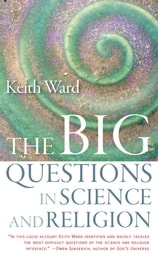
The Big Questions in Science and Religion
Keith Ward
Templeton Press, 2008
In The Big Questions in Science and Religion, Keith Ward, an Anglican priest who was once an atheist, offers compelling insights into the often contentious relationship between diverse religious views and new scientific knowledge. He identifies ten basic questions about the nature of the universe and human life. Among these are:
•Does the universe have a goal or purpose?•Do the laws of nature exclude miracles?
•Can science provide a wholly naturalistic explanation for moral and religious beliefs?
•Has science made belief in God obsolete? Are there any good science-based arguments for God?
With his expertise in the study of world religions, Ward considers concepts from Buddhism, Confucianism, Taoism, Islam, Hinduism, Judaism, and Christianity, while featuring the speculations of cosmologists, physicians, mathematicians, and philosophers. In addition, Ward examines the implications of ancient laws and modern theories and evaluates the role of religious experience as evidence of a nonphysical reality.
Writing with enthusiasm, passion, and clarity, Keith Ward conveys the depth, difficulty, intellectual excitement, and importance of the greatest intellectual and existential questions of the modern scientific age.
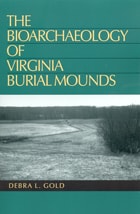
The Bioarchaeology of Virginia Burial Mounds
Debra L. Gold
University of Alabama Press, 2004
Uncovering the stories of Virginia's ancient peoples through the science of bioarchaeology.
By the 14th century more than a dozen accretional burial mounds—reaching heights of 12 to 15 feet—marked the floodplains of interior Virginia. Today, none of these mounds built by the nearly forgotten Monacan Indians remain on the landscape, having been removed over the centuries by a variety of natural and cultural causes. This study uses what remains of the mounds—excavated from the 1890s to the 1980s— to gain a new understanding of the Monacans and to gauge their importance in the realm of the late prehistoric period in the Eastern Woodlands.
Based on osteological examinations of dozens of complete skeletons and thousands of isolated bones and bone fragments, this work constructs information on Monacan demography, diet, health, and mortuary ritual in the 10th through the 15th centuries. The results show an overall pattern of stability and local autonomy among the Late Woodland village societies of interior Virginia in which a mixture of maize farming and the collection of wild food resources were successful for more than 600 years.
This book—uniting biological and cultural aspects of the data for a holistic understanding of everyday life in the period—will be of interest to ethnohistorians, osteologists, bioarchaeologists, and anyone studying Late Woodland, Mississippian, and contact periods, as well as middle range societies, in the Eastern Woodlands.
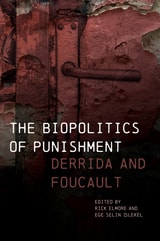
The Biopolitics of Punishment
Derrida and FoucaultEdited by Rick Elmore and Ege Selin Islekel
Northwestern University Press, 2022
With the resurgence of fascism and authoritarianism across the globe, the rise of white supremacist and xenophobic violence, and the continued brutality of state-sanctioned and extrajudicial killings by police, border patrols, and ordinary citizens, there is a pressing need to critically analyze our political present. These essays bring to bear the critical force of Derrida’s and Foucault’s biopolitical thought to practices of mass incarceration, the death penalty, life without parole, immigration and detention, racism and police violence, transphobia, human and animal relations, and the legacies of colonization. At the heart of their biopolitics, the volume shows, lies the desire to deconstruct and resist in the name of a future that is more just and less policed. It is this impulse that makes reading their work together, at this moment, both crucial and worthwhile.
The Birth of Sense
Generative Passivity in Merleau-Ponty’s PhilosophyDon Beith
Ohio University Press, 2018
In The Birth of Sense, Don Beith proposes a new concept of generative passivity, the idea that our organic, psychological, and social activities take time to develop into sense. More than being a limit, passivity marks out the way in which organisms, persons, and interbodily systems take time in order to manifest a coherent sense. Beith situates his argument within contemporary debates about evolution, developmental biology, scientific causal explanations, psychology, postmodernism, social constructivism, and critical race theory. Drawing on empirical studies and phenomenological reflections, Beith argues that in nature, novel meaning emerges prior to any type of constituting activity or deterministic plan.
The Birth of Sense is an original phenomenological investigation in the style of Maurice Merleau-Ponty, and it demonstrates that the French philosopher’s works cohere around the notion that life is radically expressive. While Merleau-Ponty’s early works are widely interpreted as arguing for the primacy of human consciousness, Beith argues that a pivotal redefinition of passivity is already under way here, and extends throughout Merleau-Ponty’s corpus. This work introduces new concepts in contemporary philosophy to interrogate how organic development involves spontaneous expression, how personhood emerges from this bodily growth, and how our interpersonal human life remains rooted in, and often thwarted by, domains of bodily expressivity.
The Birth of Theater from the Spirit of Philosophy
Nietzsche and the Modern DramaDavid Kornhaber
Northwestern University Press, 2016
The Birth of Theory
Andrew Cole
University of Chicago Press, 2014
By uncovering these theoretical filiations across time, The Birth of Theory will not only change the way we read Hegel, but also the way we think about the histories of theory. With chapters that powerfully reanimate the overly familiar topics of ideology, commodity fetishism, and political economy, along with a groundbreaking reinterpretation of Hegel’s famous master/slave dialectic, The Birth of Theory places the disciplines of philosophy, literature, and history in conversation with one another in an unprecedented way. Daring to reconcile the sworn enemies of Hegelianism and Deleuzianism, this timely book will revitalize dialectics for the twenty-first century.
The Body Multiple
Ontology in Medical PracticeAnnemarie Mol
Duke University Press, 2002
The Body Multiple juxtaposes two distinct texts. Alongside Mol’s analysis of her ethnographic material—interviews with doctors and patients and observations of medical examinations, consultations, and operations—runs a parallel text in which she reflects on the relevant literature. Mol draws on medical anthropology, sociology, feminist theory, philosophy, and science and technology studies to reframe such issues as the disease-illness distinction, subject-object relations, boundaries, difference, situatedness, and ontology. In dialogue with one another, Mol’s two texts meditate on the multiplicity of reality-in-practice.
Presenting philosophical reflections on the body and medical practice through vivid storytelling, The Body Multiple will be important to those in medical anthropology, philosophy, and the social study of science, technology, and medicine.
The Body in Late-Capitalist USA
Donald M. Lowe
Duke University Press, 1995
Moving beyond studies of representations and images of the body, Lowe focuses on the intersection of body practices, language, and the Social to describe concretely the reality of a lived body. His strongly synthetic work brings together Marxist critique, semiotics, Foucaultian discourse analysis, and systems and communications theory to examine those practices that construct the body under late capitalism: habits of work and consumption, the ways we give birth and raise children, socialization, mental and physical healing, reconstructions and contestations of sexuality and gender. Lowe draws upon a wide range of sources, including government and labor studies and statistics, diagnostic and statistical manuals on mental illness, computer manuals, self-help books, and guides to work-related stress disorders, to illustrate the transformation of the body into a nexus of exchange value in postmodern society.
The Body in the Mind
The Bodily Basis of Meaning, Imagination, and ReasonMark Johnson
University of Chicago Press, 1990
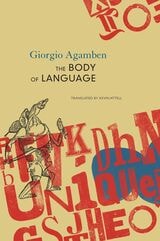
The Body of Language
esperruquancluzelubelouzerireluGiorgio Agamben
Seagull Books, 2025
An erudite exploration of transgressive language from the Renaissance by one of Europe’s greatest living philosophers.
This book explores how early modern authors broke linguistic boundaries, creating new words and languages that challenged traditional grammar and lexicon, providing historical insight into today’s debates on the politics of language. Through a scholarly analysis by Giorgio Agamben, the text delves into the boundary-shifting language of the Renaissance, exemplified by giants like Pantagruel and Gargantua, whose outsized bodies mirror the vastness of their speech. The macaronic language invented by Teofilo Folengo, blending Latin and vernacular, embodies a linguistic rebellion that transforms language into a tangible, unruly force. Featuring illustrations from the Songes drolatiques de Pantagruel and Folengo’s Baldo, this volume offers a vivid portrayal of language as a physical, dynamic entity that defies grammatical norms.
The Book of Job and the Immanent Genesis of Transcendence
Davis Hankins
Northwestern University Press, 2014
Winner of the 2017 Manfred Lautenschlaeger Award for Theological Promise
Job is often understood to be a trite folktale about human limitation in the face of confounding and absolute transcendence. On the contrary, Hankins demonstrates that Job is a drama about the struggle to create a just and viable life in a material world that is ontologically incomplete and consequently open to radical, unpredictable transformation. Job’s abiding legacy for any future materialist theology becomes clear as Hankins analyzes Job’s dramatizations of a transcendence that is not externally opposed to but that emerges from an ontologically incomplete material world.
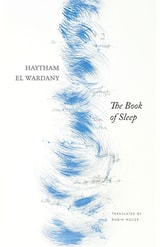
The Book of Sleep
Haytham El Wardany
Seagull Books, 2020
What is sleep? How can this most unproductive of human states—metaphorically called death’s shadow or considered the very pinnacle of indolence—be envisioned as action and agency? And what do we become in sleep? What happens to the waking selves we understand ourselves to be?
Written in the spring of 2013, as the Egyptian government of President Mohammed Morsi was unraveling in the face of widespread protests, The Book of Sleep is a landmark in contemporary Arabic literature. Drawing on the devices and forms of poetry, philosophical reflection, political analysis, and storytelling, this genre-defying work presents us with an assemblage of fragments that combine and recombine, circling around their central theme but refusing to fall into its gravity.
“My concern was not to create a literary product in the conventional sense, but to try and use literature as a methodology for thinking,” El Wardany explains. In this volume, sleep shapes sentences and distorts conventions. Its protean instability throws out memoir and memory, dreams and hallucinatory reverie, Sufi fables and capitalist parables, in the quest to shape a question. The Book of Sleep is a generous and generative attempt to reimagine possibility and hope in a world of stifling dualities and constrictions.

The British Journal for the Philosophy of Science, volume 72 number 2 (June 2021)
The University of Chicago Press
University of Chicago Press Journals, 2021
The British Journal for the Philosophy of Science, volume 72 number 3 (September 2021)
The University of Chicago Press
University of Chicago Press Journals, 2021
The British Journal for the Philosophy of Science, volume 72 number 4 (December 2021)
The University of Chicago Press
University of Chicago Press Journals, 2021
The British Journal for the Philosophy of Science, volume 73 number 1 (March 2022)
The University of Chicago Press
University of Chicago Press Journals, 2022
The British Journal for the Philosophy of Science, volume 73 number 2 (June 2022)
The University of Chicago Press
University of Chicago Press Journals, 2022
The British Journal for the Philosophy of Science, volume 73 number 3 (September 2022)
The University of Chicago Press
University of Chicago Press Journals, 2022
The British Journal for the Philosophy of Science, volume 73 number 4 (December 2022)
The University of Chicago Press
University of Chicago Press Journals, 2022
The British Journal for the Philosophy of Science, volume 74 number 2 (June 2023)
The University of Chicago Press
University of Chicago Press Journals, 2023
The British Journal for the Philosophy of Science, volume 74 number 3 (September 2023)
The University of Chicago Press
University of Chicago Press Journals, 2023
The British Journal for the Philosophy of Science, volume 74 number 4 (December 2023)
The University of Chicago Press
University of Chicago Press Journals, 2023
The British Journal for the Philosophy of Science, volume 75 number 1 (March 2024)
The University of Chicago Press
University of Chicago Press Journals, 2024
The British Journal for the Philosophy of Science, volume 75 number 2 (June 2024)
The University of Chicago Press
University of Chicago Press Journals, 2024
The British Journal for the Philosophy of Science, volume 75 number 3 (September 2024)
The University of Chicago Press
University of Chicago Press Journals, 2024
The British Journal for the Philosophy of Science, volume 75 number 4 (December 2024)
The University of Chicago Press
University of Chicago Press Journals, 2024
The British Journal for the Philosophy of Science, volume 76 number 1 (March 2025)
The University of Chicago Press
University of Chicago Press Journals, 2025
The British Journal for the Philosophy of Science, volume 76 number 2 (June 2025)
The University of Chicago Press
University of Chicago Press Journals, 2025
The British Journal for the Philosophy of Science, volume 76 number 3 (September 2025)
The University of Chicago Press
University of Chicago Press Journals, 2025