Results by title
3785 books match the query 'Poetry' and 833 start with t
The Blue Divide
PoemsLinda Nemec Foster
New Issues Poetry and Prose, 2021
The Blue Hour
Jennifer Whitaker
University of Wisconsin Press, 2016
The Blueness of the Evening
Selected Poems of Hassan NajmiMbarek Sryfi
University of Arkansas Press, 2018
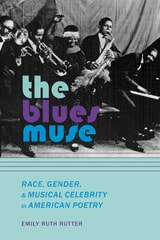
The Blues Muse
Race, Gender, and Musical Celebrity in American PoetryEmily Ruth Rutter
University of Alabama Press, 2018
A critical analysis of the poetic representations and legacies of five landmark blues artists
The Blues Muse: Race, Gender, and Musical Celebrity in American Poetry focuses on five key blues musicians and singers—Gertrude “Ma” Rainey, Bessie Smith, Billie Holiday, Robert Johnson, and Lead Belly—and traces the ways in which these artists and their personas have been invoked and developed throughout American poetry. This study spans nearly one hundred years of literary and musical history, from the New Negro Renaissance to the present.
Emily Ruth Rutter not only examines blues musicians as literary touchstones or poetic devices, but also investigates the relationship between poetic constructions of blues icons and shifting discourses of race and gender. Rutter’s nuanced analysis is clear, compelling, and rich in critical assessments of these writers’ portraits of the musical artists, attending to their strategies and oversights.
The Body Distances (A Hundred Blackbirds Rising)
Mark Wagenaar
University of Massachusetts Press, 2016
Let no lip, shoulder, hip, go untasted tonight. Let no one be unscathed.
And as you close the door & fold yourself in sleep against another
look for a moment at the empty stretch of dark between heaven
& earth: someone is missing from the world . . .
The Body Distances is filled with long, limber, nimble poems at once ecstatic and elegiac. These poems are odes to the miraculous embedded in the everyday, in which “the unlikely continues / to dovetail with the present.”

The Body Taken
PoemsLisa Beech Hartz
University of Massachusetts Press, 2027
A searing exploration of young womanhood in a culture of being seen
Inspired by an exhibit of vintage photographs by Francesca Woodman, whose work is often shocking in its exploration of a woman’s relationship with her body in a misogynistic culture, The Body Taken combines the confessional, the ekphrastic, and the erasure of women’s artistry. In a New York City gallery, Lisa Beech Hartz finds herself completely captivated and especially moved by how much the photographer’s self-portraits resemble a sort of mash-up of the poet and her dearest friend in their late teens, writing: “Mirrored in girlhood / recollection / and all our fables — / all the frazzled strands / of stories / I can never braid / complete / for lack of you.”
These poems grieve the poet’s deep youthful bond while also reflecting on each girl’s family life and their shared experiences: adventurous trips into the New York of the late seventies from their suburban town; encounters with distant, heavy-drinking parents; various medical and emotional challenges; and navigating the rampant and casual misogyny of the time. Memories are punctuated with examinations and interpretations of Francesca Woodman's photographs, attempting to decipher what the artist captured about her experience of being a young woman and what it meant to live inside a young woman’s body: “Francesca crouches / in her dotted dress seam- / split and gaping. Fingers / splayed across her face / she calculates her escape.”
The collection also includes erasures of critical responses to Woodman’s work which are sometimes respectful, even reverential, and other times reinforce the fascination with her suicide and her sexuality. Using provocative imagery, this collection serves as a love letter to lost girlhood, exploring themes of identity, loss, and the female body in the world.
The Body and the Song
Elizabeth Bishop's PoeticsMarilyn May Lombardi
Southern Illinois University Press, 1995
In this original contribution to Elizabeth Bishop studies, Marilyn May Lombardi uses previously unpublished materials (letters, diaries, notebooks, and unfinished poems) to shed new light on the poet’s published work. She explores the ways Bishop’s lesbianism, alcoholism, allergic illnesses, and fear of mental instability affected her poetry—the ways she translated her bodily experiences into poetic form.
A cornerstone of The Body and the Song is the poet’s thirty-year correspondence with her physician, Dr. Anny Baumann, who was both friend and surrogate mother to Bishop. The letters reveal Bishop’s struggles to understand the relation between her physical and creative drives. "Dr. Anny" also helped Bishop unravel the connections in her life between psychosomatic illness and early maternal deprivation—her mother was declared incurably insane and institutionalized in 1916, when Bishop was five years old. Effectively an orphan, she spent the rest of her childhood with relatives.
In addition to these letters, Lombardi uses Bishop’s unpublished notebooks to demonstrate the poet’s resolve to "face the facts"—to confront her own emotional, intellectual, and physical frailties—and translate them into poetry that is clear-eyed and economical in its form.
Lombardi argues that in her subtle way, Bishop explores the same issues that preoccupy the current generation of women writers. A deeply private artist, Bishop never directly refers to her homosexuality in her published work, but the metaphors she draws from her carnal desires and aversions confront stifling cultural prescriptions for personal and erotic expression. In choosing restraint over confession, Bishop parted company with her friend Robert Lowell, but Lombardi shows that her reticence becomes a powerful artistic strategy resulting in poetry remarkable for its hermeneutic potential.
Informed by recent gender criticism, Lombardi’s lucid argument advances our understanding of the ways the material circumstances of life can be transformed into art.
The Body of Poetry
Essays on Women, Form, and the Poetic SelfAnnie Finch
University of Michigan Press, 2005
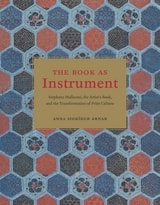
The Book as Instrument
Stéphane Mallarmé, the Artist's Book, and the Transformation of Print CultureAnna Sigrídur Arnar
University of Chicago Press, 2011
Stéphane Mallarmé (1842–98) was a French Symbolist poet, theorist, and teacher whose ideas and legendary salons set the stage for twentieth-century experimentation in poetry, music, theater and art. A canonical figure in the legacy of modernism, Mallarmé was also a lifelong champion of the book as both a literary endeavor and a carefully crafted material object.
In The Book as Instrument, Anna Sigrídur Arnar explores how this object functioned for Mallarmé and his artistic circle, arguing that the book became a strategic site for encouraging a modern public to actively partake in the creative act, an idea that informed later twentieth-century developments such as conceptual and performance art. Arnar demonstrates that Mallarmé was invested in creating radically empowering reading experiences, and the diverse modalities he proposed for both reading and looking anticipate interactive media prevalent in today’s culture. In describing the world of books, visual culture, and mass media of the late nineteenth century, Arnar touches upon an array of themes that continues to preoccupy us in our own moment, including speculations on the future of the book. Enhanced by gorgeous illustrations, The Book as Instrument is sure to fascinate anyone interested in the ever-vibrant experiment between word and image that makes the page and the multi-sensory pleasures of reading.

The Book of Apollonius
Translated by Raymond L. Grismer and Elizabeth Atkins
University of Minnesota Press, 1936
The Book of Apollonius was first published in 1936. Minnesota Archive Editions uses digital technology to make long-unavailable books once again accessible, and are published unaltered from the original University of Minnesota Press editions.
No other English translation of this famous thirteenth-century Spanish narrative poem is available, in either poetry or prose. The present translators have put it into a form that reproduces most faithfully the quaint and naïve quality of the original Libro de Apolonio, the story of which appears in Book Eight of John Gower's Confessio Amantis and in Shakespeare's Pericles.
The reader who is not a specialist in medieval or Spanish literature will find here a lush uncensored tale of mad adventure. If he will give himself up to the spell of its child-like spirit, he will find himself led on through such "faery lands forlorn" as the untrammeled imagination has immemorially loved to create. The story parades before him storms, shipwrecks, kidnappings, pirates, supposed deaths, miraculous escapes and survivals. Beginning in a theme that runs through dramatic literature from Oedipus Rex through The Cenci to The Barretts of Wimpole Street,the plot reveals the misfortunes that furiously pursue Apollonius, king of Tyre, after he tries to woo the daughter of King Antiochus away from her father. Forced to flee for his life, Apollonius plunges from adventure to adventure, until incredible reunions and transports of joy bring the tale to a conventional happy ending.
The translators' Introduction gives an account of the use of the Apollonius material in Old French, Provençal, Anglo-Saxon, German, and other literatures, as well as tracing the history of the poem from its source in a lost Greek romance.
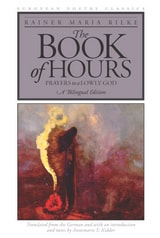
The Book of Hours
Prayers to a Lowly GodRainer Maria Rilke
Northwestern University Press, 2001
Rilke penned The Book of Hours between 1899 and 1903 in three parts. Readers and experts alike consider the collection among Rilke's most important and enduring works.
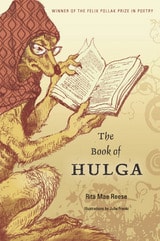
The Book of Hulga
Rita Mae Reese, Illustrations by Julie Franki
University of Wisconsin Press, 2016
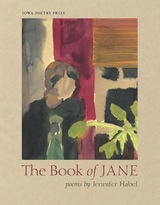
The Book of Jane
Jennifer Habel
University of Iowa Press, 2020
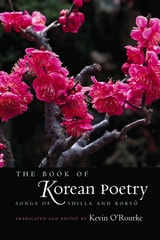
The Book of Korean Poetry
Songs of Shilla and KoryoKevin O'Rourke
University of Iowa Press, 2006

The Book of Life
Joseph Campana
Tupelo Press, 2019
The Book of Marys and Glaciers
Carrie Olivia Adams
Tupelo Press, 2026
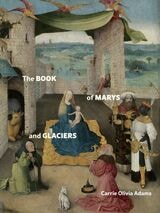
The poems collected in The Book of Marys and Glaciers traverse both the psychological and physical landscape to explore the too-muchness and overwhelm that categorizes our demand-driven age. The longest series, “Dust Cover,” is a meditation on deserts of all kinds—geographic, urban, celestial, domestic, and linguistic. The poems themselves enact their own ideas of space and emptiness, building to a work that grain after grain becomes heavy as a whole. In contrast, the title sequence “The Book of Marys and Glaciers” is an expansive work of feminist ecopoetics that asks questions about the role of women as mothers, religious figures, friends, and lovers in a society that rarely makes room for quietude anymore.
Altogether, the poems are controlled, precise investigations and interrogations of the ideas and images we take for granted.
The Book of Ruin
Rigoberto González
Four Way Books, 2019
The Book of Samuel
Essays on Poetry and ImaginationMark Rudman
Northwestern University Press, 2009
Crisis, breakdown, rejuvenation: this is the territory of poetry that Rudman takes readers into with this set of essays. Constructed as a series of character studies, the essays are rooted in autobiographical material with biographical counterpoints, tying the poets distinctly to places. Even as they are placed, however, they are displaced: Rudman's subjects, from D.H. Lawrence to Czeslaw Milosz to T. S. Eliot, are almost all exiles, either geographically or within themselves. This exile spins anger into energy, transmuting emotion into imagination the same way that Passaic Falls, known to William Carlos Williams, turns water into power.
The mosaic style of the essays touches on nerve after nerve, avoiding the snags of academic jargon to ease towards an illuminating truth about the artists' shifting work and worlds. Some of the Samuels—Beckett and Fuller—were able to navigate these shifts, while others--Coleridge and Johnson--are shown to be less able to transmute their energy into motion.
The Book of Stones and Angels
Harold Schweizer
Tupelo Press, 2015
The Book of a Hundred Hands
Cole Swensen
University of Iowa Press, 2005
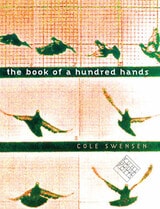
These short poems reveal the hand from a hundred different perspectives. Incorporating sign language, drawing manuals, paintings from the 14th to the 20th century, shadow puppets, imagined histories, positions (the “hand as a boatless sail”), and professions (“the hand as window in which the panes infinitesimal”), Cole Swensen’s fine hand is “that which augments” our understanding and appreciation of “this freak wing,” this “wheel that comforts none” yet remains “a fruit the size and shape of the heart.”
The Book of a Thousand Eyes
Lyn Hejinian
Omnidawn, 2012
The Book of the Dead
Muriel Rukeyser
West Virginia University Press, 2018
Published for the first time alongside photographs by Nancy Naumburg, who accompanied Rukeyser to Gauley Bridge in 1936, this edition of The Book of the Dead includes an introduction by Catherine Venable Moore, whose writing on the topic has been anthologized in Best American Essays.
The Book of the Mutability of Fortune
Christine de Pizan
Iter Press, 2017
Christine de Pizan (ca. 1364–ca. 1431) has long been recognized as France’s first professional woman of letters, and interest in her voluminous and wide-ranging corpus has been steadily rising for decades. During the tumultuous later years of the Hundred Years’ War, Christine’s lone but strong feminine voice could be heard defending women, expounding the highest ideals for good governance, and lamenting France’s troubled times alongside her own personal trials. In The Mutability of Fortune, Christine fuses world history with autobiography to demonstrate mankind’s subjugation to the ceaselessly changing, and often cruel, whims of Fortune. Now, for the first time, this poem is accessible to an English-speaking audience, further expanding our appreciation of this ground-breaking woman author and her extraordinary body of work.
The Booke of Ovyde Named Methamorphose
William Caxton
Bodleian Library Publishing, 2013
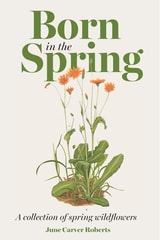
The Born in the Spring
A Collection of Spring WildflowersJune Carver Roberts
Ohio University Press, 2024
The Bottomland
PoemsHarry Humes
University of Arkansas Press, 1995
The Bow and the Lyre
The Poem, The Poetic Revelation, Poetry and HistoryBy Octavio Paz
University of Texas Press, 1973
In The Bow and the Lyre Octavio Paz, one of the most important poets writing in Spanish, presents his sustained reflections on the poetic phenomenon and on the place of poetry in history and in our personal lives. It is written in the same prose style that distinguishes The Labyrinth of Solitude. The Bow and the Lyre will serve as an important complement to Paz's poetry.
Paz's discussions of the different aspects of the poetic phenomenon are not limited to Spanish and Spanish American literature. He is almost as apt to choose an example from Homer, Vergil, Blake, Whitman, Rimbaud as he is from Lope de Vega, Jiménez, Darío, Neruda. In writing these essays, he draws on his vast storehouse of knowledge, revealing a world outlook of ample proportions. In reading these essays, we share the observations of a searching, original, highly cultivated mind.
The Bower
Connie Voisine
University of Chicago Press, 2019

The Breeze Behind the Breeze
Joseph Donahue
Duke University Press, 2027
The Brier Poems
Jim Wayne Miller
Ohio University Press, 1997
Published in 1997 by Gnomon Press. Jim Wayne Miller’s The Brier Poems, published posthumously, is a selection of poetry from The Mountains Have Come Closer (where the Brier figure first emerged) and Brier, His Book, along with additional poems not published in previous volumes. It celebrates the Appalachian region and its people through “The Brier,” the enlightened Appalachian who laments what is happening to the world that nurtured him. Through vivid imagery and rich language, Miller explores themes of identity and tradition and the connection between the land and its inhabitants. The poems capture the spirit and resilience of Appalachian culture, blending personal reflection with social commentary. Miller’s work highlights the beauty and complexity of life in the mountains, offering a voice to the often-overlooked experiences of rural Appalachia.

The Broken World
POEMSMarcus Cafagna
University of Illinois Press, 1996
as one of five volumes published in 1996 in the National Poetry Series
"Marcus Cafagña is a poet who shies at nothing, who will
not turn away from what he sees--ordinary people struggling against, and
sometimes breaking on, the wheel of their fate. The Broken World
is a deeply humane and accomplished first book--probing, watchful, compassionate,
and necessary."
-- Edward Hirsch
"I challenge anyone to be unmoved by The Broken World. Cafagña
never gives up in these difficult, heart-rending poems." -- Jim Daniels,
editor of Letters to America: Contemporary American Poetry on Race
The Broken World, the powerful debut of a poet of great depth
and maturity, begins with narratives of individuals caught up in circumstance--a
distressed girl on a Detroit overpass, a boy shooting baskets at a crisis
center. By the end of the slim volume, Marcus Cafagña has led us
through the postwar New York of Jewish Holocaust survivors to his native
Michigan, where his marriage ended tragically with his wife's suicide,
a death that has come to symbolize for Cafagña the confusion and
madness of the twentieth century.
The Buddhist Poetry of the Great Kamo Priestess
Daisaiin Senshi and Hosshin WakashuEdward Kamens
University of Michigan Press, 1991

The Bunker in the Parsley Fields
Gary Gildner
University of Iowa Press, 1997
The Burden of Rhyme
Victorian Poetry, Formalism, and the Feeling of Literary HistoryNaomi Levine
University of Chicago Press, 2024
The Burden of Rhyme shows how the nineteenth-century search for the origin of rhyme shaped the theory and practice of poetry. For Victorians, rhyme was not (as it was for the New Critics, and as it still is for us) a mere technique or ahistorical form. Instead, it carried vivid historical fantasies derived from early studies of world literature. Naomi Levine argues that rhyme’s association with the advent of literary modernity and with a repertoire of medievalist, Italophilic, and orientalist myths about love, loss, and poetic longing made it a sensitive historiographic instrument. Victorian poets used rhyme to theorize both literary history and the most elusive effects of aesthetic form. This Victorian formalism, which insisted on the significance of origins, was a precursor to and a challenge for twentieth-century methods. In uncovering the rich relationship between Victorian poetic forms and a forgotten style of literary-historical thought, The Burden of Rhyme reveals the unacknowledged influence of Victorian poetics—and its repudiation—on the development of modern literary criticism.
The Buried Sea
New and Selected PoemsRane Arroyo; Foreword by Luis Alberto Urrea
University of Arizona Press, 2008
Reading Rane Arroyo’s poems is a little like watching a movie playing at fastforward speed on the TV in your darkened bedroom. The colors pop and snap, the images leap and recede, the colors seem brighter than life—and you can’t stop watching even long enough to blink. It’s an intimate experience. Even at hyperspeed you can make out the images of friends, family, and lovers (especially lovers) burning rubber across the unblinking screen. And even without a sound track, you can hear the music—a symphony of jazz and samba, salsa and street sounds.
In The Buried Sea, Arroyo has selected poems from his first eleven books—five full-length collections of poems and six chapbooks—and has added nineteen new poems. When asked to describe himself, Arroyo writes that “the answer is easy: I’m a Puerto Rican, gay, Midwestern, educated, former working class, liberal, atheistic, humanist, American, male, ex-Mormon, ex-Catholic, pseudo-Buddhist, teacher, reader, global, and popular culture—informed poet.” Readers will find traces of all of these selves in this collection. And Arroyo does make it “easy” to follow the clues. His poems—vivacious, sexy, shiny, sly, pointed, ambitious—are easy to approach and easy to love. But they come with strings attached—like all affairs of the heart—and therein lies so much of their pleasure.
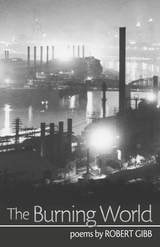
The Burning World
PoemsRobert Gibb
University of Arkansas Press, 2004
These lyrical and devastatingly beautiful poems are powerful in both their ability to evoke the past and in the poignancy of the losses they catalog, beginning with heartbreaking personal losses and extending into communal ones. Indeed, a book so freighted with loss and sadness might have deteriorated into maudlin nostalgia in lesser hands. But Gibb has elevated The Burning World to the level of tragedy, with all the dignity and severity that that word calls forth.
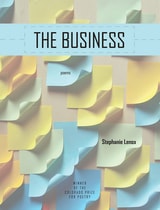
The Business
Stephanie Lenox
University Press of Colorado, 2016
Winner of the 2015 Colorado Prize for Poetry
What does it mean to work in the age of the cubicle? The Business takes on the modern workplace with sharp-witted poems that sting like a paper cut. A former secretary, Stephanie Lenox positions herself as a poetic note-taker of the mundane. Organized by the classical components of Greek tragedy, these poems enact the relationships, heartbreaks, and small heroic efforts that make up our working lives. Think there's nothing poetic about annoying coworkers, endless meetings, and stained coffee mugs? Think again. While tragedy provides the organizational structure for this collection, humor plays a central role. This collection transforms office politics and paper clips into a funny and critical examination of the mortal rat race. If you've ever been fired, let go, unemployed, underemployed, or overlooked, these poems are for you. Begun on stolen reams of printer paper, this book reclaims the hours of our lives we give, out of necessity, to others in order to survive.
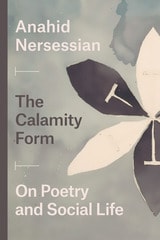
The Calamity Form
On Poetry and Social LifeAnahid Nersessian
University of Chicago Press, 2020
Anahid Nersessian explores works by Friedrich Hölderlin, William Wordsworth, John Keats, and others to argue that as the human and ecological costs of industry became clear, Romantic poetry adopted formal strategies—among them parataxis, the setting of elements side by side in a manner suggestive of postindustrial dissonance, and apostrophe, here an address to an absent or vanishing natural environment—as it tried and failed to narrate the calamities of capitalism. These tropes reflect how Romantic authors took their bewilderment and turned it into a poetics: a theory of writing, reading, and understanding poetry as an eminently critical act. Throughout, Nersessian pushes back against recent attempts to see literature as a source of information on par with historical or scientific data, arguing instead for an irreducibility of poetic knowledge. Revealing the ways in which these Romantic works are of their time but not about it, The Calamity Form ultimately exposes the nature of poetry’s relationship to capital—and capital’s ability to hide how it works.
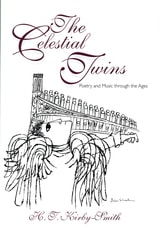
The Celestial Twins
Poetry and Music through the AgesH.T. Kirby-Smith
University of Massachusetts Press, 2000
H. T. Kirby-Smith makes his case with wit and erudition, proceeding chronologically and citing numerous examples of specific poems—from Latin, Old French, Italian, Anglo-Saxon, modern French, and English. He points out that ancient Greek poetry, including the epics, was part of a musical context. By contrast, almost no surviving Latin poetry was written for musical performance, but the meters of Latin poetry were borrowed from Greek musical meters. Similarly, in their own ways, Thomas Hardy, T. S. Eliot, and Langston Hughes all wrote out of musical contexts: Hardy from west-of-England songs and dances; Eliot from Wagnerian opera and late Beethoven chamber music; and Hughes from blues, jazz, and spirituals.
Although poets from Horace to Shakespeare to Dickinson have instinctively recognized the separation of music and poetry, there have also been well-meaning attempts to bring these allied arts back into close association with each other. But in Kirby-Smith's view, poetry of the highest order has always maintained a respectful distance from music, even while retaining some memory of musical rhythms and organization.
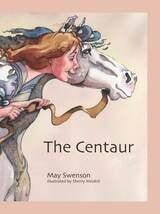
The Centaur
May Swenson
Utah State University Press, 2007
First published in 1956, May Swenson's "The Centaur" remains one of her most popular and most anthologized poems. This is its first appearance as a picture book for children.
In images bright and brisk and nearly tangible, the poet re-creates the joy of riding a stick horse through a small-town summer. We find ourselves, with her, straddling "a long limber horse with . . . a few leaves for a tail," and pounding through the lovely dust along the path by the old canal. As her shape shifts from child to horse and back, we know exactly what she feels.
Sherry Meidell's water-color illustrations perfectly convey the wit and wisdom of May Swenson's poem. These are playful, satisfying images full of vitality and imagination. Meidell handles the joy of poem's fantasy and the joy of its occasional naughtiness with equal success.
Other books by and about May Swenson: Body My House, May Swenson, Dear Elizabeth, May Out West
The Certain Body
Julia Guez
Four Way Books, 2022

The Chain
Tom Sleigh
University of Chicago Press, 1996
"Tom Sleigh's precision marks him as the diamond cutter of poetry; his verse has a tense musicality, and his ability to convey exact emotions, even the state of consciousness itself, is unerring."—The New York Times Book Review, Notable Books of the Year, 1990-1991
The Chasers
Renato Rosaldo
Duke University Press, 2019
The Cherokee Lottery
A Sequence of PoemsWilliam Jay Smith
Northwestern University Press, 2000
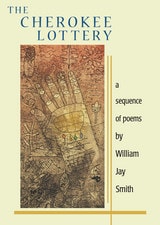
In powerful poetry of epic proportions, which Harold Bloom has called his best work, Smith paints a stark and vivid picture of this ordeal and its principal participants, among them Sequoyah, the inventor of the Cherokee alphabet, and Osceola, the Seminole chief.
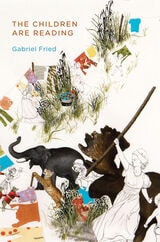
The Children Are Reading
Gabriel Fried
Four Way Books, 2017
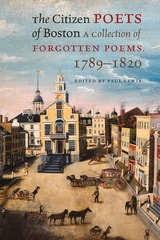
The Citizen Poets of Boston
A Collection of Forgotten Poems, 1789–1820Edited by Paul Lewis
University Press of New England, 2016
The City She Was
Carmen Giménez Smith
University Press of Colorado, 2011
Published by the Center for Literary Publishing at Colorado State University
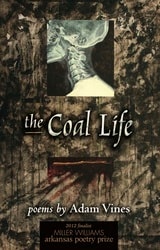
The Coal Life
PoemsAdam Vines
University of Arkansas Press, 2012
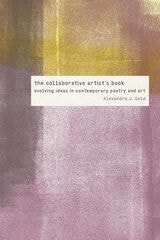
The Collaborative Artist's Book
Evolving Ideas in Contemporary Poetry and ArtAlexandra J. Gold
University of Iowa Press, 2023
The Collaborative Artist’s Book offers a rare glimpse into collaborations between poets and painters from 1945 to the present, and highlights how the artist’s book became a critical form for experimental American artists in the twentieth and twenty-first centuries. Alexandra Gold provides a broad overview of the artist’s book form and the many ongoing debates and challenges, from the disciplinary to the institutional, that these forms continue to pose.
Gold presents five case studies and details not only how each individual collaboration came to be but how all five together engage and challenge conventional ideals about art, subjectivity, poetry, and interpersonal relations, as well as complex social questions related to gender and race. Taking several of these books out of special collections libraries and museum archives and making them available to a broad readership, Gold brings to light a whole genre that has been largely forgotten or neglected.
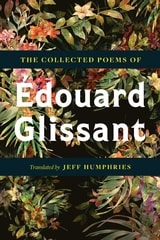
The Collected Poems Of Édouard Glissant
Édouard Glissant
University of Minnesota Press, 2019
The complete poems of the two-time finalist for the Nobel Prize in Literature, available in English for the first time
This volume collects and translates—most for the first time—the nine volumes of poetry published by Édouard Glissant, a poet, novelist, and critic increasingly recognized as one of the great writers of the twentieth century. The poems bring to life what Glissant calls “an archipelago-like reality,” partaking of the exchanges between Europe and its former colonies, between humans and their geographies, between the poet and the natural world.
Reciting and re-creating histories of the African diaspora, Columbus’s “discovery” of the New World, the slave trade, and the West Indies, Glissant underscores the role of poetic language in changing both past and present irrevocably. As translator Jeff Humphries writes in his introduction, Glissant’s poetry embraces the aesthetic creed of the French symbolists Mallarmé and Rimbaud (“The poet must make himself into a seer”) and aims at nothing less than a hallucinatory experience of imagination in which the differences among poem, reader, and subject dissolve into one immediate present.
Born in Martinique in 1928, influenced by the controversial Martinican poet/politician Aimé Césaire, and educated at the Sorbonne in Paris, Édouard Glissant has emerged as one of the most influential postcolonial theorists, novelists, playwrights, and poets not only in the Caribbean but also in contemporary French letters. He has twice been a finalist for the Nobel Prize in Literature as well as the recipient of both the Prix Renaudot and the Prix Charles Veillon in France. His works include Poetics of Relation, Caribbean Discourse, Faulkner Mississippi, and the novel The Ripening. He currently serves as Distinguished Professor of French at City University of New York, Graduate Center.