Results by title
8812 books match the query 'Political Science' and 1911 start with t
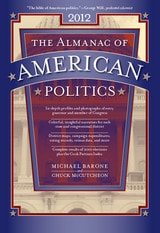
The Almanac of American Politics 2012
Michael Barone and Chuck McCutcheon
University of Chicago Press, 2011
No matter how you voted in the 2010 election, both Democrats and Republicans can agree that there is one indispensable guide to people, politics, and power in Washington. The Almanac of American Politics is the gold standard—the book everyone involved, invested, or interested in American politics must have on their reference shelf.
As in previous editions, the 2012 Almanac includes profiles of every member of Congress and every governor. It offers in-depth and completely up-to-date narrative profiles of all 50 states and 435 House districts, covering everything from economics to history to, of course, politics. The new edition also contains Michael Barone’s sharp-eyed analysis of the 2010 congressional elections, detailing significant trends, redistricting initiatives, and the like.
Full of maps, census data, and information on topics ranging from campaign expenditures to voting records to interest group ratings, the 2012 Almanac of American Politics presents everything you need to know about American politics in snappy prose and framed by cogent analysis.
“Real political junkies get two Almanacs: one for the home and one for the office.”—Chuck Todd, NBC
“It’s simply the oxygen of the political world. We have the most dog-eared copy in town.”—Judy Woodruff, PBS News Hour
“Michael Barone is to politics what statistician-writer Bill James is to baseball, a mix of historian, social observer, and numbers cruncher who illuminates his subject with perspective and a touch of irreverence.”—Chicago Tribune
“Indispensable . . . this compendium of statistics and information has gone as far as humanly possible.”—Washington Post
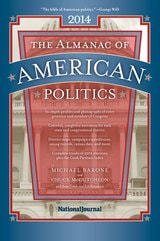
The Almanac of American Politics 2014
Michael Barone, Chuck McCutcheon, Sean Trende, and Josh Kraushaar
University of Chicago Press, 2013
Like every edition since the almanac first appeared in 1972, the 2014 edition is helmed by veteran political analyst Michael Barone. Together with Chuck McCutcheon, collaborator since 2012, and two new editors, Sean Trende, senior elections analyst for RealClearPolitics, and Josh Kraushaar, managing editor at National Journal, Barone offers an unparalleled perspective on contemporary politics.
Full of maps, census data, and detailed information about the American political landscape, the 2014 Almanac of American Politics remains the most comprehensive resource for journalists, politicos, business people, and academics.
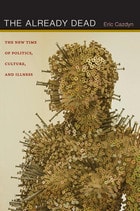
The Already Dead
The New Time of Politics, Culture, and IllnessEric Cazdyn
Duke University Press, 2012
To resist the exploitative crisis state, which Cazdyn terms "the global abyss," he posits the concept of "the already dead," a condition in which the subject (medical, political, psychological) has been killed but has yet to die. Embracing this condition, he argues, allows for a revolutionary consciousness open to a utopian future. Woven into Cazdyn's analysis are personal anecdotes about his battle with leukemia and his struggle to obtain Canadian citizenship during his illness. These narratives help to illustrate his systemic critique, one that reconfigures the relationship between politics, capitalism, revolution, and the body.

The Alternate Route
Thomas Graham
Oregon State University Press, 2017
The classic road toward nuclear disarmament appears to be closed for the foreseeable future, but there may be another route. In the last fifty years, well-conceived regional treaties have been developed in Latin America, the South Pacific, Africa, Southeast Asia, and Central Asia. These arrangements have developed for many and varied political and security reasons, but now virtually all of the Southern Hemisphere and important parts of the Northern Hemisphere are legally nuclear-weapon-free. These regional nuclear weapon disarmament treaties are formally respected by the five states recognized under the Non-Proliferation Treaty (NPT) as nuclear weapon states: the United States, the United Kingdom, Russia, France, and China—often referred to collectively as the P-5 states.
Variations of these regional treaties might eventually be negotiated in the Middle East, Northeast Asia, and South Asia, setting aside the P-5 states until the very end of the process. With regional agreements in place around the globe, negotiation among the P-5 states would be all that stands between the world community and the banishment of nuclear weapons, verifiably and effectively worldwide. By the time this point is reached, Russia and the United States might be able to cooperate.
Essential reading for policy advisors, foreign service professionals, and scholars in political science, The Alternate Route examines the possibilities of nuclear-weapon-free zones as a pathway to worldwide nuclear disarmament.

The Ambivalence of Power in the Twenty-First Century Economy
Cases from Russia and BeyondEdited by Vadim Radaev and Zoya Kotelnikova
University College London, 2022
This book explores the ambivalent nature of power as wielded in economic practices from an empirical perspective. It offers a collection of country-based cases and critically assesses the existing conceptions of power from a cross-disciplinary perspective. Analyzing power at the macro, meso, and micro levels allows the volume to highlight the complexity of political economy in the twenty-first century. Each chapter addresses key elements of a given political economy (from the ambivalence of the cases of former communist countries that do not conform with the grand narratives about democracy and markets to the dual utility of new technologies such as face-recognition), thus providing mounting evidence for the centrality of understanding ambivalence in the analysis of power.
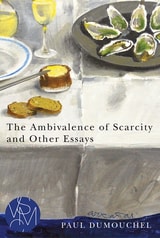
The Ambivalence of Scarcity and Other Essays
Paul Dumouchel
Michigan State University Press, 2014
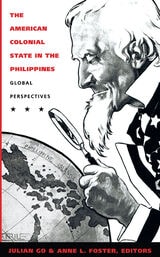
The American Colonial State in the Philippines
Global PerspectivesJulian Go and Anne L. Foster, eds.
Duke University Press, 2003
Written by social scientists and historians, these essays investigate various aspects of American colonial government through comparison with and contextualization within colonial regimes elsewhere in the world—from British Malaysia and Dutch Indonesia to Japanese Taiwan and America's other major overseas colony, Puerto Rico. Contributors explore the program of political education in the Philippines; constructions of nationalism, race, and religion; the regulation of opium; connections to politics on the U.S. mainland; and anticolonial resistance. Tracking the complex connections, circuits, and contests across, within, and between empires that shaped America's colonial regime, The American Colonial State in the Philippines sheds new light on the complexities of American imperialism and turn-of-the-century colonialism.
Contributors. Patricio N. Abinales, Donna J. Amoroso, Paul Barclay, Vince Boudreau, Anne L. Foster, Julian Go, Paul A. Kramer
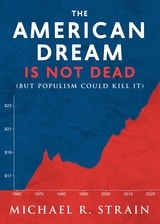
The American Dream Is Not Dead
(But Populism Could Kill It)Michael R. Strain
Templeton Press, 2020
Populists on both sides of the political aisle routinely announce that the American Dream is dead. According to them, the game has been rigged by elites, workers can’t get ahead, wages have been stagnant for decades, and the middle class is dying.
Michael R. Strain, director of economic policy studies at the American Enterprise Institute, disputes this rhetoric as wrong and dangerous. In this succinctly argued volume, he shows that, on measures of economic opportunity and quality of life, there has never been a better time to be alive in America. He backs his argument with overwhelming—and underreported—data to show how the facts favor realistic optimism.
He warns, however, that the false prophets of populism pose a serious danger to our current and future prosperity. Their policies would leave workers worse off. And their erroneous claim that the American Dream is dead could discourage people from taking advantage of real opportunities to better their lives. If enough people start to believe the Dream is dead, they could, in effect, kill it. To prevent this self-fulfilling prophecy, Strain’s book is urgent reading for anyone feeling the pull of the populists.
E. J. Dionne and Henry Olsen provide spirited responses to Strain’s argument.

The American Moralist
On Law, Ethics, And GovernmentGeorge Anastaplo
Ohio University Press, 1994
The American Newsroom
A History, 1920-1960Will Mari
University of Missouri Press, 2023
The American Supreme Court, Sixth Edition
Robert G. McCloskey and Sanford Levinson
University of Chicago Press, 2016
As in prior editions, McCloskey’s original text remains unchanged. In his historical interpretation, he argues that the strength of the Court has always been its sensitivity to the changing political scene, as well as its reluctance to stray too far from the main currents of public sentiment. In this new edition, Sanford Levinson extends McCloskey’s magisterial treatment to address developments since the 2010 election, including the Supreme Court’s decisions regarding the Defense of Marriage Act, the Affordable Care Act, and gay marriage.
The best and most concise account of the Supreme Court and its place in American politics, McCloskey's wonderfully readable book is an essential guide to the past, present, and future prospects of this institution.
The American Supreme Court, Sixth Edition
Robert G. McCloskey and Sanford Levinson
University of Chicago Press, 2016
For more than fifty years, Robert G. McCloskey’s classic work on the Supreme Court’s role in constructing the US Constitution has introduced generations of students to the workings of our nation’s highest court.
As in prior editions, McCloskey’s original text remains unchanged. In his historical interpretation, he argues that the strength of the Court has always been its sensitivity to the changing political scene, as well as its reluctance to stray too far from the main currents of public sentiment. In this new edition, Sanford Levinson extends McCloskey’s magisterial treatment to address developments since the 2010 election, including the Supreme Court’s decisions regarding the Defense of Marriage Act, the Affordable Care Act, and gay marriage.
The best and most concise account of the Supreme Court and its place in American politics, McCloskey's wonderfully readable book is an essential guide to the past, present, and future prospects of this institution.
The American Supreme Court
Fifth EditionRobert G. McCloskey
University of Chicago Press, 2010
Celebrating its fiftieth anniversary, Robert McCloskey’s classic work on the Supreme Court’s role in constructing the U.S. Constitution has introduced generations of students to the workings of our nation’s highest court. For this new fifth edition, Sanford Levinson extends McCloskey’s magisterial treatment to address the Court’s most recent decisions.
As in prior editions, McCloskey’s original text remains unchanged. In his historical interpretation, he argues that the strength of the Court has always been its sensitivity to the changing political scene, as well as its reluctance to stray too far from the main currents of public sentiments. In two revised chapters, Levinson shows how McCloskey’s approach continues to illuminate developments since 2005, including the Court’s decisions in cases arising out of the War on Terror, which range from issues of civil liberty to tests of executive power. He also discusses the Court’s skepticism regarding campaign finance regulation; its affirmation of the right to bear arms; and the increasingly important nomination and confirmation process of Supreme Court justices, including that of the first Hispanic justice, Sonia Sotomayor.
The best and most concise account of the Supreme Court and its place in American politics, McCloskey's wonderfully readable book is an essential guide to the past, present, and future prospects of this institution.
The American Surveillance State
How the U.S. Spies on DissentDavid H. Price
Pluto Press, 2022
New evidence has come to light proving how far the FBI monitored its citizens throughout the Cold War and beyond
When the possibility of wiretapping first became known to Americans they were outraged. Now, in our post-9/11 world, it’s accepted that corporations are vested with human rights, and government agencies and corporations use computers to monitor our private lives. David H. Price pulls back the curtain to reveal how the FBI and other government agencies have always functioned as the secret police of American capitalism up to today, where they luxuriate in a near-limitless NSA surveillance of all.
Price looks through a roster of campaigns by law enforcement, intelligence agencies, and corporations to understand how we got here. Starting with J. Edgar Hoover and the early FBI’s alignment with business, his access to 15,000 pages of never-before-seen FBI files shines a light on the surveillance of Edward Said, Andre Gunder Frank and Alexander Cockburn, Native American communists, and progressive factory owners.
Price uncovers patterns of FBI monitoring and harassing of activists and public figures, providing the vital means for us to understand how these new frightening surveillance operations are weaponized by powerful governmental agencies that remain largely shrouded in secrecy.

The American Voter
Angus Campbell, Philip E. Converse, Warren E. Miller, and Donald E. Stokes
University of Chicago Press, 2008
The American Voter Revisited
Michael S. Lewis-Beck, William G. Jacoby, Helmut Norpoth, and Herbert F. Weisberg
University of Michigan Press, 2008
Today we are politically polarized as never before. The presidential elections of 2000 and 2004 will be remembered as two of the most contentious political events in American history. Yet despite the recent election upheaval, The American Voter Revisited discovers that voter behavior has been remarkably consistent over the last half century. And if the authors are correct in their predictions, 2008 will show just how reliably the American voter weighs in, election after election.
The American Voter Revisited re-creates the outstanding 1960 classic The American Voter---which was based on the presidential elections of 1952 and 1956---following the same format, theory, and mode of analysis as the original. In this new volume, the authors test the ideas and methods of the original against presidential election surveys from 2000 and 2004. Surprisingly, the contemporary American voter is found to behave politically much like voters of the 1950s.
"Simply essential. For generations, serious students of American politics have kept The American Voter right on their desk. Now, everyone will keep The American Voter Revisited right next to it."
---Larry J. Sabato, Director of the University of Virginia Center for Politics and author of A More Perfect Constitution
"The American Voter Revisited is destined to be the definitive volume on American electoral behavior for decades. It is a timely book for 2008, with in-depth analyses of the 2000 and 2004 elections updating and extending the findings of the original The American Voter. It is also quite accessible, making it ideal for graduate students as well as advanced undergrads."
---Andrew E. Smith, Director of the University of New Hampshire Survey Center
"A theoretically faithful, empirically innovative, comprehensive update of the original classic."
---Sam Popkin, Professor of Political Science, University of California, San Diego
Michael S. Lewis-Beck is F. Wendell Miller Distinguished Professor of Political Science at the University of Iowa. William G. Jacoby is Professor of Political Science at Michigan State University. Helmut Norpoth is Professor of Political Science at Stony Brook University. Herbert F. Weisberg is Professor of Political Science at Ohio State University.

The American Warfare State
The Domestic Politics of Military SpendingRebecca U. Thorpe
University of Chicago Press, 2014

The American Way of Peace
An InterpretationJan S. Prybyla
University of Missouri Press, 2005

The Anarchist Roots of Geography
Toward Spatial EmancipationSimon Springer
University of Minnesota Press, 2016
The Anarchist Roots of Geography sets the stage for a radical politics of possibility and freedom through a discussion of the insurrectionary geographies that suffuse our daily experiences. By embracing anarchist geographies as kaleidoscopic spatialities that allow for nonhierarchical connections between autonomous entities, Simon Springer configures a new political imagination.
Experimentation in and through space is the story of humanity’s place on the planet, and the stasis and control that now supersede ongoing organizing experiments are an affront to our survival. Singular ontological modes that favor one particular way of doing things disavow geography by failing to understand the spatial as a mutable assemblage intimately bound to temporality. Even worse, such stagnant ideas often align to the parochial interests of an elite minority and thereby threaten to be our collective undoing. What is needed is the development of new relationships with our world and, crucially, with each other.
By infusing our geographies with anarchism we unleash a spirit of rebellion that foregoes a politics of waiting for change to come at the behest of elected leaders and instead engages new possibilities of mutual aid through direct action now. We can no longer accept the decaying, archaic geographies of hierarchy that chain us to statism, capitalism, gender domination, racial oppression, and imperialism. We must reorient geographical thinking towards anarchist horizons of possibility. Geography must become beautiful, wherein the entirety of its embrace is aligned to emancipation.

The Anarchist Turn
Edited by Jacob Blumenfeld, Chiara Bottici, and Simon Critchley
Pluto Press, 2013
The concept of anarchy is often presented as a recipe for pure disorder. The Anarchist Turn brings together innovative and fresh perspectives on anarchism to argue that in fact it represents a form of collective, truly democratic social organisation.
The book shows how in the last decade the negative caricature of anarchy has begun to crack. Globalisation and the social movements it spawned have proved what anarchists have long been advocating: an anarchical order is not just desirable, but also feasible.
The contributors, including leading anarchist and critical theorists, argue that with the failure of both free markets and state socialism the time has come for an 'anarchist turn' in political philosophy. In doing so they relate the anarchist hypothesis to a range of other disciplines such as politics, anthropology, economics, history and sociology.
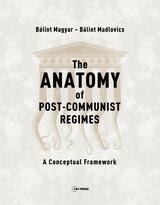
The Anatomy of Post-Communist Regimes
A Conceptual FrameworkBálint Magyar
Central European University Press, 2021
Offering a single, coherent framework of the political, economic, and social phenomena that characterize post-communist regimes, this is the most comprehensive work on the subject to date. Focusing on Central Europe, the post-Soviet countries and China, the study provides a systematic mapping of possible post-communist trajectories.
At exploring the structural foundations of post-communist regime development, the work discusses the types of state, with an emphasis on informality and patronalism; the variety of actors in the political, economic, and communal spheres; the ways autocrats neutralize media, elections, etc. The analysis embraces the color revolutions of civil resistance (as in Georgia and in Ukraine) and the defensive mechanisms of democracy and autocracy; the evolution of corruption and the workings of “relational economy”; an analysis of China as “market-exploiting dictatorship”; the sociology of “clientage society”; and the instrumental use of ideology, with an emphasis on populism. Beyond a cataloguing of phenomena—actors, institutions, and dynamics of post-communist democracies, autocracies, and dictatorships—Magyar and Madlovics also conceptualize everything as building blocks to a larger, coherent structure: a new language for post-communist regimes.
While being the most definitive book on the topic, the book is nevertheless written in an accessible style suitable for both beginners who wish to understand the logic of post-communism and scholars who are interested in original contributions to comparative regime theory. The book is equipped with QR codes that link to www.postcommunistregimes.com, which contains interactive, 3D supplementary material for teaching.
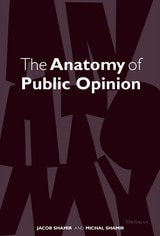
The Anatomy of Public Opinion
Jacob Shamir and Michal Shamir
University of Michigan Press, 2000
Building upon recent work in communication, social psychology, social cognition, and political science, Jacob Shamir and Michal Shamir approach public opinion as a multidimensional concept with a multitude of expressions. Public opinion is not comprised merely of a distribution of attitudes obtained in the polls. It also expresses and is expressed by a climate of opinion, expectations, public speeches and political actions, including aggregate distributions of individual values, beliefs, and attitudes. Often these different facets coincide, but they may also diverge. Public opinion can evolve along different dynamic paths; the nature of the information environment is a major factor in determining which dynamic path will be set in motion.
While social information and social construction are important in public opinion processes, major information events play a central role in moving public opinion and in constraining processes of social construction. In this book these postulates are explored on the micro and macro levels, but the focus is on public opinion dynamics at the system level: how the facets of public opinion respond to the variability in information technology. This is approached from different directions and with different parameters. The authors use as their case study Israeli public opinion on issues of peace and terrorism during the Intifada.
The Anatomy of Public Opinion will form an important part in the body of study on the role of information in public opinion processes. It will be of interest to students and scholars of political science, communication, public opinion, and political psychology.
Jacob Shamir is Lecturer of Communication and Journalism, The Hebrew University, Jerusalem. Michal Shamir is Associate Professor of Political Science, Tel Aviv University.
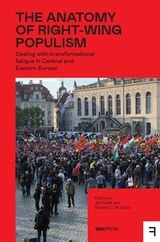
The Anatomy of Right-Wing Populism
Dealing with Transformational Fatigue in Central and Eastern EuropeEdited by Jan Kubik and Richard C. M. Mole
University College London, 2025
Over the past two decades, populist politicians and parties have enjoyed remarkable success across the globe. To develop a multidisciplinary understanding of the rise and functioning of right-wing populism in Central and Eastern Europe, The Anatomy of Right-Wing Populism examines two original concepts. The first, neo-feudalism, refers to an economic system whereby a relatively small group of elites holds most of the political power and controls a significant portion of the country’s economy. The second concept, neo-traditionalism, is a cultural strategy that aims to legitimize neo-feudal systems. Based on this framework, this volume provides empirical and theoretical analysis of populist movements and offers policy recommendations on how to resist illiberalism.

The Anatomy of a South African Genocide
The Extermination of the Cape San PeoplesMohamed Adhikari
Ohio University Press, 2011
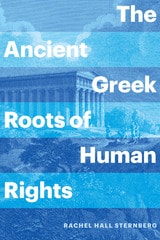
The Ancient Greek Roots of Human Rights
By Rachel Hall Sternberg
University of Texas Press, 2021
2022 PROSE Award Finalist in Classics
Although the era of the Enlightenment witnessed the rise of philosophical debates around benevolent social practice, the origins of European humane discourse date further back, to Classical Athens. The Ancient Greek Roots of Human Rights analyzes the parallel confluences of cultural factors facing ancient Greeks and eighteenth-century Europeans that facilitated the creation and transmission of humane values across history. Rachel Hall Sternberg argues that precursors to the concept of human rights exist in the ancient articulation of emotion, though the ancient Greeks, much like eighteenth-century European societies, often failed to live up to those values.
Merging the history of ideas with cultural history, Sternberg examines literary themes upholding empathy and human dignity from Thucydides’s and Xenophon’s histories to Voltaire’s Candide, and from Greek tragic drama to the eighteenth-century novel. She describes shared impacts of the trauma of war, the appeal to reason, and the public acceptance of emotion that encouraged the birth and rebirth of humane values.

The Anthrobscene
Jussi Parikka
University of Minnesota Press, 2014
Forerunners: Ideas First is a thought-in-process series of breakthrough digital publications. Written between fresh ideas and finished books, Forerunners draws on scholarly work initiated in notable blogs, social media, conference plenaries, journal articles, and the synergy of academic exchange. This is gray literature publishing: where intense thinking, change, and speculation take place in scholarship.
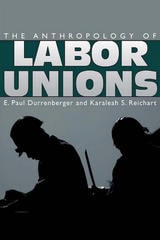
The Anthropology of Labor Unions
E. Paul Durrenberger
University Press of Colorado, 2010
Union-organized workplaces consistently afford workers higher wages and better pensions, benefits, and health coverage than their nonunion counterparts. In addition, women and minorities who belong to unions are more likely to receive higher wages and benefits than their nonunion peers. Given the economic advantages of union membership, one might expect to see higher rates of organization across industries, but labor affiliation is at an all-time low. What accounts for this discrepancy?
The contributors in this volume provide a variety of perspectives on this paradox, including discussions of approaches to and findings on the histories, cultures, and practices of organized labor. They also address substantive issues such as race, class, gender, age, generation, ethnicity, health and safety concerns, corporate co-optation of unions, and the cultural context of union-management relationships.
The first to bring together anthropological case studies of labor unions, this volume will appeal to cultural anthropologists, social scientists, sociologists, and those interested in labor studies and labor movements.

The Anti-American Century
Ivan Krastev
Central European University Press, 2007
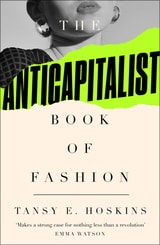
The Anti-Capitalist Book of Fashion
Tansy E.
Pluto Press, 2022
The award-winning classic on why we must revolutionise the fashion industry
*Selected by Emma Watson for her Ultimate Book List*
Fashion is political. From the red carpets of the Met Gala to online fast fashion, clothes tell a story of inequality, racism, and climate crisis. In The Anti-Capitalist Book of Fashion, Tansy E. Hoskins unpicks the threads of capitalist industry to reveal the truth about our clothes.
Fashion brands entice us to consume more by manipulating us to feel ugly, poor and worthless, sentiments that line the pockets of billionaires exploiting colonial supply chains. Garment workers on poverty pay risk their lives in dangerous factories, animals are tortured, fossil fuels extracted and toxic chemicals spread just to keep this season's collections fresh.
We can do better than this. Moving between Karl Lagerfeld and Karl Marx, The Anti-Capitalist Book of Fashion goes beyond ethical fashion and consumer responsibility showing that if we want to feel comfortable in our clothes, we need to reshape the system and ensure this is not our last season.
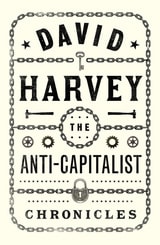
The Anti-Capitalist Chronicles
David Harvey
Pluto Press, 2020
Amidst waves of economic crises, health crises, class struggle and neo-fascist reaction, few possess the clarity and foresight of world-renowned theorist, David Harvey. Since the publication of his bestselling A Brief History of Neoliberalism, Harvey has been tracking the evolution of the capitalist system as well as tides of radical opposition rising against it. In The Anti-Capitalist Chronicles, Harvey introduces new ways of understanding the crisis of global capitalism and the struggles for a better world.
While accounting for violence and disaster, Harvey also chronicles hope and possibility. By way of conversations about neoliberalism, capitalism, globalization, the environment, technology, social movements and crises like COVID-19, he outlines, with characteristic brilliance, how socialist alternatives are being imagined under very difficult circumstances.
In understanding the economic, political and social dimensions of the crisis, Harvey’s analysis in The Anti-Capitalist Chronicles will be of strategic importance to anyone wanting to both understand and change the world.
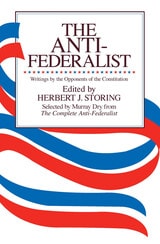
The Anti-Federalist
An Abridgment of The Complete Anti-FederalistEdited by Herbert J. Storing
University of Chicago Press, 1985
This one-volume edition presents the essence of the other side of that crucial dialogue. It can be read as a genuine counterpart to the Federalist Papers; as an original source companion to Storing's brilliant essay What the Anti-Federalists Were For (volume I of The Complete Anti-Federalist, available as a separate paperback); or as a guide to exploring the full range of Anti-Federalist writing. The Anti-Federalist makes a fundamental source of our political heritage accessible to everyone.

The Antigay Agenda
Orthodox Vision and the Christian RightDidi Herman
University of Chicago Press, 1997
"A penetrating analysis of the Christian Right's antigay agenda and of how that agenda is derived from the Christian Right's peculiar vision of American history and the Christian faith."—Rev. Peter J. Gomes, Boston Book Review
"Public intellectualism at its best. . . . A comprehensive summary of the conservative Protestant worldview."—Michael Joseph Gross, Boston Phoenix Literary Section
"Presents considerable information not previously part of the nation's political discourse. . . . [Herman] dissects the Christian Right's antigay stance dispassionately giving, as it were, the devil his due. For anyone on either side of this passionate and important conflict, that is an impressive accomplishment."—Hastings Wyman, Jr., Washington Post Book World

The Apathy of Empire
Cambodia in American GeopoliticsJames A. Tyner
University of Minnesota Press, 2024
What America’s intervention in Cambodia during the Vietnam War reveals about Cold War–era U.S. national security strategy
The Apathy of Empire reveals just how significant Cambodia was to U.S. policy in Indochina during the Vietnam War, broadening the lens to include more than the often-cited incursion in 1970 or the illegal bombing after the Paris Peace Accords in 1973. This theoretically informed and thoroughly documented case study argues that U.S. military intervention in Cambodia revealed America’s efforts to construct a hegemonic spatial world order.
James Tyner documents the shift of America’s post-1945 focus from national defense to national security. He demonstrates that America’s expansionist policies abroad, often bolstered by military power, were not so much about occupying territory but instead constituted the construction of a new normal for the exercise of state power. During the Cold War, Vietnam became the geopolitical lodestar of this unfolding spatial order. And yet America’s grand strategy was one of contradiction: to build a sovereign state (South Vietnam) based on democratic liberalism, it was necessary to protect its boundaries—in effect, to isolate it—through both covert and overt operations in violation of Cambodia’s sovereignty. The latter was deemed necessary for the former.
Questioning reductionist geopolitical understandings of states as central or peripheral, Tyner explores this paradox to rethink the formulation of the Cambodian war as sideshow, revealing it instead as a crucial site for the formation of this new normal.
Retail e-book files for this title are screen-reader friendly.
The Appearing Demos
Hong Kong During and After the Umbrella MovementPang Laikwan
University of Michigan Press, 2020
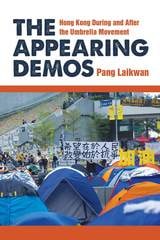
The 79-day-long Hong Kong Umbrella Movement occupied major streets in the busiest parts of the city, creating tremendous inconvenience to this city famous for capitalist order and efficiency. It was also a peaceful collective effort of appearance, and it was as much a political event as a cultural one. The urge for expressing an independent cultural identity underlined both the Occupy movement and the remarkably rich cultural expressions it generated. While understanding the specificity of Hong Kong’s situations, The Appearing Demos also comments on some global predicaments we are facing in the midst of neoliberalism and populism. It directs our attention from state-based sovereignty to city-based democracy, and emphasizes the importance of participation and cohabitation. The book also examines how the ideas of Hannah Arendt are useful to those happenings much beyond the political circumstances that gave rise to her theorization. The book pays particular attention to the actual intersubjective experiences during the protest. These experiences are local, fragile, and sometimes inarticulable, therefore resisting rationality and debates, but they define the fullness of any individual, and they also make politics possible. Using the Umbrella Movement as an example, this book examines the “freed” political agents who constantly take others into consideration in order to guarantee the political realm as a place without coercion and discrimination. In doing so, Pang Laikwan demonstrates how politics means neither to rule nor to be ruled, and these movements should be defined by hope, not by goals.
The Arc of War
Origins, Escalation, and TransformationJack S. Levy and William R. Thompson
University of Chicago Press, 2011
The Argument and the Action of Plato's Laws
Leo Strauss
University of Chicago Press, 1977
"Strauss's The Argument and the Action of Plato's 'Laws' reflects his interest in political thought, his dogged method of following the argument of the Laws step by step, and his vigorous defense of this dialogue's integrity in respect to the ideals of the Republic."—Cross Currents
"The unique characteristics of this commentary on the Laws reflect the care and precision which were the marks of Professor Strauss's efforts to understand the complex thoughts of other men."—Allan D. Nelson, Canadian Journal of Political Science
"Thorough and provocative, an important addition to Plato scholarship."—Library Journal
"The major purpose of the commentary is to provide a reading of the dialogue which displays its structural arrangement and the continuity of the argument."—J. W. Dy, Bibliographical Bulletin of Philosophy
"The reader of Strauss's book is indeed guided closely through the whole text."— M. J. Silverthorne, The Humanities Association Review
Leo Strauss (1899-1973) was the Robert Maynard Hutchins Distinguished Service Professor Emeritus of political science at the University of Chicago.
The Argumentative Turn Revisited
Public Policy as Communicative PracticeFrank Fischer and Herbert Gottweis, eds.
Duke University Press, 2012
The approach speaks in particular to the limits of rationalistic, technoscientific policy making in the complex, unpredictable world of the early twenty-first century. These limits have been starkly illustrated by responses to events such as the environmental crisis, the near collapse of the world economy, and the disaster at the nuclear power plant in Fukushima, Japan. Addressing topics including deliberative democracy, collaborative planning, new media, rhetoric, policy frames, and transformative learning, the essays shed new light on the ways that policy is communicatively created, conveyed, understood, and implemented. Taken together, they show argumentative policy inquiry to be an urgently needed approach to policy analysis and planning.
Contributors. Giovanni Attili, Hubertus Buchstein, Stephen Coleman, John S. Dryzek, Frank Fischer, Herbert Gottweis, Steven Griggs, Mary Hawkesworth, Patsy Healey, Carolyn M. Hendriks, David Howarth, Dirk Jörke, Alan Mandell, Leonie Sandercock, Vivien A. Schmidt, Sanford F. Schram
The Argumentative Turn in Policy Analysis and Planning
Frank Fischer and John Forester, eds.
Duke University Press, 1993
The contributors, scholars of international renown who range across the theoretical spectrum, emphasize the political nature of the policy planner's work and stress the role of persuasive arguments in practical decision making. Recognizing the rhetorical, communicative character of policy and planning deliberations, they show that policy arguments are necessarily selective, both shaping and being shaped by relations of power. These essays reveal the practices of policy analysts and planners in powerful new ways--as matters of practical argumentation in complex, highly political environments. They also make an important contribution to contemporary debates over postempiricism in the social and policy sciences.
Contributors. John S. Dryzek, William N. Dunn, Frank Fischer, John Forester, Maarten Hajer, Patsy Healey, Robert Hoppe, Bruce Jennings, Thomas J. Kaplan, Duncan MacRae, Jr., Martin Rein, Donald Schon, J. A. Throgmorton

The Art of Getting More Back in Diplomacy
Negotiation Lessons from North Korea, China, Libya, and the United NationsEric N. Richardson
University of Michigan Press, 2021
In the field of negotiation theory, the Harvard Project’s Getting to Yes and Donald Trump’s The Art of the Deal occupy polar opposition locations on a spectrum considering distributive and integrative negotiation theories. The Art of Getting More Back in Diplomacy offers case studies from international negotiations in which the author participated that can help illustrate the tactics and theories of each type of negotiation and to make students in law, business, and other fields into better negotiators. Among the case studies are lessons drawn from negotiating denuclearization with North Korea, political reconciliation in Libya, human rights improvements in China, Israel-Palestinian peace processes, and UN negotiations over surveillance, privacy, atrocities prevention, LGBTI rights, and other fundamental freedoms. By illustrating these lessons, The Art of Getting More Back in Diplomacy strengthens the tools that students and teachers of negotiations should have in their negotiating toolbox. Perhaps most importantly, Richardson provides concrete examples of how a negotiator is likely to Get More Back for their clients if they deploy these tactics, rather than having them used against the negotiator.

The Art of Life in South Africa
Daniel Magaziner
Ohio University Press, 2016
From 1952 to 1981, South Africa’s apartheid government ran an art school for the training of African art teachers at Indaleni, in what is today KwaZulu-Natal. The Art of Life in South Africa is the story of the students, teachers, art, and politics that circulated through a small school, housed in a remote former mission station. It is the story of a community that made its way through the travails of white supremacist South Africa and demonstrates how the art students and teachers made together became the art of their lives.
Daniel Magaziner radically reframes apartheid-era South African history. Against the dominant narrative of apartheid oppression and black resistance, as well as recent scholarship that explores violence, criminality, and the hopeless entanglements of the apartheid state, this book focuses instead on a small group’s efforts to fashion more fulfilling lives for its members and their community through the ironic medium of the apartheid-era school.
There is no book like this in South African historiography. Lushly illustrated and poetically written, it gives us fully formed lives that offer remarkable insights into the now clichéd experience of black life under segregation and apartheid.
The Art of Military Coercion
Why the West's Military Superiority Scarcely MattersRob de Wijk
Amsterdam University Press, 2014
The Art of Protest
Culture and Activism from the Civil Rights Movement to the PresentT.V. Reed
University of Minnesota Press, 2019
A second edition of the classic introduction to arts in social movements, fully updated and now including Black Lives Matter, Occupy Wall Street, and new digital and social media forms of cultural resistance
The Art of Protest, first published in 2006, was hailed as an “essential” introduction to progressive social movements in the United States and praised for its “fluid writing style” and “well-informed and insightful” contribution (Choice Magazine). Now thoroughly revised and updated, this new edition of T. V. Reed’s acclaimed work offers engaging accounts of ten key progressive movements in postwar America, from the African American struggle for civil rights beginning in the 1950s to Occupy Wall Street and Black Lives Matter in the twenty-first century.
Reed focuses on the artistic activities of these movements as a lively way to frame progressive social change and its cultural legacies: civil rights freedom songs, the street drama of the Black Panthers, revolutionary murals of the Chicano movement, poetry in women’s movements, the American Indian Movement’s use of film and video, anti-apartheid rock music, ACT UP’s visual art, digital arts in #Occupy, Black Lives Matter rap videos, and more.
Through the kaleidoscopic lens of artistic expression, Reed reveals how activism profoundly shapes popular cultural forms. For students and scholars of social change and those seeking to counter reactionary efforts to turn back the clock on social equality and justice, the new edition of The Art of Protest will be both informative and inspiring.
The Art of Protest
Culture and Activism from the Civil Rights Movement to the Streets of SeattleT.V. Reed
University of Minnesota Press, 2005

The Art of Surrender
Decomposing Sovereignty at Conflict's EndRobin Wagner-Pacifici
University of Chicago Press, 2005
The Art of Surrender explores these ritual concessions as acts of warfare, performances of submission, demonstrations of power, and representations of shifting, unstable worlds. Wagner-Pacifici analyzes three significant military surrenders in the history of warfare—the Thirty Years' War of the seventeenth century, the American Civil War, and World War II—through the use of period documents and forms, maps, literature, witness accounts, photographs, and paintings that were left as proof of victory and defeat. In her analyses of such archival material and iconic works of art, she considers the limits of sovereignty at conflict's end, showing how the ways we concede loss can be as important as the ways we claim victory.
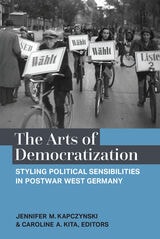
The Arts of Democratization
Styling Political Sensibilities in Postwar West GermanyJennifer M. Kapczynski and Caroline A. Kita, Editors
University of Michigan Press, 2022
These essays highlight the contradictory and competing impulses that ran through the project to democratize postwar society and cast a critical eye toward the internal biases that shaped the model of Western democracy. In so doing, the contributions probe critical questions that we continue to grapple with today. How did postwar thinkers understand what it meant to be democratic? Did they conceive of democratic subjectivity in terms of acts of participation, a set of beliefs or principles, or perhaps in terms of particular feelings or emotions? How did the work to define democracy and its subjects deploy notions of nation, race and gender or sexuality? As this book demonstrates, the case of West Germany offers compelling ways to think more broadly about the emergence of democracy. The Arts of Democratization offers lessons that resonate with the current moment as we consider what interventions may be necessary to resuscitate democracy today.

The Ashio Riot of 1907
A Social History of Mining in JapanKazuo Nimura, ed.
Duke University Press, 1997
Arguing against the spontaneous resistance theory that has long dominated Japanese social history accounts, Nimura traces the laborers’ unrest prior to the riots as well as the development of the event itself. Drawing from such varied sources as governmental records, media reports, and secret legal documents relating to the riot, Nimura discusses the active role of the metal mining workers’ trade organization and the stance taken by mine labor bosses. He examines how technological development transformed labor-management relations and details the common characteristics of the laborers who were involved in the riot movement. In the course of this historical analysis, Nimura takes on some of the most influential critical perspectives on Japanese social and labor history. This translation of Nimura’s prize-winning study—originally published in Japan—contains a preface by Andrew Gordon and an introduction and prologue written especially for this edition.

The Assassination of Paris
Louis Chevalier
University of Chicago Press, 1994
He describes an almost continual parade of garish and grandiose plans: some, like the destruction of the glorious marketplace of les Halles for him the heart of the city, were realized; others, like the superhighway along the left bank of the Seine, were bitterly and successfully resisted.
Almost twenty years later, we find it difficult to remember the city as it was. And while Paris looks to many much the way it always has, behind the carefully sandblasted stone and restored shop fronts is a city radically transformed—emptied of centuries of popular life; of entire neighborhoods and the communities they housed engineered out to desolate suburban slums. The battle over the soul and spirit of the city continues.
This book is not entirely about the loss of physical places. Or a romance about a world that never really was. It is a cautionary tale filled with lessons for all who struggle to protect the human scale, the diversity, and the welcoming public life that are the threatened gifts of all great cities.
The Assault on American Labor Law
Unions Before the Supreme Court, 1965–2025Roger C. Hartley
University of Massachusetts Press, 2025
Reviewing the dismantling of American labor law in more than 100 Supreme Court cases
The National Labor Relations Act (NLRA), signed into law by Franklin Delano Roosevelt in 1935, guarantees the right of private sector employees to organize into trade unions, engage in collective bargaining, and take collective action such as strikes. Since its passage, the NLRA has functioned as the foundational statute of United States labor law. Opposed by conservatives and members of the Republican Party from the beginning, its provisions were largely upheld by the Supreme Court until the 1960s. In the latter part of the twentieth century and into the twenty-first, however, the Court began to erode the protections of the NLRA. While some cases have received widespread attention from commentators and scholars, such as Starbucks Corp. v. McKinney (2024), there have been numerous detrimental rulings that are little discussed. Taken as a whole, the Supreme Court’s efforts to undermine the NLRA appear sustained and systematic.
In The Assault on American Labor Law, distinguished labor law professor Roger C. Hartley collects and carefully reviews every Supreme Court decision concerning the NLRA over the past sixty years. By examining approximately 100 cases, Hartley demonstrates that the Court has often operated more like a legislature than a judicial body, effectively amending the NLRA’s collectivist policy underpinnings in favor of the interests of individuals and businesses. These judicial decisions create staggering obstacles for American workers to collectively organize and force them to face globalization, deindustrialization, and technological change individually, without the negotiating leverage provided by union representation. While scholars have suggested individual reforms to re-establish the efficacy of the NLRA, Hartley’s thorough study illuminates how the current crisis in US labor law evolved—a comprehensive view that is necessary to help restore the rights of workers to unionize.
The Assembly Line
Robert Linhart
University of Massachusetts Press, 1981
The Athenian Experiment
Building an Imagined Political Community in Ancient Attica, 508-490 B.C.Greg Anderson
University of Michigan Press, 2003