Results by title
424 books match the query 'Russian & Soviet' and 105 start with t
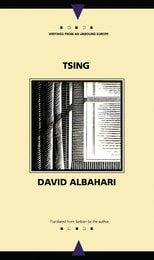
Tsing
David Albahari
Northwestern University Press, 1997
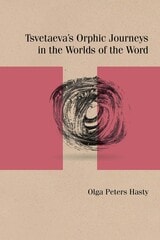
Tsvetaeva's Orphic Journeys in the Worlds of the Word
Olga Peters Hasty
Northwestern University Press, 1996
Tsvetaeva’s Orphic Journeys in the Worlds of the Word explores the rich theme of the myth of Orpheus as master narrative for poetic inspiration and creative survival in the life and work of Marina Tsvetaeva. Olga Peters Hasty establishes the basic themes of the Orphic Complex—the poet’s longing to mediate between the embodied physical world and an “elsewhere,” the poet’s inability to do so, the primacy of the voice over the visual world, the insistence on concrete imagery, the costs of the poet’s gift—and orders her arguments in the tragic shape of the Orpheus myth as it worked itself out organically in Tsvetaeva’s own life. Hasty delineates the connections between the Orpheus myth and other key mythological and literary figures in the poet’s life—including Alexander Blok, Anna Akhmatova, Alexander Pushkin, and Rainer Maria Rilke—to make an important and original critical contribution.
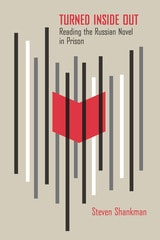
Turned Inside Out
Reading the Russian Novel in PrisonSteven Shankman
Northwestern University Press, 2017
Turned Inside Out will appeal to readers with interests in the classic novels of Russian literature, in prisons and pedagogy, or in Levinas and phenomenology. At a time when the humanities are struggling to justify the centrality of their mission in today’s colleges and universities, Steven Shankman by example makes an undeniably powerful case for the transformative power of reading great texts.
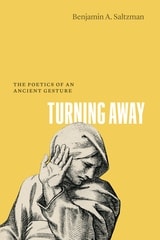
Turning Away
The Poetics of an Ancient GestureBenjamin A. Saltzman
University of Chicago Press, 2026
A sweeping account of how we are at our most human when we turn away from the pains of the world.
Why do we look away from the suffering of others? Why do we cover our faces in shame? Why do we lower our heads in grief? Few gestures are as universal as the averted gaze. Fewer still are as ambivalent and inscrutable. In this incisive study, Benjamin A. Saltzman reveals how the kaleidoscopic appearance of these gestures in art, poetry, and philosophy has turned them into an essential language for our uncomfortable engagements with the world, challenging us to reflect on the ways we fundamentally relate to others.
Into the horizon of contemporary discourse, Turning Away sets out from five influential scenes in which figures avert their gaze: Timanthes’s Sacrifice of Iphigenia, Plato’s Republic, Augustine’s Confessions, Christ’s Crucifixion, and the Fall and Expulsion of Adam and Eve. The gestures of aversion in these scenes refract across visual media, through philosophy and politics, into modernity and the present day, having been reimagined along the way by thinkers like Hannah Arendt, artists like Marc Chagall and Salvador Dalí, poets like Langston Hughes, and many others. Saltzman offers a timely critique of the privilege of turning away and of the too-easy condemnation of our tendencies to do so.
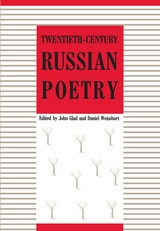
Twentieth-Century Russian Poetry
John Glad
University of Iowa Press, 1992
This celebrated anthology, first published in 1978 as Russian Poetry: The Modern Period, provides a much-needed panoramic overview of Russian poetry since the Bolshevik Revolution of 1917.
Major features of this collection include a new and expanded introduction, a substantial new section of glasnost-era poetry, a generous sampling of postrevolutionary poetry in Russia, full representation of poets of the first and second post-World War II generations, and poetry of the successive emigrations, flights, or expulsions from Russia.
Twentieth-Century Russian Poetry makes an important contribution to our continuing understanding of a changing world order. This anthology should be read by all those who wish to know more about the poetry of Russia, those interested in international cultural and literary history, and all Slavicists.