Results by title
1861 books match the query 'Social life and customs' and 358 start with t

The Edge of the Woods
Iroquoia, 1534-1701Jon Parmenter
Michigan State University Press, 2010
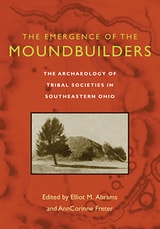
The Emergence of the Moundbuilders
The Archaeology of Tribal Societies in Southeastern OhioElliot M. Abrams
Ohio University Press, 2004
Native American societies, often viewed as unchanging, in fact experienced a rich process of cultural innovation in the millennia prior to recorded history. Societies of the Hocking River Valley in southeastern Ohio, part of the Ohio River Valley, created a tribal organization beginning about 2000 bc.
Edited by Elliot M. Abrams and AnnCorinne Freter, The Emergence of the Moundbuilders: The Archaeology of Tribal Societies in Southeastern Ohio presents the process of tribal formation and change in the region based on analyses of all available archaeological data from the Hocking River Valley. Drawing on the work of scholars in archaeology, anthropology, geography, geology, and botany, the collection addresses tribal society formation through such topics as the first pottery made in the valley, aggregate feasting by nomadic groups, the social context for burying their dead in earthen mounds, the formation of religious ceremonial centers, and the earliest adoption of corn.
Providing the most current research on indigenous societies in the Hocking Valley, The Emergence of the Moundbuilders is distinguished by its broad, comparative overview of tribal life.
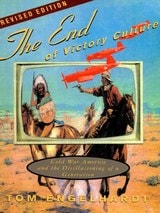
The End of Victory Culture
Cold War America and the Disillusioning of a GenerationThomas M. Engelhardt
University of Massachusetts Press, 2007
In a substantial new afterword to his classic account of the collapse of American triumphalism in the wake of World War II, Tom Engelhardt carries that story into the twenty-first century. He explores how, in the aftermath of September 11, 2001, the younger George Bush headed for the Wild West (Osama bin Laden, “Wanted, Dead or Alive”); how his administration brought “victory culture” roaring back as part of its Global War on Terror and its rush to invade Saddam Husseins's Iraq; and how, from its “Mission Accomplished” moment on, its various stories of triumph crashed and burned in that land.
The Entablo Manuscript
Water Rituals and Khipu Boards of San Pedro de Casta, PeruSarah Bennison
University of Texas Press, 2022
A unique study of an Andean community’s water rituals and the extraordinary document describing how they should be performed
In the dry season in the Andes, water from springs, lakes, reservoirs, and melting glaciers feeds irrigation canals that have sustained communities for thousands of years. Managing and maintaining these water infrastructures is essential, and in 1921, in the village of San Pedro de Casta, Peru, local authorities recorded their ritual canal-cleaning duties in a Spanish-language document called the Entablo. It is only the second book (along with the Huarochirí Manuscript) ever seen by scholars in which an Andean community explains its customs and ritual laws in its own words.
Sarah Bennison offers a critical introduction to the Entablo, a Spanish transcription of the document, and an English translation. Among its other revelations, the Entablo delves into the use of khipu boards, devices that meld the traditional knotted strings known as khipus with a written alphabet. Only in the Entablo do we learn that there were multiple khipu boards associated with a single canal-cleaning ritual, or that there were separate khipu records for men and women. The Entablo manuscript furnishes unparalleled insights into Andean rituals, religion, and community history at a historical moment when rural highland communities were changing rapidly.
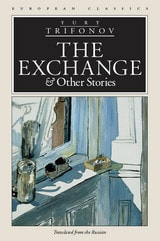
The Exchange and Other Stories
Yuri Trifonov
Northwestern University Press, 2002
Yury Trifonov took a turn toward the controversial, and a leap toward greatness, with the publication of the two novellas included in this collection. "The Exchange" and "The Long Goodbye" depict the complex dilemmas and compromises of Russian life after World War II. These works, along with the short stories "Games at Dusk" and "A Short Stay in the Torture Chamber," detail the moral and spiritual decline in Russia that resulted from the growing distance between the theoretical idealism of the Soviet state and the actual materialism and careerism that increasingly marked society.
The Exiles and Other Stories
By Horacio Quiroga
University of Texas Press, 1987
Tales of risk and danger, suffering, disease, horror, and death. Tales, also, of courage and dignity, hard work, and human endurance in the face of hostile nature and the frequent brutality of men. And tales flavored with piquant touches of humor and bemused irony.
These are the stories of the Uruguayan writer Horacio Quiroga, here presented in an important compilation of thirteen of his most compelling tales, sensitively selected and translated by J. David Danielson. Author of some two hundred pieces of fiction, often compared to the works of Kipling, Jack London, and Edgar Allan Poe, Quiroga set many of his stories in the territory of Misiones in northeastern Argentina, the subtropical jungle region where he spent much of his life.
Included here are stories from Los desterrados (1926) often said to be his best book, as well as others from Cuentos de amor de locura y de muerte (1917), Anaconda (1921), and El Desierto (1924). The publication of this selection marks the first appearance in English of all but two of the thirteen stories.
Quiroga here presents a wide range of characters: parents and children, servant girls and prostitutes, landowners and lumber barons, foremen and laborers, natives and immigrants, in stories pervaded by a vision of life that is elemental, incisive, and essentially tragic. The Exiles and Other Stories shows the versatility and skill that have made him a classic Spanish American writer. It complements and illumines The Decapitated Chicken and Other Stories, selected and translated by Margaret Sayers Peden, also published by the University of Texas Press.
The Farm at Holstein Dip
An Iowa BoyhoodCarroll Engelhardt
University of Iowa Press, 2012
Engelhardt brings us into the world of his fourth-generation farm family, who lived by the family- and faith-based work ethic and concern for respectability they had inherited from their German and Norwegian ancestors. His writing has a particularly Iowa flavor, a style that needs no definition to those who live in the state. Readers will discover the appeal of his wry, humorous, and kind observations and appreciate his well-informed perspective on these transformative American decades.
The Farm on Badger Creek
Memories of a Midwest GirlhoodPeggy Prilaman Marxen
Wisconsin Historical Society Press, 2021

The Feast of the Sorcerer
Practices of Consciousness and PowerBruce Kapferer
University of Chicago Press, 1997
Kapferer focuses on sorcery among Sinhalese Buddhists in Sri Lanka to explore how the art of sorcery is in fact deeply connected to social practices and lived experiences such as birth, death, sickness, and war. He describes in great detail the central ritual of exorcism, a study which opens up new avenues of thought that challenge anthropological approaches to such topics as the psychological forces of emotion and the dynamics of power. Overcoming both "orientalist" bias and postmodern permissiveness, Kapferer compellingly reframes sorcery as a pragmatic, conscious practice which, through its dynamic of destruction and creation, makes it possible for humans to reconstruct repeatedly their relation to the world.

The Fifty-Year Texas Road Trip
On Assignment from Earth to UncertainRandy Mallory
University of North Texas Press, 2025
The First New Chronicle and Good Government
On the History of the World and the Incas up to 1615By Felipe Guaman Poma de Ayala
University of Texas Press, 2009
One of the most fascinating books on pre-Columbian and early colonial Peru was written by a Peruvian Indian named Felipe Guaman Poma de Ayala. This book, The First New Chronicle and Good Government, covers pre-Inca times, various aspects of Inca culture, the Spanish conquest, and colonial times up to around 1615 when the manuscript was finished. Now housed in the Royal Library, Copenhagen, Denmark, and viewable online at www.kb.dk/permalink/2006/poma/info/en/frontpage.htm, the original manuscript has 1,189 pages accompanied by 398 full-page drawings that constitute the most accurate graphic depiction of Inca and colonial Peruvian material culture ever done.
Working from the original manuscript and consulting with fellow Quechua- and Spanish-language experts, Roland Hamilton here provides the most complete and authoritative English translation of approximately the first third of The First New Chronicle and Good Government. The sections included in this volume (pages 1–369 of the manuscript) cover the history of Peru from the earliest times and the lives of each of the Inca rulers and their wives, as well as a wealth of information about ordinances, age grades, the calendar, idols, sorcerers, burials, punishments, jails, songs, palaces, roads, storage houses, and government officials. One hundred forty-six of Guaman Poma's detailed illustrations amplify the text.
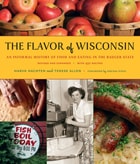
The Flavor of Wisconsin
An Informal History of Food and Eating in the Badger StateHarva Hachten
Wisconsin Historical Society Press, 2023
While in many ways the first edition of The Flavor of Wisconsin has stood the test of time very well, food-related culture and business have changed immensely in the twenty-five years since its publication. Well-known regional food expert and author Terese Allen examines aspects of food, cooking, and eating that have changed or emerged since the first edition, including the explosion of farmers' markets; organic farming and sustainability; the "slow food" movement; artisanal breads, dairy, herb growers, and the like; and how relatively recent immigrants have contributed to Wisconsin's remarkably rich food scene.
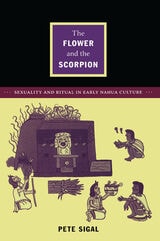
The Flower and the Scorpion
Sexuality and Ritual in Early Nahua CulturePete Sigal
Duke University Press, 2011

The Folklore and Folklife of New Jersey
David Steven Cohen
Rutgers University Press, 1983

The Food We Eat, the Stories We Tell
Contemporary Appalachian TablesElizabeth S. D. Engelhardt
Ohio University Press, 2019
Blue Ridge tacos, kimchi with soup beans and cornbread, family stories hiding in cookbook marginalia, African American mountain gardens—this wide-ranging anthology considers all these and more. Diverse contributors show us that contemporary Appalachian tables and the stories they hold offer new ways into understanding past, present, and future American food practices. The poets, scholars, fiction writers, journalists, and food professionals in these pages show us that what we eat gives a beautifully full picture of Appalachia, where it’s been, and where it’s going.
Contributors: Courtney Balestier, Jessie Blackburn, Karida L. Brown, Danille Elise Christensen, Annette Saunooke Clapsaddle, Michael Croley, Elizabeth S. D. Engelhardt, Robert Gipe, Suronda Gonzalez, Emily Hilliard, Rebecca Gayle Howell, Abigail Huggins, Erica Abrams Locklear, Ronni Lundy, George Ella Lyon, Jeff Mann, Daniel S. Margolies, William Schumann, Lora E. Smith, Emily Wallace, Crystal Wilkinson
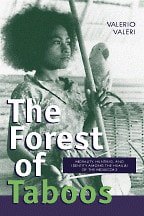
The Forest of Taboos
Morality, Hunting, and Identity among the Huaulu of the MoluccasValerio Valeri
University of Wisconsin Press, 2000
“The Forest of Taboos may be considered among the most important books ever written by an anthropologist. Valeri writes superbly, and this book makes a fundamental contribution to one of the most central lines of thought in twentieth-century anthropology. He shows that taboo is finally comprehensible.”—John Stephen Lansing, University of Michigan
“The Forest of Taboos is no conventional ethnography, more an extended meditative essay on its subject, erudite, rich in ideas and data, wide-ranging in its theoretical inspiration, and self-consciously literary in form. It is a fitting memorial to an author whose life was so tragically cut short.”—Roy Ellen, University of Kent at Canterbury
This eloquent and profound book, completed by Valerio Valeri shortly before his death in 1998, contends that the ambivalence felt by all humans about sex, death, and eating other animals can be explained by a set of coordinated principles that are expressed in taboos. In elegant prose, Valeri evokes the world of the Huaulu, forest hunters of Indonesia. The hidden attractions of the animal world, which invades the human world in perilous ways, he shows, also delineate that which the Huaulu regard as most human about themselves.
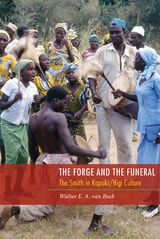
The Forge and the Funeral
The Smith in Kapsiki/Higi CultureWalter E. A. van Beek
Michigan State University Press, 2015
The Garden in Which I Walk
Karen Brennan
University of Alabama Press, 2004
The Genealogical Imagination
Two Studies of Life over TimeMichael Jackson
Duke University Press, 2021
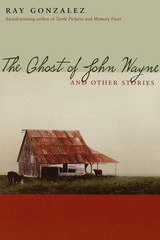
The Ghost of John Wayne
and Other StoriesRay Gonzalez
University of Arizona Press, 2001
The vast Texas borderland is a place divided, a land of legends and lies, sanctification and sinfulness, history and amnesia, haunted by the ghosts of the oppressed and the forgotten, who still stir beneath the parched fields and shimmering blacktops. It is a realm filled with scorpion eaters and mescal drinkers, cowboys and Indians, Anglos and Chicanos, spirit horses and beat-up pickups, brujos and putas, aching passion and seething rage, apparitions of the Virgin and bodies in the Rio Grande.
In his first collection of short fiction, award-winning poet, editor, and anthologist Ray Gonzalez powerfully evokes both the mystery and the reality of the El Paso border country where he came to manhood.
Here, in a riverbed filled with junked cars and old bones, a young boy is given a dark vision of a fiery future. Under the stones of the Alamo, amid the gift shops and tour buses, the wraiths of fallen soldiers cry out to be remembered. By an ancient burial site at the bottom of a hidden canyon, two lovers come face to face with their own dreams and fears.
In these stories, Ray Gonzalez is a literary alchemist, blending contemporary culture with ancient tradition to give a new voice to the peoples of the border.
The Gift in Sixteenth-Century France
Natalie Zemon Davis
University of Wisconsin Press, 2000
Must a gift be given freely? How can we tell a gift from a bribe? Are gifts always a part of human relations—or do they lose their power and importance once the market takes hold and puts a price on every exchange? These questions are central to our sense of social relations past and present, and they are at the heart of this book by one of our most interesting and renowned historians.
In a wide-ranging look at gift giving in early modern France, Natalie Zemon Davis reveals the ways that gift exchange is crucial to understanding alliance and conflict in family life, economic relations, politics, and religion. Moving from the king’s bounty to the beggar’s alms, her book explores the modes and meanings of gift giving in every corner of sixteenth-century French society. In doing so, it arrives at a new way of considering gifts—what Davis calls "the gift register"—as a permanent feature of social relations over time. Gift giving, with its own justifications and forms in different periods, can create amity or lead to quarrels and trouble. It mixes the voluntary and the obligatory, with interested bribery at one extreme and inspired gratuitousness at the other.
Examining gifts both ethnographically (through archives, letters, and other texts) and culturally (through literary, ethical, and religious sources), Davis shows how coercive features in family life and politics, rather than competition from the market, disrupted the gift system. This intriguing book suggests that examining the significance of gifts can not only help us to understand social relations in the past, but teach us to deal graciously with each other in the present.

The Girls' History and Culture Reader
The Nineteenth CenturyEdited by Miriam Forman-Brunell and Leslie Paris
University of Illinois Press, 2011

The Girls' History and Culture Reader
The Twentieth CenturyEdited by Miriam Forman-Brunell and Leslie Paris
University of Illinois Press, 2011
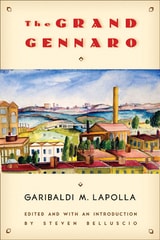
The Grand Gennaro
Belluscio, Steven
Rutgers University Press, 2009
The Grand Gennaro, a riveting saga set at the turn of the last century in Italian American Harlem, reflects on how youthful acts of cruelty and desperation follow many to the grave. A classic in the truest sense, this operatic narrative is alive once again, addressing the question: How does one become an "American"?

The Grasinski Girls
The Choices They Had and the Choices They MadeMary Patrice Erdmans
Ohio University Press, 2004
The Grasinski Girls were working-class Americans of Polish descent, born in the 1920s and 1930s, who created lives typical of women in their day. They went to high school, married, and had children. For the most part, they stayed home to raise their children. And they were happy doing that. They took care of their appearance and their husbands, who took care of them. Like most women of their generation, they did not join the women’s movement, and today they either reject or shy away from feminism.
Basing her account on interviews with her mother and aunts, Mary Erdmans explores the private lives of these white, Christian women in the post-World War II generation. She compares them, at times, to her own postfeminist generation. Situating these women within the religious routines that shaped their lives, Professor Erdmans explores how gender, class, ethnicity, and religion shaped the choices the Grasinski sisters were given as well as the choices they made. These women are both acted upon and actors; they are privileged and disadvantaged; they resist and surrender; they petition the Lord and accept His will.
The Grasinski Girls examines the complexity of ordinary lives, exposing privileges taken for granted as well as nuances of oppression often overlooked. Erdmans brings rigorous scholarship and familial insight to bear on the realities of twentieth-century working-class white women in America.
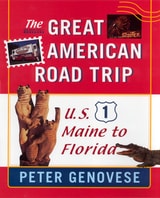
The Great American Road Trip
U.S. 1, Maine to FloridaGenovese, Peter
Rutgers University Press, 1999
Take an unforgettable road trip down one of America’s most fascinating highways, U.S.
On what highway can you find the headquarters of the FBI, Dow Jones Interactive, and the National Enquirer? What road is home to the Bronx Zoo, the Okefenokee Swamp, and Flipper? On the side of what freeway can you find the Super Duper Weenie Wagon, Larry’s Redneck Bar, and the Big Chicken Barn? Peter Genovese found them all, along with about a million other fascinating and bizarre attractions, on U.S. 1, ‘the best damn highway in America,” as he calls it. Join him for the road trip of a lifetime The Great American Road Trip: A Journey Down U.S. 1.
U.S. 1 may not be America’s scenic highway, but it’s certainly the most colorful. It runs through Boston, New York, Baltimore, Washington, D.C., and Miami, in addition to Caribou, Maine, Quonochontaug, Rhode Island, and Alma, Georgia. It zig-zags along the wild and beautiful Maine coast and soars over the Atlantic Ocean as the Overseas Highway, one of the most spectacular stretches of road anywhere. The Star-Spangled Banner is on U.S. 1. Madonna lived on U.S. 1 (until she sold her house to Rosie O'Donnell). U.S. 1 is Main Street and the Miracle Mile, two-lane blacktop and six-lane expressway, straight as an arrow in some places and twistier than a Philadelphia soft pretzel in others.
Genovese spent two years on U.S. 1, talking to everyone from doughnut makers, dolphin trainers, and swamp guides to real Miami vice cops and the keeper of the national parasite collection. His resulting book is the most complete portrait of an American highway ever written. With his unerring eye for detail, sense of humor, and understanding of human nature, Genovese takes readers on a sometimes funny, sometimes sad, always illuminating 2,450-mile journey from Fort Kent, Maine to Key West, Florida.
Ride along with Genovese and grab a drink at the Last Resort Bar or the Last Chance Saloon, then pick up a paperback at the Banned Bookstore. Visit Oscar, the biggest gator in the Okefenokee Swamp, have dinner at Hog Heaven, and take in a Portland Seadogs baseball game. Tour a Budweiser brewery and go into the pit at a NASCAR race. Looking for someplace to stay? How about the world’s only underwater hotel, the Jules’ Undersea Lodge, or in a cabin made entirely from one pine tree at the Maine Idyll Motor Court? If it’s culture you seek, the highway boasts dozens of museums. While you may have heard of the Museum of Natural History and the National Museum of American Art, how about the Blacks in Wax Museum, Tragedy in the United States Museum, and the Mushroom Museum? There’s something for everyone on U.S. 1, and Genovese has written about it all in The Great American Road Trip.

The Greeks
Edited by Jean-Pierre Vernant
University of Chicago Press, 1995
The Greeks offers the most complete portraits available of typical Greek personages from Athens to Sparta, Arcadia, Thessaly and Epirus to the city-states of Asia Minor, to the colonies of the Black Sea, southern Italy, and Sicily. Looking at the citizen, the religious believer, the soldier, the servant, the peasant, and others, they show what—in the Greek relationships with the divine, with nature, with others, and with the self—made him "different" in his ways of acting, thinking, and feeling.
The contributors to this volume are Jean-Pierre Vernant, Claude Mosse, Yvon Garlan, Giuseppe Cambiano, Luciano Canfora, James Redfield, Charles Segal, Oswyn Murray, Mario Vegetti, and Philippe Borgeaud.
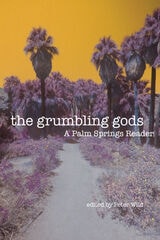
The Grumbling Gods
A Palm Springs ReaderPeter Wild
University of Utah Press, 2007
The Grumbling Gods surveys the history and allure of Palm Springs, beginning with the Cahuilla Indians, the first historical residents of the region. It includes accounts from the early explorers, a report of mysterious shipwrecks amidst the sand dunes, and selections from the grimly rollicking writings of Raymond Chandler. It penetrates the tinsel of casinos and the placidity of gated golf communities to reveal the painful beauty of deserts and mountains under assault.
Francisco Patencio, the last of the traditional Cahuilla Indians, warned his white neighbors to be careful, that the grim gods inhabiting the canyons around Palm Springs were angry. It is their grumbling, at once chilling and prophetic, and yet sometimes humorous, that we hear from the pages of this book.

The Gudge Creek and Wad Chronicles
Richard Allin
University of Arkansas Press, 1989
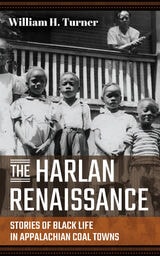
The Harlan Renaissance
Stories of Black Life in Appalachian Coal TownsWilliam H. Turner
West Virginia University Press, 2021
The Harlan Renaissance is an intimate remembrance of kinship and community in eastern Kentucky’s coal towns written by one of the luminaries of Appalachian studies, William Turner. Turner reconstructs Black life in the company towns in and around Harlan County during coal’s final postwar boom years, which built toward an enduring bust as the children of Black miners, like the author, left the region in search of better opportunities.
The Harlan Renaissance invites readers into what might be an unfamiliar Appalachia: one studded by large and vibrant Black communities, where families took the pulse of the nation through magazines like Jet and Ebony and through the news that traveled within Black churches, schools, and restaurants. Difficult choices for the future were made as parents considered the unpredictable nature of Appalachia’s economic realities alongside the unpredictable nature of a national movement toward civil rights.
Unfolding through layers of sociological insight and oral history, The Harlan Renaissance centers the sympathetic perspectives and critical eye of a master narrator of Black life.
The Heart of Things
A Midwestern AlmanacJohn Hildebrand
Wisconsin Historical Society Press, 2014
In this remarkable book of days, John Hildebrand charts the overlapping rings—home, town, countryside—of life in the Midwest. Like E. B. White, Hildebrand locates the humor and drama in ordinary life: church suppers, Friday night football, outdoor weddings, garden compost, family reunions, roadside memorials, camouflage clothing. In these wry, sharply observed essays, the Midwest isn’t The Land Time Forgot but a more complicated (and vastly more interesting) place where the good life awaits once we figure exactly out what it means. From his home range in northwestern Wisconsin, Hildebrand attempts to do just that by boiling down a calendar year to its rich marrow of weather, animals, family, home—in other words, all the things that matter.
The Heroic City
Paris, 1945-1958Rosemary Wakeman
University of Chicago Press, 2009
The Heroic City is a sparkling account of the fate of Paris’s public spaces in the years following Nazi occupation and joyful liberation. Countering the traditional narrative that Paris’s public landscape became sterile and dehumanized in the 1940s and ’50s, Rosemary Wakeman instead finds that the city’s streets overflowed with ritual, drama, and spectacle. With frequent strikes and protests, young people and students on parade, North Africans arriving in the capital of the French empire, and radio and television shows broadcast live from the streets, Paris continued to be vital terrain.
Wakeman analyzes the public life of the city from a variety of perspectives. A reemergence of traditional customs led to the return of festivals, street dances, and fun fairs, while violent protests and political marches, the housing crisis, and the struggle over decolonization signaled the political realities of postwar France. The work of urban planners and architects, the output of filmmakers and intellectuals, and the day-to-day experiences of residents from all walks of life come together in this vibrant portrait of a flamboyant and transformative moment in the life of the City of Light.
The Hidden History of Capoeira
A Collision of Cultures in the Brazilian Battle DanceBy Maya Talmon-Chvaicer
University of Texas Press, 2007
Capoeira, a Brazilian battle dance and national sport, has become popular all over the world. First brought to Brazil by African slaves and first documented in the late eighteenth century, capoeira has undergone many transformations as it has diffused throughout Brazilian society and beyond, taking on a multiplicity of meanings for those who participate in it and for the societies in which it is practiced. In this book, Maya Talmon-Chvaicer combines cultural history with anthropological research to offer an in-depth study of the development and meaning of capoeira, starting with the African cultures in which it originated and continuing up to the present day.
Using a wealth of primary sources, Talmon-Chvaicer analyzes the outlooks on life, symbols, and rituals of the three major cultures that inspired capoeira—the Congolese (the historic area known today as Congo-Angola), the Yoruban, and the Catholic Portuguese cultures. As she traces the evolution of capoeira through successive historical eras, Talmon-Chvaicer maintains a dual perspective, depicting capoeira as it was experienced, observed, and understood by both Europeans and Africans, as well as by their descendants. This dual perspective uncovers many covert aspects of capoeira that have been repressed by the dominant Brazilian culture.
This rich study reclaims the African origins and meanings of capoeira, while also acknowledging the many ways in which Catholic-Christian culture has contributed to it. The book will be fascinating reading not only for scholars but also for capoeira participants who may not know the deeper spiritual meanings of the customs, amulets, and rituals of this jogo da vida, "game of life."
The History Of The Comstock Lode
Grant H. Smith
University of Nevada Press, 1998
The History of the Incas
By Pedro Sarmiento de Gamboa
University of Texas Press, 2007
The History of the Incas may be the best description of Inca life and mythology to survive Spanish colonization of Peru. Pedro Sarmiento de Gamboa, a well-educated sea captain and cosmographer of the viceroyalty, wrote the document in Cuzco, the capital of the Inca Empire, just forty years after the arrival of the first Spaniards. The royal sponsorship of the work guaranteed Sarmiento direct access to the highest Spanish officials in Cuzco. It allowed him to summon influential Incas, especially those who had witnessed the fall of the Empire. Sarmiento also traveled widely and interviewed numerous local lords (curacas), as well as surviving members of the royal Inca families. Once completed, in an unprecedented effort to establish the authenticity of the work, Sarmiento's manuscript was read, chapter by chapter, to forty-two indigenous authorities for commentary and correction.
The scholars behind this new edition (the first to be published in English since 1907) went to similarly great lengths in pursuit of accuracy. Translators Brian Bauer and Vania Smith used an early transcript and, in some instances, the original document to create the text. Bauer and Jean-Jacques Decoster's introduction lays bare the biases Sarmiento incorporated into his writing. It also theorizes what sources, in addition to his extensive interviews, Sarmiento relied upon to produce his history. Finally, more than sixty new illustrations enliven this historically invaluable document of life in the ancient Andes.
The Inconstancy of the Indian Soul
The Encounter of Catholics and Cannibals in 16-century BrazilEduardo Viveiros de Castro
Prickly Paradigm Press, 2011
In the mid-sixteenth century, Jesuit missionaries working in what is now Brazil were struck by what they called the inconstancy of the people they met, the indigenous Tupi-speaking tribes of the Atlantic coast. Though the Indians appeared eager to receive the Gospel, they also had a tendency to forget the missionaries’ lessons and “revert” to their natural state of war, cannibalism, and polygamy. This peculiar mixture of acceptance and rejection, compulsion and forgetfulness was incorrectly understood by the priests as a sign of the natives’ incapacity to believe in anything durably.
In this pamphlet, world-renowned Brazilian anthropologist Eduardo Viveiros de Castro situates the Jesuit missionaries’ accounts of the Tupi people in historical perspective, and in the process draws out some startling and insightful implications of their perceived inconstancy in relation to anthropological debates on culture and religion.
The Inconvenient Indian
A Curious Account of Native People in North AmericaThomas King
University of Minnesota Press, 2013
In The Inconvenient Indian, Thomas King offers a deeply knowing, darkly funny, unabashedly opinionated, and utterly unconventional account of Indian–White relations in North America since initial contact. Ranging freely across the centuries and the Canada–U.S. border, King debunks fabricated stories of Indian savagery and White heroism, takes an oblique look at Indians (and cowboys) in film and popular culture, wrestles with the history of Native American resistance and his own experiences as a Native rights activist, and articulates a profound, revolutionary understanding of the cumulative effects of ever-shifting laws and treaties on Native peoples and lands.
Suffused with wit, anger, perception, and wisdom, The Inconvenient Indian is at once an engaging chronicle and a devastating subversion of history, insightfully distilling what it means to be “Indian” in North America. It is a critical and personal meditation that sees Native American history not as a straight line but rather as a circle in which the same absurd, tragic dynamics are played out over and over again. At the heart of the dysfunctional relationship between Indians and Whites, King writes, is land: “The issue has always been land.” With that insight, the history inflicted on the indigenous peoples of North America—broken treaties, forced removals, genocidal violence, and racist stereotypes—sharpens into focus. Both timeless and timely, The Inconvenient Indian ultimately rejects the pessimism and cynicism with which Natives and Whites regard one another to chart a new and just way forward for Indians and non-Indians alike.
The Indians of Hungry Hollow
Bill Dunlop and Marcia Fountain-Blacklidge
University of Michigan Press, 2004
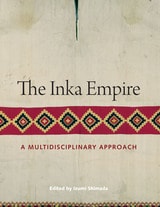
The Inka Empire
A Multidisciplinary ApproachEdited by Izumi Shimada
University of Texas Press, 2015
Massive yet elegantly executed masonry architecture and andenes (agricultural terraces) set against majestic and seemingly boundless Andean landscapes, roads built in defiance of rugged terrains, and fine textiles with orderly geometric designs—all were created within the largest political system in the ancient New World, a system headed, paradoxically, by a single, small minority group without wheeled vehicles, markets, or a writing system, the Inka. For some 130 years (ca. A.D. 1400 to 1533), the Inka ruled over at least eighty-six ethnic groups in an empire that encompassed about 2 million square kilometers, from the northernmost region of the Ecuador–Colombia border to northwest Argentina.
The Inka Empire brings together leading international scholars from many complementary disciplines, including human genetics, linguistics, textile and architectural studies, ethnohistory, and archaeology, to present a state-of-the-art, holistic, and in-depth vision of the Inkas. The contributors provide the latest data and understandings of the political, demographic, and linguistic evolution of the Inkas, from the formative era prior to their political ascendancy to their post-conquest transformation. The scholars also offer an updated vision of the unity, diversity, and essence of the material, organizational, and symbolic-ideological features of the Inka Empire. As a whole, The Inka Empire demonstrates the necessity and value of a multidisciplinary approach that incorporates the insights of fields beyond archaeology and ethnohistory. And with essays by scholars from seven countries, it reflects the cosmopolitanism that has characterized Inka studies ever since its beginnings in the nineteenth century.
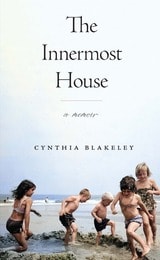
The Innermost House
A MemoirCynthia Blakeley
University of Massachusetts Press, 2024
Finalist, 2025 Georgia Author of the Year Award in Memoir
A stunning account of year-round life on the windswept shores of Cape Cod, threaded with meditations on memory, forgetting, and identity
Raised in a nineteenth-century saltbox house in Wellfleet, Massachusetts, Cynthia Blakeley was both surrounded by generations of immediate and extended family and isolated by the mysteries locked inside her affectionate yet elusive mother and short-fused father. While she and her sisters and cousins roamed the Outer Cape—drinking in the dunes, swimming in kettle ponds, and dancing in Provincetown—Blakeley also turned to the inner world of her journals as she contended with her own secrets and memories.
Over-identifying with her unconventional and artistic mother, Blakeley felt certain that the key to understanding her mother’s drinking and distractions, her generosity and easy forgiveness, was the unexplained absence of two of Blakeley’s half-siblings and their connection to her mother’s unhappy first marriage. Blakeley kept her distance, however, from her disciplinarian father. Though he took his daughters sailing and clamming and beachcombing, he was the chill to their mother’s warmth, the maker, not the breaker, of rules. Slipping through these dynamics in that small house and evocative landscape, Blakeley eventually crossed the bridge and left home, only to return later in search of the family stories that would help her decode her present.
Blakeley’s captivating memoir moves fluidly through time, grappling with the question of who owns a memory or secret and how our narrative choices not only describe but also shape and change us. In this insightful and poignant account of tenacious year-rounders on Cape Cod, Blakeley contends that making sense of ourselves is a collaborative affair, one that begins with understanding those we came from.

The Intestines of the State
Youth, Violence, and Belated Histories in the Cameroon GrassfieldsNicolas Argenti
University of Chicago Press, 2007
Beginning his study with a political analysis of youth in the Grassfields from the eighteenth century to the present, Argenti pays special attention to the repeated violent revolts staged by young victims of political oppression. He then combines this history with extensive ethnographic fieldwork in the Oku chiefdom, discovering that the specter of past violence lives on in the masked dance performances that have earned intense devotion from today’s youth. Argenti contends that by evoking the imagery of past cataclysmic events, these masquerades allow young Oku men and women to address the inequities they face in their relations with elders and state authorities today.
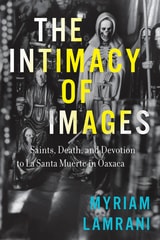
The Intimacy of Images
Saints, Death, and Devotion to La Santa Muerte in OaxacaMyriam Lamrani
University of Texas Press, 2024
2026 Edie Turner First Book Prize in Ethnographic Writing, Society for Humanistic Anthropology
La Santa Muerte becomes a lens for understanding how Oaxacans relate to saints, loved ones, and other “special dead.”
In Oaxaca, images of saints and loved ones, as well as of victims of political or criminal violence, are seemingly everywhere. While Oaxacans relate to all sorts of “special dead,” they are particularly devoted to La Santa Muerte (Saint Death), a female reaper-like figure whose popularity has risen in tandem with violence throughout Mexico.
The Intimacy of Images recontextualizes Oaxacans’ relationships with their “special dead” through the lens of La Santa Muerte, examining how devotees closely interact with what Lamrani terms “intimate images”: not only devotional effigies but also photographs, films, tattoos, and murals, and even dreams and visions. Though Mexicans have a well-known cultural familiarity with death, Lamrani argues that devotion to La Santa Muerte builds upon this intimacy even as it also participates in the production of terror and reflects political and criminal violence. Ultimately, Lamrani finds that these human-image interactions represent more than Catholic devotion; they reveal the secrets of Oaxacan political, religious, and social life, embody changing relationships to mortality and violence, and even offer insight into the practice of anthropology itself.
The Intimate Frontier
Friendship and Civil Society in Northern New SpainIgnacio Martínez
University of Arizona Press, 2019
Spaniards living in the isolated borderlands region of colonial Sonora were keen to develop an ideologically relevant and socially acceptable form of friendship with Indigenous people that could act as a functional substitute for civil law and governance, thereby regulating Native behavior. But as frontier society grew in complexity and sophistication, Indigenous and mixed-raced people also used the language of friendship and the performance of emotion for their respective purposes, in the process becoming skilled negotiators to meet their own best interests.
In northern New Spain, friendships were sincere and authentic when they had to be and cunningly malleable when the circumstances demanded it. The tenuous origins of civil society thus developed within this highly contentious social laboratory in which friendships (authentic and feigned) set the social and ideological parameters for conflict and cooperation. Far from the coffee houses of Restoration London or the lecture halls of the Republic of Letters, the civil society illuminated by Martínez stumbled forward amid the ambiguities and contradictions of colonialism and the obstacles posed by the isolation and violence of the Sonoran Desert.
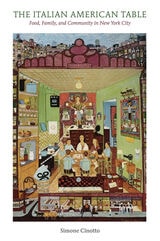
The Italian American Table
Food, Family, and Community in New York CitySimone Cinotto
University of Illinois Press, 2013
Looking at the historic Italian American community of East Harlem in the 1920s and 30s, Simone Cinotto recreates the bustling world of Italian life in New York City and demonstrates how food was at the center of the lives of immigrants and their children. From generational conflicts resolved around the family table to a vibrant food-based economy of ethnic producers, importers, and restaurateurs, food was essential to the creation of an Italian American identity. Italian American foods offered not only sustenance but also powerful narratives of community and difference, tradition and innovation as immigrants made their way through a city divided by class conflict, ethnic hostility, and racialized inequalities.

The Jaguar and the Priest
An Ethnography of Tzeltal SoulsBy Pedro Pitarch
University of Texas Press, 2010
In contrast to western notions of the soul as the essence or most native part of a human being, the Tzeltal-speaking Indians of Chiapas, Mexico, regard the soul first and foremost as an Other. Made up of beings that personify the antithesis of their native selves—animals such as hummingbirds or jaguars, atmospheric phenomena like lightning bolts or rainbows, or spirits of European appearance such as Catholic priests or evangelical musicians—Tzeltal souls represent the maximum expression of that which is alien. And because their souls enfold that which is outside and Other, the Tzeltal contain within themselves the history of their relationship with Europeans from the beginning of the Spanish conquest to the present time. Thus, to understand the Indian self opens a window into the Tzeltal conception of culture and community, their notions of identity and alterity, and their interpretation of interethnic relations and types of historical memory.
In this pathfinding ethnography, which was originally published in Spanish in 1996 as Ch'ulel: una etnografía de las almas tzeltales and is now extensively rewritten and amplified in English, Pedro Pitarch offers a new understanding of indigenous concepts of the soul, personhood, and historical memory in highland Chiapas. Exploring numerous aspects of indigenous culture and history—medicine and shamanism, geography and cosmology, and politics and kinship among them—he engages in a radical rethinking of classic issues in Mesoamerican anthropology, such as ethnicity and alterity, community and tradition, and change and permanence.
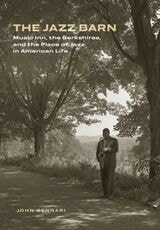
The Jazz Barn
Music Inn, the Berkshires, and the Place of Jazz in American LifeJohn Gennari
Brandeis University Press, 2025
This is a book about what happened in the 1950s in a barn, an icehouse, and a greenhouse in the verdant Berkshire Hills of western Massachusetts. Against the backdrop of McCarthyism, the civil rights movement, the expansion of the Afro-Caribbean diaspora, and postwar cultural tourism, two New Yorkers bought part of a sprawling estate in Lenox, where they converted an old barn and other outbuildings into an inn that could host musical performances and seminars. The Berkshire Music Barn went on to host jazz greats like Duke Ellington, Dave Brubeck, and Billie Holiday, as well as jazz roundtables grounded in folkloric approaches to the music.
The Jazz Barn explores the cultural significance of venues like the Berkshire Music Barn and later the Lenox School of Jazz to tell a surprising story about race, culture, and place. John Gennari explores how a predominantly white New England town became a haven for African American musicians, and reveals the Berkshires as an important incubator not just of American literature and classical music but also of the Modern Jazz Quartet and Ornette Coleman’s “new thing.” The Berkshire Music Barn became a crucial space for the mainstreaming of jazz. By the late 1950s, the School of Jazz was an epicenter of the genre’s avant-garde.
Richly illustrated with the photographs of Clemens Kalischer among others, The Jazz Barn demonstrates that the locations where jazz is played and heard indelibly shape the music and its meanings.
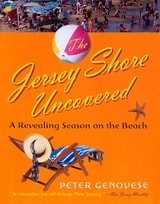
The Jersey Shore Uncovered
A Revealing Season on the BeachGenovese, Peter
Rutgers University Press, 2003
This is not your typical Jersey Shore book.
Yes, you'll find the obvious-beaches and boardwalks, lifeguards and lighthouses, fishing and food. But Peter Genovese will also take you off the beaten track for an insider's look at this famous (and infamous) 127-mile stretch from Sandy Hook to Cape May.
Birders, tiki hut builders, beach cleaners, wheel-of-chance operators, she-crab soup makers-they're all here. You'll check out an Airstream-only trailer park and visit a Point Pleasant Beach house where the music of Frank Sinatra plays nearly 24/7. Genovese will introduce you to the owner of the Stone Pony and to participants at the grueling Atlantic City Around-the-Island Swim as they describe their battles with tides, exhaustion, and face-stinging jellyfish. All of that, plus you'll find out why Ocean Grove residents write their names on their flowerpots.
Beach reading just doesn't get any better than this.
Spend a summer with Peter Genovese as he chronicles a typical wild and wacky, kitschy and classy season along the New Jersey coastline.
Lifeguards, surfers, beachgoers, birders, ice cream vendors, seashell sellers, banner pilots-they're all here. You'll be on the scene when Atlantic City's mayor officially begins summer by "unlocking the ocean," get a whiff of the state barbeque championship, watch the nation's longest-running all-women lifeguard competition, and even spend a weekend, Survivor-style, on a Barnegat Bay island.
The Ocean City Baby Parade, Clownfest, the state's hottest bikini contest, and the World Series of Surf Fishing are all covered. You'll also meet the folks at the Diamondback Terrapin Conservation Project, the Cape May Migratory Bird Refuge, and the Marine Mammal Stranding Center.
Genovese introduces you to Little Miss Chaos and the King of Corn, the Jersey Shore Hot Dog Queen, and Lucky Leo. You'll go on patrol with the New Jersey State Marine Police, meet the man behind Big Mike's E-Z Bail Bonds, and find salvation at the Boardwalk Chapel.
The Jersey Shore Uncovered flawlessly depicts the timeless allure of New Jersey beach culture. Along with his stories, Genovese brings readers hundreds of color and black-and-white photos that brilliantly capture exactly what makes this 127-mile stretch of shoreline unique. Whether you've never been to a New Jersey beach or you're a Jersey native who spends your summers "down the Shore," you're certain to learn a thing or two from this book. So get settled in your beach chair, put on some suntan lotion, and enjoy.
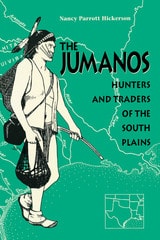
The Jumanos
Hunters and Traders of the South PlainsBy Nancy Parrott Hickerson
University of Texas Press, 1994
In the late sixteenth century, Spanish explorers described encounters with North American people they called "Jumanos." Although widespread contact with Jumanos is evident in accounts of exploration and colonization in New Mexico, Texas, and adjacent regions, their scattered distribution and scant documentation have led to long-standing disagreements: was "Jumano" simply a generic name loosely applied to a number of tribes, or were they an authentic, vanished people?
In the first full-length study of the Jumanos, anthropologist Nancy Hickerson proposes that they were indeed a distinctive tribe, their wide travel pattern linked over well-established itineraries. Drawing on extensive primary sources, Hickerson also explores their crucial role as traders in a network extending from the Rio Grande to the Caddoan tribes' confederacies of East Texas and Oklahoma.
Hickerson further concludes that the Jumanos eventually became agents for the Spanish colonies, drafted as mercenary fighters and intelligence-gatherers. Her findings reinterpret the cultural history of the South Plains region, bridging numerous gaps in the area's comprehensive history and in the chronicle of these elusive people.
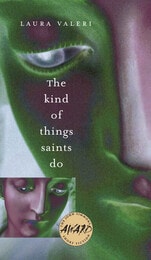
The Kind of Things Saints Do
Laura Valeri
University of Iowa Press, 2002
These stories grow through subtle shifts—the bad becomes not so bad, the worst livable. It is the saintly moments of unexpected understanding that shape the collection: one gigolo's lover picks up another at a bus stop and they agree on his worthlessness, the love-worn man reminds the newly divorced woman of her physical power, the estranged son shelters his father from an unexpected storm.
Valeri navigates the reader through the bones and scars of those who ache with wanting something else and become a little older and a little wiser for it. The Kind of Things Saints Do is a collection of human imperfections and missed connections that grows into a kaleidoscope of aspiration and hope.

The Kinks
Songs of the Semi-DetachedMark Doyle
Reaktion Books, 2020