Results by title
1214 books match the query 'Subjects & Themes' and 227 start with t
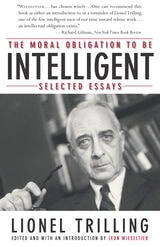
The Moral Obligation to Be Intelligent
Selected EssaysLionel Trilling
Northwestern University Press, 2009
Bringing together the thoughts of one of American literature’s sharpest cultural critics, this compendium will open the eyes of a whole new audience to the work of Lionel Trilling. Trilling was a strenuous thinker who was proud to think “too much.” As an intellectual he did not spare his own kind, and though he did not consider himself a rationalist, he was grounded in the world.
This collection features 32 of Trilling’s essays on a range of topics, from Jane Austen to George Orwell and from the Kinsey Report to Lolita. Also included are Trilling’s seminal essays “Art and Neurosis” and “Manners, Morals, and the Novel.” Many of the pieces made their initial appearances in periodicals such as The Partisan Review and Commentary; most were later reprinted in essay collections. This new gathering of his writings demonstrates again Trilling’s patient, thorough style. Considering “the problems of life”—in art, literature, culture, and intellectual life—was, to him, a vital occupation, even if he did not expect to get anything as simple or encouraging as “answers.” The intellectual journey was the true goal.
No matter the subject, Trilling’s arguments come together easily, as if constructing complicated defenses and attacks were singularly simple for his well-honed mind. The more he wrote on a subject and the more intricate his reasoning, the more clear that subject became; his elaboration is all function and no filler. Wrestling with Trilling’s challenging work still yields rewards today, his ideas speaking to issues that transcend decades and even centuries.
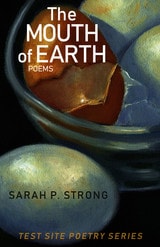
The Mouth of Earth
PoemsSarah P. Strong
University of Nevada Press, 2020
The Mouth of Earth serves as both a survival guide for those seeking connection with our planet and one another as well as a compassionate tribute to what we have lost or are losing—the human consequences of such destruction in a time of climate crisis and lost connectivity. Strong’s powerful poems offer us, if not consolation, at least a way toward comprehension in an age of loss, revealing both our ongoing denial of our planet’s fragility and the compelling urgency of our hunger for connection with all life.
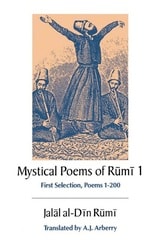
The Mystical Poems of Rumi 1
Jalal al-Din Rumi
University of Chicago Press, 1974
"An excellent introduction to Rumi, the greatest mystical poet of Islam. . . . Rumi's scope, like that of all great poets, is universal—reaching from sensuous luxuriance to the driest irony."—Sherman Goldman, East-West Journal
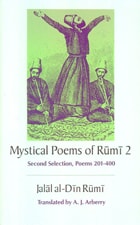
The Mystical Poems of Rumi 2
Second Selection, Poems 201-400Jalal al-Din Rumi
University of Chicago Press, 1991
Rumi, who wrote and preached in Persia during the thirteenth century, is one of history’s most celebrated mystics. His vast body of poetry includes a lengthy epic of religious mysticism, the Mathnavi, and more than three thousand lyrics and odes. A. J. Arberry, who selected four hundred of the lyrics for translation, calls Rumi "one of the world's greatest poets. In profundity of thought, inventiveness of image, and triumphant mastery of language, he stands out as the supreme genius of Islamic mysticism." Arberry’s authoritative translation is one of the few done directly from the original Persian.
A. J. Arberry (1905-69) was professor of Arabic at Cambridge University.
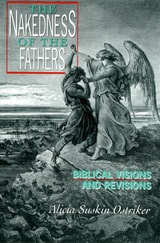
The Nakedness of the Fathers
Biblical Visions and RevisionsOstriker, Alicia Suskin
Rutgers University Press, 1997
In her introduction, "Entering the Tents, " Ostriker defines the need to struggle against a tradition in which women have been silenced and disempowered - and to recover the female power buried beneath the surface of the biblical texts. In "The Garden, " she reinterprets the mythically complex stories of Creation. Then she considers the stories of "The Fathers, " from Abraham and Isaac to Moses, David, and Solomon - and their wives, mothers, and sisters. In "The Return of the Mothers, " she begins with a radical new interpretation of the book of Esther, includes a meditation on the silenced wife of Job and the idea of justice, and concludes with a fable on the death of God and a prayer to the Shekhinah, the feminine aspect of God. Ostriker refuses to dismiss the Bible as meaningless to women. Instead, in this angry, eloquent, visionary book, she attempts to recover what is genuinely sacred in these sacred texts.
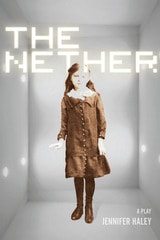
The Nether
A PlayJennifer Haley
Northwestern University Press, 2015
When the lines between reality and fantasy blur, what counts as ethical? Who decides?
The Nether, a daring examination of moral responsibility in virtual worlds, opens with a familiar interrogation scene given a technological twist. As Detective Morris, an online investigator, questions Mr. Sims about his activities in a role-playing realm so realistic it could be life, she finds herself on slippery ethical ground. Sims argues for the freedom to explore even the most deviant corners of our imagination. Morris holds that we cannot flesh out our malign fantasies without consequence. Their clash of wills leads to a consequence neither could have imagined. Suspenseful, ingeniously constructed, and fiercely intelligent, Haley’s play forces us to confront deeply disturbing questions about the boundaries of reality.
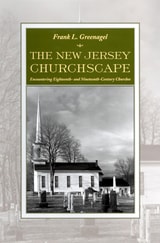
The New Jersey Churchscape
Encountering Eighteenth- and Nineteenth-Century ChurchesFrank L. Greenagel
Rutgers University Press, 2001
Although best known as the Garden State, New Jersey could also be called the Church State. The state boasts thousands of houses of worship, with more than one thousand still standing that were built in the eighteenth and nineteenth centuries. Frank L. Greenagel has photographed more than six hundred. He has selected two hundred of these historic landmarks for an examination of why they are sited where they are and why they look the way they do.
Greenagel has sought out and included images of not only mainstream Christian churches, but also Jewish synagogues as well as the places of worship of religious groups such as the Moravians, the Church of the Brethren, and the Seventh Day Baptists. The photographs are arranged chronologically within sections on three major early settlement regions of the state ¾ the Hudson River, the Delaware River, and the Raritan Valley. For each building, Greenagel details the date of construction, the cultural, historic, and religious influences that shaped it, the architectural details that distinguish it, and what purpose it currently serves.
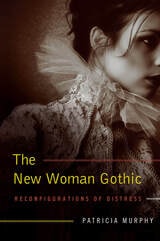
The New Woman Gothic
Reconfigurations of DistressPatricia Murphy
University of Missouri Press, 2026
The controversial and compelling figure of the New Woman in late Victorian fiction has garnered extensive scholarly attention, but rarely has she been investigated through the fascinating lens of the Gothic. Yet the presence of sinister Gothic elements is so widespread in the generally realisitic British novels that the term "New Woman Gothic" readily comes to mind. Drawing from and reworking Gothic conventions of Romantic and later literature, the New Woman version is marshaled during this tumultuous cultural moment of gender anxieties either to defend or revile the complex individual who sought improvements in educational, marital, and professional realms.
The New Woman
Literary Modernism, Queer Theory, and the Trans Feminine AllegoryEmma Heaney
Northwestern University Press, 2017
The book is the first to identify the process by which medical sources simplified the diversity of trans feminine experience into a single diagnostic narrative. It then demonstrates that this medical figure became an archetype for the "sexual anarchy" of the Modernist period in works by Aldous Huxley, James Joyce, Djuna Barnes, T. S. Eliot, and Jean Genet.
Thus illuminating the trans feminine's Modernist provenance, the book examines foundational works of Queer Theory that resuscitated the trans feminine allegory at the end of the twentieth century. Insightful and seminal, The New Woman debunks the pervasive reflex beginning in the 1990s to connect trans experience to a late twentieth-century collapse of sexual differences by revealing the Modernist roots of that very formulation.
The Nutmeg's Curse
Parables for a Planet in CrisisAmitav Ghosh
University of Chicago Press, 2021
A powerful work of history, essay, testimony, and polemic, Amitav Ghosh’s new book traces our contemporary planetary crisis back to the discovery of the New World and the sea route to the Indian Ocean. The Nutmeg’s Curse argues that the dynamics of climate change today are rooted in a centuries-old geopolitical order constructed by Western colonialism. At the center of Ghosh’s narrative is the now-ubiquitous spice nutmeg. The history of the nutmeg is one of conquest and exploitation—of both human life and the natural environment. In Ghosh’s hands, the story of the nutmeg becomes a parable for our environmental crisis, revealing the ways human history has always been entangled with earthly materials such as spices, tea, sugarcane, opium, and fossil fuels. Our crisis, he shows, is ultimately the result of a mechanistic view of the earth, where nature exists only as a resource for humans to use for our own ends, rather than a force of its own, full of agency and meaning.
Writing against the backdrop of the global pandemic and the Black Lives Matter protests, Ghosh frames these historical stories in a way that connects our shared colonial histories with the deep inequality we see around us today. By interweaving discussions on everything from the global history of the oil trade to the migrant crisis and the animist spirituality of Indigenous communities around the world, The Nutmeg’s Curse offers a sharp critique of Western society and speaks to the profoundly remarkable ways in which human history is shaped by non-human forces.
The Ocean on Fire
Pacific Stories from Nuclear Survivors and Climate ActivistsAnaïs Maurer
Duke University Press, 2024
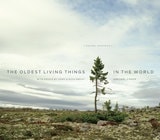
The Oldest Living Things in the World
Rachel Sussman
University of Chicago Press, 2014
Her work is both timeless and timely, and spans disciplines, continents, and millennia. It is underscored by an innate environmentalism and driven by Sussman’s relentless curiosity. She begins at “year zero,” and looks back from there, photographing the past in the present. These ancient individuals live on every continent and range from Greenlandic lichens that grow only one centimeter a century, to unique desert shrubs in Africa and South America, a predatory fungus in Oregon, Caribbean brain coral, to an 80,000-year-old colony of aspen in Utah. Sussman journeyed to Antarctica to photograph 5,500-year-old moss; Australia for stromatolites, primeval organisms tied to the oxygenation of the planet and the beginnings of life on Earth; and to Tasmania to capture a 43,600-year-old self-propagating shrub that’s the last individual of its kind. Her portraits reveal the living history of our planet—and what we stand to lose in the future. These ancient survivors have weathered millennia in some of the world’s most extreme environments, yet climate change and human encroachment have put many of them in danger. Two of her subjects have already met with untimely deaths by human hands.
Alongside the photographs, Sussman relays fascinating – and sometimes harrowing – tales of her global adventures tracking down her subjects and shares insights from the scientists who research them. The oldest living things in the world are a record and celebration of the past, a call to action in the present, and a barometer of our future.
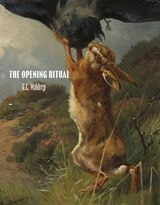
The Opening Ritual
G.C. Waldrep
Tupelo Press, 2024
In The Opening Ritual, G. C. Waldrep contends with the failure of the body, the irreducible body, in the light of faith. What can or should “healing” mean when it can’t ever mean “wholeness” again? And what kind of architecture is “mercy” when we live inside damage? These are poems that take both the material and the spiritual seriously, that cast their unsparing glances toward “All that is not / & could never be a parable.”
The collection concludes with a sequence of truly grand meditations on spiritual consciousness—in one the poet notes how, in the stillness of contemplation, the world begins to hum and resound with music. The Opening Ritual attends to and fashions its song from that music.
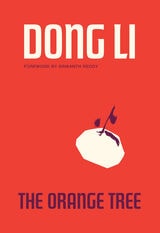
The Orange Tree
Dong Li
University of Chicago Press, 2023
Dong Li’s The Orange Tree is a collection of narrative poems that braids forgotten legends, personal sorrows, and political upheavals into a cinematic account of Chinese history as experienced by one family. Amid chaos and catastrophe, the child narrator examines a yellowed family photo to find resemblances and learns a new language, inventing compound words to conjure and connect family stories. These invented words and the calligraphy of untranslated Chinese characters appear in lists separating the book’s narrative sections.
Li’s lyrical and experimental collection transcends the individual, placing generations of family members and anonymous others together in a single moment that surpasses chronological time. Weaving through stories of people with little means, between wars and celebrations, over bridges and walls, and between trees and gardens, Li’s poems offer intimate perspectives on times that resonate with our own. The result is an unflinching meditation on family history, collective trauma, and imaginative recovery.
The Orange Tree is the recipient of the inaugural Phoenix Emerging Poet Book Prize for 2023.
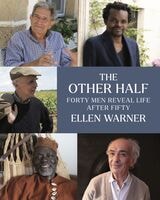
The Other Half
Forty Men Reveal Life After FiftyEllen Warner
Brandeis University Press, 2026
An insightful and intimate look at aging and masculinity that includes interviews and portraits of men from around the world.
What do men really think? From a taxi driver to a prince, a fishmonger to a professional boxer, The Other Half reveals the inner thoughts of men over fifty from different nationalities and different walks of life in their own words, illuminated by their portraits. Author and photojournalist Ellen Warner traveled the world to find out what men really think about love, work, and aging, speaking with well-known figures like film director James Ivory and journalist Bill Keller, as well as a philosopher, a chess grandmaster, a hair stylist, a financier, and more. Interviewing men from Colombia, Greece, Saudi Arabia, Sierra Leone, Sweden, and everywhere in between, Warner assembles a moving portrait of their reflections, insights, challenges, and hard-won triumphs.
A companion to The Second Half: Forty Women Reveal Life After Fifty, Warner’s latest book shares the diverse, vibrant experiences of men over fifty.
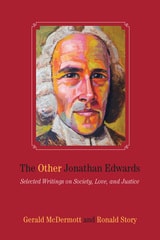
The Other Jonathan Edwards
Selected Writings on Society, Love, and JusticeGerald McDermott
University of Massachusetts Press, 2015
Widely regarded as perhaps America's greatest theologian, Jonathan Edwards still suffers the stereotype of hellfire preacher obsessed with God's wrath. In this anthology, Gerald McDermott and Ronald Story seek to correct that common view by showing that Edwards was also a compassionate, socially conscious minister of the first order.
Through a selection of sermons and primary writings, McDermott and Story reveal an Edwards who preached love toward all humanity regardless of belief or appearance; who demanded private and public charity to the poor; who criticized hard-hearted business dealings as impious and socially destructive; and who condemned envy and status-seeking as anti-Christian and anti-community. This “other” Jonathan Edwards preached about grace and the love of God but also about responsive constitutional government, the iniquities of hypocrisy and corruption, and the nature of wise leadership. He acknowledged the need for national defense but left room for popular revolt from tyranny. He anticipated a millennial age of peace and prosperity and believed that people should live in the world as they would live through grace in heaven.
Jonathan Edwards was, in sum, a worldly as well as spiritual reformer who resisted the materialistic, acquisitive, and individualistic currents of American culture. For these reasons, McDermott and Story think he may have lessons to teach us today.
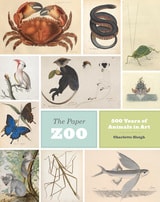
The Paper Zoo
500 Years of Animals in ArtCharlotte Sleigh
University of Chicago Press, 2017
In this stunning book, historian of science Charlotte Sleigh draws on the ultimate bibliophile’s menagerie—the collections of the British Library—to present a lavishly illustrated homage to this historical collaboration between art and science. Gathering together a breathtaking range of nature illustrations from manuscripts, prints, drawings, and rare printed books from across the world, Sleigh brings us face to face (or face to tentacle) with images of butterflies, beetles, and spiders, of shells, fish, and coral polyps. Organized into four themed sections—exotic, native, domestic, and paradoxical—the images introduce us to some of the world’s most renowned natural history illustrators, from John James Audubon to Mark Catesby and Ernst Haeckel, as well as to lesser-known artists. In her accompanying text, Sleigh traces the story of the art of natural history from the Renaissance through the great age of exploration and into the nineteenth century, offering insight into the changing connections between the natural and human worlds.
But the story does not end there. From caterpillars to crabs, langurs to dugongs, stick insects to Old English pigs; from the sinuous tail feathers of birds of paradise to the lime-green wings of New Zealand’s enormous flightless parrot, the kakapo; from the crenellated plates of a tortoise’s shell to imagined likenesses of unicorns, mermaids, and dinosaurs, the story continues in this book. It is a Paper Zoo for all time.
The Poetics of Natural History
Christoph Irmscher
Rutgers University Press, 2019
Early American naturalists assembled dazzling collections of native flora and fauna, from John Bartram’s botanical garden in Philadelphia and the artful display of animals in Charles Willson Peale’s museum to P. T. Barnum’s American Museum, infamously characterized by Henry James as “halls of humbug.” Yet physical collections were only one of the myriad ways that these naturalists captured, catalogued, and commemorated America’s rich biodiversity. They also turned to writing and art, from John Edward Holbrook’s forays into the fascinating world of herpetology to John James Audubon’s masterful portraits of American birds.
In this groundbreaking, now classic book, Christoph Irmscher argues that early American natural historians developed a distinctly poetic sensibility that allowed them to imagine themselves as part of, and not apart from, their environment. He also demonstrates what happens to such inclusiveness in the hands of Harvard scientist-turned Amazonian explorer Louis Agassiz, whose racist pseudoscience appalled his student William James.
This expanded, full-color edition of The Poetics of Natural History features a preface and art from award-winning artist Rosamond Purcell and invites the reader to be fully immersed in an era when the boundaries between literature, art, and science became fluid.
The Political Poe
Michael Blouin
University of Iowa Press, 2026
The Politics of Rape
Sexual Atrocity, Propaganda Wars, and the Restoration StageJennifer L. Airey
University of Delaware Press, 2013
Published by University of Delaware Press. Distributed worldwide by Rutgers University Press.
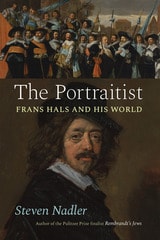
The Portraitist
Frans Hals and His WorldSteven Nadler
University of Chicago Press, 2022
Frans Hals was one of the greatest portrait painters in history, and his style transformed ideas and expectations about what portraiture can do and what a painting should look like.
Hals was a member of the great trifecta of Dutch Baroque painters alongside Rembrandt and Vermeer, and he was the portraitist of choice for entrepreneurs, merchants, professionals, theologians, intellectuals, militiamen, and even his fellow artists in the Dutch Golden Age. His works, with their visible brush strokes and bold execution, lacked the fine detail and smooth finish common among his peers, and some dismissed his works as sloppy and unfinished. But for others, they were fresh and exciting, filled with a sense of the sitter’s animated presence captured with energy and immediacy.
Steven Nadler gives us the first full-length biography of Hals in many years and offers a view into seventeenth-century Haarlem and this culturally rich era of the Dutch Republic. He tells the story not only of Hals’s life, but also of the artistic, social, political, and religious worlds in which he lived and worked.

The Postal Confessions
Max Garland
University of Massachusetts Press, 1995
These poems wrestle with the inherited myths of their particular time and place. Often set in a small corner of western Kentucky, they explore moments when an individual life becomes implicated in a larger scheme—the realm of Cold War politics, the mysteries of religious faith, the codes and rituals of romantic love. Max Garland shows a lyrical determination to deal with history through the lives, minds, and emotions of ordinary people “stricken with time.”
In poems about baptism, bowling, Greek goddesses, and the hydrogen bomb, Garland seems to say that knowledge and even revelation might come from anywhere. The book ends with the image of the empty space Michelangelo left between the hands of Adam and God on the ceiling of the Sistine Chapel; that tension between what lasts and what passes away, comprises the territory of these poems.
The Powers of the False
Reading, Writing, Thinking beyond Truth and FictionDoro Wiese
Northwestern University Press, 2014
The Practical Past
Hayden White
Northwestern University Press, 2014
Hayden White borrows the title for The Practical Past from philosopher Michael Oakeshott, who used the term to describe the accessible material and literary-artistic artifacts that individuals and institutions draw on for guidance in quotidian affairs. The Practical Past, then, forms both a summa of White’s work to be drawn upon and a new direction in his thinking about the writing of history.
White’s monumental Metahistory: The Historical Imagination in Nineteenth-Century Europe (1973) challenged many of the commonplaces of professional historical writing and wider assumptions about the ontology of history itself. It formed the basis of his argument that we can never recover “what actually happened”in the past and cannot really access even material culture in context. Forty years on, White sees “professional history" as falling prey to narrow specialization, and he calls upon historians to take seriously the practical past of explicitly “artistic” works, such as novels and dramas, and literary theorists likewise to engage historians.
The Radiant
Lise Goett
Tupelo Press, 2024
The Radiant explores the psychological, physical, and spiritual challenges of living in a body and the changes and distortions that arise from the experience of the body’s limitations and inevitable death. The collection takes its title from the term for the point from which all meteors appear to emanate during a shower, luminous bodies in decay that when traced to their origin seem to converge at a single point. “Perhaps you can remember the time called before, the all-you-can-do-is-see-yourself-in-a-split-second where you recognize that everything you’ve ever known is going to be different after,” writes Goett in the collection’s final poem, “The Bookman,” recounting radiant points of no return and transformation that, in spite of their challenge, remain luminous.
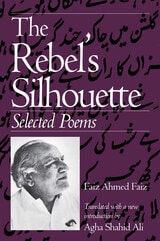
The Rebel's Silhouette
Selected PoemsFaiz Ahmed Faiz, translated and edited by Agha Shalid Ali
University of Massachusetts Press, 1995

The Rendering
Anthony Cody
Omnidawn, 2023
Through a series of experimental poems centered on ecology, Anthony Cody’s The Rendering confronts the history of the Dust Bowl and its residual impacts on our current climate crisis, while acknowledging the complicities of capitalism. These poems grapple with questions of wholeness and annihilation in an Anthropocenic world where the fallout of settler colonialism continues to inflict environmental and cultural devastation. Cody encourages readers to participate in radical acts of refreshing and reimagining the page, poem, collection, and the self, and he invites us to reflect on what lies ahead should our climate continue on its current trajectory toward destruction.
These poems consider if wholeness, or a journey toward wholeness, can exist in the Anthropocene. And, if wholeness cannot exist in these times, we are invited to look at our lives and the world through and beyond annihilation.
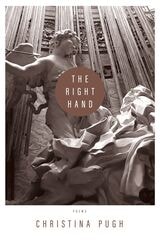
The Right Hand
Christina Pugh
Tupelo Press, 2024
Pain, piercing, and language: with urgent lyricism and lacunae on the page, The Right Hand explores the physical, emotional, and philosophical experiences of chronic pain, bodywork (especially acupuncture), and healing. In the second half of the collection, the poet spends extended time with Bernini's sculpture of St. Teresa in Ecstasy in Rome, finding this famous scene of wounding to be in dialogue with her own experience of pain, as well as her suspension between languages and spiritual isolation. In The Right Hand, the hidden sites of the body speak, and Bernini’s centuries-old arrow pierces us with hurting eloquence.
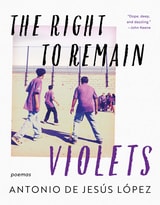
The Right to Remain Violets
poemasAntonio De Jesús López
University of Arizona Press, 2027
The Right to Remain Violets is an electrifying poetry collection that reimagines the language of policing, public education, and state surveillance to illuminate the lived realities of Black and Brown youth in East Palo Alto—a city shaped by redlining, freeway expansion, and decades of over-policing. Blending documentary poetics with hip-hop cadence and Catholic liturgy, Antonio De Jesús López transforms transcripts, municipal documents, and legal language into a powerful form of witness. These poems trace how children are drafted into systems of surveillance and criminalization, even as they search for joy and solidarity amid Silicon Valley’s contrasts of wealth and dispossession.
Inventive and emotionally resonant, the collection spans sonnets, sestinas, hip-hop, and prayer, insisting that language can both indict and heal. López brings his experiences as an award-winning poet, scholar, and former mayor of East Palo Alto to each poem. At once elegy and refusal, The Right to Remain Violets speaks to readers of documentary poetics, social justice literature, and those who believe in the radical importance of protecting childhood in an America reckoning with itself.
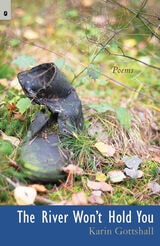
The River Won’t Hold You
Karin Gottshall
The Ohio State University Press, 2014
Haunting and haunted, The River Won’t Hold You navigates loneliness and loss with a quiet, relentless clarity. In poems shaped at the uneasy crossroads of imagination and lived experience, Karin Gottshall searches for solace in the charged spaces between them. “I tell myself I can be content with the pleasures / permitted ghosts,” she writes in “Afterlife,” “but my body wakes up / leaking saltwater, and won’t let my ghost-self be.”
Across the collection, poetic structure and the music of language become vessels for memory, philosophy, and ache. Generous in their formal range and attentive to both sound and silence, these poems resist tidy answers. The beauty of Gottshall's work arises from the steadiness of her gaze, and the startling precision of the images it lands on:
“Wide-open, staring eyes of the tiger / I drew and had to destroy because it wouldn’t sleep.”
The River Won’t Hold You shows how the places we fear most—the gaps, the afterlives, the undefinable spaces—can also be the ones that hold us.
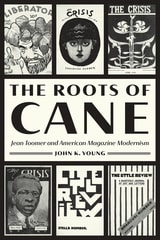
The Roots of Cane
Jean Toomer and American Magazine ModernismJohn K. Young
University of Iowa Press, 2024
Young interweaves a periodical-studies approach to modernism with book history and critical race theory, resituating Toomer’s uneasy place within Black modernism by asking how original readers would have encountered his work. The different contexts in which those audiences were engaging with Toomer’s portraits of racialized identity in the Jim Crow United States, yield often surprising results.
The Rope in Bloom
A Bilingual EditionRadu Vancu
University of Chicago Press, 2026
The first English translation of a Romanian poet’s celebrated and devastating 2012 collection.
In 1997, when he was nineteen, Radu Vancu discovered the body of his father, who had hanged himself in the family home. In the dark years that followed, Vancu turned to literature and self-medication. By 2009, after a decade of “Schopenhauer and vodka” and the publication of seven influential volumes of poetry and essays, Vancu was married, newly sober, and expecting his first child. With these themes in mind—bereavement, love, fatherhood, and poetry—he began writing Frânghia înflorită, or The Rope in Bloom, a poem of Dantesque ambition and scope. Through twenty-four cantos interwoven with prose vignettes, Vancu revisits the scene of the suicide and speaks with the lost soul of his father, who guides and advises him. Each canto begins with the same lines:
What your dead one, what the best-
beloved of your dead loved ones says to you
when you have the heart to dream of him:
Vancu’s verse depicts a nightmare underworld, at once terrible and banal, containing both rivers of blood and family movie nights. Prose vignettes punctuating the book narrate tender years in the early life of a new family. Here, the poet appears in everyday moments, watching cartoons with his son and seeing his wife off to work. Together, the cantos and prose accumulate into a charged collection, where the loss of a father looms over the joy of becoming one.
This volume is the first full-length English translation of Vancu’s work, marking a long-overdue introduction of the poet to anglophone audiences.
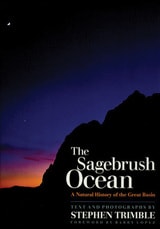
The Sagebrush Ocean, Tenth Anniversary Edition
A Natural History Of The Great BasinStephen Trimble
University of Nevada Press, 1999
This is the best general introduction to the ecology and spirit of the Great Basin, a place where "the desert almost seems to mirror the sky in size," where mountains hold "ravens, bristlecone pines, winter stillness—and unseen, but satisfying, the possibility of bighorn sheep." Trimble's photographs come from the backcountry of this rugged land, from months of exploring and hiking the Great Basin wilderness in all seasons; and his well-chosen words come from a rare intimacy with the West.
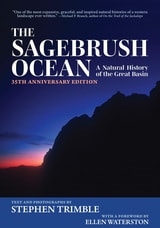
The Sagebrush Ocean
35th Anniversary EditionStephen Trimble
University of Nevada Press, 2026
The Sagebrush Ocean, the essential introduction to the ecology and spirit of the Great Basin Desert, returns in this richly updated 35th anniversary edition. Winner of the Ansel Adams Award for Photography and Conservation, Stephen Trimble’s authoritative voice and evocative photographs illuminate this landscape of sun-struck playas, surprising wetlands, remote canyons, and wind-swept tundra.
Today, the once-vast “sagebrush ocean” is an endangered sea, as environmental changes and human development have diminished it by half. This heartbreaking decline drives Trimble’s updated text, but he blends loss with reverence for what remains—and urgent insight into what’s at stake. Striking color photographs, many newly added, illuminate some of the continent’s most spectacular but little known scenery. For anyone curious about the Great Basin or concerned for its future, this timely edition is indispensable.
The Screams of War
Selected PoemsAkram Alkatreb
Seagull Books, 2024
“Those who believe in the currency of patience / Were burned out in the alleyway.”
The Screams of War is a visceral collection of poems that confront the realities of contemporary Syria. Akram Alkatreb’s verses capture the sense of the quotidian during war. His words, mere “murmurs engraved on stones,” long for and despair over an irrevocable past. At the heart of Alkatreb’s work lies a preoccupation with trauma and the profound burden of alienation that accompanies exile. Nascent memories are shrouded by the “scars of sleep,” and words find themselves nostalgic for destruction. The ubiquity of violence that Alkatreb channels into his poetry does not tolerate enclaves of innocence. The Screams of War is an unforgettable testament to the resilience of the human spirit and a stark reminder of the harsh realities faced by those trapped in conflict.
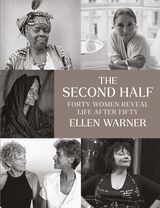
The Second Half
Forty Women Reveal Life After FiftyEllen Warner
Brandeis University Press, 2022
A frank, honest, and insightful look into the lives of women over fifty.
The Second Half explores, in photographic portraits and interviews, how the second half of life is experienced by women from many different cultures. From a French actress to a British novelist, from an Algerian nomad to a Saudi Arabian doctor, and an American politician, Ellen Warner traveled all over the world to interview women about their lives. She asked them what they learned in the first half that was helpful in the second, and what advice they would give to younger women. Their revealing and inspiring stories are enlightening for all readers, and are illustrated by Warner’s stunning portraits which tell their own story.
The Secrets We Keep
Hidden Histories of the Byzantine EmpireRoland Betancourt
J. Paul Getty Trust, The, 2024
Secrecy has played a role throughout human history and continues to capture the popular imagination. Some of the most seductive aspects of the Byzantine Empire—such as the relics of the imperial palace and the military uses of Greek fire—have been shrouded in mystery for centuries. This book provides a brief history of secrecy in Byzantium and examines the role of the art historian in uncovering the truth, demonstrating how visual evidence can not only reveal new findings but also purposely conceal answers.
Art historians face many challenges in their search for hidden knowledge, including accessing accounts preserved in fragmentary glimpses and reconciling how practices of speculation and reconstruction result in different, and sometimes contradictory, understandings. With pressing urgency, this book asks scholars to consider their role in articulating the stories of marginalized people, particularly for queer and trans history.
At the core of these investigations is the quest to discover how clandestine knowledge was transmitted and how relationships were strengthened by collective secret keeping, as well as how concealment is used as a strategy for exercising power. With insights into the religious, imperial, military, and cultural uses of secrecy, this book offers an intriguing look at the ways secrecy manifested itself during the Byzantine Empire and the implications it has for the issues we face today.
The Selfie Machine
Selfies, Platforms, and Digital Image Culture in IndiaAnirban K. Baishya
Rutgers University Press, 2027
The Selfie Machine offers novel insight into personalized communication practices in the digital age through the medium of the selfie. While the selfie has achieved notoriety due to pop-psychology accounts of Narcissism-related selfie "disorders," this book examines the selfie as a mode of meaning making and self-presentation that includes not just still images, but also short videos, hashtag practices and economies of liking and following. In taking India as the starting point of its investigation, The Selfie Machine inverts the "West-then-the-rest" model of understanding global digital media practices. The book considers selfie culture’s impact on personal and public digital practices and trends—ranging from cellphone markets, to influencer entrepreneurship and microcelebrity, to the conduct of politics and protest. In doing so, it not only offers an expanded definition of selfies in digital media culture, but also demonstrates how “global” digital media (including selfies) cannot be understood as a monolith.
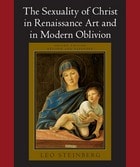
The Sexuality of Christ in Renaissance Art and in Modern Oblivion
Leo Steinberg
University of Chicago Press, 1996
This revised and greatly expanded edition not only adduces new visual evidence, but deepens the theological argument and engages the controversy aroused by the book's first publication.

The Shadow Family
George Estreich
University of Iowa Press, 2027
The Shared World
PoemsVievee Francis
Northwestern University Press, 2021
The latest collection from award-winning poet Vievee Francis, The Shared World imagines the ideas and ideals and spaces of the Black woman. The book delves into inherited memories and restrictions between families, lovers, and strangers and the perception and inconvenient truth of Black woman as mother—with or without child. Francis challenges the ways in which Black women are often dismissed while expected to be nurturing. This raw assemblage of poetic narratives stares down the oppressors from within and writes a new language in the art of taking back the body and the memory. These poetic narratives are brutal in their lyrical blows but tender with the bruised history left behind. “You can’t stop this / song,” she writes. “More hands than yours have closed / around my throat.”
Francis’s lyric gifts are on full display as she probes self-discovery, history, intimacy, and violence. Her voice encompasses humor and gravity, enigma and revelation. What emerges is a realm of intertwined experiences. “The secret to knowing the secret is to speak,” she concludes, “but we too often tell / the stories of no matter and avoid the one story that does matter. / In truth, we are bound by one story, so you’d think by now / we’d tell it, at least to each other.”
The Ship of Virtuous Ladies
Symphorien Champier
Iter Press, 2018
The Sierra Pinacate
Julian D. Hayden; Photographs by Jack Dykinga; With Essays by Charles Bowden and Bernard L. Fontana
University of Arizona Press, 1998
The Soluble Hour
Hillary Gravendyk
Omnidawn, 2017
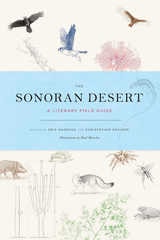
The Sonoran Desert
A Literary Field GuideEdited by Eric Magrane and Christopher Cokinos, Illustrations by Paul Mirocha
University of Arizona Press, 2016
Both literary anthology and hands-on field guide, The Sonoran Desert is a groundbreaking book that melds art and science. It captures the stunning biodiversity of the world’s most verdant desert through words and images. More than fifty poets and writers—including Christopher Cokinos, Alison Hawthorne Deming, Ken Lamberton, Eric Magrane, Jane Miller, Gary Paul Nabhan, Alberto Ríos, Ofelia Zepeda, and many others—have composed responses to key species of this striking desert. Each creative contribution is joined by an illustration by award-winning artist Paul Mirocha and scientific information about the creature or plant authored by the book’s editors.
From the saguaro to the mountain lion, from the black-tailed jackrabbit to the mesquite, the species represented here have evoked compelling and creative responses from each contributor. Just as writers such as Edward Abbey and Ellen Meloy have memorialized the desert, this collection is sure to become a new classic, offering up the next generation of voices of this special and beautiful place, the Sonoran Desert.
The Sorrow Apartments
Andrea Cohen
Four Way Books, 2024
What would I
think, coming
up after
my world
had evaporated?
I'd wish
I were water.
The Sorrow Apartments is home to spare and uncanny lyricism––as well as leaping narratives of mystery and loss and wonder. These poems race at once into the past and the possible. And yet, instead of holding things up to the light for a better view, Cohen lifts them to the dark and light, as in "Acapulco," where an unlikely companion points out, “as men tend to, / the stars comprising Orion’s belt — / as if it were the lustrous sparks and not / the leveling dark that connects us.” For a poet who has been called unfashionable from the get-go, unfashionable never looked so good.
The Soul of the Stranger
Reading God and Torah from a Transgender PerspectiveJoy Ladin
Brandeis University Press, 2018
The Stars That Fell
PoemsGary Short
University of Nevada Press, 2026
Through his poems, Gary Short illuminates the humanity of the people of Nevada and the American West, specifically the rural communities that often get left out of the narrative. Focusing on family and the relationships between characters, he extends feelings of hope, solace, forgiveness, and even wisdom throughout this collection.
The State Park Movement in America
A Critical ReviewNey C. Landrum
University of Missouri Press, 2013
The State of Southern Illinois
An Illustrated HistoryHerbert K. Russell
Southern Illinois University Press, 2012
Superior Achievement, Illinois State Historical Society, 2013
In The State of Southern Illinois: An Illustrated History, Herbert K. Russell offers fresh interpretations of a number of important aspects of Southern Illinois history. Focusing on the area known as “Egypt,” the region south of U.S. Route 50 from Salem south to Cairo, he begins his book with the earliest geologic formations and follows Southern Illinois’s history into the twenty-first century. The volume is richly illustrated with maps and photographs, mostly in color, that highlight the informative and straightforward text.
Perhaps most notable is the author’s use of dozens of heretofore neglected sources to dispel the myth that Southern Illinois is merely an extension of Dixie. He corrects the popular impressions that slavery was introduced by early settlers from the South and that a majority of Southern Illinoisans wished to secede. Furthermore, he presents the first in-depth discussion of twelve pre–Civil War, free black communities located in the region. He also identifies the roles coal mining, labor violence, gangsters, and the media played in establishing the area’s image. He concludes optimistically, unveiling a twenty-first-century Southern Illinois filled with myriad attractions and opportunities for citizens and tourists alike.
The State of Southern Illinois is the most accurate all-encompassing volume of history on this unique area that often regards itself as a state within a state. It offers an entirely new perspective on race relations, provides insightful information on the cultural divide between north and south in Illinois, and pays tribute to an often neglected and misunderstood region of this multidimensional state, all against a stunning visual backdrop.