Results by title
527 books match the query 'Translations into English' and 139 start with t
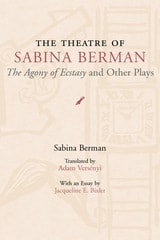
The Theatre of Sabina Berman
The Agony of Ecstasy and Other PlaysSabina Berman. Translated by Adam Versenyi. Essay by Jacqueline E. Bixler
Southern Illinois University Press, 2003
The Theatre of Sabina Berman: The Agony of Ecstasy and Other Plays introduces and makes accessible to an English-speaking audience the work of the contemporary Mexican playwright Sabina Berman. The book contains translations of the four plays that established Berman’s career: The Agony of Ecstasy, Yankee, Puzzle, and Heresy. An introduction by Adam Versényi provides a critical assessment of each play, a discussion of the specific problems of translation involved, and placement of Berman’s work in the larger Mexican and Latin American context.
It is evident that Sabina Berman’s theatrical acumen matches the depth of her dramatic design whether it is the sheer variety of techniques from song to staged tableau that appear in The Agony of Ecstasy; the physicalization of what it means to be interrogated and to interrogate in Yankee; the final enigmatic image of a soldier alone on stage, silently aiming his firearm at an undefined threat that potentially emanates from the audience in Puzzle; or the manner in which the family narrates its own “heretical” actions in Heresy. It is the combination of theatrical technique with universal themes of self-definition that cuts across cultures and ultimately makes these plays translatable.
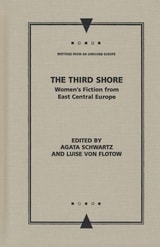
The Third Shore
Women's Fiction from East Central EuropeAgatha Schwartz
Northwestern University Press, 2006
A rich compendium of fiction by twenty-five women from eighteen different nations ranging from Lithuania to Ukraine to Poland, the Czech Republic, Romania, Albania, and Slovenia, The Third Shore brings to light a whole spectrum of women's literary accomplishment and experience virtually unknown in the West. Gracefully translated, and with an introduction that establishes their political, historical, and literary context, these stories written in the decade after the fall of the Iron Curtain are tales of the familiar-of illness and death, love and desire, motherhood and war, feminism, and patriarchy-reconceived and turned into something altogether new by the distinctive experience they reflect.
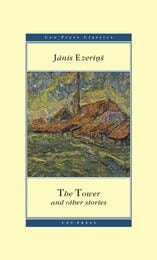
The Tower
and other storiesJanis Ezerins
Central European University Press, 2012
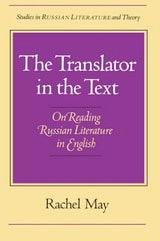
The Translator in the Text
On Reading Russian Literature in EnglishRachel May
Northwestern University Press, 1994

The Unknown Rilke
Selected PoemsRainer Maria Rilke
Oberlin College Press, 1990
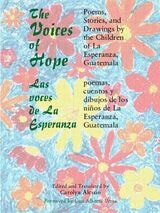
The Voices of Hope
Poems, Stories, and Drawings by the Children of La Esperanza, GuatemalaEdited and Translated by Carolyn Alessio. Foreword by Luis Alberto Urrea
Southern Illinois University Press, 2003
Collected and translated by Carolyn Alessio, this bilingual anthology of poems, stories, memories, and philosophies was written and illustrated by the children of La Esperanza, Guatemala. Drawing upon the fortitude of their mothers, who began hand-sewing crafts to sell in the United States in order to survive the hardships of this war-torn impoverished country, Alessio’s students, aged four to sixteen, reveal amazing survival skills, fertile imaginations, and dreams of attaining better lives. The resulting work is a collection of poems and drawings that are terse, funny, sometimes sad, but always humanly, gloriously alive.
As Alessio explains, “At first, I thought I might be imagining the echoes of magical realism, but as I continued to read the students’ writing and study their drawings, I found similar themes. Witches killed children who didn’t respect the spirits; women abused by their husbands sought refuge in trees with magical doors. People who didn’t have money or jobs lived on the road and in forests, where they alternately fought and partied with the animals.”
The volume features a foreword from Luis Alberto Urrea,author of Across the Wire: Life and Hard Times on the Mexican Border and By the Lake of Sleeping Children: The Secret Life of the Mexican Border.

The War of the Fatties and Other Stories from Aztec History
By Salvador Novo
University of Texas Press, 1993
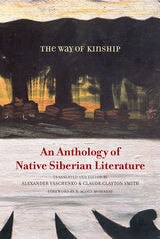
The Way of Kinship
An Anthology of Native Siberian LiteratureAlexander Vaschenko
University of Minnesota Press, 2010
The first anthology of Native Siberian literature in English, The Way of Kinship represents writers from regions extending from the Ob River in the west to the Chukotka peninsula, the easternmost point of the Siberian Russian Arctic. Drawn from seven distinct ethnic groups, this diverse body of work-prose fiction, poetry, drama, and creative nonfiction-chronicles ancient Siberian cultures and traditions threatened with extinction in the contemporary world.
Translated and edited by Alexander Vaschenko and Claude Clayton Smith, leading scholars in Native Siberian literature, The Way of Kinship is an essential collection that will introduce readers to new writers and new worlds.
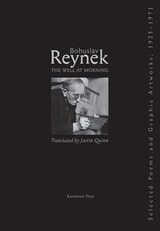
The Well at Morning
Selected Poems, 1925–1971Bohuslav Reynek
Karolinum Press, 2017
A chaffinch in a tree
of cherry sings merrily
spring’s introit.
Its blazing bobble dwells
in leaves, alive, and swells
in scarlet.
The flowers are flares of white.
The chaffinch has gone quiet
and turned sky-gazer.
My eyes close on the day:
an orb revolves in grey
and red and azure.
Poet and artist Bohuslav Reynek spent most of his life in the relative obscurity of the Czech-Moravian Highlands; although he suffered at the hands of the Communist regime, he cannot be numbered among the dissident poets of Eastern Europe who won acclaim for their political poetry in the second half of the twentieth century. Rather, Reynek belongs to an older pastoral-devotional tradition—a kindred spirit to the likes of English-language poets Gerard Manley Hopkins, William Wordsworth, Robert Frost, and Edward Thomas. The Well at Morning presents a selection of poems from across his life and is illustrated with twenty-five of his own color etchings. Also featuring three essays by leading scholars that place Reynek’s life and work alongside those of his better-known peers, this book presents a noted Czech artist to the wider world, reshaping and amplifying our understanding of modern European poetry.
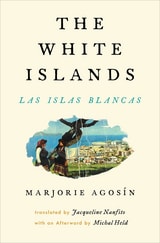
The White Islands / Las Islas Blancas
Marjorie Agosín
Swan Isle Press, 2015
Presented in a beautiful bilingual Spanish-English edition, Agosín’s poems speak to a wandering life of exile on distant shores. We hear the rhythm of the waves and the Ladino-inflected voices of Sephardi women past and present: Paloma, Estrella, and Luna in the fullness of their lives, loves, dreams, and faith. An evocative and sensual voyage to communities mostly lost after the Holocaust, The White Islands offers a lighthouse of remembrance, a lyrical world recovered with language and song, lament and joy, longing and hope.
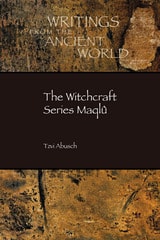
The Witchcraft Series Maqlu
Tzvi Abusch
SBL Press, 2015
A new reconstruction and translation of the Maqlû text
The Akkadian series Maqlû, “Burning,” is one of the most significant and interesting magical texts from the Ancient Near East. The incantations and accompanying rituals are directed against witches and witchcraft and ctually represent a single complex ceremony. The ceremony was performed during a single night and into the following morning at the end of the month Abu (July/August), a time when spirits were thought to move back and forth between the netherworld and the world of the living.
Features:
- English translation of approximately 100 incantations and rituals
- Annotated transcription
- Introduction places the series in historical context and shows how it is a product of a complex literary and ceremonial development.
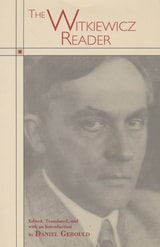
The Witkiewicz Reader
Stanislaw Ignacy Witkiewicz
Northwestern University Press, 1992
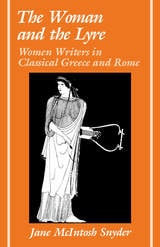
The Woman and the Lyre
Women Writers in Classical Greece and RomeJane McIntosh Snyder
Southern Illinois University Press, 1989
Beginning with Sappho in the seventh century B.C.E and ending with Egeria in the fifth century C.E., Snyder profiles ancient Greek and Roman women writers, including lyric and elegiac poets and philosophers and other prose writers. The writers are allowed to speak for themselves, with as much translation from their extant works provided in text as possible. In addition to giving readers biographical and cultural context for the writers and their works, Snyder refutes arguments representing prejudicial attitudes about women’s writing found in the scholarly literature. Covering writers from a wide historical span, this volume provides an engaging and informative introduction to the origins of the tradition of women’s writing in the West.
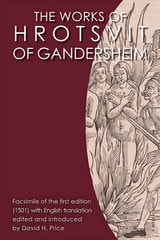
The Works of Hrotsvit of Gandersheim
Facsimile of the First Edition (1581)Hrotsvit of Gandersheim. Edited by David H. Price.
University of Illinois Press, 2017
These works by a tenth-century woman, who wrote plays when no one else in Europe was writing plays and who imitated the style of Terence when most people thought the classics had been forgotten, caused a literary sensation when they were first published in 1501.
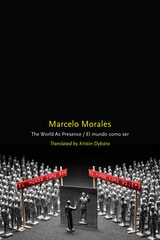
The World as Presence/El mundo como ser
Marcelo Morales, Introduced and Translated by Kristin Dykstra
University of Alabama Press, 2016
Marcelo Morales was born in Cuba in 1977. He is an established, prize-winning writer, yet he is younger in comparison to most of the Cuban poets known internationally, many of whom were born prior to the 1959 revolution. While older generations of Cuban poets have wrestled in their work with social and political critique, those critiques have often been articulated through formal experimentation and abstraction, unsurprising given the censorship and the real threats of punishment that dissident writers have faced. Morales, however, directly interrogates both the Cuban past and present. References to many significant moments, people, and issues in Cuban history and culture can be found throughout his work.
Along with references to the activist group “The White Ladies,” the 1976 bombing of Cuban Airlines Flight 455, and the military aid that Cubans provided to Angola during its fight for independence, Morales’s poetry follows a timeline ranging from Martí to Guevara to the day of the 2014 announcement by Obama and Castro that diplomatic relations between the two nations would finally be restored. As Cuba experiences a series of historically remarkable transitions, Morales emerges from this context to offer an incisive poetic account of this critical moment in Cuban, as well as world, history.
The World as Presence/El mundo como ser is both the debut of this work in any language and the first English translation of a complete Morales collection. Given the bilingual format, this book will be of interest both to English and Spanish readers.
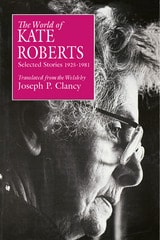
The World of Kate Roberts
Selected Stories, 1925-1981Joseph Clancy
Temple University Press, 1991
The Writings of Jean-Paul Sartre Volume 2
Selected ProseJean-Paul Sartre
Northwestern University Press, 1974
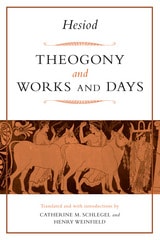
Theogony and Works and Days
Hesiod
University of Michigan Press, 2006
"This Schlegel-Weinfield translation of Hesiod is superbly crafted: compelling, unforgettable poetry to be read aloud with delight and gratitude."
—Allen Mandelbaum, Endowed Kenan Professor of Humanities, Wake Forest University
"This exciting and unique collaboration between a classical philologist and a poet will not just provide insight into archaic Greek society, but also offer something new: the opportunity to experience the richness of Hesiod's style, language, and modes of thought with remarkable fidelity to the ancient Greek. Weinfield and Schlegel make Hesiod sing."
—Carole Newlands, Classics Department, University of Wisconsin
"Schlegel and Weinfield have produced one of the most remarkable of a current resurgence of translations from the classics, allowing the modern world to hear a poet who may have known Homer. Hesiod’s song makes us understand why the Greeks thought a poet could draw dolphins through the seas or raise the walls of Thebes. Weinfield translates by ear and transfers what he hears to the page, resonant fourteeners, a worthy echo of the past."
Catherine Schlegel is Associate Professor of Classics, University of Notre Dame. Henry Weinfield is Professor and Chair of Liberal Studies, University of Notre Dame, and translator of The Collected Poems of Stephane Mallarme.
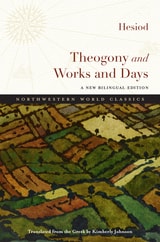
Theogony and Works and Days
A New Bilingual EditionHesiod, Translated from the Greek by Kimberly Johnson
Northwestern University Press, 2017
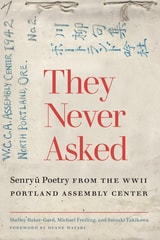
They Never Asked
Senryu Poetry from the WWII Portland Assembly CenterShelley Baker-Gard
Oregon State University Press, 2023
The Japanese American communities in Oregon and southern Washington were relatively small and many of the detainees knew each other; they drew on existing family and community networks to help each other through the long summer, living in inhumane conditions under the constant threat of violence. Several members of Bara Ginsha, a Portland poetry group, decided to continue their work while incarcerated, primarily by writing senryū, a type of Japanese poetry related to haiku.
They Never Asked is a collection of work produced by Bara Ginsha members in the WCCA camp, based on a journal kept by Masaki Kinoshita. The senryū collected here were written by a group of twenty-two poets, who produced hundreds of poems. Individually, the poems reflect the thoughts and feelings the authors experienced while being detained in the Center; collectively, they reflect the resilience and resistance of a community denied freedom. Editors Shelley Baker-Gard, Michael Freiling, and Satsuki Takikawa present translations of the poems alongside the originals, supplemented by historical and literary context and a foreword by Duane Watari, Masaki Kinoshita’s grandson.
Third Wave
The New Russian PoetryKent Johnson and Stephen M. Ashby, Editors. Introduction by Alexei Parshchikov and Andrew Wachtel. Afterword by Mikhail Epstein
University of Michigan Press, 1992
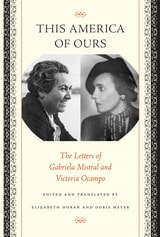
This America of Ours
The Letters of Gabriela Mistral and Victoria OcampoBy Gabriela Mistral and Victoria Ocampo
University of Texas Press, 2003
2005 — Best Book Translation Prize – New England Council of Latin American Studies
Gabriela Mistral and Victoria Ocampo were the two most influential and respected women writers of twentieth-century Latin America. Mistral, a plain, self-educated Chilean woman of the mountains who was a poet, journalist, and educator, became Latin America's first Nobel Laureate in 1945. Ocampo, a stunning Argentine woman of wealth, wrote hundreds of essays and founded the first-rate literary journal Sur. Though of very different backgrounds, their deep commitment to what they felt was "their" America forged a unique intellectual and emotional bond between them.
This collection of the previously unpublished correspondence between Mistral and Ocampo reveals the private side of two very public women. In these letters (as well as in essays that are included in an appendix), we see what Mistral and Ocampo thought about each other and about the intellectual and political atmosphere of their time (including the Spanish Civil War, World War II, and the dictatorships of Latin America) and particularly how they negotiated the complex issues of identity, nationality, and gender within their wide-ranging cultural connections to both the Americas and Europe.
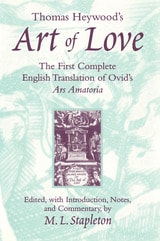
Thomas Heywood's Art of Love
The First Complete English Translation of Ovid's Ars AmatoriaEdited, with Introduction, Notes, and Commentary by M. L. Stapleton
University of Michigan Press, 2000
The present edition represents the first instance in which the translation has been edited in a scholarly manner. Besides a full Introduction that accounts for the history of Loues Schoole, Ovid in the English Renaissance, and the editorial method, each of the three books of the poem includes a Commentary that provides cross-references within the text; glosses for unusual, archaic, or regional forms peculiar to Heywood's English; annotations from sourcebooks that Heywood used to identify or understand characters from classical history, literature, and mythology; and explanations for any emendations the editor deemed necessary. In his efforts to make the Ars a seventeenth-century poem, Heywood contemporizes Ovid's references to dress, behavior, courtship, marriage, games, theater, agriculture, horsemanship, war, literature --all of which the Commentary explains at great length.
Loues Schoole will find readership in these areas: early modern history, literature, and culture; classical studies; Renaissance drama; the history of sexuality; and translation theory.
M. L. Stapleton is Associate Professor of English and Philosophy, Stephen F. Austin State University.

Three Novellas
Thomas Bernhard
University of Chicago Press, 2003
Uninitiated readers should consider Three Novellas a passport to the absurd, dark, and uncommonly comic world of Bernhard. Two of the three novellas here have never before been published in English, and all of them show an early preoccupation with the themes of illness and madness, isolation, and tragic friendships that would obsess Bernhard throughout his career. Amras, one of his earliest works, tells the story of two brothers, one epileptic, who have survived a family suicide pact and are now living in a ruined tower, struggling with madness, trying either to come fully back to life or finally to die. In Playing Watten, the narrator, a doctor who lost his practice due to morphine abuse, describes a visit paid him by a truck driver who wanted the doctor to return to his habit of playing a game of cards (watten) every Wednesday—a habit that the doctor had interrupted when one of the players killed himself. The last novella, Walking, records the conversations of the narrator and his friend Oehler while they walk, discussing anything that comes to mind but always circling back to their mutual friend Karrer, who has gone irrevocably mad. Perhaps the most overtly philosophical work in Bernhard's highly philosophical oeuvre, Walking provides a penetrating meditation on the impossibility of truly thinking.
Three Novellas offers a superb introduction to the fiction of perhaps the greatest unsung hero of twentieth-century literature. Rarely have the words suffocating, intense, and obsessive been meant so positively.
Three Plays of Racine
Phaedra, Andromache, and BritannicusJean Baptiste Racine
University of Chicago Press, 1961
"His literal and flexible blank verse actually forms the nearest thing in English to the longer-measured rhymed couplets of Racine; even an ordinary reading aloud of so faithful a rendering provides something of the experience that Proust described."—Elliott Coleman, Poetry
"A superb introduction . . . flawless translations, infused with poetic fire and charm."—Margaret Carpenter, Norfolk Virginian-Pilot
Three Plays
Dark River, Arthur Aronymus and His Ancestors, and I and IElse Lasker-Schuler
Northwestern University Press, 2005
Famous for her poetry and infamous for her bohemian lifestyle, as well as her association with political radicals, Else Lasker-Schüler (1869–1945) is only now returning to just renown as one of the few women writers within the Expressionist movement of the early twentieth century. These plays-Dark River, Arthur Aronymus and His Ancestors, and I and I-in Jane Curtis's fluid translation, allow readers of English to experience the radically avant-garde style that put Lasker-Schüler on a par with Brecht in her day, as well as the passionate treatment of questions of gender, ethnicity, and sexuality that placed her well ahead of her time. Lasker-Schüler's plays reflect her unusual life among the Berlin Moderns of the 1910s and 20s. The daughter of a well-to-do Jewish banker and builder, Else Schüler gave up her bourgeois existence as a doctor's wife for the artistic, social, and political uncertainties that would characterize the rest of her life. Many of her finest poems and plays were written amidst the cafe society of Berlin, where she knew some of the great expressionist artists of the period. The death of her beloved son in 1927, which led her to intense introspection and reflection on the Jewish tradition, especially mysticism and the Kabbalah, also marked the beginning of Lasker-Schüler's years of tragedy, loss, and dislocation, culminating in her flight from Nazi Germany to Switzerland and then Jerusalem, where she ended her days as an eccentric pauper.
The plays in this volume mark Lasker-Schüler's movement away from the traditional aesthetic canon, revealing a unique formal development from naturalistic expressionist episodes in the lyrical Dark River to a historicizing politicization of the theater in Arthur Aronymous to the forms of montage and "epic" presentations in I and I. A short preface by Inca Molina Rumold places each play in its historical, biographical, and artistic context.
Three Poems
Concerning His Own Affairs, Concerning Himself and the Bishops, and Concerning His Own LifeSaint Gregory of Nazianzus
Catholic University of America Press, 1987
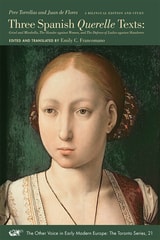
Three Spanish Querelle Texts
Grisel and Mirabella, The Slander against Women, and The Defense of Ladies against SlanderersPere Torrellas and Juan de Flores
Iter Press, 2013
Three-Toed Gull
Selected PoemsJesper Svenbro
Northwestern University Press, 2003
To the North/Al norte
PoemsLeon Salvatierra
University of Nevada Press, 2022
Salvatierra mixes lyrical and prose poems to explore the experience of exile in a new country. His powerful metaphors and fresh images inhabit spaces fraught with the violence, anxiety, and vulnerability that undocumented Central American migrants commonly face in their transnational journeys. His vivid memories of Nicaragua tie the personal experiences of his poetic subjects to the geopolitical history between the Central American region and the United States.
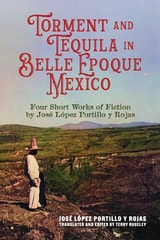
Torment and Tequila in Belle Epoque Mexico
Four Short Works of Fiction by José López Portillo y RojasJosé López Portillo y Rojas, translated and edited by Terry Rugeley
University of Alabama Press, 2025
This captivating collection of translated short works by José López Portillo y Rojas, one of Mexico’s most significant literary figures, explores themes of social frustration, loss, and heartache in late-nineteenth-century Mexico.
Torment and Tequila in Belle Epoque Mexico is the first English-language collection of selected fiction by the influential Mexican author and political figure José López Portillo y Rojas (1850–1923). His distinguished career spanned the late nineteenth century to the tumultuous years of the Mexican Revolution.
López Portillo y Rojas’s prose is characterized by rich vocabulary and fluid progression, offering readers moments of deep reflection. The stories boast finely drawn characters and evocative settings, including that of the author’s native Jalisco. He adeptly addresses the grand issues of Porfirian times, seamlessly blending social and personal themes of suffering, ambition, desire, and betrayal, and anchors his stories in the realities of human experience.
Three masterfully translated short stories and one novella make up the collection, beginning with “The Lottery Ticket,” a critique of social hypocrisy that follows a dreamer whose fortunes slip through his fingers at the hands of his own family. “The Mirror” explores the eerie depths of grief and guilt, echoing the gothic brilliance of Edgar Allan Poe. “Nieves” is a gripping novella of love and power in which a young woman’s fate becomes entangled in a decaying estate and a brewing rebellion. “The Bracelet,” examines the tragic weight of the past, as a locked piece of jewelry seals the fate of an engaged couple. These translations offer an unforgettable glimpse into one of Mexico’s most brilliant minds and restore López Portillo y Rojas to his rightful place in Mexican literary history.
Tractates on the Gospel of John 112–24; Tractates on the First Epistle of John
Saint Augustine
Catholic University of America Press, 1988
Tractates on the Gospel of John 11–27
Saint Augustine
Catholic University of America Press, 1988
Tractates on the Gospel of John 1–10
Saint Augustine
Catholic University of America Press, 1988
Tractates on the Gospel of John 28–54
Saint Augustine
Catholic University of America Press, 1988
Tractates on the Gospel of John 55–111
Saint Augustine
Catholic University of America Press, 1988
Treatises on Noah and David
Brian P. St. Ambrose
Catholic University of America Press, 2020
The first treatise presents Noah as a model just man, as Ambrose pairs the literal and the higher or spiritual meaning of the Genesis flood narrative to address topics ranging from the Genesis narrative to Stoic ethics to the Incarnation. In his defense of David to the emperor Theodosius, Ambrose ties David’s sin and repentance to his own close reading of Psalm 51(50), David’s plea for himself in his famous “Miserere.” While the authenticity of the third treatise included in the volume, the Second Apology of David, has long been challenged, recent scholarship suggests that it transmits Ambrose’s own preaching, which applies the lessons of David’s life to the situation of gentile unbelievers, Jews, and the church; even if it is the work of a later imitator, the Second Apology is a compelling and systematic treatment of the David’s sin and repentance as relevant to Christian morality and doctrine.
The three treatises, previously unavailable in English translation, broaden our understanding of exegesis in the Latin West and our interpretation of Ambrose as preacher and exegete.
Trial by Farce
A Dozen Medieval French Comedies in English for the Modern StageEdited and Translated by Jody Enders
University of Michigan Press, 2023
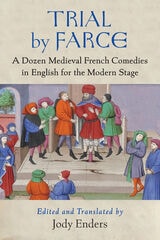
Was there more to comedy than Chaucer, the Second Shepherds’ Play, or Shakespeare? Of course! But, for a real taste of medieval and Renaissance humor and in-your-face slapstick, one must cross the Channel to France, where over two hundred extant farces regularly dazzled crowds with blistering satires. Dwarfing all other contemporaneous theatrical repertoires, the boisterous French corpus is populated by lawyers, lawyers everywhere. No surprise there. The lion’s share of mostly anonymous farces was written by barristers, law students, and legal apprentices. Famous for skewering unjust judges and irreligious ecclesiastics, they belonged to a 10,000-member legal society known as the Basoche, which flourished between 1450 and 1550. What is more, their dramatic send-ups of real and fictional court cases were still going strong on the eve of Molière, resilient against those who sought to censor and repress them. The suspenseful wait to see justice done has always made for high drama or, in this case, low drama. But, for centuries, the scripts for these outrageous shows were available only in French editions gathered from scattered print and manuscript sources.
In Trial by Farce, prize-winning theater historian Jody Enders brings twelve of the funniest legal farces to English-speaking audiences in a refreshingly uncensored but philologically faithful vernacular. Newly conceived as much for scholars as for students and theater practitioners, this repertoire and its familiar stock characters come vividly to life as they struggle to negotiate the limits of power, politics, class, gender, and, above all, justice. Through the distinctive blend of wit, social critique, and breathless boisterousness that is farce, we gain a new understanding of comedy itself as form of political correction. In ways presciently modern and even postmodern, farce paints a different cultural picture of the notoriously authoritarian Middle Ages with its own vision of liberty and justice for all. Theater eternally offers ways for new generations to raise their voices and act.
Trojan Women, Helen, Hecuba
Three Plays about Women and the Trojan WarEuripides, Verse translations by Francis Blessington, with introductions and notes
University of Wisconsin Press, 2015
Francis Blessington combines his work as a poet, translator, and teacher of literature and Greek with his theatrical experience to create fresh and faithful verse translations suitable for the stage, the classroom, or the general reader. The three plays are augmented by introductions, notes, and an appendix on elements of Greek tragedy. Blessington glosses historical and mythological terms, identifies Greek themes in the texts, offers literary interpretations, and suggests topics for discussion.