Results by title
28167 books match the query 'History' and 6372 start with t
The Discovery of America
Cesare Pascarella
University of Arkansas Press, 1991
Winner of the Harold Morton Landon Translation Award from the Academy of American Poets
The Discovery of Freedom in Ancient Greece
Revised and Updated EditionKurt Raaflaub
University of Chicago Press, 2003
To find out, Raaflaub analyses ancient Greek texts from Homer to Thucydides in their social and political contexts. Archaic Greece, he concludes, had little use for the idea of political freedom; the concept arose instead during the great confrontation between Greeks and Persians in the early fifth century BCE. Raaflaub then examines the relationship of freedom with other concepts, such as equality, citizenship, and law, and pursues subsequent uses of the idea—often, paradoxically, as a tool of domination, propaganda, and ideology.
Raaflaub's book thus illuminates both the history of ancient Greek society and the evolution of one of humankind's most important values, and will be of great interest to anyone who wants to understand the conceptual fabric that still shapes our world views.
The Discovery of Insulin
Michael Bliss
University of Chicago Press, 1982
The Discovery of Insulin
Enlarged EditionMichael Bliss
University of Chicago Press, 2021
When insulin was discovered in the early 1920s, even jaded professionals marveled at how it brought starved, sometimes comatose patients with diabetes back to life. Defying the average timeline, the 1923 Nobel Prize in Physiology or Medicine was awarded for its discovery. To recount the fascinating story behind the discovery of insulin, in this classic work Michael Bliss draws on archival records and personal interviews with witnesses to the events. He unearths scientists’ memoirs and confidential appraisals of insulin by members of the Nobel Committee, bringing science to life and resolving a longstanding controversy about scientific collaboration at its most fractious and fascinating: who among the Canadian team of Frederick Banting, Charles Best, James Collip, and John Macleod ultimately deserves credit for the discovery of insulin? Or is credit due farther afield—to Georg Zuelzer in Berlin, E.L. Scott in Chicago, Israel Kleiner in New York, Nicolas Paulescu in Bucharest, John Murlin in Rochester?
Bliss’s life-and-death saga illuminates one of the most important breakthroughs in the history of medicine. With a new preface by the author and a foreword by historian Alison Li, this enlarged edition celebrates the lasting impact of insulin’s discovery and ongoing importance.
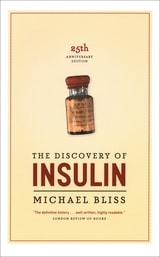
The Discovery of Insulin
Twenty-fifth Anniversary EditionMichael Bliss
University of Chicago Press, 2007

The Discovery of New Mexico by the Franciscan Monk Friar Marcos de Niza in 1539
Adolph F. Bandelier; Translated and Edited by Madeleine Turrell Rodack
University of Arizona Press, 1980
The Discovery of Time
Stephen Toulmin and June Goodfield
University of Chicago Press, 1982
The Discovery of the Fact
Clifford Ando and William P. Sullivan, Editors
University of Michigan Press, 2020

The Discovery of the World
Maps of the Earth and the CosmosElizabeth Hale
University of Chicago Press, 1985
The Disney Animation Renaissance
Behind the Glass at the Florida StudioMary E. Lescher
University of Illinois Press, 2023
A ground-level look at the entertainment giant, The Disney Animation Renaissance profiles the people and purpose behind a little-known studio during a historic era.
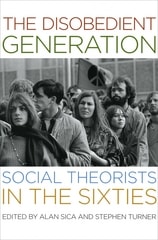
The Disobedient Generation
Social Theorists in the SixtiesEdited by Alan Sica and Stephen Turner
University of Chicago Press, 2005
The Disobedient Generation collects newly written autobiographies by an international cross-section of well-known sociologists, all of them "children of the '60s." It illuminates the human experience of living through that decade as apprentice scholars and activists, encountering the issues of class, race, the Establishment, the decline of traditional religion, feminism, war, and the sexual revolution. In each case the interlinked crises of young adulthood, rapid change, and nascent professional careers shaped this generation's private and public selves. This is an intensely personal collective portrait of a generation in a time of struggle.

The Disordered Police State
German Cameralism as Science and PracticeAndre Wakefield
University of Chicago Press, 2009
Probing the relationship between German political economy and everyday fiscal administration, The Disordered Police State focuses on the cameral sciences—a peculiarly German body of knowledge designed to train state officials—and in so doing offers a new vision of science and practice during the seventeenth and eighteenth-centuries. Andre Wakefield shows that the cameral sciences were at once natural, technological, and economic disciplines, but, more important, they also were strategic sciences, designed to procure patronage for their authors and good publicity for the German principalities in which they lived and worked. Cameralism, then, was the public face of the prince's most secret affairs; as such, it was an essentially dishonest enterprise.
In an entertaining series of case studies on mining, textiles, forestry, and universities, Wakefield portrays cameralists in their own gritty terms. The result is a revolutionary new understanding about how the sciences created and maintained an image of the well-ordered police state in early modern Germany. In raising doubts about the status of these German sciences of the state, Wakefield ultimately questions many of our accepted narratives about science, culture, and society in early modern Europe.
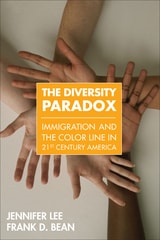
The Diversity Paradox
Immigration and the Color Line in Twenty-First Century AmericaJennifer Lee
Russell Sage Foundation, 2010
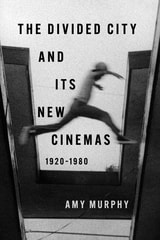
The Divided City and Its New Cinemas, 1920-1980
Amy Murphy
University of Illinois Press, 2026

The Divided Mind of Protestant America, 1880-1930
Ferenc M. Szasz
University of Alabama Press, 1982
The Divided Mind of Protestant America is a documented overview of American Protestantism in American culture from beginning to end. It discusses liberal-fundamentalist tensions in America and the role of mainline Protestantism, evangelicalism, and fundamentalism in American culture.
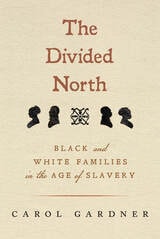
The Divided North
Black and White Families in the Age of SlaveryCarol Gardner
University of Massachusetts Press, 2025
Winner, 2026 New England Historical Association James P. Hanlan Book Prize
Finalist, 2026 New England Society Book Award in Nonfiction
Reuben Ruby and Nathaniel Gordon II were born eleven months apart in 1798 and 1799 and spent much of their boyhoods roaming the noisy, bustling waterfront of Portland, Maine. They lived just blocks from one another, attended school together, and went to the same church with their families. But they were worlds apart, separated by family, culture, and race. Reuben Ruby was Black and Nathaniel Gordon was White.
The Rubys became prominent antislavery activists, equal rights advocates, and operatives on the Underground Railroad. Their neighbors, the Gordons, became well-to-do ship masters, owners, and merchants: among them, the most notorious American slave ship captain of the century, Nathaniel Gordon III. As activists, sea captains, businessmen, prospectors, and politicians, members of these two families traveled to New York, California, Texas, Louisiana, Africa, Haiti, and Brazil, where their experiences were shaped by their racial identities. At home in the “Free North,” they faced social and political divisions nearly as sharp as those they encountered elsewhere.
To understand the issues that divided nineteenth-century America—and, in many ways, still divide the nation—few have looked to the far North. In this compelling narrative history and intimate dual-family biography, Carol Gardner traces the Rubys and Gordons as they navigate the turbulent 1800s. As families and individuals, they demonstrate that the North was a critical proving ground for American notions of freedom and equality, as telling as any town, plantation, or battlefield in the South. Their experiences help reveal what it meant to live in a free state during the age of slavery, with all the promise, disappointment, irony, and hope that the notion entailed.
The Divided States
Unraveling National Identities in the Twenty-First CenturyEdited by Laura J. Beard and Ricia Anne Chansky
University of Wisconsin Press, 2023
Working across auto/biography studies, American studies, and human geography—all of which deal with the current interest in competing narratives, “alternative facts,” and accountability—the essays engage in and contribute to critical conversations in classrooms, scholarship, and the public sphere. The authors draw from a variety of fields, including anthropology; class analysis; critical race theory; diasporic, refugee, and immigration studies; disability studies; gender studies; graphic and comix studies; Indigenous studies; linguistics; literary studies; sociology; and visual culture. And the genres under scrutiny include diary, epistolary communication, digital narratives, graphic narratives, literary narratives, medical narratives, memoir, oral history, and testimony.
This fresh and theoretically engaged volume will be relevant to anyone interested in the multiplicity of voices that make up the US national narrative.

The Dividends of Dissent
How Conflict and Culture Work in Lesbian and Gay Marches on WashingtonAmin Ghaziani
University of Chicago Press, 2008
Amin Ghaziani ably puts these demonstrations into their cultural context, chronicling gay and lesbian life at the time and the political currents that prompted the protests. He then turns to each march in detail, focusing on the role that internal dissent played in its organization. Ultimately, Ghaziani concludes that infighting can contribute positively to the development of social movements, and that the debates over the marches helped define what it means to be gay in the United States.
The Dividing of Christendom
Christopher Dawson
Catholic University of America Press, 2026
The Divine Spark of Syracuse
Ingrid D. Rowland
Brandeis University Press, 2018

The Division of Europe after World War II
1946By W. W. Rostow
University of Texas Press, 1981
Should the negotiation of the post–World War II peace treaties in Europe have been pursued separately or should they have been approached within the framework of a general European settlement? The debate on this fundamental foreign policy issue, which has left only faint tracks in the documentary record, is fully explored here for the first time.
W. W. Rostow, in his second book in the Ideas and Action Series, describes a meeting that took place on the eve of the departure of Secretary of State James Byrnes for Paris to participate in treaty negotiations. The meeting was probably the only occasion during 1946 when the peace treaty issue as a whole was explicitly addressed at a high level with lucid alternatives on the table. The plan laid before Secretary of State Byrnes by his senior subordinates, Under Secretary Dean Acheson and Assistant Secretary for Economic Affairs Will Clayton, aimed to halt the movement toward the split of Europe and the emergence of hostile blocs. It outlined an all-European settlement, including economic and security institutions linked to the United Nations. Only one part of the proposal gained Byrnes's support and came to life: the United Nations Economic Commission for Europe in Geneva. But the Acheson-Clayton proposal foreshadowed the Marshall Plan.
The book's larger theme is the process by which the Cold War came about. Rostow's interpretation differs from either conventional or revisionist views, emphasizing as it does the process of incremental deterioration that occurred in 1946 and the role of uncertainty and weakness in American policy.
This second volume in the Ideas and Action Series will interest general readers as well as those with a particular interest in World War II. It should be of special value to political scientists, economists, military historians, and policy makers, and may serve as a case study in a variety of courses.

The Division of Literature
Or the University in DeconstructionPeggy Kamuf
University of Chicago Press, 1996
Kamuf begins by analyzing the complex history of literary study within the modern university, critically reading developments from the French Revolution through the nineteenth century and beyond in Europe. She then turns to one of the most troubling works in the American literary canon—Melville's The Confidence-Man—to show how academic literary history has avoided confronting the implications of works in which meaning is never solely confined within a past. By engaging a future readership to which it applies for credit, Kamuf argues, literature cannot serve as a stable object of study. It locates, rather, a site of "the university in deconstruction."
Ranging from disciplinary histories of literature to our current culture wars, Kamuf offers a fascinating critique of academic literary study.

The Division of the World
On Archives, Empires and the Vanity of BordersMartin Zimmerman
Haus Publishing, 2021
At a time when Western nations are being urged to confront their colonial past, this book examines a major archive, revealing the scale of the Spanish colonial enterprise in South and Central America.
Established in 1785, the Archivo General de Indias in Seville holds roughly three hundred years of Spanish colonial history in the Americas. It houses 8,000 charts and around ninety million documents—among them Christopher Columbus’s logbook and the famous Treaty of Tordesillas which, mediated by the Pope and signed in 1494, entitled the Spanish and Portuguese kings to divide the world between them. With this treaty as a starting point, the historian Martin Zimmermann journeys into the age of discovery and recounts stories of dangerous passages, encounters with the unknown, colonial brutality, and the power of cartographers, illustrating the insatiable lust of colonialists to conquer, exploit, and own the world. Ursula Schulz-Dornburg’s photographs show the archive before its redevelopment in 2002, offering a unique view into one of Europe’s most significant archives.
The Doctor Who Wasn't There
Technology, History, and the Limits of TelehealthJeremy A. Greene
University of Chicago Press, 2022
The Doctor Who Wasn’t There traces the long arc of enthusiasm for—and skepticism of—electronic media in health and medicine. Over the past century, a series of new technologies promised to democratize access to healthcare. From the humble telephone to the connected smartphone, from FM radio to wireless wearables, from cable television to the “electronic brains” of networked mainframe computers: each new platform has promised a radical reformation of the healthcare landscape. With equal attention to the history of technology, the history of medicine, and the politics and economies of American healthcare, physician and historian Jeremy A. Greene explores the role that electronic media play, for better and for worse, in the past, present, and future of our health.
Today’s telehealth devices are far more sophisticated than the hook-and-ringer telephones of the 1920s, the radios that broadcasted health data in the 1940s, the closed-circuit televisions that enabled telemedicine in the 1950s, or the online systems that created electronic medical records in the 1960s. But the ethical, economic, and logistical concerns they raise are prefigured in the past, as are the gaps between what was promised and what was delivered. Each of these platforms also produced subtle transformations in health and healthcare that we have learned to forget, displaced by promises of ever newer forms of communication that took their place.
Illuminating the social and technical contexts in which electronic medicine has been conceived and put into practice, Greene’s history shows the urgent stakes, then and now, for those who would seek in new media the means to build a more equitable future for American healthcare.
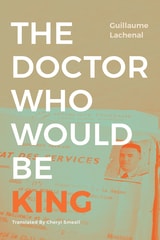
The Doctor Who Would Be King
Guillaume Lachenal
Duke University Press, 2022

The Documentary Heritage Of Ohio
Phillip R. Shriver
Ohio University Press, 2010
Key to the successful teaching and learning of history is its personalization. In presenting documents that help Ohio’s rich history come alive in the minds of its readers, this book has purposely sought to provide eyewitness, first-person narratives that will make the reader want to turn the page and keep on reading. At the same time, mindful of the significance of guideposts basic to our understanding of the development of the state, care has been taken to include those documents such as constitutions, laws, and ordinances that have truly made a difference in the shaping of our institutions and the lives of our people.
With informative and accessible introductions to each document, editors Shriver and Wunderlin have produced a book of record that reveals the sources of Ohio’s heritage. The Documentary Heritage of Ohio is the second volume in the Ohio Bicentennial Series and a must for all libraries, schools, and the bookshelves of any who wish to appreciate the state’s historic accomplishments and rich heritage not only for the bicentennial of statehood in 2003 but for many years to come.
The Documentary History of the Ratification of the Constitution Volume 26
Ratification of the Constitution by the States, Rhode Island, No. 3John P. Kaminski
Wisconsin Historical Society Press, 2013
Pulitzer Prize-winning historian Michael Kammen has noted that The Documentary History of the Ratification of the Constitution series "will be of enduring value centuries hence" and described it as "one of the most interesting documentary publications we have ever had." The American Bar Association Journal has stated, "Each new volume now fills another vital part of the mosaic of national history."
The Documentary History of the Ratification of the Constitution, Volume 25
Ratification of the Constitution by the States: Rhode Island, No. 2John P. Kaminski
Wisconsin Historical Society Press, 2012
Pulitzer Prize-winning historian Michael Kammen has noted that The Documentary History of the Ratification of the Constitution series "will be of enduring value centuries hence" and described it as "one of the most interesting documentary publications we have ever had." The American Bar Association Journal has stated, "Each new volume now fills another vital part of the mosaic of national history."

The Domestic Herbal
Plants for the Home in the Seventeenth CenturyMargaret Willes
Bodleian Library Publishing, 2020
In the seventeenth century most English households had gardens. These gardens were not merely ornamental; even the most elaborate and fashionable gardens had areas set aside for growing herbs, fruit, vegetables, and flowers for domestic use. Meanwhile, more modest households considered a functional garden to be a vital tool for the survival of the house and family. The seventeenth century was also a period of exciting introductions of plants from overseas, which could be used in all manner of recipes.
Using manuscript household manuals, recipe books, and printed herbals, The Domestic Herbal takes the reader on a tour of the productive garden and of the various parts of the house—kitchens and service rooms, living rooms and bedrooms—to show how these plants were used for cooking and brewing, medicines and cosmetics, in the making and care of clothes, and to keep rooms fresh, fragrant, and decorated. Recipes used by seventeenth-century households for preparations such as flower syrups, snail water, and wormwood ale are also included. A brief herbal gives descriptions of plants both familiar and less known to today’s readers, including the herbs used for common tasks like dyeing and brewing, and those that held a particular cultural importance in the seventeenth century. Featuring exquisite colored illustrations from John Gerard’s herbal book of 1597 as well as prints, archival material, and manuscripts, this book provides an intriguing and original focus on the domestic history of Stuart England.
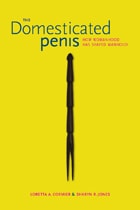
The Domesticated Penis
How Womanhood Has Shaped ManhoodLoretta A. Cormier
University of Alabama Press, 2015
The Domesticated Penis challenges long-held assumptions that, in the development of Homo sapiens, form follows function alone. In this fascinating exploration, Loretta A. Cormier and Sharyn R. Jones explain the critical contribution that conscious female selection has made to the attributes of the modern male phallus.
Synthesizing a wealth of robust scholarship from the fields of archaeology, cultural anthropology, evolutionary theory, and primatology, the authors successfully dismantle the orthodox view that each part of the human anatomy has followed a vector of development along which only changes and mutations that increased functional utility were retained and extended. Their research animates our understanding of human morphology with insights about how choices early females made shaped the male reproductive anatomy.
In crisp and droll prose, Cormier’s and Jones’s rigorous scholarship incorporates engaging examples and lore about the human phallus in a variety of foraging, agrarian, and contemporary cultures. By detailing how female selection in mating led directly to a matrix of anatomical attributes in the male, their findings illuminate how the penis also acquired a matrix of attributes of the imagination and mythical powers—powers to be assuaged, channeled, or deployed for building productive societies.
These analyses offer a highly persuasive alternative to moribund biological and behavioral assumptions about prehistoric alpha males as well as the distortions such assumptions give rise to in contemporary popular culture. In this anthropological tour de force, Cormier and Jones transcend reductive gender stereotypes and bring to our concepts of evolutional biomechanics an invigorating new balance and nuance.
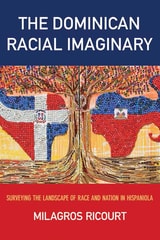
The Dominican Racial Imaginary
Surveying the Landscape of Race and Nation in HispaniolaRicourt, Milagros
Rutgers University Press, 2016
This book begins with a simple question: why do so many Dominicans deny the African components of their DNA, culture, and history?
The Dominican Republic Reader
History, Culture, PoliticsEric Paul Roorda, Lauren Derby, and Raymundo González , eds.
Duke University Press, 2014
The Dons
Mentors, Eccentrics and GeniusesNoel Annan
University of Chicago Press, 1999
In this entertaining, informative book, Noel Annan is at his incisive best. Displaying his customary mastery of his subject, he describes the great dons in all their glory and eccentricities: who they were, what they were like, why they mattered, and what their legacy is. Written with love and wisdom, the great minds of the past—figures such as John Henry Newman, John Sparrrow, and Isaiah Berlin—are brought alive. In addition, Annan's often quoted article "The Intellectual Aristocracy" is included in this book.
No other work has ever explained so precisely and so intimately the significance of the dons and their important role in shaping higher education—at a time when the nature of learning is ever more the subject of dissension and uncertainty.
"With a charming mixture of analyses and anecdotes, Annan builds up a picture of the changing Oxbridge scene that keeps a reader's imagination. . . . [T]he comical-satirical narrative of which he was a master is a joy to read, and The Dons will deservedly be enjoyed as a bedside book by those who treasure English eccentricity."—Stephen Toulmin, Los Angeles Times Book Review
"[A]n affectionate elegy for a class that has largely expired."—Robert Fulford, National & Financial Post
"[A] wonderfully gifted and energetic writer. . . . Noel was one of the few figures in English public life known simply by his first name. There was no mistaking him for anyone else."—Jonathan Mirsky, New Yorker
"A sparkling collection of essays."—Michael Davie, Times Literary Supplement
"[A] highly affectionate . . . look at some of the more remarkable academic personages to distinguish-and sometimes dumbfound-Oxford and Cambridge over the last two centuries. . . . For all that it cherishes eccentricity and abounds in Oxbridge gossip, The Dons is at heart a deeply serious book, one dedicated to a conception of learning and culture that is at once increasingly rare . . . yet very far from being outmoded."—Mark Feeney, Boston Globe
"Annan writes elegantly and winningly throughout his book. . . . Leaving arguably the best for last, Annan ends The Dons with a reprinting of his celebrated essay 'The Intellectual Aristocracy,' . . . [B]oth a dazzling tour de force and a clever jeu d'esprit."—Michael Dirda, Washington Post Book World
"A witty, erudite, insider account-exactly what one would expect from the best of their type."—Andrew Lycett, Sunday Times

The Door of Last Resort
Memoirs of a Nurse PractitionerWard, Frances
Rutgers University Press, 2013
Ward views nurse practitioners as important providers of primary health care (including the prevention of and attention to the root causes of ill health) in independent practice and as equal members of professional teams of physicians, registered nurses, and other health care personnel. She describes the education of nurse practitioners, their scope of practice, their abilities to prescribe medications and diagnostic tests, and their overall management of patients’ acute and chronic illnesses. Also explored are the battles that nurse practitioners have waged to win the right to practice—battles with physicians, health insurance companies, and even other nurses.
The Door of Last Resort, though informed by Ward’s experiences, is not a traditional memoir. Rather, it explores issues in primary health care delivery to poor, urban populations from the perspective of nurse practitioners and is intended to be their voice. In doing so, it investigates the factors affecting health care delivery in the United States that have remained obscure throughout the current national debate
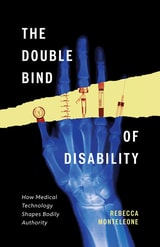
The Double Bind of Disability
How Medical Technology Shapes Bodily AuthorityRebecca Monteleone
University of Minnesota Press, 2025
Exposing the ableism underlying medical innovation
As medical advancements continue to shape the detection, diagnosis, and treatment of disability and illness, technology is often presented as a pathway to autonomy. Challenging this assumption, Rebecca Monteleone shows how medical technologies contribute to a cruel double bind, forcing disabled people to be accountable for adapting to a world built by and for nondisabled people while dismissing their lived experiences in favor of medical expertise. Far more complex than simple progress, these technologies are more oppressive than liberating when they place the burden of care on individuals and perpetuate societal ableism that demands that bodies look, move, and function in certain ways.
The Double Bind of Disability examines the complex relationship between medical technologies and their users, highlighting tensions between personal responsibility and medical authority. Sharing the perspectives and experiences of users of three medical technologies (prenatal genetic screening, deep brain stimulation, and do-it-yourself artificial pancreas systems), Monteleone analyzes how users navigate the constraints of these systems and also imagine a new, more liberatory approach to healthcare.
Asserting a bold vision, Monteleone describes a future where medical interventions take seriously the lived expertise of disabled people to address ableist infrastructures rather than require the modification of nonnormative bodyminds. She calls for a radical reimagining of medical technology that moves beyond individualistic frameworks to embrace collective experience and embodied knowing.
Retail e-book files for this title are screen-reader friendly.
The Double Screen
Medium and Representation in Chinese PaintingWu Hung
University of Chicago Press, 1997
and pictorial representations, The Double Screen shows how the
collaboration and tension between material form and image gives life to
a painting. A Chinese painting is often reduced to the image it bears;
its material form is dismissed; its intimate connection with social
activities and cultural conventions neglected.
A screen occupies a space and divides it, supplies an ideal surface for
painting, and has been a favorite pictorial image in Chinese art since
antiquity. Wu Hung undertakes a comprehensive analysis of the screen,
which can be an object, an art medium, a pictorial motif, or all three
at once. With its diverse roles, the screen has provided Chinese
painters with endless opportunities to reinvent their art.
The Double Screen provides a powerful non-Western perspective on
issues from portraiture and pictorial narrative to voyeurism,
masquerade, and political rhetoric. It will be invaluable to anyone
interested in the history of art and Asian studies.
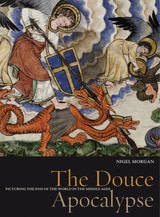
The Douce Apocalypse
Picturing the End of the World in the Middle AgesNigel Morgan
Bodleian Library Publishing, 2006
Now the manuscript—created sometime between 1250 and 1275—reaches an entirely new audience at the hands of noted scholar Nigel Morgan. The Douce Apocalypse explores the manuscript’s royal patronage, looks at its fascinating imagery, and examines its significance in light of contemporary prophecy. The commentary is accompanied by lush, full-color illustrations.
As Morgan relates, the Douce Apocalypse is especially enlightening because of its unfinished nature. A few of its images remain incomplete—and such absences give insight into the artist’s painstaking techniques of drawing, gilding, and painting. The second volume in the Treasures from the Bodleian Library series, The Douce Apocalypse will convey both the beauty of the original and the enduring fascination of its contents.
The Douglass Century
Transformation of the Women’s College at Rutgers UniversityDenda, Kayo
Rutgers University Press, 2018
The Douglass Century celebrates the college’s longevity and diversity as distinctive accomplishments, and analyzes the contributions of Douglass administrators, alumnae, and students to its survival, while also investigating multiple challenges that threatened its existence. This book demonstrates how changing historical circumstances altered the possibilities for women and the content of higher education, comparing the Jazz Age, American the Great Depression, the Second World War, the post-war Civil Rights era, and the resurgence of feminism in the 1970s and 1980s. Concluding in the present day, the authors highlight the college’s ongoing commitment to Mabel Smith Douglass’ founding vision, “to bring about an intellectual quickening, a cultural broadening in connection with specific training so that women may go out into the world fitted…for leadership…in the economic, political, and intellectual life of this nation.” In addition to providing a comprehensive history of the college, the book brings its subjects to life with eighty full-color images from the Special Collections and University Archives, Rutgers University Libraries.
The Dragon's Tail
Americans Face the Atomic AgeRobert A. Jacobs
University of Massachusetts Press, 2010
When President Harry Truman introduced the atomic bomb to the world in 1945, he described it as a God-given harnessing of “the basic power of the universe.” Six days later a New York Times editorial framed the dilemma of the new Atomic Age for its readers: “Here the long pilgrimage of man on Earth turns towards darkness or towards light.” American nuclear scientists, aware of the dangers their work involved, referred to one of their most critical experiments as “tickling the dragon's tail.”
Even after Hiroshima and Nagasaki, most Americans may not have been sure what an atomic bomb was or how it worked. But they did sense that it had fundamentally changed the future of the human race. In this book, Robert Jacobs analyzes the early impact of nuclear weapons on American culture and society. He does so by examining a broad range of stories, or “nuclear narratives,” that sought to come to grips with the implications of the bomb's unprecedented and almost unimaginable power.
Beginning with what he calls the “primary nuclear narrative,” which depicted atomic power as a critical agent of social change that would either destroy the world or transform it for the better, Jacobs explores a variety of common themes and images related to the destructive power of the bomb, the effects of radiation, and ways of surviving nuclear war. He looks at civil defense pamphlets, magazines, novels, and films to recover the stories the U.S. government told its citizens and soldiers as well as those presented in popular culture.
According to Jacobs, this early period of Cold War nuclear culture—from 1945 to the banning of above-ground testing in 1963—was distinctive for two reasons: not only did atmospheric testing make Americans keenly aware of the presence of nuclear weapons in their lives, but radioactive fallout from the tests also made these weapons a serious threat to public health, separate from yet directly linked to the danger of nuclear war.

The Drake Relays
America's Athletic ClassicDavid Peterson
University of Iowa Press, 2014
Pulitzer Prize–winning photographer David Peterson has been covering the Drake Relays for nearly forty years, but his love affair with the meet started earlier, when he ran on three winning relay teams there for Kansas State University. Now, drawing upon an unmatched personal archive, he offers the pictures of a lifetime spent on the Blue Oval. He captures on camera athletes of all levels in triumph and defeat, in mid-stride or leap, embracing their fans, their moms and dads, and their kids. In addition to the stars of the past, such as Carl Lewis, Suzy Favor Hamilton, and Herschel Walker, and those of the ’00s, like Lolo Jones and Jeremy Wariner, we see teenagers who may be the stars of the future, as well as the many athletes who will never be famous but nonetheless show themselves—and their sport—at their best.
A beautiful celebration of the Drake Relays and the diverse sports that make up “track and field,” this book will evoke memories and inspire runners, throwers, and jumpers everywhere.
The Drama of Humanity and Other Miscellaneous Papers, 1939-1985 (CW33)
Eric Voegelin, Edited & Intro by William Petropulos & Gilbert Weiss
University of Missouri Press, 2004
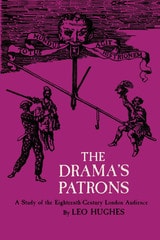
The Drama's Patrons
A Study of the Eighteenth-Century London AudienceBy Leo Hughes
University of Texas Press, 1971
The drama's laws,
the drama's patrons give,
For we that live to please,
must please to live.
—Samuel Johnson, 1747
Democratic ferment, responsible for political explosions in the seventeenth century and expanded power in the eighteenth, affected all phases of English life. The theatre reflected these forces in the content of the plays of the period and in an increased awareness among playgoers that the theatre "must please to live."
Drawing from a wealth of amusing and informative contemporary accounts, Leo Hughes presents abundant evidence that the theatre-going public proved zealous, and sometimes even unruly, in asserting its role and rights. He describes numerous species of individual pest—the box-lobby saunterers, the vizard masks (ladies of uncertain virtue), the catcallers, and the weeping sentimentalists. Protest demonstrations of various interest groups, such as footmen asserting their rights to sit in the upper gallery, reflect the behavior of the audience as a whole—an audience that Alexander Pope described as "the manyheaded monster of the pit."
Hughes analyzes the changes in the audience's taste through the long span from Dryden's day to Sheridan's. He illustrates the decline in taste from the sophisticated, if bawdy, comedy of the Restoration Period to the sentimentalism and empty show of later decades. He attributes the increased emphasis on sentiment and spectacle to audience influence and describes the effects of audience demands on managers, playwrights, and players. He describes in detail the mixed assembly that frequented the theatre during this period and the greatly enlarged theatres that were built to accommodate it.
Hughes concludes that it was the English people's basic love of liberty that allowed them to accept audience disruptions considered intolerable by foreign visitors and that the drama's patrons greatly influenced the quality of theatrical production during this long period.
The Dramaturgy of Senecan Tragedy
Thomas D. Kohn
University of Michigan Press, 2013
The first-century Roman tragedies of Seneca, like all ancient drama, do not contain the sort of external stage directions that we are accustomed to today; nevertheless, a careful reading of the plays reveals such stage business as entrances, exits, setting, sound effects, emotions of the characters, etc. The Dramaturgy of Senecan Tragedy teases out these dramaturgical elements in Seneca's work and uses them both to aid in the interpretation of the plays and to show the playwright's artistry.
Thomas D. Kohn provides a detailed overview of the corpus, laying the groundwork for appreciating Seneca's techniques in the individual dramas. Each of the chapters explores an individual tragedy in detail, discussing the dramatis personae and examining how the roles would be distributed among a limited number of actors, as well as the identity of the Chorus. The Dramaturgy of Senecan Tragedymakes a compelling argument for Seneca as an artist and a dramaturg in the true sense of the word: "a maker of drama." Regardless of whether Seneca composed his plays for full-blown theatrical staging, a fictive theater of the mind, or something in between, Kohn demonstrates that he displays a consistency and a careful attentiveness to details of performance. While other scholars have applied this type of performance criticism to individual tragedies or scenes, this is the first comprehensive study of all the plays in twenty-five years, and the first ever to consider not just stagecraft, but also metatheatrical issues such as the significant distribution of roles among a limited number of actors, in addition to the emotional states of the characters. Scholars of classics and theater, along with those looking to stage the plays, will find much of interest in this study.
The Dream of Absolutism
Louis XIV and the Logic of ModernityHall Bjørnstad
University of Chicago Press, 2021
What was absolutism, and how did it work? What was the function of the ostentatious display surrounding Louis XIV at Versailles? What is gained—and what is lost—by approaching such expressions of absolutism as propaganda, as present-day scholars tend to do?
In this sweeping reconsideration of absolutist culture, Hall Bjørnstad argues that the exuberance of Louis XIV’s reign was not top-down propaganda in any modern sense, but rather a dream dreamt collectively, by king, court, image-makers, and nation alike. Bjørnstad explores this dream through a sustained close analysis of a corpus of absolutist artifacts, ranging from Charles Le Brun’s famous paintings in the Hall of Mirrors at Versailles via the king’s secret Mémoires to two little-known particularly extravagant verbal and textual celebrations of the king. The dream of absolutism, Bjørnstad concludes, lives at the intersection of politics and aesthetics. It is the carrier of a force that emerges as a glorious image; a participatory emotional reality that requires reality to conform to it. It is a dream, finally, that still shapes our collective political imaginary today.
The Dream of Civilized Warfare
World War I Flying Aces and the American ImaginationLinda R. Robertson
University of Minnesota Press, 2005
Analyzes the link between “civilized warfare” and the American self-image
Linda R. Robertson argues that the development of the United States as a global military power arose from the influence of an image of air combat carefully constructed during World War I to mask the sordid realities of modern ground warfare. The Dream of Civilized Warfare carries this trajectory to its logical end, tracing the long history of the American desire to exert the nation’s will throughout the world without having to risk the lives of ground soldiers—a theme that continues to reverberate in public discussions, media portrayals, and policy decisions today.
Histories of American air power usually focus on World War II, when the air force became the foundation for the military strength of the United States. The equally fascinating story of World War I air combat is often relegated to a footnote, but it was the earlier war that first inspired the vision of the United States attaining dominance in world affairs through a massive air force. In The Dream of Civilized Warfare, Robertson presents the compelling story of the creation of the first American air force—and how, through the propaganda of the flying ace, a vision of “clean” or civilized combat was sold to politicians and the public. During World War I, air combat came to epitomize American ingenuity, technological superiority, adventure, leadership, and teamwork. Robertson reveals how the romantic and chivalric imagery associated with flying aces was a product of intentional propaganda and popular culture. Examining aviation history, military battles, films, literature, and political events, she looks at how the American public’s imagination was shaped—how flying aces offered not only a symbol of warfare in stark contrast to the muddy, brutal world of the trenches, but also a distraction to an American public resistant to both intervention in a European conflict and the new practice of conscription.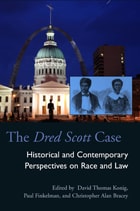
The Dred Scott Case
Historical and Contemporary Perspectives on Race and LawDavid Thomas Konig
Ohio University Press, 2010
In 1846 two slaves, Dred and Harriet Scott, filed petitions for their freedom in the Old Courthouse in St. Louis, Missouri. As the first true civil rights case decided by the U.S. Supreme Court, Dred Scott v. Sandford raised issues that have not been fully resolved despite three amendments to the Constitution and more than a century and a half of litigation.
The Dred Scott Case: Historical and Contemporary Perspectives on Race and Law presents original research and the reflections of the nation’s leading scholars who gathered in St. Louis to mark the 150th anniversary of what was arguably the most infamous decision of the U.S. Supreme Court. The decision, which held that African Americans “had no rights” under the Constitution and that Congress had no authority to alter that, galvanized Americans and thrust the issue of race and law to the center of American politics. This collection of essays revisits the history of the case and its aftermath in American life and law. In a final section, the present-day justices of the Missouri Supreme Court offer their reflections on the process of judging and provide perspective on the misdeeds of their nineteenth-century predecessors who denied the Scotts their freedom.
Contributors: Austin Allen, Adam Arenson, John Baugh, Hon. Duane Benton, Christopher Alan Bracey, Alfred L. Brophy, Paul Finkelman, Louis Gerteis, Mark Graber, Daniel W. Hamilton, Cecil J. Hunt II, David Thomas Konig, Leland Ware, Hon. Michael A. Wolff
The Dressing Room
Backstage Lives and American FilmDesirée J. Garcia
Rutgers University Press, 2025
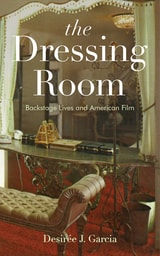
A recurrent and popular setting in American cinema, the dressing room has captured the imaginations of filmmakers and audiences for over a century. In The Dressing Room: Backstage Lives and American Film, the only book-length study of the space, author Desirée J. Garcia explores how dressing rooms are dynamic realms in which a diverse cast of performers are made and exposed. Garcia analyzes the backstage film, which spans film history, modes, and genre, to show how dressing rooms have been a useful space for filmmakers to examine the performativity of American life. From the Black maid to the wife and mother to the leading man, dressing rooms navigate, shape, and challenge society’s norms. The stakes are high in dressing rooms, Garcia argues, because they rehearse larger questions about identity and its performance, negotiating who can succeed and who cannot and on what terms.

The Drums of the 47th
Robert J. Burdette
University of Illinois Press, 2000
From Peoria to Corinth, from Corinth to Vicksburg, up the Red River country, down to Mobile and Fort Blakely, and back to Tupelo and Selma, the 47th marched three thousand miles during Burdette's tour, from March 1862 to December 1864.
In a literate voice rare in war memoirs, Burdette speaks of comradeship built and tested, the noise and confusion of the battlefield, the conflicting feelings of witnessing a military execution. Both nostalgic and piercingly immediate, his remembrances evoke the sights, sounds, smells, and above all the inner feelings stirred up by war, from exuberance to terror and from patriotic fervor to compassion for a fallen enemy.
Originally published--on the eve of another great conflict--in 1914, The Drums of the 47th is a moving depiction of the inner life of the common soldier. Like Stephen Crane's The Red Badge of Courage, Burdette's book puts a human face on the war and his words speak to all who have served or imagined serving under fire. The introduction by John E. Hallwas provides a biographical sketch of Burdette and a commentary on his engaging Civil War memoir.
The Duke's Man
A NovelDavid R. Slavitt
Northwestern University Press, 2011
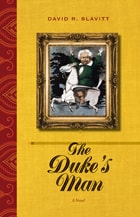
Focusing on one aspect of Dumas’ novel—the doomed love story of Bussy d’Amboise and Diana de Monsoreau—Slavitt excerpts key passages, which are extended and undercut by the narrator’s comments. The result is a radically abridged book with its own life and verve. The first of the quoted scenes, in which the names of Bussy’s assailants are replaced with those of French cheeses, sets the irreverent tone for all that follows. The book pokes fun at Dumas’ exclamatory style and flamboyant archaisms (“morbleu!” “pardieu!”), the implausibility of the swordfights, the unnecessary contortions of the political plot, the conventional passivity of the heroine, and the coyness of his love scenes. Residing somewhere between Nabokov’s Pale Fire and Quirk Books’ mash-ups (Pride and Prejudice and Zombies, etc.), The Duke’s Man’s blend of quotation, commentary, and fiction raises searching questions about realism and truth.

The Dukes of Durham, 1865-1929
Robert F. Durden
Duke University Press, 1987
In the years after the Civil War, Washington Duke proved to be an unusually able industrialist and a conscientious, Methodist philanthropist. He was, in fact, a major Southern pioneer in both industry and philanthropy. His two sons by a second marriage were remarkably devoted to each other as well as to their father. Both sons also reflected traits of thier father. While Benjamin N. Duke and James B. Duke had life-long involvement with the business world—first in tobacco, then textiles, and finally electric power—as well as with philanthropy, they actually developed complementary specializations. Benjamin N. Duke, the older of the two, served as the family's primary agent for philanthropy from his early manhood in the late 1800's until he gradually became semi-invalid after 1915. James B. Duke, on the other hand, early displayed a marked talent, even a genius, for business. Toward the end of his life, with the establishment of The Duke Endowment late in 1924, he emerged as one of the nation's major philanthropists, ranking alongside Andrew Carnegie and John D. Rockefeller. A central theme of this book is, however, that the Endowment, despite its magnitude and far-reaching scope, was essentially the institutionalization and culmination of a pattern of family philanthropy that emerged in the 1890's and for which the older brother, Benjamin N. Duke, had always been the primary agent. Thus, the story of James B. Duke, who was and has remained much the more well-known of the two brothers, cannot properly be told out of the family context from which he emerged and in which occurred most of the important phases of his life.
Washington Duke, as a small, land-owning yeoman farmer, was typical of the great majority class not only in antebellum North Carolina but in the South as a whole. Only after the war, when he and his sons emerged as large-scale industrialists and philanthropists, did the Dukes become atypical. Their story is, then, both agricultural and industrial, both Southern and national. Born North Carolinians, they moved onto a national, even global, stage. Yet all the while they kept deep roots, as well as vast investments of capital, in the Old North State, and they poured many millions into philanthropy, largely in the two Carolinas. Based largely on manuscript sources, many of them hitherto unused, this is the first study of the Duke family. The "New South," as recent historians have told us, may not have been so new—but it was certainly different in important ways, and the Dukes loomed large among those who helped to make it so.