Results by title
8113 books match the query 'Literary Criticism' and 1818 start with t
Thoreau beyond Borders
New International Essays on America's Most Famous Nature WriterFrançois Specq
University of Massachusetts Press, 2020
Henry David Thoreau spent his life as an intellectual vagrant, jumping fences, pushing boundaries, and crossing borders. How, why, and to what end are the questions asked by contributors to this new volume of essays, whose work crosses national and disciplinary borders to think about Thoreau anew.
Deliberately invoking Thoreau's commitment to “living a border life,” a life located between the world of nature and that of the polis, these varied essays explore the writer's thinking and writing as situated not merely against, but across and beyond borders and boundaries—whether geographic, temporal, or spiritual. Arguing that literary texts are governed by mediation and dialogue, lines of force becoming lines of connection that entail complex patterns and interweavings, the contributors draw on methodologies that freely combine literary and philosophical approaches with cultural and political ones—in turn moving us beyond borders.
Contributors include the volume editors as well as Kristen Case, Danielle Follett, Rochelle Johnson, John J. Kucich, Daniel S. Malachuk, Henrik Otterberg, Sandra Harbert Petrulionis, Benjamin Pickford, David M. Robinson, Christa Holm Vogelius, and Michael C. Weisenburg.
Thoreau's God
Richard Higgins
University of Chicago Press, 2024
Henry David Thoreau’s spiritual life is a riddle. Thoreau’s passionate critique of formal religion is matched only by his rapturous descriptions of encounters with the divine in nature. He fled the church only to pursue a deeper communion with a presence he felt at the heart of the universe. He called this illimitable presence many names, but he often called it God.
In Thoreau’s God, Richard Higgins invites seekers—religious or otherwise—to walk with the great Transcendentalist through a series of meditations on his spiritual life. Thoreau offers us no creed, but his writings encourage reflection on how to live, what to notice, and what to love. Though his quest was deeply personal, Thoreau devoted his life to communicating his experience of an infinite, wild, life-giving God. By recovering this vital thread in Thoreau’s life and work, Thoreau’s God opens the door to a new understanding of an original voice in American religion that speaks to spiritual seekers today.
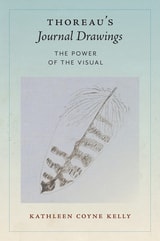
Thoreau's Journal Drawings
The Power of the VisualKathleen Coyne Kelly
University of Massachusetts Press, 2026
Examining journal drawings as an integral—and often delightful—feature of Thoreau’s work
In 1850, Henry David Thoreau began to draw in his Journal—a hedgehog’s quill, a locust’s wing, a goldenrod leaf. The sketches reflect his efforts to train his eye to observe more carefully, to look closely enough that he could see what was in front of him—with intention and attention. As Thoreau worked to combine the vivid language of a writer with the precision of a scientist, his drawings became more vital to the process. For him, writing and drawing were not separate activities; they were part of the same active, hands-on process of learning about the natural world.
Thoreau’s Journal Drawings offers a sustained examination of an understudied aspect of the Journal, emphasizing visual as well as textual analysis. It places Thoreau’s illustrated entries in the broader context of nineteenth-century scientific illustration, nature writing, and visual culture, while also offering close readings of key passages in which text and image work in tandem. The book opens up new possibilities for interpretation—both within the Journal and in the larger project of Thoreau’s thinking.
Ultimately, Thoreau’s illustrated Journal offers a case study in the complexities of representing the natural world through both language and image. His practice raises enduring questions about how we document, interpret, and mediate the more-than-human world across different forms of expression. To read the later volumes of Henry David Thoreau’s Journal without attending to his drawings is to overlook a vital dimension of his practice as both writer and observer.
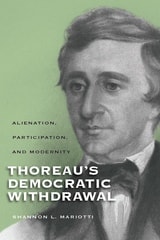
Thoreau’s Democratic Withdrawal
Alienation, Participation, and ModernityShannon L. Mariotti
University of Wisconsin Press, 2009
Separated by time, space, and context, Thoreau and Adorno share a common belief that critical inquiry is essential to democracy but threatened by modern society. While walking, huckleberrying, and picking wild apples, Thoreau tries to recover the capacities for independent perception and thought that are blunted by “Main Street,” conventional society, and the rapidly industrializing world that surrounded him. Adorno’s thoughts on particularity and the microscopic gaze he employs to work against the alienated experience of modernity help us better understand the value of Thoreau’s excursions into nature. Reading Thoreau with Adorno, we see how periodic withdrawals from public spaces are not necessarily apolitical or apathetic but can revitalize our capacity for the critical thought that truly defines democracy.
In graceful, readable prose, Mariotti reintroduces us to a celebrated American thinker, offers new insights on Adorno, and highlights the striking common ground they share. Their provocative and challenging ideas, she shows, still hold lessons on how we can be responsible citizens in a society that often discourages original, critical analysis of public issues.
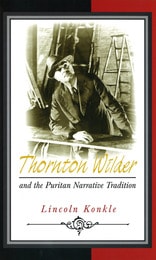
Thornton Wilder and the Puritan Narrative Tradition
Lincoln Konkle
University of Missouri Press, 2005

Thornton Wilder
New PerspectivesLincoln Konkle
Northwestern University Press, 2013
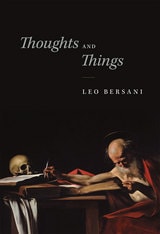
Thoughts and Things
Leo Bersani
University of Chicago Press, 2014
Thoughts and Things posits what would appear to be an irreducible gap between our thoughts (the human subject) and things (the world). Bersani departs from his psychoanalytic convictions to speculate on the oneness of being—of our intrinsic connectedness to the other that is at once external and internal to us. He addresses the problem of formulating ways to consider the undivided mind, drawing on various sources, from Descartes to cosmology, Freud, and Genet and succeeds brilliantly in diagramming new forms as well as radical failures of connectedness. Ambitious, original, and eloquent, Thoughts and Things will be of interest to scholars in philosophy, film, literature, and beyond.
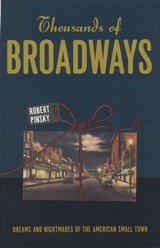
Thousands of Broadways
Dreams and Nightmares of the American Small TownRobert Pinsky
University of Chicago Press, 2009
Broadway, the main street that runs through Robert Pinsky’s home town of Long Branch, New Jersey, was once like thousands of other main streets in small towns across the country. But for Pinsky, one of America’s most admired poets and its former Poet Laureate, this Broadway is the point of departure for a lively journey through the small towns of the American imagination. Thousands of Broadways explores the dreams and nightmares of such small towns—their welcoming yet suffocating, warm yet prejudicial character during their heyday, from the early nineteenth century through World War II.
The citizens of quintessential small towns know one another extensively and even intimately, but fail to recognize the geniuses and criminal minds in their midst. Bringing the works of such figures as Mark Twain, William Faulkner, Alfred Hitchcock, Thornton Wilder, Willa Cather, and Preston Sturges to bear on this paradox, as well as reflections on his own time growing up in a small town, Pinsky explores how such imperfect knowledge shields communities from the anonymity and alienation of modern life. Along the way, he also considers how small towns can be small minded—in some cases viciously judgmental and oppressively provincial. Ultimately, Pinsky examines the uneasy regard that creative talents like him often have toward the small towns that either nurtured or thwarted their artistic impulses.
Of living in a small town, Sherwood Anderson once wrote that "the sensation is one never to be forgotten. On all sides are ghosts, not of the dead, but of living people." Passionate, lyrical, and intensely moving, Thousands of Broadways is a rich exploration of this crucial theme in American literature by one of its most distinguished figures.
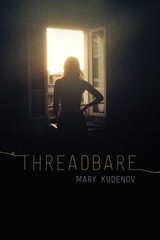
Threadbare
Class and Crime in Urban AlaskaMary Kudenov
University of Alaska Press, 2017
Journalist Mary Kudenov set out to find the true stories behind this “end-of-the-road” culture. Through her essays, we meet Alaskans who live outside the common adventurer narrative: a recent graduate of a court-sponsored sobriety program, a long-timer in the Hiland Mountain Correctional Center for women, a slum-landlord’s emancipated teenage daughter, and even a post-rampage spree killer. Her subjects struggle with poverty and middle-class aspirations, education and minimum wage work, God and psychology. The result is a raw and startling collection of direct, ground-level reporting that will leave you deeply moved.
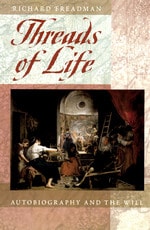
Threads of Life
Autobiography and the WillRichard Freadman
University of Chicago Press, 2001
In this new study, unprecedented in subject and scope, Richard Freadman offers the first sustained account of how changing theological, philosophical, and psychological accounts of the human will have been reflected in the writing of autobiography, and of how autobiography in its turn has helped shape various understandings of the will. Early chapters trace narrative representations of the will from antiquity (the Greeks and Augustine) to postmodernism (Derrida and Barthes), with particular emphasis on late modernity's culture of the will. Later chapters then present detailed and powerfully original readings of autobiographical texts by Louis Althusser, Roland Barthes, B. F. Skinner, Ernest Hemingway, Simone de Beauvoir, Arthur Koestler, Stephen Spender, and Diana Trilling.
Freadman's interdisciplinary approach to autobiography and the will includes a theoretical defense of the view that autobiographers are, in varying degrees, agents in their own texts. Threads of Life argues that late modernity has inherited deeply conflicted attitudes to the will. Freadman suggests that these attitudes, now deeply embedded in contemporary cultural discourse, need reexamining. In this, he contends, 'reflective autobiography' has an important part to play.
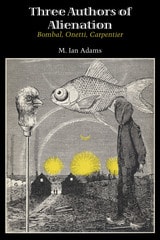
Three Authors of Alienation
Bombal, Onetti, CarpentierBy M. Ian Adams
University of Texas Press, 1975
As a philosophical and social concept, alienation covers a broad range of mental states, both normal and abnormal. Correspondingly, a wide range of literary forms has been employed to deal with this important theme. In Three Authors of Alienation, an exploration of the literary expression of alienation, M. Ian Adams discusses the works of three contemporary Latin American authors.
The fiction of María Luisa Bombal, Juan Carlos Onetti, and Alejo Carpentier reflects alienation, disgust with life, and a feeling of nothingness arising from the conditions of modern society. However, each author treats the theme differently. In La última niebla, María Luisa Bombal uses poetic imagery to create the emotional life of the protagonist. Juan Carlos Onetti portrays the schizoid extreme of alienation with a complex of symbols based on changes of vision caused by the mental states of his characters. In Los pasos perdidos, Alejo Carpentier presents the problem of the modern alienated artist who attempts to rid himself of his social alienation by changing times and cultures.
In his close analysis of the works discussed, Adams considers each literary element in its context and also in terms of its relation to the larger artistic vision of the author. In addition, he places the works of the three authors in the greater perspective of modern social problems by discussing the concepts of social alienation proposed by Erich Fromm and Erich Kahler. His conclusion is that, although disgust with life and feelings of meaninglessness are at the heart of the experiences of the characters of all three authors, only in Alejo Carpentier’s Los pasos perdidos are social conditions the major cause of alienation. In the works of Bombal and Onetti, alienation is a result not of social conditions, but of factors unique to the characters’ personalities and circumstances.
Three Authors of Alienation is a solid contribution to criticism of contemporary Latin American narrative. Adams’s projection of a social problem into the realm of aesthetic experience yields intriguing interpretations of both the problem and the literature.
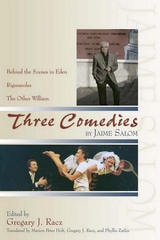
Three Comedies
Behind the Scenes in Eden, Rigamaroles, and The Other WilliamG Racz
University Press of Colorado, 2004
Three Sons
Franz Kafka and the Fiction of J. M. Coetzee, Philip Roth, and W. G. SebaldDaniel L. Medin
Northwestern University Press, 2010
Three Spiritualist Novels
Elizabeth Stuart Phelps
University of Illinois Press, 2000
Articulating an alternative to conservative church doctrine, Phelps assured her readers--many of them women bereft of their loved ones by the Civil War--that Spiritualist ideas about the afterlife were not fundamentally at odds with Scripture. Like the protagonist of The Gates Ajar, these readers wanted to believe "something actual, something pleasant" about the world to come, not "glittering generalities" about a "dreadful Heaven" where their loved ones were too busy singing and worshiping to have any thought of those left behind.
All three of the novels collected here--The Gates Ajar (1868), Beyond the Gates (1883), and The Gates Between (1887)--describe heaven as a perfected version of earthly life and the afterlife as a chance to make up for opportunities squandered on Earth. A grieving sister finds consolation in the Spiritualist idea of a continued connection with her beloved brother; a dying woman finds her soulmate in the afterlife; an erring husband makes amends across the line between the living and the dead.
Tremendously popular in Phelps's lifetime, these novels offer a way of reconciling human beings to earthly loss and sorrow, assuring readers of an afterlife both restorative and compensatory. They also provide an intriguing look at a phenomenon that preoccupied nineteenth-century America and continues to fascinate us in the twenty-first century.
Through the Open Door
A New Look at C.S. LewisDabney Adams Hart
University of Alabama Press, 1984
Unlocking the imagination, language, and vision that shaped C. S. Lewis's enduring legacy.
Through the Open Door: A New Look at C. S. Lewis offers a fresh and illuminating examination of one of the twentieth century's most beloved writers, scholars, and Christian thinkers. In this insightful study, Dabney Adams Hart moves beyond familiar assessments of C. S. Lewis as the creator of The Chronicles of Narnia to explore the intellectual foundations that shaped his work as a literary critic, educator, and defender of the Christian faith. Drawing on Lewis's essays, criticism, fiction, and apologetic writings, Hart reveals the central importance of imagination, language, myth, and meaning in Lewis's understanding of literature and human experience.
Rather than treating Lewis's diverse writings as separate endeavors, Hart demonstrates how they reflect a coherent and unified vision of truth, beauty, and morality. The book shows how Lewis used story and symbolism to address enduring questions about faith, reason, and the search for purpose in a modern world. Accessible to general readers while engaging for scholars, this volume provides valuable insight into the ideas that continue to make Lewis a significant figure in literary and religious studies. An important contribution to Lewis scholarship, Through the Open Door invites readers to discover anew the imagination and intellect behind one of the most influential Christian authors of the modern era.
Through the Past Darkly
History and Memory in François Mauriac’s Bloc-notesNathan Bracher
Catholic University of America Press, 2004
Through the Poet’s Eye
The Travels of Zagajewski, Herbert, and BrodskyBozena Shallcross
Northwestern University Press, 2009
Through the Window, Out the Door
Women's Narratives of Departure, from Austin and Cather to Tyler, Morrison, and DidionJanis P. Stout
University of Alabama Press, 1998
This informative and provocative study focuses on the centrality of departure in the texts of five major American women novelists.
An important moment in many novels and poems by American women writers occurs when a central character looks out a window or walks out the door of a house. These acts of departure serve to convey such values as the rejection of constraining social patterns, the search for individual fulfillment, and the entry into the political.
Janis Stout examines such moments and related patterns of venture and travel in the fiction of five major American novelists of the 20th century: Mary Austin, Willa Cather, Anne Tyler, Toni Morrison, and Joan Didion. Stout views these five writers within a spectrum of narrative engagements with issues of home and departure—a spectrum anchored at one end by Sarah Orne Jewett and at the other by Marilynne Robinson, whose Housekeeping posits a vision of female transience.
Through the Window, Out the Door ranges over an expansive territory. Moving between texts as well as between texts and contexts, Stout shows how women writers have envisioned the walls of physical and social structures (including genres) as permeable boundaries, drawing on both a rhetoric of liberation and a rhetoric of domesticity to construct narrative arguments for women's right to move freely between the two. Stout concludes with a personal essay on the dilemmas of domesticity and the ambivalence of departure.
Throw Yourself Away
Writing and MasochismJulia Jarcho
University of Chicago Press, 2024
In a series of readings that engage American and European works of fiction, drama, and theory from the late nineteenth through the early twenty-first centuries, critic and playwright Julia Jarcho argues that these works conceive writing itself as masochistic, and masochism as sexuality enacted in writing. Throw Yourself Away is distinctive in its sustained focus on masochism as an engine of literary production across multiple authors and genres. In particular, Jarcho shows that theater has played a central role in modern erotic fantasies of the literary.
Jarcho foregrounds writing as a project of distressed subjects: When masochistic writing is examined as a strategy of response to injurious social systems, it yields a surprisingly feminized—and less uniformly white—image of both masochism and authorship. Ultimately, Jarcho argues that a retheorized concept of masochism helps us understand literature itself as a sex act and shows us how writing can tend to our burdened, desirous bodies. With startling insights into such writers as Henry James, Henrik Ibsen, Mary Gaitskill, and Adrienne Kennedy, Throw Yourself Away furnishes a new masochistic theory of literature itself.
Thunder on the Stage
The Dramatic Vision of Richard WrightBruce Allen Dick
University of Illinois Press, 2024
Drawing on decades of research and interviews with Wright’s family and Wright scholars, Bruce Allen Dick uncovers the theatrical influence on Wright’s oeuvre--from his 1930s boxing journalism to his unpublished one-acts on returning Black GIs in WWII to his unproduced pageant honoring Vladimir Lenin. Wright maintained rewarding associations with playwrights, writers, and actors such as Langston Hughes, Theodore Ward, Paul Robeson, and Lillian Hellman, and took particular inspiration from French literary figures like Jean-Paul Sartre. Dick’s analysis also illuminates Wright’s direct involvement with theater and film, including the performative aspects of his travel writings; the Orson Welles-directed Native Son on Broadway; his acting debut in Native Son’s first film version; and his play “Daddy Goodness,” a satire of religious charlatans like Father Divine, in the 1930s.
Bold and original, Thunder on the Stage offers a groundbreaking reinterpretation of a major American writer.
Tiananmen Fictions outside the Square
The Chinese Literary Diaspora and the Politics of Global CultureBelinda Kong
Temple University Press, 2012
An exciting analysis of the myriad literary effects of Tiananmen, Belinda Kong's Tiananmen Fictions Outside the Square is the first full-length study of fictions related to the 1989 movement and massacre. More than any other episode in recent world history, Tiananmen has brought a distinctly politicized Chinese literary diaspora into stark relief.
Kong redefines Tiananmen's meaning from an event that ended in local political failure to one that succeeded in producing a vital dimension of contemporary transnational writing today. She spotlights key writers-Gao Xingjian, Ha Jin, Annie Wang, and Ma Jian-who have written and published about the massacre from abroad. Their outsider/distanced perspectives inform their work, and reveal how diaspora writers continually reimagine Tiananmen's relevance to the post-1989 world at large.
Compelling us to think about how Chinese culture, identity, and politics are being defined in the diaspora, Tiananmen Fictions Outside the Square candidly addresses issues of political exile, historical trauma, global capital, and state biopower.
Till One Day the Sun Shall Shine More Brightly
The Poetry and Prose of Donald RevellDerek Pollard, Editor
University of Michigan Press, 2020
Tillie Olsen
One Woman, Many RiddlesReid, Panthea
Rutgers University Press, 2011
Born in Omaha, Nebraska, Tillie Olsen spent her young adulthood there, in Kansas City, and in Faribault, Minnesota. She relocated to California in 1933 and lived most of her life in San Francisco. From 1962 on, she sojourned frequently in Massachusetts, New Hampshire, Santa Cruz, and Soquel, California. She was a 1920s "hell-cat"; a 1930s revolutionary; an early 1940s crusader for equal pay for equal work and a war-relief patriot; an ex-GI's ideal wife in the later 1940s; a victim of FBI surveillance in the 1950s;a civil rights and antiwar advocate during the 1960s and 1970s; and a life-long orator for universal human rights.
The enigma of Tillie Olsen is intertwined with that of the twentieth century. From the rebellions in Czarist Russia, through the terrors of the Depression and the hopes of the New Deal, to World War II, the Nuremberg Trials, and the United Nations' founding, to the cold war and House Un-American Activities Committee hearings, to later progressive and repressive movements, the story of Olsen's life brings remote events into focus.
In her classic short story "I Stand Here Ironing" and her groundbreaking Tell Me a Riddle, Yonnondido, and Silences, Olsen scripted powerful, moving prose about ordinary people's lives, exposing the pervasive effects of sexism, racism, and classism and elevating motherhood and women's creativity into topics of study. Popularly referred to as "Saint Tillie," Olsen was hailed by many as the mother of modern feminism.
Based on diaries, letters, manuscripts, private documents, resurrected public records, and countless interviews, Reid's artfully crafted biography untangles some of the puzzling knots of the last century's triumphs and failures and speaks truth to legend, correcting fabrications and myths about and also by Tillie Olsen.
Tilting Cervantes
Baroque Reflections on Postmodern CultureBruce R. Burningham
Vanderbilt University Press, 2008
Time Binds
Queer Temporalities, Queer HistoriesElizabeth Freeman
Duke University Press, 2010
Time for Childhoods
Young Poets and Questions of AgencyRachel Conrad
University of Massachusetts Press, 2020
Time for Childhoods presents a selection of striking twentieth-and twenty-first-century American poetry written by young people, and highlights how young poets imagined and shaped time for their own poetic purposes. Through close engagement with archival materials, as well as select interviews and correspondence with adult mentors, Conrad discerns how young writers figured social realities and political and racial injustices, and discusses what important advocates such as Gwendolyn Brooks and June Jordan can teach us about supporting the agency of young poets. This essential study demonstrates that young poets have much to contribute to ongoing conversations about time and power.
Time of Beauty, Time of Fear
The Romantic Legacy in the Literature of ChildhoodJames Holt McGavran, Jr.
University of Iowa Press, 2012
Time, the Familiar Stranger
J. Fraser
University of Massachusetts Press, 1987
Times of Mobility
Transnational Literature and Gender in TranslationJasmina Lukic
Central European University Press, 2020
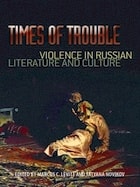
Times of Trouble
Violence in Russian Literature and CultureEdited by Marcus C. Levitt and Tatyana Novikov
University of Wisconsin Press, 2007
From the country that has added to our vocabulary such colorful terms as "purges," "pogroms," and "gulag," this collection investigates the conspicuous marks of violence in Russian history and culture.
Russians and non-Russians alike have long debated the reasons for this endemic violence. Some have cited Russia's huge size, unforgiving climate, and exposed geographical position as formative in its national character, making invasion easy and order difficult. Others have fixed the blame on cultural and religious traditions that spurred internecine violence or on despotic rulers or unfortunate episodes in the nation's history, such as the Mongol invasion, the rule of Ivan the Terrible, or the "Red Terror" of the revolution. Even in contemporary Russia, the specter of violence continues, from widespread mistreatment of women to racial antagonism, the product of a frustrated nationalism that manifests itself in such phenomena as the wars in Chechnya.
Times of Trouble is the first in English to explore the problem of violence in Russia. From a variety of perspectives, essays investigate Russian history as well as depictions of violence in the visual arts and in literature, including the works of Fyodor Dostoevsky, Isaac Babel, Mikhail Lermontov, and Nina Sadur. From the Mongol invasion to the present day, topics include the gulag, genocide, violence against women, anti-Semitism, and terrorism as a tool of revolution.
To Be At Music
Essays & TalksNorma Cole
Omnidawn, 2010
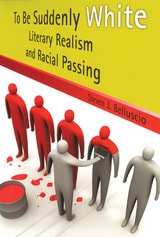
To Be Suddenly White
Literary Realism and Racial PassingSteven J. Belluscio
University of Missouri Press, 2006
To Be Suddenly White offers new readings of traditional passing narratives from the African American literary tradition, such as James Weldon Johnson’s The Autobiography of an Ex-Coloured Man, Nella Larsen’s Passing, and George Schuyler’s Black No More. It is also the first full-length work to consider a number of Jewish American and Italian American prose texts, such as Mary Antin’s The Promised Land, Anzia Yezierska’s Bread Givers, and Guido d’Agostino’s Olives on the Apple Tree, as racial passing narratives in their own right. Belluscio also demonstrates the contradictions that result from the passing narrative’s exploration of racial subjectivity, racial difference, and race itself.
When they are seen in comparison, ideological differences begin to emerge between African American passing narratives and “white ethnic” (Jewish American and Italian American) passing narratives. According to Belluscio, the former are more likely to engage in a direct critique of ideas of race, while the latter have a tendency to become more simplistic acculturation narratives in which a character moves from a position of ethnic difference to one of full American identity.
The desire “to be suddenly white” serves as a continual point of reference for Belluscio, enabling him to analyze how writers, even when overtly aware of the problematic nature of race (especially African American writers), are also aware of the conditions it creates, the transformations it provokes, and the consequences of both. Byexamining the content and context of these works, Belluscio elucidates their engagement with discourses of racial and ethnic differences, assimilation, passing, and identity, an approach that has profound implications for the understanding of American literary history.
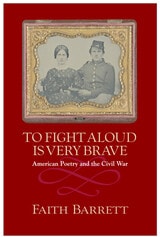
To Fight Aloud Is Very Brave
American Poetry and the Civil WarFaith Barrett
University of Massachusetts Press, 2012
Focusing on literary and popular poets, as well as work by women, African Americans, and soldiers, this book considers how writers used poetry to articulate their relationships to family, community, and nation during the Civil War. Faith Barrett suggests that the nationalist “we” and the personal “I” are not opposed in this era; rather they are related positions on a continuous spectrum of potential stances. For example, while Julia Ward Howe became famous for her “Battle Hymn of the Republic,” in an earlier poem titled “The Lyric I” she struggles to negotiate her relationship to domestic, aesthetic, and political stances.
Barrett makes the case that Americans on both sides of the struggle believed that poetry had an important role to play in defining national identity. She considers how poets created a platform from which they could speak both to their own families and local communities and to the nations of the Confederacy, the Union, and the United States. She argues that the Civil War changed the way American poets addressed their audiences and that Civil War poetry changed the way Americans understood their relationship to the nation.
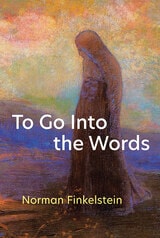
To Go Into the Words
Norman Finkelstein
University of Michigan Press, 2023
To Go Into the Words is the latest book of critical prose from renowned poet and scholar of Jewish literature Norman Finkelstein. Through a rigorous examination of poets such as William Bronk, Helen Adam, and Nathaniel Mackey, the book engages the contemporary poetic fascination with transcendence through the radical delight with language. By opening up a given poem, Finkelstein seeks the “gnosis” or insight of what it contains so that other readers can understand and appreciate the works even more.
Pulling from Finkelstein’s experience of writing thirteen books of poetry and six books of literary criticism, To Go Into the Words consistently rewards the reader with insights as transformative as they are well-considered and deftly mapped out. This volume opens the world of poetry to poets, scholars, and readers by showcasing “the gnosis that is to be found in modern poetry.”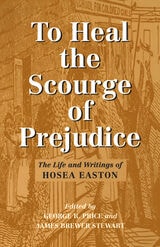
To Heal the Scourge of Prejudice
The Life and Writings of Hosea EastonHosea Easton
University of Massachusetts Press, 1999
How did racial prejudice originate and why has it been so deeply rooted in American culture? What have been the long-term effects of prejudice on the intellectual, communal, and psychological resources of African Americans? How might the nightmare of racial domination be truly brought to an end? Still pertinent today, these were among the key questions addressed more than a century and a half ago by Hosea Easton (1799–1837), an important yet long neglected activist and intellectual.
A black minister from New England, Easton rose to prominence during the 1820s and 1830s by joining in the struggle of free African Americans to resist southern slavery and secure racial equality. From this experience he developed a deep understanding of the problem of "race" in the United States and became a trenchant critic of white supremacy and its devastating consequences. This volume brings back into print the only extended writings of Easton that have survived into our time: his insightful, almost prescient A Treatise on the Intellectual Character, and the Civil and Political Condition of the Colored People of the U. States, first published in 1837; and his passionate 1828 Thanksgiving Day “Address.” The book also provides a biographical portrait of Easton and his family, drawn from primary documents as well as secondary sources in the areas of biography, genealogy, and social history.
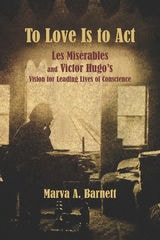
To Love Is to Act
Les Misérables and Victor Hugo’s Vision for Leading Lives of ConscienceMarva A. Barnett
Swan Isle Press, 2019
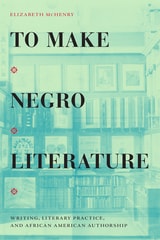
To Make Negro Literature
Writing, Literary Practice, and African American AuthorshipElizabeth McHenry
Duke University Press, 2021
To Make a Prairie
Essays on Poets, Poetry, and Country LivingMaxine Kumin
University of Michigan Press, 1980
To Tell a Free Story
The First Century of Afro-American Autobiography, 1760-1865William L. Andrews
University of Illinois Press, 1986

To the Third Empire
Ibsen’s Early DramaBrian Johnston
University of Minnesota Press, 1980
To the Third Empire was first published in 1980. Minnesota Archive Editions uses digital technology to make long-unavailable books once again accessible, and are published unaltered from the original University of Minnesota Press editions.
Critical acclaim greeted Brian Johnston's 1975 book on Ibsen's final phase, The Ibsen Cycle. Choice called it "the single most provocative and critically exciting books of Ibsen criticism in decades." Johnston now turns his attention to the early works, using the same thematic premise - that the plays follow a clear progression, influenced by the Hegalian aesthetic that pervaded Europe in the mid-nineteenth century. The result is an explanation of the early career that demonstrates both its unity and its essential relation to the realistic cycle that followed. In advancing his argument Johnston provides close readings of ten plays, ranging from Cataline to Emperor and Galilean and including Brand and Peer Gynt. Scholars and students of drama, comparative literature, and Ibsen studies will find To the Third Empire an essential work.
Today the Struggle
Literature and Politics in England during the Spanish Civil WarBy Katharine Bail Hoskins
University of Texas Press, 1969
Many writers, from Aristophanes to Joseph Heller, have written about politics. But at certain periods in history, often at times of conflict and turmoil, writers have consciously used their literary talents to support or oppose a specific cause. The 1930s, a decade of widespread social and political breakdown, was such a period.
Today the Struggle examines the political involvement of those leading British writers who dedicated their talents to the defense of Nationalists or Loyalists during the Spanish Civil War and who saw that war as symbolic of their own Right-Left dialogue.
Conservatives like William Butler Yeats and T. S. Eliot and Roman Catholics like Evelyn Waugh were passionately anti-Communist. They viewed fascism as a bulwark against communism but were unwilling to support the Franco cause actively. Other pro-Nationalists were not so hesitant: Roy Campbell and Wyndham Lewis were ardent participants in the fight against the British left wing.
Pro-Loyalists, united only in their antifascism, ranged from conservative to anarchist in political commitment. Their literary contributions included fine poems by W. H. Auden and Stephen Spender, experimental drama by Auden and Christopher Isherwood, and impassioned prose by Rex Warner, George Orwell, and Aldous Huxley.
Katharine Hoskins’s principal interest in Today the Struggle is to discover how and why certain writers supported specific political actions, to ascertain the effectiveness of their efforts, and to evaluate the influence of these efforts on their work.
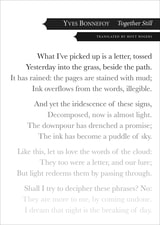
Together Still
Yves Bonnefoy
Seagull Books, 2017
The international community of letters mourned the recent death of Yves Bonnefoy, universally acclaimed as one of France’s greatest poets of the last half-century. A prolific author, he was often considered a candidate for the Nobel Prize and published a dozen major collections of poetry in verse and prose, several books of dream-like tales, and numerous studies of literature and art. His oeuvre has been translated into scores of languages, and he himself was a celebrated translator of Shakespeare, Yeats, Keats, and Leopardi.
Together Still is his final poetic work, composed just months before his death. The book is nothing short of a literary testament, addressed to his wife, his daughter, his friends, and his readers throughout the world. In these pages, he ruminates on his legacy to future generations, his insistence on living in the present, his belief in the triumphant lessons of beauty, and, above all, his courageous identification of poetry with hope.
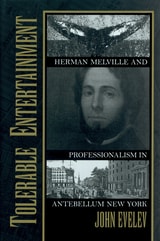
Tolerable Entertainment
Herman Melville and Professionalism in Antebellum New YorkJohn Evelev
University of Massachusetts Press, 2006
Perhaps more than any other nineteenth-century writer, Melville has been read and understood in the context of his career, embodied in a narrative of the trajectory from immature emergence, through brilliant ascendance, to collapse into neglect. Moving beyond these stereotypes, John Evelev uses Melville's writings to place the concept of "career" within a historical framework, as part of the ideological project of a new middle-class professionalism. He describes a meritocratic ethos of competitive specialization and expertise that distanced itself from both the deskilling of industrialized labor and the older professional arrangement of elite patronage. By exploring the intersections of class and culture in antebellum America, Evelev offers a new perspective on Melville's literary career.
Tolerable Entertainment reads Melville's life and work in relation to such cultural developments as the famous "high/low" theater riots at Astor Place and the rise of the lyceum circuit, a forum for celebrity lecturers to reach the new urban "middlebrow" audience. The book also considers such transformations in antebellum social attitudes as urban workers' protests against industrialization and the growth of the "self-culture" of the new urban middle class, with the emergence of vocational associations and professional specialization.
Evelev's readings run against the grain of modern Melville scholarship by emphasizing not the values of individualism and democracy that have led critics to construe Melville's writings as central to the American canon, but rather the ambivalent cultural and vocational distinctions of the developing middle class to which Melville belonged.
Tolkien Studies, Volume X
Michael Drout
West Virginia University Press, 2013
Tolkien Studies: An Annual Scholarly Review presents the growing body of critical commentary and scholarship on both J. R. R. Tolkien’s voluminous fiction and his academic work in literary and linguistic fields.
Tolkien Studies
An Annual Scholarly Review, Volume IIIMichael D.C. Drout
West Virginia University Press, 2006
Tolkien Studies
An Annual Scholarly Review, Volume IIMichael D.C. Drout
West Virginia University Press, 2005
Tolkien Studies
An Annual Scholarly Review, Volume IVMichael D.C. Drout
West Virginia University Press, 2007
Tolkien Studies
An Annual Scholarly Review, Volume IXDrout
West Virginia University Press, 2012
Tolkien Studies
An Annual Scholarly Review, Volume VMichael D.C. Drout
West Virginia University Press, 2008
Tolkien Studies
An Annual Scholarly Review, Volume VIMichael D.C. Drout
West Virginia University Press, 2009