Results by title
22279 books match the query 'Social Science' and 4007 start with t

The India Museum Revisited
Arthur MacGregor
University College London, 2023
The museum of the East India Company formed, for a large part of the nineteenth century, one of the sights of London. In recent years, little has been remembered of it beyond its mere existence, while an assumed negative role has been widely attributed to it on the basis of its position at the heart of one of Britain’s arch-colonialist enterprises.
Extensively illustrated, The India Museum Revisited surveys the contents of its multi-faceted collections—with respect to materials, their manufacture, and original functions on the Indian sub-continent—as well as the collectors who gathered them and the manner in which they were mobilized to various ends within the museum.
From this integrated treatment of documentary and material sources, a more accurate, rounded, and nuanced picture emerges of an institution that contributed in major ways, over a period of eighty years, to the representation of India for a European audience, not only in Britain but through the museum’s involvement in the international exposition movement to audiences on the continent and beyond.
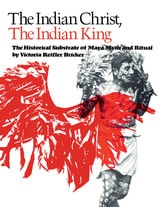
The Indian Christ, the Indian King
The Historical Substrate of Maya Myth and RitualBy Victoria Reifler Bricker
University of Texas Press, 1981
Victoria Bricker shows that "history" sometimes rests on mythological foundations and that "myth" can contain valid historical information. Her book, which is a highly original critique of postconquest historiography about the Maya, challenges major assumptions about the relationship between myth and history implicit in structuralist interpretations. The focus of the book is ethnic conflict, a theme that pervades Maya folklore and is also well documented historically.
The book begins with the Spanish conquest of the Maya. In chapters on the postconquest history of the Maya, five ethnic conflicts are treated in depth: the Cancuc revolt of 1712, the Quisteil uprising of 1761, the Totonicapan rebellion of 1820, the Caste War of Yucatan (1847-1901), and the Chamulan uprising in 1869. Analytical chapters consider the relationship between historical events and modern folklore about ethnic conflict. Bricker demonstrates that myths and rituals emphasize structure at the expense of temporal and geographical provenience, treating events separated by centuries or thousands of miles as equivalent and interchangeable.
An unexpected result of Bricker's research is the finding that many seemingly aboriginal elements in Maya folklore are actually of postconquest origin, and she shows that it is possible to determine precisely when and, more important, why they become part of myth and ritual. Furthermore, she finds that the patterning of the accretion of events in folklore over time provides clues to the function, or meaning, of myth and ritual for the Maya.
Bricker has made use of many unpublished documents in Spanish, English, and Maya, as well as standard synthetic historical works. The appendices contain extensive samples of the oral traditions that are explained by her analysis.
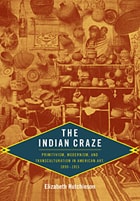
The Indian Craze
Primitivism, Modernism, and Transculturation in American Art, 1890–1915Elizabeth Hutchinson
Duke University Press, 2009
Illustrating her argument with images culled from late-nineteenth- and early-twentieth-century publications, Hutchinson revises the standard history of the mainstream interest in Native American material culture as “art.” While many locate the development of this cross-cultural interest in the Southwest after the First World War, Hutchinson reveals that it began earlier and spread across the nation from west to east and from reservation to metropolis. She demonstrates that artists, teachers, and critics associated with the development of American modernism, including Arthur Wesley Dow and Gertrude Käsebier, were inspired by Native art. Native artists were also able to achieve some recognition as modern artists, as Hutchinson shows through her discussion of the Winnebago painter and educator Angel DeCora. By taking a transcultural approach, Hutchinson transforms our understanding of the role of Native Americans in modernist culture.

The Indian History of an American Institution
Native Americans and DartmouthColin G. Calloway
Dartmouth College Press, 2010
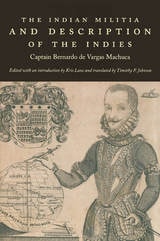
The Indian Militia and Description of the Indies
Captain Bernardo de Vargas Machuca, Edited with an introduction by Kris Lane
Duke University Press, 2008
Containing advice on curing rattlesnake bites with amethysts and making saltpeter for gunpowder from concentrated human urine, The Indian Militia is a manual in four parts, the first of which outlines the ideal qualities of the militia commander. Addressing the organization and outfitting of conquest expeditions, Book Two includes extended discussions of arms and medicine. Book Three covers the proper behavior of soldiers, providing advice on marching through peaceful and bellicose territories, crossing rivers, bivouacking in foul weather, and carrying out night raids and ambushes. Book Four deals with peacemaking, town-founding, and the proper treatment of conquered peoples. Appended to these four sections is a brief geographical description of all of Spanish America, with special emphasis on the indigenous peoples of New Granada (roughly modern-day Colombia), followed by a short guide to the southern coasts and heavens. This first English-language edition of The Indian Militia includes an extensive introduction, a posthumous report on Vargas Machuca’s military service, and a selection from his unpublished attack on the writings of Fray Bartolomé de Las Casas.
The Indians of Hungry Hollow
Bill Dunlop and Marcia Fountain-Blacklidge
University of Michigan Press, 2004

The Indians of New Jersey
Dickon Among the LenapesHarrington, M. R
Rutgers University Press, 1963
In presenting the lore and heritage of the Lenapes, Dr. M.R. Harrington does so through the eyes of a shipwrecked English boy who became a captive of the Indians, and was eventually adopted into the tribe. The narrative is lively reading, and the facts on which it is based are accurate. With the accompanying Clarence Ellsworth line drawings, the reader can understand and even reproduce many of the objects the author describes: the Lenape bows and arrows, muccasins and mats, baskets and bowls.
This new edition is a reissue of an often asked for an unavailable New Jersey classic, first published in 1938.

The Indians of Point of Pines, Arizona
A Comparative Study of Their Physical CharacteristicsKenneth A. Bennett
University of Arizona Press, 1973
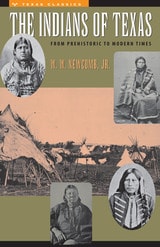
The Indians of Texas
From Prehistoric to Modern TimesBy William W. Newcomb, Jr.
University of Texas Press, 1961

The Indians of the Western Great Lakes, 1615 to 1760
W. Vernon Kinietz
University of Michigan Press, 1940

The Indians of the Western Great Lakes, 1615-1760
W. Vernon Kinietz
University of Michigan Press, 1965
The Indigenous Anti-Colonial
A Palestinian Resistance Tradition and a World Beyond Settler ColonialismLinda Tabar
Duke University Press, 2026
The Individual in History
Essays in Honor of Jehuda ReinharzEdited by ChaeRan Y. Freeze, Sylvia Fuks Fried, and Eugene R. Sheppard
Brandeis University Press, 2015

The Individuality of Portugal
A Study in Historical-Political GeographyBy Dan Stanislawski
University of Texas Press, 1959
Many map users have wondered why Portugal, sharing with Spain the Iberian Peninsula, ever became a separate nation. That question is answered with remarkable clarity by Dan Stanislawski. This book also presents an analysis of the factors that produce separate nations and offers a study of the evolution of national cultures generally, especially as they apply to Portugal.
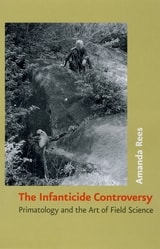
The Infanticide Controversy
Primatology and the Art of Field ScienceAmanda Rees
University of Chicago Press, 2009
Infanticide in the natural world might be a relatively rare event, but as Amanda Rees shows, it has enormously significant consequences. Identified in the 1960s as a phenomenon worthy of investigation, infanticide had, by the 1970s, become the focus of serious controversy. The suggestion, by Sarah Hrdy, that it might be the outcome of an evolved strategy intended to maximize an individual’s reproductive success sparked furious disputes between scientists, disagreements that have continued down to the present day.
Meticulously tracing the history of the infanticide debates, and drawing on extensive interviews with field scientists, Rees investigates key theoretical and methodological themes that have characterized field studies of apes and monkeys in the twentieth century. As a detailed study of the scientific method and its application to field research, The Infanticide Controversy sheds new light on our understanding of scientific practice, focusing in particular on the challenges of working in “natural” environments, the relationship between objectivity and interpretation in an observational science, and the impact of the public profile of primatology on the development of primatological research. Most importantly, it also considers the wider significance that the study of field science has in a period when the ecological results of uncontrolled human interventions in natural systems are becoming ever more evident.

The Informal and Underground Economy of the South Texas Border
By Chad Richardson and Michael J. Pisani
University of Texas Press, 2012
Much has been debated about the presence of undocumented workers along the South Texas border, but these debates often overlook the more complete dimension: the region’s longstanding, undocumented economies as a whole. Borderlands commerce that evades government scrutiny can be categorized into informal economies (the unreported exchange of legal goods and services) or underground economies (criminal economic activities that, obviously, occur without government oversight). Examining long-term study, observation, and participation in the border region, with the assistance of hundreds of locally embedded informants, The Informal and Underground Economy of the South Texas Border presents unique insights into the causes and ramifications of these economic channels.
The third volume in UT–Pan American’s Borderlife Project, this eye-opening investigation draws on vivid ethnographic interviews, bolstered by decades of supplemental data, to reveal a culture where divided loyalties, paired with a lack of access to protection under the law and other forms of state-sponsored recourse, have given rise to social spectra that often defy stereotypes. A cornerstone of the authors’ findings is that these economic activities increase when citizens perceive the state’s intervention as illegitimate, whether in the form of fees, taxes, or regulation. From living conditions in the impoverished colonias to President Felipe Calderón’s futile attempts to eradicate police corruption in Mexico, this book is a riveting portrait of benefit versus risk in the wake of a “no-man’s-land” legacy.
The Inheritance
Elizabeth A. Povinelli
Duke University Press, 2021
The Inka Empire
A Multidisciplinary ApproachEdited by Izumi Shimada
University of Texas Press, 2015
Massive yet elegantly executed masonry architecture and andenes (agricultural terraces) set against majestic and seemingly boundless Andean landscapes, roads built in defiance of rugged terrains, and fine textiles with orderly geometric designs—all were created within the largest political system in the ancient New World, a system headed, paradoxically, by a single, small minority group without wheeled vehicles, markets, or a writing system, the Inka. For some 130 years (ca. A.D. 1400 to 1533), the Inka ruled over at least eighty-six ethnic groups in an empire that encompassed about 2 million square kilometers, from the northernmost region of the Ecuador–Colombia border to northwest Argentina.
The Inka Empire brings together leading international scholars from many complementary disciplines, including human genetics, linguistics, textile and architectural studies, ethnohistory, and archaeology, to present a state-of-the-art, holistic, and in-depth vision of the Inkas. The contributors provide the latest data and understandings of the political, demographic, and linguistic evolution of the Inkas, from the formative era prior to their political ascendancy to their post-conquest transformation. The scholars also offer an updated vision of the unity, diversity, and essence of the material, organizational, and symbolic-ideological features of the Inka Empire. As a whole, The Inka Empire demonstrates the necessity and value of a multidisciplinary approach that incorporates the insights of fields beyond archaeology and ethnohistory. And with essays by scholars from seven countries, it reflects the cosmopolitanism that has characterized Inka studies ever since its beginnings in the nineteenth century.
The Inner Conflict of Tradition
Essays in Indian Ritual, Kingship, and SocietyJ. C. Heesterman
University of Chicago Press, 1985

The Inner Life of Mestizo Nationalism
Estelle Tarica
University of Minnesota Press, 2008
The only recent English-language work on Spanish-American indigenismo from a literary perspective, Estelle Tarica’s work shows how modern Mexican and Andean discourses about the relationship between Indians and non-Indians create a unique literary aesthetic that is instrumental in defining the experience of mestizo nationalism.
Engaging with narratives by Jesús Lara, José María Arguedas, and Rosario Castellanos, among other thinkers, Tarica explores the rhetorical and ideological aspects of interethnic affinity and connection. In her examination, she demonstrates that these connections posed a challenge to existing racial hierarchies in Spanish America by celebrating a new kind of national self at the same time that they contributed to new forms of subjection and discrimination.
Going beyond debates about the relative merits of indigenismo and mestizaje, Tarica puts forward a new perspective on indigenista literature and modern mestizo identities by revealing how these ideologies are symptomatic of the dilemmas of national subject formation. The Inner Life of Mestizo Nationalism offers insight into the contemporary resurgence and importance of indigenista discourses in Latin America.
Estelle Tarica is associate professor of Latin American literature and culture at the University of California, Berkeley.
The Inner Life of Race
Souls, Bodies, and the History of Racial PowerLeerom Medovoi
Duke University Press, 2024

The Insane Chicago Way
The Daring Plan by Chicago Gangs to Create a Spanish MafiaJohn M. Hagedorn
University of Chicago Press, 2015
The book centers on the secret history of Spanish Growth & Development (SGD)—an organization of Latino gangs founded in 1989 and modeled on the Mafia’s nationwide Commission. It also tells a story within a story of the criminal exploits of the C-Note$, the “minor league” team of the Chicago’s Mafia (called the “Outfit”), which influenced the direction of SGD. Hagedorn’s tale is based on three years of interviews with an Outfit soldier as well as access to SGD’s constitution and other secret documents, which he supplements with interviews of key SGD leaders, court records, and newspaper accounts. The result is a stunning, heretofore unknown history of the grand ambitions of Chicago gang leaders that ultimately led to SGD’s shocking collapse in a pool of blood on the steps of a gang-organized peace conference.
The Insane Chicago Way is a compelling history of the lives and deaths of Chicago gang leaders. At the same time it is a sociological tour de force that warns of the dangers of organized crime while arguing that today’s relative disorganization of gangs presents opportunities for intervention and reductions in violence.
The Inscriptions of Calakmul
Royal Marriage at a Maya City in Campeche, MexicoJoyce Marcus
University of Michigan Press, 1987
The Insecure City
Space, Power, and Mobility in BeirutMonroe, Kristin V
Rutgers University Press, 2016
Download open access ebook here.
The Insistent Call
Rhetorical Moments in Black Anticolonialism, 1929-1937Aric Putnam
University of Massachusetts Press, 2012
Throughout the nineteenth century, African heritage played an important role in black America, as personal memories and cultural practices continued to shape the everyday experience of people of African descent living under the shadow of slavery. Resisting efforts to de-Africanize their values, customs, and beliefs, Black Americans invoked their African roots in public arguments about their identity and place in the “new” world. At the outset of the twentieth century many still saw Africa primarily as the source of a common cultural and spiritual past. But after the 1920s, the meaning of African heritage changed as people of African descent expressed new relationships between themselves, the United States, and the African Diaspora.
In The Insistent Call, Aric Putnam studies the rhetoric of newspapers, literature, and political pamphlets that expressed this shift. He demonstrates that as people of African descent debated the United States' occupation of Haiti, the Liberian labor crisis, and the Italian invasion of Ethiopia, they formed a new collective identity, one that understood the African Diaspora in primarily political rather than cultural terms. In addition to uncovering a neglected period in the history of Black rhetoric, Putnam shows how rhetoric that articulates the interests of a population not defined by the boundaries of a state can still motivate collective action and influence policies.
The Inspiration Machine
Computational Creativity in Poetry and JazzEitan Y. Wilf
University of Chicago Press, 2023
In The Inspiration Machine, Eitan Y. Wilf explores the transformative potentials that digital technology opens up for creative practice through three ethnographic cases, two with jazz musicians and one with a group of poets. At times dissatisfied with the limitations of human creativity, these artists do not turn to computerized algorithms merely to execute their preconceived ideas. Rather, they approach them as creative partners, delegating to them different degrees of agentive control and artistic decision-making in the hopes of finding inspiration in their output and thereby expanding their own creative horizons.
The algorithms these artists develop and use, however, remain rooted in and haunted by the specific social predicaments and human shortfalls that they were intended to overcome. Experiments in the digital thus hold an important lesson: although Wilf’s interlocutors returned from their adventures with computational creativity with modified, novel, and enriched capacities and predilections, they also gained a renewed appreciation for, and at times a desire to re-inhabit, non-digital creativity. In examining the potentials and pitfalls of seemingly autonomous digital technologies in the realm of art, Wilf shows that computational solutions to the real or imagined insufficiencies of human practice are best developed in relation to, rather than away from, the social and cultural contexts that gave rise to those insufficiencies, in the first place.
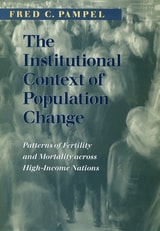
The Institutional Context of Population Change
Patterns of Fertility and Mortality across High-Income NationsFred C. Pampel
University of Chicago Press, 2001
The Institutional Context of Population Change cuts across numerous political and sociological topics, including political sociology, stratification, sex and gender, and aging. It persuasively shows the importance of public policies for understanding the demographic consequences of population change and the importance of demographic change for understanding the consequences of public policies.
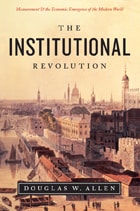
The Institutional Revolution
Measurement and the Economic Emergence of the Modern WorldDouglas W. Allen
University of Chicago Press, 2011
Few events in the history of humanity rival the Industrial Revolution. Following its onset in eighteenth-century Britain, sweeping changes in agriculture, manufacturing, transportation, and technology began to gain unstoppable momentum throughout Europe, North America, and eventually much of the world—with profound effects on socioeconomic and cultural conditions.
The Institutions of France under the Absolute Monarchy, 1598-1789, Volume 1
Society and the StateRoland Mousnier
University of Chicago Press, 1979
In a society divided by hierarchical social groups, conflicts among lineages, communities, and districts became inevitable. Aristocratic disdain, ancestral attachment to privileges, and autonomous powers looked upon as rights, made civil unrest, dislocation, and anarchy endemic. Mousnier examines this contention between classes as they faced each other across the institutional barriers of education, religion, economic resources, technology, means of defense and communication, and territorial and family ties. He shows why a monarchical state was necessary to preserve order within this fragmented society.
Though it was intent on ensuring the survival of French society and the public good, the Absolute Monarchy was unable to maintain security, equilibrium, and cooperation among rival social groups. Discussing the feeble technology at its disposal and its weak means of governing, Mousnier points to the causes that brought the state to the limits of its resources. His comprehensive analysis will greatly interest students of the ancien régime and comparativists in political science and sociology as well.

The Institutions of France under the Absolute Monarchy, 1598-1789, Volume 2
The Origins of State and SocietyRoland Mousnier
University of Chicago Press, 1984

The Insubordination of Signs
Political Change, Cultural Transformation, and Poetics of the CrisisNelly Richard
Duke University Press, 2004
In The Insubordination of Signs Richard theorizes the cultural reactions—particularly within the realms of visual arts, literature, and the social sciences—to the oppression of the Chilean dictatorship. She reflects on the role of memory in the historical shadow of the military regime and on the strategies offered by marginal discourses for critiquing institutional systems of power. She considers the importance of Walter Benjamin for the theoretical self-understanding of the Latin American intellectual left, and she offers revisionary interpretations of the Chilean neo-avantgarde in terms of its relationships with the traditional left and postmodernism. Exploring the gap between Chile’s new left social sciences and its “new scene” aesthetic and critical practices, Richard discusses how, with the return of democracy, the energies that had set in motion the democratizing process seemed to exhaust themselves as cultural debate was attenuated in order to reduce any risk of a return to authoritarianism.

The Intellect Handbook of Adult Film and Media
Edited by Peter Alilunas, Patrick Keilty, and Darshana Sreedhar Mini
Intellect Books, 2026
The Intellect Handbook of Adult Film and Media brings together thirty-six chapters organized into six sections, ranging from historical and methodological approaches to issues of representation, production, and spectatorship, to transnational perspectives, and questions of law, health, and policy, offering a comprehensive survey of this growing field. Written by leading scholars, the volume examines sexually explicit media in its full context: its production, circulation, consumption, and reception. Engaging with an extensive body of scholarship, the essays provide overviews of key literature, major historical developments, and central theoretical debates, supporting the continued growth of adult film and media studies as a legitimate area of academic inquiry. Designed as both a reference work and a teaching resource, the handbook will be invaluable to emerging scholars and educators working in film, media, gender, sexuality, and porn studies.
The Intellect Handbook of Men’s Fashion
Edited by Ben Barry, Andy Reilly, and José Blanco F.
Intellect Books, 2026
Recent years have seen the study of men’s fashion grow from an emerging topic into a vibrant and expanding field, engaging with critical conversations on gender, race, sexuality, disability, colonialism, and globalization. Reflecting this shift, this volume moves beyond traditional narratives by highlighting three key approaches: decentralizing and decolonizing men’s fashion studies, embracing global perspectives, and focusing on multiple, overlapping social identities. Comprising thirty-four chapters by insightful scholars in fashion and dress studies, the collection offers a fresh and forward-looking examination of the field’s development.
Primarily designed for academic audiences, this handbook serves as an ideal textbook or core reading for undergraduate and graduate courses on gender and fashion. At the same time, it appeals to fashion practitioners, curators, cultural critics, and general readers interested in the history, culture, and meaning of men’s fashion and dress.

The Intensification of Surveillance
Crime, Terrorism and Warfare in the Information AgeEdited by Kirstie Ball and Frank Webster
Pluto Press, 2003

The Inter American Press Association
Its Fight for Freedom of the Press, 1926–1960By Mary A. Gardner
University of Texas Press, 1967
The Inter American Press Association (IAPA) has been a pioneer in the concept of an inter-American professional, independent, and self-sufficient pressure group that acts on its own initiative and subsists on its own resources. This study first traces the development of IAPA from the initial meeting in 1926 through the mid-1940’s, when a small group of dedicated Latin American and United States journalists began the fight to wrest the IAPA from the control of government lackeys and Communist agents. Previously scarce accounts of the early annual meetings, often noisy and disorganized and sometimes violent, give the reader an insight into the problems and animosities faced by the democratically oriented members.
Mary A. Gardner then describes a reorganization in 1950, after which IAPA actively fought for the freedom of newspaper workers tyrannized by Latin American dictators, such as Argentina’s Perón, Colombia’s Rojas Pinilla, Cuba’s Batista, and the Dominican Republic’s Trujillo. Even while IAPA was fighting for freedom of the press it began several services for its member newspapers: It set up a circulation auditing service, created a scholarship fund, undertook a newsprint study, and established a technical center. It also began the administration of the Mergenthaler Awards—prizes awarded yearly to outstanding Latin American journalists.
Gardner also analyzes the merits of IAPA, basing her conclusions on data obtained from her own observations, from letters written by others long associated with operations of the organization, and from interviews with Latin American and North American journalists. She concludes that IAPA apparently surmounted the barriers of nationalism, of cultural and political differences, and of personal prejudices, thus succeeding in its attempt to unite its members in the fight for freedom of the press and for the propagation of democracy in the hemisphere.

The Intercourse of Knowledge
On Gendering Desire and 'Sexuality' in the Hebrew BibleAthalya Brenner
SBL Press, 2016
Now in paperback!
This groundbreaking book, which builds on the author's earlier work in On Gendering Texts, studies how, by what means, and to what extent human love, desire and sex, and possibly even "sexuality"; are gendered in the Hebrew Bible. The investigation looks into the construction of male and female bodies in language and ideologies; the praxis and ideology of sex, procreation, and contraception; deviation from socio-sexual boundaries (e.g. incest, rape, adultery, homosexuality, prostitution); eroticism and "pornoprophetics."
Features:
- Paperback format of an essential Brill monograph
- A classification and gendering of the linguistic and semantic data
- Discussion of wider sociological and theological implications
The Interface Experience
A User's GuideKimon Keramidas
Bard Graduate Center, 2015
The Interface Experience surveys some of the landmark devices in the history of personal computing—including the Commodore 64, Apple Macintosh Plus, Palm Pilot Professional, and Microsoft Kinect—and helps us to better understand the historical shifts that have occurred with the design and material experience of each machine. With its spiral-bound design reminiscent of early computer user manuals and thorough consideration of the cultural moment represented by each device, The Interface Experience is a one-of-a-kind tour of modern computing technology.
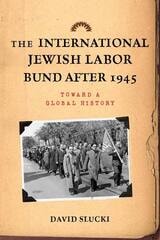
The International Jewish Labor Bund after 1945
Toward a Global HistorySlucki, David
Rutgers University Press, 2012
The Jewish Labor Bund was one of the major political forces in early twentieth-century Eastern Europe. But the decades after the Second World War were years of enormous difficulty for Bundists. Like millions of other European Jews, they faced the challenge of resurrecting their lives, so gravely disrupted by the Holocaust. Not only had the organization lost many members, but its adherents were also scattered across many continents. In this book, David Slucki charts the efforts of the surviving remnants of the movement to salvage something from the wreckage.
Covering both the Bundists who remained in communist Eastern Europe and those who emigrated to the United States, France, Australia, and Israel, the book explores the common challenges they faced—building transnational networks of friends, family, and fellow Holocaust survivors, while rebuilding a once-local movement under a global umbrella. This is a story of resilience and passion—passion for an idea that only barely survived Auschwitz.
The International Politics of Communication
Representing Community in a Globalizing WorldAlan Chong
University of Michigan Press, 2025
The International Politics of Communication examines this informational dimension of international politics, investigating how information is generated, conveyed through channels, and directed specifically at audiences. While citizens are often portrayed as faithfully loyal supporters and beneficiaries of the modern nation-state—a fiction supported by passports, identification papers, and other notarized credentials—they are subject to the pulls of loyalty from transnational tribal affiliations, mythological and historical narratives of ethnicity, as well as the transcendental claims of religion and philosophy. Increasingly, social media also enchants non-state individuals, providing new virtual communities as the center of loyalties rather than national affiliations. By reinterpreting taken-for-granted concepts in journalism, media, political economy, nationalism, development, and propaganda as information politics, this book prepares serious-minded scholars, citizens, politicians, and social activists everywhere to understand the power plays in international communication and use alternatives to begin transforming power relations.

The Internet Is Real Life
Performing Folklore Online and OffAnthony Bak Buccitelli
University of Wisconsin Press, 2026
We often speak of a divide between online and offline cultures, despite growing recognition that the two are intertwined. Here, folklorist Anthony Bak Buccitelli challenges the idea of any divide at all in contemporary American culture. He argues that digital communications and behaviors are already deeply embedded in everyday expressive life and therefore are also already implicated in a variety of ways in the embodied performance and transmission of folklore. In other words, in contemporary American society, the internet truly is “real life.”
By treating the digital interface as a site at which embodied performance can take shape rather than just a point of contact with the online, Buccitelli argues for a critical renewal of core folkloristic concepts to meet the challenges of understanding modern networked life. The result is a folklore book for the current age.

The Internet Is for Cats
How Animal Images Shape Our Digital LivesJessica Maddox
Rutgers University Press, 2023
The Internet is for Cats examines how animal images are employed to create a lighter, more playful mood, uniting users within online spaces that can otherwise easily become fractious and toxic. Placing today’s pet videos, photos, and memes within a longer history of mediated animal images, communication scholar Jessica Maddox also considers the factors that make them unique. She explores the roles that animals play within online economies of cuteness and attention, as well as the ways that animal memes and videos respond to common experiences of life under neoliberalism.
Conducting a rich digital ethnography, Maddox combines observations and textual analysis with extensive interviews of the people who create, post and share animal media, including TikTok influencers seeking to make their pets famous, activists tweeting about wildlife conservation, and Redditors upvoting every cute cat photo. The Internet is for Cats will leave you with a new appreciation for the human social practices behind the animal images you encounter online.
The Internet Myth
From the Internet Imaginary to Network IdeologiesPaolo Bory
University of Westminster Press, 2020
‘The Internet is broken and Paolo Bory knows how we got here. In a powerful book based on original research, Bory carefully documents the myths, imaginaries, and ideologies that shaped the material and cultural history of the Internet. As important as this book is to understand our shattered digital world, it is essential for those who would fix it.’ — Vincent Mosco, author of The Smart City in a Digital World
The Internet Myth retraces and challenges the myth laying at the foundations of the network ideologies – the idea that networks, by themselves, are the main agents of social, economic, political and cultural change. By comparing and integrating different sources related to network histories, this book emphasizes how a dominant narrative has extensively contributed to the construction of the Internet myth while other visions of the networked society have been erased from the collective imaginary. The book decodes, analyzes and challenges the foundations of the network ideologies looking at how networks have been imagined, designed and promoted during the crucial phase of the 1990s.
Three case studies are scrutinized so as to reveal the complexity of network imaginaries in this decade: the birth of the Web and the mythopoesis of its inventor; and the histories of two Italian networking projects, the infrastructural plan Socrate and the civic network Iperbole, the first to give free Internet access to citizens.
The Internet Myth thereby provides a compelling and hidden sociohistorical narrative in order to challenge one of the most powerful myths of our time.
This title has been published with the financial assistance of the Fondazione Hilda e Felice Vitali, Lugano, Switzerland.

The Intestines of the State
Youth, Violence, and Belated Histories in the Cameroon GrassfieldsNicolas Argenti
University of Chicago Press, 2007
Beginning his study with a political analysis of youth in the Grassfields from the eighteenth century to the present, Argenti pays special attention to the repeated violent revolts staged by young victims of political oppression. He then combines this history with extensive ethnographic fieldwork in the Oku chiefdom, discovering that the specter of past violence lives on in the masked dance performances that have earned intense devotion from today’s youth. Argenti contends that by evoking the imagery of past cataclysmic events, these masquerades allow young Oku men and women to address the inequities they face in their relations with elders and state authorities today.
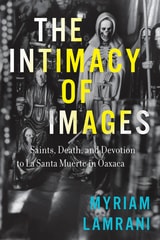
The Intimacy of Images
Saints, Death, and Devotion to La Santa Muerte in OaxacaMyriam Lamrani
University of Texas Press, 2024
2026 Edie Turner First Book Prize in Ethnographic Writing, Society for Humanistic Anthropology
La Santa Muerte becomes a lens for understanding how Oaxacans relate to saints, loved ones, and other “special dead.”
In Oaxaca, images of saints and loved ones, as well as of victims of political or criminal violence, are seemingly everywhere. While Oaxacans relate to all sorts of “special dead,” they are particularly devoted to La Santa Muerte (Saint Death), a female reaper-like figure whose popularity has risen in tandem with violence throughout Mexico.
The Intimacy of Images recontextualizes Oaxacans’ relationships with their “special dead” through the lens of La Santa Muerte, examining how devotees closely interact with what Lamrani terms “intimate images”: not only devotional effigies but also photographs, films, tattoos, and murals, and even dreams and visions. Though Mexicans have a well-known cultural familiarity with death, Lamrani argues that devotion to La Santa Muerte builds upon this intimacy even as it also participates in the production of terror and reflects political and criminal violence. Ultimately, Lamrani finds that these human-image interactions represent more than Catholic devotion; they reveal the secrets of Oaxacan political, religious, and social life, embody changing relationships to mortality and violence, and even offer insight into the practice of anthropology itself.
The Intimate Life of Computers
Digitizing Domesticity in the 1980sReem Hilu
University of Minnesota Press, 2024
A feminist perspective on the early history of personal computing, revealing how computers were integrated into the most intimate aspects of family life
The Intimate Life of Computers shows how the widespread introduction of home computers in the 1980s was purposefully geared toward helping sustain heteronormative middle-class families by shaping relationships between users. Moving beyond the story of male-dominated computer culture, this book emphasizes the neglected history of the influence of women’s culture and feminist critique on the development of personal computing despite women’s underrepresentation in the industry.
Proposing the notion of “companionate computing,” Reem Hilu reimagines the spread of computers into American homes as the history of an interpersonal, romantic, and familial medium. She details the integration of computing into family relationships—from helping couples have better sex and offering thoughtful simulations of masculine seduction to animating cute robot companions and giving voice to dolls that could talk to lonely children—underscoring how these computer applications directly responded to the companionate needs of their users as a way to ease growing pressures on home life.
The Intimate Life of Computers is a vital contribution to feminist media history, highlighting how the emergence of personal computing dovetailed with changing gender roles and other social and cultural shifts. Eschewing the emphasis on technologies and institutions typically foregrounded in personal-computer histories, Hilu uncovers the surprising ways that domesticity and family life guided the earlier stages of our all-pervasive digital culture.

The Intimate Life of Dissent
Anthropological PerspectivesEdited by Harini Amarasuriya, Tobias Kelly, Sidharthan Maunaguru, Galina Oustinova-Stjepanovic and Jonathan Spencer
University College London, 2020

The Intimate University
Korean American Students and the Problems of SegregationNancy Abelmann
Duke University Press, 2009
Drawing on ten years of ethnographic research with Korean American students at the University of Illinois and closely following multiple generations of a single extended Korean American family in the Chicago metropolitan area, Abelmann investigates the complexity of racial politics at the American university today. Racially hyper-visible and invisible, Korean American students face particular challenges as they try to realize their college dreams against the subtle, day-to-day workings of race. They frequently encounter the accusation of racial self-segregation—a charge accentuated by the fact that many attend the same Evangelical Protestant church—even as they express the desire to distinguish themselves from their families and other Korean Americans. Abelmann concludes by examining the current state of the university, reflecting on how better to achieve the university’s liberal ideals despite its paradoxical celebration of diversity and relative silence on race.
The Invasion
Janet Lewis
Michigan State University Press, 2000
The Invasion, a novel originally published in 1932, marked the debut of historical novelist Janet Lewis, who went on to write numerous poems and short stories as well as the novels The Wife of Martin Guerre and The Trial of Soren Quist. Lewis grew up in the Lake country of the Old Northwest and The Invasion is based on family stories she heard as a child.The Invasion displays well-researched historical accuracy, an innate understanding of and feeling for Native American culture enhanced by the author's fluency in the Ojibway language, and an economy of style that is remarkable for a first novel.
In 1790, John Johnston, a cultivated young Irishman, came to the far corner of the Northwest Territory to make his fortune intending to spend only a year. Instead he married Ozhah-guscoday- wayquay (The Woman of the Glade), daughter of the Ojibway chief Waub- ojeeg, and settled on the St. Mary's River. Together they founded a family that was loved, respected, and famous throughout the region for honesty, fairness, and hospitality. Their home was the center of culture for the area and for every visiting traveler, Native American or white. The Invasion chronicles a time when one culture violently supplanted another even as it depicts a family that blends two cultures together.
Henry Rowe Schoolcraft considered the Johnston family his most valued connection to the Native American population. He eventually married Jane Johnston, daughter of John and The Woman of the Glade, and remain close to her entire family. In his diary, Schoolcraft wrote of the Johnstons, "I have in fact stumbled, as it were, on the only family in Northwest America who could in Indian lore have acted as my guide, philosopher, and friend."
The Invention of Coinage and the Monetization of Ancient Greece
David M. Schaps
University of Michigan Press, 2015
The Invention of Culture
Roy Wagner
University of Chicago Press, 1981