Results by title
18284 books match the query 'United States' and 3764 start with t
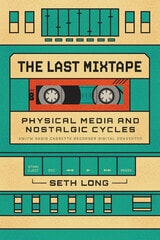
The Last Mixtape
Physical Media and Nostalgic CyclesSeth Long
University of Chicago Press, 2025
Obsolescence makes the heart grow fonder, at least in the case of the mixtape. Not all technologies are so lucky. Some (say, wax cylinders) fade almost completely from cultural memory. A lucky few pass into metaphor: we still “hang up” our smartphones, “cut” film, and “patch” computer code. As digital streaming completes the obsolescence of physical media, what will become of the humble cassette?
In The Last Mixtape, Seth Long offers a microhistory of music curation, anchored by the cassette, from which he explores the meanings of obsolescence, ownership, nostalgia, and the speed of cultural change. A moving meditation on our relationship with music, memory, and curation in the digital century, Long ultimately calls for a return to the media ecology represented by the mixtape: a world in which media is cheap and abundant but tactile and meaningfully engaged.
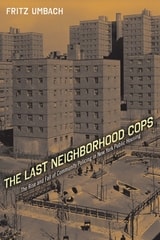
The Last Neighborhood Cops
The Rise and Fall of Community Policing in New York Public HousingUmbach, Fritz
Rutgers University Press, 2011
The Last Neighborhood Cops reveals the forgotten history of the residents and cops who forged community policing in the public housing complexes of New York City during the second half of the twentieth century. Through a combination of poignant storytelling and historical analysis, Fritz Umbach draws on buried and confidential police records and voices of retired officers and older residents to help explore the rise and fall of the HAPD's community-based strategy, while questioning its tactical effectiveness. The result is a unique perspective on contemporary debates of community policing and historical developments chronicling the influence of poor and working-class populations on public policy making.

The Last Physician
Walker Percy and the Moral Life of MedicineCarl Elliott and John Lantos, eds.
Duke University Press, 1999
The contributors—physicians, philosophers, and literary critics—examine the relevance of Percy’s work to current dilemmas in medical education and health policy. They reflect upon the role doctors and patients play in his novels, his family legacy of depression, how his medical background influenced his writing style, and his philosophy of psychiatry. They contemplate the private ways in which Percy’s work affected their own lives and analyze the author’s tendency to contrast the medical-scientific worldview with a more spiritual one. Assessing Percy’s stature as an author and elucidating the many ways that reading and writing can combine with diagnosing and treating to offer an antidote to despair, they ask what it means to be a doctor, a writer, and a seeker of cures and truths—not just for the body but for the malaise and diseased spirituality of modern times.
This collection will appeal to lovers of literature as well as medical professionals—indeed, anyone concerned with medical ethics and the human side of doctoring.
Contributors. Robert Coles, Brock Eide, Carl Elliott, John D. Lantos, Ross McElwee, Richard Martinez, Martha Montello, David Schiedermayer, Jay Tolson, Bertram Wyatt-Brown, Laurie Zoloth-Dorfman
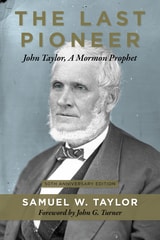
The Last Pioneer
John Taylor, A Mormon ProphetTaylor, Samuel W.
Signature Books, 2026
Mormon prophet John Taylor’s life is usually recounted as a series of anecdotes: singing hymns in Carthage Jail before a mob assassinated Joseph and Hyrum Smith, Taylor’s life spared when, according to myth, his pocketwatch stopped a bullet; his practice of polygamy, including taking a wife fifty years his junior while on the run as a fugitive from federal marshals; and his 1886 revelation that said God would not revoke the law of plural marriage, “for it is everlasting,” a revelation whose authenticity was questioned by the Church of Jesus Christ of Latter-day Saints for over a century but became the foundational text for breakaway sects continuing the practice of polygamy. Yet there was more to Taylor than his role in the martyrdom, his plural wives, his clashes with the federal government, and the legacy of fundamentalist Mormonism.
Taylor spent his first two decades in his home country of England before immigrating to Canada. His first wife, Leonora, was initially more interested when missionaries knocked on their door. But once he committed to the church, John Taylor was unflappable in his faith and zealous in his dedication. The Taylors moved from Toronto to Ohio, then to Missouri, and finally to Illinois as they followed their faith and their prophet Joseph Smith. John became an apostle in 1838 and a publisher thereafter, printing church newspapers. He followed Brigham Young to the Salt Lake Valley, where he became a prominent church and political leader for decades before finally ascending to the head of the faith in 1880.
In this timeless biography, Samuel W. Taylor weaves the threads of his grandfather’s life into a rich tapestry. Drawing on letters, speeches, diaries, and reminiscences, a well-rounded and riveting portrait of the third Mormon prophet comes into focus. A professional writer by trade, Samuel Taylor was uniquely suited to tell this story—and what a story it is.

The Last Pioneer
John Taylor, a Mormon ProphetSamuel W. Taylor
Signature Books, 1999
As half the church fell away in Ohio, the Taylors escaped to Missouri with the faithful, just in time for the 1838 Mormon War. John’s role became that of an advocate with Congress—to convince them that it was the non-Mormons who had sacked the county seat and burned their own homes, for instance. As a literary experience, this was good preparation for later editorships of church newspapers in Illinois, New York, and Liverpool.
From his personal letters and speeches, and from the diaries and reminiscences of associates, vivid images of Taylor’s life appear: his children crossing the Missouri River on the backs of oxen “bulls”; one of his ten plural wives packing a piano instead of a cookstove for the trip and then later regretting it; and Native Americans teaching him how to burn a cricket-infested field, gather the roasted insects, and grind the carcasses into flour.
Taylor’s eventual tenure as church president was spent “on the dodge” from federal marshals, and prior to that he often lived out of a suitcase, rotating from one of his sixteen families to the next. Among his greatest achievements was the settlement of as much territory as was colonized by his more famous predecessor, Brigham Young. Taylor was also a visionary man. His personal spirituality led the church through one of its most turbulent times; his revelations later inspired the Mormon fundamentalist schism, as well. This controversy, mingled with the drama of internecine power struggles and interpersonal conflict, makes The Last Pioneer suspenseful and largely unforgettable.
The Last Resort
Success And Failure In Campaigns For CasinosJohn Dombrink
University of Nevada Press, 1990
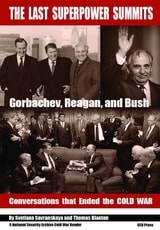
The Last Superpower Summits
Reagan, Gorbachev and Bush. Conversations that Ended the Cold War.The National Security Archive Savranskaya
Central European University Press, 2017
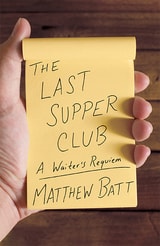
The Last Supper Club
A Waiter's RequiemMatthew Batt
University of Minnesota Press, 2023
A witty and humble tribute to the sometimes profane, sometimes profound world of waiting tables
During a year on sabbatical from his university position, Matthew Batt realized he needed money—fast—and it just so happened that one of the biggest breweries in the Midwest was launching a restaurant and looking to hire. So it was that the forty-something tenured professor found himself waiting tables at a high-end restaurant situated in a Minneapolis brewery. And loving it.
Telling the story of Batt’s early work in restaurants, from a red sauce joint possibly run by the mob to an ill-conceived fusion concept eatery, The Last Supper Club then details his experiences at the fine dining restaurant, a job that continued well past his sabbatical—that lasted, in fact, right up to the restaurant’s sudden and unceremonious closing three years later, shortly after it was named one of the best restaurants in the country by Food & Wine.
Batt’s memoir conveys the challenge—and the satisfaction—of meeting the demands of a frenzied kitchen and an equally expectant crowd. Through training mishaps, disastrous encounters with confused diners, struggles to keep pace with far more experienced coworkers, mandatory memorizations of laundry lists of obscure ingredients, and the stress of balancing responsibilities at home and at work, The Last Supper Club reveals the ups and downs of a waiter’s workday and offers an insightful perspective on what makes a job good, bad, or great. For Batt, this job turns out to be considerably more fun, and possibly more rewarding, than his academic career, and his insider’s view of waiting tables extols the significance of our food and the places where we gather to enjoy it—or serve it.
Told with sharp humor, humility, and a keen sense of what matters, The Last Supper Club is an ode to life in a high-pressure restaurant, the relationships that get you to the night’s close, and finding yourself through—or perhaps because of—the chaos of it all.
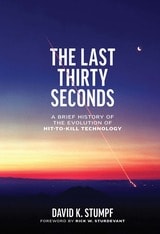
The Last Thirty Seconds
A Brief History of the Evolution of Hit-to-Kill TechnologyDavid K. Stumpf
University of Arkansas Press, 2024
In The Last Thirty Seconds: A Brief History of the Evolution of Hit-to-Kill Technology, David K. Stumpf details the development of one of many possible solutions for ballistic missile defense commonly known as hit-to-kill. Hit-to-kill is a nonnuclear technique using kinetic energy, rather than explosives, to destroy reentry vehicles carrying chemical, biological, or nuclear warheads. It is the centerpiece of the United States’ current ballistic missile defense systems and has proven invaluable in the conflict between Ukraine and Russia as well as in the ongoing conflict with the Houthi rebels in the Red Sea. While much of the subject remains classified, this detailed study will be welcomed for its substantial references and the inclusion of newly declassified material.
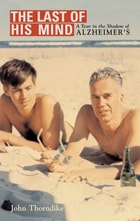
The Last of His Mind
A Year in the Shadow of Alzheimer’sJohn Thorndike
Ohio University Press, 2011

The Last of the Great Observatories
Spitzer and the Era of Faster, Better, Cheaper at NASAGeorge H. Rieke
University of Arizona Press, 2006
George Rieke played a key role in Spitzer and now relates the story of how that observatory was built and launched into space. Telling the story of this single mission within the context of NASA space science over two turbulent decades, he describes how, after a tortuous political trail to approval, Spitzer was started at the peak of NASA’s experiment with streamlining and downsizing its mission development process, termed “faster better cheaper.” Up to its official start and even afterward, Spitzer was significant not merely in terms of its scientific value but because it stood at the center of major changes in space science policy and politics. Through interviews with many of the project participants, Rieke reconstructs the political and managerial process by which space missions are conceived, approved, and developed. He reveals that by the time Spitzer had been completed, a number of mission failures had undermined faith in “faster-better-cheaper” and a more conservative approach was imposed. Rieke examines in detail the premises behind “faster better cheaper,” their strengths and weaknesses, and their ultimate impact within the context of NASA’s continuing search for the best way to build future missions.
Rieke’s participant’s perspective takes readers inside Congress and NASA to trace the progress of missions prior to the excitement of the launch, revealing the enormously complex and often disheartening political process that needs to be negotiated. He also shares some of the new observations and discoveries made by Spitzer in just its first year of operation. As the only book devoted to the Spitzer mission, The Last of the Great Observatories is a story at the nexus of politics and science, shedding new light on both spheres as it contemplates the future of mankind’s exploration of the universe.
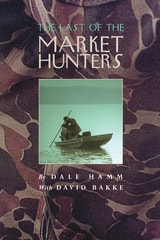
The Last of the Market Hunters
Dale Hamm with David Bakke
Southern Illinois University Press, 1996
Duck hunting has changed greatly since the days of unlimited duck kills, as the limit of fifty ducks a day established in 1902 has fallen to the present three. A legitimate hunter now, Dale Hamm learned the art of market hunting—taking waterfowl out of season and selling them to restaurants—from his father during the l920s. During the l930s and l940s, he kept his family alive by market hunting. At the peak of his career, Hamm poached every private hunting club along the Illinois River from Havana to Beardstown.
After market hunting died out, Hamm became a legendary and almost respected—albeit controversial—character on the Illinois backwaters. He was eventually invited to hunt on the same clubs from which he had once been chased at the point of a shotgun. He hunted with judges, sheriffs, and the head of undercover operations for the Illinois Department of Conservation, all of whom knew of his reputation. He passed on to these hunting partners a lifetime of outdoor knowledge gained from slogging through mud, falling through ice, hunting ducks at three o’clock in the morning, dodging game wardens, and running the world’s only floating tavern.
"I always said if anyone ever cut open one of us Hamms, all they’d find was duck or fish," Hamm once said of his family. Now in his eighties, Hamm still carries a pellet from a shotgun in his chin to remind him of a shotgun blast that ricocheted off the water and into his face. Bakke notes that it is appropriate that a man who spent his life with a shotgun in his hands should carry a bit of buckshot wherever he goes.
Everyone who ever met Dale Hamm has a story about him. His own story is that of a one-of-a-kind character who, in his later years, used his considerable outdoor savvy to conserve the natural resources he once savaged. "His time and kind are gone," Bakke notes, "and there will never be another like him."
This book will be of interest to anyone who has ever been hunting—or who enjoys reading about colorful people and times that exist no more.

The Late Great Johnny Ace and the Transition from R&B to Rock 'n' Roll
James M. Salem
University of Illinois Press, 1999
Johnny Ace's crooning style and stirring ballads made him the first postwar African American artist to cross over to a white audience. After a string of R&B hits, Ace released the million-selling "Pledging My Love," a song headed to the top of the charts when the singer accidentally shot himself in his dressing room between sets at a show.
James M. Salem captures the enigmatic, captivating, and influential R&B legend. Venturing from raucous Beale Street to Houston's vibrant Fourth Ward, Salem places Johnny Ace within a multifaceted world of postwar rhythm and blues that included B. B. King, Johnny Otis, Big Mama Thornton, and Gatemouth Brown. Salem also examines how entrepreneur Don D. Robey and his wife Evelyn Johnson promoted Ace to the top of the charts. Yet fame, as always, had a price. Ace's tours on the Chitlin' Circuit meant endless one-night stands and a grueling schedule that kept him on the road 340 days per year.
Comprehensive and filled with anecdotes, The Late Great Johnny Ace and the Transition from R&B to Rock 'n' Roll tells the story of the star who fused black and white styles and changed American popular music forever.
The Latin American Literary Boom and U.S. Nationalism during the Cold War
Deborah Cohn
Vanderbilt University Press, 2012
The high level of interest in Latin America paradoxically led the U.S. government to restrict these authors' physical presence in the United States through the McCarranWalter Act's immigration blacklist, even as cultural organizations cultivated the exchange of ideas with writers and sought to market translations of their work for the U.S. market.
The Latina Advantage
Gender, Race, and Political SuccessBy Christina E. Bejarano
University of Texas Press, 2013
Challenging common assumptions and offering new alternatives in the debate over the current political status of women, this data-driven study indicates that minority female political candidates often have a strong advantage over male opponents when seeking political office.
During the first decade of the 21st century, racial/ethnic minority women have made significant strides in U.S. politics, comprising large portions of their respective minority delegations both in Congress and in state legislatures. This trend has been particularly evident in the growing political presence of Latinas, yet scholars have offered no clear explanations for this electoral phenomenon—until now.
In The Latina Advantage, Christina E. Bejarano draws on national public opinion datasets and a close examination of state legislative candidates in Texas and California to demonstrate the new power of the political intersection between race and gender. Underscoring the fact that racial/ethnic minority women form a greater share of minority representatives than do white women among white elected officials, Bejarano provides empirical evidence to substantiate previous theoretical predictions of the strategic advantage in the intersectionality of gender and ethnicity in Latinas. Her evidence indicates that two factors provide the basis for the advantage: increasingly qualified candidates and the softening of perceived racial threat, leading minority female candidates to encounter fewer disadvantages than their male counterparts.
Overturning the findings of classic literature that reinforce stereotypes and describe minority female political candidates as being at a compounded electoral disadvantage, Bejarano brings a crucial new perspective to dialogues about the rapidly shifting face of America’s electorate.
The Latino Question
Politics, Laboring Classes and the Next LeftRodolfo D. Torres
Pluto Press, 2018
In a radical alternative to the dominant orthodoxy in Latino political studies, Rodolfo D. Torres, Armando Ibarra, and Alfredo Carlos emphasize the importance of political economy for understanding Latino politics, culture, and social issues. Written in an accessible style, the authors draw from extensive original research and several critical traditions—including Karl Marx, Antonio Gramsci, and Michel Foucault—to make crucial links between socio-economic and culture-based approaches for understanding the politics of race and ethnicity in capitalist society. Notably, they present front-line evidence of how some Mexican communities across America are not only resisting, but also reinventing and transforming the predominant economic ideas. The Latino Question will be essential for anyone hoping to understand the changes in Latino communities in America today.
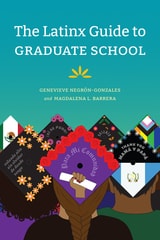
The Latinx Guide to Graduate School
Genevieve Negrón-Gonzales and Magdalena L. Barrera
Duke University Press, 2023
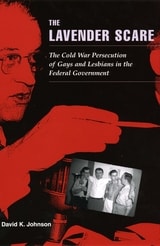
The Lavender Scare
The Cold War Persecution of Gays and Lesbians in the Federal GovernmentDavid K. Johnson
University of Chicago Press, 2003
Historian David K. Johnson here relates the frightening, untold story of how, during the Cold War, homosexuals were considered as dangerous a threat to national security as Communists. Charges that the Roosevelt and Truman administrations were havens for homosexuals proved a potent political weapon, sparking a "Lavender Scare" more vehement and long-lasting than McCarthy's Red Scare. Relying on newly declassified documents, years of research in the records of the National Archives and the FBI, and interviews with former civil servants, Johnson recreates the vibrant gay subculture that flourished in New Deal-era Washington and takes us inside the security interrogation rooms where thousands of Americans were questioned about their sex lives. The homosexual purges ended promising careers, ruined lives, and pushed many to suicide. But, as Johnson also shows, the purges brought victims together to protest their treatment, helping launch a new civil rights struggle.
The Lavender Scare shatters the myth that homosexuality has only recently become a national political issue, changing the way we think about both the McCarthy era and the origins of the gay rights movement. And perhaps just as importantly, this book is a cautionary tale, reminding us of how acts taken by the government in the name of "national security" during the Cold War resulted in the infringement of the civil liberties of thousands of Americans.
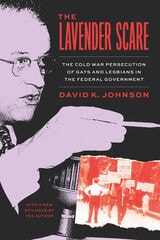
The Lavender Scare
The Cold War Persecution of Gays and Lesbians in the Federal GovernmentDavid K. Johnson
University of Chicago Press, 2023
In The Lavender Scare, David K. Johnson tells the frightening story of how, during the Cold War, homosexuals were considered as dangerous a threat to national security as Communists. Charges that the Roosevelt and Truman administrations were havens for homosexuals proved a potent political weapon, sparking a “Lavender Scare” more vehement and long-lasting than Joseph McCarthy’s Red Scare. Drawing on declassified documents, years of research in the records of the National Archives and the FBI, and interviews with former civil servants, Johnson recreates the vibrant gay subculture that flourished in midcentury Washington and takes us inside the security interrogation rooms where anti-homosexual purges ruined the lives and careers of thousands of Americans. This enlarged edition of Johnson’s classic work of history—the winner of numerous awards and the basis for an acclaimed documentary broadcast on PBS—features a new epilogue, bringing the still-relevant story into the twenty-first century.
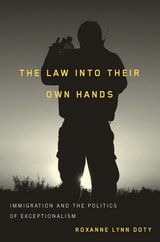
The Law Into Their Own Hands
Immigration and the Politics of ExceptionalismRoxanne Lynn Doty
University of Arizona Press, 2009
Doty examines the social and political contexts that have enabled these civilian groups to flourish and gain legitimacy amongst policy makers and the public. The sentiments underlying the vigilante movement both draw upon and are channeled through a diverse range of organizations whose messages are often reinforced by the media. Taking action when they believe official policy is lacking, groups ranging from elements of the religious right to anti-immigrant groups to white supremacists have created a social movement.
Doty seeks to alert us to the consequences related to this growing movement and to the restructuring of our society. She maintains that with immigrants being considered as enemies and denied basic human rights, it is irresponsible of both citizens and policy makers to treat this complicated issue as a simple black or white reality.
In this solid and theoretically grounded look at contemporary, post-9/11 border vigilantism, the author observes the dangerous and unproductive manner in which private citizens seek to draw firm and uncompromising lines between who is worthy of inclusion in our society and who is not.
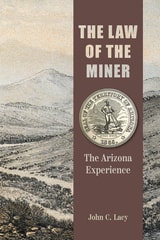
The Law of the Miner
The Arizona ExperienceJohn C. Lacy
University of Nevada Press, 2026
The first adventurers into the New World faced a fundamental legal challenge: how to secure rights to any mineral claims they discovered. Early conquistadors worked under charters that required them to return a portion of their findings to the Spanish crown, but those without such charters had no formal protection—and the crown was slow to clarify individual rights. This uncertainty only grew as miners pushed into the lands that would become the Western United States.
When gold was discovered in California, miners suddenly found themselves operating without any governing laws during the period between the end of the war with Mexico and the establishment of formal U.S. jurisdiction. In response, and without official sanction, they formed self-governing “mining districts,” best understood as mutual protection societies. These districts marked the first organized attempt to define boundaries and create rules for establishing and maintaining mining claims. As the early rushes in California and Nevada subsided, miners carried these practices with them into Arizona and other western territories.
In Arizona, no comprehensive collection of these early regulations has ever existed. The Law of the Mineraddresses this gap by tracing the development of mineral law in early Arizona and presenting the full text of every mining district regulation that could be found. This work serves both the mining industry and historians seeking to identify the individuals involved in creating the districts and to understand these districts’ historical boundaries.
The Law of the Other
The Mixed Jury and Changing Conceptions of Citizenship, Law, and KnowledgeMarianne Constable
University of Chicago Press, 1994
The "mixed jury" doctrine allowed resident foreigners to have law suits against English natives tried before juries composed half of natives and half of aliens like themselves. As she traces the transformations in this doctrine from the Middle Ages to its abolition in 1870, Constable also reveals the emergence of a world where law rooted in actual practices and customs of communities is replaced by law determined by officials, where juries no longer strive to speak the truth but to ascertain the facts.
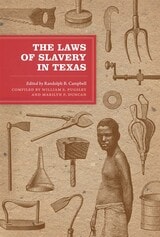
The Laws of Slavery in Texas
Historical Documents and EssaysEdited by Randolph B. Campbell
University of Texas Press, 2010
The laws that governed the institution of slavery in early Texas were enacted over a fifty-year period in which Texas moved through incarnations as a Spanish colony, a Mexican state, an independent republic, a part of the United States, and a Confederate state. This unusual legal heritage sets Texas apart from the other slave-holding states and provides a unique opportunity to examine how slave laws were enacted and upheld as political and legal structures changed. The Laws of Slavery in Texas makes that examination possible by combining seminal historical essays with excerpts from key legal documents from the slave period and tying them together with interpretive commentary by the foremost scholar on the subject, Randolph B. Campbell.
Campbell's commentary focuses on an aspect of slave law that was particularly evident in the evolving legal system of early Texas: the dilemma that arose when human beings were treated as property. As Campbell points out, defining slaves as moveable property, or chattel, presented a serious difficulty to those who wrote and interpreted the law because, unlike any other form of property, slaves were sentient beings. They were held responsible for their crimes, and in numerous other ways statute and case law dealing with slavery recognized the humanness of the enslaved. Attempts to protect the property rights of slave owners led to increasingly restrictive laws—including laws concerning free blacks—that were difficult to uphold. The documents in this collection reveal both the roots of the dilemma and its inevitable outcome.
The Lawyer Myth
A Defense of the American Legal ProfessionFrank T. Rennard and Read Stickland
Ohio University Press, 2008
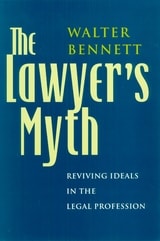
The Lawyer's Myth
Reviving Ideals in the Legal ProfessionWalter Bennett
University of Chicago Press, 2001
Bennett draws on his experience as a lawyer, judge, and law teacher, as well as upon oral histories of lawyers and judges, in his exploration of how and why the legal profession has lost its ennobling mythology. Effectively using examples from history, philosophy, psychology, mythology, and literature, Bennett shows that the loss of professionalism is more than merely the emergence of win-at-all-cost strategies and a scramble for personal wealth. It is something more profound—a loss of professional community and soul. Bennett identifies the old heroic myths of American lawyers and shows how they informed the values of professionalism through the middle of the last century. He shows why, in our more diverse society, those myths are inadequate guides for today's lawyers. And he also discusses the profession's agony over its trickster image and demonstrates how that archetype is not only a psychological reality, but a necessary component of a vibrant professional mythology for lawyers.
At the heart of Bennett's eloquently written book is a call to reinvigorate the legal professional community. To do this, lawyers must revive their creative capacities and develop a meaningful, professional mythology—one based on a deeper understanding of professionalism and a broader, more compassionate ideal of justice.
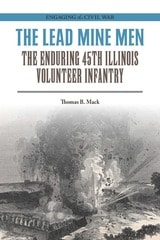
The Lead Mine Men
The Enduring 45th Illinois Volunteer InfantryThomas B. Mack
Southern Illinois University Press, 2023
WINNER, Certificate of Excellence in “Scholarly Publications” from the Illinois State Historical Society’s 2025 Best of Illinois History Awards!
The regiment that never ran
To destroy Confederate infrastructure, avenge the horrors of slavery, and shorten the war, the 45th Illinois Volunteer Infantry imposed the pillaging of hard-war philosophy upon Confederate lands. This comprehensive and engaging narrative explores the Civil War ordeals and triumphs of the “Lead Mine men” who hailed from eleven counties in northern Illinois. Thomas B. Mack uncovers the history on this unit of resilient midwesterners and how they brought hard-war to the Confederacy in 1862, earlier than other historians have previously suggested.
During their service the regiment compiled an exceptional record. The 45th fought under General Ulysses S. Grant in the war’s western theater, earning honors at Vicksburg and in Tennessee. The men later reenlisted as veterans and served in General William T. Sherman’s Atlanta, Savannah, and Carolina campaigns. Mack considers the soldiers’ community, discipline, and faith in Providence during their service in the Union Army of the Tennessee and how, despite the unit’s high casualties, they upheld the lowest rate of desertion due to their fervent patriotism.
Throughout The Lead Mine Men, Mack’s focus remains on the soldiers—their extensive training in Galena and Chicago and their time in camp and in combat. He follows their experiences from recruitment to their celebratory march in the 1865 Grand Review to their postwar lives in which many struggled to adjust, receive their government pensions, and protect the unit’s legacy. In this book, Mack broadens our understanding of the Union soldiers who saved their republic and ended slavery within its borders.
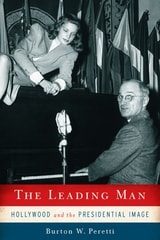
The Leading Man
Hollywood and the Presidential ImagePeretti, Burton W
Rutgers University Press, 2012
American presidents and Hollywood have interacted since the 1920s. This relationship has made our entertainment more political and our political leadership more aligned with the world of movies and movie stars.
In The Leading Man, Burton W. Peretti explores the development of the cinematic presidential image. He sets the scene in chapter 1 to show us how the chief executive, beginning with George Washington, was positioned to assume the mantle of cultural leading man. As an early star figure in the young republic, the president served as a symbol of national survival and wish fulfillment. The president, as head of government and head of state, had the potential to portray a powerful and charismatic role.
At the center of the story are the fourteen presidents of the cinematic era, from Herbert Hoover to Barack Obama. Since the 1920s, the president, like the lead actor in a movie, has been given the central place on the political stage under the intense glare of the spotlight. Like other American men, future presidents were taught by lead movie actors how to look and behave, what to say, and how to say it. Some, like John F. Kennedy and Richard M. Nixon, took particular care to learn from the grooming, gestures, movements, and vocal inflections of film actors and applied these lessons to their political careers. Ronald Reagan was a professional actor. Bill Clinton, a child of the post–World War II Baby Boom, may have been the biggest movie fan of all presidents. Others, including Lyndon Johnson, showed little interest in movies and their lessons for politicians.
Presidents and other politicians have been criticized for cheapening their offices by hiring image and advertising consultants and staging their public events. Peretti analyzes the evolution and the significance of this interaction to trace the convoluted history of the presidential cinematic image. He demonstrates how movies have been the main force in promoting appearance and drama over the substance of governing, and how Americans’ lives today may be dominated by entertainment at the expense of their engagement as citizens.
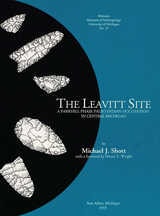
The Leavitt Site
A Parkhill Phase Paleo-Indian Occupation in Central MichiganMichael J. Shott, with a foreword by Henry T. Wright
University of Michigan Press, 1993
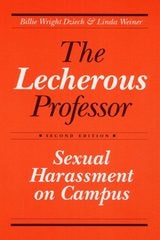
The Lecherous Professor
Sexual Harassment on CampusBillie Wright Dziech and Linda Weiner
University of Illinois Press, 1990
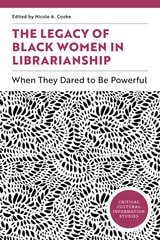
The Legacy of Black Women in Librarianship
When They Dared to Be PowerfulEdited by Nicole A. Cooke
American Library Association, 2025
- span the entire 20th Century, stretching from rural South Carolina and Florida to urban centers like New York and Los Angeles;
- profile better known figures such as Augusta Baker and Eliza Atkins Gleason as well as many who have yet to receive their due;
- grapple with the toxic legacy of segregation in library education, universities, public libraries, schools, and other institutions, showing how these persevering Black women dared to strive and work towards more equitable futures;
- include an inspiring Afterword by Dr. Aisha Johnson-Jones, an educator and revelator of Southern intellectual history;
- will encourage LIS students and newer librarians of all backgrounds to see themselves reflected in the profession’s long and rich heritage; and
- shed light on how librarianship can become ever more diverse and community centered.

The Legacy of Christopher Columbus in the Americas
New Nations and a Transatlantic Discourse of EmpireElise Bartosik-Velez
Vanderbilt University Press, 2014
Bartosik-Velez seeks to explain the meaning of Christopher Columbus throughout the so-called New World, first in the British American colonies and the United States, as well as in Spanish America, during the eighteenth and nineteenth centuries. She argues that, during the pre- and post-revolutionary periods, New World societies commonly imagined themselves as legitimate and powerful independent political entities by comparing themselves to the classical empires of Greece and Rome. Columbus, who had been construed as a figure of empire for centuries, fit perfectly into that framework. By adopting him as a national symbol, New World nationalists appeal to Old World notions of empire.
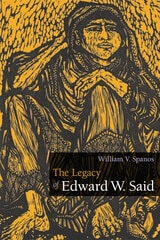
The Legacy of Edward W. Said
William V. Spanos
University of Illinois Press, 2008
With the untimely death of Edward W. Said in 2003, various academic and public intellectuals worldwide have begun to reassess the writings of this powerful oppositional intellectual. Figures on the neoconservative right have already begun to discredit Said’s work as that of a subversive intent on slandering America’s benign global image and undermining its global authority. On the left, a significant number of oppositional intellectuals are eager to counter this neoconservative vilification, proffering a Said who, in marked opposition to the “anti-humanism” of the great poststructuralist thinkers who were his contemporaries--Jacques Derrida, Jean-Francois Lyotard, Jacques Lacan, Louis Althusser, and Michel Foucault--reaffirms humanism and thus rejects poststructuralist theory.
In this provocative assessment of Edward Said’s lifework, William V. Spanos argues that Said’s lifelong anti-imperialist project is actually a fulfillment of the revolutionary possibilities of poststructuralist theory. Spanos examines Said, his legacy, and the various texts he wrote--including Orientalism,Culture and Imperialism, and Humanism and Democratic Criticism--that are now being considered for their lasting political impact.
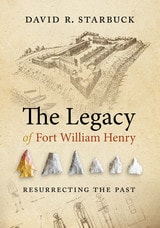
The Legacy of Fort William Henry
Resurrecting the PastDavid R. Starbuck
University Press of New England, 2014
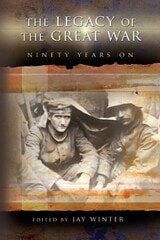
The Legacy of the Great War
Ninety Years OnEdited by Jay Winter
University of Missouri Press, 2009
In late 2007 and early 2008, world-renowned historians gathered in Kansas City for a series of public forums on World War I. Each of the five events focused on a particular topic and featured spirited dialogue between its prominent participants.

The Legal Status of Church-State Relationships in the United States
With Special Reference to the Public SchoolsAlvin Johnson
University of Minnesota Press, 1934
The Legendary Detective
The Private Eye in Fact and FictionJohn Walton
University of Chicago Press, 2015
“I’m in a business where people come to me with troubles. Big troubles, little troubles, but always troubles they don’t want to take to the cops.” That’s Raymond Chandler’s Philip Marlowe, succinctly setting out our image of the private eye. A no-nonsense loner, working on the margins of society, working in the darkness to shine a little light.
The reality is a little different—but no less fascinating. In The Legendary Detective, John Walton offers a sweeping history of the American private detective in reality and myth, from the earliest agencies to the hard-boiled heights of the 1930s and ’40s. Drawing on previously untapped archival accounts of actual detective work, Walton traces both the growth of major private detective agencies like Pinkerton, which became powerful bulwarks against social and labor unrest and the motley, unglamorous work of small-time operatives. He then goes on to show us how writers like Dashiell Hammett and editors of sensational pulp magazines like Black Mask embellished on actual experiences and fashioned an image of the PI as a compelling, even admirable, necessary evil, doing society’s dirty work while adhering to a self-imposed moral code. Scandals, public investigations, and regulations brought the boom years of private agencies to an end in the late 1930s, Walton explains, in the process fully cementing the shift from reality to fantasy.
Today, as the private detective has long since given way to security services and armed guards, the myth of the lone PI remains as potent as ever. No fan of crime fiction or American history will want to miss The Legendary Detective.
The Lesbian Menace
Ideology, Identity, and the Representation of Lesbian LifeSherrie A. Inness
University of Massachusetts Press, 1997
Electroshock. Hysterectomy. Lobotomy. These are only three of the many “cures” to which lesbians have been subjected in this century. How does a society develop such a profound aversion to a particular minority? In what ways do images in the popular media perpetuate cultural stereotypes about lesbians, and to what extent have lesbians been able to subvert and revise those images? This book addresses these and other questions by examining how lesbianism has been represented in American popular culture in the twentieth century and how conflicting ideologies have shaped lesbian experiences and identity.
In the first section, “Inventing the Lesbian,” Sherrie A. Inness explores depictions of lesbians in popular texts aimed primarily at heterosexual consumers. She moves from novels of the 1920s to books about life at women's colleges and boarding schools, to such contemporary women's magazines as Cosmopolitan, Glamour, and Vogue.
In the next section, “Forms of Resistance,” Inness probes the ways in which lesbians have refashioned texts intended for a heterosexual audience or created their own narratives. One chapter shows how lesbian readers have reinterpreted the Nancy Drew mysteries, looking at them from a distinctly “queer” perspective. Another chapter addresses the changing portrayal of lesbians in children's books over the past two decades.
The last section, “Writing in the Margins,” scrutinizes the extent to which lesbians, themselves a marginalized group, have created a society that relegates some of its own members to the outskirts. Topics include the geographic politics of lesbianism, the complex issue of "passing," and the meaning of butch identity in twentieth-century lesbian culture.
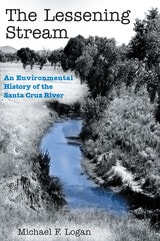
The Lessening Stream
An Environmental History of the Santa Cruz RiverMichael F. Logan
University of Arizona Press, 2002
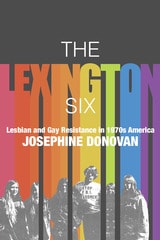
The Lexington Six
Lesbian and Gay Resistance in 1970s AmericaJosephine Donovan
University of Massachusetts Press, 2020
Finalist for the 2021 Lambda Literary Awards
On September 23, 1970, a group of antiwar activists staged a robbery at a bank in Massachusetts, during which a police officer was killed. While the three men who participated in the robbery were soon apprehended, two women escaped and became fugitives on the FBI's Ten Most Wanted list, eventually landing in a lesbian collective in Lexington, Kentucky, during the summer of 1974. In pursuit, the FBI launched a massive dragnet. Five lesbian women and one gay man ended up in jail for refusing to cooperate with federal officials, whom they saw as invading their lives and community. Dubbed the Lexington Six, the group's resistance attracted national attention, inspiring a nationwide movement in other minority communities. Like the iconic Stonewall demonstrations, this gripping story of spirited defiance has special resonance in today's America.
Drawing on transcripts of the judicial hearings, contemporaneous newspaper accounts, hundreds of pages of FBI files released to the author under the Freedom of Information Act, and interviews with many of the participants, Josephine Donovan reconstructs this fascinating, untold story. The Lexington Six is a vital addition to LGBTQ, feminist, and radical American history.

The Librarian's Guide to Graphic Novels for Adults
American Library Association, 2010
The Librarian's Guide to Homelessness
An Empathy-Driven Approach to Solving Problems, Preventing Conflict, and Serving EveryoneRyan Dowd
American Library Association, 2018
Homelessness is a perennial topic of concern at libraries. In fact, staff at public libraries interact with almost as many homeless individuals as staff at shelters do. Empathy and understanding, along with specific actionable advice that’s drawn from experience, makes all the difference in working with this group. In this book Dowd, executive director of a homeless shelter, spotlights best practices drawn from his own shelter’s policies and training materials. Filled with to-the-point guidance that will help frontline public library staff and managers understand and serve this population better, this resource
- includes facts about homelessness every librarian should know;
- debunks widespread myths about these individuals, explaining how they see themselves, what issues they struggle with, and how libraries can shift towards supporting them;
- shares de-escalation techniques like showing respect, ways to avoid making things personal, and using proper body language;
- walks readers through dealing with common issues like a sleeping patron, questionable hygiene, offensive behavior, and asking a patron to leave; and
- advises on how to provide backup to a colleague and when to call the police.
The Librarian's Legal Companion for Licensing Information Resources and Services
Tomas A. Lipinski
American Library Association, 2013
Legal expert Lipinski offers a definitive sourcebook for information licensing in libraries, including copyright and contract matters, general contract law concepts, developments in online and information contracting; and the advantages and disadvantages of licensing. Readers will find clear guidance on deciphering the legalese in agreements, advice on negotiating or countering provisions with library-friendly alternatives, and detailed explanations of specific licenses as well as a discussion of issues regarding online and information contracting. Additionally, three special sections provide valuable information in an easy-to-reference format:
- Deconstructions of four common license agreements: Access Newspaper Archive, BioOne, Nature Academic, and Amazon.com Kindle
- Answers to 126 questions about specific licensing agreements, plus a glossary, checklist and review tool for evaluating a license agreement
- 20 key issues in licensing agreements, accompanied by sample clauses
You'll save time, money, and unnecessary stress by putting the law on your side with this all-in-one guide to buying and licensing agreements.
The Library Innovation Toolkit
Ideas, Strategies, and ProgramsAnthony Molaro
American Library Association, 2015
The Library Liaison's Training Guide to Collection Management
Alison M. Armstrong
American Library Association, 2020
Library liaisons often have primary jobs that do not involve collection development, but their familiarity with collection practices makes all the difference in faculty relations. And time pressures mean that on-boarding needs to be as streamlined as possible. This concise, field-tested training manual will put your liaison on solid footing. Plus, end of the chapter prompts make it easy to tailor your approach to local practices. With the help of this resource, your new liaison will get up to speed on such topics as
- tracking budget balances in assigned departments;
- differentiating between the needs of an individual faculty member and their department;
- how to say no to monograph requests;
- benchmarking titles with peer institutions or coordinating within a consortium;
- 17 questions to ask when evaluating a database;
- considerations when making weeding decisions;
- four key conversations to have annually between liaisons and collection development librarians; and
- gathering data for program accreditation reports.

The Library Outreach Casebook
Ryan L. Sittler
Assoc of College & Research Libraries, 2018
The Library Workplace Idea Book
Proactive Steps for Positive ChangeAmanda H. McLellan
American Library Association, 2020
The Library's Legal Answer Book
Tomas A. Lipinski
American Library Association, 2003
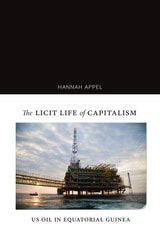
The Licit Life of Capitalism
US Oil in Equatorial GuineaHannah Appel
Duke University Press, 2019
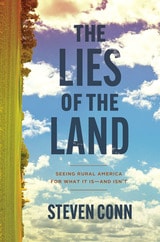
The Lies of the Land
Seeing Rural America for What It Is—and Isn’tSteven Conn
University of Chicago Press, 2023
It seems everyone has an opinion about rural America. Is it gripped in a tragic decline? Or is it on the cusp of a glorious revival? Is it the key to understanding America today? Steven Conn argues that we’re missing the real question: Is rural America even a thing? No, says Conn, who believes we see only what we want to see in the lands beyond the suburbs—fantasies about moral (or backward) communities, simpler (or repressive) living, and what it means to be authentically (or wrongheadedly) American. If we want to build a better future, Conn argues, we must accept that these visions don’t exist and never did.
In The Lies of the Land, Conn shows that rural America—so often characterized as in crisis or in danger of being left behind—has actually been at the center of modern American history, shaped by the same forces as everywhere else in the country: militarization, industrialization, corporatization, and suburbanization. Examining each of these forces in turn, Conn invites us to dispense with the lies and half-truths we’ve believed about rural America and to pursue better solutions to the very real challenges shared all across our nation.
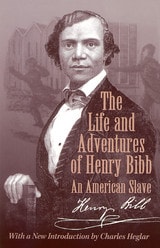
The Life and Adventures of Henry Bibb
An American SlaveHenry Bibb
University of Wisconsin Press, 2001
First published in 1849 and largely unavailable for many years, The Life and Adventures of Henry Bibb is among the most remarkable slave narratives. Born on a Kentucky plantation in 1815, Bibb first attempted to escape from bondage at the age of ten. He was recaptured and escaped several more times before he eventually settled in Detroit, Michigan, and joined the antislavery movement as a lecturer.
Bibb’s story is different in many ways from the widely read Narrative of the Life of Frederick Douglass, An American Slave and Harriet Jacobs’ Incidents in the Life of a Slave Girl. He was owned by a Native American; he is one of the few ex-slave autobiographers who had labored in the Deep South (Louisiana); and he writes about folkways of the slaves, especially how he used conjure to avoid punishment and to win the hearts of women. Most significant, he is unique in exploring the importance of marriage and family to him, recounting his several trips to free his wife and child. This new edition includes an introduction by literary scholar Charles Heglar and a selection of letters and editorials by Bibb.