Results by title
18284 books match the query 'United States' and 3764 start with t
The Life and Adventures of an Arkansaw Doctor
David Rattlehead
University of Arkansas Press, 1989
The Life and Comics of Howard Cruse
Taking Risks in the Service of TruthAndrew J. Kunka
Rutgers University Press, 2022
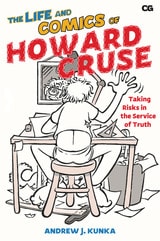
The Life and Comics of Howard Cruse tells the remarkable story of how a self-described “preacher’s kid” from Birmingham, Alabama, became the so-called “Godfather of Gay Comics.” This study showcases a remarkable fifty-year career that included working in the 1970s underground comics scene, becoming founding editor of the groundbreaking anthology series Gay Comix, and publishing the graphic novel Stuck Rubber Baby, partially based on his own experience of coming of age in the Civil Rights era.
Through his exploration of Cruse’s life and work, Andrew J. Kunka also chronicles the dramatic ways that gay culture changed over the course of Cruse’s lifetime, from Cold War-era homophobia to the gay liberation movement to the AIDS crisis to the legalization of gay marriage. Highlighting Cruse’s skills as a trenchant satirist and social commentator, Kunka explores how he cast a queer look at American politics, mainstream comics culture, and the gay community’s own norms.
Lavishly illustrated with a broad selection of comics from Cruse’s career, this study serves as a perfect introduction to this pioneering cartoonist, as well as an insightful read for fans who already love how his work sketched a new vision of gay life.
The Life and Death of Gus Reed
A Story of Race and Justice in Illinois during the Civil War and ReconstructionThomas Bahde
Ohio University Press, 2014
Gus Reed was a freed slave who traveled north as Sherman’s March was sweeping through Georgia in 1864. His journey ended in Springfield, Illinois, a city undergoing fundamental changes as its white citizens struggled to understand the political, legal, and cultural consequences of emancipation and black citizenship. Reed became known as a petty thief, appearing time and again in the records of the state’s courts and prisons. In late 1877, he burglarized the home of a well-known Springfield attorney—and brother of Abraham Lincoln’s former law partner—a crime for which he was convicted and sentenced to the Illinois State Penitentiary.
Reed died at the penitentiary in 1878, shackled to the door of his cell for days with a gag strapped in his mouth. An investigation established that two guards were responsible for the prisoner’s death, but neither they nor the prison warden suffered any penalty. The guards were dismissed, the investigation was closed, and Reed was forgotten.
Gus Reed’s story connects the political and legal cultures of white supremacy, black migration and black communities, the Midwest’s experience with the Civil War and Reconstruction, and the resurgence of nationwide opposition to African American civil rights in the late nineteenth century. These experiences shaped a nation with deep and unresolved misgivings about race, as well as distinctive and conflicting ideas about justice and how to achieve it.
The Life and Political Economy of Lauchlin Currie
New Dealer, Presidential Advisor, and Development EconomistRoger J. Sandilands
Duke University Press, 1990
His involvement in U.S. policymaking in China, where he directed Lend-Lease operations from 1941-1943, was one of the factors leading to his confrontation with Senator Joseph McCarthy. In 1949 he directed the first World Bank mission to Colombia.
Roger Sandilands had access to Currie’s own papers and to previously unpublished material. In this biography he provides the reader with a critical evaluation of Currie’s contribution to the literature on the theory and practice of economic development in general, together with an analysis of how his concepts were shaped during the New Deal and in post-World War II Colombia.
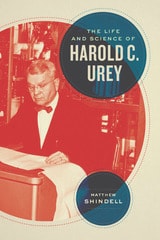
The Life and Science of Harold C. Urey
Matthew Shindell
University of Chicago Press, 2019
From Urey’s orthodox religious upbringing to his death in 1981, Shindell follows the scientist through nearly a century of American history: his discovery of deuterium and heavy water earned him the Nobel Prize in 1934, his work on the Manhattan Project helped usher in the atomic age, he initiated a generation of American scientists into the world of quantum physics and chemistry, and he took on the origin of the Moon in NASA’s lunar exploration program. Despite his success, however, Urey had difficulty navigating the nuclear age. In later years he lived in the shadow of the bomb he helped create, plagued by the uncertainties unleashed by the rise of American science and unable to reconcile the consequences of scientific progress with the morality of religion.
Tracing Urey’s life through two world wars and the Cold War not only conveys the complex historical relationship between science and religion in the twentieth century, but it also illustrates how these complexities spilled over into the early days of space science. More than a life story, this book immerses readers in the trials and triumphs of an extraordinary man and his extraordinary times.
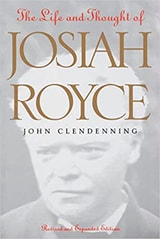
The Life and Thought of Josiah Royce
Revised and Expanded EditionJohn Clendenning
Vanderbilt University Press, 1999
Infuses the first, highly acclaimed edition with new material that deepens our understanding of this distinguished American philosopher
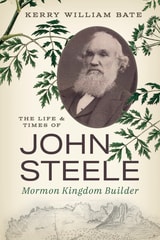
The Life and Times of John Steele
Mormon Kingdom BuilderKerry William Bate
University of Utah Press, 2025
Among the founders of Salt Lake City, Parowan, and Las Vegas, and an explorer of Zion National Park and the Grand Canyon, John Steele's legacy is etched across the American West. The Life and Times of John Steele follows the remarkable journey of this Irish-born convert to Mormonism from his birth into scarcity through his final days in Kanarraville, Utah.
A fervent believer in utopian ideals, Steele sought to build an egalitarian Kingdom of Christ in the last days, becoming a key figure in early Utah history. His multifaceted roles—missionary, city founder, militia major, justice of the peace, and self-taught doctor using folk medicine, charms, and the occult—make his story unique. This meticulously researched biography offers new insights into pivotal events such as the Mountain Meadows Massacre and the communal economics of the Church of Jesus Christ of Latter-day Saints, drawing from Steele’s extensive personal diaries and papers to bring his complex, colorful life and times to light.
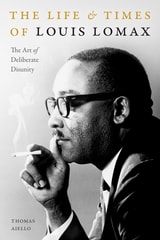
The Life and Times of Louis Lomax
The Art of Deliberate DisunityThomas Aiello
Duke University Press, 2021
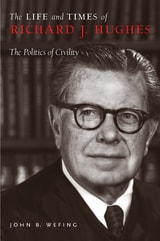
The Life and Times of Richard J. Hughes
The Politics of CivilityWefing, John B
Rutgers University Press, 2009
This biography illuminates the governor's accomplishments between 1962 and 1970, including the creation of the Hackensack Meadowlands Commission, formation of the county college system, establishment of stringent antipollution laws, design of the public defender system, and the adoption of a New Jersey sales tax, as well as his pivotal role during the Newark riots. As chief justice, Hughes faced difficult issuesùschool funding, low and moderate income housing needs, freedom of speech, and his decision in the rightto-die case involving Karen Ann Quinlan. With a career characterized by liberal activism, Hughes also contributed nationally and internationally, from serving as host of the 1964 Democratic National Convention to monitoring elections in South Vietnam.
John B. Wefing's research includes interviews with prominent politicians and leaders who worked with Hughes at various points in his career. The result is a rich story of a public servant who possessed a true ability to work with members of both political parties and played a significant role in shaping modern New Jersey.
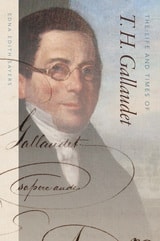
The Life and Times of T. H. Gallaudet
Edna Edith Sayers
University Press of New England, 2017
The Life and Work of Francis Willey Kelsey
Archaeology, Antiquity, and the ArtsJohn Griffiths Pedley
University of Michigan Press, 2011
President of the Archaeological Institute of America, professor at the University of Michigan from 1889 to 1927, and president of the American Philological Association, Francis Kelsey was crucially involved in the founding or growth of major educational institutions. He came to maturity in a period of great technological change in communications, transportation, and manufacturing. Kelsey took full advantage of such innovations in his ceaseless drive to promote education for all, to further the expansion of knowledge, and to champion the benefits of the study of antiquity.
A vigorous traveler around the United States, Europe, and the Mediterranean, Kelsey strongly believed in the value of personally viewing sites ancient and modern and collecting artifacts that could be used by the new museums and universities that were springing up in the United States. This collecting habit put him in touch with major financiers of the day, including Charles Freer, Andrew Carnegie, and J. P. Morgan, as he sought their help for important projects.
Drawing heavily on Kelsey's daily diaries now held at the University of Michigan's Bentley Historical Library, John Griffiths Pedley gives us a biography that records the wide-ranging activities of a gifted and energetic scholar whose achievements mirrored the creative and contributive innovations of his contemporary Americans.

The Life of Andrew Jackson
John Reid
University of Alabama Press, 2007
The frontier fighter who rose to the presidency and reshaped a nation.
Original copies of the first, 1817, edition of this work are so rare that even the Library of Congress does not have an undamaged copy. Consequently scholars and students of Jackson have had to rely on later, incomplete or bowdlerized editions. It is therefore all the more valuable to have Owsley’s critical restoration of the original edition, complete with its useful maps.
The work is a straightforward history of Jackson’s military career, begun by John Reid, Jackson’s military aide throughout the War of 1812 and the ensuing Creek War. Reid wrote the first four chapters, and after his death John Eaton completed the work from Reid’s outline, notes, and papers. Owsley, quondam professor of history at Auburn University, has carefully restored the original edition, noted variants between this and successor editions, and included helpful apparatus, including a memoir of John Reid by Helen Reid Roberts, and indexes to the whole.
This is the first paperback edition of this valuable record and includes the original four large-scale foldout maps on an accompanying CD.
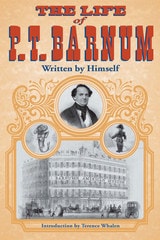
The Life of P. T. Barnum, Written by Himself
Phineas T. BarnumIntroduction by Terence Whalen
University of Illinois Press, 2000
Barnum deliberately cultivated his ambiguous public image through a lifelong advertising campaign, shrewdly exploiting the cultural and technological capabilities of the new publishing industry. While running his numerous shows and exhibitions, Barnum managed to publish newspaper articles, exposés of fraud (not his own), self-help tracts, and a series of best-selling autobiographies, each promising to give "the true history of my many adventures."
Updated editions of The Life of P. T. Barnum appeared regularly, allowing Barnum to keep up with demand and prune the narrative of details that might offend posterity. The present volume is the first modern edition of Barnum's original and outrageous autobiography, published in 1855 and unavailable for more than a century. Brazen, confessional, and immensely entertaining, it immortalizes the showman who hoodwinked customers into paying to hear the reminiscences of a woman presented as George Washington's 161-year-old nurse, the impresario who brought Jenny Lind to America and toured Europe with General Tom Thumb, and the grand entrepreneur of the American Museum of New York. Above all, it ensures that Barnum would be properly remembered . . . exactly as he created himself.
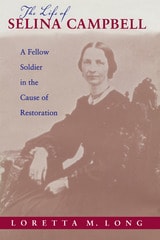
The Life of Selina Campbell
A Fellow Soldier in the Cause of RestorationLoretta M. Long Hunnicutt
University of Alabama Press, 2001
This first biography of Selina Campbell opens a window onto the experience of women in one of the most dynamic religious groups of 19th-century America
Loretta M. Long examines the life and influence of Selina Campbell, one of the most visible women in the 19th-century Disciples of Christ movement. Best known as the wife of Alexander Campbell, founder of the Disciples, Selina Campbell both shaped and exemplified the role of women in this dynamic religious group (also known as the Stone-Campbell movement). Her story demonstrates the importance of faith in the lives of many women during this era and adds a new dimension to the concept of the “separate spheres” of men and women, which women like Campbell interpreted in the context of their religious beliefs.
A household manager, mother, writer, and friend, Campbell held sway primarily in the domestic sphere, but she was not held captive by it. Her relationship with her husband was founded on a deep sense of partnership conditioned by their strong faith in an all-powerful God. Each of them took on complementary roles according to the perceived natural abilities of their genders: Alexander depended on Selina to manage his property and raise the children while he traveled the country preaching. Campbell outlived her husband by 30 years, and during that time published several newspaper articles and supported new causes, such as women in missions.
In the end, as Long amply demonstrates, Selina Campbell was neither her husband’s shadow nor solely a domestic worker. She was, in her husband’s eyes, a full partner and a “fellow soldier” in the cause of Restoration.
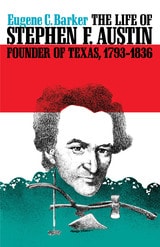
The Life of Stephen F. Austin, Founder of Texas, 1793-1836
A Chapter in the Westward Movement of the Anglo-American PeopleBy Eugene C. Barker
University of Texas Press, 1969
Almost a hundred years after the death of Stephen F. Austin this first full-length biography was published. And for almost a quarter of a century—dividing his time between editing, teaching, textbook writing, and serving in various academic capacities—Eugene C. Barker pursued the study which resulted in The Life of Stephen F. Austin. His accomplishment has long been regarded as a fine example of biography in Texas literature.
The Light That Endures
Stories of Courage, Compassion, and Resilience at Dana-Farber Cancer InstituteTodd Weissman
University of Massachusetts Press, 2026
Showing that everyday people offer the deepest, most relatable lessons in grace
Offering an intimate glimpse into the lives of individuals connected to one of the world’s foremost centers for cancer care and research, The Light That Endures reveals how ordinary people at Boston’s Dana-Farber Cancer Institute demonstrate extraordinary resilience in the face of life’s most challenging moments. Through eight captivating profiles, readers meet a world-renowned pediatric oncologist who rode on horseback at Eisenhower’s inauguration, delivered a secret message in Soviet-controlled Czechoslovakia, and hosted the future King of England; a florist-turned-nurse-turned-teacher whose life changed drastically after a chance encounter on a train; an administrator who has faced adversity his entire life, from a violent father, to confronting his own identity, to being held up at gunpoint; a teenage patient whose battle with cancer was just one of many challenges he has navigated; and a woman who, despite spending her life bringing comfort to others, wonders whether she’s been enough as she reflects after a terminal diagnosis.
These remarkable people, diverse in their backgrounds, share a common bond through cancer and Dana-Farber, that much is obvious. However, it is their quiet acts of grace and service—woven into both their professional paths and personal journeys—that more deeply unite them. Their stories reveal a deeper truth: despite hardship and loss, the arc of life bends toward goodness. Fractured childhoods, family estrangement, mental health strains, winding career paths, and the ever-present shadow of self-doubt are not just obstacles but catalysts. The individuals profiled have found hope and meaning in community and their work, shaping lives of purpose, service, and gratitude. More than a recounting of lives touched by cancer, The Light That Endures is a celebration of the profound impact of compassion and human connection. It captures the essence of Dana-Farber’s ethos, where a shared mission of care fosters an environment of empathy and hope.
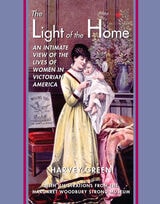
The Light of the Home
An Intimate View of the Lives of Women in Victorian AmericaHarvey Green
University of Arkansas Press, 2003
The Limits of Auteurism
Case Studies in the Critically Constructed New HollywoodGodfrey, Nicholas
Rutgers University Press, 2018
The book explores the role that contemporary critics played in determining how the movies of this period were understood and how, in turn, strategies of distribution influenced critical responses and dictated the conditions of entry into the rapidly codifying New Hollywood canon. Focusing on a small number of industrially significant films, this new history advances our understanding of this important moment of transition from Classical to contemporary modes of production.
The Limits of Legitimacy
Dissenting Opinions, Media Coverage, and Public Responses to Supreme Court DecisionsMichael A. Zilis
University of Michigan Press, 2015
Zilis finds that the media tends not to quote from majority opinions. However, the greater the division over a particular ruling among the justices themselves, the greater the likelihood that the media will criticize that ruling, characterize it as "activist," and employ inflammatory rhetoric. Hethen demonstrates that the media’s portrayal of a decision, as much as the substance of the decision itself, influences citizens’ reactions to and acceptance of it.
This meticulously constructed study and its persuasively argued conclusion advance the understanding of the media, judicial politics, political institutions, and political behavior.
The Limits of Party
Congress and Lawmaking in a Polarized EraJames M. Curry and Frances E. Lee
University of Chicago Press, 2020
In The Limits of Party, James M. Curry and Frances E. Lee challenge this conventional wisdom. By constructing legislative histories of congressional majority parties’ attempts to enact their policy agendas in every congress since the 1980s and by drawing on interviews with Washington insiders, the authors analyze the successes and failures of congressional parties to enact their legislative agendas.
Their conclusions will surprise many congressional observers: Even in our time of intense party polarization, bipartisanship remains the key to legislative success on Capitol Hill. Congressional majority parties today are neither more nor less successful at enacting their partisan agendas. They are not more likely to ram though partisan laws or become mired in stalemate. Rather, the parties continue to build bipartisan coalitions for their legislative priorities and typically compromise on their original visions for legislation in order to achieve legislative success.
The Limits of Religious Tolerance
Alan Jay Levinovitz
Amherst College Press, 2016
The Limits of Sovereignty
Property Confiscation in the Union and the Confederacy during the Civil WarDaniel W. Hamilton
University of Chicago Press, 2006
Americans take for granted that government does not have the right to permanently seize private property without just compensation. Yet for much of American history, such a view constituted the weaker side of an ongoing argument about government sovereignty and individual rights. What brought about this drastic shift in legal and political thought?
Daniel W. Hamilton locates that change in the crucible of the Civil War. In the early days of the war, Congress passed the First and Second Confiscation Acts, authorizing the Union to seize private property in the rebellious states of the Confederacy, and the Confederate Congress responded with the broader Sequestration Act. The competing acts fueled a fierce, sustained debate among legislators and lawyers about the principles underlying alternative ideas of private property and state power, a debate which by 1870 was increasingly dominated by today’s view of more limited government power.
Through its exploration of this little-studied consequence of the debates over confiscation during the Civil War, The Limits of Sovereignty will be essential to an understanding of the place of private property in American law and legal history.
The Limits of Transnationalism
Nancy L. Green
University of Chicago Press, 2019
The Limits to Union
Same-Sex Marriage and the Politics of Civil RightsJonathan Goldberg-Hiller
University of Michigan Press, 2004
"The Limits to Union is a superb book about the complexities of recent political struggles over same-sex marriage. Goldberg-Hiller offers a sophisticated account of egalitarian rights advocacy and the reaction it has generated from established majorities animated by a 'new common sense' of exclusionary sovereign authority. The author's analysis is multidimensional and nuanced, but the core argument is bold, important, and well-supported. I recommend it very highly to everyone interested in understanding the character, possibilities, and constraints of civil rights amid our contemporary culture wars."
-Michael McCann, author of Rights at Work: Pay Equity Reform and the Politics of Legal Mobilization
"In this excellent book, Goldberg-Hiller uses Hawaii's experience to examine the interaction between courts and the political system. . . . Relying on briefs, legislative statements, and interviews with activists from both sides of the question, he views this familiar debate . . . through the unfamiliar prism of gay marriage, which allows him to gauge the viability and the pliability of the American civil rights ideal, and how gay and lesbian issues fit (or don't fit) within that ideal."
-Willian Heinzen, New York Law Journal
"Goldberg-Hiller presents the history of the same-sex marriage question since it first sparked debate in Hawaii. He follows the shifting debate through court cases, state propositions, and state and federal legislatures, considering questions about the constitutionality of the Defense of Marriage Act and the concept of equal protection under the law for gays and lesbians. This detailed treatment of the legal issues surrounding same-sex marriages is highly recommended."
-R. L. Abbott, University of Evansville
"[A] valuable contribution to the field, situating the gay marriage debate in broader contexts of theory, law and practice. [S]ame-sex marriage is an important issue...that finds itself caught in the friction points of much larger debates over the nature of rights, the limits of sovereignty and the proper role of courts and law in a democratic society. The Limits to Union should therefore be of interest even to those who do not think of themselves as interested in gay and lesbian rights issues."
-Evan Gerstmann, Loyola Marymount University, Law and Politics Book Review
The Lincoln Assassination
The EvidenceEdited by William C. Edwards and Edward Steers
University of Illinois Press, 2008
On April 22, 1865, Brevet Colonel H. L. Burnett was assigned to head the investigation into the murder of President Abraham Lincoln and the attempted murder of Secretary of State William H. Seward. Burnett orchestrated the collection of thousands of documents for the Military Commission’s trial of the conspirators. This deep archive of documentary evidence--consisting of letters, depositions, eyewitness accounts, investigative reports, and other documents--provides invaluable insight into the historical, cultural, and judicial context of the investigation. Only a fraction of the information presented in these documents ever made its way into the trial, and most of it has never been readily accessible. By presenting an annotated and indexed transcription of these documents, this volume offers significant new access to information on the events surrounding the assassination and a vast new store of social and political history of the Civil War era.
“With tears in my eyes I think it your duty to hang every rebel caught. I feel as bad as if was my own mother or father & will be one to volunteer to try & shoot every Southern man. May God have mercy on the man’s soul that done such a deed.
With much Respect for our Country,
I remain
Weeping”
--Anonymous letter, New York, April 15, 1865
“I know Booth. He was in the habit of coming to my place to shoot. . . . He shot well, and practiced to shoot with accuracy in every possible position. . . . He was a quick shot; always silent, reticent.”
--Deposition of Benjamin Barker, Pistol Gallery proprietor
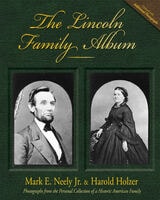
The Lincoln Family Album
Mark E. Neely Jr. and Harold Holzer
Southern Illinois University Press, 2006
Chronicling the private lives of the Lincolns through their personal photographic collection
The Lincoln Family Album offers a rare and revealing glimpse into the private life of Abraham Lincoln and the first family. Showcasing original and previously unpublished photographs collected and preserved by Mary Todd Lincoln and four generations of descendants, the volume includes pictures displayed in a family album when the Lincolns lived in the White House. Chronicled are the lives of the Lincolns’ three sons, including the tragic death of Willie in 1862, the rapid change of Tad during the war, and Robert’s marriage, children, and political career. Soldiers and statesmen of the Civil War, period figures such as Tom Thumb and Henry Ward Beecher, and even the family dog also graced the album that became the nucleus of the Lincolns’ personal collection.
This updated edition, which provides both additional pictures and new introductory materials by renowned Lincoln scholars Mark E. Neely Jr. and Harold Holzer, paints a portrait of the Lincolns’ rise to prominence and the exclusion of poorer relations after the family moved to the nation’s capital. With 150 illustrations and detailed captions, this authoritative and enlightening nineteenth-century history also includes capsule biographies of the Lincolns’ friends and relatives.
In such images as the First Lady in mourning or the assassin John Wilkes Booth, the pictures cannot disguise the painful truth about a family that suffered as many tragedies as triumphs. Willie’s death at the age of eleven abruptly ended Mary and Abraham’s personal collecting, but Lincoln descendants continued the tradition. The last pages of The Lincoln Family Album conclude with the death of Robert Lincoln’s last grandchild, Robert Todd Lincoln Beckwith, in 1985, ending the direct line of Abraham and Mary Lincoln.

The Lincoln Highway
Main Street across America, A Tenth Aniversary EditionDrake Hokanson
University of Iowa Press, 1999
Ten years after its original publication, Drake Hokanson's best-selling book continues to inspire readers to leave the interstate for a road less traveled, but one that still fuels the American preoccupation with the open road.
In his new introduction to this tenth anniversary edition, Hokanson revisits the Lincoln Highway and finds it changed—much for the better—since the original publication of this book. Most notably, he calls attention to the reinvigorated Lincoln Highway Association and its efforts to preserve what is left of the old road. Hokanson finds more and more tourists traveling the road—not only Americans but foreigners as well—by car, bus, and motorcycle on journeys not to any particular destination, but simply to see America.

The Lincoln Image
ABRAHAM LINCOLN AND THE POPULAR PRINTHarold Holzer, Gabor S. Boritt, and Mark E . Neely Jr.
University of Illinois Press, 1984
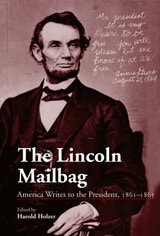
The Lincoln Mailbag
America Writes to the President, 1861-1865Edited by Harold Holzer
Southern Illinois University Press, 2006
As president, Abraham Lincoln received between two hundred and five hundred letters a day—correspondence from public officials, political allies, and military leaders, as well as letters from ordinary Americans of all races who wanted to share their views with him. Here, and in his critically acclaimed volume Dear Mr. Lincoln, editor Harold Holzer has rescued these voices—sometimes eloquent, occasionally angry, at times poetic—from the obscurity of the archives of the Civil War. The Lincoln Mailbag includes letters written by African Americans, which Lincoln never saw, revealing to readers a more accurate representation of the nation’s mood than even the president knew. This first paperback edition of The Lincoln Mailbag includes a new index and fourteen illustrations, and Holzer’s introduction and annotations provide historical context for the events described and the people who wrote so passionately to their president in Lincoln's America.
The Lincoln Murder Conspiracies
William Hanchett
University of Illinois Press, 1983
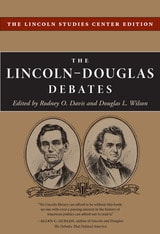
The Lincoln-Douglas Debates
The Lincoln Studies Center EditionEdited by Rodney O. Davis and Douglas L. Wilson
University of Illinois Press, 2014
While the debates between Abraham Lincoln and Stephen A. Douglas are undoubtedly the most celebrated in American history, they may also be the most consequential as well. For the issues so fiercely debated in 1858 were about various interrelated aspects of one momentous, nation-threatening issue: slavery. The contest between Lincoln and Douglas became a testing ground for the viability of conflicting ideals in a nation deeply divided. One of the most colorful and engaging episodes in American history, this series of debates is of enduring interest as an illuminating instance of the ever-recurring dilemma of self-government: what happens when the guiding principle of democracy, "popular sovereignty," confronts a principled stand against a "moral, social, and political evil"? The tragic answer in this case came three years later: civil war.
Important as they are, the Lincoln-Douglas debates have long since ceased to be self-explanatory. This edition is the first to provide a text founded on all known records, rather than following one or another of the partisan and sometimes widely-varying newspaper accounts. Meticulously edited and annotated, it provides numerous aids to help the modern reader understand the debates, including extensive introductory material, commentary, and a glossary. The fullest and most dependable edition of the Lincoln-Douglas debates ever prepared, this edition brings readers as close as possible to the original words of these two remarkable men.
The Lithic Industries of the Illinois Valley in the Early and Middle Woodland Period
Anta Montet-White
University of Michigan Press, 1968
The Little Lead Soldier
Hugh D. Wise III
Westholme Publishing, 2017
Arriving in France in April 1918, Col. Hugh D. Wise, commander of the U.S. 61st Infantry Division, held a precious object. It was a toy soldier given to him by his six-year-old son, Hugh, Jr. The boy had asked the little lead soldier to write him with news of his father. The colonel saw action in two of the most important campaigns the Americans fought, St. Mihiel and Meuse-Argonne, and the little lead soldier dutifully assured a boy thousands of miles away that his father was safe: “The men had been shelled, gassed, and raked by machine guns constantly: and undergone several intense bombardments; and made a difficult though successful attack; and had resisted a fierce counter-attack. They had dug trenches, moved, and dug again. All this time they had been without shelter, exposed to a cold driving rain and without warm food—They were wet, chilled, and tired when called upon for even greater efforts but they responded with the energy and spirit of fresh troops.” A treasured family heirloom, these wartime letters are presented for the first time along with letter from Colonel Wise to his wife, and engrossing historical context provided by his grandson, Hugh D. Wise, III. The Little Lead Soldier: World War I Letters from a Father to His Son is a remarkable story of how a father performed his dangerous duty while keeping a promise to his boy.

The Little Lion of the Southwest
A Life Of Manuel Antonio ChavesMarc Simmons
Ohio University Press, 1974
Manuel Antonio Chaves’ life straddled three eras of New Mexican history: he was born (1818) at the tag end of the Spanish colonial period, he grew to manhood in the rough and heady days of the Santa Fe trade during the quarter century of Mexican rule (1821–1846), and he spent his mature years under the territorial regime established by the United States. Manuel Chaves’ long career (died 1889) was interwoven with almost every major historical event which occurred during his adult life—the Texan-Santa Fe Expedition, the Mexican War, the Civil War, skirmishes with Utes, Navajos, and Apaches. He was called El Leoncito, The Little Lion, having earned the name as an Indian fighter. He lived for two years in St. Louis and was a well-travelled man, doing business in New Orleans, New York, and Cuba.
A hundred years ago when men still gathered around campfires and storytelling was a well-developed art, Chaves’ exploits were known to all New Mexicans. But history has a capricious memory and his name became virtually forgotten. Around the turn of the century, Charles F. Lummis’ flowery pen recalled brief attention to Chaves’ life, and in 1927 he appeared as a minor character in Willa Cather’s Death Comes for the Archbishop—but otherwise was virtually forgotten. Alas. Too few of our Spanish frontiersmen have been studied in depth. Manuel Chaves and his life should not be lost. He was one of the legendary but real men who pioneered and built the 19th century Southwest. Howard R. Lamar laments: “The Spanish-American population of New Mexico still lacks a historian.” Marc Simmons’ biography of Manuel Chaves helps fill that gap.
The Little Magazine in Contemporary America
Edited by Ian Morris and Joanne Diaz
University of Chicago Press, 2015
In this collection, Ian Morris and Joanne Diaz gather the reflections of twenty-three prominent editors whose little magazines have flourished over the past thirty-five years. Highlighting the creativity and innovation driving this diverse and still vital medium, contributors offer insights into how their publications sometimes succeeded, sometimes reluctantly folded, but mostly how they evolved and persevered. Other topics discussed include the role of little magazines in promoting the work and concerns of minority and women writers, the place of universities in supporting and shaping little magazines, and the online and offline future of these publications.
Selected contributors
Betsy Sussler, BOMB; Lee Gutkind, Creative Nonfiction; Bruce Andrews, L=A=N=G=U=A=G=E; Dave Eggers, McSweeney’s; Keith Gessen, n+1; Don Share, Poetry; Jane Friedman, VQR; Amy Hoffman, Women’s Review of Books; and more.
The Little Mans Big Friend
James E. Folsom in Alabama Politics, 1946-1958George E. Sims
University of Alabama Press, 1985
At the end of World War II changing economic and social forces transformed the lives of Alabamians, whose political leaders had built careers on localistic politics shaped by established economic and governmental interests. Into this context strolled “Big Jim”—six feet eight inches tall—with his corn-shuck mop, wooden suds bucket, and a promise to scrub out the Capitol. Ridiculed by his opponents, Folsom advertised his progressive program in every crossroads community.
As governor, Folsom faced a legislature dominated by local politicians whom he had bypassed during the campaign, and although he won approval of some bills, legislative opposition made his administration a four-year filibuster.
Not until 1955, after his election to a second term, did Folsom become an effective leader. Tying programs for expanded services to the local interests of the legislators, he won approval for road construction, “old-age pensions,” industrial development, and reorganization of the state docks. But the lawmakers balked at constitutional reform.
As his reform efforts met defeat during 1956, Folsom was losing his ability to lead. He refused to exploit racial tensions, and the rise of the civil rights movement undermined his popularity among whites. Unwilling to discipline his aides and supporters, his administration became notorious for petty graft. By 1958 aspiring candidates kept their distance from Folsom. “Big Jim” attempted a comeback in the 1962 campaign, but he was never again to hold public office.
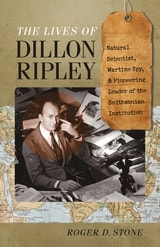
The Lives of Dillon Ripley
Natural Scientist, Wartime Spy, and Pioneering Leader of the Smithsonian InstitutionRoger D. Stone
University Press of New England, 2017

The Lives of Jessie Sampter
Queer, Disabled, ZionistSarah Imhoff
Duke University Press, 2022
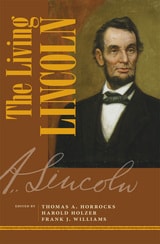
The Living Lincoln
Edited by Thomas A. Horrocks, Harold Holzer, and Frank J. Williams
Southern Illinois University Press, 2011
In an opening section focusing largely on Lincoln's formative years, insightful explorations into his early self-education and the era before his presidency come from editors Frank J. Williams and Harold Holzer, respectively. Readers will also glimpse a Lincoln rarely discerned in books: calculating politician, revealed in Matthew Pinsker's illuminating essay, and shrewd military strategist, as demonstrated by Craig L. Symonds. Stimulating discussions from Edna Greene Medford, John Stauffer, and Michael Vorenberg tell of Lincoln's friendship with Frederick Douglass, his gradualism on abolition, and his evolving thoughts on race and the Constitution to round out part two. Part three features reflections on his martyrdom and memory, including a counterfactual history from Gerald J. Prokopowicz that imagines a hypothetical second term for the president, emphasizing the differences between Lincoln and his successor, Andrew Johnson. Barry Schwartz's contribution presents original research that yields fresh insight into Lincoln's evolving legacy in the South, while Richard Wightman Fox dissects Lincoln's 1865 visit to Richmond, and Orville Vernon Burton surveys and analyzes recent Lincoln scholarship.
This thought-provoking new anthology, introduced at a major bicentennial symposium at Harvard University, offers a wide range of ideas and interpretations by some of the best-known and most widely respected historians of our time. The Living Lincoln is essential reading for those seeking a better understanding of this nation's greatest president and how his actions resonate today.
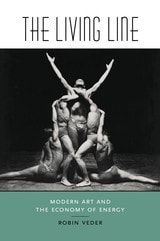
The Living Line
Modern Art and the Economy of EnergyRobin Veder
Dartmouth College Press, 2015
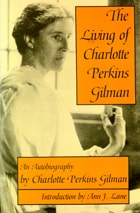
The Living of Charlotte Perkins Gilman
An AutobiographyCharlotte Perkins Gilman
University of Wisconsin Press, 1991
Charlotte Perkins Gilman (1869-1935) was one of the leading intellectuals of the American women's movement in the first two decades of the twentieth century. Moving beyond the struggle for suffrage, Gilman confronted an even larger problem—economic and social discrimination against women. Her book, Women and Economics, published in 1898, was repeatedly printed and translated into seven languages. She was a tireless traveler, lecturer, and writer and is perhaps best known for her dramatic short story, "The Yellow Wallpaper." Gilman's autobiography gives us access to the life of a remarkable and courageous woman.
Originally published in 1935, soon after Gilman's death, The Living of Charlotte Perkins Gilman has been out of print for several years. This edition includes a new introduction by Gilman's noted biographer, Anne J. Lane.
The Lizard Man Speaks
By Eric R. Pianka
University of Texas Press, 1994
Alone on the endless red-sand desert in the Australian outback, tracking Varanus giganteus, the perentie lizard that grows to be more than six feet long...for desert rat Eric Pianka, such adventures have led to a satisfying, if unusual, way of life, as well as a distinguished career as a field biologist.
In The Lizard Man Speaks, Pianka recounts more than thirty years of adventures in reptile studies. He tells of "lizarding" in the North American deserts, the Kalahari Desert of southern Africa, and the Great Victoria Desert in Western Australia. His vivid imagery draws the reader into a world where lions lurk in the darkness beyond a gecko hunter's lights, where being stranded by car trouble miles from the last outpost is a constant danger, and where the wilderness still deserves to be called wild.
Along the way, Pianka provides much general information about lizard ecology, the fire succession cycle, and the interaction of humans with the landscape. And he reveals the springs of his own determined spirit and love of solitude, describing a near-fatal boyhood accident and its shaping and character-building effect on the life that followed.
The Lofts of SoHo
Gentrification, Art, and Industry in New York, 1950–1980Aaron Shkuda
University of Chicago Press, 2016
American cities entered a new phase when, beginning in the 1950s, artists and developers looked upon a decaying industrial zone in Lower Manhattan and saw, not blight, but opportunity: cheap rents, lax regulation, and wide open spaces. Thus, SoHo was born. From 1960 to 1980, residents transformed the industrial neighborhood into an artist district, creating the conditions under which it evolved into an upper-income, gentrified area. Introducing the idea—still potent in city planning today—that art could be harnessed to drive municipal prosperity, SoHo was the forerunner of gentrified districts in cities nationwide, spawning the notion of the creative class.
In The Lofts of SoHo, Aaron Shkuda studies the transition of the district from industrial space to artists’ enclave to affluent residential area, focusing on the legacy of urban renewal in and around SoHo and the growth of artist-led redevelopment. Shkuda explores conflicts between residents and property owners and analyzes the city’s embrace of the once-illegal loft conversion as an urban development strategy. As Shkuda explains, artists eventually lost control of SoHo’s development, but over several decades they nonetheless forced scholars, policymakers, and the general public to take them seriously as critical actors in the twentieth-century American city.
The Logic of Delegation
D. Roderick Kiewiet and Mathew D. McCubbins
University of Chicago Press, 1991
In The Logic of Delegation, however, D. Roderick Kiewiet and Mathew D. McCubbins persuasively argue that political scientists have paid far too much attention to what congressional parties can't do. The authors draw on economic and management theory to demonstrate that the effectiveness of delegation is determined not by how much authority is delegated but rather by how well it is delegated.
In the context of the appropriations process, the authors show how congressional parties employ committees, subcommittees, and executive agencies to accomplish policy goals. This innovative study will force a complete rethinking of classic issues in American politics: the "autonomy" of congressional committees; the reality of runaway federal bureaucracy; and the supposed dominance of the presidency in legislative-executive relations.
The Logic of Women on Trial
Case Studies of Popular American TrialsJanice Schuetz
Southern Illinois University Press, 1994
Janice Schuetz investigates the felony trials of nine American women from colonial Salem to the present: Rebecca Nurse, tried for witchcraft in 1692; Mary E. Surratt, tried in 1865 for assisting John Wilkes Booth in the assassination of Abraham Lincoln; Lizzie Andrew Borden, tried in 1892 for the ax murder of her father and stepmother; Margaret Sanger, tried in 1915, 1917, and 1929 for her actions in support of birth control; Ethel Rosenberg, tried in 1951 for aiding the disclosure of secrets of the atom bomb to the Soviets; Yvonne Wanrow, tried in 1974 for killing a man who molested her neighbor’s daughter; Patricia Campbell Hearst, tried in 1975 for bank robbery as a member of the Symbionese Liberation Army; Jean Harris, tried in 1982 for killing Herman Tarnower, the Diet Doctor; and Darci Kayleen Pierce, tried in 1988 for kidnapping and brutally murdering a pregnant woman, then removing the baby from the woman’s womb.
In her analysis, Schuetz is careful to define these trials as popular trials. Characteristically, popular trials involve persons, issues, or crimes of social interest that attract extensive public interest and involvement. Such trials make a contribution to the ongoing historical dialogue about the meaning of justice and the legal system, while reflecting the values of the time and place in which they occur.
Schuetz examines the kinds of communication that transpired and the importance of gender in the trials by applying a different current rhetorical theory to each trial text. In every chapter, she explains her chosen interpretive theory, compares that framework with the discourse of the trial, and makes judgments about the meaning of the trial texts based on the interpretive theory.
The Lonely Veteran's Guide to Companionship
Bronson Lemer
University of Wisconsin Press, 2025
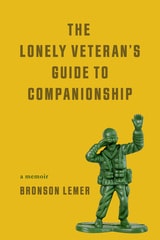
Lemer’s distinct take on the veteran’s story boldly engages the intersection of military narratives and queer culture, including examinations into the role of thirst traps in contemporary dating culture, the fears of long-term health damage caused by military service, and the ways in which intimate relationships can lead to a loss of self. Taken together, his essays illustrate how one queer veteran managed to carve out a path that led him, however awkwardly at times, closer to the person he wanted to be.
The Long Affair
Thomas Jefferson and the French Revolution, 1785-1800Conor Cruise O'Brien
University of Chicago Press, 1996
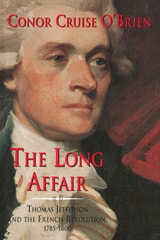
"The book is an attack on America's long affair with Jeffersonian ideology of radical individualism: an ideology that, by confusing Jefferson with a secular prophet, will destroy the United States from within."—David C. Ward, Boston Book Review
"With his background as a politician and a diplomat, O'Brien brings a broad perspective to his effort to define Jefferson's beliefs through the prism of his attitudes toward France. . . . This is an important work that makes an essential contribution to the overall picture of Jefferson."—Booklist
"O'Brien traces the roots of Jefferson's admiration for the revolution in France but notes that Jefferson's enthusiasm for France cooled in the 1790s, when French egalitarian ideals came to threaten the slave-based Southern economy that Jefferson supported."—Library Journal
"In O'Brien's opinion, it's time that Americans face the fact that Jefferson, long seen as a champion of the 'wronged masses,' was a racist who should not be placed on a pedestal in an increasingly multicultural United States."—Boston Phoenix
"O'Brien makes a well-argued revisionist contribution to the literature on Jefferson."—Kirkus Reviews
"O'Brien is right on target . . . determined not to let the evasions and cover-ups continue."—Forrest McDonald, National Review
"The Long Affair should be read by anyone interested in Jefferson—or in a good fight."—Richard Brookhiser, New York Times Book Review
The Long Emancipation
Moving toward Black FreedomRinaldo Walcott
Duke University Press, 2021
The Long March of Coxey’s Army
The Path of Protest from Populism to the New DealWesley R. Bishop
University of Illinois Press, 2027
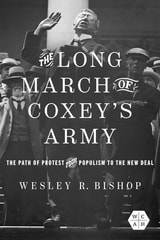
Wesley R. Bishop explores how Coxey and his allies organized the first national protest to bring citizens to Washington, D.C. Though the march failed in its immediate goals, for the next forty years its ideas influenced America’s political parties. The demonstration pioneered marching for economic justice while its push for federal public works projects and government responsibility for unemployment helped shaped the New Deal. But in the years after the march, racism and other types of exclusion muddied hopes and tainted demands for democratic and economic fairness.
Eye-opening and insightful, The Long March of Coxey’s Army examines the influence and aftermath of an important historical event.
The Long Night
Andrew Lytle
University of Alabama Press, 1988
A first-rate novel that provides vivid descriptions of Alabama during an important period in the state’s history, The Long Night is set in the vicinity of Montgomery, Alabama, between 1850 and 1865. Originally published in 1936, the book is based on a true story related to Lytle by one of his close friends and colleagues at Vanderbilt University, Frank L. Owsley, who later became the chairman of The University of Alabama Department of History. In fact, the novel opens with a letter to Professor Owsley from the author, and Owsley’s son has written the introduction to this edition.
As described by George B. Tindall, The Long Night is “the episodic story of a young Alabamian beset by the moral dilemma of desire for revenge against the persecutors of his father and his larger duty in the war, a story that rose to its climax in the Battle of Shiloh.” The work is rich in its description of the land and people of Black-Belt Alabama during the mid-19th century.