Results by title
1038 books match the query 'Antiquities' and 214 start with t
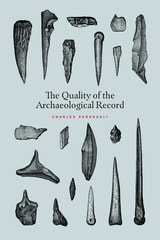
The Quality of the Archaeological Record
Charles Perreault
University of Chicago Press, 2019
In The Quality of the Archaeological Record, Charles Perreault shows that archaeology not only faces a parallel problem, but may also find a model in the rise of paleobiology for a shift in the science and theory of the field. To get there, he proposes a more macroscale approach to making sense of the archaeological record, an approach that reveals patterns and processes not visible within the span of a human lifetime, but rather across an observation window thousands of years long and thousands of kilometers wide. Just as with the fossil record, the archaeological record has the scope necessary to detect macroscale cultural phenomena because it can provide samples that are large enough to cancel out the noise generated by micro-scale events. By recalibrating their research to the quality of the archaeological record and developing a true macroarchaeology program, Perreault argues, archaeologists can finally unleash the full contributive value of their discipline.
The Quest for the Historical Israel
Debating Archaeology and the History of Early IsraelIsrael Finkelstein
SBL Press, 2007
The Rape of Mesopotamia
Behind the Looting of the Iraq MuseumLawrence Rothfield
University of Chicago Press, 2009
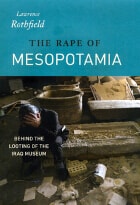
On April 10, 2003, as the world watched a statue of Saddam Hussein come crashing down in the heart of Baghdad, a mob of looters attacked the Iraq National Museum. Despite the presence of an American tank unit, the pillaging went unchecked, and more than 15,000 artifacts—some of the oldest evidence of human culture—disappeared into the shadowy worldwide market in illicit antiquities. In the five years since that day, the losses have only mounted, with gangs digging up roughly half a million artifacts that had previously been unexcavated; the loss to our shared human heritage is incalculable.
With The Rape of Mesopotamia, Lawrence Rothfield answers the complicated question of how this wholesale thievery was allowed to occur. Drawing on extensive interviews with soldiers, bureaucrats, war planners, archaeologists, and collectors, Rothfield reconstructs the planning failures—originating at the highest levels of the U.S. government—that led to the invading forces’ utter indifference to the protection of Iraq’s cultural heritage from looters. Widespread incompetence and miscommunication on the part of the Pentagon, unchecked by the disappointingly weak advocacy efforts of worldwide preservation advocates, enabled a tragedy that continues even today, despite widespread public outrage.
Bringing his story up to the present, Rothfield argues forcefully that the international community has yet to learn the lessons of Iraq—and that what happened there is liable to be repeated in future conflicts. A powerful, infuriating chronicle of the disastrous conjunction of military adventure and cultural destruction, The Rape of Mesopotamia is essential reading for all concerned with the future of our past.
The Real Life of the Parthenon
Patricia Vigderman
The Ohio State University Press, 2018
Ownership battles over the marbles removed from the Parthenon by Lord Elgin have been rumbling into invective, pleading, and counterclaims for two centuries. The emotional temperature around them is high, and steering across the vast past to safe anchor in a brilliant heritage is tricky. The stories around antiquities become distorted by the pull of ownership, and it is these stories that urge Patricia Vigderman into her own exploration of their inspiring legacy in her compelling extended essay, The Real Life of the Parthenon.
Vigderman’s own journey began at the Parthenon, but curiosity edged her further onto the sea between antiquity and the present. She set out to seek the broken temples and amphorae, the mysterious smiles of archaic sculpture, and the finely hammered gold of a funeral wreath among the jumbled streets of modern Athens, the fertile fields of Sicily, the mozzarella buffalo of Paestum. Guided along the way toward the enduring landscapes and fractured history by archeologists, classicists, historians, and artists—and by the desire they inspire—she was caught by ongoing, contemporary local life among the ruins. Gathering present meaning and resonance for the once and future remains of vanished glory, The Real Life of the Parthenon illuminates an important but shadowy element of our common cultural life: the living dynamic between loss and delight.
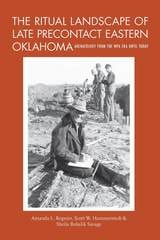
The Ritual Landscape of Late Precontact Eastern Oklahoma
Archaeology from the WPA Era until Todayby Amanda L. Regnier, Scott W. Hammerstedt, and Sheila Bobalik Savage
University of Alabama Press, 2019
As part of Great Depression relief projects started in the 1930s, the Works Progress Administration (WPA) sponsored massive archaeological projects across Oklahoma. The WPA crews excavated eight mound sites and dozens of nonmound residential sites in the Arkansas River Valley that date between AD 1000 and 1450. These sites are considered the westernmost representations of Mississippian culture in the Southeast.
The results of these excavations were documented in field journals and photographs prepared by the field supervisors and submitted in a series of quarterly reports to WPA headquarters. These reports contain a wealth of unpublished information summarizing excavations at the mound sites and residential sites, including mound profiles, burial descriptions, house maps, artifact tables, and artifact sketches. Of the excavated mound sites, results from only one, Spiro, have been extensively studied and synthesized in academic literature. The seven additional WPA-excavated mound sites—Norman, Hughes, Brackett, Eufaula, Skidgel, Reed, and Lillie Creek—are known to archaeologists outside of Oklahoma only as unlabeled points on maps of mound sites in the Southeast.
The Ritual Landscape of Late Precontact Eastern Oklahoma curates and contextualizes the results of the WPA excavations, showing how they inform archaeological understanding of Mississippian occupation in the Arkansas Valley. Regnier, Hammerstedt, and Savage also relate the history and experiences of practicing archaeology in the 1930s, incorporating colorful excerpts from field journals of the young, inexperienced archaeologists. Finally, the authors update current knowledge of mound and nonmound sites in the region, providing an excellent example of historical archaeology.

The River and the Railroad
An Archaeological History of RenoMary Ringhoff
University of Nevada Press, 2011
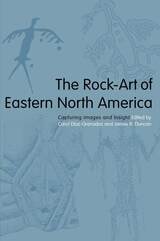
The Rock-Art of Eastern North America
Capturing Images and InsightEdited by Carol Diaz-Granados and James R. Duncan
University of Alabama Press, 2004
Showcases the wealth of new research on sacred imagery found in twelve states and four Canadian provinces
In archaeology, rock-art—any long-lasting marking made on a natural surface—is similar to material culture (pottery and tools) because it provides a record of human activity and ideology at that site. Petroglyphs, pictographs, and dendroglyphs (tree carvings) have been discovered and recorded throughout the eastern woodlands of North America on boulders, bluffs, and trees, in caves and in rock shelters. These cultural remnants scattered on the landscape can tell us much about the belief systems of the inhabitants that left them behind.
The Rock-Art of Eastern North America brings together 20 papers from recent research at sites in eastern North America, where humidity and the actions of weather, including acid rain, can be very damaging over time. Contributors to this volume range from professional archaeologists and art historians to avocational archaeologists, including a surgeon, a lawyer, two photographers, and an aerospace engineer. They present information, drawings, and photographs of sites ranging from the Seven Sacred Stones in Iowa to the Bald Friar Petroglyphs of Maryland and from the Lincoln Rise Site in Tennessee to the Nisula Site in Quebec.
Discussions of the significance of artist gender, the relationship of rock-art to mortuary caves, and the suggestive link to the peopling of the continent are particularly notable contributions. Discussions include the history, ethnography, recording methods, dating, and analysis of the subject sites and integrate these with the known archaeological data.
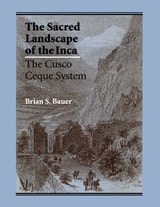
The Sacred Landscape of the Inca
The Cusco Ceque SystemBy Brian S. Bauer
University of Texas Press, 1998
The ceque system of Cusco, the ancient capital of the Inca empire, was perhaps the most complex indigenous ritual system in the pre-Columbian Americas. From a center known as the Coricancha (Golden Enclosure) or the Temple of the Sun, a system of 328 huacas (shrines) arranged along 42 ceques (lines) radiated out toward the mountains surrounding the city. This elaborate network, maintained by ayllus (kin groups) that made offerings to the shrines in their area, organized the city both temporally and spiritually.
From 1990 to 1995, Brian Bauer directed a major project to document the ceque system of Cusco. In this book, he synthesizes extensive archaeological survey work with archival research into the Inca social groups of the Cusco region, their land holdings, and the positions of the shrines to offer a comprehensive, empirical description of the ceque system. Moving well beyond previous interpretations, Bauer constructs a convincing model of the system's physical form and its relation to the social, political, and territorial organization of Cusco.
The Safford Valley Grids
Prehistoric Cultivation in the Southern Arizona DesertWilliam E. Doolittle
University of Arizona Press, 2004
Between A.D. 750 and 1385, people gathered rocks from the tops of the terraces and rearranged them in grids of varying size and shape, averaging about 4 meters to 5 meters square. The grids captured rainfall and water accumulated under the rocks forming the grids. Agave was planted among the rocks, providing a dietary supplement to the maize and beans that were irrigated on the nearby bottom land, a survival crop when the staple crops failed, and possibly a trade commodity when yields were high. Stunning photographs by Adriel Heisey convey the vastness of the grids across the landscape.
The Sandy Ridge and Halstead Paleo-Indian Sites
Unifacial Tool Use and Gainey Phase Definition in South-Central OntarioLawrence J. Jackson with a foreword by Henry T. Wright and phytolith analysis by Anita Buehrle
University of Michigan Press, 1998
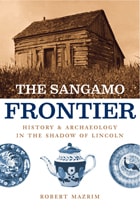
The Sangamo Frontier
History and Archaeology in the Shadow of LincolnRobert Mazrim
University of Chicago Press, 2006
When Abraham Lincoln moved to Illinois’ Sangamo Country in 1831, he found a pioneer community transforming from a cluster of log houses along an ancient trail to a community of new towns and state roads. But two of the towns vanished in a matter of years, and many of the activities and lifestyles that shaped them were almost entirely forgotten. In The Sangamo Frontier, archaeologist Robert Mazrim unearths the buried history of this early American community, breathing new life into a region that still rests in Lincoln’s shadow.
Named after a shallow river that cuts through the prairies of central Illinois, the Sangamo Country—an area that now encompasses the capital city of Springfield and present-day Sangamon County—was first colonized after the War of 1812. For the past fifteen years, Mazrim has conducted dozens of excavations there, digging up pieces of pioneer life, from hand-forged iron and locally made crockery to pewter spoons and Staffordshire teacups. And here, in beautifully illustrated stories of each dig, he shows how each of these small artifacts can teach us something about the lifestyles of people who lived on the frontier nearly two hundred years ago. Allowing us to see past the changed modern landscape and the clichés of pioneer history, Mazrim deftly uses his findings to portray the homes, farms, taverns, and pottery shops where Lincoln’s neighbors once lived and worked.
Drawing readers into the thrill of discovery, The Sangamo Frontier inaugurates a new kind of archaeological history that both enhances and challenges our written history. It imbues today’s landscape with an authentic ghostliness that will reawaken the curiosity of anyone interested in the forgotten people and places that helped shape our nation.
The Saratoga Campaign
Uncovering an Embattled LandscapeEdited by William A. Griswold and Donald W. Linebaugh
University Press of New England, 2016
The Savannah River Chiefdoms
Political Change in the Late Prehistoric SoutheastDavid G. Anderson
University of Alabama Press, 1994
This volume explores political change in chiefdoms, specifically how complex chiefdoms emerge and collapse, and how this process—called cycling—can be examined using archaeological, ethnohistoric, paleoclimatic, paleosubsistence, and physical anthropological data. The focus for the research is the prehistoric and initial contact-era Mississippian chiefdoms of the Southeastern United States, specifically the societies occupying the Savannah River basin from ca. A.D. 1000 to 1600. This regional focus and the multidisciplinary nature of the investigation provide a solid introduction to the Southeastern Mississippian archaeological record and the study of cultural evolution in general.
The Search for Mabila
The Decisive Battle between Hernando de Soto and Chief TascalusaEdited by Vernon James Knight Jr.
University of Alabama Press, 2009
The Shock of Colonialism in New England
Fragments from a FrontierMeghan C. L. Howey
University of Alabama Press, 2025
Explores the untold impacts of colonialism in New England through diverse colonist lives, Indigenous encounters, and environmental legacies.
In The Shock of Colonialism in New England, archaeologist Meghan C. L. Howey uses excavations in the seventeenth-century colonial frontier of the Great Bay Estuary/P8bagok in today’s New Hampshire to trace the connection between European global colonialism and the planetary climate crises. Howey shows how this landscape holds forgotten stories of what it meant to live through the shock of colonialism.
These stories reveal an unexpected diversity and dynamism among English colonists, multifaceted encounters with Indigenous peoples, and lasting environmental damage from labor-intensive industries. Early Euro-American maps and stunning archaeological finds, such as a broken pickaxe embedded in a hearth, and a historical marker for the Oyster River “Massacre” of 1694 complicate our limited views of a shared past.
The reality of English colonialism in the dispossession of Indigenous lands and its wake is not commemorated. Howey’s work is a powerful corrective that traces the rise of intergenerational colonial wealth made possible by land commodified as property, the increased labor required to work newly opened land, the importation of indentured Scots and enslaved Africans to provide that labor, and the resulting degradation of the natural environment. Through Howey’s insights into the stories they tell, these fragments from a frontier can help contemporary readers better understand the past as they seek a more just and sustainable future.
The Sierra Pinacate
Julian D. Hayden; Photographs by Jack Dykinga; With Essays by Charles Bowden and Bernard L. Fontana
University of Arizona Press, 1998
The Snyders Mounds and Five Other Mound Groups in Calhoun County, Illinois
David P. Braun, James B. Griffin and Paul F. Titterington
University of Michigan Press, 1982
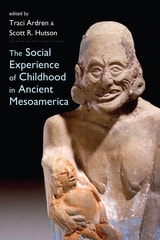
The Social Experience of Childhood in Ancient Mesoamerica
Traci Ardren
University Press of Colorado, 2015
Contributors examine material evidence, historical records, and iconography, productively criticizing the claim that children are invisible in the archaeological record and elucidating an ancient childhood comprising multiple and complex identities. They explore the methodological and theoretical difficulties created when investigating childhood - a category defined by each culture - in the archaeological record.
Sure to appeal widely to New World and Old World archaeologists and anthropologists, The Social Experience of Childhood in Ancient Mesoamerica opens up new avenues of research into the lives of this previously overlooked yet remarkably large population.
Contributors include Traci Ardren, Ximena Chávez Balderas, Billie Follensbee, Byron Hamann, Scott R. Hutson, Rosemary A. Joyce, Stacie M. King, Jeanne Lopiparo, Patricia McAnany, Geoffrey G. McCafferty, Sharisse D. McCafferty, Juan Alberto Román Berrelleza, Rebecca Storey, Rissa M. Trachman, Fred Valdez Jr.
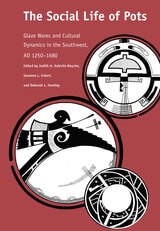
The Social Life of Pots
Glaze Wares and Cultural Dynamics in the Southwest, AD 1250-1680Edited by Judith A. Habicht-Mauche, Suzanne L. Eckert, and Deborah L. Huntley
University of Arizona Press, 2006
Through the study of glaze-painted pottery, archaeologists are beginning to understand that pots had “social lives” in this changing world and that careful reconstruction of the social lives of pots can help us understand the social lives of Puebloan peoples. In this book, fifteen contributors apply a wide range of technological and stylistic analysis techniques to pottery of the Rio Grande and Western Pueblo areas to show what it reveals about inter- and intra-community dynamics, work groups, migration, trade, and ideology in the precontact and early postcontact Puebloan world.
The contributors report on research conducted throughout the glaze producing areas of the Southwest and cover the full historical range of glaze ware production. Utilizing a variety of techniques—continued typological analyses, optical petrography, instrumental neutron activation analysis, X-ray microprobe analysis, and inductively coupled plasma mass spectroscopy—they develop broader frameworks for examining the changing role of these ceramics in social dynamics. By tracing the circulation and exchange of specialized knowledge, raw materials, and the pots themselves via social networks of varying size, they show how glaze ware technology, production, exchange, and reflected a variety of dynamic historical and social processes.
Through this material evidence, the contributors reveal that technological and aesthetic innovations were deliberately manipulated and disseminated to actively construct “communities of practice” that cut across language and settlement groups. The Social Life of Pots offers a wealth of new data from this crucial period of prehistory and is an important baseline for future work in this area.
Contributors
Patricia Capone
Linda S. Cordell
Suzanne L. Eckert
Thomas R. Fenn
Judith A. Habicht-Mauche
Cynthia L Herhahn
Maren Hopkins
Deborah L. Huntley
Toni S. Laumbach
Kathryn Leonard
Barbara J. Mills
Kit Nelson
Gregson Schachner
Miriam T. Stark
Scott Van Keuren
The Sola Valley and the Monte Albán State
A Study of Zapotec Imperial ExpansionAndew K. Balkansky
University of Michigan Press, 2002
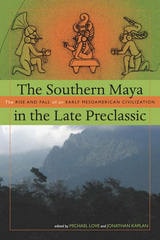
The Southern Maya in the Late Preclassic
The Rise and Fall of an Early Mesoamerican CivilizationMichael Love
University Press of Colorado, 2011
Recent research has provided a wealth of broadly based new data that have expanded the understanding of this region and its influence on greater Mesoamerica. In The Southern Maya in the Late Preclassic, prominent contributors debate whether the southern region was indeed "Maya" or instead a region of intense multiethnic interaction, with speakers of many languages and many sources of identity. The chapters address a host of advanced developments to which this area can lay claim--urbanism and city-states, the earliest Maya writing, and the origin of the Maya calendar--as well as additional issues including the construction of social and cultural identities, economic networks of early complex societies, relationships between the Maya and the Olmec, and a comprehensive discussion of the ancient city of Kaminaljuyu and its relationship to other cities in the region.
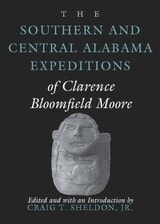
The Southern and Central Alabama Expeditions of Clarence Bloomfield Moore
Clarence Bloomfield Moore, edited and introduced by Craig T. Sheldon Jr.
University of Alabama Press, 2001
Covering 19 years of excavations, this volume provides an invaluable collection of Moore's pioneering archaeological investigations along Alabama's waterways.
In 1996, The University of Alabama Press published The Moundville Expeditions of Clarence Bloomfield Moore, which covered a large part of Moore's early archaeological expeditions to the state of Alabama. This volume collects the balance of Moore's Alabama expeditions, with the exception of those Moore made along the Tennessee River, which will be collected in another, forthcoming volume focusing on the Tennessee basin.
This volume includes:
Certain Aboriginal Remains of the Alabama River (1899);
Certain Aboriginal Remains of the Tombigbee River(1901);
a portion of Certain Aboriginal Remains of the Northwest Florida Coast (1901);
The So-Called "Hoe-Shaped Implement" (1903);
Aboriginal Urn-Burial in the United States (1904);
A Form of Urn-Burial on Mobile Bay (1905);
Certain Aboriginal Remains of the Lower Tombigbee River (1905);
Certain Aboriginal Remains on Mobile Bay and on Mississippi Sound (1905);
a portion of Mounds of the Lower Chattahoochee and Lower Flint Rivers (1907);
a portion of The Northwest Florida Coast Revisited(1918).
Craig Sheldon's comprehensive introduction focuses both on the Moore expeditions and on subsequent archaeological excavations at
sites investigated by Moore. Sheldon places Moore's archaeological work in the context of his times and against the backdrop of similar investigations in the Southeast. Sheldon discusses practical matters, such as the various assistants Moore employed and their roles in these historic expeditions. He provides brief vignettes of daily life on the Gopher and describes Moore's work habits, revealing professional and personal biographical details previously unknown about this enigmatic archaeologist.
The Spiro Ceremonial Center
The Archaeology of Arkansas Valley Caddoan Culture in Eastern Oklahoma, Vols. 1 and 2James A. Brown with a foreword by James B. Griffin
University of Michigan Press, 1996
The Strong Case Approach in Behavioral Archaeology
Edited by Michael Brian Schiffer, Charles R. Riggs, and J. Jefferson Reid
University of Utah Press, 2017
The chapters employ a wide range of data classes, demonstrating the versatility and productivity of the approach for fashioning rigorous inferences in history, historical archaeology, ethnoarchaeology, and prehistory. By illustrating the strong case approach with convincing case studies from behavioral archaeology, the editors aim to alert the archaeological community about how the process of archaeological inference can be improved.
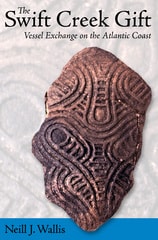
The Swift Creek Gift
Vessel Exchange on the Atlantic CoastNeill J. Wallis
University of Alabama Press, 2011
A unique dataset for studying past social interactions comes from Swift Creek Complicated Stamped pottery that linked sites throughout much of the Eastern Woodlands but that was primarily distributed over the lower Southeast. Although connections have been demonstrated, their significance has remained enigmatic. How and why were apparently utilitarian vessels, or the wooden tools used to make them, distributed widely across the landscape?
This book assesses Woodland Period interactions using technofunctional, mineralogical, and chemical data derived from Swift Creek Complicated Stamped sherds whose provenience is fully documented from both mortuary mounds and village middens along the Atlantic coast. Together, these data demonstrate formal and functional differences between mortuary and village assemblages along with the nearly exclusive occurrence of foreign-made cooking pots in mortuary contexts. The Swift Creek Gift provides insight into the unique workings of gift exchanges to transform seemingly mundane materials like cooking pots into powerful tools of commemoration, affiliation, and ownership.
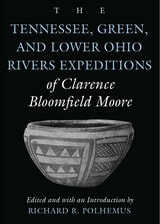
The Tennessee, Green, and Lower Ohio Rivers Expeditions of Clarence Bloomfield Moore
Clarence Bloomfield Moore, edited and introduced by Richard R. Polhemus
University of Alabama Press, 2002
This richly illustrated book is the eighth of nine Classics in Southeastern Archaeology volumes based on Moore's investigations along the waterways of eastern North America.
This oversized reprint volume presents original materials from Moore's northernmost expeditions conducted in the early 1900s as he surveyed areas of potential archaeological interest in the southeastern United States. Some of the sites he found were later targeted for major excavations during the days of the WPA/CCC. Many National Register Historic Sites are today located along the rivers he explored in this work. In many cases, however, Moore's report documents sites since destroyed by river action or by lake impoundments behind hydroelectric dams or by looters.
As with all of Moore's other investigations, his thorough documentation and collaboration with other scholars advanced understanding of aboriginal peoples and fueled debate among the experts. For instance, more than 296 burials were recovered from Indian Knoll on the Green River in Kentucky. Some graves included ceremonially "killed" artifacts, dogs buried with both adults and children, and exotic materials leading to speculations concerning origins, usage, and trade networks. Stone box graves were widespread and somewhat exclusive to this area, giving rise to early assumptions regarding kinship between scattered modern Indian tribes.
Richard Polhemus has compiled a comprehensive inventory of Moore's work in Tennessee, Alabama, Mississippi, and Kentucky and written a concise introduction to place the work in context. In so doing, he has made available to contemporary scholars of history, archaeology, and anthropology a trove of resource material on one of the most archaeologically rich and artifact-diverse regions in the nation.
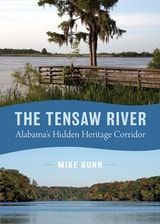
The Tensaw River
Alabama's Hidden Heritage CorridorMike Bunn
University of Alabama Press, 2025
Where nature meets history—explore Alabama’s hidden river legacy.
The Tensaw River introduces one of the American South’s richest and most fertile natural features. Author Mike Bunn is director of Historic Blakeley State Park, which is nestled in a prominent bend of the majestic Tensaw River. Reading Bunn is like sailing with a knowledgeable captain along the river’s natural and cultural byways as he offers a treasury of stories and facts that illuminate the river’s astonishing flora and fauna and the sweep of human history along the river’s ageless, meandering waterways.
Forming the eastern boundary of the expansive Mobile-Tensaw Delta, the Tensaw has had little industrial development. Left largely undisturbed, the river still flows free and bountiful into the grand estuary of Mobile Bay in ways and along vistas that would be recognizable to Native Americans centuries ago and to pioneers who arrived before Alabama became a state.
Bunn’s unforgettable stories in The Tensaw River trace the construction and occupation of the Bottle Creek site, an important mound complex built by Southeastern Native Americans a millennia ago. Nearby Blakeley is a spectral antebellum ghost town whose lost memories also tease the imagination. During the Civil War, the boom of artillery fire in the battle that sealed the fate of the city of Mobile echoed along the bends in the Tensaw.
Located near popular Gulf Coast travel destinations, the Tensaw’s forty-one-mile-long “Forgotten Cultural Heritage Corridor” is a gateway to the enchanting beauty of—and humankind’s enduring relationship to—the landscape of the American South.
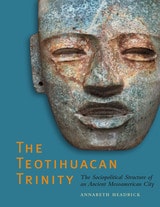
The Teotihuacan Trinity
The Sociopolitical Structure of an Ancient Mesoamerican CityBy Annabeth Headrick
University of Texas Press, 2007
Northeast of modern-day Mexico City stand the remnants of one of the world's largest preindustrial cities, Teotihuacan. Monumental in scale, Teotihuacan is organized along a three-mile-long thoroughfare, the Avenue of the Dead, that leads up to the massive Pyramid of the Moon. Lining the avenue are numerous plazas and temples, which indicate that the city once housed a large population that engaged in complex rituals and ceremonies. Although scholars have studied Teotihuacan for over a century, the precise nature of its religious and political life has remained unclear, in part because no one has yet deciphered the glyphs that may explain much about the city's organization and belief systems.
In this groundbreaking book, Annabeth Headrick analyzes Teotihuacan's art and architecture, in the light of archaeological data and Mesoamerican ethnography, to propose a new model for the city's social and political organization. Challenging the view that Teotihuacan was a peaceful city in which disparate groups united in an ideology of solidarity, Headrick instead identifies three social groups that competed for political power—rulers, kin-based groups led by influential lineage heads, and military orders that each had their own animal insignia. Her findings provide the most complete evidence to date that Teotihuacan had powerful rulers who allied with the military to maintain their authority in the face of challenges by the lineage heads. Headrick's analysis also underscores the importance of warfare in Teotihuacan society and clarifies significant aspects of its ritual life, including shamanism and an annual tree-raising ceremony that commemorated the Mesoamerican creation story.
The Terminal Classic in the Maya Lowlands
Collapse, Transition, and TransformationArthur A. Demarest
University Press of Colorado, 2004
Featuring an impressive roster of scholars, The Terminal Classic presents the most recent data and interpretations pertaining to this perplexing period of cultural transformation in the Maya lowlands. Although the research reveals clear interregional patterns, the contributors resist a single overarching explanation. Rather, this volume's diverse and nuanced interpretations provide a new, more properly grounded beginning for continued debate on the nature of lowland Terminal Classic Maya civilization.
The Tombigbee Watershed in Southeastern Prehistory
Ned J. Jenkins
University of Alabama Press, 1986
Representing the synthesis of approximately ten years of archaeological research along the central Tombigbee River, this book offers new theoretical and interpretive contributions to the study of human activity in the Tombigbee River Valley from 1000 B.C. to A.D. 1450. The authors have devised a new taxonomic approach that allows them to portray cultures as they gathered momentum and peaked in their potential as social, economic, and political structures. The data acquired for this study are from the massive cultural resource management program that accompanied the construction of the Tennessee-Tombigbee Waterway.
The Two Houses of Israel
State Formation and the Origins of Pan-Israelite IdentityOmer Sergi
SBL Press, 2023
The Two Houses of Israel: State Formation and the Origins of Pan-Israelite Identity bridges the gap between the biblical narrative of the great united monarchy ruled by David and Solomon and archaeological and historical reconstructions of a gradual, independent formation of Israel and Judah. Based on a thorough examination of the material remains and settlement patterns in the southern Levant during the Late Bronze Age and the Iron Age and on a review of the relevant historical sources, this book provides a detailed reconstruction of the ways in which Israel and Judah were formed as territorial polities and specifically how the house of David rose to power in Jerusalem and Judah. Omer Sergi further situates the stories of Saul and David in their accurate social and historical context in order to illuminate the historical conception of the united monarchy and the pan-Israelite ideology out of which it grew. Sergi provides a new history of the early Israelite monarchies, their formation, and the ways in which these social and political developments were commemorated in the cultural memory of generations to come.
The Vijayanagara Metropolitan Survey, Vol. 1
Carla M. Sinopoli, Kathleen D. Morrison
University of Michigan Press, 2007
The West and Central Florida Expeditions of Clarence Bloomfield Moore
Clarence Bloomfield Moore, edited and with an introduction by Jeffrey M. Mitchem
University of Alabama Press, 1999
This compilation of Moore's publications on western and central Florida provides all of his archaeological data on the region's mounds and prehistoric canals in a single volume.
The name Clarence B. Moore is familiar to every archaeologist interested in the southeastern United States. This amateur archaeologist's
numerous scientific expeditions to the region resulted in dozens of well-illustrated publications, the value of which increases daily as many of the sites he investigated continue to be destroyed by modern development.
Moore invested considerable time and effort exploring Florida's archaeological sites, devoting more pages of published reports and articles to Florida than to any other state. Because of the wealth of material on Florida, Moore's Florida expedition publications have been
collected in three separate volumes, all published within the Classics in Southeastern Archaeology series. The thirteen papers reproduced in this
volume present the results of Moore's research in West and Central Florida.
Moore's first and last expeditions were to Florida and spanned almost fifty years of archaeological investigations. Following the eastern river drainages to central and western Florida, in 1900 Moore concentrated his efforts along the Florida Gulf Coast, spurred by the exciting
discoveries of Frank Hamilton Cushing at Key Marco in 1896. Although this region is rich in mound sites, many sites located by Moore in the early
years of this century had already been destroyed by construction and lime processing. In addition to mound groupings—some containing masses of skeletal remains—Moore found a number of sites connected by a network of prehistoric canals. Several of the sites located by Moore contained European trade goods and have been used to trace the early wanderings of the conquistadores in the New World.
Moore's early work on the Florida Gulf Coast succeeded in preserving much of the archaeological record in this area. He is to be credited with remarkable insights concerning mound and earthwork construction, artifact trade networks, and chronology development.
The White Shaman Mural
An Enduring Creation Narrative in the Rock Art of the Lower PecosBy Carolyn E. Boyd, with contributions by Kim Cox
University of Texas Press, 2016
Winner, Society for American Archaeology Book Award, 2017
San Antonio Conservation Society Publication Award, 2019
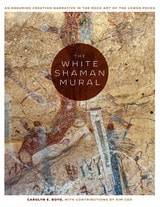
The prehistoric hunter-gatherers of the Lower Pecos Canyonlands of Texas and Coahuila, Mexico, created some of the most spectacularly complex, colorful, extensive, and enduring rock art of the ancient world. Perhaps the greatest of these masterpieces is the White Shaman mural, an intricate painting that spans some twenty-six feet in length and thirteen feet in height on the wall of a shallow cave overlooking the Pecos River. In The White Shaman Mural, Carolyn E. Boyd takes us on a journey of discovery as she builds a convincing case that the mural tells a story of the birth of the sun and the beginning of time—making it possibly the oldest pictorial creation narrative in North America.
Unlike previous scholars who have viewed Pecos rock art as random and indecipherable, Boyd demonstrates that the White Shaman mural was intentionally composed as a visual narrative, using a graphic vocabulary of images to communicate multiple levels of meaning and function. Drawing on twenty-five years of archaeological research and analysis, as well as insights from ethnohistory and art history, Boyd identifies patterns in the imagery that equate, in stunning detail, to the mythologies of Uto-Aztecan-speaking peoples, including the ancient Aztec and the present-day Huichol. This paradigm-shifting identification of core Mesoamerican beliefs in the Pecos rock art reveals that a shared ideological universe was already firmly established among foragers living in the Lower Pecos region as long as four thousand years ago.
The Woodland Southeast
Edited by David G. Anderson and Robert C. Mainfort
University of Alabama Press, 2002
This collection presents, for the first time, a much-needed synthesis of the major research themes and findings that characterize the Woodland Period in the southeastern United States.
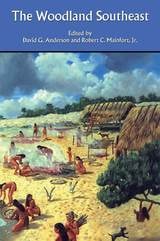
The Woodland Period (ca. 1200 B.C. to A.D. 1000) has been the subject of a great deal of archaeological research over the past 25 years. Researchers have learned that in this approximately 2000-year era the peoples of the Southeast experienced increasing sedentism, population growth, and organizational complexity. At the beginning of the period, people are assumed to have been living in small groups, loosely bound by collective burial rituals. But by the first millennium A.D., some parts of the region had densely packed civic ceremonial centers ruled by hereditary elites. Maize was now the primary food crop. Perhaps most importantly, the ancient animal-focused and hunting-based religion and cosmology were being replaced by solar and warfare iconography, consistent with societies dependent on agriculture, and whose elites were increasingly in competition with one another. This volume synthesizes the research on what happened during this era and how these changes came about while analyzing the period's archaeological record.
In gathering the latest research available on the Woodland Period, the editors have included contributions from the full range of specialists working in the field, highlighted major themes, and directed readers to the proper primary sources. Of interest to archaeologists and anthropologists, both professional and amateur, this will be a valuable reference work essential to understanding the Woodland Period in the Southeast.
The Worlds of the Moche on the North Coast of Peru
By Elizabeth P. Benson
University of Texas Press, 2012
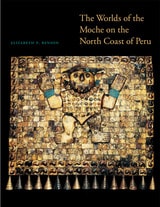
The Moche, or Mochica, created an extraordinary civilization on the north coast of Peru for most of the first millennium AD. Although they had no written language with which to record their history and beliefs, the Moche built enormous ceremonial edifices and embellished them with mural paintings depicting supernatural figures and rituals. Highly skilled Moche artisans crafted remarkable ceramic vessels, which they painted with figures and scenes or modeled like sculpture, and mastered metallurgy in gold, silver, and copper to make impressive symbolic ornaments. They also wove textiles that were complex in execution and design.
A senior scholar renowned for her discoveries about the Moche, Elizabeth P. Benson published the first English-language monograph on the subject in 1972. Now in this volume, she draws on decades of knowledge, as well as the findings of other researchers, to offer a grand overview of all that is currently known about the Moche. Touching on all significant aspects of Moche culture, she covers such topics as their worldview and ritual life, ceremonial architecture and murals, art and craft, supernatural beings, government and warfare, and burial and the afterlife. She demonstrates that the Moche expressed, with symbolic language in metal and clay, what cultures in other parts of the world presented in writing. Indeed, Benson asserts that the accomplishments of the Moche are comparable to those of their Mesoamerica contemporaries, the Maya, which makes them one of the most advanced civilizations of pre-Columbian America.
The Wreck of the "America" in Southern Illinois
A Flatboat on the Ohio RiverMark J. Wagner
Southern Illinois University Press, 2015
Winner, Illinois State Historical Society Superior Achievement, 2016
Flatboats were the most prolific type of vessel on the Ohio and Mississippi Rivers during the early 1800s. Thousands of these boats descended the two rivers each year, carrying not only valuable cargo to New Orleans but also western-bound emigrants to newly opened territories. By the late 1800s, flatboats had completely disappeared, and no intact examples were known to exist. Our knowledge of these historic vessels had been limited to illustrations, memoirs, and traveler accounts.
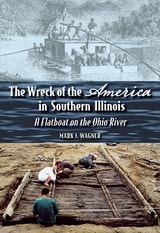
That changed in 2000 after local residents found a wreck on the Ohio River shoreline in Illinois. Archaeologist Mark J. Wagner and his colleagues from Southern Illinois University Carbondale investigated extensively and established that the wreck was a pre–Civil War flatboat, which they named America, after a nearby town.
In The Wreck of the America in Southern Illinois: A Flatboat on the Ohio River, Wagner provides a brief description and general history of flatboats and the various reasons they wrecked—such as poor workmanship and encounters with pirates, storms, rocks, and floating trees. Wagner describes the remains of the America, how it was constructed, the artifacts found nearby and inside—including pewter spoons, utensils with bone handles, metal buttons, and an iron felling axe—and the probable cause of its sinking. Wagner concludes with a history of the America since its discovery in 2000 and a plea that the boat be removed from the riverbank and preserved before the Ohio washes it away.
Thedford II
A Paleo-Indian Site in the Ausable River Watershed of Southwestern OntarioD. Brian Deller and Christopher J. Ellis with a foreword by Henry T. Wright
University of Michigan Press, 1992
Theoretical Approaches to the Archaeology of Ancient Greece
Manipulating Material CultureLisa C. Nevett, Editor
University of Michigan Press, 2017
An introductory section exploring the emergence and growth of theoretical approaches is followed by examinations of the potential insights these approaches provide. The authors probe some of the meanings attached to ancient objects, townscapes, and cemeteries, for those who created, and used, or inhabited them.
The range of contexts stretches from the early Greek communities during the eighth and seventh centuries BCE, through Athens between the eighth and fifth centuries BCE, and on into present day Turkey and the Levant during the third and second centuries BCE. The authors examine a range of practices, from the creation of individual items such as ceramic vessels and figurines, through to the construction of civic buildings, monuments, and cemeteries. At the same time they interrogate a range of spheres, from craft production, through civic and religious practices, to funerary ritual.
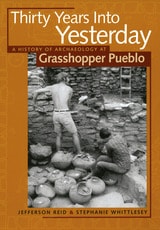
Thirty Years Into Yesterday
A History of Archaeology at Grasshopper PuebloJefferson Reid and Stephanie Whittlesey
University of Arizona Press, 2005
Like the enigmatic Mogollon culture it sought to explore and earlier University of Arizona field schools in the Forestdale Valley and at Point of Pines, Grasshopper research engendered decades of controversy that still lingers in the pages of professional journals. Jefferson Reid and Stephanie Whittlesey, players in the controversy who are intimately familiar with the field school that ended in 1992, offer a historical account of this major archaeological project and the intellectual debates it fostered.
Thirty Years Into Yesterday charts the development of the Grasshopper program under three directors and through three periods dominated by distinct archaeological paradigms: culture history, processual archaeology, and behavioral archaeology. It examines the contributions made each season, the concepts and methods each paradigm used, and the successes and failures of each. The book transcends interests of southwestern archaeologists in demonstrating how the three archaeological paradigms reinterpreted Grasshopper, illustrating larger shifts in American archaeology as a whole. Such an opportunity will not come again, as funding constraints, ethical concerns, and other issues no doubt will preclude repeating the Grasshopper experience in our lifetimes.
Ultimately, Thirty Years Into Yesterday continues the telling of the Grasshopper story that was begun in the authors’ previous books. In telling the story of the archaeologists who recovered the material residue of past Mogollon lives and the place of the Western Apache people in their interpretations, Thirty Years Into Yesterday brings the story full circle to a stunning conclusion.
Those of Little Note
Gender, Race, and Class in Historical ArchaeologyElizabeth M. Scott
University of Arizona Press, 1994
I--Introduction
1. Through the Lens of Gender: Archaeology, Inequality, and Those "Of Little Note" / Elizabeth M. Scott
II--Native American and African American Communities
2. Cloth, Clothing, and Related Paraphernalia: A Key to Gender Visibility in the Archaeological Record of Russian America / Louise M. Jackson
3. "We Took Care of Each Other Like Families Were Meant To": Gender, Social Organization, and Wage Labor Among the Apache at Roosevelt / Everett Bassett
4. The House of the Black Burghardts: An Investigation of Race, Gender, and Class at the W. E. B. DuBois Boyhood Homesite / Nancy Ladd Muller
III--All Male and Predominantly Male Communities
5. "With Manly Courage": Reading the Construction of Gender in a 19th-Century Religious Community / Elizabeth Kryder-Reid
6. The Identification of Gender at Northern Military Sites of the Late 18th Century / David R. Starbuck
7. Class, Gender Strategies, and Material Culture in the Mining West / Donald L. Hardesty
IV--Working Women in Urban Communities
8. Mrs. Starr's Profession / Donna J. Seifert
9. Diversity and 19th-Century Domestic Reform: Relationships Among Classes and Ethnic Groups / Suzanne M. Spencer-Wood
Tibes
People, Power, and Ritual at the Center of the CosmosEdited by L. Antonio Curet and Lisa M. Stringer
University of Alabama Press, 2009
The prehistoric civic-ceremonial center of Tibes is located on the southern coast of Puerto Rico, just north of the modern coastal city of Ponce. Protected on two sides by a river, and on the other two sides by hills, this approximately 10.5-acre site remains as fertile and productive today as when first occupied over 2,000 years ago. Such a rich region would have been a choice location for native peoples because of the diversity in all resources, from land, air, and sea--and also symbolically crucial as a liminal space within the landscape. It may have been regarded as a space charged with numen or cosmic energy where different parts of the cosmos (natural vs. supernatural, or world of the living vs. world of the dead) overlap. Archaeological evidence reveals a long occupation, about 1,000 years, possibly followed by an extensive period of sporadic ceremonial use after the site itself was practically abandoned.
In this volume, nineteen Caribbeanists, across a wide academic spectrum, examine the geophysical, paleoethnobotanical, faunal, lithics, base rock, osteology, bone chemistry and nutrition, social landscape, and ceremonial constructs employed at Tibes. These scholars provide a concise, well-presented, comprehensive analysis of the evidence for local level changes in household economy, internal organization, accessibility to economic, religious, and symbolic resources related to the development and internal operation of socially stratified societies in the Caribbean.
Time's River
Archaeological Syntheses from the Lower Mississippi ValleyEdited by Janet Rafferty and Evan Peacock
University of Alabama Press, 2008
An archaeologically rich region, in advance of impending disturbance
This volume stands as a key general resource for archaeologists working in the region extending from Louisiana through Mississippi north to Missouri and Kentucky, and it represents an opportunity to influence for decades a large part of the archaeological work to take place in the Southeast.
The book responds to a need for a comprehensive archaeological overview of the Lower Mississippi Valley that forms a portion of an interstate corridor spanning nine states that will run from southern Michigan to the Texas-Mexico border. The culturally sensitive Mississippi Delta is one of the richest archaeological areas in North America, and it is crucial that research designs be comprehensive, coordinated, and meet current preservation and future research needs. The authors are well-respected researchers from both within and outside the region with expertise in the full range of topics that comprise American archaeology. They examine matters of method and theory, the application of materials science, geophysics, and other high-tech tools in archaeology that provide for optimum data-recovery.
Time, Trees, and Prehistory
Tree Ring dating and the Development of NA Archaeology 1914 to 1950Stephen E Nash
University of Utah Press, 2006
Dendrochronology, the science of assigning precise calendar dates to annual growth rings in trees, provided accurate dates at a time when North American archaeologists had no absolute dating techniques available to guide their analyses. Time, Trees, and Prehistory examines the growth, development, application, and interpretive implications of North American archaeological tree-ring dating from 1914 to 1950.
The development of dendrochronology forced archaeologists to radically revise their understanding of the prehistoric past, compressing by nearly fifty percent the time scale of the archaeological record. Basketmaker sites, for instance, were once thought to be four thousand years old; tree-ring application demonstrated that these sites dated well into the present millennium. Classic sites in Chaco Canyon and Mesa Verde were believed occupied for nearly a thousand years, but tree-ring dates demonstrated that such sites were often built, occupied, and abandoned in just over a century. Other similar changes in temporal scale forced archaeologists to reconsider their interpretations of the rate of prehistoric cultural change, population growth, and the degree of social and political complexity in the Southwest.
Time, Trees, and Prehistory examines archaeological practices of the 1920s, 30s, and 40s and demonstrates that tree-ring dating set the stage that enabled revolutionary developments in archaeological method and theory in succeeding decades.
Time, Typology, and Point Traditions in North Carolina Archaeology
Formative Cultures ReconsideredI. Randolph Daniel Jr.
University of Alabama Press, 2021
Revisiting the stone tools that reshaped our understanding of North Carolina's prehistoric past.
In the 1964 landmark publication The Formative Cultures of the Carolina Piedmont, Joffre Coe established a projectile point typology and chronology that, for the first time, allowed archaeologists to identify the relative age of a site or site deposit based on the point types recovered there. Consistent with the cultural-historical paradigm of the day, the “Coe axiom” stipulated that only one point type was produced at one moment in time in a particular location. Moreover, Coe identified periods of “cultural continuity” and “discontinuity” in the chronology based on perceived similarities and differences in point styles through time.
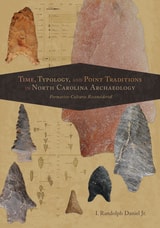
In Time, Typology, and Point Traditions in North Carolina Archaeology: Formative Cultures Reconsidered, I. Randolph Daniel Jr. reevaluates the Coe typology and sequence, analyzing their strengths and weaknesses. Daniel reviews the history of the projectile point type concept in the Southeast and revisits both Coe’s axiom and his notions regarding cultural continuity and change based on point types. In addition, Daniel updates Coe’s typology by clarifying or revising existing types and including types unrecognized in Coe’s monograph. Daniel also adopts a practice-centered approach to interpreting types and organizes them into several technological traditions that trace ancestral-descendent communities of practice that relate to our current understanding of North Carolina prehistory.
Appealing to professional and avocational archaeologists, Daniel provides ample illustrations of points in the book as well as color versions on a dedicated website. Daniel dedicates a final chapter to a discussion of the ethical issues related to professional archaeologists using private artifact collections. He calls for greater collaboration between professional and avocational communities, noting the scientific value of some private collections.
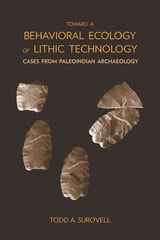
Toward a Behavioral Ecology of Lithic Technology
Cases from Paleoindian ArchaeologyTodd A. Surovell
University of Arizona Press, 2009
Because the fundamental processes of making, using, and discarding stone tools are, at root, exercises in problem solving, Todd Surovell asks what conditions favor certain technological solutions. Whether asking if a biface should be made thick or thin or if a flake should be saved or discarded, Surovell seeks answers that extend beyond a case-by-case analysis. One avenue for addressing these questions theoretically is formal mathematical modeling.
Here Surovell constructs a series of models designed to link environmental variability to human decision making as it pertains to lithic technology. To test the models, Surovell uses data from the analysis of more than 40,000 artifacts from five Rocky Mountain and Northern Plains Folsom and Goshen complex archaeological sites dating to the Younger Dryas stadial (ca. 12,600-11,500 years BP). The primary result is the production of powerful new analytical tools useful to the interpretation of archaeological assemblages.
Surovell's goal is to promote modeling and explore the general issues governing technological decisions. In this light, his models can be applied to any context in which stone tools are made and used.
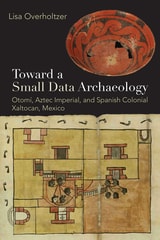
Toward a Small Data Archaeology
Otomí, Aztec Imperial, and Spanish Colonial Xaltocan, MexicoLisa Overholtzer
University Press of Colorado, 2025
Xaltocan served as the Otomí city-state capital before being conquered by the Tepanecs, subsequently incorporated into the Aztec Empire, and finally integrated into the vast Spanish colonial sphere. In reconstructing long-term household histories that bridge the pre-Hispanic and early Colonial periods, this book resists narratives that define Indigenous peoples solely through the lens of conquest and subordination. Instead, it presents richly detailed reconstructions of familial relationships and social networks, achieved through the rigorous analysis of artifacts, ecofacts, human remains, and ancient DNA. This meticulous and community-collaborative approach not only maximizes insights available from a limited archaeological record but also honors the ethical imperative to work with descendant communities.
Toward a Small Data Archaeology offers an innovative reexamination of the past by privileging the intricate, household-level narratives of Indigenous communities over the homogenizing tendencies of broad-scale "big data" approaches. By peopling the past, Overholtzer redefines methodological boundaries within archaeology, produces reconstructions and narratives that are more in line with Indigenous philosophies, and offers a compelling vision for a future in which historical narratives are reconstructed through a lens that is both deeply scientific and inherently humane.

Traces Behind the Esmeraldas Shore
Warren DeBoer
University of Alabama Press, 1996
Although long famous for its antiquities—notably intricate goldwork, elaborate pottery, and earthen mounds—the Santiago-Cayapas region of coastal Ecuador has been relatively neglected from the standpoint of scientific archaeology. Until recently, no sound chronology was available, and even the approximate age of the region's most impressive monument, the large and much-looted site of La Tolita, remained in doubt.
Building on evidence obtained during the last decade, this book documents an eventful prehistory for Santiago-Cayapas that spans three millennia. A highlight of this prehistory was the reign of La Tolita as a regional center from 200 B.C. to A.D. 350. Archaeological data from
La Tolita's hinterland indicate a complex and changing social landscape in which La Tolita's hegemony was never absolute nor uncontested.
Abundantly illustrated and written in a crisp, witty, and occasionally irreverent style, Traces Behind the Esmeraldas Shore will stimulate debate and rankle interpretive conventions about those social formations that archaeologists gloss as 'chiefdoms.'
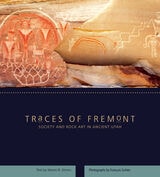
Traces of Fremont
Society and Rock Art in Ancient UtahSteven R. Simms, Photography by François Gohier
University of Utah Press, 2010
Fremont is a culture (ca. 300–1300 A.D.) first defined by archaeologist Noel Morss in 1928 based on characteristics unique to the area. Initially thought to be a simple socio-political system, recent reassessments of the Fremont assume a more complex society. This volume places Fremont rock art studies in this contemporary context. Author Steven Simms offers an innovative model of Fremont society, politics, and worldview using the principles of analogy and current archaeological evidence. Simms takes readers on a trip back in time by describing what a typical Fremont hamlet or residential area might have looked like a thousand years ago, including the inhabitants' daily activities. François Gohier's captivating photographs of Fremont art and artifacts offer an engaging complement to Simms's text, aiding us in our understanding of the lives of these ancient people.
Winner of the Utah Book Award in Nonfiction.
Winner of the Society for American Archaeology Book Award for Public Audience.
Tracing the Relational
The Archaeology of Worlds, Spirits, and TemporalitiesMeghan E. Buchanan and B. Jacob Skousen
University of Utah Press, 2015