Results by title
3071 books match the query 'Business & Economics' and 687 start with t
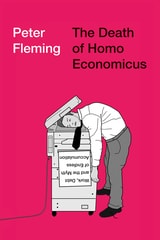
The Death of Homo Economicus
Work, Debt and the Myth of Endless AccumulationPeter Fleming
Pluto Press, 2017
In The Death of Homo Economicus, Fleming presents this controversial claim with the same fierce logic and perception that launched his Guardian column into popularity. Fleming argues that as an invented model of a human being, Homo economicus is, in reality, a tool used by economists and capitalists to manage our social world through the state, business, and even family. As workers, we are barraged with constant reminders that we should always strive toward this ideal persona. It’s implied—and sometimes directly stated—that if we don’t then we are failures. Ironically, the people most often encouraged to emulate this model are those most predisposed to fail due to their socioeconomic circumstances: the poor, the unemployed, students, and prisoners.
Fleming illuminates why a peculiar proactive negativity now marks everyday life in capitalist societies, and he explores how this warped, unattainable model for workers would cause chaos if enacted to the letter. Timely and revelatory, The Death of Homo Economicus offers a sharp, scathing critique of who we are supposed to be in the workplace and beyond.
The Decline of Latin American Economies
Growth, Institutions, and CrisesEditied by Sebastian Edwards, Gerardo Esquivel, and Graciela Márquez
University of Chicago Press, 2007
Latin America’s economic performance is mediocre at best, despite abundant natural resources and flourishing neighbors to the north. The perplexing question of how some of the wealthiest nations in the world in the nineteenth century are now the most crisis-prone has long puzzled economists and historians. The Decline of Latin American Economies examines the reality behind the struggling economies of Argentina, Chile, and Mexico.
A distinguished panel of experts argues here that slow growth, rampant protectionism, and rising inflation plagued Latin America for years, where corrupt institutions and political unrest undermined the financial outlook of already besieged economies. Tracing Latin America’s growth and decline through two centuries, this volume illustrates how a once-prosperous continent now lags behind. Of interest to scholars and policymakers alike, it offers new insight into the relationship between political systems and economic development.
The Decline of Organized Labor in the United States
Michael Goldfield
University of Chicago Press, 1987
The Declining Significance of Gender?
Francine D. Blau
Russell Sage Foundation, 2006
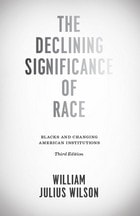
The Declining Significance of Race
Blacks and Changing American Institutions, Third EditionWilliam Julius Wilson
University of Chicago Press, 2012
When first published in 1980, The Declining Significance of Race immediately sparked controversy with its contentious thesis that race was becoming less of a deciding factor in the life chances of black Americans than class. This new edition of the seminal book includes a new afterword in which William Julius Wilson not only reflects on the debate surrounding the book, but also presents a provocative discussion of race, class, and social policy.
“The intellectual strength of this book lies in his capacity to integrate disparate findings from historical studies, social theory and research on contemporary trends into a complex and original synthesis that challenges widespread assumptions about the cause of black disadvantage and the way to remove it.”—Paul Starr, New York Times Book Review
“This publication is easily one of the most erudite and sober diagnoses of the American black situation. Students of race relations and anybody in a policy-making position cannot afford to bypass this study.”—Ernest Manheim, Sociology
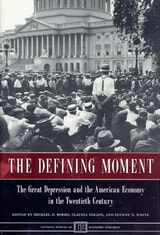
The Defining Moment
The Great Depression and the American Economy in the Twentieth CenturyEdited by Michael D. Bordo, Claudia Goldin, and Eugene N. White
University of Chicago Press, 1997
The essays consider whether New Deal-style legislation continues to operate today as originally envisioned, whether it altered government and the economy as substantially as did policies inaugurated during World War II, the 1950s, and the 1960s, and whether the legislation had important precedents before the Depression, specifically during World War I. Some chapters find that, surprisingly, in certain areas such as labor organization, the 1930s responses to the Depression contributed less to lasting change in the economy than a traditional view of the time would suggest. On the whole, however, these essays offer testimony to the Depression's legacy as a "defining moment." The large role of today's government and its methods of intervention—from the pursuit of a more active monetary policy to the maintenance and extension of a wide range of insurance for labor and business—derive from the crisis years of the 1930s.

The Design and Implementation of US Climate Policy
Edited by Don Fullerton and Catherine D. Wolfram
University of Chicago Press, 2012

The Devil's Fruit
Farmworkers, Health, and Environmental JusticeDvera I. Saxton
Rutgers University Press, 2021

The Dialectics of Shopping
Daniel Miller
University of Chicago Press, 2001
Miller's companions are mostly women who confront these contradictions as they shop. They placate their children with items that combine nutrition with taste or usefulness with style. They decide between shopping at the local store or at the impersonal, but less expensive, mall. They tell of their sympathy for environmental concerns but somehow avoid much ethical shopping. They are faced with a selection of shops whose shifts and mergers often reveal extraordinary stories of their own. Filled with entertaining—and thoroughly familiar—stories of shoppers and shops, this book will interest scholars across a broad range of disciplines.

The Digital Factory
The Human Labor of AutomationMoritz Altenried
University of Chicago Press, 2022
The workers of today’s digital factory include those in Amazon warehouses, delivery drivers, Chinese gaming workers, Filipino content moderators, and rural American search engine optimizers. Repetitive yet stressful, boring yet often emotionally demanding, these jobs require little formal qualification, but can demand a large degree of skills and knowledge. This work is often hidden behind the supposed magic of algorithms and thought to be automated, but it is in fact highly dependent on human labor.
The workers of today’s digital factory are not as far removed from a typical auto assembly line as we might think. Moritz Altenried takes us inside today’s digital factories, showing that they take very different forms, including gig economy platforms, video games, and Amazon warehouses. As Altenried shows, these digital factories often share surprising similarities with factories from the industrial age. As globalized capitalism and digital technology continue to transform labor around the world, Altenried offers a timely and poignant exploration of how these changes are restructuring the social division of labor and its geographies as well as the stratifications and lines of struggle.

The Digital Factory
The Human Labor of AutomationMoritz Altenried
University of Chicago Press, 2022
This is an auto-narrated audiobook edition of this book.
The Digital Factory reveals the hidden human labor that supports today’s digital capitalism.
The workers of today’s digital factory include those in Amazon warehouses, delivery drivers, Chinese gaming workers, Filipino content moderators, and rural American search engine optimizers. Repetitive yet stressful, boring yet often emotionally demanding, these jobs require little formal qualification, but can demand a large degree of skills and knowledge. This work is often hidden behind the supposed magic of algorithms and thought to be automated, but it is in fact highly dependent on human labor.
The workers of today’s digital factory are not as far removed from a typical auto assembly line as we might think. Moritz Altenried takes us inside today’s digital factories, showing that they take very different forms, including gig economy platforms, video games, and Amazon warehouses. As Altenried shows, these digital factories often share surprising similarities with factories from the industrial age. As globalized capitalism and digital technology continue to transform labor around the world, Altenried offers a timely and poignant exploration of how these changes are restructuring the social division of labor and its geographies as well as the stratifications and lines of struggle.

The Digital NBA
How the World's Savviest League Brings the Court to Our CouchSteven Secular
University of Illinois Press, 2023
A timely look at a dynamic media landscape, The Digital NBA shows how the games we love became content first and sport a distant second.
The Dignity of Commerce
Markets and the Moral Foundations of Contract LawNathan B. Oman
University of Chicago Press, 2016
With The Dignity of Commerce, Nathan B. Oman argues persuasively that well-functioning markets are morally desirable in and of themselves and thus a fit object of protection through contract law. Markets, Oman shows, are about more than simple economic efficiency. To do business with others, we must demonstrate understanding of and satisfy their needs. This ability to see the world from another’s point of view inculcates key virtues that support a liberal society. Markets also provide a context in which people can peacefully cooperate in the absence of political, religious, or ideological agreement. Finally, the material prosperity generated by commerce has an ameliorative effect on a host of social ills, from racial discrimination to environmental destruction.
The first book to place the moral status of the market at the center of the justification for contract law, The Dignity of Commerce is sure to elicit serious discussion about this central area of legal studies.
The Diplomacy of Involvement
American Economic Expansion across the Pacific, 1784-1900David M. Pletcher
University of Missouri Press, 2001
Like its predecessor, this important new work is focused on the connection between trade and investment on the one hand and U.S. foreign policy on the other. David Pletcher describes the trade of the United States with the Far East, the islands of the Pacific, and the northwest coast of North America from 1784 (the year of the first American trading expedition to China) to 1844 (the year of the first trade treaty with China, followed immediately by the U.S. acquisition of Oregon and California). He then traces the growth of trade and investment in Alaska, Hawaii, and the South Pacific from 1844 to 1890 and proceeds to do the same for China, Japan, and Korea. In the ensuing chapters, Pletcher covers the 1890s, including the annexation of Hawaii, the Sino-Japanese War, the acquisition of the Philippines, and the Open Door policy in China.
He concludes that the American expansion across the Pacific and into the Far East was not a deliberate, consistent drive for economic hegemony but a halting, experimental, improvised movement, carried out against determined opposition and indifference and dotted with setbacks and failures. Providing his own judgments about the wisdom and effectiveness of America's new endeavors, Pletcher summarizes the problems and handicaps involved, demonstrating that errors of the twentieth century were at least partly the result of poor preparation in the 1880s and 1890s.
Touching on every place where Americans undertook significant economic activity, The Diplomacy of Involvement will be an important aid for seasoned scholars, as well as an excellent introduction for the novice.
The Diplomacy of Trade and Investment
American Economic Expansion in the Hemisphere, 1865-1900David M. Pletcher
University of Missouri Press, 1998
The move to encourage trade with Canada and Mexico during the 1990s, culminating with the negotiation of the North American Free Trade Agreement (NAFTA), has had a long background extending as far back as the late eighteenth century. American trade with both Canada and Latin America rapidly increased during the last third of the nineteenth century as a result of burgeoning industry and agriculture in the United States. The Diplomacy of Trade and Investment is the first detailed examination of the economic and political forces behind this rapid growth and their effect on government policy.
Based on a thorough examination of government documents, congressional debates and reports, private papers of government and business leaders, and newspapers, David M. Pletcher begins this monumental study with a comprehensive survey of U.S. trade following the Civil War. He goes on to outline the problems of building a coherent trade policy toward Canada, Mexico, Central America, the Caribbean, and South America. The study concludes by analyzing a series of abortive trade reform efforts and examining the effects of the Spanish-American War.
Pletcher rejects the long-held belief that American business and government engaged in a deliberate, consistent drive for economic hegemony in the hemisphere during the late 1800s. Instead he finds that the American government improvised and experimented with ways to further trade expansion. But American businessmen were often more interested in domestic trade than in trade with foreign markets. In fact, many of them resisted efforts to lower the American tariff or otherwise encourage American trade abroad.
The combination of traditionalist and revisionist insight with Pletcher's own deep knowledge and research provides the reader with a comprehensive new interpretation of hemispheric trade expansion at the end of the nineteenth century.

The Disordered Police State
German Cameralism as Science and PracticeAndre Wakefield
University of Chicago Press, 2009
Probing the relationship between German political economy and everyday fiscal administration, The Disordered Police State focuses on the cameral sciences—a peculiarly German body of knowledge designed to train state officials—and in so doing offers a new vision of science and practice during the seventeenth and eighteenth-centuries. Andre Wakefield shows that the cameral sciences were at once natural, technological, and economic disciplines, but, more important, they also were strategic sciences, designed to procure patronage for their authors and good publicity for the German principalities in which they lived and worked. Cameralism, then, was the public face of the prince's most secret affairs; as such, it was an essentially dishonest enterprise.
In an entertaining series of case studies on mining, textiles, forestry, and universities, Wakefield portrays cameralists in their own gritty terms. The result is a revolutionary new understanding about how the sciences created and maintained an image of the well-ordered police state in early modern Germany. In raising doubts about the status of these German sciences of the state, Wakefield ultimately questions many of our accepted narratives about science, culture, and society in early modern Europe.

The Distributional Aspects of Social Security and Social Security Reform
Edited by Martin Feldstein and Jeffrey B. Liebman
University of Chicago Press, 2002
As this volume suggests, the distributional consequences of these proposals are substantially different and may disproportionately affect those groups who depend on social security to avoid poverty in old age. Together, these studies persuasively show that appropriately designed investment-based social security reforms can effectively reduce the long-term burden of an aging society on future taxpayers, increase the expected future income of retirees, and mitigate poverty rates among the elderly.

The Dynamics of Business-Government Relations
Industry and Exports, 1893-1921William H. Becker
University of Chicago Press, 1982
The Dysfunctional Workplace
Theory, Stories, and PracticeSeth Allcorn and Howard F. Stein
University of Missouri Press, 2015
This book explores an aspect of organizational life that is at times difficult to acknowledge and often painful to recall. Stories invite reflection and the development of greater understanding of organizational dynamics. This fresh scholarship provides a theoretical framework for discussion. Throughout this book, Allcorn and Stein utilize a psychoanalytically informed perspective to help readers understand why a leader, colleague or friend behaves in ways that are destructive of others and the organization and provides a basis for organizations to survive and thrive in a dysfunctional workplace.
The Economic Analysis of Substance Use and Abuse
An Integration of Econometric and Behavioral Economic ResearchEdited by Frank J. Chaloupka, Michael Grossman, Warren K. Bickel, and Henry Saffer
University of Chicago Press, 1999
The Economic Analysis of Substance Use and Abuse brings these distinctive fields of study together and presents for the first time an integrated assessment of their data and results. Unique and innovative, this multidisciplinary volume will serve as an important resource in the current debates concerning alcohol and drug use and abuse and the impacts of legalizing illicit drugs.

The Economic Approach to Human Behavior
Gary S. Becker
University of Chicago Press, 1976
"Becker's highly regarded work in economics is most notable in the imaginative application of 'the economic approach' to a surprising breadth of human activity. Becker's essays over the years have inevitably inspired a surge of research activity in testimony to the richness of his insights into human activities lying 'outside' the traditionally conceived economic markets. Perhaps no economist in our time has contributed more to expanding the area of interest to economists than Becker, and a number of these thought-provoking essays are collected in this book."—Choice
Gary Becker was awarded the Nobel Prize in Economic Science in 1992.
The Economic Approach
Unpublished Writings of Gary S. BeckerGary S. Becker
University of Chicago Press, 2023
Now in paperback, a revealing collection from the intellectual titan whose work shaped the modern world.
As an economist and public intellectual, Gary S. Becker was a giant. The recipient of a Nobel Prize, a John Bates Clark Medal, and a Presidential Medal of Freedom, Becker is widely regarded as the greatest microeconomist in history.
After forty years at the University of Chicago, Becker left a slew of unpublished writings that used an economic approach to human behavior, analyzing such topics as preference formation, rational indoctrination, income inequality, drugs and addiction, and the economics of family.
These papers unveil the process and personality—direct, critical, curious—that made him a beloved figure in his field and beyond. The Economic Approach examines these extant works as a capstone to the Becker oeuvre—not because the works are perfect, but because they offer an illuminating, instructive glimpse into the machinations of an economist who wasn’t motivated by publications. Here, and throughout his works, an inquisitive spirit remains remarkable and forever resonant.
The Economic Consequences of Demographic Change in East Asia
Edited by Takatoshi Ito and Andrew K. Rose
University of Chicago Press, 2010
Recent studies show that almost all industrial countries have experienced dramatic decreases in both fertility and mortality rates. This situation has led to aging societies with economies that suffer from both a decline in the working population and a rise in fiscal deficits linked to increased government spending. East Asia exemplifies these trends, and this volume offers an in-depth look at how long-term demographic transitions have taken shape there and how they have affected the economy in the region.
The Economic Consequences of Demographic Change in East Asia assembles a group of experts to explore such topics as comparative demographic change, population aging, the rising cost of health care, and specific policy concerns in individual countries. The volume provides an overview of economic growth in East Asia as well as more specific studies on Japan, Korea, China, and Hong Kong. Offering important insights into the causes and consequences of this transition, this book will benefit students, researchers, and policy makers focused on East Asia as well as anyone concerned with similar trends elsewhere in the world.
The Economic Development of Manchuria
The Rise of a Frontier EconomyKang Chao
University of Michigan Press, 1983
The Economic Effects of Aging in the United States and Japan
Edited by Michael D. Hurd and Naohiro Yashiro
University of Chicago Press, 1997
The most obvious effects will be on social programs such as public pension systems and the provision for medical needs of the elderly. But, the contributors demonstrate, aging will also affect markets for labor, capital, housing, and health care services. It will affect firms through their participation in the demand side of the labor market and through their provisions for pensions. And aging will influence saving rates, the rate of return on assets, the balance of payments, and, most likely, economic growth.
This volume will interest scholars and policy makers concerned with the economics of aging.
The Economic History of American Inequality
New Evidence and PerspectivesEdited by Martha J. Bailey, Leah Platt Boustan, and William J. Collins
University of Chicago Press, 2025
A meticulous examination of the history and roots of economic inequality within the United States.
This volume refines and extends the economic history literature on economic inequality in the United States. Economic inequality manifests itself on various dimensions, including access to resources and economic security, as well as access to education and opportunities for migration, marriage, and other important life decisions. Measuring inequality and studying its variation over time and in response to economic shocks such as recessions and wars deepen our understanding of how the economy operates and can inform the design of public policies. The studies in this compendium present comprehensive evidence on income distribution during the nineteenth and early twentieth centuries, drawing on new data on wages and prices. They also consider disparities in economic well-being that are reflected in outcomes other than wage and salary income, such as homeownership and marriage. The volume also presents new evidence on the effects of income inequality on social outcomes. It concludes with an intellectual history of “human capital,” a core concept in the economic analysis of the underpinnings of labor market inequality.
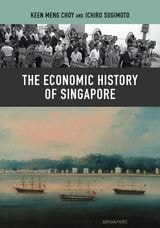
The Economic History of Singapore
Keen Meng Choy and Ichiro Sugimoto
National University of Singapore Press, 2026
What explains Singapore’s economic success? What are the factors behind the many changes it has negotiated over the centuries, first as a regional trading port in the fourteenth century, then as an entrepôt and staple port in the British empire, and finally moving to independence, export-led industrialization, and global-city status as one of the world's most prosperous economies? This comprehensive economic history of Singapore is the first to integrate a long-term view, taking a narrative but analytical approach. At the same time, the book does not lose sight of individuals, firms, and families, and the way economic changes have affected the well-being of Singapore’s people. The Economic History of Singapore also considers recent challenges faced by the country, such as balancing the needs of the nation-state and the global city and managing worsening income distribution.
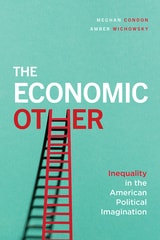
The Economic Other
Inequality in the American Political ImaginationMeghan Condon and Amber Wichowsky
University of Chicago Press, 2020
Through an astute blend of experiments, surveys, and descriptions people offer in their own words, The Economic Other reveals that when less-advantaged Americans compare with the rich, they become more accurate about their own status and want more from government. But American society is structured to prevent upward comparison. In an increasingly divided, anxious nation, opportunities to interact with the country’s richest are shrinking, and people prefer to compare to those below to feel secure. Even when comparison with the rich does occur, many lose confidence in their power to effect change.
Laying bare how social comparisons drive political attitudes, The Economic Other is an essential look at the stubborn plight of inequality and the measures needed to solve it.

The Economic Rise of the Czech Lands 1
From the 1750s to the End of World War IEdited by Zdenek Jindra and Ivan Jakubec
Karolinum Press, 2019
The Economic Sociology of Immigration
Essays on Networks, Ethnicity, and EntrepreneurshipAlejandro Portes
Russell Sage Foundation, 1995
The Economics and the Ethics of Constitutional Order
James M. Buchanan
University of Michigan Press, 1991
The Ecosystem Approach in Anthropology serves as a foundational methodology guide for modern ecological and environmental anthropology. The book advocates for a rigorous, integrative approach to studying human societies by framing them as deeply interconnected components of larger biological ecosystems. Moran gathers a diverse cohort of leading researchers to demonstrate how abstract ecosystem concepts can be translated into concrete, empirical field practices across varying environments, ranging from tropical rainforests to arid landscapes. By bridging the gap between cultural anthropology and natural sciences like ecology, soil science, and demography, the volume offers critical frameworks for quantifying energy flows, resource consumption, and human-environmental feedback loops, making it an indispensable resource for analyzing complex social-ecological systems and anthropogenic environmental changes.

The Economics and the Ethics of Constitutional Order
James M. Buchanan
University of Michigan Press, 1991
The Economics of Aging
Edited by David A. Wise
University of Chicago Press, 1988
The Economics of Aging presents results from an ongoing National Bureau of Economic Research project. Contributors consider the housing mobility and living arrangements of the elderly, their labor force participation and retirement, the economics of their health care, and their financial status. The goal of the research is to further our understanding both of the factors that determine the well-being of the elderly and of the consequences that follow from an increasingly older population with longer individual life spans. Each paper is accompanied by critical commentary.
The Economics of Agriculture, Volume 1
Selected Papers of D. Gale JohnsonEdited by John M. Antle and Daniel A. Sumner
University of Chicago Press, 1995
Volume 1 collects for the first time in one source Johnson's most important work. These classic papers explore the consequences of government intervention in United States and world agriculture; the economics of agricultural supply and of rural labor and human capital issues; and the analysis of agricultural productivity in poor countries, including the centrally planned economies of China and Eastern Europe. Models of precise reasoning and powerful empirical research, the papers cover a wide range of topics—from U.S. commodity price policy to the economics of population control and farm policy reform in China. Volume 1 includes a definitive bibliography of Johnson's published writings.
Volume 2 presents twenty-two papers by Johnson's former students and colleagues. International in scope, these papers explore themes and topics inspired by Johnson's work, including agricultural policy and U.S. farm prices; European Common Agricultural Policy; and agricultural and rural development in the Third World. Contributors to Volume 2 are David G. Abler, John M. Antle, Richard R. Barichello, Andrew P. Barkley, Karen Brooks, David S. Bullock, Robert E. Evenson, B. Delworth Gardner, Bruce L. Gardner, Dale M. Hoover, Wallace E. Huffman, Paul R. Johnson, Yoav Kislev, Justin Yifu Lin, Yair Mundlak, John Nash, Keijuro Otsuka, Willis Peterson, Todd E. Petzel, Vernon W. Ruttan, Maurice Schiff, G. Edward Schuh, Theodore W. Schultz, James Snyder, Vasant Sukhatme, Daniel A. Sumner, Vinod Thomas, George Tolley, and Alberto Valdes.
The Economics of Agriculture, Volume 2
Papers in Honor of D. Gale JohnsonEdited by John M. Antle and Daniel A. Sumner
University of Chicago Press, 1995
Volume 1 collects for the first time in one source Johnson's most important work. These classic papers explore the consequences of government intervention in United States and world agriculture; the economics of agricultural supply and of rural labor and human capital issues; and the analysis of agricultural productivity in poor countries, including the centrally planned economies of China and Eastern Europe. Models of precise reasoning and powerful empirical research, the papers cover a wide range of topics—from U.S. commodity price policy to the economics of population control and farm policy reform in China. Volume 1 includes a definitive bibliography of Johnson's published writings.
Volume 2 presents twenty-two papers by Johnson's former students and colleagues. International in scope, these papers explore themes and topics inspired by Johnson's work, including agricultural policy and U.S. farm prices; European Common Agricultural Policy; and agricultural and rural development in the Third World. Contributors to Volume 2 are David G. Abler, John M. Antle, Richard R. Barichello, Andrew P. Barkley, Karen Brooks, David S. Bullock, Robert E. Evenson, B. Delworth Gardner, Bruce L. Gardner, Dale M. Hoover, Wallace E. Huffman, Paul R. Johnson, Yoav Kislev, Justin Yifu Lin, Yair Mundlak, John Nash, Keijuro Otsuka, Willis Peterson, Todd E. Petzel, Vernon W. Ruttan, Maurice Schiff, G. Edward Schuh, Theodore W. Schultz, James Snyder, Vasant Sukhatme, Daniel A. Sumner, Vinod Thomas, George Tolley, and Alberto Valdes.
The Economics of Art Museums
Edited and with an Introduction by Martin Feldstein
University of Chicago Press, 1991
This volume brings together nontechnical essays on these issues by economists associated with the NBER and personal statements by leaders of America's major national art museums and related foundations. It can be read not only by economists but also by museum officials and trustees. Museum directors generally come to their responsibilities with a background in art history and curatorial work but without experience in thinking about the management and public policy aspects of museum administration. Trustees who serve on museum boards generally have a background in business or law but have not previously tried to apply their experience to the unusual economic problems of museums. The background papers, the panelists' remarks, and the summary of the discussion will help them to approach their responsibilities with a better understanding of the problems and possibilities of the museum.
The Economics of Artificial Intelligence
An AgendaEdited by Ajay Agrawal, Joshua Gans, and Avi Goldfarb
University of Chicago Press, 2019
Contributors:
Daron Acemoglu, Massachusetts Institute of Technology
Philippe Aghion, Collège de France
Ajay Agrawal, University of Toronto
Susan Athey, Stanford University
James Bessen, Boston University School of Law
Erik Brynjolfsson, MIT Sloan School of Management
Colin F. Camerer, California Institute of Technology
Judith Chevalier, Yale School of Management
Iain M. Cockburn, Boston University
Tyler Cowen, George Mason University
Jason Furman, Harvard Kennedy School
Patrick Francois, University of British Columbia
Alberto Galasso, University of Toronto
Joshua Gans, University of Toronto
Avi Goldfarb, University of Toronto
Austan Goolsbee, University of Chicago Booth School of Business
Rebecca Henderson, Harvard Business School
Ginger Zhe Jin, University of Maryland
Benjamin F. Jones, Northwestern University
Charles I. Jones, Stanford University
Daniel Kahneman, Princeton University
Anton Korinek, Johns Hopkins University
Mara Lederman, University of Toronto
Hong Luo, Harvard Business School
John McHale, National University of Ireland
Paul R. Milgrom, Stanford University
Matthew Mitchell, University of Toronto
Alexander Oettl, Georgia Institute of Technology
Andrea Prat, Columbia Business School
Manav Raj, New York University
Pascual Restrepo, Boston University
Daniel Rock, MIT Sloan School of Management
Jeffrey D. Sachs, Columbia University
Robert Seamans, New York University
Scott Stern, MIT Sloan School of Management
Betsey Stevenson, University of Michigan
Joseph E. Stiglitz. Columbia University
Chad Syverson, University of Chicago Booth School of Business
Matt Taddy, University of Chicago Booth School of Business
Steven Tadelis, University of California, Berkeley
Manuel Trajtenberg, Tel Aviv University
Daniel Trefler, University of Toronto
Catherine Tucker, MIT Sloan School of Management
Hal Varian, University of California, Berkeley

The Economics of Artificial Intelligence
Health Care ChallengesEdited by Ajay Agrawal, Joshua Gans, Avi Goldfarb, and Catherine E. Tucker
University of Chicago Press, 2024
A timely investigation of the potential economic effects, both realized and unrealized, of artificial intelligence within the United States healthcare system.
In sweeping conversations about the impact of artificial intelligence on many sectors of the economy, healthcare has received relatively little attention. Yet it seems unlikely that an industry that represents nearly one-fifth of the economy could escape the efficiency and cost-driven disruptions of AI.
The Economics of Artificial Intelligence: Health Care Challenges brings together contributions from health economists, physicians, philosophers, and scholars in law, public health, and machine learning to identify the primary barriers to entry of AI in the healthcare sector. Across original papers and in wide-ranging responses, the contributors analyze barriers of four types: incentives, management, data availability, and regulation. They also suggest that AI has the potential to improve outcomes and lower costs. Understanding both the benefits of and barriers to AI adoption is essential for designing policies that will affect the evolution of the healthcare system.
The Economics of Attention
Style and Substance in the Age of InformationRichard A. Lanham
University of Chicago Press, 2006
With all the verve and erudition that have established his earlier books as classics, Richard A. Lanham here traces our epochal move from an economy of things and objects to an economy of attention. According to Lanham, the central commodity in our new age of information is not stuff but style, for style is what competes for our attention amidst the din and deluge of new media. In such a world, intellectual property will become more central to the economy than real property, while the arts and letters will grow to be more crucial than engineering, the physical sciences, and indeed economics as conventionally practiced. For Lanham, the arts and letters are the disciplines that study how human attention is allocated and how cultural capital is created and traded. In an economy of attention, style and substance change places. The new attention economy, therefore, will anoint a new set of moguls in the business world—not the CEOs or fund managers of yesteryear, but new masters of attention with a grounding in the humanities and liberal arts.
Lanham’s The Electronic Word was one of the earliest and most influential books on new electronic culture. The Economics of Attention builds on the best insights of that seminal book to map the new frontier that information technologies have created.
The Economics of Climate Change
Adaptations Past and PresentEdited by Gary D. Libecap and Richard H. Steckel
University of Chicago Press, 2011
While debates over the consequences of climate change are often pessimistic, historical data from the past two centuries indicate many viable opportunities for responding to potential changes. This volume takes a close look at the ways in which economies—particularly that of the United States—have adjusted to the challenges climate change poses, including institutional features that help insulate the economy from shocks, new crop varieties, irrigation, flood control, and ways of extending cultivation to new geographic areas. These innovations indicate that people and economies have considerable capacity to acclimate, especially when private gains complement public benefits. Options for adjusting to climate change abound, and with improved communication and the emergence of new information and technologies, the potential for adaptation will be even greater in the future.

The Economics of Crime
Lessons For and From Latin AmericaEdited by Rafael Di Tella, Sebastian Edwards, and Ernesto Schargrodsky
University of Chicago Press, 2010
The Economics of Discrimination
Gary S. Becker
University of Chicago Press, 1971
Mr. Becker's work confronts the economic effects of discrimination in the market place because of race, religion, sex, color, social class, personality, or other non-pecuniary considerations. He demonstrates that discrimination in the market place by any group reduces their own real incomes as well as those of the minority.
The original edition of The Economics of Discrimination was warmly received by economists, sociologists, and psychologists alike for focusing the discerning eye of economic analysis upon a vital social problem—discrimination in the market place.
"This is an unusual book; not only is it filled with ingenious theorizing but the implications of the theory are boldly confronted with facts. . . . The intimate relation of the theory and observation has resulted in a book of great vitality on a subject whose interest and importance are obvious."—M.W. Reder, American Economic Review
"The author's solution to the problem of measuring the motive behind actual discrimination is something of a tour de force. . . . Sociologists in the field of race relations will wish to read this book."—Karl Schuessler, American Sociological Review
The Economics of Food Price Volatility
Edited by Jean-Paul Chavas, David Hummels, and Brian D. Wright
University of Chicago Press, 2014
The researchers who contributed to The Economics of Food Price Volatility address these and other questions. They examine the forces driving both recent and historical patterns in food price volatility, as well as the effects of various public policies in affecting this volatility. The chapters include studies of the links between food and energy markets, the impact of biofuel policy on the level and variability of food prices, and the effects of weather-related disruptions in supply. The findings shed light on the way price volatility affects the welfare of farmers, traders, and consumers.

The Economics of François Quesnay
Gianni Vaggi
Duke University Press, 1987
The Economics of Information and Uncertainty
Edited by John J. McCall
University of Chicago Press, 1982
The Economics of Marine Resources and Conservation Policy
The Pacific Halibut Case Study with CommentaryEdited by James A. Crutchfield and Arnold Zellner
University of Chicago Press, 2002
This book presents a complete reprint of Crutchfield and Zellner's pioneering study, together with a new introduction by the authors and four new papers by other scholars. These new studies cover the history of the Pacific halibut industry as well as the general and specific contributions of the original work—such as price-oriented conservation policy—to the fields of resource economics and management. The resulting volume integrates theory and practice in a clear, well-contextualized case study that will be important not just for environmental and resource economists, but also for leaders of industries dependent on any natural resource.
The Economics of New Goods
Edited by Timothy F. Bresnahan and Robert J. Gordon
University of Chicago Press, 1997
The lead article in Part I contains a striking analysis of the history of light over two millenia. Other essays in Part I develop new price indexes for automobiles back to 1906; trace the role of the air conditioner in the development of the American south; and treat the germ theory of disease as an economic innovation. In Part II essays measure the economic impact of more recent innovations, including anti-ulcer drugs, new breakfast cereals, and computers. Part III explores methods and defects in the treatment of quality change in the official price data of the United States, Canada, and Japan.
This pathbreaking volume will interest anyone who studies economic growth, productivity, and the American standard of living.
The Economics of Place-Based Policies
Edited by Cecile Gaubert, Gordon H. Hanson, and David Neumark
University of Chicago Press, 2026
A wide-ranging collection of research examining the intricate economics of place-based policies.
After decades of skepticism about place-based policies, recent initiatives such as Opportunity Zones and elements of the Inflation Reduction Act signal renewed policy interest in targeting economically distressed areas. This volume surveys empirical findings from the US and Europe on the effectiveness of these policies, explores new theoretical rationales for geographic targeting, and examines the institutional contexts that shape policy design and implementation. The contributors evaluate major place-based initiatives and consider nontraditional approaches to supporting regional economies, including large-scale industrial interventions, public employment reallocation, and economic development on Native American reservations.
This collection is not limited to empirical policy impact evaluations as it takes a broader-ranging perspective. The contributors present evaluation evidence while also emphasizing the features, implementation processes, and institutional settings that shape policy effectiveness. They address critical questions such as: What new insights from economic theory can inform the design of place-based policies? What lessons from past policies are reflected—or ignored—in current approaches? How does US policymaking compare with European practices, and what takeaways can be derived from the comparison of the two?
The Economics of Place-Based Policies provides policymakers with evidence-based guidance on the design of effective interventions while offering researchers a comprehensive foundation for future study of how public policy can address geographic economic disparities.

The Economics of Poverty Traps
Edited by Christopher B. Barrett, Michael R. Carter, and Jean-Paul Chavas
University of Chicago Press, 2018
The research in this volume explores the hypothesis that poverty is self-reinforcing because the equilibrium behaviors of the poor perpetuate low standards of living. Contributions explore the dynamic, complex processes by which households accumulate assets and increase their productivity and earnings potential, as well as the conditions under which some individuals, groups, and economies struggle to escape poverty. Investigating the full range of phenomena that combine to generate poverty traps—gleaned from behavioral, health, and resource economics as well as the sociology, psychology, and environmental literatures—chapters in this volume also present new evidence that highlights both the insights and the limits of a poverty trap lens.
The framework introduced in this volume provides a robust platform for studying well-being dynamics in developing economies.

The Economics of Privacy
Edited by Avi Goldfarb and Catherine E. Tucker
University of Chicago Press, 2024
A foundational new collection examining the mechanics of privacy in the digital age.
The falling costs of collecting, storing, and processing data have allowed firms and governments to improve their products and services, but have also created databases with detailed individual-level data that raise privacy concerns. This volume summarizes the research on the economics of privacy and identifies open questions on the value of privacy, the roles of property rights and markets for privacy and data, the relationship between privacy and inequality, and the political economy of privacy regulation.
Several themes emerge across the chapters. One is that it may not be possible to solve privacy concerns by creating a market for the right to privacy, even if property rights are well-defined and transaction costs are low. Another is that it is difficult to measure and value the benefits of privacy, particularly when individuals have an intrinsic preference for privacy. Most previous attempts at valuation have focused only on quantifiable economic outcomes, such as innovation. Finally, defining privacy through an economic lens is challenging. The broader academic and legal literature includes many distinct definitions of privacy, and different definitions may be appropriate in different contexts. The chapters explore a variety of frameworks for examining these questions and provide a range of new perspectives on the role of economics research in understanding the benefits and costs of privacy and of data flows. As the digital economy continues to expand the scope of economic theory and research, The Economics of Privacy provides the most comprehensive survey to date of this field and its next steps.