Results by title
2728 books match the query 'Education' and 609 start with t
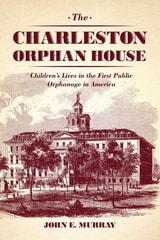
The Charleston Orphan House
Children's Lives in the First Public Orphanage in AmericaJohn E. Murray
University of Chicago Press, 2012
The Chicago Canon on Free Inquiry and Expression
Edited by Tony Banout and Tom Ginsburg
University of Chicago Press, 2024
Free inquiry and expression are hotly contested, both on campus and in social and political life. Since its founding in the late nineteenth century, the University of Chicago has been at the forefront of conversations around free speech and academic freedom in higher education. The University’s approach to free expression grew from a sterling reputation as a research university as well as a commitment to American pragmatism and democratic progress, all of which depended on what its first president referred to as the “complete freedom of speech on all subjects.” In 2015, more than 100 years later, then University provost and president J. D. Isaacs and Robert Zimmer echoed this commitment, releasing a statement by a faculty committee led by law professor Geoffrey R. Stone that has come to be known as the Chicago Principles, now adopted or endorsed by one hundred US colleges and universities. These principles are just a part of the long-standing dialogue at the University of Chicago around freedom of expression—its meaning and limits. The Chicago Canon on Free Inquiry and Expression brings together exemplary documents – some published for the first time here – that explain and situate this ongoing conversation with an introductory essay that brings the tradition to light.
Throughout waves of historical and societal challenges, this first principle of free expression has required rearticulation and new interpretations. The documents gathered here include, among others, William Rainey Harper’s “Freedom of Speech” (1900), the Kalven Committee’s report on the University’s role in political and social action (1967), and Geoffrey R. Stone’s “Free Speech on Campus: A Challenge of Our Times” (2016). Together, the writings of the canon reveal how the Chicago tradition is neither static nor stagnant, but a vibrant experiment; a lively struggle to understand, practice, and advance free inquiry and expression.
At a time of nationwide campus speech debates, engaging with these texts and the questions they raise is essential to sustaining an environment of broad intellectual and ideological diversity. This book offers a blueprint for the future of higher education’s vital work and points to the civic value of free expression.
The Chicago Canon on Free Inquiry and Expression
Edited by Tony Banout and Tom Ginsburg
University of Chicago Press, 2024
A collection of texts that provide the foundation for the University of Chicago’s longstanding tradition of free expression, principles that are at the center of current debates within higher education and society more broadly.
Free inquiry and expression are hotly contested, both on campus and in social and political life. Since its founding in the late nineteenth century, the University of Chicago has been at the forefront of conversations around free speech and academic freedom in higher education. The University’s approach to free expression grew from a sterling reputation as a research university as well as a commitment to American pragmatism and democratic progress, all of which depended on what its first president referred to as the “complete freedom of speech on all subjects.” In 2015, more than 100 years later, then University provost and president J. D. Isaacs and Robert Zimmer echoed this commitment, releasing a statement by a faculty committee led by law professor Geoffrey R. Stone that has come to be known as the Chicago Principles, now adopted or endorsed by one hundred US colleges and universities. These principles are just a part of the long-standing dialogue at the University of Chicago around freedom of expression—its meaning and limits. The Chicago Canon on Free Inquiry and Expression brings together exemplary documents – some published for the first time here – that explain and situate this ongoing conversation with an introductory essay that brings the tradition to light.
Throughout waves of historical and societal challenges, this first principle of free expression has required rearticulation and new interpretations. The documents gathered here include, among others, William Rainey Harper’s “Freedom of Speech” (1900), the Kalven Committee’s report on the University’s role in political and social action (1967), and Geoffrey R. Stone’s “Free Speech on Campus: A Challenge of Our Times” (2016). Together, the writings of the canon reveal how the Chicago tradition is neither static nor stagnant, but a vibrant experiment; a lively struggle to understand, practice, and advance free inquiry and expression.
At a time of nationwide campus speech debates, engaging with these texts and the questions they raise is essential to sustaining an environment of broad intellectual and ideological diversity. This book offers a blueprint for the future of higher education’s vital work and points to the civic value of free expression.
The Chicago Guide to College Science Teaching
Terry McGlynn
University of Chicago Press, 2020
For years, McGlynn has been addressing the need for practical and accessible advice for college science teachers through his popular blog Small Pond Science. Now he has gathered this advice as an easy read—one that can be ingested and put to use on short deadline. Readers will learn about topics ranging from creating a syllabus and developing grading rubrics to mastering online teaching and ensuring safety during lab and fieldwork. The book also offers advice on cultivating productive relationships with students, teaching assistants, and colleagues.
The Chicago Guide to Landing a Job in Academic Biology
C. Ray Chandler, Lorne M. Wolfe, and Daniel E. L. Promislow
University of Chicago Press, 2007
An academic career in the biological sciences typically demands well over a decade of technical training. So it’s ironic that when a scholar reaches the most critical stage in that career—the search for a job following graduate work—he or she receives little or no formal preparation. Instead, students are thrown into the job market with only cursory guidance on how to search for and land a position.
Now there’s help. Carefully, clearly, and with a welcome sense of humor, The Chicago Guide to Landing a Job in Academic Biology leads graduate students and postdoctoral fellows through the perils and rewards of their first job search. The authors—who collectively have for decades mentored students and served on hiring committees—have honed their advice in workshops at biology meetings across the country. The resulting guide covers everything from how to pack an overnight bag without wrinkling a suit to selecting the right job to apply for in the first place. The authors have taken care to make their advice useful to all areas of academic biology—from cell biology and molecular genetics to evolution and ecology—and they give tips on how applicants can tailor their approaches to different institutions from major research universities to small private colleges.
With jobs in the sciences ever more difficult to come by, The Chicago Guide to Landing a Job in Academic Biology is designed to help students and post-docs navigate the tricky terrain of an academic job search—from the first year of a graduate program to the final negotiations of a job offer.
The Chicago Guide to Your Academic Career
A Portable Mentor for Scholars from Graduate School through TenureJohn A. Goldsmith, John Komlos, and Penny Schine Gold
University of Chicago Press, 2001
With a perpetually tight job market in the traditional academic fields, the road to an academic career for many aspiring scholars will often be a rocky and frustrating one. Where can they turn for good, frank answers to their questions? Here, three distinguished scholars—with more than 75 years of combined experience—talk openly about what's good and what's not so good about academia, as a place to work and a way of life.
Written as an informal conversation among colleagues, the book is packed with inside information—about finding a mentor, avoiding pitfalls when writing a dissertation, negotiating the job listings, and much more. The three authors' distinctive opinions and strategies offer the reader multiple perspectives on typical problems. With rare candor and insight, they talk about such tough issues as departmental politics, dual-career marriages, and sexual harassment. Rounding out the discussion are short essays that offer the "inside track" on financing graduate education, publishing the first book, and leaving academia for the corporate world.
This helpful guide is for anyone who has ever wondered what the fascinating and challenging world of academia might hold in store.
Part I - Becoming a Scholar
* Deciding on an Academic Career
* Entering Graduate School
* The Mentor
* Writing a Dissertation
* Landing an Academic Job
Part II - The Academic Profession
* The Life of the Assistant Professor
* Teaching and Research
* Tenure
* Competition in the University System and Outside Offers
* The Personal Side of Academic Life
The Chicago Guide to Your Career in Science
A Toolkit for Students and PostdocsVictor A. Bloomfield and Esam E. El-Fakahany
University of Chicago Press, 2008
Victor A. Bloomfield and Esam E. El-Fakahany, both well-known scientists with extensive experience as teachers, mentors, and administrators, have combined their knowledge to create a guidebook that addresses all of the challenges that today’s scientists-in-training face. They begin by considering the early stages of a career in science: deciding whether or not to pursue a PhD, choosing advisors and mentors, and learning how to teach effectively. Bloomfield and El-Fakahany then explore the skills essential to conducting and presenting research. The Chicago Guide to Your Career in Science offers detailed advice on how to pursue research ethically, manage time, and communicate effectively, especially at academic conferences and with students and peers. Bloomfield and El-Fakahany write in accessible, straightforward language and include a synopsis of key points at the end of each chapter, so that readers can dip into relevant sections with ease.
From students prepping for the GRE to postdocs developing professional contacts to faculty advisors and managers of corporate labs, scientists at every level will find The Chicago Guide to Your Career in Science an unparalleled resource.
The Chicago Handbook for Teachers, Second Edition
A Practical Guide to the College ClassroomAlan Brinkley, Esam El-Fakahany, Betty Dessants, Michael Flamm, Charles B. Forcey, Jr., Mathew L. Ouellett, and Eric Rothschild
University of Chicago Press, 2011
Those who teach college students have extensive training in their disciplines, but unlike their counterparts at the high school or elementary school level, they often have surprisingly little instruction in the craft of teaching itself. The Chicago Handbook for Teachers, Second Edition, is an extraordinarily helpful guide for anyone facing the daunting challenge of putting together a course and delivering it successfully.
Representing teachers at all stages of their careers, the authors, including distinguished historian Alan Brinkley, offer practical advice for almost any situation a new teacher might face, from preparing a syllabus to managing classroom dynamics. Beginning with a nuts and bolts plan for designing a course, the handbook also explains how to lead a discussion, evaluate your own teaching, give an effective lecture, supervise students' writing and research, create and grade exams, and more.
This new edition is thoroughly revised for contemporary concerns, with updated coverage on the use of electronic resources and on the challenge of creating and sustaining an inclusive classroom. A new chapter on science education and new coverage of the distinctive issues faced by adjunct faculty broaden the book’s audience considerably. The addition of sample teaching materials in the appendixes enhances the practical, hands-on focus of the second edition. Its broad scope and wealth of specific tips will make The Chicago Handbook for Teachers useful both as a comprehensive guide for beginning educators and a reference manual for experienced instructors.

The Chicago Handbook for Teachers
A Practical Guide to the College ClassroomAlan Brinkley, Betty Dessants, Michael Flamm, Cynthia Fleming, Charles Forcey, and Eric Rothschild
University of Chicago Press, 1999
The Chicago Handbook for Teachers is an extraordinarily helpful guide for all those who face the challenge of putting together material for a course and then making it work. Representing teachers at all stages of their careers, the authors, including distinguished historian Alan Brinkley, offer practical advice for almost any situation a new teacher might face, from preparing a syllabus to managing classroom dynamics. Beginning with a nuts and bolts plan for designing a course, the handbook also explains how to lead a discussion, evaluate your own teaching, deliver an effective lecture, supervise students' writing and research, create and grade exams, and more. Other sections address the less straightforward aspects of teaching, such as dealing with "diversity issues" and knowing where to draw the line in relationships with students. Particularly timely is an up-to-date discussion of when and how best to incorporate the Internet and other electronic resources into your teaching.
Indispensable for graduate students and new teachers, The Chicago Handbook for Teachers is also a useful refresher for the experienced professionals.
The Chicago Handbook of University Technology Transfer and Academic Entrepreneurship
Edited by Albert N. Link, Donald S. Siegel, and Mike Wright
University of Chicago Press, 2015
The Chicago Handbook of University Technology Transfer and Academic Entrepreneurship is the first definitive source to synthesize state-of-the-art research in this arena. Edited by three of the foremost experts in the field, the handbook presents evidence from entrepreneurs, administrators, regulators, and professors in numerous disciplines. Together they address the key managerial and policy implications through chapters on how to sustain successful research ventures, ways to stimulate academic entrepreneurship, maintain effective open innovation strategies, and improve the performance of university technology transfer offices.
A broad and ambitious work, the handbook offers comprehensive coverage for universities of all types, allowing them to confidently handle technology commercialization and further cultivate innovation.
The Chicana Motherwork Anthology
Edited by Cecilia Caballero, Yvette Martínez-Vu, Judith Pérez-Torres, Michelle Téllez, Christine Vega; Foreword by Ana Castillo
University of Arizona Press, 2019
The volume is organized in four parts: (1) separation, migration, state violence, and detention; (2) Chicana/Latina/WOC mother-activists; (3) intergenerational mothering; and (4) loss, reproductive justice, and holistic pregnancy. Contributors offer a just framework for Chicana and Women of Color mother-scholars, activists, and allies to thrive within and outside of the academy. They describe a new interpretation of motherwork that addresses the layers of care work needed for collective resistance to structural oppression and inequality.
This anthology is a call to action for justice. Contributions are both theoretical and epistemological, and they offer an understanding of motherwork through Chicana and Women of Color experiences.
The Chicanos
As We See OurselvesEdited by Arnulfo D. Trejo
University of Arizona Press, 1979
“We have come a long way,” says Arnulfo D. Trejo, editor of this volume, “from the time when the Mexicano silently accepted the stereotype drawn of him by the outsider.” He identifies himself as a Chicano, and his “promised land” is Aztlán, home of the ancient Aztecs, which now provides spiritual unity and a vision of the future for Chicanos.
In these twelve original compositions, says Trejo, “our purpose is not to talk to ourselves, but to open a dialogue among all concerned people.” The personal reactions to Chicano women’s struggles, political experiences, bicultural education and history provide a wealth of information for laymen as well as scholars. In addition, the book provides the most complete recorded definition of the Chicano Movement, what it has accomplished, and its goals for the future.
Contributors:
Fausto Avendaño
Roberto R. Bacalski-Martínez
David Ballesteros
José Antonio Burciaga
Rudolph O. de la Garza
Ester Gallegos y Chávez
Sylvia Alicia Gonzales
Manuel H. Guerra
Guillermo Lux
Martha A. Ramos
Reyes Ramos
Carlos G. Vélez-Ibáñez
Maurilio E. Vigil
The Child Who Walks Alone
Case Studies of Rejection in the SchoolsBy Anne and Hart Stilwell
University of Texas Press, 1996
There is an old song that goes, "Look down, look down, that lonesome road, before you travel on." Facing that lonesome road, the adult might travel on. Often, the child can't.
During her twenty-year career as a school social worker, Anne Stilwell worked with two thousand "problem" children. She and her husband, professional writer Hart Stilwell, present here twenty-one factual accounts of children who suffered rejection in the public schools.
Some of the children in these accounts are unusually bright and some are mentally retarded. They are belligerent and destructive or withdrawn. They are from broken homes or happy homes, from the slums or Middle America. They are blacks, Chicanos, and Anglos. There is only one common denominator among these children—tragedy.
Every classroom teacher will gain from this sympathetic evaluation of the problems faced by children in the public schools. No one who reads this book can remain unaware of major areas that call for deep concern on the part of educators and parents. The Stilwells have described school children and their problems and at the same time offered telling portraits of the families of which the youngsters are a part. In the struggle to see that the problem child has a chance to develop and advance within the limits of his or her ability, parents, teachers, administrators, and social workers must work together or all fail. When they fail, the child must walk alone.
The authors' objective in presenting these cases is to show what has happened and does happen, and to encourage others to work for change. A prominent educator describes their account as "an exceptionally worthwhile teaching document—stimulating, touching, well written, and honest."
While this book was originally written in 1972, the issue of rejection in the public schools is, sadly, still timely.
The Classrooms All Young Children Need
Lessons in Teaching from Vivian PaleyPatricia M. Cooper
University of Chicago Press, 2009
Teacher and author Vivian Paley is highly regarded by parents, educators, and other professionals for her original insights into such seemingly everyday issues as play, story, gender, and how young children think. In The Classrooms All Young Children Need, Patricia M. Cooper takes a synoptic view of Paley’s many books and articles, charting the evolution of Paley’s thinking while revealing the seminal characteristics of her teaching philosophy. This careful analysis leads Cooper to identify a pedagogical model organized around two complementary principles: a curriculum that promotes play and imagination, and the idea of classrooms as fair places where young children of every color, ability, and disposition are welcome.
With timely attention paid to debates about the reduction in time for play in the early childhood classroom, the role of race in education, and No Child Left Behind, The Classrooms All Young Children Need will be embraced by anyone tasked with teaching our youngest pupils.
The Cognitive Paradigm
Marc De Mey
University of Chicago Press, 1992
"A most stimulating, and intellectually delightful book."—John Goldsmith
"[De Mey] has brought together an unusually wide range of material, and suggested some interesting lines of thought, about what should be an important application of cognitive science: The understanding of science itself."—Cognition and Brain Theory
"It ought to be on the shelf of every teacher and researcher in the field and on the reading list of any student or practitioner seriously interested in how those they serve are likely to set about knowing."—ISIS
The Color of Mind
Why the Origins of the Achievement Gap Matter for JusticeDerrick Darby and John L. Rury
University of Chicago Press, 2018
Telling the story of what they call the Color of Mind—the idea that there are racial differences in intelligence, character, and behavior—they show how philosophers, such as David Hume and Immanuel Kant, and American statesman Thomas Jefferson, contributed to the construction of this pernicious idea, how it influenced the nature of schooling and student achievement, and how voices of dissent such as Frederick Douglass, Frances Ellen Watkins Harper, and W. E. B. Du Bois debunked the Color of Mind and worked to undo its adverse impacts.
Rejecting the view that racial differences in educational achievement are a product of innate or cultural differences, Darby and Rury uncover the historical interplay between ideas about race and American schooling, to show clearly that the racial achievement gap has been socially and institutionally constructed. School leaders striving to bring justice and dignity to American schools today must work to root out the systemic manifestations of these ideas within schools, while still doing what they can to mitigate the negative effects of poverty, segregation, inequality, and other external factors that adversely affect student achievement. While we cannot expect schools alone to solve these vexing social problems, we must demand that they address the dignitary injustices associated with how we track, discipline, and deal with special education that reinforce long-standing racist ideas. That is the only way to expel the Color of Mind from schools, close the racial achievement gap, and afford all children the dignity they deserve.
The Color of Strangers, the Color of Friends
Alan Peshkin
University of Chicago Press, 1991
"Peshkin strikes a hopeful chord, revealing what social encounters among ethnic groups—at their best—can be like in America."—Education Digest
The Community-Based PhD
Complexities and Triumphs of Conducting CBPREdited by Sonya Atalay and Alexandra McCleary
University of Arizona Press, 2022
The Community-Based PhD brings together the experiences of PhD students from a range of disciplines discussing CBPR in the arts, humanities, social sciences, public health, and STEM fields. They write honestly about what worked, what didn’t, and what they learned. Essays address the impacts of extended research time frames, why specialized skill sets may be needed to develop community-driven research priorities, the value of effective relationship building with community partners, and how to understand and navigate inter- and intra-community politics.
This volume provides frameworks for approaching dilemmas that graduate student CBPR researchers face. They discuss their mistakes, document their successes, and also share painful failures and missteps, viewing them as valuable opportunities for learning and pushing the field forward. Several chapters are co-authored by community partners and provide insights from diverse community perspectives. The Community-Based PhD is essential reading for graduate students, scholars, and the faculty who mentor them in a way that truly crosses disciplinary boundaries.
Contributors: Anna S. Antoniou, Amy Argenal, Sonya Atalay, Stacey Michelle Chimimba Ault, Victoria Bochniak, Megan Butler, Elias Capello, Ashley Collier-Oxandale, Samantha Cornelius, Annie Danis, Earl Davis, John Doyle, Margaret J. Eggers, Cyndy Margarita García-Weyandt, R. Neil Greene, D. Kalani Heinz, Nicole Kaechele, Myra J. Lefthand, Emily Jean Leischner, Christopher B. Lowman, Geraldine Low-Sabado, Alexandra G. Martin, Christine Martin, Alexandra McCleary, Chelsea Meloche, Bonnie Newsom, Katherine L. Nichols, Claire Novotny, Nunanta (Iris Siwallace), Reidunn H. Nygård, Francesco Ripanti, Elena Sesma, Eric Simons, Cassie Lynn Smith, Tanupreet Suri, Emery Three Irons, Arianna Trott, Cecilia I. Vasquez, Kelly D. Wiltshire, Julie Woods, Sara L. Young
The Company We Keep
Interracial Friendships and Romantic Relationships from Adolescence to AdulthoodGrace Kao
Russell Sage Foundation, 2019
While research on interracial social ties has often focused on whites and blacks, Hispanics are the largest minority group and Asian Americans are the fastest growing racial group in the United States. The Company We Keep examines friendships and romantic relationships among blacks, whites, Hispanics, and Asian Americans to better understand the full spectrum of contemporary race relations. Using data from the National Longitudinal Study of Adolescent to Adult Health, the authors explore the social ties of more than 15,000 individuals from their first survey responses as middle and high school students in the mid-1990s through young adulthood nearly fifteen years later. They find that while approval for interracial marriages has increased and is nearly universal among young people, interracial friendships and romantic relationships remain relatively rare, especially for whites and blacks. Black women are particularly disadvantaged in forming interracial romantic relationships, while Asian men are disadvantaged in the formation of any romantic relationships, both as adolescents and as young adults. They also find that people in same-sex romantic relationships are more likely to have partners from a different racial group than are people in different-sex relationships. The authors pay close attention to how the formation of interracial friendships and romantic relationships depends on opportunities for interracial contact. They find that the number of students choosing different-race friends and romantic partners is greater in schools that are more racially diverse, indicating that school segregation has a profound impact on young people’s social ties.
Kao, Joyner, and Balistreri analyze the ways school diversity and adolescent interracial contact intersect to lay the groundwork for interracial relationships in young adulthood. The Company We Keep provides compelling insights and hope for the future of living and loving across racial divides.
The Concept of Academic Freedom
Edited by Edmund L. Pincoffs
University of Texas Press, 1975
Most professors and administrators are aware that academic freedom is in danger of being brushed aside by a public that has little understanding of what is at stake. They may be only marginally aware that the defense of academic freedom is endangered by certain confusions concerning the nature of academic freedom, the criteria for its violation, and the structure of an adequate justification for claims to it. These confusions were enshrined in some of the central documents on the subject, including the 1940 Statement on Academic Freedom and Tenure, agreed upon by the American Association of University Professors and the Association of American Colleges and endorsed by many professional organizations. Careful analysis of them will not do away with debate; it will bring the debate into focus, so that attacks on academic freedom can be appraised as near or far away from the center of the target and can then be appropriately answered.
Nearly all the contemporary writing on academic freedom consists of attack or defense. The Concept of Academic Freedom is the first book to deal exclusively with fundamental conceptual issues underlying the battle. In the discussion of these issues, certain philosophical positions crystallize: radical versus liberal conceptions of the status and function of university teachers, specific versus general theories of academic freedom, consequential versus nonconsequential theories of justification. Partisans (and enemies) of academic freedom would do well to decide on which side of these divisions they stand, or how they would mediate between sides. Otherwise many questions will remain unclear: What is under discussion—a special right peculiar to academics or a general right that is especially important to academics? Is justification of that right possible? Can the right be derived from other rights, or from the theory of justice or of democratic society? Or is the argument for academic freedom one that more properly turns on the consequences for society as a whole if that freedom is not protected?
The essays in this book explore these and other problems concerning the defense of academic freedom by radicals, the justification for disruption on campus, and the control of research.
Contributors to the volume include Hugo Adam Bedau, Bertram H. Davis, Milton Fisk, Graham Hughes, Alan Pasch, Hardy E. Jones, Alexander Ritchie, Amelie Oksenberg Rorty, Rolf Sartorius, T. M. Scanlon, Richard Schmitt, John R. Searle, Judith Jarvis Thomson, and William Van Alstyne. All are outstanding in their fields. Many have had practical experience in the legal profession or with the American Association of University Professors on the issue of academic freedom.
The Condensed ESL Writer's Handbook, 2nd Ed.
Janine Carlock, Maeve Eberhardt, Jaime Horst, and Lionel Menasche
University of Michigan Press, 2018
The Condensed version is concise and easily navigated; is accessible with clear and direct explanatory language; and limits its focus to the grammatical and style aspects of writing and reference material.
The 2nd Edition of The Condensed ESL Writer’s Handbook has been revised to better align with the exercises in Workbook for The ESL Writer’s Handbook, 2nd Ed.(978-0-472-03726-1). It also features an expanded Section 1 (to include more on pre-writing, drafting, revising, and editing), updated exercise items, and completely revised APA and MLA style guides (featuring MLA, 8th Edition). Overall, this handbook has these special features:
- The topic selection is based on ESL writers’ needs as observed by the authors over many years.
- The coverage of topics is more complete than the limited amount usually provided for ESL writers in first language or L1 handbooks.
- The explanatory language is appropriate for ESL students, in contrast to the more complex and idiomatic language of other English handbooks.
- Many of the text examples and exercise sentences were written by ESL students to help users realize that they too can become effective writers.
The Conditions of Discretion
Joel Handler
Russell Sage Foundation, 1986
The Conscience of the University, and Other Essays
By Harry Huntt Ransom
University of Texas Press, 1982
In 1982, a century after the laying of the cornerstone of its first building, the University of Texas was ranked by the New York Times among the best in the nation. No one had more to do with that extraordinary achievement than Harry Huntt Ransom. From 1935 to his death in 1976, he served the University in positions ranging from instructor in English to chancellor of The University of Texas System. In the fifties, sixties, and seventies, he held a succession of administrative posts requiring him to face a myriad of perplexing problems. Among the critical issues calling for analysis and decision in those years were the post-Sputnik pressure for greater emphasis on science and technology, the student revolts during the 1960s, and the defection of growing numbers of university faculty to industry and government.
Harry Huntt Ransom did not merely respond to the problems of the times. He had his own large ambitions for the University of Texas, in particular the improvement of student programs, the development of a vigorous faculty, and—the achievement for which he is best remembered—the building of a world-renowned library.
He was concerned with the role of the university in society, what the university should do and do well, and what it should not do. Always he viewed these matters in broad perspective, and his approach to them was far-sighted and deeply philosophical.
As dean, vice-president, president, and chancellor, Ransom wrote and spoke often on these and other important subjects. Aside from the books that he wrote and edited, he left a prodigious amount of material, some of which had been published in various journals and some of which had been delivered as lectures and addresses and never made available in printed form.
For the last twenty-five years of Ransom's life his wife, Hazel, was his closest companion and confidant. At the urging of Harry's friends, colleagues, and admirers, she undertook the task of sifting through her late husband's papers in an effort to organize and preserve some of the important contributions he had made to the thought and planning that were so instrumental in shaping the University of Texas and higher education in general. In these essays we see the force of reasoning and grace of style for which Ransom was so widely admired. It was he who reminded us that books last longer than buildings. This is a book of lasting importance that Harry Ransom himself might have given us had he lived longer.
The Construction of Children's Character
Edited by Alex Molnar
University of Chicago Press, 1997
The idea that character education should be an important element in the curriculum of public schools is controversial. Critics reject the idea that schools should be involved in teaching values. Proponents often disagree among themselves—some detailing the proper values students should be taught, others arguing that character development must be part of a larger process of constructing an ethical community in the schools. The contributors to this volume bring a breadth of perspectives, experience, and approaches to the problem of assessing contemporary character education.
The Contest for Knowledge
Debates over Women's Learning in Eighteenth-Century ItalyMaria Gaetana Agnesi, Diamante Medaglia Faini, Aretafila Savini de' Rossi, and the Accademia de' Ricovrati
University of Chicago Press, 2005
The Contest for Knowledge reveals how these four women used the methods and themes of their male counterparts to add their voices to the vigorous and prolific debate over the education of women during the eighteenth century. In the texts gathered here, the women discuss the issues they themselves thought most urgent for the equality of women in Italian society specifically and in European culture more broadly. Their thoughts on this important subject reveal how crucial the eighteenth century was in the long history of debates about women in the academy.
The Control of the Past
Herbert Butterfield and the Pitfalls of Official HistoryPatrick Salmon
University of London Press, 2021
In 1949, English historian Herbert Butterfield published “Official History: Its Pitfalls and Its Criteria,” a now-famous diatribe against the practice of publishing official history. Butterfield was one of the earliest and strongest critics of what he saw as the British government’s attempts to control the past through the writing of history. But why was Butterfield so hostile to state-sanctioned history, and why do his views still matter today?
This important new book details how successive governments have applied a selective approach to the past in order to tell or retell Britain’s national history. Providing a unique overview of the main trends of official history in Britain since World War II, the book details how Butterfield came to suspect that the British government was trying to suppress vital documents revealing the Duke of Windsor’s dealings with Nazi Germany. This seemed to confirm his long-held belief that all governments would seek to manipulate history if they could and conceal the truth if they could not.
At the beginning of the twenty-first century, official history is still being written. The Control of the Past concludes with an insider’s perspective on the many issues it faces today—on freedom of information, social media, and reengaging with our nation’s colonial legacy. Governments have recently been given many reminders that history matters, and Butterfield’s work reminds us that we must remain vigilant in monitoring how they respond to the challenge.
The Cosmopolitan Lyceum
Lecture Culture and the Globe in Nineteenth-Century AmericaTom F. Wright
University of Massachusetts Press, 2013
From the 1830s to the 1900s, a circuit of lecture halls known as the “lyceum movement” flourished across the United States. At its peak, up to a million people a week regularly attended talks in local venues, captivated by the words of visiting orators who spoke on an extensive range of topics. The movement was a major intellectual and cultural force of this nation-building period, forming the creative environment of writers and public figures such as Frederic Douglass, Ralph Waldo Emerson, Anna Dickinson, and Mark Twain.
The phenomenon of the lyceum has commonly been characterized as inward looking and nationalistic. Yet as this collection of essays reveals, nineteenth-century audiences were fascinated by information from around the globe, and lecturers frequently spoke to their fellow Americans of their connection to the world beyond the nation and helped them understand “exotic” ways of life. Never simple in its engagement with cosmopolitan ideas, the lyceum provided a powerful public encounter with international currents and crosscurrents, foreshadowing the problems and paradoxes that continue to resonate in our globalized world.
This book offers a major reassessment of this important cultural phenomenon, bringing together diverse scholars from history, rhetoric, and literary studies. The twelve essays use a range of approaches, cover a wide chronological timespan, and discuss a variety of performers both famous and obscure. In addition to the volume editor, contributors include Robert Arbour, Thomas Augst, Susan Branson, Virginia Garnett, Peter Gibian, Sara Lampert, Angela Ray, Evan Roberts, Paul Stob, Mary Zboray, and Ronald Zboray.
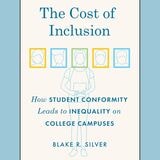
The Cost of Inclusion
How Student Conformity Leads to Inequality on College CampusesBlake R. Silver
University of Chicago Press, 2020
Blake R. Silver spent a year immersed in student life at a large public university. He trained with the Cardio Club, hung out with the Learning Community, and hosted service events with the Volunteer Collective. Through these day-to-day interactions, he witnessed how students sought belonging and built their social worlds on campus. Over time, Silver realized that these students only achieved inclusion at significant cost. To fit in among new peers, they clung to or were pushed into raced and gendered cultural assumptions about behavior, becoming “the cool guy,” “the nice girl,” “the funny one,” “the leader,” “the intellectual,” or “the mom of the group.” Instead of developing dynamic identities, they crafted and adhered to a cookie-cutter self, one that was rigid and two-dimensional. Silver found that these students were ill-prepared for the challenges of a diverse college campus, and that they had little guidance from their university on how to navigate the trials of social engagement or the pressures to conform. While colleges are focused on increasing the diversity of their enrolled student body, Silver’s findings show that they need to take a hard look at how they are failing to support inclusion once students arrive on campus.
The Cost of Inclusion
How Student Conformity Leads to Inequality on College CampusesBlake R. Silver
University of Chicago Press, 2020
Young people are told that college is a place where they will “find themselves” by engaging with diversity and making friendships that will last a lifetime. This vision of an inclusive, diverse social experience is a fundamental part of the image colleges sell potential students. But what really happens when students arrive on campus and enter this new social world? The Cost of Inclusion delves into this rich moment to explore the ways students seek out a sense of belonging and the sacrifices they make to fit in.
Blake R. Silver spent a year immersed in student life at a large public university. He trained with the Cardio Club, hung out with the Learning Community, and hosted service events with the Volunteer Collective. Through these day-to-day interactions, he witnessed how students sought belonging and built their social worlds on campus. Over time, Silver realized that these students only achieved inclusion at significant cost. To fit in among new peers, they clung to or were pushed into raced and gendered cultural assumptions about behavior, becoming “the cool guy,” “the nice girl,” “the funny one,” “the leader,” “the intellectual,” or “the mom of the group.” Instead of developing dynamic identities, they crafted and adhered to a cookie-cutter self, one that was rigid and two-dimensional. Silver found that these students were ill-prepared for the challenges of a diverse college campus, and that they had little guidance from their university on how to navigate the trials of social engagement or the pressures to conform. While colleges are focused on increasing the diversity of their enrolled student body, Silver’s findings show that they need to take a hard look at how they are failing to support inclusion once students arrive on campus.
The Courts and Education
Clifford P. Hooker
University of Chicago Press, 1978

The Crisis of Meaning
In Culture and EducationDavid Trend
University of Minnesota Press, 1995
The Crisis of Meaning was first published in 1995. Minnesota Archive Editions uses digital technology to make long-unavailable books once again accessible, and are published unaltered from the original University of Minnesota Press editions.
Pick up any newspaper and it is clear that the United States is facing a democratic crisis. Recent culture wars and debates about political correctness and culture have illustrated how conventional definitions of citizenship and national identity have been thrown into question.
Investigating what he views as an inseparable link between culture and politics, David Trend analyzes how notions of patriotism, citizenship, community, and family are communicated within specific public and private institutions. He extends the meaning and purpose of pedagogy as a cultural practice outside the classroom, focusing on political activism in education, the mass media, and the art world.
The Crisis of Meaning supplies a crucial theoretical understanding of the ways in which the pedagogical and political intersect at a variety of cultural sites, as it points us toward a "democratic" process of national identity formation. It is indispensable reading for anyone interested in the connections between education and politics.
David Trend is executive director of the Center for Social Research and Education in San Francisco and also executive editor of the Socialist Review. He is the author of Cultural Pedagogy: Art/Education/Politics (1992).
The Crisis of School Violence
A New PerspectiveMarianna King
Michigan State University Press, 2020
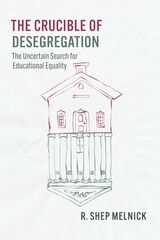
The Crucible of Desegregation
The Uncertain Search for Educational EqualityR. Shep Melnick
University of Chicago Press, 2023
In 1954, the Supreme Court delivered the landmark decision of Brown v. Board of Education—establishing the right to attend a desegregated school as a national constitutional right—but the decision contained fundamental ambiguities. The Supreme Court has never offered a clear definition of what desegregation means or laid out a framework for evaluating competing interpretations. In The Crucible of Desegregation, R. Shep Melnick examines the evolution of federal school desegregation policy from 1954 through the termination of desegregation orders in the first decades of the twenty-first century, combining legal analysis with a focus on institutional relations, particularly the interactions between federal judges and administrators. Melnick argues that years of ambiguous, inconsistent, and meandering Court decisions left lower court judges adrift, forced to apply contradictory Supreme Court precedents in a wide variety of highly charged political and educational contexts. As a result, desegregation policy has been a patchwork, with lower court judges playing a crucial role and with little opportunity to analyze what worked and what didn’t. The Crucible of Desegregation reveals persistent patterns and disagreements that continue to roil education policy.
The Crucible of Desegregation
The Uncertain Search for Educational EqualityR. Shep Melnick
University of Chicago Press, 2023
Examines the patchwork evolution of school desegregation policy.
In 1954, the Supreme Court delivered the landmark decision of Brown v. Board of Education—establishing the right to attend a desegregated school as a national constitutional right—but the decision contained fundamental ambiguities. The Supreme Court has never offered a clear definition of what desegregation means or laid out a framework for evaluating competing interpretations. In The Crucible of Desegregation, R. Shep Melnick examines the evolution of federal school desegregation policy from 1954 through the termination of desegregation orders in the first decades of the twenty-first century, combining legal analysis with a focus on institutional relations, particularly the interactions between federal judges and administrators. Melnick argues that years of ambiguous, inconsistent, and meandering Court decisions left lower court judges adrift, forced to apply contradictory Supreme Court precedents in a wide variety of highly charged political and educational contexts. As a result, desegregation policy has been a patchwork, with lower court judges playing a crucial role and with little opportunity to analyze what worked and what didn’t. The Crucible of Desegregation reveals persistent patterns and disagreements that continue to roil education policy.
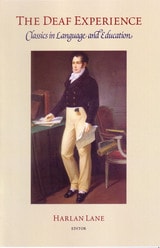
The Deaf Experience
Classics in Language and EducationHarlan Lane
Gallaudet University Press, 2006
The fifth volume in the Gallaudet Classics in Deaf Studies series features works written from 1764 up to1840. Pierre Desloges offers a stirring paean to sign language in an excerpt from his book, the first ever published by a deaf person. Saboureux de Fontenay and Jean Massieu, two prominent leaders, relate their respective experiences in autobiographical accounts. In separate essays, Charles-Michel de l’Epée and Roch-Ambroise Sicard describe systems for teaching manual French, followed by a critique of these methods by Roch-Ambroise Bébian, a well-known hearing friend of Deaf people during that era. Ferdinand Berthier, a renowned Deaf teacher and writer in the 19th century, concludes with a history of Deaf people up to that time.
The Deaf Experience shows clearly how this extraordinary era of French deaf education influenced the adoption of the manual method by the first schools for deaf students in America, in sharp contrast to the oral movement that repressed sign-language-centered education for nearly a century afterward. Deaf studies scholars and students alike will welcome the return of this invaluable resource.
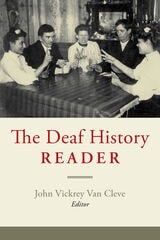
The Deaf History Reader
John Vickrey Van Cleve
Gallaudet University Press, 2007
The Deaf History Reader presents nine masterful chapters that bring together a remarkably vivid depiction of the varied Deaf experience in America. This collection features the finest scholarship from a noteworthy group of historians, including Reginald Boyd, Barry A. Crouch, Mary French, Brian H. Greenwald, Harlan Lane, Harry G. Lang, Kent R. Olney, Richard Pillard, Jill Hendricks Porco, Michael Reis, and volume editor John Vickrey Van Cleve.
The incisive articles collected here include an exploration of the genesis of the Deaf community and early evidence of the use of sign language; a comparison of a failed, oralist school for deaf students in Virginia to the success of the American School for the Deaf in Hartford, Connecticut; the development of Deaf consciousness among people who carried a dominant gene for deafness; a biographical sketch of Mary Ann Walworth Booth, an accomplished deaf woman who lived on the Western frontier; an account of Deaf agency in the Indiana Institution and the Evansville Day School; the early antecedents of mainstreaming deaf children despite the objections of their parents; a profile of Alexander Graham Bell that contrasts his support of eugenics to his defense of Deaf rights; the conflicting actions of supervisors of the Pennsylvania Society for the Advancement of the Deaf; and finally, the critical role played by deaf people in the Chicago Mission for the Deaf’s success in maintaining the Deaf community for more than five decades. The remarkably rich range of topics treated in The Deaf History Reader assure its future status as a standard resource for all Deaf scholars and students.
The Dean's List
Leading a Modern Business SchoolMatthew A. Waller
University of Arkansas Press, 2021
The role of a dean has changed dramatically in the last few decades. In addition to managing up, down, and sideways while dealing with students, staff, and faculty, there’s a growing demand for deans to work with parents, alumni, and donors as well as business and community leaders. The Dean’s List highlights examples from Waller’s career to illustrate practical advice for dealing with the specific challenges deans regularly face. The result is a handbook for shortening the learning curve for anyone who is, or aspires to be, the dean of a business college.
The Development of Higher Education and Social Change
Teshome Wagaw
Michigan State University Press, 1990
Begun while the author taught at the Ethiopian National University, this study examines the development of the institutions of higher education and the roles they played in transforming traditional Ethiopian society.
Wagaw sets out to prove that, although other modernizing institutions of learning may contribute significantly to social and economic change, institutions of higher education and their students already have effected profound revolution and proven indispensable to the established order.
His study argues that Ethiopian institutions of higher education were germane to the emerging society. They led Ethiopia down an often unpeaceful path from its oppressively traditional past toward progress and enlightenment.
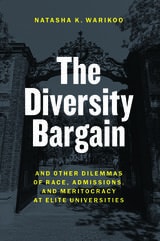
The Diversity Bargain
And Other Dilemmas of Race, Admissions, and Meritocracy at Elite UniversitiesNatasha Warikoo
University of Chicago Press, 2016
What Warikoo uncovers—talking with both white students and students of color at Harvard, Brown, and Oxford—is absolutely illuminating; and some of it is positively shocking. As she shows, many elite white students understand the value of diversity abstractly, but they ignore the real problems that racial inequality causes and that diversity programs are meant to solve. They stand in fear of being labeled a racist, but they are quick to call foul should a diversity program appear at all to hamper their own chances for advancement. The most troubling result of this ambivalence is what she calls the “diversity bargain,” in which white students reluctantly agree with affirmative action as long as it benefits them by providing a diverse learning environment—racial diversity, in this way, is a commodity, a selling point on a brochure. And as Warikoo shows, universities play a big part in creating these situations. The way they talk about race on campus and the kinds of diversity programs they offer have a huge impact on student attitudes, shaping them either toward ambivalence or, in better cases, toward more productive and considerate understandings of racial difference.
Ultimately, this book demonstrates just how slippery the notions of race, merit, and privilege can be. In doing so, it asks important questions not just about college admissions but what the elite students who have succeeded at it—who will be the world’s future leaders—will do with the social inequalities of the wider world.
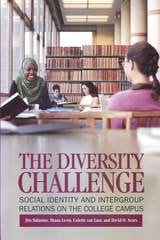
The Diversity Challenge
Social Identity and Intergroup Relations on the College CampusJames Sidanius
Russell Sage Foundation, 2008
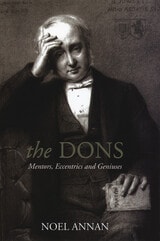
The Dons
Mentors, Eccentrics and GeniusesNoel Annan
University of Chicago Press, 1999
In this entertaining, informative book, Noel Annan is at his incisive best. Displaying his customary mastery of his subject, he describes the great dons in all their glory and eccentricities: who they were, what they were like, why they mattered, and what their legacy is. Written with love and wisdom, the great minds of the past—figures such as John Henry Newman, John Sparrrow, and Isaiah Berlin—are brought alive. In addition, Annan's often quoted article "The Intellectual Aristocracy" is included in this book.
No other work has ever explained so precisely and so intimately the significance of the dons and their important role in shaping higher education—at a time when the nature of learning is ever more the subject of dissension and uncertainty.
"With a charming mixture of analyses and anecdotes, Annan builds up a picture of the changing Oxbridge scene that keeps a reader's imagination. . . . [T]he comical-satirical narrative of which he was a master is a joy to read, and The Dons will deservedly be enjoyed as a bedside book by those who treasure English eccentricity."—Stephen Toulmin, Los Angeles Times Book Review
"[A]n affectionate elegy for a class that has largely expired."—Robert Fulford, National & Financial Post
"[A] wonderfully gifted and energetic writer. . . . Noel was one of the few figures in English public life known simply by his first name. There was no mistaking him for anyone else."—Jonathan Mirsky, New Yorker
"A sparkling collection of essays."—Michael Davie, Times Literary Supplement
"[A] highly affectionate . . . look at some of the more remarkable academic personages to distinguish-and sometimes dumbfound-Oxford and Cambridge over the last two centuries. . . . For all that it cherishes eccentricity and abounds in Oxbridge gossip, The Dons is at heart a deeply serious book, one dedicated to a conception of learning and culture that is at once increasingly rare . . . yet very far from being outmoded."—Mark Feeney, Boston Globe
"Annan writes elegantly and winningly throughout his book. . . . Leaving arguably the best for last, Annan ends The Dons with a reprinting of his celebrated essay 'The Intellectual Aristocracy,' . . . [B]oth a dazzling tour de force and a clever jeu d'esprit."—Michael Dirda, Washington Post Book World
"A witty, erudite, insider account-exactly what one would expect from the best of their type."—Andrew Lycett, Sunday Times
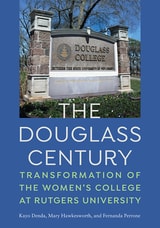
The Douglass Century
Transformation of the Women’s College at Rutgers UniversityDenda, Kayo
Rutgers University Press, 2018
The Douglass Century celebrates the college’s longevity and diversity as distinctive accomplishments, and analyzes the contributions of Douglass administrators, alumnae, and students to its survival, while also investigating multiple challenges that threatened its existence. This book demonstrates how changing historical circumstances altered the possibilities for women and the content of higher education, comparing the Jazz Age, American the Great Depression, the Second World War, the post-war Civil Rights era, and the resurgence of feminism in the 1970s and 1980s. Concluding in the present day, the authors highlight the college’s ongoing commitment to Mabel Smith Douglass’ founding vision, “to bring about an intellectual quickening, a cultural broadening in connection with specific training so that women may go out into the world fitted…for leadership…in the economic, political, and intellectual life of this nation.” In addition to providing a comprehensive history of the college, the book brings its subjects to life with eighty full-color images from the Special Collections and University Archives, Rutgers University Libraries.
The ESL Writer's Handbook, 2nd Ed.
Janine Carlock, Maeve Eberhardt, Jaime Horst, Lionel Menasche
University of Michigan Press, 2018
The spiral-bound Handbook complements a student writer’s dictionary, thesaurus, and grammar reference book. It would be suitable as a text for an advanced ESL writing course when used together with the companion Workbook (978-0-472-03726-1).
The new edition features significant revisions to Sections 3 and 4; in particular, both APA and MLA style guides have been updated and new sample papers for each are included. The new edition includes new and revised exercises and many new samples of student writing.
Like its predecessor, the 2nd Edition has these special features:
- The topic selection is based on ESL writers’ needs as observed by the authors over many years.
- The coverage of topics is more complete than the limited amount usually provided for ESL writers in first language or L1 handbooks.
- The explanatory language is appropriate for ESL students, in contrast to the more complex and idiomatic language of other English handbooks.
- Many of the examples of paragraphs, essays, research papers, and exercise sentences were written by ESL students to help users realize that they too can become effective writers.
The ESL Writer's Handbook, 3rd Edition
Janine Carlock, Maeve Eberhardt, Jaime Horst
University of Michigan Press, 2025
In addition to updated style guides, sample student papers, writing examples, and exercises, the 3rd edition highlights “tech tips” on different technologies that may be useful to students, explains inclusive language, and expands the section on taking notes as a research tool.
With this handbook, students will learn:
- The concept of genre and apply it to unpacking assignments and writing effectively.
- The process for generating ideas, structuring those ideas into a paper, and checking over a paper before turning it in.
- Five common patterns for organizing an academic essay: narrative, process, comparison/contrast, cause and effect, and argument.
- Different steps for creating a good research paper, including major citation styles.
- Guidance for addressing the grammar, punctuation, and style issues most often encountered by international students writing in English.
- How to differentiate between other types of writing U.S. undergraduate students are expected to complete, such as emails, resumes, cover letters, and personal statements.

The Early Works of John Dewey, Volume 1, 1882 - 1898
Early Essays and Leibniz's New Essays, 1882-1888John Dewey. Edited by Jo Ann Boydston
Southern Illinois University Press, 2008
Volume 1 of “The Early Works of John Dewey, 1882–1898” is entitled “Early Essays and Leibniz’s New Essays Concerning the Human Understanding, 1882–1888.” Included here are all Dewey’s earliest writings, from his first published article through his book on Leibniz.
The materials in this volume provide a chronological record of Dewey’s early development—beginning with the article he sent to the Journal of Speculative Philosophy in 1881 while he was a high-school teacher in Oil City, Pennsylvania, and closing with his widely-acclaimed work on Leibniz in the Grigg’s Series of German Philosophical Classics, written when he was an Assistant Professor at the University of Michigan. During these years between 1882 and 1888, Dewey’s life course was established: he decided to follow a career in philosophy, completed doctoral studies at Johns Hopkins University, became an Instructor at the University of Michigan, was promoted to Assistant Professor, and accepted a position as Chairman of the Department of Philosophy at the University of Minnesota. With the publication of Psychology, he became well known among scholars in this country; a series of articles in the British journal Mind brought him prominence in British philosophical circles. His articles were abstracted in the Revue philosophique.
None of the articles collected in this volume was reprinted during the author’s lifetime. For the first time, it is now possible for Dewey scholars to study consecutively in one publication all the essays which originally appeared in many periodicals.
The Early Works of John Dewey, Volume 3, 1882 - 1898
Essays and Outlines of a Critical Theory of Ethics, 1889-1892John Dewey. Edited by Jo Ann Boydston
Southern Illinois University Press, 2008
This third volume in the definitive edition of Dewey’s early work opens with his tribute to George Sylvester Morris, the former teacher who had brought Dewey to the University of Michigan. Morris’s death in 1889 left vacant the Department of Philosophy chairmanship and led to Dewey’s returning to fill that post after a year’s stay at Minnesota.
Appearing here, among all his writings from 1889 through 1892, are Dewey’s earliest comprehensive statements on logic and his first book on ethics. Dewey’s marked copy of the galley-proof for his important article “The Present Position of Logical Theory,” recently discovered among the papers of the Open Court Publishing Company, is used as the basis for the text, making available for the first time his final changes and corrections.
The textual studies that make The Early Works unique among American philosophical editions are reported in detail. One of these, “A Note on Applied Psychology,” documents the fact that Dewey did not co-author this book frequently attributed to him. Six brief unsigned articles written in 1891 for a University of Michigan student publication, the Inlander, have been identified as Dewey’s and are also included in this volume. In both style and content, these articles reflect Dewey’s conviction that philosophy should be used as a means of illuminating the contemporary scene; thus they add a new dimension to present knowledge of his early writing.
The Early Works of John Dewey, Volume 4, 1882 - 1898
Early Essays and The Study of Ethics, A Syllabus, 1893-1894John Dewey. Edited by Jo Ann Boydston
Southern Illinois University Press, 2008
Volume 4 of’ “The Early Works” series covers the period of Dewey’s last year and one-half at the University of Michigan and his first half-year at the University of Chicago. In addition to sixteen articles the present volume contains Dewey’s reviews of six books and three articles, verbatim reports of three oral statements made by Dewey, and a full-length book, The Study of Ethics.
Like its predecessors in this series, this volume presents a “clear text,” free of interpretive or reference material. Apparatus, including references, corrections, and emendations, is confined to appendix material. Fredson Bowers, the Consulting Textual Editor, has provided an essay on the textual principles and procedures, and Wayne A. R. Leys, Professor of Philosophy at Southern Illinois University, has written an Introduction discussing the relationship between Dewey’s writings of this period and his later work. That Dewey’s scholarship and writing was at an especially high level during 1893 and 1894 may be considered an index to the significance of this two-year period.
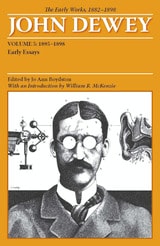
The Early Works of John Dewey, Volume 5, 1882 - 1898
Early Essays, 1895-1898John Dewey. Edited by Jo Ann Boydston
Southern Illinois University Press, 2008
This fifth and concluding volume of “The Early Works of John Dewey” is the only one of the series made up entirely of essays. The appearance during the four-year period, 1895–98, of thirty-eight items amply indicates that Dewey continued to maintain a high level of published output. These were the years of Dewey’s most extensive work and involvement at the University of Chicago.
Like its predecessors in this series, this volume presents a “clear text,” free of interpretive or reference material. Apparatus, including references, corrections, and emendations, is confined to appendix material. Fredson Bowers, the Consulting Textual Editor, has provided an essay on the textual principles and procedures, and William P. McKenzie, Professor of Philosophy and Education at Southern Illinois University, has written an introduction identifying the thread connecting the apparently diffuse material in the many articles of this volume—Dewey’s attempt to unite philosophy with psychology and sociology and with education.
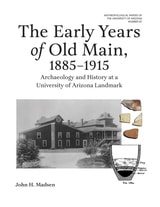
The Early Years of Old Main, 1885–1915
Archaeology and History at a University of Arizona LandmarkJohn H. Madsen
University of Arizona Press, 2026
The Early Years of Old Main, 1885–1915 details the archaeological discoveries revealed during the 2012–14 renovation of Old Main, which, due to its age and historic records, is on the National Register of Historic Places.
Thanks to detailed excavation work by a team of archaeologists, this work documents eight historic features of the building, ranging from equipment pads to drainage systems. Drawing on archaeological monitoring, artifact analysis, archival records, architectural drawings, and historic photographs, the narrative reconstructs how Old Main functioned during the university’s first decades and how its physical spaces supported early scientific instruction in mining, metallurgy, and agriculture.
More than a technical report, this volume offers a tangible glimpse into the material foundations of higher education in territorial and early statehood Arizona. Madsen’s careful documentation preserves knowledge of features that could not be saved during renovation and places them in the broader context of Old Main’s architectural evolution and its central role on campus. The result is an important resource for historians, archaeologists, preservationists, and anyone who values the University of Arizona’s heritage—demonstrating that even the most familiar buildings can still hold untold stories beneath their floors and landscapes.
The Economics of School Choice
Edited by Caroline M. Hoxby
University of Chicago Press, 2003
Combining the results of empirical research with analyses of the basic economic forces underlying local education markets, The Economics of School Choice presents evidence concerning the impact of school choice on student achievement, school productivity, teachers, and special education. It also tackles difficult questions such as whether school choice affects where people decide to live and how choice can be integrated into a system of school financing that gives children from different backgrounds equal access to resources. Contributors discuss the latest findings on Florida's school choice program as well as voucher programs and charter schools in several other states.
The resulting volume not only reveals the promise of school choice, but examines its pitfalls as well, showing how programs can be designed that exploit the idea's potential but avoid its worst effects. With school choice programs gradually becoming both more possible and more popular, this book stands out as an essential exploration of the effects such programs will have, and a necessary resource for anyone interested in the idea of school choice.