Results by title
1832 books match the query 'Essays' and 450 start with t
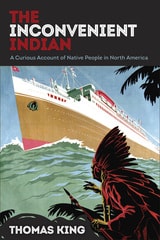
The Inconvenient Indian
A Curious Account of Native People in North AmericaThomas King
University of Minnesota Press, 2013
In The Inconvenient Indian, Thomas King offers a deeply knowing, darkly funny, unabashedly opinionated, and utterly unconventional account of Indian–White relations in North America since initial contact. Ranging freely across the centuries and the Canada–U.S. border, King debunks fabricated stories of Indian savagery and White heroism, takes an oblique look at Indians (and cowboys) in film and popular culture, wrestles with the history of Native American resistance and his own experiences as a Native rights activist, and articulates a profound, revolutionary understanding of the cumulative effects of ever-shifting laws and treaties on Native peoples and lands.
Suffused with wit, anger, perception, and wisdom, The Inconvenient Indian is at once an engaging chronicle and a devastating subversion of history, insightfully distilling what it means to be “Indian” in North America. It is a critical and personal meditation that sees Native American history not as a straight line but rather as a circle in which the same absurd, tragic dynamics are played out over and over again. At the heart of the dysfunctional relationship between Indians and Whites, King writes, is land: “The issue has always been land.” With that insight, the history inflicted on the indigenous peoples of North America—broken treaties, forced removals, genocidal violence, and racist stereotypes—sharpens into focus. Both timeless and timely, The Inconvenient Indian ultimately rejects the pessimism and cynicism with which Natives and Whites regard one another to chart a new and just way forward for Indians and non-Indians alike.

The Indies Diaspora in the Netherlands
Essays on Race, Whiteness, and Identity in Dutch LiteratureAlfred Birney; Translated by Annemarie Toebosch and Marjolein van Pagee
Michigan Publishing Services, 2021
The Influence of Darwin on Philosophy and Other Essays in Contemporary Thought
John Dewey. Edited by Larry A. Hickman. Introduction by Douglas Browning
Southern Illinois University Press, 2007
Presenting Dewey’s new view of philosophical inquiry
This critical edition of The Influence of Darwin on Philosophy and Other Essays in Contemporary Thought presents the results of John Dewey’s patient construction, throughout the previous sixteen years, of the radically new view of the methods and concerns of philosophical inquiry. It was a view that he continued to defend for the rest of his life.
In the 1910 The Influence of Darwin on Philosophy and Other Essays in Contemporary Thought—the first collection of Dewey’s previously published, edited essays—John Dewey provided readers with an overview of the scope and direction of his philosophical vision in one volume. The order in which the eleven essays were presented was a reverse chronology, with more recently published essays appearing first. The collection of eleven essays offered a detailed portrait of Dewey’s proposed reconstruction of the traditional concepts of knowledge and truth. It furthermore elaborated on how his new logic and his proposal regarding knowledge and truth fit comfortably together, not only with each other but also with a pragmatically proper understanding of belief, reality, and experience.
Because material in the Collected Works of John Dewey, 1882–1953 was published chronologically, however, the essays published together in the 1910 Darwin book have appeared in seven different volumes in the Collected Works. This new, critical edition restores a classic collection of essays authored and edited by John Dewey as they originally appeared in the volume. The edition is presented with ancillary materials, including responses by Dewey’s critics and an introduction by Douglas Browning.
The Inner Conflict of Tradition
Essays in Indian Ritual, Kingship, and SocietyJ. C. Heesterman
University of Chicago Press, 1985

The Integrated Life
Essays, Sketches and PoemsThomas P. Beyer
University of Minnesota Press, 1948
The Integrated Life was first published in 1948. Minnesota Archive Editions uses digital technology to make long-unavailable books once again accessible, and are published unaltered from the original University of Minnesota Press editions.
This volume of essays and poems is representative of the work and life of their author, a professor of English at Hamline University and for any years chairman of the department.
Of the essays, some are personal, others works of literary appreciation, and still others discuss the profession of teaching, in particular the teaching of English; all reveal the man who wrote them.
At Hamlin Dr. Beyer and reading have been almost synonymous. He proposed the general reading course in 1921 and directed it for twelve years. Students alert to this form of inspiration found existing delight not only in the outside reading but in the discussions with faculty members which followed. Colleagues and off-campus friends also came under provocative influence of Dr. Beyer, and his guidance has been frequently and freely acknowledged.
When Dr. Beyer was honored in 1947 for his long fruitful association with Hamline University, a publication fund was established. It was unanimously agreed that a collection of Dr. Beyer's own essays, poems, and sketches should be the first venture. The Integrated Life is that volume. No attempt has been made to bring the material up to date. The collection appears as it was written—full of the flavor and wisdom of a truly honorable teacher and friend.

The Intellect Handbook of Popular Music Methodologies
Edited by Mike Dines, Shara Rambarran, and Gareth Dylan Smith
Intellect Books, 2025
The Intellect Handbook of Popular Music Methodologies attempts a comprehensive overview of methodological approaches within the field of popular music studies. Alongside contributions from key thinkers already established in popular music studies, the strength of the collection lies in its inclusion of many new and emerging writers in the field. Therefore, the collection incorporates a wide range of practitioners, pedagogues, and academics from across the disciplines, and thus draws from a diversity of methodological approaches. As a result, this will be the first comprehensive handbook of popular music methodologies.
The Invisible Dragon
Essays on Beauty, Revised and ExpandedDave Hickey
University of Chicago Press, 2009
The Invisible Dragon made a lot of noise for a little book When it was originally published in 1993 it was championed by artists for its forceful call for a reconsideration of beauty—and savaged by more theoretically oriented critics who dismissed the very concept of beauty as naive, igniting a debate that has shown no sign of flagging.
With this revised and expanded edition, Hickey is back to fan the flames. More manifesto than polite discussion, more call to action than criticism, The Invisible Dragon aims squarely at the hyper-institutionalism that, in Hickey’s view, denies the real pleasures that draw us to art in the first place. Deploying the artworks of Warhol, Raphael, Caravaggio, and Mapplethorpe and the writings of Ruskin, Shakespeare, Deleuze, and Foucault, Hickey takes on museum culture, arid academicism, sclerotic politics, and more—all in the service of making readers rethink the nature of art. A new introduction provides a context for earlier essays—what Hickey calls his "intellectual temper tantrums." A new essay, "American Beauty," concludes the volume with a historical argument that is a rousing paean to the inherently democratic nature of attention to beauty.
Written with a verve that is all too rare in serious criticism, this expanded and refurbished edition of The Invisible Dragon will be sure to captivate a new generation of readers, provoking the passionate reactions that are the hallmark of great criticism.
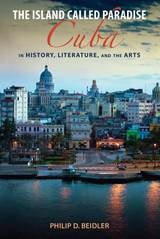
The Island Called Paradise
Cuba in History, Literature, and the ArtsPhilip D. Beidler
University of Alabama Press, 2014
In The Island Called Paradise, Philip D. Beidler shares his personal discovery of the vast, rich, and astonishing history of the island of Cuba and the interrelatedness of Cuba and the US.
Cuba first entered Beidler’s consciousness in the early 1960s when he watched with mesmerized anxiety the televised reports of the Cuban missile crisis, a conflict that reduced a multifaceted, centuries-old history between North America and Cuba to the stark duotones of Cold War politics. Fifty years later, when Beidler traveled to the US’s island neighbor, he found a Cuba unlike the nation portrayed in truculent political rhetoric or in the easy preconceptions of US popular culture. Instead he found an entrancing people and landscape with deep historical connections to the US and a dazzling culture that overwhelmed his creative spirit.
In twelve original essays, Beidler reintroduces to English-speaking readers many of the central figures, both real and literary, of Cuban and Cuban-American history. Meet Cecilia Valdés, the young mixed-race heroine of a 1839 novel that takes readers to the poor streets and sumptuous salons of Spanish colonial Cuba, and Narciso López, a real-life Venezuelan adventurer and filibustero who attempted to foment a Cuban uprising against Spain. Both would have been familiar figures to nineteenth-century Americans. Beidler also visits the twentieth-century lives of “the two Ernestos” (Ernest Hemingway and Che Guevara), and the pop-culture Cuban icon Ricky Ricardo.
A country not with one history but multiple layers of history, Cuba becomes a fertile island for Beidler’s exploration. Art, he argues, perpetually crosses walls erected by politics, history, and nationality. At its core, The Island Called Paradise renews and refreshes our knowledge of an older Atlantic world even as we begin to envision a future in which the old bonds between our nations may be restored.
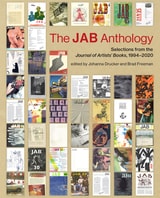
The JAB Anthology
Selections from the Journal of Artists' Books, 1994-2020Johanna Drucker
University of Iowa Press, 2023
The JAB Anthology contains contributions by many renowned figures in the field including: Anne Moeglin-Delcroix, Janet Zweig, Monica Carroll, Adam Dickerson, Alisa Scudamore, Mary Jo Pauly, April Sheridan, Doro Boehme, Gerrit Jan de Rook, Océane Delleaux, Brandon Graham, Jérôme Dupeyrat, Ward Tietz, Paulo Silveira, Philip Cabau, Leszek Brogowski, Lyn Ashby, Tim Mosely, Debra Parr, Pedro Moura, Levi Sherman, Catarina Figueiredo Cardoso, Isabel Baraona, and the editors.
The Jungles of Arkansas
A Personal History of the Wonder StateRobert Lancaster
University of Arkansas Press, 1989
The Kinds of Poetry I Want
Essays & ComediesCharles Bernstein
University of Chicago Press, 2024
For more than four decades, Charles Bernstein has been at the forefront of experimental poetry, ever reaching for a radical poetics that defies schools, periods, and cultural institutions. The Kinds of Poetry I Want is a celebration of invention and includes not only poetry but also essays on aesthetics and literary studies, interviews with other poets, autobiographical sketches, and more.
At once a dialogic novel, long poem, and grand opera, The Kinds of Poetry I Want arrives amid renewed attacks on humanistic expression. In his polemical, humorous style, Bernstein faces these challenges head-on and affirms the enduring vitality and attraction of poetry, poetics, and literary criticism.
The LDS Gospel Topics Series
A Scholarly EngagementMatthew L. Harris and Newell G. Bringhurst
Signature Books, 2020
The Land Still Lives
Jerry Apps
Wisconsin Historical Society Press, 2019
Originally published in 1970, The Land Still Lives is the first book by Wisconsin’s greatest rural philosopher, Jerry Apps. Written when he was still a young agriculture professor at the University of Wisconsin, The Land Still Lives was readers’ first introduction to Jerry’s farm in central Wisconsin, called Roshara, and the surrounding community of Skunk’s Hollow. This special 50th-anniversary edition features a new epilogue, in which Jerry revisits his philosophy of caring for the land so it in turn will care for us. This is vintage Apps, essential reading for Jerry’s legions of fans—and for all who, like Jerry, wish “to develop a relationship with nature and all its mystery and wonder.”
The Land beyond the Mists
Essays on Identity and Authority in Precolonial Congo and RwandaDavid Newbury
Ohio University Press, 2009
The horrific tragedies of Central Africa in the 1990s riveted the attention of the world. But these crises did not occur in a historical vacuum. By peering through the mists of the past, the case studies presented in The Land Beyond the Mists illustrate the significant advances to have taken place since decolonization in our understanding of the pre-colonial histories of Rwanda, Burundi, and eastern Congo.
Based on both oral and written sources, these essays are important both for their methods—viewing history from the perspective of local actors—and for their conclusions, which seriously challenge colonial myths about the area.

The Language of Planning
Essays on the Origins and Ends of American Planning ThoughtAlbert Z. Guttenberg
University of Illinois Press, 1993
The Last Cheater's Waltz
Beauty and Violence in the Desert SouthwestEllen Meloy
University of Arizona Press, 1999
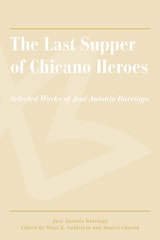
The Last Supper of Chicano Heroes
Selected Works of José Antonio BurciagaJosé Antonio Burciaga; Edited by Mimi R. Goldstein and Daniel Chacón
University of Arizona Press, 2008
Best known for his books Weedee Peepo, Drink Cultura, and Undocumented Love, Burciaga was also a poet, cartoonist, founding member of the comedy troupe Cultura Clash, and a talented muralist whose well-known work The Last Supper of Chicano Heroes became almost more famous than the man. This first and only collection of Burciaga’s work features thirty-eight illustrations and incorporates previously unpublished essays and drawings, including selections from his manuscript “The Temple Gang,” a memoir he was writing at the time of his death. In addition, Gladstein and Chacón address Burciaga’s importance to Chicano letters.
A joy to read, this rich compendium is an important contribution not only to Chicano literature but also to the preservation of the creative, spiritual, and political voice of a talented and passionate man.
The Later Works of John Dewey, Volume 11, 1925 - 1953
Essays, Reviews, Trotsky Inquiry, Miscellany, and Liberalism and Social ActionJohn Dewey. Edited by Jo Ann Boydston
Southern Illinois University Press, 2008
This volume includes ninety-two items from 1935, 1936, and 1937, including Dewey’s 1935 Page-Barbour Lectures at the University of Virginia, published as Liberalism and Social Action.
In essay after essay Dewey analyzed, criticized, and reevaluated liberalism. When his controversial Liberalism and Social Action appeared, asking whether it was still possible to be a liberal, Horace M. Kallen wrote that Dewey “restates in the language and under the conditions of his times what Jefferson’s Declaration of Independence affirmed in the language and under the conditions of his.”
The diverse nature of the writings belies their underlying unity: some are technical philosophy; other philosophical articles shade into social and political themes; social and political issues permeate the educational articles, which in turn involve Dewey’s philosophical ideas.
The Later Works of John Dewey, Volume 13, 1925 - 1953
1938-1939, Experience and Education, Freedom and Culture, Theory of Valuation, and EssaysJohn Dewey. Edited by Jo Ann Boydston
Southern Illinois University Press, 2008
This volume includes all Dewey’s writings for 1938 except for Logic: The Theory of Inquiry (Volume 12 of The Later Works), as well as his 1939 Freedom and Culture, Theory of Valuation, and two items from Intelligence in the Modern World.
Freedom and Culture presents, as Steven M. Cahn points out, “the essence of his philosophical position: a commitment to a free society, critical intelligence, and the education required for their advance.”
The Later Works of John Dewey, Volume 16, 1925 - 1953
1949 - 1952, Essays, Typescripts, and Knowing and the KnownJohn Dewey. Edited by Jo Ann Boydston
Southern Illinois University Press, 2008
Typescripts, essays, and an authoritative edition of Knowing and the Known, Dewey’s collaborative work with Arthur F. Bentley.
In an illuminating Introduction T. Z. Lavine defines the collaboration's three goals—the "construction of a new language for behavioral inquiry," "a critique of formal logicians, in defense of Dewey’s Logic," and "a critique of logical positivism." In Dewey’s words: "Largely due to Bentley, I’ve finally got the nerve inside of me to do what I should have done years ago."
"What Is It to Be a Linguistic Sign or Name?" and "Values, Valuations, and Social Facts,’ both written in 1945, are published here for the first time.
The Later Works of John Dewey, Volume 17, 1925 - 1953
1885 - 1953, Miscellaneous WritingsJohn Dewey. Edited by Jo Ann Boydston
Southern Illinois University Press, 2008
This is the final textual volume in The Collected Works of John Dewey, 1882–1953, published in 3 series comprising 37 volumes: The Early Works, 1882–1898 (5 vols.); The Middle Works, 1899–1924 (15 vols.); The Later Works, 1925–1953 (17 vols.).
Volume 17 contains Dewey’s writings discovered after publication of the appropriate volume of The Collected Works and spans most of Dewey’s publishing life. There are 83 items in this volume, 24 of which have not been previously published.
Among works highlighted in this volume are 10 “Educational Lectures before Brigham Young Academy,” early essays “War’s Social Results” and “The Problem of Secondary Education after the War,” and the previously unpublished “The Russian School System.”
The Later Works of John Dewey, Volume 2, 1925 - 1953
1925-1927, Essays, Reviews, Miscellany, and The Public and Its ProblemsJohn Dewey. Edited by Jo Ann Boydston
Southern Illinois University Press, 2008
With the exception of Experience and Nature, (Volume 1 of the Later Works), this volume contains all of Dewey’s writings for 1925 and 1926, as well as his 1927 book, The Public and Its Problems. A Modern Language Association’s Committee on Scholarly Editions textual edition.
The first essay in this volume, “The Development of American Pragmatism,” is perhaps Dewey’s best-known article of these years, emphasizing the uniquely American origins of his own philosophical innovations. Other essays focus on Dewey’s continuing investigation of the “nature of intelligent conduct,” as, for example, his debate with David Wight Prall on the underpinnings of value, his study of sense-perception, and his support for outlawing of war. Also appearing here are Dewey’s final articles on the culture of the developing world, written for the New Republic after his travels to China, Turkey, and Mexico.
The Later Works of John Dewey, Volume 3, 1925 - 1953
1927-1928, Essays, Reviews, Miscellany, and "Impressions of Soviet Russia"John Dewey. Edited by Jo Ann Boydston
Southern Illinois University Press, 2008
All of Dewey’s writings for 1927 and 1928 with the exception of The Public and Its Problems, which appears in Volume 2, A Modern Language Association’s Committee on Scholarly Editions textual edition.
These essays are, as Sidorsky says in his Introduction, “framed, in great measure, by those two poles of his philosophical interest: looking backward, in a sense, to the defense of naturalistic metaphysics and moving forward to the justification and to the implications for practice of an empirical theory.”
Dewey’s five essays on education are evidence of his continued interest in that field. Among them is the frequently quoted “Why I Am a Member of the Teachers Union,” which is still used by the American Federation of Teachers in its recruiting efforts. Other highlights of this volume include the famous exchange between George Santayana and Dewey on Experience and Nature; an impassioned condemnation of the miscarriage of justice Dewey saw in the Sacco-Vanzetti trial; and a series of six articles on the Soviet Union based on Dewey’s trip to that country in 1928.
The Later Works of John Dewey, Volume 5, 1925 - 1953
1929-1930, Essays, The Sources of a Science of Education, Individualism, Old and New, and Construction and CriticismJohn Dewey. Edited by Jo Ann Boydston
Southern Illinois University Press, 2008
With the exception of The Quest for Certainty (Volume 4) this fifth volume brings together Dewey’s writings for the 1929–1930 period.
During this time Dewey published 4 books and 50 articles on philosophical, educational, political, and social issues. His philosophical essays include “What Humanism Means to Me” and “What I Believe,” both of which express Dewey’s faith in man’s potentialities and intelligence, and a lively Journal of Philosophy exchange with Ernest Nagel, William Ernest Hocking, C. I. Lewis, and F. J. E. Woodbridge. Educational writings include The Sources of a Science of Education. The contents of this volume reflect Dewey’s increasing involvement in social and political problems.
The Later Works of John Dewey, Volume 6, 1925 - 1953
1931-1932, Essays, Reviews, and MiscellanyJohn Dewey. Edited by Jo Ann Boydston
Southern Illinois University Press, 2008
Except for Dewey’s and James H. Tufts’ 1932 Ethics (Volume 7 of The Later Works), this volume brings together Dewey’s writings for 1931–1932.
The Great Depression presented John Dewey and the American people with a series of economic, political, and social crises in 1931 and 1932 that are reflected in most of the 86 items in this volume, even in philosophical essays such as “Human Nature.” As Sidney Ratner points out in his Introduction, Dewey’s interest in international peace is featured in the writings in this volume.
The Later Works of John Dewey, Volume 8, 1925 - 1953
1933, Essays and How We Think, Revised EditionJohn Dewey. Edited by Jo Ann Boydston
Southern Illinois University Press, 2008
The Laws of Slavery in Texas
Historical Documents and EssaysEdited by Randolph B. Campbell
University of Texas Press, 2010
The laws that governed the institution of slavery in early Texas were enacted over a fifty-year period in which Texas moved through incarnations as a Spanish colony, a Mexican state, an independent republic, a part of the United States, and a Confederate state. This unusual legal heritage sets Texas apart from the other slave-holding states and provides a unique opportunity to examine how slave laws were enacted and upheld as political and legal structures changed. The Laws of Slavery in Texas makes that examination possible by combining seminal historical essays with excerpts from key legal documents from the slave period and tying them together with interpretive commentary by the foremost scholar on the subject, Randolph B. Campbell.
Campbell's commentary focuses on an aspect of slave law that was particularly evident in the evolving legal system of early Texas: the dilemma that arose when human beings were treated as property. As Campbell points out, defining slaves as moveable property, or chattel, presented a serious difficulty to those who wrote and interpreted the law because, unlike any other form of property, slaves were sentient beings. They were held responsible for their crimes, and in numerous other ways statute and case law dealing with slavery recognized the humanness of the enslaved. Attempts to protect the property rights of slave owners led to increasingly restrictive laws—including laws concerning free blacks—that were difficult to uphold. The documents in this collection reveal both the roots of the dilemma and its inevitable outcome.
The Lesbian Issue
Essays from SignsEdited by Estelle B. Freedman, Barbara C. Gelpi, Susan L. Johnson, and Kathleen M. Weston
University of Chicago Press, 1985
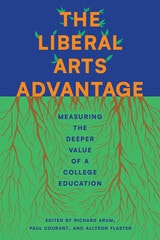
The Liberal Arts Advantage
Measuring the Deeper Value of a College EducationEdited by Richard Arum, Paul Courant, and Allyson Flaster
University of Chicago Press, 2026
Showcases new measurement strategies for assessing the impact of a liberal arts education on students and society.
More than ever before, our society is questioning the meaning and value of higher education, and liberal arts education, in particular, has come under substantial scrutiny. Economic detractors characterize liberal arts education as impractical, claiming that college should prepare students for the workforce. Others object to the curriculum, portraying it as broken or misdirected. According to these critics, the liberal arts education being offered in the United States is marked by its rejection of core intellectual and ideological commitments.
In The Liberal Arts Advantage, a wide range of scholars argue for how and why a liberal arts education uniquely develops skill sets and expertise needed for individuals and society to thrive in the twenty-first century. The contributors address foundational questions about what liberal arts education is, how it has been conceptualized in the past, and what we can learn from its societal and professional impacts. They present compelling, unique research and new methodological tools for assessing the outcomes of liberal arts graduates. Offering grounded and well-founded arguments in favor of our education system, The Liberal Arts Advantage persuasively explains why educational leaders should reinvest in liberal arts education.
The Light That Endures
Stories of Courage, Compassion, and Resilience at Dana-Farber Cancer InstituteTodd Weissman
University of Massachusetts Press, 2026
Showing that everyday people offer the deepest, most relatable lessons in grace
Offering an intimate glimpse into the lives of individuals connected to one of the world’s foremost centers for cancer care and research, The Light That Endures reveals how ordinary people at Boston’s Dana-Farber Cancer Institute demonstrate extraordinary resilience in the face of life’s most challenging moments. Through eight captivating profiles, readers meet a world-renowned pediatric oncologist who rode on horseback at Eisenhower’s inauguration, delivered a secret message in Soviet-controlled Czechoslovakia, and hosted the future King of England; a florist-turned-nurse-turned-teacher whose life changed drastically after a chance encounter on a train; an administrator who has faced adversity his entire life, from a violent father, to confronting his own identity, to being held up at gunpoint; a teenage patient whose battle with cancer was just one of many challenges he has navigated; and a woman who, despite spending her life bringing comfort to others, wonders whether she’s been enough as she reflects after a terminal diagnosis.
These remarkable people, diverse in their backgrounds, share a common bond through cancer and Dana-Farber, that much is obvious. However, it is their quiet acts of grace and service—woven into both their professional paths and personal journeys—that more deeply unite them. Their stories reveal a deeper truth: despite hardship and loss, the arc of life bends toward goodness. Fractured childhoods, family estrangement, mental health strains, winding career paths, and the ever-present shadow of self-doubt are not just obstacles but catalysts. The individuals profiled have found hope and meaning in community and their work, shaping lives of purpose, service, and gratitude. More than a recounting of lives touched by cancer, The Light That Endures is a celebration of the profound impact of compassion and human connection. It captures the essence of Dana-Farber’s ethos, where a shared mission of care fosters an environment of empathy and hope.
The Limits of Ancient Christianity
Essays on Late Antique Thought and Culture in Honor of R. A. MarkusWilliam E. Klingshirn and Mark Vessey, Editors
University of Michigan Press, 1999
William Klingshirn and Mark Vessey have assembled some of the most influential scholars in the study of Late Antiquity to test the limits of Christianity. The sixteen essays in this collection investigate the ways in which the concept of "limits" (temporal, spatial, ideological, social, and cultural) can help us to understand the texture of Christianity during this formative period. Taken together, the essays in this volume constitute as yet the most sustained study of cultural transformations evoked by Robert Markus's phrase "the end of ancient Christianity."
This timely volume will interest students of early Christian history and theology, as well as historians of the Roman empire and early middle ages. Because it examines a formative period of western civilization, it will also speak to anyone who wonders why Christianity takes the form it does today.
Contributors include Gerald Bonner, Peter Brown, Virginia Burrus, John Cavadini, Elizabeth Clark, Paula Fredriksen, Sidney Griffith, David Hunter, Conrad Leyser, Paul Meyvaert, Oliver Nicholson, James O'Donnell, Philip Rousseau, Frederick Russell, Carole Straw, and Robert Wilken.
William E. Klingshirn is Associate Professor of Greek and Latin, The Catholic University of America. Mark Vessey is Associate Professor of English, University of British Columbia.
The Linguistic Turn
Essays in Philosophical MethodEdited by Richard M. Rorty
University of Chicago Press, 1992
"All too rarely an anthology is put together that reflects imagination, command, and comprehensiveness. Rorty's collection is just such a book."—Review of Metaphysics
The Little Death of Self
Nine Essays toward PoetryMarianne Boruch
University of Michigan Press, 2017
The line between poetry (the delicate, surprising not-quite) and the essay (the emphatic so-there!) is thin, easily crossed. Both welcome a deep mulling-over, endlessly mixing image and idea and running with scissors; certainly each distrusts the notion of premise or formulaic progression. Marianne Boruch’s essays in The Little Death of Self emerged by way of odd details or bothersome questions that would not quit—Why does the self grow smaller as the poem grows enormous? Why does closure in a poem so often mean keep going? Must we stalk the poem or does the poem stalk us until the world clicks open?
Boruch’s intrepid curiosity led her to explore fields of expertise about which she knew little: aviation, music, anatomy, history, medicine, photography, fiction, neuroscience, physics, anthropology, painting, and drawing. There’s an addiction to metaphor here, an affection for image, sudden turns of thinking, and the great subjects of poetry: love, death, time, knowledge. There’s amazement at the dumb luck of staying long enough in an inkling to make it a poem at all. Poets such as Keats, Stevens, Frost, Plath, Auden, and Bishop, along with painters, inventors, doctors, scientists, composers, musicians, neighbors, friends, and family—all traffic blatantly or under the surface—and one gets a glimpse of such fellow travelers now and then.
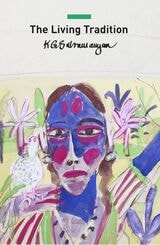
The Living Tradition
Perspectives on Modern Indian ArtK. G. Subramanyan
Seagull Books, 2024
“The fulfillment of a modern Indian artist's wish to be part of a living tradition, i.e. to be individual and innovative, without being an outsider in his own culture, will not come of itself, it calls for concerted effort.”
In Living Tradition, a critical study of modern Indian art as it has evolved through continuous interaction with several traditions—foreign and indigenous—K. G. Subramanyan, one of India's most celebrated artists, offers a theoretical groundwork for that “concerted effort.” In the course of his study, he explores the distinctions between Indian and European traditions, the continuities in India's folk traditions, and the attempts of several thinkers and artists to identify an Indian artistic tradition or to deny it altogether in a quest for personal expression or universality. With over seventy-five illustrations in color complementing Subramanyan's thought-provoking essay, Living Tradition provides readers with a visually engaging exploration of the vibrant tapestry of Indian art.
Subramanyan played a pivotal role in shaping India’s artistic identity after Independence. Mani-da, as he was fondly called, seamlessly blended elements of modernism with folk expression in his works, spanning paintings, murals, sculptures, prints, set designs, and toys. Beyond his visual artistry, his writings have laid a solid foundation for understanding the demands of art on the individual. In the year of his centenary, Seagull is proud to publish his writings in special new editions.
The London Problem
What Britain Gets Wrong About Its Capital CityJack Brown
Haus Publishing, 2021
The United Kingdom has never had an easy relationship with its capital. By far the wealthiest and most populous city in the country, London is the political, financial, and cultural center of the UK, responsible for almost a quarter of the national economic output. But the city’s insatiable growth and perceived political dominance have gravely concerned national leaders for hundreds of years.
This perception of London as a problem has only increased as the city becomes busier, dirtier, and more powerful. The recent resurgence in anti-London sentiment and plans to redirect power away from the capital should not be a surprise in a nation still feeling the effects of austerity. Published on the eve of the delayed mayoral elections and in the wake of the greatest financial downturn in generations, The London Problem asks whether it is fair to see the capital’s relentless growth and its stranglehold of commerce and culture as smothering the United Kingdom’s other cities, or whether as a global megacity it makes an undervalued contribution to Britain’s economic and cultural standing.
The Long 2020
Richard Grusin
University of Minnesota Press, 2022
Sharply intelligent, often personal reflections on the global crises of 2020 that are still ongoing
By all accounts, 2020 was the longest year in recent memory, as people in the United States and across the globe careened from one unfolding catastrophe to another. The consequences of this devastating year are sure to impact the planet for decades, if not centuries, to come. This collection considers the question of that long 2020 from the perspective of the lived experience of the year, its long and deep roots in various human and nonhuman pasts, and the transformation of our sense of the future.
The Long 2020 assembles a strikingly interdisciplinary group of scholars and thinkers to address how the many crises of 2020—epidemiological, political, ecological, and social—have unfolded, examining both their origins as well as their ongoing effects. The contributors address questions of time, history, and scale as they have played out, and continue to play out; the relationship between home and environment, with a focus on architecture, breathing, and human–nonhuman relations; and the experience of cultural, political, and social life, deploying cultural and political theory to explore questions of race, gender and sexuality, and democracy.
The global pandemic has still not abated, reflecting the need to rethink our interrelatedness to viruses and other species. In bringing together this diverse group of authors, The Long 2020 offers a variety of perspectives on the impacts of that fraught year, the effects of which continue to permeate daily life.
Contributors: Stacy Alaimo, U of Oregon; Elisabeth Anker, George Washington U; Janelle Baker, Athabasca U, Alberta, Canada; Daniel A. Barber, U of Pennsylvania Weitzman School of Design; Adia Benton, Northwestern U; Levi R. Bryant, Collin College; Beatriz Colomina, Princeton U; William E. Connolly, Johns Hopkins U; Cary Gabriel Costello, U of Wisconsin–Milwaukee; Megan Craig, Stony Brook U; Wai Chee Dimock, Harvard U; Paulla Ebron, Stanford U; Nirmala Erevelles, U of Alabama; Roderick A. Ferguson, Yale U; Rosa E. Ficek, U of Puerto Rico at Cayey; Stefanie Fishel, U of the Sunshine Coast in Queensland; Jonathan Flatley, Wayne State U; Jennifer Gabrys, U of Cambridge; David Gissen, Parsons School of Design and the New School, New York; Dehlia Hannah, The Royal Danish Academy of Fine Arts; Karen Ho, U of Minnesota; Bonnie Honig, Brown U; Frédéric Keck, Laboratory of Social Anthropology (CNRS Paris); Eben Kirksey, Deakin Institute in Melbourne, Australia; Bernard C. Perley, U of British Columbia, Vancouver; Tom Rademacher; Renya Ramirez, U of California, Santa Cruz; Zoe Todd (Métis); Anna Tsing, U of California, Santa Cruz; Sarah E. Vaughn, U of California, Berkeley; Rebecca Wanzo, Washington U; McKenzie Wark, Eugene Lang College, New York City.
The Lover of a Subversive Is Also a Subversive
Essays and CommentariesMartín Espada
University of Michigan Press, 2010
Prior praise for Martín Espada:
"Political poetry at its finest…with his soaring lyrics, Espada broadens our appreciation not only of poetry but of resistance itself."
---The Progressive
"(Espada) writes beautiful poems about terrible realities."
---San Francisco Chronicle
A volume in the Poets on Poetry series, which collects critical works by contemporary poets, gathering together the articles, interviews, and book reviews by which they have articulated the poetics of a new generation.
This collection of essays on poetry and politics comes from the man the New York Times predicted would become "the Latino poet of his generation" and whom Sandra Cisneros called "the Pablo Neruda of North American authors."
Martín Espada defends what Walt Whitman called, "the rights of them the others are down upon." He invokes the spirit of poet-advocates such as Whitman and Edgar Lee Masters to explore his own history as a poet and tenant lawyer in Boston's Latino community. He celebrates the poets of Puerto Rico, imprisoned for espousing the cause of independence, and the poets of the Bronx, writing bilingual poems in the voices of the dead.
Espada writes of forgotten places and reminds us of the poet's responsibility to remember, as Pablo Neruda remembers the anonymous builders of Machu Picchu or Sterling Brown remembers the slave uprising of Nat Turner. He argues that poets should embrace the role of Shelley's "unacknowledged legislator" in their work as writers and in their lives as citizens. He challenges the conventional wisdom that poetry and politics are mutually exclusive, and rejects the poetics of self-marginalization, in keeping with Adrian Mitchell's dictum that, "most people ignore most poetry because most poetry ignores most people."
Martín Espada has published seventeen books as a poet, editor, and translator. The Republic of Poetry, a collection of poems, received a Paterson Award for Sustained Literary Achievement and was a finalist for the Pulitzer Prize. Imagine the Angels of Bread won an American Book Award and was a finalist for the National Book Critics Circle Award. He has received numerous fellowships and awards, including a Guggenheim Fellowship and the National Hispanic Cultural Center Literary Award. Espada is a Professor of English at the University of Massachusetts-Amherst.
The Lunatics' Ball
Jacqueline Doyle
The Ohio State University Press, 2027
“There must have been more of us, hidden from sight, or slipping off the family tree like leaves in autumn, unnoticed.” Compelled by grief over the suicide of her beloved aunt and by her own bipolar diagnosis, Jacqueline Doyle set out to discover more about their shared disorder and the ways society has punished women it labels “mad.” Her genre-bending collection, The Lunatics’ Ball, grew into something larger than she expected: a collective (auto)biography combining her aunt’s story and her own with those of more than thirty “lunatic” forebears whose histories have been misrepresented or lost. Some are well known, such as Sylvia Plath, Nina Simone, and Zelda Fitzgerald—the latter who died in a locked room in a mental hospital fire. Others are lesser known, such as Lorina Bulwer, who stitched her story into enormous patchwork tapestries; Violet Gibson, incarcerated in an asylum for decades after attempting to assassinate Mussolini; and the writer Janet Frame, who narrowly escaped a lobotomy. In this fearless work that is equal parts imaginative brilliance and exacting historical inquiry, Doyle expands the boundaries of memoir and creates a new community in the face of stigma and repression.
The Made-Up Self
Impersonation in the Personal EssayCarl H. Klaus
University of Iowa Press, 2010
The human presence that animates the personal essay is surely one of the most beguiling of literary phenomena, for it comes across in so familiar a voice that it’s easy to believe we are listening to the author rather than a textual stand-in. But the “person” in a personal essay is always a written construct, a fabricated character, its confessions and reminiscences as rehearsed as those of any novelist. In this first book-length study of the personal essay, Carl Klaus unpacks this made-up self and the manifold ways in which a wide range of essayists and essays have brought it to life.
By reconceiving the most fundamental aspect of the personal essay—the I of the essayist—Klaus demonstrates that this seemingly uncontrived form of writing is inherently problematic, not willfully devious but bordering upon the world of fiction. He develops this key idea by explaining how structure, style, and voice determine the nature of a persona and our perception of it in the works of such essayists as Michel de Montaigne, Charles Lamb, E. B. White, and Virginia Woolf. Realizing that this persona is shaped by the force of culture and the impress of personal experience, he explores the effects of both upon the point of view, content, and voice of such essayists as George Orwell, Nancy Mairs, Richard Rodriguez, and Alice Walker. Throughout, in full command of the history of the essay, he calls up numerous passages in which essayists themselves acknowledge the element of impersonation in their work, drawing upon the perspectives of Joan Didion, Edward Hoagland, Joyce Carol Oates, Leslie Marmon Silko, Scott Russell Sanders, Annie Dillard, Vivian Gornick, Loren Eiseley, James Baldwin, and a host of other literary guides.
Finally, adding yet another layer to the made-up self, Klaus succumbs to his addiction to the personal essay by placing some of the different selves that various essayists have called forth in him within the essays that he has crafted so carefully for this book. Making his way from one essay to the next with a persona variously learned, whimsical, and poignant, he enacts the palimpsest of ways in which the made-up self comes to life in the work of a single essayist. Thus over the course of this highly original, beautifully structured study, the personal essay is revealed to be more complex than many readers have supposed. With its lively analyses and illuminating examples, The Made-Up Self will speak to anyone who wishes to understand—or to write—personal essays.
The Madness of Vision
On Baroque AestheticsChristine Buci-Glucksmann
Ohio University Press, 2013
Christine Buci-Glucksmann’s The Madness of Vision is one of the most influential studies in phenomenological aesthetics of the baroque. Integrating the work of Merleau-Ponty with Lacanian psychoanalysis, Renaissance studies in optics, and twentieth-century mathematics, the author asserts the materiality of the body and world in her aesthetic theory. All vision is embodied vision, with the body and the emotions continually at play on the visual field. Thus vision, once considered a clear, uniform, and totalizing way of understanding the material world, actually dazzles and distorts the perception of reality.
In each of the nine essays that form The Madness of Vision Buci-Glucksmann develops her theoretical argument via a study of a major painting, sculpture, or influential visual image—Arabic script, Bettini’s “The Eye of Cardinal Colonna,” Bernini’s Saint Teresa and his 1661 fireworks display to celebrate the birth of the French dauphin, Caravaggio’s Judith Beheading Holofernes, the Paris arcades, and Arnulf Rainer’s self-portrait, among others—and deftly crosses historical, national, and artistic boundaries to address Gracián’s El Criticón; Monteverdi’s opera Orfeo; the poetry of Hafiz, John Donne, and Baudelaire; as well as baroque architecture and Anselm Kiefer’s Holocaust paintings. In doing so, Buci-Glucksmann makes the case for the pervasive influence of the baroque throughout history and the continuing importance of the baroque in contemporary arts.
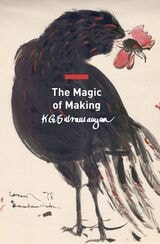
The Magic of Making
Essays on Art and CultureK. G. Subramanyan
Seagull Books, 2024
In this collection of essays, written by K. G. Subramanyan over twenty-five years, this artist delves into the evolving aesthetic sensibilities in a globalized world, offering profound reflections on art, aesthetics, tradition, and societal challenges. As one of India's most celebrated artists, Subramanyan provides invaluable insights into contemporary art and cultural dynamics
Covering a broad spectrum of topics including art, visual perception, creativity, craft practice, tradition, and societal issues, Subramanyan's essays offer a comprehensive exploration of the complexities shaping modern civilization. He critically examines the impact of globalization, industrialization, environmental degradation, and societal disparities on art, education, and society, urging readers to negotiate these challenges with insight and vigilance.
Subramanyan played a pivotal role in shaping India’s artistic identity after Independence. Mani-da, as he was fondly called, seamlessly blended elements of modernism with folk expression in his works, spanning paintings, murals, sculptures, prints, set designs, and toys. Beyond his visual artistry, his writings have laid a solid foundation for understanding the demands of art on the individual. In the year of his centenary, Seagull is proud to publish his writings in special new editions.
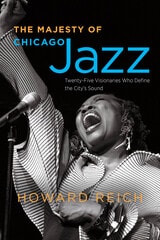
The Majesty of Chicago Jazz
Twenty-Five Visionaries Who Define the City's SoundHoward Reich
University of Chicago Press, 2026
The first book to trace the vast influence of Chicago jazz from its origins to today—from Louis Armstrong and Jelly Roll Morton to Anita O’Day, Herbie Hancock, and the AACM.
Author and Chicago native Howard Reich gives readers a front-row seat to the history of Chicago jazz as it roared forth in jazz clubs, concert halls, and festivals. Reich covered Chicago jazz for more than thirty years as the Chicago Tribune’s staff critic, and in this collection, he argues that jazz as an art form is inconceivable without Chicago. Carefully choosing from among his thousands of articles on jazz, Reich highlights twenty-five of the most important Chicago jazz artists who pushed the art form forward.
The Majesty of Chicago Jazz begins with two New Orleans visionaries who achieved their artistic pinnacles in Chicago in the Roaring Twenties: Jelly Roll Morton and Louis Armstrong. In the decades that followed, Chicago produced an uninterrupted line of innovators: revolutionaries Ahmad Jamal and Sun Ra, iconoclasts Von Freeman and Fred Anderson, populists Herbie Hancock and Ramsey Lewis, chameleons Patricia Barber and Kurt Elling, and the breakthrough band of the Association for the Advancement of Creative Musicians (AACM), among others. Reich offers two pieces on each of the book’s twenty-five visionaries, including profiles, reviews, appreciations, and obituaries. The book concludes with a beginner-friendly discography, perfect for those looking to listen along.
The Majesty of Chicago Jazz is captivating for jazz newcomers and aficionados alike—all are guaranteed to learn something surprising here. With a musician’s ear and a journalist’s expertise, Reich offers listeners a valuable guide to the groundbreaking jazz that has come out of Chicago, a city that remains a fertile breeding ground for musical experimentation.
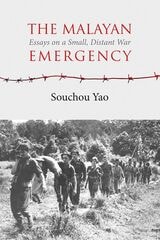
The Malayan Emergency
Essays on a Small, Distant WarSouchou Yao
National University of Singapore Press, 2016
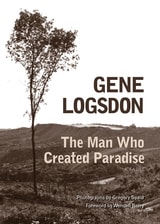
The Man Who Created Paradise
A FableGene Logsdon
Ohio University Press, 2001
Gene Logsdon’s The Man Who Created Paradise is a message of hope at a time when the very concept of earth stewardship is under attack. The fable, inspired by a true story, tells how Wally Spero looked at one of the bleakest places in America—a raw and barren strip-mined landscape—and saw in it his escape from the drudgery of his factory job. He bought an old bulldozer and used the machine to carve patiently, acre by acre, a beautiful little farm out of a seemingly worthless wasteland.
Wally’s story is a charming distillation of the themes that the late, beloved Gene Logsdon returned to again and again in his many books and hundreds of articles. Environmental restoration is the task of our time. The work of healing our land begins in our own backyards and farms, in our neighborhoods and our regions. Humans can turn the earth into a veritable paradise—if they really want to.
Noted photographer Gregory Spaid retraced the trail that Logsdon traveled when he was inspired to write The Man Who Created Paradise. His photographs evoke the same yearning for wholeness, for ties to land and community, that infuses the fable’s poetic prose.
The Mangle in Practice
Science, Society, and BecomingAndrew Pickering and Keith Guzik, eds.
Duke University Press, 2008
The Mangle in Practice opens with a fresh introduction to the mangle by Pickering. Several contributors then present empirical studies that demonstrate the mangle’s applicability to topics as diverse as pig farming, Chinese medicine, economic theory, and domestic-violence policing. Other contributors offer examples of the mangle in action: real-world practices that implement a self-consciously “mangle-ish” stance in environmental management and software development. Further essays discuss the mangle as philosophy and social theory. As Pickering argues in the preface, the mangle points to a shift in interpretive sensibilities that makes visible a world of de-centered becoming. This volume demonstrates the viability, coherence, and promise of such a shift, not only in science and technology studies, but in the social sciences and humanities more generally.
Contributors: Lisa Asplen, Dawn Coppin, Adrian Franklin, Keith Guzik, Casper Bruun Jensen,Yiannis Koutalos, Brian Marick, Randi Markussen, Andrew Pickering, Volker Scheid, Esther-Mirjam Sent, Carol Steiner, Maxim Waldstein
The Maritime World of the Anglo-Saxons
Stacy S. Klein
Arizona Center for Medieval and Renaissance Studies, 2014
The Marrow of Human Experience
Essays on Folklore by William A. Wilsonedited by William A. Wilson and Jill Terry Rudy
Utah State University Press, 2006
The Mask of Fiction
Essays on W. D. HowellsJohn W. Crowley
University of Massachusetts Press, 0
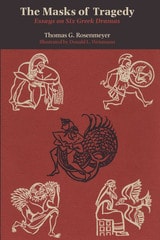
The Masks of Tragedy
Essays on Six Greek DramasBy Thomas G. Rosenmeyer
University of Texas Press, 1963
"What matters about a play is not the extent to which it is like any other play, but the way in which it is different," writes Thomas G. Rosenmeyer. "This is, I suggest, how the ancient audiences received the performances.... My purpose, then, in writing these essays is twofold: ... to devote enough space to the discussion of each play to allow its special tone and texture to emerge without hindrance and at leisure ... and to include in one collection analyses of plays so different from one another that the accent will come to rest on the variety of the tragic experience rather than on any one narrowly defined norm."
Greek tragedy is a vehicle for many different ideas and many different intentions. From the wealth of material that has come down to us the author has chosen six plays for analysis. He reminds us that the plays were written to be seen and heard, and only secondarily to be studied. The listeners expected each play to have a specific objective, and to exhibit its own mood. These the author attempts to recover for us, by listening to what each play, in its own right, has to say. His principal concern is with the tragic diction and the tragic ideas, designed to release certain massive responses in the large theater-going group of ancient Athens. In exploring the characters and the situations of the plays he has chosen, the author transports his reader to the world of fifth-century B.C. Greece, and establishes the relevance of that world to our own experience.
The essays are not introductory in nature. No space is given, for instance, to basic information about the playwrights, the history of Greek drama, or the special features of the Attic stage. Yet the book addresses itself to classicists and nonclassicists alike. The outgrowth of a series of lectures to nonspecialists, its particular appeal is to students of literature and the history of Western thought. Parallels are drawn between the writings of the philosophers and the tragedies, and attention is paid to certain popular Greek beliefs that colored the tragic formulations. Ultimately, however, the approach is not historical but critical; it is the author's intention to demonstrate the beauty and the craftsmanship of the plays under discussion.
The Matter of the Page
Essays in Search of Ancient and Medieval AuthorsShane Butler
University of Wisconsin Press, 2010
Ancient and medieval literary texts often call attention to their existence as physical objects. Shane Butler helps us to understand why. Arguing that writing has always been as much a material struggle as an intellectual one, The Matter of the Page offers timely lessons for the digital age about how creativity works and why literature moves us.
Butler begins with some considerations about the materiality of the literary text, both as a process (the draft) and a product (the book), and he traces the curious history of “the page” from scroll to manuscript codex to printed book and beyond. He then offers a series of unforgettable portraits of authors at work: Thucydides struggling to describe his own diseased body; Vergil ready to burn an epic poem he could not finish; Lucretius wrestling with words even as he fights the madness that will drive him to suicide; Cicero mesmerized by the thought of erasing his entire career; Seneca plumbing the depths of the soul in the wax of his tablets; and Dhuoda, who sees the book she writes as a door, a tunnel, a womb. Butler reveals how the work of writing transformed each of these authors into his or her own first reader, and he explains what this metamorphosis teaches us about how we too should read.
All Greek and Latin quotations are translated into English and technical matters are carefully explained for general readers, with scholarly details in the notes.