Results by title
1441 books match the query 'Great Britain' and 342 start with t
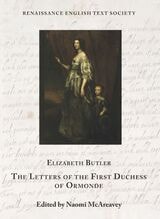
The Letters of the First Duchess of Ormonde
Elizabeth Butler
Iter Press, 2022
The volume comprises more than three hundred letters written by Ormonde to her husband and family, agents and servants, and friends and clients. Spanning six decades, these letters are meticulously transcribed, edited, and annotated, and the volume includes a substantial scholarly introduction, family trees, a glossary, and other resources.

The Life of Kingsley Amis
Zachary Leader
Northwestern University Press, 2011
In The Life of Kingsley Amis, Leader, the acclaimed editor of The Letters of Kingsley Amis, draws not only on published and unpublished works and correspondence, but also on interviews with a wide range of Amis’s friends, relatives, fellow writers, students, and colleagues, many of whom have never spoken publicly before. The result is a compulsively readable account of Amis’s childhood, school days, and life as a student at Oxford, teacher, critic, political and cultural commentator, professional author, husband, father, and lover. Neither evading nor sensationalizing the more salacious aspects of Amis’s life, Leader explores the writer’s phobias, self-doubts, and ambitions; the controversies in which he was embroiled; and the role that drink played in a life bedeviled by erotic entanglements, domestic turbulence, and personal disaster.
Here is the biography that its subject deserves. Like Amis himself, it is incisive and unsentimental, deeply appreciative of aesthetic achievement, and a great source of amusing anecdotes. Dazzling for its thoroughness, psychological acuity, and elegant style, The Life of Kingsley Amis is exemplary: literary biography at its very best.
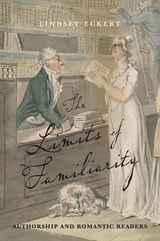
The Limits of Familiarity
Authorship and Romantic ReadersLindsey Eckert
Bucknell University Press, 2022
What did Wordsworth wear, and where did he walk? Who was Byron’s new mistress, and how did his marriage fare? Answers—sometimes accurate, sometimes not—were tantalizingly at the ready in the Romantic era, when confessional poetry, romans à clef, personal essays, and gossip columns offered readers exceptional access to well-known authors. But at what point did familiarity become overfamiliarity? Widely recognized as a social virtue, familiarity—a feeling of emotional closeness or comforting predictability—could also be dangerous, vulgar, or boring. In The Limits of Familiarity, Eckert persuasively argues that such concerns shaped literary production in the Romantic period. Bringing together reception studies, celebrity studies, and literary history to reveal how anxieties about familiarity shaped both Romanticism and conceptions of authorship, this book encourages us to reflect in our own fraught historical moment on the distinction between telling all and telling all too much.

The Lion and the Cross
Early Christianity in Victorian NovelsRoyal W. Rhodes
The Ohio State University Press, 1900
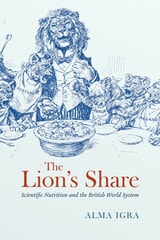
The Lion's Share
Scientific Nutrition and the British World SystemAlma Igra
University of Chicago Press, 2026
Reveals how nutrition science emerged from Britain’s attempts to mold the food chain to its imperial interests.
The Lion’s Share offers a biography of nutrition as a scientific discipline, from its imperial birth, through its rise to fame, to its integration into an environmental and political global order. Even though medical knowledge involved food since ancient times, at the beginning of the twentieth century, nutrition was not yet a scientific discipline in an institutional or practical sense. Nevertheless, by the 1930s, it was one of the most politically influential scientific fields, with nutritionists operating as medical diplomats within national, international, and imperial organizations. As historian Alma Igra explains, it is through the global networks of British power that a decidedly marginal field of technical knowledge concerned with agricultural productivity and animal feeding evolved into an area of expertise governing the human diet and related issues of public health, economic development, and humanitarian aid.
The Lion’s Share visits five pivotal moments that prompted new nutritional research at transnational meetings in Scotland, Iraq, Vienna, Geneva, and the Netherlands. Through the eyes of the experts, Igra tracks how nutrition became an international science, with mobile labs, collaborations among institutions, and a constant clash between local and imperial practices. Standardization of food measurement created new ways for food to be international and allowed politicians to imagine the world as one. Yet tensions remained that shaped international policy in the twentieth century and still affect international land policy today.
The Lisle Letters
Edited by Muriel St. Clare Byrne
University of Chicago Press, 1981
The Lisle Letters
An AbridgementEdited by Muriel St. Clare Byrne
University of Chicago Press, 1983

The Literary Guide and Companion to Southern England
Revised EditionRobert M. Cooper
Ohio University Press, 1998
In a series of intriguing routes through the English countryside, Professor Robert Cooper notes those attractions that the casual tourist might unknowingly pass by, such as the house where Dickens wrote A Tale of Two Cities, or the windswept quay where John Fowles’s French Lieutenant’s woman walked. Maps and information about restaurants and accommodations give the traveler the opportunity of having pints of “half and half” where Jane Austen dined or visiting the pub where Blake’s scuffle led to his trial for treason.
This newly revised and updated edition of Robert Cooper’s acclaimed handbook combines the utility of current travel information with the appeal of literary history, biography, and anecdote in a leisurely and flavorful guide to the broad sweep of southern England outside of London. A rich and reliable guide to the landscape that fostered one of our most cherished cultures, The Literary Guide and Companion to Southern England is an indispensable resource for those who wish to experience literature firsthand.
The Lives of Machines
The Industrial Imaginary in Victorian Literature and CultureTamara Ketabgian
University of Michigan Press, 2011
"The Lives of Machines is intelligent, closely argued, and persuasive, and puts forth a contention that will unsettle the current consensus about Victorian attitudes toward the machine."
---Jay Clayton, Vanderbilt University
Today we commonly describe ourselves as machines that "let off steam" or feel "under pressure." The Lives of Machines investigates how Victorian technoculture came to shape this language of human emotion so pervasively and irrevocably and argues that nothing is more intensely human and affecting than the nonhuman. Tamara Ketabgian explores the emergence of a modern and more mechanical view of human nature in Victorian literature and culture.
Treating British literature from the 1830s to the 1870s, this study examines forms of feeling and community that combine the vital and the mechanical, the human and the nonhuman, in surprisingly hybrid and productive alliances. Challenging accounts of industrial alienation that still persist, the author defines mechanical character and feeling not as erasures or negations of self, but as robust and nuanced entities in their own right. The Lives of Machines thus offers an alternate cultural history that traces sympathies between humans, animals, and machines in novels and nonfiction about factory work as well as in other unexpected literary sites and genres, whether domestic, scientific, musical, or philosophical. Ketabgian historicizes a model of affect and community that continues to inform recent theories of technology, psychology, and the posthuman.
The Lives of Machines will be of interest to students of British literature and history, history of science and of technology, novel studies, psychoanalysis, and postmodern cultural studies.
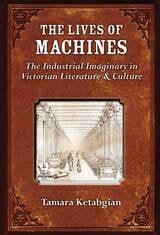
Cover image: "Power Loom Factory of Thomas Robinson," from Andrew Ure, The Philosophy of Manufactures (London: Charles Knight, 1835), frontispiece.
DIGITALCULTUREBOOKS: a collaborative imprint of the University of Michigan Press and the University of Michigan Library

The Lost World of John Witherspoon
Unravelling the Snodgrass affair, 1762 to 1776Ronald Lyndsey Crawford
Aberdeen University Press, 2015
The Making of Shakespeare's First Folio
Emma Smith
Bodleian Library Publishing, 2015
The Making of Shakespeare’s First Folio offers the first comprehensive biography of the earliest collected edition of Shakespeare’s plays. In November 1623, the book arrived in the bookshop of the London publisher Edward Blount at the Black Bear. Long in the making, Master William Shakespeare’s Comedies, Histories, and Tragedies—as the First Folio was then known—appeared seven years after Shakespeare’s death. Nearly one thousand pages in length, the collection comprised thirty-six plays, half of which had never been previously published. Emma Smith tells the story of the First Folio’s origins, locating it within the social and political context of Jacobean London and bringing in the latest scholarship on the seventeenth-century book trade.
Extensively illustrated, The Making of Shakespeare’s First Folio is a landmark addition to the copious literature on Shakespeare. It will shed much-needed light on the birth of the First Folio—of which fewer than 250 copies remain—and the birth of Shakespeare’s towering reputation.
The Making of The Wind in the Willows
Peter Hunt
Bodleian Library Publishing, 2018
Peter Hunt explores the unusual trajectory of The Wind in the Willows through previously unpublished archival materials, original drawings, and fan letters (including one from Theodore Roosevelt). He identifies the colleagues and friends on whom Grahame is thought to have based the characters of Mole, Rat, Badger, and Toad, and explores the literary genres of boating, caravanning, and motoring on which the author drew. He also recounts the extraordinary correspondence surrounding the book’s first publication and the influence of two determined women—publisher’s agent Constance Smedley and the author’s wife, Elspeth Grahame—who helped turn the book into the classic for children we know and love today. Generously illustrated throughout, this book celebrates one of the most beloved works of children’s literature ever published.
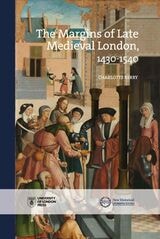
The Margins of Late Medieval London, 1430–1540
Charlotte Berry
University of London Press, 2022
The Margins of Late Medieval London seeks to unpack the complexity of urban life in the medieval age, offering a detailed and novel approach to understanding London beyond its grand institutions and social bodies. Using a combination of experimental digital, quantitative, and qualitative methodologies, the volume casts new light on urban life at the level of the neighborhood and considers the differences in economy, society, and sociability which existed in different areas of a vibrant premodern city. This book focuses on the dynamism and mobility that shaped city life, integrating the experiences of London’s poor and migrant communities and how they found their place within urban life. It describes how people found themselves marginalized in the city, and the strategies they would employ to mitigate that precarious position.
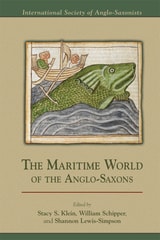
The Maritime World of the Anglo-Saxons
Stacy S. Klein
Arizona Center for Medieval and Renaissance Studies, 2014
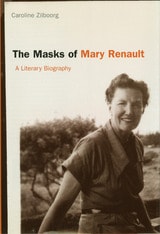
The Masks of Mary Renault
A Literary BiographyCaroline Zilboorg
University of Missouri Press, 2001
Born Eileen Mary Challans in London in 1905, Mary Renault wrote six successful contemporary novels before turning to the historical fiction about ancient Greece for which she is best known. While Renault's novels are still highly regarded, her life and work have never been completely examined. Caroline Zilboorg seeks to remedy this in The Masks of Mary Renault by exploring Renault's identity as a gifted writer and a sexual woman in a society in which neither of these identities was clear or easy.
Although Renault's life was anything but ordinary, this fact has often been obscured by her writing. The daughter of a doctor, she grew up comfortably and attended a boarding school in Bristol. She received a degree in English from St. Hugh's College in Oxford in 1928, but she chose not to pursue an academic career. Instead, she decided to attend the Radcliffe Infirmary in Oxford, where she trained to be a nurse. With the outbreak of the Second World War, she was assigned to the Winford Emergency Hospital in Bristol and briefly worked with Dunkirk evacuees. She went on to work in the Radcliffe Infirmary's brain surgery ward and was there until 1945.
It was during her nurse's training that Renault met Julie Mullard, who became her lifelong companion. This important lesbian relationship both resolved and posed many problems for Renault, not the least of which was how she was to write about issues at once intensely personal and socially challenging. In 1939, Renault published her first novel under a pseudonym in order to mask her identity. It was a time when she was struggling not only with her vocation (nursing and writing), but also with her sexual identity in the social and moral context of English life during the war.
In 1948, Renault left England with Mullard for South Africa and never returned. It was in South Africa that she made the shift from her early contemporary novels of manners to the mature historical novels of Hellenic life. The classical settings allowed Renault to mask material too explosive to deal with directly while simultaneously giving her an "academic" freedom to write about subjects vital to her—among them war, peace, career, women's roles, female and male homosexuality, and bisexuality.
Renault's reception complicates an understanding of her achievement, for she has a special status within the academic community, where she is both widely read and little written about. Her interest in sexuality and specifically in homosexuality and bisexuality, in fluid gender roles and identities, warrants a rereading and reevaluation of her work. Eloquently written and extensively researched, The Masks of Mary Renault will be of special value to anyone interested in women's studies or English literature.
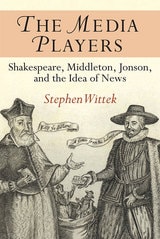
The Media Players
Shakespeare, Middleton, Jonson, and the Idea of NewsStephen Wittek
University of Michigan Press, 2015
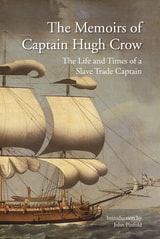
The Memoirs of Captain Hugh Crow
The Life and Times of a Slave Trade CaptainEdited by the Bodleian Library
Bodleian Library Publishing, 2007
Numerous documents attest to the horrific conditions endured by African slaves during the centuries of the Atlantic slave trade. Less well known is the perspective of those who wielded power during this dark time in human history. The Bodleian Library fills that gap here with the memoirs of a principal figure in the slave trade, Captain Hugh Crow.
The first-hand account of a man who commanded one of the last legal slave vessels to cross the Atlantic, Life and Times of a Slave Trade Captain offers a revealing if frequently troubling look into the psyche of a slave trader. His chronicle leaves nothing to the imagination, as he recounts the harsh routine of daily life on a slave vessel, where on average a fifth of the crew—let alone the human cargo—never survived the crossing. Crow portrays himself as an “enlightened” slaver, a claim he justifies through the link between his close attention to his “negroes” and his financial success, and the songs composed for him by the slaves. His account also includes commentary on the social propriety of the slave trade and notes about the conditions on West Indian and Caribbean plantations as well as on slave ships. John Pinfold’s illuminating introduction recounts the life of Hugh Crow and sets him in the rich historical context of eighteenth-century mercantilism and its battle with the abolitionist movement. An eye-opening read, Life and Times of a Slave Trade Captain reveals an often overlooked facet in the complicated history of transatlantic slavery.
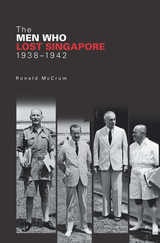
The Men Who Lost Singapore, 1938-1942
Ronald McCrum
National University of Singapore Press, 2017
In The Men Who Lost Singapore, McCrum closely examines the role and responsibilities of the colonial authorities before and during the war. He argues that the poor and occasionally hostile relations that developed between the local government and the British military hierarchy prevented the development and implementation of a strategic and unified plan of defense against the growing threat of the Japanese. Consequently, this indecisive and ineffective leadership led to significant losses and civilian casualties that could have been prevented.
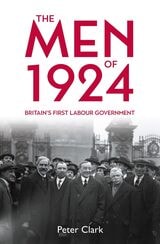
The Men of 1924
Britain’s First Labour GovernmentPeter Clark
Haus Publishing, 2023
In January of 1924, the cabinet of the first Labour government consisted of twenty white, middle-aged men, as it had for generations. But the election also represented a radical departure from government by the ruling class. Most members of the administration had left school by the age of fifteen. Five of them had started work by the time they were twelve years old. Three were working down the mines before they entered their teens. Two were illegitimate, one was abandoned at birth, and three were of Irish immigrant descent. For the first time in Britain’s history, the cabinet could truly be said to represent all of Britain’s social classes. This unheralded revolution in representation is the subject of Peter Clark’s fascinating new book, The Men of 1924. Who were these men? Clark’s vivid portrayal is full of evocative portraits of a new breed of politician, the forerunners of all those who, later in the last century and this one, overcame a system from which they had been excluded for too long.

The Migrant's Paradox
Street Livelihoods and Marginal Citizenship in BritainSuzanne M. Hall
University of Minnesota Press, 2021
Connects global migration with urban marginalization, exploring how “race” maps onto place across the globe, state, and street
In this richly observed account of migrant shopkeepers in five cities in the United Kingdom, Suzanne Hall examines the brutal contradictions of sovereignty and capitalism in the formation of street livelihoods in the urban margins. Hall locates The Migrant’s Paradox on streets in the far-flung parts of de-industrialized peripheries, where jobs are hard to come by and the impacts of historic state underinvestment are deeply felt.
Drawing on hundreds of in-person interviews on streets in Birmingham, Bristol, Leicester, London, and Manchester, Hall brings together histories of colonization with current forms of coloniality. Her six-year project spans the combined impacts of the 2008 financial crisis, austerity governance, punitive immigration laws and the Brexit Referendum, and processes of state-sanctioned regeneration. She incorporates the spaces of shops, conference halls, and planning offices to capture how official border talk overlaps with everyday formations of work and belonging on the street.
Original and ambitious, Hall’s work complicates understandings of migrants, demonstrating how migrant journeys and claims to space illuminate the relations between global displacement and urban emplacement. In articulating “a citizenship of the edge” as an adaptive and audacious mode of belonging, she shows how sovereignty and inequality are maintained and refuted.

The Mind and Art of Victorian England
Josef L. Altholz, Editor
University of Minnesota Press, 1976
The Mind and Art of Victorian England was first published in 1976. Minnesota Archive Editions uses digital technology to make long-unavailable books once again accessible, and are published unaltered from the original University of Minnesota Press editions.
In a series of ten essays and a generous selection of illustrations, many in color, this volume depicts and assesses the mind and art of Victorian England. Multidisciplinary in approach, the essays deal with a variety of aspects in the history of the Victorian age.
Professor Altholz, the volume editor, writes: "It was an age not of revolution but of reform; political reform which admitted first the middle and then the working classes to the dominant share of the suffrage; economic and social reforms which proclaimed the triumph of laissez-faire while laying the foundations of the welfare state; moral reforms attempted if not achieved through education and religious revival; aesthetic reforms proposed if not achieved and, even in their failure, adding to the richness and diversity of Victorian England. It was an age whose problems cried out for reform; and, despite the prevailing complacency, virtually all the great Victorians were critics of their age. Their criticisms were diverse and often mutually incompatible, with each other -- and their public -- but they shared a high seriousness which gave character and substance to the flowering of their culture. Such was the Victorian age: the high-water mark of English history, the maturation of British culture, and the seedbed of our problems and our discontents."
The illustrations include color reproductions of some of the works discussed by Melvin Waldfogel in his essay "Narrative Painting," and a selection of architectural engravings and photographs.
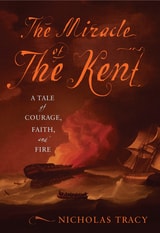
The Miracle of the Kent
A Tale of Courage, Faith, and FireNicholas Tracy
Westholme Publishing, 2008
“A naturally gripping adventure tale.”—Publishers Weekly
“Powerful and intensely focused.”—Booklist
“Tracy's satisfying narrative constitutes the first modern account. A finely detailed maritime history.”—Kirkus Reviews
In 1825, the Kent, an East Indiaman, set sail from England for India with a crew and nearly 600 men, women, and children on board. North of Spain, the ship was slammed by a ferocious gale, and while a sailor was inspecting the hold for damage, his lantern ignited a cask of spirits. A fire quickly erupted, and even with the desperate expedient of opening hatches and flooding the ship, the fire burned out of control. As night wore on, the ship became an inferno, with the flames moving toward stores of gunpowder. At this point, everyone on board knew that they would perish, and they began preparing for their ghastly deaths. Despite the raging tempest a sailor climbed one last time to the top of the Kent’s mainmast and—miraculously—a sail was sighted on the horizon. It was the Cambria, a small brig on its way to Mexico. The Cambriaspied the burning Kentand through determination and dogged seamanship in towering seas, the little brig closed the doomed vessel. Launching their boats, the Kent’s and Cambria’s crews were able to transfer nearly all of the children, women, and men to the brig and pull away before the Kent exploded. Dangerously overloaded, the Cambriamade the Cornish coast three days later.
In The Miracle of the Kent: A Tale of Courage, Faith, and Fire, award-winning historian Nicholas Tracy reconstructs this extraordinary tale through records left by the participants, revealing how those aboard the Kent faced their deaths, and their reactions to being offered a second chance. The story of the Kentis both a page-turning adventure and an inspirational homage to the capacity of the human spirit.
The Modern British Horror Film
Gerrard, Steven
Rutgers University Press, 2017
Tracking the revitalization of the British horror film industry over the past two decades, media expert Steven Gerrard also investigates why audiences have flocked to these movies. To answer that question, he focuses on three major trends: “hoodie horror” movies responding to fears about Britain’s urban youth culture; “great outdoors” films where Britain’s forests, caves, and coasts comprise a terrifying psychogeography; and psychological horror movies in which the monster already lurks within us.
Offering in-depth analysis of numerous films, including The Descent, Outpost, and The Woman in Black, this book takes readers on a lively tour of the genre’s highlights, while provocatively exploring how these films reflect viewers’ gravest fears about the state of the nation. Whether you are a horror buff, an Anglophile, or an Anglophobe, The Modern British Horror Film is sure to be a thrilling read.
The Most Powerful Idea in the World
A Story of Steam, Industry, and InventionWilliam Rosen
University of Chicago Press, 2012
This bracing history uses the earth-shaking development of the steam engine to show how the very idea of intellectual property was essential to the entire Industrial Revolution.
Hardly a week passes without some high-profile court case that features intellectual property at its center. But how did the belief that one could own an idea come about? And how did that belief change the way humankind lives and works?
William Rosen, author of Justinian's Flea, seeks to answer these questions and more with The Most Powerful Idea in the World. A lively and passionate study of the engineering and scientific breakthroughs that led to the steam engine, this book argues that the very notion of intellectual property drove not only the invention of the steam engine but also the entire Industrial Revolution: history’s first sustained era of economic improvement. To do so, Rosen conjures up an eccentric cast of characters, including the legal philosophers who enabled most the inventive society in millennia, and the scientists and inventors—Thomas Newcomen, Robert Boyle, and James Watt—who helped to create and perfect the steam engine over the centuries. With wit and wide-ranging curiosity, Rosen explores the power of creativity, capital, and collaboration in the brilliant engineering of the steam engine and how this power source, which fueled factories, ships, and railroads, changed human history.
Deeply informative and never dull, Rosen's account of one of the most important inventions made by humans is a rollicking ride through history, with careful scholarship and fast-paced prose in equal measure.

The Mysterious Science of the Law
An Essay on Blackstone's CommentariesDaniel J. Boorstin
University of Chicago Press, 1996
The Nearest Thing to Life
James Wood
Brandeis University Press, 2015
The Neoliberal Age?
Britain Since the 1970sEdited by Aled Davies, Ben Jackson, and Florence Sutcliffe-Braithwaite
University College London, 2021
The rise of British neoliberalism—a renewed emphasis on privatization and market-oriented economics—over the last fifty years is often characterized as the product of right-wing political economists, think tanks, and politicians. The Neoliberal Age? argues that this pat narrative ignores broader forces in British left-wing culture that collaborated to transform twentieth-century social life. Through a variety of case studies, the authors demonstrate that our austere, individualistic age emerged from more complex sociopolitical negotiations than typically described.
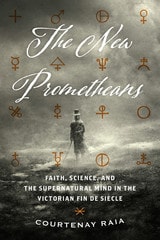
The New Prometheans
Faith, Science, and the Supernatural Mind in the Victorian Fin de SiècleCourtenay Raia
University of Chicago Press, 2019
The New Prometheans traces the evolution of psychical research through the intertwining biographies of four men: chemist Sir William Crookes, depth psychologist Frederic Myers, ether physicist Sir Oliver Lodge, and anthropologist Andrew Lang. All past presidents of the society, these men brought psychical research beyond academic circles and into the public square, making it part of a shared, far-reaching examination of science and society. By layering their papers, textbooks, and lectures with more intimate texts like diaries, letters, and literary compositions, Courtenay Raia returns us to a critical juncture in the history of secularization, the last great gesture of reconciliation between science and sacred truths.
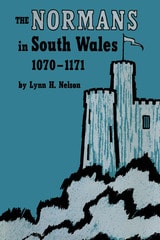
The Normans in South Wales, 1070–1171
By Lynn H. Nelson
University of Texas Press, 1966
A frontier has been called "an area inviting entrance." For the Norman invaders of England the Welsh peninsula was such an area. Fertile forested lowlands invited agricultural occupation; a fierce but primitive and disunited native population was scarcely a formidable deterrent.
In The Normans in South Wales, Lynn H. Nelson provides a comprehensive history of the century during which the Normans accomplished this occupation. Skillfully he combines facts and statistics gleaned from a variety of original sources—The Anglo-Saxon Chronicle, the Domesday Book, Church records, charters of the kings and of the marcher lords, and more imaginative literary sources such as the chanson de geste and the frontier epic—to give a vivid picture of a century of strife. He describes the fluctuating conflict between Norman invaders in the lowlands and Welsh tribesmen in the highlands; the hard struggle of medieval frontiersmen to take from the new land a profit commensurate with their labors; the development of a Cambro-Norman society distinct and quite different from the Anglo-Norman culture which engendered it; and the attempt of the frontiersman to prevent the Anglo-Norman authorities from taking control of the lands he had won.
The turbulent Welsh tribes provided an ever present harassment along the frontier, and Nelson begins his presentation with an account of the failure of the Saxons to control them. He examines the methods adopted by William the Conqueror to cope with the problem—the creation of the great marcher lordships and the subsequent problems in controlling these lordships—and the weakness of some Anglo-Norman kings and the strength of others.
By 1171 the conquest of the Welsh frontier was complete; but as Nelson points out, this conquest was strangely limited. The frontier, which extended throughout the lowlands of Wales, stopped at the 600-foot contour line in the mountains. In his final chapter Nelson speculates upon the curious fact that large areas of seemingly inviting moorlands lying above this line remained closed to the Cambro-Norman, and his speculations lead him to some interesting inferences about the nature of the frontier's influence upon the civilization which moves in to occupy it.
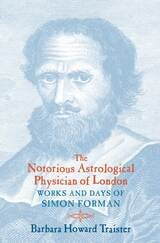
The Notorious Astrological Physician of London
Works and Days of Simon FormanBarbara Howard Traister
University of Chicago Press, 2000
Although he received no formal medical education, Forman built a thriving practice. His success rankled the College of Physicians of London, who hounded Forman with fines and jail terms for nearly two decades. In addition to detailing case histories of his medical practice—the first such records known from London—as well as his run-ins with the College, Forman's manuscripts cover a wide variety of other matters, from astrology and alchemy to gardening and the theater. His autobiographical writings are among the earliest English examples of their genre and display an abiding passion for reworking his personal history in the best possible light, even though they show little evidence that Forman ever intended to publish them.
Fantastic as many of Forman's manuscripts are, it is their more mundane aspects that make them such a priceless record of what daily life was like for ordinary inhabitants of Shakespeare's London. Forman's descriptions of the stench of a privy, the paralyzed limbs of a child, a lost bitch dog with a velvet collar all offer tantalizing glimpses of a world that seems at once very far away and intimately familiar. Anyone who wants to reclaim that world will enjoy this book.

The Ocean Is a Wilderness
Atlantic Piracy and the Limits of State Authority, 1688-1856Guy Chet
University of Massachusetts Press, 2014
Chet shows how the traditional focus on the growth of the modern state overlooked the extent to which old attitudes and cultural practices continued to hold sway. Even as the British government extended its naval, legal, and bureaucratic reach, in many parts of the Atlantic world illegal trade was not only tolerated but encouraged. In part this was because Britain's constabulary command of the region remained more tenuous than some have suggested, and in part because maritime insurance and wartime tax policies ensured that piracy and smuggling remained profitable. When Atlantic piracy eventually waned in the early nineteenth century, it had more to do with a reduction in its profitability at port than with forceful confrontation at sea.
Challenging traditional accounts that chronicle forces of civilization taming a wild Atlantic frontier, this book is a valuable addition to a body of borderlands scholarship reevaluating the relationship between the emerging modern state and its imperial frontiers.

The Omega Workshops
Judith Collins
University of Chicago Press, 1984
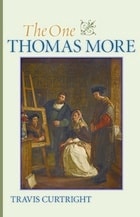
The One Thomas More
Travis Curtright
Catholic University of America Press, 2012

The Origins of Scottish Nationhood
Neil Davidson
Pluto Press, 2000
The Origins of the British Labour Party
J.H. Stewart Reid
University of Minnesota Press, 1955
The Origins of the British Labour Party was first published in 1955. Minnesota Archive Editions uses digital technology to make long-unavailable books once again accessible, and are published unaltered from the original University of Minnesota Press editions.
What were the social and economic forces in England that gave rise to the British Labour Party? How did the party function in its formative years? How does the British labor movement compare with its American counterpart? If American labor enters politics as a separate party, is it likely to adopt a program resembling the socialism of the British Party?
Professor Reid's detailed account of the origins and development of the British Labour Party lays the groundwork for answers to questions like these, questions that are pertinent to the social and political issues of America as well as England. Since the appearance of a body of organized labor is a phenomenon occasioned by the process of industrialization, and since that process began in Great Britain almost a century earlier than on the American continent, the student of labor politics may well ponder whether something similar to the British experience lies ahead for America.
Professor Reid describes the conditions that brought about a specifically labor party, tells how it was established, and traces its first 20 years as a parliamentary party. He shows that the party began as an alliance of diverse forces having in common only the conviction that neither the Liberal nor the Conservative party would tackle such issues as housing, minimum wages, or unemployment insurance. He makes clear that, in working to achieve these short-term goals, the varied elements that made up the party finally worked out the peculiar compromise on policy and philosophy that is the basis of the British Labour Party today.
The Orphaned Imagination
Melancholy and Commodity Culture in English RomanticismGuinn Batten
Duke University Press, 1998
Building on the theoretical insights of Slavoj Zizek, Judith Butler, Julia Kristeva, and Eve Kosofsky Sedgwick, Batten interweaves the discourses of psychoanalysis, economics, biography, sexuality, melancholy, value, and exchange to question accepted ideas of how Romantic poetry works. She asserts that poetic labor is in fact paradigmatic of the kinds of production—and the kinds of desire—that capitalist culture renders invisible. If symbolic exchange, in cash or in words, requires the surrender of a beloved object, if healthy mourning requires an orphan to “work through” emotional loss through the consolation of art or a love for the living, then the rebellious Romantic poet, Batten contends, possessed unique insight into the alternative authority of a poetic language that renounced a culture of denial. Batten urges that scholars move beyond critical approaches condemning allegedly regressive forms of pleasure, recognizing that they, too, are haunted by melancholic attachments to dead poets as they conduct their work.
The Orphaned Imagination will interest anyone concerned with the claims of the English Romantic poets to a distinctive, valuable form of knowledge and those who may wonder about the power of contemporary theory to illuminate a traditional field.

The Other Henry James
John Carlos Rowe
Duke University Press, 1998
Rowe traces a particular development in James’s work, showing how in his early writings James criticized women’s rights, same-sex relations, and other social and political trends now identified with modern culture; how he ambivalently explored these aspects of modernity in his writings of the 1880s; and, later, how he increasingly identified with such modernity in his heretofore largely ignored or marginally treated fiction of the 1890s. Building on recent scholarship that has shown James to be more anxious about gender roles, more conflicted, and more marginal a figure than previously thought, Rowe argues that James—through his treatment of women, children, and gays—indicts the values and conventions of the bourgeoisie. He shows how James confronts social changes in gender roles, sexual preferences, national affiliations, and racial and ethnic identifications in such important novels as The American, The Tragic Muse, What Maisie Knew, and In the Cage, and in such neglected short fiction as “The Last of the Valerii,” “The Death of the Lion,” and “The Middle Years.”
Positioning James’s work within an interpretive context that pits the social and political anxieties of his day against the imperatives of an aesthetic ideology, The Other Henry James will engage scholars, students, and teachers of American literature and culture, gay literature, and queer theory.
The Other Windrush
Legacies of Indenture in Britain's Caribbean EmpireMaria del Pilar Kaladeen
Pluto Press, 2021
The Other Windrush
Legacies of Indenture in Britain's Caribbean EmpireMaria del Pilar Kaladeen
Pluto Press, 2021
Between the arrival of the HMT Empire Windrush in 1948 and the passing of the 1971 Immigration Act, half a million people came to the UK from the Caribbean. In the aftermath of the 2018 Windrush Scandal, the story of the Windrush Generation is more widely known than ever. But is it the whole story?
Through a series of biographical essays, poems and articles, The Other Windrush shines a light on the hidden history of a 'minority within a minority': Caribbean migrants of Indian and Chinese descent - often the descendants of indentured labourers - who were the 'invisible passengers' of the Windrush generation.
Both highlighting the diversity of their lives and cultural backgrounds, and delving into the largely forgotten history of the system of indenture in the British Caribbean, The Other Windrush makes a unique addition to the literature on migration and the British Empire.
The Other Zulus
The Spread of Zulu Ethnicity in Colonial South AfricaMichael R. Mahoney
Duke University Press, 2012
The Outward Mind
Materialist Aesthetics in Victorian Science and LiteratureBenjamin Morgan
University of Chicago Press, 2017
The Papist Represented
Literature and the English Catholic Community, 1688-1791Geremy Carnes
University of Delaware Press, 2017
The Papist Represented reincorporates the history of the English Catholic community into the field of eighteenth-century literary studies. It examines the intersections of literary, religious, and cultural history as they pertain to the slow acceptance by both Protestants and Catholics of the latter group’s permanent minority status. By focusing on the Catholic community’s perspectives and activities, it deepens and complicates our understanding of the cultural processes that contributed to the significant progress of the Catholic emancipation movement over the course of the century. At the same time, it reveals that this community’s anxieties and desires (and the anxieties and desires it provoked in Protestants) fuel some of the most popular and experimental literary works of the century, in forms and modes including closet drama, elegy, the novel, and the Gothic. By returning the Catholic community to eighteenth-century literary history, The Papist Represented challenges the assumption that eighteenth-century literature was a fundamentally Protestant enterprise.
Published by University of Delaware Press. Distributed worldwide by Rutgers University Press.
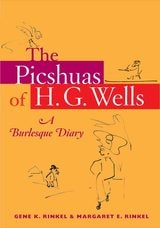
The Picshuas of H. G. Wells
A Burlesque DiaryGene K. Rinkel and Margaret E. Rinkel
University of Illinois Press, 2000
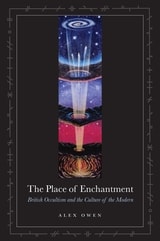
The Place of Enchantment
British Occultism and the Culture of the ModernAlex Owen
University of Chicago Press, 2004
In answering this question for the first time, The Place of Enchantment breaks new ground in its consideration of the role of occultism in British culture prior to World War I. Rescuing occultism from its status as an "irrational indulgence" and situating it at the center of British intellectual life, Owen argues that an involvement with the occult was a leitmotif of the intellectual avant-garde. Carefully placing a serious engagement with esotericism squarely alongside revolutionary understandings of rationality and consciousness, Owen demonstrates how a newly psychologized magic operated in conjunction with the developing patterns of modern life. She details such fascinating examples of occult practice as the sex magic of Aleister Crowley, the pharmacological experimentation of W. B. Yeats, and complex forms of astral clairvoyance as taught in secret and hierarchical magical societies like the Hermetic Order of the Golden Dawn.
Through a remarkable blend of theoretical discussion and intellectual history, Owen has produced a work that moves far beyond a consideration of occultists and their world. Bearing directly on our understanding of modernity, her conclusions will force us to rethink the place of the irrational in modern culture.
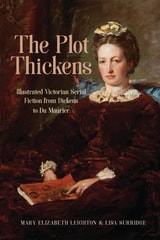
The Plot Thickens
Illustrated Victorian Serial Fiction from Dickens to du MaurierMary Elizabeth Leighton
Ohio University Press, 2018
In the early 1800s, books were largely unillustrated. By the 1830s and 1840s, however, innovations in wood- and steel-engraving techniques changed how Victorian readers consumed and conceptualized fiction. A new type of novel was born, often published in serial form, one that melded text and image as partners in meaning-making.
These illustrated serial novels offered Victorians a reading experience that was both verbal and visual, based on complex effects of flash-forward and flashback as the placement of illustrations revealed or recalled significant story elements. Victorians’ experience of what are now canonical novels thus differed markedly from that of modern readers, who are accustomed to reading single volumes with minimal illustration. Even if modern editions do reproduce illustrations, these do not appear as originally laid out. Modern readers therefore lose a crucial aspect of how Victorians understood plot—as a story delivered in both words and images, over time, and with illustrations playing a key role.
In The Plot Thickens, Mary Elizabeth Leighton and Lisa Surridge uncover this overlooked narrative role of illustrations within Victorian serial fiction. They reveal the intricacy and richness of the form and push us to reconsider our notions of illustration, visual culture, narration, and reading practices in nineteenth-century Britain.
The Poetics of Unremembered Acts
Reading, Lyric, PedagogyBrian McGrath
Northwestern University Press, 2012
The Poetry of Indifference
From the Romantics to the RubaiyatErik Irving Gray
University of Massachusetts Press, 2005
of poetic indifference began to emerge.
The Poetry of Indifference analyzes nineteenth-century works by Wordsworth, Keats, Byron, Tennyson, Robert Browning, and Edward FitzGerald, among others—works that do not merely declare themselves to be indifferent but formally enact the indifference they describe. Each poem consciously disregards some aspect of poetry that is usually considered to be crucial or definitive, even at the risk of seeming "indifferent" in the sense of "mediocre." Such gestures discourage critical attention, since the poetry of indifference refuses to make claims for itself.
This is particularly true of FitzGerald's Rubáiyát, one of the most popular poems of the nineteenth century, but one that recent critics have almost entirely ignored. In concentrating on this underexplored mode of poetry, Gray not only traces a major shift in recent literary history, from a Romantic poetics of sympathy to a Modernist poetics of alienation, but also considers how this literature can help us understand the sometimes embarrassing but unavoidable presence of indifference in our lives.
The Politics of Courtly Dancing in Early Modern England
Skiles Howard
University of Massachusetts Press, 1998
Skiles Howard examines the social and semiotic complexities of dancing as it changed over time and performed different work in court, city, and playhouse. She shows how dancing reflected and shaped wider social changes: the performance of gender roles facilitated the formation of the patriarchal family, the execution of physical tropes of hierarchy supported the rise of a centralized state, and rehearsals of spatial mastery assisted the project of national expansion. As a visual and kinetic discourse by which social norms were circulated, dancing inevitably became a site of contestation; as elite and popular practices collided, interacted, and were transformed, countervailing social forces found expression through the medium of dancing.
Interdisciplinary in its approach, this study draws on court masque and popular drama, dancing manuals, Puritan pamphlets, and educational and medical treatises to explore issues of power and the body, gender and rank, popular culture and European expansion.
The Politics of Free Markets
The Rise of Neoliberal Economic Policies in Britain, France, Germany, and the United StatesMonica Prasad
University of Chicago Press, 2006
In The Politics of Free Markets, a comparative-historical analysis of the development of neoliberal policies in these four countries,Monica Prasad argues that neoliberalism was made possible in the United States and Britain not because the Left in these countries was too weak, but because it was in some respects too strong. At the time of the oil crisis in the 1970s, American and British tax policies were more punitive to business and the wealthy than the tax policies of France and West Germany; American and British industrial policies were more adversarial to business in key domains; and while the British welfare state was the most redistributive of the four, the French welfare state was the least redistributive. Prasad shows that these adversarial structures in the United States and Britain created opportunities for politicians to find and mobilize dissatisfaction with the status quo, while the more progrowth policies of France and West Germany prevented politicians of the Right from anchoring neoliberalism in electoral dissatisfaction.
The Politics of Mirth
Jonson, Herrick, Milton, Marvell, and the Defense of Old Holiday PastimesLeah S. Marcus
University of Chicago Press, 1989