Results by title
751 books match the query 'International Relations' and 174 start with t
Thucydides’s Trap?
Historical Interpretation, Logic of Inquiry, and the Future of Sino-American RelationsSteve Chan
University of Michigan Press, 2020
The Peloponnesian War (431–404 BCE) ostensibly arose because of the fear that a rising Athens would threaten Sparta’s power in the Mediterranean. The idea of Thucydides’ Trap warns that all rising powers threaten established powers. As China increases its power relative to the United States, the theory argues, the two nations are inevitably set on a collision course toward war. How enlightening is an analogy based on the ancient Greek world of 2,500 years ago for understanding contemporary international relations? How accurate is the depiction of the history of other large armed conflicts, such as the two world wars, as a challenge mounted by a rising power to displace an incumbent hegemon?Thucydides’s Trap?: Historical Interpretation, Logic of Inquiry, and the Future of Sino-American Relations offers a critique of the claims of Thucydides’s Trap and power-transition theory. It examines past instances of peaceful accommodation to uncover lessons that can ease the frictions in ongoing Sino-American relations.
To Agree or Not to Agree
Leadership, Bargaining, and Arms ControlLisa A. Baglione
University of Michigan Press, 1999

To Make the Earth Bear Fruit
Ethnographic Essays on Fertility, Work and Gender in Highland BoliviaOlivia Harris
University of London Press, 1999
To See Ourselves as Others See Us
How Publics Abroad View the United States after 9/11Ole R. Holsti
University of Michigan Press, 2008
"Holsti, the authority on American foreign policy attitudes, investigates others' views of us. It's not pretty. It matters. Read this."
---Bruce Russett, Dean Acheson Professor of International Relations, Yale University, and editor of the Journal of Conflict Resolution
"Clearly and engagingly written, Holsti's book ranks among the most important---and most objective---of the post-9/11 scholarly studies. It deserves a large readership, both within and beyond academe."
---Ralph Levering, Vail Professor of History, Davidson College
In terms of military and economic power, the United States remains one of the strongest nations in the world. Yet the United States seems to have lost the power of persuasion, the ability to make allies and win international support.
Why? Immediately after the terrorist attacks of 9/11, leaders and citizens of foreign nations generally expressed sympathy for the United States. Since then, attitudes have changed. Drawing upon public opinion surveys conducted in 30 nations, Ole R. Holsti documents an increasing anti-American sentiment. His analysis suggests that the war in Iraq, human rights violations, and unpopular international policies are largely responsible. Consequently, the United States can rebuild its repute by adopting an unselfish, farsighted approach to global issues.
Indeed, the United States must restore goodwill abroad, Holsti asserts, because public opinion indirectly influences the leaders who decide whether or not to side with the Americans.
Ole R. Holsti is George V. Allen Professor Emeritus of International Affairs in the Department of Political Science at Duke University and author of Public Opinion and American Foreign Policy.
Tokens of Exchange
The Problem of Translation in Global CirculationsLydia H. Liu, ed.
Duke University Press, 1999
By studying the production and circulation of meaning as value in areas including history, religion, language, law, visual art, music, and pedagogy, essays consider exchanges between Jesuit and Protestant missionaries and the Chinese between the seventeenth and nineteenth centuries and focus on the interchanges occasioned by the spread of capitalism and imperialism. Concentrating on ideological reciprocity and nonreciprocity in science, medicine, and cultural pathologies, contributors also posit that such exchanges often lead to racialized and essentialized ideas about culture, sexuality, and nation. The collection turns to the role of language itself as a site of the universalization of knowledge in its contemplation of such processes as the invention of Basic English and the global teaching of the English language. By focusing on the moments wherein meaning-value is exchanged in the translation from one language to another, the essays highlight the circulation of the global in the local as they address the role played by historical translation in the universalizing processes of modernity and globalization.
The collection will engage students and scholars of global cultural processes, Chinese studies, world history, literary studies, history of science, and anthropology, as well as cultural and postcolonial studies.
Contributors. Jianhua Chen, Nancy Chen, Alexis Dudden Eastwood, Roger Hart, Larissa Heinrich, James Hevia, Andrew F. Jones, Wan Shun Eva Lam, Lydia H. Liu, Deborah T. L. Sang, Haun Saussy, Q. S. Tong, Qiong Zhang

Torture and the War on Terror
Tzvetan Todorov
Seagull Books, 2009
One of the world's leading intellectuals dismantles the political and ethical justifications for institutional torture.
In the aftermath of 9/11, the US government approved interrogation tactics for enemy combatant detainees that could be defined as torture, which was outlawed in Europe in the eighteenth century and forbidden by the Geneva Conventions and the United Nations Convention Against Torture. In conjunction with these policies, the Bush administration vocally defended torture as a necessary tool in its Global War on Terror. Though the election of Barack Obama and his signing of the executive order to close the prison at Guantanamo Bay signaled a considerable shift away from the policies of the Bush era, the lessons to be learned from the Global War on Terror will remain relevant and necessary for many years to come.
In Torture and the War on Terror, Tzvetan Todorov argues that the use of the terms “war” and “terror” dehumanizes the enemy and permits treatment that would otherwise be impermissible. He examines the implications and corrupting impact of the attempt to impose “good” through violence and spread democratic values by unethical means. Todorov asks: Can violence overcome violence? Does the need to protect one’s own country justify violating human rights? Challenging one by one the political and ethical arguments in favor of torture, Todorov likens institutional torture to a cancer that is eroding our society and undermining the very fundamental democratic ideas of justice and right.
Torture in the National Security Imagination
Stephanie Athey
University of Minnesota Press, 2023
Reassessing the role of torture in the context of police violence, mass incarceration, and racial capitalism
At the midpoint of a century of imperial expansion, marked on one end by the Philippine–American War of 1899–1902 and on the other by post–9/11 debates over waterboarding, the United States embraced a vision of “national security torture,” one contrived to cut ties with domestic torture and mass racial terror and to promote torture instead as a minimalist interrogation tool. Torture in the National Security Imagination argues that dispelling this vision requires a new set of questions about the everyday work that torture does for U.S. society.
Stephanie Athey describes the role of torture in the proliferation of a U.S. national security stance and imagination: as U.S. domestic tortures were refined in the Philippines at the turn of the twentieth century, then in mid-century counterinsurgency theory and the networks that brought it home in the form of law-and-order policing and mass incarceration.
Drawing on examples from news to military reports, legal writing, and activist media, Athey shows that torture must be seen as a colonial legacy with a corporate future, highlighting the centrality of torture to the American empire—including its role in colonial settlement, American Indian boarding schools, and police violence. She brings to the fore the spectators and commentators, the communal energy of violence, and the teams and target groups necessary to a mass undertaking (equipment suppliers, contractors, bureaucrats, university researchers, and profiteers) to demonstrate that, at base, torture is propelled by local social functions, conducted by networked professional collaborations, and publicly supported by a durable social imaginary.
Toward a Just World
The Critical Years in the Search for International JusticeDorothy V. Jones
University of Chicago Press, 2002
A century ago, there was no such thing as international justice, and until recently, the idea of permanent international courts and formal war crimes tribunals would have been almost unthinkable. Yet now we depend on institutions such as these to air and punish crimes against humanity, as we have seen in the International Criminal Tribunal for Rwanda and the appearance of Serbian leader Slobodan Milosevic before the Tribunal for the Former Yugoslavia.
Toward a Just World tells the remarkable story of the long struggle to craft the concept of international justice that we have today. Dorothy V. Jones focuses on the first half of the twentieth century, the pivotal years in which justice took on expanded meaning in conjunction with ideas like world peace, human rights, and international law. Fashioning both political and legal history into a compelling narrative, Jones recovers little-known events from undeserved obscurity and helps us see with new eyes the pivotal ones that we think we know. Jones also covers many of the milestones in the history of diplomacy, from the Treaty of Versailles and the creation of the League of Nations to the Nuremberg war crimes tribunal and the making of the United Nations.
As newspapers continue to fill their front pages with stories about how to administer justice to al Qaeda and Saddam Hussein, Toward a Just World will serve as a timely reminder of how the twentieth century achieved one of its most enduring triumphs: giving justice an international meaning.
Towards a Future for BRICS+
Edited by Heiwai Tang and Brian Wong Yue Shun
Hong Kong University Press, 2025
As the BRICS bloc expands beyond its original five members to include Egypt, Ethiopia, Iran, Indonesia, and the UAE—with Saudi Arabia invited to join—the influence of BRICS+ in global trade and geopolitics is growing. The question remains: what does this shifting balance of power mean for the world?
Towards a Future for BRICS+, edited by Heiwai Tang and Brian Wong, brings together leading scholars to assess the past, present, and future of this evolving coalition. With rigorous, evidence-based analysis, this work outlines the economic and political complementarities between BRICS+ nations while also addressing internal tensions and the broader implications for the Global South.
As questions linger over the viability of BRICS+ as a counterweight to the G7, this book is a valuable reference for policymakers and scholars seeking to understand the emerging global order.
Toxic War
The Story of Agent OrangePeter Sills
Vanderbilt University Press, 2014
Originally introduced by Dow and other chemical companies as a herbicide in the United States and adopted by the military as a method of deforesting the war zone of Vietnam, in order to deny the enemy cover, Agent Orange also found its way into the systems of numerous active-duty soldiers. Sills argues that manufacturers understood the dangers of this compound and did nothing to protect American soldiers.
Toxic War takes the reader behind the scenes into the halls of political power and industry, where the debates about the use of Agent Orange and its potential side effects raged. In the end, the only way these veterans could seek justice was in the court of law and public opinion. Unprecedented in its access to legal, medical, and government documentation, as well as to the personal testimonies of veterans, Toxic War endeavors to explore all sides of this epic battle.

Transatlantic Conversations
Nineteenth-Century American Women’s Encounters with Italy and the Atlantic WorldBeth L. Lueck
University of New Hampshire Press, 2017
This unique interdisciplinary essay collection offers a fresh perspective on the active involvement of American women authors in the nineteenth-century transatlantic world. Internationally diverse contributors explore topics ranging from women's social and political mobility to their authorship and activism. While a number of essays focus on such well-known writers as Margaret Fuller, Catharine Maria Sedgwick, Harriet Beecher Stowe, George Eliot, Louisa May Alcott, and Charlotte Perkins Gilman, other, perhaps lesser-known authors are also included, such as E. D. E. N. Southworth, Elizabeth Stuart Phelps, Elizabeth Peabody, Jeannette Hart, and Laura Richards.
These essays show the spectrum of interests and activities in which nineteenth-century women were involved as they moved, geographically and metaphorically, toward gaining their independence and the right to control their lives. Traveling far and wide—to Italy, France, Great Britain, and the Bahamas—these writers came into contact with realities far different from their own. On topics ranging from homeopathy and literary endeavors to politics and revolution, they conversed with others, reaching and inspiring transnational audiences with their words and deeds, and creating a space for self-expression in the rapidly changing transatlantic world.
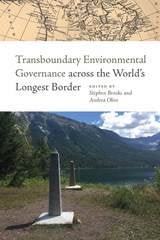
Transboundary Environmental Governance across the World's Longest Border
Stephen Brooks
Michigan State University Press, 2018
Transition Scenarios
China and the United States in the Twenty-First CenturyDavid P. Rapkin and William R. Thompson
University of Chicago Press, 2013
Transnational Political Spaces
Agents - Structures - EncountersEdited by Mathias Albert, Gesa Bluhm, Jan Helmig, Andreas Leutzsch, and Jochen W
Campus Verlag, 2009
From a decidedly multidisciplinary perspective, the articles in Transnational Political Spaces address the notion that political space is no longer fully congruent with national borders. Instead there are areas called transnational political spaces—caused by factors such as migration and social transformation—where policy occurs oblivious to national pressure. Organized into three sections—transnational actors, transnational spaces, and critical encounters—this volume explains how these spaces are formed and defined and how they can be traced and conceptualized.

Transplanting the Great Society
Lyndon Johnson and Food for PeaceKristin L. Ahlberg
University of Missouri Press, 2008

Travels in the Skin Trade
Tourism and the Sex IndustryJeremy Seabrook
Pluto Press, 2001
Treaty Politics and the Rise of Executive Agreements
International Commitments in a System of Shared PowersGlen S. Krutz and Jeffrey S. Peake
University of Michigan Press, 2011
"Krutz and Peake's examination of the increase use of executive agreements offers a valuable lesson in how the president and Congress have responded and adjusted to the growth in the complexity of foreign relations to meet the demands of an ever-increasingly complex and interconnected international community."
---Victoria Farrar-Myers, University of Texas, Arlington
"From reading Treaty Politics and the Rise of Executive Agreements, I learned a good deal about a topic that I thought I knew well. This book will be an excellent addition to the literature on the presidency. It will be read and cited by scholars working in this field."
---Benjamin Ginsberg, Johns Hopkins University
"Glen Krutz and Jeffrey Peake's Treaty Politics and the Rise of Executive Agreements offers a provocative analysis of a neglected topic. Their theoretical and empirical challenge to the usual explanation for the growth of executive agreements, their careful analysis of the treaty process in the Senate and when that body can be decisive, and their assessment of the House of Representatives' role in the agreement process provide important new scholarship for students of the presidency, Congress, and foreign policy."
---James M. McCormick, Iowa State University
In foreign relations, U.S. presidents have exercised a growing independence through the use of executive agreements. The U.S. Constitution specifies that two-thirds of the Senate must ratify a proposed treaty but makes no provision for other forms of international agreements. In 1942 the Supreme Court affirmed the legality of executive agreements, and since World War II, they have outnumbered treaties by more than ten to one. Are presidents trampling the Constitution or seeking to streamline the diplomatic process?
Glen S. Krutz and Jeffrey S. Peake argue that the preference for executive agreements is the result of a symbiotic evolution of the executive and the legislative branches and that in order for the United States to survive in a complex, ever-changing global environment and maintain its world power status, it must fulfill international commitments swiftly and confidently. Members of Congress concur that executive agreements allow each branch to function more effectively. At the same time, the House continues to oversee particular policy areas, and presidents still submit the majority of the most significant international commitments to the Senate as treaties.
Krutz and Peake conclude that executive agreements represent a mutual adaptation of the executive and the legislature in a system of shared power.
Glen S. Krutz is Associate Director of the Carl Albert Center and Professor of Political Science at the University of Oklahoma.
Jeffrey S. Peake is Professor and Department Chair, Department of Political Science at Clemson University.
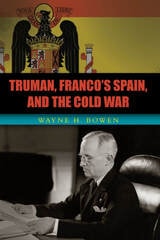
Truman, Franco's Spain, and the Cold War
Wayne H Bowen
University of Missouri Press, 2017
President Harry S. Truman harbored an abiding disdain for Spain and its government. During his presidency (1945–1953), the State Department and the Department of Defense lobbied Truman to form an alliance with Spain to leverage that nation’s geostrategic position, despite Francisco Franco’s authoritarian dictatorship. The eventual alliance between the two countries came only after years of argument for such a shift by nearly the entire U.S. diplomatic and military establishment. This delay increased the financial cost of the 1953 defense agreements with Spain, undermined U.S. planning for the defense of Europe, and caused dysfunction over foreign policy at the height of the Cold War.
Trust and Hedging in International Relations
Kendall W. Stiles
University of Michigan Press, 2018
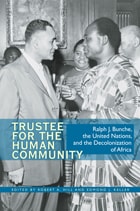
Trustee for the Human Community
Ralph J. Bunche, the United Nations, and the Decolonization of AfricaRobert A. Hill
Ohio University Press, 2010
Ralph J. Bunche (1904–1971), winner of the Nobel Peace Prize in 1950, was a key U.S. diplomat in the planning and creation of the United Nations in 1945. In 1947 he was invited to join the permanent UN Secretariat as director of the new Trusteeship Department. In this position, Bunche played a key role in setting up the trusteeship system that provided important impetus for postwar decolonization ending European control of Africa as well as an international framework for the oversight of the decolonization process after the Second World War.
Trustee for the Human Community is the first volume to examine the totality of Bunche’s unrivalled role in the struggle for African independence both as a key intellectual and an international diplomat and to illuminate it from the broader African American perspective.
These commissioned essays examine the full range of Ralph Bunche’s involvement in Africa. The scholars explore sensitive political issues, such as Bunche’s role in the Congo and his views on the struggle in South Africa. Trustee for the Human Community stands as a monument to the profoundly important role of one of the greatest Americans in one of the greatest political movements in the history of the twentieth century.
Contributors: David Anthony, Ralph A. Austen, Abena P. A. Busia, Neta C. Crawford, Robert R. Edgar, Charles P. Henry, Robert A. Hill, Edmond J. Keller, Martin Kilson, Georges Nzongola-Ntalaja, Jon Olver, Pearl T. Robinson, Elliott P. Skinner, Crawford Young
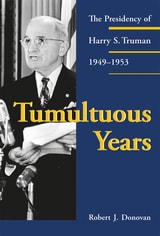
Tumultuous Years
The Presidency of Harry S. Truman, 1949-1953Robert J. Donovan
University of Missouri Press, 1996
Turbulence Across the Sea
Transatlantic Relations and Strategic CompetitionEdited by Elie Baranets and Andrew Novo
University of Michigan Press, 2024
With a mix of research methodologies applied by scholars from both sides of the Atlantic, Turbulence Across the Sea offers a comprehensive analysis of relations among European and North American actors in the context of strategic competition among the United States, Europe, Russia, and China. In doing so, it demonstrates that a reaffirmation of transatlantic cooperation is necessary to maintain security in the face of aggressive moves by both Russia and China. By analyzing attitudes from the perspective of both the various actors (Britain, France, Germany, and the European Union) and various sectors (intelligence cooperation, foreign direct investments, technology, and the defense industry), this book provides readers with a comprehensive perspective on the challenges and opportunities in the shifting landscape of security in the twenty-first century.
Tyrannies of Freedom
African Exceptionalism and the Neocolonial Assemblage in the Millennial AgeBayo Holsey
University of Chicago Press, 0
Examines the enduring myth of Ghanaian exceptionalism and neoliberal freedom.
What is the legacy of the African Revolution today? Black Studies scholar and anthropologist Bayo Holsey addresses this question by examining the twenty-first-century relationship between the United States and Ghana, a nation that was once associated with a powerful vision of Black freedom. In Tyrannies of Freedom, she demonstrates that the period that saw the expansion of the US counterterror state also witnessed attempts to discredit this vision of freedom and replace it with another—one that centers the agency of US politicians, media pundits, and development experts.
Analyzing international development discourses, the anti-trafficking regime’s representational economy, and the expansion of Ghana’s branding as a homeland of the African diaspora, Holsey interrogates the operation of a millennial neocolonial assemblage that asserts, in various ways, that the United States is the guarantor of Ghanaian freedom while simultaneously implementing policies of surveillance, endangerment, and exploitation. At the same time, Holsey shows how Ghanaians and other Black subjects have contested these projects. Tracking the transformation of the Ghanaian nation from a beacon of Black freedom and Pan-African possibility to a battleground over the meanings of African sovereignty in a post-9/11 world, this important book addresses pressing questions concerning the operation of US power in Africa and the production and legitimation of a racialized global hierarchy.