Results by title
905 books match the query 'Literary' and 299 start with t
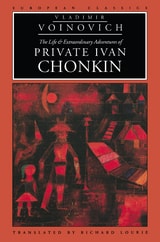
The Life and Extraordinary Adventures of Private Ivan Chonkin
Vladimir Voinovich
Northwestern University Press, 1995
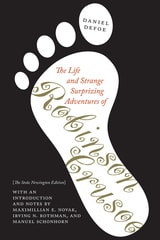
The Life and Strange Surprizing Adventures of Robinson Crusoe
The Stoke Newington EditionDaniel Defoe
Bucknell University Press, 2019
Published by Bucknell University Press. Distributed worldwide by Rutgers University Press.
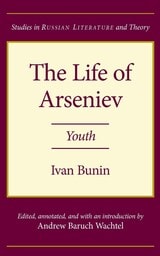
The Life of Arseniev
YouthIvan Bunin
Northwestern University Press, 1994
In ways similar to Nabokov's Speak, Memory, Bunin's novel powerfully evokes the atmosphere of Russia in the decades before the Revolution and illuminates those Russian literary and cultural traditions eradicated in the Soviet era. This first full English-language edition updates earlier translations, taking as its source the version Bunin revised in 1952, and including an introduction and annotations by Andrew Baruch Wachtel.

The Literary Guide and Companion to Southern England
Revised EditionRobert M. Cooper
Ohio University Press, 1998
In a series of intriguing routes through the English countryside, Professor Robert Cooper notes those attractions that the casual tourist might unknowingly pass by, such as the house where Dickens wrote A Tale of Two Cities, or the windswept quay where John Fowles’s French Lieutenant’s woman walked. Maps and information about restaurants and accommodations give the traveler the opportunity of having pints of “half and half” where Jane Austen dined or visiting the pub where Blake’s scuffle led to his trial for treason.
This newly revised and updated edition of Robert Cooper’s acclaimed handbook combines the utility of current travel information with the appeal of literary history, biography, and anecdote in a leisurely and flavorful guide to the broad sweep of southern England outside of London. A rich and reliable guide to the landscape that fostered one of our most cherished cultures, The Literary Guide and Companion to Southern England is an indispensable resource for those who wish to experience literature firsthand.
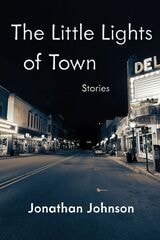
The Little Lights of Town
StoriesJonathan Johnson
Carnegie Mellon University Press, 2025
In The Little Lights of Town, acclaimed poet and memoirist Jonathan Johnson turns to fiction, bringing to life the rugged landscapes and tightly knit communities of Michigan’s Upper Peninsula. Against the backdrop of Lake Superior’s cold, untamed shores, his characters navigate love, loss, and the relentless pull of home.
From those who choose to stay despite the ever-present shadow of isolation to those searching for connection in a land where nature looms larger than life, these stories illuminate the quiet urgencies of human existence. With prose as lyrical as it is unflinching, Johnson visualizes a place where the past lingers in the streets, and where even in the darkest winters, little lights continue to shine.
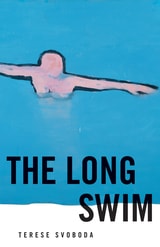
The Long Swim
StoriesTerese Svoboda
University of Massachusetts Press, 2024
A runaway circus lion haunts a small town where two lovers risk more than their respective marriages. A junket to Cuba and an ambassador’s dalliance with a niece hide dark secrets and political revolution. “I’ve always had a knife,” says the unstable stepson to his parents. Inventive, dark, and absurd, the stories in The Long Swim capture Terese Svoboda’s clear-eyed, wry angle on the world: a place of violence and uncertainty but also wild beauty, adventure, and love both lasting and ephemeral. Her characters strive for escape—through romance, travel, or more self-destructive pursuits—and collide with the constraints of family and home, their longing for freedom and autonomy often at odds with the desire for safety and harmony.
Cynical, irreverent, and formally daring, Svoboda’s stories in The Long Swim are a deft exploration of womanhood and humanity. Waves of provocation and wonder toss the reader and leave them wanting more.
The Loss
A Novella and Two Short StoriesVladimir Makanin
Northwestern University Press, 1998
In his celebrated short story "The Prisoner of the Caucasus," two Russian soldiers take a Chechen prisoner during the war, and as events unfold, Makanin reveals the casual brutality of the war but also the secret truths of the character's lives. In the novella The Loss, Pekalov, a drunkard and dreamer obsessed with the idea of building a tunnel under the Ural River, disappears in a ditch while working and is made a saint by the people of his village. "Klyucharyov and Alimushkin" tells the story of what happens when one man becomes remarkably lucky while the other loses all his luck.

The Lost Lives of Lena Wu
A NovelAlvin Lu
University of Alabama Press, 2026
Centered around Lena Wu, a middle-aged Taiwanese immigrant and divorcee, the novel is a recursively structured interrogation of the contingencies between past and present; memory and self-understanding; and memoir and fiction.
The Lucky
(A Novel)H. Lee Barnes
University of Nevada Press, 2003
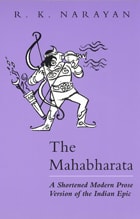
The Mahabharata
A Shortened Modern Prose Version of the Indian EpicR. K. Narayan
University of Chicago Press, 2000
The Makepeace Experiment
Abram Tertz
Northwestern University Press, 1989
The Making Sense of Things
George Choundas
University of Alabama Press, 2018
A grand tour of the edges of our lives, where glory and significance riot against the logic of living and the pall of tragedy.
The Making Sense of Things is a collection of twelve stories that pulse with memory, magic, and myth—all our favorite ways of trying to make sense of things.
Readers are treated to vivid and unforgettable characters. A fiercely independent woman puts the man who loves her to unconscionable tests, never guessing that arson, suicide, and canine obesity will yield a magical kind of happiness. A honeymooner in Venice, addled by fever and second thoughts, commits by dumb error a double murder. A brisk lawyer founders when a car wreck claims his son and ex-wife, then discovers that the desperation of grief is a kind of hope.
The Man with the Black Coat
Russia's Literature of the AbsurdDaniil Kharms and Alexander Vvedensky
Northwestern University Press, 1997
The Master Of Monterey
A NovelLawrence Coates
University of Nevada Press, 2003
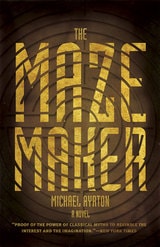
The Maze Maker
A NovelMichael Ayrton
University of Chicago Press, 2015
In this fictional autobiography of the father of Icarus, “Apollo’s creature,” a brilliant but flawed man, writer and sculptor Michael Ayrton harnesses the tales of the past to mold a myth for our times. We learn of Daedalus’s increasingly ambitious artifacts and inventions; his fascination with Minoan culture, commerce, and religion, and his efforts to adapt to them; how he comes to design the maze of the horned Minotaur; and how, when he decides that he must flee yet again, he builds two sets of wax wings—wings that will be instruments of his descent into the underworld, a place of both purgatory and rebirth.
A compelling mix of history, fable, lore, and meditations on the enigma of art, The Maze Maker will ensnare classicists, artists, and all lovers of story in its convolutions of life and legend. “I never understood the pattern of my life,” writes Daedalus, “so that I have blundered through it in a maze.”
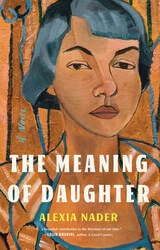
The Meaning of Daughter
Nader, Alexia
University of Iowa Press, 2026
After immigrating from Lebanon to Haiti as a young girl, Merjan comes of age in an insular, conservative community, where it seems as though her sole escape is marriage. Striking a bargain with a young art dealer, she marries and dreams of becoming a painter, only to discover her husband’s support tethered with expectations.
In the late 1970s, Merjan’s daughter Yvonne is a young woman on the cusp of a marriage of convenience. Though resentful of her mother, Yvonne dreams of establishing a Haitian art gallery in New York with the help of a well-connected older man—but her time there ends disastrously, creating a deep rift between her and her family.
In the present day, Yvonne’s daughter Eva is a student whose art draws inspiration from her grandmother Merjan’s largely undiscovered work. When Eva becomes unexpectedly pregnant, she moves back to her childhood home in Miami to sort out her ambivalent feelings, where she finds her family upended by feuds. An intimate family saga, The Meaning of Daughter explores questions about maternal ambivalence, ambition, artmaking, and how desire resists gendered expectations.
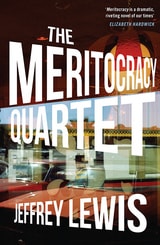
The Meritocracy Quartet
Jeffrey Lewis
Haus Publishing, 2011
The quartet follows Louie, a Yale graduate from a modest background with a gift for forging connections in high and low places. Beginning in the 1960s, as he documents a going-away party for a fellow Yalie on his way to Vietnam, and continuing through his spiritual encounters with a 1970s group of city misfits, his turn to television writing in the 1980s, and a tragic love story between two of his close friends in the 1990s, Louie chronicles not only his own personal struggles—his silent love for his best friend’s girl, his delicate relationship with an at-times absent father—but also the attitudes, events, and people that marked his generation. From the Vietnam War to George W. Bush, from television trends to the divide between the haves and have-nots, The Meritocracy Quartet is a moving witness to everything America had to offer in the latter portion of the twentieth century.
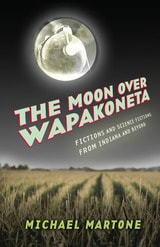
The Moon over Wapakoneta
Fictions and Science Fictions from Indiana and BeyondMichael Martone
University of Alabama Press, 2018
The Moon over Wapakoneta is vintage Michael Martone, the visionary oracle of the American Midwest with the gift for discovering the marvelous in the mundane. In these stories Martone shows us how traveling across time zones from Ohio to Indiana is a form of time travel; how a beer bottle can serve as a kind of telescope, how Amish might power their spaceships with windmills as they travel through space and time. These stories capture the paradox of feeling that one is in the heart of the country while at the same time in the middle of nowhere, of natives who find themselves strangers in their once familiar, but now strange, lands.
On display is a love of obsolete technologies, small-town whimsy, home movies of proms and birthday parties, steam engines and baseball games. If Italo Calvino lived in Indiana rather than Italy, these are the fictions he might have made.
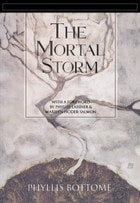
The Mortal Storm
Phyllis Bottome
Northwestern University Press, 1998
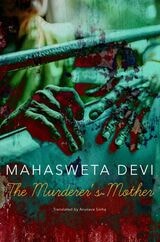
The Murderer’s Mother
Mahasweta Devi
Seagull Books, 2023
The Murderer’s Mother takes readers to the late 1970s in the Indian state of West Bengal, where the Communist Party–led Left Front has just been voted into power. It tells the story of Tapan, who has been installed as a gang leader by the most powerful man in the locality in order to kill “unwanted obstacles,” which he does, one after another. Tapan knows there is no other way he can earn a living, but at the same time, he is desperate to protect his family. He tries to stop petty crime and assaults on women, even as he protects his patron’s interests. Through the dissonance, he becomes both a feared and revered figure, but his patron’s game becomes clear: now the murderer, too, must be eliminated.
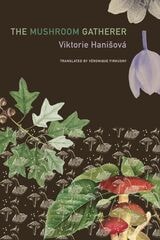
The Mushroom Gatherer
Viktorie Hanišová
Seagull Books, 2025
Nestled deep in the Bohemian Forest, Sára’s world is quiet and bound to the rhythms of nature. She has wandered the same wooded trails for seven years, filling her basket with mushrooms, her pockets with memories, and her thoughts with the past she cannot quite escape. The solitude suits her—until the death of her mother forces her to confront the tangled roots of family and the wounds that never fully healed. As Sára meticulously sorts through chanterelles and boletes, she also sorts through childhood recollections and the uneasy inheritance of trauma. The forest offers refuge, but it also holds secrets, and as the seasons shift, so does Sára’s understanding of herself and the complicated bonds that tether her to the world.
With melodic prose and an acute sensitivity to how landscapes shape lives, Viktorie Hanišová crafts a novel of quiet intensity and deep introspection. The Mushroom Gatherer is a haunting meditation on loss and the delicate balance between isolation and connection, perfect for readers drawn to atmospheric fiction.
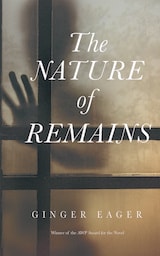
The Nature of Remains
Ginger Eager
New Issues Poetry and Prose, 2020
Set during the 2009 recession, The Nature of Remains rests at the intersection of class, gender, education and place. Through extended geological metaphor, readers witness the orogeny, crystallization, and weathering of the human soul. Doreen’s journey reveals the ways even a woman’s most precious connections—her children, her grandchildren, her lover—operate within larger social structures capable of challenging her sovereignty.
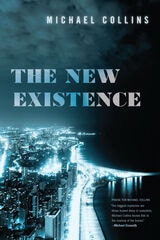
The New Existence
Michael Collins
University of Iowa Press, 2021
Chicagoan Helen Price, a dying woman, recounts her life while driving toward an oncology appointment. She attempts to take her own life, survives, then dies under tragic circumstances.
In death, Helen bequeaths the family home to her only son, gay playwright Norman Price. Father to an adopted Chinese child, and recently broken up with his partner, Norman’s life is in crisis. Helen also bequeaths a series of tapes to Nate Feldman, a Vietnam draft dodger ensconced in the far reaches of Canada, and the son of Helen’s former boss, Theodore Feldman. Nate’s return to America to claim the tapes occasions confronting a history of animus between father and son, but also the nature of the relationship between Helen Price and Theodore Feldman.
Told from moving cars, the journeys of Norman Price and Nate Feldman converge toward unexpected mysteries and revelations that uncover not so much lies as understandings of life that no longer hold under the scrutiny of the present.
The New Woman
Carmen Laforet
Catholic University of America Press, 2025
The Nightwatches of Bonaventura
Bonaventura
University of Chicago Press, 2014
Since its publication, fans have speculated on the novel’s authorship, and it is now believed to be by theater director August Klingemann, who first staged Goethe’s Faust. Organized into sixteen separate nightwatches, the sordid scenes glimpsed through parted curtains, framed by door chinks, and lit by candles and shadows anticipate the cinematic. A cross between the gothic and the romantic, The Nightwatches of Bonaventura is brilliant in its perverse intensity, presenting an inventory of human despair and disgust through the eyes of a bitter, sardonic watcher who draws laughter from tragedy.
Translated by Gerald Gillespie, who supplies a fresh introduction, The Nightwatches of Bonaventura will be welcomed by a new generation of English-language fans eager to sample the night’s dark offerings.
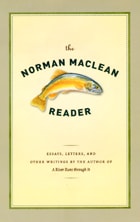
The Norman Maclean Reader
Norman Maclean
University of Chicago Press, 2008
In his eighty-seven years, Norman Maclean played many parts: fisherman, logger, firefighter, scholar, teacher. But it was a role he took up late in life, that of writer, that won him enduring fame and critical acclaim—as well as the devotion of readers worldwide. Though the 1976 collection A River Runs Through It and Other Stories was the only book Maclean published in his lifetime, it was an unexpected success, and the moving family tragedy of the title novella—based largely on Maclean’s memories of his childhood home in Montana—has proved to be one of the most enduring American stories ever written.
The Norman Maclean Reader is a wonderful addition to Maclean’s celebrated oeuvre. Bringing together previously unpublished materials with incidental writings and selections from his more famous works, the Reader will serve as the perfect introduction for readers new to Maclean, while offering longtime fans new insight into his life and career.
In this evocative collection, Maclean as both a writer and a man becomes evident. Perceptive, intimate essays deal with his career as a teacher and a literary scholar, as well as the wealth of family stories for which Maclean is famous. Complete with a generous selection of letters, as well as excerpts from a 1986 interview, The Norman Maclean Reader provides a fully fleshed-out portrait of this much admired author, showing us a writer fully aware of the nuances of his craft, and a man as at home in the academic environment of the University of Chicago as in the quiet mountains of his beloved Montana.
Various and moving, the works collected in The Norman Maclean Reader serve as both a summation and a celebration, giving readers a chance once again to hear one of American literature’s most distinctive voices.
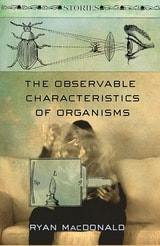
The Observable Characteristics of Organisms
StoriesRyan MacDonald
University of Alabama Press, 2014
As MacDonald says, “I think what I’m after in the stories as well as in the video work is finding an experiential moment, nothing really stable, something pleasantly unstable, or uncomfortable . . . purposefully pleasant uncomfortable instability with moments of tenderness and definitely humor. Certainly nothing concrete, unless it needs that. A certain fear of and respect for banality. I’m after a good time, which can often turn into a really bad time, but either way, one we’ll remember forever.”
Despite the range of circumstances they reveal, these stories are unified by a brightness of vision, deft observation, and consistently sharp, funny, and unbridled language.
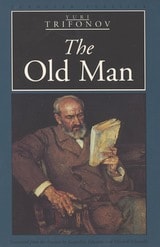
The Old Man
Yuri Trifonov
Northwestern University Press, 1999
The Old Man veers between a contemporary effort to buy a dacha and the memories of an incident in the Civil War. A questionable action in the past haunts the present and throws into relief the materialism that has come to replace revolutionary idealism; suggesting this idealism may have been tainted in the first place. While the setting and situation are very Soviet, the quandary Trifonov describes has universal significance.
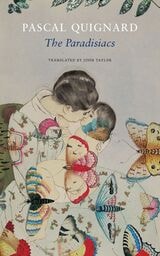
The Paradisiacs
Last Kingdom IVPascal Quignard
Seagull Books, 2025
What if paradise was not a place we lost, but one we never truly knew? In Paradisiacs, the fourth volume of the Last Kingdom series, Pascal Quignard meditates on the nature of paradise—not as an Eden to which we might return, but as a place of origin that lingers in myth. Through his signature blend of ancient texts, Paleolithic art, psychoanalysis, and personal reflection, Quignard explores our primal longing for recognition. He traces this yearning back to the erstwhile, a prenatal paradise from which we are expelled at birth, and examines how resemblance and recognition shape our identities.
At once poetic and philosophical, Paradisiacs invites readers into Quignard’s singular world, where language and history coalesce into a profound rumination on the origins of selfhood. With John Taylor’s masterly translation, this latest installment of Last Kingdom is a hypnotic and revelatory reading experience for those drawn to the intersections of philosophy and the ineffable.
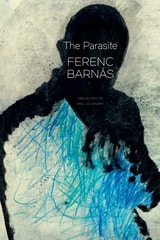
The Parasite
Ferenc Barnás
Seagull Books, 2020
When he gets to know a woman referred to as L., he thinks his demons may have finally subsided. But when he hears of her past, the jealousy returns. He seeks relief through writing—by weaving an imagined tale of L.’s amorous adventures. What will he do with this strange manuscript, and can it bring him healing?
A breathtaking blend of Dostoevskian visions, episodes of madness, and intellectual fervor, all delivered in precise, lucid prose, The Parasite is a novel that one cannot escape.
The Pet Thief
Kassten Alonso
University of Alabama Press, 2013
The Pillow Museum
StoriesClaire Bateman
University of Alabama Press, 2025
A collection of 56 flash fictions, micro-essays, and contemporary fables about the burden on women and families.
The Pillow Museum is a collection of 56 flash fictions, micro-essays, and contemporary fables set in various simulacra of our world. Claire Bateman’s gorgeous prose captures the imagination with closely observed details of people and places that are startlingly familiar yet unreal, where nothing can be taken for granted, including narrative logic: "It was snowing the night they had the fight about the glass piano whose music provided all the light in the house."
In an authoritative voice that offers no apologies or justifications, The Pillow Museum evokes a closely observed slipstream strangeness that refuses to take any moment or detail for granted—a fruitful, delirious disruption.

The Plays of David Garrick, Volume 3
Garrick's Adaptations of Shakespeare, 1744 - 1756Edited by Harry William Pedicord and Fredrick Louis Bergmann
Southern Illinois University Press, 1981
David Garrick’s accomplishments as an actor, manager, and theatrical innovator brought him great fame and fortune, and his ideas influenced not only his own age but succeeding ages as well. Yet as a playwright, a part of the elegant combination of talents that was David Garrick, he has never achieved the critical reputation he richly deserves, in main because of the unavailability of texts and the lack of proper assessment of the historic importance of his plays in the English theatre.
This first complete edition makes available to scholars and students all the plays of Garrick in well edited texts, with commentary and notes.
Contents: Macbeth. A Tragedy, 1744; Romeo and Juliet, 1748; The Fairies. An Opera, 1755; Catherine and Petruchio. A Comedy, 1756; Florizel and Perdita. A Dramatic Pastoral, 1756; The Tempest. An Opera, 1756; and King Lear. A Tragedy, 1756.
The Pleasure Marriage
A NovelTahar Ben Jelloun; Translated from the French by Rita S. Nezami
Northwestern University Press, 2021
Nabou returns to Fez as Amir’s second wife, weathering the jealous cruelty of Lalla Fatma, his first partner. Isolated within her new home, Nabou gives birth to twin sons, one black and one white, who come of age on the opposite sides of racial, social, and political chasms and who chart vastly different courses. The Pleasure Marriage showcases Ben Jelloun’s mastery of metaphor and lyrical narrative as he continues to take us into the worlds of Moroccan culture through his exquisite language and literary genius.
The Pledge
Friedrich Dürrenmatt
University of Chicago Press, 2000
One of Dürrenmatt’s most diabolically imagined and constructed novels, The Pledge was adapted for the screen in 2000 in a film directed by Sean Penn and starring Jack Nicholson.
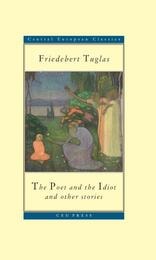
The Poet and the Idiot
Friedebert Tuglas
Central European University Press, 2007
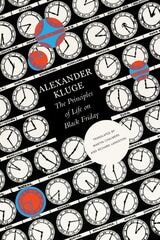
The Principles of Life on Black Friday
Chronicle of Emotions, Notebook 1Alexander Kluge
Seagull Books, 2023
This volume concerns itself with the question of time, from the description of a brief fragment passing by in a matter of minutes to stories of the unexpected stock-market crash of 1929, a once-in-a-century event that Europeans call ‘Black Friday’ because Wall Street’s collapse reached the Old World one day later. Through this exploration of time, Kluge ponders some fundamental questions not altered by the passing of time: What can I trust? How can I protect myself? What should I be afraid of? Our age today has achieved a new kind of obscurity. We’ve encountered a pandemic. We’ve witnessed the Capitol riots. We see before us inflation, war, and a burning planet. We gaze at the world with suspense. What we need in our lives is orientation—just like ships that navigate the high seas. We might just find that in Kluge’s vignettes and stories.
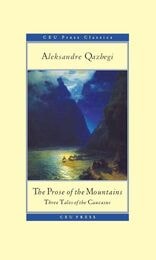
The Prose of the Mountains
Three Tales of the CaucasusAleksandre Qazbegi
Central European University Press, 2015
The Prose of the Mountains contains three tales of the Caucasus by Aleksandre Qazbegi, one of the most prescient and gifted chroniclers of the Georgian encounter with colonial modernity. His stories offer an invaluable counterpoint to the predominantly Russian narratives that have hitherto shaped scholarly accounts of the nineteenth-century Caucasus. “Memoirs of a Shepherd” poignantly chronicles the young author’s decision to pass seven years of his life as a shepherd with Georgian mountaineers. “Eliso” (the name of a Chechen girl) offers one of the most searing accounts on record of the forced migration of this people from their homeland to Ottoman lands. Set in the sixteenth century, “Khevis Beri Gocha” (the name of a Georgian village chief) classically chronicles a tragic misunderstanding between a severe father and his loving son.
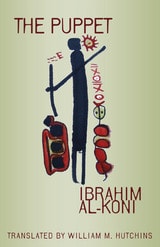
The Puppet
By Ibrahim al-Koni
University of Texas Press, 2010
The Puppet, a mythic tale of greed and political corruption, traces the rise, flourishing, and demise of a Saharan oasis community. Aghulli, a noble if obtuse man who has been chosen leader of the oasis, hankers after the traditional nomadic pastoralist life of the Tuareg. He sees commerce (understood as including trade in gold, marriage, agriculture, and even recreation) as the prime culprit in the loss of the nomadic ethos. Thus he is devastated to learn that his supporters are hoarding gold.
The novel's title notwithstanding, the author has stressed repeatedly that he is not a political author. He says that The Puppet portrays a good man who has been asked to lead a corrupt society. The subplot about star-crossed young lovers introduces a Sufi theme of the possibility of transforming carnal into mystical love. The Puppet, though, is first and foremost a gripping, expertly crafted tale of bloody betrayal and revenge inspired by gold lust and an ancient love affair.
The Raj Quartet, Volume 1
The Jewel in the CrownPaul Scott
University of Chicago Press, 1976
No set of novels so richly recreates the last days of India under British rule—"two nations locked in an imperial embrace"—as Paul Scott's historical tour de force, The Raj Quartet. The Jewel in the Crown opens in 1942 as the British fear both Japanese invasion and Indian demands for independence. On the night after the Indian Congress Party votes to support Ghandi, riots break out and an ambitious police sergeant arrests a young Indian for the alleged rape of the woman they both love.
The Raj Quartet, Volume 2
The Day of the ScorpionPaul Scott
University of Chicago Press, 1998
In The Day of the Scorpion, Scott draws us deeper in to his epic of India at the close of World War II. With force and subtlety, he recreates both private ambition and perversity, and the politics of an entire subcontinent at a turning point in history.
As the scorpion, encircled by a ring of fire, will sting itself to death, so does the British raj hasten its own destruction when threatened by the flames of Indian independence. Brutal repression and imprisonment of India's leaders cannot still the cry for home rule. And in the midst of chaos, the English Laytons withdraw from a world they no longer know to seek solace in denial, drink, and madness.
The Raj Quartet, Volume 3
The Towers of SilencePaul Scott
University of Chicago Press, 1998
India, 1943: In a regimental hill station, the ladies of Pankot struggle to preserve the genteel façade of British society amid the debris of a vanishing empire and World War II. A retired missionary, Barbara Batchelor, bears witness to the connections between many human dramas; the love between Daphne Manner and Hari Kumar; the desperate grief an old teacher feels for an India she cannot rescue; and the cruelty of Captain Ronald Merrick, Susan Layton's future husband.
The Raj Quartet, Volume 4
A Division of SpoilsPaul Scott
University of Chicago Press, 1998
After exploiting India's divisions for years, the British depart in such haste that no one is prepared for the Hindu-Muslim riots of 1947. The twilight of the raj turns bloody. Against the backdrop of the violent partition of India and Pakistan, A Division of the Spoils illuminates one last bittersweet romance, revealing the divided loyalties of the British as they flee, retreat from, or cling to India.
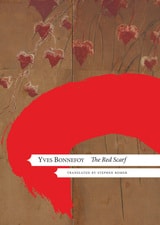
The Red Scarf
Followed by "Two Stages" and Additional NotesYves Bonnefoy
Seagull Books, 2021
In December 2015, six months before his death at the age of 93, Yves Bonnefoy concluded what was to be his last major text in prose, L’écharpe rouge, translated here as The Red Scarf. In this unique book, described by the poet as "an anamnesis"—a formal act of commemoration—Bonnefoy undertakes, at the end of his life, a profoundly moving exegesis of some fragments written in 1964. These fragments lead him back to an unspoken, lifelong anxiety: “My most troubling memory, when I was between ten and twelve years old, concerns my father, and my anxiety about his silence.” Bonnefoy offers an anatomy of his father’s silence, and of the melancholy that seemed to take hold some years into his marriage to the poet’s mother.
At the heart of this book is the ballad of Elie and Hélène, the poet’s parents. It is the story of their lives together in the Auvergne, and later in Tours, seen through the eyes of their son—the solitary boy’s intense but inchoate experience, reviewed through memories of the now elderly man. What makes The Red Scarf indispensable is the intensely personal nature of the material, casting its slant light, a setting sun, on all that has gone before.
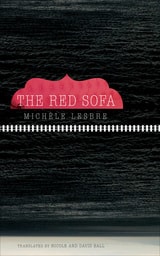
The Red Sofa
Michel Lesbre
Seagull Books, 2017
In The Red Sofa, we meet Anne, a young woman setting off on the Trans-Siberian Railway in order to find her former lover, Gyl, who left twenty years before. As the train moves across post-Soviet Russia and its devastated landscapes, Anne reflects on her past with Gyl and their patriotic struggles, as well as on the neighbor she has just left behind, Clémence Barrot.
Rocked by the train’s movements Anne is moved by her memory of Clémence, who is old and whose memory is failing, but who has not lost her taste for life and adventure. Ensconced on her red sofa at home, Clémence loves to tell Anne her life story, mourning lost loved ones and celebrating the lives of brave, rebellious women who went before her. Eventually, Anne’s train trip returns her home having not found Gyl, but having found something much more meaningful—herself.
The Registry of Forgotten Objects
StoriesMiles Harvey
The Ohio State University Press, 2024
The Relic
Jose Maria Eca de Queiros
Catholic University of America Press, 2023
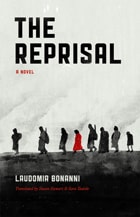
The Reprisal
A NovelLaudomia Bonanni
University of Chicago Press, 2013
Based on a number of incidents that took place in Abruzzo during the war, Laudomia Bonanni’s compact and tragic novel explores the overwhelming conflicts between ideology and community, justice and vengeance. The story is embedded in the cruel reality of Italian fascism, but its themes of revenge, sacrifice, and violence emerge as universal, delivered in prose that is at once lyrical and brutal.
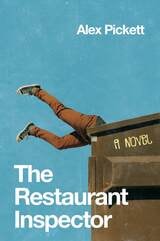
The Restaurant Inspector
Alex Pickett
University of Wisconsin Press, 2021
This antic, raunchy send-up of small-town life gets deep into the minds and hearts of its characters and their entanglements. Alex Pickett exposes the fault lines in Midwestern Nice and reveals how corruption can take hold in even the most unlikely of places.
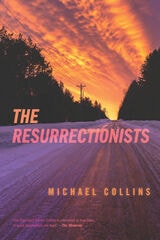
The Resurrectionists
Collins, Michael
University of Iowa Press, 2021
Haunted by the deaths of his parents and uncle, Frank Cassidy journeys north to dispute a cousin's claim to the family farm, where he meets a stranger who might resolve mysteries about Frank's past.