Results by title
8113 books match the query 'Literary Criticism' and 1818 start with t
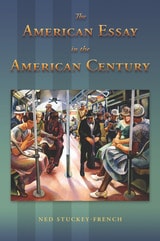
The American Essay in the American Century
Ned Stuckey-French
University of Missouri Press, 2011
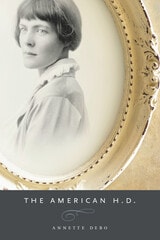
The American H.D.
Annette Debo
University of Iowa Press, 2012
In The American H.D., Annette Debo considers the significance of nation in the artistic vision and life of the modernist writer Hilda Doolittle. Her versatile career stretching from 1906 to 1961, H.D. was a major American writer who spent her adult life abroad; a poet and translator who also wrote experimental novels, short stories, essays, reviews, and a children’s book; a white writer with ties to the Harlem Renaissance; an intellectual who collaborated on avant-garde films and film criticism; and an upper-middle-class woman who refused to follow gender conventions. Her wide-ranging career thus embodies an expansive narrative about the relationship of modernism to the United States and the nuances of the American nation from the Gilded Age to the Cold War.
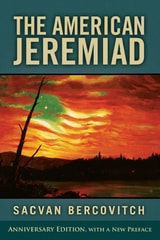
The American Jeremiad
Sacvan Bercovitch
University of Wisconsin Press, 1978
When Sacvan Bercovitch’s The American Jeremiad first appeared in 1978, it was hailed as a landmark study of dissent and cultural formation in America, from the Puritans’ writings through the major literary works of the antebellum era. For this long-awaited anniversary edition, Bercovitch has written a deeply thoughtful and challenging new preface that reflects on his classic study of the role of the political sermon, or jeremiad, in America from a contemporary perspective, while assessing developments in the field of American studies and the culture at large.
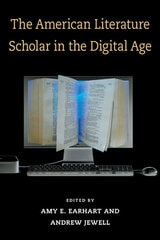
The American Literature Scholar in the Digital Age
Edited by Amy E. Earhart and Andrew Jewell
University of Michigan Press, 2010
"By casting the collection explicitly as an outreach to the larger community of Americanists---not primarily those who self-identify as 'digital scholars'---Earhart and Jewell have made an important choice, and one that will likely make this a landmark publication."
---Andrew Stauffer, University of Virginia
The American Literature Scholar in the Digital Age, which features a wide range of practitioner-scholars, is the first of its kind: a gathering of people who are expert in American literary studies and in digital technologies, scholars uniquely able to draw from experience with building digital resources and to provide theoretical commentary on how the transformation to new technologies alters the way we think about and articulate scholarship in American literature. The volume collects articles from those who are involved in tool development, usability testing, editing and textual scholarship, digital librarianship, and issues of race and ethnicity in digital humanities, while also situating digital humanities work within the larger literary discipline. In addition, the volume examines the traditional structures of the fields, including tenure and promotion criteria, modes of scholarly production, the skill sets required for scholarship, and the training of new scholars.
The American Literature Scholar in the Digital Age will attract practitioners of digital humanities in multiple fields, Americanists who utilize digital materials, and those who are intellectually curious about the new movement and materials.
Amy E. Earhart is Assistant Professor in the Department of English at Texas A&M University.
Andrew Jewell is Associate Professor of Digital Projects, University Libraries, at the University of Nebraska–Lincoln.
Cover art: Book background ©iStockphoto.com/natashika
digitalculturebooks is an imprint of the University of Michigan Press and the Scholarly Publishing Office of the University of Michigan Library dedicated to publishing innovative and accessible work exploring new media and their impact on society, culture, and scholarly communication. Visit the website at www.digitalculture.org.
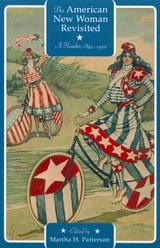
The American New Woman Revisited
A Reader, 1894-1930Patterson, Martha H
Rutgers University Press, 2008
In North America between 1894 and 1930, the rise of the “New Woman” sparked controversy on both sides of the Atlantic and around the world. As she demanded a public voice as well as private fulfillment through work, education, and politics, American journalists debated and defined her. Who was she and where did she come from? Was she to be celebrated as the agent of progress or reviled as a traitor to the traditional family? Over time, the dominant version of the American New Woman became typified as white, educated, and middle class: the suffragist, progressive reformer, and bloomer-wearing bicyclist. By the 1920s, the jazz-dancing flapper epitomized her. Yet she also had many other faces.
Bringing together a diverse range of essays from the periodical press of the late nineteenth and early twentieth centuries, Martha H. Patterson shows how the New Woman differed according to region, class, politics, race, ethnicity, and historical circumstance. In addition to the New Woman’s prevailing incarnations, she appears here as a gun-wielding heroine, imperialist symbol, assimilationist icon, entrepreneur, socialist, anarchist, thief, vamp, and eugenicist. Together, these readings redefine our understanding of the New Woman and her cultural impact.
The American Open Road
Narrative and Popular ImaginationJeffrey Alan Melton
University of Alabama Press, 2025
WINNER OF THE ELIZABETH AGEE PRIZE IN AMERICAN LITERATURE
The rearview mirror perspective of a road trip across the American “open road.”
The American Open Road: Narrative and Popular Imagination offers a rich exploration of how the mythos of the open road has shaped, and been shaped by, American culture. Beginning with the post–World War II boom that solidified car culture as central to American life, Melton reflects on how roads, automobiles, and landscapes have been represented in literature, film, and other cultural texts, highlighting the interplay between mobility and narrative.
Drawing on a wide range of cultural texts, from traditional classic road novels and cinematic presentations, to advertisements, poetry, and prose, Melton examines how the open road functions as a symbol of autonomy, reinvention, and resistance. He highlights how road narratives have also exposed deeper tensions in American life—especially around race, gender, and power—and how historically marginalized voices have used the road to reclaim space and tell new stories.
From the romanticism of Route 66 to the political edge of modern road films, The American Open Road offers a thoughtful, engaging analysis of the narratives that continue to define American identity and longing. For readers interested in cultural history, travel literature, or the enduring pull of the highway, this book offers a compelling view from the passenger seat of America’s most iconic journeys.
The American Poet at the Movies
A Critical HistoryLaurence Goldstein
University of Michigan Press, 1995
As an increasingly popular genre of modern poetry, and one that permits a unique view of this century's dominant art form, the movie poem has needed an explanatory book like this one. As cinema and television continue to wield extraordinary influence over the lives of all Americans, the efforts of poets to understand the visual culture will come to be appreciated as central to the task of modern and postmodern literature. This critical history is an important and timely contribution to the study of American literature and American institutions.
"One of the impressive things about the book is that while pursuing the seemingly narrow category of poems-about-movies, Goldstein is able to raise and illuminate virtually all the key issues surrounding the poetry of the period." - Roger Gilbert, Cornell University
". . . a discerning book, combining criticism and social history. It satisfies scholarly standards while appealing to general readers." - Philip French, coeditor of the Faber Book of Movie Verse
"In this work, [Goldstein] provides a new way of looking at American poets, both familiar and neglected. The approach is chronological and thematic, and films are seen from black, gay, Jewish, and feminist as well as middle-class white perspectives." Library Journal
Laurence Goldstein is editor of the Michigan Quarterly Review and Professor of English, University of Michigan.
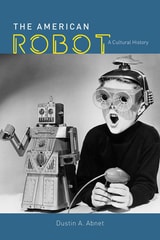
The American Robot
A Cultural HistoryDustin A. Abnet
University of Chicago Press, 2020
In tracing the history of the idea of robots in US culture, Abnet draws on intellectual history, religion, literature, film, and television. He explores how robots and their many kin have not only conceptually connected but literally embodied some of the most critical questions in modern culture. He also investigates how the discourse around robots has reinforced social and economic inequalities, as well as fantasies of mass domination—chilling thoughts that the recent increase in job automation has done little to quell. The American Robot argues that the deep history of robots has abetted both the literal replacement of humans by machines and the figurative transformation of humans into machines, connecting advances in technology and capitalism to individual and societal change. Look beneath the fears that fracture our society, Abnet tells us, and you’re likely to find a robot lurking there.
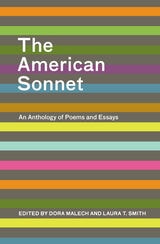
The American Sonnet
An Anthology of Poems and EssaysDora Malech
University of Iowa Press, 2023
Contributor List: Essayists
Abdul Ali, Baltimore, MD
Anna Lena Phillips Bell, University of North Carolina, Wilmington
Jodie Childers, Queens, New York
Benjamin Crawford, University of Alabama
Meg Day, Franklin and Marshall College
Donna Denizé, St. Albans School
Michael Dumanis, Bennington College
Jordan Finkin, Hebrew Union College
Rebecca Morgan Frank, Northwestern University
Anna Maria Hong, Mount Holyoke College
Gillian Huang-Tiller, University of Virginia, Wise
Walt Hunter, Clemson University
John James, University of California, Berkeley
Matthew Kilbane, University of Notre Dame
Diana Leca, University of Oxford
Ariel Martino, Colgate University
Nate Mickelson, New York University
Lisa L. Moore, University of Texas at Austin
Timo Müller, University of Konstanz, Germany
Carl Phillips, Washington University in St. Louis
Zoë Pollak, Columbia University
Jonathan F.S. Post, UCLA
Stephen Regan, Durham University, UK
Jahan Ramazani, University of Virginia
Hollis Robbins, University of Utah
Nathan Spoon, Joelton, TN
Marlo Starr, Wittenberg University
Yuki Tanaka, Hosei University, Japan
Tess Taylor, Ashland University
Michael Theune, Illinois Wesleyan University
Eleanor Wakefield, University of Oregon
Lesley Wheeler, Washington and Lee University
Jon Woodson, Howard University emeritus
Contributors List: Poets
Elizabeth Alexander, Agha Shahid Ali, Julia Alvarez, Maggie Anderson, Tacey Atsitty, Charles Bernstein, Ted Berrigan, Jen Bervin, Elizabeth Bishop, Louise Bogan, Ruth Muskrat Bronson, Gwendolyn Brooks, Jericho Brown, Lucille Clifton, Henri Cole, Wanda Coleman, Countee Cullen, William Cullen Bryant, E.E. Cummings, Meg Day, Natalie Diaz, Paul Laurence Dunbar, Alice Moore Dunbar-Nelson, Ralph Waldo Emerson, Rhina Espaillat, Tarfia Faizullah, Robert Frost, torrin a. greathouse, Marilyn Hacker, Robert Hayden, Terrance Hayes, Anthony Hecht, Lynn Hejinian, Leslie Pinckney Hill, Anna Maria Hong, Langston Hughes, David Humphreys, Helen Hunt Jackson, Tyehimba Jess, Helene Johnson, James Weldon Johnson, June Jordan, Douglas Kearney, Richard Kenney, Joan Larkin, Emma Lazarus, Mani Levb, Amy Lowell, Robert Lowell, Nate Marshall, Bernadette Mayer, George Marion McClellan, Brandy Nalani McDougall, Claude McKay, Joyelle McSweeney, Lo Kwa Mei-en, James Merrill, Phillip Metres, Edna St. Vincent Millay, Simone Muench, Marilyn Nelson, Craig Santos Perez, Carl Phillips, Sylvia Plath, Alexander Posey, Lizette Woodworth Reese, Adrienne Rich, Lola Ridge, Muriel Rukeyeser, Kay Ryan, Diane Seuss, Fradel Shtok, Aaron Shurin, giovanni singleton, Patricia Smith, Mary Ellen Solt, Nathan Spoon, Gertrude Stein, Adrienne Su, Lorenzo Thomas, Dunstan Thompson, Natasha Tretheway, Fredrick Goddard Tuckerman, Mona Van Duyn, Ellen Bryant Voight, Margaret Walker, Lucian B. Watkins, Phillis Wheatley, John Wheelwright, Jackie K. White, Walt Whitman, James Wright, Elinor Wylie
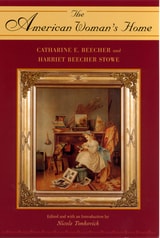
The American Woman's Home
Beecher, Catharine E
Rutgers University Press, 2002
The American Womans Home, originally published in 1869, was one of the late nineteenth centurys most important handbooks of domestic advice. The result of a collaboration by two of the eras most important writers, this book represents their attempt to direct womens acquisition and use of a dizzying variety of new household consumer goods available in the postCivil War economic boom. It updates Catharine Beechers influential Treatise on Domestic Economy (1841) and incorporates domestic writings by Harriet Beecher Stowe first published in The Atlantic in the 1860s.
Today, the book can be likened to an anthology of household hints, with articles on cooking, decorating, housekeeping, child-rearing, hygiene, gardening, etiquette, and home amusements. The American Womans Home, almost a bible on domestic topics for Victorian women, illuminates womens roles a century and a half ago and can be used for comparison with modern theories on the role of women in the home and in society. Illustrated with the original engravings, this completely new edition offers a lively introduction by Nicole Tonkovich and notes linking the text to important historical, social, and cultural events of the late nineteenth century

The American Writer and the European Tradition
Margaret Denny and William H. Gilman, Editors
University of Minnesota Press, 1950
The American Writer and the European Tradition was first published in 1950. Minnesota Archive Editions uses digital technology to make long-unavailable books once again accessible, and are published unaltered from the original University of Minnesota Press editions.
In a series of perceptive essays by twelve scholars this volume brings a fresh viewpoint to the study of American literature. From the colonial gentlemen-scholars to contemporary poets and novelists, the American writer is seen in relation to the cultural influences that flowed from Europe to America, intermingled with native tendencies, and then flowed from America to Europe.
Three themes bind the essays together: What was the American writer's original heritage of European ideas? What ideas, moods, manners in American writers were indigenous, or mostly so, to America? And finally, what has been the influence of American letters abroad?
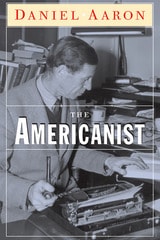
The Americanist
Daniel Aaron
University of Michigan Press, 2009
“I have read all of Daniel Aaron’s books, and admired them, but in The Americanist I believe he has composed an intellectual and social memoir for which he will be remembered. His self-portrait is marked by personal tact and admirable restraint: he is and is not its subject. The Americanist is a vision of otherness: literary and academic friends and acquaintances, here and abroad. Eloquently phrased and free of nostalgia, it catches a lost world that yet engendered much of our own.”
—Harold Bloom
“The Americanist is the absorbing intellectual autobiography of Daniel Aaron, who is the leading proponent and practitioner of American Studies. Written with grace and wit, it skillfully blends Daniel Aaron’s personal story with the history of the field he has done so much to create. This is a first-rate book by a first-rate scholar.”
—David Herbert Donald, Professor Emeritus, Harvard University
The Americanist is author and critic Daniel Aaron’s anthem to nearly a century of public and private life in America and abroad. Aaron, who is widely regarded as one of the founders of American Studies, graduated from the University of Michigan, received his Ph.D. from Harvard, and taught for over three decades each at Smith College and Harvard.
Aaron writes with unsentimental nostalgia about his childhood in Los Angeles and Chicago and his later academic career, which took him around the globe, often in the role of America’s accidental yet impartial critic. When Walt Whitman, whom Aaron frequently cites as a touchstone, wrote, “I am large, I contain multitudes,” he could have been describing Daniel Aaron—the consummate erudite and Renaissance individual whose allegiance to the truth always outweighs mere partisan loyalty.
Not only should Aaron’s book stand as a resplendent and summative work from one of the finest thinkers of the last hundred years, it also succeeds on its own as a first-rate piece of literature, on a par with the writings of any of its subjects. The Americanist is a veritable Who’s Who of twentieth-century writers Aaron interviewed, interacted with, or otherwise encountered throughout his life: Ralph Ellison, Robert Frost, Lillian Hellman, Richard Hofstadter, Alfred Kazin, Sinclair Lewis, Malcolm Muggeridge, John Crowe Ransom, Upton Sinclair, Edmund Wilson, Leonard Woolf, and W. B. Yeats, to name only a few.
Aaron’s frank and personal observations of these literary lights make for lively reading. As well, scattered throughout The Americanist are illuminating portraits of American presidents living and passed—miniature masterworks of astute political observation that offer dazzlingly fresh approaches to well-trod subjects.
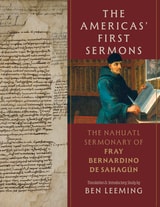
The Americas' First Sermons
The Nahuatl Sermonary of Fray Bernardino de SahagúnTranslation and Introduction study by Ben Leeming
University of Utah Press, 2025
The Americas’ First Sermons presents the first English translation and critical study of the complete set of sermons composed by Franciscan friar Bernardino de Sahagún and his Nahua students at the Imperial College of Santa Cruz in Tlatelolco, Mexico in 1540. The volume represents a crucial moment in the cultural exchange between European and Indigenous civilizations in sixteenth-century colonial Mexico.
With the collaboration of Mario Alberto Sánchez Aguilera, this edition offers unprecedented access to the collaboration between European friars and Nahua scholars in translating Christian concepts into Native languages. It captures Sahagún’s evolving methods across three phases (1530s–1560s) through his extensive annotations, bridging the divide between his ethnographic and doctrinal works. Unique in its analysis of both text and manuscript features—such as rare maguey paper—it highlights Indigenous intellectual contributions at the Colegio de Santa Cruz. This translation provides essential insights into early colonial religious negotiations and makes previously inaccessible material available to scholars across multiple disciplines.
The Americas, Otherwise, Volume 61
Lois Parkinson Zamora and Silvia Spitta, eds.
Duke University Press, 0
These essays foreground the work of important hemispheric writers, artists, and public intellectuals such as Roberto Bolaño, Alejo Carpentier, Aimé Césaire, Gabriel García Márquez, Édouard Glissant, José Martí, Ricardo Piglia, and Leopoldo Zea. Topics include migration to the Americas from Asia, Europe, and Africa; hemispheric exceptionalisms since the establishment of the first colonies; the interdisciplinary foundations of border studies; theories of the neobaroque and their application to Latin American cultural formations; Latino critical theory; and the emergence of a southern theory inclusive of the intellectual work of often-marginalized cultures.
The Anatomy of National Fantasy
Hawthorne, Utopia, and Everyday LifeLauren Berlant
University of Chicago Press, 1991
At the core of Berlant's work is a three-part study of The Scarlet Letter, analyzing the modes and effects of national identity that characterize the narrator's representation of Puritan culture and his construction of the novel's political present tense. This analysis emerges from an introductory chapter on American citizenship in the 1850s and a following chapter on national fantasy, ranging from Hawthorne's early work "Alice Doane's Appeal" to the Statue of Liberty. In her conclusion, Berlant suggests that Hawthorne views everyday life and local political identities as alternate routes to the revitalization of the political and utopian promises of modern national life.
The Anatomy of National Fantasy
Hawthorne, Utopia, and Everyday LifeLauren Berlant
University of Chicago Press, 2026
A classic work that launched the career of one of the most influential scholars of their generation.
Lauren Berlant influenced generations of scholars in gender studies, affect theory, literary criticism, anthropology, sociology, and beyond. Her first book, The Anatomy of National Fantasy, was published in 1991, and it marked the start of an extraordinary career of groundbreaking essays, editorial collaborations, and monographs. This new edition reintroduces Berlant’s earliest work with a new foreword by Caleb Smith, who connects Berlant’s initial investigations as a scholar of nineteenth-century American literature to her more widely known interventions in how we understand the entanglements of national ideology, citizenship, affect, and everyday life.
The Ancient Shore
Dispatches from NaplesShirley Hazzard and Francis Steegmuller
University of Chicago Press, 2008
Born in Australia, Shirley Hazzard first moved to Naples as a young woman in the 1950s to take up a job with the United Nations. It was the beginning of a long love affair with the city. The Ancient Shore collects the best of Hazzard’s writings on Naples, along with a classic New Yorker essay by her late husband, Francis Steegmuller. For the pair, both insatiable readers, the Naples of Pliny, Gibbon, and Auden is constantly alive to them in the present.
With Hazzard as our guide, we encounter Henry James, Oscar Wilde, and of course Goethe, but Hazzard’s concern is primarily with the Naples of our own time—often violently unforgiving to innocent tourists, but able to transport the visitor who attends patiently to its rhythms and history. A town shadowed by both the symbol and the reality of Vesuvius can never fail to acknowledge the essential precariousness of life—nor, as the lover of Naples discovers, the human compassion, generosity, and friendship that are necessary to sustain it.
Beautifully illustrated by photographs from such masters as Henri Cartier-Bresson and Herbert List, The Ancient Shore is a lyrical letter to a lifelong love: honest and clear-eyed, yet still fervently, endlessly enchanted.
“Much larger than all its parts, this book does full justice to a place, and a time, where ‘nothing was pristine, except the light.’”—Bookforum
“Deep in the spell of Italy, Hazzard parses the difference between visiting and living and working in a foreign country. She writes with enormous eloquence and passion of the beauty of getting lost in a place.”—Susan Slater Reynolds, Los Angeles Times
“The two voices join in exquisite harmony. . . . A lovely book.”—Booklist, starred review
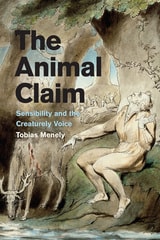
The Animal Claim
Sensibility and the Creaturely VoiceTobias Menely
University of Chicago Press, 2015
In the Restoration and eighteenth century, philosophers emphasized the role of sympathy in collective life and began regarding the passionate expression humans share with animals, rather than the spoken or written word, as the elemental medium of community. Menely shows how poetry came to represent this creaturely voice and, by virtue of this advocacy, facilitated the development of a viable discourse of animal rights in the emerging public sphere. Placing sensibility in dialogue with classical and early-modern antecedents as well as contemporary animal studies, The Animal Claim uncovers crucial connections between eighteenth-century poetry; theories of communication; and post-absolutist, rights-based politics.
The Animal Part
Human and Other Animals in the Poetic ImaginationMark Payne
University of Chicago Press, 2010
How can literary imagination help us engage with the lives of other animals? The question represents one of the liveliest areas of inquiry in the humanities, and Mark Payne seeks to answer it by exploring the relationship between human beings and other animals in writings from antiquity to the present. Ranging from ancient Greek poets to modernists like Ezra Pound and William Carlos Williams, Payne considers how writers have used verse to communicate the experience of animal suffering, created analogies between human and animal societies, and imagined the kind of knowledge that would be possible if human beings could see themselves as animals see them.
The Animal Part also makes substantial contributions to the emerging discourse of the posthumanities. Payne offers detailed accounts of the tenuousness of the idea of the human in ancient literature and philosophy and then goes on to argue that close reading must remain a central practice of literary study if posthumanism is to articulate its own prehistory. For it is only through fine-grained literary interpretation that we can recover the poetic thinking about animals that has always existed alongside philosophical constructions of the human. In sum, The Animal Part marks a breakthrough in animal studies and offers a significant contribution to comparative poetics.

The Annihilation of Inertia
Dostoevsky and MetaphysicsLiza Knapp
Northwestern University Press, 1996
The Anonymous Marie de France
R. Howard Bloch
University of Chicago Press, 2003
Evidence about Marie de France's life is so meager that we know next to nothing about her-not where she was born and to what rank, who her parents were, whether she was married or single, where she lived and might have traveled, whether she dwelled in cloister or at court, nor whether in England or France. In the face of this great writer's near anonymity, scholars have assumed her to be a simple, naive, and modest Christian figure. Bloch's claim, in contrast, is that Marie is among the most self-conscious, sophisticated, complicated, and disturbing figures of her time-the Joyce of the twelfth century. At a moment of great historical turning, the so-called Renaissance of the twelfth century, Marie was both a disrupter of prevailing cultural values and a founder of new ones. Her works, Bloch argues, reveal an author obsessed by writing, by memory, and by translation, and acutely aware not only of her role in the preservation of cultural memory, but of the transforming psychological, social, and political effects of writing within an oral tradition.
Marie's intervention lies in her obsession with the performative capacities of literature and in her acute awareness of the role of the subject in interpreting his or her own world. According to Bloch, Marie develops a theology of language in the Lais, which emphasize the impossibility of living in the flesh along with a social vision of feudalism in decline. She elaborates an ethics of language in the Fables, which, within the context of the court of Henry II, frame and form the urban values and legal institutions of the Anglo-Norman world. And in her Espurgatoire, she produces a startling examination of the afterlife which Bloch links to the English conquest and occupation of medieval Ireland.
With a penetrating glimpse into works such as these, The Anonymous Marie de France recovers the central achievements of one of the most pivotal figures in French literature. It is a study that will be of enormous value to medievalists, literary scholars, historians of France, and anyone interested in the advent of female authorship.
The Anonymous Renaissance
Cultures of Discretion in Tudor-Stuart EnglandMarcy L. North
University of Chicago Press, 2003
The Renaissance was in many ways the beginning of modern and self-conscious authorship, a time when individual genius was celebrated and an author's name could become a book trade commodity. Why, then, did anonymous authorship flourish during the Renaissance rather than disappear? In addressing this puzzle, Marcy L. North reveals the rich history and popularity of anonymity during this period.
The book trade, she argues, created many intriguing and paradoxical uses for anonymity, even as the authorial name became more marketable. Among ecclesiastical debaters, for instance, anonymity worked to conceal identity, but it could also be used to identify the moral character of the author being concealed. In court and coterie circles, meanwhile, authors turned name suppression into a tool for the preservation of social boundaries. Finally, in both print and manuscript, anonymity promised to liberate an authentic female voice, and yet made it impossible to authenticate the gender of an author. In sum, the writers and book producers who helped to create England's literary culture viewed anonymity as a meaningful and useful practice.
Written with clarity and grace, The Anonymous Renaissance will fill a prominent gap in the study of authorship and English literary history.
The Anthropological Imagination in Latin American Literature
Amy Fass Emery
University of Missouri Press, 1996
In this examination of the cross between anthropology and literature in contemporary Latin America, Amy Fass Emery studies how Latin American writers' experiences and studies in the field of anthropology have shaped their representations of cultural Others in fiction. She approaches her subject first in broad terms and then in close textual readings of important writers such as Alejo Carpentier, José María Arguedas, and Miguel Barnet.
Emery develops the concept of an "anthropological imagination"--that is, the conjunction of anthropology and literature in twentieth-century Latin American literary texts. While exploring the uses of anthropology in contemporary narrative and fiction, Emery also gives consideration to documentary and testimonial writings.
The major focus of this engaging work is the study of the novel. Analyzing fictions by authors from Cuba, Argentina, Brazil, and Peru, Emery covers a wide geographical region, as well as a diverse group of topics. Subjects such as surrealist primitivism, the testimonio, the transcultural novel, and the relation of the anthropological imagination to the vexed question of postmodernism in the Latin American context are all given insightful deliberation.
As the first extended study of interrelations between anthropology and literature in Latin America, Emery's work will prove invaluable to a wide spectrum of Latin Americanists and to those with comparative interests in anthropology, twentieth-century literature, and postmodernism.
The Anti-Journalist
Karl Kraus and Jewish Self-Fashioning in Fin-de-Siècle EuropePaul Reitter
University of Chicago Press, 2008
The Anxiety of Obsolescence
The American Novel in the Age of TelevisionKathleen Fitzpatrick
Vanderbilt University Press, 2006
It almost goes without saying that the rise in popularity of television has killed the audience for "serious" literature. This is such a given that reading Fitzpatrick's challenge to this notion can be very disconcerting, as she traces the ways in which a small cadre of writers of "serious" literature--DeLillo, Pynchon, and Franzen, for instance--have propagated this myth in order to set themselves up as the last bastions of good writing. Fitzpatrick first explores whether serious literature was ever as all-pervasive as critics of the television culture claim and then asks the obvious question: what, or who, exactly, are these guys defending good writing against?
Fitzpatrick examines the ways in which the anxiety about the supposed death of the novel is built on a myth of the novel's past ubiquity and its present displacement by television. She explores the ways in which this myth plays out in and around contemporary fiction and how it serves as a kind of unacknowledged discourse about race, class, and gender. The declaration constructs a minority status for the "white male author" who needs protecting from television's largely female and increasingly non-white audience. The novel, then, is transformed from a primary means of communication into an ancient, almost forgotten, and thus, treasured form reserved for the well-educated and well-to-do, and the men who practice it are exalted as the practitioners of an almost lost art.
Such positioning serves to further marginalize women writers and writers of color because it makes the novel, by definition, the preserve of the poor endangered white man. If the novel is only a product of a small group of white men, how can the contributions of women and writers of color be recognized? Instead, this positioning abandons women and people of color to television as a creative outlet, and in return, cedes television to them. Fitzpatrick argues that there's a level of unrecognized patronization in assuming that television serves no purpose but to provide dumb entertainment to bored women and others too stupid to understand novels. And, instead, she demonstrates the real positive effects of a televisual culture.
The Appropriated Voice
Narrative Authority in Conrad, Forster, and WoolfBette London
University of Michigan Press, 1990
The Arbiters of Reality
Hawthorne, Melville, and the Rise of Mass Information CulturePeter West
The Ohio State University Press, 2008
Locating Hawthorne and Melville in vivid and overlooked contexts—the Salem Murder scandal of 1830, which transformed Hawthorne's quiet city into a media-manufactured spectacle, and Melville's New York City of 1846–47, where the American Telegraph was powerfully articulating a nation at war—West portrays the romance as a reactive, deeply rhetorical literary form and a rich historical artifact.
In the early twenty-first century, it has become a postmodern cliché to place the word “reality” in scare quotes. The Arbiters of Reality suggests that attending to the construction of the real in public life is more than simply a language of critique: it must also be understood as a specific kind of romantic self-invention.
The Arcadia of Jacopo Sannazaro
A New Translation with CommentaryNicholas R. Jones
University of Michigan Press, 2025
Sannazaro’s Arcadia is widely recognized as a foundational text of pastoral poetry, humanism, and Italian literature. But the book itself has been largely inaccessible to English-language students and readers. This new translation uses contemporary American English to convey Arcadia’s youthful vigor, narrative energy, and poetic inventiveness. The extensive introduction and commentaries place Arcadia in the context of late fifteenth-century humanist thought and writing, as well as the complicated crisis of Naples in the years just before 1500. This translation is designed to facilitate the re-entry of Arcadia into scholarly discourse and general readership while outlining its lasting cultural influence on poetry, drama, art and music.
The Architecture of Story
A Technical Guide for the Dramatic WriterWill Dunne
University of Chicago Press, 2016
Through his workshops and book The Dramatic Writer’s Companion, Will Dunne has helped thousands of writers develop successful scripts. Now, in The Architecture of Story, he helps writers master the building blocks of dramatic storytelling by analyzing a trio of award-winning contemporary American plays: Doubt: A Parable by John Patrick Shanley, Topdog/Underdog by Suzan-Lori Parks, and The Clean House by Sarah Ruhl. Dismantling the stories and examining key components from a technical perspective enables writers to approach their own work with an informed understanding of dramatic architecture.
Each self-contained chapter focuses on one storytelling component, ranging from “Title” and “Main Event” to “Emotional Environment” and “Crisis Decision.” Dunne explores each component in detail, demonstrating how it has been successfully handled in each play and comparing and contrasting techniques. The chapters conclude with questions to help writers evaluate and improve their own scripts. The result is a nonlinear reference guide that lets writers work at their own pace and choose the topics that interest them as they develop new scripts. This flexible, interactive structure is designed to meet the needs of writers at all stages of writing and at all levels of experience.
The Argument about Things in the 1980s
Goods and Garbage in an Age of NeoliberalismTim Jelfs
West Virginia University Press, 2018
Tim Jelfs’s The Argument about Things in the 1980s considers all this and more in a broad study of the literature and culture of the “long 1980s.” It contributes to of-the-moment scholarly debate about material culture, high finance, and ecological degradation, shedding new light on the complex relationship between neoliberalism and cultural life.
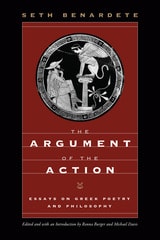
The Argument of the Action
Essays on Greek Poetry and PhilosophySeth Benardete
University of Chicago Press, 2000
This volume brings together Seth Benardete’s studies of Hesiod, Homer, and Greek tragedy, eleven Platonic dialogues, and Aristotle’s Metaphysics.
The Argument of the Action spans four decades of Seth Benardete’s work, documenting its impressive range. Benardete’s philosophic reading of the poets and his poetic reading of the philosophers share a common ground, guided by the key he found in the Platonic dialogue: probing the meaning of speeches embedded in deeds, he uncovers the unifying intention of the work by tracing the way it unfolds through a movement of its own. Benardete’s original interpretations of the classics are the fruit of this discovery of the “argument of the action.”
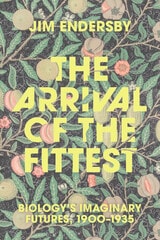
The Arrival of the Fittest
Biology's Imaginary Futures, 1900–1935Jim Endersby
University of Chicago Press, 2025
In the early twentieth century communities made creative use of the new theories of heredity in circulation at the time, including the now largely forgotten mutation theory of Hugo de Vries. Science fiction writers, socialists, feminists, and utopians are among those who seized on the amazing possibilities of rapid and potentially controllable evolution. De Vries’s highly respected scientific theory only briefly captured the attention of the scientific community, but its many fans appropriated it for their own wildly imaginative ends. Writers from H.G. Wells and Edith Wharton to Charlotte Perkins Gilman, J.B.S. Haldane, and Aldous Huxley created a new kind of imaginary future, which Jim Endersby calls the biotopia. It took the ambiguous possibilities of biology—utopian and dystopian—and reimagined them in ways that still influence the public’s understanding of the life sciences. The Arrival of the Fittest recovers the fascinating, long-forgotten origins of ideas that have informed works of fiction from Brave New World to the X-Men movies, all while reflecting on the lessons—positive and negative—that this period might offer us.
The Art of Breaking Worlds
On Contemporary Poetry and Public LanguagePaul Jaussen
Northwestern University Press, 2027
Showing how poetics provides a path for building new imagined possibilities
Drawing together a robust corpus of contemporary USAmerican poetry, The Art of Breaking Worlds explores social and political breaks: disasters, failures, and disruptions that simultaneously constitute and fracture the world. These breaks range from unsuccessful political movements and acts of resistance to mass incarceration and biopolitical violence, from anti-Black racism to the infrastructural catastrophes of climate collapse. Paul Jaussen shows how poetry responds to such disasters by incorporating public-facing genres and discourses into its literary practice, thereby rewriting into aesthetic form the public languages used to perpetuate or contain that rupture. This poetic integration of public language thus generates a third space, located between the rhetorical and the aesthetic, a literary practice of both world-breaking and world-making that transforms existing genres while also creating newly imagined modes of collectivity. Grounded in contemporary theory and close readings of works by poets such as Claudia Rankine, Juliana Spahr, and Ilya Kaminsky, this book proposes that these dynamics require a distinctive critical poetics, one simultaneously attuned to discourses of struggle and discourses of art, modeling a fresh approach to the relationship between politics and literature.
The Art of Chinese Poetry
James J. Y. Liu
University of Chicago Press, 1966
"[This] books should be read by all those interested in Chinese poetry."—Achilles Fang, Poetry
"[This is] a significant contribution to the understanding and appreciation of Chinese poetry, lucidly presented in a way that will attract a wide audience, and offering an original synthesis of Chinese and Western views that will stimulate and inspire students of poetry everywhere."—Hans H. Frankel, Harvard Journal of Asiatic Studies
"This is a book which can be recommended without reservation to anyone who wants to explore the world of Chinese poetry in translation."—James R. Hightower, Journal of Asian Studies
The Art of Criticism
Henry James on the Theory and the Practice of FictionHenry James
University of Chicago Press, 1986
The editors have provided what James himself emphasized in his literary criticism—the text's context. Each selection is framed by an editorial commentary and notes which give its biographical, bibliographical, and critical background and cite other references in James' work to the topic discussed. This framework, along with the editors' introduction, gives the reader a sense of the place of these pieces in the history of criticism.
The Art of Distances
Ethical Thinking in Twentieth-Century LiteratureCorina Stan
Northwestern University Press, 2018
In The Art of Distances, Corina Stan identifies an insistent preoccupation with interpersonal distance in a strand of twentieth-century European and Anglophone literature that includes the work of George Orwell, Paul Morand, Elias Canetti, Iris Murdoch, Walter Benjamin, Annie Ernaux, Günter Grass, and Damon Galgut. Specifically, Stan shows that these authors all engage in philosophical meditations, in the realm of literary writing, on the ethical question of how to live with others and how to find an ideal interpersonal distance at historical moments when there are no obviously agreed-upon social norms for ethical behavior.
Bringing these authors into dialogue with philosophers such as Michel de Montaigne, Ralph Waldo Emerson, Friedrich Nietzsche, Sigmund Freud, Helmuth Plessner, Martin Heidegger, Jean-Luc Nancy, Emmanuel Levinas, Peter Sloterdijk, Guillaume le Blanc, and Pierre Zaoui, Stan shows how the question of the right interpersonal distance became a fundamental one for the literary authors under consideration and explores what forms and genres they proposed in order to convey the complexity of this question. Albeit unknowingly, she suggests, they are engaged in fleshing out what Roland Barthes called “a science, or perhaps an art, of distances.”
The Art of Faulkner's Novels
By Peter Swiggart
University of Texas Press, 1962
To say that the entirety of human experience can be a novelist’s theme is to voice an absurdity. But, as Peter Swiggart convincingly argues, Faulkner’s work can be viewed as an extraordinary attempt to transform the panorama of man’s social experience into thematic material. Faulkner’s two-dimensional characters, his rhetorical circumlocutions, and his technical experiments are efforts to achieve a dramatic focus upon material too unwieldy, at least in principle, for any kind of fictional condensation.
Faulkner makes use of devices of stylization that apply to virtually every aspect of his successful novels. For example, the complex facts of Southern history and culture are reduced to the scale of a simplified and yet grandiose social mythology: the degeneration of the white aristocracy, the rise of Snopesism, and the white Southerner’s gradual recognition of his latent sense of racial guilt. Within Faulkner’s fictional universe, human psychology takes the form of absolute distinctions between puritan and nonpuritan characters, between individuals corrupted by moral rationality and those who are simultaneously free of moral corruption and social involvement. In this way Faulkner is able to create the impression of a comprehensive treatment of important social concerns and universal moral issues.
Like Henry James, he makes as much as he can of clearly defined dramatic events, until they seem to echo the potential complexity and depth of situations outside the realm of fiction. When this technique is successful the reader is left with the impression that he knows a Faulkner character far better than he could know an actual person. At the same time, the character retains the atmosphere of complexity and mystery imposed upon it by Faulkner’s handling of style and structure.
This method of characterization reflects Faulkner’s simplifications of experience and yet suggests the inadequacy of any rigid interpretation of actual behavior. The reader is supplied with special eyeglasses through which the tragedy of the South, as well as humanity’s general inhumanity to itself, can be viewed in a perspective of simultaneous mystery and symbolic clarity.
The Art of Friction
Where (Non)Fictions Come TogetherEdited by Charles Blackstone and Jill Talbot
University of Texas Press, 2008
"We live in an Enquirer, reality television–addled world, a world in which most college students receive their news from the Daily Show and discourse via text message," assert Charles Blackstone and Jill Talbot. "Recently, two nonfiction writers have been criticized for falsifying memoirs. Oprah excoriated James Frey on her show; Nasdijj was impugned by Sherman Alexie in Time. Is our next trend in literature to lock down such boundaries among the literati? Or should we address the fictionalizing of nonfiction, the truth of fiction?"
The Art of Friction surveys the borderlands where fiction and nonfiction intersect, commingle, and challenge genre lines. It anthologizes nineteen creative works by contemporary, award-winning writers including Junot Díaz, Jonathan Safran Foer, Thomas Beller, Bernard Cooper, Wendy McClure, and Terry Tempest Williams, who also provide companion pieces in which they comment on their work. These selections, which place short stories and personal essays (and hybrids of the two) side by side, allow readers to examine the similarities and differences between the genres, as well as explore the trends in genre overlap.
Functioning as both a reader and a discussion of the craft of writing, The Art of Friction is a timely, essential book for all writers and readers who seek the truthfulness of lived experience through (non)fictions.
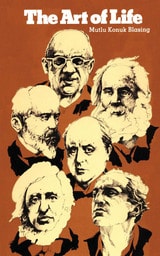
The Art of Life
Studies in American Autobiographical LiteratureBy Mutlu Konuk Blasing
University of Texas Press, 1977
Autobiographical literature especially reveals the processes by which writers convert their own historical experience into fictional form and suggests how literary forms function in life. This volume defines an original theory of autobiographical writing and provides intriguing analyses of major American works of literature.
The Art of Life examines the transformation of history into literature in Walden, "Song of Myself," Henry James's Prefaces, The Education of Henry Adams, Paterson, and the poetry of Frank O'Hara. These works are approached as events in themselves and are analyzed as conversions of form and history, fiction and fact, and even aesthetics and politics. Thus the work of literature is set in the total experience of living, and the writer is seen not only as an artist but also as a person in a historical, political, and cultural environment. As well as a creator of literature, the writer is viewed as a social, psychological, and biological being.
Chapters on the narcissistic economy of Walden, the mythicizing of history and personality in "Song of Myself," the self-conscious relation that makes the Prefaces of Henry James the autobiography of an artist. the comic perspective of The Education of Henry Adams, and the radical innovation of Paterson and O'Hara's poetry provide new readings of major American works. Each chapter contains some distinct critical insight which not only contributes to, but can be relished apart from, the book's overarching theoretical argument.
The Art of Life is a sophisticated theoretical discussion of autobiography with rich psychological, philosophical, and cultural ramifications.
The Art of Memory in Exile
Vladimir Nabokov & Milan KunderaHana Pichova
Southern Illinois University Press, 2001
Pí chová closely analyzes two novels by each author: the first written in exile (Nabokov's Mary and Kundera's The Book of Laughter and Forgetting) and a later, pivotal novel in each writer's career (Nabokov's The Gift and Kundera's The Unbearable Lightness of Being). In all four texts, these authors explore how the kaleidoscope of personal and cultural memory confronts a fragmented and untenable present, contrasting the lives of fictional é migré s who fail to bridge the gap between past and present with those é migré s whose rich artistic vision allows them to transcend the trials of homelessness.
By juxtaposing these novels and their authors, Pí chová provides a unique perspective on each writer's vast appeal and success. She finds that in the work of Nabokov and Kundera, the most successful exiles express a vision that transcends both national and temporal boundaries.
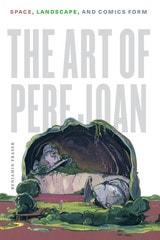
The Art of Pere Joan
Space, Landscape, and Comics FormBy Benjamin Fraser
University of Texas Press, 2019
Born in Mallorca, Pere Joan Riera (known professionally as Pere Joan) thrived in the underground comics world, beginning in the mid-1970s with the self-published collections Baladas Urbanas and MuŽrdago, both of which were released almost immediately after the death of the dictator Francisco Franco and Spain's transition to democracy. The first monograph in English on a comics artist from Spain, The Art of Pere Joan takes a topographical approach to reading comics, applying theories of cultural and urban geography to Pere Joan’s treatment of space and landscape in his singular body of work.
Balancing this goal with an exploration of specific works by Pere Joan, Benjamin Fraser demonstrates that looking at the thematic, structural, and aesthetic originality of the artist's landscape-driven work can help us begin to newly understand the representational properties of comics as a spatial medium. This in-depth examination reveals the resonance between the cultural landscapes of Mallorca and Pere Joan's metaphorical approach to both rural and urban environments in comics that weave emotional, ecological, and artistic strands in revolutionary ways.
The Art of Poetry
Kenneth Koch
University of Michigan Press, 1996
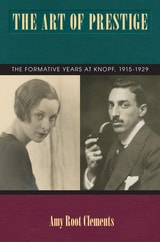
The Art of Prestige
The Formative Years at Knopf, 1915-1929Amy Clements
University of Massachusetts Press, 2014
Capturing the little-known early history of Knopf, The Art of Prestige explores the origins of the company's rise to success during the Jazz Age, when Alfred and Blanche established themselves as literary impresarios on both sides of the Atlantic. Drawing on key archival documents from all phases of the publishing process, Amy Root Clements reconstructs the turning points and rhetorical exchanges that made Knopf's initial books noteworthy, from the acquisitions process to design, consumer marketing, and bookselling.
Lasting cornerstones of the young firm include alliances with pivotal figures in the world of graphic arts and book production and with European publishers who brought numerous Nobel Prize winners to the Borzoi list during the company's first fifteen years. Other featured luminaries include the American authors Willa Cather, Dashiell Hammett, and Langston Hughes. The Art of Prestige also examines Alfred Knopf's ancestry, up-bringing, and formal education at Columbia, as well as his apprenticeships with Frank Nelson Doubleday and Mitchell Kennerley—factors that would influence his business decisions for years to come.
The result is a portrait of innovative branding that seamlessly merged book production with book promotion in a literary landscape that was ripe for transformation.
The Art of Reading as a Way of Life
On Nietzsche's TruthDaniel T. O'Hara
Northwestern University Press, 2009
The shape of this critical tracing begins, however, in the middle of his career with The Gay Science andmoves on to Thus Spoke Zarathustra, which Nietzsche believed was the central work of his life. It then revalues Ecce Homo, Nietzsche’s final autobiographical statement about his life and career, and concludes with a comparative analysis of two works from the beginning and end of that career: respectively, The Birth of Tragedy and The Anti-Christ. O’Hara’s highly original study, which uses Badiou’s theory of the truth-event as a guide, will surely provoke larger conversations across many disciplines.
The Art of Retreat
Domestic Romanticisms in the Early United StatesLaurel V. Hankins
Bucknell University Press, 2025
The political and cultural fantasy of home as a retreat from the pressures of the world first emerged in the U.S. alongside two major nineteenth-century literary movements: Romanticism and domestic fiction. Upending accepted gendered narratives from this period, The Art of Retreat posits that these movements originated from a domestic culture already in transition, in which home was frequently a more complicated site of self-interested pleasure, coerced labor, creole social reproduction, homosocial intimacy, bachelor whimsy, petty tyranny, racial abuse, and transgender capacity. The early national periodicals, sketches, and novels examined here lend themselves to this interpretation. Hankins argues that the literary tradition emerging from these decades—one that aligned creative genius with domestic retreat—reminds us that a politics that appeals to private feeling must reckon with new interpretations of labor, kinship, and reform in exchange for the promise of consensual citizenship.
Published by Bucknell University Press. Distributed worldwide by Rutgers University Press.
The Art of Time
Levinas, Ethics, and the Contemporary Peninsular NovelNina L. Molinaro
Bucknell University Press, 2019
Academicians and journalists in Spain and abroad have recently fastened on an emerging cluster of peninsular writers who, they argue, pertain to a discernible literary generation, provisionally referred to as Generación X. These writers are distinct from their predecessors; they and their literary texts are closely related to the specific socio-political and historical circumstances in Spain and their novels relate stories of more and less proximity, more and less responsibility, and more and less temporality. In short, they trace the temporal movement of alterity through narrative.
Published by Bucknell University Press. Distributed worldwide by Rutgers University Press.
The Art of Transition
Latin American Culture and Neoliberal CrisisFrancine Masiello
Duke University Press, 2001
Masiello views representation as both a political and artistic device, concerned with the tensions between truth and lies, experience and language, and intellectuals and the marginal subjects they study and claim to defend. These often contentious negotiations, she argues, are most provocatively displayed through the spectacle of difference, which constantly crosses the literary stage, the market, and the North/South divide. While forcefully defending the ability of literature and art to advance ethical positions and to foster a critical view of neoliberalism, Masiello especially shows how issues of gender and sexuality function as integrating threads throughout this cultural project. Through discussions of visual art as well as literary work by prominent novelists and poets, Masiello sketches a broad landscape of vivid intellectual debate in the Southern Cone of Latin America.
The Art of Transition will interest Latin Americanists,literary and political theorists, art critics and historians, and those involved with the study of postmodernism and globalization.
The Art of Vision
Ekphrasis in Medieval Literature and CultureEdited by Ethan Knapp, Andrew James Johnston, and Margitta Rouse
The Ohio State University Press, 2015
The essays in this volume highlight precisely the entanglements that ekphrasis suggests and/or rejects: not merely of word and image, but also of sign and thing, stasis and mobility, medieval and (early) modern, absence and presence, the rhetorical and the visual, thinking and feeling, knowledge and desire, and many more. The Art of Vision furthers our understanding of the complexities of medieval ekphrasis while also complicating later understandings of this device. As such, it offers a more diverse account of medieval ekphrasis than previous studies of medieval text–image relationships, which have normally focused on a single country, language, or even manuscript.
The Art of Writing Badly
Valentin Kataev's Mauvism and the Rebirth of Russian ModernismRichard C. Borden
Northwestern University Press, 1999
Beginning with a close examination of the work of Kataev, the best-known progenitor of "bad writing," Borden then broadens his study to include the "mauvist creations" of post-Stalinist writers Aksenov, Bitov, Sokolov, Limonov, Evgeny Popov, and Venedikt Erofeev. Borden shows how these writers' shared mauvistic characteristics reveal major philosophical and aesthetic tendencies in contemporary Russian culture, bring to light facets of their writing that have never been discussed, and enrich the readings of the particular texts under discussion.
The Art of the Novel
Critical PrefacesHenry James
University of Chicago Press, 2011
This collection of prefaces, originally written for the 1909 multi-volume New York Edition of Henry James’s fiction, first appeared in book form in 1934 with an introduction by poet and critic R. P. Blackmur. In his prefaces, James tackles the great problems of fiction writing—character, plot, point of view, inspiration—and explains how he came to write novels such as The Portrait of a Lady and The American. As Blackmur puts it, “criticism has never been more ambitious, nor more useful.”
The latest edition of this influential work includes a foreword by bestselling author Colm Tóibín, whose critically acclaimed novel The Master is told from the point of view of Henry James. As a guide not only to James’s inspiration and execution, but also to his frustrations and triumphs, this volume will be valuable both to students of James’s fiction and to aspiring writers.