Results by title
2335 books match the query 'Modern' and 569 start with t
The Gift of Death
Jacques Derrida
University of Chicago Press, 1995
A major work, The Gift of Death resonates with much of Derrida's earlier writing and will be of interest to scholars in anthropology, philosophy, and literary criticism, along with scholars of ethics and religion.
"The Gift of Death is Derrida's long-awaited deconstruction of the foundations of the project of a philosophical ethics, and it will long be regarded as one of the most significant of his many writings."—Choice
"An important contribution to the critical study of ethics that commends itself to philosophers, social scientists, scholars of relgion . . . [and those] made curious by the controversy that so often attends Derrida."—Booklist
"Derrida stares death in the face in this dense but rewarding inquiry. . . . Provocative."—Publishers Weekly

The Gift of Death, Second Edition & Literature in Secret
Jacques Derrida
University of Chicago Press, 2008
The Glasgow Sugar Aristocracy
Scotland and Caribbean Slavery, 1775–1838Stephen Mullen
University of London Press, 2020
This important book assesses the size and nature of Caribbean slavery’s economic impact on British society. The Glasgow Sugar Aristocracy, a grouping of West India merchants and planters, became active before the emancipation of chattel slavery in the British West Indies in 1834. Many acquired nationally significant fortunes, and their investments percolated into the Scottish economy and wider society. At its core, the book traces the development of merchant capital and poses several interrelated questions during an era of rapid transformation, namely, what impact the private investments of West India merchants and colonial adventurers had on metropolitan society and the economy, as well as the wider effects of such commerce on industrial and agricultural development.
The book also examines the fortunes of temporary Scottish economic migrants who traveled to some of the wealthiest of the Caribbean islands, presenting the first large-scale survey of repatriated slavery fortunes via case studies of Scots in Jamaica, Grenada, and Trinidad before emancipation in 1834. It, therefore, takes a new approach to illuminate the world of individuals who acquired West Indian fortunes and ultimately explores, in an Atlantic frame, the interconnections between the colonies and metropole in the late eighteenth and early nineteenth centuries.
The Global Frontier
Postwar Travel in American LiteratureEric Strand
University of Iowa Press, 2023
After World War II, the Western frontier of self-reinvention and spatial expansion opened up through the explosion of the global travel industry. The Global Frontier shows that a variety of postwar literary travelers sought personal freedom and cultural enrichment outside their nation’s borders, including Black, female, and queer writers. But the price of incorporation into a transnational leisure class was complicity in postwar American imperialism and the rejection of 1930s social commitments. Eric Strand argues that capitalist globalization has enabled creative expression for marginalized identities, and that present-day humanists are the descendants of writers such as William S. Burroughs, Saul Bellow, Richard Wright, and Elizabeth Bishop. Yet this personal liberation has accompanied a vast growth of social inequality, which can only be addressed by reorienting toward progressive nationalism and an activist state.
The Global Wordsworth
Romanticism Out of PlaceBergren, Katherine
Bucknell University Press, 2019
Published by Bucknell University Press. Distributed worldwide by Rutgers University Press.
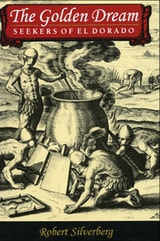
The Golden Dream
Seekers Of El DoradoRobert Silverberg
Ohio University Press, 1996
One of the most persistent legends in the annals of New World exploration is that of the Land of Gold. This mythical site was located over vast areas of South America (and later, North America); the search for it drove some men mad with greed and, as often as not, to their untimely deaths.
In this history of quest and adventure, Robert Silverberg traces the fate of Old World explorers lured westward by the myth of El Dorado. From the German conquistadores licensed by the Spanish king to operate out of Venezuela, to the journeys of Gonzalo Pizarro in the Amazon basin, and to the nearly miraculous voyage of Francisco Orellana to the mouth of the Amazon River, encountering the warlike women who gave the river its name, violence and bloodshed accompanied the determined adventurers. Sir Walter Raleigh and a host of other explorers spent small fortunes and many lives trying to locate Manoa, a city that was rumored to be El Dorado—City of Gold. Celebrated science fiction author Robert Silverberg recreates these legendary quests in The Golden Dream: Seekers of El Dorado.

The Good European
Nietzsche's Work Sites in Word and ImageDavid Farrell Krell and Donald L. Bates
University of Chicago Press, 1997
"A brilliant juxtaposition of life and thought. . . . The sympathy of this pictorial biography is rivaled by few books on Nietzsche."—Charles M. Stang, Boston Book Review
"[A] distinguished addition to the Nietzsche-friendly corpus."—Alain de Botton, Los Angeles Times Book Review
"An odd and oddly endearing record of Nietzsche's travels."—John Banville, New York Review of Books
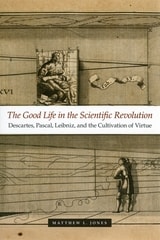
The Good Life in the Scientific Revolution
Descartes, Pascal, Leibniz, and the Cultivation of VirtueMatthew L. Jones
University of Chicago Press, 2006
Amid the unrest, dislocation, and uncertainty of seventeenth-century Europe, readers seeking consolation and assurance turned to philosophical and scientific books that offered ways of conquering fears and training the mind—guidance for living a good life.
The Good Life in the Scientific Revolution presents a triptych showing how three key early modern scientists, René Descartes, Blaise Pascal, and Gottfried Leibniz, envisioned their new work as useful for cultivating virtue and for pursuing a good life. Their scientific and philosophical innovations stemmed in part from their understanding of mathematics and science as cognitive and spiritual exercises that could create a truer mental and spiritual nobility. In portraying the rich contexts surrounding Descartes’ geometry, Pascal’s arithmetical triangle, and Leibniz’s calculus, Matthew L. Jones argues that this drive for moral therapeutics guided important developments of early modern philosophy and the Scientific Revolution.
The Grace and the Severity of the Ideal
John Dewey and the TranscendentVictor Kestenbaum
University of Chicago Press, 2002
Kestenbaum argues that to Dewey, the pragmatic struggle for ideal meaning occurs at the frontier of the visible and the invisible, the tangible and the intangible. Penetrating analyses of Dewey's early and later writings, as well as comparisons with the works of Hans-Georg Gadamer, Michael Oakeshott, and Wallace Stevens, shed new light on why Dewey regarded the human being's relationship to the ideal as "the most far-reaching question" of philosophy. For Dewey, the pragmatic struggle for the good life required a willingness "to surrender the actual experienced good for a possible ideal good." Dewey's pragmatism helps us to understand the place of the transcendent ideal in a world of action and practice.
The Graphomaniac
A Literary-Historical Discussion of Dmitry KhvostovIlya Vinitsky and James H. McGavran III
Northwestern University Press, 2025
The only Russian Count of Sardinia, Dmitry Ivanovich Khvostov (1757–1835) didn’t achieve fame in his lifetime—he achieved infamy. Pathologically prolific and delusionally dedicated to a craft for which he had no talent, the count was renowned for his compulsive output, driven by a passion for poetry that was as strong as his abilities were weak. Only the country that gave the world Pushkin, however, could produce Khvostov, in whom we find a distorted yet illuminating reflection of his poetic epoch, with all its numerous cultural manifestations and hidden impulses, its desires and prejudices.
As he leads us on a playful journey across Russia’s Golden Age and beyond, from neoclassical salon to faculty lounge, Ilya Vinitsky reflects on the challenges and necessities of literary critique and on the unexpected rewards of bad art as a subject of study, not just ridicule. Mischievous but erudite, sensitive but never self-serious, The Graphomaniac is an intellectual biography of the anti-hero, a cultural figure whose paradoxes yield new insights into his era.
The Gratis Economy
Privately Provided Public GoodsAndrás Kelen
Central European University Press, 2002
The Great Cat and Dog Massacre
The Real Story of World War Two's Unknown TragedyHilda Kean
University of Chicago Press, 2017
In The Great Cat and Dog Massacre, Hilda Kean unearths the history, piecing together the compelling story of the life—and death—of Britain’s wartime animal companions. She explains that fear of imminent Nazi bombing and the desire to do something to prepare for war led Britons to sew blackout curtains, dig up flower beds for vegetable patches, send their children away to the countryside—and kill the family pet, in theory sparing them the suffering of a bombing raid. Kean’s narrative is gripping, unfolding through stories of shared experiences of bombing, food restrictions, sheltering, and mutual support. Soon pets became key to the war effort, providing emotional assistance and helping people to survive—a contribution for which the animals gained government recognition.
Drawing extensively on new research from animal charities, state archives, diaries, and family stories, Kean does more than tell a virtually forgotten story. She complicates our understanding of World War II as a “good war” fought by a nation of “good” people. Accessibly written and generously illustrated, Kean’s account of this forgotten aspect of British history moves animals to center stage—forcing us to rethink our assumptions about ourselves and the animals with whom we share our homes.
The Great Debate
Nietzsche, Culture, and the Scandinavian Welfare SocietyGeorg Brandes and Harald Høffding
University of Wisconsin Press, 2024
Marking the moment at which the uniquely Nordic concept of social democratic welfare was first contested in the public sphere, this debate provides insights into not only Nietzschean philosophy and its immediate reception but also the foundational concept of modern Scandinavian social, cultural, and political organization. This volume presents, for the first time in any language other than Danish, the debate in its entirety: three essays by Brandes and three by Høffding. A critical introduction by editor and translator William Banks explores the exchange in its context and convincingly argues that the principles contested by the two Danish luminaries still very much resonate in Western society today.
The Great Game
Essays on PoeticsAmit Majmudar
Acre Books, 2024
In The Great Game, poet, critic, translator, and literary omnivore Amit Majmudar ranges widely, writing with characteristic verve on canonical authors such as Milton, Byron, and Emily Dickinson, contemporaries like Kay Ryan, and other traditions of world literature. He examines verse drama and philosophy and even touches on writers of popular prose like Robert Ludlum and Ray Bradbury. A radiologist as well as a writer, Majmudar brings together the diagnostician’s precision with the poet’s imagination and an encyclopedic base of knowledge. He practices literary criticism as a global art, one with the intensity of verse, the depth of philosophy, and the scope of history—and does so with the infectious curiosity of a passionate reader.
Some of the most powerful essays here are synoptic meditations on science and poetry in which Majmudar shows that anyone trying to make fresh sense of the world, be it Milton or Kepler or Dickinson or Darwin, is practicing something like poetic meaning-making. The collection’s diverse inquiries are held together by Majmudar’s sustained, thoughtful, delightfully inventive attention to poetic form as an idea, to specific forms like the ghazal and the epic, and by his nimble, empathetic readings of individual writers. The Great Game is an intellectually thrilling tour of poetry across centuries, geographic divides, and even the disciplinary boundaries that separate science from philosophy from poetry.
The Great Siege of Malta
The Epic Battle between the Ottoman Empire and the Knights of St. JohnBruce Ware Allen
University Press of New England, 2017
The Greatest Menace
Organized Crime in Cold War AmericaLee Bernstein
University of Massachusetts Press, 2002
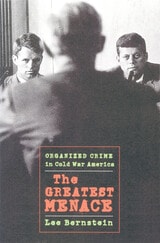
The term Cold War has long been associated with the “red menace” of communism at home and abroad. Yet as Lee Bernstein shows in this illuminating study, during the 1950s the threat posed by organized crime preoccupied Americans at least as much as the fear of communist subversion. At the beginning of the decade, the televised hearings of Senator Estes Kefauver's crime committee, focusing on colorful mob figures such as Lucky Luciano and Frank Costello, attracted far more attention than the spy trial of Julius and Ethel Rosenberg. In the years that followed, public concern about gangsters and racketeering continued unabated, even after the anticommunist fever of McCarthyism had begun to subside.
Drawing on a broad range of evidence, from government records to films, television shows, and pulp novels, Bernstein explains how the campaign against organized crime, like the crusade against communism, reflected deep social and political anxieties. Just as the inquisitions of Senator McCarthy fed on popular fears of international conspiracy and alien infiltration, the anticrime investigations of the 1950s raised the specter of a foreign-based criminal cartel—the Sicilian Mafia— preying on a vulnerable American public. In both cases, the association of the foreign-born with criminal or un-American activity led to the creation of state and local citizens committees and to calls for new restrictions on immigration. Labor unions also came under attack, particularly after the McClellan Committee and its chief counsel, Robert F. Kennedy, claimed to have found a link between the International Brotherhood of Teamsters, led by Jimmy Hoffa, and the Mafia.
As Bernstein points out, despite significant changes in the way organized crime actually operated, and despite repeated protests from Italian Americans, the popular image of the sinister gangster persisted, because it served a more profound need. In an era marked by widespread uncertainty and rapid social change, the fight against a common enemy, real or imagined, helped forge a Cold War consensus across shifting lines of race, class, and ethnicity by redefining what it meant to be an American.

The Green Revolution in the Global South
Science, Politics, and Unintended ConsequencesR. Douglas Hurt
University of Alabama Press, 2020
The Green Revolution was devised to increase agricultural production worldwide, particularly in the developing world. Agriculturalists employed anhydrous ammonia and other fertilizing agents, mechanical tilling, hybridized seeds, pesticides, herbicides, and a multitude of other techniques to increase yields and feed a mushrooming human population that would otherwise suffer starvation as the world’s food supply dwindled.
In The Green Revolution in the Global South: Science, Politics, and Unintended Consequences, R. Douglas Hurt demonstrates that the Green Revolution did not turn out as neatly as scientists predicted. When its methods and products were imported to places like Indonesia and Nigeria, or even replicated indigenously, the result was a tumultuous impact on a society’s functioning. A range of factors—including cultural practices, ethnic and religious barriers, cost and availability of new technologies, climate, rainfall and aridity, soil quality, the scale of landholdings, political policies and opportunism, the rise of industrial farms, civil unrest, indigenous diseases, and corruption—entered into the Green Revolution calculus, producing a series of unintended consequences that varied from place to place. As the Green Revolution played out over time, these consequences rippled throughout societies, affecting environments, economies, political structures, and countless human lives.
Analyzing change over time, almost decade by decade, Hurt shows that the Green Revolution was driven by the state as well as science. Rather than acknowledge the vast problems with the Green Revolution or explore other models, Hurt argues, scientists and political leaders doubled down and repeated the same missteps in the name of humanity and food security. In tracing the permutations of modern science’s impact on international agricultural systems, Hurt documents how, beyond increasing yields, the Green Revolution affected social orders, politics, and lifestyles in every place its methods were applied—usually far more than once.
The Half-Life of Deindustrialization
Working-Class Writing about Economic RestructuringSherry Lee Linkon
University of Michigan Press, 2018
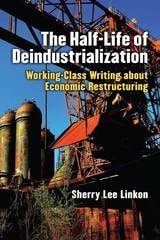
Through analysis of poetry, fiction, creative nonfiction, film, and drama, The Half-Life of Deindustrialization shows why people and communities cannot simply “get over” the losses of economic restructuring. The past provides inspiration and strength for working-class people, even as the contrast between past and present highlights what has been lost in the service economy. The memory of productive labor and stable, proud working-class communities shapes how people respond to contemporary economic, social, and political issues. These stories can help us understand the resentment, frustration, pride, and persistence of the American working class.

The Harmonization of Civil and Commercial Law in Europe
Gian Antonio Benacchio
Central European University Press, 2005
The Heretic of Cacheu
Crispina Peres and the Struggle over Life in Seventeenth-Century West AfricaToby Green
University of Chicago Press, 2025
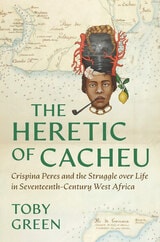
In 1665, Crispina Peres, the most powerful trader in the West African slave-trafficking port of Cacheu, was arrested by the Portuguese Inquisition. Her enemies had conspired to denounce her for taking treatments prescribed by Senegambian healers, the djabakós. But who was Peres? And why was the Inquisition so concerned with policing the faith of a West African woman in today’s Guinea-Bissau?
In The Heretic of Cacheu, award-winning historian Toby Green takes us to the heart of this conundrum, immersing us in the atmosphere of an otherwise distant setting. We learn how people in seventeenth-century Cacheu built their houses; styled their clothes; healed themselves from illness; and worshipped, worked, and played. Green renders the haunting realities of the growing slave trade and the rise of European empires in shocking detail. By the 1650s, the relationships between Europe, West Africa, and the Americas were already old and tangled, with slaving ports, colonies, and military bases having intermingled over many generations. But Cacheu also profoundly troubled this dynamic. It was globally connected to places ranging from China and India to Brazil and Colombia, and women such as Crispina Peres ran the town and challenged the patriarchy of empire.
For the first time, through surviving documents recording Peres’s case, The Heretic of Cacheu lets readers experience the reality of this unique place and time through a remarkable act of historical recovery.
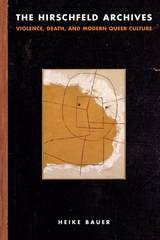
The Hirschfeld Archives
Violence, Death, and Modern Queer CultureHeike Bauer
Temple University Press, 2017
Influential sexologist and activist Magnus Hirschfeld founded Berlin’s Institute of Sexual Sciences in 1919 as a home and workplace to study homosexual rights activism and support transgender people. It was destroyed by the Nazis in 1933. This episode in history prompted Heike Bauer to ask, Is violence an intrinsic part of modern queer culture? The Hirschfeld Archives answers this critical question by examining the violence that shaped queer existence in the first part of the twentieth century.
Hirschfeld himself escaped the Nazis, and many of his papers and publications survived. Bauer examines his accounts of same-sex life from published and unpublished writings, as well as books, articles, diaries, films, photographs and other visual materials, to scrutinize how violence—including persecution, death and suicide—shaped the development of homosexual rights and political activism.
The Hirschfeld Archives brings these fragments of queer experience together to reveal many unknown and interesting accounts of LGBTQ life in the early twentieth century, but also to illuminate the fact that homosexual rights politics were haunted from the beginning by racism, colonial brutality, and gender violence.
The Historian behind the History
Conversations with Southern HistoriansMegan L. Bever
University of Alabama Press, 2014
The historians and their main topics include:
Richard J. M. Blackett on antebellum and African American history
Dan T. Carter on Reconstruction, Civil Rights, and George Wallace
Pete Daniel on the New Deal and the Cold War South
Laura F. Edwards on the Early Republic, the Civil War, Reconstruction, and women’s history
William W. Freehling on the antebellum South
Gary W. Gallagher on the Civil War
Glenda Elizabeth Gilmore on Jim Crow
James M. McPherson on the Civil War
Theodore Rosengarten on the Depression
J. Mills Thornton III on the antebellum South
In his introduction, award-winning author and historian George C. Rable draws together the multifaceted themes of these interviews, offering a compelling overview of the nature of the field. Edited by Megan L. Bever and Scott A. Suarez, The Historian behind the History offers critical insights about the craft and professional life of the historian.
The History of Continental Philosophy
Edited by Alan D. Schrift
University of Chicago Press, 2010
From Kant to Kierkegaard, from Hegel to Heidegger, continental philosophers have indelibly shaped the trajectory of Western thought since the eighteenth century. Although much has been written about these monumental thinkers, students and scholars lack a definitive guide to the entire scope of the continental tradition. The most comprehensive reference work to date, this eight-volume History of Continental Philosophy will both encapsulate the subject and reorient our understanding of it. Beginning with an overview of Kant’s philosophy and its initial reception, the History traces the evolution of continental philosophy through major figures as well as movements such as existentialism, phenomenology, hermeneutics, and poststructuralism. The final volume outlines the current state of the field, bringing the work of both historical and modern thinkers to bear on such contemporary topics as feminism, globalization, and the environment. Throughout, the volumes examine important philosophical figures and developments in their historical, political, and cultural contexts.
The first reference of its kind, A History of Continental Philosophy has been written and edited by internationally recognized experts with a commitment to explaining complex thinkers, texts, and movements in rigorous yet jargon-free essays suitable for both undergraduates and seasoned specialists. These volumes also elucidate ongoing debates about the nature of continental and analytic philosophy, surveying the distinctive, sometimes overlapping characteristics and approaches of each tradition. Featuring helpful overviews of major topics and plotting road maps to their underlying contexts, A History of Continental Philosophy is destined to be the resource of first and last resort for students and scholars alike.
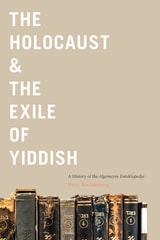
The Holocaust & the Exile of Yiddish
A History of the Algemeyne EntsiklopedyeBarry Trachtenberg
Rutgers University Press, 2022
The Holocaust & the Exile of Yiddish untangles the complicated saga of the Algemeyne entsiklopedye and its editors. The editors continued to publish volumes and revise the encyclopedia’s mission while their primary audience, Eastern European Jews, faced persecution and genocide under Nazi rule, and the challenge of reestablishing themselves in the first decades after World War II. Historian Barry Trachtenberg reveals how, over the course of the middle decades of the twentieth century, the project sparked tremendous controversy in Jewish cultural and political circles, which debated what the purpose of a Yiddish encyclopedia should be, as well as what knowledge and perspectives it should contain. Nevertheless, this is not only a story about destruction and trauma, but also one of tenacity and continuity, as the encyclopedia’s compilers strove to preserve the heritage of Yiddish culture, to document its near-total extermination in the Holocaust, and to chart its path into the future.
The Holocaust Averted
An Alternate History of American Jewry, 1938-1967Gurock, Jeffrey S
Rutgers University Press, 2015
This alternate history—where, among many scenarios, Hitler is assassinated, Japan does not bomb Pearl Harbor, and Franklin Delano Roosevelt is succeeded after two terms by Robert A. Taft—does cause us to review and better appreciate history. As Gurock tells his tale, he concludes every chapter with a short section that describes what actually happened and, thus, further educates the reader.
The Holocaust Odyssey of Daniel Bennahmias, Sonderkommando
Rebecca Fromer
University of Alabama Press, 1993
A poignant reminder of the ways enslaved Jews and others were forced to destroy their families and fellow prisoners.
The Holocaust Odyssey of Daniel Bennahmias, Sonderkommando presents the extraordinary testimony of Daniel Bennahmias, a Greek Jew whose life was forever altered by the Holocaust. Deported to Auschwitz-Birkenau as a teenager, Bennahmias was separated from his family and forced into the Sonderkommando, the prisoner unit compelled to work in the crematoria and gas chamber complex. Through painstaking collaboration with survivor and author Rebecca Fromer, this powerful narrative documents his struggle to endure unimaginable brutality while preserving his humanity. Bennahmias's account sheds rare light on the inner workings of Auschwitz, the Sonderkommando revolt, the death marches, and the difficult path toward liberation and recovery. More than a historical record, the book is a testament to courage, memory, and resilience in the face of systematic dehumanization. An essential contribution to Holocaust literature, it preserves the voice of a survivor whose experiences deepen our understanding of one of history's darkest chapters.
The Holocaust and the Book
Destruction and PreservationJonathan Rose
University of Massachusetts Press, 2001
Between 1933 and 1945, Nazi Germany systematically destroyed an estimated 100 million books throughout occupied Europe, an act that was inextricably bound up with the murder of 6 million Jews. By burning and looting libraries and censoring “un-German” publications, the Nazis aimed to eradicate all traces of Jewish culture along with the Jewish people themselves.
The Holocaust and the Book examines this bleak chapter in the history of printing, reading, censorship, and libraries. Topics include the development of Nazi censorship policies, the celebrated library of the Vilna ghetto, the confiscation of books from the Sephardic communities in Rome and Salonika, the experience of reading in the ghettos and concentration camps, the rescue of Polish incunabula, the uses of fine printing by the Dutch underground, and the suppression of Jewish books and authors in the Soviet Union. Several authors discuss the continuing relevance of Nazi book burnings to the present day, with essays on German responses to Friedrich Nietzsche and the destruction of Bosnian libraries in the 1990s.
The collection also includes eyewitness accounts by Holocaust survivors and a translation of Herman Kruk's report on the Vilna ghetto library. An annotated bibliography offers readers a concise guide to research in this growing field.
The Holocaust and the West German Historians
Historical Interpretation and Autobiographical MemoryNicolas Berg, Translated and edited by Joel Golb
University of Wisconsin Press, 2015
This English-language translation is also a shortened and reorganized edition, which includes a new introduction by Berg reviewing and commenting on the response to the German editions. Notably, in this American edition, discussion of historian Joseph Wulf and his colleague and fellow Holocaust survivor Léon Poliakov has been united in one chapter. And special care has been taken to make clear to English speakers the questions raised about German historiographical writing. Translator Joel Golb comments, "From 1945 to the present, the way historians have approached the Holocaust has posed deep-reaching problems regarding choice of language. . . . This book is consequently as much about language as it is about facts."
The Holocaust as Culture
Imre Kertész
Seagull Books, 2011
The Holocaust in Hungary
Seventy Years LaterRandolph L. Braham
Central European University Press, 2016
The Holocaust, Corporations, and the Law
Unfinished BusinessLeora Bilsky
University of Michigan Press, 2017
Leora Bilsky argues class action litigation and settlement offer a mode of accountability well suited to addressing the bureaucratic nature of business involvement in atrocities. Prior to these lawsuits, legal treatment of the Holocaust was dominated by criminal law and its individualistic assumptions, consistently failing to relate to the structural aspects of Nazi crimes. Engaging critically with contemporary debates about corporate responsibility for human rights violations and assumptions about “law,” she argues for the need to design processes that make multinational corporations accountable, and examines the implications for transitional justice, the relationship between law and history, and for community and representation in a post-national world. Her novel interpretation of the restitution lawsuits not only adds an important dimension to the study of Holocaust trials, but also makes an innovative contribution to broader and pressing contemporary legal and political debates. In an era when corporations are ever more powerful and international, Bilsky’s arguments will attract attention beyond those interested in the Holocaust and its long shadow.
The Holocaust
Theoretical ReadingsLevi, Neil
Rutgers University Press, 2003
This agenda-setting reader brings together both classic and new writings to demonstrate how concerns arising from the Nazi genocide shaped contemporary literary and cultural theory. Wide in its thematic scope, it covers such vital questions as:
- Authenticity and experience
- Memory and trauma
- Historiography and the philosophy of history
- Fascism and Nazi anti-Semitism
- Representation and identity formation
- Race, gender, and genocide
- Implications of the Holocaust for theories of the unconscious, ethics, politics, and aesthetics
The readings, which are fully contextualized by a general introduction, section introductions, and bibliographical notes, represent the work of many influential writers and theorists, including Theodor Adorno, Giorgio Agamben, Hannah Arendt, Jean Baudrillard, Zygmunt Bauman, Walter Benjamin, Cathy Caruth, Jacques Derrida, Shoshana Felman, Saul Friedlander, Paul Gilroy, Lawrence Langer, Emmanuel Levinas, Primo Levi, Jean-François Lyotard, Hayden White, and James E. Young. This multidisciplinary anthology will be welcomed by students and scholars of the Holocaust.

The Hot 'Cold War'
The USSR in Southern AfricaVladimir Shubin
Pluto Press, 2008
This book analyses the causes of armed conflicts in Southern Africa during the Cold War. It examines the influence of the various external forces in the region during this period and their relationship to local movements and governments.
The book focuses on states experiencing violent internal conflict and foreign intervention, that is Angola, Mozambique, Namibia , South Africa and Zimbabwe.
The author provides an unique history of the key part that the Soviet Union played in these developments. Spanning 30 years, the book explores how each country struggled for genuine independence against colonialism and apartheid and their place in the wider conflicts encompassed by the Cold War.
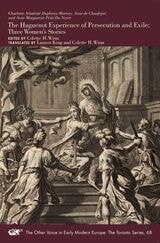
The Huguenot Experience of Persecution and Exile
Three Women’s StoriesCharlotte Arbaleste Duplessis-Mornay, Anne de Chaufepié, and Anne Marguerite Petit Du Noyer
Iter Press, 2019
Edited by Colette H. Winn. Translated by Lauren King and Colette H. Winn
The Other Voice in Early Modern Europe: The Toronto Series, Vol. 68
The Human Condition
Second EditionHannah Arendt
University of Chicago Press, 1998
Hannah Arendt (1906-1975) was one of the leading social theorists in the United States. Her Lectures on Kant's Political Philosophy and Love and Saint Augustine are also published by the University of Chicago Press.
The Human Person
Steven J. Jensen
Catholic University of America Press, 2018
The Human Race
Robert Antelme
Northwestern University Press, 1998
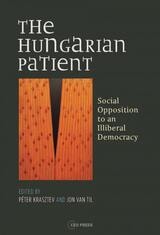
The Hungarian Patient
Social Opposition to an Illiberal DemocracyJon Van Til
Central European University Press, 2015
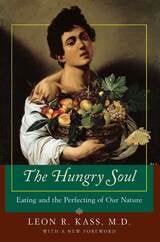
The Hungry Soul
Eating and the Perfecting of Our NatureLeon R. Kass M.D.
University of Chicago Press, 1999
"Kass is a distinguished and graceful writer. . . . It is astonishing to discover how different is our world from that of the animals, even in that which most evidently betrays that we too are animals—our need and desire for food."—Roger Scruton, Times Literary Supplement
"Yum."—Miss Manners
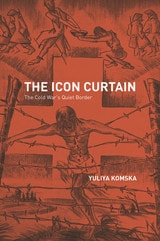
The Icon Curtain
The Cold War's Quiet BorderYuliya Komska
University of Chicago Press, 2015
Yuliya Komska transports readers to the western edge of the Bohemian Forest, one of Europe’s oldest borderlands, where in the 1950s civilians set out to shape the so-called prayer wall. A chain of new and repurposed pilgrimage sites, lookout towers, and monuments, the prayer wall placed two long-standing German obsessions, forest and border, at the heart of the century’s most protracted conflict. Komska illustrates how civilians used the prayer wall to engage with and contribute to the new political and religious landscape. In the process, she relates West Germany’s quiet sylvan periphery to the tragic pitch prevalent along the Iron Curtain’s better-known segments.
Steeped in archival research and rooted in nuanced interpretations of wide-ranging cultural artifacts, from vandalized religious images and tourist snapshots to poems and travelogues, The Icon Curtain pushes disciplinary boundaries and opens new perspectives on the study of borders and the Cold War alike.
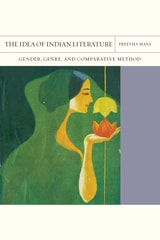
The Idea of Indian Literature
Gender, Genre, and Comparative MethodPreetha Mani
Northwestern University Press, 2022
Indian literature is not a corpus of texts or literary concepts from India, argues Preetha Mani, but a provocation that seeks to resolve the relationship between language and literature, written in as well as against English. Examining canonical Hindi and Tamil short stories from the crucial decades surrounding decolonization, Mani contends that Indian literature must be understood as indeterminate, propositional, and reflective of changing dynamics between local, regional, national, and global readerships. In The Idea of Indian Literature, she explores the paradox that a single canon can be written in multiple languages, each with their own evolving relationships to one another and to English.
Hindi, representing national aspirations, and Tamil, epitomizing the secessionist propensities of the region, are conventionally viewed as poles of the multilingual continuum within Indian literature. Mani shows, however, that during the twentieth century, these literatures were coconstitutive of one another and of the idea of Indian literature itself. The writers discussed here—from short-story forefathers Premchand and Pudumaippittan to women trailblazers Mannu Bhandari and R. Chudamani—imagined a pan-Indian literature based on literary, rather than linguistic, norms, even as their aims were profoundly shaped by discussions of belonging unique to regional identity. Tracing representations of gender and the uses of genre in the shifting thematic and aesthetic practices of short vernacular prose writing, the book offers a view of the Indian literary landscape as itself a field for comparative literature.
The Idea of the Sciences in the French Enlightenment
A ReinterpretationG. Matthew Adkins
University of Delaware Press, 2014
Published by University of Delaware Press. Distributed worldwide by Rutgers University Press.
The Impact of Aristotelianism on Modern Philosophy
Riccardo Pozzo
Catholic University of America Press, 2019
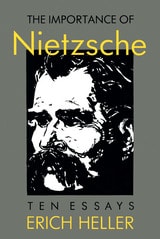
The Importance of Nietzsche
Erich Heller
University of Chicago Press, 1988
Nietzsche prided himself on having broken with all traditional ways of thinking and feeling, and once even claimed that he would someday be recognized for having ushered in a new millennium. While acknowledging Nietzsche's radicalism, Heller also insists on the continuity of the story in which he does indeed occupy a central place. By considering Nietzsche in relation to Goethe, Rilke, Wittgenstein, Yeats, and others, Heller shows the philosopher's ambivalence toward the tradition he inherited as well as his profound effect on the thought and sensibility of those who followed him. It is hardly an exaggeration to say, as Heller does in his first essay, that Nietzsche is to many modern writers and thinkers—including Mann, Musil, Kafka, Freud, Heidegger, Jaspers, Gide, and Sartre—what St. Thomas Aquinas was to Dante: the categorical interpreter of a world, which they contemplate imaginatively and theoretically without ever much upsetting its Nietzschean structure.
Thus it is Nietzsche's thought, so pervasively present in the themes of modernity, that gives coherence and unity to Heller's essays. What emerges from them is that, despite his iconoclastic declarations and unorthodox philosophical practices, Nietzsche deals with the human spirit's persistent concerns. His questions remain urgent, and even the answers, in all their contradictoriness, possess the commanding force of his inquiry. An example is the incompatibility of the famous extremes, the teaching of the Übermensch and the Eternal Recurrence of All Things. These cancel each other out and yet grow from the same intellectual and spiritual roots, as is shown lucidly and cogently by one of Heller's most forceful essays, "Nietzsche's Terrors: Time and the Inarticulate." In fathoming the depth of this contradiction, Heller at the same time reveals the importance of Nietzsche for those who seek to understand the wellsprings of the epoch's disquiet, turmoil, and creativity.
The Indescribable and the Undiscussable
Reconstructing Human Discourse after TraumaDan Bar-On
Central European University Press, 1998
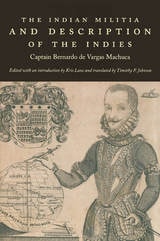
The Indian Militia and Description of the Indies
Captain Bernardo de Vargas Machuca, Edited with an introduction by Kris Lane
Duke University Press, 2008
Containing advice on curing rattlesnake bites with amethysts and making saltpeter for gunpowder from concentrated human urine, The Indian Militia is a manual in four parts, the first of which outlines the ideal qualities of the militia commander. Addressing the organization and outfitting of conquest expeditions, Book Two includes extended discussions of arms and medicine. Book Three covers the proper behavior of soldiers, providing advice on marching through peaceful and bellicose territories, crossing rivers, bivouacking in foul weather, and carrying out night raids and ambushes. Book Four deals with peacemaking, town-founding, and the proper treatment of conquered peoples. Appended to these four sections is a brief geographical description of all of Spanish America, with special emphasis on the indigenous peoples of New Granada (roughly modern-day Colombia), followed by a short guide to the southern coasts and heavens. This first English-language edition of The Indian Militia includes an extensive introduction, a posthumous report on Vargas Machuca’s military service, and a selection from his unpublished attack on the writings of Fray Bartolomé de Las Casas.
The Influence of Darwin on Philosophy and Other Essays in Contemporary Thought
John Dewey. Edited by Larry A. Hickman. Introduction by Douglas Browning
Southern Illinois University Press, 2007
Presenting Dewey’s new view of philosophical inquiry
This critical edition of The Influence of Darwin on Philosophy and Other Essays in Contemporary Thought presents the results of John Dewey’s patient construction, throughout the previous sixteen years, of the radically new view of the methods and concerns of philosophical inquiry. It was a view that he continued to defend for the rest of his life.
In the 1910 The Influence of Darwin on Philosophy and Other Essays in Contemporary Thought—the first collection of Dewey’s previously published, edited essays—John Dewey provided readers with an overview of the scope and direction of his philosophical vision in one volume. The order in which the eleven essays were presented was a reverse chronology, with more recently published essays appearing first. The collection of eleven essays offered a detailed portrait of Dewey’s proposed reconstruction of the traditional concepts of knowledge and truth. It furthermore elaborated on how his new logic and his proposal regarding knowledge and truth fit comfortably together, not only with each other but also with a pragmatically proper understanding of belief, reality, and experience.
Because material in the Collected Works of John Dewey, 1882–1953 was published chronologically, however, the essays published together in the 1910 Darwin book have appeared in seven different volumes in the Collected Works. This new, critical edition restores a classic collection of essays authored and edited by John Dewey as they originally appeared in the volume. The edition is presented with ancillary materials, including responses by Dewey’s critics and an introduction by Douglas Browning.
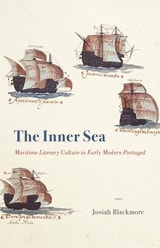
The Inner Sea
Maritime Literary Culture in Early Modern PortugalJosiah Blackmore
University of Chicago Press, 2022
In this book, Josiah Blackmore considers how the sea and seafaring shaped literary creativity in early modern Portugal during the most active, consequential decades of European overseas expansion. Blackmore understands “literary” in a broad sense, including a diverse archive spanning genres and disciplines—epic and lyric poetry, historical chronicles, nautical documents, ship logs, shipwreck narratives, geographic descriptions, and reference to texts of other seafaring powers and literatures of the period—centering on the great Luís de Camões, arguably the sea poet par excellence of early modern Europe.
Blackmore shows that the sea and nautical travel for Camões and his contemporaries were not merely historical realities; they were also principles of cultural creativity that connected to larger debates in the widening field of the maritime humanities. For Blackmore, the sea, ships, and nautical travel unfold into a variety of symbolic dimensions, and the oceans across the globe that were traversed in the fifteenth and sixteenth centuries correspond to vast reaches within the literary self. The sea and seafaring were not merely themes in textual culture but were also principles that created individual and collective subjects according to oceanic modes of perception. Blackmore concludes with a discussion of depth and sinking in shipwreck narratives as metaphoric and discursive dimensions of the maritime subject, foreshadowing empire’s decline.
The Intellectual Earthquake
How Pragmatism Leveled Philosophy, Caused French Theory, and Reinvented SelfhoodJames Livingston
University of Chicago Press, 0
A look at how pragmatism—a quintessentially “American” philosophy—was the vanguard of a cultural revolution that altered the entire world.
As shaped by William James, John Dewey, Jane Addams, and others, pragmatism is considered the most American of philosophical currents, brashly privileging action, experience, embodiment, contingency, and real-world impact. In The Intellectual Earthquake, James Livingston recaptures pragmatism’s initial scandalous vitality and its worldwide influence. Livingston ambitiously covers more than a century, showing pragmatist roots in countless strains of thought, and connecting seemingly far-flung and disparate thinkers. He also aims to explain how pragmatism has been steadily maligned and misunderstood, and he makes the case for fresh attention to its lineal influence on “French Theory.”
The Intellectual Legacy of Herman Dooyeweerd (1894-1977)
A Hopeful Philosophy for our TimeMaarten Verkerk
Amsterdam University Press, 2025
The work of Herman Dooyeweerd is currently attracting global interest. From the United States to Korea, from New Zealand to Brazil, and from the United Kingdom to South Africa, professionals across various disciplines—philosophers, engineers, politicians, economists, and others—are expanding upon his ideas within their respective fields. At the same time, his work is becoming increasingly relevant as contemporary society displays characteristics reminiscent of those observed in European culture a century ago. The Intellectual Legacy of Herman Dooyeweerd (1894-1977): A Hopeful Philosophy for our Time introduces his most significant concepts and numerous examples of their contemporary applications.