Results by title
527 books match the query 'Novel' and 157 start with t
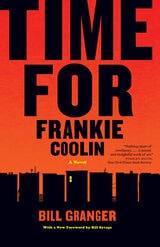
Time for Frankie Coolin
A NovelBill Granger
University of Chicago Press, 2014
Time for Frankie Coolin tells the story of a plasterer turned landlord in Chicago who, in the late 1970s, buys abandoned buildings and makes them just habitable enough that he can charge minimal rent to his mostly black tenants. Frankie—both a tough guy in the trades and a family man—has done well by his wife and kids, moving them to a house in the suburbs. But a casual favor for his wife’s cousin—allowing the man to store some crates in an empty building—and a random act of arson set in motion a cascade of crises, including a menacing pair of G-men and the looming threat of prison if Frankie doesn’t talk. But since talking has never been one of Frankie’s strengths, he copes as he always has: by trying to tough it out on his own.
Calling to mind such gritty poets of the urban scene as George V. Higgins and Nelson Algren, Time for Frankie Coolin is both a psychological thriller and a ’70s Chicago period piece that shines a surprisingly sympathetic light on the often ignored stories of the people who lived, worked, and died at the city’s margins.
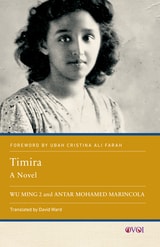
Timira
A NovelWu Ming Wu Ming 2
Rutgers University Press, 2027
Isabella Marincola lived between two cultures. The child of an Italian military officer father and a Somali mother, she was never fully part of either culture. In Somalia, she was seen as a child of the ruling colonizers, while in Italy her darker skin made her an object of both fascination and contempt. Even as she worked as an actress and model in postwar Italy, she was valued for her exotically beautiful body, not her keen mind or her captivating voice.
Titled after Isabella’s Somali name, Timira is a unique combination of novel, archival sources, and oral history. It finally gives her a chance to articulate her experiences of being a Black Italian woman in different epochs of Italian history, from Fascism to the 1990s, in all of which italianità was assumed to be exclusively white.
Cowritten by her son Antar Mohamed Marincola and a founding member of the Wu Ming writers’ collective, it is based on a series of writings and interviews Isabella gave towards the end of her long, eventful life. A compelling novel rooted in truth, Timira reflects on Italy’s colonial legacy and ingrained racism, while telling the story of a courageous woman and her struggles to assert herself in a nation unprepared to accommodate its Black citizens.

Trixy
A NovelElizabeth Stuart Phelps, Edited and with an introduction by Emily E. VanDette
Northwestern University Press, 2019
Trixy is a 1904 novel by the best-selling but largely forgotten American author and women’s rights activist Elizabeth Stuart Phelps. The book decries the then common practice of vivisection, or scientific experiments on live animals. In Trixy, contemporary readers can trace the roots of the early animal rights movement in Phelps’s influential campaign to introduce legislation to regulate or end this practice. Phelps not only presents a narrative polemic against the cruelty of vivisection but argues that training young doctors in it makes them bad physicians. Emily E. VanDette’s introduction demonstrates that Phelps’s protest writing, which included fiction, pamphlets, essays, and speeches, was well ahead of its time.
Though not well known today, Phelps’s 1868 spiritualist novel, The Gates Ajar, which offered a comforting view of the afterlife to readers traumatized by the Civil War, was the century’s second best-selling American novel, surpassed only by Uncle Tom’s Cabin. Recently scholars and readers have begun to reexamine Phelps’s significance. As contemporary authors, including Peter Singer, Jonathan Safran Foer, Donna J. Haraway, Gary L. Francione, and Carol J. Adams, have extended her vision, they have also created new audiences for her work.
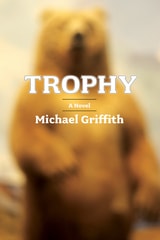
Trophy
A NovelMichael Griffith
Northwestern University Press, 2011
Vada Prickett is a 29-year-old Hose Associate at a car wash in South Carolina, and Darla, the woman he loves, is about to marry his friend, rival, and life-long neighbor, Wyatt Yancey. Vada has “spent his life waiting for the thing to get a proper start.” But it will never get that start, for Vada, as this wildly original novel opens, is being crushed to death by Wyatt’s latest animal trophy, a stuffed grizzly bear Vada has been helping him to smuggle—against Darla’s wishes—into Wyatt’s house.
It turns out that the cliché is true—at the moment of death, your life does flash before your eyes. Trophy, the account of a man’s final, fleeting instant on earth, joins Vada as he attempts to make that flash last as long as possible. As he lies dying, too soon and too absurdly, Vada tries to unravel the mysteries of his life. He first bargains with God, then rages against the dying of the light. Exhausted, Vada proceeds to prolong, in every way available to a man in his dire circumstances, the time he has remaining.
Just beneath Griffith’s dark humor and witty take on our present-day culture lies a meditation on memory and identity and the power of language over both.
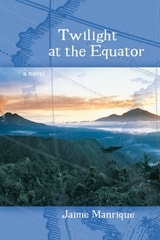
Twilight at the Equator
A NovelJaime Manrique
University of Wisconsin Press, 2003
Colombian-born Santiago Martinez starts his adult life as a young gay writer living in Spain. Years later, as a university professor in New York City, Santiago is called back to his native Colombia upon the suicide of his sister. There he learns some shocking secrets about his childhood and adolescence and comes to the realization that cherished memories of the past are only illusion.
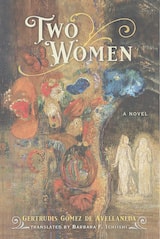
Two Women
A NovelBarbara F. Ichiishi
Bucknell University Press, 2022
This first English translation of the novel captures the lyrical romanticism of its prose and includes a scholarly introduction to the work and its author, Gertrudis Gómez de Avellaneda, a pioneering feminist and anti-slavery activist who based the character of Catalina on her own experience. Two Women is a searing indictment of the stern laws and customs governing marriage in the Hispanic world, brought to life in a spellbinding, tragic love story.
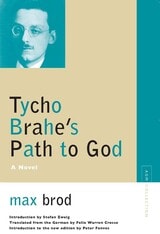
Tycho Brahe's Path to God
A NovelMax Brod
Northwestern University Press, 2007