Results by title
3258 books match the query 'Performing Arts' and 658 start with t
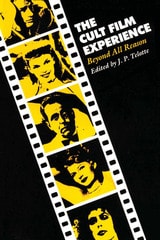
The Cult Film Experience
Beyond All ReasonEdited by J. P. Telotte
University of Texas Press, 1991
"Play it again, Sam" is the motto of cult film enthusiasts, who will watch their favorite movie over and over, "beyond all reason." What is the appeal of cult movies? Why do fans turn up in droves at midnight movies or sit through the same three-hanky classics from Hollywood's golden era? These are some of the questions J. P. Telotte and twelve other noted film scholars consider in this groundbreaking study of the cult film.
The book identifies two basic types of cult films—older Hollywood movies, such as Casablanca, that have developed a cult following and "midnight movies," most notably The Rocky Horror Picture Show. Telotte, Bruce Kawin, and Timothy Corrigan offer thought-provoking discussions about why these two types of movies become cult films, the sort of audience they attract, and the needs they fulfill for that audience. Subsequent essays employ a variety of cultural, feminist, ideological, and poststructural strategies for exploring these films.
In a section on the classical cult film, the movie Casablanca receives extensive treatment. An essay by T. J. Ross considers Beat the Devil as a send-up of cult films, while another essay by Wade Jennings analyzes the cult star phenomenon as personified in Judy Garland.
"Midnight movie madness" is explored in essays on The Rocky Horror Picture Show, movie satires of the 1950s, science fiction double features, and horror thrillers.
Illustrated with scenes from favorite movies and written for both fans and scholars, The Cult Film Experience will appeal to a wider audience than the "usual suspects."
The Cultural Politics of Slam Poetry
Race, Identity, and the Performance of Popular Verse in AmericaSusan B. A. Somers-Willett
University of Michigan Press, 2010
"For a lucid and thorough 'real-world' analysis of the movement from the ground-up--including its history, aesthetics, and culture, there is surely no better place to start than Somers-Willett's trailblazing book."
--- Jerome Sala, Pleiades
"Finally, a clear, accurate, and thoroughly researched examination of slam poetry, a movement begun in 1984 by a mixed bag of nobody poets in Chicago. At conception, slam poetry espoused universal humanistic ideals and a broad spectrum of participants, and especially welcome is the book's analysis of how commercial marketing forces succeeded in narrowing public perception of slam to the factionalized politics of race and identity. The author's knowledge of American slam at the national level is solid and more authentic than many of the slammers who claim to be."
---Marc Kelly Smith, founder/creator of the International Poetry Slam movement
The cultural phenomenon known as slam poetry was born some twenty years ago in white working-class Chicago barrooms. Since then, the raucous competitions have spread internationally, launching a number of annual tournaments, inspiring a generation of young poets, and spawning a commercial empire in which poetry and hip-hop merge.
The Cultural Politics of Slam Poetry is the first critical book to take an in-depth look at slam, shedding light on the relationships that slam poets build with their audiences through race and identity performance and revealing how poets come to celebrate (and at times exploit) the politics of difference in American culture.
With a special focus on African American poets, Susan B. A. Somers-Willett explores the pros and cons of identity representation in the commercial arena of spoken word poetry and, in doing so, situates slam within a history of verse performance, from blackface minstrelsy to Def Poetry. What's revealed is a race-based dynamic of authenticity lying at the heart of American culture. Rather than being mere reflections of culture, Somers-Willett argues, slams are culture---sites where identities and political values get publicly refigured and exchanged between poets and audiences.
Susan B. A. Somers-Willett is a decade-long veteran of slam and teaches creative writing and poetics as an Assistant Professor of English at Montclair State University. She is the author of two books of poetry, Quiver and Roam. Visit the author's website at: http://www.susansw.com/.
Photo by Jennifer Lacy.

The Cultural Practice of Immigrant Filmmaking
The Conditions and Practices of Migrant Minor Cinemas in Sweden 1950-1990John Sundholm and Lars Gustaf Andersson
Intellect Books, 2019
Based on a research project funded by the Swedish Research Council, this book examines 40 years of post-war independent immigrant filmmaking in Sweden. John Sundholm and Lars Gustaf Andersson consider the creativity that lies in the state of exile, offering analyses of over 50 rarely seen immigrant films that would otherwise remain invisible and unarchived. They shed light on the complex web of personal, economic, and cultural circumstances that surround migrant filmmaking, discuss associations that became important sites of self-organization for exiled filmmakers, and explore the cultural practice of minor immigrant cinema archiving. The Cultural Practice of Immigrant Filmmaking applies film theory to immigrant filmmaking in a transnational context, exploring how immigrant filmmakers use film to find a place in a new cultural situation.
The Culture of Spontaneity
Improvisation and the Arts in Postwar AmericaDaniel Belgrad
University of Chicago Press, 1998
"A compelling narrative, putting living flesh on shorthand intuitions that connect North Beach to Black Mountain College, Fenollosa to Pollock, Jackson Lears's No Place of Grace to Todd Gitlin's The Sixties."—Joel Smith, Boston Review
"An invaluable introduction to postwar modernism across the arts."—Thomas Augst, Boston Book Review
"Belgrad's extensive probing of the artists and movements with their profound sociological roots is timely as well as comprehensive....A major contribution for serious scholars."—Choice
The Cycle
A Practical Approach to Managing Arts OrganizationsMichael M. Kaiser and Brett E. Egan
Brandeis University Press, 2013
The Dance That Makes You Vanish
Cultural Reconstruction in Post-Genocide IndonesiaRachmi Diyah Larasati
University of Minnesota Press, 2013
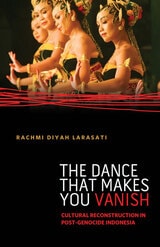
Indonesian court dance, a purportedly pure and untouched tradition, is famed throughout the world for its sublime calm and stillness. Yet this unyieldingly peaceful surface conceals a time of political repression and mass killing. Between 1965 and 1966, some one million Indonesians—including a large percentage of the country’s musicians, artists, and dancers—were killed, arrested, or disappeared as Suharto established a virtual dictatorship that ruled for the next thirty years.
In The Dance That Makes You Vanish, an examination of the relationship between female dancers and the Indonesian state since 1965, Rachmi Diyah Larasati elucidates the Suharto regime’s dual-edged strategy: persecuting and killing performers perceived as communist or left leaning while simultaneously producing and deploying “replicas”—new bodies trained to standardize and unify the “unruly” movements and voices of those vanished—as idealized representatives of Indonesia’s cultural elegance and composure in bowing to autocratic rule. Analyzing this history, Larasati shows how the Suharto regime’s obsessive attempts to control and harness Indonesian dance for its own political ends have functioned as both smoke screen and smoke signal, inadvertently drawing attention to the site of state violence and criminality by constantly pointing out the “perfection” of the mask that covers it.
Reflecting on her own experiences as an Indonesian national troupe dancer from a family of persecuted female dancers and activists, Larasati brings to life a powerful, multifaceted investigation of the pervasive use of culture as a vehicle for state repression and the global mass-marketing of national identity.
The Dance of Everyday Movement
A Developmental Framework for Whole-Body IntegrationLuc Vanier, Rebecca Nettl-Fiol, and Elizabeth Johnson
University of Illinois Press, 2026
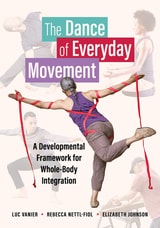
Everyone can have their own movement practice. Building on Dance and the Alexander Technique, Luc Vanier, Rebecca Nettl-Fiol, and Elizabeth Johnson present an innovative method for observing and analyzing movement in daily life, the performing arts, and therapeutic contexts.
The authors’ Framework for Integration is a multifaceted approach to understanding and refining human movement. Core principles—such as psychophysical unity, developmental movement, and attention to breath—reveal how small changes in awareness and intent transform activities ranging from yoga and Tai Chi to sitting meditation, from gardening and sports to playing a musical instrument. Real-world applications highlight how individuals of all abilities and ages can reduce pain, improve coordination, and discover more efficient, joyful movement. Guest contributors detail how these concepts enhance artistic expression, interventions for trauma or chronic pain, and everyday tasks like driving and housework.
Engaging and aimed at non-specialists, The Dance of Everyday Movement invites practitioners from all walks of life to embrace ongoing development, resilience, and a more embodied way of living.
The Dancer's Voice
Performance and Womanhood in Transnational IndiaRumya Sree Putcha
Duke University Press, 2023
The Danish Directors 2
Dialogues on the New Danish Fiction CinemaEdited by Mette Hjort, Eva Jørholt and Eva Novrup Redvall
Intellect Books, 2010
With insider information about the making, marketing and distribution of award-winning films, and interviews with seminal directors such as Anders Thomas Jensen, Annette K. Olesen, and Lone Scherfig, The Danish Directors 2 allows readers entry into what might seem to be a forbidding body of work. The editors are knowledgeable and sensitive interrogators, and their appreciation of the specific qualities of each director’s work elicits thoughtful replies. This volume will appeal to students, scholars, and cinephiles alike.
The Day the Dancers Stayed
Performing in the Filipino/American DiasporaTheodore S. Gonzalves
Temple University Press, 2009
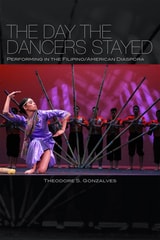
Pilipino Cultural Nights at American campuses have been a rite of passage for youth culture and a source of local community pride since the 1980s. Through performances—and parodies of them—these celebrations of national identity through music, dance, and theatrical narratives reemphasize what it means to be Filipino American. In The Day the Dancers Stayed, scholar and performer Theodore Gonzalves uses interviews and participant observer techniques to consider the relationship between the invention of performance repertoire and the development of diasporic identification.
Gonzalves traces a genealogy of performance repertoire from the 1930s to the present. Culture nights serve several functions: as exercises in nostalgia, celebrations of rigid community entertainment, and occasionally forums for political intervention. Taking up more recent parodies of Pilipino Cultural Nights, Gonzalves discusses how the rebellious spirit that enlivened the original seditious performances has been stifled.
The Deaf Way II Anthology
A Literary Collection by Deaf and Hard of Hearing WritersTonya M. Stremlau
Gallaudet University Press, 2002
In July 2002, the second Deaf Way Conference and Festival took place at Gallaudet University in Washington, D.C., attracting more than 5,000 people worldwide. Researchers, artists, performers, and others converged to create a singular blend of scholarship and social interaction, which inspired The Deaf Way II Anthology.
The Deaf Way II Anthology brings together stellar contributions by 16 international writers who are deaf or hard of hearing. This remarkable collection features poetry, essays, short stories, and one play, all of which offer thought-provoking perspectives on elements from the personal universes of these gifted authors. Many are American writers well-known for their past publications, such as Douglas Bullard, Willy Conley, Christopher Heuer, and Raymond Luczak, while the outstanding work of John Lee Clark, volume editor Tonya Stremlau, Melissa Whalen, and several others have been collected for the first time in this volume. The international contributions further distinguish this anthology, ranging from poetry by Romanian Carmen Cristiu, verse by Sibylle Gurtner May from Switzerland, to a play by Nigerian Sotonwa Opeoluwa.
All of the writers showcased in The Deaf Way II Anthology portray the Deaf experience with unmatched authenticity, presenting a perfect introduction to the Deaf world. Simultaneously, their work demonstrates that deaf and hard of hearing people can write at the highest aesthetic level and offer invaluable insights on the complete human spectrum.
The Deathly Pleasures of Form
Opera, Mimesis, AgencySarah Collins
University of Chicago Press, 0
Opera offers a rich space in which to think about problems of mimesis—how artworks imitate ideal forms, how humans imitate the things around us, and how words attempt to represent reality.
In this book, musicologist and cultural historian Sarah Collins shows how the strange, exhilarating, and uniquely self-conscious art form of opera opens itself to such contemporary, theoretical questions. The Deathly Pleasures of Form is especially concerned with the links between linguistic and bodily signification in opera through the genre’s use of figures of partial agency—disembodied voices, enchanted objects, puppets, mechanical devices. The book is structured around four emblematic figures (Faust, Don Juan, Papageno, and Hoffmann) who are paired with four objects of variable animacy (puppet, stone, silhouette, and mirror, respectively). Across these chapters, Collins develops an expanded notion of mimesis that illuminates opera’s material and mechanical investments, its filmic and other adaptations, its explicit negotiation between vocal utterance and bodily gesture, and the epistemological significance of opera’s excesses. Ultimately, Collins claims that opera performs a type of compromised agency that can offer new critical insight into the self-limiting nature of both freedom and representation.
The Delight of Turkish Dizi
Memory, Genre and Politics of Television in TurkeyArzu Öztürkmen
Seagull Books, 2021
Standing at the crossroads of folklore, media, and performance studies, Arzu Öztürkmen explores the rise of the dizi genre in Turkey since the 1970s, when national television broadcasting began in the country. The Delight of Turkish Dizi approaches this unique genre—not quite soap opera or telenovela—as an art form that developed with the collective creative input of writers, producers, directors, actors, editors, musicians, and, lately, international distributors. Öztürkmen shows how dizi-making is a marathon run by sprinters, where production and broadcasting processes have been tightly interwoven, offering a mode of communication and consumption that is distinct to the Turkish television industry. The research consists of oral history with key figures in dizi production and ethnographic surveys of film sets, international content markets, and award ceremonies. This first-ever monograph on Turkish dizi will be a valuable addition to the field of performance and media studies while delighting the general reader as well.
The Detroit Genre
Race, Dispossession, and Resilience in American Literature and Film, 1967-2023Vincent Haddad
Lever Press, 2024
The book first establishes the concept of the “Detroit genre” that emerged in late 1960s and traces the tropes of this white-centric narrative genre in popular culture, touching on key texts including Blue Collar, Robocop, The Crow, It Follows, and Barbarian. The second part shows how Black writers, including Alice Randall, adrienne maree brown, Stephen Mack Jones, and Angela Flournoy, reclaimed and revised the Detroit genre by un-fixing Detroit narratives of dispossession, criminality, and industrial and social failure through formal experimentations on genre itself.
Where Detroit has typically been painted in the news as one of three things—the center of the automotive industry; crime-ridden and in ruins; or as a “blank canvas” with limitless potential of entrepreneurship—Vincent Haddad shows that the Detroit genre in literature and film can be far more powerful than news media in narrating Black dispossession as a pragmatic, even liberal consensus. The texts studied here condition forgetfulness about Detroit’s history or expose it to a full reckoning, direct attention toward or away from the city’s agents of injustice, fetishize resilience or model resistance, and foreclose or imagine a future of Black liberation. Appealing to scholars of popular literature, media, race, and American studies, The Detroit Genre is an accessible and engaging study of the city’s influence on a wide array of genres in pop culture.
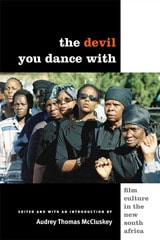
The Devil You Dance With
Film Culture in the New South AfricaEdited and with an Introduction by Audrey McCluskey
University of Illinois Press, 2008
This extraordinary volume presents twenty-five in-depth interviews with established and emerging South African filmmakers, collected and edited by Audrey Thomas McCluskey. The interviews capture the filmmakers’ spirit, energy, and ambition as they attempt to give birth to a film culture that reflects the heart and aspirations of their diverse and emergent nation. The collection includes a biographical profile of each filmmaker, as well an introductory essay by McCluskey, pointing to the themes, as well as creative differences and similarities, among the filmmakers.
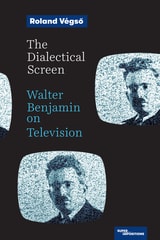
The Dialectical Screen
Walter Benjamin on TelevisionRoland Végso
Northwestern University Press, 2027
Exploring the meanings of media technologies through Walter Benjamin’s thought
Walter Benjamin’s prime years as a cultural critic coincided with the rise of televised broadcasting in Europe and North America, a unique period of rapid expansion in a new technological medium. So why would such a subtle and sensitive critic of media, known for his cultural criticism across genres, seem to have ignored or even missed the entire phenomenon of television? This book reveals how television, as a concept and a metaphor, in fact structures Benjamin’s philosophy.
Through a careful reading of Benjamin’s work across various media—literature, photography, cinema, radio, and television—Roland Végső reconstructs a powerful vision of media technologies as not merely tools of communication but as forces that shape how we imagine and construct the world as a conceptual totality. The Dialectical Screen provides a timely and provocative framework for understanding how media continue to shape our political, cultural, and existential horizons, recasting Benjamin's understanding of historical materialism in fundamentally tele-visual terms as a theoretical orientation that makes visible the perishing of the world itself.
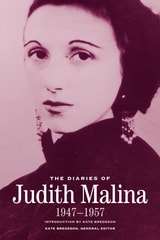
The Diaries of Judith Malina
1947-1957Judith Malina, Kate Bredeson
Northwestern University Press, 2026
Judith Malina’s newly restored diaries from a critical early decade in her personal, artistic, and political development
Judith Malina’s diaries from 1947 to 1957 are brought back into print in this volume, which charts her cofounding of The Living Theatre with husband and lifelong artistic partner Julian Beck. In these diaries, she narrates her developing political commitments and her expansive collaborations and personal relationships, as well as a moving account of her time in prison with activist Dorothy Day. This new edition features Kate Bredeson’s comprehensive introduction, which offers a detailed examination of Malina’s life and work in this period, along with additional historical context of these years and never-before-published photographs from Malina’s personal archives.
The Diaries of Judith Malina is a four-volume set that publishes for the first time together the edited diaries of radical theater director, actor, and activist Judith Malina from 1947 to 1971, the most influential period of her remarkable and storied career. A committed anarchist and pacifist, Malina made theater as a way to stoke revolutionary action. Her diaries showcase her political and social observations, cultural commentary, self-reflection, and wit. This expertly prepared set invites us to recognize Malina for her accomplishments not only as an artist and an activist but as one of the great literary diarists.
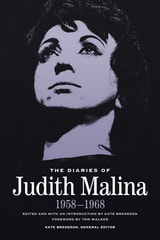
The Diaries of Judith Malina
1958-1968Judith Malina, Kate Bredeson, Tom Walker
Northwestern University Press, 2026
A previously unpublished volume of diaries recording Judith Malina’s extraordinary life and career in a moment of cultural revolution
Judith Malina’s diaries from the pivotal years of 1958 to 1968 are presented here in print for the first time. Meticulously edited and with an essential introduction by Kate Bredeson that offers a detailed discussion of Malina’s life and works during this period, the volume includes additional historical context and never-before-published photographs from Malina’s personal archives, as well as an illuminating foreword by Living Theatre archivist and longtime company member Tom Walker. This decade covers some of the most important years of Malina’s life and in the history of The Living Theatre, from career-defining productions of The Connection and The Brig to the company’s self-imposed European exile, when they created their signature works, including Paradise Now, Antigone, and Frankenstein.
The Diaries of Judith Malina is a four-volume set that publishes for the first time together the edited diaries of radical theater director, actor, and activist Judith Malina from 1947 to 1971, the most influential period of her remarkable and storied career. A committed anarchist and pacifist, Malina made theater as a way to engage in revolutionary action. Her diaries showcase her political and social observations, cultural commentary, self-reflection, and wit. This expertly prepared set invites us to recognize Malina for her accomplishments not only as an artist and an activist but as one of the great literary diarists.

The Diaries of Judith Malina
1968-1969Judith Malina, Kate Bredeson
Northwestern University Press, 2026
A newly restored edition of Judith Malina’s legendary diaries narrating a key moment of social, political, and cultural upheaval
Originally published by Judith Malina as The Enormous Despair, this slim, gripping collection of diaries from a pivotal period between 1968 and 1969 follows The Living Theatre’s return to the United States after their years of self-exile in Europe, their increasing notoriety and frequent arrests, and their cross-country touring. In these pages, Malina wrestles with the company’s artistic and political efforts during a moment of societal crisis and grapples with their future. Kate Bredeson’s introduction contextualizes Malina’s life and work in this period, while additional historical context and never-before-published photographs add new detail and depth to a stirring account of American social and political history.
The Diaries of Judith Malina is a four-volume set that publishes for the first time together the edited diaries of radical theater director, actor, and activist Judith Malina from 1947 to 1971, the most influential period of her remarkable and storied career. A committed anarchist and pacifist, Malina made theater as a way to engage in revolutionary action. Her diaries showcase her political and social observations, her cultural commentary, her self-reflection, and her wit. This expertly prepared set invites us to recognize Malina for her accomplishments not only as an artist and an activist but as one of the great literary diarists.
The Diaries of Judith Malina
1969-1971Judith Malina, Kate Bredeson, Ilion Troya
Northwestern University Press, 2026
Judith Malina’s never-before-published diaries describing a period of profound personal and professional transformation
The years 1969 to 1971 saw The Living Theatre’s greatest rupture, reckoning with its desire to leave its defining productions from the 1960s behind and move forward with new artistic works and practices. In these previously unpublished diaries, Judith Malina recounts these pivotal years, describing her transformative time in Brazil, including her experiences of daily life in jail while awaiting trial with her company members. This meticulously edited volume includes Kate Bredeson’s introduction, examining Malina’s life and work in this period, as well as additional historical context and never-before-published photographs. Living Theatre member Ilion Troya offers a foreword that provides new context for understanding the volume’s historical significance.
The Diaries of Judith Malina is a four-volume set that publishes for the first time together the edited diaries of radical theater director, actor, and activist Judith Malina from 1947 to 1971, the most influential period of her remarkable and storied career. A committed anarchist and pacifist, Malina made theater as a way to engage in revolutionary action. Her diaries showcase her political and social observations, cultural commentary, self-reflection, and wit. This expertly prepared set invites us to recognize Malina for her accomplishments not only as an artist and an activist but as one of the great literary diarists.
The Diary of Vaslav Nijinsky
Vaslav Nijinsky
University of Illinois Press, 2006
A uniquely personal record of a great artist’s experience of mental illness
In his prime, Vaslav Nijinsky (1889-1950) was the most celebrated man in Western ballet--a virtuoso and a dramatic dancer such as European and American audiences had never seen before. After his triumphs in such works as The Specter of the Rose and Petrouchka, he set out to make ballets of his own, and with his Afternoon of a Faun and The Rite of Spring, created within a year of each other, he became ballet’s first modernist choreographer.
For six weeks in early 1919, as his tie to reality was giving way, Nijinsky kept a diary--the only sustained daily record we have, by a major artist, of the experience of entering psychosis. In some entries he is filled with hope. He is God; he will save the world. In other entries, he falls into a black despair. He is dogged by sexual obsessions and grief over World War I. Furthermore, he is afraid that he is going insane.
The diary was first published in 1936, in a version heavily bowdlerized by Nijinsky’s wife. The new edition, translated by Kyril FitzLyon, is the first complete and accurate English rendering of this searing document. In her introduction, noted dance critic Joan Acocella tells Nijinsky’s story and places it in the context of early European modernism.
The Direct Cinema of David and Albert Maysles
Jonathan B. Vogels
Southern Illinois University Press, 2005
Boldly signifying the cultural issues of the 1960s and 1970s in groundbreaking pieces such as Grey Gardens, Gimme Shelter, and Showman, filmmakers and brothers David and Albert Maysles used an approach to documentary film that involved spontaneous observation of naturally occurring events. With no rehearsed footage and no preconceived plots, their revolutionary work eschewed the authoritative voice-over narrator, didactic scripts, and the traditional problem-and-solution format used by the majority of their predecessors in the genre and duly influenced subsequent directors in both fiction and nonfiction film. Their collaboration from 1962 until David’s death in 1987 wrought thirteen major works in which the brothers critiqued the concept of celebrity with unglamorous footage of iconic figures, explored how commercialism hinders communication, and questioned the possibility of seeing anything clearly in a world abounding with both real and constructed images.
Jonathan B. Vogels outlines how the Maysles brothers blended a unique amalgam of direct cinema characteristics, a modern humanist aesthetic, and a collaborative working process that included other directors and editors. Looking at the films as both shapers and reflections of American culture, he points out that the works offer insights into a wide range of contemporary topics including materialism, celebrity, modern art, and the American family. In addition to describing the changes in technology that made direct cinema possible, Vogels provides careful, scene-by-scene analyses that allow for a consideration of the Maysles brothers’ films as films, a tactic not frequently employed in nonfiction film studies.
The Director's Prism
E. T. A. Hoffmann and the Russian Theatrical Avant-GardeDassia N. Posner
Northwestern University Press, 2016
Shortlist, 2019 Prague Quadrennial Best Scenography and Design Publication Award
The Director's Prism investigates how and why three of Russia's most innovative directors— Vsevolod Meyerhold, Alexander Tairov, and Sergei Eisenstein—used the fantastical tales of German Romantic writer E. T. A. Hoffmann to reinvent the rules of theatrical practice. Because the rise of the director and the Russian cult of Hoffmann closely coincided, Posner argues, many characteristics we associate with avant-garde theater—subjective perspective, breaking through the fourth wall, activating the spectator as a co-creator—become uniquely legible in the context of this engagement. Posner examines the artistic poetics of Meyerhold's grotesque, Tairov's mime-drama, and Eisenstein's theatrical attraction through production analyses, based on extensive archival research, that challenge the notion of theater as a mirror to life, instead viewing the director as a prism through whom life is refracted. A resource for scholars and practitioners alike, this groundbreaking study provides a fresh, provocative perspective on experimental theater, intercultural borrowings, and the nature of the creative process.
The Disney Animation Renaissance
Behind the Glass at the Florida StudioMary E. Lescher
University of Illinois Press, 2023
A ground-level look at the entertainment giant, The Disney Animation Renaissance profiles the people and purpose behind a little-known studio during a historic era.
The Divided City and Its New Cinemas, 1920-1980
Amy Murphy
University of Illinois Press, 2026
The Drama of the American Short Story, 1800-1865
Michael J. Collins
University of Michigan Press, 2016
The book shows how perspectives from theater studies, anthropology, and performance studies can enrich readings of the short-story form. Moving beyond arbitrary distinctions between performance and text, it suggests that this literature had a social life and was engaged with questions of circumatlantic and transnational culture. It suggests that the short story itself was never conceived as a nationalist literary form, but worked by mobilizing cosmopolitan connections and meanings. In so doing, the book resurrects a neglected history of American Federalism and its connections to British literary forms.
The Drama's Patrons
A Study of the Eighteenth-Century London AudienceBy Leo Hughes
University of Texas Press, 1971
The drama's laws,
the drama's patrons give,
For we that live to please,
must please to live.
—Samuel Johnson, 1747
Democratic ferment, responsible for political explosions in the seventeenth century and expanded power in the eighteenth, affected all phases of English life. The theatre reflected these forces in the content of the plays of the period and in an increased awareness among playgoers that the theatre "must please to live."
Drawing from a wealth of amusing and informative contemporary accounts, Leo Hughes presents abundant evidence that the theatre-going public proved zealous, and sometimes even unruly, in asserting its role and rights. He describes numerous species of individual pest—the box-lobby saunterers, the vizard masks (ladies of uncertain virtue), the catcallers, and the weeping sentimentalists. Protest demonstrations of various interest groups, such as footmen asserting their rights to sit in the upper gallery, reflect the behavior of the audience as a whole—an audience that Alexander Pope described as "the manyheaded monster of the pit."
Hughes analyzes the changes in the audience's taste through the long span from Dryden's day to Sheridan's. He illustrates the decline in taste from the sophisticated, if bawdy, comedy of the Restoration Period to the sentimentalism and empty show of later decades. He attributes the increased emphasis on sentiment and spectacle to audience influence and describes the effects of audience demands on managers, playwrights, and players. He describes in detail the mixed assembly that frequented the theatre during this period and the greatly enlarged theatres that were built to accommodate it.
Hughes concludes that it was the English people's basic love of liberty that allowed them to accept audience disruptions considered intolerable by foreign visitors and that the drama's patrons greatly influenced the quality of theatrical production during this long period.
The Dramatic Writer's Companion, Second Edition
Tools to Develop Characters, Cause Scenes, and Build StoriesWill Dunne
University of Chicago Press, 2017
Having spent decades working with dramatists to refine and expand their existing plays and screenplays, Dunne effortlessly blends condensed dramatic theory with specific action steps—over sixty workshop-tested exercises that can be adapted to virtually any individual writing process and dramatic script. Dunne’s in-depth method is both instinctual and intellectual, allowing writers to discover new actions for their characters and new directions for their stories. The exercises can be used by those just starting the writing process and by those who have scripts already in development. With each exercise rooted in real-life issues from Dunne’s workshops, readers of this companion will find the combined experiences of more than fifteen hundred workshops in a single guide.
This second edition is fully aligned with a brand-new companion book, Character, Scene, and Story, which offers forty-two additional activities to help writers more fully develop their scripts. The two books include cross-references between related exercises, though each volume can also stand alone.
No ordinary guide to plotting, this handbook centers on the principle that character is key. “The character is not something added to the scene or to the story,” writes Dunne. “Rather, the character is the scene. The character is the story.” With this new edition, Dunne’s remarkable creative method will continue to be the go-to source for anyone hoping to take their story to the stage.
The Dramatic Writer's Companion
Tools to Develop Characters, Cause Scenes, and Build StoriesWill Dunne
University of Chicago Press, 2009
Moss Hart once said that you never really learn how to write a play; you only learn how to write this play. Crafted with that adage in mind, The Dramatic Writer’s Companion is designed to help writers explore their own ideas in order to develop the script in front of them. No ordinary guide to plotting, this handbook starts with the principle that character is key. “The character is not something added to the scene or to the story,” writes author Will Dunne. “Rather, the character is the scene. The character is the story.”
Having spent decades working with dramatists to refine and expand their existing plays and screenplays, Dunne effortlessly blends condensed dramatic theory with specific action steps—over sixty workshop-tested exercises that can be adapted to virtually any individual writing process and dramatic script. Dunne’s in-depth method is both instinctual and intellectual, allowing writers to discover new actions for their characters and new directions for their stories.
Dunne’s own experience is a crucial element of this guide. His plays have been selected by the Eugene O’Neill Theatre Center for three U.S. National Playwrights Conferences and have earned numerous honors, including a Charles MacArthur Fellowship, four Bay Area Theatre Critics Circle Awards, and two Drama-Logue Playwriting Awards. Thousands of individuals have already benefited from his workshops, and The Dramatic Writer’s Companion promises to bring his remarkable creative method to an even wider audience.
The Dramaturgy of Senecan Tragedy
Thomas D. Kohn
University of Michigan Press, 2013
The first-century Roman tragedies of Seneca, like all ancient drama, do not contain the sort of external stage directions that we are accustomed to today; nevertheless, a careful reading of the plays reveals such stage business as entrances, exits, setting, sound effects, emotions of the characters, etc. The Dramaturgy of Senecan Tragedy teases out these dramaturgical elements in Seneca's work and uses them both to aid in the interpretation of the plays and to show the playwright's artistry.
Thomas D. Kohn provides a detailed overview of the corpus, laying the groundwork for appreciating Seneca's techniques in the individual dramas. Each of the chapters explores an individual tragedy in detail, discussing the dramatis personae and examining how the roles would be distributed among a limited number of actors, as well as the identity of the Chorus. The Dramaturgy of Senecan Tragedymakes a compelling argument for Seneca as an artist and a dramaturg in the true sense of the word: "a maker of drama." Regardless of whether Seneca composed his plays for full-blown theatrical staging, a fictive theater of the mind, or something in between, Kohn demonstrates that he displays a consistency and a careful attentiveness to details of performance. While other scholars have applied this type of performance criticism to individual tragedies or scenes, this is the first comprehensive study of all the plays in twenty-five years, and the first ever to consider not just stagecraft, but also metatheatrical issues such as the significant distribution of roles among a limited number of actors, in addition to the emotional states of the characters. Scholars of classics and theater, along with those looking to stage the plays, will find much of interest in this study.
The Dread of Difference
Gender and the Horror FilmEdited by Barry Keith Grant
University of Texas Press, 2015
“The Dread of Difference is a classic. Few film studies texts have been so widely read and so influential. It’s rarely on the shelf at my university library, so continuously does it circulate. Now this new edition expands the already comprehensive coverage of gender in the horror film with new essays on recent developments such as the Hostel series and torture porn. Informative and enlightening, this updated classic is an essential reference for fans and students of horror movies.”—Stephen Prince, editor of The Horror Film and author of Digital Visual Effects in Cinema: The Seduction of Reality
“An impressive array of distinguished scholars . . . gazes deeply into the darkness and then forms a Dionysian chorus reaffirming that sexuality and the monstrous are indeed mated in many horror films.”—Choice
“An extremely useful introduction to recent thinking about gender issues within this genre.”—Film Theory
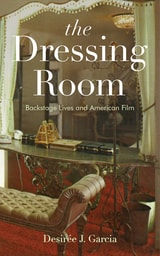
The Dressing Room
Backstage Lives and American FilmDesirée J. Garcia
Rutgers University Press, 2025
A recurrent and popular setting in American cinema, the dressing room has captured the imaginations of filmmakers and audiences for over a century. In The Dressing Room: Backstage Lives and American Film, the only book-length study of the space, author Desirée J. Garcia explores how dressing rooms are dynamic realms in which a diverse cast of performers are made and exposed. Garcia analyzes the backstage film, which spans film history, modes, and genre, to show how dressing rooms have been a useful space for filmmakers to examine the performativity of American life. From the Black maid to the wife and mother to the leading man, dressing rooms navigate, shape, and challenge society’s norms. The stakes are high in dressing rooms, Garcia argues, because they rehearse larger questions about identity and its performance, negotiating who can succeed and who cannot and on what terms.
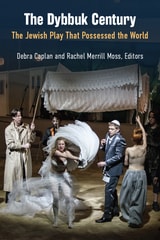
The Dybbuk Century
The Jewish Play That Possessed the WorldDebra Caplan and Rachel Merrill Moss, Editors
University of Michigan Press, 2023
A little over 100 years ago, the first production of An-sky’s The Dybbuk, a play about the possession of a young woman by a dislocated spirit, opened in Warsaw. In the century that followed, The Dybbuk became a theatrical conduit for a wide range of discourses about Jews, belonging, and modernity. This timeless Yiddish play about spiritual possession beyond the grave would go on to exert a remarkable and unforgettable impact on modern theater, film, literature, music, and culture.
The Dybbuk Century collects essays from an interdisciplinary group of scholars who explore the play’s original Yiddish and Hebrew productions and offer critical reflections on the play’s enduring influence. The collection will appeal to scholars, students, and theater practitioners, as well as general readers.
The Eloquent Screen
A Rhetoric of FilmGilberto Perez
University of Minnesota Press, 2019
A lifetime of cinematic writing culminates in this breathtaking statement on film’s unique ability to move us
Cinema is commonly hailed as “the universal language,” but how does it communicate so effortlessly across cultural and linguistic borders? In The Eloquent Screen, influential film critic Gilberto Perez makes a capstone statement on the powerful ways in which film acts on our minds and senses.
Drawing on a lifetime’s worth of viewing and re-viewing, Perez invokes a dizzying array of masters past and present—including Chaplin, Ford, Kiarostami, Eisenstein, Malick, Mizoguchi, Haneke, Hitchcock, and Godard—to explore the transaction between filmmaker and audience. He begins by explaining how film fits into the rhetorical tradition of persuasion and argumentation. Next, Perez explores how film embodies the central tropes of rhetoric––metaphor, metonymy, allegory, and synecdoche––and concludes with a thrilling account of cinema’s spectacular capacity to create relationships of identification with its audiences.
Although there have been several attempts to develop a poetics of film, there has been no sustained attempt to set forth a rhetoric of film—one that bridges aesthetics and audience. Grasping that challenge, The Eloquent Screen shows how cinema, as the consummate contemporary art form, establishes a thoroughly modern rhetoric in which different points of view are brought into clear focus.
The Eloquent Shakespeare
A Pronouncing Dictionary for the Complete Dramatic Works with Notes to Untie the Modern TongueGary Logan
University of Chicago Press, 2008
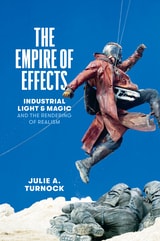
The Empire of Effects
Industrial Light and Magic and the Rendering of RealismJulie A. Turnock
University of Texas Press, 2022
2024 Finalist, Marshall McLuhan Outstanding Book Award, Media Ecology Association
How one company created the dominant aesthetic of digital realism.
Just about every major film now comes to us with an assist from digital effects. The results are obvious in superhero fantasies, yet dramas like Roma also rely on computer-generated imagery to enhance the verisimilitude of scenes. But the realism of digital effects is not actually true to life. It is a realism invented by Hollywood—by one company specifically: Industrial Light & Magic.
The Empire of Effects shows how the effects company known for the puppets and space battles of the original Star Wars went on to develop the dominant aesthetic of digital realism. Julie A. Turnock finds that ILM borrowed its technique from the New Hollywood of the 1970s, incorporating lens flares, wobbly camerawork, haphazard framing, and other cinematography that called attention to the person behind the camera. In the context of digital imagery, however, these aesthetic strategies had the opposite effect, heightening the sense of realism by calling on tropes suggesting the authenticity to which viewers were accustomed. ILM’s style, on display in the most successful films of the 1980s and beyond, was so convincing that other studios were forced to follow suit, and today, ILM is a victim of its own success, having fostered a cinematic monoculture in which it is but one player among many.
The Empire's Old Clothes
What the Lone Ranger, Babar, and Other Innocent Heroes Do to Our MindsAriel Dorfman
Duke University Press, 2010
The Enchanted Years of the Stage
Kansas City at the Crossroads of American Theater, 1870-1930Felicia Hardison Londré
University of Missouri Press, 2007
Sarah Bernhardt, Sir Henry Irving, Edwin Booth . . . there was a time when they all played Kansas City. From star-studded engagements at ornate opera houses to risqué shows in Fourth Street honky-tonks, Kansas City was a cow town that wanted to civilize itself through the performing arts. And because it was a railway hub in the heyday of trouping, it opened its doors to America’s traveling performers.
This book chronicles the “first golden age” of Kansas City theater, from the opening of the Coates Opera House in 1870 through the gradual decline of touring productions after World War I. Drawing on the recollections of renowned theater critic David Austin Latchaw and on newspaper archives of the era, Felicia Londré has gleaned long-lost nuggets of theater life—both the legitimate stage and popular fare—to create a fascinating account of a city and its theater culture.
The Enchanted Years of the Stage is brimming with forgotten stories and historical illustrations that offer a new perspective on both the history of American theater and the humor and pathos of performers’ lives. It tells how James O’Neill once chased a messenger boy for ruining a big scene, while Louis James played practical jokes on fellow actors in the middle of Shakespeare performances; how police kept watch over the burlesque girls at the Folly to make sure their act wouldn’t reach the level of indecency allowed in St. Louis; how Orth Stein shot the manager of the Theatre Comique; and how Eddie Foy played his death scene in Kansas City—by dying there. Throughout the book, sidebars of Latchaw’s writing reflect the style and spirit of this bygone era.
Offering a richer view of American theater than have accounts centered on New York, Londré’s book also yields a wealth of new insights into the social and political fabric of an emerging metropolis and testifies to the importance of the arts in the growth and reputation of a great city. By conveying the richness and complexity of road shows in Kansas City—a microcosm of the burgeoning national stage—she gives us a key piece in the mosaic that was American theater in a neglected but unforgettable era.
The End of Japanese Cinema
Industrial Genres, National Times, and Media EcologiesAlexander Zahlten
Duke University Press, 2017
A Study of the Weatherhead East Asian Institute, Columbia University
The Essential Jill Johnston Reader
Jill Johnston. Edited by Clare Croft
Duke University Press, 2024
The Euro-American Cinema
By Peter Lev
University of Texas Press, 1993
With McDonalds in Moscow and Disneyland in Paris and Tokyo, American popular culture is spreading around the globe. Regional, national, and ethnic cultures are being powerfully affected by competition from American values and American popular forms. This literate and lively study explores the spread of American culture into international cinema as reflected by the collision and partial merger of two important styles of filmmaking: the Hollywood style of stars, genres, and action, and the European art film style of ambiguity, authorial commentary, and borrowings from other arts.
Peter Lev departs from the traditional approach of national cinema histories and discusses some of the blends, overlaps, and hegemonies that are typical of the world film industry of recent years. In Part One, he gives a historical and theoretical overview of what he terms the "Euro-American art film," which is characterized by prominent use of the English language, a European art film director, cast and crew from at least two countries, and a stylistic mixing of European art film and American entertainment.
The second part of Lev’s study examines in detail five examples of the Euro-American art film: Contempt (1963), Blow-Up (1966), The Canterbury Tales (1972), Paris, Texas (1983), and The Last Emperor (1987). These case studies reveal that the European art film has had a strong influence on world cinema and that many Euro-American films are truly cultural blends rather than abject takeovers by Hollywood cinema.
The Europeanization of Cinema
Interzones and Imaginative CommunitiesRandall Halle
University of Illinois Press, 2014
He focuses especially on films about borders, borderlands, and cultural zones as he traces the development of interzones from the inception of central European cinema to the avant-garde films of today. Throughout, he shows how cinema both reflects and engenders interzones that explore the important questions of Europe's social order: imperialism and nation-building in the late nineteenth and early twentieth centuries; "first contact" between former adversaries (such as East and West Germany) following World War II and the Cold War; and migration, neo-colonialism, and cultural imperialism in the twenty-first century.
Ultimately, Halle argues that today's cinema both produces and reflects imaginative communities. He demonstrates how, rather than simply erasing boundaries, the European Union instead fosters a network of cultural interzones that encourage cinematic exploration of the new Europe's processes and limits of connectivity, tolerance, and cooperation.

The Expanding Vista
American Television in the Kennedy YearsMary Ann Watson
Duke University Press, 1994
The Extraordinary Image
Orson Welles, Alfred Hitchcock, Stanley Kubrick, and the Reimagining of CinemaKolker, Robert P
Rutgers University Press, 2016
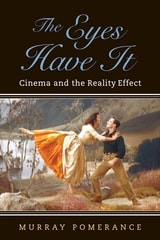
The Eyes Have It
Cinema and the Reality EffectPomerance, Murray
Rutgers University Press, 2013
Beginning with a penetrating study of five cornfield sequences—including The Wizard of Oz, Arizona Dream, and Signs—Murray Pomerance journeys through a vast array of cinematic moments, technical methods, and laborious collaborations from the 1930s to the 2000s to show how the viewer's experience of "reality" is put in context, challenged, and willfully engaged.
Four meditations deal with “reality effects” from different philosophical and technical angles. “Vivid Rivals” assesses active participation and critical judgment in seeing effects with such works as Defiance, Cloverfield, Knowing, Thelma & Louise, and more. “The Two of Us” considers double placement and doubled experience with such films as The Prestige, Niagara, and A Stolen Life. “Being There” discusses cinematic performance and the problems of believability, highlighting such films as Gran Torino, The Manchurian Candidate, In Harm’s Way, and other films. “Fairy Land” explores the art of scenic backing, focusing on the fictional world of Brigadoon, which borrows from both hard-edged realism and evocative landscape painting.
The Face on the Screen
Death, Recognition & SpectatorshipTherese Davis
Intellect Books, 1995
The constant bombardment of the super-enlarged, computer-enhanced faces of advertising, the endless 'talking heads' of television and the ever-changing array of film stars' faces have reduced the face to a banal image, while the dream of early film theorists that the 'giant severed heads' of the screen could reveal 'the soul of man' to the masses is long since dead. And yet the end of this dream opens up the possibility for a different view of the face on the screen. The aim of the book is to seize this opportunity to rethink the facial close-up in terms other than subjectivity and identity by shifting the focus to questions of death and recognition.
In doing so, the book proposes a dialectical reversal or about-face. It suggests that we focus our attention on the places in contemporary media where the face becomes unrecognisable, for it is here that the facial close-up expresses the powers of death. Using Walter Benjamin's theory of the dialectical image as a critical tool, the book provides detailed studies of a wide range of media spectacles of faces becoming unrecognisable. It shows how the mode of recognition enabled by these faces is a shock experience that can open our eyes to the underside of the mask of self - the unrecognisable mortal face of self we spend our lives trying not to see. Turning on itself, so to speak, the face exposes the fragile relationship between social recognition and facial recognizability in the images-cultures of contemporary media.
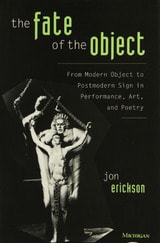
The Fate of the Object
From Modern Object to Postmodern Sign in Performance, Art, and PoetryJon Erickson
University of Michigan Press, 1995
The Feature Film Distribution Deal
A Critical Analysis of the Single Most Important Film Industry AgreementJohn W. Cones
Southern Illinois University Press, 1997
John W. Cones, whose real goal is to stimulate a long-term film industry reform movement, shows how the financial control of the film industry in the hands of the major studios and distributors actually translates into creative control of the industry.
Cones discusses the pros and cons of the debate relating to the industry’s so-called net profit problem and the way in which the distribution deal plays an integral part in that problem. He then breaks down five major film finance/distribution scenarios, explaining various distribution deals and suggesting ways of negotiating distribution.
Critically examining the specific terms of the distribution deal itself, Cones covers gross receipts exclusions, distributor fees, and distribution expenses. He also investigates the various forms of interest, issues of production costs, matters of creative control, and general contractual provisions.
For handy reference, Cones includes an extensive checklist for negotiating any feature film distribution deal. The list deals with distribution fees, distribution expenses, interest, production costs, creative control issues, general contractual provisions, distributor commitments, and the limits of negotiating. His nine appendixes present a "Motion Picture Industry Overview," "Profit Participation Audit Firms," "ADI (Top 50) Market Rankings," an "AFMA Member List, 1992–1993," a "Production-Financing/Distribution Agreement," a "Negative Pickup Distribution Agreement," a "Distribution Rights Acquisition Agreement," a "Distribution Agreement (Rent-a-Distributor Deal)," and a "Foreign Distribution Agreement."
Cones wrote this book for independent producers, executive and associate producers and their representatives, directors, actors, screenwriters, members of talent guilds, distributors, and entertainment, antitrust, and securities attorneys. Securities issuers and dealers, investment bankers, and money finders, investors, and financiers of every sort also will be interested. In addition, Cones suggests and hopes that the book will interest "Congress, their research staff, government regulators at the Internal Revenue Service, the Securities and Exchange Commission, the Federal Trade Commission, and law enforcement officials such as the Los Angeles District Attorney and the U.S. Justice Department."
The Feminist Spectator as Critic
Jill Dolan
University of Michigan Press, 2012
The Feminist Spectator as Criticbroke new ground as one of the pioneering books on feminist spectatorship, encouraging resistant readings to generate feminist meanings in performance. Approaching live spectatorship through a range of interdisciplinary methods, the book has been foundational in theater studies, performance studies, and gender/sexuality/women's studies. This updated and enlarged second edition celebrates the book's twenty-fifth anniversary with a substantial new introduction and up-to-the-moment bibliography, detailing the progress to date in gender equity in theater and the arts, and suggesting how far we have yet to go.
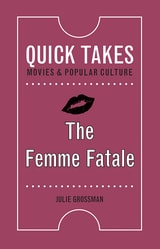
The Femme Fatale
Julie Grossman
Rutgers University Press, 2020
This book offers readers a concise look at over a century of femmes fatales on both the silver screen and the TV screen. Starting with ethnically exoticized silent film vamps like Theda Bara and Pola Negri, it examines classic film noir femmes fatales like Barbara Stanwyck in Double Indemnity, as well as postmodern revisions of the archetype in films like Basic Instinct and Memento. Finally, it explores how contemporary film and television creators like Fleabag and Killing Eve’s Phoebe Waller-Bridge have appropriated the femme fatale in sympathetic and surprising ways.
Analyzing not only the films themselves, but also studio press kits and reviews, The Femme Fatale considers how discourses about the pleasures and dangers of female performance are projected onto the figure of the femme fatale. Ultimately, it is a celebration of how “bad girl” roles have provided some of Hollywood’s most talented actresses opportunities to fully express their on-screen charisma.