Results by title
1148 books match the query 'Political Ideologies' and 241 start with t
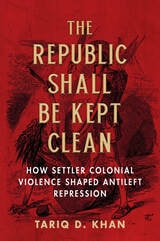
The Republic Shall Be Kept Clean
How Settler Colonial Violence Shaped Antileft RepressionTariq D. Khan
University of Illinois Press, 2023
The colonizing wars against Native Americans created the template for anticommunist repression in the United States. Tariq D. Khan’s analysis reveals bloodshed and class war as foundational aspects of capitalist domination and vital elements of the nation’s long history of internal repression and social control. Khan shows how the state wielded the tactics, weapons, myths, and ideology refined in America’s colonizing wars to repress anarchists, labor unions, and a host of others labeled as alien, multi-racial, multi-ethnic urban rabble. The ruling classes considered radicals of all stripes to be anticolonial insurgents. As Khan charts the decades of red scares that began in the 1840s, he reveals how capitalists and government used much-practiced counterinsurgency rhetoric and tactics against the movements they perceived and vilified as “anarchist.”
Original and boldly argued, The Republic Shall Be Kept Clean offers an enlightening new history with relevance for our own time.
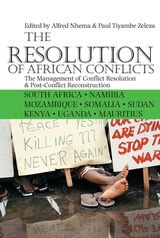
The Resolution of African Conflicts
The Management of Conflict Resolution and Post-Conflict ReconstructionAlfred Nhema
Ohio University Press, 2007
“These two volumes clearly demonstrate the efforts by a wide range of African scholars to explain the roots, routes, regimes and resolution of African conflicts and how to re-build post-conflict societies. They offer sober and serious analyses, eschewing the sensationalism of the western media and the sophistry of some of the scholars in the global North for whom African conflicts are at worst a distraction and at best a confirmation of their pet racist and petty universalist theories.”
—From the introduction by Paul Tiyambe Zeleza
This book offers analyses of a range of African conflicts and demonstrates that peace is too important to be left to outsiders.
The Responsibilities of Democracy
John Major and Nick Clegg
Haus Publishing, 2019
Amid pressing questions about the nature and limits of democracy, both in Britain and beyond, The Responsibilities of Democracy provides a clear-eyed perspective shared by two former politicians. Two central figures of the British political establishment, John Major and Nick Clegg, share their thoughts on where democracy is heading and how it can survive in the twenty-first century. Offering his perspective as a former prime minister, Major writes of the qualities on which a healthy democracy depends and expresses his deep concerns about the declining decorum of political exchange. Clegg brings a counter-perspective in discussing the ways in which political language has always involved trading insults and argues that echo chambers, although now more sophisticated, are nothing new. Compromise, Clegg insists, is not betrayal, but is instead the very substance of our politics and our democracy. The Responsibilities of Democracy explores the overall health of UK democracy, giving a balanced analysis of its values and flaws. It is also a clarion call to the electorate and politicians to nurture and protect the precious values on which democracy depends.

The Restoration of Order
The Normalization of Czechoslovakia 1969–1976Milan Šimecka
Karolinum Press, 2025
In an engaging style, not lacking in irony and detachment, Milan Šimečka describes the process of restoring order and its result—so-called real socialism—in a brilliant analysis of the “normalization” regime in Czechoslovakia that came to power after the Soviet-led invasion that crushed the Prague Spring of 1968. These poignant reflections and essays coincided with Šimečka’s first-hand experience of the consequences of the time’s political and cultural purges.
This second edition of Cold War classics, first written between 1975 and 1977, with a new preface from Martin Šimečka and afterword from Jonathan Bolton, highlights chilling parallels with contemporary political developments and current civic and ethical questions.
The Resurgence of Conservatism in Anglo-American Democracies
Barry Cooper, Allan Kornberg, and William Mishler, eds.
Duke University Press, 1987
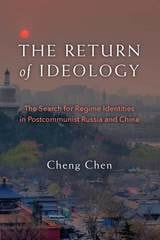
The Return of Ideology
The Search for Regime Identities in Postcommunist Russia and ChinaCheng Chen
University of Michigan Press, 2016
As a nation makes the transition from communism to democracy or another form of authoritarianism, its regime must construct not only new political institutions, but also a new political ideology that can guide policy and provide a sense of mission. The new ideology is crucial for legitimacy at home and abroad, as well as the regime’s long-term viability. In The Return of Ideology, Cheng Chen compares post-communist regimes, with a focus on Russia under Putin and post-Deng China, investigating the factors that affect the success of an ideology-building project and identifies the implications for international affairs.
Successful ideology-building requires two necessary—but not sufficient—conditions. The regime must establish a coherent ideological repertoire that takes into account the nation’s ideological heritage and fresh surges of nationalism. Also, the regime must attract and maintain a strong commitment to the emerging ideology among the political elite.
Drawing on rich primary sources, including interviews, surveys, political speeches, writings of political leaders, and a variety of publications, Chen identifies the major obstacles to ideology-building in modern Russia and China and assesses their respective long-term prospects. Whereas creating a new regime ideology has been a protracted and difficult process in China, it has been even more so in Russia. The ability to forge an ideology is not merely a domestic concern for these two nations, but a matter of international import as these two great powers move to assert and extend their influence in the world.
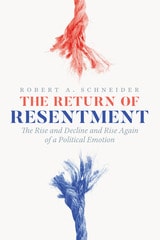
The Return of Resentment
The Rise and Decline and Rise Again of a Political EmotionRobert A. Schneider
University of Chicago Press, 2023
The term “resentment,” often casually paired with words like “hatred,” “rage,” and “fear,” has dominated US news analysis since November 2016. Despite its increased use, this word seems to defy easy categorization. Does “resentment” describe many interlocking sentiments, or is it just another way of saying “anger”? Does it suggest an irrational grievance, as opposed to a legitimate callout of injustice? Does it imply political leanings, or is it nonpartisan by nature?
In The Return of Resentment, Robert A. Schneider explores these questions and more, moving from eighteenth-century Britain to the aftermath of the French Revolution to social movements throughout the twentieth century. Drawing on a wide range of writers, thinkers, and historical experiences, Schneider illustrates how resentment has morphed across time, coming to express a collective sentiment felt by people and movements across the political spectrum. In this history, we discover resentment’s modernity and its ambiguity—how it can be used to dismiss legitimate critique and explain away violence, but also convey a moral stance that demands recognition. Schneider anatomizes the many ways resentment has been used to label present-day movements, from followers of Trump and supporters of Brexit to radical Islamicists and proponents of identity politics. Addressing our contemporary political situation in a novel way, The Return of Resentment challenges us to think critically about the roles different emotions play in politics.
The Rhetoric of Fascism
Edited by Nathan Crick
University of Alabama Press, 2022
Decoding the discourse: Rhetorical foundations of authoritarian power.
Fascism has resurfaced as one of the most pressing problems of our time. The rise of extremist parties and candidates in Europe, the United States, and around the globe has led even mainstream political commentators to begin using the term “fascism” to describe dangerous movements that have revived and repackaged many of the strategies long thought to have been relegated to the margins of political rhetoric. No longer just confined to the state regimes of the past, fascism thrives today as a globally self-augmenting, self-propagating rhetorical phenomenon with a variety of faces and expressions.
The Rhetoric of Fascism defines and interprets the common persuasive devices that characterize fascist discourse to understand the nature of its enduring appeal. By approaching fascism from a rhetorical perspective, this volume complements established political and sociological understandings of fascism as a movement or regime. A rhetorical approach studies fascism less as a party one joins than as a set of persuasive strategies one adopts. Fascism spreads precisely because it is not a coherent entity. Instead, it exists as a loosely bound and often contradictory collection of persuasive trajectories that have attained enough coherence to mobilize and channel the passions of a self-constituted mass of individuals.
Introductory chapters focus on general theories of fascism drawn from twentieth-century history and theory. Contributors investigate specific historical figures and their relationship to contemporary rhetorics, focusing on a specific rhetorical device that is characteristic of fascist rhetoric. A common thread throughout every chapter is that fascist devices are appealing because they speak to us in the familiar language of our culture. As we are seduced by one device at a time, we soon find ourselves part of a movement, a group, or a campaign that makes us act in ways we might never have imagined. This volume reveals that fascism may be closer to home than we think.
CONTRIBUTORS
Patrick D. Anderson / Rya Butterfield / Nathan Crick / Elizabeth R. Earle / Zac Gershberg / Stephen J. Hartnett / Marie-Odile N. Hobeika / Sean Illing / Jacob A. Miller / Fernando Ismael Quiñones Valdivia / Patricia Roberts-Miller / Raquel M. Robvais / Bradley A. Serber / Ryan Skinnell

The Rise of China and the Demise of the Capitalist World-Economy
Minqi Li
Pluto Press, 2008
Minqi Li examines the future global prospects from the perspectives of Marxism, world-system theories, and ecological limits to growth. He argues that China is likely to exacerbate many of the major contradictions of world capitalism, which could lead to the demise of the existing world-system.
This is an essential text for students of political economy, economics and global politics.
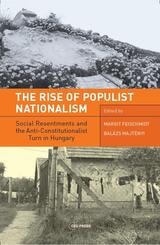
The Rise of Populist Nationalism
Social Resentments and Capturing the Constitution in HungaryBalázs Majtényi
Central European University Press, 2020
The Rise of the Green Left
Inside the Worldwide Ecosocialist MovementDerek Wall
Pluto Press, 2010
Climate change and other ecological ills are driving the creation of a grassroots global movement for change. From Latin America to Europe, Australia and China a militant movement merging red and green is taking shape.
Ecosocialists argue that capitalism threatens the future of humanity and the rest of nature. From indigenous protest in the Peruvian Amazon to the green transition in Cuba to the creation of red-green parties in Europe, ecosocialism is defining the future of left and green politics globally. Latin American leaders such as Morales and Chavez are increasingly calling for an ecosocialist transition.
Drawing on the work of key thinkers such as Joel Kovel and John Bellamy Foster, Derek Wall provides an unique insider view of how ecosocialism has developed and a practical guide to focused ecosocialist action. A great handbook for activists and engaged students of politics.
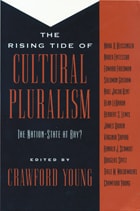
The Rising Tide of Cultural Pluralism
The Nation-State at Bay?Edited by Crawford Young
University of Wisconsin Press, 1993
Crawford Young opens with an overview of the dramatic rise in the political significance of cultural pluralism and of scholars’ changing understanding of what drives and shapes ethnic identification. Mark Beissinger brilliantly explains the demise of the last great empire-state, the USSR, while Edward Friedman notes growing challenges to the apparent cultural homogeneity of China. Nader Entessar suggests intriguing contrasts in Azeri identity politics in Iran and the ex-USSR. Ronald Schmidt and Noel Kent explore the language and racial dimensions of the rising multicultural currents in the United States. Douglas Spitz shows the extent of the decline of the old secular vision of India of the independence generation; Alan LeBaron traces the recent emergence of an assertive Mayan identity among a submerged populace in Guatemala, long thought to be destined for Ladinoization. A case study of the diversity and uncertain future of Ethiopia dramatically emerges from four contrasting contributions: Tekle Woldemikael looks at the potential cultural tensions in Eritrea, Solomon Gashaw offers a central Ethiopian nationalist perspective, Herbert Lewis reflects the perspectives of a restless and disaffected periphery, and James Quirin provides an arresting explanation of the construction of identity amongst the Beta Israel (Ethiopian Jews). Virginia Sapiro steps back from specific regions, offering an original analysis of the interaction between cultural pluralism and gender.
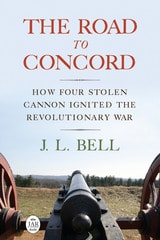
The Road to Concord
How Four Stolen Cannon Ignited the Revolutionary WarJ. L. Bell
Westholme Publishing, 2016
In the early spring of 1775, on a farm in Concord, Massachusetts, British army spies located four brass cannon belonging to Boston’s colonial militia that had gone missing months before. British general Thomas Gage had been searching for them, both to stymie New England’s growing rebellion and to erase the embarrassment of having let cannon disappear from armories under redcoat guard. Anxious to regain those weapons, he drew up plans for his troops to march nineteen miles into unfriendly territory. The Massachusetts Patriots, meanwhile, prepared to thwart the general’s mission. There was one goal Gage and his enemies shared: for different reasons, they all wanted to keep the stolen cannon as secret as possible. Both sides succeeded well enough that the full story has never appeared until now.
The Road to Concord: How Four Stolen Cannon Ignited the Revolutionary War by historian J. L. Bell reveals a new dimension to the start of America’s War for Independence by tracing the spark of its first battle back to little-known events beginning in September 1774. The author relates how radical Patriots secured those four cannon and smuggled them out of Boston, and how Gage sent out spies and search parties to track them down. Drawing on archives in the United States, United Kingdom, and Canada, the book creates a lively, original, and deeply documented picture of a society perched on the brink of war.

The Romanov Empire and Nationalism
Essays in the Methodology of Historical ResearchAlexei Miller
Central European University Press, 2008
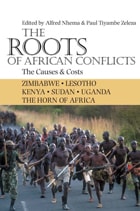
The Roots of African Conflicts
The Causes and CostsAlfred Nhema
Ohio University Press, 2007
“Africa is no more prone to violent conflicts than other regions. Indeed, Africa’s share of the more than 180 million people who died from conflicts and atrocities in the twentieth century is relatively modest.… This is not to underestimate the immense impact of violent conflicts on Africa; it is merely to emphasize the need for more balanced debate and commentary.”
—From the introduction by Paul Tiyambe Zeleza
Violent conflicts have exacted a heavy toll on Africa’s societies, polities, and economies. This book presents African scholars’ views of why conflicts start in their continent. The causes of conflict are too often examined by scholars from the countries that run the proxy wars and sell the arms to fuel them. This volume offers theoretically sophisticated, empirically grounded, and compelling analyses of the roots of African conflicts.
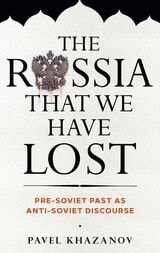
The Russia That We Have Lost
Pavel Khazanov
University of Wisconsin Press, 2023
Khazanov’s careful untangling of this discourse in the late Soviet period reveals a process that involved figures of all political stripes, from staunch conservatives to avowed intelligentsia liberals. Further, Khazanov shows that this process occurred not outside of or in opposition to Soviet guidance and censorship, but in mainstream Soviet culture that commanded wide audiences, especially among the Soviet middle class. Excavating the cultural logic of this newly foundational, mythic memory of a “lost Russia,” Khazanov reveals why, despite the apparently liberal achievement of the collapse of the Soviet Union in 1991, Boris Yeltsin (and later, Vladamir Putin) successfully steered Russia into oligarchy and increasing autocracy. The anti-Soviet memory of the pre-Soviet past, ironically constructed during the late socialist period, became and remains a politically salient narrative, a point of consensus that surprisingly attracts both contemporary regime loyalists and their would-be liberal opposition.

The Science of the Swastika
Bernard Mees
Central European University Press, 2008
The Sciences of the Democracies
Jean-Paul Gagnon and Benjamin Abrams
University College London, 2025
The Sciences of the Democracies issues a direct challenge to one of the most influential advice books on democracy ever published—the (in)famous “Trilateral Report” written in 1975, better known as The Crisis of Democracy—on the occasion of its fiftieth anniversary. This collaborative project is ambitious, aiming not only to capture the great diversity of democratic practices and institutions but also to introduce a new theory of democracy altogether. The contributors propose a holistic approach to democracy that draws on five sources of knowledge: individual people, groups of people, non-textual media, texts, and non-humans. The outcome is both an innovative account of democratic history and a practical guide for future democracy scholars.
The Search for World Democracy
W. E. B. Du Bois and the Politics of SpaceAdam Dahl
University of Chicago Press, 2026
An incisive conceptual history of global democracy in the transnational political thought of W.E.B. Du Bois.
The Search for World Democracy traces the language of “world democracy” in W. E. B. Du Bois’s oeuvre, stretching from his early sociological writings to his later work on world peace and anticolonialism with and against the United Nations. Drawing on original archival research, several lesser-known writings, and most centrally Du Bois’s unpublished 1937 manuscript A World Search for Democracy, Adam Dahl places his unique approach to democratic theory within the transatlantic debates about the transformation of European imperial order in the twentieth century. Dahl shows how Du Bois’s vision of the spatial scale of democracy situated struggles for popular control, decolonization, industrial democracy, and racial enfranchisement in their shifting, multidimensional geographic contexts. Less a specific model of global governance than a radical politics of space and scale, Du Bois’s idea of world democracy challenges the boundaries between domestic and international politics by linking local sites of democratic struggle within and against the global color line. The Search for World Democracy shows how, for Du Bois, the radical transformation of the United States into a multiracial democracy would require an equally dramatic transformation of the imperial lineages of world politics.
The Second Palestinian Intifada
A Chronicle of a People's StruggleRamzy Baroud
Pluto Press, 2006
Ramzy Baroud is a veteran journalist and former producer for Al-Jazeera TV. This is his comprehensive account of the momentous events of the last five years which shaped the political landscape not only of Palestine and Israel but of the entire Middle East region.
Addressing the most controversial issues, including the alarming escalation in suicide bombings, and the construction of the Separation Wall, he reports on the huge rate of unemployment and hunger in the Occupied Territories -- statistics so critical that NGOs compare their magnitude to African nations such as the Congo. From the brutality of the Israeli army to the ever-compromising nature of the Palestinian Authority, few are spared Baroud’s thoughtful critique.
The book is clear and concise, with one chapter dedicated to the major events of each year, and includes a comprehensive timeline.
The Second World War
A Marxist HistoryChris Bambery
Pluto Press, 2014
The Second World War casts a long shadow, portrayed as a necessary and paradigmatic war that defeated fascism. During recent wars in Iraq, Afghanistan and elsewhere, US presidents and British prime ministers have tried to claim they were following in the footsteps of Winston Churchill by standing up to dictators.
In The Second World War Chris Bambery tests this position in a thorough account of the war and tries to understand why it still dominates TV history channels and school history books.
Bambery argues that the conflict ultimately was about a division of the world between the great powers, as well as a rising of ordinary people against fascism. He offers a complex and radical analysis, that is unique when compared to many modern and conventional histories of the war.
The Shadow of a Year
The 1641 Rebellion in Irish History and MemoryJohn Gibney
University of Wisconsin Press, 2013
Was the 1641 rebellion a justified response to dispossession and repression? Or was it an unprovoked attempt at sectarian genocide? John Gibney comprehensively examines three centuries of this debate. The struggle to establish and interpret the facts of the past was also a struggle over the present: if Protestants had been slaughtered by vicious Catholics, this provided an ideal justification for maintaining Protestant privilege. If, on the other hand, Protestant propaganda had inflated a few deaths into a vast and brutal “massacre,” this justification was groundless.
Gibney shows how politicians, historians, and polemicists have represented (and misrepresented) 1641 over the centuries, making a sectarian understanding of Irish history the dominant paradigm in the consciousness of the Irish Protestant and Catholic communities alike.
The Shape of Populism
Serbia before the Dissolution of YugoslaviaMarko Grdešic
University of Michigan Press, 2019
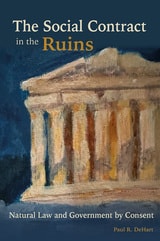
The Social Contract in the Ruins
Natural Law and Government by ConsentPaul R. DeHart
University of Missouri Press, 2024
Most scholars who write on social contract and classical natural law perceive an irreconcilable tension between them. Social contract theory is widely considered the political-theoretic concomitant of modern philosophy. Against the regnant view, The Social Contract in the Ruins, argues that all attempts to ground political authority and obligation in agreement alone are logically self-defeating. Political authority and obligation require an antecedent moral ground. But this moral ground cannot be constructed by human agreement or created by sheer will—human or divine. All accounts of morality as constructed or made collapse into self-referential incoherence. Only an uncreated, real good can coherently ground political authority and obligation or the proposition that rightful government depends on the consent of the governed. Government by consent requires classical natural law for its very coherence.
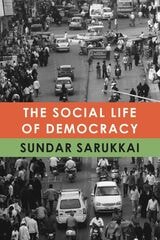
The Social Life of Democracy
Sundar Sarukkai
Seagull Books, 2022
TheSocial Life of Democracy is a response to the polarization of our times and the crisis in democracy being experienced across the world today. Drawing from B. R. Ambedkar’s view that democracy is not a form of government but more a form of society and mental disposition, this book argues that democracy needs to be seen as a form of social life that must be part of our everyday practice. Noting that the obstacles to realizing Ambedkar’s vision of democracy are both material and conceptual, philosopher Sundar Sarukkai critically examines the meaning of democratic action and the function of democracy in different domains ranging from homes to governments. He also examines its relation to labor, science, and religion, and analyzes the ethical processes that are central to democracy. Finally, clarifying the concepts of truth in politics and the ideas of freedom and choice, he persuasively argues in favor of bringing democracy into our everyday lives rather than leaving it exclusively in the domain of electoral politics.
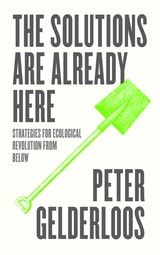
The Solutions are Already Here
Strategies of Ecological Revolution from BelowPeter Gelderloos
Pluto Press, 2022
Across the world, grassroots networks of local communities are working to realize their visions of an alternative revolutionary response to planetary destruction, often pitted against the new megaprojects promoted by greenwashed alternative energy infrastructures and the neocolonialist, technocratic policies that are the forerunners of the Green New Deal.
Gelderloos interviews food sovereignty activists in Venezuela, Indigenous communities reforesting their lands in Brazil and anarchists fighting biofuel plantations in Indonesia, looking at the battles that have cancelled airports, stopped pipelines, and helped the most marginalized to fight borders and environmental racism, to transform their cities, to win a dignified survival.
The Spirit of Religion and the Spirit of Liberty
The Tocqueville Thesis RevisitedEdited by Michael P. Zuckert
University of Chicago Press Journals, 2017
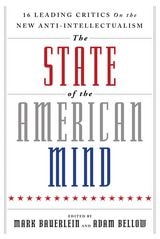
The State of the American Mind
16 Leading Critics on the New Anti-IntellectualismMark Bauerlein
Templeton Press, 2015
That was over twenty years ago. Since then, the United States has experienced unprecedented wealth, more youth enrolling in higher education than ever before, and technology advancements far beyond what many in the 1980s dreamed possible. And yet, the state of the American mind seems to have deteriorated further. Benjamin Franklin’s “self-made man” has become a man dependent on the state. Independence has turned into self-absorption. Liberty has been curtailed in the defense of multiculturalism.
In order to fully grasp the underpinnings of this shift away from the self-reliant, well-informed American, editors Mark Bauerlein and Adam Bellow have brought together a group of cultural and educational experts to discuss the root causes of the decline of the American mind. The writers of these fifteen original essays include E. D. Hirsch, Nicholas Eberstadt, and Dennis Prager, as well as Daniel Dreisbach, Gerald Graff, Richard Arum, Robert Whitaker, David T. Z. Mindich, Maggie Jackson, Jean Twenge, Jonathan Kay, Ilya Somin, Steve Wasserman, Greg Lukianoff, and R. R. Reno. Their essays are compiled into three main categories:
- States of Mind: Indicators of Intellectual and Cognitive Decline
- These essays broach specific mental deficiencies among the population, including lagging cultural IQ, low Biblical literacy, poor writing skills, and over-medication.
- Personal and Cognitive Habits/Interests
- These essays turn to specific mental behaviors and interests, including avoidance of the news, short attention spans, narcissism, and conspiracy obsessions.
- National Consequences
- These essays examine broader trends affecting populations and institutions, including rates of entitlement claims, voting habits, and a low-performing higher education system.
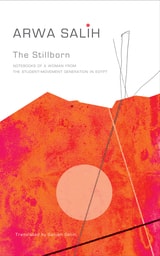
The Stillborn
Notebooks of a Woman from the Student-Movement Generation in EgyptArwa Salih
Seagull Books, 2017
A poignant reckoning with the Marxism of a generation and its militant postcolonial intellectuals.
Arwa Salih was a member of the political bureau of the Egyptian Communist Workers Party, founded in the wake of the Arab–Israeli War and the vibrant Egyptian student movement of the early 1970s. Written more than a decade after Salih quit the party and left political life—and published shortly after she tragically took her own life—The Stillborn offers a devastatingly honest look at the tragic failure of both the national liberation and communist projects in Egypt.
This powerful, unflinching critique speaks not only to and about Salih’s own generation of left-wing activists, but also extends its gaze outward. The Stillborn addresses the broader, still fiercely salient dilemmas of revolutionary politics that continue to echo throughout the developing world in the postcolonial era.
The Strange Death of Marxism
The European Left in the New MillenniumPaul Edward Gottrfied
University of Missouri Press, 2005
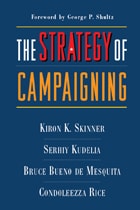
The Strategy of Campaigning
Lessons from Ronald Reagan and Boris YeltsinKiron K. Skinner, Serhiy Kudelia, Bruce Bueno de Mesquita, and Condoleezza Rice
University of Michigan Press, 2010
The Strategy of Campaigning explores the political careers of Ronald Reagan and Boris Yeltsin, two of the most galvanizing and often controversial political figures of our time. Both men overcame defeat early in their political careers and rose to the highest elected offices in their respective countries.
The authors demonstrate how and why Reagan and Yeltsin succeeded in their political aspirations, despite—or perhaps because of—their apparent “policy extremism”: that is, their advocacy of policy positions far from the mainstream. The book analyzes the viability of policy extremism as a political strategy that enables candidates to forge new coalitions and outflank conventional political allegiances.
Bruce Bueno de Mesquita is Julius Silver Professor and Director of the Alexander Hamilton Center for Political Economy at New York University and a Senior Fellow at the Hoover Institution.
Condoleezza Rice is on a leave of absence from Stanford University, where she was a Professor of Political Science and a Senior Fellow at the Hoover Institution. She is currently serving as U.S. Secretary of State.
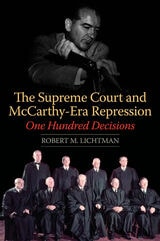
The Supreme Court and McCarthy-Era Repression
One Hundred DecisionsRobert M. Lichtman
University of Illinois Press, 2015
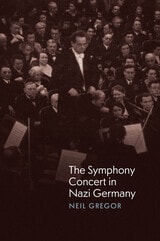
The Symphony Concert in Nazi Germany
Neil Gregor
University of Chicago Press, 2025
In the years after the Nazis came to power in January 1933 and throughout the Second World War, all aspects of life in Germany changed. Despite the social and political upheaval, gentile citizens continued to attend concerts. In this book, historian Neil Gregor surveys how the classical concert scene was impacted in Nazi Germany. Taking the perspective of the audience, rather than institutions or performers, Gregor delves into the cultural lives of ordinary Germans under conditions of dictatorship. Did the ways in which Germans heard music in the period change? Did a Nazi way of listening emerge?
For audiences, Gregor shows, changes to the concert experience were small and often took place around the edges. This, combined with the preserved idea of the concert hall as a space of imagined civility and cultivation, led many concertgoers and music lovers to claim after the war that their field and their practice had been innocent—a place to retreat from the vicious violence and racism of the Nazi regime. Drawing on untapped archival sources, The Symphony Concert in Nazi Germany reveals that the true history was one of disruption but also of near seamless adaptation. Through countless small acts, the symphony concert was reframed within the languages of strident nationalism, racism, and militarism to ensure its place inside the cultural cosmos of National Socialist Germany.
The Technology of Transition
Science and Technology Policies for Transition CountriesDavid A. Dyker
Central European University Press, 1997
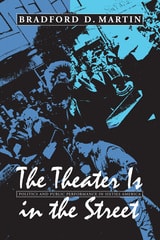
The Theater Is in the Street
Politics and Public Performance in 1960s AmericaBradford D. Martin
University of Massachusetts Press, 2004
During the 1960s, the SNCC Freedom Singers, The Living Theatre, the Diggers, the Art Workers Coalition, and the Guerrilla Art Action Group fused art and politics by staging unexpected and uninvited performances in public spaces. Through their activism and the response it provoked, art, theater, and politics began to converge and assume a new visibility in everyday life. While their specific political visions varied, these groups shared the impulse to stage performances and actions publicly—"in the streets"—eschewing museums, theaters, and other conventional halls of culture. Bradford D. Martin offers detailed portraits of each of these groups and examines why they embraced public performance as a vehicle to express and advance their politics.
At a time when the New Left and the counterculture were on the rise, these artists reflected the decade's political and cultural radicalism and helped to define a new aesthetic. Civil rights activists mobilized singing in the struggle for desegregation, introducing a vibrant musical form into the public space. The Living Theatre culminated an arduous quest to mesh artistic and political goals, leading audiences from theaters into the streets to begin the “beautiful nonviolent anarchist revolution.” The Diggers playfully engaged San Francisco's counterculture in politics with their carnivalesque public actions. The Art Workers Coalition and the Guerrilla Action Art Group sought to disrupt the conventional art world, mounting protests in and around New York City museums.
By questioning the values and assumptions that separated art from politics, these groups not only established public performance as a legitimate aesthetic but also provided a new creative vocabulary for future generations of artists. Their continued involvement with the women's liberation movement, rural communes, and political street theater into the 1970s and beyond challenges the popular myth that activists disengaged from politics after the 1960s.
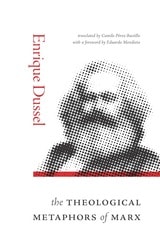
The Theological Metaphors of Marx
Enrique Dussel
Duke University Press, 2024
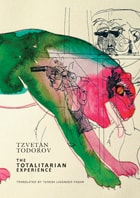
The Totalitarian Experience
Tzvetan Todorov
Seagull Books, 2011

The Transformation of Chinese Socialism
Chun Lin
Duke University Press, 2006
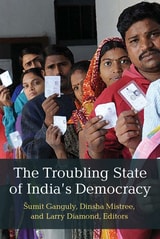
The Troubling State of India's Democracy
Šumit Ganguly, Dinsha Mistree, and Larry Diamond, Editors
University of Michigan Press, 2024
Despite this rich tradition, India’s democracy faces an unprecedented threat with the rise of Narendra Modi and his Hindu nationalist party, the Bharatiya Janata Party. After decisively winning general elections in 2014, Modi and the BJP have pursued a range of anti-democratic policies in which the state and society are used to undermine the opposition, to stifle free speech, and to harass religious minorities. The Troubling State of India’s Democracy brings together leading scholars from around the world to assess the conditions of India’s democracy across three important dimensions: politics, specifically the state of political parties and the party system; the state, including the condition of federalism and the health of various institutions; and society, including NGOs, ethnic and religious tensions, and control of the media. Even though elements of India’s democracy seem to function—like its commitment to elections—the contributors document a disturbing trajectory, one that not only threatens to undermine India’s own stability, but could also affect the global order.
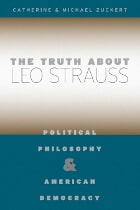
The Truth about Leo Strauss
Political Philosophy and American DemocracyCatherine H. Zuckert and Michael P. Zuckert
University of Chicago Press, 2006
Is Leo Strauss truly an intellectual forebear of neoconservatism and a powerful force in shaping Bush administration foreign policy? The Truth about Leo Strauss puts this question to rest, revealing for the first time how the popular media came to perpetuate such an oversimplified view of such a complex and wide-ranging philosopher. More important, it corrects our perception of Strauss, providing the best general introduction available to the political thought of this misunderstood figure.
Catherine and Michael Zuckert—both former students of Strauss—guide readers here to a nuanced understanding of how Strauss’s political thought fits into his broader philosophy. Challenging the ideas that Strauss was an inflexible conservative who followed in the footsteps of Nietzsche, Heidegger, and Carl Schmitt, the Zuckerts contend that Strauss’s signature idea was the need for a return to the ancients. This idea, they show, stemmed from Strauss’s belief that modern thought, with its relativism and nihilism, undermines healthy politics and even the possibility of real philosophy. Identifying this view as one of Strauss’s three core propositions—America is modern, modernity is bad, and America is good—they conclude that Strauss was a sober defender of liberal democracy, aware of both its strengths and its weaknesses.
The Zuckerts finish, appropriately, by examining the varied work of Strauss’s numerous students and followers, revealing the origins—rooted in the tensions within his own thought—oftheir split into opposing camps. Balanced and accessible, The Truth about Leo Strauss is a must-read for anyone who wants to more fully comprehend this enigmatic philosopher and his much-disputed legacy.
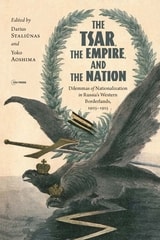
The Tsar, The Empire, and The Nation
Dilemmas of Nationalization in Russia's Western Borderlands, 1905-1915Darius Staliunas
Central European University Press, 2021
This collection of essays addresses the challenge of modern nationalism to the tsarist Russian Empire. First appearing on the empire’s western periphery this challenge, was most prevalent in twelve provinces extending from Ukrainian lands in the south to the Baltic provinces in the north, as well as to the Kingdom of Poland.
At issue is whether the late Russian Empire entered World War I as a multiethnic state with many of its age-old mechanisms run by a multiethnic elite, or as a Russian state predominantly managed by ethnic Russians. The tsarist vision of prioritizing loyalty among all subjects over privileging ethnic Russians and discriminating against non-Russians faced a fundamental problem: as soon as the opportunity presented itself, non-Russians would increase their demands and become increasingly separatist.
The authors found that although the imperial government did not really identify with popular Russian nationalism, it sometimes ended up implementing policies promoted by Russian nationalist proponents. Matters addressed include native language education, interconfessional rivalry, the “Jewish question,” the origins of mass tourism in the western provinces, as well as the emergence of Russian nationalist attitudes in the aftermath of the first Russian revolution.
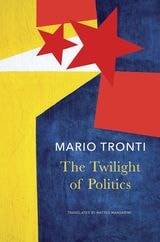
The Twilight of Politics
Mario Tronti
Seagull Books, 2024
Italian political thinker Mario Tronti is most famous for being the author of Workers and Capital, which became the central theoretical formulation of Italian operaismo or workerism, a current of political thought emerging in the 1960s that revolutionized the institutional and extra-parliamentary Left in Italy and beyond. In The Twilight of Politics, written originally in 1998, Tronti argues that modern politics, which reached its apogee in the twentieth century, has ended.
Realism and Utopia, Tronti explains, were the foundational qualities of modern politics, which it always tried to clasp together. But behind this highwater mark of politics was a history over the longue durée, encompassing the wars of religion, Hobbes’ Leviathan, revolution, great individuals, and popular movements, as well as innovations such as the nation-state and the party-form. Historically, the modern period is also a coming together of the categories of the political and the laws of political economy. At the heart of this book is Tronti’s attempt to hold together a view of the course of political history with a critique of the “dictatorship of the present” to help us escape being “chained to the bars of an eternal present . . . which deprives us both of the freedom to look back and to see ahead.”
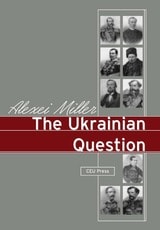
The Ukrainian Question
Russian Empire and Nationalism in the 19th CenturyAlexei Miller
Central European University Press, 2003
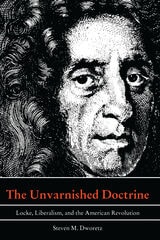
The Unvarnished Doctrine
Locke, Liberalism, and the American RevolutionSteven M. Dworetz
Duke University Press, 1990
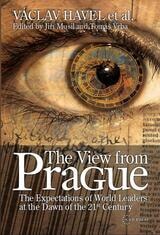
The View from Prague
The Expectations of World Leaders at the Dawn of the 21st CenturyJirí Musil
Central European University Press, 2007
The Vitality of Democracy
Gisela Stuart
Haus Publishing, 2022
In The Vitality of Democracy, British-German politician Gisela Stuart argues for the urgency of expanded participation in the democratic process and considers the risks democracy currently faces. Although democracy is rife with difficult choices, she shows that if the people do not appreciate what makes this system work, they risk losing it. While no individual holds the answers, democracy allows for power to change hands, giving opportunities for different sides to have a chance at improving government for all.
Stuart reflects on challenges to British democracy since the mid-2010s. With the United Kingdom exiting the European Union and facing an overwhelming pandemic, restrictions to civil liberties were imposed that may have been unimaginable in the past. It is time to pause and reflect on the serious challenges currently posed to democracy and to the ability of the people to take part.
The Washington Connection and Third World Fascism
The Political Economy of Human Rights: Volume INoam Chomsky
Pluto Press, 2015
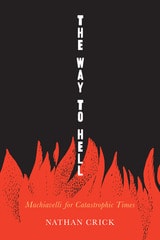
The Way to Hell
Machiavelli for Catastrophic TimesNathan Crick
University of Alabama Press, 2024
An incisive and erudite survey of Machiavelli, the catastrophes of his times and ours, and his counsel for responding to an era of constant crises.
Catastrophe looms. Political, environmental, epidemic, and military crises arrive with increasing frequency. In The Way to Hell, Nathan Crick argues that our perilous times call for the strongest medicine in the Western canon: Machiavelli. Crick reminds contemporary readers about the Florentine master’s advice—that one must learn the road to Hell precisely to avoid taking it.
Like a knowledgeable friend, Crick offers contemporary readers a guide to Machiavelli’s world, work, and warnings. He takes in the sweep of Western history, comparing Machiavelli’s work with ancient sources such as Cicero and Thucydides. And as Machiavelli has never stopped provoking comment, Crick treats readers to a feast of responses to Machiavelli’s work—caustic, learned, and humorous—in the five centuries since he lived.
Including both Machiavelli’s best-known works, The Prince and Discourses on Livy, as well as his personal correspondence and comic plays, Crick asks anew the questions that bedeviled Machiavelli’s beloved Florentine republic: When is force necessary? When are lies justified? Is cruelty defensible? When does social protest slip into violent revolution? What is the correct response to catastrophe?
Like Machiavelli himself, The Way to Hell is witty, stimulating, and challenging. In a world seemingly on the road to Hell, Machiavelli offers an alternative route. His bracing vision exhorts readers to see the dangers in their path and to take action with vigor and determination. Far from a vision of cynicism, Machiavelli offers a beacon of hope for a world that seems on the brink.
The Worker
Dominion and FormErnst Jünger, Edited by Laurence Paul Hemming, Translated from the German by Bogdan Costea and Laurence Paul Hemming
Northwestern University Press, 2018
Martin Heidegger considered Jünger “the only genuine follower of Nietzsche,” singularly providing “an interpretation which took shape in the domain of that metaphysics which already determines our epoch, even against our knowledge; this metaphysics is Nietzsche's doctrine of the ‘will to power.’” In The Worker, Jünger examines some of the defining questions of that epoch: the nature of individuality, society, and the state; morality, justice, and law; and the relationships between freedom and power and between technology and nature.
This work, appearing in its entirety in English translation for the first time, is an important contribution to debates on work, technology, and politics by one of the most controversial German intellectuals of the twentieth century. Not merely of historical interest, The Worker carries a vital message for contemporary debates about world economy, political stability, and equality in our own age, one marked by unsettling parallels to the 1930s.

The World Computer
Derivative Conditions of Racial CapitalismJonathan Beller
Duke University Press, 2021