Results by title
2916 books match the query 'Politics and government' and 650 start with t
The Disappearing South?
Studies in Regional Change and ContinuityRobert P. Steed
University of Alabama Press, 1990
There is widespread agreement that the South has changed dramatically since the end of World War II—the essays in The Disappearing South address the ongoing debate
There is widespread agreement that the South has changed dramatically since the end of World War II. Social, demographic, economic, and political changes have altered significantly the region long considered the nation’s most distinctive. There is less agreement, however, about the extent to which the forces of nationalization have eroded the major elements of Southern distinctiveness. Although this volume does not purport to settle the debate on Southern political change, it does present a variety of recent evidence that helps put this important debate into perspective. In the process it helps clarify the contemporary politics of the South for readers ranging from the scholar to the more casual observer.
The essays in The Disappearing South address the ongoing debate. Contributors, in addition to the editors, include E. Lee Bernick, Earl Black, Merle Black, Lewis Bowman, Edward G. Carmines, Patrick Cotter, Thomas Eamon, Douglas G. Feig, John C. Green, James L. Guth, William E. Hulbary, Anne E. Kelley, Lyman A. Kellstedt, David M. Olson, John Shelton Reed, Harold Stanley, James G. Stovall, John Theilmann, Stephen H. Wainscott, and Allen Wilhite.
The Disciplinary Revolution
Calvinism and the Rise of the State in Early Modern EuropePhilip S. Gorski
University of Chicago Press, 2003
The Division of Europe after World War II
1946By W. W. Rostow
University of Texas Press, 1981
Should the negotiation of the post–World War II peace treaties in Europe have been pursued separately or should they have been approached within the framework of a general European settlement? The debate on this fundamental foreign policy issue, which has left only faint tracks in the documentary record, is fully explored here for the first time.
W. W. Rostow, in his second book in the Ideas and Action Series, describes a meeting that took place on the eve of the departure of Secretary of State James Byrnes for Paris to participate in treaty negotiations. The meeting was probably the only occasion during 1946 when the peace treaty issue as a whole was explicitly addressed at a high level with lucid alternatives on the table. The plan laid before Secretary of State Byrnes by his senior subordinates, Under Secretary Dean Acheson and Assistant Secretary for Economic Affairs Will Clayton, aimed to halt the movement toward the split of Europe and the emergence of hostile blocs. It outlined an all-European settlement, including economic and security institutions linked to the United Nations. Only one part of the proposal gained Byrnes's support and came to life: the United Nations Economic Commission for Europe in Geneva. But the Acheson-Clayton proposal foreshadowed the Marshall Plan.
The book's larger theme is the process by which the Cold War came about. Rostow's interpretation differs from either conventional or revisionist views, emphasizing as it does the process of incremental deterioration that occurred in 1946 and the role of uncertainty and weakness in American policy.
This second volume in the Ideas and Action Series will interest general readers as well as those with a particular interest in World War II. It should be of special value to political scientists, economists, military historians, and policy makers, and may serve as a case study in a variety of courses.
The Dream of Absolutism
Louis XIV and the Logic of ModernityHall Bjørnstad
University of Chicago Press, 2021
What was absolutism, and how did it work? What was the function of the ostentatious display surrounding Louis XIV at Versailles? What is gained—and what is lost—by approaching such expressions of absolutism as propaganda, as present-day scholars tend to do?
In this sweeping reconsideration of absolutist culture, Hall Bjørnstad argues that the exuberance of Louis XIV’s reign was not top-down propaganda in any modern sense, but rather a dream dreamt collectively, by king, court, image-makers, and nation alike. Bjørnstad explores this dream through a sustained close analysis of a corpus of absolutist artifacts, ranging from Charles Le Brun’s famous paintings in the Hall of Mirrors at Versailles via the king’s secret Mémoires to two little-known particularly extravagant verbal and textual celebrations of the king. The dream of absolutism, Bjørnstad concludes, lives at the intersection of politics and aesthetics. It is the carrier of a force that emerges as a glorious image; a participatory emotional reality that requires reality to conform to it. It is a dream, finally, that still shapes our collective political imaginary today.

The Dynamics of European Integration
Causes and Consequences of Institutional ChoicesThomas König
University of Michigan Press, 2024
The Eagle Has Eyes
The FBI Surveillance of César Estrada Chávez of the United Farm Workers Union of America, 1965–1975José Angel Gutiérrez
Michigan State University Press, 2019
The East Is Black
Cold War China in the Black Radical ImaginationRobeson Taj Frazier
Duke University Press, 2015
The Edge of the Law
Street Vendors and the Erosion of Citizenship in São PauloJacinto Cuvi
University of Chicago Press, 2025
With a little initiative and very little startup money, an outgoing individual might sell you a number of delights and conveniences familiar to city dwellers—from cold water bottles while you’re sitting in traffic to a popsicle from a cart on a summer afternoon in the park. Such vendors form a significant share of the workforce in São Paulo, Brazil, but their ubiquity belies perpetual struggle. Some have the right to practice their trade; others do not. All of them strive to make it—or stay afloat.
In The Edge of the Law, sociologist Jacinto Cuvi introduces us to the world of street vendors and teases out the relationship between the construction of legality and the experience of citizenship. As São Paulo’s city government undertakes a large-scale plan to cancel street vending licenses and evict street vendors, Cuvi reveals how the rights of informal workers can be revoked or withheld and how the lines can be redrawn between work that is “legal” and work that takes place under constant fear of law enforcement. Alongside the mechanics of disenfranchisement, Cuvi captures the lived experience of criminalization, dissecting the distribution of (shallow) rights among vendors who continually reinvent strategies to eke out a living while dealing with the constraints and pressures of informal citizenship at the edge of the law.
The Education of Ernie Dumas
Chronicles of the Arkansas Political MindErnest Dumas
Butler Center for Arkansas Studies, 2019
Beginning with the defeat of Governor Francis Cherry by the son of a hillbilly socialist at the end of the Joe McCarthy era, Dumas traces the development of a modernist political cast that eventually produced Arkansas’s first president of the United States. It follows the seed from 1978 that would germinate into the second impeachment of an American president.
Dumas has written for newspapers and about politics for sixty-three years, since 1954, the year that the stolid Cherry fell to Orval Eugene Faubus. The book is a political memoir that describes not only his education in the ways of politicians but the politicians’ own education and miseducation in how you win voters and then how you get things done.
It is mostly a collection of untold stories, often deeply personal, that reveal the inner struggles and sometimes the tribulations of the state’s leaders—Cherry, Faubus, Winthrop Rockefeller, Dale Bumpers, David Pryor, John McClellan, J. William Fulbright, Bill Clinton, Jim Guy Tucker, and others.
The Emancipation Circuit
Black Activism Forging a Culture of FreedomThulani Davis
Duke University Press, 2022
The Emergence of a New Turkey
Islam, Democracy, and the AK PartiYavuz, M. Hakan
University of Utah Press, 2006
The start of accession talks between Turkey and the European Union presents an important challenge for Europe and the Muslim world. Although Turkey has often been cited as a model for the accommodation of Islam and secularism, Islam is still a profound factor in Turkish politics.
This book explores the conditions under which an Islamic movement or party ceases to be Islamic. The Emergence of a New Turkey explains the social, economic, and historical origins of the ruling Justice and Development Party, which evolved from Turkey's half-century-old Islamic National Outlook movement. It focuses on the interplay between internal and external forces in the transformation of political Islam into a conservative democratic party. The book also discusses the effect of neoliberal economic policies in Turkey, offering keen insight into one of the most successful transformations of an Islamic movement in the Muslim world.
In addition to satisfying Turkish studies specialists, this lucidly written book is also suited for use in courses on comparative politics, social movements, and Middle East history and politics.

The Emperor's Clothes
A Personal Viewpoint of Politics and Administration in the Imperial Ethiopian Government, 1941-1974Gaitachew Bekele
Michigan State University Press, 1993
. . . An engaging personal account of a public service career n the period leading to the 1974 revolution. It ...persuades and provides real insight into the genuine noblesse oblige of the first generation of technocrats drawn from the social elite of the post- war period.
-James McCann, Boston University
The End of Czechoslovakia
Jirí Musil
Central European University Press, 1995
Scholars and practitioners from both sides of the divide, Czech and Slovak, as well as international experts, take an in-depth look at the causes of Czechoslovakia's break-up, and explain why a seemingly successful country should disintegrate so quickly after the collapse of the communist regime. Besides exploring the political processes leading to the split, the authors analyse the underlying social, economic and cultural differences between the two nations and examine the historical roots of the problems. Particular attention is paid to changing Czech and Slovak attitudes towards the common state and towards each other, from the heyday of the First Republic to the disillusionment of the post-1989 period.
The End of Nomadism?
Society, State, and the Environment in Inner AsiaCaroline Humphrey and David Sneath
Duke University Press, 1999
Using extensive and detailed case studies comparing pastoralism in Siberian Russia, Mongolia, and Northwest China, Humphrey and Sneath explore the different paths taken by nomads in these countries in reaction to a changing world. In examining how each culture is facing not only different prospects for sustainability but also different environmental problems, the authors come to the surprising conclusion that mobility can, in fact, be compatible with a modern and urbanized world. While placing emphasis on the social and cultural traditions of Inner Asia and their fate in the post-Socialist economies of the present, The End of Nomadism? investigates the changing nature of pastoralism by focusing on key areas under environmental threat and relating the ongoing problems to distinctive socioeconomic policies and practices in Russia and China. It also provides lively contemporary commentary on current economic dilemmas by revealing in telling detail, for instance, the struggle of one extended family to make a living.
This book will interest Central Asian, Russian, and Chinese specialists, as well as those studying the environment, anthropology, sociology, peasant studies, and ecology.

The End of Tolerance
Racism in 21st Century BritainArun Kundnani
Pluto Press, 2007
Exacerbated by the attacks of 9/11 and 7/7, Kundnani argues that a new form of racism is emerging that is based on a systematic failure to understand the causes of forced migration, global terrorism and social segregation. The result is a climate of hatred, especially against Muslims and asylum seekers, and the erosion of the human rights of those whose cultures and values are perceived as 'alien'.
Communities are more divided than ever. Yet the government presses ahead with flawed immigration and 'integration' policies and anti-terrorist legislation that creates further resentment, alienation and criminalisation. Behind it all lies a refusal to grasp the ways in which the world has been changed by neoliberal globalisation.
What can be done? This timely and precise analysis is a useful account of why racism is now thriving -- and what can be done to stop it. It will be of interest to anyone who is appalled by the current state of race relations in Britain and it should be required reading for all policy-makers.
The End of White World Supremacy
Black Internationalism and the Problem of the Color LineRoderick Bush
Temple University Press, 2009
The End of White World Supremacy explores a complex issue— integration of Blacks into White America—from multiple perspectives: within the United States, globally, and in the context of movements for social justice. Roderick Bush locates himself within a tradition of African American activism that goes back at least to W.E.B. Du Bois. In so doing, he communicates between two literatures—worldsystems analysis and radical Black social movement history—and sustains the dialogue throughout the book.
Bush explains how racial troubles in the U.S. are symptomatic of the troubled relationship between the white and dark worlds globally. Beginning with an account of white European dominance leading to capitalist dominance by White America, The End of White World Supremacy ultimately wonders whether, as Myrdal argued in the 1940s, the American creed can provide a pathway to break this historical conundrum and give birth to international social justice.

The End of the Cold War
European Unity, Socialism, and the Shift in Global PowerBogdan Denitch
University of Minnesota Press, 1990
The End of the Cold War was first published in 1990. Minnesota Archive Editions uses digital technology to make long-unavailable books once again accessible, and are published unaltered from the original University of Minnesota Press editions.
Against the backdrop of unprecedented change in the world political and social order, Bogdan Denitch charts the unique opportunities and potential pitfalls that accompany the increased economic and political integration of the European Community. Historically, any move toward unification has had broad ramifications. This, coming as it does in the wake of recent democratic upheavals in Europe, will bring to a close an entire era -- an era of a world dominated by superpowers and the cold war that defined there confrontations.
The End of the Future
Trauma, Memory, and Reconciliation in Peruvian AmazoniaBartholomew Dean
Vanderbilt University Press, 2023
To give context to the causes and consequences of the MRTA's presence in the lower and central Huallaga, this book relies on the written works and testimony of Sístero García Torres, an MRTA rebel commander; the government's Truth and Reconciliation Commission; MRTA propaganda; media accounts; and critical historical texts. Besides exposing Huallaga Valley human rights abuses, the book's contribution to political anthropology is consequential for its insistence that reconciliation is by no means equivalent to local, Indigenous notions of "justice" or customary forms of dispute resolution. Without deliberately addressing the diverse socio-cultural contours defining overlapping epistemologies of justice, freedom, and communal well-being, enduring reconciliation will likely remain elusive.
The Era of Education
The Presidents and the Schools, 1965-2001Lawrence J. McAndrews
University of Illinois Press, 2005
The Essential Paul Simon
Timeless Lessons for Today's PoliticsEdited by John S. Jackson. Foreword by David Yepsen
Southern Illinois University Press, 2012
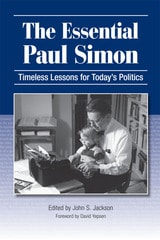
While Simon covered a broad spectrum of topics in his written works, his mission throughout the years remained the same: to urge his constituents to study and understand issues that affected their daily lives and to make the complexities of politics accessible to the average citizen. An indispensable volume for voters and politicians alike, The Essential Paul Simon compiles some of the most thought-provoking writings from one of the keenest political minds in our nation’s history. Years after their publication, Simon’s eloquent and energetic conversations continue to provide witty, informative guidance through the maze of American politics and inspire the development of spirited public discussion and debate.
Certificate of Excellence from the Illinois State Historical Society, 2013
The European Radical Left
Movements and Parties since the 1960sGiorgos Charalambous
Pluto Press, 2021
Is today’s left really new? How has the European radical left evolved?
Giorgos Charalambous answers these questions by looking at three moments of rapid political change - the late 1960s to late 1970s; the turn of the millennium; and post-2008. He challenges the conventional understanding of a ‘new left’, drawing out continuities with earlier movements and parties.
Charalambous examines the ‘Long ‘68’, symbolised by the May uprisings in France, which saw the rise of new left forces and the widespread criticism by younger radical activists of traditional communist and socialist parties. He puts this side by side with the turn of the millennium when the Global Justice Movement rose to prominence and changed the face of the international left, and also the period after the financial crash of 2008 and the rise of anti-austerity politics which initiated the most recent wave of new left parties such as Podemos in Spain and Syriza in Greece.
With a unique ‘two-level’ perspective, Charalambous approaches the left through both social movements and party politics, looking at identities, rhetoric and organization, and bringing a fresh new approach to radical history, as well as assessing challenges for both activists and scholars.
The FBI in Latin America
The Ecuador FilesMarc Becker
Duke University Press, 2017
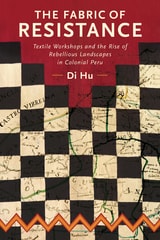
The Fabric of Resistance
Textile Workshops and the Rise of Rebellious Landscapes in Colonial PeruDi Hu
University of Alabama Press, 2022
Textiles as sites of power, production, and rebellion in the early modern Andes.
The Fabric of Resistance: Textile Workshops and the Rise of Rebellious Landscapes in Colonial Peru documents the impact of Spanish colonial institutions of labor on identity and social cohesion in Peru. Through archaeological and historical lines of evidence, Di Hu examines the long-term social conditions that enabled the large-scale rebellions in the late Spanish colonial period in Peru. Hu argues that ordinary people from different backgrounds pushed back against the top-down identity categories imposed by the Spanish colonial government and in the process created a cosmopolitan social landscape that later facilitated broader rebellion.
Hu’s case study is Pomacocha, the site of an important Spanish colonial hacienda (agricultural estate) and obraje (textile workshop). At its height, the latter had more than one hundred working families and sold textiles all over the Andes. Through analysis of this site, Hu explores three main long-term causes of rebellions against Spanish oppression. First, the Spanish colonial economy provided motivation and the social spaces for intercaste (indigenous, African, and mestizo) mixing at textile workshops. Second, new hybrid cultural practices and political solidarity arose there that facilitated the creation of new rebellious identities. Third, the maturation in the eighteenth century of popular folklore that reflected the harsh nature of Spanish labor institutions helped workers from diverse backgrounds gain a systemic understanding of exploitation.
This study provides a fresh archaeological and historical perspectives on the largest and most cosmopolitan indigenous-led rebellions of the Americas. Hu interweaves analyses of society at multiple scales including fine-grained perspectives of social networks, demography, and intimate details of material life in the textile workshop. She examines a wide range of data sources including artifacts, food remains, architectural plans, account books, censuses, court documents, contracts, maps, and land title disputes.
The Face of Peace
Government Pedagogy amid Disinformation in ColombiaGwen Burnyeat
University of Chicago Press, 2022
Colombia’s 2016 peace agreement with the FARC guerrillas sought to end fifty years of war and won President Juan Manuel Santos the Nobel Peace Prize. Yet Colombian society rejected it in a polarizing referendum, amid an emotive disinformation campaign. Gwen Burnyeat joined the Office of the High Commissioner for Peace, the government institution responsible for peace negotiations, to observe and participate in an innovative “peace pedagogy” strategy to explain the agreement to Colombian society. Burnyeat’s multi-scale ethnography reveals the challenges government officials experienced communicating with skeptical audiences and translating the peace process for public opinion. She argues that the fatal flaw in the peace process lay in government-society relations, enmeshed in culturally liberal logics and shaped by the politics of international donors. The Face of Peace offers the Colombian case as a mirror to the global crisis of liberalism, shattering the fantasy of rationality that haunts liberal responses to “post-truth” politics.
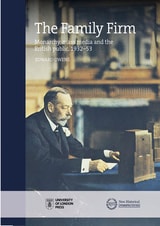
The Family Firm
monarchy, mass media and the British public, 1932-53Edward Owens
University of London Press, 2019
The Fatal Embrace
Jews and the StateBenjamin Ginsberg
University of Chicago Press, 1993
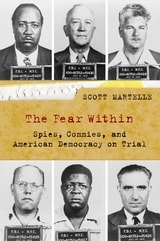
The Fear Within
Spies, Commies, and American Democracy on TrialMartelle, Scott
Rutgers University Press, 2011
Sixty years ago political divisions in the United States ran even deeper than today's name-calling showdowns between the left and right. Back then, to call someone a communist was to threaten that person's career, family, freedom, and, sometimes, life itself. Hysteria about the "red menace" mushroomed as the Soviet Union tightened its grip on Eastern Europe, Mao Zedong rose to power in China, and the atomic arms race accelerated. Spy scandals fanned the flames, and headlines warned of sleeper cells in the nation's midst--just as it does today with the "War on Terror."
In his new book, The Fear Within, Scott Martelle takes dramatic aim at one pivotal moment of that era. On the afternoon of July 20, 1948, FBI agents began rounding up twelve men in New York City, Chicago, and Detroit whom the U.S. government believed posed a grave threat to the nation--the leadership of the Communist Party-USA. After a series of delays, eleven of the twelve "top Reds" went on trial in Manhattan's Foley Square in January 1949.
The proceedings captivated the nation, but the trial quickly dissolved into farce. The eleven defendants were charged under the 1940 Smith Act with conspiring to teach the necessity of overthrowing the U.S. government based on their roles as party leaders and their distribution of books and pamphlets. In essence, they were on trial for their libraries and political beliefs, not for overt acts threatening national security. Despite the clear conflict with the First Amendment, the men were convicted and their appeals denied by the U.S. Supreme Court in a decision that gave the green light to federal persecution of Communist Party leaders--a decision the court effectively reversed six years later. But by then, the damage was done. So rancorous was the trial the presiding judge sentenced the defense attorneys to prison terms, too, chilling future defendants' access to qualified counsel.
Martelle's story is a compelling look at how American society, both general and political, reacts to stress and, incongruously, clamps down in times of crisis on the very beliefs it holds dear: the freedoms of speech and political belief. At different points in our history, the executive branch, Congress, and the courts have subtly or more drastically eroded a pillar of American society for the politics of the moment. It is not surprising, then, that The Fear Within takes on added resonance in today's environment of suspicion and the decline of civil rights under the U.S. Patriot Act.
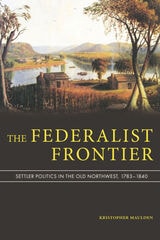
The Federalist Frontier
Settler Politics in the Old Northwest, 1783-1840Kristopher Maulden
University of Missouri Press, 2023
Historians of early American politics will have a chance to read about Federalists in the Northwest, and they will see the early American state in action in fighting Indians, shaping settler understandings of space and social advancement, and influencing political ideals among the citizens. For historians of the early American West, Maulden’s work demonstrates that the origins of state-led expansion reach much further back in time than generally understood.

The Fernando Coronil Reader
The Struggle for Life Is the MatterFernando Coronil
Duke University Press, 2019

The Fires of New England
A Story of Protest and Rebellion in Antebellum AmericaEric J. Morser
University of Massachusetts Press, 2017
Few people embraced the manifesto and its radical message. Nonetheless, as Eric J. Morser illustrates in this eloquently written and deeply researched book, the address matters because it reveals how commercial, cultural, political, and social changes were remaking the lives of the men who drafted and shared it in the 1830s. Using an imaginative range of sources, Morser artfully reconstructs their moving personal tales and locates them in a grander historical context. By doing so, he demonstrates that even seemingly small stories from antebellum America can help us understand the rich complexities of the era.
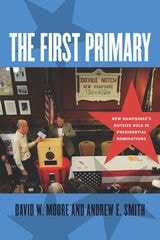
The First Primary
New Hampshire's Outsize Role in Presidential NominationsDavid W. Moore
University of New Hampshire Press, 2015
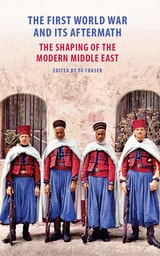
The First World War and Its Aftermath
The Shaping of the Modern Middle EastEdited by T.G. Fraser
Gingko, 2024
In addition to recounting the crucial international politics that drew fierce lines in the sands of the Middle East—a story of intrigue between the British, Russians, Ottomans, North Africans, Americans, and others—the contributors engage topics ranging from the war’s effects on women, the experience of the Kurds, sectarianism, the evolution of Islamism, and the importance of prominent intellectuals like Ziya Gökalp and Michel ‘Aflaq. They examine the dissolution of the Ottoman Empire, the exploitation of notions of Islamic unity and pan-Arabism, the influences of Woodrow Wilson and American ideals on Middle East leaders, and likewise the influence of Vladimir Lenin’s vision of a communist utopia. Altogether, they tell a story of promises made and promises broken, of the struggle between self-determination and international recognition, of centuries-old empires laying in ruin, and of the political poker of the twentieth century that carved up the region, separating communities into the artificial states we know today.
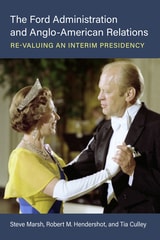
The Ford Administration and Anglo-American Relations
Re-Valuing an Interim PresidencySteve Marsh, Robert M. Hendershot and Tia Culley
University of Michigan Press, 2026
In the shadow of Watergate and the Vietnam War, Gerald Ford’s presidency has long been dismissed as little more than an interim administration. Yet the administration and its British counterparts worked to manage economic crises, Cold War tensions, and international flashpoints, while also harnessing cultural diplomacy to sustain transatlantic partnership. Drawing on newly declassified archival sources and fresh historical analysis, The Ford Administration and Anglo-American Relations shows how Ford’s years in office (1974–77) were pivotal in reshaping the US–UK special relationship at a moment of global turbulence.
Organized thematically rather than chronologically, the authors examine eight dimensions of Anglo-American relations under Ford: the inheritance of transatlantic tensions from the Nixon era; cultural and societal links beyond the state; the significance of Ford’s personal diplomacy; negotiations over defense and security; transformations in international economic relations and the birth of the G6/G7; cooperation through multilateral institutions such as NATO and the UN; joint management of crises in Cyprus and Rhodesia to the sterling currency crisis; and the cultural diplomacy of the 1976 Bicentennial, when Queen Elizabeth II’s state visit symbolized renewed unity between former adversaries. By highlighting both the challenges and the resilience of Anglo-American ties, this book recasts a neglected presidency as a crucial bridge between the crises of the Nixon years and the celebrated Reagan–Thatcher era. Accessible yet deeply researched, it is a work that will appeal to anyone interested in how two nations, facing uncertainty at home and abroad, turned to multilateral cooperation, culture, and public diplomacy to navigate the upheavals of the 1970s.
The Foreign and Domestic Dimensions of Modern Warfare
Vietnam, Central America, and Nuclear StrategyHoward Mumford Jones
University of Alabama Press, 1988
An exploration of the nuclear arms race and the dangers arising with the advent of “limited warfare”
After the development of the atomic bomb in 1945, Americans became engaged in a "new kind of war" against totalitarianism. Enemies and objectives slipped out of focus, causing political and military aims to mesh as a struggle to contain communism both at home and abroad encompassed civilians as well as soldiers. In matters relating to Vietnam, Central America, and the nuclear arms race, the domestic and foreign dimensions of each issue became inseparable. Policymakers in Washington had to formulate strategies dictated by "limited war" in their search for peace.
Contributors to this volume demonstrate the multifaceted nature of modern warfare. Robert H. Ferrell establishes the importance of studying military history in understanding the post-World War II era. On Vietnam, Colonel Harry G. Summers, Jr., gives an intriguing argument regarding the U. S. Army; George C. Herring examines how America's decisions in 1954 assured deepened involvement; and Captain Mark Clodfelter uncovers new evidence concerning "Linebacker I." On the home front, Robert F. Burk analyzes the impact of the Cold War on the battle for racial justice; Charles DeBenedetti puts forth a challenging interpretation of the antiwar movement; and James C. Schneider provides perspective on the relationship between the Vietnam War and the Great Society. On Central America, two writers downplay communism in explaining the region's troubles. Ralph Lee Woodward, Jr., fits the Nicaraguan revolution in the long span of history, and Thomas M. Leonard shows how the Reagan administration forced Costa Rica to side with the United States's anti-Sandinista policy. Finally, on nuclear strategy, Donald M. Snow offers a thought-provoking assessment of the "star wars" program, and Daniel S. Papp recommends measures to promote understanding among the superpowers.
These essays demonstrate that the making of foreign policy is immensely complicated, not subject to easy solution or to simple explanation. Despite these complexities, the central objective of policymakers remained clear: to safeguard what was perceived as the national interest.
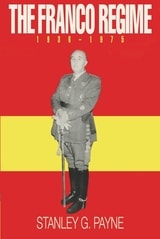
The Franco Regime, 1936–1975
Stanley G. Payne
University of Wisconsin Press, 2011
The history of modern Spain is dominated by the figure of Francisco Franco, who presided over one of the longest authoritarian regimes of the twentieth century. Between 1936 and the end of the regime in 1975, Franco’s Spain passed through several distinct phases of political, institutional, and economic development, moving from the original semi-fascist regime of 1936–45 to become the Catholic corporatist “organic democracy” under the monarchy from 1945 to 1957. Distinguished historian Stanley G. Payne offers deep insight into the career of this complex and formidable figure and the enormous changes that shaped Spanish history during his regime.

The Free Economy and the Strong State
Andrew Gamble
Duke University Press, 1988
By 1987, the Conservatives under Thatcher's leadership had won their third successive election victory over a divided opposition and enjoyed a degree of political and ideological dominance that led many commentators to speak of the end of the socialist era and the emergence of a new consensus in Britain. A new word—Thatcherism—had entered the political lexicon. It has come to signify a broad-ranging and distinctive program aimed at promoting economic recovery through the privatization of public enterprise and restoring the authority of the state. The Free Economy and the Strong State explores the roots of Thatcherism and its relationship to the Conservative tradition, to the economic liberal ideology of the New Right, and to the "new politics" which emerged from the recession and crisis of the world order in the mid 1970s.
The French Voter Decides
Daniel Boy and Nonna Mayer, Editors
University of Michigan Press, 1993

The Gaither Committee, Eisenhower, and the Cold War
EISENHOWER & COLD WARDavid L. Snead
The Ohio State University Press, 1998
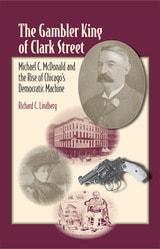
The Gambler King of Clark Street
Michael C. McDonald and the Rise of Chicago's Democratic MachineRichard C. Lindberg with a Foreword by John Miya.
Southern Illinois University Press, 2009
The Gambler King of Clark Street tells the story of a larger-than-life figure who fused Chicago’s criminal underworld with the city’s political and commercial spheres to create an urban machine built on graft, bribery, and intimidation. Lindberg vividly paints the life of the Democratic kingmaker against the wider backdrop of nineteenth-century Chicago crime and politics.
McDonald has long been cited in the published work of city historians, members of academia, and the press as the principal architect of a unified criminal enterprise that reached into the corridors of power in Chicago, Cook County, the state of Illinois, and ultimately the Oval Office. The Gambler King of Clark Street is both a major addition to Chicago’s historical literature and a revealing biography of a powerful and troubled man.
Illinois State Historical Society Scholarly Award, Certificate of Excellence, 2009
Society of Midland Authors Biography Award, 2009
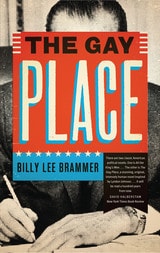
The Gay Place
By Billy Lee Brammer
University of Texas Press, 1995
Set in Texas, The Gay Place consists of three interlocking novels, each with a different protagonist—a member of the state legislature, the state's junior senator, and the governor's press secretary. The governor himself, Arthur Fenstemaker, a master politician, infinitely canny and seductive, remains the dominant figure throughout.
Billy Lee Brammer—who served on Lyndon Johnson's staff—gives us here "the excitement of a political carnival: the sideshows, the freaks, and the ghoulish comedy atmosphere" (Saturday Review).
Originally published in 1961, The Gay Place is at once a cult classic and a major American novel.
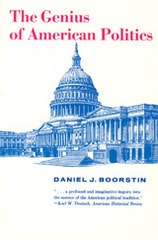
The Genius of American Politics
Daniel J. Boorstin
University of Chicago Press, 1958
". . . a fresh and, on the whole, valid interpretation of American political life."—Reinhold Niebuhr, New Leader
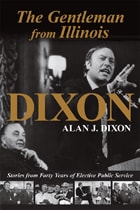
The Gentleman from Illinois
Stories from Forty Years of Elective Public ServiceAlan J. Dixon
Southern Illinois University Press, 2013
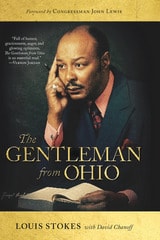
The Gentleman from Ohio
Louis Stokes with David Chanoff with a foreword by Congressman John Lewis
The Ohio State University Press, 2016
Prior to Louis Stokes’s tenure in Congress he served for many years as a criminal defense lawyer and chairman of the Cleveland NAACP Legal Redress Committee. Among the Supreme Court Cases he argued, the Terry “Stop and Frisk” case is regarded as one of the twenty-five most significant cases in the court’s history. The Gentleman from Ohio chronicles this and other momentous events in the life and legacy of Ohio’s first black representative—a man who, whether in law or politics, continually fought for the principles he believed in and helped lead the way for African Americans in the world of mainstream American politics.
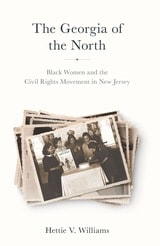
The Georgia of the North
Black Women and the Civil Rights Movement in New JerseyHettie V. Williams
Rutgers University Press, 2024
The German Problem Transformed
Institutions, Politics, and Foreign Policy, 1945-1995Thomas Banchoff
University of Michigan Press, 1999
The Ghana Reader
History, Culture, PoliticsKwasi Konadu and Clifford C. Campbell, editors
Duke University Press, 2016
The Global Economy and Democracy in South Africa
Koelble, Thomas A.
Rutgers University Press, 1998
The Global Political Economy of Israel
Jonathan Nitzan and Shimshon Bichler
Pluto Press, 2002
Over the past century, Israel has been transformed from an agricultural colony, to a welfare-warfare state, to a globally integrated "market economy" characterised by great income disparities. What lies behind this transformation? In order to understand capitalist development, argue Bichler and Nitzan, we need to break the artificial separation between "economics" and "politics", and think of accumulation itself as "capitalisation of power". Applying this concept to Israel, they reveal the big picture that never makes it to the news. Diverse processes – such as regional conflicts and energy crises, ruling class formation and dominant ideology, militarism and dependency, inflation and recession, the politics of high-technology and the transnationalisation of ownership – are all woven into a single story. The result is a fascinating account of one of the world’s most volatile regions.
The Glorious Revolution and the Continuity of Law
Richard S. Kay
Catholic University of America Press, 2014
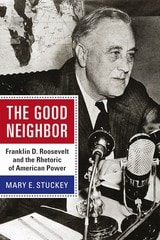
The Good Neighbor
Franklin D. Roosevelt and the Rhetoric of American PowerMary E. Stuckey
Michigan State University Press, 2013
No modern president has had as much influence on American national politics as Franklin D. Roosevelt. During FDR’s administration, power shifted from states and localities to the federal government; within the federal government it shifted from Congress to the president; and internationally, it moved from Europe to the United States. All of these changes required significant effort on the part of the president, who triumphed over fierce opposition and succeeded in remaking the American political system in ways that continue to shape our politics today. Using the metaphor of the good neighbor, Mary E. Stuckey examines the persuasive work that took place to authorize these changes. Through the metaphor, FDR’s administration can be better understood: his emphasis on communal values; the importance of national mobilization in domestic as well as foreign affairs in defense of those values; his use of what he considered a particularly democratic approach to public communication; his treatment of friends and his delineation of enemies; and finally, the ways in which he used this rhetoric to broaden his neighborhood from the limits of the United States to encompass the entire world, laying the groundwork for American ideological dominance in the post–World War II era.