Results by title
1761 books match the query 'Public Policy' and 335 start with t
The New Chicago Way
Lessons from Other Big CitiesEd Bachrach and Austin Berg
Southern Illinois University Press, 2019
Rather than simply lament the situation, criticize specific leaders, or justify an ideology, Bachrach and Berg compare the decisions about Chicago’s governance and finances with choices made in fourteen other large U.S. cities. The problems that seem unique to Chicago have been encountered elsewhere, and Chicagoans, the authors posit, can learn from the successful solutions other cities have embraced.
Chicago government and its citizens must let go of the past to prepare for the future, argue Bachrach and Berg. A future filled with demographic, technological, and economic change requires a government capable of responding and adapting. Reforms can transform the city. The prescriptions for change provided in this book point toward a hopeful future: the New Chicago Way.
The New Politics of Indian Gaming
The Rise of Reservation Interest GroupsKenneth N. Hansen
University of Nevada Press, 2015
The New Urban Renewal
The Economic Transformation of Harlem and BronzevilleDerek S. Hyra
University of Chicago Press, 2008
As public housing is torn down and money floods back into cities across the United States, countless neighborhoods are being monumentally altered. The New Urban Renewal is a compelling study of the shifting dynamics of class and race at work in the contemporary urban landscape.
The New Welfare Bureaucrats
Entanglements of Race, Class, and Policy ReformCeleste Watkins-Hayes
University of Chicago Press, 2009
As the recession worsens, more and more Americans must turn to welfare to make ends meet. Once inside the agency, the newly jobless will face a bureaucracy that has undergone massive change since the advent of welfare reform in 1996. A behind-the-scenes look at bureaucracy’s human face, The New Welfare Bureaucrats is a compelling study of welfare officers and how they navigate the increasingly tangled political and emotional terrain of their jobs.
Celeste Watkins-Hayes here reveals how welfare reform engendered a shift in focus for caseworkers from simply providing monetary aid to the much more complex process of helping recipients find work. Now both more intimately involved in their clients’ lives and wielding greater power over their well-being, welfare officers’ racial, class, and professional identities have become increasingly important factors in their work. Based on the author’s extensive fieldwork in two very different communities in the northeast, The New Welfare Bureaucrats is a boon to anyone looking to understand the impact of the institutional and policy changes wrought by welfare reform as well as the subtle social dynamics that shape the way welfare is meted out at the individual level.

The Next Twenty-five Years
Affirmative Action in Higher Education in the United States and South AfricaDavid L. Featherman, Martin Hall, and Marvin Krislov, editors
University of Michigan Press, 2009
"Ambitious, provocative, and wide-ranging, this rich collection of essays from U.S. and South African perspectives reflects the thinking of thoughtful advocates of affirmative action."
---William G. Bowen, President Emeritus, The Andrew W. Mellon Foundation, and President Emeritus, Princeton University
"Thoughtful commentary from outstanding experts on affirmative action’s future in two countries struggling to overcome a legacy of racial injustice."
---Derek Bok, 300th Anniversary University Research Professor, and President Emeritus, Harvard University
"An enormously important comparative study and reflection on affirmative (U.S.) and corrective (South Africa) action with exhaustive and sensitive treatment of a vital topic."
---Kader Asmal, Professor of Law, University of the Western Cape, Cape Town, and former Minister of Education, South Africa
A penetrating exploration of affirmative action's continued place in 21st-century higher education, The Next Twenty-five Years assembles the viewpoints of some of the most influential scholars, educators, university leaders, and public officials. Its comparative essays span the political spectrum and dissect debates in two nations to elucidate the legal, political, social, economic, and moral dimensions of affirmative action in higher education and its role in contributing to a just, equitable, and vital society.
David L. Featherman is Professor of Sociology and Psychology and Founding Director of the Center for Advancing Research and Solutions for Society at the University of Michigan.
Martin Hall is Vice-Chancellor of the University of Salford, Greater Manchester, and previously was Deputy Vice-Chancellor at the University of Cape Town.
Marvin Krislov is President of Oberlin College and previously was Vice President and General Counsel at the University of Michigan.

The Oil Palm Complex
Smallholders, Agribusiness and the State in Indonesia and MalaysiaEdited by Robert Cramb and John F. McCarthy
National University of Singapore Press, 2016
Based on detailed studies of specific communities and plantations and an analysis of the regional political economy of oil palm, this book unpicks the dominant policy narratives, business strategies, models of land acquisition, and labour-processes. It presents the oil palm industry in Malaysia and Indonesia as a complex system in which land, labour and capital are closely interconnected. Understanding this complex is a prerequisite to developing better strategies to harness the oil palm boom for a more equitable and sustainable pattern of rural development.

The Online Advertising Tax as the Foundation of a Public Service Internet
a CAMRI extended policy reportChristian Fuchs
University of Westminster Press, 2018
Online advertising will soon form the largest share of global advertisement revenues. Google and Facebook netted profits of US $29 billion in 2016. While these two giants control more than 66% of all online advertising revenues complex legal company structures have minimised their tax liabilities. This extended policy report considers where they should be taxed and where the value of their activities is actually created. It argues that tax paid by those platforms should be levied in the country where platform users are located when they click on or view an advertisement. Furthermore, the report examines the practical steps needed to ensure transparent accounting of taxed transactions in order to avoid long term negative effects for media and democracy.
Considering counter-arguments the author makes the case for an online advertising tax alongside a public service Internet strategy that could support other viable platforms and counter the dangers of duopoly or oligopoly and the high risks of financial bubbles in a world where advertising is the Internet's dominant business model.

The Orchard in the Ruins
Cloning Oranges and Cultivating Whiteness in America and the Global SouthTiago Saraiva
University of Chicago Press, 2026
Ingeniously connects the history of citrus cultivation to the production and maintenance of whiteness in sites around the world.
In The Orchard in the Ruins, acclaimed historian Tiago Saraiva illuminates the global impact of cloning Californian oranges, a practice that emerged in the aftermath of the great depression of the 1890s. Cloning promised control, uniformity, and resistance to an array of environmental and economic threats. But Californian orchards—white-owned but tended by workers of Chinese, Japanese, Mexican, or Indigenous origin—were also places where plantations and race intertwined. Agricultural anxieties about strains of oranges and their value, Saraiva shows, formed a continuum with anxieties about vanishing whiteness.
The Orchard in the Ruins connects Californian history to other sites of citrus cultivation: South Africa, where concerns about white poverty grew during the early twentieth century; Mandatory Palestine, where orchards were key to Zionist undertakings; colonial Algeria, where French settlers transformed the landscape with European farming techniques; and Brazil, where orchards were cultivated post-abolition. Drawing on local histories as well as the works of John Dewey, J. M. Coetzee, Edward Said, Frantz Fanon, and artist Tarsila do Amaral, Saraiva shows that in each place, orchards grew in the wake of specific historical crises. Orange cultivation was a transnational project in cultivating whiteness, one in which studies of fruits, buds, rootstocks, fungi, and viruses became race-making experiments.
A must-read for anyone interested in the history of science, technology, agriculture, and race, The Orchard in the Ruins reveals a troubled account of science-led attempts to remedy crumbling worlds.
The Origins of the Dual City
Housing, Race, and Redevelopment in Twentieth-Century ChicagoJoel Rast
University of Chicago Press, 2019
The Other Public Lands
Preservation, Extraction, and Politics on the Fifty States' Natural Resource LandsSteven Davis
Temple University Press, 2025
The Other Public Lands looks at both differences and common patterns in state land management, including the structure of natural resource agencies. Davis examines the privatization and commercialization of state parks, and the tensions between recreation, revenue and the preservation of biodiversity and natural landscapes. He also raises issues about equity, access, appropriate development, and ecological health. Chapters review state forests, state wildlife management areas, and school trust lands. In addition, the roles of interest groups, the courts, and agency culture and behavior are compared and analyzed both between states and the federal government and between states with differing approaches to specific issues.
As there has been a demand to transfer at least some federal lands to the states, The Other Public Lands concludes with an appraisal of whether states could handle this transfer and goes on to suggest ways to ensure adequate access in an era of increased demand.
The Other Side of the Coin
Public Opinion toward Social Tax ExpendituresChristopher G. Faricy
Russell Sage Foundation, 2021
Tax expenditures seek to accomplish many of the goals of direct government expenditures, but they distribute money indirectly, through tax refunds or reductions in taxable income, rather than direct payments on goods and services or benefits. They tend to privilege market-based solutions to social problems such as employer-based tax subsidies for purchasing health insurance versus government-provided health insurance. Drawing on nationally representative surveys and survey experiments, Ellis and Faricy show that social welfare policies designed as tax expenditures, as opposed to direct spending on social welfare programs, are widely popular with the general public. Contrary to previous research suggesting that recipients of these subsidies are often unaware of indirect government aid—sometimes called “the hidden welfare state”—Ellis and Faricy find that citizens are well aware of them and act in their economic self-interest in supporting tax breaks for social welfare purposes. The authors find that many people view the beneficiaries of social tax expenditures to be more deserving of government aid than recipients of direct public social programs, indicating that how government benefits are delivered affects people’s views of recipients’ worthiness. Importantly, tax expenditures are more likely to appeal to citizens with anti-government attitudes, low levels of trust in government, or racial prejudices. As a result, social spending conducted through the tax code is likely to be far more popular than direct government spending on public programs that have the same goals.
The first empirical examination of the broad popularity of tax expenditures, The Other Side of the Coin provides compelling insights into constructing a politically feasible—and potentially bipartisan—way to expand the scope of the American welfare state.
The Paradox of Agrarian Change
Food Security and the Politics of Social Protection in IndonesiaEdited by John McCarthy, Andrew McWilliam, and Gerben Nooteboom
National University of Singapore Press, 2023
Economic growth in the middle-income countries of Southeast Asia over the past few decades has been widely praised for reducing poverty in both absolute and relative terms. Indonesia is a prime example. But while poverty has declined in Indonesia, patterns of food poverty persist across Indonesia. What explains this troubling paradox? How does it relate to Indonesia’s enthusiastic embrace of the “entitlements revolution,” the use of direct cash transfers as a tool for reducing poverty and building social inclusion?
This book analyzes the nature and social consequences of economic development and agrarian change processes in rural Indonesia in relation to the scope and effectiveness of Indonesia’s social protection programs. The findings are based on a series of extensive ground-up case studies in Indonesian communities in a variety of eco-agrarian settings that seek to understand the drivers of food insecurity and vulnerability at a household level. The results show that while high-value farming, diversification, and migration may offer a means of economic progress for poor households, opportunities for accumulation are limited. This, the authors show, is due to the way class, gender, and power work in remote local contexts, and the fact that much surplus income is used for enhanced consumption and changing lifestyles. There are few signs of the classical structural transformation of the countryside which has historically been considered the most decisive pathway out of rural poverty. The authors conclude that social assistance is unlikely to counter the persistence of rural poverty, food insecurity, and precarity in the absence of other redistributive strategies that shift the structural drivers of inequality.
The Paradox of Gender Equality
How American Women's Groups Gained and Lost Their Public VoiceKristin A. Goss
University of Michigan Press, 2013
Drawing on original research, Kristin A. Goss examines how women's civic place has changed over the span of more than 120 years, how public policy has driven these changes, and why these changes matter for women and American democracy. Suffrage, which granted women the right to vote and invited their democratic participation, provided a dual platform for the expansion of women's policy agendas. As measured by women's groups' appearances before the U.S. Congress, women's collective political engagement continued to grow between 1920 and 1960—when many conventional accounts claim it declined—and declined after 1980, when it might have been expected to grow. This waxing and waning was accompanied by major shifts in issue agendas, from broad public interests to narrow feminist interests.
Goss suggests that ascriptive differences are not necessarily barriers to disadvantaged groups' capacity to be heard; that enhanced political inclusion does not necessarily lead to greater collective engagement; and that rights movements do not necessarily constitute the best way to understand the political participation of marginalized groups. She asks what women have gained — and perhaps lost — through expanded incorporation as well as whether single-sex organizations continue to matter in 21st-century America.
The Paradox of Gender Equality
How American Women's Groups Gained and Lost Their Public VoiceKristin A. Goss
University of Michigan Press, 2020
Goss asks what women have gained, and perhaps lost, through expanded incorporation, as well as whether single-sex organizations continue to matter in 21st-century America.

The Patagonian Sublime
The Green Economy and Post-Neoliberal PoliticsMendoza, Marcos
Rutgers University Press, 2019
Mendoza explores the fraught intersection of the green economy with the New Left politics of the Néstor Kirchner and Cristina Fernández de Kirchner governments. Mendoza documents the strategies of capitalist development, national representation, and political rule embedded in the “green productivist” agenda pursued by Kirchner and Fernández. Mendoza shows how Andean Patagonian communities have responded to the challenges of community-based conservation, the fashioning of wilderness zones, and the drive to create place-based monopolies that allow ecotourism destinations to compete in the global consumer economy.
The People's Money
Pensions, Debt, and Government ServicesEdited by Michael A. Pagano
University of Illinois Press, 2019

The Philosophy of Vegetarianism
Daniel A. Dombrowski
University of Massachusetts Press, 1984
Daniel A. Dombrowski uses the tools and insights of these contemporary debates in order to better understand the strengths and weaknesses of ancient philosophical vegetarianism. He also uses the wisdom of the Greek vegetarians as an Archimedean point from which to critique both the opponents and the defenders of contemporary philosophical vegetarianism. The book includes an annotated bibliography of the current debates in this burgeoning field of scholarship.
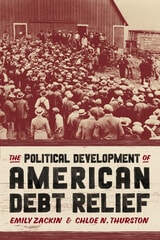
The Political Development of American Debt Relief
Emily Zackin and Chloe N. Thurston
University of Chicago Press, 2024
A political history of the rise and fall of American debt relief.
Americans have a long history with debt. They also have a long history of mobilizing for debt relief. Throughout the nineteenth century, indebted citizens demanded government protection from their financial burdens, challenging readings of the Constitution that exalted property rights at the expense of the vulnerable. Their appeals shaped the country’s periodic experiments with state debt relief and federal bankruptcy law, constituting a pre-industrial safety net. Yet, the twentieth century saw the erosion of debtor politics and the eventual retrenchment of bankruptcy protections.
The Political Development of American Debt Relief traces how geographic, sectoral, and racial politics shaped debtor activism over time, enhancing our understanding of state-building, constitutionalism, and social policy.
The Political Development of American Debt Relief
Emily Zackin and Chloe N. Thurston
University of Chicago Press, 2024
This is an auto-narrated audiobook version of this book.
A political history of the rise and fall of American debt relief.
Americans have a long history with debt. They also have a long history of mobilizing for debt relief. Throughout the nineteenth century, indebted citizens demanded government protection from their financial burdens, challenging readings of the Constitution that exalted property rights at the expense of the vulnerable. Their appeals shaped the country’s periodic experiments with state debt relief and federal bankruptcy law, constituting a pre-industrial safety net. Yet, the twentieth century saw the erosion of debtor politics and the eventual retrenchment of bankruptcy protections.
The Political Development of American Debt Relief traces how geographic, sectoral, and racial politics shaped debtor activism over time, enhancing our understanding of state-building, constitutionalism, and social policy.
The Political Ecology of Education
Brazil's Landless Workers' Movement and the Politics of KnowledgeDavid Meek
West Virginia University Press, 2020
The Political Ecology of Education examines the opportunities for and constraints on advancing food sovereignty in the 17 de Abril settlement, a community born out of a massacre of landless Brazilian workers in 1996. Based on immersive fieldwork over the course of seven years, David Meek makes the provocative argument that critical forms of food systems education are integral to agrarian social movements’ survival. While the need for critical approaches is especially immediate in the Amazon, Meek’s study speaks to the burgeoning attention to food systems education at various educational levels worldwide, from primary to postgraduate programs. His book calls us to rethink the politics of the possible within these pedagogies.

The Political Economy of Artificial Intelligence
Edited by Ajay Agrawal, Joshua Gans, Avi Goldfarb, and Catherine E. Tucker
University of Chicago Press, 2026
An authoritative look at how artificial intelligence both shapes and is shaped by the political and economic forces of the modern world.
As the effects of artificial intelligence are felt across economies and societies, many of its ramifications are still emerging. This volume brings together economists and political scientists to examine how AI intersects with regulation, military power, and political identity—offering analytical frameworks and identifying key open questions for future research.
The contributions address topics such as the allocation of property rights for AI inputs, trade-offs among alternative regulatory regimes, and the role of interest groups in shaping the technology’s trajectory. They explore how AI-related capabilities influence military effectiveness, resource allocation, and bargaining power among nations, and consider AI’s effects on political preferences, from the influence of AI-curated information on polarization to the implications of targeted political advertising and personalized education for national identity formation. The volume highlights key trade-offs that arise in AI’s political economy, and points toward empirical strategies and theoretical models that can advance understanding in this emerging field.
Drawing on diverse disciplinary perspectives, the collection provides a foundation for rigorous inquiry into how AI both shapes and is shaped by political and economic forces.

The Political Economy of Development
The World Bank, Neoliberalism and Development ResearchEdited by Kate Bayliss, Ben Fine, and Elisa Van Waeyenberge
Pluto Press, 2011
Any student, academic or practitioner wanting to succeed in development studies, radical or mainstream, must understand the World Bank's role and the evolution of its thinking and activities. The Political Economy of Development provides tools for gaining this understanding and applies them across a range of topics.
The research, practice and scholarship of development are always set against the backdrop of the World Bank, whose formidable presence shapes both development practice and thinking. This book brings together academics that specialise in different subject areas of development and reviews their findings in the context of the World Bank as knowledge bank, policy-maker and financial institution. The volume offers a compelling contribution to our understanding of development studies and of development itself.
The Political Economy of Development is an invaluable critical resource for students, policy-makers and activists in development studies.
The Political Economy of Dual Transformations
Market Reform and Democratization in HungaryDavid L. Bartlett
University of Michigan Press, 1997
The Political Economy of Expertise
Information and Efficiency in American National PoliticsKevin M. Esterling
University of Michigan Press, 2004
More than mere touts for the interests of Washington insiders, these groups encourage Congress to enact policies that are likely to succeed while avoiding those that have too great of a risk of failure. The surprising result is greater legislative efficiency. The Political Economy of Expertise illustrates that this system actually favors effective and informed decision making, thereby increasing the likelihood that new policies will benefit the American public.
The Political Economy of Israel's Occupation
Repression Beyond ExploitationShir Hever
Pluto Press, 2010
The Israeli occupation of the Palestinian territories since 1967 has many important economic aspects that are often overlooked. In this highly original book, Shir Hever shows that understanding the economic dimensions of the occupation is crucial to unravelling the Israeli-Palestinian conflict.
Hever rejects the premise that Israel keeps control over Palestinian territories for material gain, and also the premise that Israel is merely defending itself from Palestinian aggression. Instead, he argues that the occupation has reached an impasse, with the Palestinian resistance making exploitation of the Palestinians by Israeli business interests difficult, but the Israeli authorities reluctant to give up control.
With traditional economic analysis failing to explain this turn of events, this book will be invaluable for students, activists and journalists struggling to make sense of the complex issues surrounding Israel's occupation.
The Political Economy of Latin America in the Postwar Period
Edited by Laura Randall
University of Texas Press, 1998
The historic and increasing interdependence of the Latin American and U.S. economies makes an understanding of the political economies of Latin American nations particularly timely and important. After World War II, many nations initially implemented import substituting industrialization policies. Their outcomes, and the shift in policies, are related to the domestic policies and world economic conditions that led to government deficits, inflation, foreign borrowing, debt renegotiation, and renewed emphasis on common markets and other devices to stimulate trade and investment.
In The Political Economy of Latin America in the Postwar Period, important policy measures are evaluated, such as indexation of prices and contracts; special provisions for financing the government through the Central Bank; stabilization; and deregulation of the economy.
The introduction presents trends in Latin American growth and the factors that influence them. This is followed by parallel studies of the economic development of Argentina, Brazil, Chile, Cuba, Ecuador, Mexico, and Peru from 1945 to the mid-1990s. Noted experts bring their considerable experience to analyzing the content and impact of the economic theories that guided policymaking and their effects on output, income, and quality of life.
The Political Economy of NGOs
State Formation in Sri Lanka and BangladeshJude L. Fernando
Pluto Press, 2011
Jude L. Fernando explores the paradoxical relationship between NGOs and capitalism, showing that supposedly progressive organisations often promote essentially the same policies and ideas as existing governments.
The book examines how a diverse group of NGOs have shaped state formation in Bangladesh and Sri Lanka. It argues that, rather than influencing state formation for the better, NGOs have been integrated into the capitalist system and their language adopted to give traditional exploitative social relations a transformative appearance.
This enlightening study will give pause to those who see NGOs as drivers of true social change and will encourage students of development studies to make a deeper analysis of state formation.
The Political Economy of Turkey
Zulkuf Aydin
Pluto Press, 2005
The Political Geographies of Pregnancy
Laura R. Woliver
University of Illinois Press, 2002
A searing study of how modern reproductive politics shapes women's bodily agency
Pregnancy indisputably takes place within a woman's body. But as reproductive power finds its way into the hands of medical professionals, lobbyists, and policymakers, the geographies of pregnancy are shifting, and the boundaries need to be redrawn, argues Laura R. Woliver. The Political Geographies of Pregnancy is a vigorous analysis of the ways modern reproductive politics are shaped by long-standing debates on abortion and adoption, surrogacy arrangements, new reproductive technologies, medical surveillance, and the mapping of the human genome.
Across a politically charged backdrop of reproductive issues, Woliver exposes strategies that claim to uphold the best interests of children, families, and women but in reality complicate women's struggles to have control over their own bodies. Utilizing feminist standpoint theory and promoting a feminist ethic of care, Woliver looks at abortion politics, modern adoption laws that cater to male-headed families, regulations that allow the state to monitor pregnant women but not always provide care for them, and the power structures behind the seemingly benign world of egg-selling and surrogate parenting. She also considers the potentially staggering political implications of mapping the human genome, and the exclusion of women's perspectives in discussions about legislation and advancements in reproductive technologies.

The Political Life of Medicare
Jonathan Oberlander
University of Chicago Press, 2003

The Politics and Challenges of Achieving Health Equity
Alan B. Cohen, Colleen M. Grogan, and Jedediah Horwitt, special issue editors
Duke University Press, 2017
Articles in this issue address the historical, legal, and political contexts of health equity in the United States. Contributors examine the role of the courts in shaping health equity; document the importance of political discourse in framing health equity and establishing agendas for action; look closely at particular policies to reveal current challenges and the potential to achieve health equity in the future; and examine policies in both health and nonhealth domains, including state Medicaid programs, the use of mobile technology, and education and immigration policies. The issue concludes with a commentary on the future of health equity under the Trump administration and an analysis of how an ACA repeal would impact health equity.
Contributors. Alan B. Cohen, Keon L. Gilbert, Daniel Q. Gillion, Colleen M. Grogan, Mark A. Hall, Jedediah N. Horwitt, Tiffany D. Joseph, Alana M.W. LeBron, Julia F. Lynch, Jamila D. Michener, Vanessa Cruz Nichols, Francisco Pedraza, Isabel M. Perera, Rashawn Ray, Jennifer D. Roberts, Sara Rosenbaum, Sara Schmucker, Abigail A. Sewell, Deborah Stone, Keith Wailoo
The Politics of Attention
How Government Prioritizes ProblemsBryan D. Jones and Frank R. Baumgartner
University of Chicago Press, 2005
Analyzing fifty years of data, Jones and Baumgartner's book is the first study of American politics based on a new information-processing perspective. The authors bring together the allocation of attention and the operation of governing institutions into a single model that traces public policies, public and media attention to them, and governmental decisions across multiple institutions.
The Politics of Attention offers a groundbreaking approach to American politics based on the responses of policymakers to the flow of information. It asks how the system solves, or fails to solve, problems rather than looking to how individual preferences are realized through political action.
The Politics of Beginning
The Origin of Private Authority in the Process of TranslationAlejandro Esguerra
University of Michigan Press, 2025
2026 APSA Jeffrey Friedman Best Book on Ideas, Knowledge, and Politics Award Winner
The Politics of Beginning traces the formation of the Forest Stewardship Council (FSC), now the most authoritative private organization for forestry certification. It starts with recounting the highly politicized forest politics of the late 1980s, when activists protested human rights abuses and deforestation while experimenting with sustainable forestry practices. The book then follows the people who became the founding members of the Forest Stewardship Council. By using live audio recordings of the FSC founding assembly in 1993, this book provides an in-depth analysis of a constitutional moment for private authority in world politics.
To explore how timber merchants, Indigenous communities, and social and environmental NGOs engaged in private institution-making, Alejandro Esguerra works with the concept of translation developed in Actor-Network Theory—a process in which knowledge about governance is continuously recontextualized—and introduces it to International Relations theory. He develops a dramaturgical methodology with metaphors of theatre such as stage, script, and performance. This methodology can be used to analyze the ways in which activists and others translate knowledge about governance and the practices of inclusion and exclusion that appear during this process. The environmental crisis requires a transformation in the ways societies value and govern human–nature relations, and The Politics of Beginning reveals the conditions under which even formerly antagonistic actors start developing a common political project.

The Politics of Belonging
Race, Public Opinion, and ImmigrationNatalie Masuoka and Jane Junn
University of Chicago Press, 2013
The Politics of Corporate Social Responsibility
The Rise of a Global Business NormUrsula Mühle
Campus Verlag, 2010
Bringing together the fields of sociology, political science, and management and organization studies, Ursula Mühle offers in this unique volume an authoritative overview of corporate social responsibility (CSR). Mühle first considers the origins of CSR during the 1970s, highlighting the various approaches to CSR and explaining its early shortcomings. She then turns to the United Nations Global Compact and the Global Reporting Initiative to investigate why, since the mid-1990s, CSR has been on the rise. Finally, Mühle employs several case studies as well as interviews with business executives and politicians to illustrate why businesses worldwide now view CSR as a key component to their success. The Politics of Corporate Social Responsibility will be welcomed by scholars and CSR practitioners alike.
The Politics of Expertise
Competing for Authority in Global GovernanceOle Jacob Sending
University of Michigan Press, 2015
Drawing on insights from sociology, political science, and institutional theory, Sending challenges theories centered on particular actors’ authority, whether it is the authority of so-called epistemic communities, the moral authority of advocacy groups, or the rational-legal authority of international organizations. Using in-depth and historically oriented case studies of population and peacebuilding, he demonstrates that authority is not given nor located in any set of particular actors. Rather, continuous competition for recognition as an authority to determine what is to be governed, by whom, and for what purpose shapes global governance in fundamental ways.
Advancing a field-based approach, Sending highlights the political stakes disguised by the technical language of professionals and thus opens a broader public debate over the key issues of our time.
The Politics of Free Markets
The Rise of Neoliberal Economic Policies in Britain, France, Germany, and the United StatesMonica Prasad
University of Chicago Press, 2006
In The Politics of Free Markets, a comparative-historical analysis of the development of neoliberal policies in these four countries,Monica Prasad argues that neoliberalism was made possible in the United States and Britain not because the Left in these countries was too weak, but because it was in some respects too strong. At the time of the oil crisis in the 1970s, American and British tax policies were more punitive to business and the wealthy than the tax policies of France and West Germany; American and British industrial policies were more adversarial to business in key domains; and while the British welfare state was the most redistributive of the four, the French welfare state was the least redistributive. Prasad shows that these adversarial structures in the United States and Britain created opportunities for politicians to find and mobilize dissatisfaction with the status quo, while the more progrowth policies of France and West Germany prevented politicians of the Right from anchoring neoliberalism in electoral dissatisfaction.
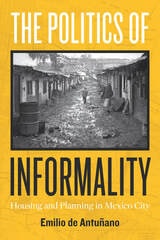
The Politics of Informality
Housing and Planning in Mexico CityEmilio de Antuñano
University of Texas Press, 2026
An examination of the central role and political power of informal neighborhoods in Mexico City.
At the beginning of the twentieth century, Mexico City was tightly bounded, with a population of about half a million people. By the end of that century, it was an unfathomable megalopolis of some 20 million. It had also become exhibit A in an “urban crisis” decried by demographers, NGOs, and the Mexican government. Mexico City’s greatest sin was its shantytowns—informal neighborhoods built in defiance of regulations and viewed as incurably disordered.
The Politics of Informality is an illuminating political and intellectual history, examining how these neighborhoods have figured in Mexican life and in the ideologies underlying urban planning. Prior to the Mexican Revolution of 1910, urban experts saw Mexico City as a tidy modern capital in-waiting. But during the interwar period, informal neighborhoods boomed, as working-class families asserted claims to housing under the revolution’s framework of citizenship and social justice. Then, amid Cold War realignments, a new cohort of urban experts pathologized Mexico City, turning it into a transnational laboratory for the study of poverty, migration, and overpopulation. Tracing a fascinating evolution, ThePolitics of Informality underscores the stubborn opposition between technocratic modernism and revolutionary, extralegal politics.
The Politics of Information
Problem Definition and the Course of Public Policy in AmericaFrank R. Baumgartner and Bryan D. Jones
University of Chicago Press, 2014
With The Politics of Attention, leading policy scholars Frank R. Baumgartner and Bryan D. Jones demonstrated the central role attention plays in how governments prioritize problems. Now, with The Politics of Information, they turn the focus to the problem-detection process itself, showing how the growth or contraction of government is closely related to how it searches for information and how, as an organization, it analyzes its findings. Better search processes that incorporate more diverse viewpoints lead to more intensive policymaking activity. Similarly, limiting search processes leads to declines in policy making. At the same time, the authors find little evidence that the factors usually thought to be responsible for government expansion—partisan control, changes in presidential leadership, and shifts in public opinion—can be systematically related to the patterns they observe.
Drawing on data tracing the course of American public policy since World War II, Baumgartner and Jones once again deepen our understanding of the dynamics of American policy making.

The Politics of International Marriage in Japan
Viktoriya Kim
Rutgers University Press, 2022

The Politics of Intimacy
Rethinking the End-of-Life ControversyAnna Durnová
University of Michigan Press, 2018
Debates on the end-of-life controversy are complex because they seem to highjack national and cultural traditions. Where previous books have focused on ideological grounds, The Politics of Intimacy explores dying as the site where policies are negotiated and implemented. Intimacy comprises the emotional experience of the end of life and how we acknowledge it—or not—through institutions. This process shows that end-of-life controversy relies on the conflict between the individual and these institutions, a relationship that is the cornerstone of Western liberal democracies.
Through interviews with mourners, stakeholders, and medical professionals, examination of media debates in France and the Czech Republic, Durnová shows that liberal institutions, in their attempts to accommodate the emotional experience at the end of life, ultimately fail. She describes this deadlock as the “politics of intimacy,” revealing that political institutions deploy power through collective acknowledgment of individual emotions but fail to maintain this recognition because of this same experience.
The Politics of Knowledge
The Carnegie Corporation, Philanthropy, and Public PolicyEllen Condliffe Lagemann
University of Chicago Press, 1992
The Politics of Money
Towards Sustainability and Economic DemocracyFrances Hutchinson, Mary Mellor, and Wendy Olsen
Pluto Press, 2002
The book opens with a review of the role of money in current society, an overview of the history of money creation and a critique of the main theoretical developments in economic thought. Alternative perspectives on money are then presented through a review of a number of radical perspectives but focusing mainly on the work of Marx, Veblen and the social credit perspective of Douglas and the guild socialists. In the final part of the book contemporary monetary theories and experiments are analysed within the theoretical and historical perspectives provided in the earlier chapters. The main argument of the book is that it is necessary to understand the crucial role of finance in driving the 'free market' economy if a democratic and sustainable economy is to be achieved.
The Politics of New Immigrant Destinations
Transatlantic PerspectivesStefanie Chambers
Temple University Press, 2017
Migration to new destinations in Europe and the United States has expanded dramatically over the past few decades. Within these destinations, there is a corresponding greater variety of ethnic, cultural, and/or religious diversity. This timely volume, The Politics of New Immigrant Destinations, considers the challenges posed by this proliferation of diversity for governments, majority populations, and immigrants.
The contributors assess the effectiveness of the policy and political responses that have been spawned by increasing diversity in four types of new immigrant destinations: “intermediate” destination countries—Ireland and Italy; culturally distinct regions experiencing new migration such as Catalonia in Spain or the American South; new destinations within traditional destination countries like the state of Utah and rural towns in England; and “early migration cycle” countries including Latvia and Poland.
The Politics of New Immigrant Destinations examines how these new destinations for immigrants compare to traditional destinations, with respect to their policy responses and success at integrating immigrants, offering perspectives from both immigrants and natives.
Contributors include: Dace Akule, Amado Alarcón, Rhys Andrews, Francesca Campomori, Tiziana Caponio, Scott Decker, Erica Dobbs, Melissa M. Goldsmith, Aleksandra Grzymała-Kazłowska, Claudio A. Holzner, Magdalena Lesińska, Paul Lewis, Helen B. Marrow, Laura Morales, Katia Pilati, Marie Provine, Monica Varsanyi, and the editors.
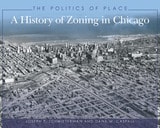
The Politics of Place
A History of Zoning in ChicagoJoseph P. Schwieterman and Dana M. Caspall
Southern Illinois University Press, 2006
The Politics of Population in Brazil
Elite Ambivalence and Public DemandBy Peter McDonough and Amaury DeSouza
University of Texas Press, 1981
The population of Brazil increased tenfold, from 10 to over 100 million, between 1880 and 1980, nearly half of this increase occurring since the end of World War II. The Politics of Population in Brazil examines the attitudes toward population planning of Brazilian government officials and other elites—bishops, politicians, labor leaders, and business owners—in comparison with mass public opinion. The authors' findings that elites seriously underestimate the desire for family planning services, while the public views birth control as a basic issue, represent an important contribution on a timely issue.
A major reason for this disparity is that the elites tend to define the issue as a matter of national power and collective growth, and the public sees it as a bread-and-butter question affecting the daily lives of families. McDonough and DeSouza document not only the real gulf between elite and mass opinion but also the propensity of the elites to exaggerate this gap through their stereotyping of public opinion as conservative and disinterested in family planning.
Despite these differences, the authors demonstrate that population planning is less conflict ridden than many other controversies in Brazilian politics and probably more amenable to piecemeal bargaining than some earlier studies suggest. In part, this is because attitudes on the issue are not closely identified with opinions regarding left-versus-right disputes. In addition, for the public in general, religious sentiment affects attitudes toward family planning only indirectly. This separation, which reflects the historical lack of penetration of Brazilian society on the part of the church, further attenuates the issue's potential for galvanizing deep-seated antagonisms. As the authors note, this situation stands in contrast to the fierce debates that moral issues have generated in Spain and Ireland.
The study is noteworthy not only for its original approach—the incorporation of mass and elite data and the departure from the standard concerns with fertility determinants in population—but also for its sophisticated methodology and lucid presentation.
The Politics of Rights
Lawyers, Public Policy, and Political ChangeStuart A. Scheingold
University of Michigan Press, 2004
"Scheingold presents a clear, thoughtful discussion of the ways in which rights can both empower and constrain those seeking change in American society. While much of the writing on rights is abstract and obscure, The Politics of Rights stands out as an accessible and engaging discussion."
-Gerald N. Rosenberg, University of Chicago
"This book has already exerted an enormous influence on two generations of scholars. It has had an enormous influence on political scientists, sociologists, and anthropologists, as well as historians and legal scholars. With this new edition, this influence is likely to continue for still more generations. The Politics of Rights has, I believe, become an American classic."
-Malcolm Feeley, Boalt Hall School of Law, University of California, Berkeley, from the foreword
Stuart A. Scheingold is Professor Emeritus of Political Science at the University of Washington.
The Politics of Staying Put
Condo Conversion and Tenant Right-to-Buy in Washington, DCCarolyn Gallaher
Temple University Press, 2016
When cities gentrify, it can be hard for working-class and low-income residents to stay put. Rising rents and property taxes make buildings unaffordable, or landlords may sell buildings to investors interested in redeveloping them into luxury condos.
In her engaging study The Politics of Staying Put, Carolyn Gallaher focuses on a formal, city-sponsored initiative—The Tenant Opportunity to Purchase Act (TOPA)—that helps people keep their homes. This law, unique to the District of Columbia, allows tenants in apartment buildings contracted for sale the right to refuse the sale and purchase the building instead. In the hands of tenants, a process that would usually hurt them—conversion to a condominium or cooperative—can instead help them.
Taking a broad, city-wide assessment of TOPA, Gallaher follows seven buildings through the program’s process. She measures the law’s level of success and its constraints. Her findingshave relevance for debates in urban affairs about condo conversion, urban local autonomy, and displacement.
The Politics of Street Crime
Criminal Process and Cultural ObsessionStuart A. Scheingold
Temple University Press, 1992
Americans find street crime terrifying and repellent. Yet we vicariously seek it out in virtually all of our media: books, newspapers, television, films, and the theatre. Stuart Scheingold confronts this cultural contradiction and asks why street crime is generally regarded in the trivializing and punitive images of cops and robbers that attribute crime to the willful acts of flawed individuals rather than to the structural shortcomings of a flawed society. In his case study of the police and criminal courts in the community he calls "Cedar City," a medium-sized city in the Western United States, Scheingold examines the effects of this cultural contradiction and these punitive predispositions on politics and policy making.
The Politics of Water in Arizona
Dean E. Mann
University of Arizona Press, 1963