Results by title
2285 books match the query 'Women' and 370 start with t
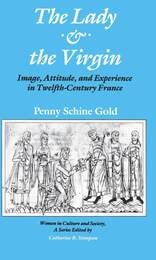
The Lady and the Virgin
Image, Attitude, and Experience in Twelfth-Century FrancePenny Schine Gold
University of Chicago Press, 1985
Vividly recreating the rich texture of medieval life, Gold effectively and eloquently goes beyond a simple equation of social context and representation. In the process. she challenges equally simple judgments of historical periods as being either "good" or "bad" for women.
"[The Lady and the Virgin] presents its findings in a form that should attract students as well as their instructors. The careful and controlled use of so many different kinds of sources . . . offers us a valuable medieval case study in the inner-relationship between the segments of society and its ethos or value system."—Joel T. Rosenthal, The History Teacher
"Something of a tour de force in an interdisciplinary approach to history."—Jo Ann McNamara, Speculum
"[A] well-written, extremely well-researched book. . . . The Lady and the Virgin is useful, readable, and well informed."—R. Howard Bloch, Modern Philology
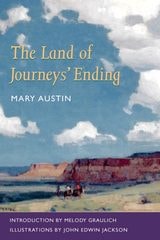
The Land of Journeys' Ending
Mary Austin
University of Illinois Press, 2003
When The Land of Journeys' Ending was first published in 1924, The Literary Reviewwarned, "This book is treacherous, waiting to overwhelm you with its abundant poetry." In it, successful New York author Mary Austin describes the epic journey she undertook in 1923, when left her East Coast home at the age of fifty-five to travel through the southwestern United States, the area where she lived as a child and where she would later retire.
The journey the book describes is a double one. Austin describes her transition from the cosmopolitan North East to the arid and largely unfamiliar land between the Colorado River and the Rio Grande. In telling her own story, Austin also tells the story of those who journeyed there before her-–Native American tribes, Spanish conquistadores, miners, adventurers, and California-bound migrants. The result is both an homage to the magnificence of the desert, mountains, rivers, canyons, plants, and animals of the Southwest and a history of the waves of people who inhabited the region.
Part memoir, part travel narrative, part historical investigation, and part ecological study, The Land of Journeys' Ending is a moving account of a woman coming full circle, finding solace in the broad landscape of her youth.

The Last Layer of the Ocean
Kayaking through Love and Loss on Alaska's Wild CoastMary Emerick
Oregon State University Press, 2021
The year Emerick turned 38, the suicide of a stranger compelled her to uproot her life and strike out for Alaska, taking a chance on love and home. She learned how to travel in a small yellow kayak along the rugged coast, contending with gales, high seas, and bears. She pondered the different meanings of home from the perspectives of people who were born along Alaska’s coast, the first peoples who had been there for generations, newcomers who chose this place for themselves, and the many who would eventually, inevitably leave. When she married a man from another island, convinced that love would stick, she soon learned that marriage is just as difficult to navigate as the ocean.
Divided into sections detailing the main kayaking strokes, with each stroke serving as metaphor for the lives we all pass through and the tools needed to stay afloat, this eloquent memoir speaks to the human need for connection—connection to place and to our fellow travelers casting their bubbles of light in the depths.
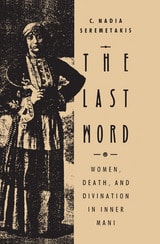
The Last Word
Women, Death, and Divination in Inner ManiC. Nadia Seremetakis
University of Chicago Press, 1991

The Letters of Mina Harker
Dodie Bellamy; with a new Forward by Dennis Cooper
University of Wisconsin Press, 2004
Bigger-than-life, half goddess, half Bette Davis, Mina sends letter after letter to friends and co-conspirators, holding her reader captive through a display of illusion and longing. Juggling quivering vulnerability on one hand and gossip on the other, Mina spoofs and consumes and spews back up demented reembodiments of trash media and high theory alike. It's all fodder for her ravenous libido and "a messy ambiguous place where pathology meets pleasure." Sensuous and captivating, The Letters of Mina Harker describes one woman's struggles finding the right words to explain her desires and fears without confining herself to one identity.
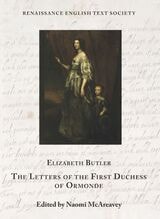
The Letters of the First Duchess of Ormonde
Elizabeth Butler
Iter Press, 2022
The volume comprises more than three hundred letters written by Ormonde to her husband and family, agents and servants, and friends and clients. Spanning six decades, these letters are meticulously transcribed, edited, and annotated, and the volume includes a substantial scholarly introduction, family trees, a glossary, and other resources.
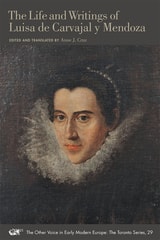
The Life and Writings of Luisa de Carvajal y Mendoza
Luisa de Carvajal y Mendoza, Edited by Anne J. Cruz, Translated by Anne J. Cruz
Iter Press, 2014
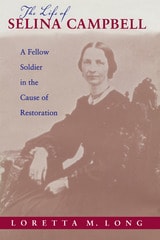
The Life of Selina Campbell
A Fellow Soldier in the Cause of RestorationLoretta M. Long Hunnicutt
University of Alabama Press, 2001
This first biography of Selina Campbell opens a window onto the experience of women in one of the most dynamic religious groups of 19th-century America
Loretta M. Long examines the life and influence of Selina Campbell, one of the most visible women in the 19th-century Disciples of Christ movement. Best known as the wife of Alexander Campbell, founder of the Disciples, Selina Campbell both shaped and exemplified the role of women in this dynamic religious group (also known as the Stone-Campbell movement). Her story demonstrates the importance of faith in the lives of many women during this era and adds a new dimension to the concept of the “separate spheres” of men and women, which women like Campbell interpreted in the context of their religious beliefs.
A household manager, mother, writer, and friend, Campbell held sway primarily in the domestic sphere, but she was not held captive by it. Her relationship with her husband was founded on a deep sense of partnership conditioned by their strong faith in an all-powerful God. Each of them took on complementary roles according to the perceived natural abilities of their genders: Alexander depended on Selina to manage his property and raise the children while he traveled the country preaching. Campbell outlived her husband by 30 years, and during that time published several newspaper articles and supported new causes, such as women in missions.
In the end, as Long amply demonstrates, Selina Campbell was neither her husband’s shadow nor solely a domestic worker. She was, in her husband’s eyes, a full partner and a “fellow soldier” in the cause of Restoration.
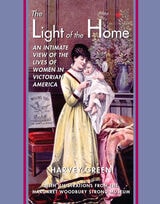
The Light of the Home
An Intimate View of the Lives of Women in Victorian AmericaHarvey Green
University of Arkansas Press, 2003
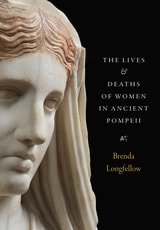
The Lives and Deaths of Women in Ancient Pompeii
Brenda Longfellow
University of Texas Press, 2025
A study of women’s lives in the public sphere of the ancient city of Pompeii.
Pompeii’s well-preserved remains provide a unique opportunity for the close study of ancient lives. Drawing on statues, inscriptions, graffiti, wall paintings, and the architecture of tombs, sanctuaries, houses, and public spaces, The Lives and Deaths of Women in Ancient Pompeii examines the public lives of women in Pompeii. Art historian Brenda Longfellow explores how historical women of all social backgrounds acted in public and exerted agency on behalf of themselves and others, ultimately finding that female initiatives in Pompeii were not only accepted but desired by the community to a greater extent than has previously been recognized.
Longfellow centers her study on a few key women—including the city’s most notable female patron, Eumachia—and uses them to examine female roles in postmortem commemorations, civic patronage and benefactions, commerce, the priesthood, and the home. By following these individuals, Longfellow examines women’s lives in Pompeii in both abstract and concrete ways, allowing readers to better understand their importance to the city and society. The result is a groundbreaking book that foregrounds the agency of women in everyday Pompeii.
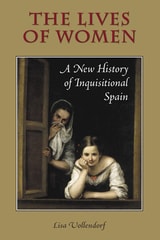
The Lives of Women
A New History of Inquisitional SpainLisa Vollendorf
Vanderbilt University Press, 2007
During this period, more women wrote for the public book market and participated in literary culture than ever before. In addition, the rise in convents and female education contributed to a marked increase in texts produced by and about women in religious orders. Vollendorf argues that, in conjunction with Inquisition and legal documents, this wealth of writing offers unprecedented access to women's perspectives on life in early modern Spain, and that those perspectives encompass diverse ethnic backgrounds and class differences. Many of the documents touch on issues of sex and intimacy; others provide new ways of understanding religious practice in the period. Perhaps most important, these writings give a richly textured view of how women reacted to the dominant culture's attempts to define, limit, and contain femininity. Vollendorf shows that the texts reflect a shared preoccupation with redefining gender and creating legitimate spaces for women.
As The Lives of Women vividly illustrates, hundreds, if not thousands, of women's stories await rediscovery in archives. The book provides a roadmap for understanding the experiences and concerns of wives, widows, sisters, and daughters who lived in a key moment in the development of the Spanish nation and the Hispanic world. At its core, The Lives of Women argues for a reconceptualization of history, one that will rely on the experiences of women and minorities as much as on the words and actions of kings and conquistadors.
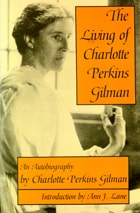
The Living of Charlotte Perkins Gilman
An AutobiographyCharlotte Perkins Gilman
University of Wisconsin Press, 1991
Charlotte Perkins Gilman (1869-1935) was one of the leading intellectuals of the American women's movement in the first two decades of the twentieth century. Moving beyond the struggle for suffrage, Gilman confronted an even larger problem—economic and social discrimination against women. Her book, Women and Economics, published in 1898, was repeatedly printed and translated into seven languages. She was a tireless traveler, lecturer, and writer and is perhaps best known for her dramatic short story, "The Yellow Wallpaper." Gilman's autobiography gives us access to the life of a remarkable and courageous woman.
Originally published in 1935, soon after Gilman's death, The Living of Charlotte Perkins Gilman has been out of print for several years. This edition includes a new introduction by Gilman's noted biographer, Anne J. Lane.
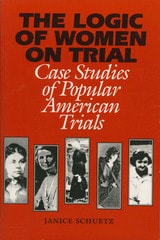
The Logic of Women on Trial
Case Studies of Popular American TrialsJanice Schuetz
Southern Illinois University Press, 1994
Janice Schuetz investigates the felony trials of nine American women from colonial Salem to the present: Rebecca Nurse, tried for witchcraft in 1692; Mary E. Surratt, tried in 1865 for assisting John Wilkes Booth in the assassination of Abraham Lincoln; Lizzie Andrew Borden, tried in 1892 for the ax murder of her father and stepmother; Margaret Sanger, tried in 1915, 1917, and 1929 for her actions in support of birth control; Ethel Rosenberg, tried in 1951 for aiding the disclosure of secrets of the atom bomb to the Soviets; Yvonne Wanrow, tried in 1974 for killing a man who molested her neighbor’s daughter; Patricia Campbell Hearst, tried in 1975 for bank robbery as a member of the Symbionese Liberation Army; Jean Harris, tried in 1982 for killing Herman Tarnower, the Diet Doctor; and Darci Kayleen Pierce, tried in 1988 for kidnapping and brutally murdering a pregnant woman, then removing the baby from the woman’s womb.
In her analysis, Schuetz is careful to define these trials as popular trials. Characteristically, popular trials involve persons, issues, or crimes of social interest that attract extensive public interest and involvement. Such trials make a contribution to the ongoing historical dialogue about the meaning of justice and the legal system, while reflecting the values of the time and place in which they occur.
Schuetz examines the kinds of communication that transpired and the importance of gender in the trials by applying a different current rhetorical theory to each trial text. In every chapter, she explains her chosen interpretive theory, compares that framework with the discourse of the trial, and makes judgments about the meaning of the trial texts based on the interpretive theory.
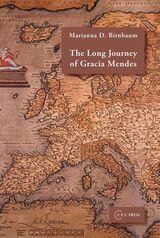
The Long Journey of Gracia Mendes
Marianna D. Birnbaum
Central European University Press, 2003

The Long Road of Woman's Memory
Jane Addams
University of Illinois Press, 2001
These women, usually rather withdrawn from the community, seemed to spring to life in response to this apocryphal story--and to be inspired to tell stories of their own. The tales they shared with Addams in the wake of the Devil Baby were more personal and revealing than any they had previously told her: stories of abusive mates, lost or neglectful children, and endless, ill-paid menial labor endured on behalf of loved ones. In response to these sometimes wrenching conversations, Addams wrote The Long Road of Woman's Memory, an extended musing on the role of memory and myth in women's lives.
As Addams records the difficult recollections of these women she ponders the transformation of their experiences--so debilitating and full of anguish--into memories devoid of rancor and pain. She explores the catalytic function of cautionary tales in reviving older women's sense of agency. Through moving conversations with women who had lost sons on the battlefield, she emphasizes the importance of voicing a female perspective on war. The women's stories, graphically depicting the conditions in which they lived and labored and the purposefulness that sustained them, are gracefully woven together with Addams's insights on the functioning and purpose of memory.
Seen in the context of Addams's personal connection with these diverse women and their stories, her larger efforts to bring about equity and social justice appear all the more courageous and vital. Charlene Haddock Seigfried's new introduction sets Addams's observations in the context of pragmatist and feminist traditions.
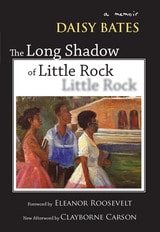
The Long Shadow of Little Rock
A MemoirDaisy Bates
University of Arkansas Press, 2007

The Lost Lives of Lena Wu
A NovelAlvin Lu
University of Alabama Press, 2026
Centered around Lena Wu, a middle-aged Taiwanese immigrant and divorcee, the novel is a recursively structured interrogation of the contingencies between past and present; memory and self-understanding; and memoir and fiction.
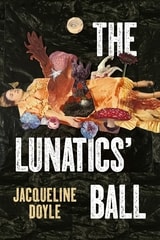
The Lunatics' Ball
Jacqueline Doyle
The Ohio State University Press, 2027
“There must have been more of us, hidden from sight, or slipping off the family tree like leaves in autumn, unnoticed.” Compelled by grief over the suicide of her beloved aunt and by her own bipolar diagnosis, Jacqueline Doyle set out to discover more about their shared disorder and the ways society has punished women it labels “mad.” Her genre-bending collection, The Lunatics’ Ball, grew into something larger than she expected: a collective (auto)biography combining her aunt’s story and her own with those of more than thirty “lunatic” forebears whose histories have been misrepresented or lost. Some are well known, such as Sylvia Plath, Nina Simone, and Zelda Fitzgerald—the latter who died in a locked room in a mental hospital fire. Others are lesser known, such as Lorina Bulwer, who stitched her story into enormous patchwork tapestries; Violet Gibson, incarcerated in an asylum for decades after attempting to assassinate Mussolini; and the writer Janet Frame, who narrowly escaped a lobotomy. In this fearless work that is equal parts imaginative brilliance and exacting historical inquiry, Doyle expands the boundaries of memoir and creates a new community in the face of stigma and repression.
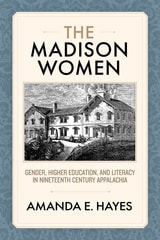
The Madison Women
Gender, Higher Education, and Literacy in Nineteenth-Century AppalachiaAmanda E Hayes
West Virginia University Press, 2024
Incorporating captivating mini-biographies of women who attended Madison College and who went on to change their communities in ways large and small, this book reveals how the lives of its students impart lessons about history, regional culture, and how we can shape the Appalachia's future.
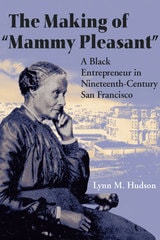
The Making of "Mammy Pleasant"
A Black Entrepreneur in Nineteenth-Century San FranciscoLynn M. Hudson
University of Illinois Press, 2002
Investigating Mary Ellen Pleasant's convoluted legacy
Mary Ellen Pleasant arrived in Gold Rush-era San Francisco a free black woman with abolitionist convictions and a predilection for entrepreneurial success. Behind the convenient and trusted disguise of "Mammy," she transformed domestic labor into enterprise, amassed remarkable real estate, wealth, and power, and gained notoriety for her work in fighting Jim Crow.
Pleasant's legacy is steeped in scandals and lore. Was she a voodoo queen who traded in sexual secrets? A madam? A murderer? In The Making of "Mammy Pleasant," Lynn M. Hudson examines the folklore of Pleasant's real and imagined powers. Emphasizing the significance of her life in the context of how it has been interpreted or ignored in the larger trends of American history, Hudson integrates fact and speculation culled from periodicals, court cases, diaries, letters, Pleasant's interviews with the San Francisco press, and various biographical and fictional accounts.
Addressing the lack of a historical record of black women's lives, the author argues that the silences and mysteries of Pleasant's past, whether never recorded or intentionally omitted, reveal as much about her life as what has been documented. Through Pleasant's life, Hudson also interrogates the constructions of race, gender, and sexuality during the formative years of California's economy and challenges popular mythology about the liberatory sexual culture of the American West.
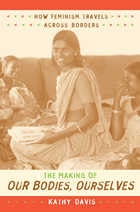
The Making of Our Bodies, Ourselves
How Feminism Travels across BordersKathy Davis
Duke University Press, 2007
Kathy Davis tells the story of this remarkable book’s global circulation. Based on interviews with members of the Boston Women’s Health Book Collective, the group of women who created Our Bodies, Ourselves, as well as responses to the book from readers, and discussions with translators from Latin America, Egypt, Thailand, China, Eastern Europe, Francophone Africa, and many other countries and regions, Davis shows why Our Bodies, Ourselves could never have been so influential if it had been just a popular manual on women’s health. It was precisely the book’s distinctive epistemology, inviting women to use their own experiences as resources for producing situated, critical knowledge about their bodies and health, that allowed the book to speak to so many women within and outside the United States. Davis provides a grounded analysis of how feminist knowledge and political practice actually travel, and she shows how the process of transforming Our Bodies, Ourselves offers a glimpse of a truly transnational feminism, one that joins the acknowledgment of difference and diversity among women in different locations with critical reflexivity and political empowerment.
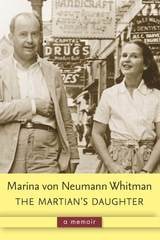
The Martian's Daughter
A MemoirMarina von Neumann Whitman
University of Michigan Press, 2013
One of the five Hungarian scientific geniuses dubbed "the Martians" by their colleagues, John von Neumann is often hailed as the greatest mathematician of the twentieth century and even as the greatest scientist after Einstein. He was a key figure in the Manhattan Project; the inventor of game theory; the pioneer developer of the modern stored-program electronic computer; and an adviser to the top echelons of the American military establishment. In The Martian's Daughter, Marina von Neumann Whitman reveals intimate details about the famed scientist and explores how the cosmopolitan environment in which she was immersed, the demanding expectations of her parents, and her own struggles to emerge from the shadow of a larger-than-life parent shaped her life and work.
Unfortunately, von Neumann did not live to see his daughter rise to become the first or highest-ranking woman in a variety of arenas. Whitman became a noted academic during the 1960s and '70s, casting her teaching and writing in the framework of globalization before the word had been invented; became the first woman ever to serve on the President's Council of Economic Advisers and participated actively in U.S. efforts to reshape the international monetary and financial system during the early 1970s; pioneered the role of women on the boards of leading multinational corporations; and became the highest-ranking female executive in the American auto industry in the 1980s. In her memoir, Whitman quotes from personal letters from her father and describes her interactions with such figures as Roger Smith of GM and President Nixon. She also details the difficulties she encountered as an early entrant into a world dominated by men and how she overcame the obstacles to, in her words, "have it all."
The Mary Lincoln Enigma
Historians on America's Most Controversial First LadyEdited by Frank J. Williams and Michael Burkhimer, with an Epilogue by Catherine Clinton
Southern Illinois University Press, 2012
Mary Lincoln is a lightning rod for controversy. Stories reveal widely different interpretations, and it is impossible to write a definitive version of her life that will suit everyone. The thirteen engaging essays in this collection introduce Mary Lincoln’s complex nature and show how she is viewed today.
The authors’ explanations of her personal and private image stem from a variety of backgrounds, and through these lenses—history, theater, graphic arts, and psychiatry—they present their latest research and assessments. Here they reveal the effects of familial culture and society on her life and give a broader assessment of Mary Lincoln as a woman, wife, and mother. Topics include Mary’s childhood in Kentucky, the early years of her marriage to Abraham, Mary’s love of travel and fashion, the presidential couple’s political partnership, and Mary’s relationship with her son Robert.
The fascinating epilogue meditates on Mary Lincoln’s universal appeal and her enigmatic personality, showcasing the dramatic differences in interpretations. With gripping prose and in-depth documentation, this anthology will capture the imagination of all readers.
University Press Books for Public and Secondary Schools 2013 edition

The Masculine Woman in America, 1890-1935
Laura L. Behling
University of Illinois Press, 2001
Scrutinizing depictions of the masculine woman in literature and the popular press, Laura L. Behling explicates the literary, artistic, and rhetorical strategies used to eliminate the "sexually inverted" woman: punishing her by imprisonment or death; "rescuing" her into heterosexuality; subverting her through parody; or removing her from society to some remote or mystical place. Behling also shows how fictional same-sex relationships in the writings of Henry James, Charlotte Perkins Gilman, Gertrude Stein, and others conformed to and ultimately reaffirmed heterosexual models.
The Masculine Woman in America, 1890-1935 demonstrates that the women's suffrage movement did not so much suggest alternatives to women's gender and sexual behavior as it offered men and women afraid of perceived changes a tangible movement on which to blame their fears. A biting commentary on the insubstantial but powerful ghosts stirred up by the media, this study shows how, though legally enfranchised, the new woman was systematically disfranchised socially through scientific theory, popular press illustrations, and fictional predictions of impending sociobiological disaster.

The Merchant of Prato's Wife
Margherita Datini and Her World, 1360-1423Ann Crabb
University of Michigan Press, 2015
The Merits of Women
Wherein Is Revealed Their Nobility and Their Superiority to MenModerata Fonte
University of Chicago Press, 2018
Without help from their wives, men are just like unlit lamps . . .
Just think of them as an unreliable clock that tells you it’s ten o’clock when it’s in fact barely two . . .
A man without a woman is like a fly without a head . . .
These are but a small selection of the quips bandied about at this lively gathering of women. The broad topic at hand is the relative pros and cons of men, and the cases in point range from pick-up artists to locker-room talk, and from double standards to fragile masculinity.
Yet this dialogue unfolds not among ironically misandrist millenials venting at their local dive bar, but rather among sixteenth-century women—variously married, widowed, single, and betrothed—attending a respectable Venice garden party. Written in the early 1590s by Moderata Fonte, pseudonym of the Renaissance poet and writer Modesta Pozzo, this literary dialogue interrogates men and men’s treatment of women, and explores by contrast the virtues of singledom and female friendship. As the women diverge from their theme—discussing everything from astrology to the curative powers of plants and minerals—a remarkable group portrait of wisdom, wit, and erudition emerges.
A new introduction by translator Virginia Cox and foreword by Dacia Maraini situate The Merits of Women in its historical context, written as it was on the cusp of Shakespeare’s heyday, and straddling the centuries between the feminist works of Christine de Pizan and Mary Wollstonecraft. Elegantly presented for a general audience, this is a must-read for baby feminists and “nasty women” alike, not to mention the perfect subtle gift for any mansplaining friend who needs a refresher on the merits of women . . . and their superiority to men.
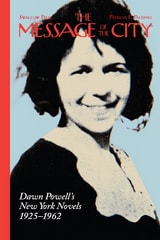
The Message of the City
Dawn Powell’s New York Novels, 1925–1962Patricia E. Palermo
Ohio University Press, 2016
Dawn Powell was a gifted satirist who moved in the same circles as Dorothy Parker, Ernest Hemingway, renowned editor Maxwell Perkins, and other midcentury New York luminaries. Her many novels are typically divided into two groups: those dealing with her native Ohio and those set in New York. “From the moment she left behind her harsh upbringing in Mount Gilead, Ohio, and arrived in Manhattan, in 1918, she dove into city life with an outlander’s anthropological zeal,” reads a recent New Yorker piece about Powell, and it is those New York novels that built her reputation for scouring wit and social observation.
In this critical biography and study of the New York novels, Patricia Palermo reminds us how Powell earned a place in the national literary establishment and East Coast social scene. Though Powell’s prolific output has been out of print for most of the past few decades, a revival is under way: the Library of America, touting her as a “rediscovered American comic genius,” released her collected novels, and in 2015 she was posthumously inducted into the New York State Writer’s Hall of Fame.
Engaging and erudite, The Message of the City fills a major gap in in the story of a long-overlooked literary great. Palermo places Powell in cultural and historical context and, drawing on her diaries, reveals the real-life inspirations for some of her most delicious satire.
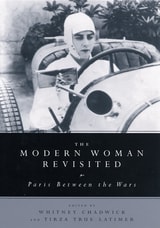
The Modern Woman Revisited
Paris Between the WarsChadwick, Whitney
Rutgers University Press, 2003
The contributions of female artists to the development of literary and artistic modernism in early twentieth century France remain poorly understood. It was during this period that a so-called “modern woman” began occupying urban spaces associated with the development of modern art and modernism’s struggles to define subjectivities and sexualities. Whereas most studies of modernism’s formal innovations and its encouragement of artistic autonomy neglect or omit necessary discussions of gender, race, class, and sexual orientation, the contributors of The Modern Woman Revisited inject these perspectives into the discussion.
Between the two World Wars, Paris served as the setting for unparalleled freedom for expatriate as well as native-born French women, who enjoyed unprecedented access to education and opportunities to participate in public artistic and intellectual life. Many of these women made lasting contributions in art and literature. Some of the artists discussed include Colette, Tamara de Lempicka, Sonia Delaunay, Djuna Barnes, Augusta Savage, and Lee Miller.
Inthis book, an internationally recognized roster of art historians, literary critics, and other scholars offers a nuanced portrait of what it meant to be a modern woman during this decisive period of modernism’s development. Individual essays explore the challenges faced by women in the early decades of the twentieth century, as well as the strategies these women deployed to create their art and to build meaningful lives and careers. The introduction underscores the importance of the contributors’ efforts to engender larger questions about modernity, sexuality, race, and class.
The Moral Property of Women
A History of Birth Control Politics in AmericaLinda Gordon
University of Illinois Press, 2002
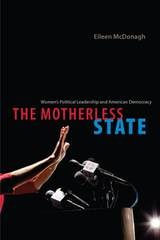
The Motherless State
Women's Political Leadership and American DemocracyEileen McDonagh
University of Chicago Press, 2009
American women attain more professional success than most of their counterparts around the world, but they lag surprisingly far behind in the national political arena. Women held only 15 percent of U.S. congressional seats in 2006, a proportion that ranks America behind eighty-two other countries in terms of females elected to legislative office. A compelling exploration of this deficiency, TheMotherless State reveals why the United States differs from comparable democracies that routinely elect far more women to their national governing bodies and chief executive positions.
Explaining that equal rights alone do not ensure equal access to political office, Eileen McDonagh shows that electoral gender parity also requires public policies that represent maternal traits. Most other democracies, she demonstrates, view women as more suited to govern because their governments have taken on maternal roles through social welfare provisions, gender quotas, or the continuance of symbolic hereditary monarchies. The United States has not adopted such policies, and until it does, McDonagh insightfully warns, American women run for office with a troubling disadvantage.

The Mushroom Gatherer
Viktorie Hanišová
Seagull Books, 2025
Nestled deep in the Bohemian Forest, Sára’s world is quiet and bound to the rhythms of nature. She has wandered the same wooded trails for seven years, filling her basket with mushrooms, her pockets with memories, and her thoughts with the past she cannot quite escape. The solitude suits her—until the death of her mother forces her to confront the tangled roots of family and the wounds that never fully healed. As Sára meticulously sorts through chanterelles and boletes, she also sorts through childhood recollections and the uneasy inheritance of trauma. The forest offers refuge, but it also holds secrets, and as the seasons shift, so does Sára’s understanding of herself and the complicated bonds that tether her to the world.
With melodic prose and an acute sensitivity to how landscapes shape lives, Viktorie Hanišová crafts a novel of quiet intensity and deep introspection. The Mushroom Gatherer is a haunting meditation on loss and the delicate balance between isolation and connection, perfect for readers drawn to atmospheric fiction.
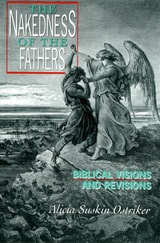
The Nakedness of the Fathers
Biblical Visions and RevisionsOstriker, Alicia Suskin
Rutgers University Press, 1997
In her introduction, "Entering the Tents, " Ostriker defines the need to struggle against a tradition in which women have been silenced and disempowered - and to recover the female power buried beneath the surface of the biblical texts. In "The Garden, " she reinterprets the mythically complex stories of Creation. Then she considers the stories of "The Fathers, " from Abraham and Isaac to Moses, David, and Solomon - and their wives, mothers, and sisters. In "The Return of the Mothers, " she begins with a radical new interpretation of the book of Esther, includes a meditation on the silenced wife of Job and the idea of justice, and concludes with a fable on the death of God and a prayer to the Shekhinah, the feminine aspect of God. Ostriker refuses to dismiss the Bible as meaningless to women. Instead, in this angry, eloquent, visionary book, she attempts to recover what is genuinely sacred in these sacred texts.
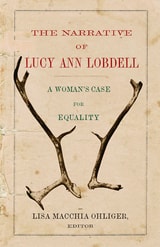
The Narrative of Lucy Ann Lobdell
A Woman's Case for EqualityLisa Macchia Ohliger
Westholme Publishing, 2024
Lucy Ann Lobdell’s (1829–1912) extraordinary life was shaped by personal strife and the hardships of survival in upstate New York. Struggling with an abusive, alcoholic husband, a young child, ailing parents, and financial strain, Lucy did what was necessary to support her family. In a rural world defined by hunting, farming, and lumbering, she dressed, labored, and lived in a traditional masculine manner. Her prowess as a rifle shot and fiddle player were known locally, but because of her unconventional, androgynous lifestyle, she became a target of public gossip and ridicule. Educated and eloquent, Lucy penned and published, Lucy Ann Lobdell, the Female Hunter of Delaware and Sullivan Counties, N.Y., in 1855. The narrative provides a unique look at the persecution of a woman whose only “offense” was disregard for contemporary societal norms.
After her husband was killed during the Civil War, she received a widow’s pension. Ostracized and eventually hospitalized in 1880—gender laws of the time imprisoned indigent men, but sent women to mental hospitals—she underwent torturous experimental treatment until she confessed to a self-serving doctor that she was “a man in all that the name implies.” Whether Lucy was a lesbian, cross dresser, or transgender, we don’t know from the historical record, but as Lisa Macchia Ohliger demonstrates in The Narrative of Lucy Ann Lobdell: A Woman’s Case for Equality, Lucy did embody the nascent women’s rights movement. At the same time, and not far from where Lucy lived and went to school, Amelia Bloomer was advocating the right for women to wear pants and was publishing the feminist newspaper, The Lily, while Susan B. Anthony was pushing for land rights and equal pay for women. All of these issues are found in Lucy’s autobiographical account, fully reproduced in this volume. Lucy’s life is an illustration of the historical significance and destructive power of gender in society, and her narrative bears painful witness to the clash between taboo and survival.
The Ndola Muto Salon
A NovelFrieda Ekotto
Bucknell University Press, 2027
At the Ndola Muto Salon Douala, Cameroon, women slip behind closed doors to seek pleasure, refuge, and one another. When young Violette begins work there as a courtesan for women to support her family, she enters a world her mother cannot accept, where desire moves quietly but powerfully. Part sanctuary, part hidden house of pleasure, the salon becomes a mirror of empowerment, longing, and possibility beyond the restrictions of Cameroonian society. Within its walls, Violette encounters a constellation of women who shape her awakening: Lady Budu, the formidable owner; Caroline, who first opens her to joy; and the enigmatic Lady with Sexy Toes, who urges her to imagine a life of her own making. As these lives intertwine in this evocative novel, the salon reveals how tenderness between women can become an act of resistance, defying patriarchy, class, and convention in small but profound revolutions.
Published by Bucknell University Press. Distributed worldwide by Rutgers University Press.
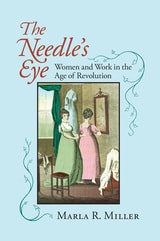
The Needle's Eye
Women and Work in the Age of RevolutionMarla R. Miller
University of Massachusetts Press, 2006
In this book, Marla R. Miller illuminates the significance of women's work in the clothing trades of the early Republic. Drawing on diaries, letters, reminiscences, ledgers, and material culture, she explores the contours of working women's lives in rural New England, offering a nuanced view of their varied ranks and roles—skilled and unskilled, black and white, artisanal and laboring—as producers and consumers, clients and craftswomen, employers and employees. By plumbing hierarchies of power and skill, Miller explains how needlework shaped and reflected the circumstances of real women's lives, at once drawing them together and setting them apart.
The heart of the book brings into focus the entwined experiences of six women who lived in and around Hadley, Massachusetts, a thriving agricultural village nestled in a bend in the Connecticut River about halfway between the Connecticut and Vermont borders. Miller's examination of their distinct yet overlapping worlds reveals the myriad ways that the circumstances of everyday lives positioned women in relationship to one another, enlarging and limiting opportunities and shaping the trajectories of days, years, and lifetimes in ways both large and small. The Needle's Eye reveals not only how these women thought about their work, but how they thought about their world.
The Network Inside Out
Annelise Riles
University of Michigan Press, 2001
The immediate subject of Riles's ethnographic work was a group of Fijian bureaucrats and activists preparing for and participating in the United Nations Fourth World Conference on Women. Participants in this meeting and the activities surrounding it understood themselves to be "focal points" in national, regional, and global "networks."
Starting from the premise that anthropologists are "inside" the Network, that is, that they are producers, consumers, and aesthetes, not simply observers, of the artifacts of late modern institutional life, Riles enacts a new ethnographic method for turning the network "inside out." The resulting experiment in the theory and ethnography of transnational institutional practices makes an important contribution to the anthropology of knowledge.
With its focus on developing a method for studying transnational phenomena, The Network Inside Out will appeal not only to anthropologists, but also to legal scholars and political scientists.
Annelise Riles is Assistant Professor, Northwestern University School of Law, Research Fellow, American Bar Foundation.
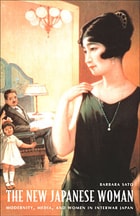
The New Japanese Woman
Modernity, Media, and Women in Interwar JapanBarbara Sato
Duke University Press, 2003
The New Japanese Woman is rich in descriptive detail and full of fascinating vignettes from Japan’s interwar media and consumer industries—department stores, film, radio, popular music and the publishing industry. Sato pays particular attention to the enormously influential role of the women’s magazines, which proliferated during this period. She describes the different kinds of magazines, their stories and readerships, and the new genres the emerged at the time, including confessional pieces, articles about family and popular trends, and advice columns. Examining reactions to the images of the modern girl, the housewife, and the professional woman, Sato shows that while these were not revolutionary figures, they caused anxiety among male intellectuals, government officials, and much of the public at large, and they contributed to the significant changes in gender relations in Japan following the Second World War.

The New Presidential Elite
Men and Women in National PoliticsJeane J. Kirkpatrick
Russell Sage Foundation, 1976
The New Real
Media and Mimesis in Japan from Stereographs to EmojiJonathan E. Abel
University of Minnesota Press, 2022
Unlocking a vital understanding of how literary studies and media studies overlap and are bound together
A synthetic history of new media reception in modern and contemporary Japan, The New Real positions mimesis at the heart of the media concept. Considering both mimicry and representation as the core functions of mediation and remediation, Jonathan E. Abel offers a new model for media studies while explaining the deep and ongoing imbrication of Japan in the history of new media.
From stereoscopy in the late nineteenth century to emoji at the dawn of the twenty-first, Abel presents a pioneering history of new media reception in Japan across the analog and digital divide. He argues that there are two realities created by new media: one marketed to us through advertising that proclaims better, faster, and higher-resolution connections to the real; and the other experienced by users whose daily lives and behaviors are subtly transformed by the presence and penetration of the content carried through new media. Intervening in contemporary conversations about virtuality, copyright, copycat violence, and social media, each chapter unfolds with a focus on a single medium or technology, including 3D photographs, the phonograph, television, videogames, and emoji.
By highlighting the tendency of the mediated to copy the world and the world to copy the mediated, The New Real provides a new path for analysis of media, culture, and their function in the world.
The New Woman
Carmen Laforet
Catholic University of America Press, 2025
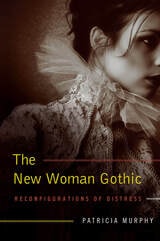
The New Woman Gothic
Reconfigurations of DistressPatricia Murphy
University of Missouri Press, 2026
The controversial and compelling figure of the New Woman in late Victorian fiction has garnered extensive scholarly attention, but rarely has she been investigated through the fascinating lens of the Gothic. Yet the presence of sinister Gothic elements is so widespread in the generally realisitic British novels that the term "New Woman Gothic" readily comes to mind. Drawing from and reworking Gothic conventions of Romantic and later literature, the New Woman version is marshaled during this tumultuous cultural moment of gender anxieties either to defend or revile the complex individual who sought improvements in educational, marital, and professional realms.
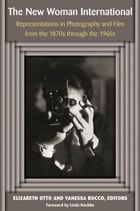
The New Woman International
Representations in Photography and Film from the 1870s through the 1960sElizabeth Otto and Vanessa Rocco, editors
University of Michigan Press, 2012
"In The New Woman International, editors Elizabeth Otto and Vanessa Rocco have gathered a group of intellectually stimulating and provocative essays that present the emergence, both tentative and triumphant, of this new global icon and her increasingly multicultural image. Written largely by historians of art and film, these essays emphasize visual analysis of the photographic and film media that carried the new woman's influential message."
---Norma Broude, American University
"The New Woman International focuses on the New Woman not simply as an image to be analyzed but also as a producer of images and text. This groundbreaking anthology represents a theoretically sophisticated set of essays that thoroughly examine the phenomenon of the New Woman in previously unexplored ways."
---Sarah E. Chinn, Hunter College, CUNY
Images of flappers, garçonnes, Modern Girls, neue Frauen, and trampky---all embodiments of the dashing New Woman---symbolized an expanded public role for women from the suffragist era through the dawn of 1960s feminism. Chronicling nearly a century of global challenges to gender norms, The New Woman International: Representations in Photography and Film from the 1870s through the 1960s is the first book to examine modern femininity's ongoing relationship with the nineteenth and twentieth centuries' most influential new media: photography and film. This volume examines the ways in which novel ideas about women's roles in society and politics were disseminated through these technological media, and it probes the significance of radical changes in female fashion, appearance, and sexual identity. Additionally, these original essays explore the manner in which New Women artists used photography and film to respond creatively to gendered stereotypes and to reconceive of ways of being a woman in a rapidly modernizing world.
The New Woman International brings together different generations of scholars and curators who are experts in gender, photography, literature, mass media, and film to analyze the New Woman from her inception in the later nineteenth century through her full development in the interwar period, and the expansion of her forms in subsequent decades. Arranged both chronologically and thematically, these essays show how controversial female ideals figured in discourses including those on gender norms, race, technology, sexuality, female agency, science, media representation, modernism, commercial culture, internationalism, colonialism, and transnational modernity. In exploring these topics through images that range from montages to newspapers' halftone prints to film stills, this book investigates the terms of gendered representation as a process in which women were as much agents as allegories. Inaugurating a new chapter in the scholarship of representation and New Womanhood and spanning North America, Western and Eastern Europe, Asia, and the colonial contexts of Africa and the Pacific, this volume reveals the ways in which a feminine ideal circled the globe to be translated into numerous visual languages.
With a foreword from the eminent feminist art historian Linda Nochlin, this collection includes contributions by Jan Bardsley, Matthew Biro, Gianna Carotenuto, Melody Davis, Kristine Harris, Karla Huebner, Kristen Lubben, Maria Makela, Elizabeth Otto, Martha H. Patterson, Vanessa Rocco, Clare I. Rogan, Despina Stratigakos, Brett M. Van Hoesen, Kathleen M. Vernon, and Lisa Jaye Young.
DIGITALCULTUREBOOKS: a collaborative imprint of the University of Michigan Press and the University of Michigan Library
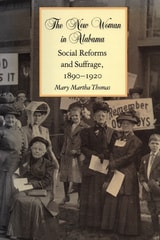
The New Woman in Alabama
Social Reforms and Suffrage, 1890–1920Mary Martha Thomas
University of Alabama Press, 1992
How Alabama women reshaped public life during the Progressive Era.
Between 1890 and 1920, middle-class white and black Alabama women created many clubs and organizations that took them out of the home and provided them with roles in the public sphere. Beginning with the Alabama Woman’s Christian Temperance Union in the 1880s and followed by the Alabama Federation of Women’s Clubs and the Alabama Federation of Colored Women’s Clubs in the 1890s, women spearheaded the drive to eliminate child labor, worked to improve the educational system, upgraded the jails and prisons, and created reform schools for both boys and girls.
Suffrage was also an item on the Progressive agenda. After a brief surge of activity during the 1890s, the suffrage drive lay dormant until 1912, when women created the Alabama Equal Suffrage Association. During their campaigns in the 1915 and 1919 to persuade the legislature to enfranchise women, the leaders learned the art of politics—how to educate, organize, lobby, and count votes. Women seeking validation for their roles as homemakers and mother demanded a hearing in the political arena for issues that affected them and their families. In the process they began to erase the line between the public world of men and the private world of women. These were the New Women who tackled the problems created by the industrialization and urbanization of the New South. By 1920 Alabama women had created new public spaces for themselves in these voluntary associations. As a consequence of their involvement in reform crusades, the women’s club movement, and the campaign for woman suffrage, women were no longer passive and dependent. They were willing and able to be rightful participants.
Thomas’s book is the first of its kind to focus on the reform activities of women during the Progressive Era, and the first to consider the southern woman and all the organizations of middle-class black and white women in the South and particularly in Alabama. It is also the first to explore the drive of Alabama women to obtain the vote. The development of political power among southern women progressed slowly. Demolishing as it did the myth of the “Southern Lady.” Traditionally confined to the domestic sphere, southern women had no experience in public decision making and were discouraged from attaining the skills necessary for participation in public debate. The division of women by race and class further impeded their political education. But through their participation in so-called women’s issues—child labor laws, temperance, and educational reform—women gained experience in influencing political leaders. Black and white women’s clubs provided the framework for state-wide lobbying.
Only in the wake of their success with domestic issues tackled through club organizations and temperance unions did women dare seek the right to vote. They learned how to wield political power through acceptable “ladylike” avenues, and it was this experience that led to their long but eventually successful drive for woman suffrage. The New Woman eventually found a way to replace the Southern Lady.
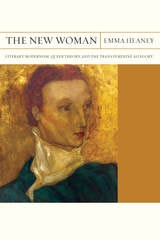
The New Woman
Literary Modernism, Queer Theory, and the Trans Feminine AllegoryEmma Heaney
Northwestern University Press, 2017
The book is the first to identify the process by which medical sources simplified the diversity of trans feminine experience into a single diagnostic narrative. It then demonstrates that this medical figure became an archetype for the "sexual anarchy" of the Modernist period in works by Aldous Huxley, James Joyce, Djuna Barnes, T. S. Eliot, and Jean Genet.
Thus illuminating the trans feminine's Modernist provenance, the book examines foundational works of Queer Theory that resuscitated the trans feminine allegory at the end of the twentieth century. Insightful and seminal, The New Woman debunks the pervasive reflex beginning in the 1990s to connect trans experience to a late twentieth-century collapse of sexual differences by revealing the Modernist roots of that very formulation.
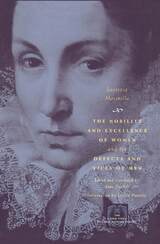
The Nobility and Excellence of Women and the Defects and Vices of Men
Lucrezia Marinella
University of Chicago Press, 1999
Marinella's masterpiece, The Nobility and Excellence of Women, and the Defects and Vices of Men was first published in 1600, composed at a furious pace in answer to Giusepe Passi's diatribe about women's alleged defects. This polemic displays Marinella's vast knowledge of the Italian poetic tradition and demonstrates her ability to argue against authors of the misogynist tradition from Boccaccio to Torquato Tasso. Trying to effect real social change, Marinella argued that morally, intellectually, and in many other ways, women are superior to men.
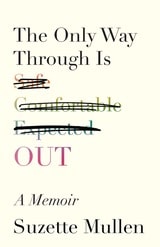
The Only Way Through Is Out
Suzette Mullen
University of Wisconsin Press, 2024
Digging into her past, Suzette uncovered a deeply buried truth: she’d been in love with her best friend—a woman—for nearly two decades—and still was. Leaning into these “unspeakable” feelings would put Suzette’s identity, relationships, and life of privilege at risk—but taking this leap might be her only chance to feel fully alive. As Suzette opened herself up to new possibilities, an unexpected visit to a new city helped her discover who she was meant to be.
Introspective, bittersweet, and empowering, The Only Way Through Is Out is both a coming-out and coming-of-age story, as well as a call to action for every human who is longing to live authentically but is afraid of the cost.
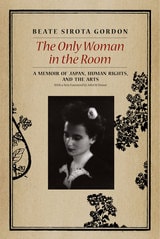
The Only Woman in the Room
A Memoir of Japan, Human Rights, and the ArtsBeate Sirota Gordon
University of Chicago Press, 2014
Sirota was born in Vienna, but in 1929 her family moved to Japan so that her father, a noted pianist, could teach, and she grew up speaking German, English, and Japanese. Russian, French, Italian, Latin, and Hebrew followed, and at fifteen Sirota was sent to complete her education at Mills College in California. The formal declaration of World War II cut Gordon off from her parents, and she supported herself by working for a CBS listening post in San Francisco that would eventually become part of the FCC. Translating was one of Sirota’s many talents, and when the war ended, she was sent to Japan as a language expert to help the American occupation forces. When General MacArthur suddenly created a team that included Sirota to draft the new Japanese Constitution, he gave them just eight days to accomplish the task. Colonel Roest said to Beate Sirota, “You’re a woman, why don’t you write the women’s rights section?”; and she seized the opportunity to write into law guarantees of equality unparalleled in the US Constitution to this day.
But this was only one episode in an extraordinary life, and when Gordon died in December 2012, words of grief and praise poured from artists, humanitarians, and thinkers the world over. Illustrated with forty-seven photographs, The Only Woman in the Room captures two cultures at a critical moment in history and recounts, after a fifty-year silence, a life lived with purpose and courage. This edition contains a new afterword by Nicole A. Gordon and an elegy by Geoffrey Paul Gordon.
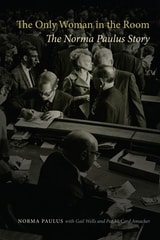
The Only Woman in the Room
The Norma Paulus StoryNorma Paulus
Oregon State University Press, 2017
Paulus came from a family of Roosevelt Democrats, but when a friend campaigned for a Republican seat in the state legislature, she switched parties. As she put it, “The Republicans were in politics for all the right reasons.” Amid the nationwide political upheavals of the late 1960s, Oregon’s Republicans, led by popular governor Tom McCall, seemed to be her kind of people—principled, pragmatic, and committed to education, the environment, and equality for all citizens under the law.
Paulus’s appointment by Governor McCall to the Marion-Polk Boundary Commission in 1969, a precursor to Oregon’s urban growth boundaries, helped launched her on a long and distinguished career of public service. She ran successfully for the Oregon House of Representatives in 1970, the first women to do so in the district. After three terms in the House, where she championed environmental causes, women’s rights and government transparency, she was elected Oregon’s Secretary of State in 1976—the first woman to hold that office and be elected to a statewide office in Oregon. She was the Republican candidate for governor in 1986, served a stint on the Northwest Power and Conservation Council, went on to become Oregon’s superintendent of public instruction, and headed the Oregon Historical Society.
During her years of public service, spanning the 1970s through the early 2000s, Norma Paulus occupied a distinctive niche in Oregon’s progressive political ecosystem. Her vivid personality and strong convictions endeared her to a broad swath of citizens. Beautiful and opinionated, charming and forceful, Paulus was widely covered in statewide and national newspapers and television during her eventful, sometimes controversial career. Now, The Only Woman in the Room sums up her life and work in a lively, anecdotal history that will appeal to historians, political scientists, newshounds, and ordinary citizens alike.
The Origins of the Welfare State
Women, Work, and the French RevolutionLisa DiCaprio
University of Illinois Press, 2005
Women workers and the revolutionary origins of the modern welfare state
In May 1790, the French National Assembly created spinning workshops (ateliers de filature) for thousands of unemployed women in Paris. These ateliers disclose new aspects of the process which transformed Old Regime charity into revolutionary welfare initiatives characterized by secularization, centralization, and entitlements based on citizenship. This study is the first to examine women and the welfare state in its formative period at a time when modern concepts of human rights were elaborated.
In The Origins of the Welfare State, Lisa DiCaprio reveals how the women working in the ateliers, municipal welfare officials, and the national government vied to define the meaning of revolutionary welfare throughout the Revolution. Presenting demands for improved wages and working conditions to a wide array of revolutionary officials, the women workers exercised their rights as "passive citizens" capaciously and shaped the meanings of work, welfare, and citizenship. Looking backward to the Old Regime and forward to the nineteenth century, this study explores the interventionist spirit that characterized liberalism in the eighteenth century and serves as a bridge to the history of entitlements in the nineteenth and twentieth centuries.
The Outcast
A NovelLuigi Pirandello
Rutgers University Press, 2023
The Outcast is an early masterwork from Nobel Prize–winning Italian author Luigi Pirandello that combines elements of Zolaesque naturalism with emerging modernist aesthetics. This fresh English translation, the first in nearly one hundred years, showcases Pirandello’s deft play with language and his use of irony.
This book was translated thanks to a grant awarded by the Italian Ministry of Foreign Affairs and International Cooperation.