Results by title
22279 books match the query 'Social Science' and 4007 start with t
The Meaning of Whitemen
Race and Modernity in the Orokaiva Cultural WorldIra Bashkow
University of Chicago Press, 2006
While Papua New Guinea’s resident white population has been severely reduced due to postcolonial white flight, the whiteman remains a significant racial and cultural other here—not only as an archetype of power and wealth in the modern arena, but also as a foil for people’s evaluations of themselves within vernacular frames of meaning. As Ira Bashkow explains, ideas of self versus other need not always be anti-humanistic or deprecatory, but can be a creative and potentially constructive part of all cultures.
A brilliant analysis of whiteness and race in a non-Western society, The Meaning of Whitemen turns traditional ethnography to the purpose of understanding how others see us.
The Meanings of Age
Selected PapersBernice L. Neugarten
University of Chicago Press, 1996
Carefully edited by Dail Neugarten, each chapter presents the reader with Bernice Neugarten's original formulations on topics such as age norms and age constraints, the changing meanings of age, and age neutral social policy. Including four previously unpublished papers, The Meanings of Age will be of interest to scholars, students, and practitioners of psychology, education, law, medicine, social policy, and gerontology.
The Measure of Manliness
Disability and Masculinity in the Mid-Victorian NovelKaren Bourrier
University of Michigan Press, 2015
The Measurement of Modernism
A Study of Values in Brazil and MexicoBy Joseph A. Kahl
University of Texas Press, 1968
One of the most interesting questions that can be raised about the twentieth century world concerns the degree to which industrialization created a common culture for all peoples. Reported here are the results of an empirical investigation designed to produce instruments to measure those personal values that have been central variables in the theory of modernization of societies.
The purpose of Joseph Kahl’s research is primarily methodological: to advance the description and measurement of those value orientations used by men to organize their occupational careers. It seeks to delineate and measure a set of values that represents a “modern” view of work and life.
The working laboratory was Brazil and Mexico, two countries undergoing rapid industrialization. More than six hundred men in Brazil and more than seven hundred in Mexico responded to questionnaires. In addition, over twenty-five men in each country were asked to sit beside a tape recorder and talk freely of their worldviews. The respondents were divided between inhabitants of the cities of Rio de Janeiro and Mexico City and those who lived in provincial towns of fewer than ten thousand inhabitants. The samples included manual and nonmanual employees.
The results showed that the main variable predicting whether or not a man would tend toward modernism was his social-class position. Middle-class men were much more modern in outlook than working-class men. Residence in a metropolis rather than in a small town also increased modernism, though to a lesser extent. Differences between Brazil and Mexico (and, indeed, the United States) were found to be surprisingly small, of considerably less weight than position in the social structure in predicting value orientations.
The author addresses himself primarily to sociologists and their students who are themselves studying aspects of socio-economic development. His findings, however, cannot fail to be of interest and benefit to social scientists of various disciplines and to all who are concerned with the process of development—planners at the national and local levels, demographers, and businesspeople.

The Measurement of Urban Home Environment
Validation and Standardization of the Minnesota Home Status IndexAlice Leahy
University of Minnesota Press, 1936
The Media Commons
Globalization and Environmental DiscoursesPatrick D Murphy
University of Illinois Press, 2017
The media draws the cultural boundaries of our environmental imagination--and influences just who benefits. Murphy's analysis emphasizes social context, institutional alignments, and commercial media's ways of rendering discussion. He identifies and examines key terms, phrases, and metaphors as well as the ways consumers are presented with ideas like agency and the place of nature. What emerges is the link between pervasive messaging and an "environment" conjured by our media-saturated social imagination. As the author shows, today's complex, integrated media networks shape, frame, and deliver many of our underlying ideas about the environment. Increasingly--and ominously--individuals and communities experience these ideas not only in the developed world but in the increasingly consumption-oriented Global South.
The Media Equation
How People Treat Computers, Television, and New Media Like Real People and PlacesByron Reeves and Clifford Nass
CSLI, 2003
The Media Swirl
Politics, Audiovisuality, and AestheticsCarol Vernallis
Duke University Press, 2023
The Media Welfare State
Nordic Media in the Digital EraTrine Syvertsen, Gunn Enli, Ole J. Mjøs, and Hallvard Moe
University of Michigan Press, 2014
The Media Welfare State: Nordic Media in the Digital Era comprehensively addresses the central dynamics of the digitalization of the media industry in the Nordic countries—Sweden, Norway, Denmark, Finland, and Iceland—and the ways media organizations there are transforming to address the new digital environment. Taking a comparative approach, the authors provide an overview of media institutions, content, use, and policy throughout the region, focusing on the impact of information and communication technology/internet and digitalization on the Nordic media sector. Illustrating the shifting media landscape the authors draw on a wide range of cases, including developments in the press, television, the public service media institutions, and telecommunication.
The Media and Communications Study Skills Student Guide
Doug Specht
University of Westminster Press, 2019
All the tips, ideas and advice given to, and requested by, MA students in Media and Communications, are brought together in an easy-to-use accessible guide to help students study most effectively.
Based upon many years of teaching study skills and hundreds of lecture slides and handouts this introduction covers a range of general and generic skills that the author relates specifically towards media and communications studies. As well as the mechanics of writing and presentations, the book also shows how students can work on and engage with the critical and contemplative elements of their degrees whilst retaining motivation and refining timekeeping skills.
Of course the nuts and bolts of reading, writing, listening, seminars and the dreaded dissertation and essays are covered too. In addition advice on referencing, citation and academic style is offered for those with concerns over English grammar and expression.
Aimed primarily at postgraduate students, there is significant crossover with undergraduate work, so this book will also prove of use to upper level undergraduate readers whether using English as a first or second language.

The Media and the Rwanda Genocide
Edited by Allan Thompson
Pluto Press, 2007
This is the first book to explore both sides of the media equation. Examining how local radio was used as a tool of hate, encouraging neighbors to turn against each other, the book also presents a critique of international media coverage. Bringing together local reporters, high-profile Western journalists, and leading media theorists, this is the only book to identify the extent of the media's accountability. It also examines deliberations by the International Criminal Tribunal for Rwanda on the role of the media in the genocide. This book is a startling record of the negative influence that the media can have. The authors put forward suggestions for the future, outlining how we can avoid censorship and propaganda and they argue for a new responsibility in media reporting.

The Media-Democracy Paradox in Ghana
Rethinking Political Communication in an African ContextWilberforce Sefakor Dzihah
Intellect Books, 2020
This volume focuses on the matrix offered by the media-democracy paradox in Ghana, Africa, and the Global South. As the first black African country south of the Sahara to attain political independence from Great Britain, Ghana is widely acknowledged by the international community as a model of democracy. This book examines the praxis of this democracy and its media, delving into Ghana’s evolvement, media practices, leadership aspirations, pressure group politics, and ideological cleavages.
A rich data source for students, scholars, researchers, and political actors on both the African continent and the diaspora, The Media-Democracy Paradox in Ghana challenges the dominant Western theories of media and democracy, examines the growing influence of social media in political discourse, and provides insightful analysis of debates surrounding political communication and its implications for strengthening democratic culture.
The Medicine Wheel
Environmental Decision-Making Process of Indigenous PeoplesMichael E. Marchand
Michigan State University Press, 2020
The Medieval and Ottoman Hajj Route in Jordan
An Archaeological and Historical StudyA. Petersen
Council for British Research in the Levant, 2012
The Mediterranean Incarnate
Region Formation between Sicily and Tunisia since World War IINaor Ben-Yehoyada
University of Chicago Press, 2017
The book centers on the town of Mazara del Vallo, located on the southwestern tip of Sicily some ninety nautical miles northeast of the African shore. Ben-Yehoyada intertwines the town’s recent turbulent history—which has been fraught with conflicts over fishing rights, development projects, and how the Mediterranean should figure in Italian politics at large—with deep accounts of life aboard the Naumacho, linking ethnography with historical anthropology and political-economic analysis. Through this sophisticated approach, he crafts a new viewpoint on the historical processes of transnational region formation, one offered by these moving ships as they weave together new social and political constellations.
The Megachurch and the Mainline
Remaking Religious Tradition in the Twenty-first CenturyStephen Ellingson
University of Chicago Press, 2007
Religious traditions provide the stories and rituals that define the core values of church members. Yet modern life in America can make those customs seem undesirable, even impractical. As a result, many congregations refashion church traditions so they may remain powerful and salient. How do these transformations occur? How do clergy and worshipers negotiate which aspects should be preserved or discarded?
Focusing on the innovations of several mainline Protestant churches in the San Francisco Bay Area, Stephen Ellingson’s The Megachurch and the Mainline provides new understandings of the transformation of spiritual traditions. For Ellingson, these particular congregations typify a new type of Lutheranism—one which combines the evangelical approaches that are embodied in the growing legion of megachurches with American society’s emphasis on pragmatism and consumerism. Here Ellingson provides vivid descriptions of congregations as they sacrifice hymns in favor of rock music and scrap traditional white robes and stoles for Hawaiian shirts, while also making readers aware of the long history of similar attempts to Americanize the Lutheran tradition.
This is an important examination of a religion in flux—one that speaks to the growing popularity of evangelicalism in America.
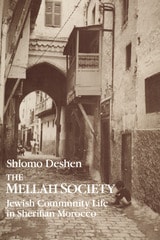
The Mellah Society
Jewish Community Life in Sherifian MoroccoShlomo Deshen
University of Chicago Press, 1989
Shlomo Deshen, author of several books on North African Jewish immigrants to Israel, here turns his attention to the past. Taking as his focus the tension between individualism and communal authority—symbolized by the walls of the mellahs, the Jewish quarters—he applies to traditional Moroccan Jewish society questions of concern to sociologists everywhere regarding political organization, economic activity, religion, and the family.
From such documents as private correspondence, archival photographs, and the legal commentaries of rabbis who served in the Jewish community courts, Deshen draws out details of daily life: disputes between spouses, businessmen, craftsmen, and inheritors; the ramifications of marriage contracts; and claims involving community taxes and extortions by Muslim potentates. Linking this material with recent historical and anthropological studies of the Maghreb, Deshen reconstructs a community about which little has been known and places it squarely within the context of traditional Moroccan society.
Individual chapters deal with relations between Muslims and Jews, the material conditions of Jewish life, and the nature of politics within the mellah. Deshen devotes particular attention to the nature of the Moroccan rabbinate, the sociology of the mellah synagogue, lay community leadership, and the historic role of the Sephardic heritage in Morocco after the expulsion from medieval Spain. His close study of the nature of the extended family in traditional Morocco corrects popular misconceptions.
Originally published in Israel in 1983, now translated and expanded by its author, The Mellah Society draws upon Middle Eastern and Jewish history, textual Judaic studies, and social anthropology to make an original contribution that will interest scholars of the Middle East and North Africa as well as anyone concerned with Jewish history and ethnicity.
The Melting Pot and the Altar
Marital Assimilation in Early Twentieth-Century WisconsinRichard M. Bernard
University of Minnesota Press, 1981
The Melting Pot and the Altar was first published in 1981. Minnesota Archive Editions uses digital technology to make long-unavailable books once again accessible, and are published unaltered from the original University of Minnesota Press editions.
Recent studies of assimilation in nineteenth-century America have focused on the ways in which immigrant groups maintained separate identities rather than on their absorption in American society. In The Melting Pot and the Altar Richard M. Bernard puts to test the theory of the melting pot. He concludes that although cultural and structural pluralism deserves attention so does interaction between the host society and the immigrants
Through extensive quantitative analysis of census reports and marriage records Bernard studies the pattern of intergroup marriage - the ultimate test of assimilation - during a period of massive migration to this country. His research on eleven immigrant groups and the native-born population in Wisconsin suggests that there was considerable intergroup mixing. Moreover, once allowance is made for differing times of arrival, immigration generations, and rural or urban residences, the assimilative patterns of Western and Eastern European groups were remarkably similar. An examination of several factors, such as occupation, age, location, and birthplace of parents, shows that certain demographic and social characteristics rather than any particular ethnic identification increased the likelihood that an individual would marry outside his or her group.
The Melting Pot and the Altar is the first multiple variable analysis of marital assimilation in an entire state whose immigration patterns is similar to that of the nation. Both historians and sociologist will find this work of interest as an example of quantitative methodology and for its new evidence on an important subject.

The Memory Sessions
Suzanne Farrell Smith
Bucknell University Press, 2019
Published by Bucknell University Press. Distributed worldwide by Rutgers University Press.
The Memory of Bones
Body, Being, and Experience among the Classic MayaBy Stephen Houston, David Stuart, and Karl Taube
University of Texas Press, 2006
All of human experience flows from bodies that feel, express emotion, and think about what such experiences mean. But is it possible for us, embodied as we are in a particular time and place, to know how people of long ago thought about the body and its experiences? In this groundbreaking book, three leading experts on the Classic Maya (ca. AD 250 to 850) marshal a vast array of evidence from Maya iconography and hieroglyphic writing, as well as archaeological findings, to argue that the Classic Maya developed a coherent approach to the human body that we can recover and understand today.
The authors open with a cartography of the Maya body, its parts and their meanings, as depicted in imagery and texts. They go on to explore such issues as how the body was replicated in portraiture; how it experienced the world through ingestion, the senses, and the emotions; how the body experienced war and sacrifice and the pain and sexuality that were intimately bound up in these domains; how words, often heaven-sent, could be embodied; and how bodies could be blurred through spirit possession.
From these investigations, the authors convincingly demonstrate that the Maya conceptualized the body in varying roles, as a metaphor of time, as a gendered, sexualized being, in distinct stages of life, as an instrument of honor and dishonor, as a vehicle for communication and consumption, as an exemplification of beauty and ugliness, and as a dancer and song-maker. Their findings open a new avenue for empathetically understanding the ancient Maya as living human beings who experienced the world as we do, through the body.
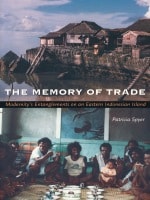
The Memory of Trade
Modernity's Entanglements on an Eastern Indonesian IslandPatricia Spyer
Duke University Press, 2000
Drawing on more than two years of archival and ethnographic research, Spyer examines the dynamics of contact with the Dutch and Europeans, Suharto’s postcolonial regime, and with the competing religions of Islam, Protestantism, and Catholicism in the context of the recent conversion of pagan Aruese. While arguing that Aru identity and community are defined largely in terms of absence, longing, memory, and desire, she also incorporates present-day realities—such as the ecological destruction wrought by the Aru trade in such luxury goods as pearls and shark fins—without overlooking the mystique and ritual surrounding these activities. Imprinted on the one hand by the archipelago’s long engagement with extended networks of commerce and communication and, on the other, by modernity’s characteristic repressions and displacements, Aruese make and manage their lives somewhat precariously within what they often seem to construe as a dangerously expanding—if still enticing—world. By documenting not only the particular expectations and strategies Aruese have developed in dealing with this larger world but also the price they pay for participation therein, The Memory of Trade speaks to problems commonly faced elsewhere in the frontier spaces of modern nation-states.
Balancing particularly astute analysis with classic ethnography, The Memory of Trade will appeal not only to anthropologists and historians but also to students and specialists of Southeast Asia, modernity, and globalization.
The Men's Section
Orthodox Jewish Men in an Egalitarian WorldElana Maryles Sztokman
Brandeis University Press, 2011

The Mena File
Barry Seal's Ties to Drug Lords and U.S. OfficialsMara Leveritt
Butler Center for Arkansas Studies, 2016
Inquiries into Seal’s activities, including some by congressional committees, led nowhere. Many of the police files about him were reported lost; others were almost totally redacted. Nevertheless, hundreds of records have survived regarding this backwater of the Iran-Contra saga, pointing to government complicity in Seal’s shipments of cocaine into the United States and the powerful measures taken to obscure that involvement.
In brisk and meticulously footnoted order, The Mena File guides readers from the airstrip in the mountains of rural Arkansas (where Seal based his operation) to Nicaraguan jungles and then to courtrooms across the American South, culminating in a pivotal meeting in the nation’s capital. Menace lurks throughout the tale and, just as darkly, in the evidence of how law-enforcement agents who labored to bring Seal to justice found themselves undermined—and ultimately betrayed—by elected and appointed officials.
The Menace of Prosperity
New York City and the Struggle for Economic Development, 1865–1981Daniel Wortel-London
University of Chicago Press, 2025
Many local policymakers make decisions based on a deep-seated belief: what’s good for the rich is good for cities. Convinced that local finances depend on attracting wealthy firms and residents, municipal governments lavish public subsidies on their behalf. Whatever form this strategy takes—tax-exempt apartments, corporate incentives, debt-financed mega projects—its rationale remains consistent and assumed to be true. But this wasn’t always the case. Between the 1870s and the 1970s, a wide range of activists, citizens, and intellectuals in New York City connected local fiscal crises to the greed and waste of the rich. These figures saw other routes to development, possibilities rooted in alternate ideas about what was fiscally viable.
In The Menace of Prosperity, Daniel Wortel-London argues that urban economics and politics are shaped by what he terms the “fiscal imagination” of policymakers, activists, advocates, and other figures. His survey of New York City during a period of explosive growth shows how residents went beyond the limits of redistributive liberalism to imagine how their communities could become economically viable without the largesse of the wealthy. Their strategies—which included cooperatives, public housing, land-value taxation, public utilities, and more—centered the needs and capabilities of ordinary residents as the basis for local economies that were both prosperous and just.
Overturning stale axioms about economic policy, The Menace of Prosperity shows that not all growth is productive for cities. Wortel-London’s ambitious history demonstrates the range of options we’ve abandoned and hints at the economic frameworks we could still realize—and the more democratic cities that might result.
The Menace of Prosperity
New York City and the Struggle for Economic Development, 1865–1981Daniel Wortel-London
University of Chicago Press, 2025
Upends entrenched thinking about cities, demonstrating how urban economies are defined—or constrained—by the fiscal imagination of policymakers, activists, and residents.
Many local policymakers make decisions based on a deep-seated belief: what’s good for the rich is good for cities. Convinced that local finances depend on attracting wealthy firms and residents, municipal governments lavish public subsidies on their behalf. Whatever form this strategy takes—tax-exempt apartments, corporate incentives, debt-financed mega projects—its rationale remains consistent and assumed to be true. But this wasn’t always the case. Between the 1870s and the 1970s, a wide range of activists, citizens, and intellectuals in New York City connected local fiscal crises to the greed and waste of the rich. These figures saw other routes to development, possibilities rooted in alternate ideas about what was fiscally viable.
In The Menace of Prosperity, Daniel Wortel-London argues that urban economics and politics are shaped by what he terms the “fiscal imagination” of policymakers, activists, advocates, and other figures. His survey of New York City during a period of explosive growth shows how residents went beyond the limits of redistributive liberalism to imagine how their communities could become economically viable without the largesse of the wealthy. Their strategies—which included cooperatives, public housing, land-value taxation, public utilities, and more—centered the needs and capabilities of ordinary residents as the basis for local economies that were both prosperous and just.
Overturning stale axioms about economic policy, The Menace of Prosperity shows that not all growth is productive for cities. Wortel-London’s ambitious history demonstrates the range of options we’ve abandoned and hints at the economic frameworks we could still realize—and the more democratic cities that might result.
The Menial Art of Cooking
Archaeological Studies of Cooking and Food PreparationSarah R. Graff
University Press of Colorado, 2012
This book examines techniques and technologies of food preparation, the spaces where food was cooked, the relationship between cooking and changes in suprahousehold economies, the religious and symbolic aspects of cooking, the relationship between cooking and social identity, and how examining foodways provides insight into social relations of production, distribution, and consumption. Contributors use a wide variety of evidence-including archaeological data; archival research; analysis of ceramics, fauna, botany, glass artifacts, stone tools, murals, and painted ceramics; ethnographic analogy; and the distribution of artifacts across space-to identify signs of cooking and food processing left by ancient cooks.
The Menial Art of Cooking is the first archaeological volume focused on cooking and food preparation in prehistoric and historic settings around the world and will interest archaeologists, social anthropologists, sociologists, and other scholars studying cooking and food preparation or subsistence.
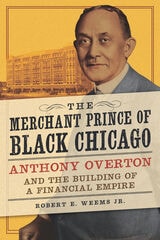
The Merchant Prince of Black Chicago
Anthony Overton and the Building of a Financial EmpireRobert E. Weems Jr.
University of Illinois Press, 2020
Robert E. Weems Jr. restores Overton to his rightful place in American business history. Dispelling stubborn myths, he traces Overton's rise from mentorship by Booker T. Washington, through early failures, to a fateful move to Chicago in 1911. There, Overton started a popular magazine aimed at African American women that helped him dramatically grow his cosmetics firm. Overton went on to become the first African American to head a major business conglomerate, only to lose significant parts of his businesses—and his public persona as ”the merchant prince of his race”—in the Depression, before rebounding once again in the early 1940s.
Revealing and panoramic, The Merchant Prince of Black Chicago weaves the fascinating life story of an African American trailblazer through the eventful history of his times.

The Merchant of Prato's Wife
Margherita Datini and Her World, 1360-1423Ann Crabb
University of Michigan Press, 2015
The Merits of Women
Wherein Is Revealed Their Nobility and Their Superiority to MenModerata Fonte
University of Chicago Press, 2018
Without help from their wives, men are just like unlit lamps . . .
Just think of them as an unreliable clock that tells you it’s ten o’clock when it’s in fact barely two . . .
A man without a woman is like a fly without a head . . .
These are but a small selection of the quips bandied about at this lively gathering of women. The broad topic at hand is the relative pros and cons of men, and the cases in point range from pick-up artists to locker-room talk, and from double standards to fragile masculinity.
Yet this dialogue unfolds not among ironically misandrist millenials venting at their local dive bar, but rather among sixteenth-century women—variously married, widowed, single, and betrothed—attending a respectable Venice garden party. Written in the early 1590s by Moderata Fonte, pseudonym of the Renaissance poet and writer Modesta Pozzo, this literary dialogue interrogates men and men’s treatment of women, and explores by contrast the virtues of singledom and female friendship. As the women diverge from their theme—discussing everything from astrology to the curative powers of plants and minerals—a remarkable group portrait of wisdom, wit, and erudition emerges.
A new introduction by translator Virginia Cox and foreword by Dacia Maraini situate The Merits of Women in its historical context, written as it was on the cusp of Shakespeare’s heyday, and straddling the centuries between the feminist works of Christine de Pizan and Mary Wollstonecraft. Elegantly presented for a general audience, this is a must-read for baby feminists and “nasty women” alike, not to mention the perfect subtle gift for any mansplaining friend who needs a refresher on the merits of women . . . and their superiority to men.
The Mertiyo Rathors of Merto, Rajasthan
Select Translations Bearing on the History of a Rajput Family, 1462–1660, Volumes 1–2Richard Saran and Norman P. Ziegler, translators and annotators
University of Michigan Press, 2001
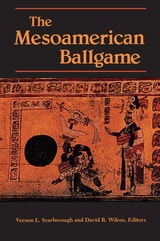
The Mesoamerican Ballgame
Edited by Vernon L. Scarborough and David R. Wilcox
University of Arizona Press, 1991
The Message Is Murder
Substrates of Computational CapitalJonathan Beller
Pluto Press, 2017
The Metanarrative of Blindness
A Re-reading of Twentieth-Century Anglophone WritingDavid Bolt
University of Michigan Press, 2013
Although the theme of blindness occurs frequently in literature, literary criticism has rarely engaged the experiential knowledge of people with visual impairments. The Metanarrative of Blindness counters this trend by bringing to readings of twentieth-century works in English a perspective appreciative of impairment and disability. Author David Bolt examines representations of blindness in more than forty literary works, including writing by Kipling, Joyce, Synge, Orwell, H. G. Wells, Susan Sontag, and Stephen King, shedding light on the deficiencies of these representations and sometimes revealing an uncomfortable resonance with the Anglo-American science of eugenics.
What connects these seemingly disparate works is what Bolt calls “the metanarrative of blindness,” a narrative steeped in mythology and with deep roots in Western culture. Bolt examines literary representations of blindness using the analytical tools of disability studies in both the humanities and social sciences. His readings are also broadly appreciative of personal, social, and cultural aspects of disability, with the aim of bringing literary scholars to the growing discipline of disability studies, and vice versa. This interdisciplinary monograph is relevant to people working in literary studies, disability studies, psychology, sociology, applied linguistics, life writing, and cultural studies, as well as those with a general interest in education and representations of blindness.
The Metaphysics of Media
Toward an End of Postmodern Cynicism and the Construction of a Virtuous RealityPeter K. Fallon
University of Scranton Press, 2009
In The Metaphysics of Media, award-winning media critic Peter K. Fallon tackles the complicated question of how a succession of dominant forms of media have supported—and even to some extent created—different conceptions of reality. To do so, he starts with the basics: a critical discussion of the very idea of objective reality and the various postmodern responses that have tended to dominate recent philosophical approaches to the subject. From there, he embarks on a survey of the evolution of communication through four major eras: orality; literacy; print; and electricity.
Within each era, Fallon argues, the dominant form of media supported particular ways of understanding the world, from the ascendance of reason that followed the development of alphabets to the obliteration of space and time that we associate with electronic communications. Fallon concludes with a hard look at the mass ignorance that prevails today despite (or perhaps because of) the sea of information with which contemporary life is surrounded.
A stirring, philosophically rich investigation, The Metaphysics of Media offers not only a clear picture of where our society has been but also a road map to a more engaged, informed, and fully human future.
The Methamphetamine Industry in America
Transnational Cartels and Local EntrepreneursBrownstein, Henry H
Rutgers University Press, 2016
The Methamphetamine Industry in America describes the reality that the methamphetamine industry is a social phenomenon connecting local, national, and international communities and markets. The book details the results of a groundbreaking three-stage study, part of a joint initiative of the National Institute on Drug Abuse and the National Institute of Justice, in which police agencies across the United States were surveyed and their responses used to identify likely areas of study. The authors then visited these areas to observe and interview local participants, from users and dealers to law enforcement officers and clinical treatment workers.
Through the eyes and words of these participants, the book tells the story of the evolution of methamphetamine markets in the United States over the past several years, given changes in public policies and practices and changing public opinion about methamphetamine. The authors look closely at how the markets are part of a larger industry, how they are socially organized, and how they operate. They also consider the relationships among the people involved and those around them, and the national, regional, and local culture of the markets. Their work demonstrates the importance of understanding the business of methamphetamine—and by extension other drugs in society—through a lens that focuses on social behavior, social relationships, and the cultural elements that shape the organization and operation of this illicit but effective industry.
The Mexican American Experience in Texas
Citizenship, Segregation, and the Struggle for EqualityBy Martha Menchaca
University of Texas Press, 2022
A historical overview of Mexican Americans' social and economic experiences in Texas
For hundreds of years, Mexican Americans in Texas have fought against political oppression and exclusion—in courtrooms, in schools, at the ballot box, and beyond. Through a detailed exploration of this long battle for equality, this book illuminates critical moments of both struggle and triumph in the Mexican American experience.
Martha Menchaca begins with the Spanish settlement of Texas, exploring how Mexican Americans’ racial heritage limited their incorporation into society after the territory’s annexation. She then illustrates their political struggles in the nineteenth century as they tried to assert their legal rights of citizenship and retain possession of their land, and goes on to explore their fight, in the twentieth century, against educational segregation, jury exclusion, and housing covenants. It was only in 1967, she shows, that the collective pressure placed on the state government by Mexican American and African American activists led to the beginning of desegregation. Menchaca concludes with a look at the crucial roles that Mexican Americans have played in national politics, education, philanthropy, and culture, while acknowledging the important work remaining to be done in the struggle for equality.
The Mexican American Orquesta
Music, Culture, and the Dialectic of ConflictBy Manuel Peña
University of Texas Press, 1999
The Mexican American orquesta is neither a Mexican nor an American music. Relying on both the Mexican orquesta and the American dance band for repertorial and stylistic cues, it forges a synthesis of the two. The ensemble emerges historically as a powerful artistic vehicle for the expression of what Manuel Peña calls the "dialectic of conflict." Grounded in ethnic and class conflict, this dialectic compels the orquesta and its upwardly mobile advocates to waver between acculturation and ethnic resistance. The musical result: a complex mesh of cultural elements—Mexican and American, working- and middle-class, traditional and contemporary.
In this book, Manuel Peña traces the evolution of the orquesta in the Southwest from its beginnings in the nineteenth century through its pinnacle in the 1970s and its decline since the 1980s. Drawing on fifteen years of field research, he embeds the development of the orquesta within a historical-materialist matrix to achieve the optimal balance between description and interpretation. Rich in ethnographic detail and boldly analytical, his book is the first in-depth study of this important but neglected field of artistic culture.
The Mexican Aristocracy
An Expressive Ethnography, 1910–2000By Hugo G. Nutini
University of Texas Press, 2004
The Mexican aristocracy today is simultaneously an anachronism and a testimony to the persistence of social institutions. Shut out from political power by the democratization movements of the twentieth century, stripped of the basis of its great wealth by land reforms in the 1930s, the aristocracy nonetheless maintains a strong sense of group identity through the deeply held belief that their ancestors were the architects and rulers of Mexico for nearly four hundred years.
This expressive ethnography describes the transformation of the Mexican aristocracy from the onset of the Mexican Revolution of 1910, when the aristocracy was unquestionably Mexico's highest-ranking social class, until the end of the twentieth century, when it had almost ceased to function as a superordinate social group. Drawing on extensive interviews with group members, Nutini maps out the expressive aspects of aristocratic culture in such areas as perceptions of class and race, city and country living, education and professional occupations, political participation, religion, kinship, marriage and divorce, and social ranking. His findings explain why social elites persist even when they have lost their status as ruling and political classes and also illuminate the relationship between the aristocracy and Mexico's new political and economic plutocracy.
The Mexican Border Cities
Landscape Anatomy and Place PersonalityDaniel D. Arreola and James R. Curtis
University of Arizona Press, 1993
The Mexican Border Cities draws on extensive field research to examine eighteen settlements along the 2,000-mile border, ranging from towns of less than 10,000 people to dynamic metropolises of nearly a million. The authors chronicle the cities' growth and compare their urban structure, analyzing them in terms of tourist districts, commercial landscapes, residential areas, and industrial and transportation quarters.
Arreola and Curtis contend that, despite their proximity to the United States, the border cities are fundamentally Mexican places, as distinguished by their cultural landscapes, including town plan, land-use pattern, and building fabric. Their study, richly illustrated with over 75 maps and photographs, offers a provocative and insightful interpretation of the geographic anatomy and personality of these fascinating—and rapidly changing—communities.
The Mexican Dream
Or, The Interrupted Thought of Amerindian CivilizationsJ. M. G. Le Clézio
University of Chicago Press, 1993
Winner of the 2008 Nobel Prize for Literature, J. M. G. Le Clézio here conjures the consciousness of Mexico, powerfully evoking the dreams that made and unmade an ancient culture. Le Clézio’s haunting book takes us into the dream that was the religion of the Aztecs, a religion whose own apocalyptic visions anticipated the coming of the Spanish conquerors. Here the dream of the conquistadores rises before us, too, the glimmering idea of gold drawing Europe into the Mexican dream. Against the religion and thought of the Aztecs and the Tarascans and the Europeans in Mexico, Le Clézio also shows us those of the “barbarians” of the north, the nomadic Indians beyond the pale of the Aztec frontier.
Finally, Le Clézio’s book is a dream of the present, a meditation on what in Amerindian civilizations—in their language, in their way of telling tales, of wanting to survive their own destruction—moved the poet, playwright, and actor Antonin Artaud and motivates Le Clézio in this book. His own deep identification with pre-Columbian cultures, whose faith told them the wheel of time would bring their gods and their beliefs back to them, finds fitting expression in this extraordinary book, which brings the dream around.
“We are lucky to have in Le Clézio a writer of great quality who brings his particular sensibility and talent here to remind us of the very nature of the rituals and myths of the civilizations of ancient Mexico; he provides us with descriptions as precise as they are mysterious.”—Le Figaro
The Mexican Mahjar
Transnational Maronites, Jews, and Arabs under the French MandateBy Camila Pastor
University of Texas Press, 2017
Winner, Khayrallah Migration Studies Prize, Moise Khayrallah Center for Lebanese Diaspora Studies, 2018
Migration from the Middle East brought hundreds of thousands of people to the Americas in the late nineteenth and early twentieth centuries. By the time the Ottoman political system collapsed in 1918, over a third of the population of the Mashriq, i.e. the Levant, had made the transatlantic journey. This intense mobility was interrupted by World War I but resumed in the 1920s and continued through the late 1940s under the French Mandate. Many migrants returned to their homelands, but the rest concentrated in Brazil, Argentina, the United States, Haiti, and Mexico, building transnational lives.
The Mexican Mahjar provides the first global history of Middle Eastern migrations to Mexico. Making unprecedented use of French colonial archives and historical ethnography, Camila Pastor examines how French colonial control over Syria and Lebanon affected the migrants. Tracing issues of class, race, and gender through the decades of increased immigration to Mexico and looking at the narratives created by the Mahjaris (migrants) themselves in both their old and new homes, Pastor sheds new light on the creation of transnational networks at the intersection of Arab, French, and Mexican colonial modernisms. Revealing how migrants experienced mobility as conquest, diaspora, exile, or pilgrimage, The Mexican Mahjar tracks global history on an intimate scale.
The Mexican Outsiders
A Community History of Marginalization and Discrimination in CaliforniaBy Martha Menchaca
University of Texas Press, 1995
People of Mexican descent and Anglo Americans have lived together in the U.S. Southwest for over a hundred years, yet relations between them remain strained, as shown by recent controversies over social services for undocumented aliens in California. In this study, covering the Spanish colonial period to the present day, Martha Menchaca delves deeply into interethnic relations in Santa Paula, California, to document how the residential, social, and school segregation of Mexican-origin people became institutionalized in a representative California town.
Menchaca lived in Santa Paula during the 1980s, and interviews with residents add a vivid human dimension to her book. She argues that social segregation in Santa Paula has evolved into a system of social apartness—that is, a cultural system controlled by Anglo Americans that designates the proper times and places where Mexican-origin people can socially interact with Anglos.
This first historical ethnographic case study of a Mexican-origin community will be important reading across a spectrum of disciplines, including anthropology, sociology, race and ethnicity, Latino studies, and American culture.
The Mexican Revolution in Chicago
Immigration Politics from the Early Twentieth Century to the Cold WarJohn H Flores
University of Illinois Press, 2018
The Mexican Transpacific
Nikkei Writing, Visual Arts, and PerformanceIgnacio López-Calvo
Vanderbilt University Press, 2022
This book, a continuation of author Ignacio López-Calvo’s previous research on cultural production by Latin American authors of Asian ancestry, focuses mostly on literature, theater, and visual arts produced by Japanese immigrants in Mexico and their descendants, rather than on the Japanese community as a mere object of study. With this interdisciplinary project, López-Calvo aims to bring to the fore this silenced community’s voice and agency to historicize its own experience.
The Mexican Urban Household
Organizing for Self-DefenseBy Henry A. Selby, Arthur D. Murphy, and Stephen A. Lorenzen
University of Texas Press, 1990
The sufferings of “ordinary” people under harsh economic conditions can eventually lead to the fall of governments. Given this fact, it becomes important to know how “ordinary” people live—what privations they suffer and what strategies they use to survive in times of economic crisis. The Mexican Urban Household provides this information for Mexico near the end of the twentieth century.
Mexico is now a predominantly urban nation, and this study is the definitive work on the strategies of self-defense of its urban households. It is based on surveys of nearly 10,000 households, conducted during twenty years of field work in five very different cities, with the help of a staff of more than twenty Mexican social scientists, engineers, architects, and social workers.
Far from being a compilation of undigested statistics, however, The Mexican Urban Household uses its rich data to vividly reveal how Mexican families use their every resource to defend themselves against a political and economic system that overwhelms and exploits them. It describes how families band together, sometimes with three generations in one small house, to minimize expenses and pool resources. It explores the limited range of available jobs, from secure but scarce bureaucratic positions to more common and less reliable jobs in blue-collar industries and the informal economy. And, most important, it traces the high cost to families, particularly to women, of the endless struggle to make ends meet.
These important findings outline the dimensions of the economic crisis for ordinary Mexicans. It will be crucial reading not only for everyone interested in the future of Mexico but also for students of development throughout the Third World.
The Micmac Indians of Eastern Canada
Wilson D. Wallis and Ruth Sawtell Wallis
University of Minnesota Press, 1955
The Micmac Indians of Eastern Canada was first published in 1955. Minnesota Archive Editions uses digital technology to make long-unavailable books once again accessible, and are published unaltered from the original University of Minnesota Press editions.
The culture of an Indian tribe over a period of 300 years is described in this comprehensive ethnographic study by a husband and wife anthropologist team. The earliest accounts of the Micmac Indians were written by seventeenth-century French explorers and missionaries. These give historical perspective to the work done by the Wallises, whose research is based on field trips that bridged a 40-years span. Dr. Wallis first observed the Micmac tribes in 1911–12. He and Mrs. Wallis revisited them in 1950 and 1953, assessing the changes in material cultural and in orientation, drives, and motivations. In addition, they have preserved a rich collection of Micmac folktales and traditions, published as a separate section of the book.
The Middle East Remembered
Forged Identities, Competing Narratives, Contested SpacesJacob Lassner
University of Michigan Press, 2000
In the first of the book's three parts, Lassner examines what he calls the stratigraphy of the text--he makes sense of the unusual organization of medieval Islamic narrative. The second section investigates issues such as work on city planning and on the creation of imperial centers. The last portion studies the interplay between Jewish and Muslim memory and the trading of themes and ideas between the cultures.
Shorter studies in the volume have been revised, and the author weaves new and complementary essays around them. Earlier work has been transformed and made more available to the general public. The style is accessible, and technical and arcane usages have been kept to a minimum. Throughout there are flashes of the author's wry humor.
Jacob Lassner is Philip M. and Ethel Klutsnick Professor of Jewish Civilization, Northwestern University, and Professor of Middle East History, Tel Aviv University.
The Middle Works of John Dewey, Volume 1, 1899 - 1924
Journal Articles, Book Reviews, and Miscellany Published in the 1899-1901 Period, and The School and Society, and The Educational SituationJohn Dewey. Edited by Jo Ann Boydston
Southern Illinois University Press, 2008
Includes the complete text of The School and Society and The Educational Situation.
The Middle Works of John Dewey, Volume 10, 1899 - 1924
Journal Articles, Essays, and Miscellany Published in the 1916-1917 PeriodJohn Dewey. Edited by Jo Ann Boydston
Southern Illinois University Press, 2008
The Middle Works of John Dewey, Volume 11, 1899 - 1924
Journal Articles, Essays, and Miscellany Published in the 1918-1919 PeriodJohn Dewey. Edited by Jo Ann Boydston
Southern Illinois University Press, 2008
Volume 11 brings together all of Dewey’s writings for 1918 and 1919. A Modern Language Association Committee on Scholarly Editions textual edition.
Dewey’s dominant theme in these pages is war and its aftermath. In the Introduction, Oscar and Lilian Handlin discuss his philosophy within the historical context: “The First World War slowly ground to its costly conclusion; and the immensely more difficult task of making peace got painfully under way. The armistice that some expected would permit a return to normalcy opened instead upon a period of turbulence that agitated further a society already unsettled by preparations for battle and by debilitating conflict overseas.”
After spending the first half of 1918–19 on sabbatical from Columbia at the University of California, Dewey traveled to Japan and China, where he lectured, toured, and assessed in his essays the relationship between the two nations. From Peking he reported the student revolt known as the May Fourth Movement. The forty items in this volume also include an analysis of Thomas Hobbe’s philosophy; an affectionate commemorative tribute to Theodore Roosevelt, “our Teddy”; the syllabus for Dewey’s lectures at the Imperial University in Tokyo, which were later revised and published as Reconstruction in Philosophy; an exchange with former disciple Randolph Bourne about F. Matthias Alexander’s Man’sSupreme Inheritance; and, central to Dewey’s creed, “Philosophy and Democracy.” His involvement in a study of the Polish-American community in Philadelphia—resulting in an article, two memoranda, and a lengthy report—is discussed in detail in the Introduction and in the Note on the “Confidential Report of Conditions among the Poles in the United States.”