Results by title
22279 books match the query 'Social Science' and 4007 start with t

The Philosophy of Vegetarianism
Daniel A. Dombrowski
University of Massachusetts Press, 1984
Daniel A. Dombrowski uses the tools and insights of these contemporary debates in order to better understand the strengths and weaknesses of ancient philosophical vegetarianism. He also uses the wisdom of the Greek vegetarians as an Archimedean point from which to critique both the opponents and the defenders of contemporary philosophical vegetarianism. The book includes an annotated bibliography of the current debates in this burgeoning field of scholarship.
The Phoenix Mosque and the Persians of Medieval Hangzhou
Edited by George Lane
Gingko, 2018
The Phonology of Arizona Yaqui with Texts
Lynne S. Crumrine
University of Arizona Press, 1961
The Physician's Hand
Work Culture and Conflict in American NursingBarbara Melosh
Temple University Press, 1982
This book recasts nursing history and places it in the context of women’s history, labor history, medical history, and sociology. Removed from the limited framework of professionalization, nursing history can provide a fresh perspective on broader issues in social history. First, it offers an illuminating example of the ways in which gender informs work and, conversely. How work reproduces and transforms relationships of power and inequality.
Second, the experience of nurses adds a new dimension to our understanding of work. More than a study of professionalization, nursing history is the story of women workers’ experience in a rationalizing service industry. Like other workers, nurses faced a fundamental reorganization of work that changed the content and experience of nursing. But unlike many others, they did not suffer a dilution of skill. The book also explores the shifting configurations of social relations on the job and their implications for nurses’ work.
Third, nurses’ history provides a useful standpoint for analyzing the possibilities and limitations of women’s work.
Finally, nursing history alerts us to the complexities of working women’s consciousness, countering the common notion of women’s passivity in the workplace.
The Physician’s Hand traces nursing history from the twenties to the seventies. It begins just after World War I when the "trained nurse" had gained a secure place in medical care but not yet found a niche in the hospital. Most worked in private duty. Chapter 1 outlines the theoretical framework of professionalization. Chapter 2 examines the history and culture of hospital schools, and the following chapters focus on the changing structure and experience of nursing in its three major settings: private duty nursing, public health care, and hospital work. The conclusion weighs the competing traditions of professionalization and occupational culture in nurses’ history and their meaning for the current crisis in nursing.

The Picara
From Hera to Fantasy HeroineAnne K. Kaler
University of Wisconsin Press, 1991
The Pink Guitar
Writing as Feminist PracticeRachel Blau DuPlessis
University of Alabama Press, 2006

The Piracy Crusade
How the Music Industry's War on Sharing Destroys Markets and Erodes Civil LibertiesAram Sinnreich
University of Massachusetts Press, 2013
In the decade and a half since Napster first emerged, forever changing the face of digital culture, the claim that “internet pirates killed the music industry” has become so ubiquitous that it is treated as common knowledge. Piracy is a scourge on legitimate businesses and hard-working artists, we are told, a “cybercrime” similar to identity fraud or even terrorism.
In The Piracy Crusade, Aram Sinnreich critiques the notion of “piracy” as a myth perpetuated by today's cultural cartels—the handful of companies that dominate the film, software, and especially music industries. As digital networks have permeated our social environment, they have offered vast numbers of people the opportunity to experiment with innovative cultural and entrepreneurial ideas predicated on the belief that information should be shared widely. This has left the media cartels, whose power has historically resided in their ability to restrict the flow of cultural information, with difficult choices: adapt to this new environment, fight the changes tooth and nail, or accept obsolescence. Their decision to fight has resulted in ever stronger copyright laws and the aggressive pursuit of accused infringers.
Yet the most dangerous legacy of this “piracy crusade” is not the damage inflicted on promising start-ups or on well-intentioned civilians caught in the crosshairs of file-sharing litigation. Far more troubling, Sinnreich argues, are the broader implications of copyright laws and global treaties that sacrifice free speech and privacy in the name of combating the phantom of piracy—policies that threaten to undermine the foundations of democratic society.
The Place of Law
Austin Sarat, Lawrence Douglas, and Martha Merrill Umphrey, Editors
University of Michigan Press, 2003

The Places Where Men Pray Together
Cities in Islamic Lands, Seventh through the Tenth CenturiesPaul Wheatley
University of Chicago Press, 2001
Building on the tenth-century geographer al-Maqdisi's writings on urban centers of the Islamic world, buttressed by extensive comparative material from roadbooks, topographies, histories, adab literatures, and gazetteers of the time, Wheatley identifies the main functions of different Islamic urban centers. Chapters on each of the thirteen centers that al-Maqdisi identified, ranging from the Atlantic to the Indus and from the Caspian to the Sudan, form the heart of this book. In each case Wheatley shows how specific agglomeration and accessibility factors combined to make every city functionally distinct as a creator of effective space. He also demonstrates that, far from revolutionizing every aspect of life in these cities, the adoption of Islam often affected the development of these cities less than previously existing local traditions.
The Places Where Men Pray Together is a monumental work that will speak to scholars and readers across a broad variety of disciplines, from historians, anthropologists, and sociologists to religious historians, archaeologists, and geographers.
The Platform Economy
How Japan Transformed the Consumer InternetMarc Steinberg
University of Minnesota Press, 2019
Offering a deeper understanding of today’s internet media and the management theory behind it
Platforms are everywhere. From social media to chat, streaming, credit cards, and even bookstores, it seems like almost everything can be described as a platform. In The Platform Economy, Marc Steinberg argues that the “platformization” of capitalism has transformed everything, and it is imperative that we have a historically precise, robust understanding of this widespread concept.
Taking Japan as the key site for global platformization, Steinberg delves into that nation’s unique technological and managerial trajectory, in the process systematically examining every facet of the elusive word platform. Among the untold stories revealed here is that of the 1999 iPhone precursor, the i-mode: the world’s first widespread mobile internet platform, which became a blueprint for Apple and Google’s later dominance of the mobile market. Steinberg also charts the rise of social gaming giants GREE and Mobage, chat tools KakaoTalk, WeChat, and LINE, and video streaming site Niconico Video, as well as the development of platform theory in Japan, as part of a wider transformation of managerial theory to account for platforms as mediators of cultural life.
Analyzing platforms’ immense impact on contemporary media such as video streaming, music, and gaming, The Platform Economy fills in neglected parts of the platform story. In narrating the rise and fall of Japanese platforms, and the enduring legacy of Japanese platform theory, this book sheds light on contemporary tech titans like Facebook, Google, Apple, and Netflix, and their platform-mediated transformation of contemporary life—it is essential reading for anyone wanting to understand what capitalism is today and where it is headed.
The Play in the System
The Art of Parasitical ResistanceAnna Watkins Fisher
Duke University Press, 2020
The Play of Mirrors
The Representation of Self Mirrored in the OtherBy Sylvia Caiuby Novaes
University of Texas Press, 1997
Focusing on the Bororo people of west-central Brazil, this book addresses the construction of self-identity through interethnic interaction. By presenting the images the Bororo have of themselves as well as the images of others who have interacted with them, Brazilian anthropologist Sylvia Caiuby Novaes argues convincingly that Bororo self-images are constructed with the aid of a peculiar looking-glass—it is in the images of others that they see themselves.
Incorporating contributions from psychology, psychoanalysis, linguistics, and semiotics, Play of Mirrors focuses on symbols, images, discourse, and meanings rather than solely on the problem of acculturation. It thus reflects the thinking of a new generation of Brazilian anthropologists who have shifted their focus from native communities as isolated entities to an examination of their embeddedness within broader national and international arenas.
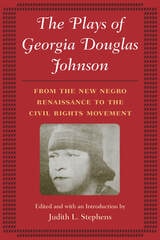
The Plays of Georgia Douglas Johnson
From the New Negro Renaissance to the Civil Rights MovementEdited and with an Introduction by Judith L. Stephens
University of Illinois Press, 2006
Recovering the stage work of one of America's finest black female writers
This volume collects twelve of Georgia Douglas Johnson's one-act plays, including two never-before-published scripts found in the Library of Congress. As an integral part of Washington, D.C.'s, thriving turn-of-the-century literary scene, Johnson hosted regular meetings with Harlem Renaissance writers and other artists, including Countee Cullen, Langston Hughes, May Miller, and Jean Toomer, and was herself considered among the finest writers of the time. Johnson also worked for U.S. government agencies and actively supported women's and minorities' rights.
As a leading authority on Johnson, Judith L. Stephens provides a brief overview of Johnson's career and significance as a playwright; sections on the creative environment in which she worked; her S Street Salon; "The Saturday Nighters," and its significance to the New Negro Theatre; selected photographs; and a discussion of Johnson's genres, themes, and artistic techniques.
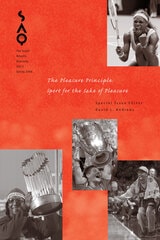
The Pleasure Principle
Sport for the Sake of Pleasure, Volume 105David L. Andrews, ed.
Duke University Press, 0
Ranging from the humorous to the ironic, from the personal to the theoretical, and from sports as dissimilar as baseball and rugby, gambling and karate, this issue explains fandom itself and explores the intersections of sport and politics, sport and class, and sport and identity. One timely essay addresses the use of Native American imagery and nicknames and the recent NCAA ban on these references. Another classifies gambling as a popular American sport, one that in 2003 attracted three times as many attendees as all Major League Baseball franchises combined. Another essay delves into the history of the golfing mecca of Pinehurst, North Carolina, discussing the resort’s roots in the age of Jim Crow. Among the other topics addressed in this issue are how soccer fandom and commodity culture can be one and the same; why Liverpool’s 2005 victory in the European Champion’s League proves that God is red; and why the Olympic Games can represent performative nationalism.
Contributors. David L. Andrews, Amy Bass, Norman K. Denzin, Grant Farred, Keya Ganguly, John Hartley, Jane Juffer, Liz Moor, Jeffrey T. Nealon, Annie Paul, George Ritzer, Jim Shepard, Orin Starn, Kenneth Surin
The Pleasures of Exile
George Lamming
University of Michigan Press, 1992
Through a series of interrelated essays, The Pleasures of Exile explores the cultural politics and relationships created in the crucible of colonization. Drawing on Shakespeare’s The Tempest and C. L. R. James’s The Black Jacobins, as well as his own fiction and poetry, Lamming deftly locates the reader in a specific intellectual and cultural domain while conjuring a rich and varied spectrum of physical, intellectual, psychological, and cultural responses to colonialism. “My subject,” he writes, “is the migration of the West Indian writer, as colonial and exile, from his native kingdom, once inhabited by Caliban, to the tempestuous island of Prospero’s and his language. This book is a report on one man’s way of seeing.”

The Poco Field
An American Story of PlaceTalmage A. Stanley
University of Illinois Press, 2012

The Poem Electric
Technology and the American LyricSeth Perlow
University of Minnesota Press, 2018
An enlightening examination of the relationship between poetry and the information technologies increasingly used to read and write it
Many poets and their readers believe poetry helps us escape straightforward, logical ways of thinking. But what happens when poems confront the extraordinarily rational information technologies that are everywhere in the academy, not to mention everyday life?
Examining a broad array of electronics—including the radio, telephone, tape recorder, Cold War–era computers, and modern-day web browsers—Seth Perlow considers how these technologies transform poems that we don’t normally consider “digital.” From fetishistic attachments to digital images of Emily Dickinson’s manuscripts to Jackson Mac Low’s appropriation of a huge book of random numbers originally used to design thermonuclear weapons, these investigations take Perlow through a revealingly eclectic array of work, offering both exciting new voices and reevaluations of poets we thought we knew.
With close readings of Gertrude Stein, Frank O’Hara, Amiri Baraka, and many others, The Poem Electric constructs a distinctive lineage of experimental writers, from the 1860s to today. Ultimately, Perlow mounts an important investigation into how electronic media allows us to distinguish poetic thought from rationalism. Posing a necessary challenge to the privilege of information in the digital humanities, The Poem Electric develops new ways of reading poetry, alongside and against the electronic equipment that is now ubiquitous in our world.

The Poem in the Story
Music, Poetry, and NarrativeHarold Scheub
University of Wisconsin Press, 2002
Fact and fiction meet at the boundaries, the betwixt and between where transformations occur. This is the area of ambiguity where fiction and fact become endowed with meaning, and this is the area—where ambiguity, irony, and metaphor join forces—that Harold Scheub exposes in all its nuanced and evocative complexity in The Poem in the Story.
In a career devoted to exploring the art of the African storyteller, Scheub has conducted some of the most interesting and provocative investigations into nonverbal aspects of storytelling, the complex relationship between artist and audience, and, most dramatically, the role played by poetry in storytelling. This book is his most daring effort yet, an unconventional work that searches out what makes a story artistically engaging and emotionally evocative, the metaphorical center that Scheub calls "the poem in the story." Drawing on extensive fieldwork in southern Africa and decades of experience as a researcher and teacher, Scheub develops an original approach—a blend of field notes, diary entries, photographs, and texts of stories and poems—that guides readers into a new way of viewing, even experiencing, meaning in a story. Though this work is largely focused on African storytelling, its universal applications emerge when Scheub brings the work of storytellers as different as Shakespeare and Faulkner into the discussion.
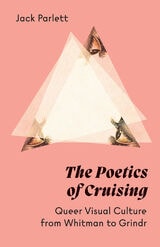
The Poetics of Cruising
Queer Visual Culture from Whitman to GrindrJack Parlett
University of Minnesota Press, 2022
The Poetics of Cruising explores the relationship between cruising, photography, and the visual in the work of leading poets, from Walt Whitman in the nineteenth century to Eileen Myles in the twenty-first. What is it that happens, asks Jack Parlett, and what is it that is sought, in this often transient moment of perception we call cruising, this perceptual arena where acts of looking between strangers are intensified and eroticized? Parlett believes that this moment is not only optical in nature but visual: a mode of looking that warrants comparison with the ways in which we behold still and moving images.
Whether it’s Whitman’s fixation with daguerreotypes, Langston Hughes’s hybrid photographic works, or Frank O’Hara’s love of Hollywood movie stars, argues Parlett, the history of poets cruising abounds with this intermingling between the verbal and the visual, the passing and the fixed. To look at someone in the act of cruising, this history suggests, is to capture, consider, and aestheticize, amid the flux and instantaneity of urban time. But it is also to reveal the ambivalence at the heart of this erotic search, where power may be unevenly distributed across glances, and gendered and racialized bodies are marked. Thus, in identifying for the first time this confluence of cruising, poetry, and visual culture, Parlett concludes that the visual erotic economy associated with gay cruising today, exemplified by the photographic grid of an app like Grindr, is not a uniquely contemporary phenomenon.
Innovative, astute, and highly readable, and drawing on compelling archival material, The Poetics of Cruising is a must for scholars of queer and LGBTQ literature and culture, modern and contemporary poetry, visual studies, and the history of sexuality.
The Poetics of Difference
Queer Feminist Forms in the African DiasporaMecca Jamilah Sullivan
University of Illinois Press, 2021
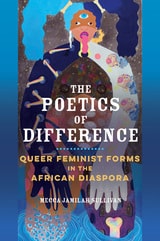
From Audre Lorde, Ntozake Shange, and Bessie Head, to Zanele Muholi, Suzan-Lori Parks, and Missy Elliott, Black women writers and artists across the African Diaspora have developed nuanced and complex creative forms. Mecca Jamilah Sullivan ventures into the unexplored spaces of black women’s queer creative theorizing to learn its languages and read the textures of its forms. Moving beyond fixed notions, Sullivan points to a space of queer imagination where black women invent new languages, spaces, and genres to speak the many names of difference. Black women’s literary cultures have long theorized the complexities surrounding nation and class, the indeterminacy of gender and race, and the multiple meanings of sexuality. Yet their ideas and work remain obscure in the face of indifference from Western scholarship.
Innovative and timely, The Poetics of Difference illuminates understudied queer contours of black women’s writing.
The Poison in the Gift
Ritual, Prestation, and the Dominant Caste in a North Indian VillageGloria Goodwin Raheja
University of Chicago Press, 1988
The Policing Machine
Enforcement, Endorsements, and the Illusion of Public InputTony Cheng
University of Chicago Press, 2024
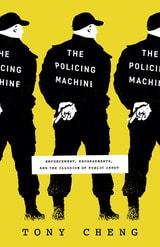
The past few years have seen Americans express passionate demands for police transformation. But even as discussion of no-knock warrants, chokeholds, and body cameras has exploded, any changes to police procedures have only led to the same outcomes. Despite calls for increased accountability, police departments have successfully stonewalled change.
In The Policing Machine, Tony Cheng reveals the stages of that resistance, offering a close look at the deep engagement strategies that NYPD precincts have developed with only subsets of the community in order to counter any truly meaningful, democratic oversight. Cheng spent nearly two years in an unprecedented effort to understand the who and how of police-community relationship building in New York City, documenting the many ways the police strategically distributed power and privilege within the community to increase their own public legitimacy without sacrificing their organizational independence. By setting up community councils that are conveniently run by police allies, handing out favors to local churches that will promote the police to their parishioners, and offering additional support to institutions friendly to the police, the NYPD, like police departments all over the country, cultivates political capital through a strategic politics that involves distributing public resources, offering regulatory leniency, and deploying coercive force. The fundamental challenge with police-community relationships, Cheng shows, is not to build them. It is that they already exist and are motivated by a machinery designed to stymie reform.
The Policing Machine
Enforcement, Endorsements, and the Illusion of Public InputTony Cheng
University of Chicago Press, 2024
A revelatory look at how the NYPD has resisted change through strategic and selective community engagement.
The past few years have seen Americans express passionate demands for police transformation. But even as discussion of no-knock warrants, chokeholds, and body cameras has exploded, any changes to police procedures have only led to the same outcomes. Despite calls for increased accountability, police departments have successfully stonewalled change.
In The Policing Machine, Tony Cheng reveals the stages of that resistance, offering a close look at the deep engagement strategies that NYPD precincts have developed with only subsets of the community in order to counter any truly meaningful, democratic oversight. Cheng spent nearly two years in an unprecedented effort to understand the who and how of police-community relationship building in New York City, documenting the many ways the police strategically distributed power and privilege within the community to increase their own public legitimacy without sacrificing their organizational independence. By setting up community councils that are conveniently run by police allies, handing out favors to local churches that will promote the police to their parishioners, and offering additional support to institutions friendly to the police, the NYPD, like police departments all over the country, cultivates political capital through a strategic politics that involves distributing public resources, offering regulatory leniency, and deploying coercive force. The fundamental challenge with police-community relationships, Cheng shows, is not to build them. It is that they already exist and are motivated by a machinery designed to stymie reform.

The Polish Hearst
Ameryka-Echo and the Public Role of the Immigrant PressAnna D. Jaroszynska-Kirchmann
University of Illinois Press, 2015
Anna D. Jaroszyńska-Kirchmann mines seven decades' worth of thoughts expressed by Ameryka-Echo readers to chronicle the ethnic press's role in the immigrant experience. Open and unedited debate harkened back to homegrown journalistic traditions, and Jaroszyńska-Kirchmann opens up the nuances of an editorial philosophy that cultivated readers as content creators. As she shows, ethnic publications in the process forged immigrant social networks and pushed notions of education and self-improvement throughout Polonia. Paryski, meanwhile, built a publishing empire that earned him the nickname ""The Polish Hearst.""
Detailed and incisive, The Polish Hearst opens the door on the long-overlooked world of ethnic publishing and the amazing life of one of its towering figures.

The Polish Peasant in Europe and America
A CLASSIC WORK IN IMMIGRATION HISTORYWilliam I. Thomas and Florian Znaniecki
University of Illinois Press, 1984

The Political Arrays of American Indian Literary History
James H. Cox
University of Minnesota Press, 2019
Bringing fresh insight to a century of writing by Native Americans
The Political Arrays of American Indian Literary History challenges conventional views of the past one hundred years of Native American writing, bringing Native American Renaissance and post-Renaissance writers into conversation with their predecessors. Addressing the political positions such writers have adopted, explored, and debated in their work, James H. Cox counters what he considers a “flattening” of the politics of American Indian literary expression and sets forth a new method of reading Native literature in a vexingly politicized context.
Examining both canonical and lesser-known writers, Cox proposes that scholars approach these texts as “political arrays”: confounding but also generative collisions of conservative, moderate, and progressive ideas that together constitute the rich political landscape of American Indian literary history. Reviewing a broad range of genres including journalism, short fiction, drama, screenplays, personal letters, and detective fiction—by Lynn Riggs, Will Rogers, Sherman Alexie, Thomas King, Leslie Marmon Silko, Louise Erdrich, Winona LaDuke, Carole laFavor, and N. Scott Momaday—he demonstrates that Native texts resist efforts to be read as advocating a particular set of politics
Meticulously researched, The Political Arrays of American Indian Literary History represents a compelling case for reconceptualizing the Native American Renaissance as a literary–historical constellation. By focusing on post-1968 Native writers and texts, argues Cox, critics have often missed how earlier writers were similarly entangled, hopeful, frustrated, contradictory, and unpredictable in their political engagements.
The Political Centrist
John Lawrence Hill
Vanderbilt University Press, 2009
Centrists reject each of these fragmented and polarized approaches to politics. We believe that government has a role to play in structuring social and economic opportunities and in reinforcing basic moral norms, yet we are deeply troubled by ever-expanding government. We reject libertarianism, left-liberalism, and the various schools of conservatism as a model for government.
Part I of The Political Centrist briefly traces the trajectory of the liberal and conservative traditions. It argues that modern liberalism is an unprincipled fusion of classical liberal and socialist ideals while modern conservatism is an untenable hybrid of economic liberalism and social conservatism. Part II offers a centrist approach to many of the most contentious contemporary political and social issues. Those include:
-- abortion
-- affirmative action
-- the death penalty
-- gay marriage
-- illegal immigration
-- judicial activism
-- the relationship of religion and politics
-- the role of government in the economy

The Political Consequences of Motherhood
Jill S. Greenlee
University of Michigan Press, 2015
From civically and politically engaged women linking their identity as “mothers” to their fight for prohibition, public sanitation, and protective labor laws to the general call to arms of “mama grizzlies” issued by Sarah Palin in 2010, American political activists and candidates have used motherhood to rally women’s interest, support, and participation throughout American history. Politicized motherhood persists, and motherhood continues to inspire women’s participation and direct their concerns.
In The Political Consequences of Motherhood, Jill S. Greenlee investigates the complex relationship between motherhood and women’s political attitudes. Combining a historical overview of the ways motherhood has been used for political purposes with recent political opinion surveys and individual-level analysis, she explains how and when motherhood shapes women’s thoughts and preferences. Greenlee argues that two mechanisms account for the durability of motherhood politics. First, women experience attitudinal shifts when they become mothers. Second, “mother” is a broad-based identity, widely shared and ideologically unconstrained, that lends itself to appeals across the political spectrum to build support for candidates and policy issues.
The Political Ecology of Education
Brazil's Landless Workers' Movement and the Politics of KnowledgeDavid Meek
West Virginia University Press, 2020
The Political Ecology of Education examines the opportunities for and constraints on advancing food sovereignty in the 17 de Abril settlement, a community born out of a massacre of landless Brazilian workers in 1996. Based on immersive fieldwork over the course of seven years, David Meek makes the provocative argument that critical forms of food systems education are integral to agrarian social movements’ survival. While the need for critical approaches is especially immediate in the Amazon, Meek’s study speaks to the burgeoning attention to food systems education at various educational levels worldwide, from primary to postgraduate programs. His book calls us to rethink the politics of the possible within these pedagogies.

The Political Economy of Development
The World Bank, Neoliberalism and Development ResearchEdited by Kate Bayliss, Ben Fine, and Elisa Van Waeyenberge
Pluto Press, 2011
Any student, academic or practitioner wanting to succeed in development studies, radical or mainstream, must understand the World Bank's role and the evolution of its thinking and activities. The Political Economy of Development provides tools for gaining this understanding and applies them across a range of topics.
The research, practice and scholarship of development are always set against the backdrop of the World Bank, whose formidable presence shapes both development practice and thinking. This book brings together academics that specialise in different subject areas of development and reviews their findings in the context of the World Bank as knowledge bank, policy-maker and financial institution. The volume offers a compelling contribution to our understanding of development studies and of development itself.
The Political Economy of Development is an invaluable critical resource for students, policy-makers and activists in development studies.
The Political Economy of Global Communication
An IntroductionPeter Wilkin
Pluto Press, 2001
To what extent do developments in global communication enhance or undermine autonomy? As the world's media companies continue to merge, we are moving towards an ever more commercially driven system of global information. Wilkin argues that private ownership provides an increasingly powerful obstacle to human autonomy, and that the neo-liberal institutional and policy framework – now a global tendency – raises major problems for the attainment of human security. At the same time it has provided the ideological justification for the extension of private power into ever wider areas of public life. Changes in global communication reflect wider tendencies to enhance the power of global elites at the expense of working people and the author illustrates how and why these changes have taken place and the forms of opposition that have arisen in response to them.
The Political Economy of NGOs
State Formation in Sri Lanka and BangladeshJude L. Fernando
Pluto Press, 2011
Jude L. Fernando explores the paradoxical relationship between NGOs and capitalism, showing that supposedly progressive organisations often promote essentially the same policies and ideas as existing governments.
The book examines how a diverse group of NGOs have shaped state formation in Bangladesh and Sri Lanka. It argues that, rather than influencing state formation for the better, NGOs have been integrated into the capitalist system and their language adopted to give traditional exploitative social relations a transformative appearance.
This enlightening study will give pause to those who see NGOs as drivers of true social change and will encourage students of development studies to make a deeper analysis of state formation.
The Political Economy of Stigma
HIV, Memoir, Medicine, and Crip PositionalitiesAlly Day
The Ohio State University Press, 2021
In The Political Economy of Stigma, Ally Day offers a compelling critique of neoliberal medical practices in the US by coupling an analysis of HIV memoir with a critical examination of narrative medicine practice. Using insights from feminist disability studies and crip theory, Day argues that stories of illness and disability—such as HIV memoirs—operate within a political economy of stigma, which she defines as the formal and informal circulation of personal illness and disability narratives that benefits some while hindering others. On the one hand, this system decreases access to appropriate medical care for those with chronic conditions by producing narratives of personal illness that frame one’s relationship to structural inequality as a result of personal failure. On the other hand, the political economy of stigma rewards those who procure such narratives and circulate them for public consumption.
The political economy of stigma is theorized from three primary research sites: a reading group with women living with HIV, a reading group with AIDS service workers, and participant observation research and critical close reading of practices in narrative medicine. Ultimately, it is the women living with HIV who provide an alternative way to understand disability and illness narratives, a practice of differential reading that can challenge stigmatizing tropes and reconceptualize the creation, reception, and circulation of patient memoir.
The Political Force of Musical Beauty
Barry Shank
Duke University Press, 2014
The Political Geographies of Pregnancy
Laura R. Woliver
University of Illinois Press, 2002
A searing study of how modern reproductive politics shapes women's bodily agency
Pregnancy indisputably takes place within a woman's body. But as reproductive power finds its way into the hands of medical professionals, lobbyists, and policymakers, the geographies of pregnancy are shifting, and the boundaries need to be redrawn, argues Laura R. Woliver. The Political Geographies of Pregnancy is a vigorous analysis of the ways modern reproductive politics are shaped by long-standing debates on abortion and adoption, surrogacy arrangements, new reproductive technologies, medical surveillance, and the mapping of the human genome.
Across a politically charged backdrop of reproductive issues, Woliver exposes strategies that claim to uphold the best interests of children, families, and women but in reality complicate women's struggles to have control over their own bodies. Utilizing feminist standpoint theory and promoting a feminist ethic of care, Woliver looks at abortion politics, modern adoption laws that cater to male-headed families, regulations that allow the state to monitor pregnant women but not always provide care for them, and the power structures behind the seemingly benign world of egg-selling and surrogate parenting. She also considers the potentially staggering political implications of mapping the human genome, and the exclusion of women's perspectives in discussions about legislation and advancements in reproductive technologies.
The Political Integration of Women
Roles, Socialization, and PoliticsVirginia Sapiro
University of Illinois Press, 1983
The Political Mapping of Cyberspace
Jeremy W. Crampton
University of Chicago Press, 2003
Using concepts and methods derived from the work of Michel Foucault, Crampton outlines a new mapping of cyberspace to help define the role of space in virtual worlds and to provide constructive ways in which humans can exist in another spatial dimension. He delineates the critical role maps play in constructing the medium as an object of knowledge and demonstrates that by processes of mapping we come to understand cyberspace. Maps, he argues, shape political thinking about cyberspace, and he deploys in-depth case studies of crime mapping, security maintenance, and geo-surveillance to show how we map ourselves onto cyberspace, inexorably, and indelibly.
Offering a powerful reinterpretation of technology and contemporary life, this innovative book will be an essential touchstone for the study of cartography and cyberspace in the twenty-first century.
The Political Use of Racial Narratives
School Desegregation in Mobile, Alabama, 1954-97Richard A. Pride
University of Illinois Press, 2002
Exploring who benefits and who pays when different narratives are accepted as true, Pride offers a step-by-step account of how Mobile's culture changed each time a new and more forceful narrative was used to justify inequality. More than a retelling of Mobile's story of desegregation, The Political Use of Racial Narratives promotes the value of rhetorical and narrative analysis in the social sciences and history.

The Political and Social Theory of Max Weber
Collected EssaysWolfgang J. Mommsen
University of Chicago Press, 1989
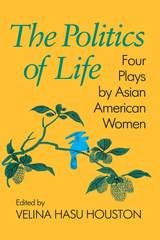
The Politics Of Life
edited by Velina Hasu Houston
Temple University Press, 1993
This anthology of work by three Asian American women playwrights—Wakako Yamauchi, Genny Lim, and Velina Hasu Houston—features pioneering contemporary writers who have made their mark in regional and ethnic theatres throughout the United States. In her introduction, Houston observes that the Asian American woman playwright is compelled "to mine her soul" and express the angst, fear, and rage that oppression has wrought while maintaining her relationship with America as a good citizen.
The plays are rich with cultural and political substance and have a feminist concern about women's spirit, intellect, and lives. They portray Asian and Asian American women who challenge the cultural and sexual stereotypes of the Asian female. Yamauchi's two plays deal with how easily a country can dishonor its citizens. In "12-1-A," a Japanese American family is incarcerated during World War II in an Arizona camp where Yamauchi herself was interned. "The Chairman's Wife" dramatizes the life of Madame Mao Tse Tung through the lens of events at Tien An Men Square in 1989. Lim's "Bitter Cane" is about the exploitation of Chinese laborers who were recruited to work the Hawaiian sugar cane plantations. In "Asa Ga Kimashita" ("Morning Has Broken"), Houston explores a Japanese woman's interracial romance in postwar Japan and the influence of traditional patriarchy on the lives of Japanese women.
These plays will entertain and enlighten, enrage and profoundly move audiences. With honesty, imagination and courage, each grapples with the politics of life.
In the series Asian American History and Culture, edited by Sucheng Chan, David Palumbo-Liu, Michael Omi, K. Scott Wong, and Linda Trinh Võ.
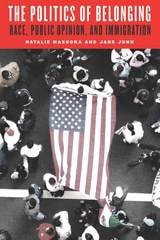
The Politics of Belonging
Race, Public Opinion, and ImmigrationNatalie Masuoka and Jane Junn
University of Chicago Press, 2013
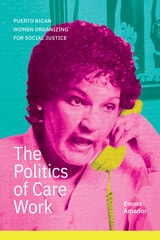
The Politics of Care Work
Puerto Rican Women Organizing for Social JusticeEmma Amador
Duke University Press, 2025

The Politics of Common Reading
Vernacular Knowledge and Everyday Technics in China, 1894–1954Joan Judge
University of Chicago Press, 2025
Examines the transformation of vernacular knowledge during a pivotal period of modern Chinese history, 1894 to 1954.
What did common readers read in the midst of the revolutions that punctuated China’s long Republic (1894–1954)? How did they manage the often-unprecedented challenges of the era? What did they know and how did they know it?
In The Politics of Common Reading, Joan Judge traces the unfolding of a consequential politics of accommodation that engaged commoners as knowers rather than as an unenlightened mass. A response to the institutional failures of the era, this politics was enacted through an informal knowledge infrastructure comprised of low-budget publishers, rustic bookstalls, and a piecemeal national network. As yet unstudied, this infrastructure produced and circulated up to ten times the number of books as official, mainstream channels.
A corpus of some five hundred of these cheap collections of recipes and techniques serves as the basis for this book. Judge focuses on four challenges common readers faced: how to cure an opium addiction, avoid an electric shock, prevent a cholera infection, and graft a plant. She further draws on government, archival, periodical, and fiction materials in devising composites of individual common readers so that we can better know them: details of the crises they faced, the remedies they tried, and the knowledge they relied on as they decocted cures and applied technologies. She argues that the acts of conciliation and assemblage these readers engaged in shaped the broader epistemic terrain from which historical change was actualized in China’s century of revolution.
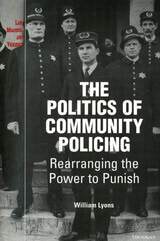
The Politics of Community Policing
Rearranging the Power to PunishWilliam Lyons
University of Michigan Press, 2002
The Politics of Corruption
Organized Crime in an American CityJohn A. Gardiner
Russell Sage Foundation, 1970
The Politics of Courtly Dancing in Early Modern England
Skiles Howard
University of Massachusetts Press, 1998
Skiles Howard examines the social and semiotic complexities of dancing as it changed over time and performed different work in court, city, and playhouse. She shows how dancing reflected and shaped wider social changes: the performance of gender roles facilitated the formation of the patriarchal family, the execution of physical tropes of hierarchy supported the rise of a centralized state, and rehearsals of spatial mastery assisted the project of national expansion. As a visual and kinetic discourse by which social norms were circulated, dancing inevitably became a site of contestation; as elite and popular practices collided, interacted, and were transformed, countervailing social forces found expression through the medium of dancing.
Interdisciplinary in its approach, this study draws on court masque and popular drama, dancing manuals, Puritan pamphlets, and educational and medical treatises to explore issues of power and the body, gender and rank, popular culture and European expansion.
The Politics of Culture in the Shadow of Capital
Lisa Lowe and David Lloyd, eds.
Duke University Press, 1997
Reworking Marxist critique, these essays on Asia, Latin America, the Caribbean, North America, and Europe advance a new understanding of "cultural politics" within the context of transnational neocolonial capitalism. This perspective contributes to an overall critique of traditional approaches to modernity, development, and linear liberal narratives of culture, history, and democratic institutions. It also frames a set of alternative social practices that allows for connections to be made between feminist politics among immigrant women in Britain, women of color in the United States, and Muslim women in Iran, Egypt, Pakistan, and Canada; the work of subaltern studies in India, the Philippines, and Mexico; and antiracist social movements in North and South America, the Caribbean, and Europe. These connections displace modes of opposition traditionally defined in relation to the modern state and enable a rethinking of political practice in the era of global capitalism.
Contributors. Tani E. Barlow, Nandi Bhatia, Dipesh Chakrabarty, Chungmoo Choi, Clara Connolly, Angela Davis, Arturo Escobar, Grant Farred, Homa Hoodfar, Reynaldo C. Ileto, George Lipsitz, David Lloyd, Lisa Lowe, Martin F. Manalansan IV, Aihwa Ong, Pragna Patel, José Rabasa, Maria Josefina Saldaña-Portillo, Jaqueline Urla
The Politics of Custom
Chiefship, Capital, and the State in Contemporary AfricaEdited by John L. Comaroff and Jean Comaroff
University of Chicago Press, 2018
This pathbreaking volume, edited by anthropologists John L. Comaroff and Jean Comaroff, explores the reasons behind the increasingly assertive politics of custom in many corners of Africa. Chiefs come in countless guises—from university professors through cosmopolitan businessmen to subsistence farmers–but, whatever else they do, they are a critical key to understanding the tenacious hold that “traditional” authority enjoys in the late modern world. Together the contributors explore this counterintuitive chapter in Africa’s history and, in so doing, place it within the broader world-making processes of the twenty-first century.
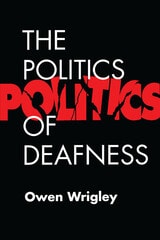
The Politics of Deafness
Owen Wrigley
Gallaudet University Press, 1997
The Politics of Deafness embarks upon a post-modern examination of the search for identity in deafness and its relationship to the prevalent hearing culture that has marginalized Deaf people. Author Owen Wrigley plainly states his intention to disrupt “normal” thought about the popularly considered condition of deafness as a physical deficiency. From his decade of experience working and living in the Deaf community in Thailand, he uses wide-ranging examples to go beyond disputing conventional theorists for their interpretation of deafness as the lack of a sensory function. By calling attention to the different lingual potential created by the instant visual expression of cyberspace, he explodes orthodox conceptualization of the nature of language as serially ordered and dependent upon sound.
In bold style, this provocative work poses the relationship of the bodies physical and mental of Deaf people as subject to a form of “colonialism” by the dominant Hearing culture. It proceeds to expose and attack presumptions and practices that derive from and descend upon deaf bodies. Related analysis also addresses tensions little noted in the current literature on deafness and on the popular move to reconstitute Deafness as a global culture.
Through displacement of logistical anchors, ironic stances, and disconcerting perspectives, The Politics of Deafness practices a form of de-naturalization to demand space within and between the normalizing frames of daily lives. By doing so, it offers an insightful and intriguing perspective on the meanings of Deafness, the politics of Deaf identity, and what it costs to be “unusual.”

The Politics of Decolonial Investigations
Walter D. Mignolo
Duke University Press, 2021