Results by title
3576 books match the query 'American' and 770 start with t
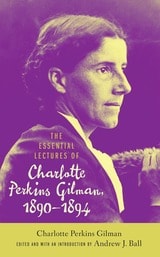
The Essential Lectures of Charlotte Perkins Gilman, 1890–1894
Charlotte Perkins Gilman Edited and with an introduction by Andrew J. Ball
University of Alabama Press, 2024
A foundational archive of Gilman’s early feminist, sociological, and philosophical thought, revealing the origins of a major American intellectual tradition.
The last decades have seen a resurgence of interest in Charlotte Perkins Gilman, now considered among the most important thinkers in US history. She is best known for fiction—such as the classic short story “The Yellow Wall-Paper” (1892)—and nonfiction, including her manifesto Women and Economics (1898), a work of intersectional sociology avant la lettre. Nevertheless, as a young writer, Gilman made her living delivering lectures. One cannot know Gilman without some knowledge of this body of lectures; this book fills that critical gap in Gilman scholarship.
Since the recovery of Charlotte Perkins Gilman began in the late 1960s and continued with the republication of “The Yellow Wall-Paper” in the 1970s, her image in cultural memory has been increasingly celebrated. Andrew J. Ball presents here fifty previously unpublished texts. They trace the development of Gilman’s thoughts on diverse subjects like gender, education, labor, science, theology, and politics—forming an intellectual diary of her growth.
These lectures are not just a testament to Gilman’s personal evolution, but also a crucial contribution to the foundations of American sociology and philosophy. The Essential Lectures of Charlotte Perkins Gilman, 1890–1894 marks a historic moment, unveiling the hidden genius of Gilman's oratory legacy.
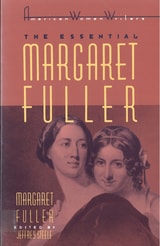
The Essential Margaret Fuller by Margaret Fuller
Steele, Jeffrey
Rutgers University Press, 1992
The leading feminist intellectual of her day, Margaret Fuller has been remembered for her groundbreaking work, Woman in the Nineteenth Century, which recharted the gender roles of nineteenth-century men and women. In this new collection, the full range of her literary career is represented from her earliest poetry to her final dispatch from revolutionary Italy. For the first time, the complete texts of Woman in the Nineteenth Century and Summer on the Lakes are printed together, along with generous selections from Fuller's Dial essays, New York essays, Italian dispatches, and unpublished journals. Special features are the complete text of Fuller's famous "Autobiographical Romance" (never before reprinted in its entirety) and nineteen of her poems, edited from her manuscripts. All of Fuller's major texts are completely annotated, with special attention to her literary and historical sources, as well as her knowledge of American Indian culture, mythology, and the Bible
Jeffrey Steele's introduction provides an important revision of Fuller's biography and literary career, tracing the growth of her feminism and her development into one of America's preeminent social critics. No other writer of Fuller's day could match the range of her experience. Growing up in the world of Boston intellectuals, she was the close friend of the Alcotts, Emerson, Hawthorne, and Thoreau. But she also traveled adventurously to the western frontier, canoed down rapids with Chippewa Indians, visited the outcast and the poor in New York's institutions and prisons, and experienced the rigors of war during the bombardment of Rome. As a whole, this anthology provides the material to understand one of the most fascinating nineteenth-century American women writers.
The Essential Paul Laffoley
Works from the Boston Visionary CellPaul Laffoley
University of Chicago Press, 2016
Living and working in a tiny space in Boston he called the “Boston Visionary Cell,” Laffoley became best known for his large mandala-like paintings filled with symbols and texts. Their titles range from the paranormal and arcane, such as The Ectoplasmic Man and The Sexuality of Robots, to the organic, as with Das Urpflanze Haus, to the erudite, including De Rerum Natura, a reference to the Roman poet Lucretius. Whether focused on working with plants to create living architecture or centered on the process of alchemy, these detailed, brilliantly colored works reflect Laffoley’s utopian hopes and transdisciplinary interests: throughout, he aimed to unite the boundless freedom of human imagination with the mathematical precision of the physical world.
Nearly one hundred of Laffoley’s works are showcased here along with his accompanying “thought-forms,” texts specific to each painting that comment on its particular content. Together with an introduction by editor and gallerist Douglas Walla, a biography by fellow artist Steven Moskowitz, and essays by scholars Linda Dalrymple Henderson and Arielle Saiber, this book is a long-awaited celebration of the theories, writings, and artworks of an extraordinary mind.
The Ethics of Intensity in American Fiction
By Anthony Channell Hilfer
University of Texas Press, 1981
Drawing upon the philosophical theories of William James, Dewey, and Mead and focusing upon major works by Whitman, Stein, Howells, Dreiser, and Henry James, Anthony Hilfer explores how these authors have structured their characters' consciousness, their purpose in doing so, and how this presentation controls the reader's moral response.
Hilfer contends that there was a significant change in the mode of character presentation in American literature of the late nineteenth and early twentieth centuries. The self defined in terms of a Victorian ethic and judged adversely for its departures from that code shifted to the self defined in terms of emotional intensity and judged adversely for its failures of nerve. In the first mode, characters are almost always wrong to yield to desire; in the second, characters are frequently wrong not to and, in fact, are seen less as the sum of their ethical choices than as the process of their longings.
His conclusion: modern fiction is as overbalanced toward pathos as Victorian fiction was toward ethos. but the continued dialectic between the two is a tension that ought not be resolved.

The Example of Edward Taylor
Karl Keller
University of Massachusetts Press, 1975
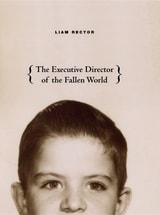
The Executive Director of the Fallen World
Liam Rector
University of Chicago Press, 2006
The Worry of the Far Right
The Reverend Donald Wildmon, executive director
Of the American Family Association in Tupelo,
Mississippi, birthplace of Elvis Presley, he who
Unleashed the libido of a generation, announced today
That he, the Reverend, wanted again an America
In which he could drive his convertible into town,
Park it, leave his keys in the ignition,
And worry only that it might rain,
Rather than worry about Liam Rector.
America—you are on notice. Liam Rector has little patience for “sincere” poetry, spin-doctored politicos, or moral hot air of any kind. The titles of these poems could easily serve as their own warning labels: those with clinical depression or easily triggered violent tendencies should use with caution.
The Executive Director of the Fallen World is fearless and forthright, just the sort of blunt reality check that is missing from so much of contemporary, over-stylized poetry. Rector’s stoicism and slightly murderous sense of humor pervade these poems as he doffs his hat to humility and audacity, taking on America, money, movement, marriages, and general cultural mayhem. The characters and voices in Rector’s poems are, by tragic turns, unflinching, clearly and cleanly bitter, sarcastically East Coast, and lyrical. Writing in tercets throughout, the poet breathes new life into this classic form with skill that might just send some unsuspecting readers over the edge.
As the former executive director of the Association of Writers and Writing Programs and a spirited First Amendment advocate who has sparred on screen with Bill O’Reilly, Liam Rector knows whereof he speaks in The Executive Director of the Fallen World.

The Explosive Expert's Wife
Shara Lessley
University of Wisconsin Press, 2018
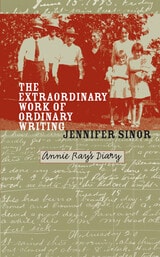
The Extraordinary Work of Ordinary Writing
Annie Ray's DiaryJennifer Sinor
University of Iowa Press, 2002
Exciting and beautifully crafted, The Extraordinary Work of Ordinary Writing provides an entirely new way of viewing “ordinary writing,” the everyday writing we typically ignore or dismiss. It takes as its center the diary of Jennifer Sinor's great-great-great-aunt Annie Ray, a woman who homesteaded in the Dakotas in the late nineteenth century. Diaries such as this have long been ignored by scholars, who prefer instead to focus on diaries with literary features. Reading diaries through this lens gives privileged status to those that are coherently crafted and ignores the very diaries that define the form through their relentless inscription of dailiness.
Annie Ray’s diary is not literary. By considering her ordinary writing as a site of complex and strategic negotiations among the writer, the form of writing, and dominant cultural scripts, Sinor makes visible the extraordinary work of the ordinary writer and the sophistication of these texts. In providing a way to read diaries outside the limits and conventions of literature, she challenges our approaches to other texts as well. Furthermore, because ordinary writing is not crafted for aesthetic reception (in contrast to autobiography proper, memoirs, and literary diaries), it is a productive site for investigating how both writing and culture get made every day.
The book is truly original in its form: nontraditional, storied, creative. Sinor, an accomplished creative writer, includes her own memories as extended metaphors in partnership with critical texts along with excerpts from her aunt's diary. The Extraordinary Work of Ordinary Writing will be a fascinating text for students of creative writing as well as of women's studies and diaries.
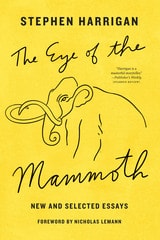
The Eye of the Mammoth
New and Selected EssaysBy Stephen Harrigan; foreword by Nicholas Lemann
University of Texas Press, 2013
History—natural history, human history, and personal history—and place are the cornerstones of The Eye of the Mammoth. Stephen Harrigan's career has taken him from the Alaska Highway to the Chihuahuan Desert, from the casinos of Monaco to his ancestors' village in the Czech Republic. And now, in this new edition, he movingly recounts in "Off Course" a quest to learn all he can about his father, who died in a plane crash six months before he was born.
Harrigan's deceptively straightforward voice belies an intense curiosity about things that, by his own admission, may be "unknowable." Certainly, we are limited in what we can know about the inner life of George Washington, the last days of Davy Crockett, the motives of a caged tiger, or a father we never met, but Harrigan's gift—a gift that has also made him an award-winning novelist—is to bring readers closer to such things, to make them less remote, just as a cave painting in the title essay eerily transmits the living stare of a long-extinct mammoth.
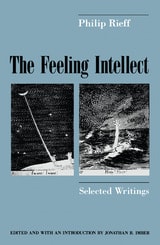
The Feeling Intellect
Selected WritingsPhilip Rieff
University of Chicago Press, 1989
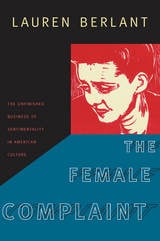
The Female Complaint
The Unfinished Business of Sentimentality in American CultureLauren Berlant
Duke University Press, 2008
Pairing literary criticism and historical analysis, Berlant explores the territory of this intimate public sphere through close readings of U.S. women’s literary works and their stage and film adaptations. Her interpretation of Uncle Tom’s Cabin and its literary descendants reaches from Harriet Beecher Stowe to Toni Morrison’s Beloved, touching on Shirley Temple, James Baldwin, and The Bridges of Madison County along the way. Berlant illuminates different permutations of the women’s intimate public through her readings of Edna Ferber’s Show Boat; Fannie Hurst’s Imitation of Life; Olive Higgins Prouty’s feminist melodrama Now, Voyager; Dorothy Parker’s poetry, prose, and Academy Award–winning screenplay for A Star Is Born; the Fay Weldon novel and Roseanne Barr film The Life and Loves of a She-Devil; and the queer, avant-garde film Showboat 1988–The Remake. The Female Complaint is a major contribution from a leading Americanist.
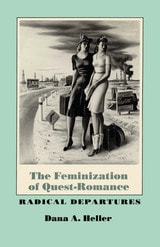
The Feminization of Quest-Romance
Radical DeparturesBy Dana A. Heller
University of Texas Press, 1990
What happens when a woman dares to imagine herself a hero? Questing, she sets out for unknown regions. Lighting a torch, she elicits from the darkness stories never told or heard before. The woman hero sails against the tides of great legends that recount the adventures of heroic men, legends deemed universal, timeless, and essential to our understanding of the natural order that holds us and completes us in its spiral. Yet these myths and rituals do not fulfill her need for an empowering self-image nor do they grant her the mobility she requires to imagine, enact, and represent her quest for authentic self-knowledge.
The Feminization of Quest-Romance proposes that a female quest is a revolutionary step in both literary and cultural terms. Indeed, despite the difficulty that women writers face in challenging myths, rituals, psychological theories, and literary conventions deemed universal by a culture that exalts masculine ideals and universalizes male experience, a number of revolutionary texts have come into existence in the second half of the twentieth century by such American women writers as Jean Stafford, Mary McCarthy, Anne Moody, Marilynne Robinson, and Mona Simpson, all of them working to redefine the literary portrayal of American women's quests. They work, in part, by presenting questing female characters who refuse to accept the roles accorded them by restrictive social norms, even if it means sacrificing themselves in the name of rebellion. In later texts, female heroes survive their "lighting out" experiences to explore diverse alternatives to the limiting roles that have circumscribed female development.
This study of The Mountain Lion, Memories of a Catholic Girlhood, Coming of Age in Mississippi, Housekeeping, and Anywhere but Here identifies transformations of the quest-romance that support a viable theory of female development and offer literary patterns that challenge the male monopoly on transformative knowledge and heroic action.
The Figure of a Man Being Swallowed by a Fish
Joshua Weiner
University of Chicago Press, 2013
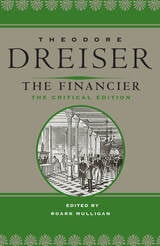
The Financier
The Critical EditionTheodore Dreiser. Edited by Roark Mulligan
University of Illinois Press, 2010
First published in 1912, Theodore Dreiser's third novel, The Financier, captures the ruthlessness and sparkle of the Gilded Age alongside the charismatic amorality of the power brokers and bankers of the mid-nineteenth century. This volume is the first modern edition of The Financier to draw on the uncorrected page proofs of the original 1912 version, which established Dreiser as a master of the American business novel. The novel was the first volume of Dreiser’s Trilogy of Desire, also known as the Cowperwood Trilogy, which includes The Titan (1914) and The Stoic (1947).
Dreiser laboriously researched the business practices and personal exploits of real-life robber baron Charles Yerkes to narrate Frank Algernon Cowperwood's early career in The Financier, which explores the unscrupulous world of finance from the Civil War through the panic incited by the 1871 Chicago fire. In 1927, the monumental novel reappeared in a radically revised version for which Dreiser, notorious for lengthy novels, agreed to cut more than two hundred and seventy pages. This revised version became the most familiar, reprinted by publishers and studied by scholars for decades.
For this new edition, Roark Mulligan meticulously reviewed earlier versions of the novel and its publication history, including the last-minute removal of paragraphs, pages, and even whole chapters from the 1912 edition, cuts based mainly on the advice of H. L. Mencken. The restored text better matches Dreiser's original vision for the work. More than three hundred additional pages not available to modern readers--including those cut from the 1927 edition and more than seventy hastily removed from the manuscript just days before publication in 1912--more effectively establish characterization and motivation. Restored passages dedicated to the internal thoughts of major and minor characters bring a softer dimension to a novel primarily celebrated for its realistic attention to the cold external world of finance.
Mulligan's historical commentary reveals new insights into Dreiser's creative practices and how his business knowledge shaped The Financier. This supplemental material considers the novel's place within the tradition of American business novels and its reflections on the scandalous business practices of the robber baron era.
The Fire Landscape
PoemsGary Fincke
University of Arkansas Press, 2008
The Fire Passage
Lisa Wells
Four Way Books, 2025
The Fires of New England
A Story of Protest and Rebellion in Antebellum AmericaEric J. Morser
University of Massachusetts Press, 2017
Few people embraced the manifesto and its radical message. Nonetheless, as Eric J. Morser illustrates in this eloquently written and deeply researched book, the address matters because it reveals how commercial, cultural, political, and social changes were remaking the lives of the men who drafted and shared it in the 1830s. Using an imaginative range of sources, Morser artfully reconstructs their moving personal tales and locates them in a grander historical context. By doing so, he demonstrates that even seemingly small stories from antebellum America can help us understand the rich complexities of the era.
The Flavor of Wisconsin
An Informal History of Food and Eating in the Badger StateHarva Hachten
Wisconsin Historical Society Press, 2023
While in many ways the first edition of The Flavor of Wisconsin has stood the test of time very well, food-related culture and business have changed immensely in the twenty-five years since its publication. Well-known regional food expert and author Terese Allen examines aspects of food, cooking, and eating that have changed or emerged since the first edition, including the explosion of farmers' markets; organic farming and sustainability; the "slow food" movement; artisanal breads, dairy, herb growers, and the like; and how relatively recent immigrants have contributed to Wisconsin's remarkably rich food scene.
The Flesh Between Us
Tory Adkisson
Southern Illinois University Press, 2021
In The Flesh Between Us the speaker explores our connections to each other, whether they be lovely or painful, static or constantly shifting, or, above all, unavoidable and necessary. Intensely and unapologetically homoerotic in content and theme, The Flesh Between Us sensuously conducts the meetings between strangers, between lovers, between friends and family, between eater and eaten, between the soul and the body that contains it. Pushing the boundaries of what has been traditionally acceptable for gay and erotic content and themes, the poems adapt persona, Greek mythology, Judaism, and classic poetic forms to interrogate the speaker’s relationship to god and faith, to love and sex, to mother and father.
Stark and mythical, the imagery draws from the language of animals and nature. Episodes of kink tangle with creatures of forests and lore. In this tumult, the lines of poetry keep a sense of boundary and distance by the seeming incompatibility of their subjects: daybreak and dissection, human and insect, worship and reality. The touch of irreconcilable bodies, in Adkisson’s language, intimates the precise moment of love. The idea of love moves viscerally through rib, lung, throat, and mouth. The poems show how flesh opens in so many ways, in prayers, in bleeds, in ruts. The flesh, opened, begins to swell. If there is guilt in this, Adkisson’s poems refuse the placid satisfaction of confession. Whatever attachments the reader dares to draw must be made with blade or tongue. The reader must commit to the potential violence narrated by these poems.
The Fluid Text
A Theory of Revision and Editing for Book and ScreenJohn Bryant
University of Michigan Press, 2002
The author develops his theory and its critical application drawing upon the example of Melville's Typee, using its various versions to present protocols for fluid text analysis. He shows how the mountain of scholarly material comprising the fluid text can be presented by a partnership of book and computer screen, in ways that offer new opportunities, insights,and pleasures for scholars and readers.
The Fluid Text: A Theory of Revision and Editing for Book and Screen is written in a clear and accessible style and will appeal to scholars and students in editorial theory, literary criticism and analysis, and anyone concerned with the information architecture of complex literary works in digital media.
John Bryant is Professor of English, Hofstra University. His most recent book is an edition of Melville's Tales, Poems, and Other Writings.

The Forest
Susan Stewart
University of Chicago Press, 1995
The Forsaken Son
Child Murder and Atonement in Modern American FictionJoshua Pederson
Northwestern University Press, 2015
The Forsaken Son engages the provocative coincidence of the vocabularies of infanticide and Christianity, specifically atonement theology, in six modern American novels: Flannery O’Connor’s The Violent Bear It Away, the first two installments of John Updike’s Rabbit tetralogy, Toni Morrison’s Beloved, Joyce Carol Oates’s My Sister, My Love, and Cormac McCarthy’s Outer Dark.
Christian atonement theology explains why God lets His son be crucified. Yet in recent years, as an increasing number of scholars have come to reject that explanation, the cross reverts from saving grace to trauma—or even crime. More bluntly, without atonement, the cross may be a filicide, in which God forces his son to die for no apparent reason. Pederson argues that the novels about child murder mentioned above likewise give voice to modern skepticism about traditional atonement theology.

The Fragility of Manhood
Hawthorne, Freud, and the Politics of GenderDavid Greven
The Ohio State University Press, 2012
The Freak-garde
Extraordinary Bodies and Revolutionary Art in AmericaRobin Blyn
University of Minnesota Press, 2013
Since the 1890s, American artists have employed the arts of the freak show to envision radically different ways of being. The result is a rich avant-garde tradition that critiques and challenges capitalism from within.
The Freak-garde traces the arts of the freak show from P. T. Barnum to Matthew Barney and demonstrates how a form of mass culture entertainment became the basis for a distinctly American avant-garde tradition. Exploring a wide range of writers, filmmakers, photographers, and artists who have appropriated the arts of the freak show, Robin Blyn exposes the disturbing power of human curiosities and the desires they unleash. Through a series of incisive and often startling readings, Blyn reveals how such figures as Mark Twain, Djuna Barnes, Tod Browning, Lon Chaney, Nathanael West, and Diane Arbus use these desires to propose alternatives to the autonomous and repressed subject of liberal capitalism. Blyn explains how, rather than grounding revolutionary subjectivities in imaginary realms innocent of capitalism, freak-garde works manufacture new subjectivities by exploiting potentials inherent to capitalism.
Defying conventional wisdom, The Freak-garde ultimately argues that postmodernism is not the death of the avant-garde but the inheritor of a vital and generative legacy. In doing so, the book establishes innovative approaches to American avant-garde practices and embodiment and lays the foundation for a more nuanced understanding of the disruptive potential of art under capitalism.
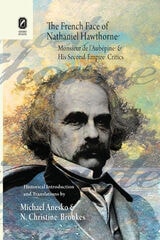
The French Face of Nathaniel Hawthorne
Monsieur de l'Aubépine and His Second Empire CriticsMichael Anesko and N. Christine Brookes
The Ohio State University Press, 2011
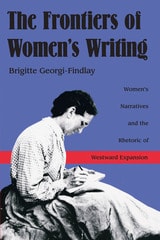
The Frontiers of Women's Writing
Women's Narratives and the Rhetoric of Westward ExpansionBrigitte Georgi-Findlay
University of Arizona Press, 1996
Brigitte Georgi-Findlay presents a range of writings that reflects the diversity of the western experience. Beginning with the narratives of Caroline Kirkland and other women of the early frontier, she reviews the diaries of the overland trails; letters and journals of the wives of army officers during the Indian wars; professional writings, focusing largely on travel, by women such as Caroline Leighton from the regional publishing cultures that emerged in the Far West during the last quarter of the century; and late-nineteenth- and early-twentieth-century accounts of missionaries and teachers on Indian reservations. Most of the writers were white, literate women who asserted their own kind of cultural authority over the lands and people they encountered. Their accounts are not only set in relation to a masculine frontier myth but also investigated for clues about their own involvement with territorial expansion. By exploring the various ways in which women writers actively contributed to and at times rejected the development of a national narrative of territorial expansion based on empire building and colonization, the author shows how their accounts are implicated in expansionist processes at the same time that they formulate positions of innocence and detachment.
Georgi-Findlay has drawn on American studies scholarship, feminist criticism, and studies of colonial discourse to examine the strategies of women's representation in writing about the West in ways that most theorists have not. She critiques generally accepted stereotypes and assumptions--both about women's writing and its difference of view in particular, and about frontier discourse and the rhetoric of westward expansion in general--as she offers a significant contribution to literary studies of the West that will challenge scholars across a wide range of disciplines.
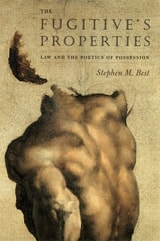
The Fugitive's Properties
Law and the Poetics of PossessionStephen M. Best
University of Chicago Press, 2004
Best also argues that legal principles dealing with fugitives and indebted persons provided a sophisticated precursor to intellectual property law as it dealt with rights in appearance, expression, and other abstract aspects of personhood. In this conception of property as fleeting, indeed fugitive, American law preserved for much of the rest of the century slavery's most pressing legal imperative: the production of personhood as a market commodity. By revealing the paradoxes of this relationship between fugitive slave law and intellectual property law, Best helps us to understand how race achieved much of its force in the American cultural imagination. A work of ambitious scope and compelling cross-connections, The Fugitive's Properties sets new agendas for scholars of American literature and legal culture.
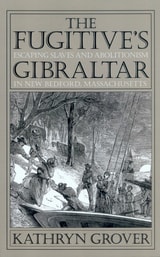
The Fugitive’s Gibraltar
Escaping Slaves and Abolitionism in New Bedford, MassachusettsKathryn Grover
University of Massachusetts Press, 2001
The Fugitive's Gibraltar is a richly researched work of social and cultural history that examines the city of New Bedford, Massachusetts as one of the most important and welcoming refuges for freedom-seeking enslaved people in antebellum America. The book's title derives from the phrase used by Frederick Douglass—himself among the most famous of New Bedford's many fugitive residents—to describe the city's reputation as a place of relative safety and freedom for Black Americans fleeing enslavement in the South.
Grover draws on an extraordinary breadth of primary sources to reconstruct the lives of fugitive slaves who came to New Bedford before the Civil War, as well as the city's larger African American community and the white and Black abolitionists who worked alongside them. The book explores how New Bedford's booming whaling economy—which depended heavily on Black labor and offered Black sailors wages equal to those of white sailors—created economic and social conditions unusually hospitable to free and freedom-seeking Black people. New Bedford's maritime character is thus deeply intertwined with its abolitionist identity.
The work examines the networks of people and organizations that sheltered, employed, and advocated for fugitives; traces individual stories of escape and resettlement; and situates New Bedford's experience within the broader national struggle over slavery, the Fugitive Slave Acts, and the abolitionist movement. Notable figures discussed include Frederick Douglass and Henry "Box" Brown. The book also sheds light on the daily lives, livelihoods, and community institutions of New Bedford's African American population—their churches, mutual aid societies, and social networks—providing a nuanced portrait of Black life in a northern city during this turbulent era.
The Garden in Winter and Other Poems
By Prentiss Moore
University of Texas Press, 1981
The Gazer Within
Larry Levis
University of Michigan Press, 2001
David St. John's foreword speaks eloquently of Levis's enduring legacy: "Of the poets of his generation, Larry Levis spoke most powerfully of what it means to be a poet at this historical moment. With the same majesty he brought to his poetry, Larry Levis engaged his readers with the most subtle and disturbing questions of the self to be found in the prose--essays, reviews or interviews--of any contemporary American poet. Broadly international in his scope and deeply personal in his reflections, Levis addressed poetic concerns that are both immediate and timeless. For many of us who struggle with these issues, Larry Levis's prose on poetry stands as some of the most capacious to be found since Randell Jarrell's."
The late Larry Levis was the author of six volumes of poetry. He was Director of the Creative Writing Program, University of Utah; Professor of English, Virginia Commonwealth University; and also taught at the Iowa Writers Workshop.
The Gazer's Spirit
Poems Speaking to Silent Works of ArtJohn Hollander
University of Chicago Press, 1995
The Gazer's Spirit focuses on leading examples of ecphrastic poetry, or poems that directly confront particular works of art. Hollander, who is one of the most distinguished contemporary practitioners of the ecphrastic tradition, has crafted a survey of enormous range, taste, and depth, from the Renaissance to the twentieth century. The heart of the book is its gallery of poems and images set side by side.
There are poems whose presence in this book is all but inevitable, such as Auden's "Musee des Beaux Arts" paired with Breugel the Elder's Landscape with the Fall of Icarus, and delightful surprises, such as Edith Wharton's sonnet that casts fresh light on Leonardo's Mona Lisa. Here are Robert Browning and Michelangelo; Walt Whitman and George Inness; and Randall Jarrell and Albrecht Dürer writing and drawing about The Knight, Death and the Devil.
Among the poets are many visually sophisticated writers such as James Merrill, Richard Howard, Marianne Moore, and Richard Wilbur; the visual objects in the book are both celebrated and obscure, as various as a Greek sculplture, a medieval tapestry, a famous Renoir, or a fountain by an anonymous architect. In some cases, obvious affinities, such as a poem by Vicki Hearne on a white horse by Gauguin, produce unexpected poetic results.
The Genuine Article
Race, Mass Culture, and American Literary ManhoodPaul Gilmore
Duke University Press, 2001
From characters in Indian melodramas and minstrel shows to exhibits in popular museums and daguerrotype galleries, primitive racialized figures circulated as “the genuine article” of manliness in the antebellum United States. Gilmore argues that these figures were manipulated, translated, and adopted not only by canonical authors such as Hawthorne, Thoreau, Cooper, and Melville but also by African American and Native American writers like William Wells Brown and Okah Tubbee. By examining how these cultural notions of race played out in literary texts and helped to construct authorship as a masculine profession, Gilmore makes a unique contribution to theories of class formation in nineteenth-century America.
The Genuine Article will enrich students and scholars of American studies, gender studies, literature, history, sociology, anthropology, popular culture, and race.
The Getaway Car
A Donald Westlake Nonfiction MiscellanyDonald E. Westlake
University of Chicago Press, 2014
Over the course of a fifty-year career, Donald E. Westlake published nearly one hundred books, including not one but two long-running series, starring the hard-hitting Parker and the hapless John Dortmunder. In the six years since his death, Westlake’s reputation has only grown, with fans continuing to marvel at his tightly constructed plots, no-nonsense prose, and keen, even unsettling, insights into human behavior.
With The Getaway Car, we get our first glimpse of another side of Westlake the writer: what he did when he wasn’t busy making stuff up. And it’s fascinating. Setting previously published pieces, many little seen, alongside never-before-published material found in Westlake’s working files, the book offers a clear picture of the man behind the books—including his thoughts on his own work and that of his peers, mentors, and influences. The book opens with revealing (and funny) fragments from an unpublished autobiography, then goes on to offer an extended history of private eye fiction, a conversation among Westlake’s numerous pen names, letters to friends and colleagues, interviews, appreciations of fellow writers, and much, much more. There’s even a recipe for Sloth à la Dortmunder. Really.
Rounded out with a foreword by Westlake’s longtime friend Lawrence Block, The Getaway Car is a fitting capstone to a storied career and a wonderful opportunity to revel anew in the voice and sensibility of a master craftsman.
The Ghost of Meter
Culture and Prosody in American Free VerseAnnie Finch
University of Michigan Press, 1993
Population and environment are topics of intense current discussion and international action. Population growth rates have given rise to the metaphor of an exploding bomb, and accounts of oil spills, droughts, and rainforest destruction appear daily in the news. Despite the crowded agenda, observes Gayl Ness, the relationships between population and the environment still defy clear and comprehensive understanding. While they are closely intertwined in real life, they are separate in much of our thought and action. The contributors to this volume explore the basis of this separation and offer ways to integrate these closely interconnected areas, providing a forum for dialogue between those who support the interests of each. Topics covered include population-environment dynamics in historical perspective; constraints on sustainable growth in agricultural production; population as concept and parameter in the modeling of deforestation; powers and limits of the state and technology; resource control, fertility, and migration; and an ecosystem approach to the study of coastal areas.
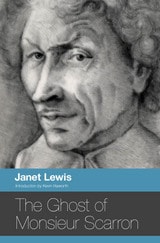
The Ghost of Monsieur Scarron
Janet Lewis
Ohio University Press, 2013
This historical novel is the third and final book in American poet and fiction writer Janet Lewis’s Cases of Circumstantial Evidence series, based on legal case studies compiled in the nineteenth century. In The Ghost of Monsieur Scarron, Lewis returns to her beloved France, the setting of The Wife of Martin Guerre, her best-known novel and the first in the series. As Swallow Press executive editor Kevin Haworth relates in a new introduction, Monsieur Scarron shifts the reader into the center of Paris in 1694, during the turbulent reign of the Sun King, Louis XIV. The junction of this time and place gives Monsieur Scarron an intriguing political element not apparent in either The Wife of Martin Guerre or The Trial of Sören Qvist.
The Ghost of Monsieur Scarron begins in a small bookbinder’s shop on a modest Paris street, but inexorably expands to encompass a tumultuous affair, growing social unrest, and the conflicts between a legal system based on oppressive order and a society about to undergo harsh changes. With its domestic drama set against a larger political and historical backdrop, Monsieur Scarron is considered by some critics and readers to be the most intricately layered and fully realized book of Lewis’s long career. Originally published in 1959, Monsieur Scarron has remained in print almost continuously ever since.
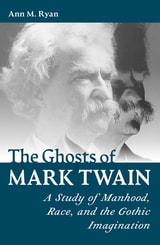
The Ghosts of Mark Twain
A Study of Manhood, Race, and the Gothic ImaginationAnn M Ryan
University of Missouri Press, 2025
Ann M. Ryan maps Twain’s resistance to ideals of white masculinity and his occasional capitulation to them. While Twain reflects upon the history of White men—including the intimate memory of his father’s failures and abuses—he also imagines a future in which Black men will gain an authentic voice and agency. Preferring the messy humanity of Mark Twain, Ryan calls into question the “St. Mark” school of criticism, which glosses—among other themes—Twain’s uneasy relation to Black culture. In unpublished works and excised material, Twain conjures memories and specters of Black men that are far from comforting. No longer “friends and allies” like fictive Ol’ Uncle Dan’l; these Black ghosts will settle for revenge if they can’t get justice.
Some of the works considered in The Ghosts of Mark Twain are not widely known: “Which Was It?,” “The United States of Lyncherdom,” No. 44: The Mysterious Stranger, and the Morgan manuscript of Pudd’nhead Wilson. Written into the record of these fragments is Twain’s desire to be a different kind of White man, just as their incomplete nature demonstrates how often he stumbled in that effort. When Jim describes the White and Black spirits hovering over Pap Finn, Twain reveals his own conflicted position in America’s racial history. And as Jim declares to Huck, “A body can’t tell yit which one gwyne to fetch him at de las.’”
The Glass Anvil
Andrew Hudgins
University of Michigan Press, 1997
Finally coming to rest on an examination of his own autobiography, The Glass Hammer, Hudgins reveals some of the ways he lied in that book--and some of the reasons for doing so. In a lighthearted manner, he manages to throw both light--and shadow--on the autobiography as a literary form. Amid charming anecdotes of his Southern upbringing, The Glass Anvil vividly records the depth of Hudgins's fascination with language, particularly as it mingles with the important issues of his life--religion, racism, Southern literature, and narrative poetry. This fascination is further documented in a free-wheeling interview which closes the book.
Engaging and amusing reading, The Glass Anvil will appeal to readers interested in contemporary poetry and Southern literature.
Andrew Hudgins's books include The Never Ending, After the Lost War: A Narrative, Saints and Strangers, and most recently The Glass Hammer. He is Professor of English, University of Cincinnati.
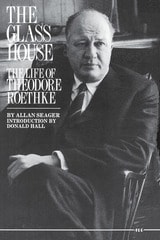
The Glass House
The Life of Theodore RoethkeAllan Seager
University of Michigan Press, 1991
Biographer Allan Seager interviewed a number of Roethke’s friends and fellow writers, and he had access to the voluminous notes the poet left behind. Seager reveals the Theodore Roethke who existed behind the public persona – a complex, self-contradictory, gentle, often disturbed mysterious, and ruthlessly honest man. One of the book’s most moving passages is the defense of the poet’s role within the university, written by a colleague when Roethke was faced with the threat of dismissal. A committed teacher himself, Seager succeeds in doing justice to an often neglected aspect of Roethke’s achievement, his remarkable power as a teacher, and his unusual and committed teaching style.
The Global Frontier
Postwar Travel in American LiteratureEric Strand
University of Iowa Press, 2023
After World War II, the Western frontier of self-reinvention and spatial expansion opened up through the explosion of the global travel industry. The Global Frontier shows that a variety of postwar literary travelers sought personal freedom and cultural enrichment outside their nation’s borders, including Black, female, and queer writers. But the price of incorporation into a transnational leisure class was complicity in postwar American imperialism and the rejection of 1930s social commitments. Eric Strand argues that capitalist globalization has enabled creative expression for marginalized identities, and that present-day humanists are the descendants of writers such as William S. Burroughs, Saul Bellow, Richard Wright, and Elizabeth Bishop. Yet this personal liberation has accompanied a vast growth of social inequality, which can only be addressed by reorienting toward progressive nationalism and an activist state.
The Gods We Worship Live Next Door
Realuyo, Bino A
University of Utah Press, 2006
The Gods We Worship Live Next Door is the 2005 prizewinning volume selected by this year's judge, Grace Schulman, distinguished professor of English at Baruch College, City University of New York.
The Golden Coin
Alan Feldman
University of Wisconsin Press, 2018
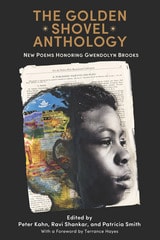
The Golden Shovel Anthology
New Poems Honoring Gwendolyn BrooksPeter Kahn
University of Arkansas Press, 2017
“Throughout this anthology, more than 60 other well-known Brooks poems can be read the same way, with lines from ‘The Mother’ and ‘The Bean Eaters’ tripping down the right-hand side of the page. The anthology ends with ‘Non-Brooks Golden Shovels’ and ‘Variations and Expansions on the Form.’ The cross-section of poets with varying poetics and styles gathered here is only one of the many admirable achievements of this volume.”
—Claudia Rankine, The New York Times, August 2017
“The editors, including tireless poetry advocate Kahn, of this unique, new addition to the Gwendolyn Brooks legacy put together a richly diverse set of poets working with the most unusual and fertile new poetic form created in recent years. National Book Award winner Terrance Hayes invented the Golden Shovel, which he illuminates in his stirring foreword, writing, “Because where do poems come from if not other poems?” In a Golden Shovel poem, the last words in each line are taken from a Brooks poem. A veritable who’s who of contemporary poets tried their hands at this encoded homage, including Billy Collins, Mark Doty, Rita Dove, Nikki Giovanni, Joy Harjo, Billy Lombardo, Sharon Olds, Alberto Ríos, Tracy K. Smith, and Timothy Yu. Beautifully introduced by Patricia Smith, this is a beguiling and mind-expanding anthology shaped by formal expertise and deep appreciation for the complexity and resonance of Brooks’ work and profoundly nurturing influence. In all, a substantial and dynamic contribution to American literature.”
—Booklist, May 2017
"Gwendolyn Brooks was the first black writer to receive the Pulitzer Prize for poetry back in 1950. A new book honors her work in using a form called the golden shovel, developed by poet Terrance Hayes. In The Golden Shovel Anthology, poets select a line from a poem of Brooks’s and use it as the closing line or lines in a poem of their own. The result is an expansive and extraordinary assemblage edited by poets Peter Kahn, Ravi Shankar, and Patricia Smith.”
—Nina MacLaughlin, Boston Globe, March 2017
The Golden Shovel Anthology celebrates the life and work of poet and civil rights icon Gwendolyn Brooks through a dynamic new poetic form, the Golden Shovel, created by National Book Award–winner Terrance Hayes.
The last words of each line in a Golden Shovel poem are, in order, words from a line or lines taken from a Brooks poem. The poems are, in a way, secretly encoded to enable both a horizontal reading of the new poem and vertical reading down the right-hand margin of Brooks’s original. An array of writers—including Pulitzer Prize winners, T. S. Eliot Prize winners, National Book Award winners, and National Poet Laureates—have written poems for this exciting new anthology: Rita Dove, Billy Collins, Nikki Giovani, Sharon Olds, Tracy K. Smith, Mark Doty, Sharon Draper, and Julia Glass are just a few of the contributing poets.
The poems found here will inspire a diversity of readers, teachers, and writers of poetry while at the same time providing remarkable access for newcomers, making it ideal for classrooms. The Golden Shovel Anthology will also honor Brooks with publication in 2017, the centenary of her birth.
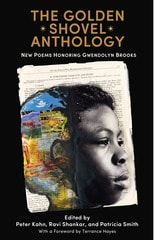
The Golden Shovel Anthology
New Poems Honoring Gwendolyn BrooksPeter Kahn
University of Arkansas Press, 2019
—Claudia Rankine in the New York Times
The Golden Shovel Anthology celebrates the life and work of poet and civil rights icon Gwendolyn Brooks through a dynamic new poetic form, the Golden Shovel, created by National Book Award–winner Terrance Hayes.
An array of writers—including winners of the Pulitzer Prize, the T. S. Eliot Prize, and the National Book Award, as well as a couple of National Poets Laureate—have written poems for this exciting new anthology: Rita Dove, Billy Collins, Danez Smith, Nikki Giovanni, Sharon Olds, Tracy K. Smith, Mark Doty, Sharon Draper, Richard Powers, and Julia Glass are just a few of the contributing poets.
This second edition includes Golden Shovel poems by two winners and six runners-up from an international student poetry competition judged by Nora Brooks Blakely, Gwendolyn Brooks’s daughter. The poems by these eight talented high school students add to Ms. Brooks’s legacy and contribute to the depth and breadth of this anthology.
The Goner School
Jessica Laser
University of Iowa Press, 2024
The Good Beer Guide to New England
Andy Crouch
University Press of New England, 2006
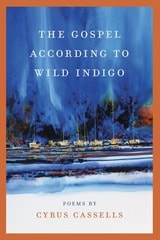
The Gospel according to Wild Indigo
Cyrus Cassells
Southern Illinois University Press, 2018
Finalist for the Helen C. Smith Award for the Best Book of Poetry from the Texas Institute of Letters, 2019
Nominated for the NAACP Image Award for Outstanding Literature in Poetry, 2019
Consisting of two dynamic song cycles, Cyrus Cassells’s sixth poetry volume, The Gospel according to Wild Indigo, keeps the reader on edge with a timeless and beguiling feast of language that fuses together history, memory, and family.
The first cycle, rooted in the culture of the Gullah people of Charleston and the Sea Islands, celebrates the resilience of the rice- and indigo-working slaves and their descendants who have forged a unique Africa-inspired language and culture. Set against a Mediterranean backdrop, the second cycle explores themes of pilgrimage, love, and loss, concluding with a pair of elegies to the poet’s mother and the many men lost in the juggernaut of the AIDS crisis. Throughout, Cassells invites the reader to consider the duality of grief and love, as well as the shifting connections between past and present.
Cassells’s language is always striking, unpredictable, and beautiful, conjuring a world not only of “placid seagulls perched / in priest-gentle pines / like festive Christmas ornaments” but also one where “Death prevailed, / tireless as a forest partisan.” His poems transport the reader across time, space, and language, searching constantly not just for empathy but also for the human spirit in its triumph, for “our human joy, / laced with an ageless grieving.”
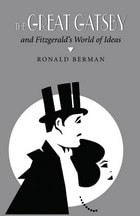
The Great Gatsby and Fitzgerald's World of Ideas
Ronald Berman
University of Alabama Press, 2000
Great Gatsby was created--and challenges accepted interpretations of
Fitzgerald's greatest novel.
"The Great Gatsby" and Fitzgerald's World of Ideas
focuses on F. Scott Fitzgerald and the prevailing ideas and values
that permeated American society in the late teens and early twenties, providing
a vivid portrait of the intellectual and cultural milieu in which The
Great Gatsby was produced.
This new and original reading of Gatsby discloses
Fitzgerald's remarkable awareness of the issues of his time and his debt
to such philosophers and critics as William James, Josiah Royce, George
Santayana, John Dewey, Walter Lippman, H. L. Mencken, and Edmund Wilson.
Ronald Berman's fresh approach considers the meaning of various ideas important
to the novel: for example, those moral qualities governing both social
and individual life. Berman's reading of the text reveals extraordinary
emphases on matters that could productively be described as philosophical
-- the nature of friendship, love, and the good life. But the text of the
novel has many echoes, and the same concern with moral issues -- especially
those issues affecting democratic life - can be found in a number of other
texts of the first quarter of the century. Vigorously debated throughout
Fitzgerald's own lifetime, these texts shed a completely new light on the
idealism of The Great Gatsby and on the penetrating view it has
of life in a new form of American democracy.
A noted Fitzgerald scholar, Berman makes it clear that
accepted interpretations of The Great Gatsby and of Fitzgerald's
work in general must be changed. Berman demonstrates that Fitzgerald wrote
within a vast dialectic, relating the ideas of the twenties to those of
the "old America" described in so many of his works. Gatsby, Nick Carraway,
and the other characters of Fitzgerald's greatest novel all have to consider
not only their relationship to the present but also their distance from
what was once a highly meaningful past.
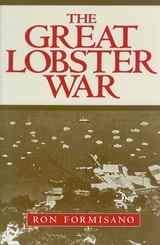
The Great Lobster War
Ron Formisano
University of Massachusetts Press, 1997
This groundbreaking historical account documents the little-known but significant conflict that erupted among Maine lobstermen in the 1950s—a pivotal clash that pitted independent small-scale fishermen against powerful dealers and federal government regulators. Written by distinguished historian Ronald P. Formisano, this work reconstructs a dramatic struggle over prices and economic power within Maine's vital lobster fishery.
Capturing the reality of the Lobster War strike and its subsequent legal proceedings, Formisano's narrative explores how independent owner-operators of the Maine lobster fishery, facing economic pressures from middlemen dealers and federal intervention, banded together in a coordinated effort to secure fair prices and maintain control over their livelihoods.
Through meticulous historical research, Formisano illuminates the economic realities of commercial fishing, the dynamics between laborers and processors, and the role of government regulation in shaping resource management policies.The Great Lobster War serves as both a detailed historical study and an accessible story of working-class agency and collective action in the postwar era.

The Great Midland
Alexander Saxton
University of Illinois Press, 1997
The book vividly depicts the multiracial and multiethnic alliances that developed as Chicago railroad workers struggled to organize. It presents some of its narrative through the complex consciousness of Stephanie Koviak, a young, first-generation Polish-American.

The Great Minnesota Cookie Book
Award-Winning Recipes from the Star Tribune's Holiday Cookie ContestLee Svitak Dean
University of Minnesota Press, 2018
Eighty delicious, imaginative recipes from the Star Tribune’s beloved annual cookie contest, with mouth-watering pictures and bakers’ stories
It’s cold in Minnesota, especially around the holidays, and there’s nothing like baking a batch of cookies to warm the kitchen and the heart. A celebration of the rich traditions, creativity, and taste of the region, The Great Minnesota Cookie Book collects the best-loved recipes and baking lore from fifteen years of the Star Tribune’s popular holiday cookie contest.
Drop cookies and cutouts, refrigerator cookies and bars; Swedish shortbread, Viennese wafers, and French–Swiss butter cookies; almond palmiers; chai crescents and taffy treats; snowball clippers, cherry pinwheels, lime coolers, and chocolate-drizzled churros: a dizzying array and all delightful, the recipes in this book recall memories of holidays past and inspire the promise of happy gatherings to come.
These are winning cookies in every sense, the best of the best chosen by the contest’s judges, accompanied by beautiful photographs as instructive as they are enticing. A treat for any occasion, whether party, bake sale, or after-school snack, each time- and taste-tested recipe is perfect for starting a tradition of one’s own.