Results by title
1882 books match the query 'Criticism and interpretation' and 348 start with t
The Powers of the False
Reading, Writing, Thinking beyond Truth and FictionDoro Wiese
Northwestern University Press, 2014
The Problem of Passing
Sandra Harvey
Duke University Press, 2026
The Problem of the Future World
W. E. B. Du Bois and the Race Concept at MidcenturyEric Porter
Duke University Press, 2010
The Productive Tension of Hawthorne's Art
Claudia D. Johnson
University of Alabama Press, 1981
Hawthorne’s major works, including his short fiction, exhibit a profound conflict between eighteenth-century views of an orderly, balanced, and static universe on the one hand and nineteenth-century conceptions of a universe in constant flux on the other. Johnson argues that Hawthorne, though he did not identify with any organized church, found in theology the myths that allowed him to negotiate a bridge between these two opposed views of the world and to forge the social, psychological, and aesthetic values that inform his art.
The Projectionists
Eadweard Muybridge and the Future Projections of the Moving ImageStephen Barber
Diaphanes, 2020
The Proper Lady and the Woman Writer
Ideology as Style in the Works of Mary Wollstonecraft, Mary Shelley, and Jane AustenMary Poovey
University of Chicago Press, 1984
"The proper lady was a handy concept for a developing bourgeois patriarchy, since it deprived women of worldly power, relegating them to a sanctified domestic sphere that, in complex ways, nourished and sustained the harsh 'real' world of men. With care and subtle intelligence, Poovey examines this 'guardian and nemesis of the female self' through the ways it is implicated in the style and strategies of three very different writers."—Rachel M. Brownstein, The Nation
"The Proper Lady and the Woman Writer is a model of . . . creative discovery, providing a well-researched, illuminating history of women writers at the turn of the nineteenth century. [Poovey] creates sociologically and psychologically persuasive accounts of the writers: Wollstonecraft, who could never fully transcend the ideology of propriety she attacked; Shelley, who gradually assumed a mask of feminine propriety in her social and literary styles; and Austen, who was neither as critical of propriety as Wollstonecraft nor as accepting as Shelley ultimately became."—Deborah Kaplan, Novel
The Public Mirror
Moliere and the Social Commerce of DepictionLarry F. Norman
University of Chicago Press, 1999
Pairing close readings of Molière's comedies with insightful accounts of French social history and aesthetics, Norman shows how Molière conceived of satire as a "public mirror" provoking dynamic exchange and conflict with audience members obsessed with their own images. Drawing on these tensions, Molière portrays characters satirizing one another on stage, with their reactions providing dramatic conflict and propelling comic dialogue. By laying bare his society's system of imagining itself, Molière's satires both enthralled and enraged his original audience and provide us with a crucial key to the classical culture of representation.
The Pushkin Handbook
Edited by David M. Bethea
University of Wisconsin Press, 2004
The Quay Brothers
Into a Metaphysical PlayroomSuzanne Buchan
University of Minnesota Press, 2010
Buchan's aesthetic investigation stems from extensive access to the Quay Brothers' artistic practices and work, which spans animation and live-action film, stage design and illustration. She also draws on a long acquaintance with them and on interviews with collaborators essential to their productions, as well as archival sources. Discussions of their films' literary origins, space, puppets, montage, and the often-overlooked world of sound and music in animation shed new light on the expressive world that the Quay Brothers generate out of their materials to create the poetic alchemy of their films.
At once a biography of the Quays' artistic trajectory and a detailed examination of one of their best-known films, Street of Crocodiles, this book goes further and provides interdisciplinary methodologies and tools for the analysis of animation.
The Queer Limit of Black Memory
Black Lesbian Literature and IrresolutionMatt Richardson
The Ohio State University Press, 2013
The Quill and the Scalpel
Nabokov's Art and the Worlds of ScienceStephen H. Blackwell
The Ohio State University Press, 2009
The REVEREND MARK TWAIN
THEOLOGICAL BURLESQUE, FORM, AND CONTENTJoe B. Fulton
The Ohio State University Press, 2006
Twain adopted such religious personae to burlesque the religious literary genres associated with those vocations. He wrote catechisms, prophecies, psalms, and creeds, all in the theological tradition, but with a comic twist. Twain even wrote a burlesque life of Christ that has the son of God sporting blue jeans and cowboy boots. With his distinctive comic genius, Twain entered the religious dialogue of his time, employing the genres of belief as his vehicle for criticizing church and society.
Twain’s burlesques of religious form and content reveal a writer fully engaged with the religious ferment of his day. Works like The Innocents Abroad, Adventures of Huckleberry Finn, Personal Recollections of Joan of Arc, Roughing It, and What Is Man? are the productions of a writer skilled at adopting and adapting established literary and religious forms for his own purposes. Twain is sometimes viewed as a haphazard writer, but in The Reverend Mark Twain, Fulton demonstrates how carefully Twain studied established literary and theological genres to entertain—and criticize—his society.
The Real, the True, and the Told
Postmodern Historical Narrative and the Ethics of RepresentationEric L. Berlatsky
The Ohio State University Press, 2011
The Reformation of Emotions in the Age of Shakespeare
Steven Mullaney
University of Chicago Press, 2015
As Steven Mullaney shows in The Reformation of Emotions in the Age of Shakespeare, Elizabethan popular drama played a significant role in confronting the uncertainties and unresolved traumas of Elizabethan Protestant England. Shakespeare and his contemporaries—audiences as well as playwrights—reshaped popular drama into a new form of embodied social, critical, and affective thought. Examining a variety of works, from revenge plays to Shakespeare’s first history tetralogy and beyond, Mullaney explores how post-Reformation drama not only exposed these faultlines of society on stage but also provoked playgoers in the audience to acknowledge their shared differences. He demonstrates that our most lasting works of culture remain powerful largely because of their deep roots in the emotional landscape of their times.
The Reformation of the Image
Joseph Leo Koerner
University of Chicago Press, 2004
But if words—not iconic images—showed the way to salvation, why didn't religious imagery during the Reformation disappear along with indulgences? The answer, according to Joseph Leo Koerner, lies in the paradoxical nature of Protestant religious imagery itself, which is at once both iconic and iconoclastic. Koerner masterfully demonstrates this point not only with a multitude of Lutheran images, many never before published, but also with a close reading of a single pivotal work—Lucas Cranach the Elder's altarpiece for the City Church in Wittenberg (Luther's parish). As Koerner shows, Cranach, breaking all the conventions of traditional Catholic iconography, created an entirely new aesthetic for the new Protestant ethos.
In the Crucifixion scene of the altarpiece, for instance, Christ is alone and stripped of all his usual attendants—no Virgin Mary, no John the Baptist, no Mary Magdalene—with nothing separating him from Luther (preaching the Word) and his parishioners. And while the Holy Spirit is nowhere to be seen—representation of the divine being impossible—it is nonetheless dramatically present as the force animating Christ's drapery. According to Koerner, it is this "iconoclash" that animates the best Reformation art.
Insightful and breathtakingly original, The Reformation of the Image compellingly shows how visual art became indispensable to a religious movement built on words.
The Religion of Empire
Political Theology in Blake's Prophetic SymbolismG. A. Rosso
The Ohio State University Press, 2016
The Religion of Empire also reevaluates Blake’s relationship with Milton, whose influence Blake both affirms and contests in a unique appropriation of Milton’s prophetic legacy. In this context, Rosso challenges recent views of Blake as complicit with the nationalism and sexism of his time, expanding the religion-empire nexus to include Blake’s esoteric understanding of gender. Foregrounding the role of female characters in the longer prophecies, Rosso discloses the variegated and progressive nature of Blake’s apocalyptic humanism.
The Renaissance Rediscovery of Intimacy
Kathy Eden
University of Chicago Press, 2012
In 1345, when Petrarch recovered a lost collection of letters from Cicero to his best friend Atticus, he discovered an intimate Cicero, a man very different from either the well-known orator of the Roman forum or the measured spokesman for the ancient schools of philosophy. It was Petrarch’s encounter with this previously unknown Cicero and his letters that Kathy Eden argues fundamentally changed the way Europeans from the fourteenth through the sixteenth centuries were expected to read and write.
The Renaissance Rediscovery of Intimacy explores the way ancient epistolary theory and practice were understood and imitated in the European Renaissance.Eden draws chiefly upon Aristotle, Cicero, and Seneca—but also upon Plato, Demetrius, Quintilian, and many others—to show how the classical genre of the “familiar” letter emerged centuries later in the intimate styles of Petrarch, Erasmus, and Montaigne. Along the way, she reveals how the complex concept of intimacy in the Renaissance—leveraging the legal, affective, and stylistic dimensions of its prehistory in antiquity—pervades the literary production and reception of the period and sets the course for much that is modern in the literature of subsequent centuries. Eden’s important study will interest students and scholars in a number of areas, including classical, Renaissance, and early modern studies; comparative literature; and the history of reading, rhetoric, and writing.
The Rescue of Romanticism
Walter Pater and John RuskinKenneth Daley
Ohio University Press, 2001
Valuable and timely in its long historical and critical perspective on the legacy of romanticism to Victorian art and thought, The Rescue of Romanticism is the first book-length study of the close intellectual relationship between Walter Pater and John Ruskin, the two most important Victorian critics of art. Kenneth Daley explores the work and thought of both writers in context with other Victorian writers, and enlarges the issues at stake between them, connecting these issues to ongoing artistic, cultural, and political concerns of the modern world.
Professor Daley gives a more finely honed picture than ever before of romanticism’s emergence as a literary concept in Victorian England, detailing the political differences that characterize the opposition between John Ruskin and his younger contemporary, Walter Pater, over the nature of romanticism. Individual chapters reassess the Victorian reception of such romantic figures as Wordsworth, Dante Gabriel Rossetti, Leonardo, and Michelangelo.
Daley demonstrates how Pater’s “modern” reading of romanticism emerged from Ruskin’s distrust of romanticism and from Ruskin’s arguments and examples defining pathetic fallacy. His discussion of Ruskin’s Oxford lectures and their timing in Pater’s developing career refresh the intersections of the two bodies of work and the portrait of the Victorian period in general.
The Resurrection of the Body
Pier Paolo Pasolini from Saint Paul to SadeArmando Maggi
University of Chicago Press, 2009
The Rhythm of Thought
Art, Literature, and Music after Merleau-PontyJessica Wiskus
University of Chicago Press, 2013

The Running Kind
Listening to Merle HaggardDavid Cantwell
University of Texas Press, 2022
2022 Belmont Award for the Best Book on Country Music, International Country Music Conference/Belmont University
New and expanded biography of one of country music’s most celebrated singer-songwriters.
Merle Haggard enjoyed numerous artistic and professional triumphs, including more than a hundred country hits (thirty-eight at number one), dozens of studio and live album releases, upwards of ten thousand concerts, induction into the Country Music Hall of Fame, and songs covered by artists as diverse as Lynryd Skynyrd, Elvis Costello, Tammy Wynette, Bobby "Blue" Bland, Willie Nelson, the Grateful Dead, and Bob Dylan.
In The Running Kind, a new edition that expands on his earlier analysis and covers Haggard's death and afterlife as an icon of both old-school and modern country music, David Cantwell takes us on a revelatory journey through Haggard’s music and the life and times out of which it came. Covering the breadth of his career, Cantwell focuses especially on the 1960s and 1970s, when Haggard created some of his best-known and most influential music: songs that helped invent the America we live in today. Listening closely to a masterpiece-crowded catalogue (including “Okie from Muskogee,” “Sing Me Back Home,” “Mama Tried,” and “Working Man Blues,” among many more), Cantwell explores the fascinating contradictions—most of all, the desire for freedom in the face of limits set by the world or self-imposed—that define not only Haggard’s music and public persona but the very heart of American culture.
The Sacrifice of Socrates
Athens, Plato, GirardWm. Blake Tyrrell
Michigan State University Press, 2012
When Athenians suffered the shame of having lost a war from their own greed and foolishness, around 404 BCE the public’s blame was directed at Socrates, a man whose unique appearance and behavior, as well as his disapproval of the democracy, made him a ready target. Socrates was subsequently put on trial and sentenced to death. However, as René Girard has pointed out, no individual can be held responsible for a communal crisis. Plato’s Apology depicts Socrates as both the bane and the cure of Greek society, while his Crito shows a sacrificial Socrates, what some might consider a pharmakos figure, the human drug through whom Plato can dispense his philosophical remedies. With tremendous insight and satisfying complexity, this book analyzes classical texts through the lens of Girard’s mimetic mechanism.
The Savage Library of Roberto Bolaño
Radical ReadingsBenjamin Loy
Bucknell University Press, 2026
Visionary Chilean writer Roberto Bolaño was known for his darkly poetic prose and postmodern narratives, exemplified in his novel The Savage Detectives. His work is also deeply infused with references to the Western literary canon—from French and Spanish baroque texts to American and German modernism, as well as postmodern literature from Latin America and France. Taking Bolaño’s notion of “savage” reading as a point of departure, this study explores the key authors and literary traditions that underpin his oeuvre. Blending close textual analysis with insights from the history of literature and ideas, Loy offers fresh perspectives on some of Bolaño’s most significant works, including Distant Star, By Night in Chile, and 2666. The intertextual dialogues Loy traces—with figures such as Blaise Pascal, Sor Juana Inés de la Cruz, Charles Baudelaire, William Carlos Williams, Ernst Jünger, Nicanor Parra, and Georges Perec—illuminate the aesthetic universe of an author now regarded as a central figure in twenty-first-century world literature.
Published by Bucknell University Press. Distributed worldwide by Rutgers University Press.
The Scroll and the Marble
Studies in Reading and Reception in Hellenistic PoetryPeter Bing
University of Michigan Press, 2010
---Benjamin Acosta-Hughes, Ohio State University
While people of previous ages relied on public performance as their chief means of experiencing poetry, the Hellenistic age developed what one may term a culture of reading. This was the first era in which poets consciously shaped their works with an eye toward publication and reception not just on the civic stage but in several media---in performance, on inscribed monuments, in scrolls. The essays in Peter Bing's collection explore how poetry accommodated various audiences and how these audiences in turn experienced the text in diverse ways. Over the years, Bing's essays have focused on certain Hellenistic authors and genres---particularly on Callimachus and Posidippus and on epigram. His themes, too, have been broadly consistent. Thus, although the essays in The Scroll and the Marble span some twenty years, they offer a coherent vision of Hellenistic poetics as a whole.
Peter Bing is Professor of Classics at Emory University and editor, most recently, of the Companion to Hellenistic Epigram: Down to Philip (coedited with Jon Steffen Bruss).
Jacket illustration: Film still from Mr. Smith Goes to Washington, directed by Frank Capra, Columbia Pictures 1939. Courtesy of Sony Pictures.
The Sculpture of Robyn Horn
Robyn Horn
University of Arkansas Press, 2018
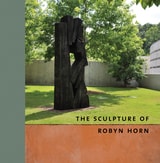
The essays and images in The Sculpture of Robyn Horn sketch the industrious career of this Little Rock, Arkansas-based sculptor, illuminating her attention to geometry, physics, and the philosophy of design, and exploring the context and origin of the various series—Geodes, Millstones, Standing Stones, and Slipping Stones, among others—that characterize her body of work.
The Sensuous Cinema of Wong Kar-wai
Film Poetics and the Aesthetic of Disturbance, Second EditionGary Bettinson
Hong Kong University Press, 2025
The widely acclaimed films of Wong Kar-wai are characterized by their sumptuous yet complex visual and sonic style. This study of Wong’s filmmaking techniques uses a poetics approach to examine how form, music, narration, characterization, genre, and other artistic elements work together to produce certain effects on audiences. Bettinson argues that Wong’s films are permeated by an aesthetic of sensuousness and “disturbance” achieved through techniques such as narrative interruptions, facial masking, opaque cuts, and other complex strategies. The effect is to jolt the viewer out of complete aesthetic absorption. Each of the chapters focuses on a single aspect of Wong’s filmmaking.
This tenth-anniversary edition of The Sensuous Cinema of Wong Kar-wai includes a substantial new afterword bringing the story of Wong’s career up to date (including reflections on the Mainland Chinese drama Blossoms Shanghai). Bettinson revisits and extends the arguments of the first edition, surveys the recent key debates on Wong’s filmmaking, and introduces fresh lines of critical investigation. The book will appeal to all who are interested in authorship and aesthetics in film studies, to scholars in Asian studies, media, and cultural studies, and to anyone with an interest in Hong Kong cinema in general, and Wong’s films in particular.
The Sexual Labyrinth of Nikolai Gogol
Simon Karlinsky
University of Chicago Press, 1992
"A brilliant new biography that will long be prized for its illuminating psychological insights into Gogol's actions, its informative readings of his fiction and drama, and its own stylistic grace and vivacity."—Edmund White, Washington Post Book World
The Shadow and the Act
Black Intellectual Practice, Jazz Improvisation, and Philosophical PragmatismWalton M. Muyumba
University of Chicago Press, 2009
Though often thought of as rivals, Ralph Ellison, James Baldwin, and Amiri Baraka shared a range of interests, especially a passion for music. Jazz, in particular, was a decisive influence on their thinking, and, as The Shadow and the Act reveals, they drew on their insights into the creative process of improvisation to analyze race and politics in the civil rights era. In this inspired study, Walton M. Muyumba situates them as a jazz trio, demonstrating how Ellison, Baraka, and Baldwin’s individual works form a series of calls and responses with each other.
Muyumba connects their writings on jazz to the philosophical tradition of pragmatism, particularly its support for more freedom for individuals and more democratic societies. He examines the way they responded to and elaborated on that lineage, showing how they significantly broadened it by addressing the African American experience, especially its aesthetics. Ultimately, Muyumba contends, the trio enacted pragmatist principles by effectively communicating the social and political benefits of African Americans fully entering society, thereby compelling America to move closer to its democratic ideals.
The Shadowed Country
Claude McKay and the Romance of the VictoriansGosciak, Josh
Rutgers University Press, 2006
One of the most important voices of the Harlem Renaissance, Claude McKay is largely recognized for his work during the 1920s, which includes a major collection of poems, Harlem Shadows, as well as a critically acclaimed novel, Home to Harlem. But McKay was never completely comfortable with his literary reputation during this period. Throughout his world travels, he saw himself as an English lyricist.
In this compelling examination of the life and works of this complex poet, novelist, journalist, and short story writer, Josh Gosciak sheds light on McKay’s literary contributions beyond his interactions with Harlem Renaissance artists and writers. Working within English literary traditions, McKay crafted a verse out of hybridity and diaspora. Gosciak shows how he reinvigorated a modern pastoral through his encounters with some of the major aesthetic and political movements of the late Victorian and early modern periods.
Exploring new archival material as well as many of McKay’s lesser known poetic works, TheShadowed Country provides a unique interpretation of the writings of this major author.

The Shiga Hero
William F. Sibley
University of Chicago Press, 1979
Sibley unifies Shiga's sparse, fragmented narratives by reconstructing the cyclical biography of this imaginary hero. Through an analysis of Shiga's psychoanalytic and mythopoetic approach to fiction, Sibley develops a useful model for the study of personal writers.
In recreating the life of Shiga's hero, Sibley uncovers a close link between the fictional hero and Shiga himself. Sibley finds an important part of Shiga's purpose as a writer was to "psychoanalyze" himself by projecting various personal problems onto this fictional alter ego.
Ten newly translated stories complement Sibley's analysis of Shiga's work. In this second part of the book, one encounters Shiga's hero at various stages of development: as a child facing the early loss of his mother and an uneasy relationship with his cold, distant father; as an adolescent encountering death and punishment; and as an adult searching for solace in solitary contemplation of life. Shiga renders these experiences through a highly textured prose and symbolic vocabulary. Sibley's integral text makes this major Japanese writer accessible to readers of English for the first time in a fascinating and original way.

The Short Fiction Of D.H. Lawrence
Harris, Janice H
Rutgers University Press, 1984
The Short Novels of John Steinbeck
Critical Essays with a Checklist to Steinbeck CriticismJackson J. Benson, ed.
Duke University Press, 1990
The essays examine the six most popular short novels—Tortilla Flat, The Red Pony, Of Mice and Men, The Moon Is Down, Cannery Row, and The Pearl—in addition to the three usually thought of as less successful—Burning Bright, Sweet Thursday, and The Short Reign of Pippin IV. Because most of Steinbeck’s short novels were adapted and presented as plays or screenplays, many of the essays deal with dramatic or film versions of the short novels as well as with the fiction. The collection concludes with a comprehensive checklist of criticism of the short novels.
Contributors. Richard Astro, Jackson J. Benson, Carroll Britch, John Ditsky, Joseph Fontenrose, Warren French, Robert Gentry, Mimi Reisel Gladstein, William Goldhurst, Tetsumaro Hayashi, Robert S. Hughes Jr., Howard Levant, Clifford Lewis, Peter Lisca, Anne Loftis, Charles R. Metzger, Michael J. Meyer, Robert E. Morsberger, Louis Owens, Roy S. Simmonds, Mark Spilka, John Timmerman
The Sordid Image
The Naturalist Cinema of Arturo Ripstein and Paz Alicia GarciadiegoAgustín Zarzosa
Northwestern University Press, 2026
Drawing on the cinematic oeuvre of Ripstein and Garciadiego to reconceptualize the idea of the sordid
The sordid is not an ideology, an affect, or even a form of taste or sensibility. It is, Agustín Zarzosa argues, an image and an evocation of the process of degradation. The Sordid Image: The Naturalist Cinema of Arturo Ripstein and Paz Alicia Garciadiego offers the first sustained study of this pivotal filmmaker-screenwriter pair, drawing on their multidecade collaborations to reframe an enduring problem of film theory: how to represent marginalized people.
Together, Ripstein and Garciadiego have constructed a recognizable cinematic world filled with social outcasts, characterized by self-degradation and unreason, and set within squalid environments. Inscribing the Ripsteinian universe within the literary and cinematic traditions of naturalism, this book theorizes the notion of the sordid to examine the partners’ unique and epoch-defining films. We can, Zarzosa contends, understand the sordid as a cinematic image, with its specific components and pleasures, recasting questions of authorship, mise-en-scène, spectatorship, genre, and language.
The Souls of Black Folk
One Hundred Years LaterEdited & Intro by Dolan Hubbard
University of Missouri Press, 2003
Published in 1903, The Souls of Black Folk by W. E. B. Du Bois was a landmark achievement, moving American philosophy beyond the structures of pragmatism and positivism as it addressed new questions about American social and political history. One hundred years later, Du Bois's classic has clearly resonated through twentieth-century thought, offering a critical perspective on the political, social, and economic barriers imposed upon blacks in America.
This important new book is the first collection of essays to examine sustainedly The Souls of Black Folk from a variety of disciplines: aesthetics, art history, classics, communications, history, literature, music, political science, and psychology. The authors establish a call-and-response rhythm as they examine the critical depth of a text that has had a profound influence on African American intellectual history. Implicitly, the essays show how The Souls of Black Folk has influenced teaching practices and suggested alternative ways of teaching that create a pedagogy of inclusion.
The Souls of Black Folk remains a text pivotal in the American understanding of the black experience, and this important collection investigates this masterpiece from fresh directions. Scholars, teachers, and students of American studies and African American studies will find this remarkable work an essential overview of a book that changed the course of American intellectual history.
The Spike Lee Reader
Paula Massood
Temple University Press, 2007
Gathered in this anthology are critical writings on Spike Lee's films by leading scholars in the fields of cinema studies and African American studies. In sixteen new and reprinted essays, the contributors to The Spike Lee Reader consider the nexus of race, gender, and sexuality in Lee's work, and in so doing encourage readers to further explore the cultural, social, and political implications of Lee's films as well as his entire body of work.
Contributors include: Christine Acham, Toni Cade Bambara, Mark D. Cunningham, Anna Everett, Daniel Flory, Krin Gabbard, David A. Gerstner, Ed Guerrero, Keith M. Harris, bell hooks, Wahneema Lubiano, James C. McKelly, Tavia Nyong'o, Beretta E. Smith-Shomade, Michele Wallace, S. Craig Watkins, and the editor.
The Spiral Jetty Encyclo
Exploring Robert Smithson's Earthwork through Time and PlaceHikmet Sidney Loe
University of Utah Press, 2017
Copublished with the Tanner Trust Fund, J. Willard Marriott Library.
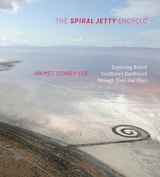
Robert Smithson’s earthwork, Spiral Jetty (1970), an icon of the Land Art movement of the 1960s and 1970s, is located on the northern shores of Utah’s Great Salt Lake. Smithson built a masterpiece from local materials, one that spirals counterclockwise into the lake and appears or is submerged with fluctuations in the lake’s locally red, saline water.
The Spiral Jetty Encyclo draws on Smithson’s writings for encyclopedic entries that bring to light the context of the earthwork and Smithson’s many points of reference in creating it. Visitors and armchair travelers, too, will discover how much significance Smithson placed on regional considerations, his immersion in natural history, his passion for travel, and his ability to use diverse mediums to create a cohesive and lasting work of art. Containing some 220 images, most of them in color, with some historical black and whites, The Spiral Jetty Encyclo lets readers explore the construction, connections, and significance of Smithson’s 1,500-foot-long curl into Great Salt Lake, created, in Smithson’s words, of “mud, salt crystals, rocks, water.”
Winner of 15 Bytes Book Award for Art Book.
Finalist for the Utah State Historical Society Best Book Award.
The Spirit of the City
Marshall Fredericks Sculptures in DetroitJanna Jones
Michigan State University Press, 2023
The Split World of Gerard Manley Hopkins
Dennis Sobolev
Catholic University of America Press, 2011
The Stamp of Class
Reflections on Poetry and Social ClassGary Lenhart
University of Michigan Press, 2005
-Lorenzo Thomas
The Stamp of Class explores the nature of reading poetry in the context of class and its themes and sheds new light on how this important yet little-heralded subject affects the poet's life and work.
While numerous works have taken up the question of race and gender as they relate to literary creation, this is the first book of its kind to probe the interplay between class and American poetry. Author Gary Lenhart considers poetry and class across a wide variety of time periods and poetic trends and reflects on a range of influential poets from the eighteenth to the twenty-first centuries.
The essays in The Stamp of Class deal with the question of class as reflected in the works of Tracie Morris, Tillie Olsen, Melvin Tolson, William Carlos Williams, Walt Whitman, and others. The work is rooted in the author's own experiences as a working-class poet and teacher and is the result of more than a decade of exploration.
Poet and scholar Gary Lenhart is Lecturer in English at Dartmouth College in Hanover, New Hampshire. His most recent books of poetry are Father and Son Night, Light Heart, and One at a Time. His essays and reviews have appeared in numerous magazines and journals, including the American Poetry Review, American Book Review, and Exquisite Corpse.
The Stranger from Omaha
Travel Narratives in the Cinema of Alexander PayneJason Sperb
University of Texas Press, 2025
The first in-depth analysis of the films of Alexander Payne through the lenses of authorship, tourism, and leisure.
With the films Election, About Schmidt, Sideways, Nebraska, and The Holdovers, Alexander Payne has carved out an unusual role in American cinema as a bankable auteur. There is something about Payne’s neurotics and searchers, his working stiffs and disillusioned idealists—something funny, moving, and filled with insight.
Jason Sperb dissects Payne’s oeuvre, focusing on the director’s penchant for travel narratives. Payne’s films usually center on male protagonists discontent with the emotional and material realities of the day-to-day and seeking satisfaction in some literal or metaphorical elsewhere. But their attempts to escape wind up perpetuating, rather than alleviating, the imbalance between labor and leisure that structures modern life. In this sense, Sperb argues, Payne’s characters are akin to tourists, searching for fleeting glimpses of the fulfillment they dream about. Examining themes of masculinity, nostalgia, whiteness, and class, The Stranger from Omaha is the first auteur study devoted to Payne’s delicately balanced cinematic world. An outsider even in his own heartland, Payne proves to be an artist working at a clarifying remove—a witness to the American condition, observing from just enough distance.
The Stranger's Welcome
Oral Theory and the Aesthetics of the Homeric Hospitality SceneSteve Reece
University of Michigan Press, 1993
The Subject of Modernism
Narrative Alterations in the Fiction of Eliot, Conrad, Woolf, and JoyceTony E. Jackson
University of Michigan Press, 1994
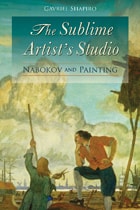
The Sublime Artist's Studio
Nabokov and PaintingGavriel Shapiro
Northwestern University Press, 2009
In his youth, Vladimir Nabokov aspired to become a landscape artist. Even though he eventually realized that his true vocation was literature, his keen sense of visual detail, nuanced perception of color, and vast knowledge of the fine arts are all manifest in his literary works, which abound with painters and paintings, real and imaginary, as well as with magnificent pictorial imagery rendered in a verbal medium. The relation of the visual arts to Nabokov’s work is the subject of The Sublime Artist’s Studio, an in-depth and detailed study of one of the most significant facets of this modern master’s oeuvre.
Gavriel Shapiro pursues his inquiry throughout Nabokov’s literary legacy—poetry, short prose, novels, plays, memoirs, lectures, essays, interviews, and letters. What is the import of Nabokov’s lifelong fascination with the Old Masters? How does landscape function in Nabokov’s writings? What was the author’s relationship to contemporary artists? By addressing these and other questions, while examining Nabokov’s references and allusions to the visual arts and to particular works and artists, Shapiro is able to reveal the centrality of painting to Nabokov’s belles lettres. His book offers a new and promising approach to one of the twentieth century’s most celebrated writers.

The Subversion of Romance in the Novels of Barbara Pym
University of Wisconsin Press, 1998
This book seeks to explore how Barbara Pym subverts the discourse of the romance novel through her use of food, clothes, heroine and hero characterizations, and marriage customs.
The Subversive Art of Zelda Fitzgerald
Deborah Pike
University of Missouri Press, 2017
This book gives light to the multiple artistic expressions of Great Gatsby-writer’s wife as modernist vanguard.
Known as an icon of the Jazz Age, a flamboyant socialite, and the mad wife of F. Scott, Zelda Fitzgerald has inspired studies of her life and work which focus on her earlier years, and on the myth of the glorious-but-doomed woman. As an unprecedented study of the totality Zelda Fitzgerald’s creative work, this book makes an important contribution to the history of women’s art with new perspectives on women and modernity, plagiarism, creative partnership, and the nature of mental illness.
Zelda Fitzgerald’s creative output was astonishing, considering the conditions under which she lived, and the brevity of her life: she wrote dozens of short stories, several journalistic pieces, a play, two novels, hundreds of letters, kept diaries and produced hundreds of artworks. Employing a new mode of literary analysis that draws upon critics, theorists, and historians to situate her work in its context, The Subversive Art of Zelda Fitzgerald rehabilitates the literary and artistic status of Zelda Fitzgerald by reassessing her life and writings in the light of archival sources. Such materials include medical and psychiatric documents; her unpublished novel; an artistic and spiritual diary; and over one hundred letters written from asylums.
While much of her writing can be read as a tactical response to her husband’s injunctions against her creativity, it can also be read as brilliant work in its own right. Far from imitating Scott’s style, Zelda Fitzgerald’s artistic output is vibrantly alive and utterly her own.
The Taylor Mac Book
Ritual, Realness and Radical PerformanceDavid Román and Sean F. Edgecomb, Editors
University of Michigan Press, 2023
Featuring essays, interviews, and commentaries by noted critics and artists, the volume examines the vastness of Mac’s theatrical imagination, the singularity of their voice, the inclusiveness of their cultural insights and critiques, and the creativity they display through stylistic and formal qualities and the unorthodoxies of their personal and professional trajectories. Contributors consider the range of Mac’s career as a playwright, performer, actor, and singer, expanding and enriching the conversation on this much-celebrated and deeply resonant body of work.
The Temptation of Innocence in the Dramas of Arthur Miller
Terry Otten
University of Missouri Press, 2002
The Temptation of Saint Redon
Biography, Ideology, and Style in the Noirs of Odilon RedonStephen F. Eisenman
University of Chicago Press, 1992
Indeed, local tales and legends of witches, ghosts, one-eyed monsters, evil eyes, and wood fairies figure prominently in Redon's graphic works, which he called his noirs, or "blacks." After formal training at Bordeaux and Paris in the 1850s and 1860s, Redon began to chart his independent artistic course. Eisenman shows how, rejecting both naturalism and classicism, Redon, a prototypical Symbolist, found in grotesque and epic genres the expression of organic communities and precapitalist societies. He places Redon's desire for this imagined world of superstitious simplicity a desire manifest in his entire mature artistic practice in the context of contemporary avant-garde movements.
Redon's great noirs of the 1870s and 1880s, dreamlike configurations of seemingly irreconcilable elements from portraits, still lifes, and landscapes, show an increasingly subtle control of connotation and a complex indebtedness to caricature, allegory, and puns. Many of the noirs also visually interpret works by like-minded authors, including Baudelaire, Flaubert, Poe, and Mallarmé, one of Redon's close friends. Eisenman's analysis of the noirs underscores Redon's interest in creating an imaginative, even fantastic art, that could act directly on the human spirit. In addition to deepening our understanding of Redon and his art, The Temptation of Saint Redon exposes a link between place, politics, personal history, and the artistic imagination.
The Terrible Fitzball
The Melodramatist of the MacabreLarry Stephen Clifton
University of Wisconsin Press, 1993
The Theater of Plautus
Playing to the AudienceBy Timothy J. Moore
University of Texas Press, 1998
The relationship between actors and spectators has been of perennial interest to playwrights. The Roman playwright Plautus (ca. 200 BCE) was particularly adept at manipulating this relationship. Plautus allowed his actors to acknowledge freely the illusion in which they were taking part, to elicit laughter through humorous asides and monologues, and simultaneously to flatter and tease the spectators.
These metatheatrical techniques are the focus of Timothy J. Moore's innovative study of the comedies of Plautus. The first part of the book examines Plautus' techniques in detail, while the second part explores how he used them in the plays Pseudolus, Amphitruo, Curculio, Truculentus, Casina, and Captivi. Moore shows that Plautus employed these dramatic devices not only to entertain his audience but also to satirize aspects of Roman society, such as shady business practices and extravagant spending on prostitutes, and to challenge his spectators' preconceptions about such issues as marriage and slavery. These findings forge new links between Roman comedy and the social and historical context of its performance.