Results by title
808 books match the query 'Drama' and 218 start with t
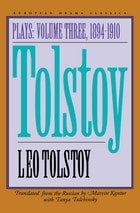
Tolstoy
Plays: Volume III: 1894-1910Leo Tolstoy
Northwestern University Press, 1998
Now noted Slavic philologist Marvin Kantor and Tatiana Tulchinsky have prepared the first complete English translation of the great writer's plays. This volume contains plays written during the years 1894 to 1910, including:
Peter the Breadman
And the Light Shineth in Darkness
The Living Corpse
The Wisdom of Children
The Traveler and the Peasant
The Cause of It All
Tonality as Drama
Closure and Interruption in Four Twentieth-Century American OperasEdward D. Latham
University of North Texas Press, 2008

Too Many Thumbs
A Three-Act PlayRobert Hivnor
University of Minnesota Press, 1949

Tormented Minds
Christine Roberts
Intellect Books, 1995
The plays are very different in style and include the use of physical theatre, naturalistic explorations of human rights abuses, and symbolic structures, puppets and poetry. The plays are supported by an analysis of their processes and themes. All have reached production and the text is supplemented by photographs of these performances.
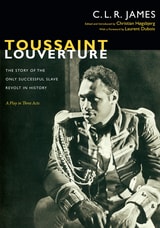
Toussaint Louverture
The Story of the Only Successful Slave Revolt in History; A Play in Three ActsC. L. R. James Edited and Introduced by Christian Høgsbjerg
Duke University Press, 2013
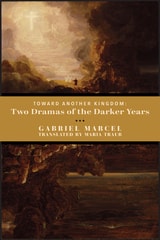
Toward Another Kingdom
Two Dramas of the Darker Yearstraub
St. Augustine's Press, 2022
Marcel's dramas require characters to respond authentically and from their true selves. He thereby offers the vision of how individual compromises may build up to break the world and condemn, or, conversely, contribute to the discovery and meaning of relation and redemption. Traub's new translation will interest the player as much as the scholar, and Marcel's aptitude for theatrical writing is proven once again. His intellectual sensitivity creates characters that beckon performance, which is an added dimension to the presentation of the human condition.

Toward a Feminist Theater
Selected PlaysKate Hamill and Kristin Leahey
Northwestern University Press, 2025
Bringing together seven critically acclaimed feminist adaptations of literary classics and one delightfully original new work, this collection demonstrates why Kate Hamill is one of the most electrifying and widely produced playwrights working today. Whether probing the power of toxic leaders (The Piper), revitalizing Jane Austen for the stage (Sense and Sensibility, Pride and Prejudice, Emma), “cheerfully desecrating” Arthur Conan Doyle through a post-pandemic lens (Ms. Holmes & Ms. Watson—Apt. 2B), reexamining an American classic’s gender roles (Little Women), or dramatizing the nineteenth-century classic of puritanical New England through the lens of an ostracized mother and daughter (The Scarlet Letter), Hamill’s work has transformed the theatrical landscape over the past decade.
An introduction from editor Kristin Leahey and an interview with Hamill frame this landmark anthology, with reflections on the current state of American drama, Hamill’s unique dramaturgical practice, and how the art form may move further and faster toward a feminist theater.
Toward a Theater of the Oppressed
The Dramaturgy of John ArdenJaved Malick
University of Michigan Press, 1995
Malick situates Arden's dramaturgy in the wider context of the radical alternative tradition in Western drama, drawing connections to Brecht, Piscator, the radical playwrights of the 1960s. He then explores the formal structure, ideological implications, and historical significance of Arden's work, treating his stage plays as one dramaturgically coherent opus- from the early Waters of Babylon to his and Margaretta D'Arcy's ambitious trilogy, The Island of the Mighty. Finally, he discusses the last phase of Arden and D'Arcy's political and artistic development, which led them to turn their backs on the professional theater circuit. He argues that Arden's rejection of the institutional stage was the logical outcome of his persistent search for alternative forms of political theater.
Toward a Theater of the Oppressed will be invaluable reading for those interested in modern drama, political theater, and popular performance, as well as students of contemporary British drama.
Javed Malick is Reader in English, Khalsa College, University of Delhi, India.
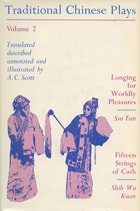
Traditional Chinese Plays, Volume II
A.C. Scott
University of Wisconsin Press, 1972
The world of traditional Chinese drama can be at once fascinating and bewildering to the uninitiated Western observer. Attuned to his own dramatic conventions, he is hard put to apprehend the delicate fusion of poetry, music, and subtle gesture which is the essence of Chinese theatre. Because of these difficulties, the task of translating traditional Chinese drama must go far beyond the conventional literary treatment and evoke the entire world of stagecraft and directing.
Longing for Worldly Pleasures (Ssu Fan) is a lyric monologue in which a young Buddhist laments the waning of her youth in the seclusion of the convent. The brief piece involves a complexity of mood which makes it an actor’s tour de force, undertaken only by the most highly skilled performers.
Fifteen Strings of Cash (Shih Wu Kuan), a much longer play, is a comic murder mystery satirizing bureaucratic ineptitude in the administration of justice. The comic lead role of Lou the Rat is a virtuoso part which illustrates the intricate mimetic art of the traditional comic actor and was the play’s main appeal to Chinese audiences.

Tragedy
Contradiction and RepressionRichard Kuhns
University of Chicago Press, 1991
From Aeschylus' classic drama The Persians to the hidden tragic themes in The Merchant of Venice, from the aesthetic writings of Kant to Kleist's narrative Michael Kohlhaas, Kuhns traces the writing and rewriting of the themes of ancient tragedy through modern texts. A culture's concept of fate, Kuhns argues, evolves along with its concepts and forms of tragedy. Examining the deep philosophical concerns of tragedy, he shows how the genre has changed from loss and mourning to contradiction and repression. He sees the fact that tragedy went underground during the optimism of the Enlightenment as a repression that continues into the American consciousness. Turning to Melville's The Confidence Man as an example of Old World despair giving way to New World nihilism, Kuhns indicates how psychoanalytic understanding of tragedy provides a method of interpretation that illuminates the continuous tradition from the ancient to the modern world. The study concludes with reflections on the poetry of Walt Whitman and Emily Dickinson. Each poet's celebration of the body, and the contribution of the senses to reason, perception, and poetic intuition, is seen as an embodiment of the modern tragic sensibility.
Transmedia Adaptation in the Nineteenth Century
Lissette Lopez Szwydky
The Ohio State University Press, 2020
In Transmedia Adaptation in the Nineteenth Century, Lissette Lopez Szwydky convincingly historicizes the practice of adaptation, drawing on multiple disciplines to illustrate narrative mobility across time, culture, and geography. Case studies from stage plays, literature, painting, illustration, chapbooks, and toy theaters position adaptation as a central force in literary history that ensures continued cultural relevance, accessibility, and survival. The history of these forms helps to inform and put into context our contemporary obsessions with popular media. Finally, in upending a traditional understanding of canon by arguing that adaptation creates canon and not the other way around, Szwydky provides crucial bridges between nineteenth-century literary scholarship, adaptation studies, and media studies, thus identifying new stakes for all.
Travesty Actors
Self and Theater in Stalinist CultureBoris Wolfson, edited by Simon Morrison
Northwestern University Press, 2026
Talk of Joseph Stalin’s “show trials,” the public prosecutions in Moscow’s Hall of Columns in the late 1930s, is so familiar as to obscure the relationship between actual shows—in the Soviet Union’s major theaters—and politics. Travesty Actors: Self and Theater in Stalinist Culture examines theatrical performance within the context of the Soviet cultural establishment’s fashioning of a “genuine Soviet person.” Boris Wolfson focuses on prominent and controversial plays by artists including Aleksandr Afinogenov, Mikhail Bulgakov, Yuri Olesha, and Natalia Sats and the efforts of theater companies, like the Moscow Arts Theater, the Meyerhold Theater, and the Central Children’s Theater, to adhere to this cultural mandate while grappling with repression, censorship, and conflicting interpretations of its aims. Drawing on archival materials, diaries and memoirs and eyewitness accounts, Wolfson greatly illuminates the achievements of Soviet theater during this harsh period and the cultural significance of artistic theories and practices for articulating and enacting ideological programs.
Treasure Island
A PlayMary Zimmerman
Northwestern University Press, 2019
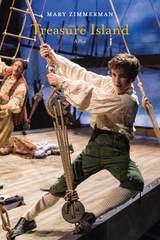
In Treasure Island, Tony Award winner and inventive adapter-director Mary Zimmerman has penned a spirited, energetic adaptation of Robert Louis Stevenson’s most beloved novel, proving again that “a strong story full of larger-than-life characters and the quest for filthy lucre has no age barrier” (Chicago Sun-Times).
Enlivened by rum, mutiny, and buried treasure, Treasure Island is the classic pirates’ tale, widely regarded as the forerunner of this genre. After discovering a treasure map, young Jim Hawkins sets off to sea as cabin boy aboard the Hispaniola, where he encounters one of the most unforgettable characters in literary history—peg-legged buccaneer Long John Silver, a malicious mutineer and charismatic father figure.
Trial by Theatre
Reports on Czech DramaBarbara Day
Karolinum Press, 2019
Drawing on a range of oral and written sources, as well as her unique personal experience of cultural and historical events in Czechoslovakia from the 1960s to the 1980s, Day offers a sweeping view of Czech theater, its colorful personalities, and international connections. Her story details: the days of the National Awakening in the nineteenth century, when theater took the place of politics, becoming an instrument of national identity in the hands of the revivalists; theater as a symbol of independence during the Nazi occupation; its survival of Socialist Realism and Stalinism and subsequent blossoming in the “Golden Sixties”; and theater’s essential role in Prague Spring and beyond, when for two decades theater operated in provisional spaces like gymnasiums, bars, trade union halls, art galleries, and living rooms. Trial by Theatre culminates in the Velvet Revolution of 1989, a year that saw the installation of Václav Havel—a playwright—as the first post-Communist president of Czechoslovakia.
Troilus and Cressida
William Shakespeare
Arizona Center for Medieval and Renaissance Studies, 2022
One of the most obscure plays in Shakespeare’s canon, Troilus and Cressida may also be the Bard’s darkest comedy. Exploring some of the events of Homer’s Iliad, the play juxtaposes the carnage of the Trojan War with a love story between its two titular characters. Lillian Groag’s translation brings this ancient world to modern audiences. Replacing the archaisms with new and accessible phrasing, Shakespeare’s lines regain their meaning and humor in the twenty-first century. This translation illuminates Troilus and Cressida as one of Shakespeare’s funniest, saddest, and most bitterly modern plays.
This translation of Troilus and Cressida was written as part of the Oregon Shakespeare Festival’s Play On! project, which commissioned new translations of thirty-nine Shakespeare plays. These translations present work from “The Bard” in language accessible to modern audiences while never losing the beauty of Shakespeare’s verse. Enlisting the talents of a diverse group of contemporary playwrights, screenwriters, and dramaturges from diverse backgrounds, this project reenvisions Shakespeare for the twenty-first century. These volumes make these works available for the first time in print—a new First Folio for a new era.
Trojan Women, Helen, Hecuba
Three Plays about Women and the Trojan WarEuripides, Verse translations by Francis Blessington, with introductions and notes
University of Wisconsin Press, 2015
Francis Blessington combines his work as a poet, translator, and teacher of literature and Greek with his theatrical experience to create fresh and faithful verse translations suitable for the stage, the classroom, or the general reader. The three plays are augmented by introductions, notes, and an appendix on elements of Greek tragedy. Blessington glosses historical and mythological terms, identifies Greek themes in the texts, offers literary interpretations, and suggests topics for discussion.
Twelfth Night
William Shakespeare
Arizona Center for Medieval and Renaissance Studies, 2023
Shakespeare’s Twelfth Night centers on power and love. One of the most perennially produced of Shakespeare’s comedies, it talks about shipwrecked twins, gender-bending romance, and a bumper crop of fools, from the wise to the ridiculous. Modernizing the language of the play, Alison Carey’s translation revives the joy of this comedy, taking the archaic humor and renewing it for a contemporary audience.
This translation of Twelfth Night was written as part of the Oregon Shakespeare Festival’s Play On! project, which commissioned new translations of thirty-nine Shakespeare plays. These translations present the work of “The Bard” in language accessible to modern audiences while never losing the beauty of Shakespeare’s verse. Enlisting the talents of a diverse group of contemporary playwrights, screenwriters, and dramaturges from diverse backgrounds, this project reenvisions Shakespeare for the twenty-first century. These volumes make these works available for the first time in print—a new First Folio for a new era.
Two Plays of Weimar Germany
Youth Is a Sickness and CriminalsFerdinand Bruckner, Translated from the German by Laurence Senelick
Northwestern University Press, 2018
Though his fame was later eclipsed by peers such as Bertolt Brecht, Bruckner was the celebrity dramatist of his time, and a new generation of readers is discovering his groundbreaking plays known for their strong cultural critique and unflinching portrayals of social ills, outcasts, and misfits. Youth Is a Sickness (1924) explores the lives of Germany's "lost generation," those who grew up during and after the cataclysm of the First World War, devoid of hope and ideals, lost in a haze of sex and drugs. Criminals (1926) traces several court cases about a failed double suicide, theft, abortion, and homosexual blackmail, controversial topics for the audience of its time and even today. Its innovative staging and interwoven storylines illuminate the imposed social tensions and legal injustice faced by the characters.
In this expert translation, readers can see Bruckner as a public intellectual, a man committed to commenting on the fate of Germany; humane values; and the past, present, and future in his work. With an introduction by the translator, this volume will be the definitive version for readers, actors, playwrights, and scholars.